

Becoming a grandparent is pure joy — until the first time you disagree with your own child about how they’re raising theirs. Suddenly the woman who ran a household for decades has to bite her tongue, and it stings.
Here’s the truth: boundaries aren’t walls, they’re bridges. The grandparents with the closest relationships to their grandkids are the ones who learned to set kind, clear limits early. These 12 pieces of warm, practical wisdom will help you protect those precious bonds without anyone getting hurt.
📋 The Grandparent Boundaries Code
Four principles that keep every boundary conversation loving instead of loaded.
| Element | Do this | Skip this |
|---|---|---|
| Tone | Speak as a teammate, not a critic | Correcting or contradicting parents in front of kids |
| Timing | Raise concerns privately, calmly, and once | Bringing up grievances at family gatherings |
| Role | Support the parents’ rules, even when you’d do it differently | Playing the “fun one” who overrides bedtime and sugar limits |
| Yourself | Protect your own energy and say no when you need to | Saying yes to everything until you burn out and snap |
In This Guide
💛 Chapter 1: With Your Adult Children (1–4)
The parent-child relationship changes when grandchildren arrive — here’s how to navigate the new terrain with grace.
1. 💛 Ask Before You Advise

The fastest way to strain things with your adult child is unsolicited parenting advice. Instead of “you should,” try “would you like an idea that worked for me?” This tiny shift turns you from a critic into a resource — and they’ll actually ask for your wisdom far more often when it’s offered, not imposed.
Try this: advice on request only + one gentle offer + full respect for their “no thanks”
Make it yours: If advice is your love language, channel it into stories about your own parenting days rather than directives about theirs.
Avoid: Starting sentences with “in my day” — it shuts down the conversation before it begins.
2. 🤝 Respect Their House Rules

When the kids are with you, their parents’ rules still apply — bedtimes, screen limits, food boundaries. Following them isn’t about agreeing; it’s about showing your adult child that you’re a trustworthy teammate. Grandparents who honor the rules get asked to babysit far more often.
Try this: learn their top three rules + follow them consistently + save your “fun” for within the lines
Make it yours: Create your own special traditions that don’t break rules — a signature pancake shape or a special walk route.
Budget tip: Being the reliable rule-follower costs nothing and earns you more grandkid time than any gift.
Keep a small notebook of each family’s rules — bedtimes, allergies, off-limit foods. Referring to it shows you’re serious about getting it right, and parents notice.
3. 🕊️ Stay Out of Parenting Disagreements

When your child and their partner disagree about parenting, your job is Switzerland: warm, loving, and neutral. Taking sides — even silently, with a pointed look — poisons the well for years. Love them both, support the partnership, and keep your opinions for your journal.
Try this: neutral warmth + private listening ear + zero alliance-taking
Make it yours: If one of them vents to you, listen kindly but don’t carry messages between them.
Avoid: The knowing glance or sigh when you disagree — kids and adults both read it instantly.
4. 📞 Let Them Come to You

Calling every day to check on the baby can feel like love to you and pressure to them. Match their communication rhythm rather than setting your own — if they text twice a week, that’s your cadence. Being the grandparent who never overwhelms makes every call a delight instead of a duty.
Try this: mirror their contact frequency + warm short messages + patience between replies
Make it yours: Send a sweet photo or memory on your “extra” days instead of calling — no reply required.
Budget tip: A heartfelt text costs nothing and often means more than a long, tiring phone call.
👧 Chapter 2: With the Grandkids (5–8)
Boundaries with little ones look different — they’re about safety, consistency, and teaching respect through your example.
5. 🍬 The Treat Negotiation

Every grandparent wants to be the source of joy, but a bellyache at midnight undoes the magic. Agree with parents on treat limits beforehand, then make your treats special rather than constant — one spectacular cookie-decorating afternoon beats daily candy. Kids remember experiences far longer than sugar.
Try this: one special treat ritual + agreed limits + experience over quantity
Make it yours: Invent a “grandma’s kitchen” tradition — decorating, baking, or a secret recipe they help with.
Avoid: Sneaking treats behind parents’ backs — when kids learn to hide things from mom, trust erodes everywhere.
6. 🛏️ The Bedtime Backbone

Keeping bedtime consistent at grandma’s house feels strict, but overtired kids are miserable kids — and exhausted parents the next day. Stick to the routine: same story, same song, same lights-out. Children actually feel safer with predictable boundaries, even while they lobby against them.
Try this: copy their home routine + one special grandma story + firm kind lights-out
Make it yours: Your signature bedtime story becomes the thing they beg for — tradition within structure.
Budget tip: Library books and your own storytelling are free and beat any gadget at bedtime.
When a grandchild says “but mom lets me,” smile and say “at grandma’s house we do it this way.” Said warmly and consistently, it ends the negotiation without a battle.
7. 📱 The Screen Time Stand
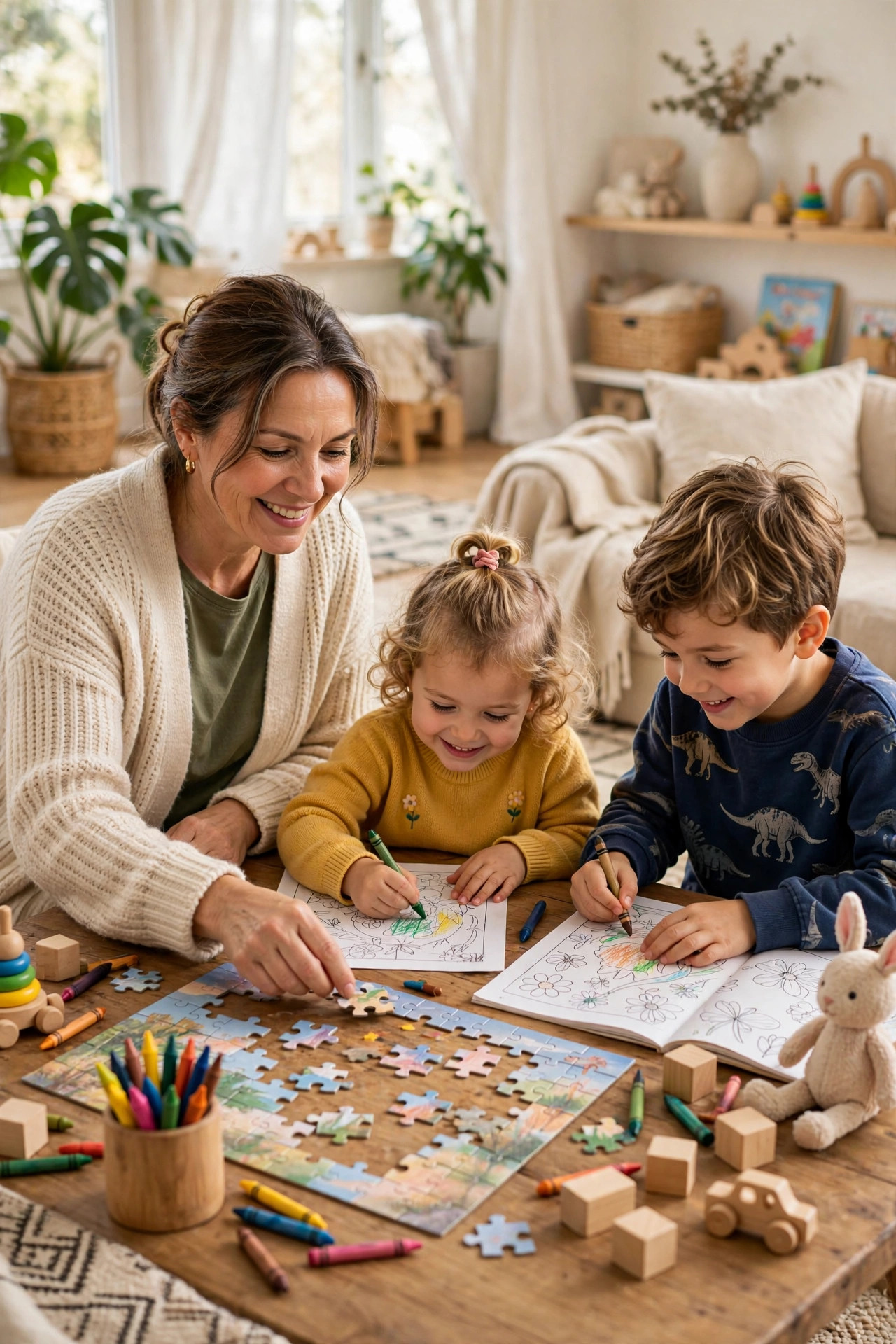
Handing a fussy toddler your phone is tempting, but matching the parents’ screen rules keeps you credible. Instead, keep a “grandma’s activity box” — crayons, puzzles, stickers — that only appears at your house. Kids will start asking for the box instead of the screen.

Try this: match their screen limits + a special activity box + outdoor time first
Make it yours: Fill the box with things you loved as a child — it becomes a bridge between generations.
Avoid: Using screens as a babysitter so you can rest — plan quiet activities like audiobooks instead.
8. 🗣️ The Respect Lesson

Grandkids test boundaries with you precisely because they feel safe — it’s actually a compliment. Respond with calm consistency: name the behavior, state the limit, offer the alternative. “We use gentle hands; let’s build the tower together instead.” They learn respect by watching you stay kind under pressure.
Try this: name it + state the limit + offer an alternative
Make it yours: Your calm voice becomes their inner voice later — speak the way you want them to remember you.
Budget tip: Patience is free, and it’s the most valuable thing you’ll ever give them.
🌿 Chapter 3: Protecting Your Own Peace (9–12)
The boundary nobody talks about: yours. You can’t pour from an empty cup, even for grandchildren.
9. 🙅 The Graceful No

Saying yes to every babysitting request leads to exhaustion and resentment — and then guilt about the resentment. A warm, honest no protects the relationship: “I’d love to, but I need to rest this weekend — how about Tuesday?” Grandparents who pace themselves stay joyful for decades.
Try this: warm honesty + an alternative date + zero over-explaining
Make it yours: Decide your real capacity (two afternoons a week? one overnight a month?) and treat it as a gift you choose to give.
Avoid: Saying yes while sighing — kids sense reluctant caregiving and it hurts more than a no.
10. 💰 The Money Boundary

Helping financially is generous; becoming the family bank is dangerous. Decide in advance what you can give — and what you can’t — and communicate it plainly before anyone asks. Clear money boundaries now prevent painful misunderstandings later, and they protect your own retirement security.
Try this: decide your giving budget + state it early + give cheerfully within it
Make it yours: Frame gifts as joy, not obligation: “we’d love to cover swimming lessons this year.”
Budget tip: Your financial security IS a gift to your children — it means they’ll never have to support you unexpectedly.
11. 🏠 The Visit Rhythm

Unannounced drop-ins, however loving, can strain even the warmest family. Agree on a visit rhythm that suits everyone — Sunday dinners, a monthly weekend — and treat it as sacred. Predictable togetherness beats constant togetherness, because everyone arrives happy instead of harried.
Try this: agree on a rhythm + call before visiting + leave while it’s still fun
Make it yours: Make your regular visit an event — a special meal, a walk, a game the kids associate only with you.
Avoid: Extending every visit “just a little longer” until everyone’s tired — leave them wanting more.
The best grandparent visits end with the kids asking “when are you coming back?” — not with everyone exhausted. Shorter, happier visits build stronger bonds than marathon ones.
12. 💌 The Long Game

Every boundary you set with love today is an investment in the relationship you’ll have when they’re teenagers. The grandparent who respected the parents, kept their own peace, and stayed consistently kind becomes the confidant teens actually call. Play the long game — it’s the most rewarding one there is.
Try this: consistency over years + warmth without conditions + patience with phases
Make it yours: Write them letters for the future — your love, your stories, your wisdom — to open on big birthdays.
Budget tip: A shoebox of handwritten letters costs almost nothing and becomes a family treasure.
❓ Grandparent Boundaries FAQs
My daughter criticizes my parenting in front of the kids. What do I do?
Stay calm in the moment — never argue in front of grandchildren. Later, privately and gently, say how it felt and ask for corrections to happen between adults. Most adult children don’t realize they’re doing it, and a kind private conversation usually fixes it.
How do I say no to babysitting without feeling guilty?
Remember that a rested, willing grandparent is a gift; an exhausted, resentful one helps nobody. Offer what you genuinely can — a specific alternative date rather than a flat no — and trust that protecting your energy protects the relationship too.
Is it okay to have different rules at grandma’s house?
Small differences are fine and even delightful — your special traditions are part of the magic. But core rules around safety, food allergies, bedtimes, and screen limits should match the parents’ to keep trust intact and kids secure.
My son’s partner and I don’t get along. How do I stay close to the grandkids?
Focus entirely on warmth toward your child’s partner — send kind messages, respect their parenting, never compete. Grandparents who embrace the in-law relationship, even when it’s hard, almost always win more access and affection over time.
How often should grandparents visit without overstepping?
There’s no universal number — it depends on distance, family dynamics, and everyone’s energy. The best approach is to ask your adult child honestly what rhythm feels good to them, then honor it. Regular, predictable visits beat frequent, draining ones.
📖 Keep Reading
- 📚 What to Wear to Book Club Over 50 — 12 cozy, clever outfit ideas for your next get-together with friends.
- 🍂 Fall Outfits for Women Over 60 — 12 cozy looks for the season of grandkid visits and family dinners.
- 👗 Classic Style for Women Over 50 — timeless pieces for every chapter of life, grandmotherhood included.
✅ The Grandparent Boundaries Checklist
- ☐ Offer advice only when asked — stories, not directives
- ☐ Learn and follow each family’s top three rules
- ☐ Stay neutral in parenting disagreements
- ☐ Match their communication rhythm
- ☐ Know your real capacity and say a graceful no when needed
- ☐ Play the long game — consistency builds the closest bonds
Boundaries don’t dim the joy of grandparenthood — they protect it. Set them with love, hold them with kindness, and enjoy every single moment of being the grandparent they adore.
Discover more from Fashinate Style
Subscribe to get the latest posts sent to your email.