
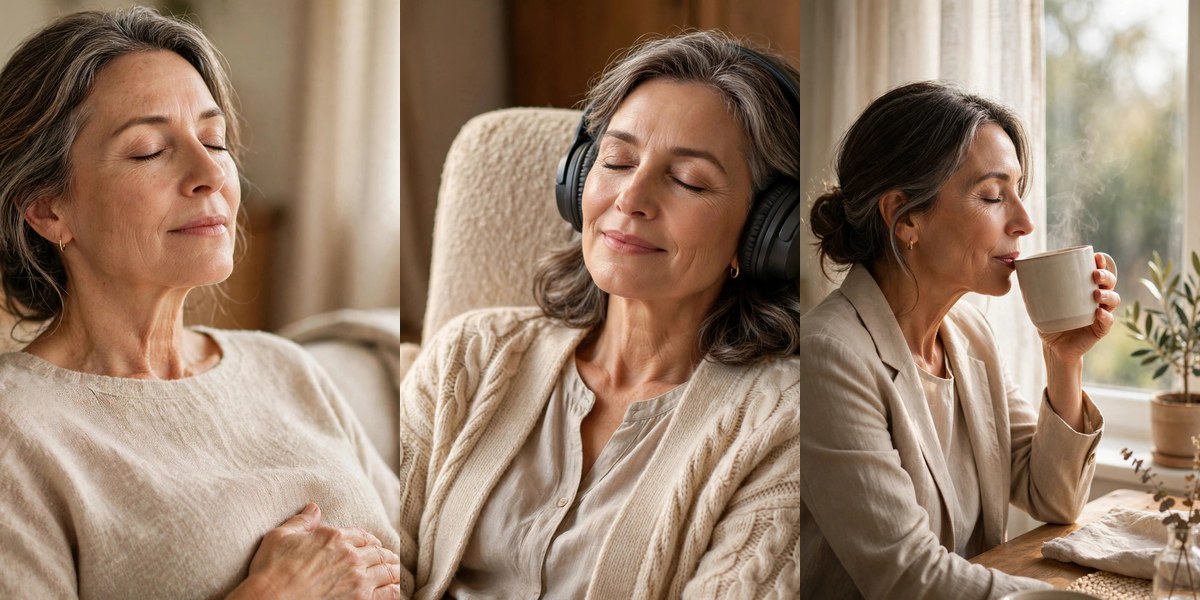
I’ll confess something: for years I thought stress relief meant a spa day I never had time for — or a meditation app I opened once and abandoned. So I just white-knuckled my way through the stress of my 50s, wondering why I was snapping at everyone I loved and sleeping like a lightbulb with a flicker.
Then I learned the thing that changed everything: the most powerful calming techniques take under two minutes and need zero equipment. This guide collects 25 of them — each one chosen for real life after 50, from the traffic jam to the 3 a.m. worry spiral. Start with whichever one your shoulders need most right now.
📋 The 60-Second Basics
Before the techniques, four ground rules that make all of them work better.
- Longer out than in. Every calming breath technique works because the exhale is longer than the inhale — that’s what tells your nervous system to stand down.
- Drop the shoulders first. Stress lives in the shoulders, jaw, and hands. Unclench those three and you’ve already won half the battle.
- Name it to tame it. Silently labeling “I’m feeling stressed right now” measurably reduces the emotional charge. It sounds too simple; it isn’t.
- Small beats heroic. A 60-second reset you actually do beats a 20-minute meditation you skip. Always choose the technique you’ll use.
🌿 25 Calming Techniques That Work Fast
Each technique below tells you exactly what to do, when to reach for it, and one pro note to make it stick.
1. 🫁 The 4-6 Reset Breath

Breathe in through your nose for 4 counts, then out through your mouth for 6. Do four rounds. The longer exhale activates your body’s calm-down system — you’ll feel your shoulders drop by round three. It’s invisible, silent, and works in a meeting, a waiting room, or a traffic jam.
Try this: Hand on belly + inhale 4 counts + exhale 6 counts + repeat 4 rounds.
Use it when… tension spikes suddenly — a stressful call, bad news, the moment before a difficult conversation. Pro note: Make the exhale audible, like a soft sigh; the sound itself is soothing.
2. 🦶 The Feet-on-Floor Grounding

When your mind is racing ten steps ahead, bring it back through your body. Press both feet flat into the floor and notice — really notice — the pressure, the temperature, the solid ground holding you up. Thirty seconds of this pulls you out of the spiral and into the present moment.
Try this: Feet flat + press down gently + notice 3 sensations + breathe slowly for 30 seconds.
Use it when… anxiety is future-tripping — worrying about tomorrow’s appointment or next week’s bill. Pro note: Do it barefoot on cool tile when you can; the temperature contrast anchors you faster.
3. 🤲 The 5-4-3-2-1 Senses Check

Name 5 things you see, 4 you can touch, 3 you hear, 2 you smell, 1 you taste. This classic grounding technique works because your brain can’t catalog the present moment and catastrophize at the same time. By the time you reach “1 taste,” the panic has usually loosened its grip.
Try this: 5 see + 4 touch + 3 hear + 2 smell + 1 taste, said silently to yourself.
Use it when… overwhelm hits in a busy place — the grocery store, a crowded waiting room. Pro note: Whisper it under your breath; hearing your own voice adds another anchor.
4. 💧 Cold Water on the Wrists

Run cold water over your inner wrists for 30 seconds, or press a cool cloth to your neck. The sudden temperature shift interrupts the stress response — it’s like hitting a reset button on your nervous system. Strange, simple, and surprisingly powerful in the middle of a heated moment.
Try this: Cold tap + inner wrists 30 seconds + one slow breath while the water runs.
Use it when… you feel flushed, frantic, or on the edge of tears — the physical jolt breaks the emotional loop. Pro note: Keep a damp washcloth in the fridge; future-you will be grateful.
Pair techniques for a “calm stack.” Cold water on the wrists (technique 4) followed by the 4-6 breath (technique 1) is a two-minute combination that handles even the worst spikes — memorize this pair and you’ll always have a plan.
5. 🚶 The 5-Minute Walk-Away

When stress peaks, change your scenery for five minutes. Step outside, walk to the mailbox, stand on the porch. Motion metabolizes stress hormones, and a new view tells your brain the emergency is over. You’re not running away — you’re strategically retreating so you can return steadier.
Try this: Step outside + walk 5 minutes, no phone + return and reassess.
Use it when… a situation is heating up — an argument brewing, a task going sideways. Pro note: Say “I need five minutes” out loud; announcing it makes it legitimate, not dramatic.
6. 📝 The Brain Dump

A racing mind is often just an overloaded one. Grab any paper and dump everything swirling in your head — tasks, worries, random reminders — without organizing. Getting it out of your head and onto paper frees up the mental space that stress was renting, usually in under five minutes.
Try this: Any paper + write non-stop for 5 minutes + circle the one thing that actually matters today.
Use it when… your thoughts are a tangled knot, especially at bedtime or first thing in the morning. Pro note: Tear it up afterward if you like — the relief is in the dumping, not the keeping.
7. 🎵 The One-Song Reset
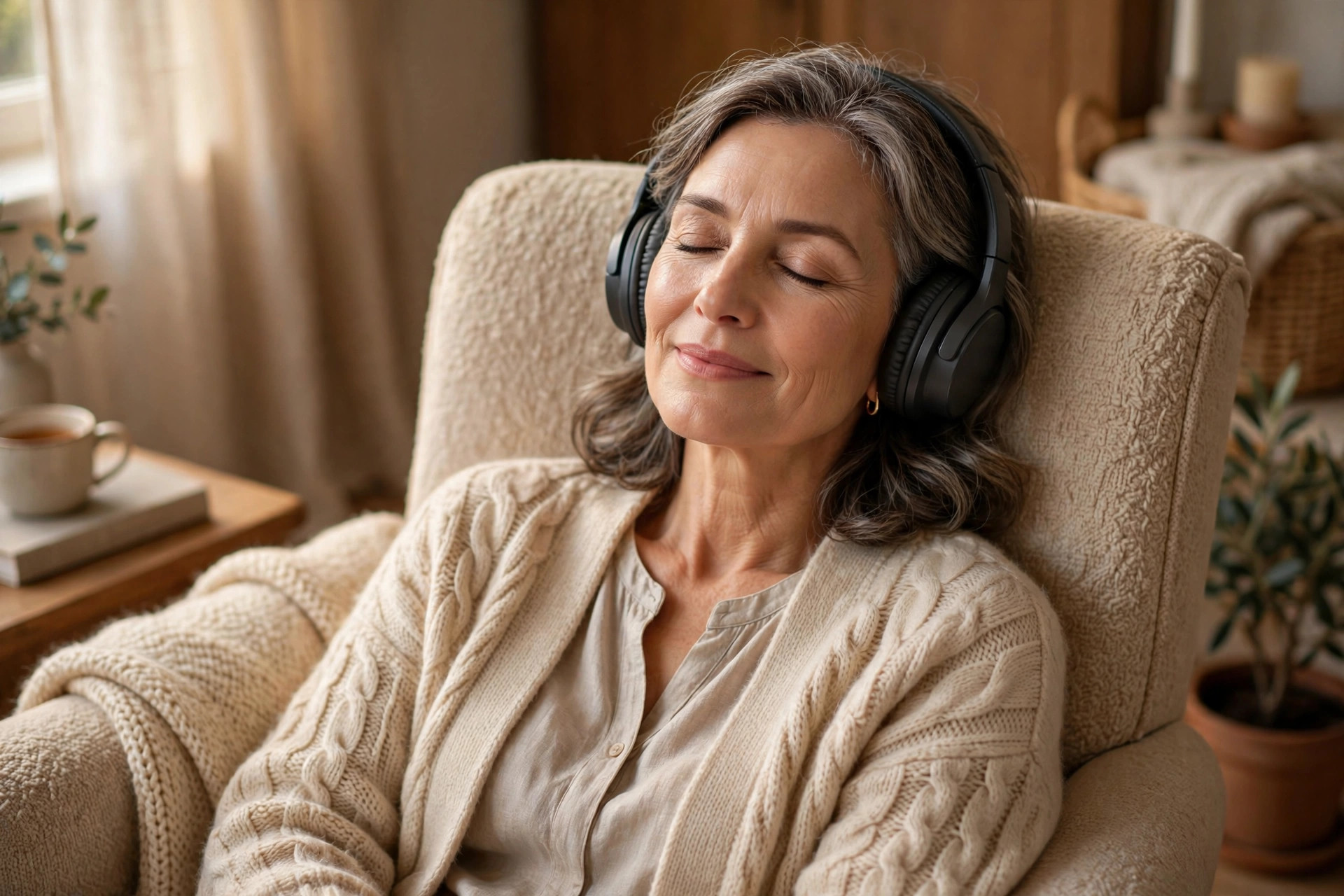
Put on one song that never fails you — the one that makes your shoulders drop — and do nothing else until it ends. Three to four minutes of music you love is a complete nervous-system intermission. Sing along if you’re alone; the vibration in your chest is genuinely calming.
Try this: Your go-to calm song + sit or sway + nothing else until the last note.
Use it when… the afternoon slump turns irritable — that 3 p.m. edge that isn’t really about anything. Pro note: Build a tiny “calm” playlist now, while you’re peaceful, so it’s ready when you’re not.
8. 🧊 The Jaw-and-Hands Release

Right now, without moving: unclench your jaw, drop your tongue from the roof of your mouth, and spread your fingers wide. Most of us carry low-grade tension in exactly these three places all day without knowing it. Releasing them on purpose, three times a day, quietly lowers your baseline stress.
Try this: Unclench jaw + drop tongue + spread fingers + hold 10 seconds, three times daily.
Use it when… as a habit — tie it to red lights, kettle boiling, or commercial breaks. Pro note: Set three daily phone reminders labeled “unclench” until it becomes automatic.
9. 🌳 The Window-Gaze Pause

Look out a window at the farthest thing you can see — trees, sky, the horizon — and let your gaze go soft for two minutes. Staring into the distance relaxes the eye muscles that tense during close-up screen work, and something about wide-open space tells an ancient part of your brain that you’re safe.
Try this: Find a window + soften your gaze on the distance + 2 unhurried minutes.
Use it when… screen fatigue and mental fog set in — the mid-afternoon stare. Pro note: If there’s greenery in view, even better; natural scenes calm measurably faster than buildings.
10. 🤗 The 20-Second Self-Hug

Cross your arms and give yourself a firm, genuine hug for 20 seconds. It sounds silly and works anyway — sustained, gentle pressure calms the nervous system (it’s why weighted blankets help). Do it in private if you must, but don’t skip it because it feels odd. Your body doesn’t care who’s hugging.
Try this: Arms crossed over chest + firm squeeze + hold 20 full seconds + breathe.
Use it when… loneliness or sadness rides along with the stress — grief-adjacent moments, hard anniversaries. Pro note: Pair it with a kind sentence: “I’ve got you. We’re okay.”
11. 🍵 The Mindful Cup

Make a cup of tea and drink it like it’s the only thing happening. Feel the warmth through the mug, watch the steam, taste each sip. Five minutes of single-tasking a simple pleasure is a meditation in disguise — and it’s far easier to stick with than sitting in silence.
Try this: Brew tea + sit somewhere pleasant + drink slowly, noticing warmth, steam, and taste.
Use it when… the day needs a punctuation mark — between work and evening, after a hard call. Pro note: Chamomile or lemon balm in the evening; anything you love in the afternoon.
12. 🌙 The Tomorrow List

End-of-day worry is usually tomorrow’s tasks camping in tonight’s mind. Before bed, write tomorrow’s top three on paper and close the notebook. You’re telling your brain: it’s captured, it’s safe, you can let go. Sleep comes easier when the mind isn’t on night-shift duty.
Try this: Before bed + write tomorrow’s top 3 + close the notebook + lights low.
Use it when… bedtime brings the worry parade — racing thoughts the moment your head hits the pillow. Pro note: Keep the list to three; a long list just moves the anxiety onto paper.
⚠️ Mistakes That Keep You Wound Up
Four common habits that quietly undo all your calming work.
- Venting without a time limit. Talking it out helps — for about ten minutes. After that, rehearsing the stress keeps it alive. Vent, then pivot to one small action.
- Doomscrolling to “relax.” Scrolling feels like rest but acts like stimulation. If you need to zone out, choose something genuinely restful — music, a bath, the window.
- Skipping meals when stressed. Low blood sugar mimics anxiety — shaky, irritable, on edge. Eat something with protein before deciding the day is terrible.
- Saving calm for “later.” Later never comes. The 60-second reset you do now beats the spa day you keep postponing.
13. 🧘 The 60-Second Body Scan

Start at your toes and move your attention slowly upward — calves, knees, hips, belly, shoulders, jaw — pausing on each spot for one breath. Wherever you find tension, squeeze that muscle for five seconds, then let it go completely. Most women discover they’re holding stress in places they didn’t even know about.
Try this: Toes to jaw + tense each spot 5 seconds + release + move upward.

Make it yours: Do it lying in bed before sleep; you’ll drift off mid-scan half the time. Avoid: Rushing through it like a checklist — the slowness is the whole point.
14. 🎶 The Hum to Calm

Close your lips and hum a low, steady note for a full minute — any tune works. The vibration wakes up your vagus nerve, the body’s built-in calm switch, and naturally slows your exhale. It feels oddly soothing, like rocking yourself back to steady.
Try this: Lips closed + hum one low note + keep going 60 seconds.
Make it yours: Hum while you unload the dishwasher or fold laundry — nobody’s listening. Avoid: Humming in a forced high pitch; keep it low and easy or it does nothing.
15. 🤍 The Hand-on-Heart Pause

Place your palm flat over your heart and breathe slowly for ten counts. The warmth of your own hand plus the rise and fall under your palm gives your racing mind one steady thing to follow. It’s the simplest self-soothing gesture there is.
Try this: Palm over heart + feel each beat + breathe slowly 10 counts.
Make it yours: Add a silent phrase — “I’m safe, I’m okay” — timed to your breath. Avoid: Pressing hard; a light, warm touch works better than force.
16. 🌸 The Lavender Anchor
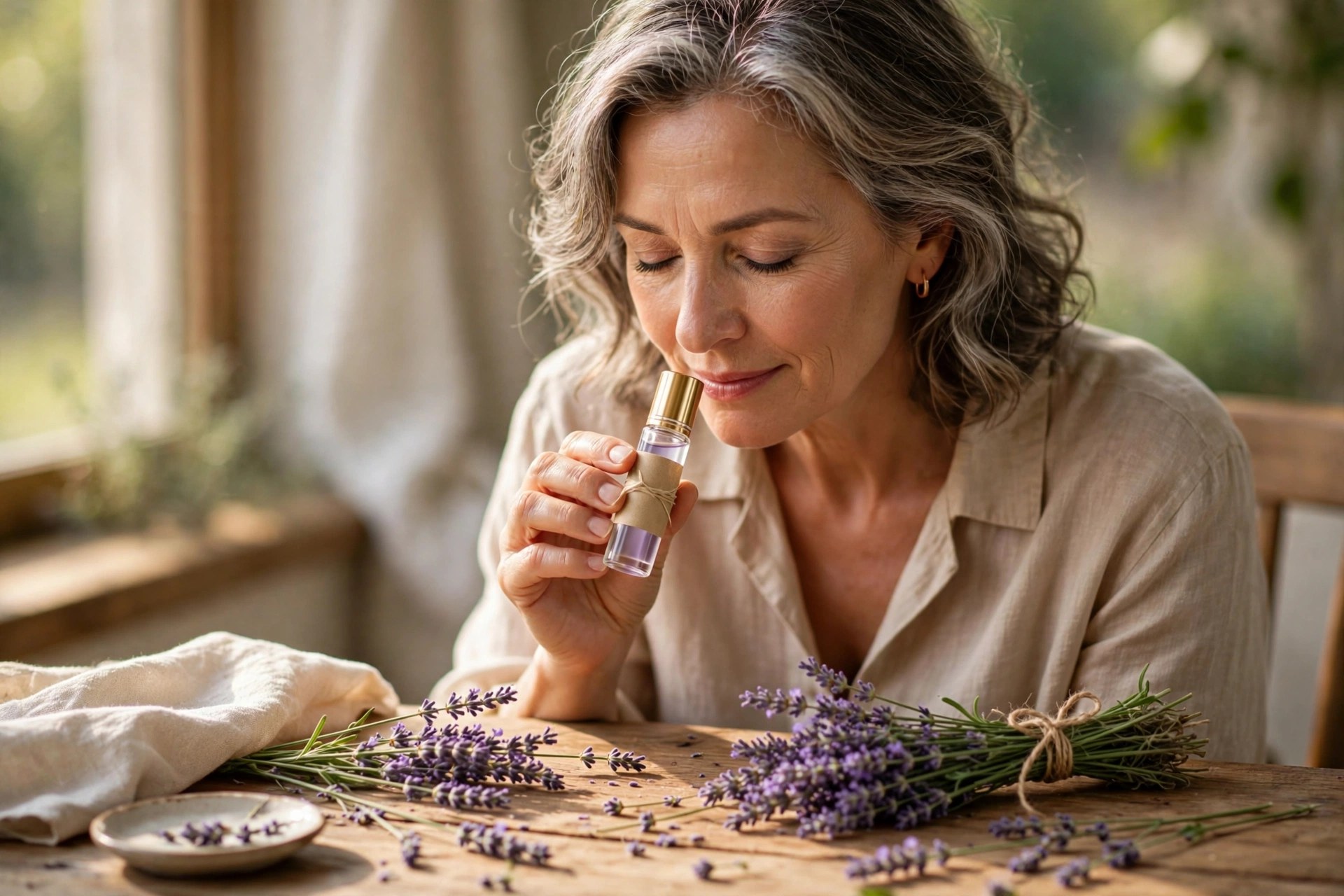
Keep a small lavender oil rollerball in your bag and take three slow sniffs when tension climbs. Scent reaches the emotional center of your brain faster than any thought, so a familiar calm smell can flip your state in seconds. It also gives your hands something to do besides clench.
Try this: Rollerball on wrists + three slow deep sniffs + shoulders down.
Make it yours: Use the same scent every time; your brain builds a calm association with repetition. Avoid: Putting neat oil directly on sensitive skin — dilute it or stick to a rollerball blend.
17. 🥛 The Slow Sip of Cold Water

Pour a full glass of cold water and drink it slowly, noticing the coolness travel down with each swallow. Even mild dehydration raises your heart rate and mimics anxiety, so this fixes two problems at once. It also forces you to pause — you can’t gulp mindfully and spiral at the same time.
Try this: Full glass + sip slowly over 2 minutes + notice each swallow.
Make it yours: Add a lemon slice or cucumber if plain water bores you — the ritual matters. Avoid: Reaching for coffee instead; caffeine amplifies jittery stress, not the other way around.
18. 👃 The Nostril Switch Breath

Gently close your right nostril with a fingertip, inhale through the left, then switch and exhale through the right — repeat five rounds. This ancient breathing pattern balances the two sides of your nervous system and clears the fog of a racing mind. By round three, your thoughts usually slow noticeably.
Try this: Right nostril closed + inhale left + switch + exhale right + 5 rounds.
Make it yours: Do it sitting at your desk before a stressful meeting or call. Avoid: Forcing the breath; keep it natural and unhurried — straining defeats the purpose.
19. 💪 The Power Pose Reset

Stand up, feet hip-width apart, shoulders back, chin slightly lifted — hold it for two full minutes. Expanding your posture signals confidence to your brain and measurably lowers the stress hormone cortisol. It works before you feel it working; the posture leads, the mood follows.
Try this: Stand tall + shoulders back + hold 2 minutes + breathe normally.
Make it yours: Strike the pose in the bathroom before anything intimidating — it’s private and effective. Avoid: Doing it slumped on the couch; it needs to be standing, chest open.
20. 💌 The Compliment Folder

Keep a folder — physical or on your phone — of kind messages: thank-you texts, birthday cards, sweet emails. Read three when stress makes you feel small. Reminding yourself you’re valued by real people interrupts the inner critic’s monologue. It’s evidence against the bad day.
Try this: Save kind messages in one folder + read 3 when stressed.
Make it yours: Screenshot the good ones as they arrive; future-you will need them. Avoid: Only starting the folder on a bad day — build it now, while you’re calm.
21. 🧺 The Declutter One Drawer

Pick ONE drawer — the junk drawer, the utensil chaos — and sort it for ten minutes. A small, visible win tells your brain you’re in control, and the focused sorting pulls you out of the worry loop. You don’t need a whole decluttered house; one tidy drawer is enough medicine.
Try this: One drawer + 10-minute timer + toss, sort, done.
Make it yours: Keep a donate bag in the closet so tossing has somewhere to go. Avoid: Turning it into a three-hour whole-house project — that’s procrastination, not calming.
22. 🌱 The Barefoot Grass Stand

Step outside, kick off your shoes, and stand on grass for two minutes. The cool, uneven ground wakes up your feet and pulls your attention straight out of your head and into your body. Something about earth under bare feet feels instantly grounding — no app required.
Try this: Shoes off + stand on grass + 2 minutes + notice every sensation.
Make it yours: Do it first thing in the morning for a double win — light and grounding. Avoid: Wet, muddy days when it becomes a chore; dry grass is the sweet spot.
23. 🧍 The Counter Stretch Break
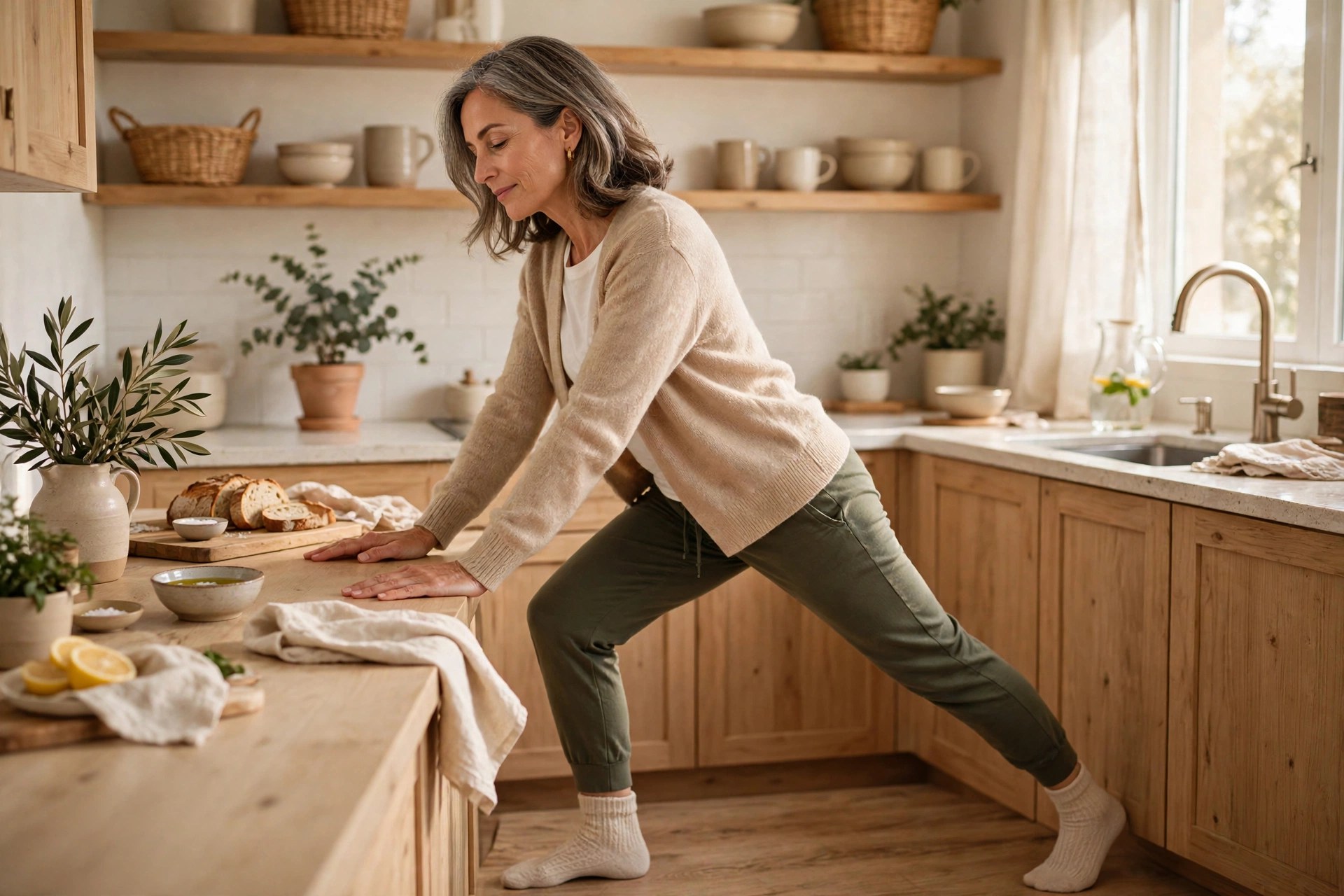
Stand facing your kitchen counter, hands on the edge, and step back until your back is flat and parallel to the floor — hold 30 seconds, then roll up slowly. This one stretch releases the low back, shoulders, and hamstrings that all lock up under stress. The counter is the perfect height, and it’s always there.
Try this: Hands on counter + walk feet back + flat back 30 seconds + roll up.
Make it yours: Do it every time the kettle boils — it’s the perfect built-in timer. Avoid: Holding your breath in the stretch; breathe slowly and let gravity do the work.
24. 🧠 The Name-the-Feeling Wheel

Instead of “I’m stressed,” get specific: am I frustrated? Disappointed? Overwhelmed? Lonely? Write down the two most accurate words. Precisely naming an emotion shrinks it — a labeled feeling is a manageable one, while “stressed” is a fog you can’t fight.
Try this: Ask what exactly am I feeling + write the 2 most accurate words.
Make it yours: Keep a short emotion list on your phone for days words won’t come. Avoid: Judging the feeling once you name it — labeling is the tool; no grades.
25. ✉️ The Future-Self Note
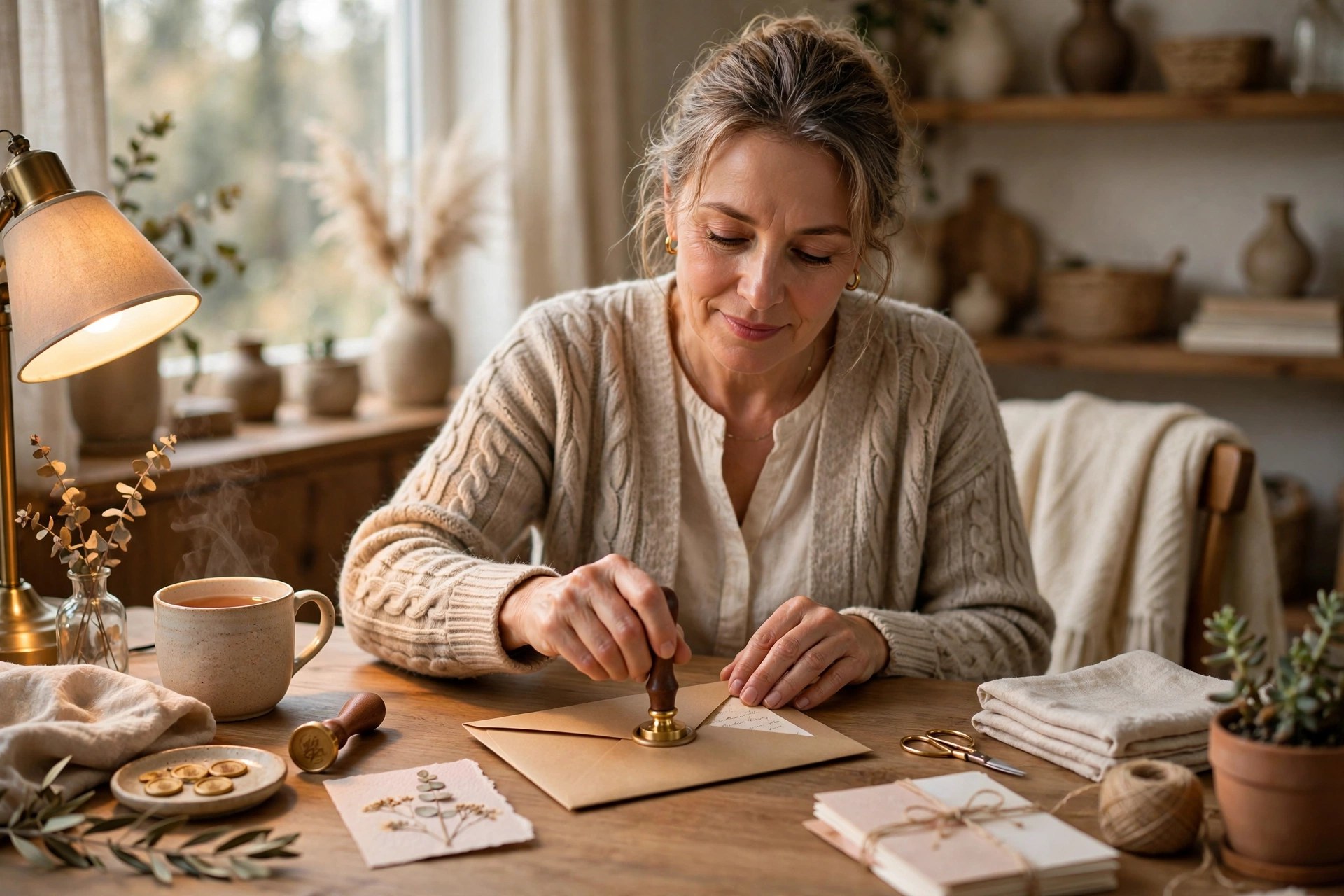
Write a short, kind note to yourself — the way you’d write to a friend — and seal it in an envelope for a hard day ahead. Something like: “You’ve handled worse than this, and you’re still here.” Opening it later feels like getting rescued by the only person who truly gets it: you.
Try this: Write one encouraging paragraph + seal it + keep it somewhere handy.
Make it yours: Write several on a calm Sunday and stash them in drawers and your bag. Avoid: Making it long or fancy; a few honest lines hit harder than a letter.
❓ Stress Relief Over 50 FAQs
Why does stress feel worse after 50?
It’s a mix of real factors: changing hormones can amplify the stress response, sleep gets lighter, and the “sandwich generation” load — aging parents plus adult kids plus work — piles on. It’s not weakness; it’s arithmetic.
What’s the fastest way to calm down when I’m stressed?
The 4-6 breath (technique 1): four counts in, six counts out, four rounds. It takes about a minute, works anywhere, and the longer exhale directly signals your nervous system to stand down.
Can stress really affect my health at this age?
Chronic, unrelieved stress is linked to poorer sleep, higher blood pressure, and a worn-down immune response — which is exactly why small daily calming practices matter more now, not less. Think of them as maintenance, not luxury.
I don’t have time for stress relief. What then?
Then do the 60-second version: unclench your jaw, drop your shoulders, and take three slow breaths with longer exhales. Everyone has sixty seconds, and done daily, it genuinely lowers your baseline tension.
When should I talk to a doctor about stress?
If stress doesn’t ease with rest and these techniques, or you notice chest tightness, constant insomnia, tearfulness most days, or a sense of dread — please see your doctor. Some stress needs professional support, and getting it is smart, not dramatic.
📖 Keep Reading
- How to Host a Holiday Gathering Without Stress: 12 Calm Steps — put your new calm techniques to work with a genuinely low-stress hosting plan.
- 12 Quick Hairstyles for Busy Mornings Over 50 — one less morning stress: get out the door looking polished in five minutes.
- Fall Rituals After 60: 12 Cozy Habits — gentle seasonal rhythms that keep everyday stress from building up.
✅ Your Calm-Down Checklist
- ☐ Memorize the 4-6 breath — your anytime, anywhere reset.
- ☐ Unclench jaw, shoulders, and hands three times a day.
- ☐ Step outside for five minutes when tension spikes.
- ☐ Dump the mental swirl onto paper before bed.
- ☐ Protect one small daily pleasure — tea, music, a walk.
- ☐ Remember: calm is maintenance, not a reward you have to earn.
Stress will keep showing up — that’s life. But now you’ll meet it with a plan instead of white knuckles. Start with just the breathing tonight; the rest will follow.
Discover more from Fashinate Style
Subscribe to get the latest posts sent to your email.