
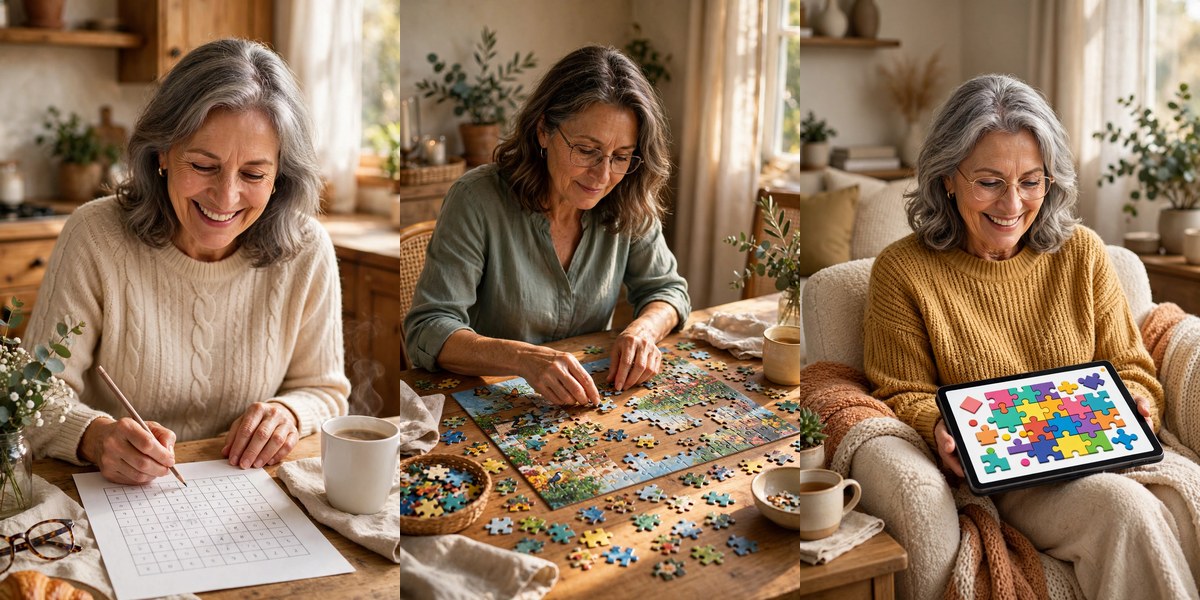
Doing the crossword every morning — is that actually enough to keep your memory sharp? It is a good start, but your brain has a useful bias: it responds to novelty and challenge, not to repetition of what it already knows how to do.
If the crossword has become comfortable, your brain has filed it under “routine” — and routine does not build new connections. The fix is deliciously simple: play more kinds of games. Different games train different skills — logic, words, strategy, speed, memory, and the social spark that makes it all stick.
Below are 24 brain games and playful workouts for women over 60, from solo classics to table games with friends and digital favorites. Pick three that sound fun and start this week — fun is the whole point, and it is also the mechanism.
1. 🔢 Sudoku: The Number Workout

Sudoku trains pure logic — scanning, eliminating, holding possibilities in mind. Regular players often find their concentration sharpening within weeks, and the difficulty ladder means it never stops challenging you.
Try this: Start with easy grids until the rules feel automatic + move up one difficulty level at a time + do one puzzle with your morning coffee.
Make it yours: Newspaper, puzzle books, or free apps — the grid is the same everywhere.
Budget tip: Library puzzle books and free apps make this a zero-cost habit.
2. ✏️ The Daily Crossword Ritual

Crosswords are vocabulary gyms — they strengthen word recall, the exact skill that produces those tip-of-the-tongue moments. Research has linked regular crossword and number-puzzle solvers with measurably younger-performing brains.
Try this: One crossword a day, pencil not pen + look up answers you miss — learning is the point + try cryptic crosswords when standard ones get easy.
Make it yours: Sunday-size puzzles are a lovely weekend ritual.
Avoid: Doing the same easy puzzle source forever — variety of clues matters.
3. 🧩 Jigsaw Puzzles: Big-Picture Thinking
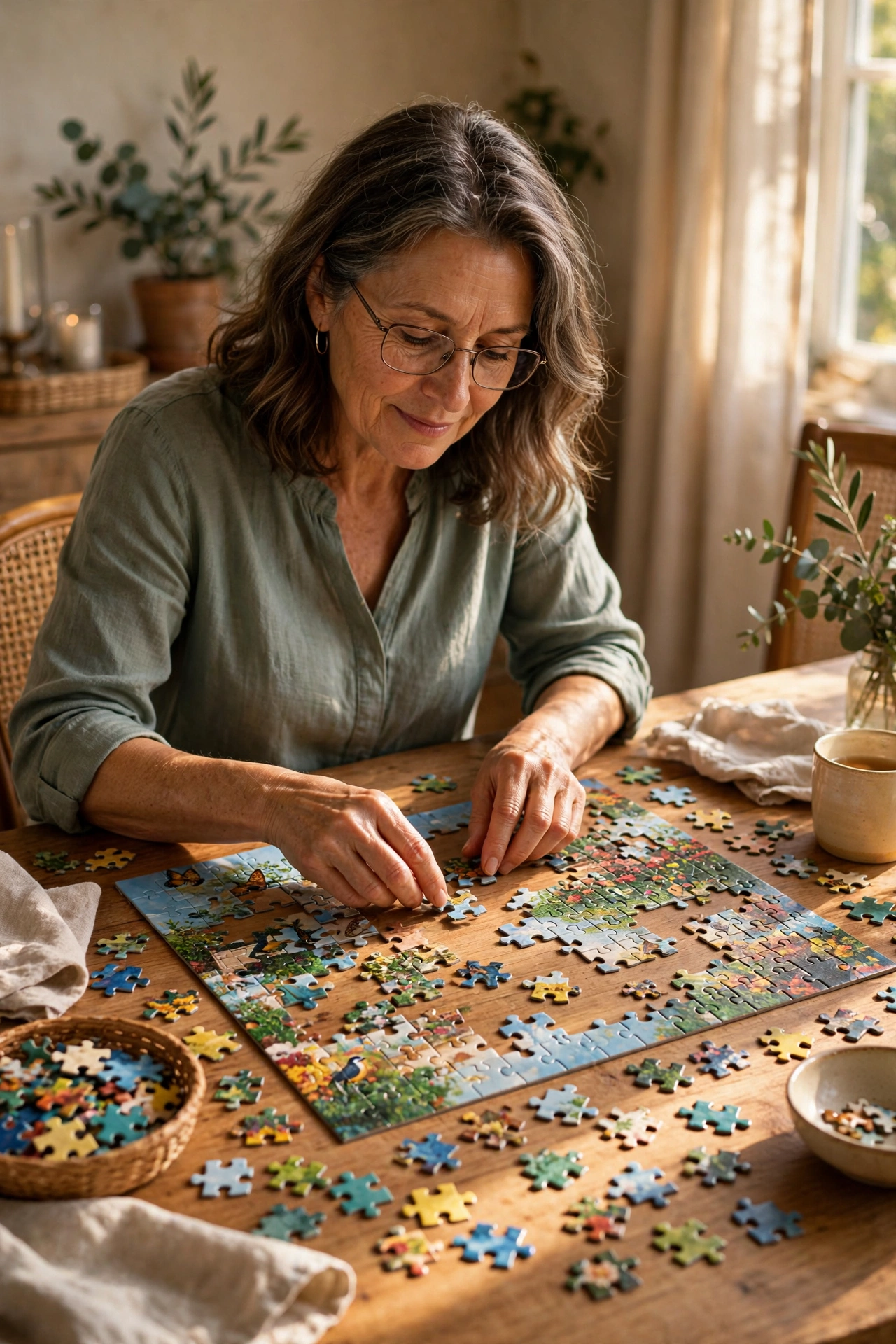
Jigsaws train visual-spatial reasoning — the skill of seeing how parts fit into a whole. They are also meditative: an hour with a puzzle quiets a buzzing mind like few other activities can.
Try this: Start with 500 pieces, work up to 1,000 + sort edge pieces first + keep a card table set up so you can dip in and out.
Make it yours: Choose images you love — landscapes, art, travel photos.
Budget tip: Thrift stores and library sales are treasure troves of cheap puzzles.
4. 🔍 Word Searches: The Gentle Hunt

Word searches are crosswords’ calmer cousin — they train visual scanning and pattern recognition without any pressure. Perfect for winding down in the evening or for days when your brain wants engagement without strain.
Try this: Keep a book by your evening chair + circle with a colored pen for satisfaction + try themed searches (travel, food, history).
Make it yours: Large-print editions are widely available and easier on the eyes.
Avoid: Treating these as your only game — pair with something harder.
5. 🧠 Logic Puzzles & Riddles

Logic grids and lateral-thinking riddles force your brain down unfamiliar paths — exactly the novelty researchers say matters most. A riddle that stumps you for an hour is doing more for your mind than a crossword you finish in ten minutes.
Try this: One logic puzzle a week to start + read riddles aloud to friends and solve together + keep a “stumpers” notebook of your favorites.
Make it yours: Mystery novels scratch the same deductive itch.
Budget tip: Free riddle and logic-puzzle sites offer endless material.
The “challenge rule”: if you can finish a puzzle without a single moment of being stuck, it is too easy now. Bump the difficulty — being briefly stumped is where the brain-building happens.
6. 🃏 Memory Matching Games
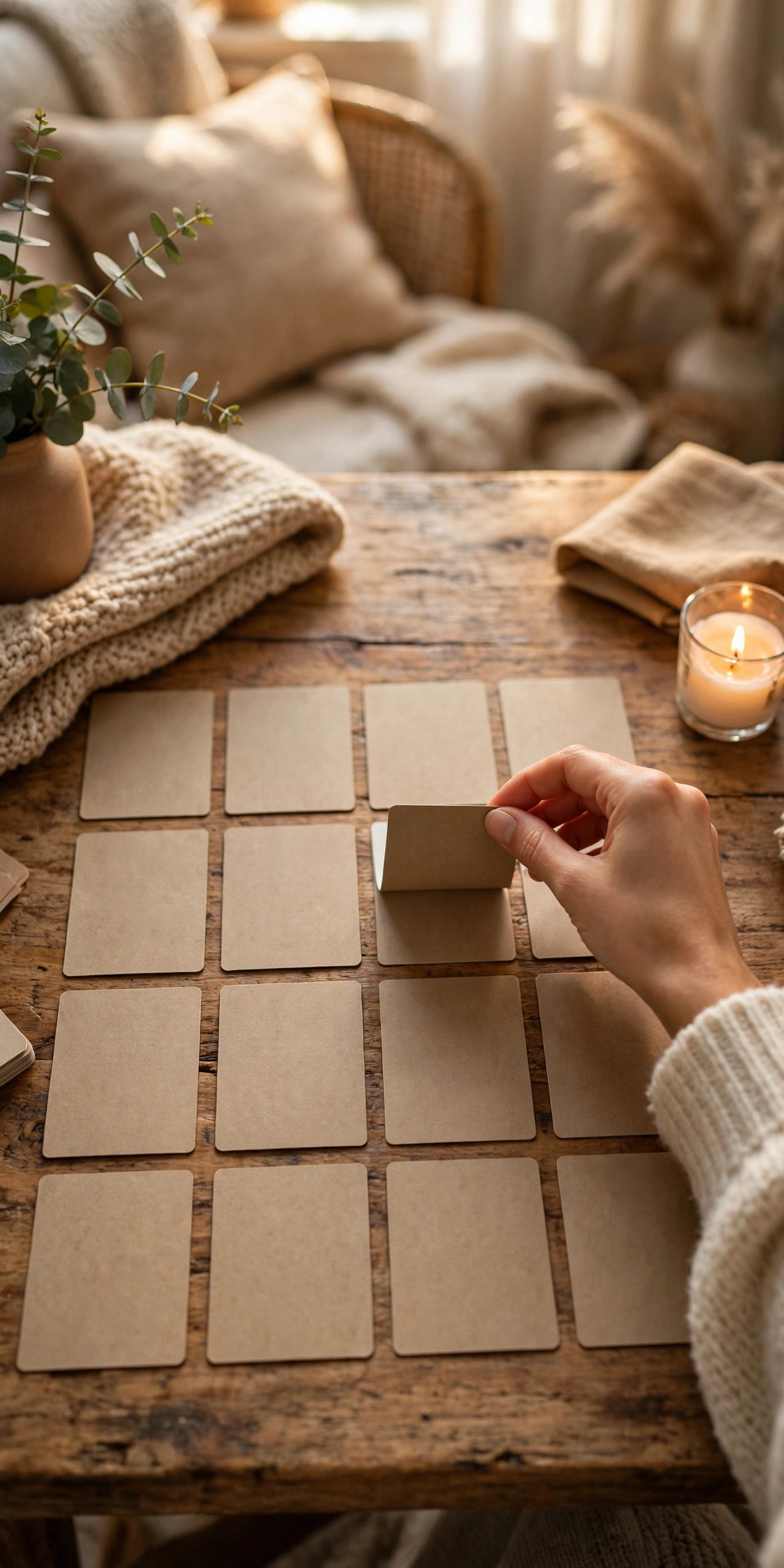
The classic Concentration game — flip cards, remember locations, find pairs — is direct training for visual short-term memory. It is simple enough for grandkids to join, which makes it a wonderful two-generation game.
Try this: Start with 12 pairs, work up to 24 + play a round daily + invite grandchildren — they will love beating you.
Make it yours: Make your own set with family photos for a personal twist.
Avoid: Using the same layout twice — shuffle thoroughly every game.
7. ♟️ Chess: Strategy in Sixty-Four Squares

Chess is the heavyweight champion of brain games — planning, foresight, pattern memory, and adapting to surprises. You do not need to be good to benefit; learning the game at 60 is itself a magnificent brain workout.
Try this: Learn the piece movements first (one afternoon) + play short friendly games, not tournaments + review one famous game a week to absorb strategy.
Make it yours: Chess clubs welcome beginners warmly — and the social side is half the benefit.
Budget tip: Free apps let you practice against a patient computer opponent.
8. 🂡 Card Games: Bridge, Rummy & Hearts
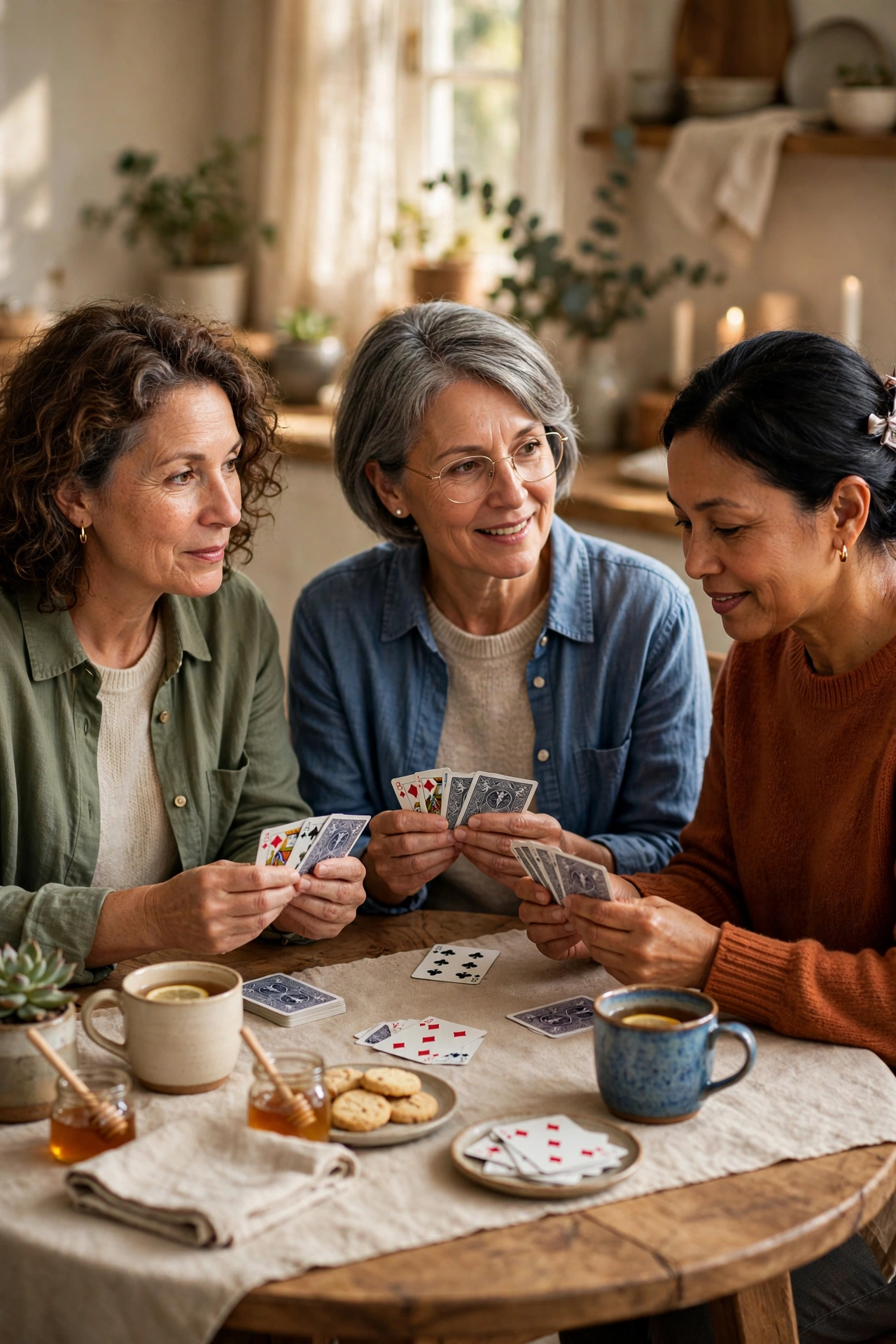
Card games blend memory (what has been played), strategy (what to hold), and social reading (what opponents might do). Bridge is famously demanding; rummy and hearts are gentler on-ramps with the same core benefits.
Try this: Start a weekly card circle with 3–4 friends + learn one new game a season + keep score across weeks for a friendly league.
Make it yours: Teach grandchildren — explaining rules sharpens your own understanding.
Avoid: Playing for stakes that add stress — the cognitive benefit comes from the thinking, not the tension.
9. 🔤 Scrabble: Word Battles
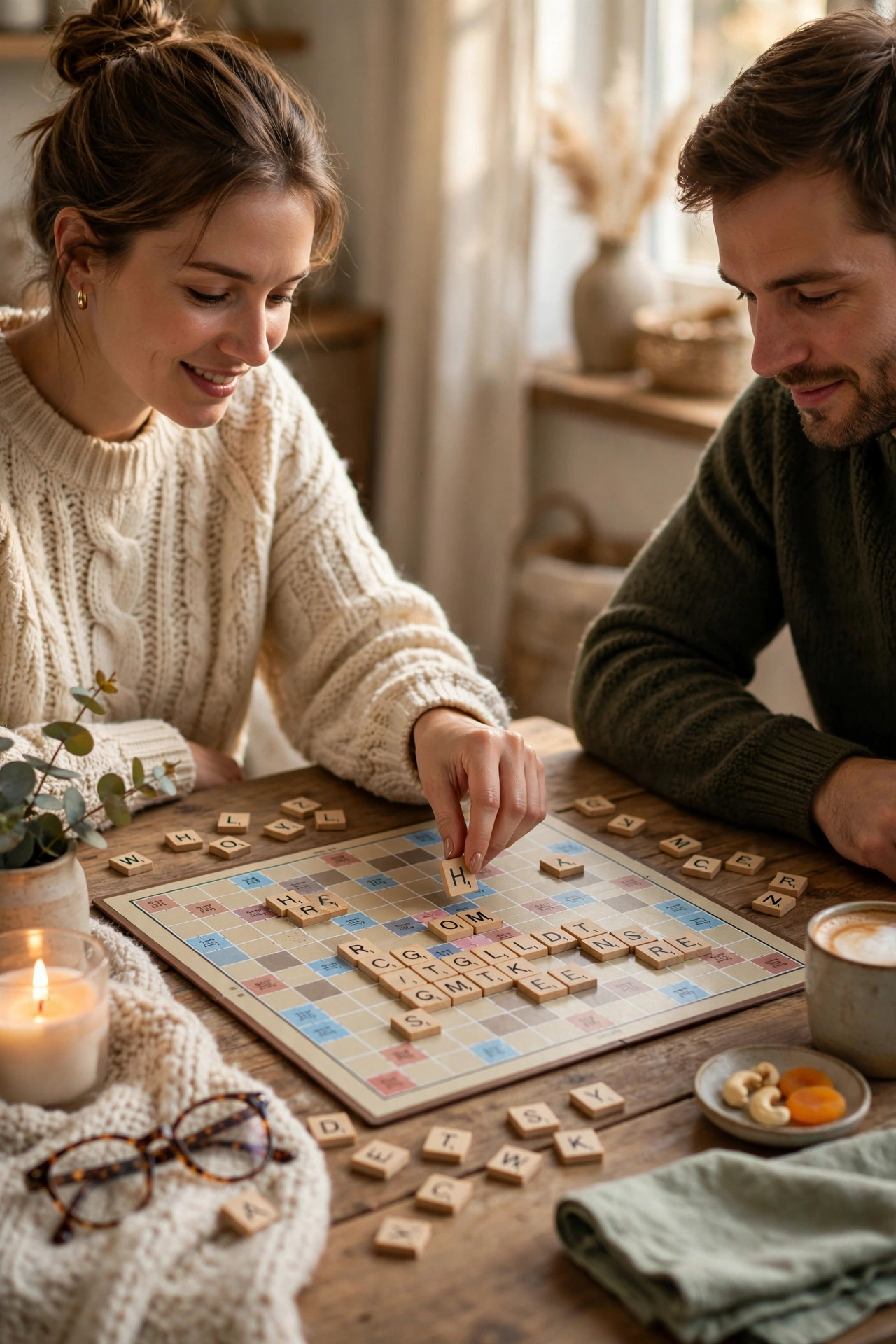
Scrabble demands vocabulary, anagramming, arithmetic, and board strategy simultaneously — a genuine full-brain workout disguised as a cozy evening. Close games against a good opponent are among the best mental exercise there is.
Try this: Play weekly with a regular partner + learn two-letter words to open the board + try the app version for daily practice.
Make it yours: Team up as pairs if head-to-head feels intimidating.
Budget tip: Used Scrabble sets are everywhere at thrift stores.
10. 🀄 Mahjong: Tiles and Tactics
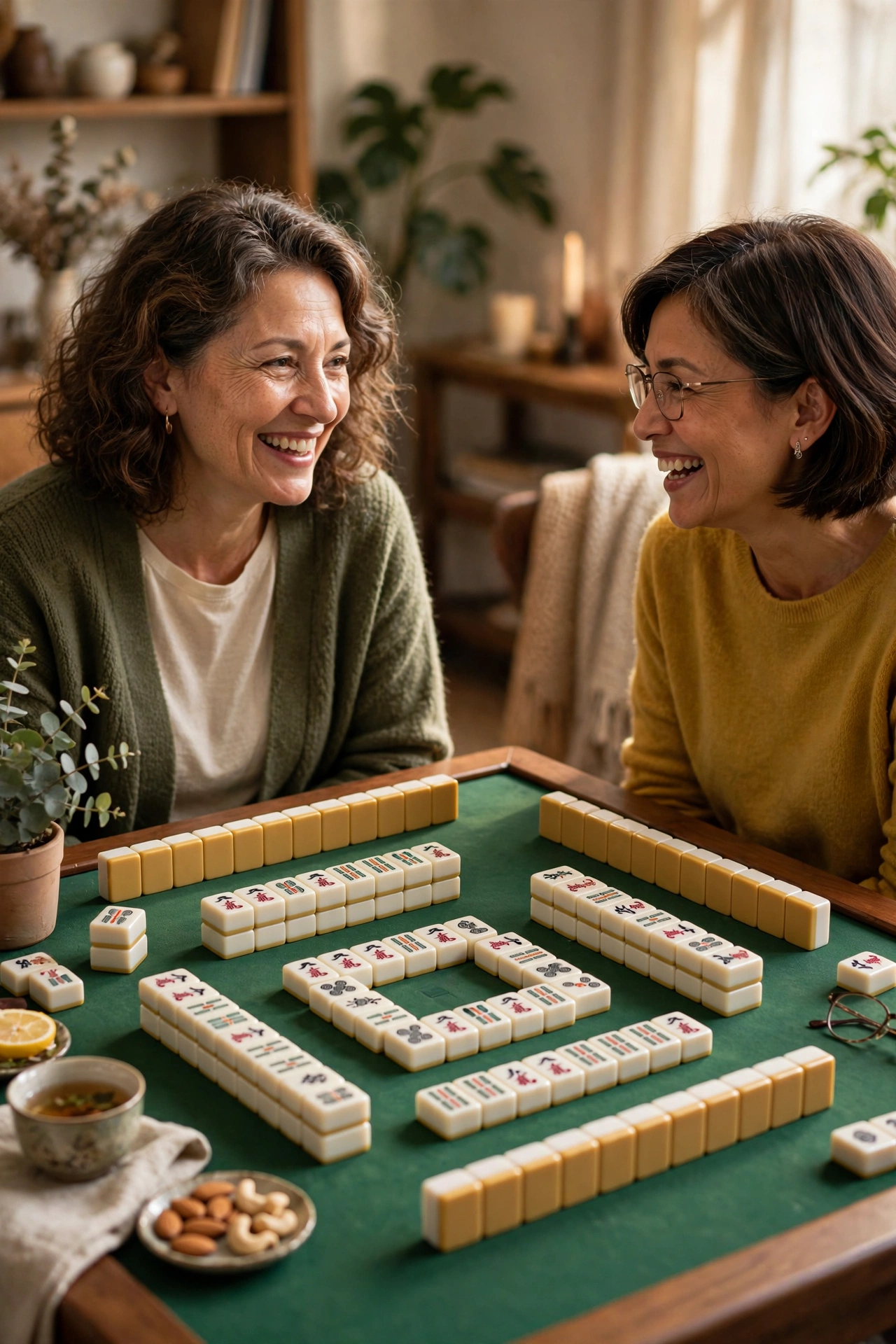
Mahjong combines pattern recognition, memory, and quick decision-making in a beautifully social package. Regular players swear by its ability to keep them mentally nimble — and the clack of the tiles is weirdly satisfying.
Try this: Find a local group or community-center class + learn the basic hands first + play weekly — rhythm matters more than intensity.
Make it yours: American and Chinese versions differ; try both and pick your favorite.
Avoid: Memorizing every complex hand at once — build gradually.
11. ⬛ Dominoes: Click and Count
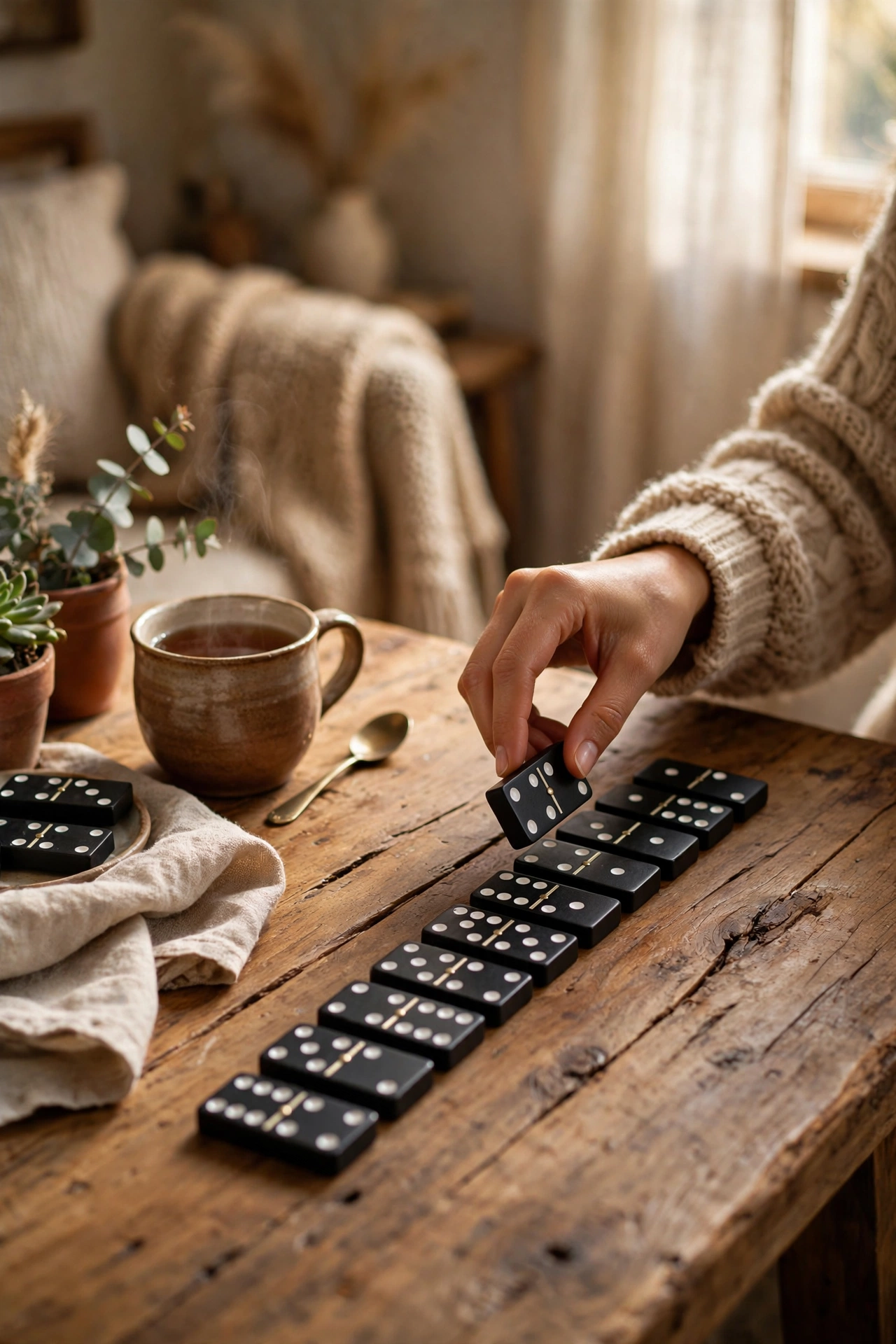
Dominoes look simple and play deep — tracking which tiles are out, planning sequences, and adapting to opponents. It is easy to learn in minutes and genuinely strategic within weeks.
Try this: Start with classic block dominoes + graduate to Mexican Train for variety + make it a porch or kitchen-table tradition.
Make it yours: Dominoes travel well — a set in your bag means games anywhere.
Budget tip: A good set costs little and lasts decades.
12. ❓ Trivia Night With Friends

Trivia retrieves long-buried knowledge — exactly the recall pathway that rusts with disuse. Team trivia adds the joy of collective remembering: someone always knows the thing you forgot, and vice versa.
Try this: Find a weekly pub or library trivia night + form a regular team + host a home trivia night with themed rounds.
Make it yours: Make rounds about your generation’s music and movies — you will dominate.
Avoid: Worrying about wrong answers — the retrieval attempt is the workout.
13. 📲 Brain-Training Apps That Are Actually Fun
Apps like Lumosity and Elevate offer short, adaptive exercises that get harder as you improve — the “progressive challenge” researchers emphasize. Ten minutes a day is the sweet spot; more is not necessarily better.
Try this: Pick one app and commit for a month + do the daily session at the same time + track your scores to watch progress.
Make it yours: Free tiers are generous — try before paying for anything.

Avoid: Treating apps as your only brain exercise — they work best alongside real-world play.
Research suggests the winning formula is variety plus novelty: an app for speed, a paper puzzle for words, and a social game for strategy covers more cognitive ground than any single game played daily.
14. 🧩 Digital Puzzle Games on Your Tablet
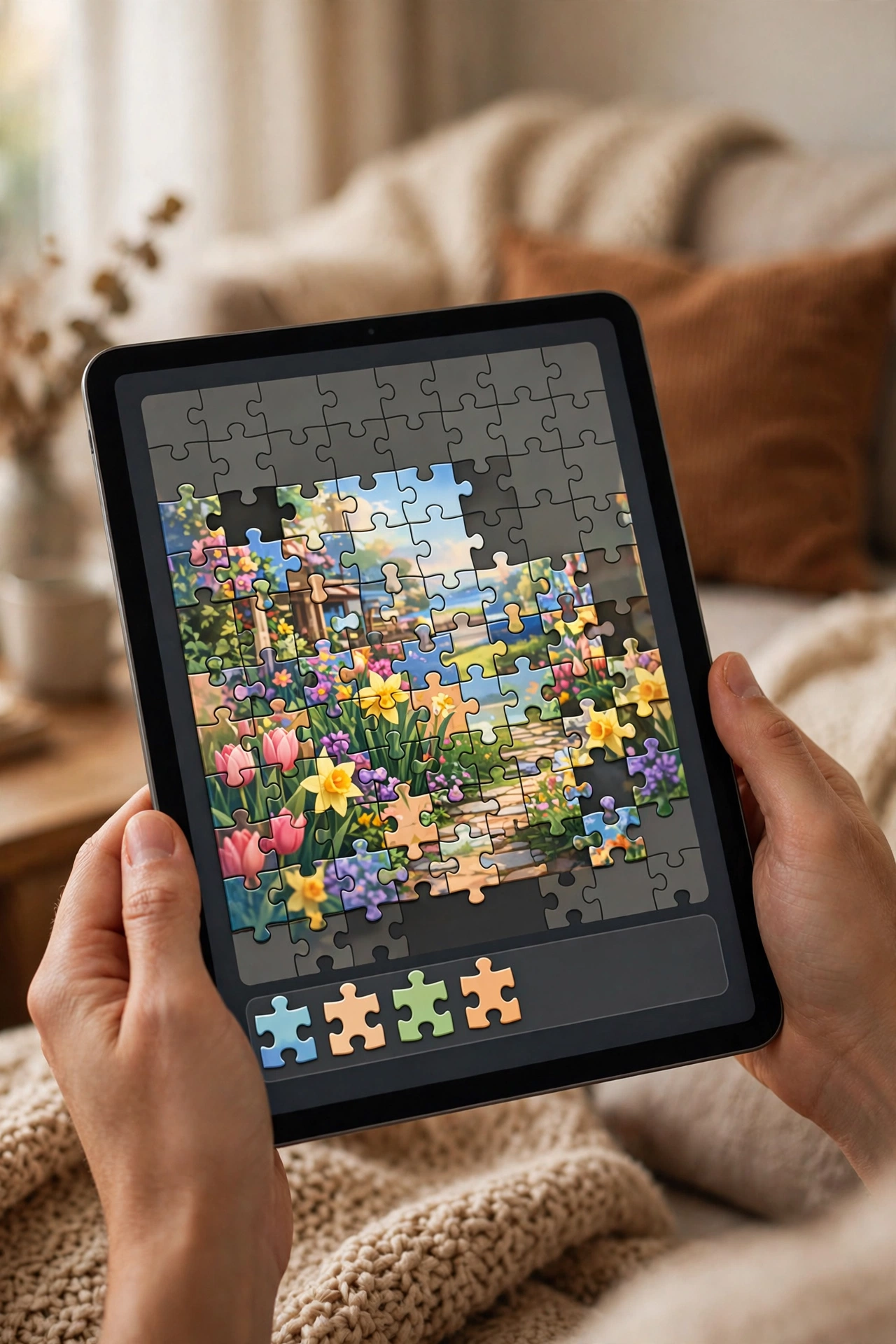
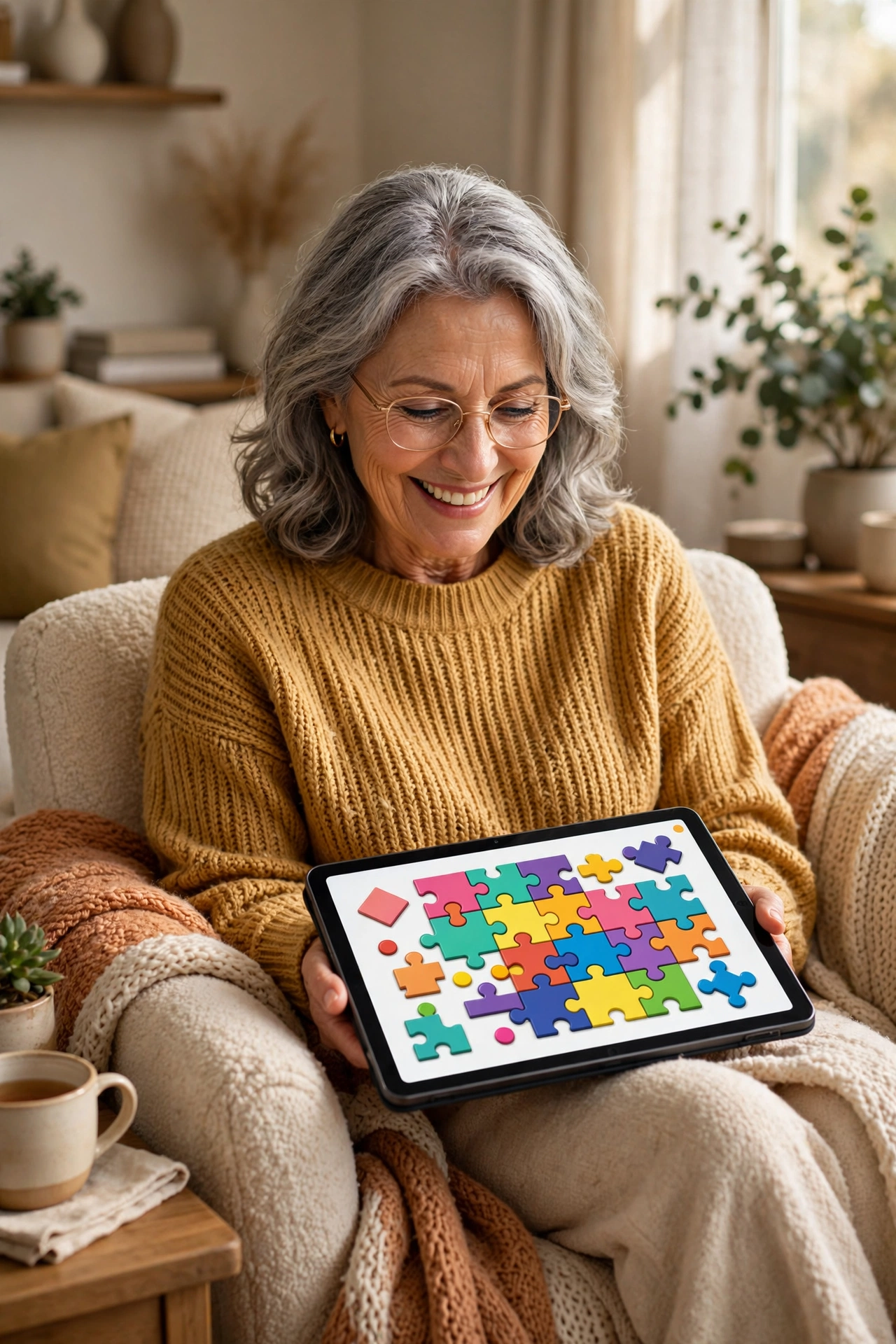
Digital jigsaws, nonograms, and picture puzzles bring the classics to your couch — with hints, zoom, and infinite new puzzles. Studies have linked digital puzzle play in older adults with better working memory and distraction-filtering.
Try this: Try a digital jigsaw app for travel days + nonograms (picture crosswords) for a fresh challenge + set a timer so play stays a treat, not a trap.
Make it yours: Stylus pens make tablet puzzles feel wonderfully tactile.
Budget tip: Many excellent puzzle apps are completely free.
15. 🟪 Tetris: The Falling-Block Workout
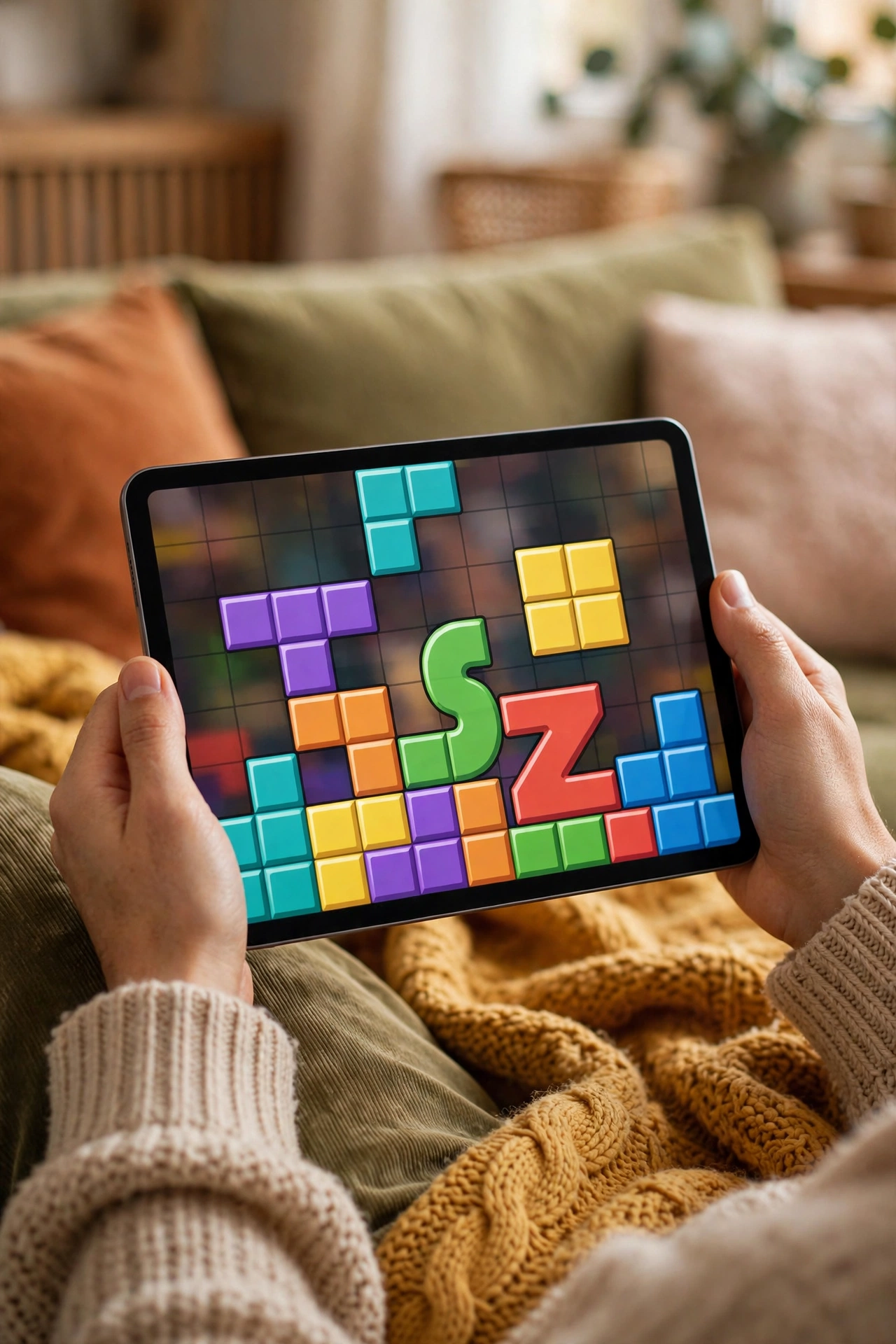
Tetris looks like a kids’ game and works like a spatial-reasoning laboratory — rotating shapes under time pressure trains visual processing and quick decisions. Brain-imaging studies have shown real efficiency gains in players.
Try this: Play in 10-minute bursts + focus on planning two pieces ahead + laugh when the stack gets away from you.
Make it yours: Free versions exist on every device — no purchase needed.
Avoid: Marathon sessions — short and snappy is the brain-healthy dose.
16. 🂡 Solitaire: The Quiet Classic
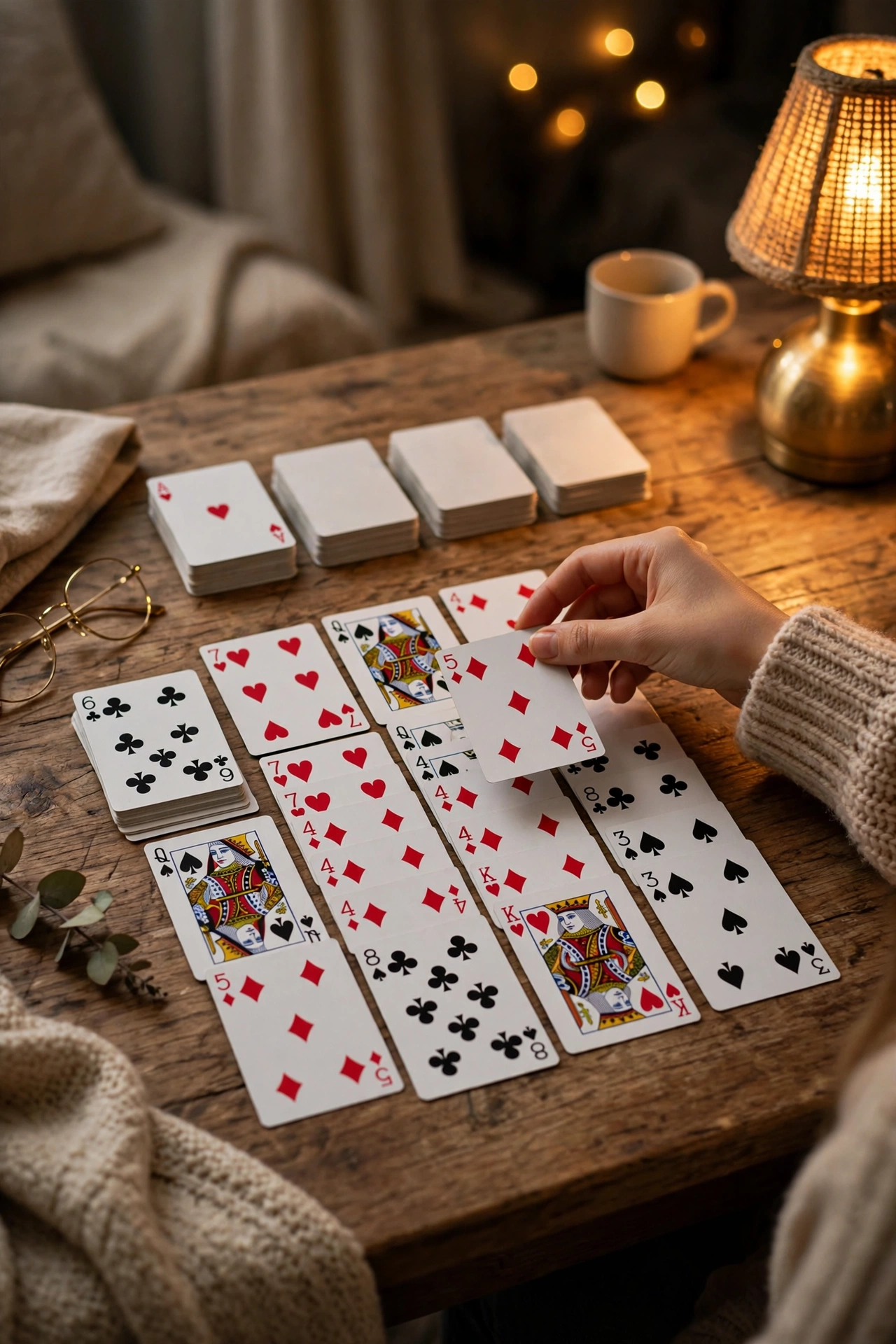
Solitaire trains planning, sequencing, and patience — and its gentle rhythm makes it perfect for winding down. Digital versions add daily challenges and statistics that turn a solitary pastime into a personal league.
Try this: One game with your evening tea + try Spider or FreeCell for harder variants + track your win rate month to month.
Make it yours: Real cards on a real table feel wonderfully analog on screen-free days.
Avoid: Playing on autopilot — pause and plan three moves ahead.
17. 🎲 Backgammon: Race and Strategy
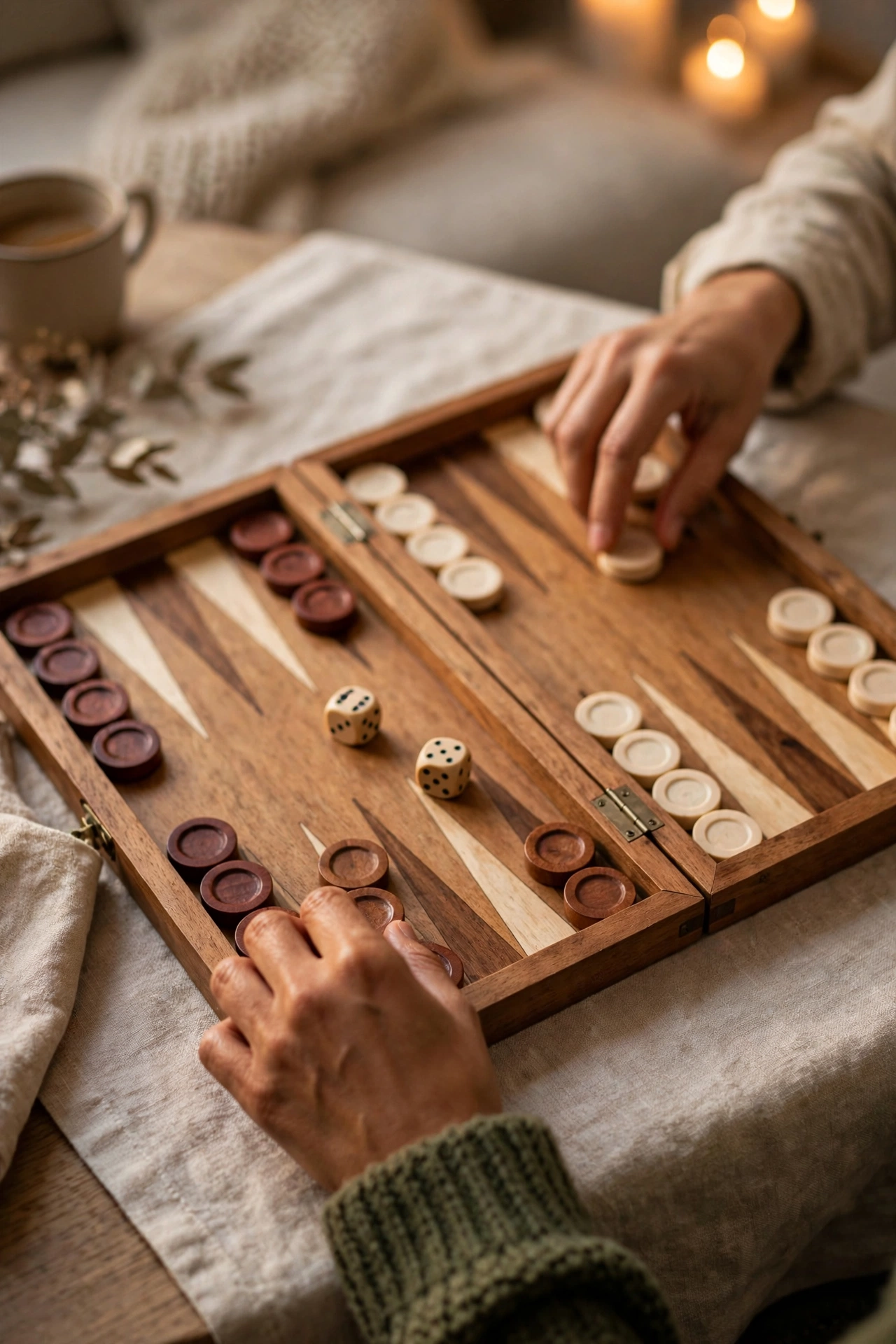
Backgammon blends luck and strategy in a way that keeps every game fresh — you must adapt plans to dice rolls, training cognitive flexibility. It is also one of the oldest games in the world, which feels appropriately distinguished.
Try this: Learn the basic race strategy first + play short matches to 3 points + find an online opponent when no partner is handy.
Make it yours: A beautiful wooden set makes a lovely living-room fixture.
Budget tip: Free apps teach the rules patiently before you invest in a set.
18. 🔴 Checkers: Simple but Sharp

Do not underestimate checkers — forced jumps, king-making races, and endgame puzzles demand real foresight. It is the perfect “thinking game” for playing with grandchildren, who can learn it in minutes.
Try this: Play a daily game with a grandchild or friend + study one classic endgame a week + graduate to chess when you are ready.
Make it yours: Giant garden checkers sets make this gloriously physical too.
Avoid: Rushing moves — the thinking is the whole point.
19. 🎱 Bingo With Friends
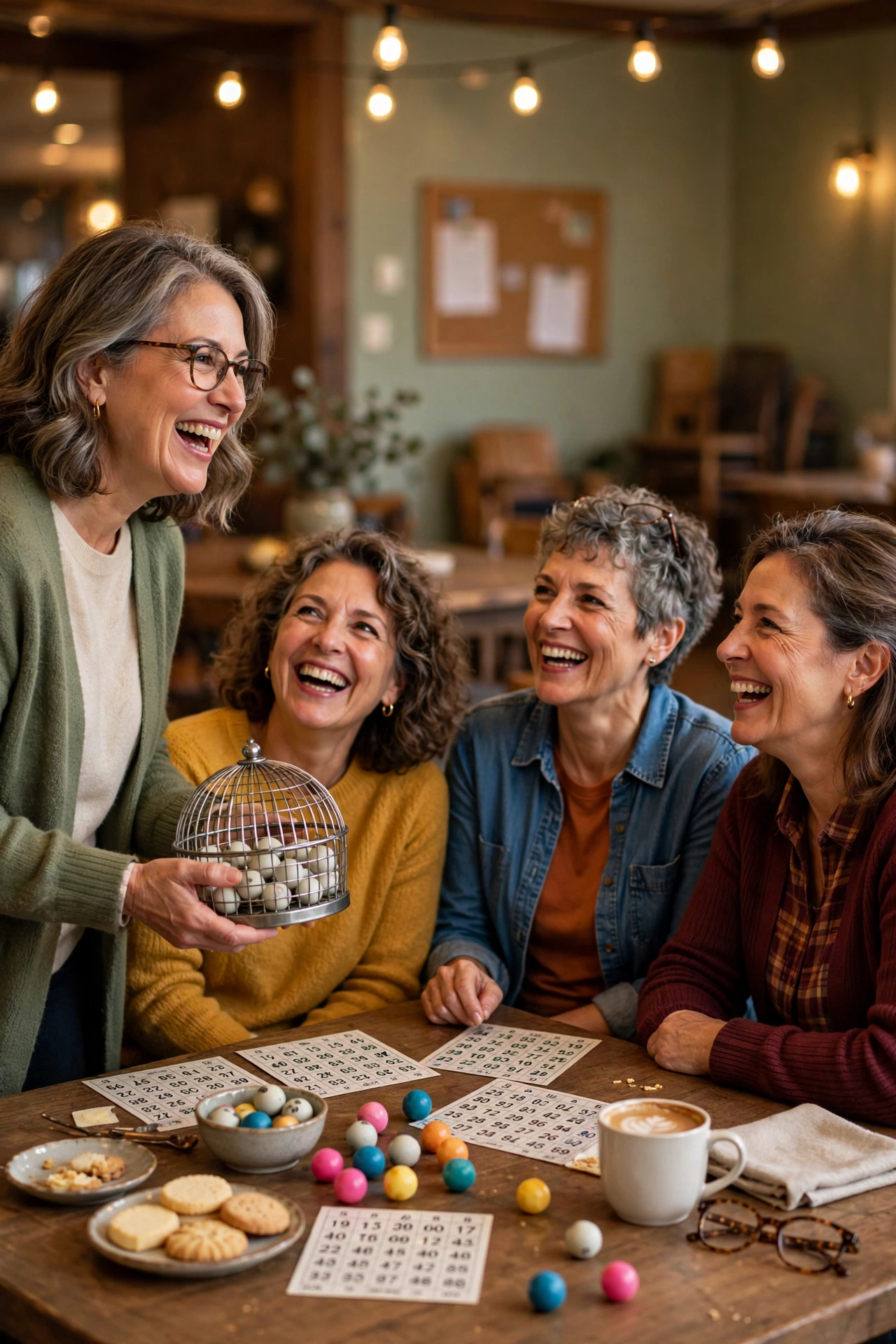
Bingo trains sustained attention and quick visual scanning — listening for numbers while scanning your card is genuine divided-attention practice. And the social buzz of a bingo hall is pure joy.
Try this: Join a weekly community bingo night + play two cards to raise the challenge + volunteer as a caller sometimes — it is harder than it looks.
Make it yours: Theme nights (music bingo, travel bingo) keep it fresh.
Budget tip: Community and church bingo nights are usually very affordable.
20. 🎲 Host a Board Game Night
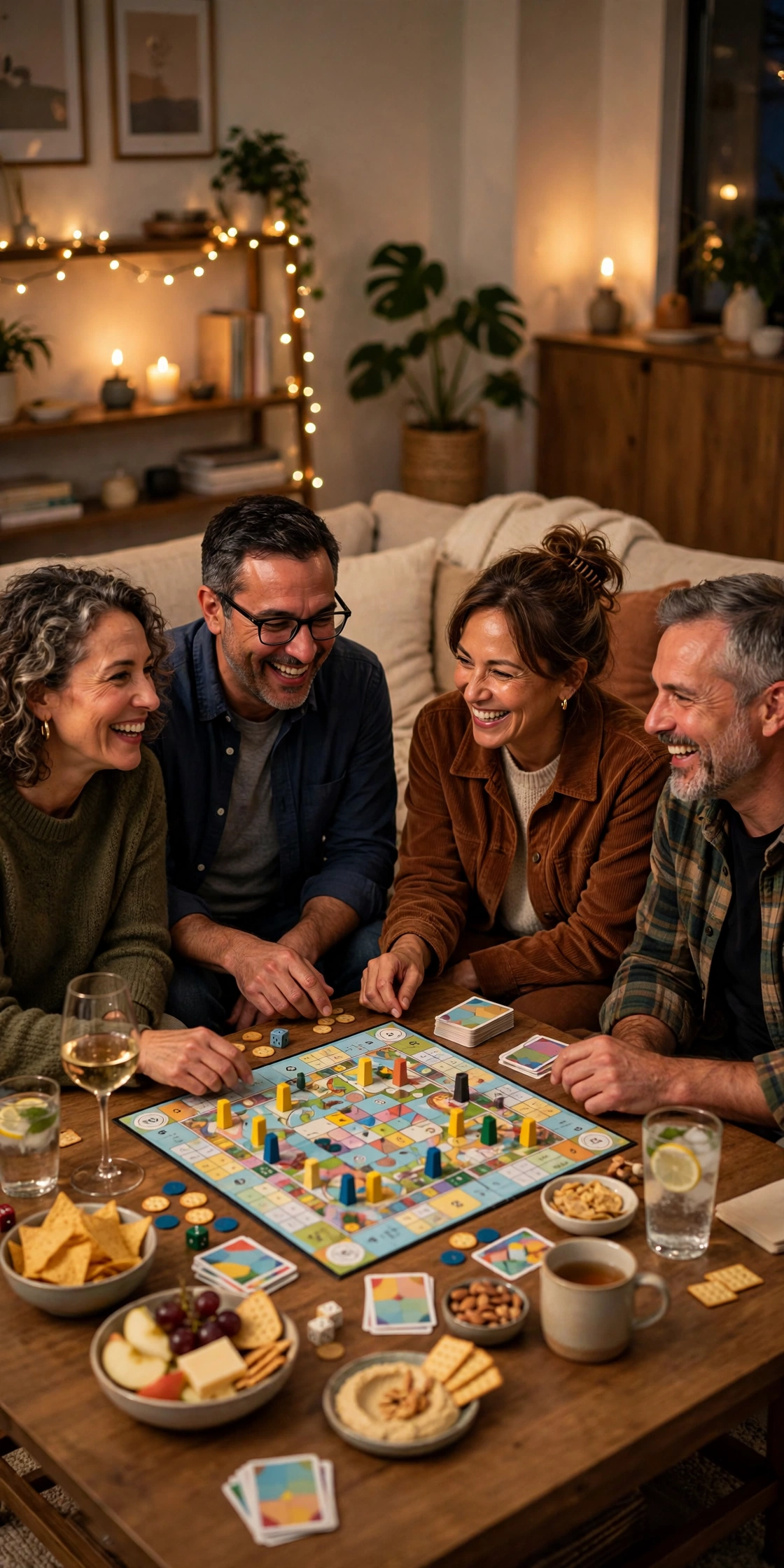
A regular game night bundles strategy, conversation, laughter, and friendship — arguably the richest single brain-health habit on this list. Modern board games (Ticket to Ride, Azul, Codenames) are far more interesting than the ones you remember.
Try this: Host monthly to start + rotate who chooses the game + keep it to 2–3 hours with good snacks.
Make it yours: Cooperative games (everyone vs. the game) are perfect for non-competitive groups.
Avoid: Games that take an hour to learn — start with 15-minute teach times.
21. 🎭 Charades & Pictionary: Laugh and Think
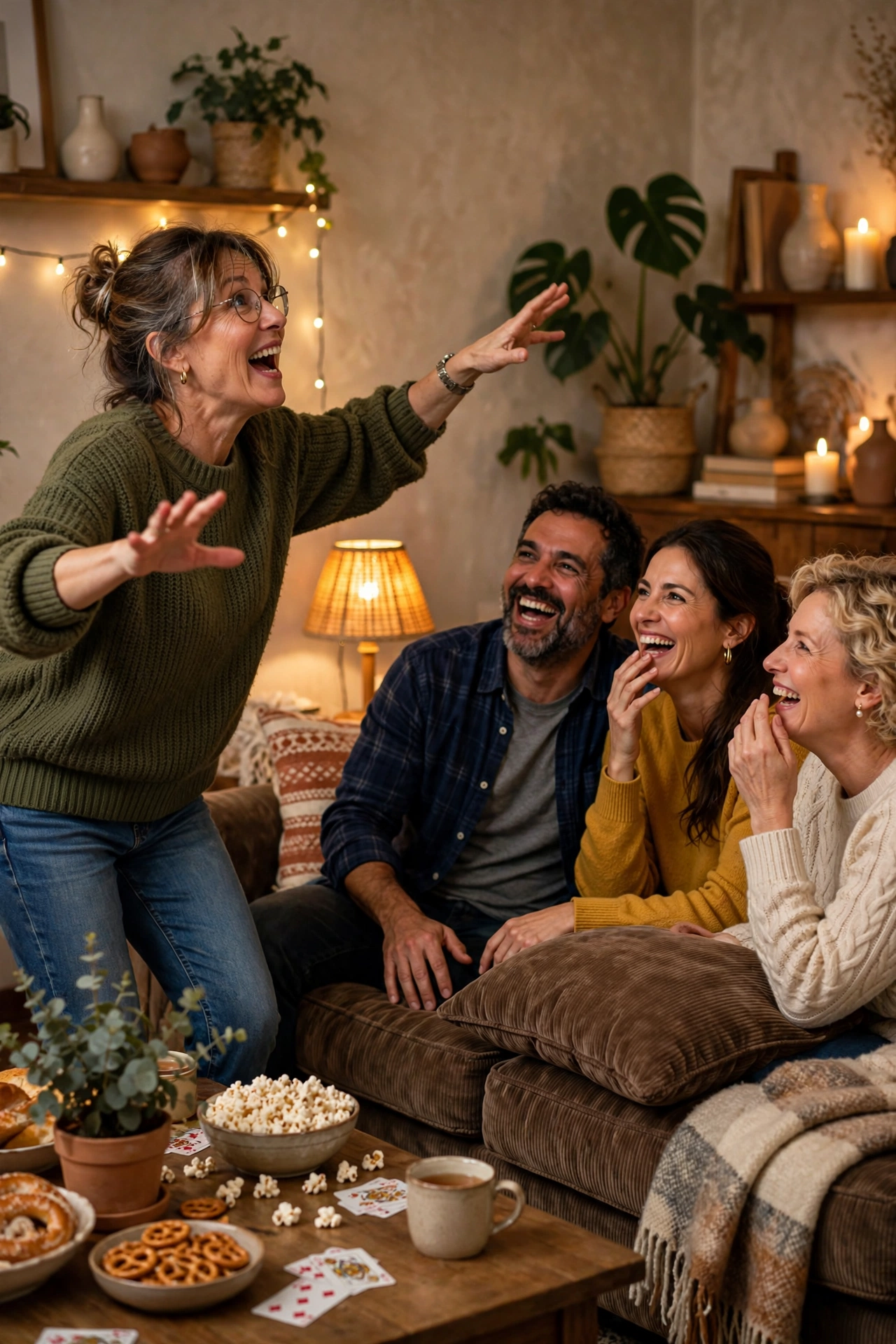
Acting without words (or drawing under pressure) forces creative, embodied thinking — your brain must translate ideas into gestures and images on the fly. It is also the fastest route to an evening of helpless laughter.
Try this: Keep a charade word jar on hand + play in teams of mixed ages + embrace terrible drawings — they are the best part.
Make it yours: Themed rounds (movies of the ’80s, books you love) add a memory-retrieval bonus.
Budget tip: A jar of slips and a timer is all you need — no purchase required.
22. 🗣️ Language-Learning Apps

Learning a language is repeatedly cited as one of the most powerful cognitive workouts — it builds memory, attention-switching, and entirely new neural pathways. Ten minutes a day on an app genuinely accumulates.
Try this: Pick a language tied to a dream trip + do the daily lesson with morning coffee + practice phrases aloud on walks.
Make it yours: Find a conversation partner or class for the social layer.
Avoid: Chasing streaks over understanding — slow and curious beats fast and stressed.
23. 🎹 Pick Up a Musical Instrument

Music training engages nearly every brain region at once — reading notation, coordinating hands, listening, remembering pieces. Studies consistently rank it among the most potent cognitive workouts, and it is never too late to start.
Try this: Rent before you buy + take four beginner lessons to build foundations + practice 15 minutes daily — consistency beats duration.
Make it yours: Ukulele and keyboard are wonderfully beginner-friendly.
Budget tip: Secondhand instruments and group classes keep costs low.
24. 📖 Storytelling Games

Storytelling games — where players build tales from prompt cards — train verbal fluency, imagination, and quick thinking. Crafting a story on the spot is public speaking, improv, and memory retrieval in one delightful package.
Try this: Try a storytelling card game with friends + take turns telling true stories from your twenties + record family stories for grandchildren.
Make it yours: “Two truths and a lie” needs zero equipment and never gets old.
Avoid: Worrying about being entertaining — sincerity beats performance.
❓ Brain Game FAQs
Do brain games really work, or is it just marketing?
Research is genuinely promising but nuanced: studies show brain training can improve the skills practiced and some related abilities, especially with varied, challenging, adaptive games. The strongest evidence favors novelty and progressive difficulty — which is why rotating games beats repeating one.
Is doing the crossword every day enough?
It is a fine foundation, but once it feels easy, its benefit plateaus. Add at least one different type — a number game, a strategy game, or something social — to keep challenging new mental muscles.
Are brain-training apps worth paying for?
Free tiers of major apps offer plenty for most players. Paid versions add tracking and variety, but no app replaces the combined benefit of social play, physical activity, and real-world learning.
How much time should I spend on brain games daily?
About 15–30 minutes most days is the research-backed sweet spot. Consistency over months matters far more than long sessions — a little daily play beats a weekend marathon.
Can playing games with grandchildren help my memory too?
Absolutely — intergenerational play is ideal: you get cognitive challenge plus social connection plus joy, a combination researchers consistently link with better cognitive aging. Let them teach you their games sometimes.
📖 Keep Reading
- How to Fill Quiet Weekends After Retirement With Joy & Purpose — meaningful ways to keep your mind engaged and your spirits up.
- Small Ways to Feel Connected When You Live Alone After 60 — gentle ideas for staying socially sharp.
- 12 Free Activities With Grandchildren at Home They’ll Never Forget — playful ideas that double as brain workouts for you.
✅ Your Brain-Game Checklist
☐ One word game in your weekly rotation
☐ One number/logic game in your weekly rotation
☐ One strategy game (chess, cards, Scrabble)
☐ One social game night a month
☐ Difficulty rising as you improve
☐ 15–30 minutes most days — fun first
The crossword was never the problem — playing only the crossword was. With 24 games across four styles, your brain will never know what delightful challenge is coming next, and that unpredictability is exactly what keeps it young. Pick your three favorites tonight and play one tomorrow morning. 🧩
Discover more from Fashinate Style
Subscribe to get the latest posts sent to your email.