

Picture this: you’re in a crowded airport, rolling bag in one hand, coffee in the other, when someone clips your shoulder. A younger you would have wobbled and laughed it off. But lately you’ve noticed the wobbles come easier — and the laughing-off feels less funny.
Here’s the good news: balance is a skill, not a gift, and it responds to training at every age. These 21 exercises — from chair-assisted basics to eyes-closed challenges — rebuild the ankle strength, core reflexes, and confidence that keep you steady on stairs, curbs, trails, and crowded terminals alike.
1. 🦶 Single-Leg Stands
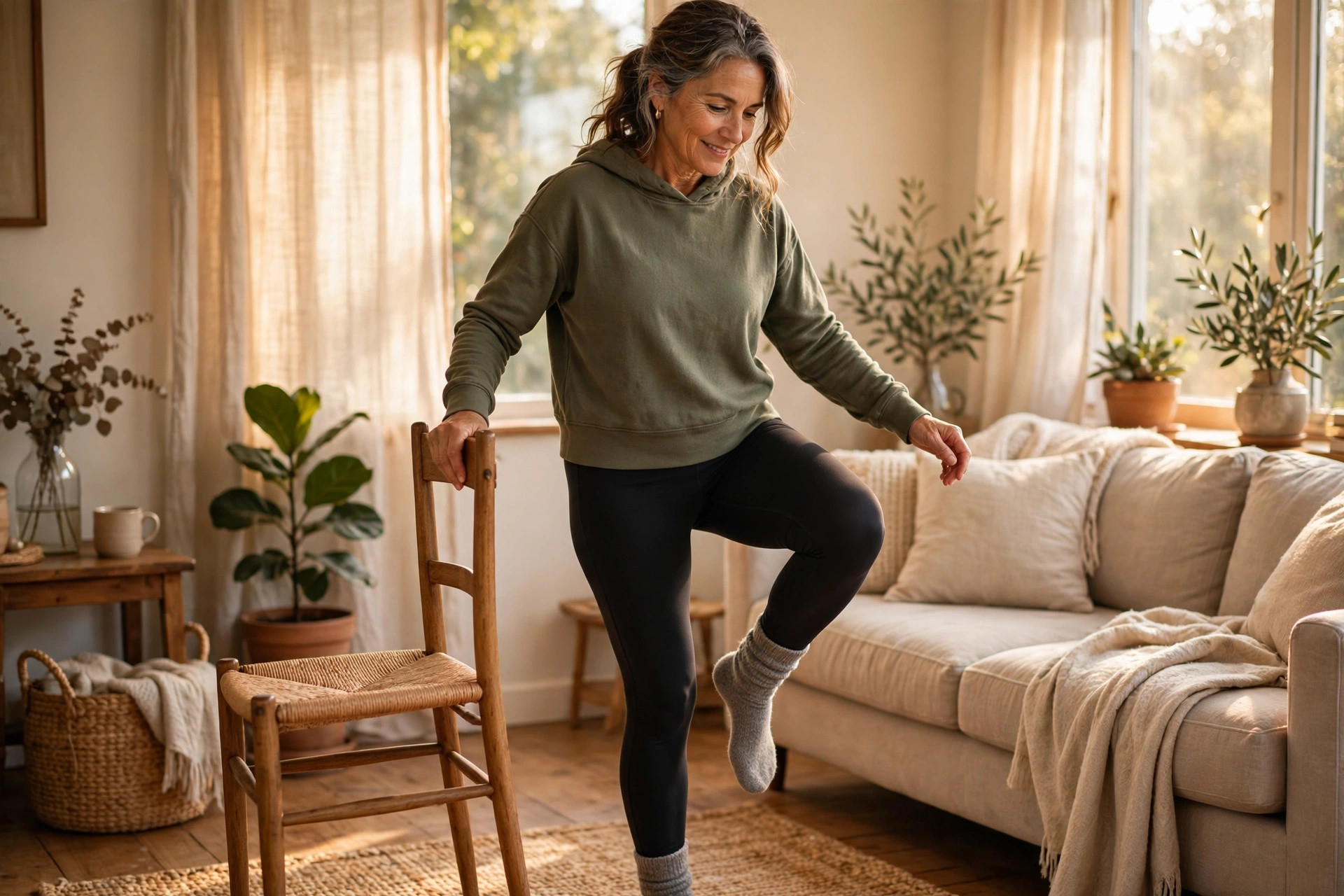
The foundation of everything: stand on one leg, fingertips on a chair, and hold. This one move trains the ankle, hip, and core reflexes that catch you when you stumble.
Try this: Try this: 3 holds of 20 seconds per leg, daily.
Make it yours: Make it yours: do it while the microwave runs — dead time becomes training.
Avoid: Avoid: gripping the chair hard. Fingertips only; let your body work.
2. 🚶 Heel-to-Toe Walk
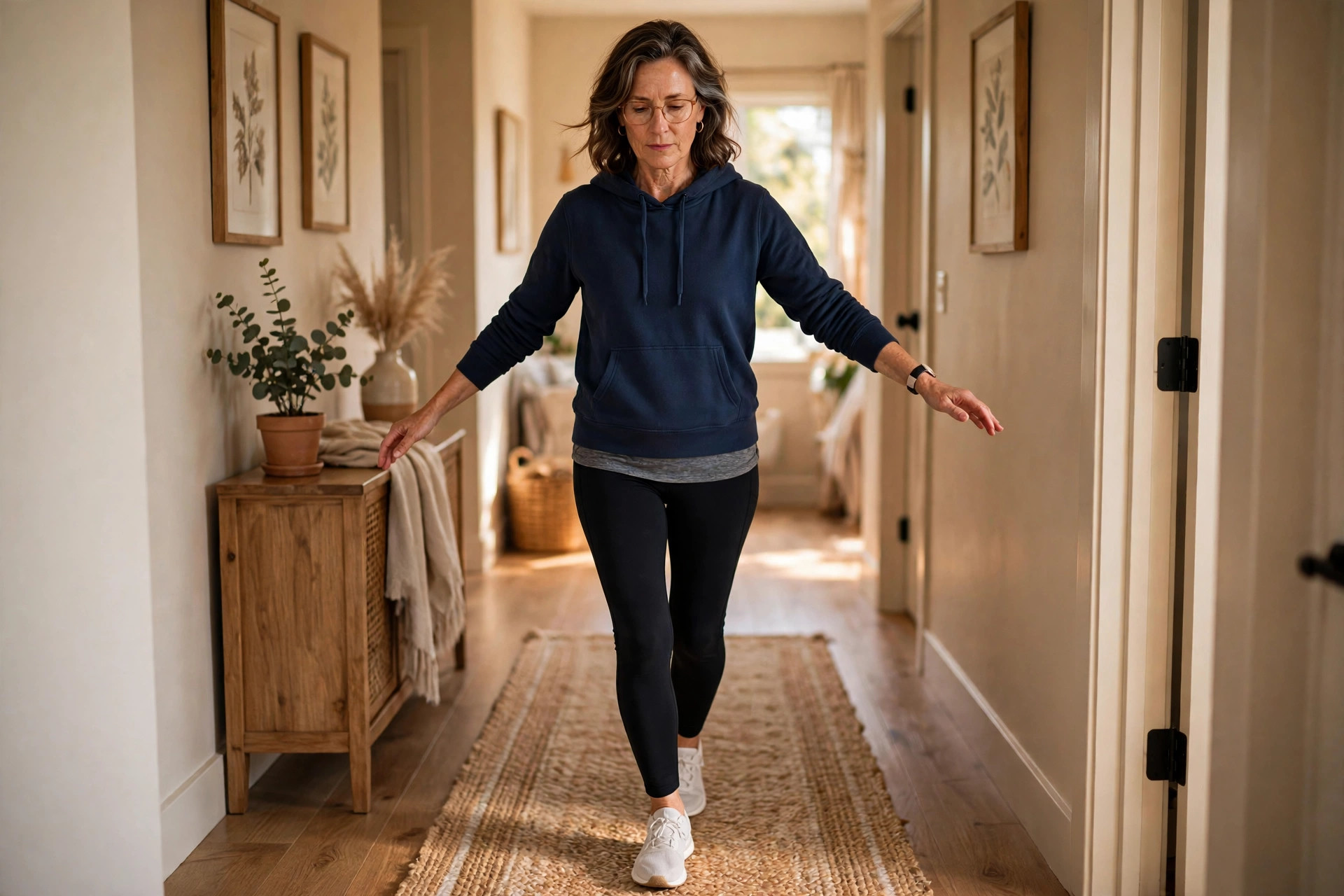
Walk in a straight line placing each heel directly against the last foot’s toes — tightrope style. It sharpens the side-to-side stability that curbs and crowds demand.
Try this: Try this: 10 steps forward along a hallway wall, turn, repeat.
Make it yours: Make it yours: arms out like a tightrope walker when you’re ready.
Avoid: Avoid: looking down at your feet. Gaze ahead to train real-world balance.
3. 🪑 Chair-Assisted Side Steps
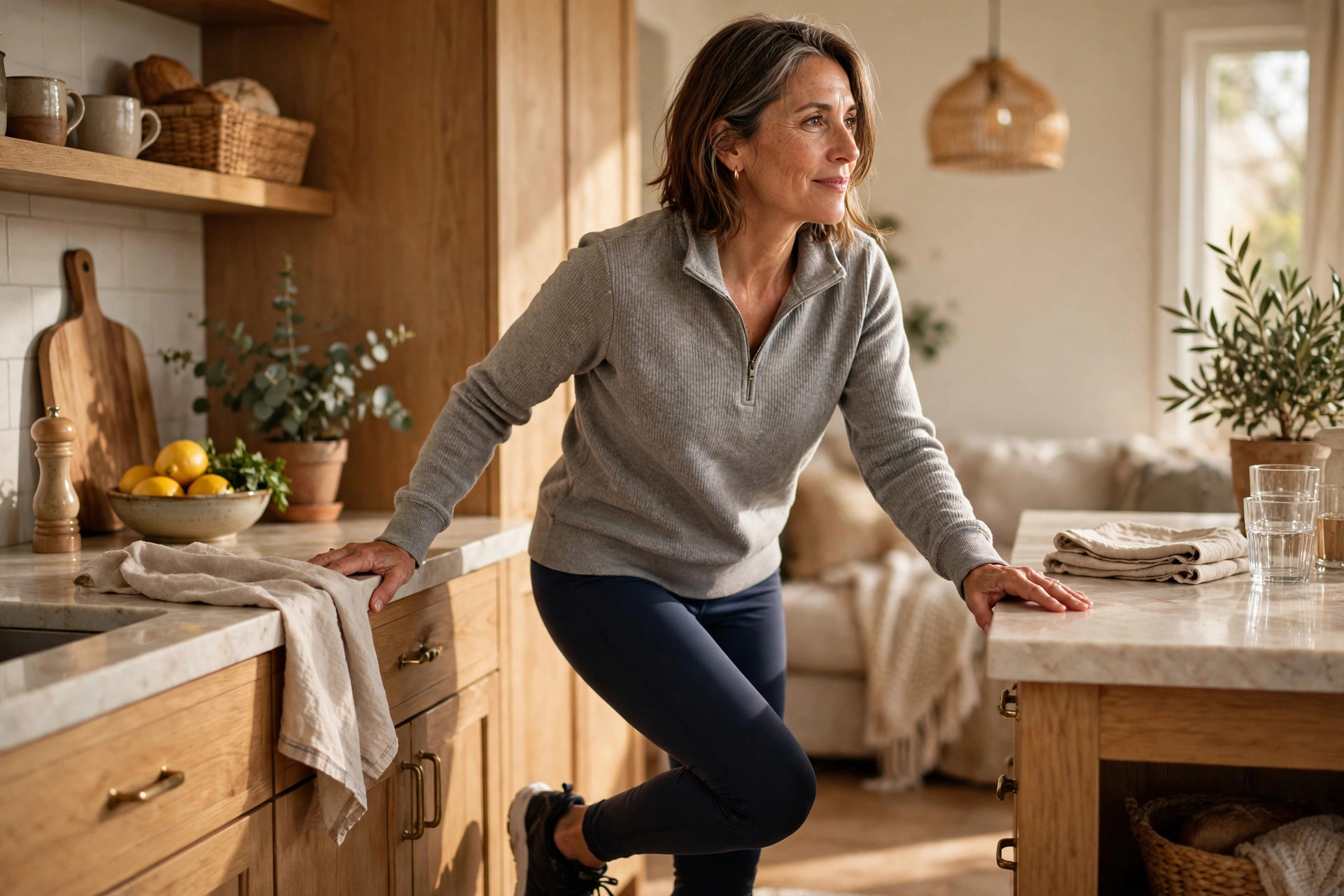
Holding a counter, step sideways and together — lateral strength most routines ignore. Sideways stability is what saves you when someone bumps you in a crowd.
Try this: Try this: 10 steps each direction, staying low and controlled.
Make it yours: Make it yours: add a resistance band around ankles when easy.
Avoid: Avoid: leaning your torso. Keep it tall over your hips.
4. 🧍 Tandem Stance Hold
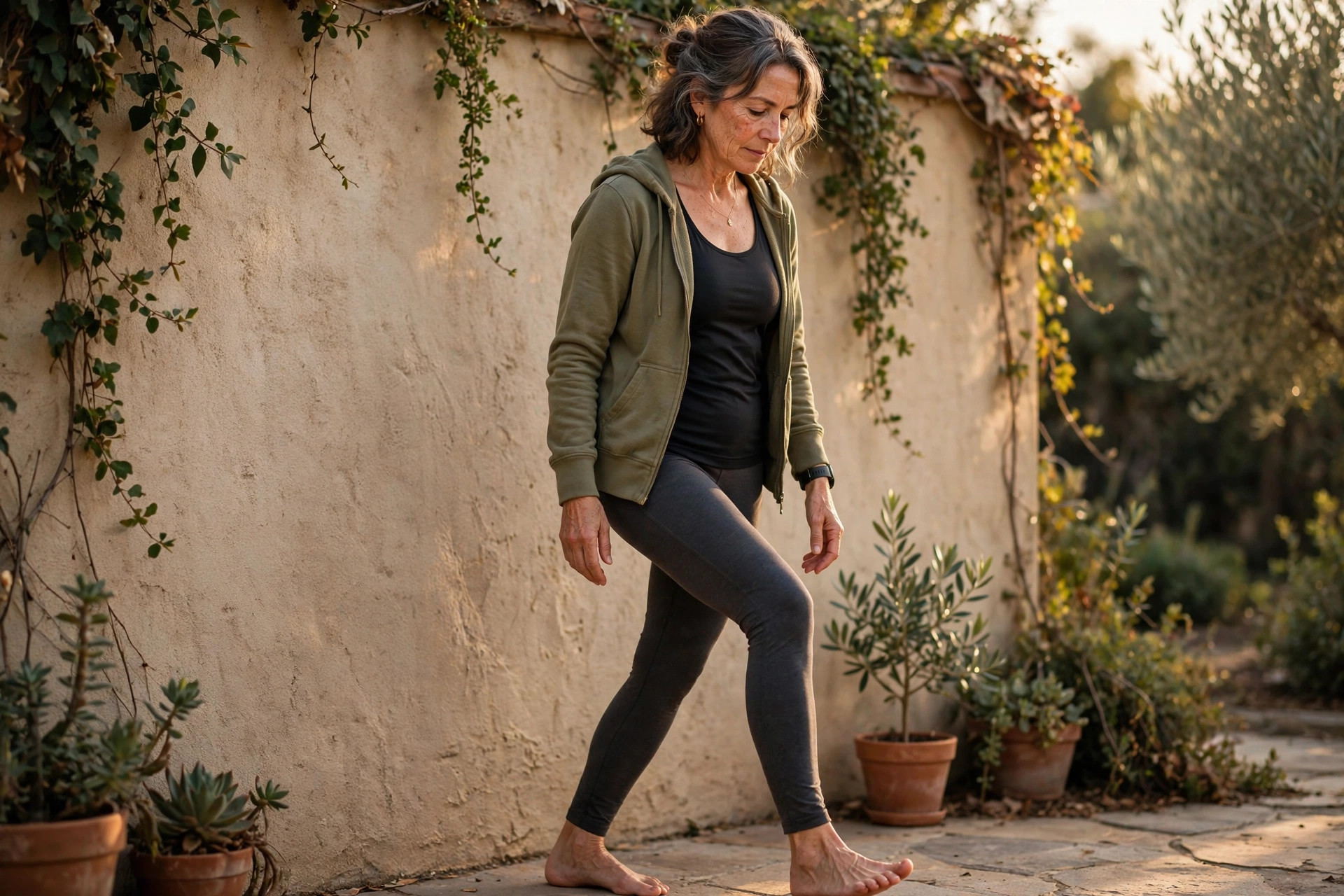
Stand with one foot directly in front of the other, heel to toe, and hold — harder than it sounds, and the exact skill icy sidewalks test.
Try this: Try this: 20 seconds each foot-forward, near a wall.
Make it yours: Make it yours: close your eyes for five seconds when steady.
Avoid: Avoid: wobbling far from support at first. Safety first, pride second.
5. 🦵 Standing Marches
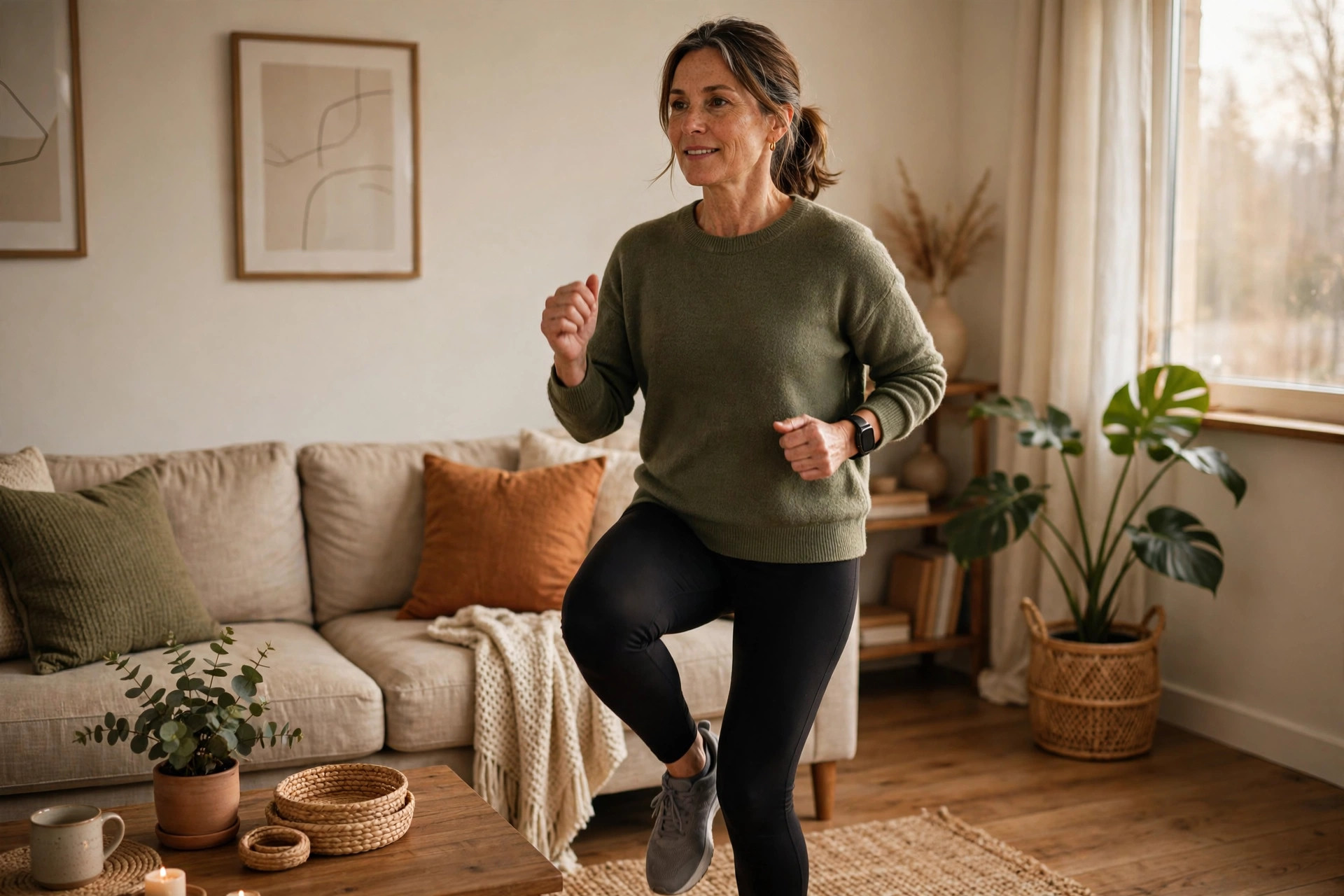
March in place lifting knees to hip height, no chair needed once you’re steady — dynamic balance practice disguised as a simple march.
Try this: Try this: 20 marches, arms swinging naturally.
Make it yours: Make it yours: pause one second on each standing leg.
Avoid: Avoid: holding your breath. Breathe rhythmically with the march.
6. 🔄 Weight Shifts
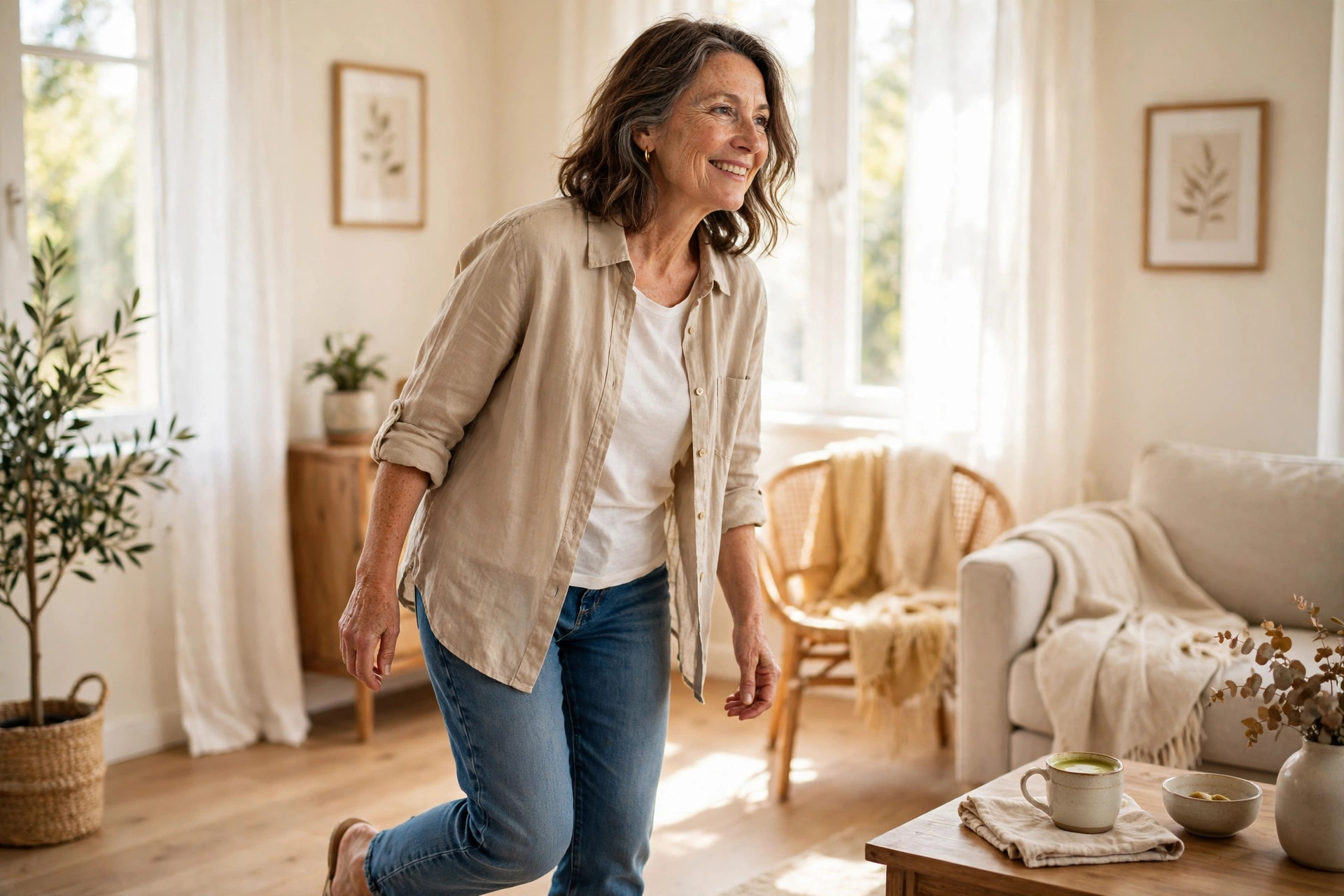
Stand with feet wide and shift your weight fully side to side — teaches your body where its edges are before real life tests them.
Try this: Try this: 10 slow shifts each way, feeling the foot load and unload.
Make it yours: Make it yours: progress to lifting the unweighted foot slightly.
Avoid: Avoid: rushing. Slow shifts build the control fast ones skip.
7. 🦶 Toe-to-Heel Rocking
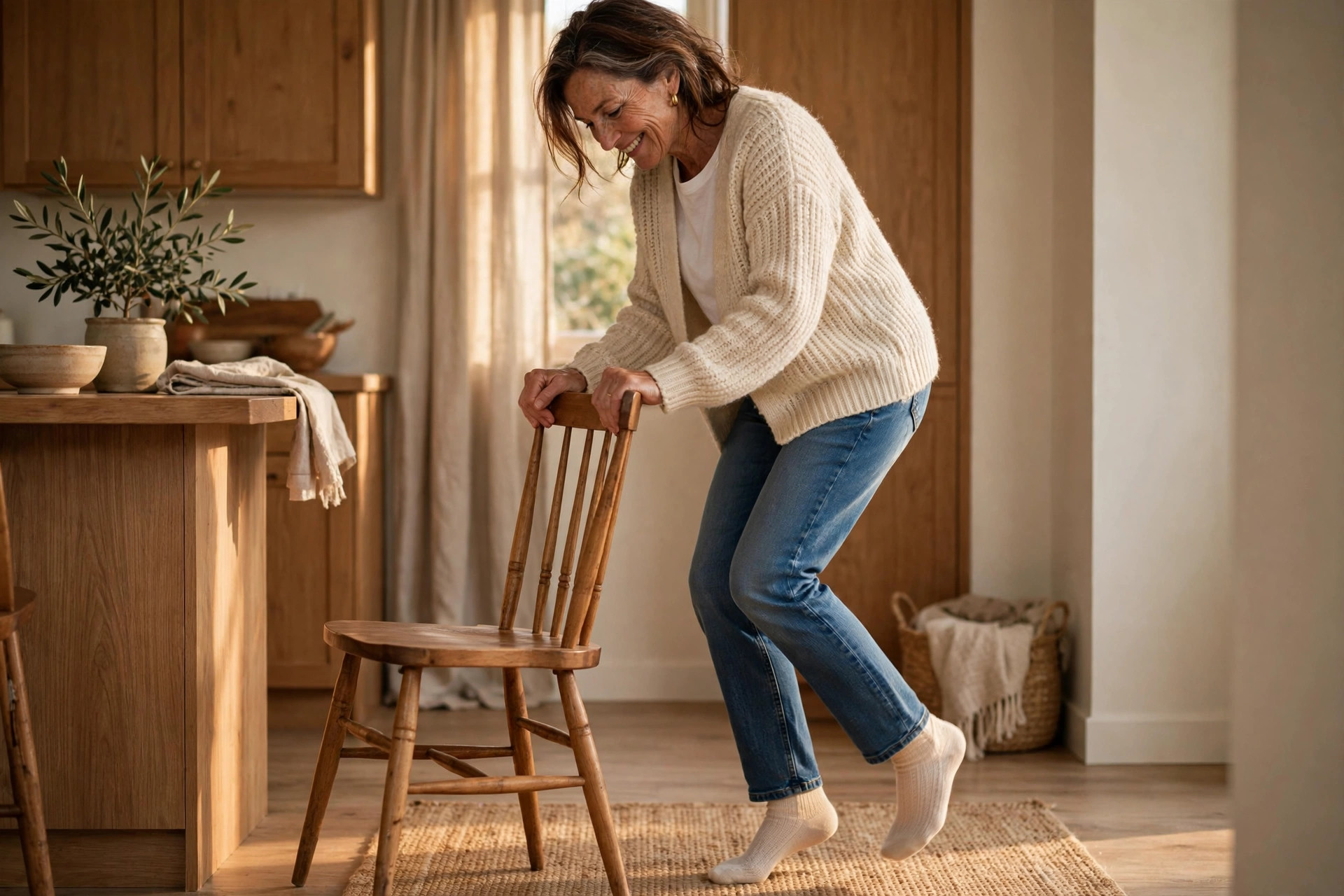
Rock slowly from toes to heels and back — trains the ankle’s full range, your first line of defense against trips.
Try this: Try this: 10 rocks, holding a chair, moving like a slow wave.
Make it yours: Make it yours: pause three seconds on toes, three on heels.
Avoid: Avoid: rocking so far you lose balance. Stay in control.
8. 🪑 Sit-to-Stand Without Hands
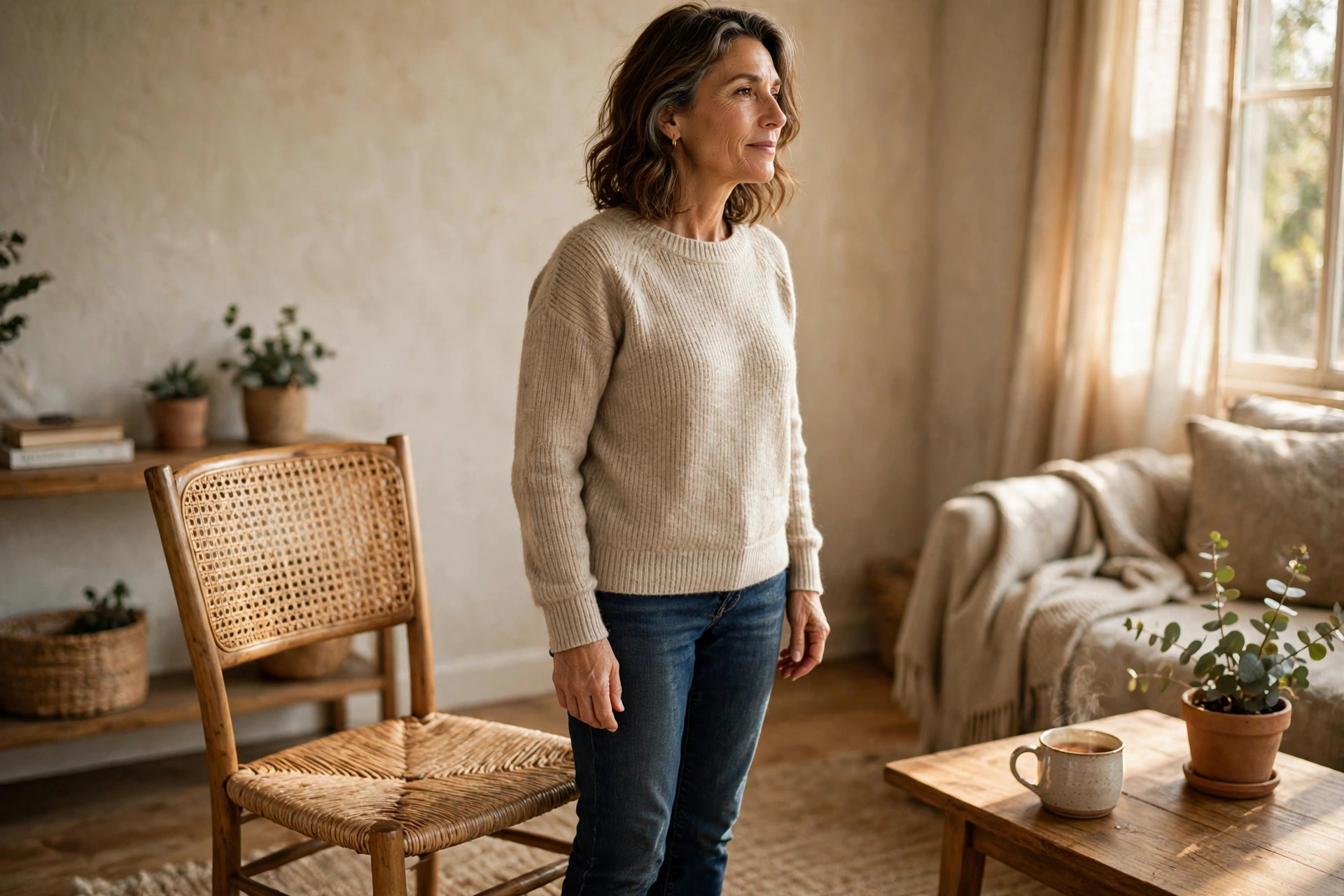
Rise from a chair using only your legs — the everyday balance-and-strength test that predicts independence. Master this and stairs get easier too.
Try this: Try this: 8 slow reps, arms crossed over your chest.
Make it yours: Make it yours: use a higher chair at first, lower as you strengthen.
Avoid: Avoid: rocking forward for momentum. Legs do the lifting.
9. 🚶 Backward Walking

Walk backward a few steps along a counter — it fires balance muscles forward walking never touches and sharpens spatial awareness.
Try this: Try this: 8 backward steps, hand gliding along the counter.
Make it yours: Make it yours: clear the path first; no obstacles behind you.
Avoid: Avoid: long backward treks. Short, careful, and supported.
10. 🦩 Flamingo Stand with Arm Movements
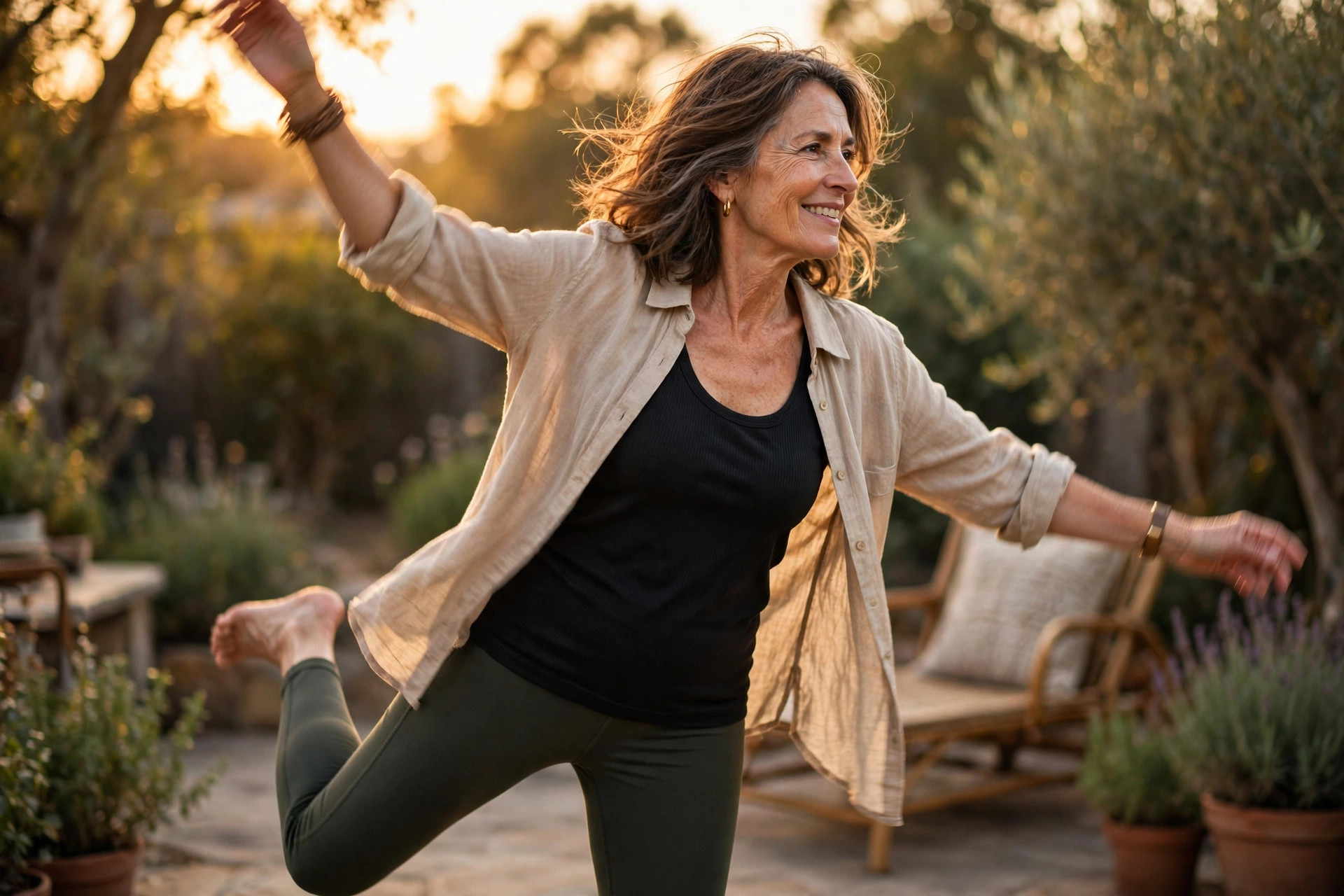
Stand on one leg and slowly raise your arms overhead, then out to the sides — moving arms while balancing trains the multitasking real life requires.
Try this: Try this: 5 arm raises per leg, near a wall.
Make it yours: Make it yours: hold a light ball and pass it hand to hand.
Avoid: Avoid: locking the standing knee. Keep it soft.
11. 🧎 Kneeling to Standing
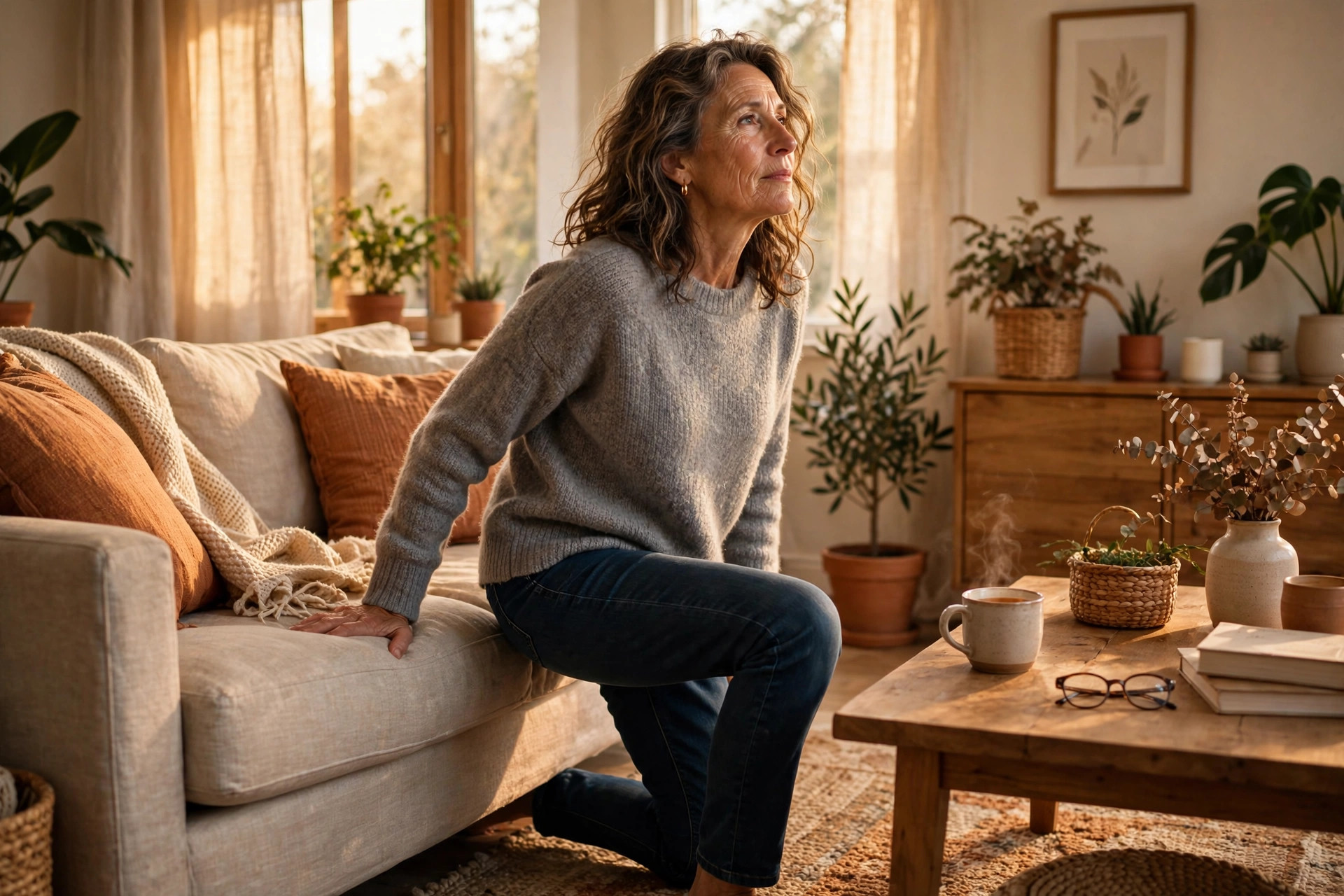
From kneeling, step one foot forward and rise without hands — advanced, but it’s the get-up-from-the-floor skill that keeps you independent. Build toward it gradually.
Try this: Try this: practice near a couch you can grab if needed.
Make it yours: Make it yours: start with hands on the front knee, then wean off.
Avoid: Avoid: attempting this on hard floors without a mat.
12. 🦶 Step Taps
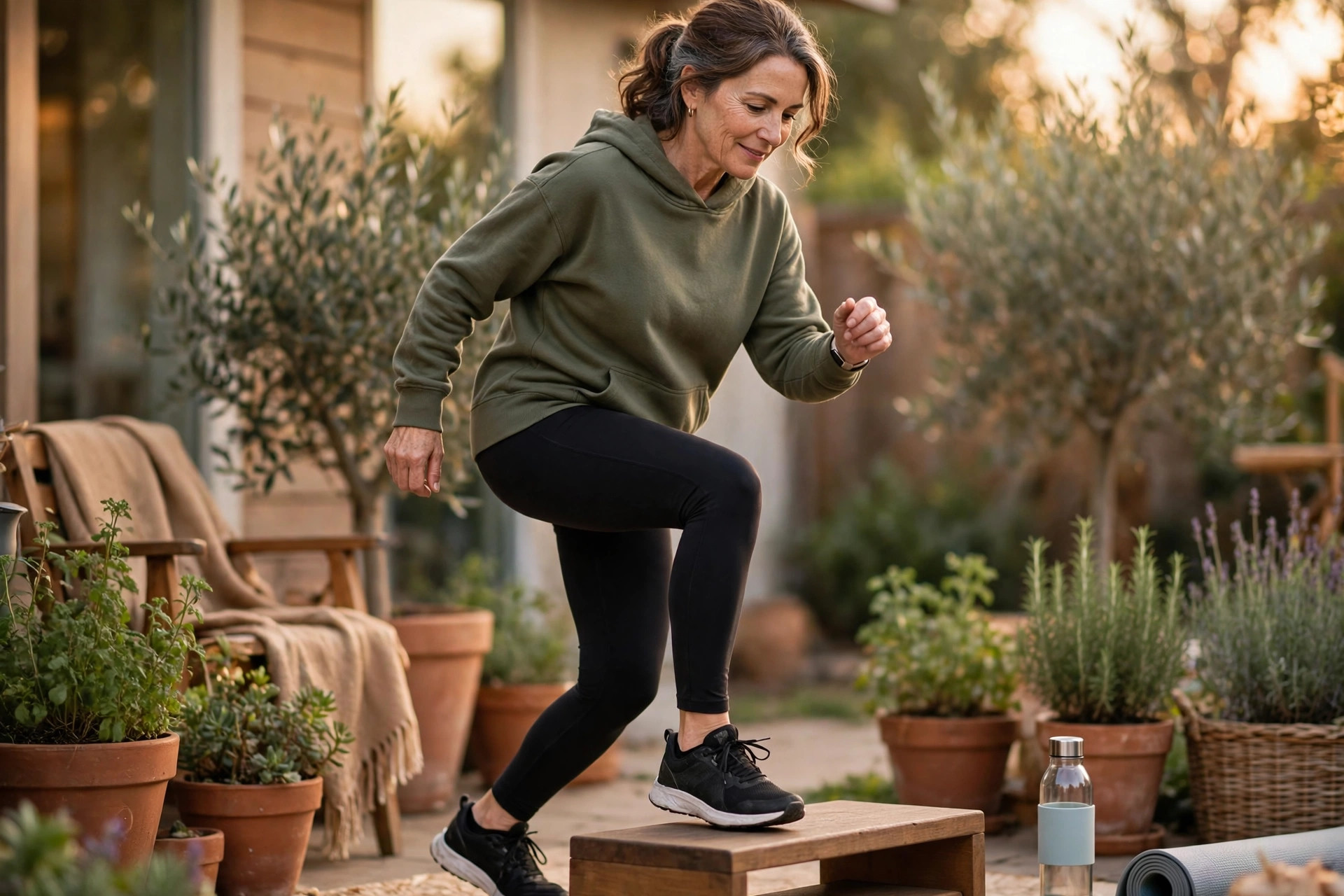
Stand before a low step and tap the top with alternating toes — quick, rhythmic, and great for the foot-eye coordination curbs demand.
Try this: Try this: 20 taps, holding a wall at first.

Make it yours: Make it yours: speed up slightly as coordination improves.
Avoid: Avoid: a step that slides. Wedge it against a wall.
13. 🕗 Clock Reach
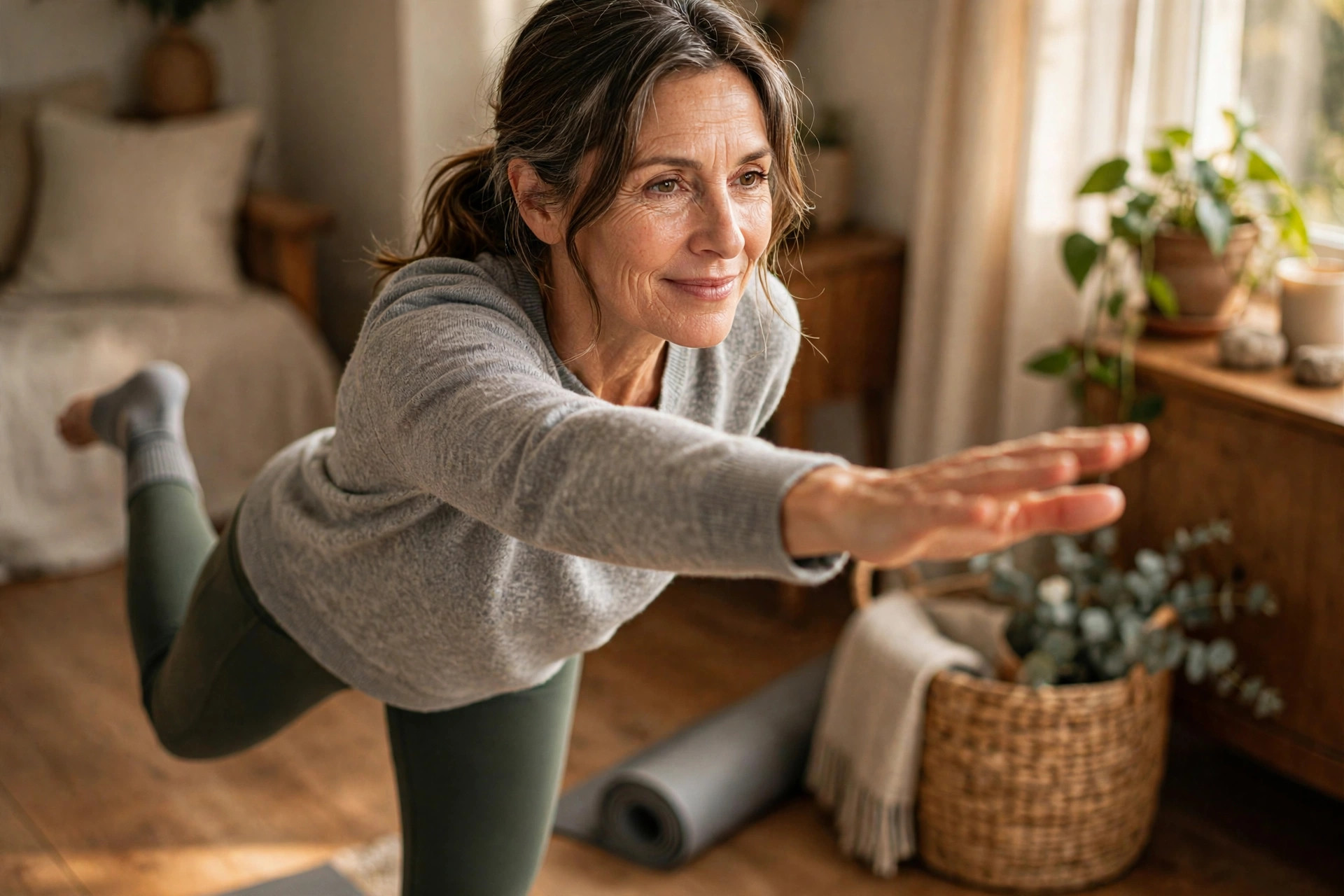
Stand on one leg and reach the other foot toward imaginary clock numbers — 12, 3, 6, 9 — without touching down. Dynamic balance at its most practical.
Try this: Try this: reach to 3 positions per leg, chair within reach.
Make it yours: Make it yours: tap the floor lightly at each number at first.
Avoid: Avoid: twisting your torso. Hips stay square, leg does the reaching.
14. 🧑 Single-Leg Stand with Head Turns
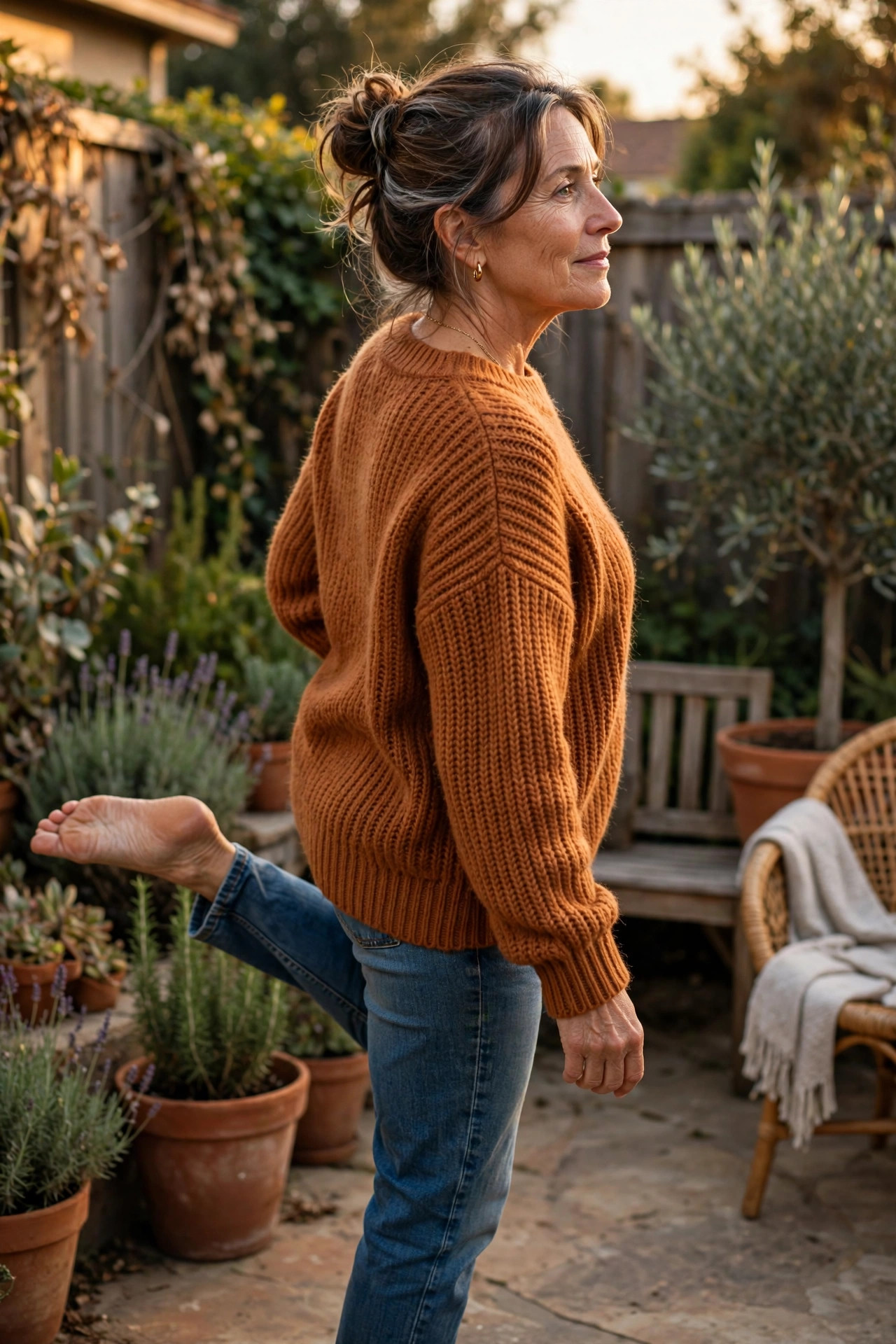
Hold a single-leg stand while slowly turning your head left and right — trains balance when your vision moves, like checking traffic before crossing.
Try this: Try this: 5 head turns per leg, near a wall.
Make it yours: Make it yours: progress to nodding up and down.
Avoid: Avoid: whipping your head. Slow and smooth.
15. 🛋️ Cushion Stands
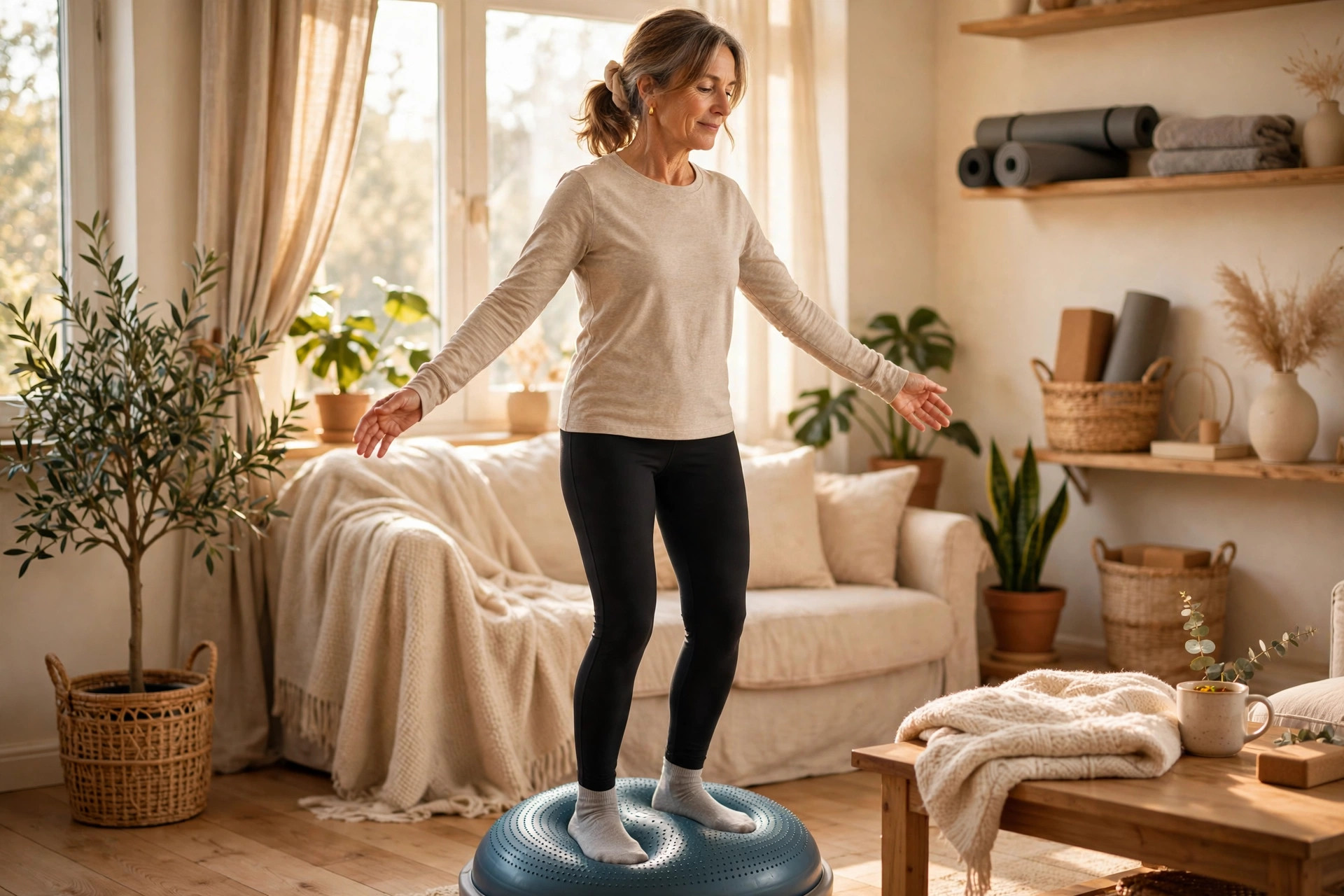
Stand on a couch cushion or folded towel — the unstable surface forces your ankles to work overtime. Wobbly on purpose, stronger as a result.
Try this: Try this: 20 seconds per leg, chair in front of you.
Make it yours: Make it yours: progress from folded towel to thick cushion.
Avoid: Avoid: thick pillows that collapse. Firm cushions only.
16. 💃 Grapevines
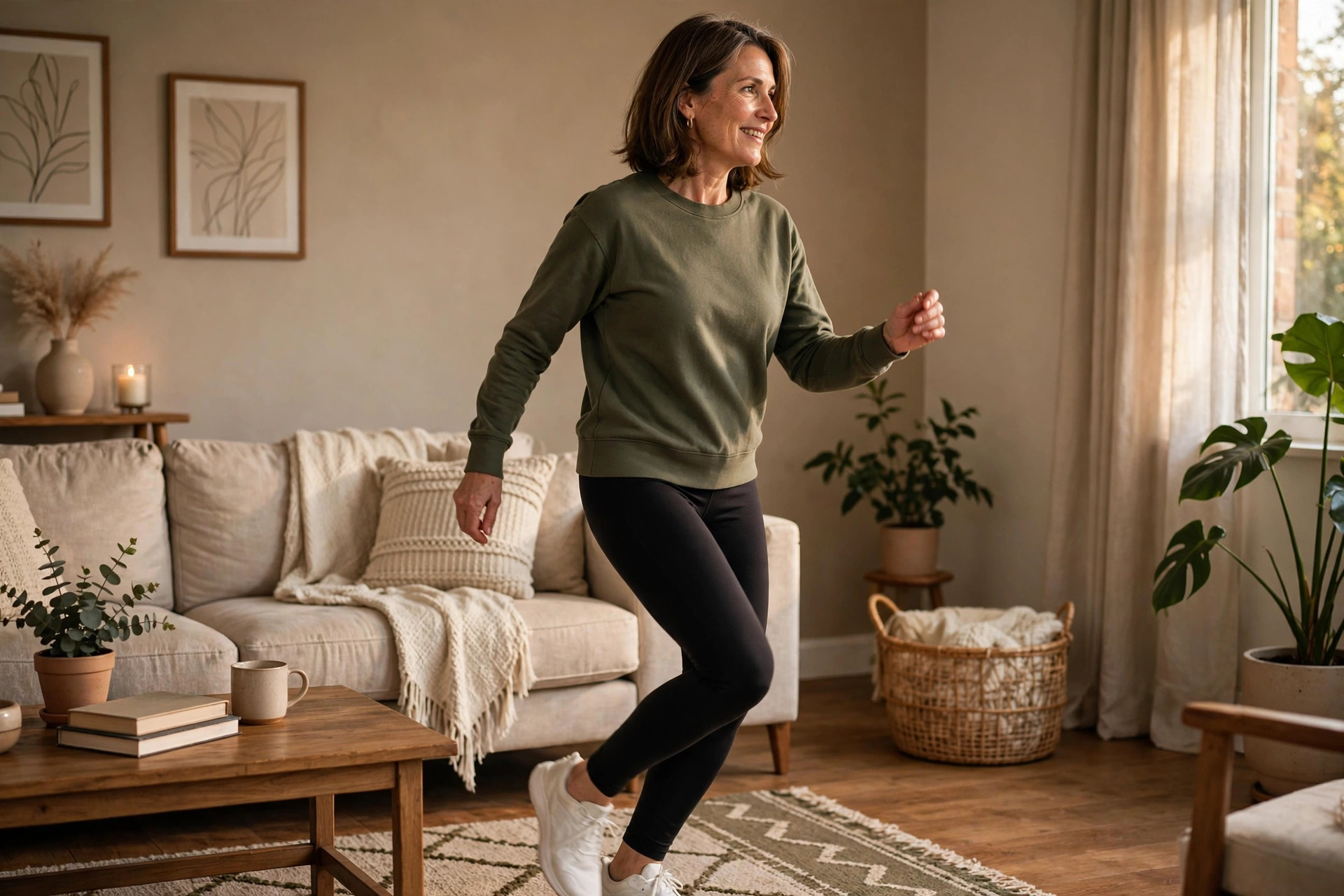
Step sideways crossing one foot in front, then behind — the dance move that builds lateral agility for crowded sidewalks and sudden direction changes.
Try this: Try this: 6 grapevines each direction along a counter.
Make it yours: Make it yours: add music once the pattern feels natural.
Avoid: Avoid: tangling your feet by going too fast. Slow is smooth.
17. 🦶 Toe Yoga
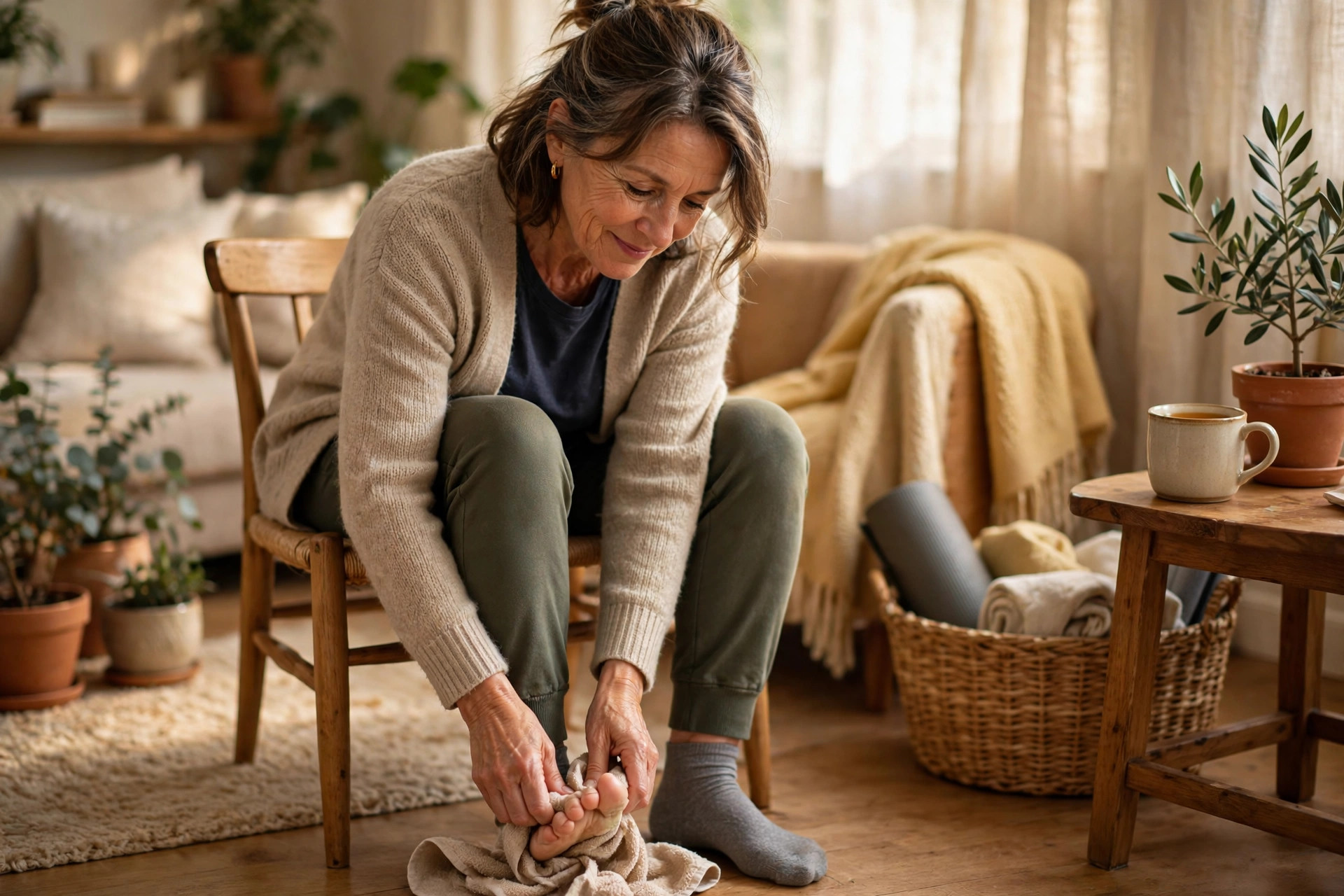
Seated or standing, spread all toes wide, then scrunch them — foot strength and awareness most of us never train, yet feet are balance’s foundation.
Try this: Try this: 10 spreads and scrunches per foot, daily.
Make it yours: Make it yours: pick up a towel with your toes for bonus strength.
Avoid: Avoid: cramping — ease off if toes seize up.
18. 🧍 Standing Hip Circles
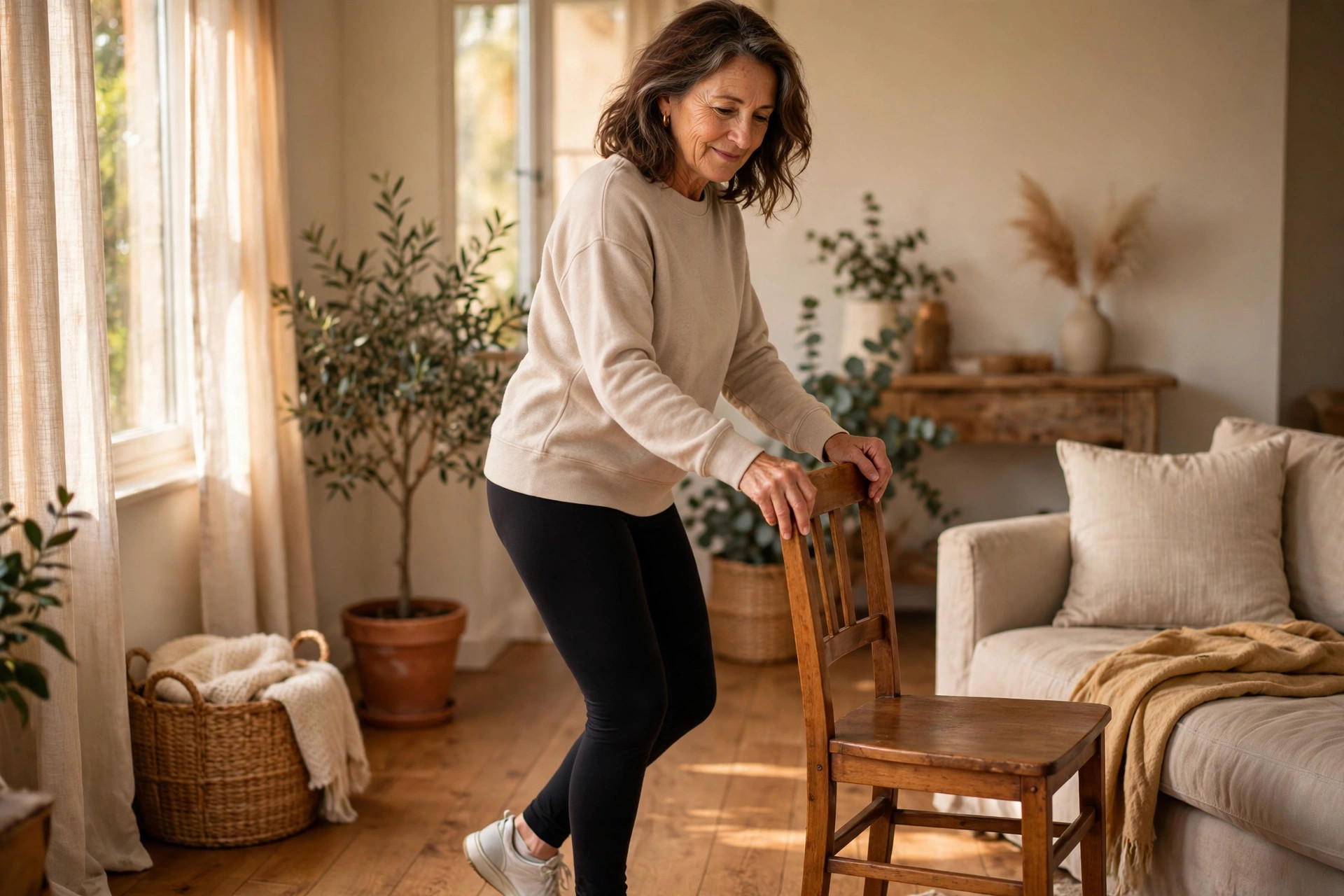
Hands on hips, draw big slow circles with one knee lifted — hip mobility plus balance in one move. Stiff hips are wobbly hips.
Try this: Try this: 5 circles each direction per leg.
Make it yours: Make it yours: hold a chair until the pattern feels smooth.
Avoid: Avoid: tiny timid circles. Make them big and deliberate.
19. 🧘 Eyes-Closed Single-Leg Stand
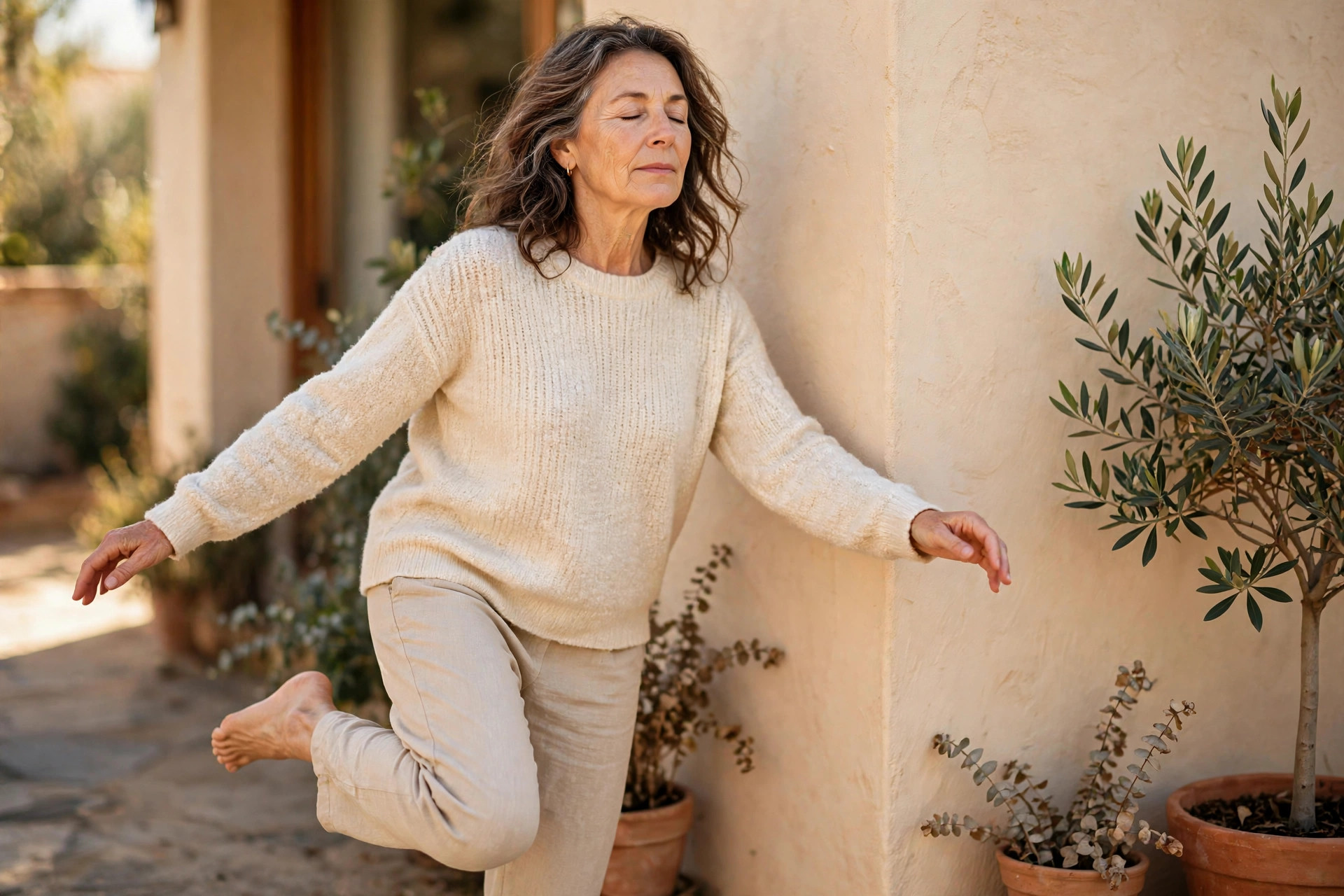
Stand on one leg with eyes closed for a few seconds — removing vision forces your inner ear and feet to take over. Advanced, but transformative.
Try this: Try this: 5 seconds per leg, both hands hovering near a counter.
Make it yours: Make it yours: blink slowly closed rather than snapping them shut.
Avoid: Avoid: attempting without support in reach. Always.
20. 🥾 Uneven-Ground Walking

Walk on grass, gravel, or a gentle trail — uneven surfaces are nature’s balance gym, training the micro-adjustments flat floors never ask for.
Try this: Try this: five minutes on grass during your regular walk.
Make it yours: Make it yours: graduate to easy nature trails on weekends.
Avoid: Avoid: rocky or steep terrain until you’re confident.
21. 💃 Box-Step Dancing
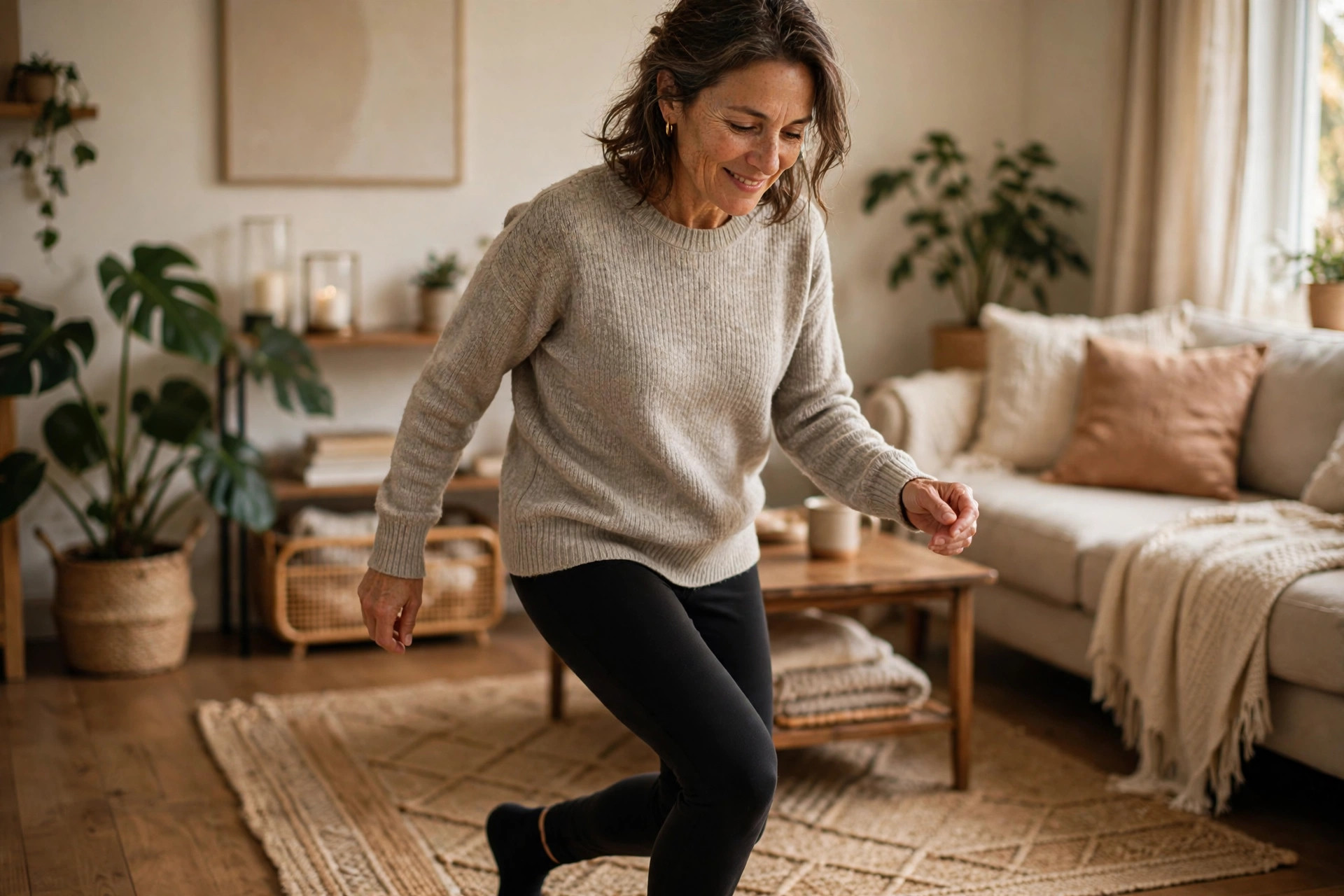
Step forward, side, back, side in a square — a simple dance pattern that trains rhythm, coordination, and multi-direction balance. Fun counts as fitness.
Try this: Try this: 4 box steps each direction to your favorite song.
Make it yours: Make it yours: invite a partner — everything’s better danced together.
Avoid: Avoid: slippery socks. Wear supportive shoes.
Practice balance when you’re fresh, not tired — mornings or before your walk. Tired muscles wobble more, and good practice needs good form.
Always have support in reach, even when an exercise feels easy. Confidence grows fastest when safety is never in question.
❓ Balance Exercise FAQs
How often should I do balance exercises?
A little daily beats a lot weekly — five to ten minutes most days keeps the neural pathways fresh. Many of these fit into dead time: single-leg stands while the microwave runs, heel-to-toe walks down the hallway.
What if I can’t stand on one leg at all?
Start with both hands on a counter and just shift your weight toward one foot — even partial weight shifts train the system. Progress to fingertips, then one finger, then no hands over weeks. Everyone starts somewhere.
Do balance exercises really prevent falls?
They’re among the most effective fall-prevention tools available: better balance means catching yourself when you trip instead of going down. Pair them with strength training and good lighting at home for the fullest protection.
Should I always use a chair or wall?
At first, yes — always. As moves become easy, reduce the support gradually (two hands to one, to fingertips, to nearby). The goal is independence, but the path there is always safety.
When should I progress to harder moves?
When the current version feels easy for a full week — you can hold the position steadily and even chat while doing it. Then add the next challenge: less support, eyes closed, or an unstable surface.
✅ Your Steady-Weeks Checklist
- ☐ Practice 5–10 minutes daily — single-leg stands, weight shifts, heel-to-toe walks
- ☐ Keep a chair or counter within reach for every new move
- ☐ Add one harder variation each week you feel steady
- ☐ Walk on grass or trails weekly for real-world practice
- ☐ Clear clutter and improve lighting at home — environment matters too
- ☐ Notice your confidence: that’s the real progress
Balance isn’t about never wobbling — it’s about recovering when you do. Twenty-one moves, ten minutes a day, and a steadier, more confident you on every staircase, sidewalk, and airport terminal ahead.
📖 Keep Reading
- 17 Boston Clogs Outfit Ideas — stable, comfy slip-ons for confident everyday footing.
- 22 New Balance 9060 Outfit Ideas — supportive sneakers that make balance practice something to look forward to.
- 17 Fall Weekend Outfits for Women Over 50 — easy, steady-on-your-feet looks for active weekends.
Discover more from Fashinate Style
Subscribe to get the latest posts sent to your email.