
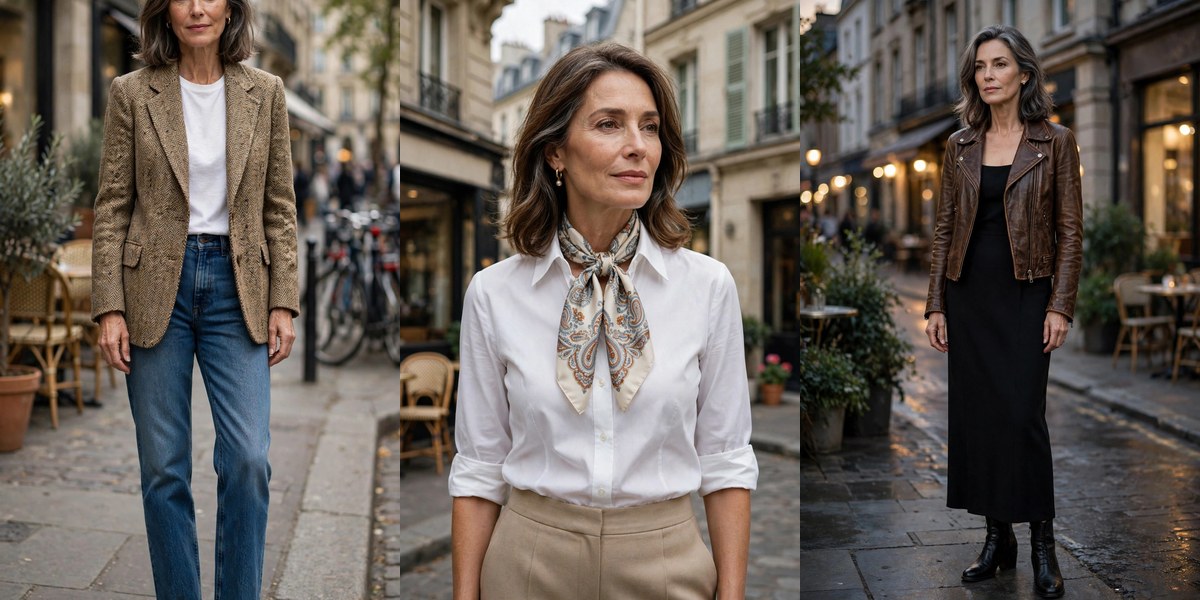
Vintage doesn’t mean costume — it means character. Ask any good vintage dealer and they’ll tell you the same thing: the difference between “effortlessly chic” and “fancy dress” is never the age of the garment. It’s the styling around it.
True vintage — the real thing, with history in its seams — has something new clothes can’t fake: better fabric, better construction, and a point of view. Here’s how to wear it over 50 without ever looking like you’re in costume.
🕰️ The Vintage Styling Basics
- One anchor per outfit: let a single vintage piece lead, and keep everything else modern and clean. Vintage + vintage is what tips into costume.
- Check the silhouette first: waist placement, shoulder line, hem length, shoe shape — if those four feel current, the piece will sit naturally in a 2026 wardrobe.
- Keep beauty modern: nothing dates an outfit faster than period hair and makeup. Contemporary beauty keeps vintage clothes firmly in the present.
- Tailor without mercy: vintage sizing is inconsistent and bodies change. A good tailor makes a $20 find look like a $200 one.
1. 🧥 The Vintage Blazer Anchor Method
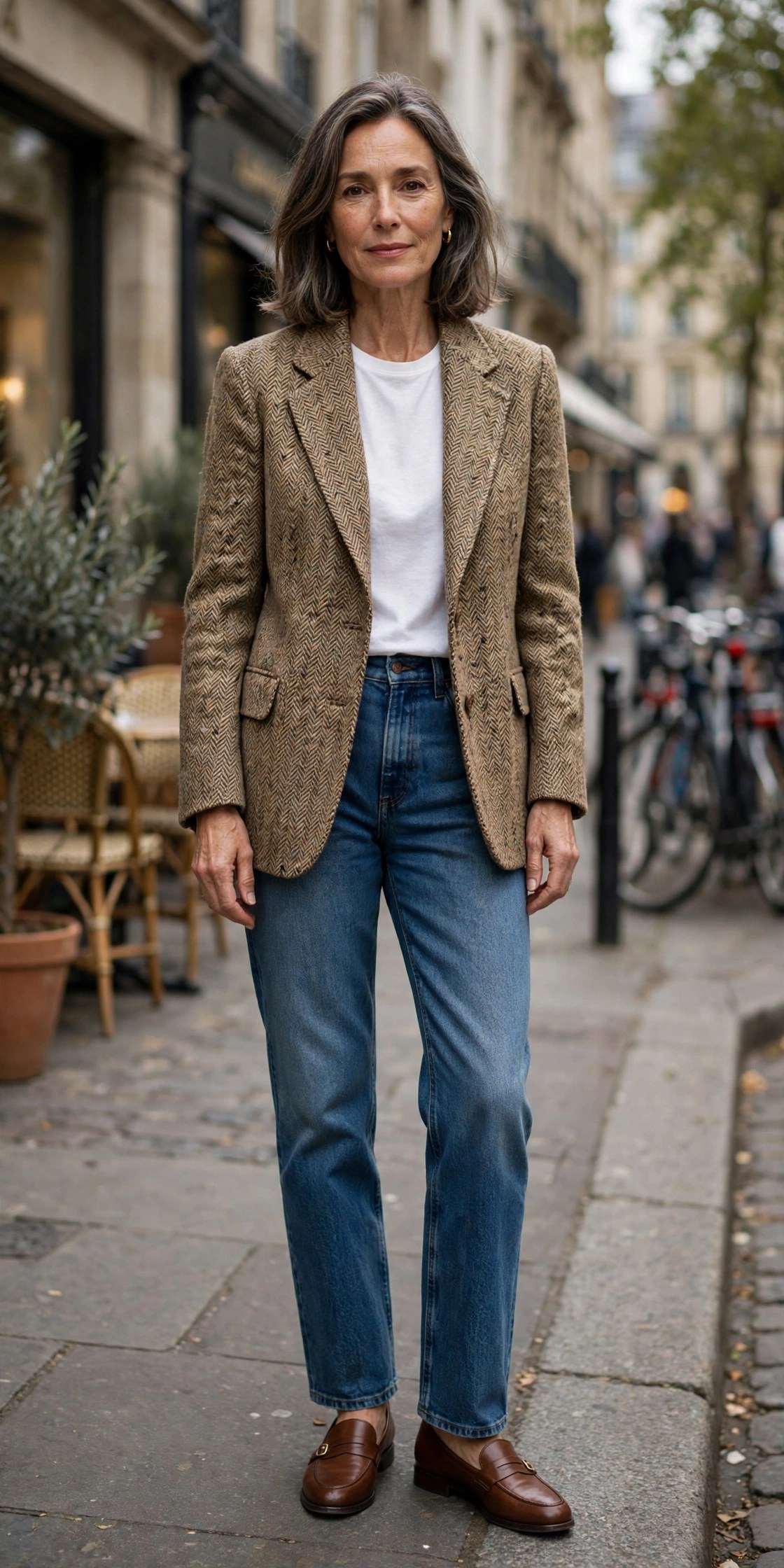
The easiest entry into true vintage: a beautiful old blazer over completely modern basics. The blazer’s character does all the work while jeans and a tee keep it grounded.
Steps:
- Find a vintage blazer with great fabric — tweed, wool, or a beautiful cut.
- Wear it over a plain white tee and dark straight-leg jeans.
- Finish with loafers and minimal jewelry.
Wear it when: every day — this is the most wearable vintage formula there is.
Pro note: Check the shoulder fit first; everything else can be tailored, but shoulders are expensive to fix.
2. 🧣 The Silk Scarf Statement Method
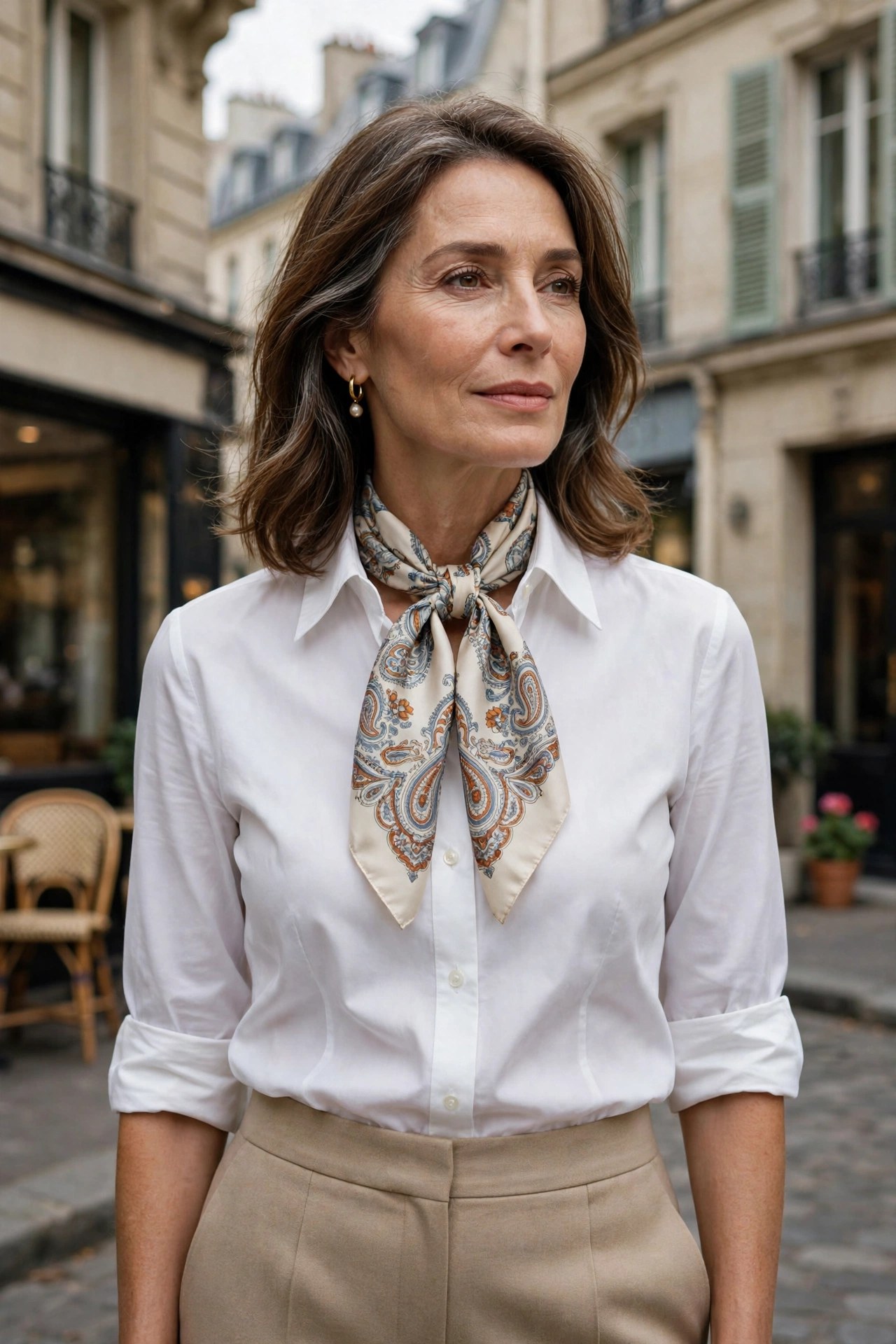
A vintage silk scarf is the lowest-commitment, highest-impact vintage piece: small, affordable, and instantly elevating. Tied at the neck, it turns the simplest outfit into a look.
Steps:
- Choose a vintage silk scarf with a print you love — designer or not.
- Tie it at the neck over a crisp white shirt, or knot it on your handbag.
- Keep the rest of the outfit simple: tailored trousers, clean shoes.
Wear it when: workdays, lunches, anytime an outfit needs one interesting thing.
Pro note: Silk scarves age beautifully — even slightly faded ones look better with time.
3. 🌸 The Vintage Dress, Modernized Method
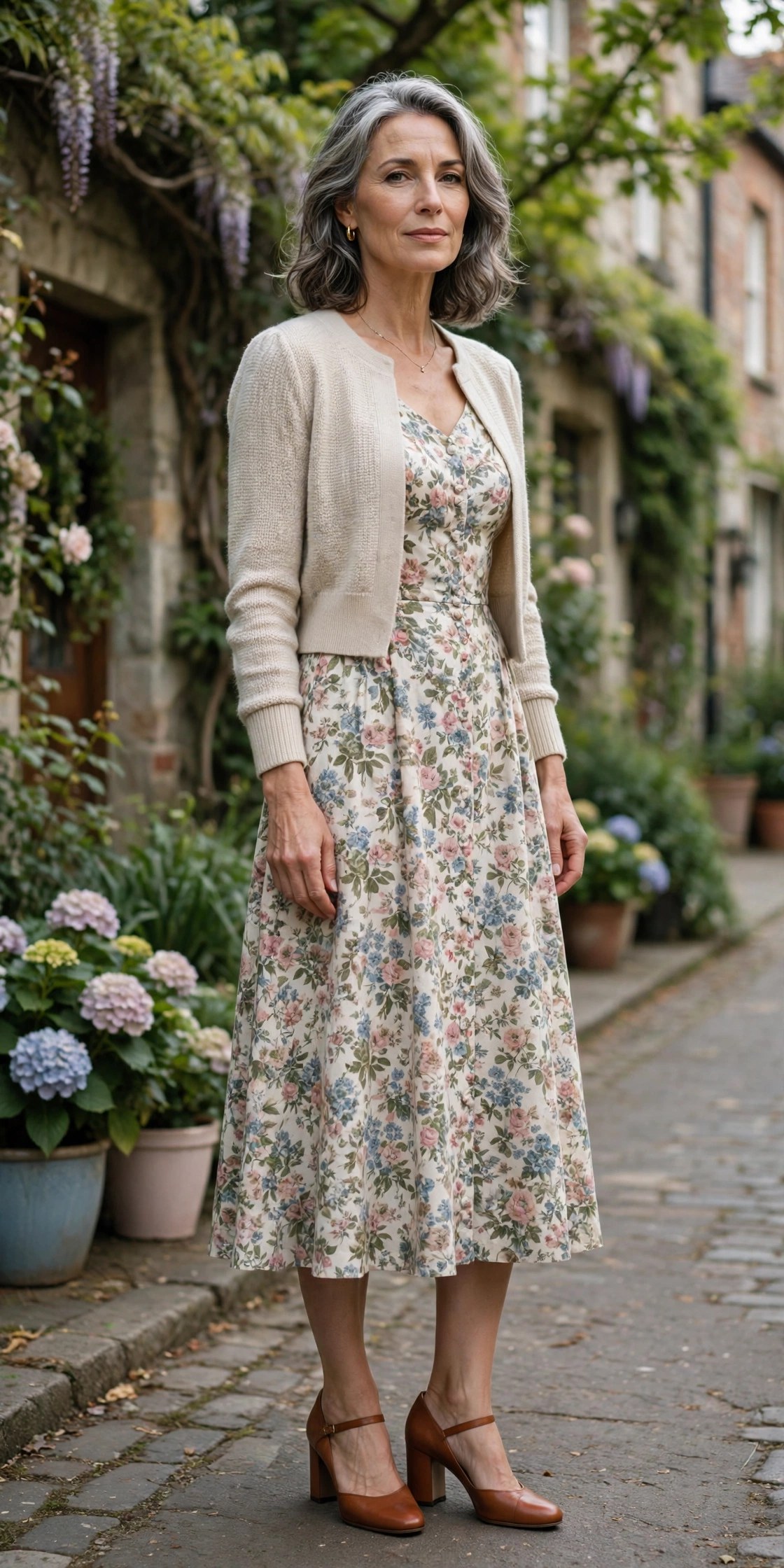
A vintage dress can absolutely work — with two modernizing moves: contemporary layers and contemporary shoes. The dress brings the romance; everything else brings the now.
Steps:
- Choose a vintage dress with a flattering neckline and a knee-to-midi length.
- Layer a modern cropped cardigan or leather jacket over it.
- Finish with block heels or sleek ankle boots — never period shoes.
Wear it when: weddings, garden parties, spring and summer events.
Pro note: If the neckline feels matronly, a tailor can open it into a V in minutes.
The dealer relationship: find one good vintage dealer or consignment shop and become a regular. They’ll learn your size and taste — and call you when the perfect piece walks in the door.
4. 🖤 The Vintage Jacket Edge Method
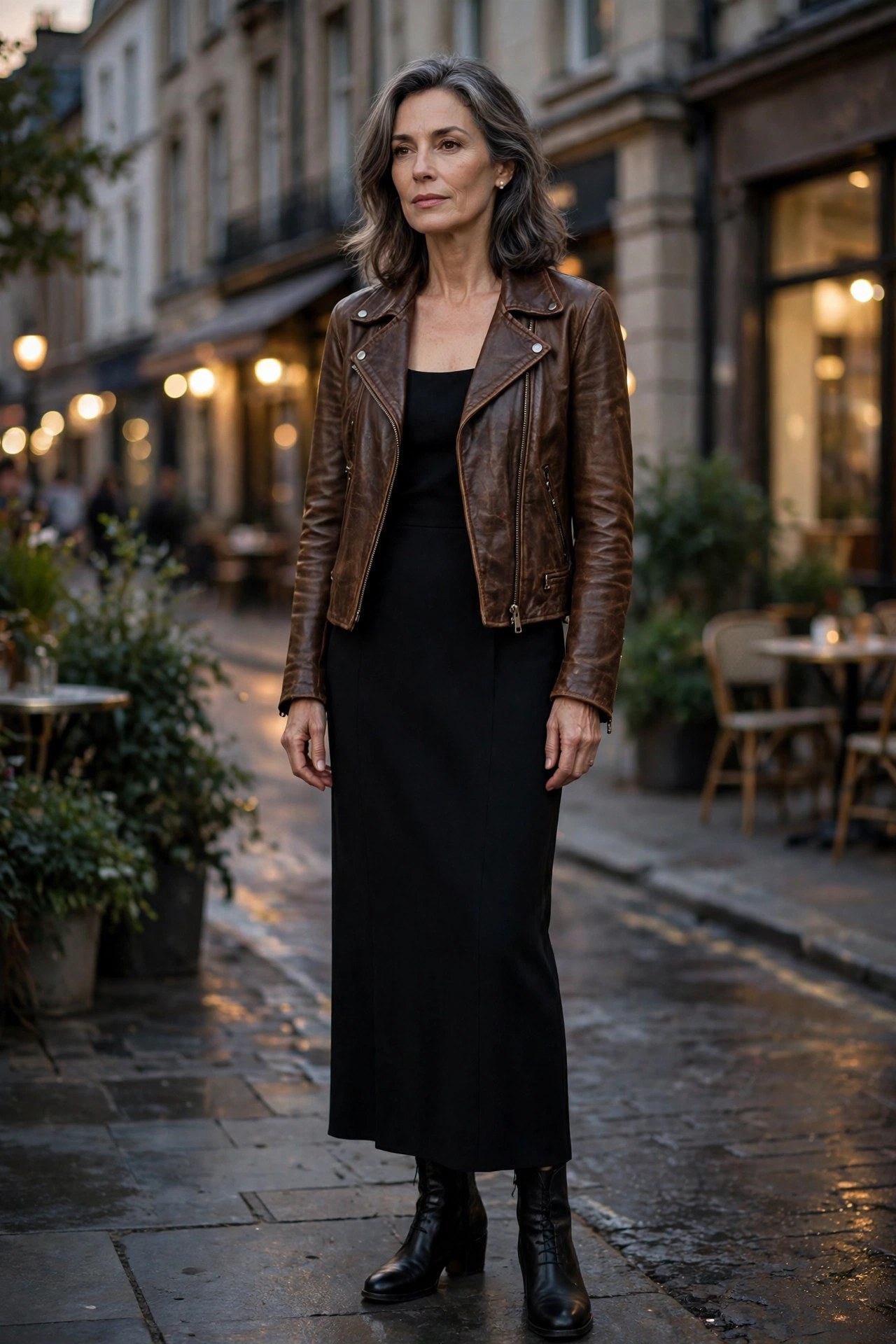
A perfectly worn leather or denim jacket is vintage’s greatest gift: it only gets better with age. Thrown over something sleek and modern, it’s instant cool with zero effort.
Steps:

- Find a vintage leather or denim jacket that fits your shoulders well.
- Wear it over a black column dress or monochrome basics.
- Add ankle boots and confident, simple jewelry.
Wear it when: evenings out, concerts, anywhere you want an edge.
Pro note: Patina is the point — don’t try to make a vintage leather jacket look new.
5. 👚 The Vintage Blouse and Jeans Method
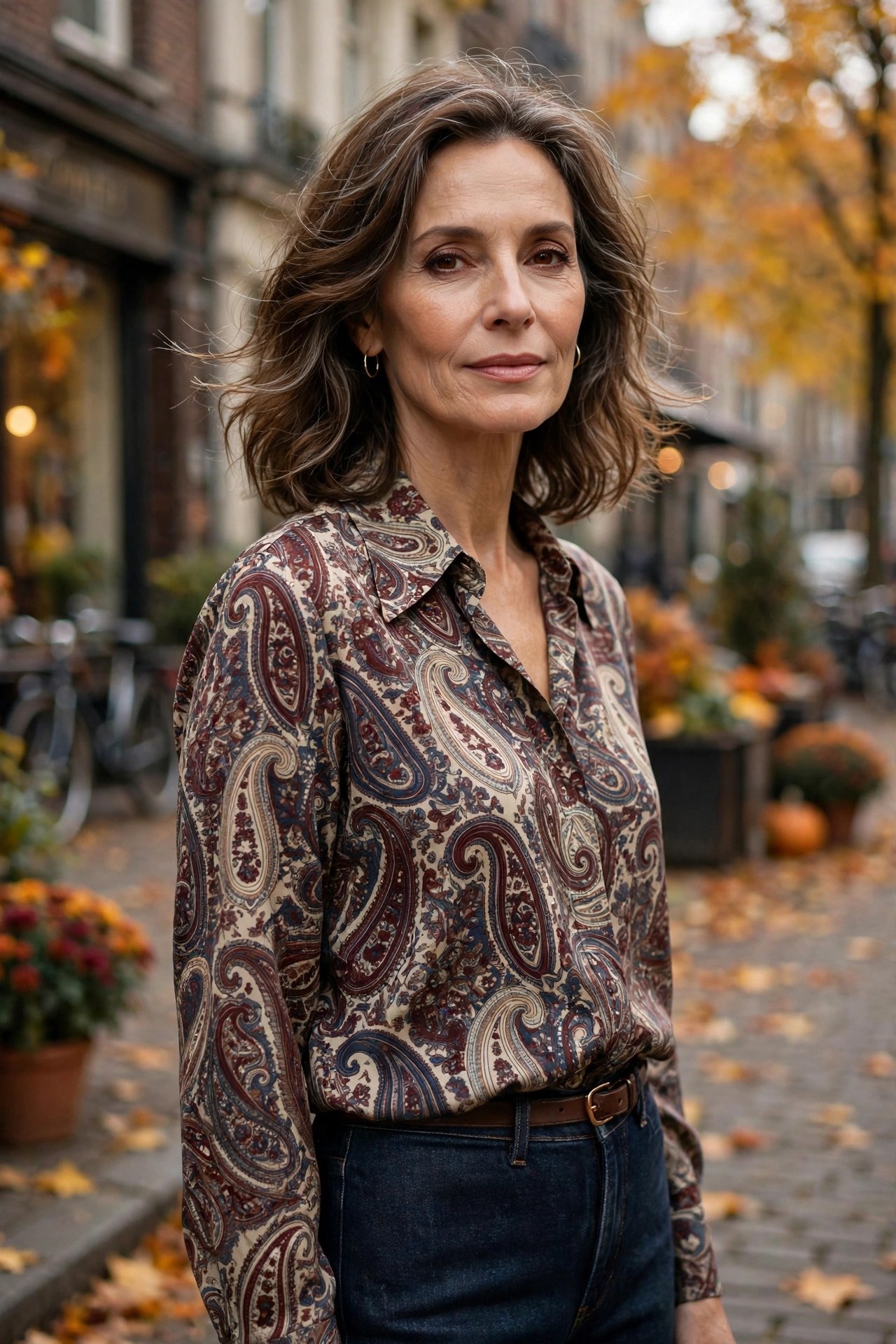
A vintage printed blouse tucked into modern jeans is the formula that made ’70s style timeless: the print gets room to breathe against clean, contemporary denim.
Steps:
- Pick a vintage blouse with a beautiful print — paisley, floral, geometric.
- Tuck it fully into dark straight-leg jeans with a slim belt.
- Finish with loafers or low boots and simple hair.
Wear it when: weekends, casual dinners, creative workplaces.
Pro note: One print per outfit — let the blouse be the only pattern talking.
6. 💎 The Accessory-Only Nod Method

The gentlest way in: keep the whole outfit modern and let a single vintage accessory tell the story. A brooch, pearls, a great bag, or perfect sunglasses — small, deliberate, chic.
Steps:
- Choose one vintage accessory: brooch, pearls, structured bag, or sunglasses.
- Wear it with an otherwise completely modern outfit.
- Let it be the conversation piece — no other vintage needed.
Wear it when: whenever you want vintage’s charm with zero risk.
Pro note: A brooch pinned on a blazer lapel or coat is the single chicest vintage move there is.
🚫 5 Vintage Mistakes to Avoid
- Head-to-toe period dressing: vintage dress + vintage shoes + vintage bag + period hair = costume. One anchor, modern everything else.
- Mixing eras: ’70s pants with an ’80s top and ’90s accessories is a fast track to fancy dress. One era per outfit.
- Period hair and makeup: the beehive with the ’60s dress is what sells the costume. Keep beauty contemporary, always.
- Wearing it un-tailored: vintage sizes run small and inconsistent. If it doesn’t fit, tailor it or pass — ill-fitting vintage just looks old.
- Ignoring condition: stains, strong odors, and failing seams aren’t ‘character.’ Buy the best condition you can find.
❓ Vintage Clothes Over 50 FAQs
How do I wear vintage without looking like I'm in costume?
Follow the one-anchor rule: a single vintage piece per outfit, styled with modern basics, modern shoes, and contemporary hair and makeup. It’s the head-to-toe period look — plus era-matched beauty — that reads as costume.
What vintage pieces are easiest for beginners over 50?
Start with accessories (silk scarves, brooches, bags, sunglasses) or a great blazer or leather jacket. They’re low-commitment, easy to fit, and instantly elevate modern outfits without any styling anxiety.
Should I tailor vintage clothes?
Almost always, yes. Vintage sizing is inconsistent, and a good tailor transforms a decent find into a perfect one. Prioritize pieces with good fabric and sound seams — fit can be fixed, quality can’t be faked.
How do I mix vintage with modern clothes?
Use the simplest formula: one vintage anchor + two modern basics. A vintage blazer with jeans and a tee, a vintage blouse with straight-leg denim, a silk scarf with a white shirt. Modern shoes are the single biggest youth-keeper.
Where's the best place to find good vintage?
Estate sales and established vintage dealers offer the best quality; thrift stores reward patience with the best prices. Always check seams, zippers, and underarms, and smell the piece — mustiness can be aired out, but damage can’t.
✅ Your No-Costume Checklist
- ☑️ One vintage anchor per outfit — never more.
- ☑️ Silhouette checked: waist, shoulders, hem, shoes all feel current.
- ☑️ Beauty kept modern — no period hair or makeup.
- ☑️ Fit tailored — vintage sizes lie, tailors don’t.
- ☑️ One era per outfit — no decade-mixing.
Vintage clothes have something new ones don’t: a past. Wear them well, and they don’t make you look old — they make you look interesting. And interesting never goes out of style.
📖 Keep Reading
- Halloween Costume Ideas for Women Over 50 — for when you actually want the costume.
- How to Wear Suede Over 50 — the vintage-feel fabric that elevates everything.
- How to Wear a Twinset Over 50 — the heritage silhouette, worn the modern way.
Discover more from Fashinate Style
Subscribe to get the latest posts sent to your email.