
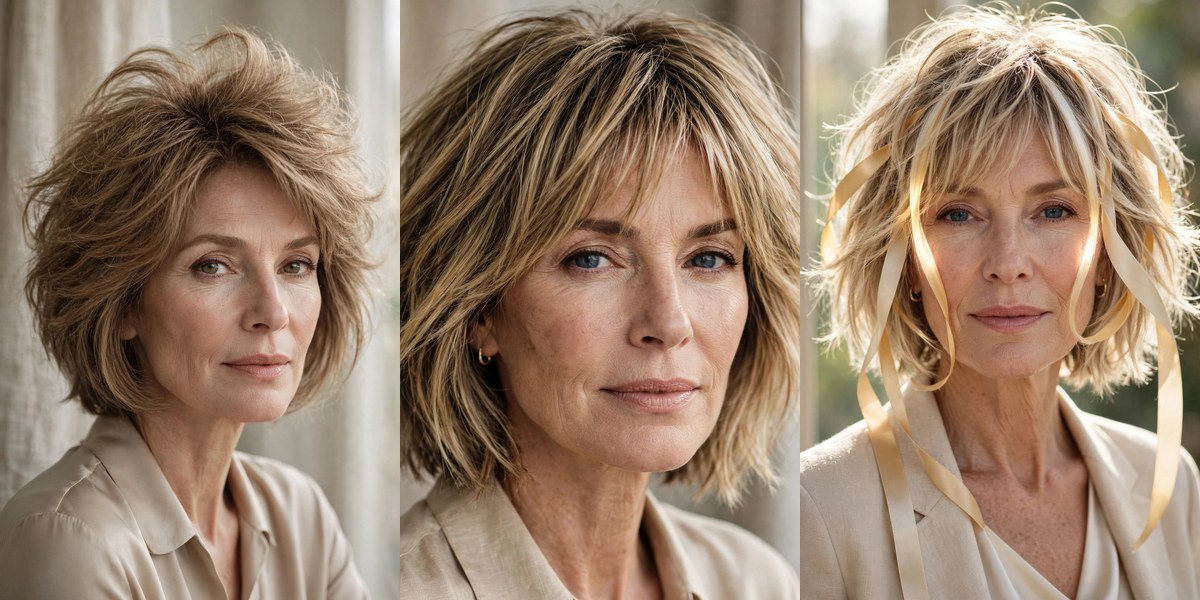
Picture this: it’s 7:40 on a Tuesday morning, and your fine hair is doing what fine hair does — lying perfectly flat against your head, as if it has given up before the day even started. You’ve tried volumizing shampoos, upside-down blow-drying, and that expensive mousse everyone raves about. Nothing sticks. Here’s what actually works: a haircut engineered for volume from the first snip.
A shaggy bob built for thin, fine hair isn’t about more layers — it’s about smarter layers. Below are 26 volume strategies disguised as haircuts: root-lift engineering, crown architecture, perimeter protection, color that fakes density, and drying tricks that multiply what you have. Your flat-hair mornings are officially over.
1. 🌬️ The Root-Lift Shag Bob
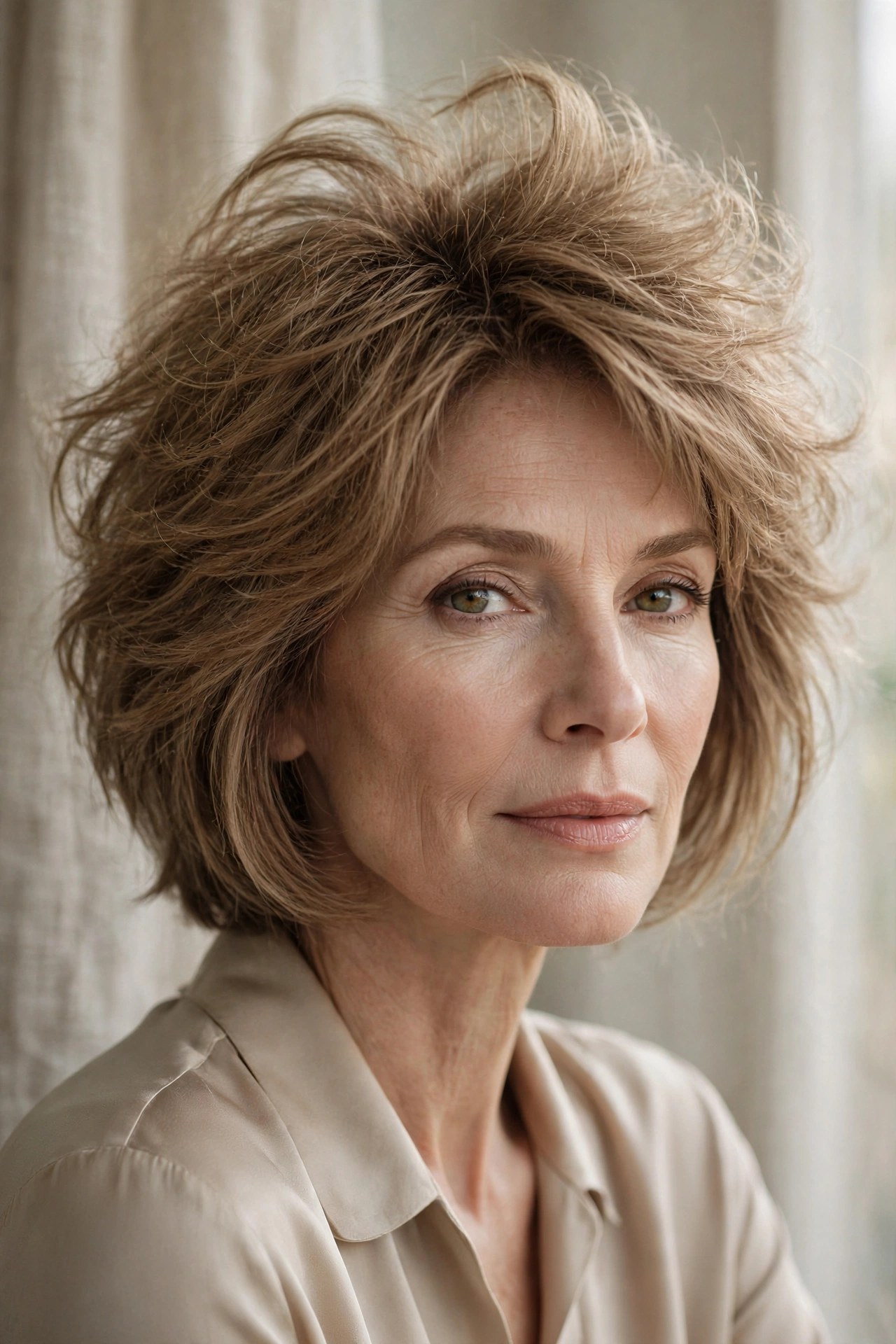
Every layer in this cut is designed to spring upward from the root — shorter crown pieces literally push the hair up instead of letting it collapse. The shag texture keeps it from looking teased or dated. It is architecture, not product, doing the lifting.
Best for: hair that goes flat within an hour of styling.
Styling tip: blow-dry roots upward with a round brush; a cool shot locks the lift.
Avoid: heavy conditioners or oils anywhere near the roots.
Try this: apply volumizing mousse to damp roots only — never the ends.
2. 🎈 The Air-Volume Shag Bob

Cut to hold air between the layers, this shag looks inflated from within — each layer separated just enough to suggest twice the hair. The airiness is built into the cutting technique, not faked with teasing. Light as a balloon, twice as fun.
Best for: very fine hair that needs visible separation.
Styling tip: rough-dry upside down, then shake at the roots with fingertips.
Avoid: smoothing serums that collapse the air pockets.
Try this: a light texture spray misted underneath the top layer adds hidden air.
3. 🫧 The Bubble-Crown Shag Bob
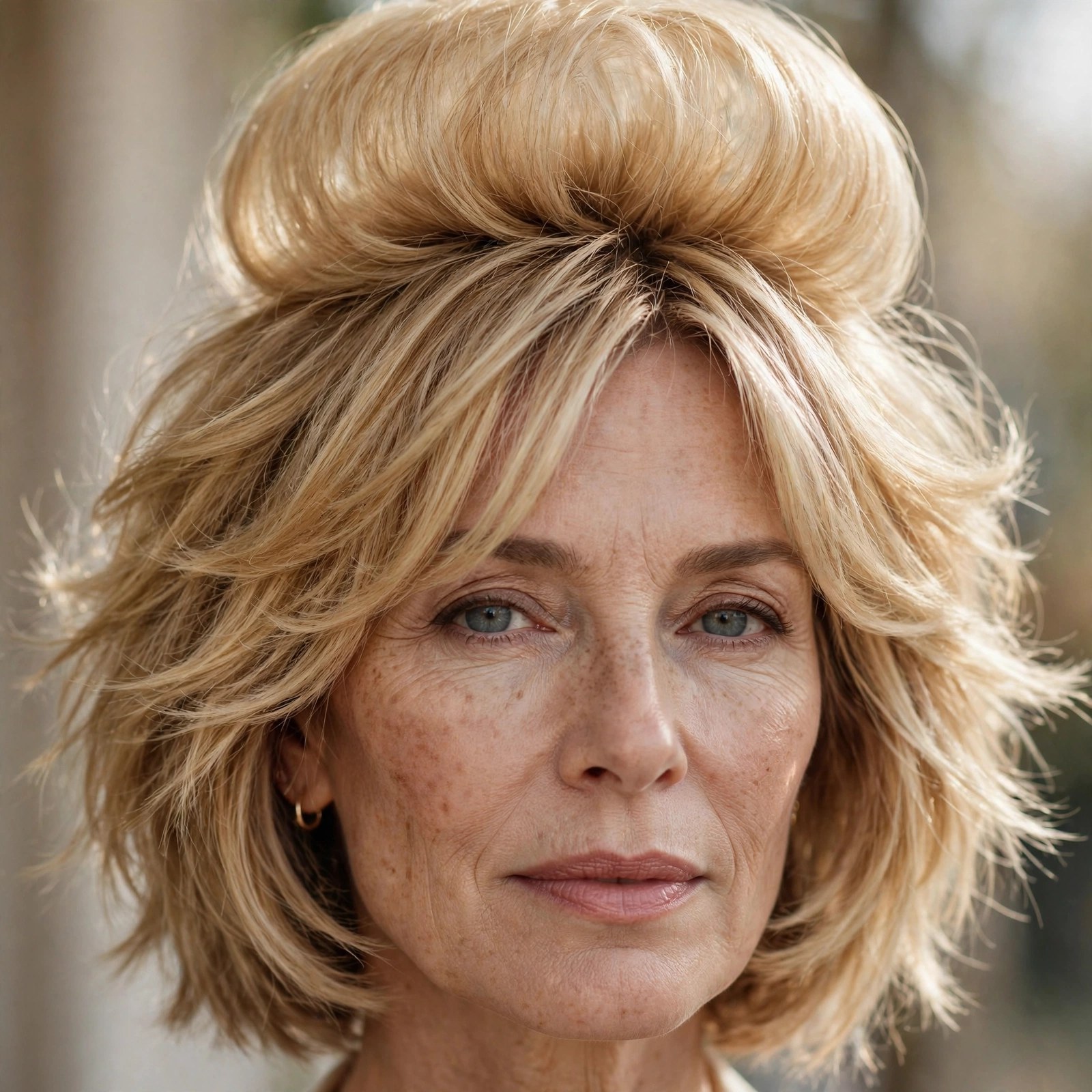
The crown is cut into a soft, rounded “bubble” that domes over the head — instant height where fine hair needs it most. The bubble shape reads as fullness from every angle. It is the most crown-focused cut on this list.
Best for: flat crowns and visible scalp at the part.
Styling tip: dry the crown sections straight up and over with a round brush.
Avoid: center parts that split the bubble — side parts preserve it.
Try this: velcro rollers at the crown while you do makeup; remove for instant dome.
4. 📏 The Blunt-Base Shag Bob
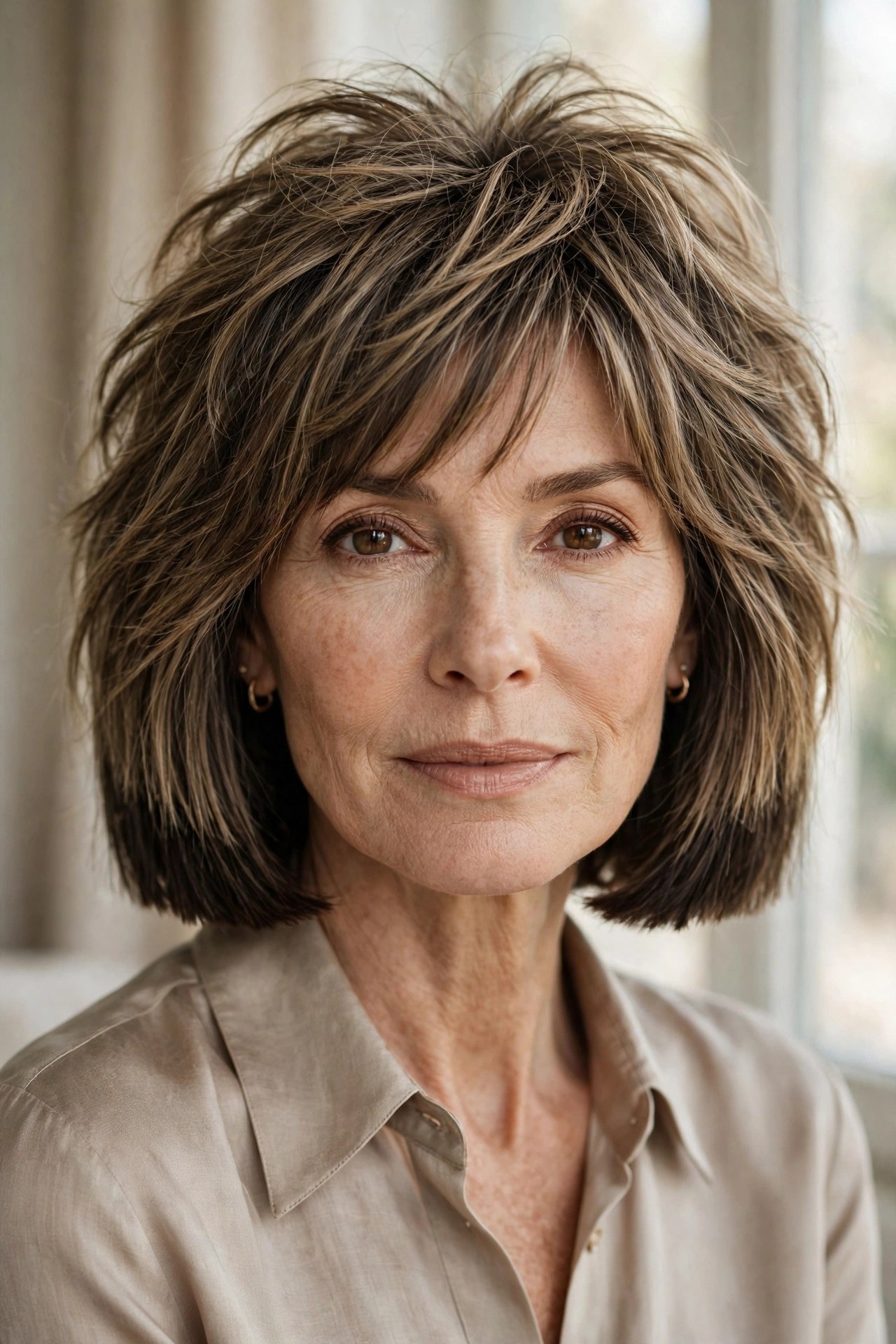
Shaggy texture on top, blunt solid perimeter below — the best of both worlds for fine hair. The textured crown creates movement while the blunt base guarantees the ends look thick. It is the volume strategy fine hair trusts most.
Best for: fine hair that has been thinned out by over-layering before.
Styling tip: tell your stylist “texture on top, solid on the bottom” — the formula matters.
Avoid: texturizing shears on the bottom two inches.
Try this: flat-iron just the perimeter for a crisp thick line against textured tops.
5. 🎯 The Precision-Layer Shag Bob

Layers placed with surgical precision — each one positioned exactly where it creates lift without removing weight. This is the anti-chop: no random layers, only deliberate ones. The result is volume that looks completely natural.
Best for: skeptics burned by bad layering in the past.
Styling tip: ask for “long, deliberate layers” and watch where the stylist places them.
Avoid: stylists who layer “by feel” on fine hair — precision needs planning.
Try this: photograph your crown after the cut to track how the layers grow.
6. 💡 The Dimension-Boost Shag Bob

Strategic highlights and lowlights create shadows that trick the eye into seeing thickness — color doing the volumizing. The dimension makes every layer cast a tiny shadow, multiplying perceived density. It is optical volume.
Best for: solid-colored fine hair that looks one-dimensional.
Styling tip: ask for dimensional color with ribbons of light through the shag layers.
Avoid: single-process flat color — it erases the dimension.
Try this: a gloss treatment between colors refreshes dimension cheaply.
7. 🌀 The Body-Wave Shag Bob
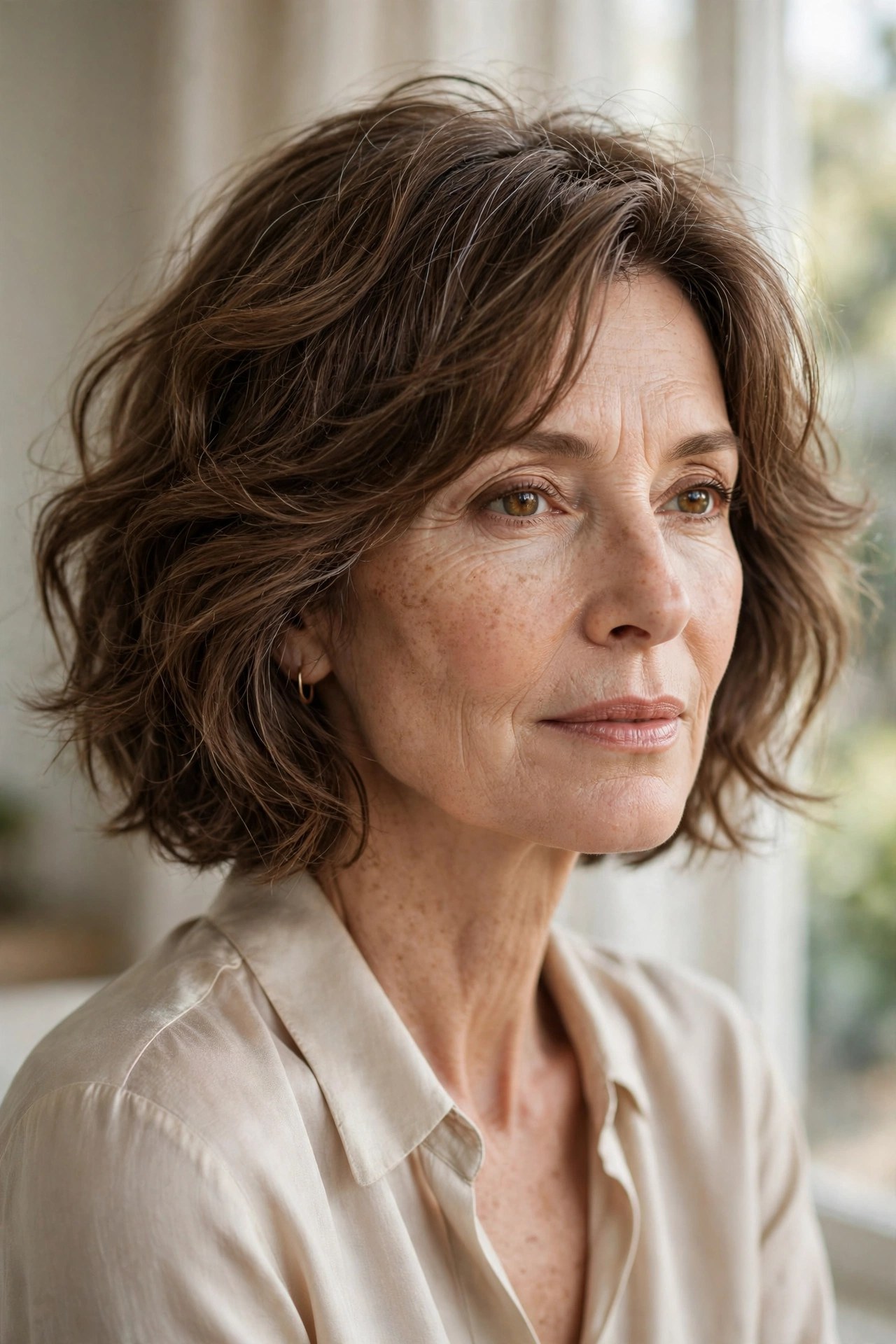
A professional body wave gives fine hair permanent bend and lift at the roots — the shag layers then distribute that wave into natural-looking volume. It is the longest-lasting volume solution on this list. Wash-and-go fullness for months.
Best for: pin-straight fine hair that won’t hold a curl.
Styling tip: modern body waves are gentler than old-school perms — ask about options.
Avoid: tight perm rods — body wave means large, soft bend.
Try this: scrunch with mousse after washing; the wave does the rest.
8. 🌊 The Diffused-Dry Shag Bob

Cut specifically to be diffused, this shag’s layers are calibrated to spring up under warm airflow. Dried with a diffuser, fine hair gains volume it could never get from a brush blowout. The cut and the tool are a team.
Best for: fine hair with any natural wave to amplify.
Styling tip: mousse on damp roots, then diffuse on medium heat, high airflow.
Avoid: brush blow-drying this cut — it flattens what the diffuser builds.
Try this: diffuse upside down for the first two minutes for maximum root lift.
9. 🙃 The Upside-Down Shag Bob
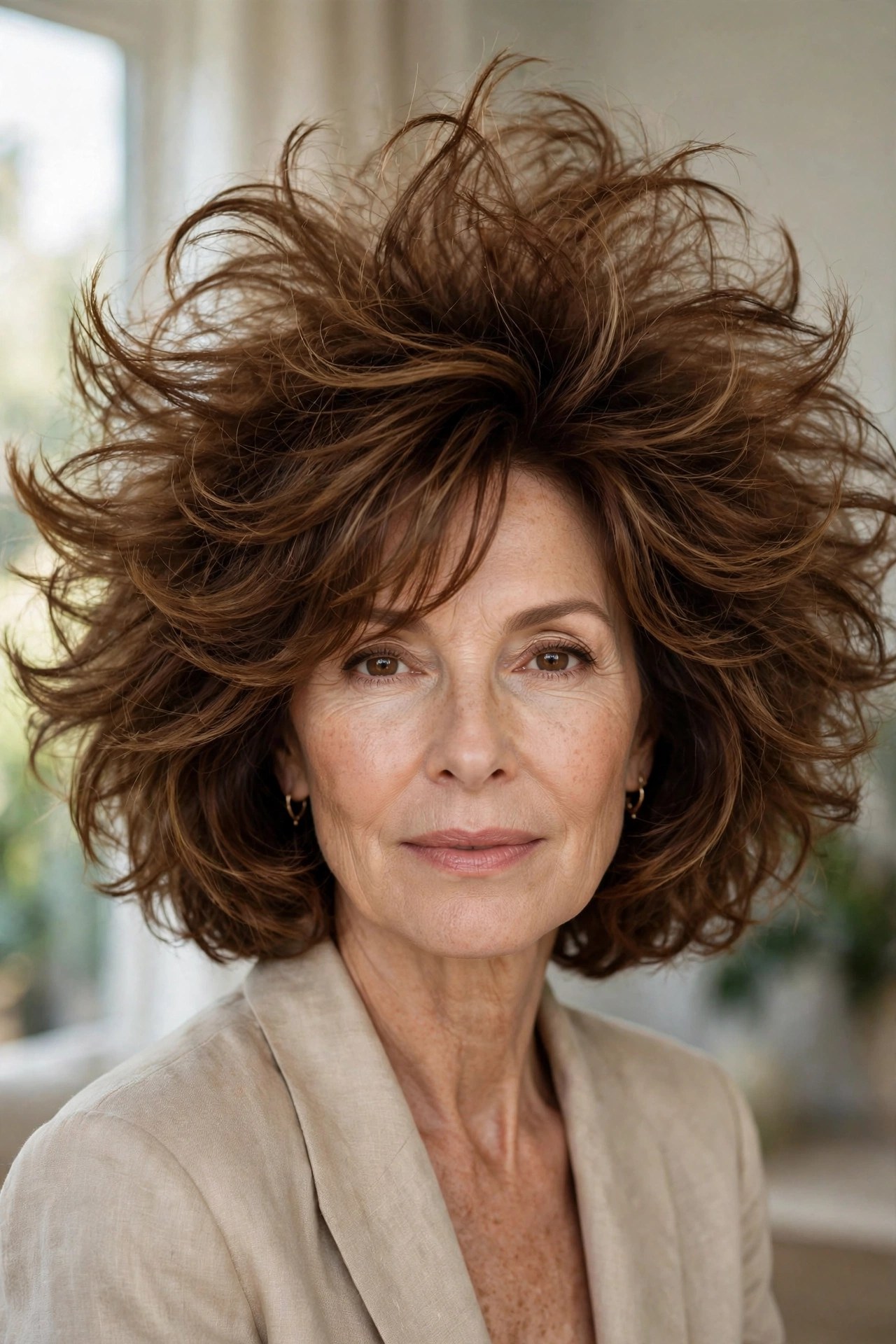
The layers are cut to fall perfectly when the head flips back up — trained volume, essentially. Dried upside down, the shag explodes with body; flipped upright, it settles into place with lasting lift. Gravity, hacked.
Best for: anyone willing to spend three upside-down minutes for all-day volume.
Styling tip: rough-dry 80% upside down, then flip and finish the ends.
Avoid: finishing products applied before flipping — they weigh down the lift.
Try this: a cool shot while still upside down sets the volume longest.
10. 🎡 The Roller-Set Shag Bob

Designed for velcro rollers, this shag’s layers wrap perfectly around medium rollers at the crown. Ten minutes of rollers while you do makeup equals salon-level volume. Old-school technique, modern cut.
Best for: special occasions and anyone who loves retro styling tricks.
Styling tip: set slightly-damp crown sections on velcro rollers; remove when cool.
Avoid: heated rollers on fragile fine hair — velcro on damp hair is gentler.
Try this: just three rollers at the crown transform the whole cut.
11. 🧴 The Mousse-First Shag Bob

This cut is designed around mousse-first styling — the layers are spaced to distribute product evenly from roots to ends. Applied to damp hair before drying, mousse gives each fine strand grip and memory. The cut makes the product work twice as hard.
Best for: product-friendly women who don’t mind a 2-minute routine.
Styling tip: golf-ball-sized mousse on damp roots, combed through before drying.
Avoid: applying mousse to dry hair — it needs damp strands to activate.
Try this: layer a root-lift spray under the mousse for double lift.
Fine hair holds volume best when it’s slightly “dirty” — freshly washed fine hair is slippery and collapses fastest. If you wash daily, try washing at night instead: morning hair has more grip, more texture, and holds a shag’s volume dramatically better. Dry shampoo at the roots extends this even further.
12. ✨ The Dry-Texture Shag Bob

Built for dry texture spray, this shag’s layers separate beautifully with a single misting. The spray adds grit and separation that fine hair lacks naturally — instant second-day texture on clean hair. Volume in a can, cut to receive it.
Best for: clean-hair days when you still want lived-in volume.
Styling tip: mist at the roots, wait 30 seconds, then massage with fingertips.
Avoid: spraying too close — arm’s length gives even, light coverage.
Try this: flip your part after spraying for double the lift.
13. 📆 The Second-Day Shag Bob

Engineered to peak on day two — the cut actually looks better with a little natural oil and lived-in texture. Fine hair gains grip overnight, and this shag is designed to exploit it. The rare cut that rewards skipping a wash.
Best for: anyone ready to break the daily-wash habit.
Styling tip: sleep on a silk pillowcase; revive morning roots with dry shampoo.
Avoid: over-brushing in the morning — finger-comb to preserve the texture.
Try this: braid loosely overnight for enhanced second-day waves.
14. 🌫️ The Powder-Power Shag Bob
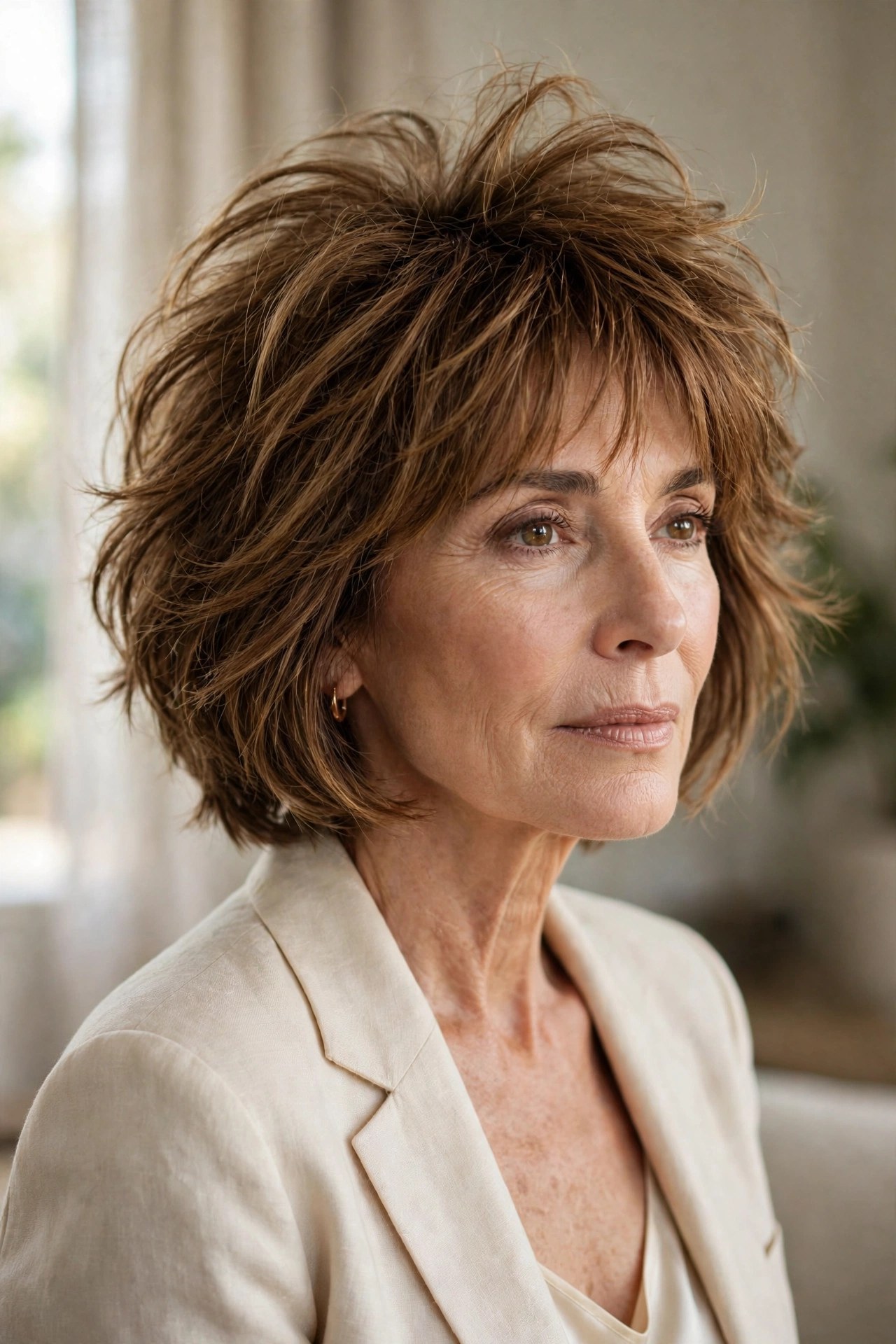
Cut to work with volumizing powder — the layers create pockets where powder adds invisible grit and lift at the roots. A tiny sprinkle transforms flat roots into lasting volume. The shag hides the powder completely.
Best for: midday flatness emergencies.
Styling tip: sprinkle a tiny amount at the roots, then massage vigorously.

Avoid: over-applying — powder builds up; start with less than you think.
Try this: keep a travel-size powder in your bag for afternoon revivals.
15. 👑 The Pixie-Crown Shag Bob
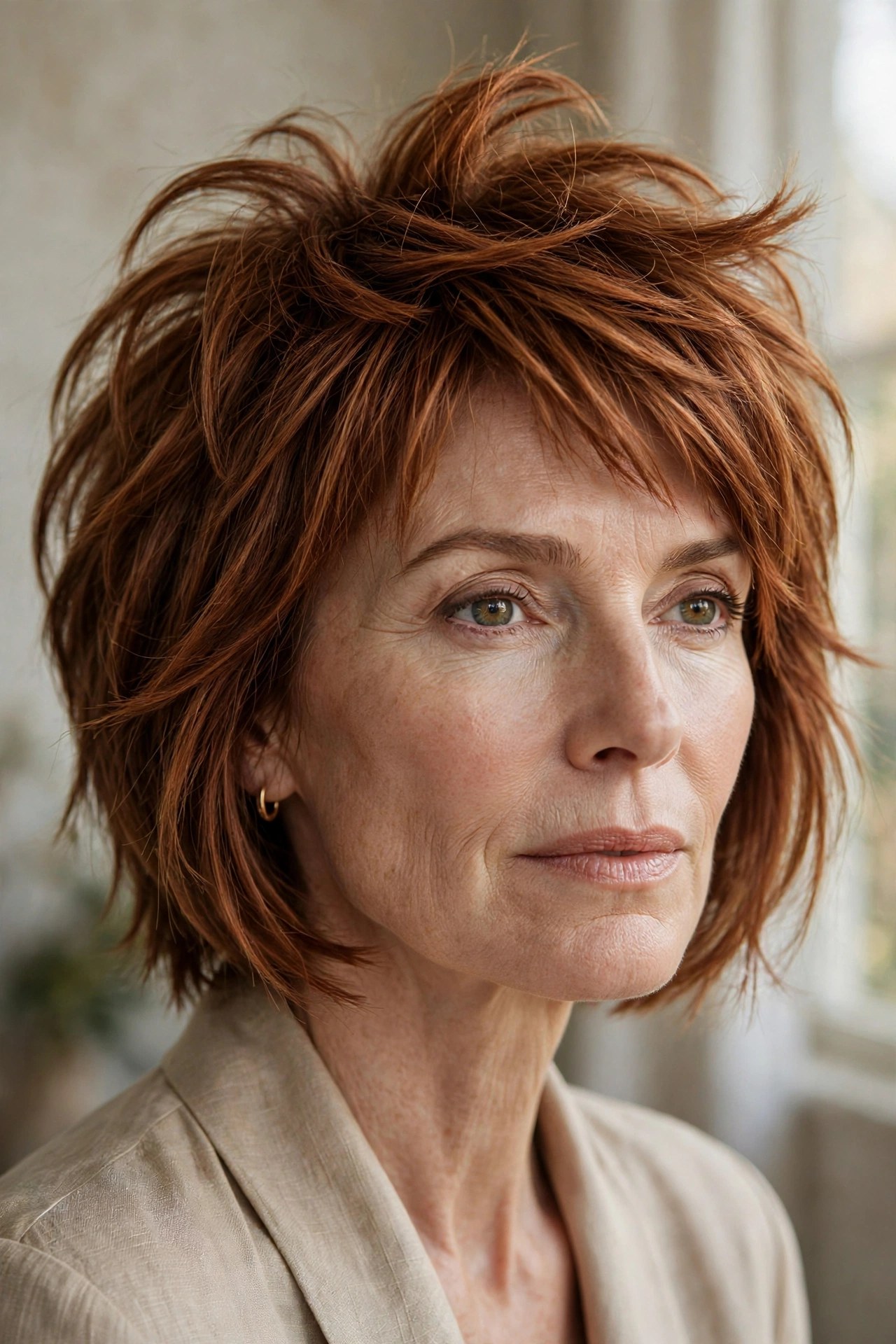
The crown is cut almost pixie-short while the sides and front keep bob length — the short crown layers stand up naturally, creating permanent height. It is the boldest volume engineering on this list, and it works.
Best for: very flat crowns that nothing else lifts.
Styling tip: a tiny amount of paste on the crown pieces emphasizes the lift.
Avoid: this cut if you wear hats often — the crown needs to breathe.
Try this: the short crown grows out into regular shag layers gracefully.
16. 📐 The Graduated Shag Bob

Graduation through the back builds the shag upward — each layer slightly shorter than the one below, stacking into natural volume. The graduated structure means the volume is in the cut, not the styling. Wash-and-go lift.
Best for: fine hair that needs architecture, not products.
Styling tip: dry the back sections upward to activate the graduation.
Avoid: severe stacking — soft graduation suits fine hair better.
Try this: a round brush on just the back sections multiplies the effect.
17. 🥞 The Stacked Shag Bob
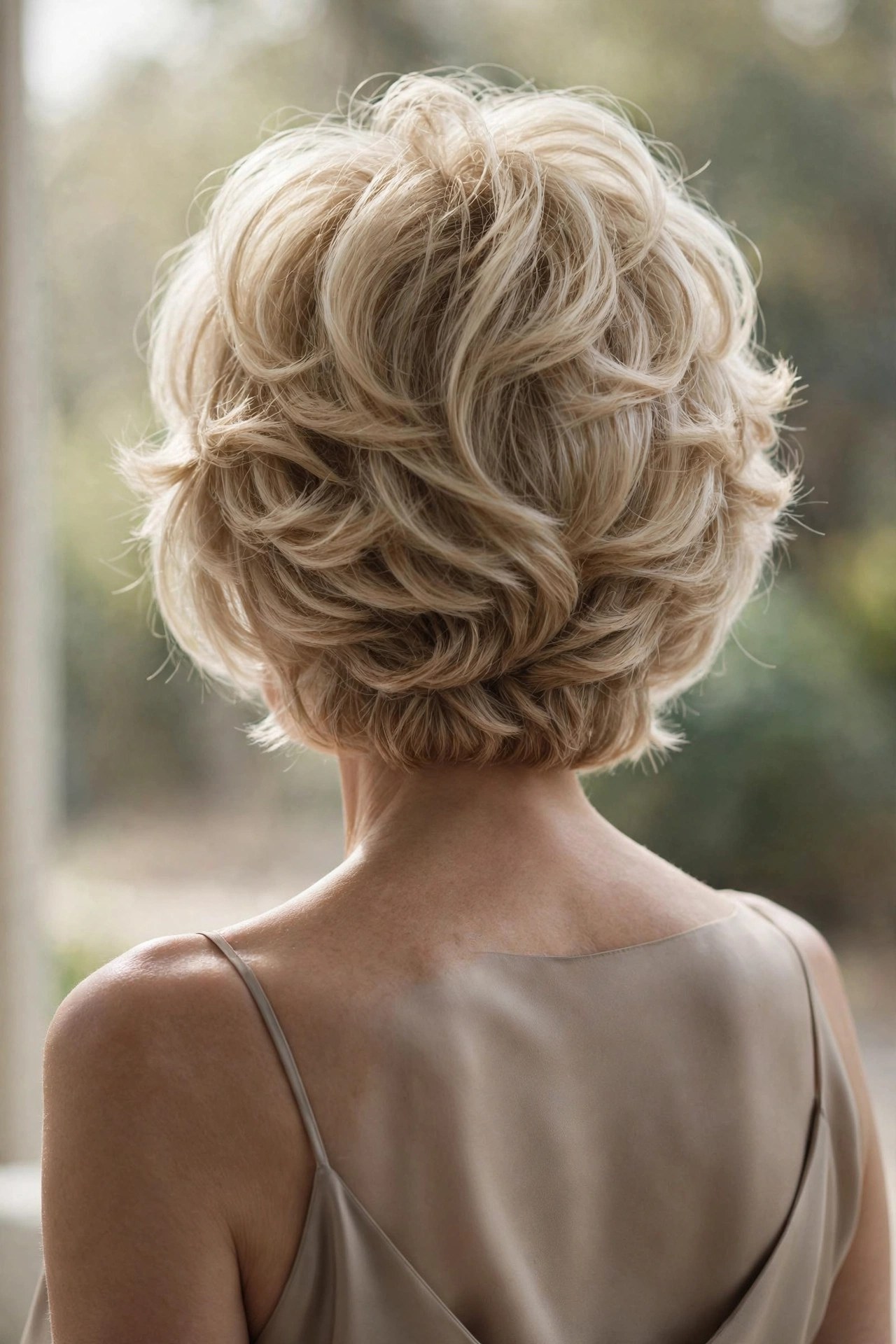
Deliberate stacking at the nape and crown creates a rounded, full silhouette that fine hair could never achieve one-length. The stacked layers build on each other like floors of a building — height through structure.
Best for: maximum back-view fullness.
Styling tip: lift sections straight out from the head while drying to build the stack.
Avoid: letting it grow past 8 weeks — stacks lose shape faster.
Try this: a volumizing powder at the crown revives the stack between washes.
18. ↔️ The Side-Part Volume Shag Bob

A deep side part is the oldest volume trick because it works — sweeping hair across the crown creates instant lift and coverage. This shag is cut to fall perfectly from a deep side part. Zero products, pure geometry.
Best for: instant volume with no styling at all.
Styling tip: train the part with a clip while hair dries after washing.
Avoid: a timid side part — depth is what creates the volume.
Try this: switch the deep side monthly to keep roots lifted.
19. 〰️ The Zigzag-Part Shag Bob
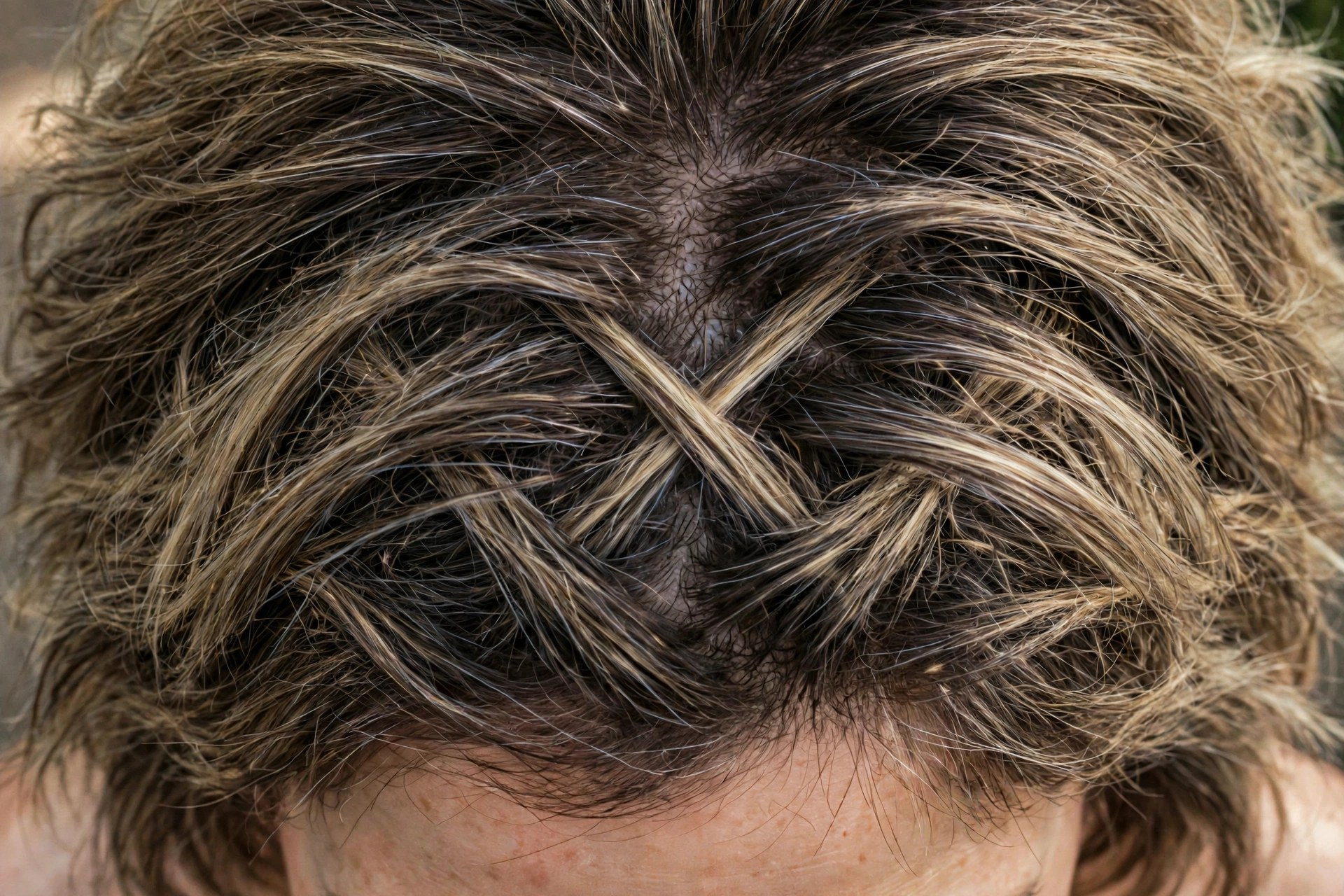
A zigzag part breaks up the scalp line so completely that thinning becomes invisible — the eye can’t find a part to judge. The crisscross also creates micro-lift at every turn. Camouflage and volume in one move.
Best for: visible scalp at the part or thinning crowns.
Styling tip: create with a rattail comb on damp hair, then dry to set.
Avoid: pairing with heavy fringe — the part needs a clear canvas.
Try this: root touch-up powder along the zigzag for extra coverage.
20. 💇 The Fringe-Forward Shag Bob
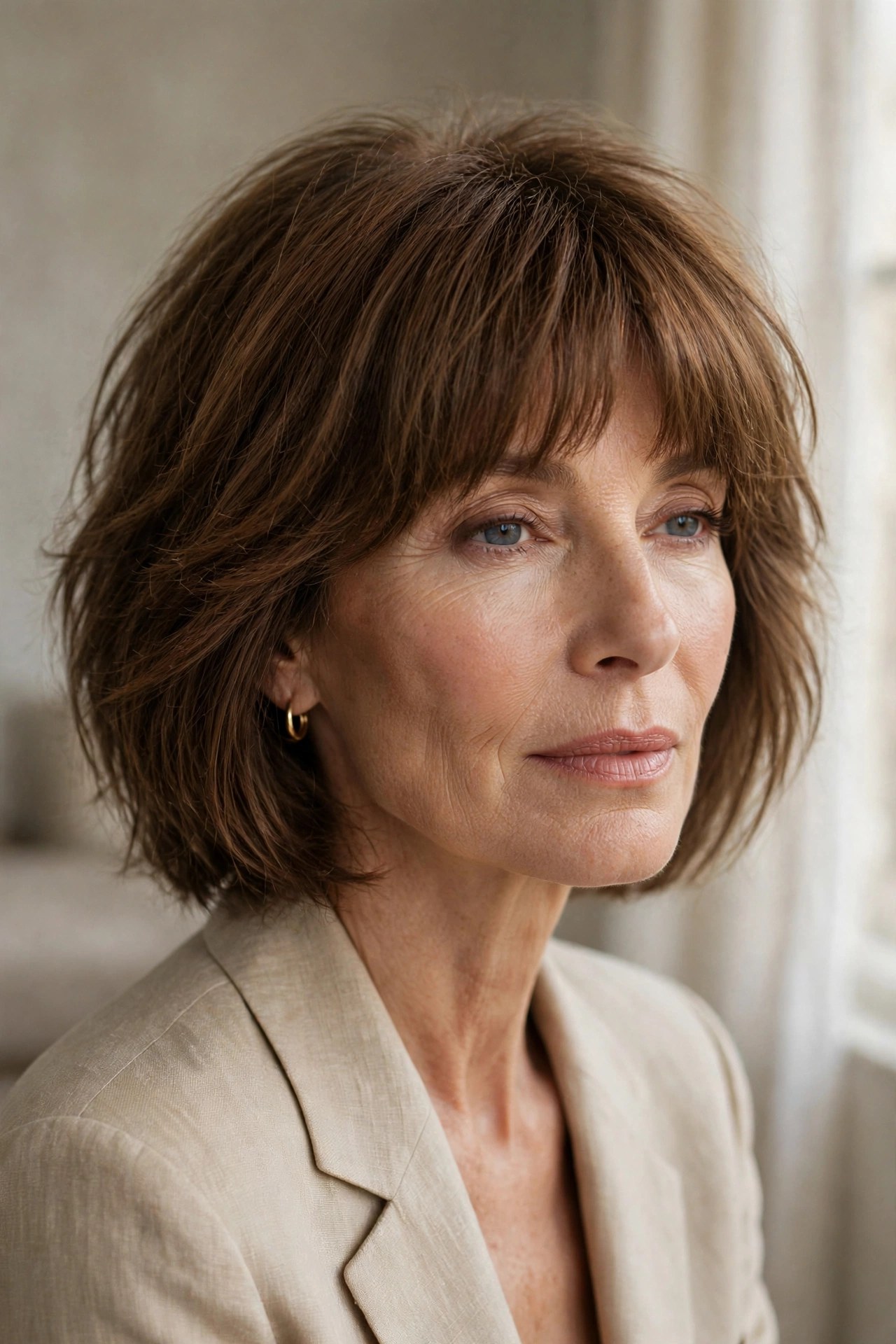
Bringing fullness forward — a soft, full fringe adds an entire curtain of hair across the forehead, making the whole cut read denser. The fringe is the volume; the shag is the frame. It rebalances where the eye sees fullness.
Best for: high foreheads and anyone wanting front density.
Styling tip: keep the fringe soft and piecey, never thick and heavy.
Avoid: a fringe so thick it steals from the sides.
Try this: sweep it aside on days you want a different look.
21. 😊 The Cheekbone-Lift Shag Bob

Layers that start at the cheekbone and angle upward draw the eye — and the hair — up instead of down. The upward direction creates lift through the sides where fine hair usually hangs. It is a facelift built from layers.
Best for: adding lift when everything is starting to settle downward.
Styling tip: style the front pieces up and away from the face.
Avoid: layers starting below the jaw — they drag the eye down.
Try this: a root-lift spray at the temples boosts the upward effect.
Ask your stylist to cut your fine-hair shag DRY, or at least to check it dry before you leave. Fine hair shrinks and springs differently than it looks wet, and layers cut wet often end up shorter — and thinner-looking — than planned. A dry check is your insurance policy.
22. 📍 The Collarbone Shag Bob

Slightly longer than the rest — grazing the collarbone — this shag uses the extra length for swing and movement that reads as fullness. The weight of the length actually helps fine hair move instead of clinging. Longer, but somehow fuller-looking.
Best for: women not ready to go fully short.
Styling tip: soft bends through the lengths create the movement that fakes density.
Avoid: going longer than the collarbone — fine hair thins visibly past this point.
Try this: tuck the front pieces behind the ears to show off the length.
23. ✂️ The Micro Shag Bob
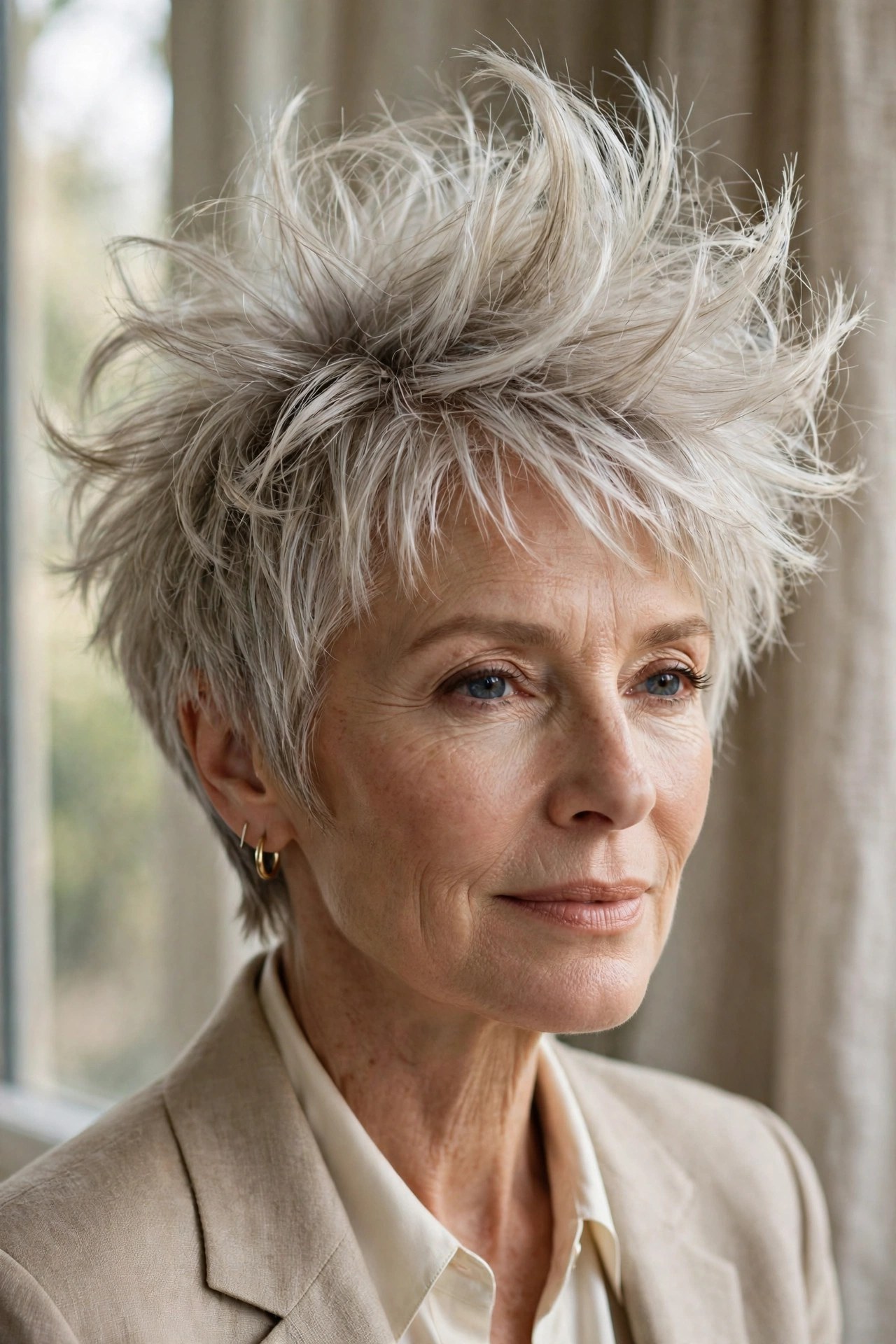
Cropped close and piecey, the micro shag removes every strand that could drag the rest down. Shorter hair is lighter hair, and lighter hair stands up. It is physics as a haircut — less hair, more volume.
Best for: the ultimate volume-per-strand ratio.
Styling tip: a tiny amount of paste, pinched through dry ends, defines the pieces.
Avoid: growing it out without a plan — the in-between stage needs trims.
Try this: it grows into a perfect regular shag bob — two cuts in one.
24. 💫 The Tousled-Volume Shag Bob

Deliberately tousled to maximize separation, this shag looks like you just shook it out — because that is exactly the styling method. The tousle creates air between strands that reads as thickness. Controlled chaos, engineered.
Best for: anyone who loves the undone look.
Styling tip: bend random sections with a flat iron, then shake vigorously with fingers.
Avoid: brushing it smooth afterward — the tousle is the volume.
Try this: sleep in a loose topknot for next-morning tousle without heat.
25. 🎨 The Root-Shadow Shag Bob

A deeper root color melting into lighter ends creates shadow at the scalp that reads as density — the eye sees depth and assumes thickness. The root shadow also makes grow-out invisible. Color as camouflage, color as volume.
Best for: hiding scalp show-through at the part.
Styling tip: ask for a root shadow one to two levels deeper than your ends.
Avoid: harsh lines between root and ends — the melt must be seamless.
Try this: the shadow grows out invisibly, stretching appointments to 12 weeks.
26. 💰 The Money-Piece Shag Bob

Bright face-framing money pieces draw every eye to the front — and bright, light-reflecting hair always looks fuller. The contrast makes the whole shag glow with dimension. It is the highest-impact color detail for fine hair.
Best for: instant brightness and perceived fullness around the face.
Styling tip: keep the money pieces bright with purple shampoo if blonde.
Avoid: pieces too chunky — fine hair needs delicate ribbons, not stripes.
Try this: style the front pieces forward to show off the brightness.
❓ Shaggy Bob for Thin Fine Hair FAQs
Can thin fine hair really handle a shaggy bob?
Yes — when the shag is engineered for fine hair rather than just textured for texture’s sake. The rules: keep the perimeter solid, place layers deliberately (not randomly), protect the crown with shorter supportive layers, and use dimension color. The 26 ideas above are all built on these principles, so every one is fine-hair safe.
Won’t layers make my thin hair look thinner?
Bad layers will; smart layers won’t. The difference is placement and weight: layers that remove bulk from the ends thin the hair, while layers that create lift at the crown and keep the perimeter full add volume. Always tell your stylist your priority is fullness — and consider a dry cut check before you leave the salon.
What products actually add volume to fine hair?
Volumizing mousse at the roots on damp hair is the single most effective product, followed by dry texture spray for separation and volumizing powder for midday revival. The key rule: lightweight everything, roots only, and never heavy oils or thick creams near the crown. Product can’t fix a bad cut, but it multiplies a good one.
Should I wash my fine hair daily for volume?
Counterintuitively, no — slightly “lived-in” fine hair holds volume better because it has more grip and texture. Try washing at night instead of morning, use dry shampoo at the roots on off days, and notice how much better your shag holds its shape on day two. The Second-Day Shag Bob above is designed around this truth.
How short should a shaggy bob be for maximum volume?
Shorter generally means more volume for fine hair, since less weight drags the roots down. Chin-length to just above the shoulder is the sweet spot; the Micro Shag Bob goes shorter for maximum lift. Past the collarbone, fine hair starts to look thinner rather than fuller — length has diminishing returns.
📖 Keep Reading
- 15 Bob Hairstyles for Fine Hair — more volume-smart bobs for fine strands.
- 20 Shoulder-Length Hairstyles — when you want volume with more length.
- 19 Lob Haircuts for Thin Hair — longer cuts that still protect fullness.
✅ Your Fine-Hair Volume Checklist
- ☐ Choose a volume strategy first: root lift, crown engineering, or color dimension
- ☐ Tell your stylist “fullness is the priority” — and ask for a dry check
- ☐ Keep the perimeter solid; let the volume come from the top, not the ends
- ☐ Stock the trio: root mousse, dry texture spray, volumizing powder
- ☐ Try night washing — day-two hair holds shag volume best
- ☐ Book trims every 6–8 weeks; fine-hair shags lose architecture faster
Thin, fine hair doesn’t need more hair — it needs smarter hair. Every idea above is a small engineering project: a layer placed to lift, a part moved to cover, a color chosen to fake depth. Pick the volume strategy that matches your mornings, bring the photo to your stylist, and stop fighting your texture. The right shag doesn’t ask fine hair to be something it’s not — it just makes the most of everything it is.
Discover more from Fashinate Style
Subscribe to get the latest posts sent to your email.