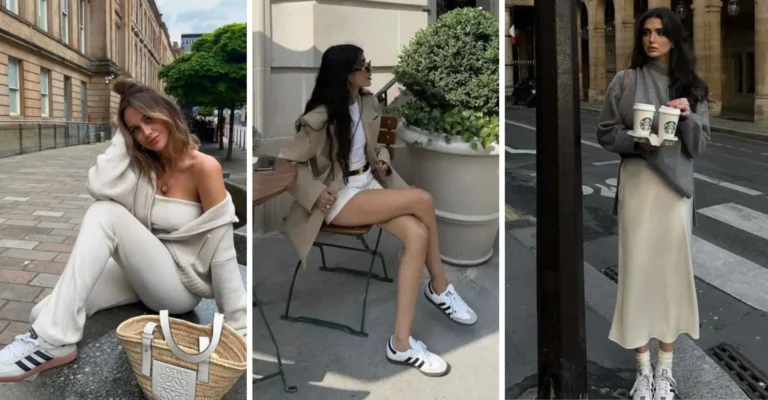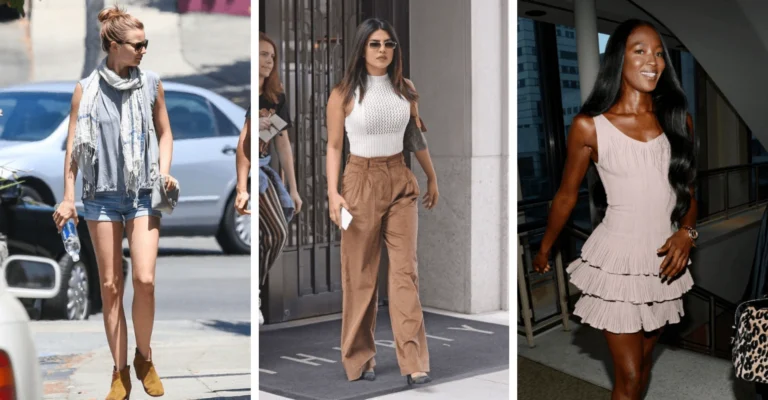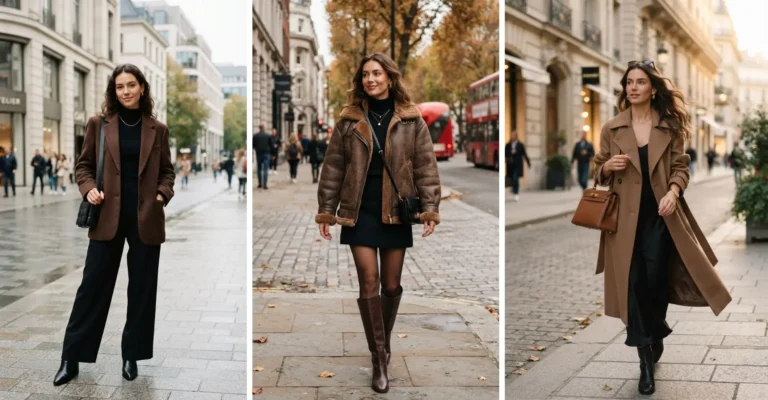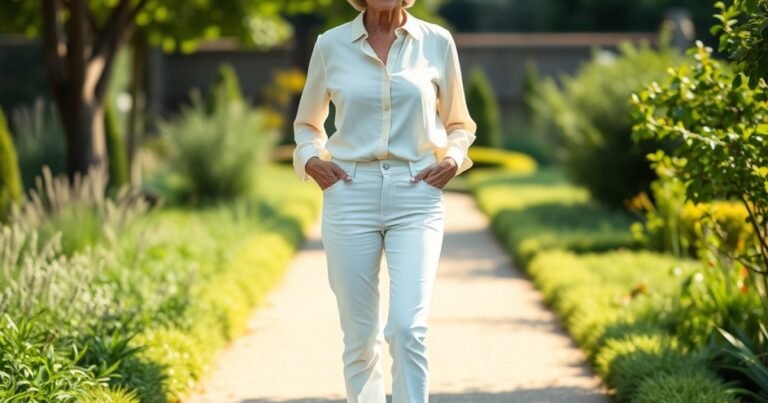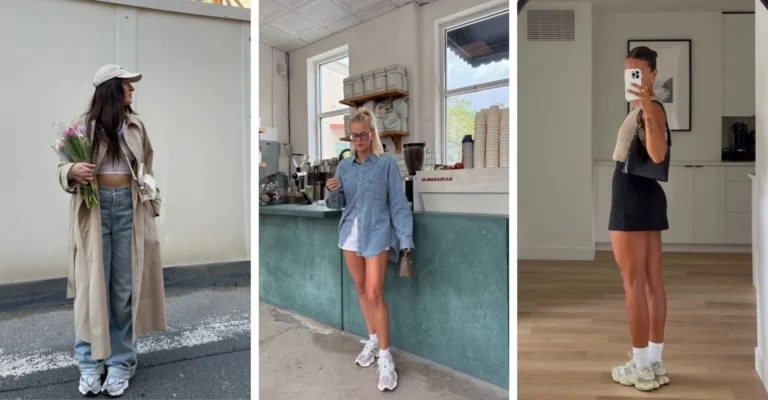
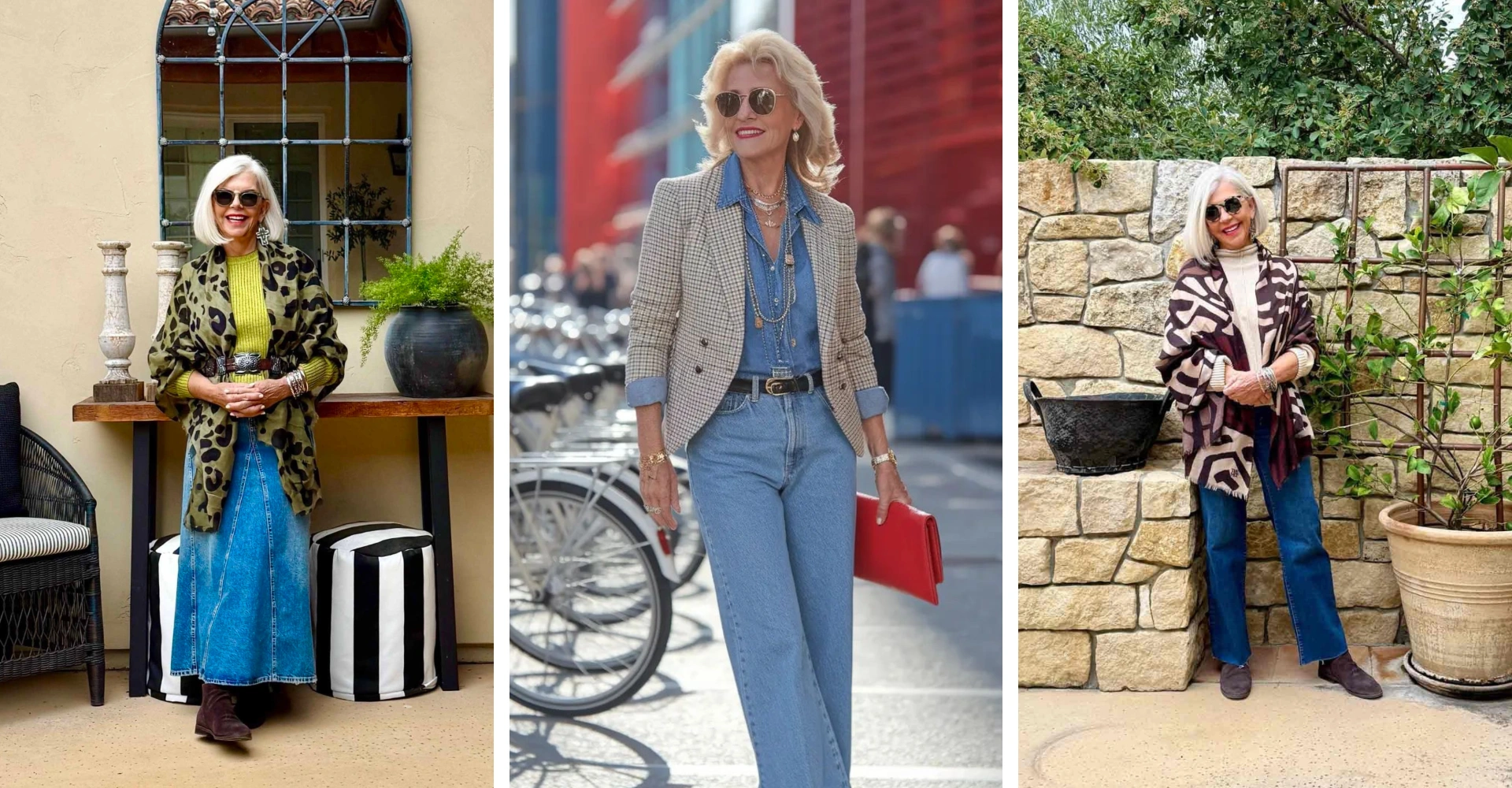
Let’s clear up one thing first: turning 60 doesn’t mean disappearing into beige cardigans and overly sensible shoes. This is the perfect time to dress with confidence, personality, and a little extra attitude.
Think polished basics, beautiful statement pieces, and outfits that feel like a reflection of who you are now.
Dressing over 60 isn’t about trying to look younger. It’s about looking stylish, confident, and completely comfortable in your own skin.
So, here’s exactly how to dress in your 60s without looking boring or outdated.
1. Build Your Wardrobe Around Hero Staples
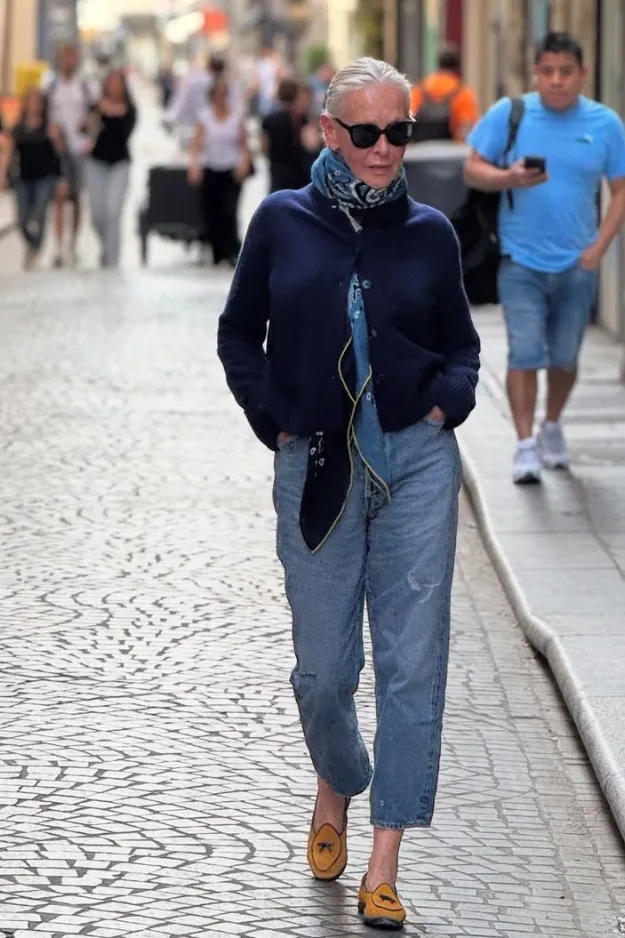
Before chasing every new trend, create your wardrobe around timeless, quality pieces that can work with almost everything else.
- A well-tailored blazer in navy or charcoal
- A crisp white button-down or elegant silk blouse
- Dark straight-leg jeans or perfectly fitted trousers
- A classic trench coat
- A versatile midi dress in a flattering shade
- A soft cashmere sweater you can wear repeatedly
These are the pieces that make getting dressed easier. Once your foundation is strong, trendier additions feel intentional rather than forced.
Pro tip: Don’t fill your closet with pieces that are only “almost right.” It’s better to have fewer quality staples that fit beautifully and keep their shape.
2. Use Tailoring and Structure for an Elevated Look
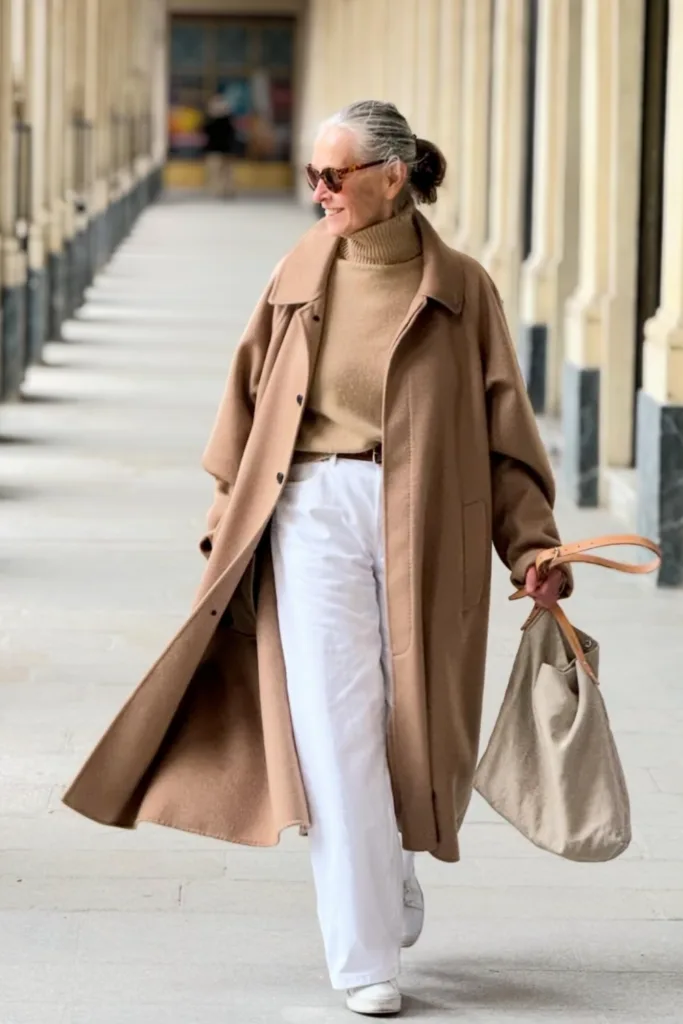
Looking polished isn’t necessarily about spending more money. Fit and tailoring often make a much bigger difference.
Have trousers shortened so they fall neatly over your shoes. Adjust waistbands if they gape, and make sure your blazers sit properly across the shoulders.
Look for gentle structure through A-line skirts, princess seams, subtle paneling, and clean silhouettes. These details add shape without making clothes feel stiff.
Pro tip: Find a reliable tailor and use them regularly. A few small alterations can completely transform otherwise ordinary clothing.
3. Choose Necklines That Frame Your Face
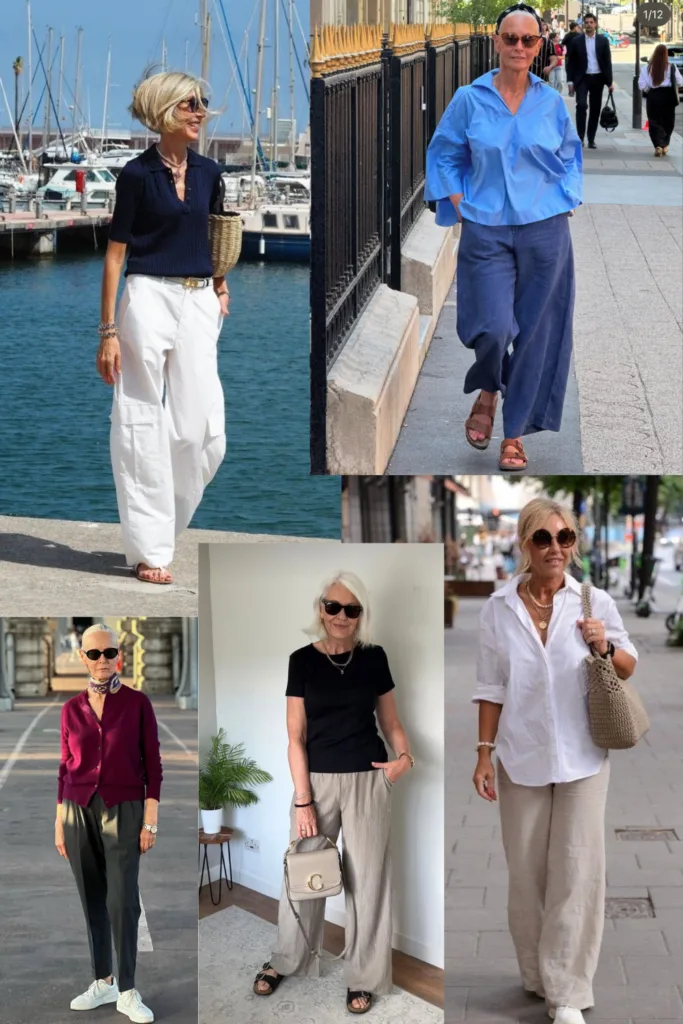
Your neckline is one of the first things people notice, so it can have a big impact on your overall look.
V-necks, scoop necks, wrap styles, and open collars create a softer, more elongated appearance. They also leave room for a beautiful necklace or scarf.
A pendant, silk scarf, or stylish pair of glasses can further draw attention toward your face.
Pro tip: Hold a top near your face in natural light before buying it. If the neckline makes your complexion look brighter, it’s worth considering.
4. Use Color and Contrast to Refresh Your Style
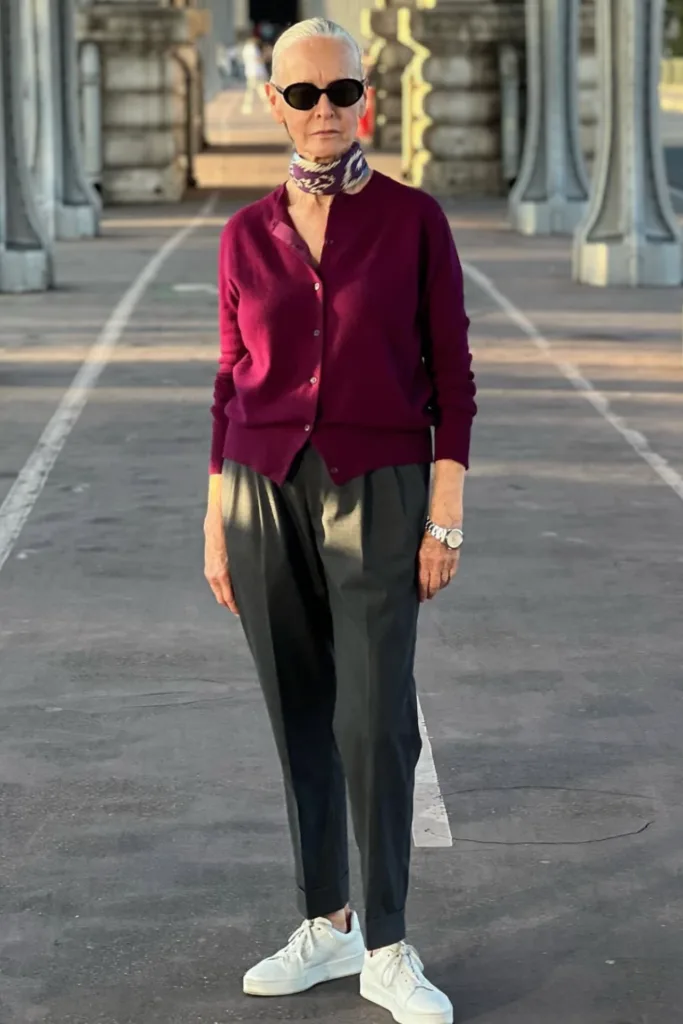
Color can instantly make an outfit feel more current, so don’t feel limited to muted shades simply because you’re over 60.
Emerald, sapphire, amethyst, burgundy, and other jewel tones can look beautiful alongside neutrals such as camel, ivory, navy, and charcoal.
You can also use contrast in small doses. A neutral outfit paired with a colorful scarf, handbag, or blouse can make the whole look feel more lively.
Pro tip: Try different colors near your face in natural light. The shades that make your complexion look brighter are often the most flattering choices.
5. Pick Shoes You Actually Enjoy Wearing
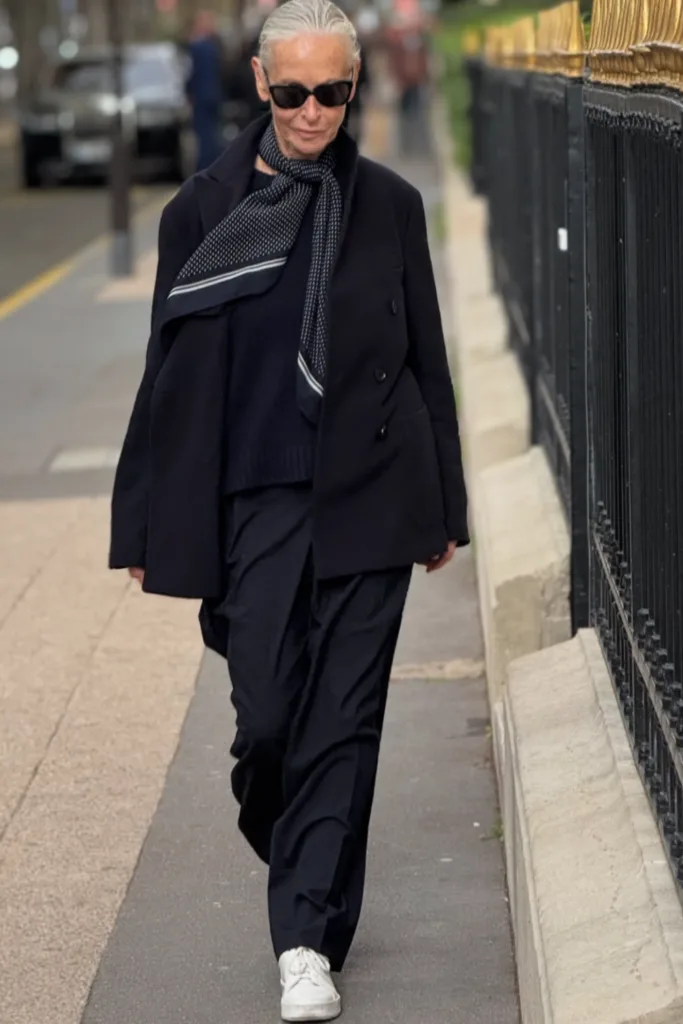
Shoes can completely change an outfit, but stylish footwear should never mean spending the entire day in pain.
Look for cushioned insoles, block heels, kitten heels, sleek loafers, slingbacks, or polished leather sneakers. These options can provide comfort while still looking refined.
Neutral or skin-tone shoes can visually lengthen the legs, while ankle boots, mules, and dressy flats work across multiple seasons.
Pro tip: If you already know you’ll avoid wearing a pair because they hurt, leave them behind. Comfortable shoes will always make you carry yourself better.
6. Create Balance With Proportions
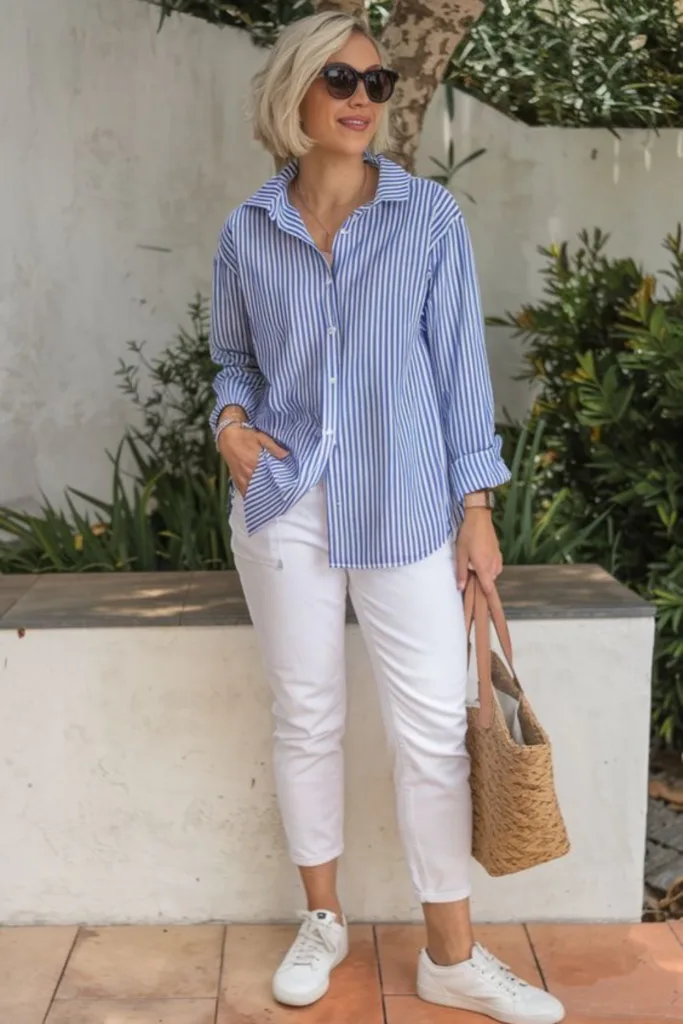
Good style often comes down to balance.
If your top is loose and flowing, pair it with straight-leg or slimmer trousers. If you’re wearing wide-leg pants or a fuller skirt, try a more fitted or tucked-in top.
A third piece, such as a blazer, scarf, vest, or lightweight jacket, can also add structure and break up a simple outfit.
Pro tip: Step away from the mirror and look at the outfit as a whole. If one area feels visually heavier, adjust the fit or add a layer to restore balance.
7. Make Accessories Part of Your Style
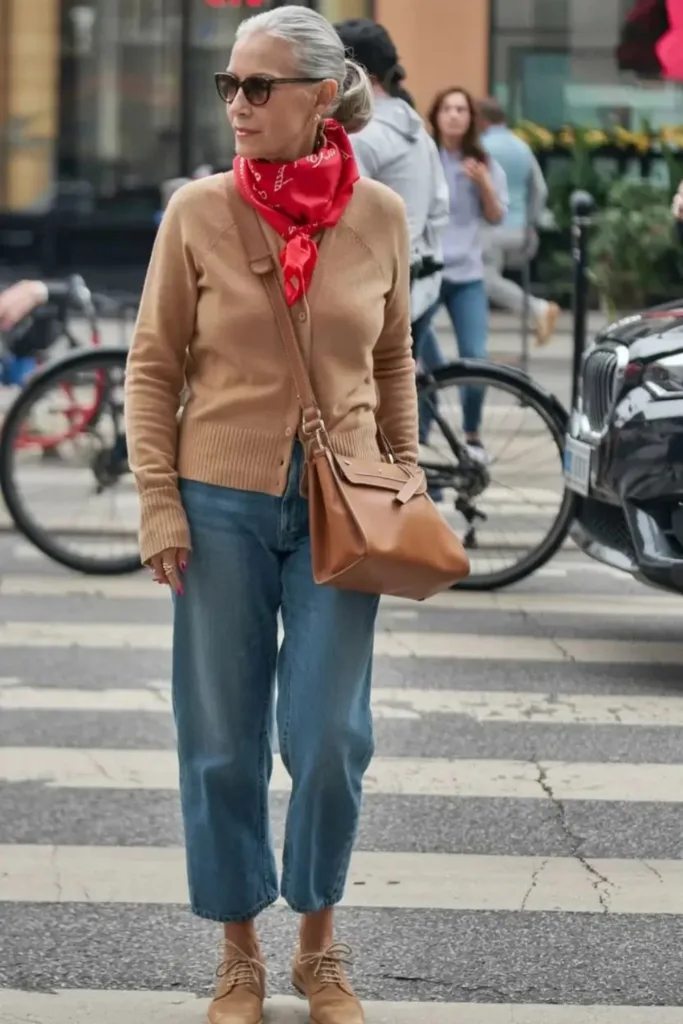
Accessories are an easy way to give simple clothes more personality.



Statement earrings, bold rings, sculptural bracelets, and beautiful necklaces can instantly elevate basic outfits. Scarves are another easy option, adding color and softness around the face.
Belts can create gentle waist definition, while structured totes and sleek crossbody bags can make an outfit feel more finished.
Pro tip: When your outfit feels almost complete but slightly plain, try adding one more accessory. Often, that small detail is all it needs.
8. Create a Signature Style of Your Own
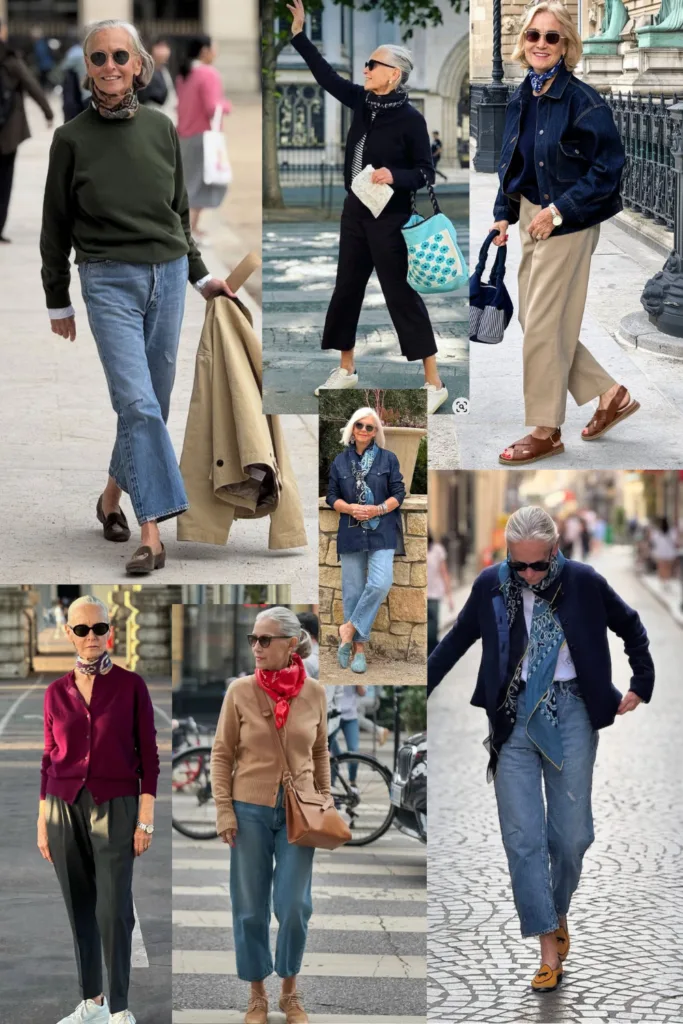
The most memorable style usually has something personal behind it.
Maybe you always wear emerald green, love silk scarves, prefer tailored blazers, or feel best in a particular silhouette. That repeated element can become your signature.
You can even create a simple uniform, such as jeans with a blazer and silk blouse, that always makes you feel polished.
Your signature style gives your wardrobe consistency and makes your outfits feel unmistakably yours.
Pro tip: Look through older photos and notice the colors, shapes, or accessories you repeatedly chose. Those patterns can reveal what you naturally love wearing.
9. Mix Textures to Keep Outfits Interesting
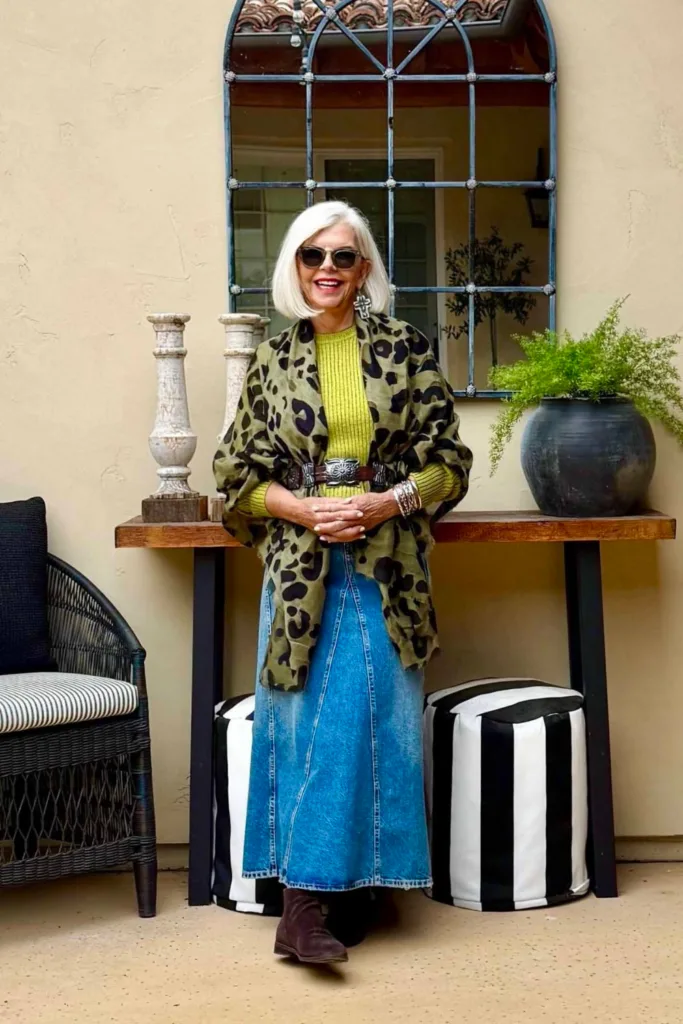
Texture adds depth and makes even a simple outfit feel more luxurious.
Try combining silk with cashmere, suede with denim, leather with satin, or a soft knit with a crisp woven fabric.
Small details also help. A lace camisole under a sweater or a satin blouse beneath a textured jacket can create subtle contrast.
Even a monochrome outfit can look rich when several different textures are combined.
Pro tip: If your outfit looks too flat, add one textured item such as suede shoes, a knitted scarf, or a leather bag.
10. Adapt Clothes to Your Body and Comfort
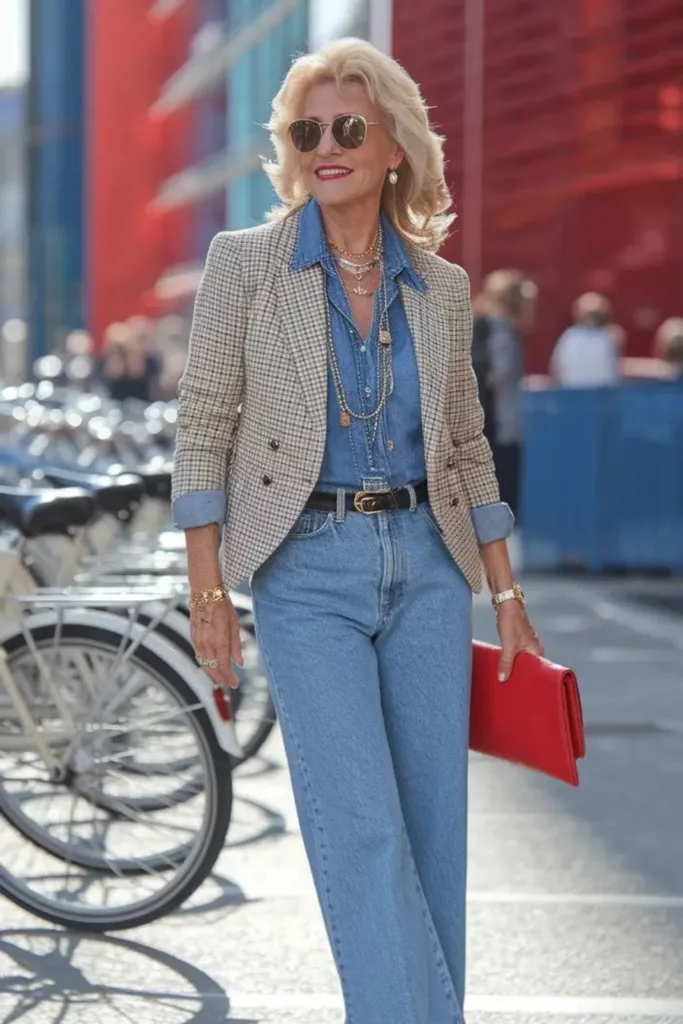
Your body changes throughout life, and your wardrobe should work with those changes rather than against them.
Higher-rise trousers with stretch can offer extra comfort, while three-quarter sleeves and wider cuffs can provide coverage without looking heavy.
Semi-opaque fabrics can also give you a little more coverage while keeping the outfit light and polished.
Supportive undergarments can help outer layers sit smoothly and improve the overall fit.
Pro tip: If a garment pinches, digs, pulls, or feels uncomfortable during the fitting, it probably won’t become more comfortable later. Choose ease first.
11. Make Seasonal Dressing Practical and Stylish
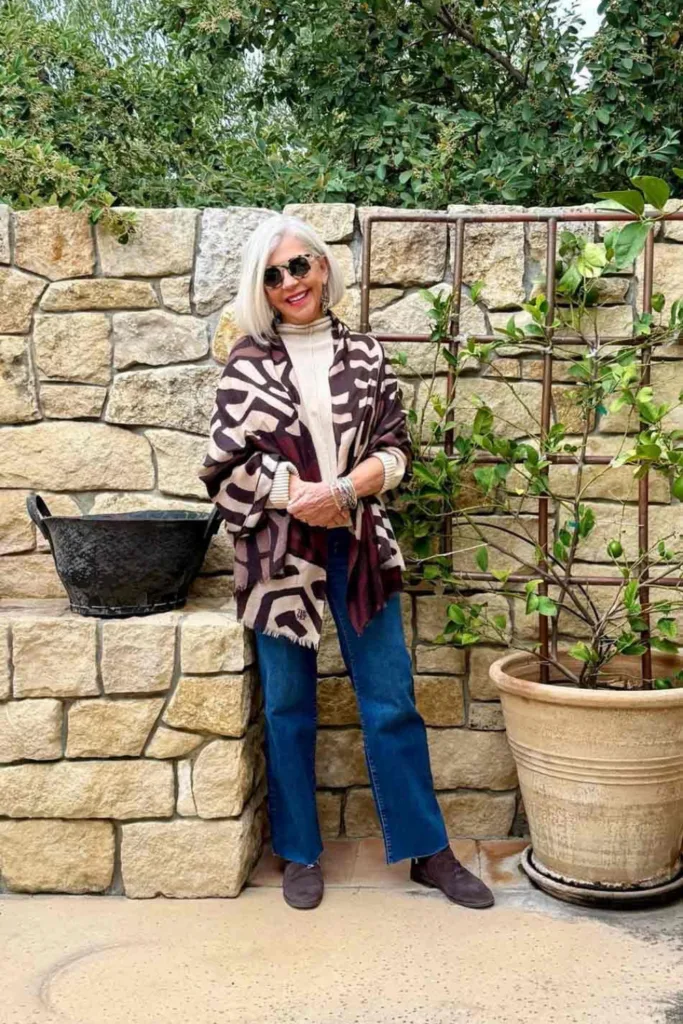
Practical clothing can still look incredibly chic when every piece has a purpose.
For warmer weather, consider linen trousers, cotton poplin shirts, and lightweight scarves. During colder months, invest in wool coats, cashmere layers, and quality leather gloves.
For travel, choose wrinkle-resistant fabrics, versatile shoes, and lightweight jackets that can work from daytime sightseeing to dinner.
Pro tip: Create small seasonal capsules with a handful of pieces that mix and match easily. It makes everyday dressing much simpler.
12. Let Confidence and Posture Finish the Outfit
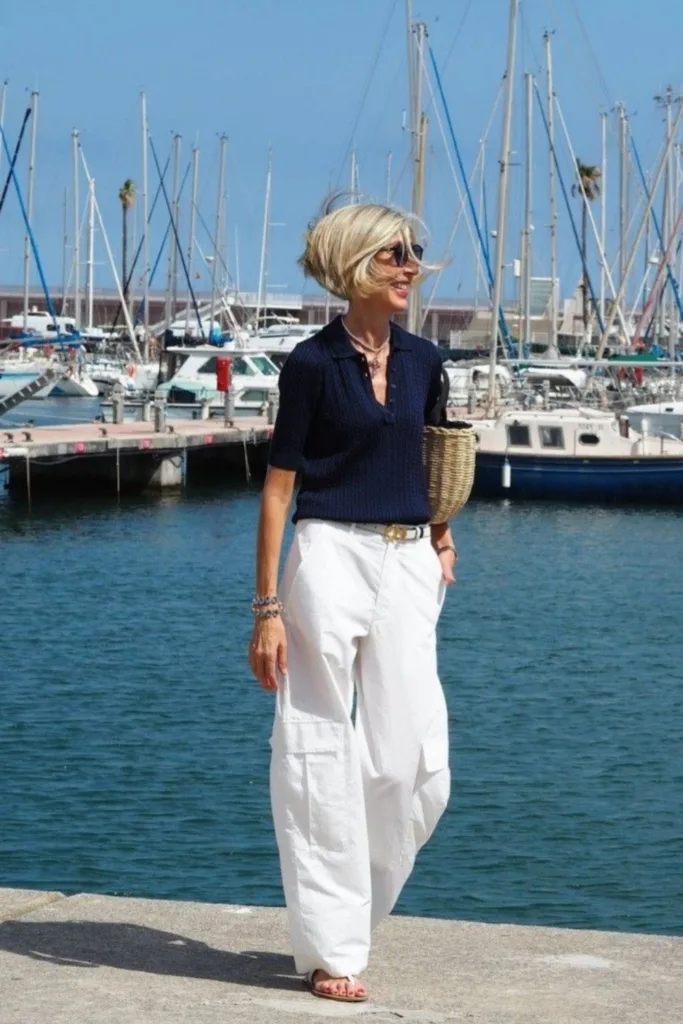
The final element of great style isn’t something you can buy. It’s how you carry yourself.
Stand tall, keep your shoulders relaxed, and choose clothes that let you move comfortably. When you aren’t constantly adjusting your outfit, you naturally look more confident.
And remember, you don’t need to follow every trend. If you genuinely love something and feel great wearing it, that confidence will always show.
Pro tip: Before heading out, take one last look in the mirror and ask yourself whether you feel good in what you’re wearing. If the answer is yes, you’re ready.
Don't miss the next one
Quick outfit ideas and beauty tips, straight to your inbox.