
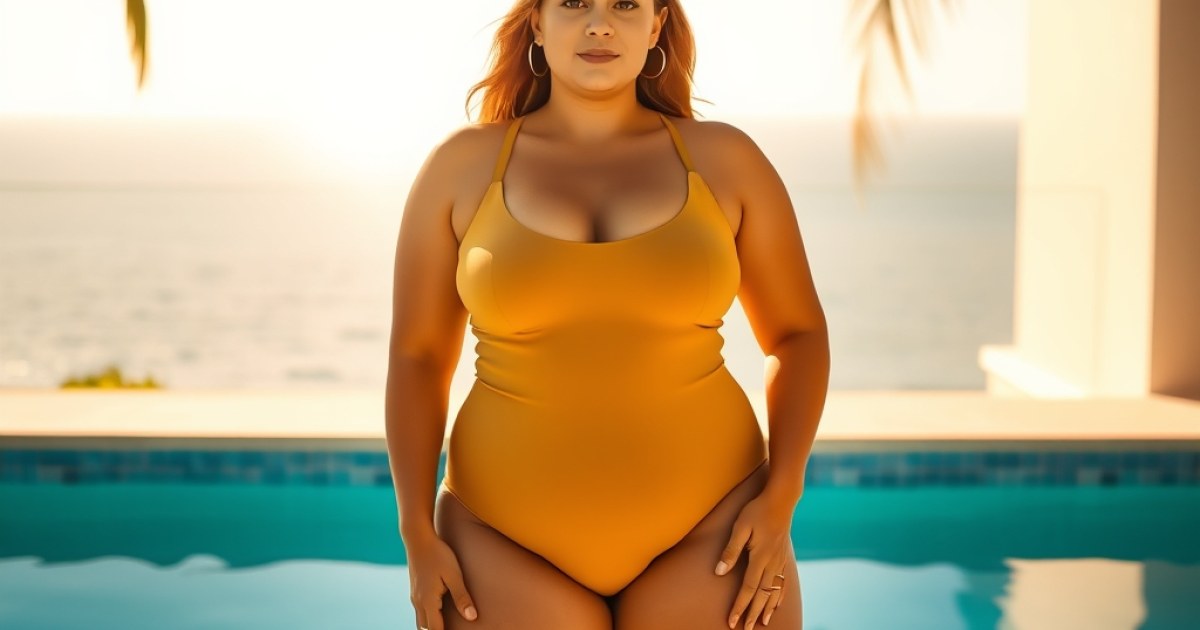
Most women assume that a flattering swimsuit has to be either skimpy or matronly, and that if you want real coverage you have to accept looking like you’re wearing a curtain. That’s a false choice, and it costs people a lot of money in suits they wear once and never touch again. A swimsuit that makes you feel good has almost nothing to do with the size on the tag and everything to do with how it’s built.
Construction is what does the work: where the ruching sits, whether the straps actually adjust, how high the leg opening cuts, whether the neckline suits your shoulder width and bust. A $40 suit with the right seams will flatter you more than a $200 suit cut for someone else’s body. The trick is knowing which details to look for and which ones to skip, because most swimwear marketing hides construction behind pretty photography.
The 21 swimsuits below cover the full range—one-pieces with hidden tummy control that doesn’t create a bulge, high-waist two-pieces that hold without squeezing, wrap styles, tankinis that don’t ride up, and swim dresses that work for actual swimming. Each entry tells you what body it flatters, what to size up or down for, and the specific features that make it stay put when you get out of the water. No styles that need constant adjusting, no suits that pinch at the hip or dig at the shoulder. Just pieces you can put on in the morning and forget about until you’re back in the car.
1. The Wrap-Front One-Piece That Loves Curves
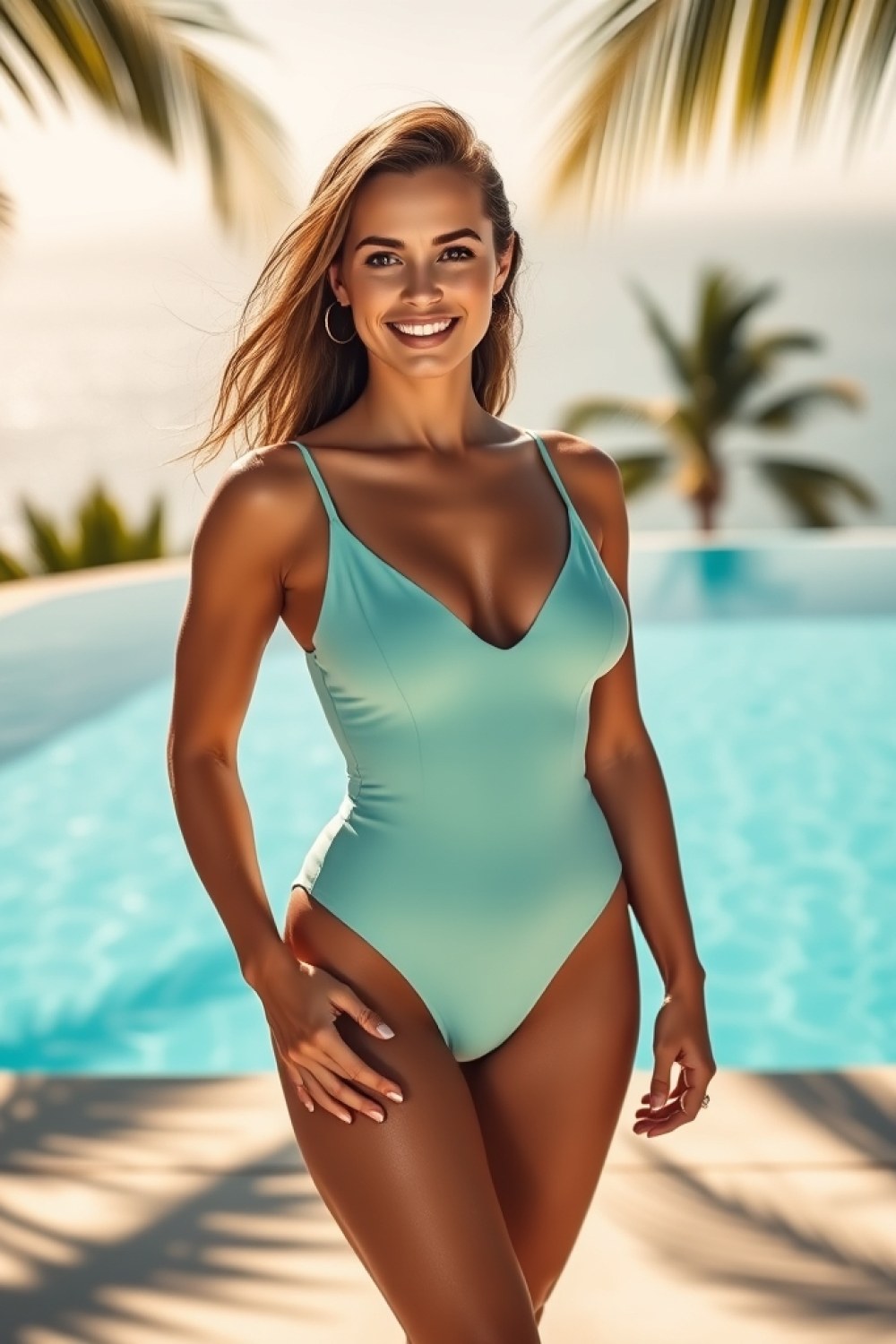
Best for: Fuller busts and hourglass or pear shapes that want definition at the waist.
A faux-wrap one-piece works because the neckline creates a deep V that draws the eye inward and down, while the diagonal seam across the torso breaks up the width of your middle. That single diagonal does more slimming work than most compression fabrics, because it manipulates line rather than squeezing. Look for a built-in shelf bra—not just a lined cup—and adjustable straps, since the wrap bodice rarely has enough structure on its own above a D cup.
Fabric matters here. A nylon-spandex blend with at least 20% spandex holds the wrap in place when wet; anything stretchier sags at the bust by the time you get out of the water.
Try this: Add a wide-brim hat and oversized sunglasses to pull attention up to your face. Skip this style if your torso is very short—the wrap seam sits low and can shorten you further. Choose a high-neck suit instead.
2. High-Waisted Bikini for Tummy Coverage
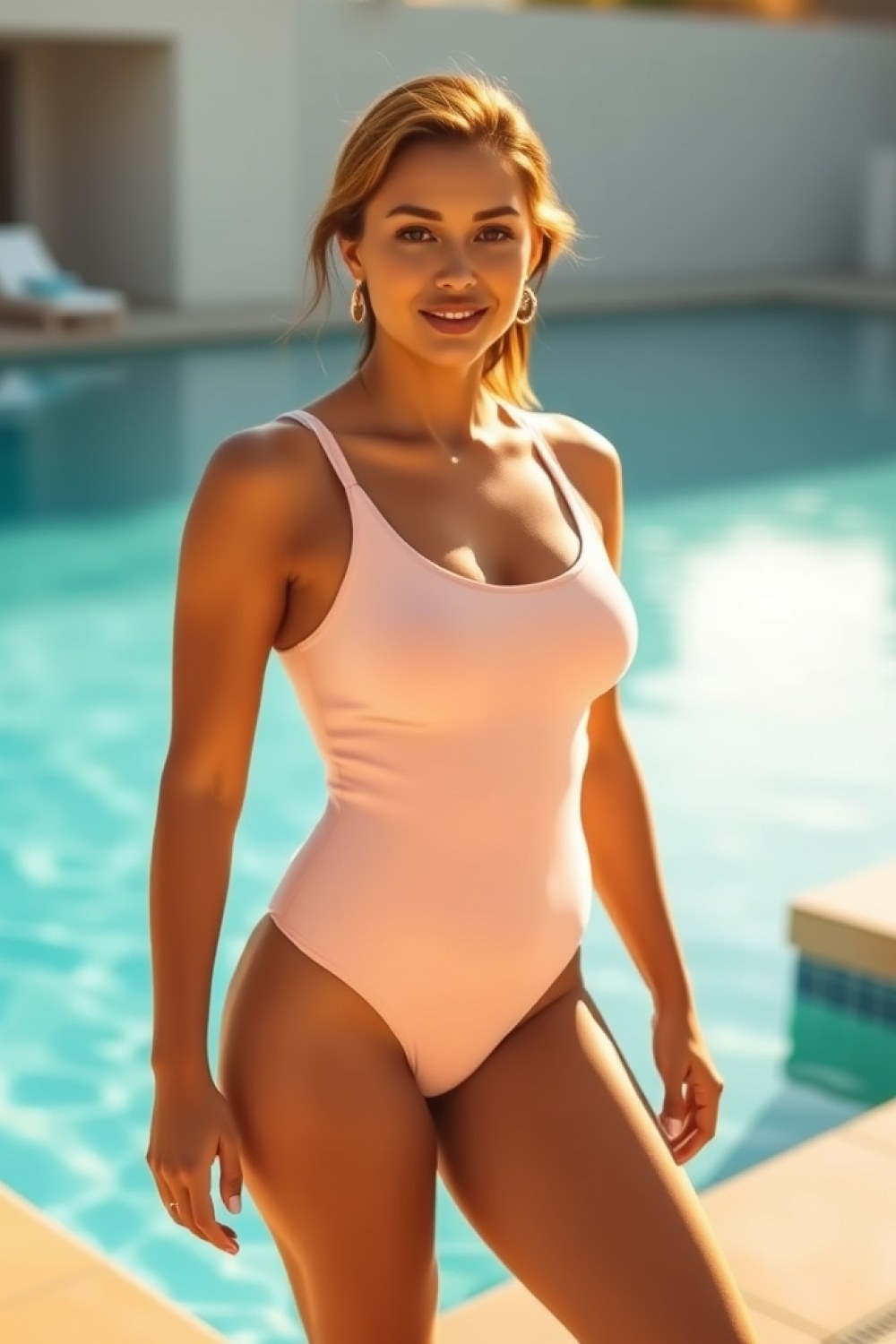
Best for: Pear shapes and anyone who wants light compression without committing to a one-piece.
The trick is the rise. High-waisted bottoms should sit at your natural waist—the narrowest point, usually an inch or two above the belly button—not pulled up over your ribcage. At that height they smooth the lower belly and create a waistline where you actually have one. Pair them with a bikini top that has underwire or molded cups, or swap in a tankini top if you want the midsection fully covered.
Waistband construction decides whether these stay flattering all day. A band of two inches or more with a wide elastic inside resists rolling when you sit down. Thin bands fold over the moment you bend.
Try this: Test the roll factor in the fitting room by sitting on a bench and standing back up. If the band flipped, size down or pick a different cut.
3. Tankini with Hidden Tummy Control
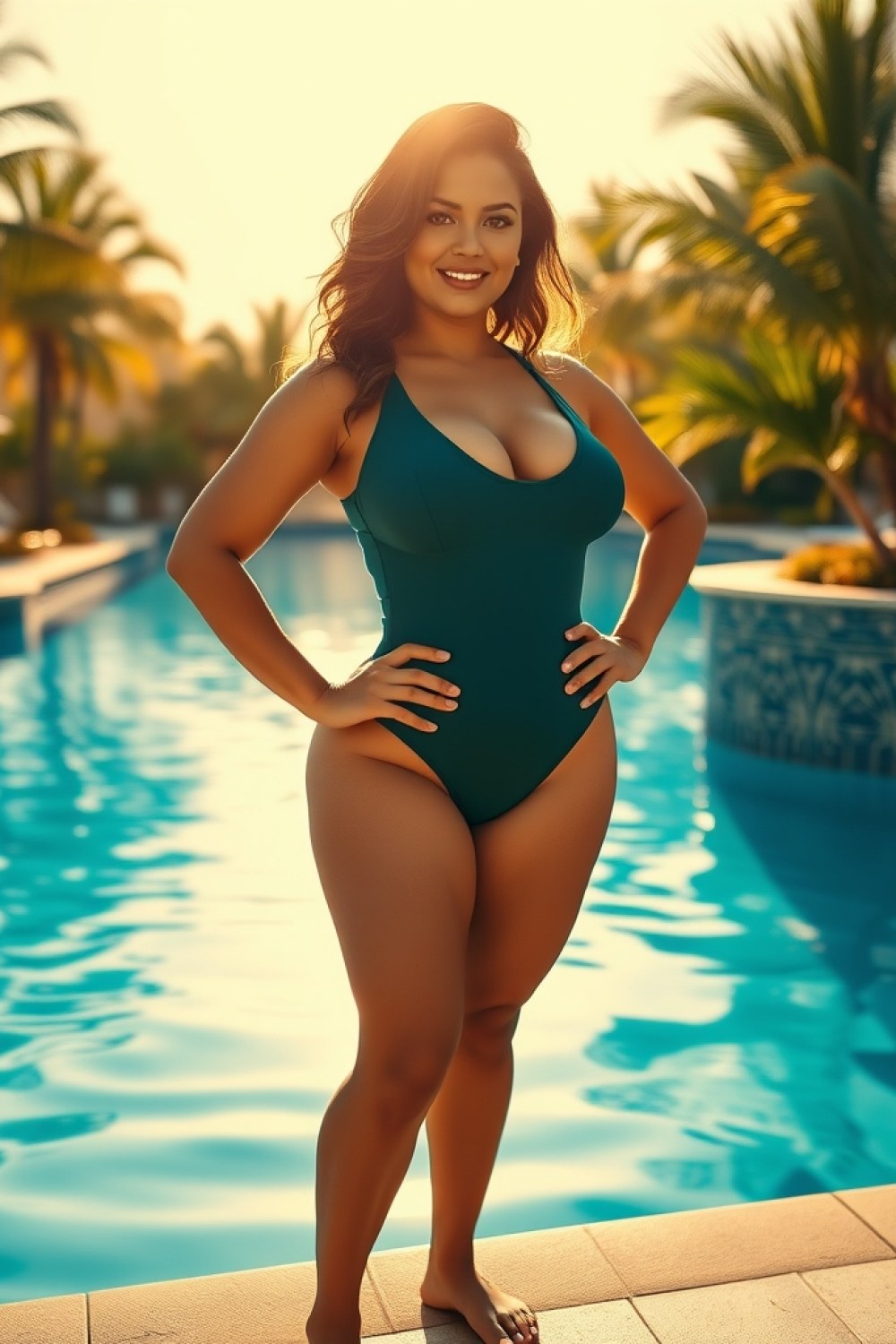
Best for: Swimmers, parents, and anyone who wants two-piece convenience with one-piece coverage.
A tankini earns its place because you can pull the top down for bathroom breaks without wrestling a wet one-piece off your shoulders. The good ones hide a tummy-control panel—usually a second layer of power mesh bonded inside the front—under a flared hem that skims past the hips instead of clinging. That flare is the detail most people miss: a straight-cut tankini top hugs every curve, while a slight A-line shape floats away from the body.
Pair it with a high-waisted brief or a skirted bottom with built-in shorts. Both stay put through laps and through chasing kids in the surf.
Try this: Check that the top hem overlaps the bottom waistband by at least two inches. Any gap means the top rides up when you raise your arms.
4. Ruched One-Piece to Smooth and Shape
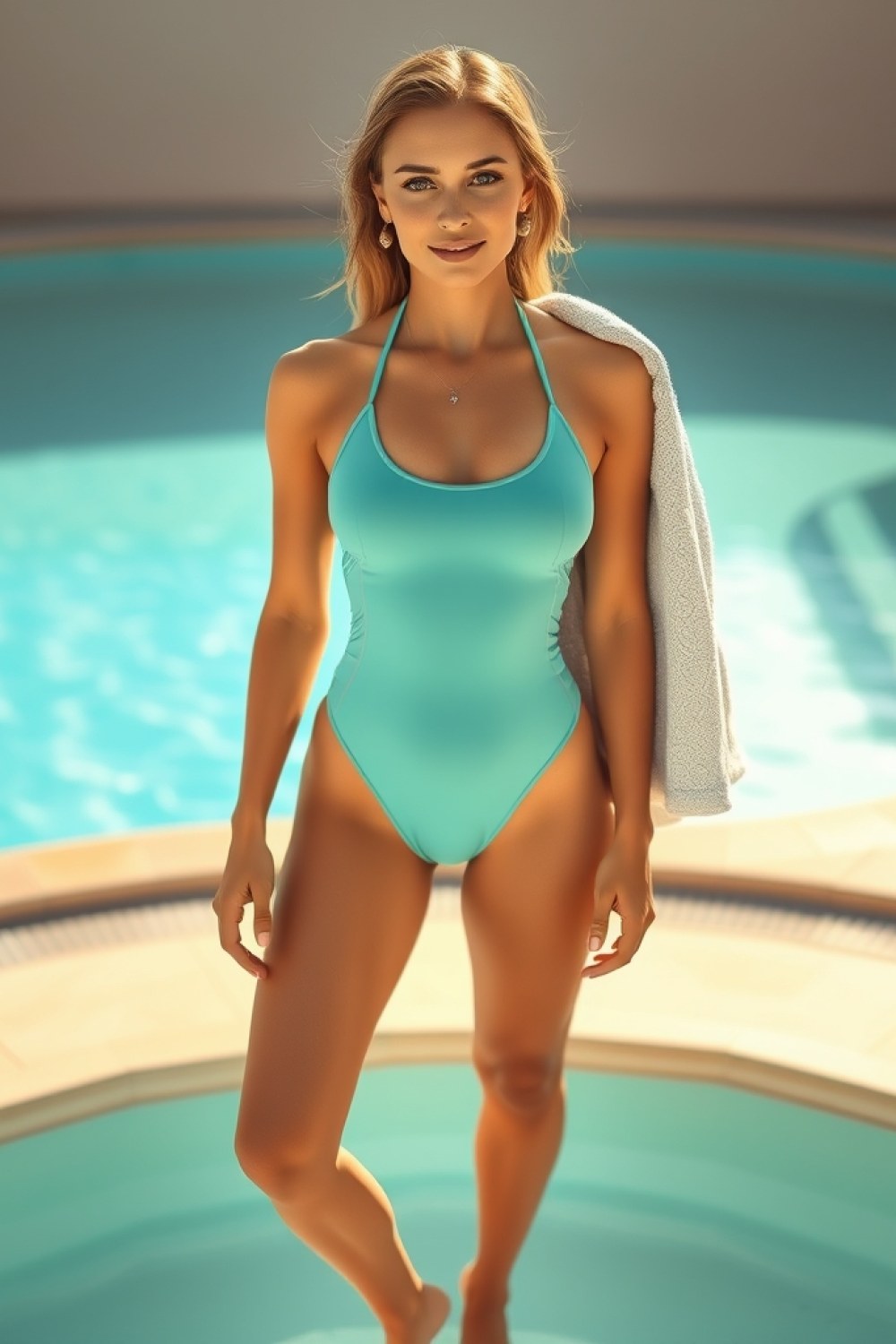
Best for: Apple and rectangle shapes that want curves created rather than compressed.
Ruching is gathering, and gathering does two things at once: it hides texture underneath and it draws vertical lines down your body. Both make you look longer. The direction of the ruching is the whole ballgame. Side ruching running from bust to hip elongates. Horizontal ruching across the stomach adds width—avoid it entirely.
Look for a suit with a power mesh lining behind the gathered layer. The ruching handles the visual work; the mesh handles the actual holding. Together they shape without the stiff, girdle feel of a compression suit.
Try this: Hold the suit up to a mirror before buying and check whether the gathers run up-and-down along your sides. If they run side-to-side across your middle, put it back.
5. Mesh Panel Swimsuits for Subtle Coverage
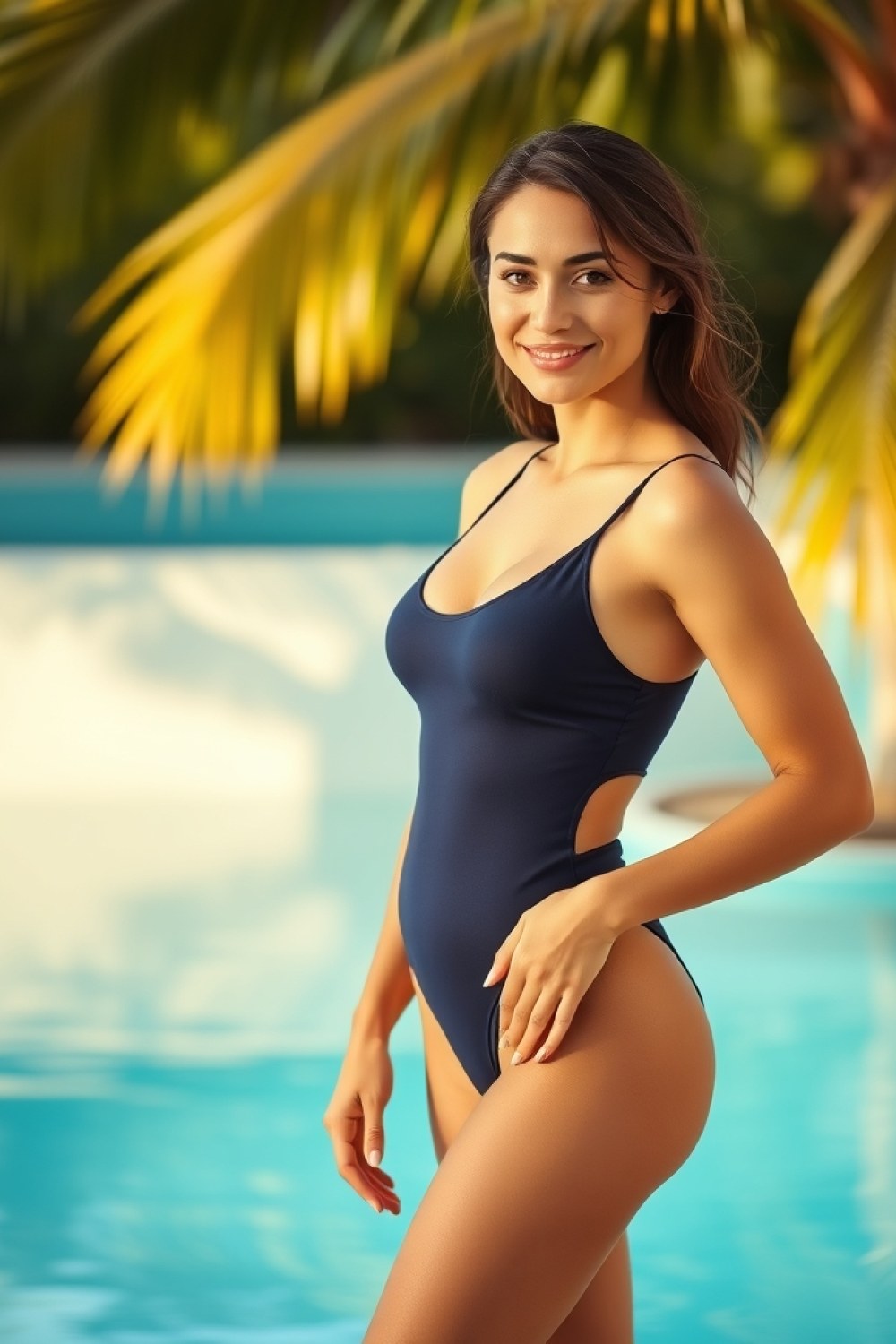
Best for: Anyone who wants a modern look and a hint of skin without real exposure.
Sheer mesh inserts are the rare design trick that reads as edgy and modest at the same time. Placed at the sides, mesh interrupts a solid block of color and creates the illusion of a narrower waist. Placed at the neckline or between the cups, it adds interest without lowering the cut. Either way you get skin in the design without actually baring it.
Quality matters with mesh—cheap versions pill and snag after a few wears. Look for a suit where the mesh is double-layered or has a fine, tight weave, and check the seams where it meets the solid fabric. That join is where most mesh suits fail.
Try this: Choose side mesh if you want to look slimmer, neckline mesh if you want a softer, more romantic effect. Rinse the suit in cold water after every wear—mesh holds sunscreen and chlorine.
6. Underwire Swimsuits for a Lifted Bust
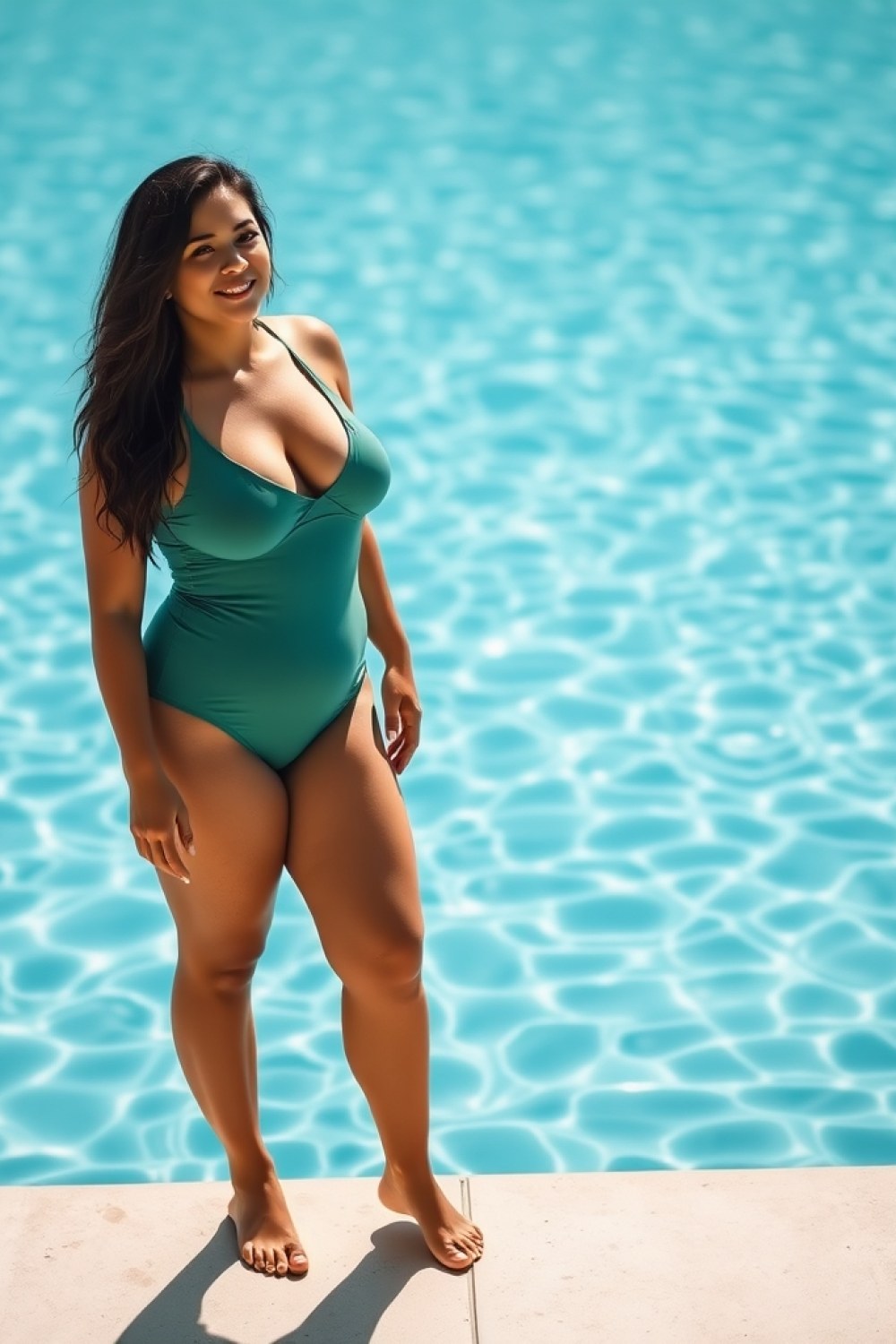
Best for: D cups and up, or anyone who wants real structure instead of fabric stretched over the bust.
Underwire gives you what soft cups can’t: lift from below rather than pressure from the front. The wire sits under the bust and supports the weight, which takes strain off your shoulders and keeps the neckline where it’s supposed to be. Molded cups add shape and prevent nipple show-through; a wide underband—at least an inch—anchors the whole thing so the wires stay flat against your ribcage.
A plunge neckline with underwire is one of the most flattering combinations for a larger bust because the lift creates cleavage while the wire keeps everything secure. Adjustable straps let you fine-tune the fit as the suit stretches with wear.
Try this: Check for digging by pressing two fingers under the wire band. If it’s painful, the band is too small—go up a size rather than tightening the straps.
7. Sporty Swimsuits for Active Days
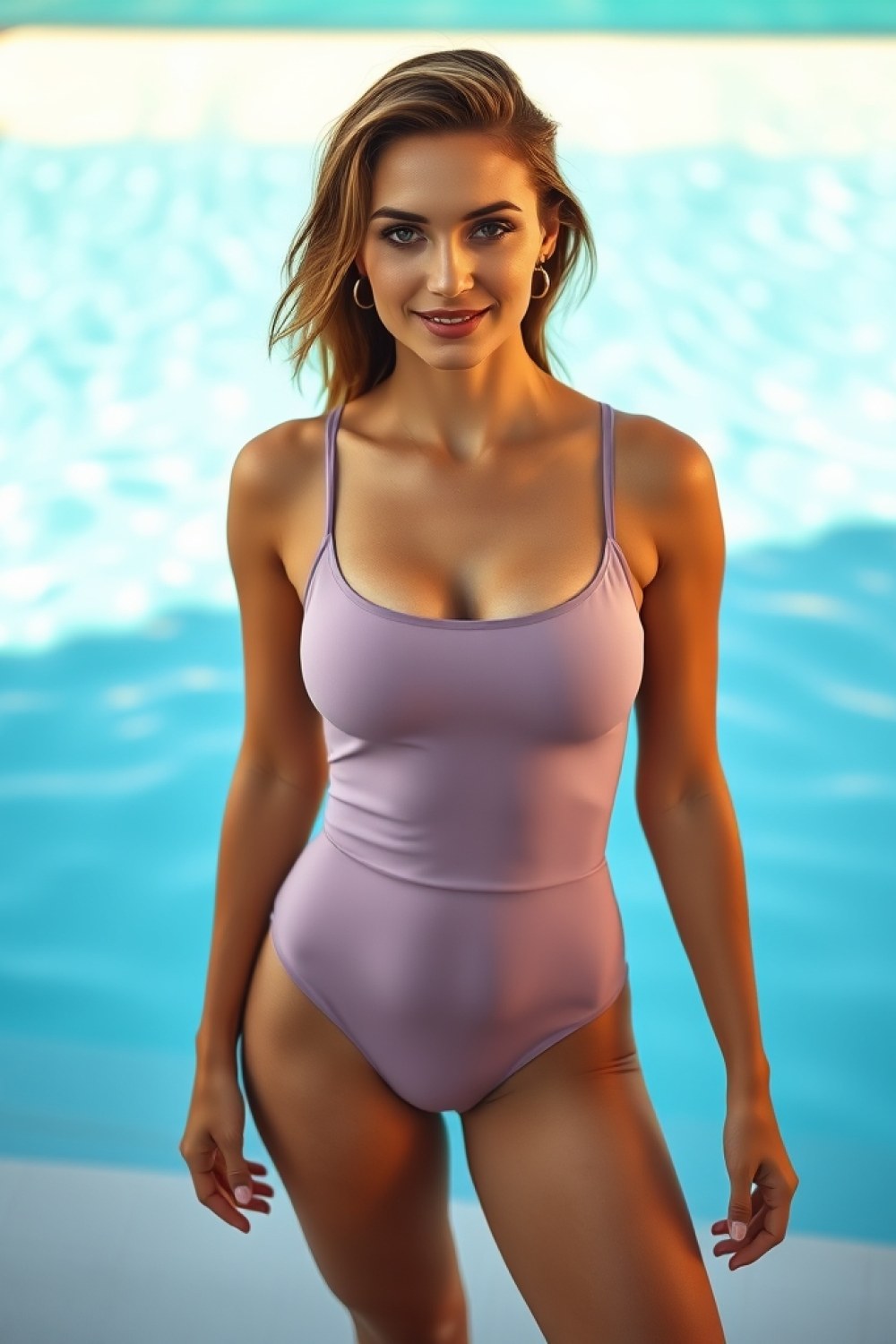
Best for: Swimming laps, beach volleyball, chasing kids through the surf, or any day you’re moving more than lounging.
A sporty one-piece earns its keep through construction, not just looks. A racerback pulls the straps toward the center of your back so they stay put when you rotate your shoulders, and a high neck keeps your chest covered when you bend, dive, or paddle. Compressive fabric holds everything close to the body, which cuts drag in the water and stops the suit from shifting during a game. Chlorine-resistant blends like Lycra Xtra Life or polyester last far longer than standard spandex if you swim regularly — a plain nylon suit can fade and stretch within a season of pool time.
Speedo and Lands’ End both cut athletic suits with flattering seaming and real bust support, and brands like Title Nine size for actual movement. If you want sun protection on top, layer a rash guard over the suit.
Try this: Check that you can raise both arms overhead without the leg openings riding up — that’s the fit test for a suit that stays put.
8. Skirted Swimsuits for Hip and Thigh Coverage
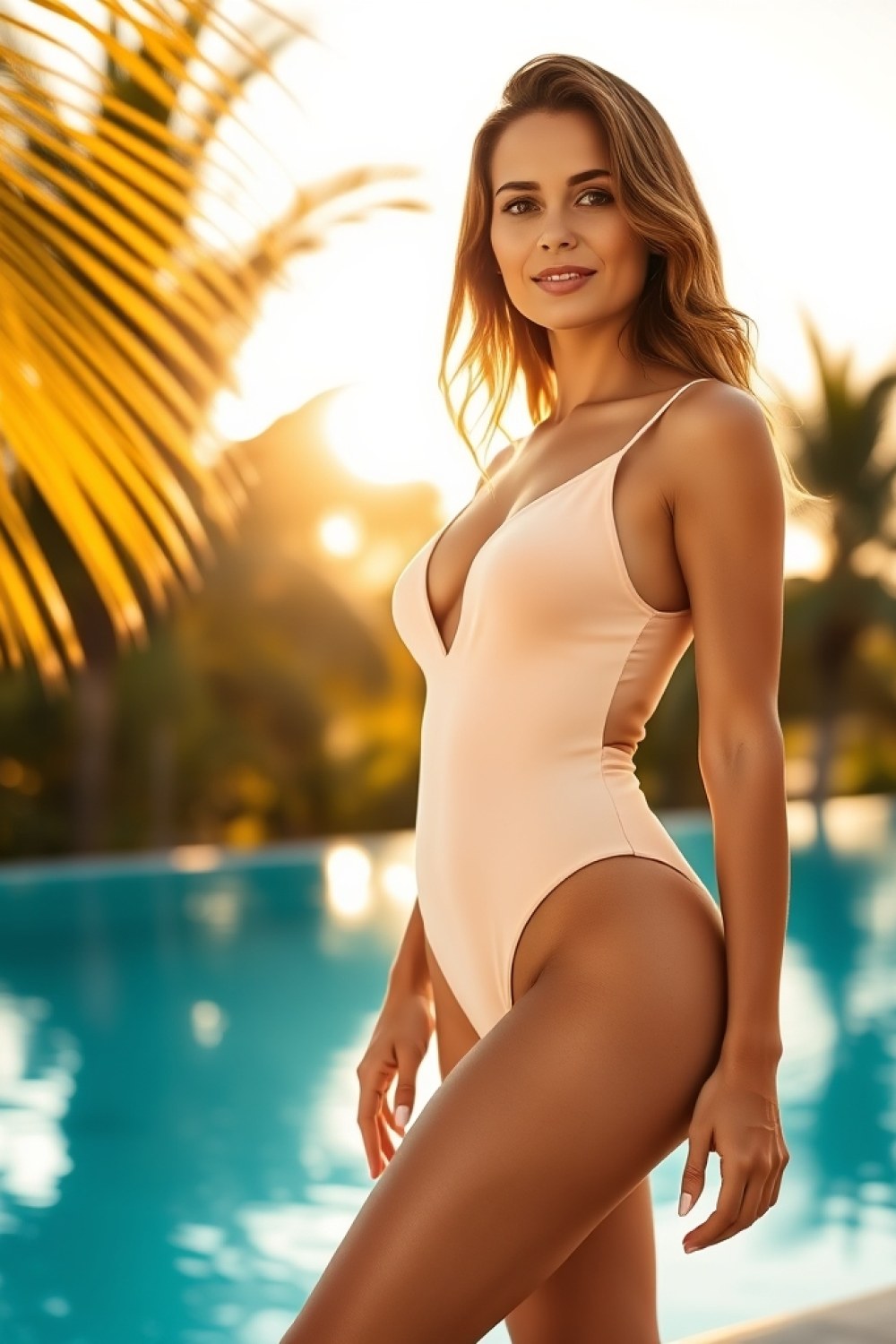
Best for: Anyone who wants the hips and upper thighs covered without giving up a shaped, stylish silhouette.
A swim skirt solves a specific problem: coverage that reads as design rather than concealment. The attached-skirt one-piece is the simplest route — one piece, no adjusting, and the skirt is cut to match the suit’s seaming. A separate swim skirt is more flexible; you can pair one bottom with several tankini or bikini tops, which stretches your wardrobe across a vacation. The A-line shape is the most forgiving because it flares gently from the waist and skims rather than clings, and it flatters every body type without adding visual width.
Length matters. A skirt hitting mid-thigh elongates the leg, while a hem right at the widest part of the thigh can shorten your line. Look for built-in briefs underneath and a waistband that sits flat.
Try this: If you’re between sizes, size up in a separate skirt — a hem that skims beats one that grips.
9. One-Shoulder Swimsuits for a Modern Edge
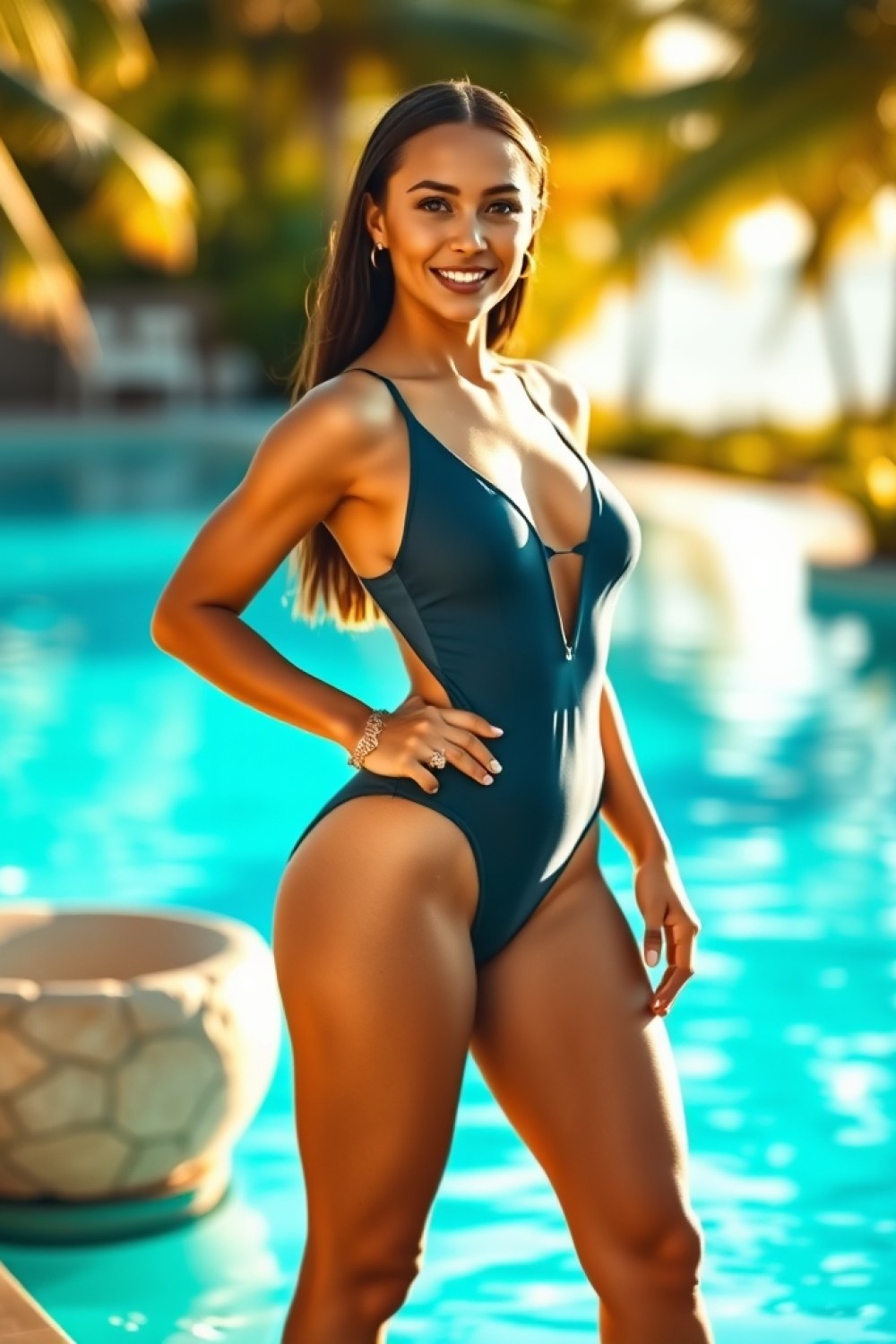
Best for: Broad shoulders, hourglass and inverted-triangle shapes, or anyone who wants a suit that looks deliberate rather than basic.
The asymmetrical neckline is the whole point here: a single diagonal strap breaks the horizontal line across your shoulders, which softens their width instead of emphasizing it. The eye travels up the strap and across the collarbone, so the neckline reads as modern and a little architectural. On hourglass figures, the diagonal echoes the natural waist curve; on inverted triangles, it draws attention up and away from the hips, balancing a broader top half.
Support is where one-shoulder suits succeed or fail. Look for a built-in bra or molded cups, and check that the single strap is adjustable — a fixed strap either fits or it doesn’t. A wide strap holds better than a thin one if you’re fuller in the bust.
Try this: Test the strap by reaching across your body. If it slides off your shoulder, size down or choose a style with a wider, anchored strap.
10. Retro Halter Swimsuits for Vintage Glamour
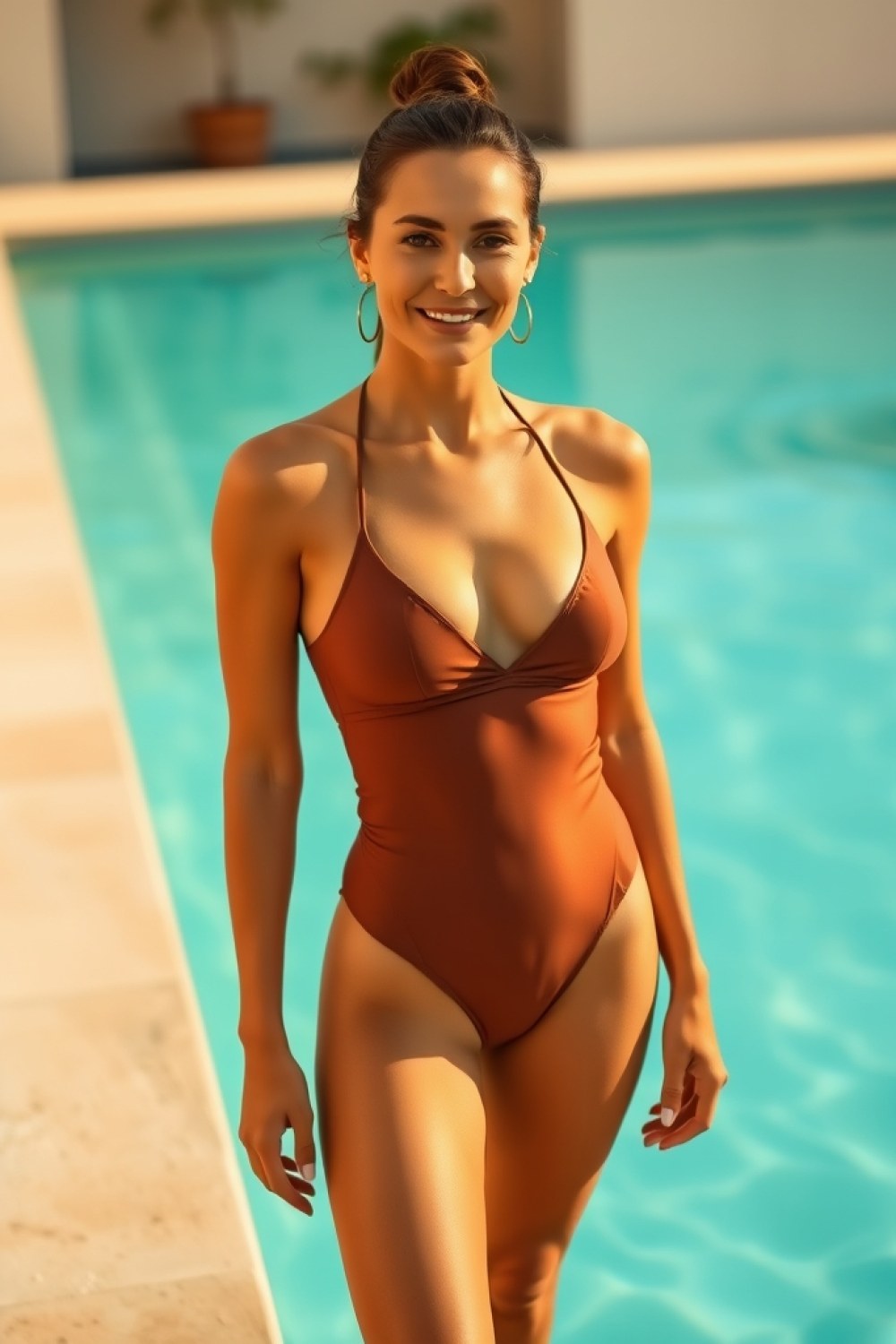
Best for: Larger busts needing lift, poolside parties, and anyone drawn to a 1950s silhouette.
Halter necklines work hard for a fuller bust because the straps tie behind the neck and angle upward, which lifts and shapes the bust from below rather than compressing it flat. The open neckline also frames the shoulders and collarbone, drawing the eye up. Pair the halter top with a high-waisted bottom and you get the classic retro line: a defined waist, a longer torso, and enough coverage that you’re not tugging at anything.
The practical detail is the tie. A halter that knots at the neck lets you set the tension yourself — tight enough to lift, loose enough to avoid neck strain after an hour. A fixed halter strap can’t do that. Look for a suit with soft cups or an underwire if you want real shape.
Try this: Retie the halter after swimming; wet straps stretch slightly and lose their lift until you snug them back up.
11. Colorblock Swimsuits to Create Curves
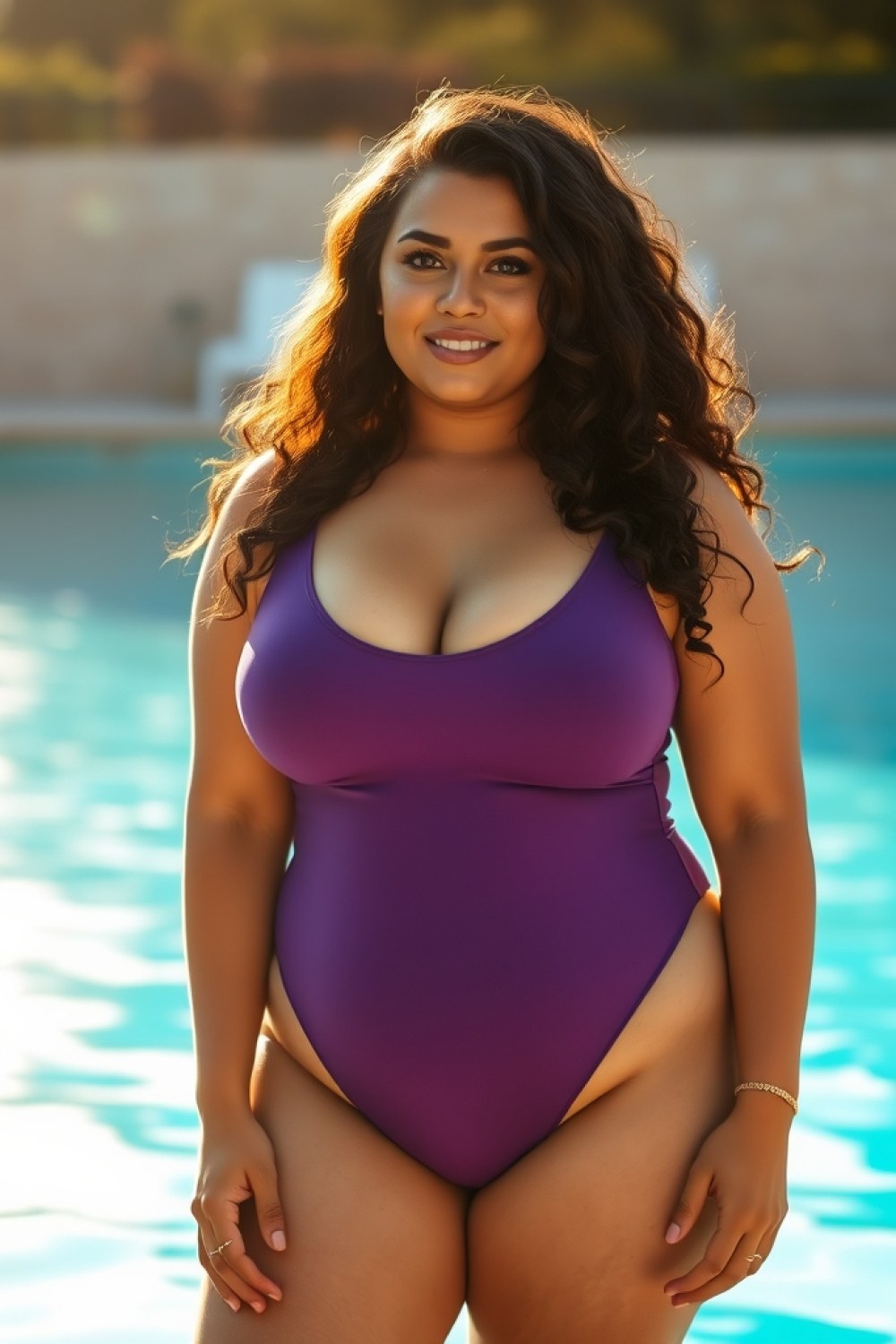
Best for: Rectangle or athletic shapes who want the illusion of a defined waist and hourglass curves.
Colorblocking is optical shaping. Dark panels on the sides recede while a lighter center panel comes forward, so the waist reads narrower than it is. The trick only works if the blocks curve — a straight vertical seam just looks like a stripe. Look for color panels that angle inward at the waist and flare out again at the hip, tracing the hourglass line you want the eye to follow. Diagonal blocks do the same job from a different angle, sweeping across the torso to create movement and depth.
Placement is everything. A light panel down the center front elongates the torso; dark side panels slim the waist. This works on one-pieces, tankinis, and high-waisted two-pieces alike.
Try this: Hold the suit up and squint — if the waist curve is visible when the details blur, the colorblocking is doing its job.
12. Floral Print Swimsuits to Distract and Flatter
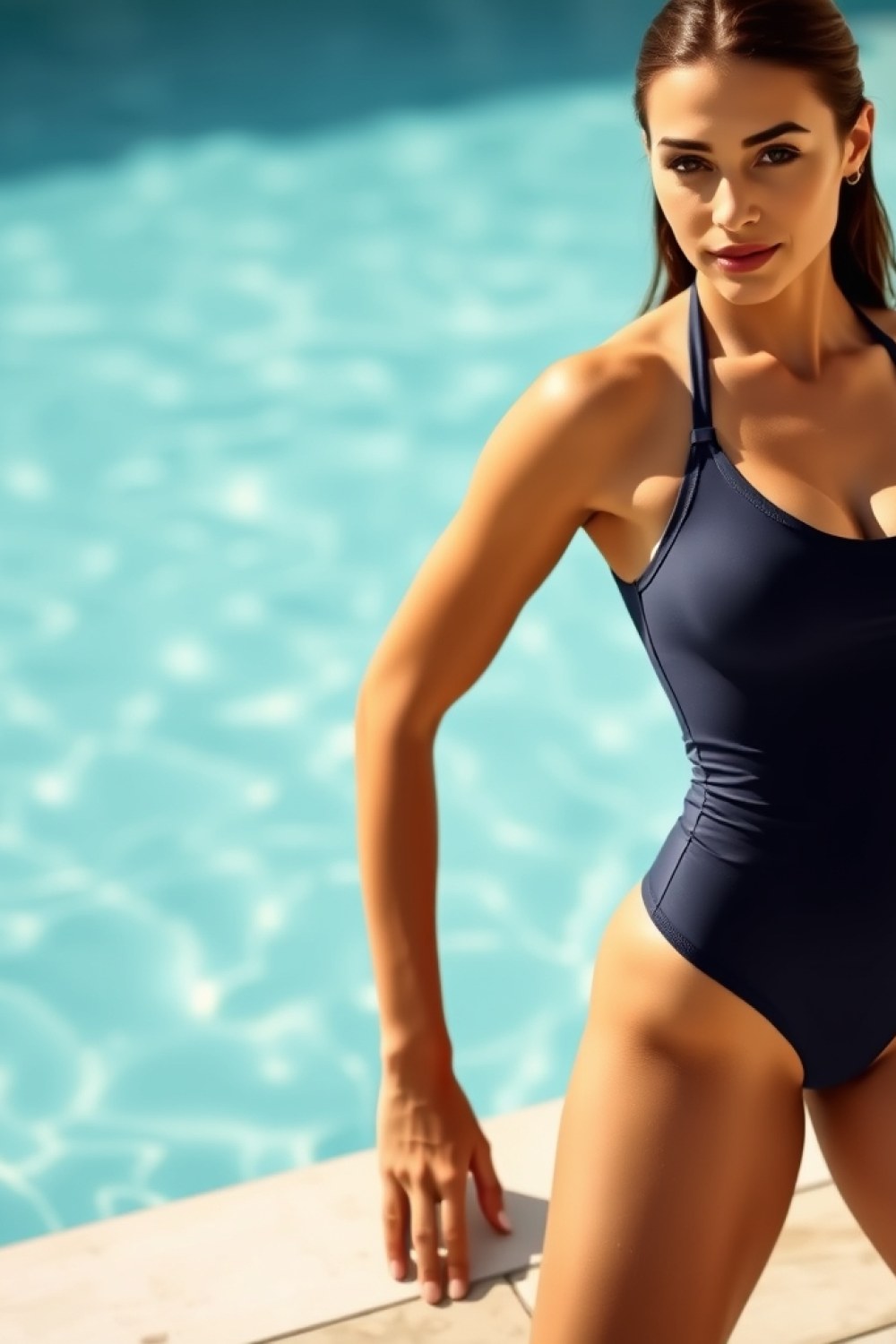
Best for: Camouflaging lumps and bumps, hiding the little imperfections a solid suit puts on display, and adding personality to your swimwear.
A busy print breaks up the body’s outline so the eye reads pattern instead of shape — which is exactly why florals flatter more forgivingly than solids. Scale matters as much as the print itself. A petite frame gets swallowed by oversized blooms; a tall frame gets lost in tiny, dense prints. Match the scale to your body: small, close-set motifs for smaller frames, larger, more open florals for taller ones. Dark backgrounds with bright flowers are the most universally flattering combination because the dark base recedes while the flowers draw attention.
Balance the look with a solid cover-up in a color pulled from the print. That keeps the swimsuit the focal point instead of competing with a second pattern.
Try this: Stand back from the mirror — if the print blurs into a soft texture rather than distinct blobs, it’s the right scale for you.
13. Swim Dresses for Effortless Elegance
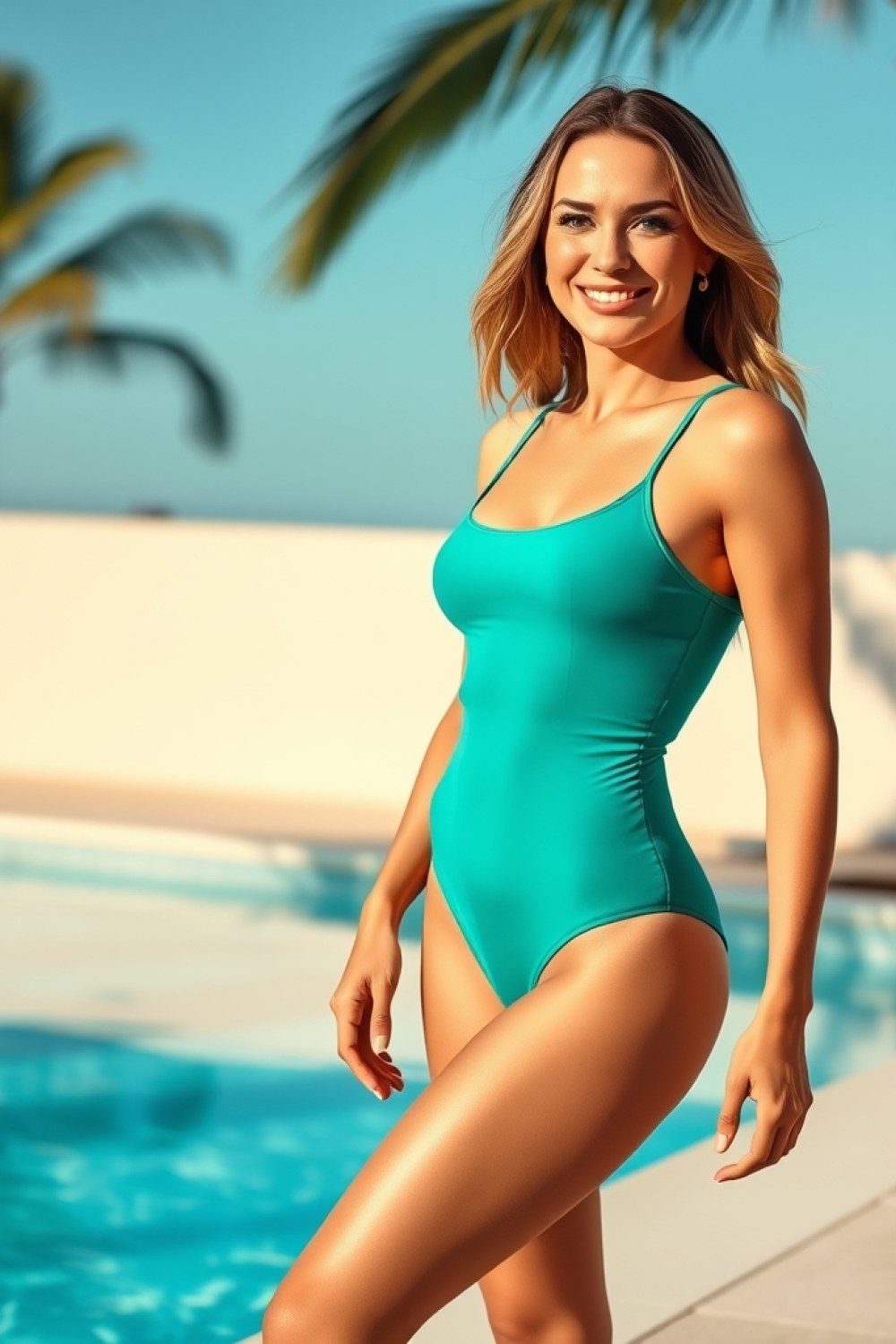
Best for: women who want more coverage through the hips and thighs without giving up a swimsuit’s ease.
A swim dress solves a specific problem: you want to swim, but you also want the walk to the pool bar to feel pulled-together. The good ones pair a fitted inner bodysuit with a flared skirt attached at the waist, so the skirt moves instead of clinging when the fabric’s wet. A built-in bra — not just a shelf bra — is what separates a supportive swim dress from a decorative one. Check that the skirt hem lands at or above the knee; anything longer drags in the water and reads more caftan than swimsuit.
Look for a skirt with enough flare to clear your hips when seated, and a modest leg opening at the inner brief so nothing rides up mid-lap.
Try this: Pull the swim dress on over a wet one-piece to move from pool to boardwalk without a changing room, and machine-wash on cold in a mesh bag to keep the skirt’s shape from stretching.
14. Rash Guards for Sun Protection and Coverage
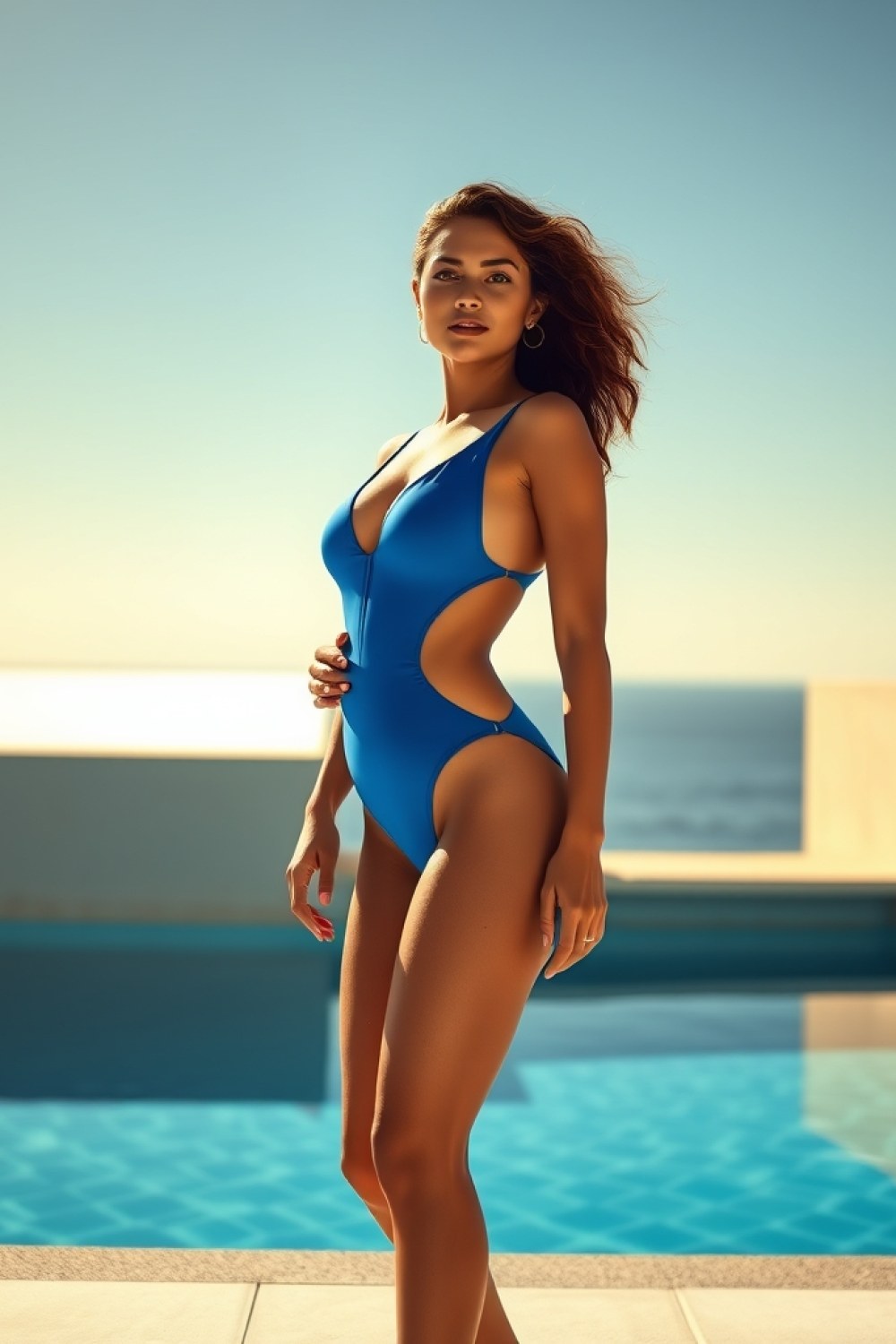
Best for: anyone who burns easily, swims for hours, or simply prefers not to have their shoulders and arms on display.
A rash guard is the most practical piece in this whole list. UPF 50+ fabric blocks about 98% of UV rays, which means you can skip re-applying sunscreen to your arms and back every hour — the spots people most often miss. Pair a long-sleeve top with a high-waisted bottom or wear it over a one-piece for full coverage. Loose-fitting versions with a half-zip are easier to get on and off when wet than tight surf-style tops.
Fit matters more than color here: the hem shouldn’t float up when you raise your arms, and the sleeves should stop at the wrist, not the palm.
Try this: Size up if you’re between sizes, and rinse the rash guard in cold fresh water right after swimming — chlorine and salt both break down the elastane that gives it stretch.
15. Belted Swimsuits to Define the Waist
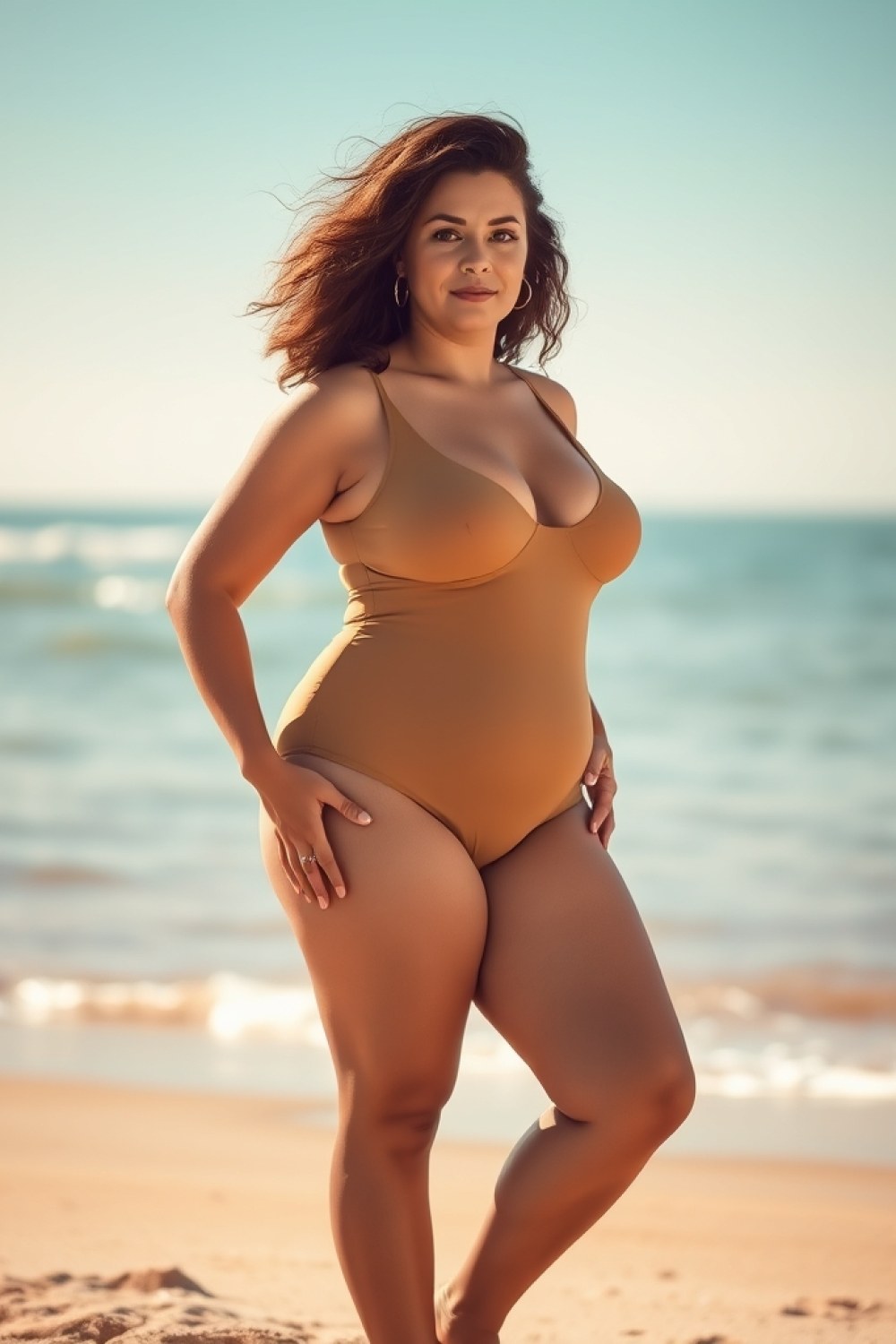
Best for: apple and rectangle shapes that want the illusion of a defined waist without shapewear underneath.
A belt draws a horizontal line across the middle of your torso, which the eye reads as a waist. On a one-piece, a self-tie belt in a contrasting color creates a stronger visual break than a belt in the same print — a black belt on a white suit, or a bright solid on a dark ground. The belt also breaks up a long torso and gives the suit a tailored, almost resort-wear finish that photographs well.
What makes it work is placement: the belt should sit at your natural waist, the narrowest point between ribs and hip, not across the widest part of your stomach.
Try this: Tie the belt slightly off-center and leave a short tail hanging — it reads as a deliberate detail rather than a belt cinched for dear life. If it digs when you sit, loosen it; a belt that’s adjustable by knot beats a fixed buckle every time.
16. Plunge Swimsuits for a Sexy but Supported Look
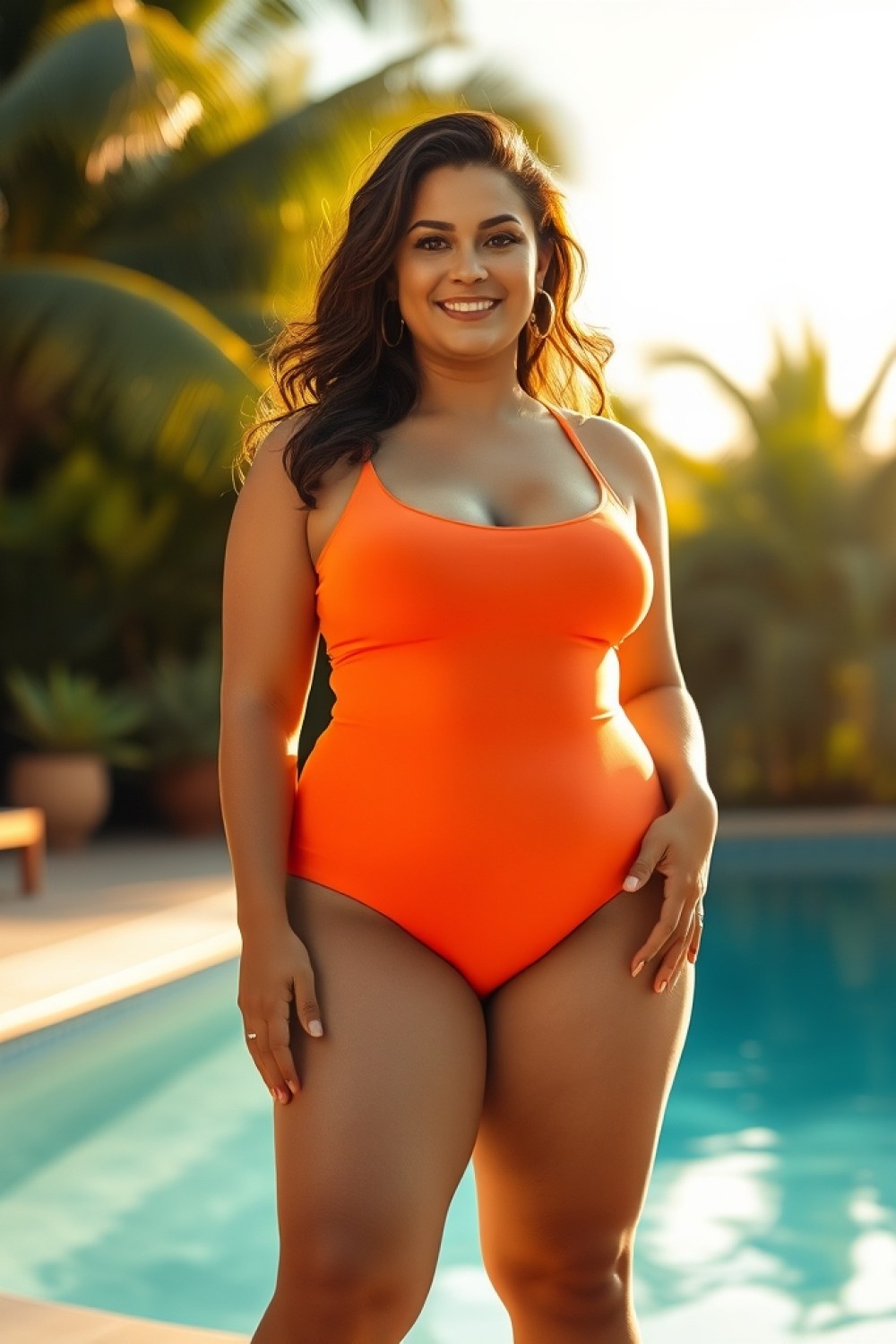
Best for: smaller busts that want an elongated, confident neckline — with caveats for larger cup sizes and short torsos.
A deep V creates a vertical line down the center of your body, which stretches the torso visually and draws the eye upward. On an A or B cup, a plunge one-piece can work with nothing more than a wide underband — the key is a band that sits flat against your ribcage rather than riding up. On a D cup or larger, skip the plunge unless it has an underwire and a band at least an inch and a half wide; without both, everything spills toward the center the moment you move.
If your torso is short, a deep plunge can shorten you further — a moderate V or a halter with a higher center is the better call.
Try this: Check the gore — where the two cups meet — sits flat against your sternum. If it lifts away from your body, the suit is too shallow for you and will gap in the water.
17. Crochet Swimsuits for Boho Vibes
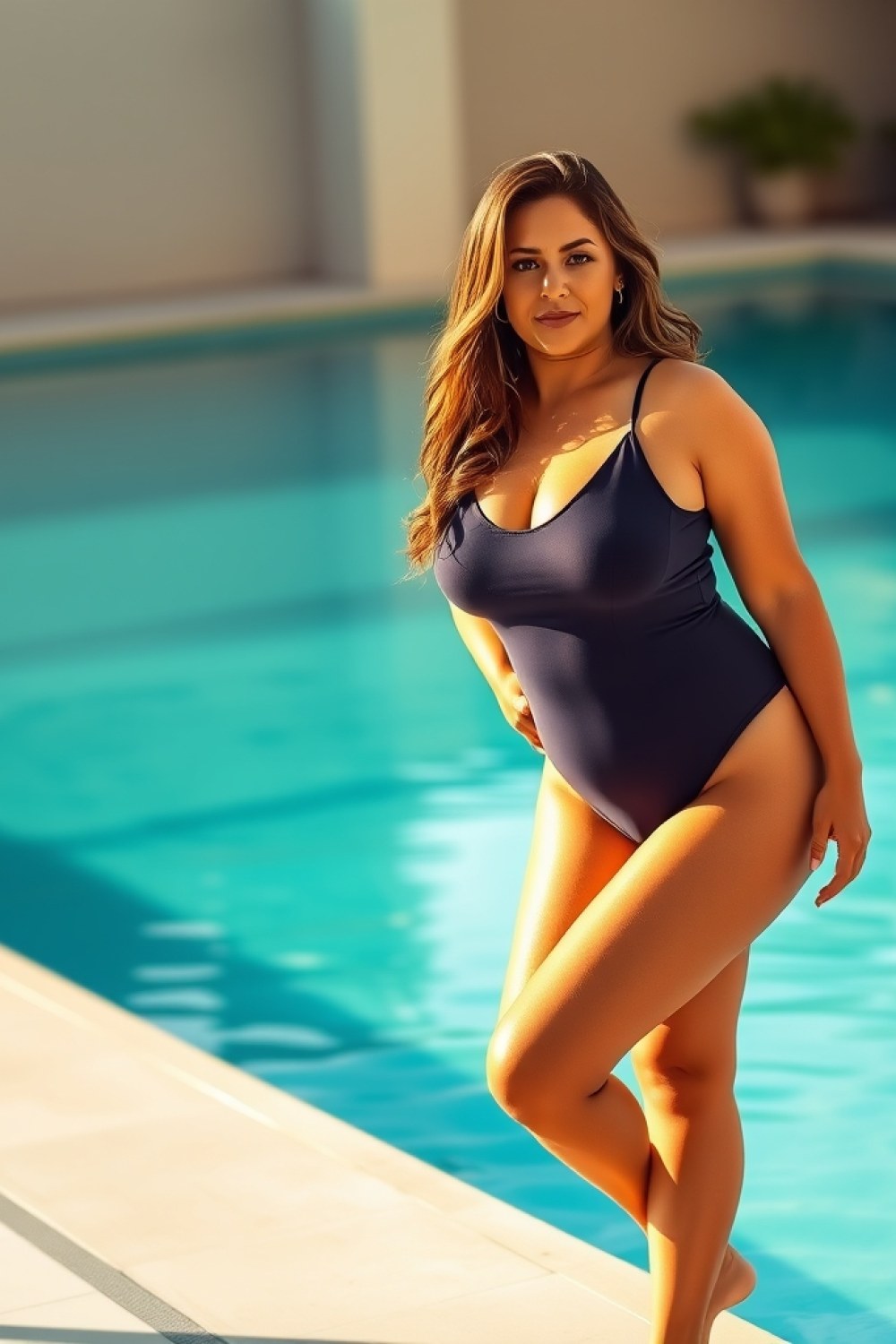
Best for: beach vacations, poolside photos, and anyone who wants texture and a little extra coverage over the midsection.
Crochet adds dimension that flat swim fabric doesn’t have, and an open-weave overlay lets your suit color show through while softening the outline underneath. The catch is structure. A crochet one-piece needs a solid lining and an inner bra, or the openwork stretches out and sags after one swim. Look for crochet panels placed where you want coverage — across the stomach, over the shoulders — rather than all over, which gets heavy when wet.
Hand-wash crochet in cold water and lay it flat to dry. A machine spin will pull the stitches out of shape permanently.
Try this: Style it with a wide-brim straw hat and a sheer cover-up in a neutral tone — the texture is the statement, so let everything else stay quiet. If you want maximum versatility, choose a crochet suit in a solid color rather than a multi-color yarn.
18. Swimsuits with Removable Padding
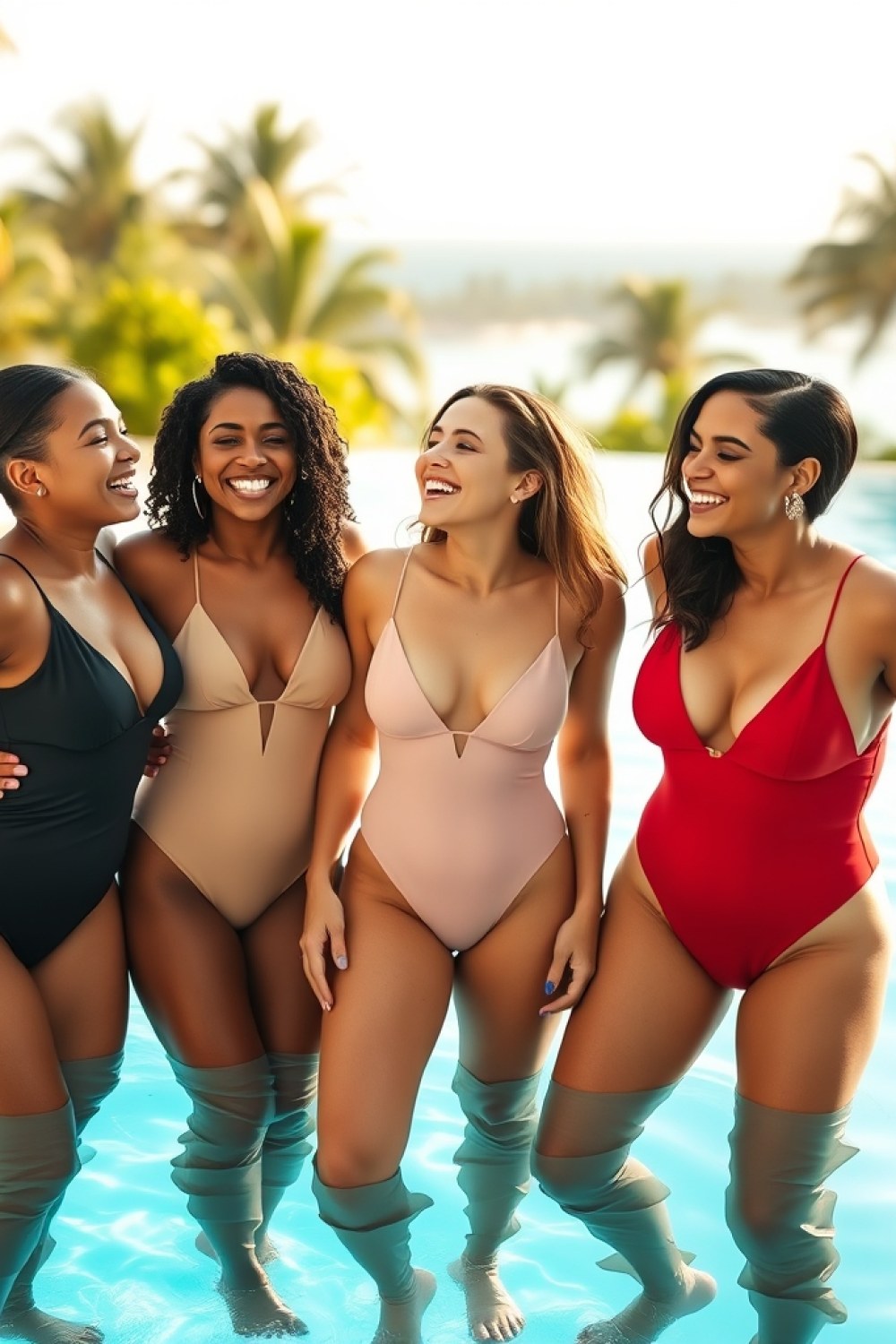
Best for: women with asymmetrical breasts, anyone who wants to control their own level of shaping, and suits you plan to wear for years as your body changes.
Removable pads let you go from a smoother, more natural line to added volume without buying a different suit. If your breasts differ in size — which is far more common than symmetrical ones — you can add a pad to one side only and even things out instantly. The feature only works if the suit has sewn-in pockets for the pads. In a suit with loose floating pads, they fold, migrate, and end up bunched at your armpit by the time you get out of the water.
Also check the pad material: molded foam cups hold their shape better than thin push-up inserts that crease after a few washes.
Try this: Take the pads out before every wash and reinsert them while the suit is still slightly damp — dry fabric grips the foam and makes it almost impossible to smooth flat.
19. Long Torso Swimsuits for a Perfect Fit
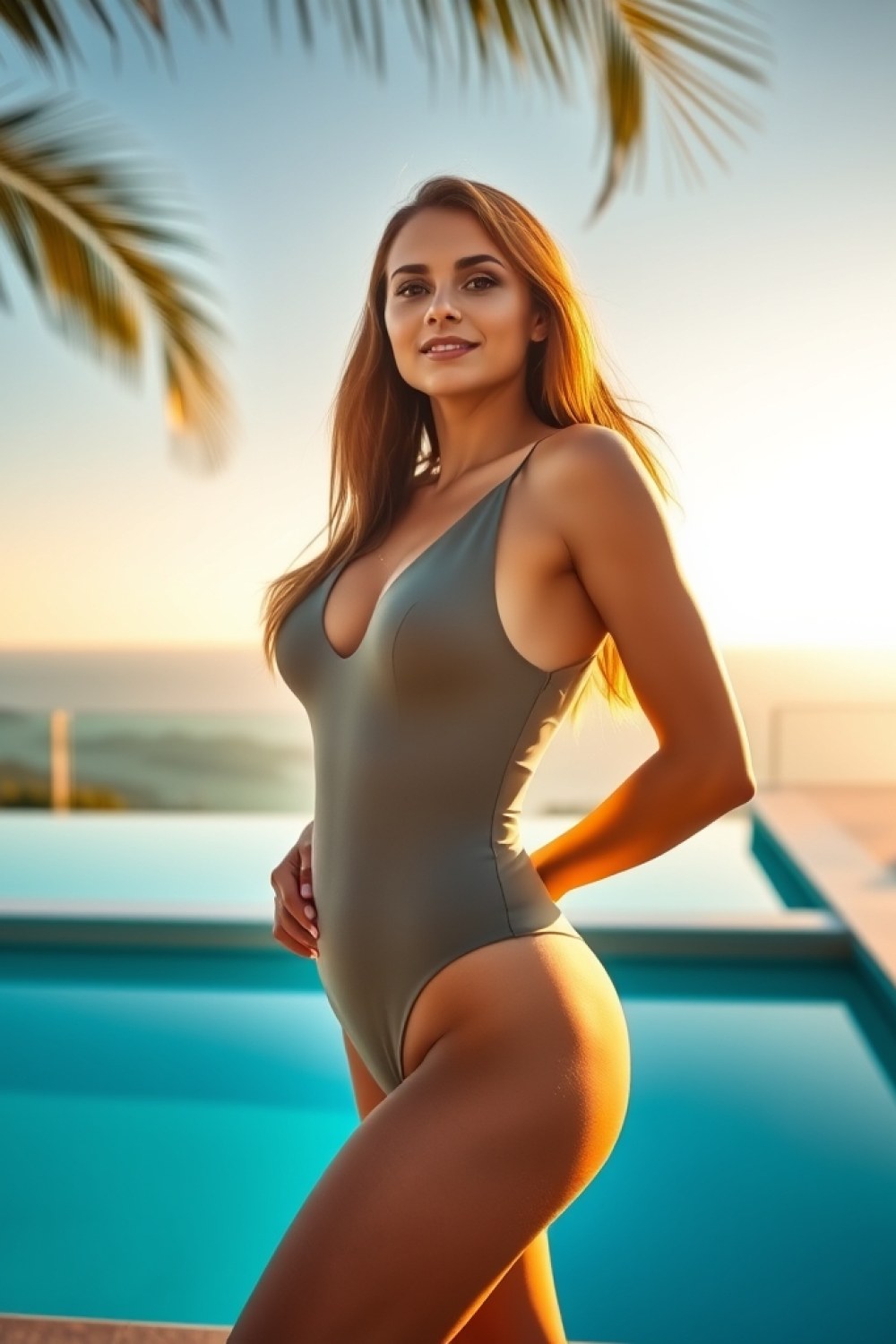
Best for: women whose regular one-pieces ride up, pull down at the bust, or dig into the shoulders by mid-afternoon.
The problem is usually torso length, not size. If your measurement from shoulder to crotch is longer than about 60 inches, a standard one-piece will stretch vertically until the straps pull and the leg openings climb. Long-torso swimsuits add roughly 1 to 2 inches of body length through the torso, so the suit sits where it was designed to sit instead of fighting gravity. Adjustable straps and a higher leg cut also buy you room without sizing up, which keeps the bust and waist from gaping.
Tankinis solve the same problem differently: you control the length at the hem, so nothing tugs at your shoulders. Pair a longer tankini top with a high-waist bottom and you get full coverage with zero readjusting.
Try this: Measure your torso from the shoulder seam to the crotch, then compare it against the brand’s size chart — Lands’ End and Swimsuits For All both list long-torso options with that measurement in inches. If you’re between sizes, size up in a long-torso one-piece and use the adjustable straps to take in the slack.
20. Sustainable Swimsuits for Eco-Conscious Style
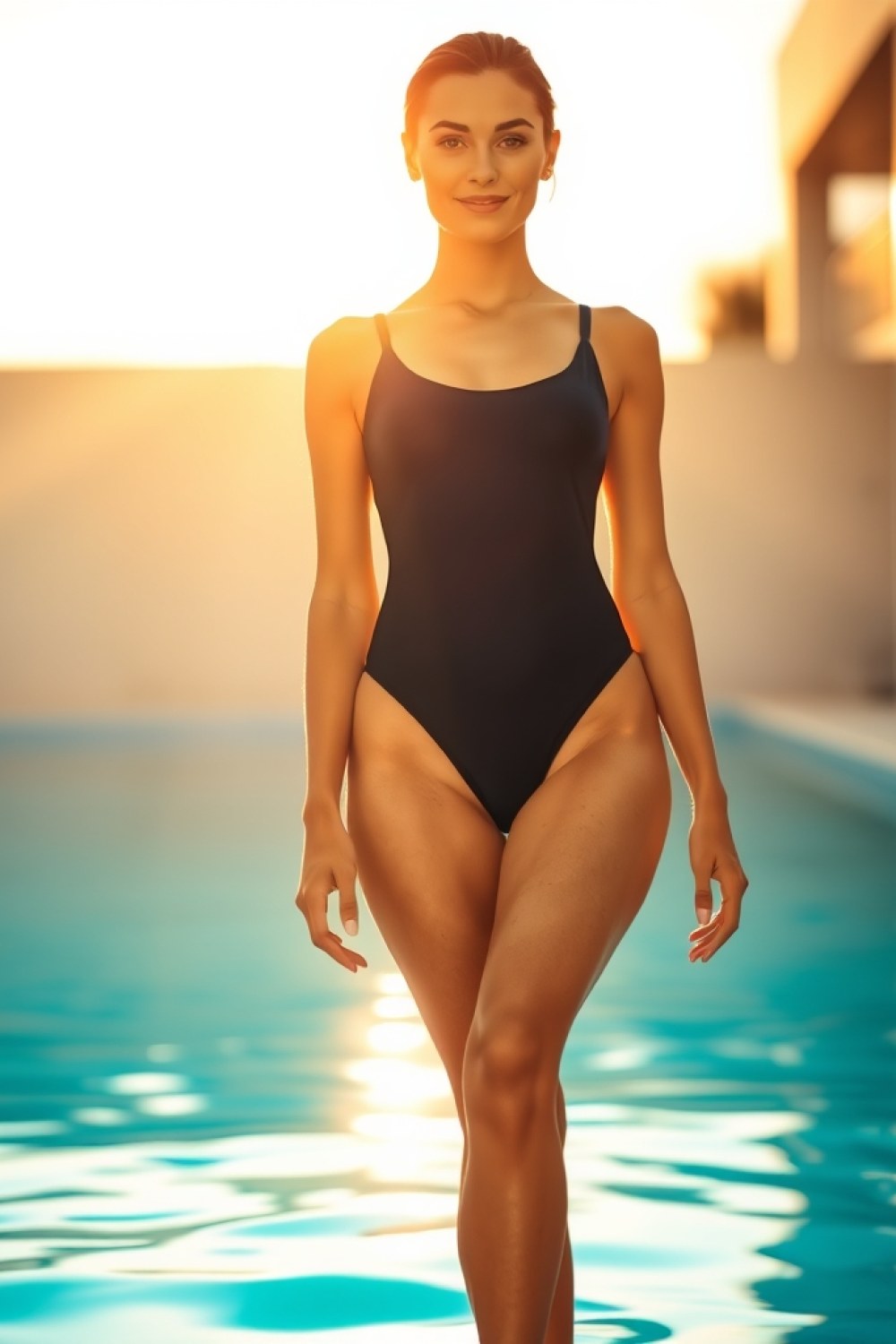
Best for: anyone who wants a suit that holds up season after season without adding more plastic to the landfill.
Recycled fabrics have caught up to conventional swimwear. ECONYL, for example, is regenerated nylon made from discarded fishing nets and carpet scraps, and it behaves like standard nylon-elastane: it stretches, recovers, and resists chlorine. The difference is in the fiber’s origin, not its performance. Many of these suits also use recycled packaging and lower-impact dyes, but the fit and support you feel on your body is the same as a traditional suit.
Look for brands that publish their fabric content and certifications, because “eco” without a named material is just marketing. Vitamin A, Mara Hoffman, and Boden all make recycled-fiber swimsuits with real construction — lined cups, secure straps, proper coverage — so you’re not trading support for sustainability.
Try this: Check the care tag for the fiber name — ECONYL, REPREVE, or recycled polyester are the ones with verified supply chains. Rinse in cold water after every swim and dry in shade; recycled nylon keeps its shape longer when it never sees a hot dryer.
21. Customizable Swimsuits for a Perfect Fit
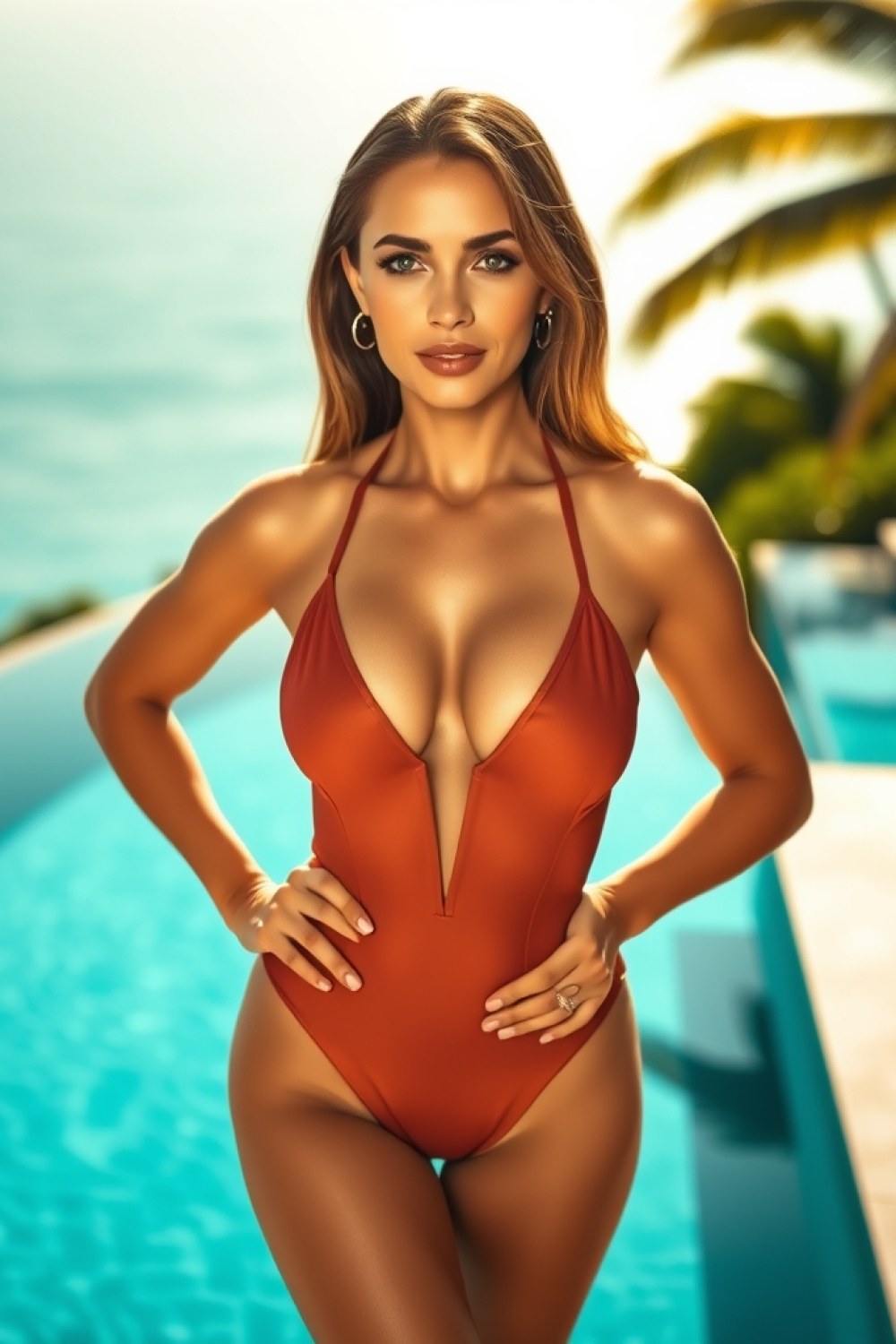
Best for: women who are between sizes, wear a different top and bottom size, or have a long torso and a short rise (or the reverse).
Off-the-rack sizing assumes your top and bottom match, which they often don’t. Customizable swimsuits let you order each piece separately — a medium top with a large bottom, or a long-torso one-piece with a custom strap length. That means no gaping at the bust and no digging at the hip, just because one half of you fell outside the size chart. Some brands also offer adjustable strap sliders and removable cups, so you can fine-tune the fit after it arrives.
Andie Swim and Summersalt both sell tops and bottoms as separate pieces with extended sizing, and both publish detailed fit guides with real body measurements rather than vague S/M/L labels.
Try this: Take three measurements — bust at the fullest point, natural waist, and hip at the widest — and write them down before you open any size chart. Match each measurement to its own row, order the top and bottom sizes that correspond, and if you’re between two sizes on the bottom, go up; swim fabric has less give than activewear.
FAQs
What swimsuit style is most flattering for a tummy?
Ruching is your best tool here. Side ruching draws the eye vertically and creates shadows that break up the midsection, so the suit reads as one continuous line instead of a shape you’re self-conscious about. A high-waisted bottom that sits at your natural waist — not above it, not below — keeps everything smooth without cutting in. Tankinis with a hidden tummy-control panel work well too, especially with a slightly flared hem that skims rather than clings. The one thing to skip: horizontal seams, wide belts, or color blocks that land right at your belly button, because they stop the eye exactly where you don’t want it to stop.
How do I choose a swimsuit for a large bust?
Support comes from structure, not from how high the neckline goes. Look for an underwire or a built-in shelf bra with a wide underband — that band is what actually holds weight, so a flimsy one means you’ll spend the day tugging. Halter necks and V-necklines lift and elongate the torso, and adjustable straps let you fine-tune the fit instead of settling for close enough. If you’re above a DD, skip generic sizing and shop cup-sized brands like Freya, Elomi, and Panache, which build swimwear on the same bra blocks as their lingerie. Try it on with the straps loosened first, then tighten — that’s how you’ll know the band is doing its job.
Are high-waisted bikinis still in style?
Yes, and they’ve moved past trend status into modern classic territory. They give you real coverage across the stomach and hips while still reading youthful, and the high waist highlights your narrowest point rather than hiding it. Pair one with a supportive top — underwire, halter, or a sports-style crop — so the proportions stay balanced top to bottom. Pear shapes get the most out of them because the waistband lands above the widest part of the hip and skims right over it. Retro prints, ribbed fabrics, and matte solids all work; just make sure the rise hits at or slightly above your natural waist, since anything lower creates a pinch line.
What swimsuit is best for a pear-shaped body?
Draw the eye upward and keep the hip line clean. A halter neck, a bright or patterned top with a darker solid bottom, or a deep V-neck one-piece with ruching at the waist all shift attention north. High-waisted bottoms and swim skirts balance wider hips because they create a smooth diagonal instead of a hard horizontal cut. If you go with a skirt, choose one that ends at the narrowest part of your thigh, not mid-thigh. Avoid boy-short bottoms — the hem cuts across the widest part of your hip and does the opposite of what you want.
How to Shop for Your Perfect Swimsuit
Fit and fabric beat trends every time. Before you add anything to your cart, check for adjustable straps, a full lining, and enough stretch that the suit moves when you do — squat, reach overhead, and sit down in it before you decide. Order two or three sizes and a couple of silhouettes at once so you can compare them side by side in your own bathroom mirror instead of a cramped fitting room, and send back whatever doesn’t feel right without guilt. Returns are part of the process, not a failure of it.
The suit that makes you stop thinking about the suit is the one worth keeping. If you’re pulling at a strap or readjusting a hem every five minutes, it’s the wrong one — no matter how good it looked on the model. Confidence is the accessory that actually carries a swimsuit, so choose the one that lets you forget what you’re wearing and get in the water.