
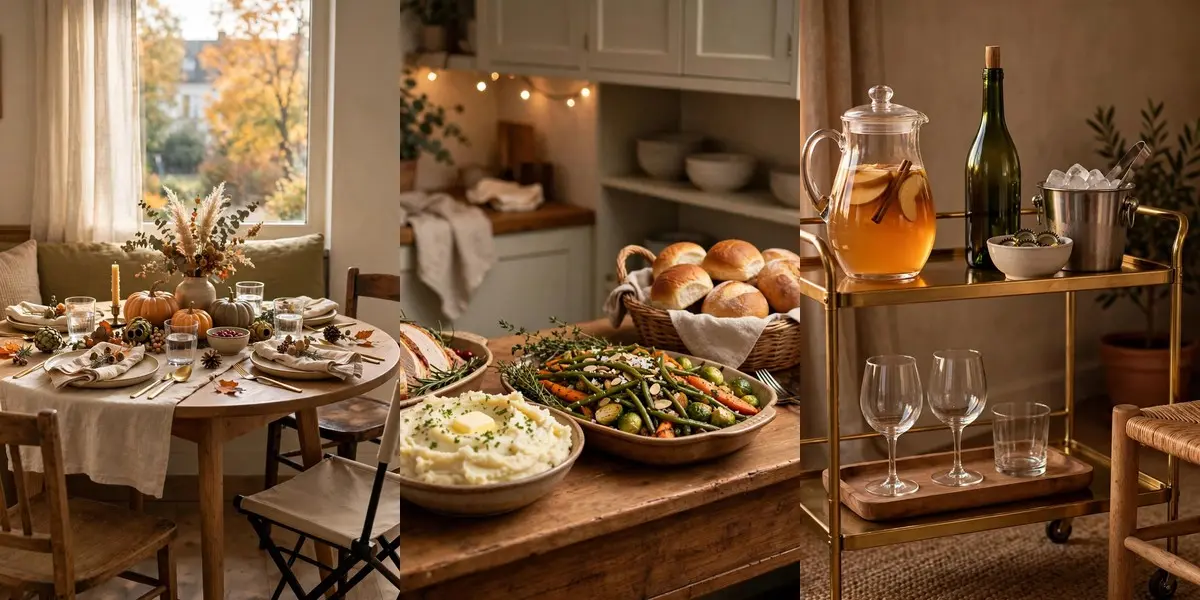
You can absolutely host Thanksgiving in a small space — and your guests will remember the warmth of the evening, not the square footage. The trick is treating the day as a logistics puzzle instead of a decorating contest: seating first, food second, flow third, and everything else only if there is room left over.
Start by reading your own rooms honestly, the way this guide does. Measure the widest clear walkway — if it is under 30 inches, you are buffet-only. Check whether a 9×13 pan actually fits your oven, and decide your guest ceiling before you plan a single dish.
Then borrow before you buy, because one neighbor’s folding table or stack of spare chairs can change your whole layout for free. Six guests seated comfortably, with elbows off the gravy boat, will always beat nine people wedged into a corner pretending to have fun.
The ten tips below run in the order the day itself runs: where everyone sits, how a turkey fits a tiny oven, and the small swaps that keep a compact kitchen calm from the first knock at the door to the last slice of pie.
In This Guide
- 1. Rethink Seating Before You Rethink Anything Else
- 2. Build a Table from Two Smaller Surfaces
- 3. A Buffet Line Beats a Full Place Setting
- 4. Roast a Turkey Breast or Two Smaller Birds
- 5. Cook Sides in Advance and Reheat in Shifts
- 6. Set Up a Drink Station Away from the Kitchen
- 7. Borrow, Rent, or Buy Disposables Strategically
- 8. Control the Clutter Two Days Out
- 9. Plan for Coats, Shoes, and Bags
- 10. Give Kids and Late-Night Guests Their Own Zone
- Styling Tips
- Common Mistakes to Avoid
- Planning Your Small-Space Thanksgiving Week
- Frequently Asked Questions
1. Rethink Seating Before You Rethink Anything Else
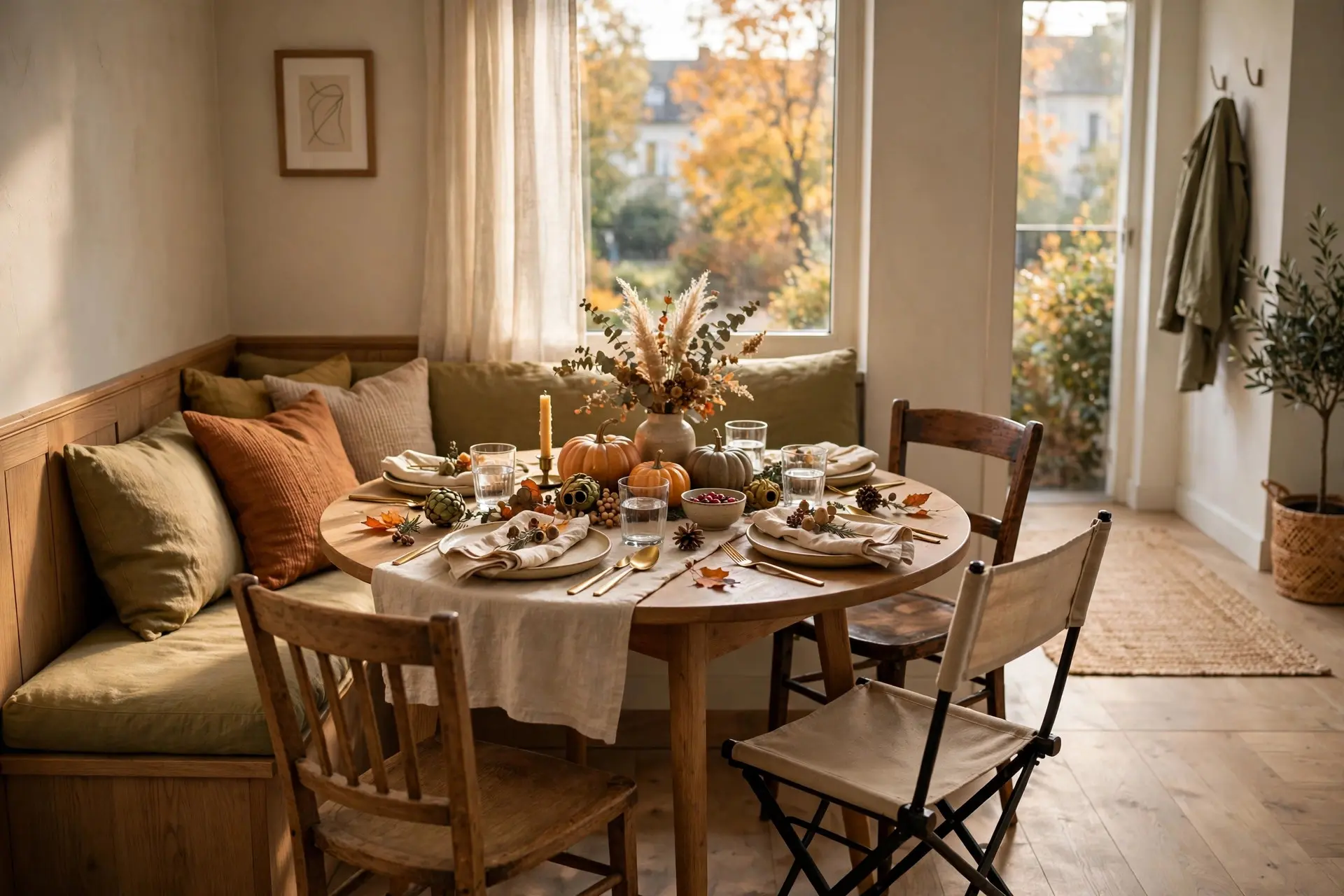
Seating is the whole ballgame, so measure before you invite. A 36-inch round table seats four comfortably and a 48-inch seats six; anything smaller and elbows end up in the gravy. Pull the table away from the wall so guests can sit on every side, and protect at least one walkway a full 30 inches wide, so nobody has to squeeze past a hot dish.
Fill the gaps with borrowed folding chairs mixed in with the wooden chairs you already own. Mismatched seating reads as charming, not makeshift, especially if you tie a ribbon on each chair back or rest a place card on it. Nobody remembers the chair they sat in; they remember whether they were cramped.
Tip: You can set the whole arrangement in ten minutes — measure your widest usable run, center the table under the best light, assign seats with place cards so nobody hovers awkwardly, and double-check that the kitchen-to-table path is still clear.
2. Build a Table from Two Smaller Surfaces
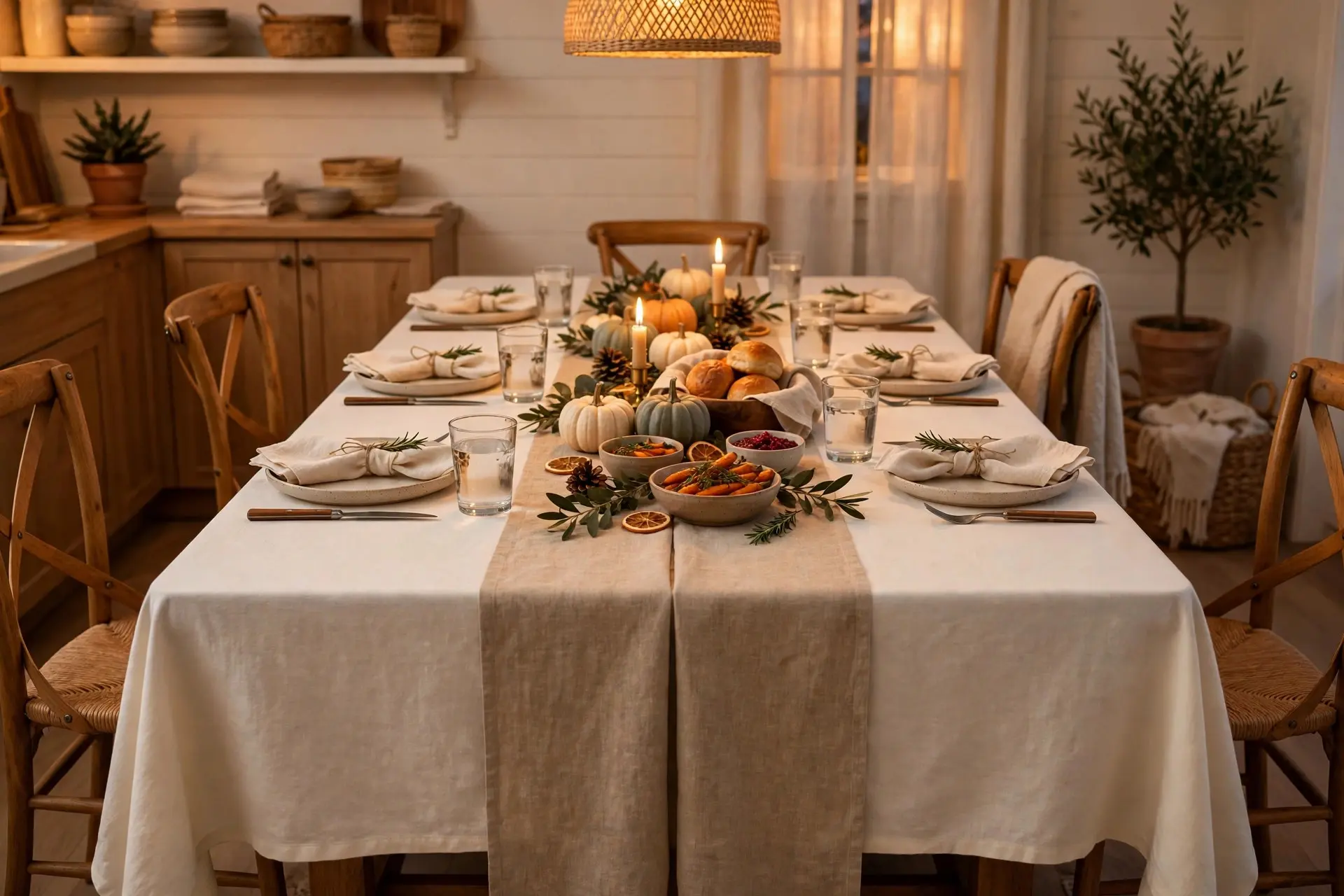
No dining table big enough? Build one. Push two card tables end to end, or pair a desk with a console, and check first that the surfaces sit at the same height. Then cover the whole arrangement with a single floor-length cloth — a flat sheet or an inexpensive linen-feel throw works beautifully — and the seam simply vanishes.
The one cloth is the entire trick. Two overlapping tablecloths leave a visible ridge that gives the game away, while one continuous drape makes guests see a long, dressed table instead of the furniture hiding underneath it. They will never guess what is under there.
Run a table runner down the center so the eye follows one unbroken line instead of hunting for the join, then test-stack plates along the table before anyone arrives. If the stack sits level at the seam, your borrowed table is ready for a turkey.
3. A Buffet Line Beats a Full Place Setting
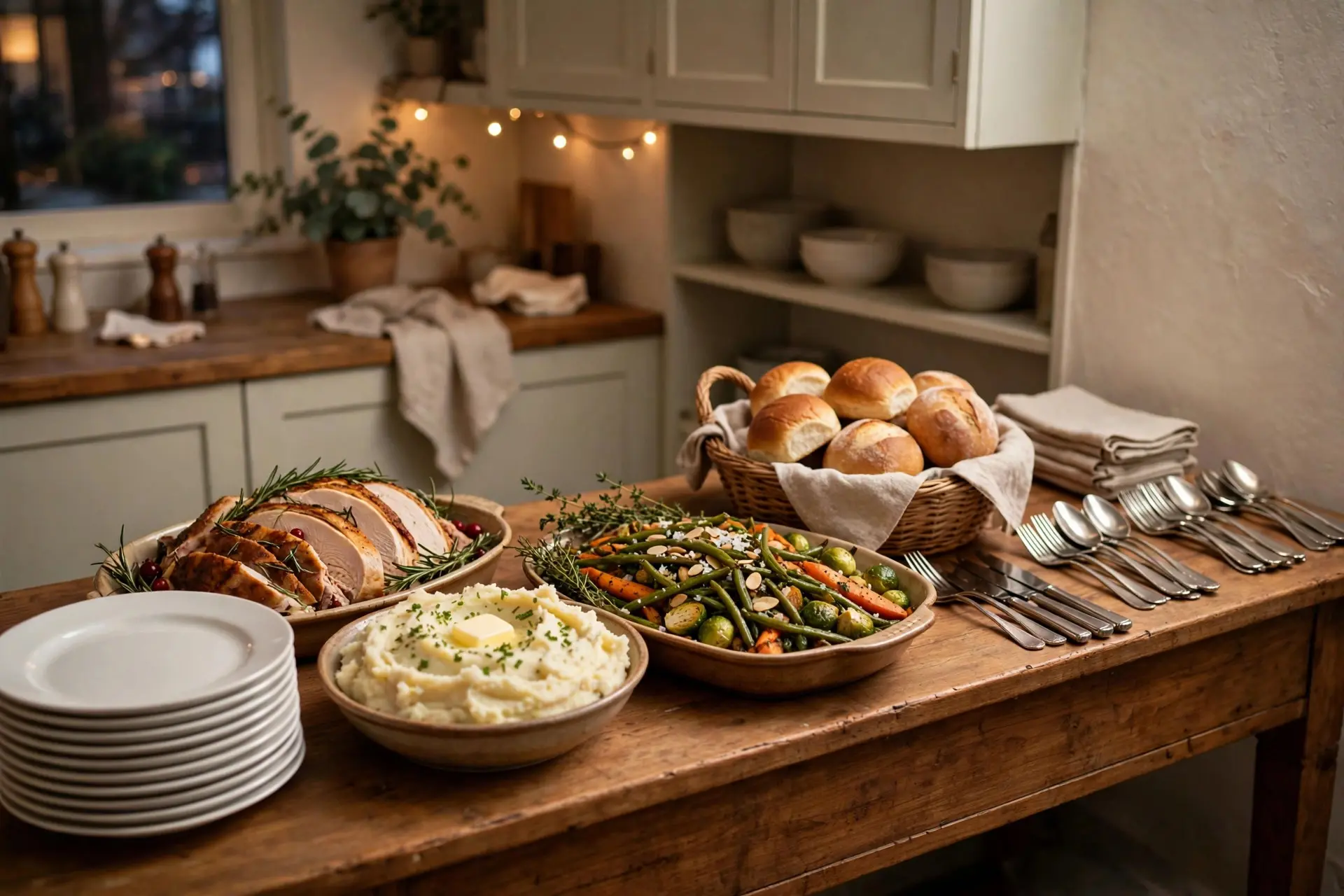
Skip the formal place setting entirely and let a sideboard or console do the work. Stack the plates at one end, arrange the food in the middle, and finish with silverware and napkins at the far end. Guests serve themselves and settle wherever there is room — sofa, ottoman, window bench, floor cushions for the kids — and that single move frees up about two feet of precious table space.
A buffet also roughly halves your setup time. There are no napkins to fold into fans and no forks to count out per seat, and because the food stays in its serving dishes instead of traveling plate by plate, it holds its heat far longer through a slow, chatty meal.
Tip: Run the line in serving order — plates, mains, sides, bread, then silverware — and put the heaviest dish at counter height rather than down low. Add a small bowl for used serving spoons so nothing drips, and point the kids toward the floor-cushion zone before the line forms.
4. Roast a Turkey Breast or Two Smaller Birds
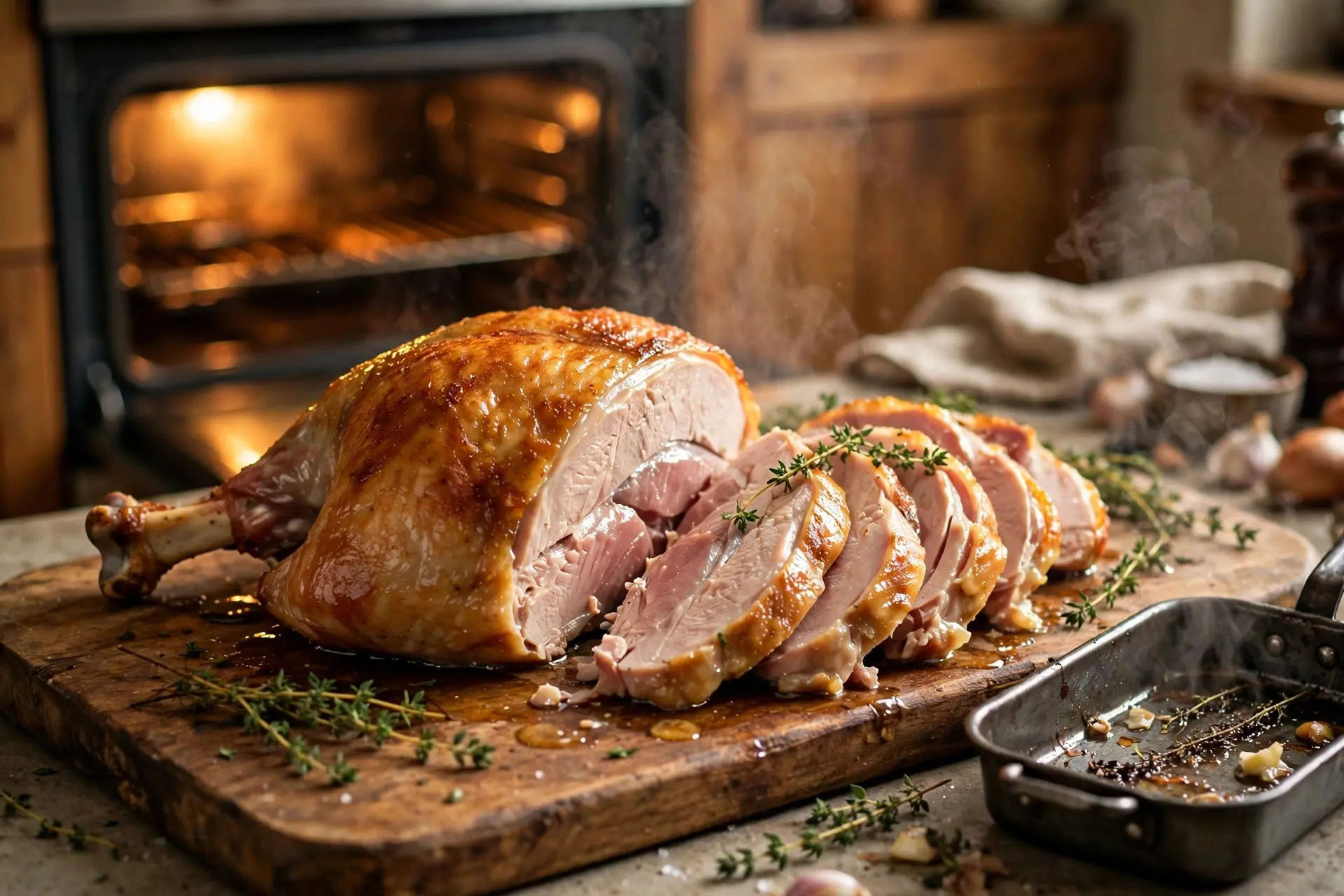
A giant bird is the one thing a small oven genuinely cannot forgive, so shrink the centerpiece instead. A 6- to 7-pound bone-in turkey breast roasts in about 1 hour 45 minutes at 325°F and feeds six people with leftovers, while two 4-pound birds take roughly 80 to 90 minutes. Either option leaves room in the oven for a side dish, which a 15-pound turkey never does.
Loosen the skin and rub butter, salt, pepper and thyme underneath it, baste once partway through, and roast to 165°F internal. Then rest the meat for a full 20 minutes under foil before carving, so the juices stay in the slices instead of flooding the board.
Order the breast or the small birds from the butcher a week ahead, because they sell out first. As a bonus for a crowded countertop, a breast carves into clean, even slices that behave beautifully on a buffet line.
5. Cook Sides in Advance and Reheat in Shifts
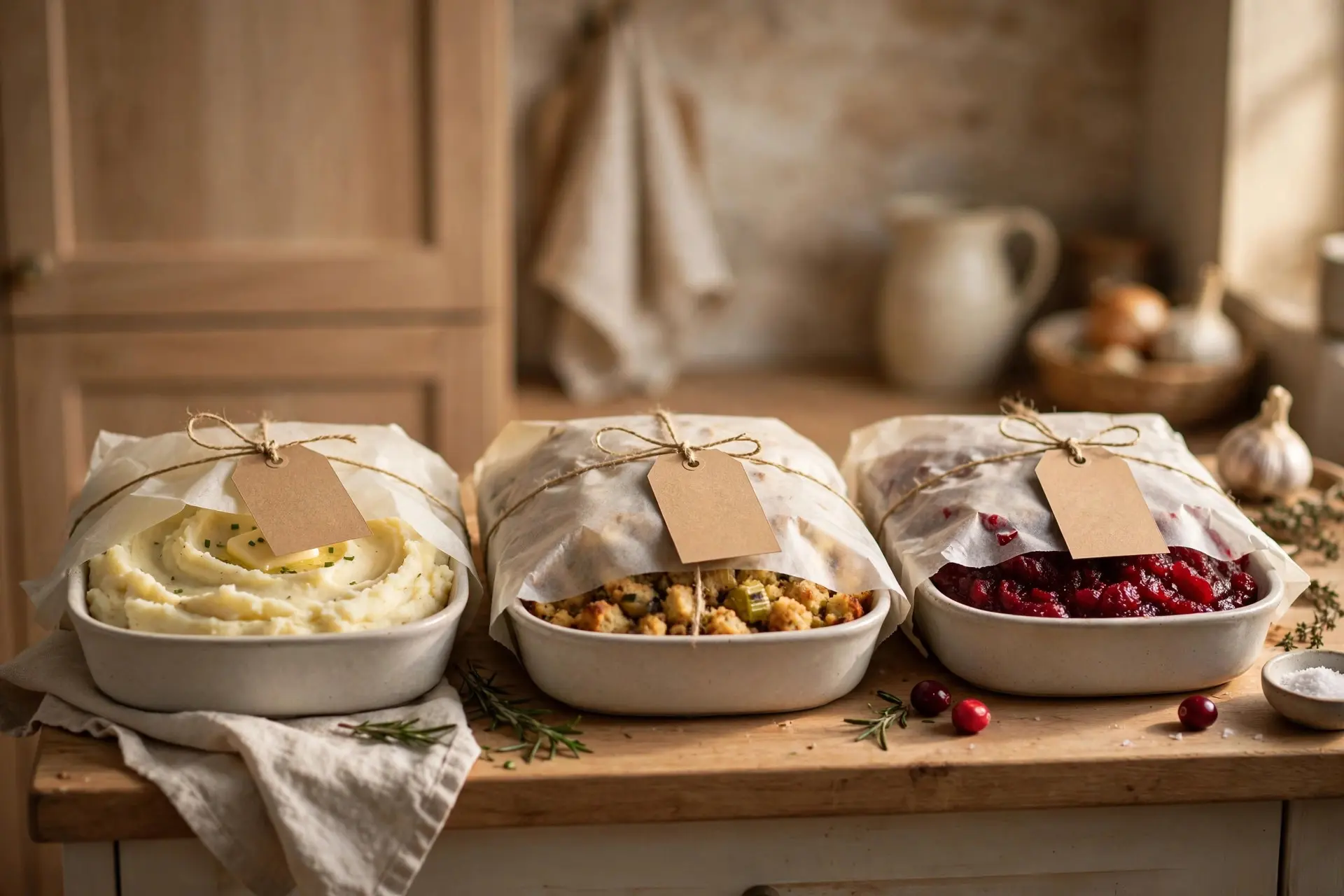
The oven schedule is your second seating problem, and the fix is to move the cooking earlier in the week. Make the mashed potatoes, stuffing and cranberry sauce on Tuesday or Wednesday, and refrigerate them in shallow dishes so they cool quickly and reheat evenly. Thursday then becomes an assembly day instead of a cooking marathon.
While the turkey rests, reheat the sides in 20-minute shifts at 350°F, working from a sticky note on the fridge that lists the order — no mental arithmetic while guests are arriving. Keep one burner free for the gravy, and park a slow cooker or countertop cooker on the counter for a side that never needs the oven at all.
Tip: Mashed potatoes are the one side that can turn gluey if they sit; loosen them with a splash of warm milk or broth just before serving and they will taste freshly made. That is how four dishes come out of a kitchen the size of a closet.
6. Set Up a Drink Station Away from the Kitchen
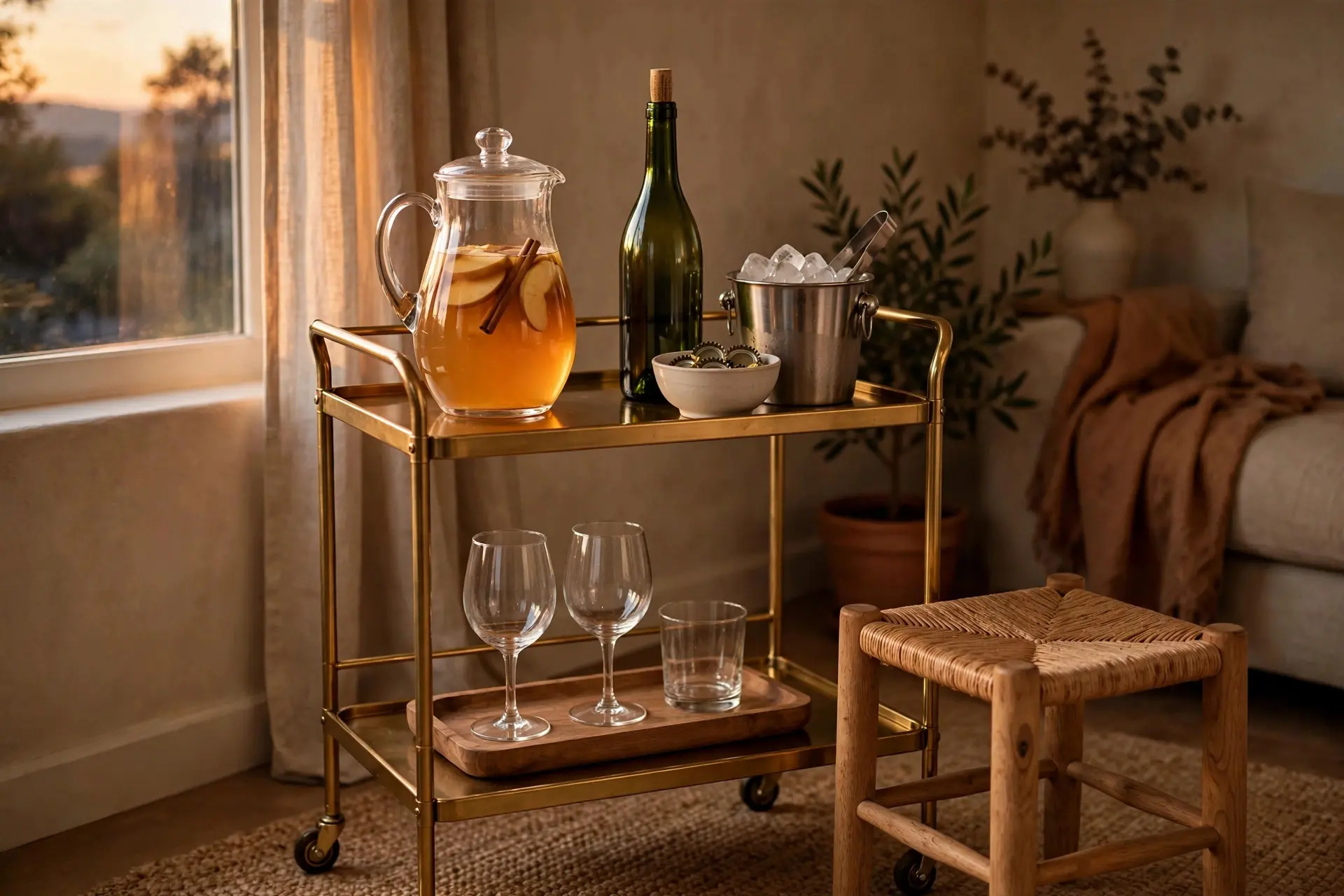
Every guest who wanders into a tiny kitchen with a glass in hand becomes an obstacle, so give drinks a home of their own. A side table, a dresser top or a bar cart parked at least four feet from the stove keeps the crowd happily occupied at the far end of the room for the entire evening.
Corral everything on one tray: glasses, a pitcher of cider, a bottle of wine and an ice bucket, so the station reads as one deliberate setup rather than a scatter of bottles. Add a small bowl for citrus peels and bottle caps, plus a roll of napkins, so nothing migrates onto the dinner table mid-meal.
Finish with a stool or a chair beside the station. It sounds minor, but giving people somewhere to settle is what stops them drifting back to lean in your kitchen doorway while you are trying to baste.
7. Borrow, Rent, or Buy Disposables Strategically
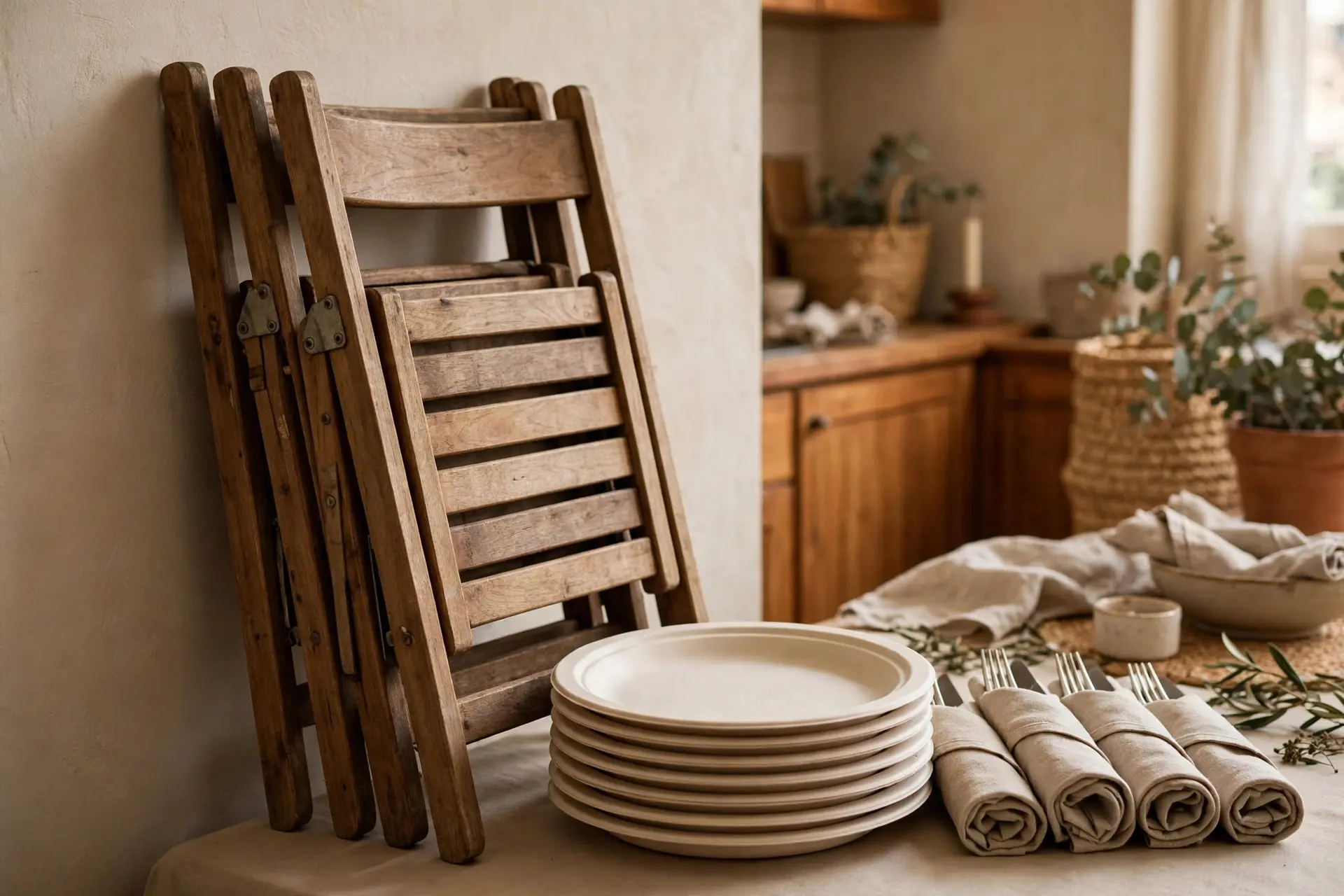
Before you buy a single thing, text five neighbors and ask for a folding table, extra chairs, a roasting pan and a large stockpot. Most people own at least one of those and genuinely enjoy being asked, and borrowing costs nothing while quietly building the goodwill you will be glad of next year.
For the tableware itself, compostable palm-leaf plates paired with real silverware are the smart compromise: guests notice good flatware and cloth napkins, and forget the plate entirely. Keep sturdy bamboo plates as backup, and remember that palm leaf and bamboo hold up to gravy far better than flimsy white paper.
Save rentals for the big years only. Once your count tops ten, rental chairs at roughly $3 to $5 each start to make sense; below that, borrowed chairs and honest disposables cover everything without a storage problem afterward.

8. Control the Clutter Two Days Out
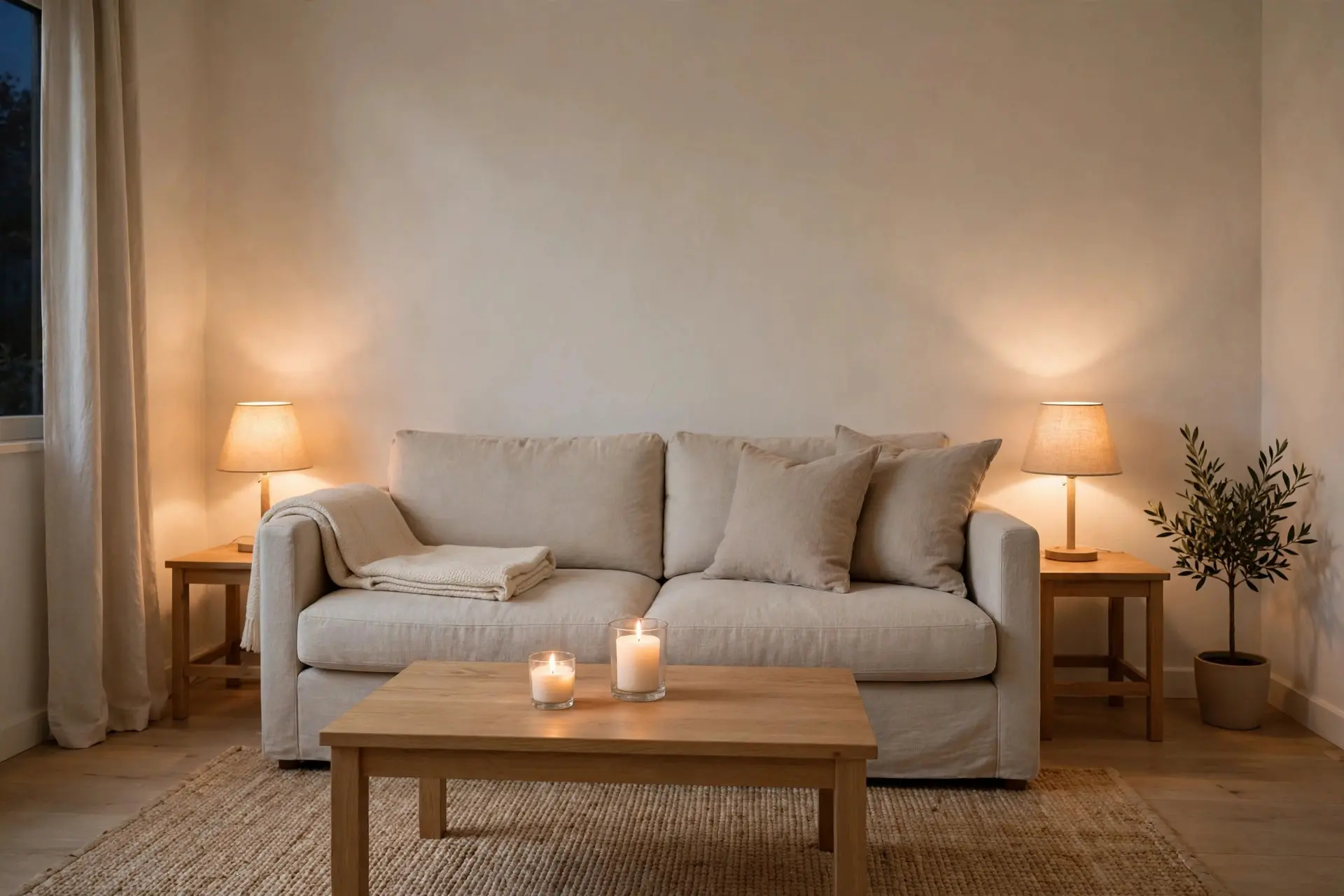
Forty-eight hours before the meal, clear every flat surface in the rooms your guests will see. Mail, bills, remotes, kids’ toys and pet gear all go into a single laundry basket that lives inside a closet until the last guest leaves. A clear countertop reads as calm and prepared, and that feeling transfers straight to everyone who walks in.
Do it two days out rather than the morning of, because Thursday already has a turkey in it. The night before, wipe every surface once, and the room will still look composed when the doorbell rings — not freshly panicked.
Then fix the light. Switch off the overhead, and use two lamps and a couple of candles instead. Warm, low light makes a small room feel bigger than any furniture rearrangement ever will, and it politely hides the fact that your kitchen is also your dining room.
9. Plan for Coats, Shoes, and Bags
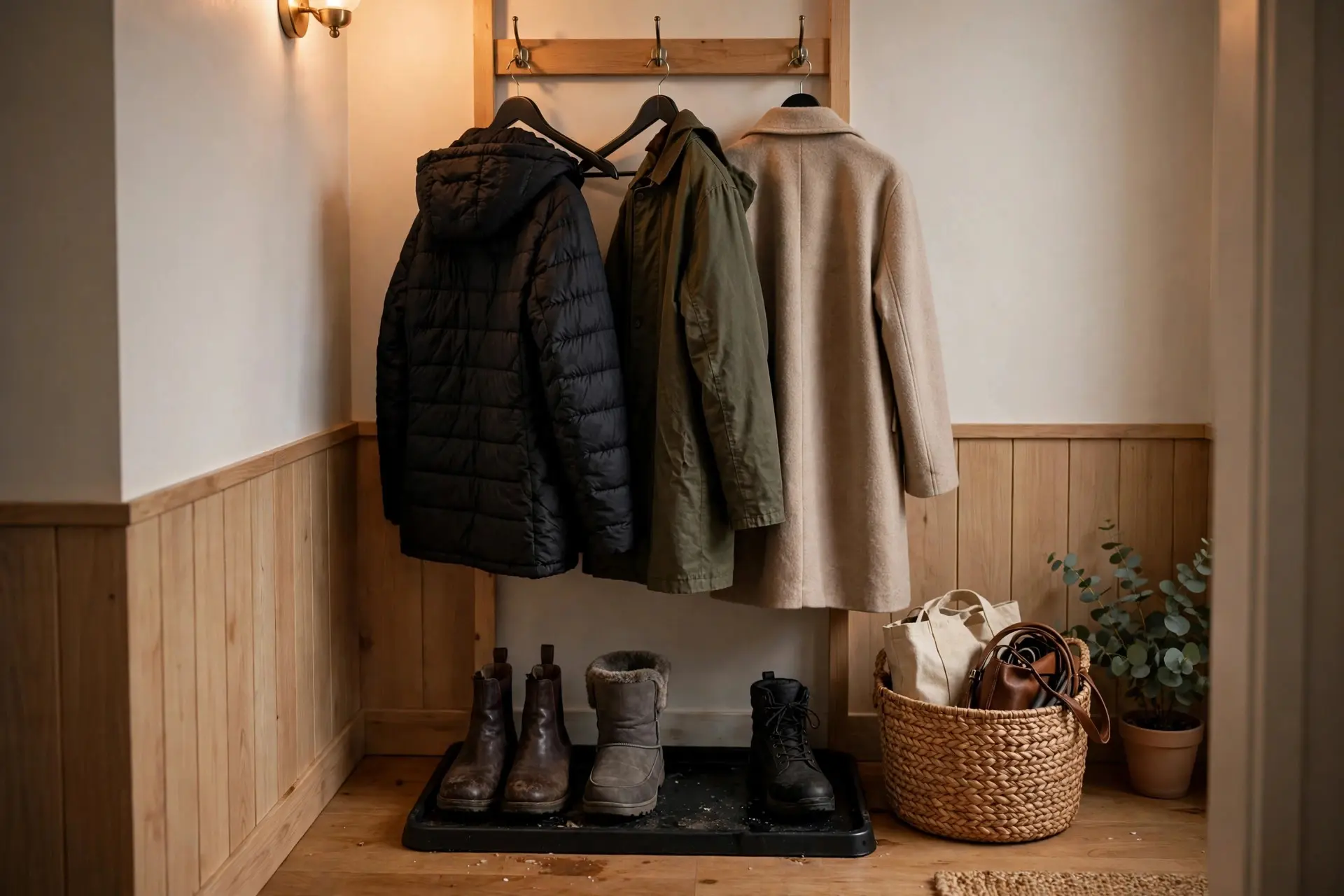
Guests arrive carrying coats, boots and tote bags, and in a studio apartment that is instant chaos at the exact moment you are greeting people. Decide in advance where it all lands: a bedroom, a bathroom, or a stretch of hallway fitted with a tension rod and hangers for coats, a boot tray underneath, and one basket for bags.
Keep the landing zone out of the main walking path, so late arrivals are not squeezing past the people already holding drinks. A small, deliberate corner beats a growing pile on the sofa every single time.
If no separate spot exists, drape coats over the back of a made bed — tidy, out of the way, and easy to retrieve when everyone leaves at once. Tip: text your guests the plan before they arrive (“coats go on the bed, boots by the door”) and arrivals sort themselves.
10. Give Kids and Late-Night Guests Their Own Zone
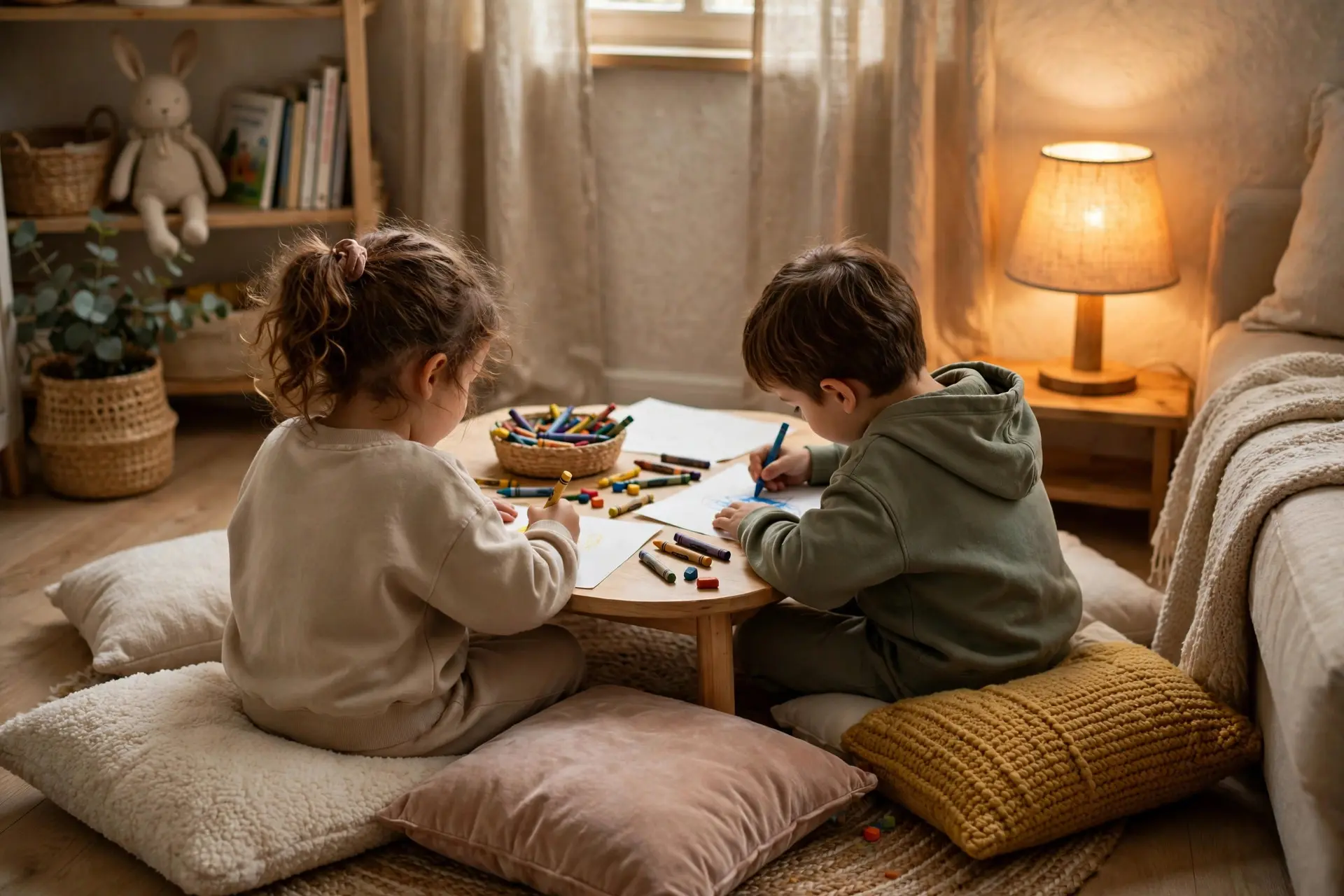
Split the room by energy, not by walls. Before dinner, claim a corner or a bedroom for the kids: a low table, floor cushions and a movie give them somewhere to be gloriously loud, while the adults get to linger at the real table and actually finish a conversation. Everyone eats better that way.
Set the zone up before the first child arrives, not after the whining starts — cushions down, movie chosen, snacks within reach. A zone that already exists when they walk in feels like a treat; one assembled in a scramble feels like exile.
When dinner ends, the room flips a second time. Clear the dining surface and reset it with dessert, coffee and a board game, keeping one warm lamp on. Your one small room has just been a dining room, a cinema and a games lounge in a single evening, without moving a single wall.
Styling Tips
A small table cannot spare inches for decoration, so let one low centerpiece do all the work: a short cluster of mini pumpkins, a low bowl of cranberries, or a single squat vase of greenery that guests can see over without ducking. If you have to move it to carve, it is too big.
Match your serving dishes to the buffet surface you actually have, not the one you wish for — long, narrow platters and small deep bowls fit a console or sideboard far better than wide round dishes, and they keep the line moving in one direction.
Trade bulky décor for light instead. Two lamps and a couple of candles warm the whole room, make clear surfaces glow, and cost zero square inches — the cheapest sense of space you can buy.
Finally, style the path, not just the table. Keep the route between kitchen, buffet and table visibly clear all evening; a room you can walk through without turning sideways always feels larger than it is.
Common Mistakes to Avoid
- Inviting first, counting chairs later. Your guest list has to fit your seating math, not the other way round.
- One giant table that blocks the room. Two smaller surfaces under one cloth give the same seats and keep the walkways open.
- Plating a full formal setting. Place settings eat the table; a buffet line gives the space back.
- One huge bird in a tiny oven. A 15-pound turkey monopolizes the oven and still may not cook evenly.
- Cooking everything on the day. Sides made Tuesday and Wednesday reheat beautifully; a Thursday cooking marathon does not.
- Drinks inside the kitchen work zone. Every refill becomes a collision with the cook.
- Buying everything new. Borrowed chairs and a borrowed roasting pan cost nothing and store themselves afterward — at your neighbor’s.
- Decluttering the morning of. By Thursday it is too late; the basket-in-the-closet sweep belongs to Tuesday.
- Coats dumped on the bed or sofa. An unplanned pile eats your best overflow seating and looks chaotic by dessert.
- No plan for kids after dinner. Bored children will invent their own entertainment, and it will involve your furniture.
Planning Your Small-Space Thanksgiving Week
Map the week backward from Thursday and it practically runs itself. Shop on Saturday, while the stores are still stocked and you are still calm. Cook the sides on Tuesday and Wednesday, when the kitchen is empty and the fridge has room, and chill them in the shallow dishes they will reheat in.
Wednesday night is setup night: clear every surface into its closet basket, join and dress the table, and build the drink station so Thursday holds no furniture decisions at all. Write your reheating order on a sticky note and stick it on the fridge — future you, mid-baste, will be grateful.
That leaves Thanksgiving morning for the turkey, a shower and one good playlist. The goal never changes, whatever the square footage: food that is warm, seats that work, and a host who actually gets to sit down and eat.
Frequently Asked Questions
How many people can I realistically seat in a small apartment for Thanksgiving?
With a 48-inch round table plus a buffet setup, most small apartments handle eight guests comfortably — six at the table and two more on a sofa or bench with lap trays. Above ten, borrow a folding table or split the day into two seatings: an early dinner for family, a later dessert for friends. Standing room for 12 to 14 works fine if you serve buffet-style and keep the drinks out of the kitchen.
What’s the easiest turkey option if my oven is tiny?
A bone-in turkey breast or two small whole birds beat one large turkey in a cramped oven every time. A 6- to 7-pound breast fits a standard 9×13 roasting pan, cooks in under two hours, and carves more easily for a buffet. Order it from the butcher a week ahead, because small birds and breasts sell out first.
Can I make Thanksgiving sides ahead of time?
Yes — and you should. Mashed potatoes, stuffing, cranberry sauce and casseroles all hold one to two days in the refrigerator, which spreads the work across Tuesday and Wednesday. On Thursday, reheat them in 20-minute oven shifts while the turkey rests, and thin the mashed potatoes with warm milk or broth so they never dry out.
How do I keep guests out of my tiny kitchen?
Give them somewhere better to be: a drink station, appetizers and a small trash bowl set up away from the cooking area, with a stool or chair nearby so people settle there instead. If someone wanders in anyway, hand them a job that sends them back out — refilling the ice bucket, taking coats to the bedroom. A cheerful “I’ll call you when it’s time to eat” works wonders, too.
What should I skip when hosting in a small space?
Skip the multiple hot appetizers, the formal seated place setting, and any dish that needs a serving platter you do not own. One warm appetizer — a baked dip or a bowl of spiced nuts — plus a cheese plate is plenty. Nobody notices a missing third casserole, but everyone notices a stressed host squeezing past the oven.
Is it okay to use paper plates for Thanksgiving?
Completely fine, especially with a buffet. Compostable palm-leaf or sturdy bamboo plates look better in photos than plain white paper and hold up under gravy and mashed potatoes without sagging. Pair them with real silverware and cloth napkins and the mix reads intentional — and your sink stays manageable at the end of the night.
Conclusion
A small home is not a smaller version of the holiday; it is just a holiday that rewards a plan. However you choose to host Thanksgiving in a small space this year — buffet or sit-down, breast or two small birds, borrowed chairs or brand-new ones — the warmth your guests remember will come from an unhurried host, not from square footage. Which of these ten tips would make the biggest difference in your home?
Discover more from Fashinate Style
Subscribe to get the latest posts sent to your email.