
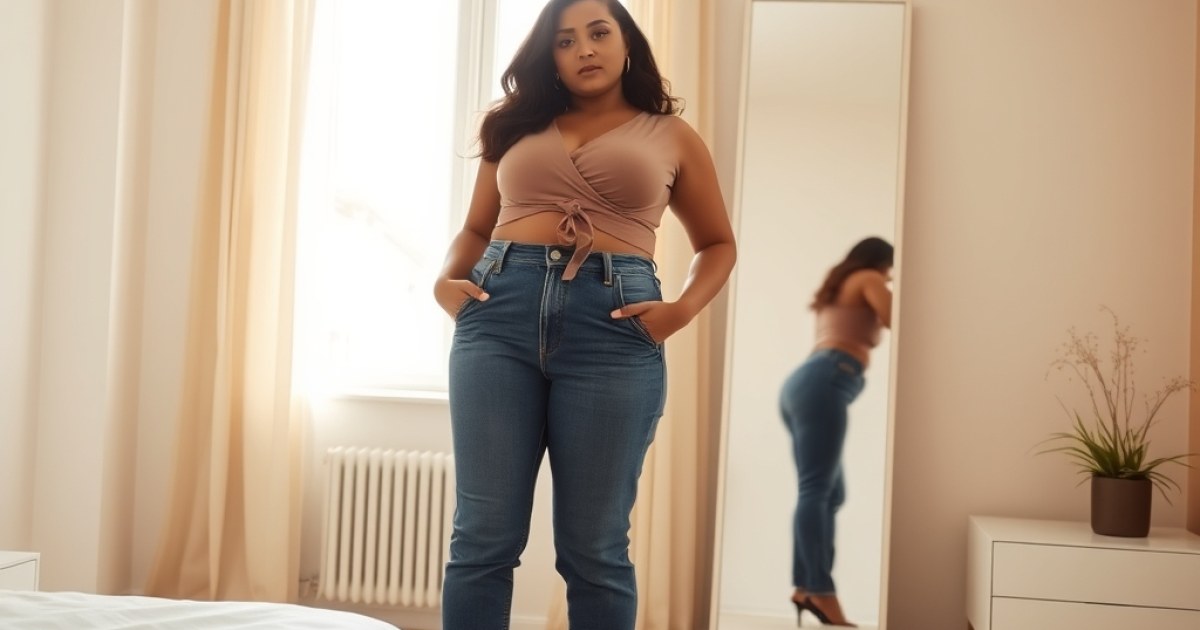
You finally find a dress that fits your waist perfectly — and then you can’t get it zipped over your chest. Or you hold up a button-down in the fitting room, love the colour, and watch it gape open the second you breathe in. If that’s your life, this one’s for you. Shopping with a full bust isn’t about hiding anything; it’s about knowing which cuts, fabrics and construction details actually work with your shape instead of fighting it.
Whether you’re a 30F or a 42G, the struggle is usually the same: necklines that tug, buttons that pull, straps that dig, and that dreaded uniboob that turns every top into a shapeless tube. The good news is that none of this is a you problem — it’s a design problem. Once you know the handful of rules that make clothes behave on a larger chest, getting dressed stops being a negotiation and starts being fun again.
In this list you’ll find 16 big bust outfit ideas you can shop and wear right now, for work, weekends and date nights. Each one comes with the specific piece to look for, the fabric or construction detail that makes it work, and — just as importantly — the bra strategy underneath. We’ll cover the necklines that slim rather than spill, the tops that genuinely button closed, the dresses that don’t need a single safety pin, and the one change that improves every single outfit on this list.
Quick Picks: Which Big Bust Idea to Start With
- Need one dress that just works? Start with #1, the wrap dress that never gapes — the fastest fix in this whole list.
- Stuck on workwear? Go straight to #2 and #7 — a button-down that closes and a blazer that actually buttons over your chest.
- Want the biggest instant upgrade? Read #16 first. The right bra changes how every other piece on this list fits.
- After something easy for weekends? #5 and #13 — high-waisted bottoms and a V-neck knit you can throw on without thinking.
1. The Wrap Dress That Never Gapes
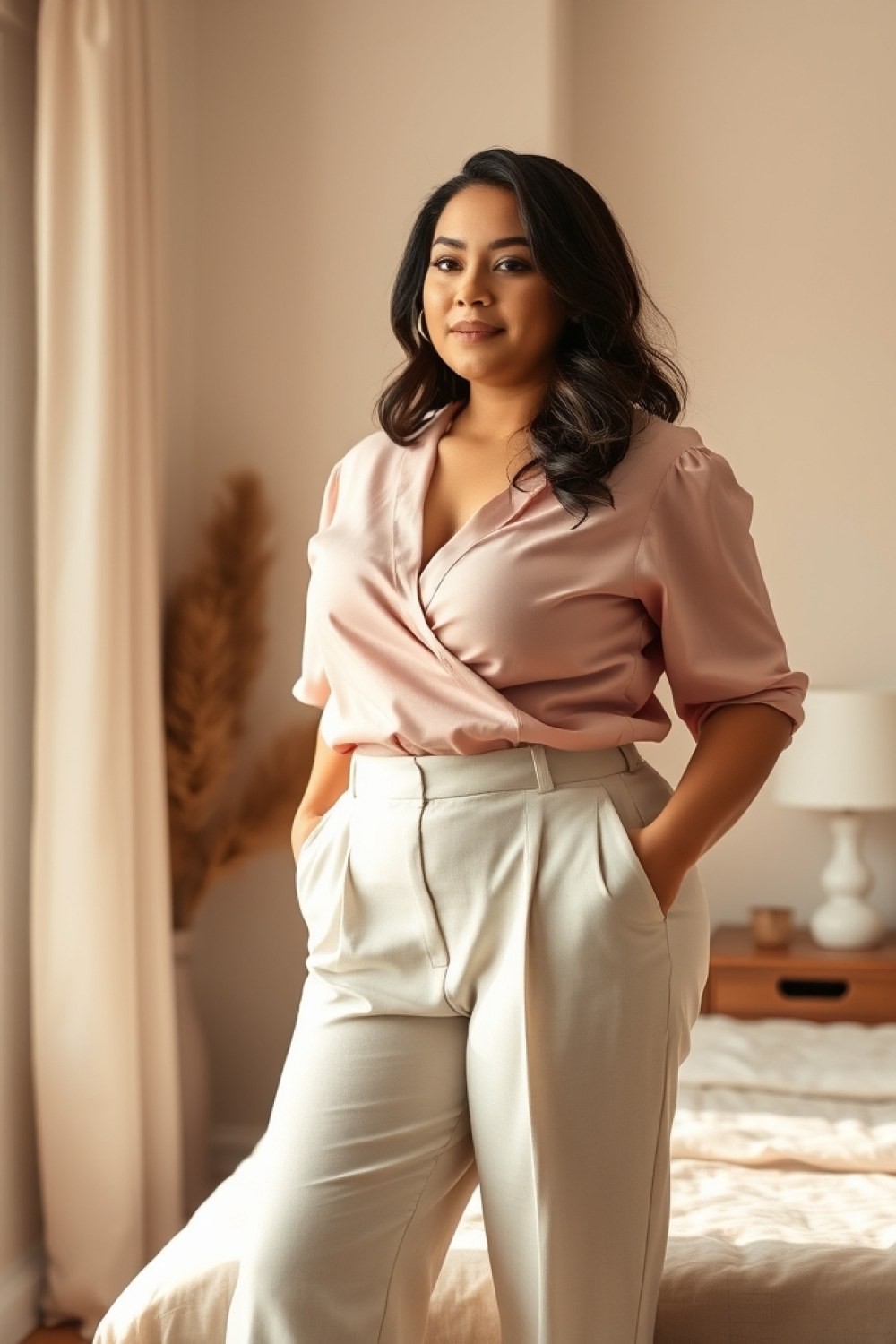
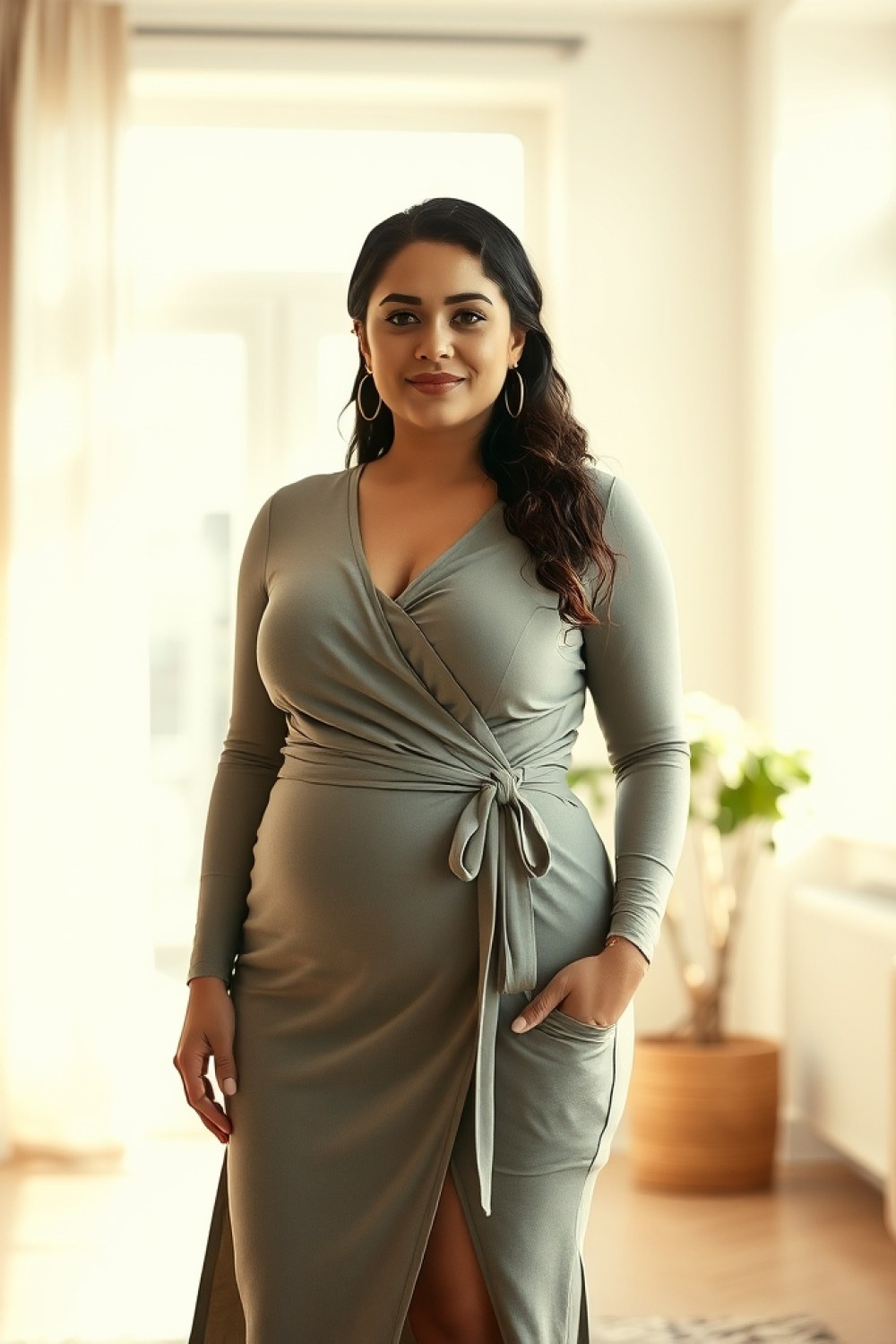
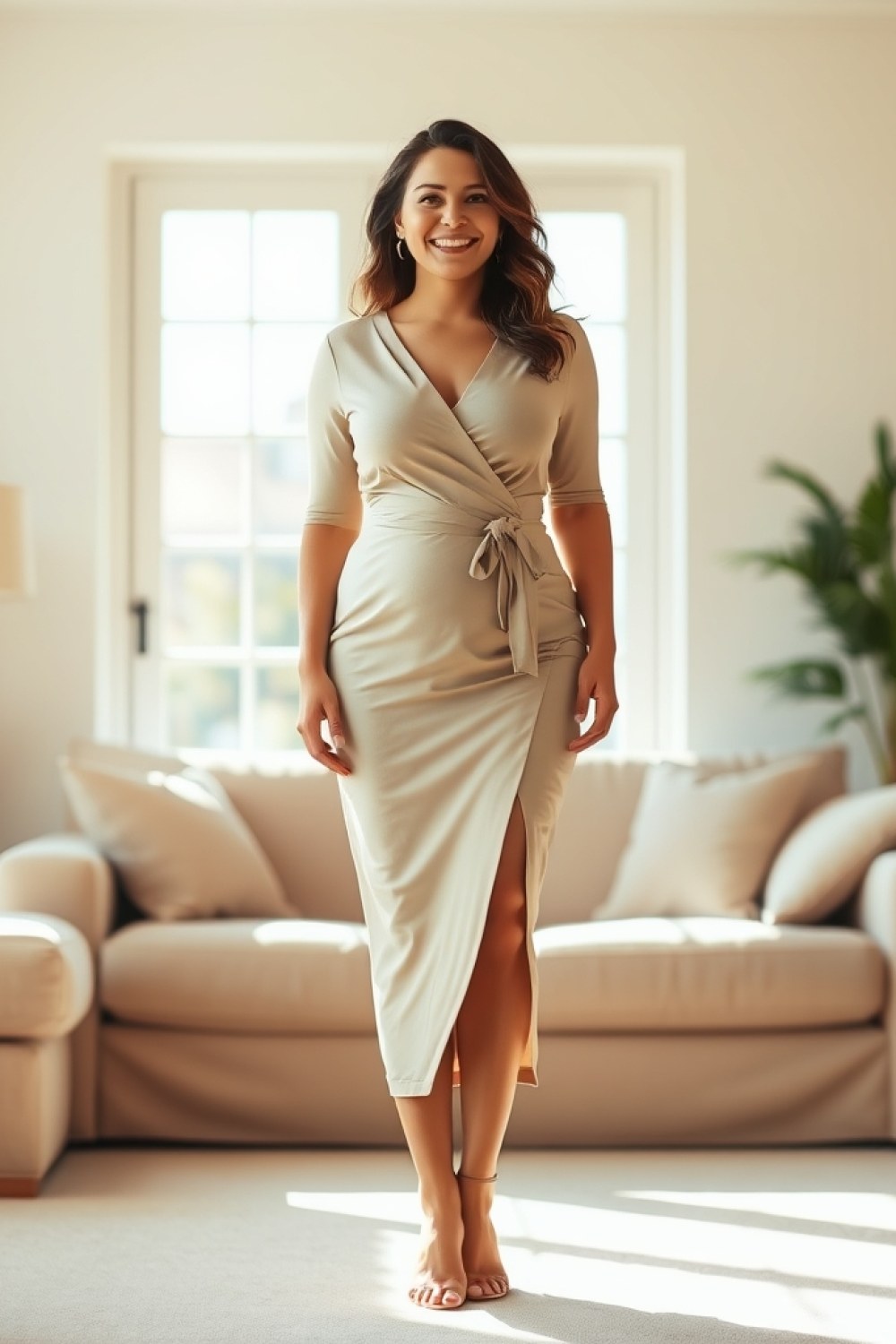
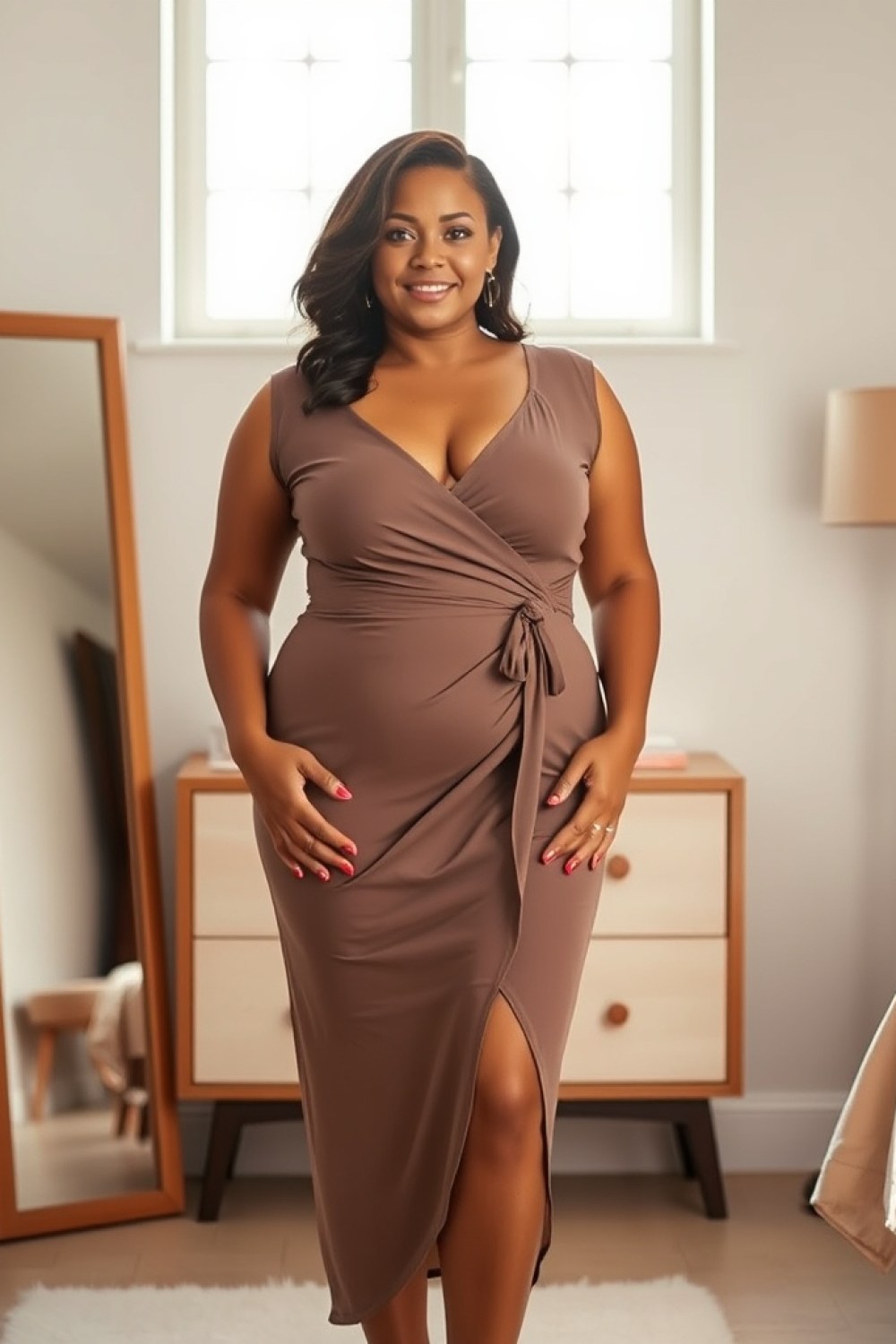
A true wrap dress is the single most reliable piece in a busty wardrobe, because you control the fit at the crossover. Unlike a faux wrap, where the V is sewn shut at a fixed depth, a real wrap lets you cinch the inner panel tighter across your chest until the neckline sits exactly where you want it — high enough to feel secure, deep enough to draw a long vertical line that slims the whole torso. The make-or-break detail is a hidden snap sewn inside the crossover point; that tiny press stud holds the two panels together so the V never migrates south when you move, sit, or hug someone hello.
Fabric matters just as much as construction. Matte jersey and ponte have enough weight to skim over your bust and waist instead of clinging to every curve, while thin, swingy rayon or silky blends show every ridge and breeze through. Choose a wrap with a proper waist tie, then knot it at your natural waist — the narrowest point, roughly an inch above your belly button — never under the bust, which shortens your torso and pushes your chest forward.
How to Get the Fit Right
- Try the dress on and tighten the inner panel first, pulling it snug across your bust before you wrap the outer panel over it.
- Fasten the internal snap, then tie the belt at your natural waist and adjust the drape so the fabric falls in a straight line, not a pull across the chest.
- If the bust pulls the front open, size up and belt tighter — the extra fabric in the skirt reads as drape, not bulk.
- Check the armholes and sleeves with your arms raised; if the dress rides up, the bust panel is too short for your frame and you should look for a longer-waisted cut.
2. Button-Down, Solved
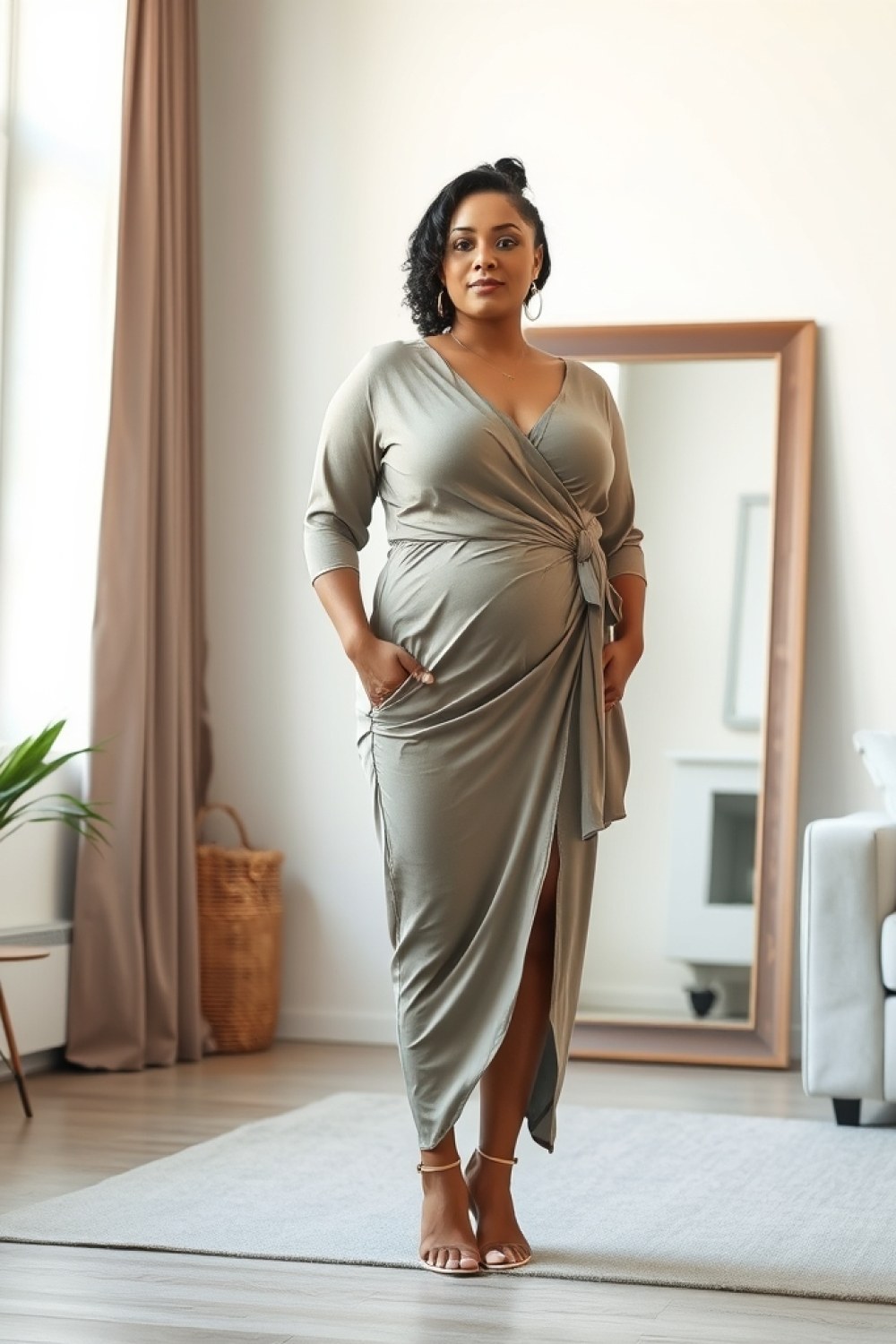
Button-downs gape at the bust because most commercial patterns are graded from a B-cup block, adding width at the side seams rather than depth at the chest. That’s why the shirt fits your shoulders and waist but strains across the fullest point, popping open between buttons. The permanent fix is to buy to fit your bust and have a tailor take in the waist — usually a $15–30 alteration that turns a mediocre shirt into a favorite. Brands that specifically grade for a D+ cup exist and are worth seeking out, cutting more room across the chest and shaping the side seam to follow your bust instead of fighting it.
If you’d rather not alter anything, go up one size so the bust has real room, then half-tuck the front hem into high-rise jeans or trousers. That French tuck gathers the extra fabric at your waist, converting what would be a boxy, billowing shirt into a defined shape with a waistline and a clean vertical line down the front.
How to Style It
- Do the “hug test” in the fitting room: cross your arms and reach forward. If a button pops open, size up or move to a D+ cut.
- Look for shirts with side darts or princess seams — they shape around the bust rather than stretching flat over it.
- Half-tuck the front and leave the back loose, then add a belt at your natural waist to lock the shape in place.
- Roll sleeves to the elbow and undo the top button to open the neckline; a longer vertical line at the chest balances the volume.
3. Square Necklines for the Win
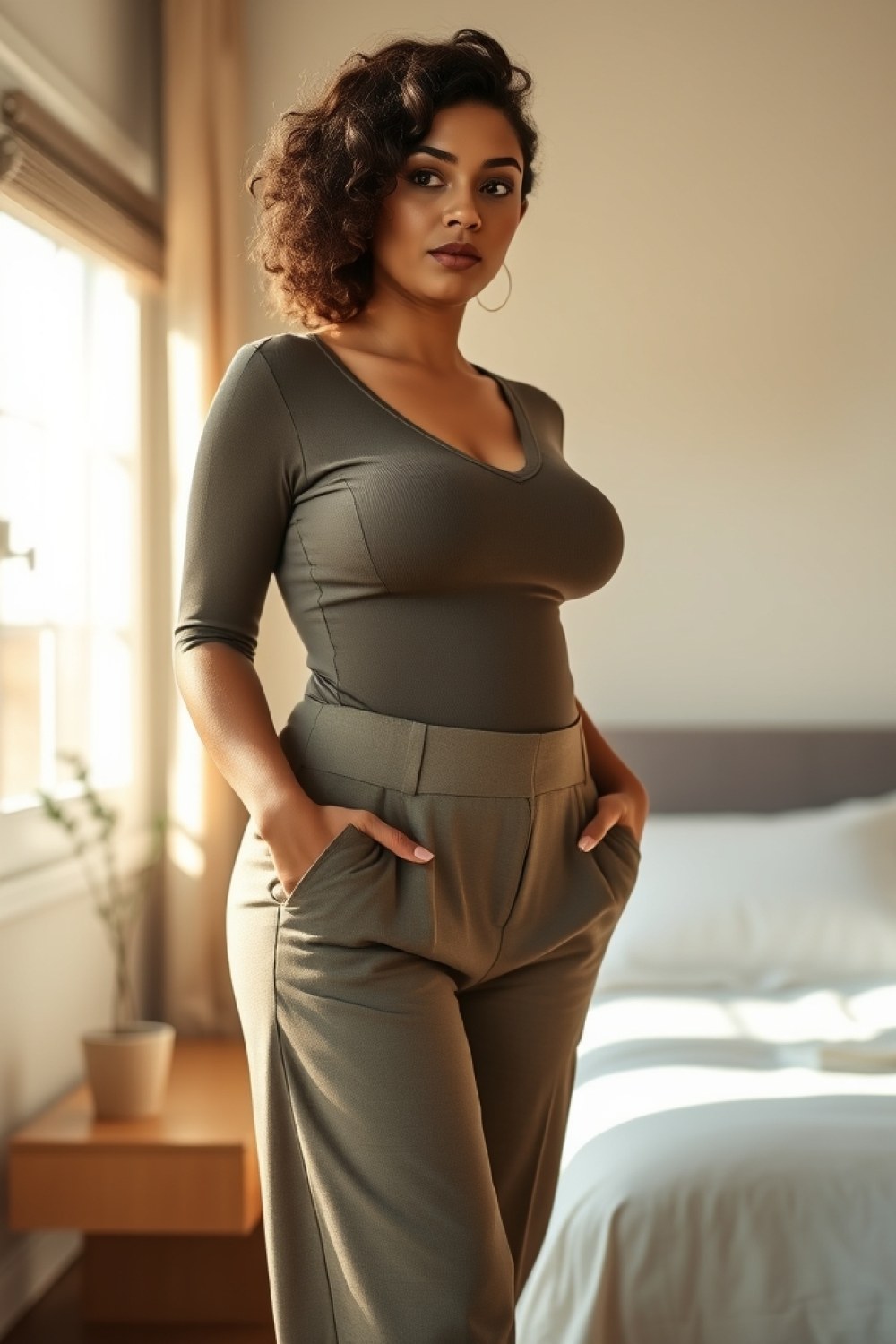
The square neck is quietly the most flattering neckline for a large bust, and it’s the answer if you’re tired of feeling like every top is either modest to the throat or showing more cleavage than you want. A wide horizontal neckline, balanced by vertical straps at the sides, frames your bust instead of exposing it — the chest reads as structured and intentional rather than falling forward. Because the line sits across the collarbone and the straps run straight up to the shoulder, your eye travels vertically and the bust looks contained, not overflowing.
A fitted square-neck bodysuit or knit top tucked into a midi skirt or wide-leg trousers is one of the easiest formulas in this whole list. It’s polished enough for the office, comfortable for a weekend lunch, and needs no necklace to look finished. If you want a little more coverage, choose a square neck with a slightly higher back and wider straps — you still get the flattering frame without feeling exposed.
How to Recreate It
- Choose a square-neck top with straps at least an inch wide; thin spaghetti straps can dig in and make the bust look heavier.
- Make sure the neckline sits across the collarbone, not lower — a square neck that dips too far defeats the framing effect.
- Tuck it into a high-waisted midi skirt or wide-leg trousers to create a long, clean line from chest to hem.
- Add a delicate pendant or small hoops rather than a chunky necklace, which competes with the neckline.
4. The Bodysuit Shortcut
A bodysuit solves two problems at once: it never rides up, so you’re not tugging your hem down all day, and it never bunches at the waist, so there’s no lumpy fabric fighting your jeans. For a large bust, that second point is the real win — a smooth, uninterrupted torso makes your waist look narrower and your chest look deliberate rather than like it’s straining against a loose top. Choose a style with a built-in bra or shelf if your cups are on the smaller side of DD, or wear it over your best underwire if you need more lift and separation.
The formula is simple: a fitted bodysuit plus high-waisted anything. Tucked in and smoothed down, the bodysuit lengthens your torso visually and gives you a defined waist right below your bust, which is exactly where you want the eye to land. Look for a snap closure at the gusset, a fabric with enough weight to stay opaque, and adjustable straps so you can fine-tune where the neckline sits.
How to Wear It
- Pick a bodysuit in ponte, thick cotton, or a stretch knit — thin fabrics show every strap and seam of your bra underneath.
- Choose high-waisted bottoms that reach your natural waist so the bodysuit tucks in without a visible line.
- If you need support, wear a smoothing underwire bra under a square- or V-neck bodysuit rather than relying on a shelf bra.
- Check the length: the bodysuit should snap comfortably without pulling your shoulders down or riding up when you sit.
5. High-Waisted Everything
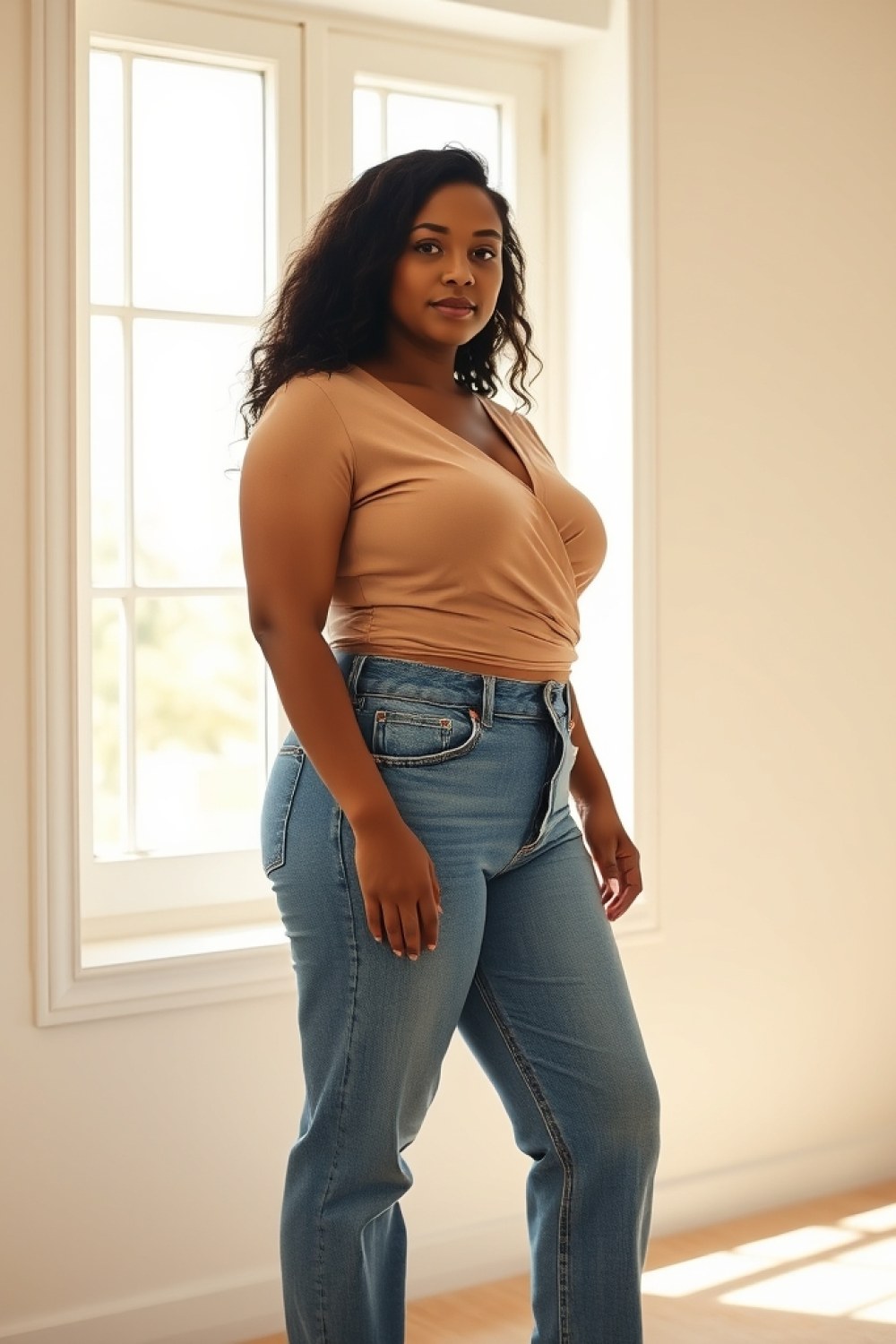
Raising your waistline is the fastest way to visually lengthen your legs and pull attention away from your chest. When the waistband of your jeans, trousers, or skirt sits at your natural waist rather than your hips, the proportion of your outfit shifts — more length below, less volume above — and your bust stops being the dominant feature of your silhouette. High-rise jeans, high-waist wide-leg trousers, and high-waisted skirts all do this work, and they’re just as comfortable as low-rise once you find the right rise for your body.
The second half of the trick is what you do with your top. Tuck it in fully for a crisp, tailored line, or do a French tuck — front in, back loose — for something more relaxed. Either way, you’re creating a defined waist instead of a column of fabric hanging over your bust and hiding your shape entirely. A belt at the natural waist reinforces the line and gives the outfit a clear anchor point.
How to Style It
- Find your natural waist by bending sideways — the crease is where your waistband should sit.
- Pair high-waisted bottoms with a fitted top or bodysuit; a loose top over a defined waist just recreates the column you’re trying to avoid.
- Add a belt in the same tone as your bottoms to extend the leg line.
- If a high rise feels like too much fabric at the stomach, choose a mid-rise that still sits above your hip bone and tuck into that.
6. Wide-Leg Trousers for Balance
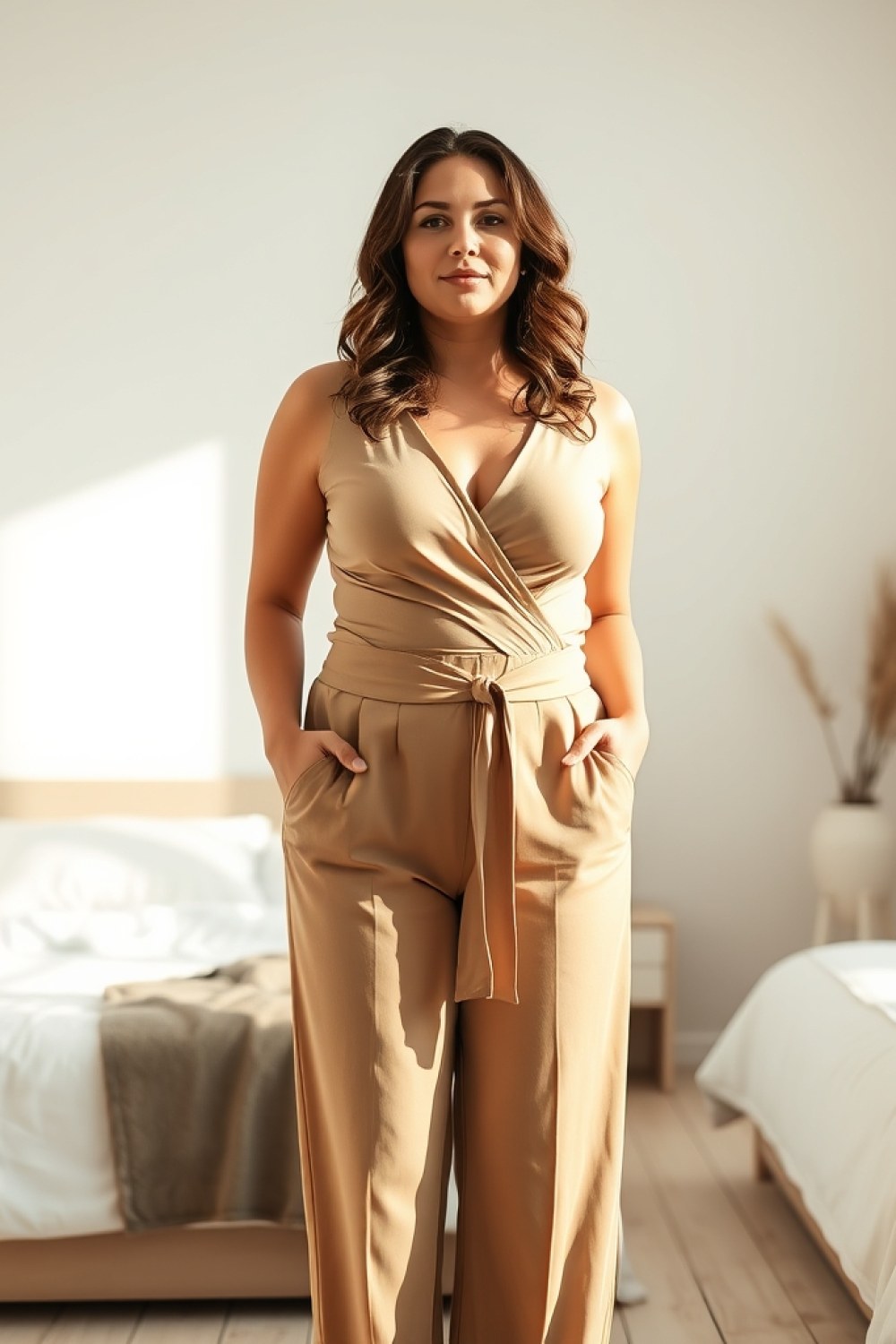
When your top half is bigger, a fuller leg balances the silhouette so your chest isn’t doing all the visual work. A wide-leg trouser with a clean drape gives your outfit weight and presence at the bottom, which makes your bust read as proportionate rather than overwhelming. Look for a flat-front waistband — pleats add volume right at your stomach, exactly where you don’t want it — and a pressed crease down the front to keep the look sharp and lengthen the leg. The crease is a small detail that makes a big difference, pulling the eye down in a straight line.
Beyond flattery, wide-leg trousers are genuinely comfortable: you can sit for hours, cross your legs, and eat a full meal without feeling constricted. Choose a fabric with enough body to hold the shape — ponte, heavy crepe, or a structured wool blend — rather than a limp knit that collapses into leggings territory. Pair them with a fitted top or bodysuit tucked in at the natural waist for the most balanced proportions.
How to Get the Balance
- Choose a flat-front, high-waisted cut in a substantial fabric that drapes rather than clings.
- Check the crease — if it’s not pressed in, a tailor or a hot iron can add one in minutes.
- Hem the trouser to just above the ground with your usual heel height so the line stays long.
- Wear a fitted, tucked-in top to keep your waist defined and let the wide leg do the balancing.
7. The Blazer That Actually Closes
An open blazer is quietly one of the best things you can put over a large chest. The two front edges create unbroken vertical lines from shoulder to hem, and those lines do more to slim and narrow your bust than almost any neckline trick. You get structure through the shoulders, a clean frame around your torso, and nothing pulling or straining. Most busty women should start here before they ever consider buttoning up.
If you do want to close it — for a meeting, for warmth, for a sharper look — the details matter enormously. Choose single-breasted with a low break point, so the button sits below your bust rather than across it. A little stretch in the fabric (2–5% elastane) lets it fasten without gaping. Double-breasted is the one to skip: the wide lapels and extra buttons add bulk exactly where you don’t want it.
How to Choose and Wear It
- Look for a single-breasted blazer with a button stance at or below your natural waist — hold it up and check where that button actually lands on you.
- Size to your bust first, then have the waist and sleeves taken in; tailoring a blazer to fit your chest is cheaper than fighting a blazer that never will.
- Wear it open over a fitted tee or cami for the vertical-line effect, or closed with a fine-knit shell underneath for a clean, gap-free finish.
- Skip shoulder pads that extend past your natural shoulder — a seam that sits right on the shoulder bone keeps the frame tidy.
8. Seamed and Ruched Tops
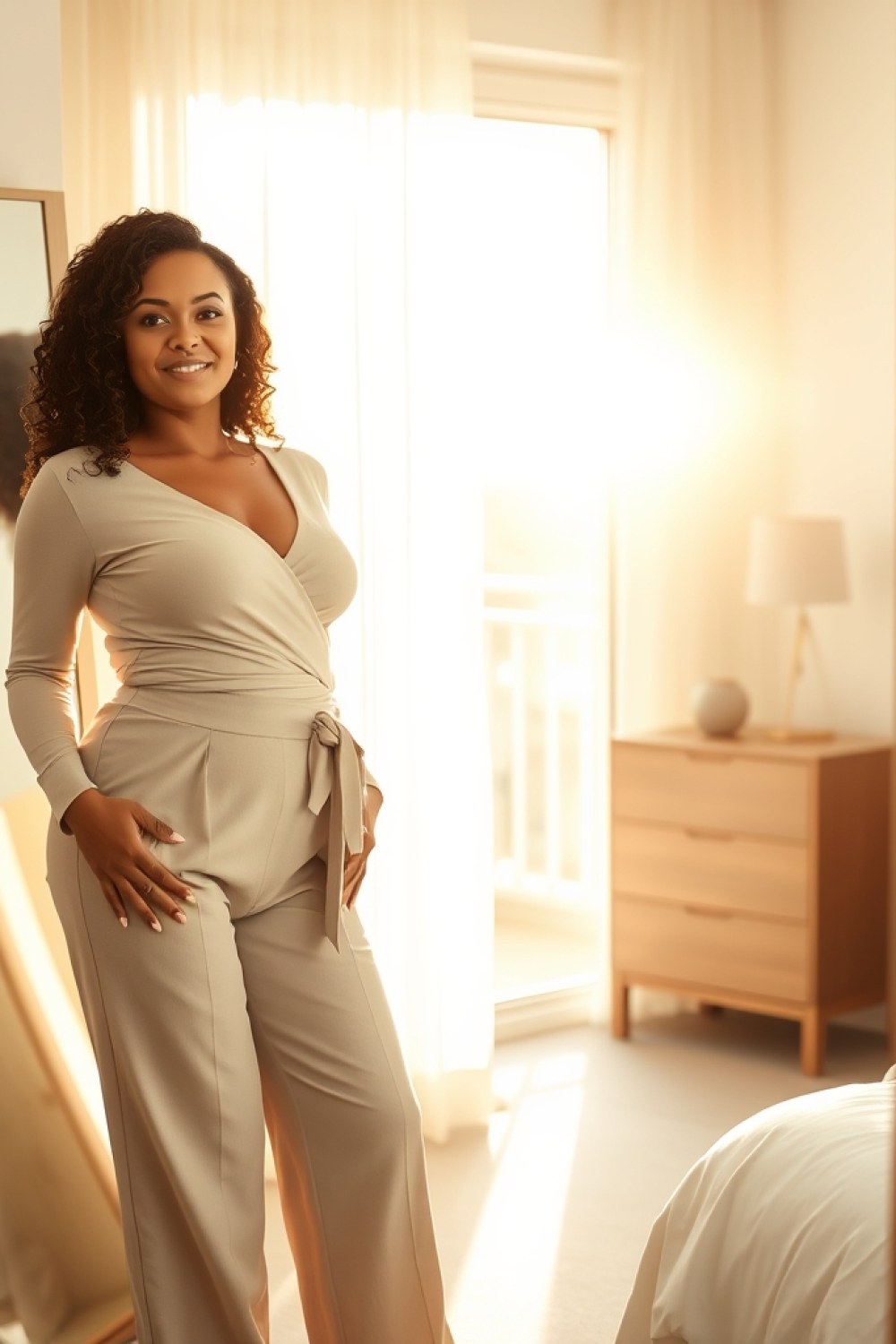
Here’s the fix almost nobody talks about: seams. A plain stretch top pulls flat and tight across a large bust, which highlights every curve you’d rather smooth. But when a top has vertical seams — especially princess seams, those gently curved lines running from shoulder or armhole down toward the waist — the fabric is shaped around your chest instead of stretched over it. The result reads as intentional and tailored, not strained.
Ruching works on the same principle. Gathers down the center front or along the sides create built-in ease, so the fabric has somewhere to go rather than clinging. It also disguises the exact spot where tops usually start to pull. Look for ruching that runs vertically, not horizontally — vertical keeps you looking long, while horizontal bands can add width.
How to Spot a Good One
- Check the inside for princess seams or side panels — if you can see shaping sewn in, the top will fit your bust rather than fight it.
- Choose a fabric with real recovery: ponte, modal blends, or a thick ribbed knit over thin, slippery jersey that shows every line.
- Try it on and raise your arms — if the hem stays put and the bust doesn’t ride up, you’ve found a keeper.
- Size to your bust and let the seams do the tailoring; going up a size just to fit your chest usually means a baggy waist.
9. Halter Tops Done Right
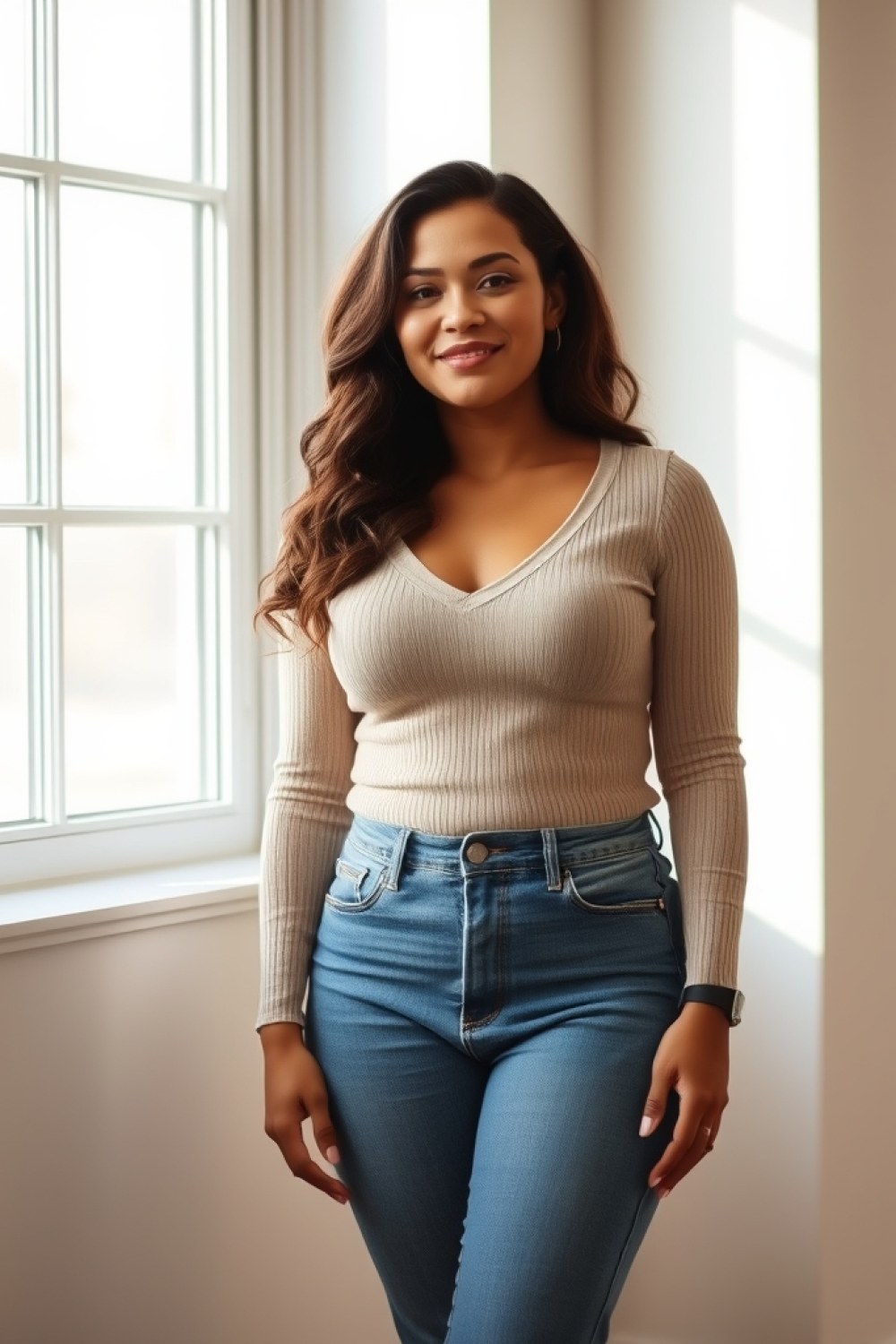
A halter can be genuinely flattering on a big bust, for a reason that has nothing to do with hiding anything. The straps angle inward toward the neck, and the open shoulders draw the eye upward to your face and collarbone. Because the fabric gathers at the neck rather than spreading across the chest, you get a clean, lifted line instead of a wide horizontal one.
The catch is support — and it’s a big catch. A thin, floppy halter with a single string tie lets everything drop, which is the opposite of what you want. What works is a wide band under the bust, a fabric with some body (structured cotton, ponte, or a lined woven), and a neck tie that’s substantial rather than spaghetti-thin. This is a warm-evening outfit, not one for a full day on your feet.
How to Make a Halter Work
- Look for a wide under-bust band or empire seam — that’s your support, and it should sit snug, not dig.
- Choose a fabric with structure; hold it up and see if it holds its shape rather than draping limply.
- Tie the neck strap so the fabric lifts slightly rather than hanging — you want a gentle hold, not a choke.
- Wear it for evenings and occasions, and keep a trusted strapless or adhesive bra underneath if you want extra shape.
10. Off-Shoulder With a Built-In Bra
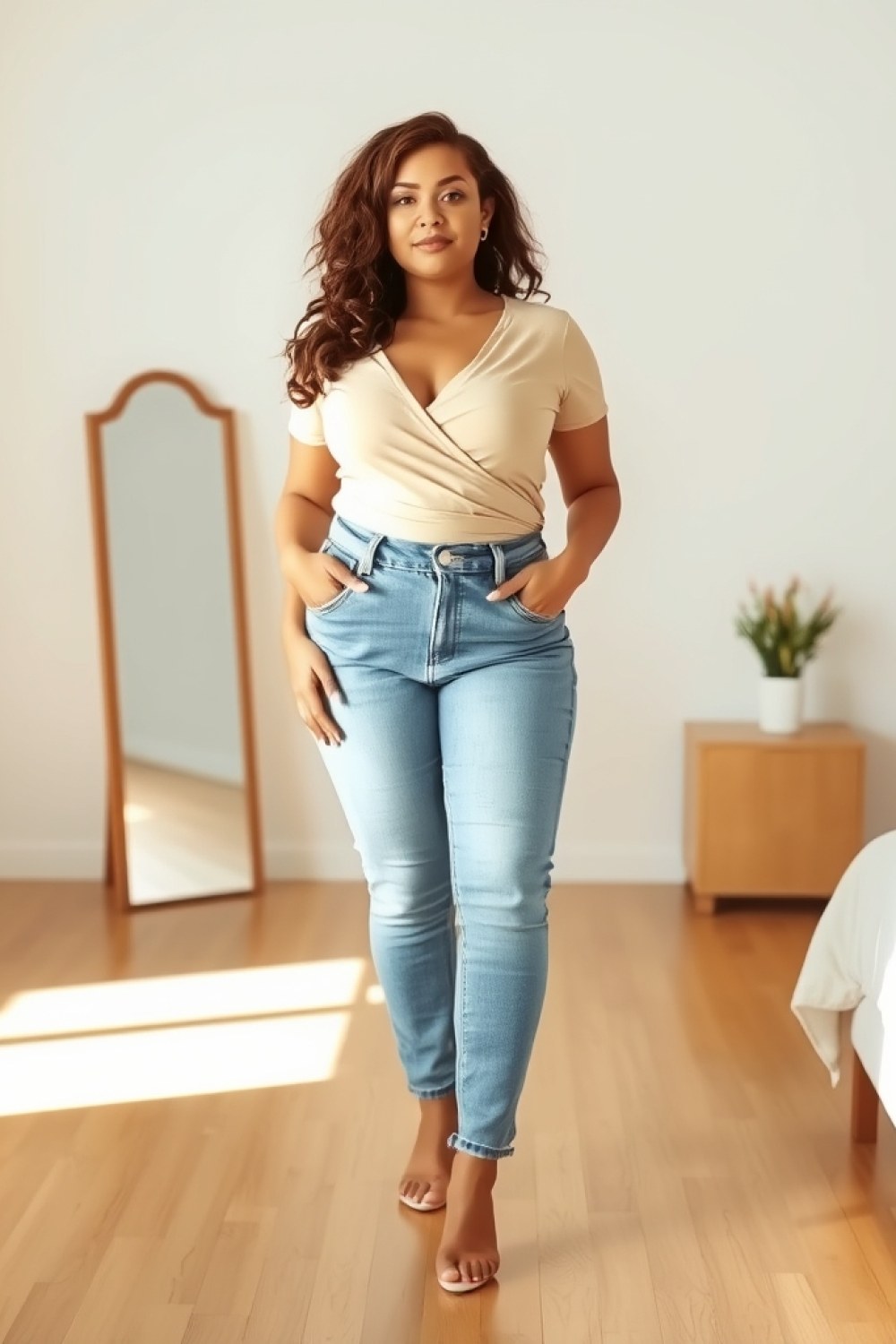
Off-the-shoulder tops are a lovely answer for anyone who wants to feel sexy without putting cleavage on display. The whole focal point moves up to your collarbones and shoulders, which are flattering on virtually everyone, while the chest stays covered and calm. There’s no plunging neckline to manage and nothing to tug back into place all night.
The make-or-break detail is support. Look for a top with an elasticated band across the top edge and, ideally, a built-in shelf bra — that combination keeps the whole thing from sliding down. If there’s no built-in bra, layer a strapless bra you genuinely trust, one with a wide band and silicone edging that has survived a full day before. Always test with your arms raised overhead before you commit.
How to Test and Wear It
- Put it on and raise both arms high — if the top stays put and the band doesn’t ride up, it passes.
- Check the elastic band sits firmly across the upper bust without cutting in or leaving a ridge.
- Pair with a strapless bra that has a wide band and firm cups, or rely on the built-in shelf bra for lighter support.
- Add statement earrings or a necklace to keep attention up near your face where the neckline points.
11. The Smocked Midi Dress
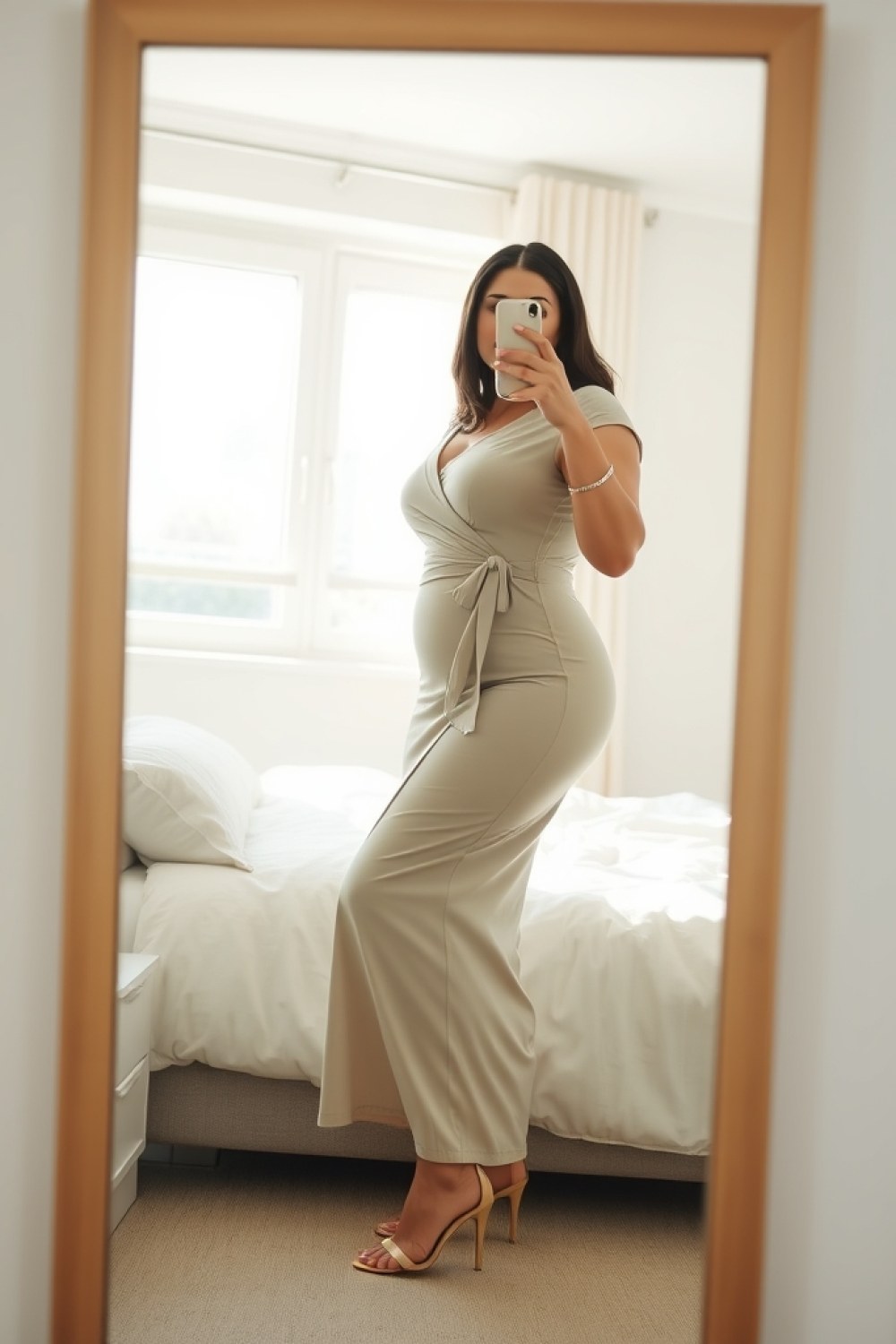
Smocking is a quiet miracle for a large bust. The elasticized stitching stretches generously over your chest and then snaps back in at the waist, so the dress fits where other dresses simply don’t. You get room exactly where you need it and shape right below, without a single button, zip, or gaping seam to worry about. It’s forgiving in the best sense.
The silhouette to look for is a smocked bodice over a full or A-line skirt. The volume in the skirt balances the volume up top, so the overall shape reads deliberate rather than top-heavy. It’s also one of the most comfortable options on this list — no underwire pressure, no tugging, nothing digging in — which genuinely matters when you’re wearing it from morning to night.
How to Pick the Right One
- Choose a dress where the smocking covers your full bust down to the under-bust line, not just a narrow strip at the top.
- Look for a full or A-line skirt that starts at the natural waist — that’s what balances your proportions.
- Check the smocking has real stretch and recovery; if it feels loose and limp, it won’t hold its shape.
- Pair with simple sandals or flats and let the dress do the work — it needs almost no styling.
12. A Structured Midi Skirt Moment
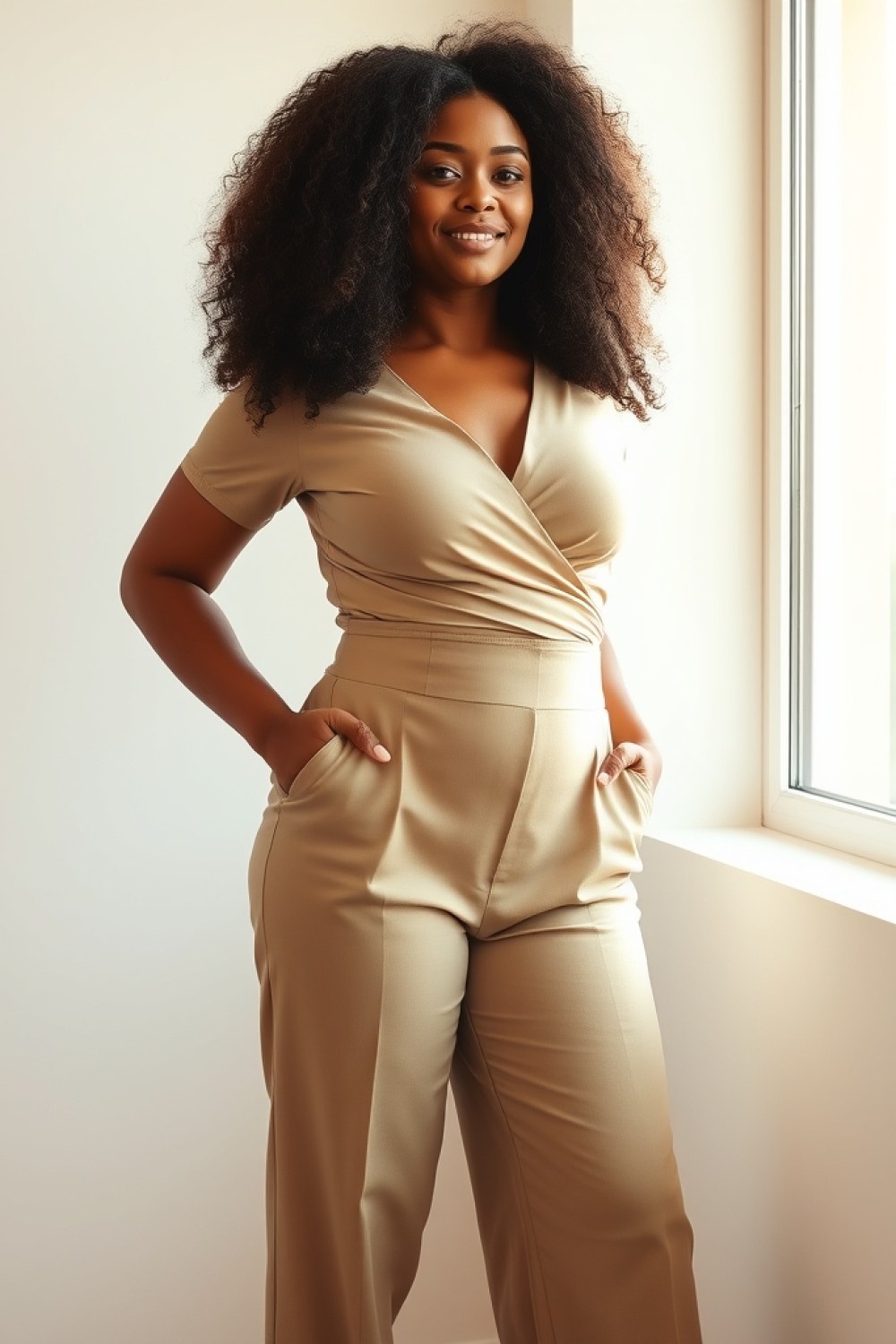
When your top half carries volume, giving your bottom half some presence evens everything out. A pencil or A-line midi with a bit of body — think structured cotton, ponte, or a lined wool blend — adds interest and weight lower down so your silhouette looks balanced rather than concentrated up top. It’s a simple visual equation, and it works every time.
The key is keeping the top fitted or tucked so the waist stays defined. A loose top over a full skirt can swallow your shape entirely, so pair the skirt with a tucked-in knit, a fitted bodice, or a shell you can tuck without bulk. This is the outfit to reach for when you want to look polished and pulled-together but genuinely can’t face another dress.
How to Style the Silhouette
- Pick a pencil or A-line midi in a fabric with structure — hold it up and check it holds a shape rather than clinging.
- Tuck your top in fully, or choose a cropped knit that ends at the waistband, to keep the waist visible.
- Add a belt at the natural waist if the skirt sits high — it reinforces the balance point.
- Finish with a fitted top in a solid color and let the skirt carry the interest.
13. The V-Neck Knit
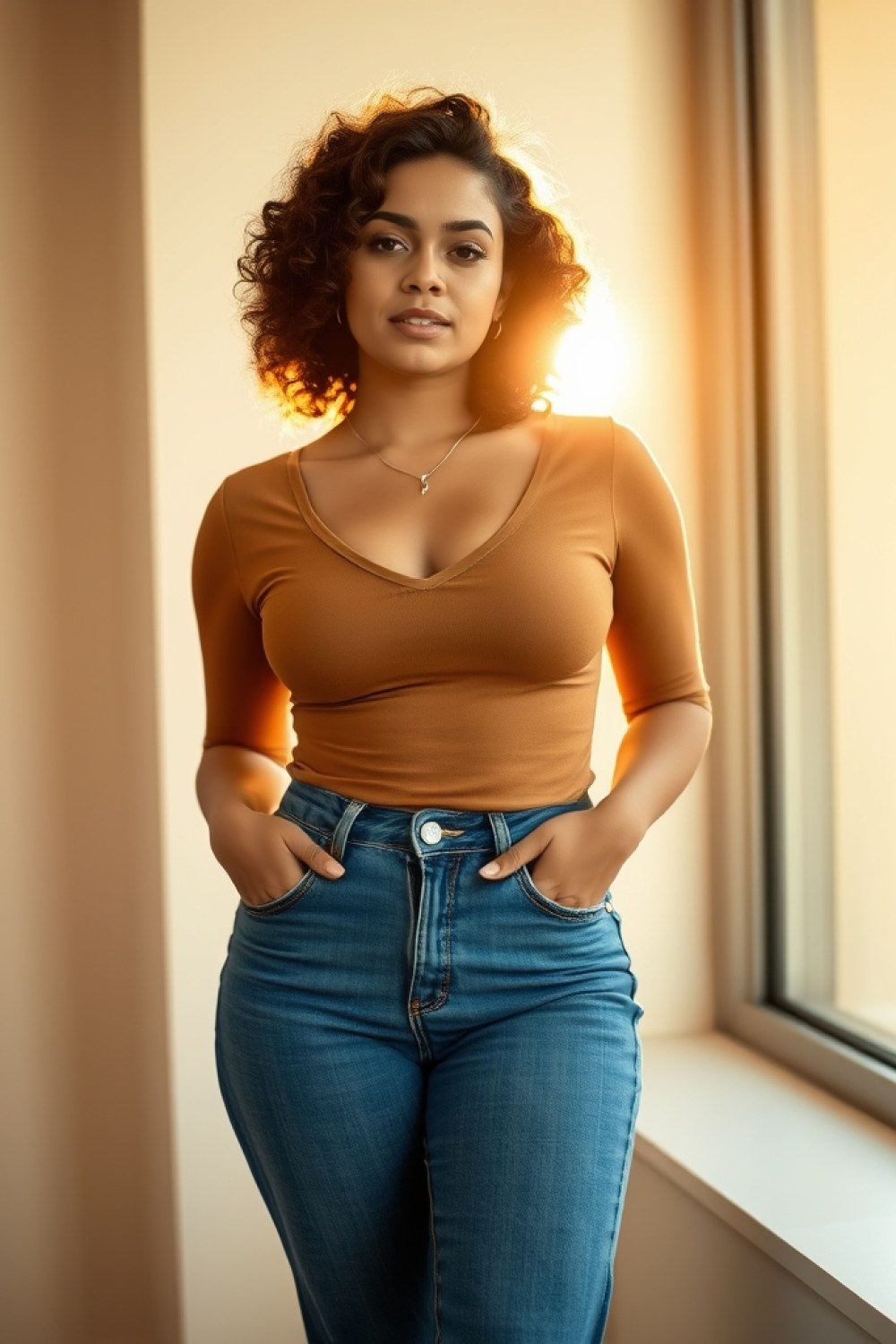
A fine-gauge V-neck knit in a matte yarn is the workhorse of a big-bust wardrobe: the V draws the eye downward and inward, elongating your neck and torso, while a fine knit skims over your curves instead of gripping them. The key word is fine — look for a gauge you can almost see light through, in cotton, merino, or a cotton-modal blend. Chunky cables, ribbed fisherman knits, and anything with shine (satin, metallic thread, high-gloss acrylic) all add visual weight exactly where you don’t want it, making your chest read wider and heavier than it is. A matte finish keeps the focus on your shape rather than the fabric’s texture.
Drape matters as much as gauge. Choose a knit with enough body to fall cleanly past your bust without pulling across the chest or riding up at the hem — if it strains at the buttons or stretches into a horizontal line across your bust, size up and have the waist taken in. Tuck it into high-waisted denim or a midi skirt, add a belt if you like, and you’re dressed in two minutes flat.
How to Choose and Style It
- Check the gauge and finish: hold the knit up to light — if you can see through it easily, it’s fine enough. Pass on anything with sheen or visible cable texture. Matte cotton, merino, or a cotton-modal blend holds its shape best.
- Test the neckline: the V should end somewhere between your collarbone and the top of your bra — deep enough to elongate, not so deep it gapes when you lean forward. A slightly wider V (rather than a narrow, deep one) flatters a fuller bust best.
- Size for your bust, then tailor: buy to fit your chest and shoulders, then have the waist and hem taken in if needed. A knit that fits your waist but pulls across your bust will always look strained.
- Style it tucked: tuck into high-waisted denim, tailored trousers, or a midi skirt to define your waist and finish the line. Add a long pendant or a thin chain to echo the V and draw the eye down.
14. Monochrome Magic
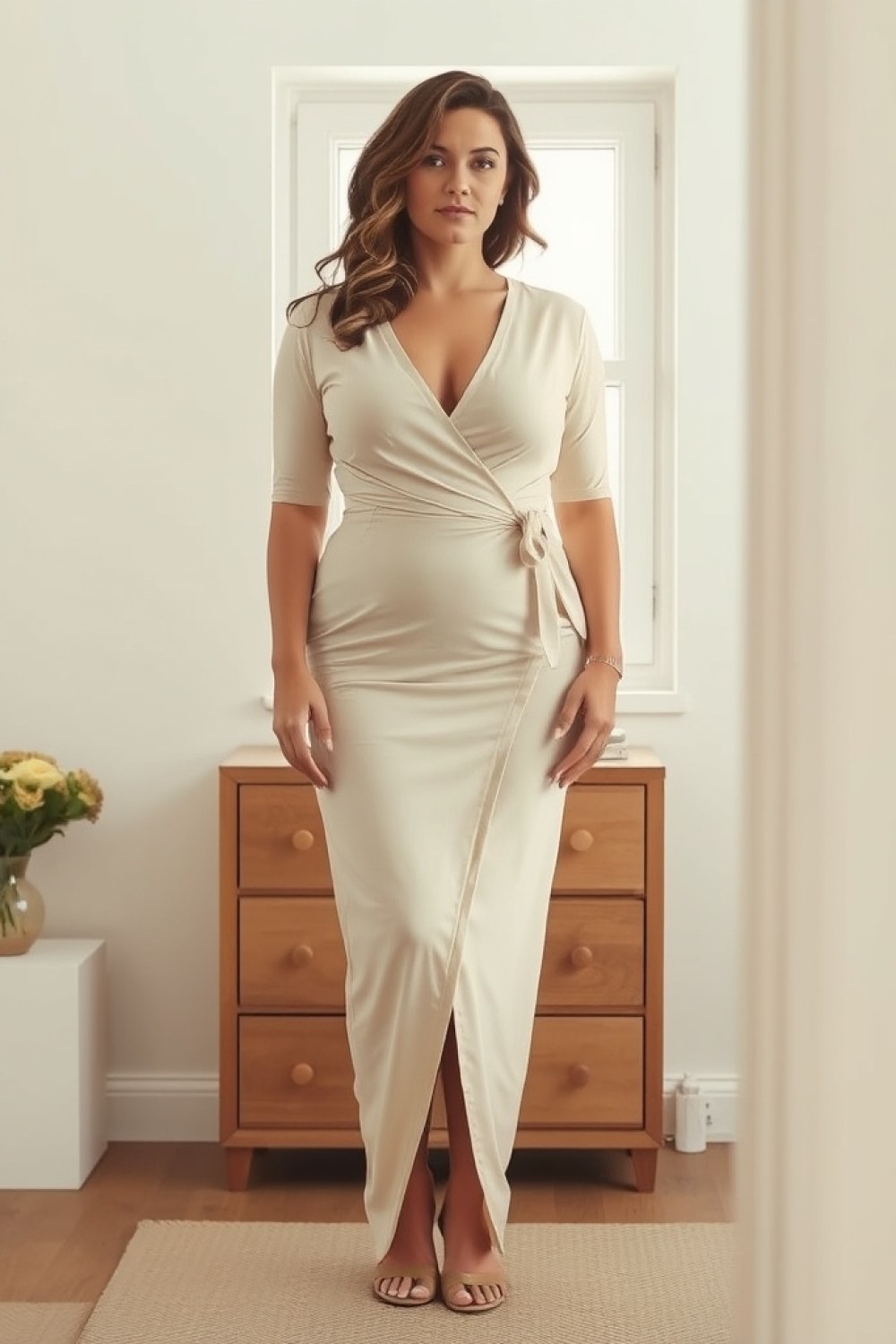
Wearing one color from neck to hem creates an unbroken vertical line, and that single unbroken line makes your whole silhouette look longer and leaner — no shapewear, no cutting, no clever camera angles required. When your top and bottom are the same color (or within one or two shades of it), the eye travels down your body in one sweep instead of stopping at your waist to register a contrast. For a busty frame, that means less visual weight stacked at the chest and a smoother, taller read overall.
It doesn’t have to be black. Navy, chocolate brown, olive, forest green, burgundy, and charcoal all work beautifully — pick the one that makes your skin look healthiest and build from there. The trick is to keep the tones close: a navy knit with navy denim, an olive top with olive trousers, a chocolate blouse with chocolate wide-legs. Vary the texture instead of the color for interest.
How to Build a Monochrome Outfit
- Choose your base color: hold a few shades up to your face in daylight and pick the one that makes your skin look clearest — navy, chocolate, olive, and burgundy flatter most complexions better than flat black.
- Match top and bottom closely: they don’t need to be identical, but keep them within a shade or two. A navy top with black jeans breaks the line; a navy top with navy jeans keeps it.
- Add texture, not color: mix a fine knit with denim, or a silk camisole with tailored wool, so the outfit reads as interesting rather than flat. Same color, different surfaces.
- Finish with one contrast point: a nude or metallic shoe, a tan belt, or a bag in a lighter neutral. One accent keeps it from looking like a uniform while preserving the vertical line.
15. Layer With a Longline Vest
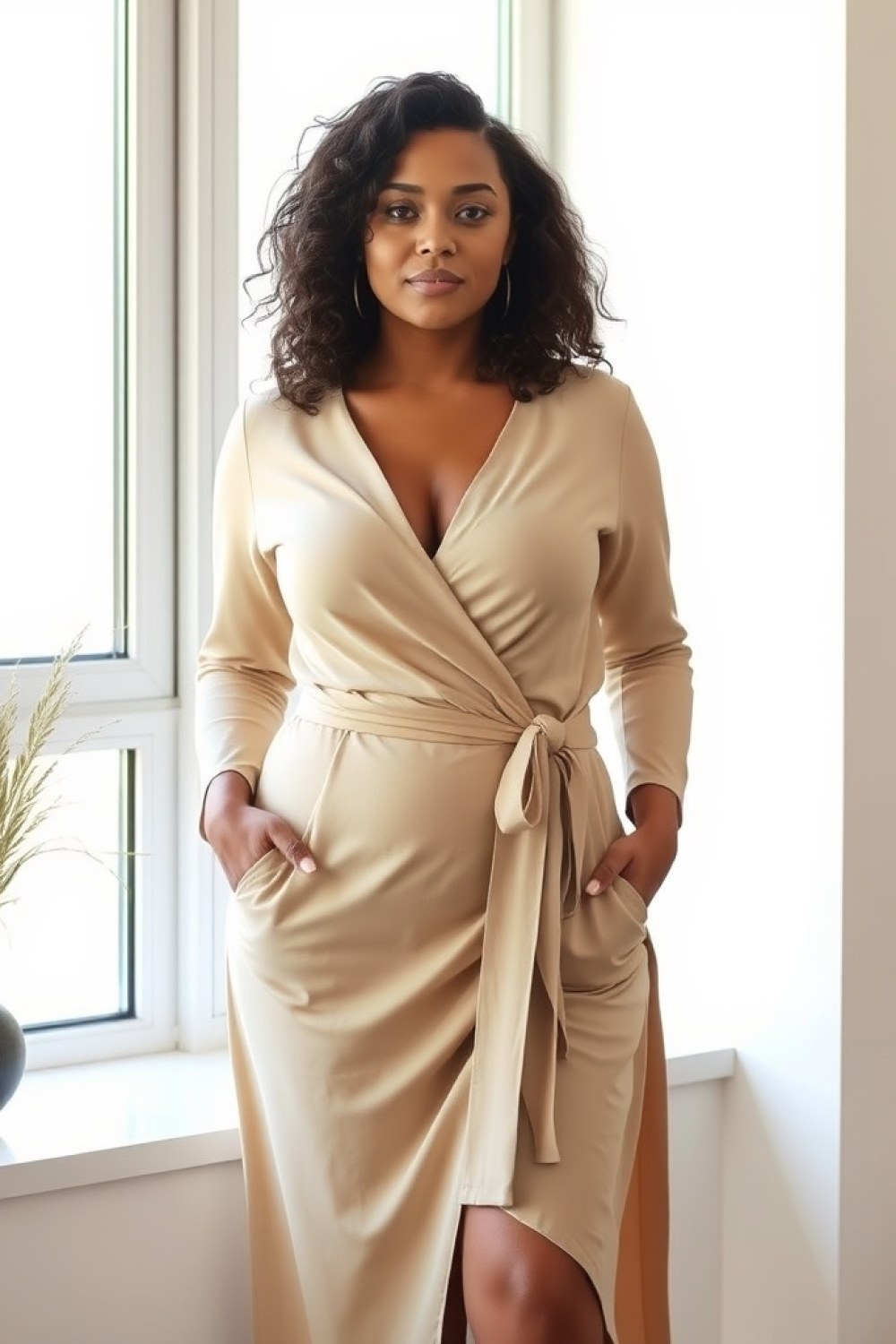
A longline vest or sleeveless blazer worn open over a fitted top gives you all the vertical lines of a tailored jacket — the two open edges create parallel lines down your torso — with far less heat and bulk. That open front visually divides the chest area, breaking up the wide horizontal expanse a full bust can create, while structured shoulders add a clean, angular frame that balances your proportions. It’s the layer to reach for in spring and early fall, or in air-conditioned offices, when a full jacket feels like too much fabric.
Look for a vest that hits at or below your hip bone — a longline cut, not a cropped one — in a structured fabric like ponte, wool blend, or a lined linen. Wear it open over a fine-gauge knit, a fitted tee, or a silk camisole, and let the vest do the tailoring work. Avoid double-breasted styles and anything with a button right at your bustline; single-button or open-front cuts keep the line clean.
How to Wear It
- Pick the right length: choose a vest that falls to your hip or lower. A cropped vest stops right at your bust and adds width; a longline vest extends the vertical line and slims.
- Keep the under-layer fitted: pair it with a fine knit or fitted tee that skims your bust. A loose top under a structured vest creates bulk in the middle.
- Wear it open: leave the vest unbuttoned so the two front edges frame your torso. If you do fasten it, close only a low button below your bust, never one across your chest.
- Choose structure over stretch: ponte, wool blend, and lined linen hold their shape and add shoulder definition. Skip soft, slouchy knits — they collapse and lose the effect.
16. The Right Bra Changes Everything
No outfit in this list will look its best over the wrong bra — and the wrong bra is far more common than most busty women realize. The classic mistake is a band that’s too big and a cup that’s too small: it feels comfortable in the dressing room because the band isn’t tight, but the too-small cup can’t contain your bust, so the underwire sits on breast tissue, the straps dig into your shoulders, and your bust sits lower than it should. A properly fitted bra lifts your bust off your ribcage, which instantly makes your waist look smaller and your torso longer.
Get measured at a shop that actually stocks D through K cups — a specialty lingerie retailer or a department store with a trained fitter. A good fitter will check the band sits level and firm at your back, the center gore lies flat against your sternum, and the underwire encases (not presses into) your breast tissue. Expect a band two sizes smaller and a cup two or three sizes larger than you’ve been wearing.
How to Build Your Bra Wardrobe
- Get properly fitted: visit a shop that stocks D–K cups and ask to be measured. Confirm the band is level and snug, the gore sits flat, and the wire doesn’t sit on breast tissue.
- Keep one nude seamless T-shirt bra: smooth cups that disappear under fine knits and light-colored tops — your everyday workhorse.
- Keep one smoothing bra: a seamless, minimizer, or spacer-cup style for thin fabrics and fitted dresses, so nothing shows through.
- Keep one supportive strapless: for the V-necks and off-shoulder looks above, with a band firm enough to hold without straps. Re-check the fit every six months — bands stretch and cup sizes change.
Quick Questions
What necklines are most flattering for a large bust?
V-necks, scoop necks, and square necks are the most reliable because they create vertical length through the chest instead of cutting straight across it. High crew necks and boat necks tend to make the bust look wider and heavier. If you love a high neck, balance it with a fitted waist and a slimmer leg below.
How do I stop my button-down shirts from gaping at the bust?
Buy a size that closes over your bust and have the waist taken in, or look for brands that cut specifically for D+ cups. A hidden snap sewn between the second and third buttons is a five-minute fix that saves a shirt. If you’re between sizes, size up and half-tuck the front — the extra fabric reads as drape, not bulk.
Can I wear a strapless bra with a large bust?
Yes, but the band does the work, not the cups — so it needs to be genuinely snug (you should be able to fit two fingers under it, no more). Look for longline or multi-way styles with silicone grip along the band, and try it with your arms raised before you wear it out. For a full day or a lot of dancing, a halter with a built-in bra is usually more comfortable.
How do I dress a big bust without looking matronly?
Skip shapeless tunics and high necklines — they’re the two fastest routes to looking covered-up rather than stylish. Instead, define your waist (tuck, belt, or a wrap), show one area of skin like your shoulders or collarbones, and wear fitted pieces in matte fabrics. Structure and a clear waistline read as modern at any age.
What should I avoid wearing with a large chest?
Double-breasted jackets, chunky cable knits, ruffles or gathering across the bust, shiny satin, and empire waists that sit right under your chest. Also avoid a too-small bra — it makes every outfit look heavier than it is. None of these are hard rules; just know that each one adds visual width where you probably don’t want it.
What bras should every busty woman own?
Three will cover almost everything: a nude seamless T-shirt bra for everyday wear under thin fabrics, a smoothing or minimizer bra for fitted dresses and button-downs, and a supportive strapless or multi-way bra for off-shoulder and halter necklines. Replace them when the band starts riding up your back — that’s the sign it’s stretched out.