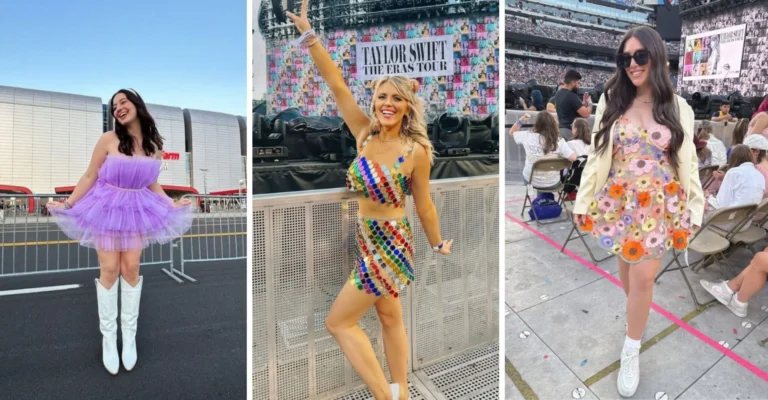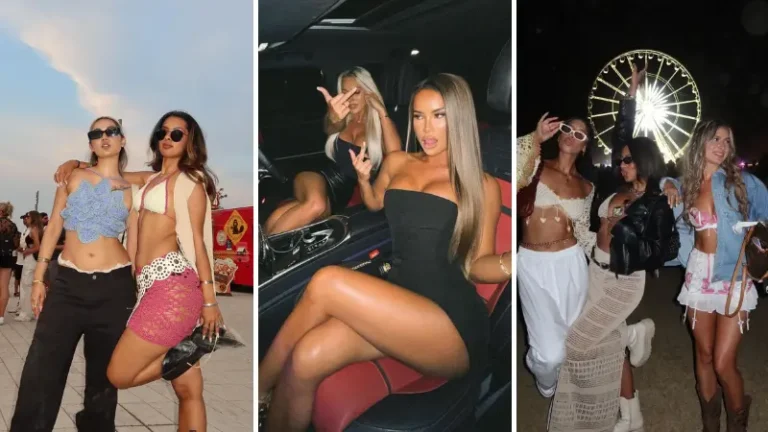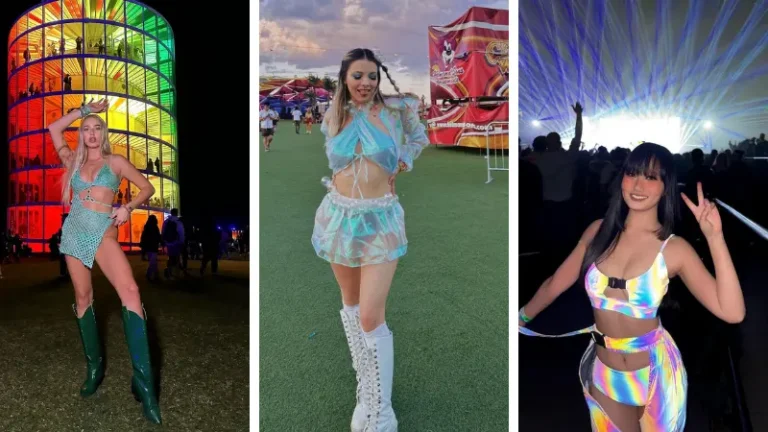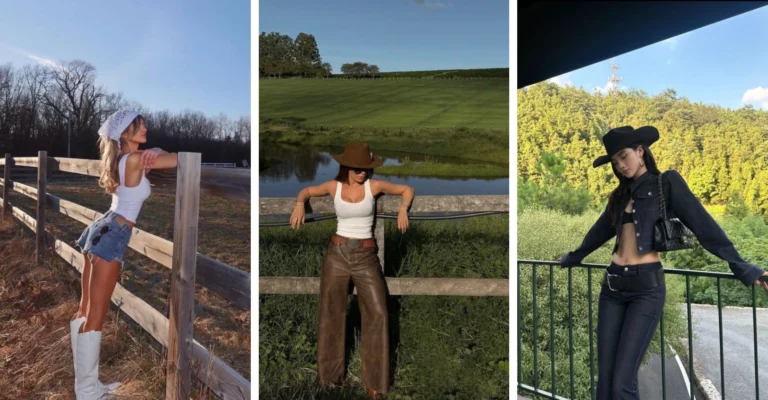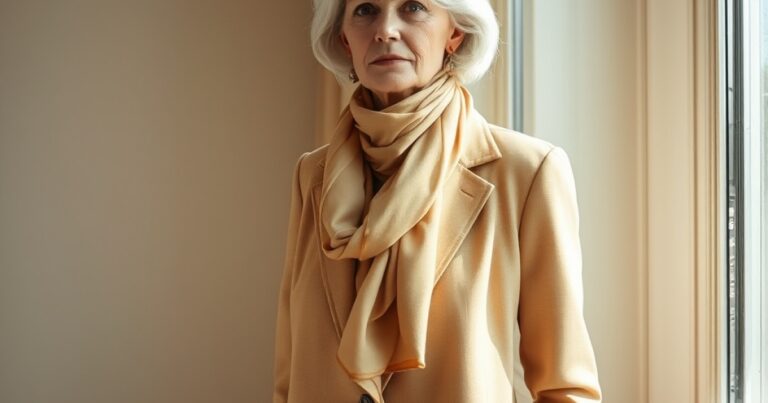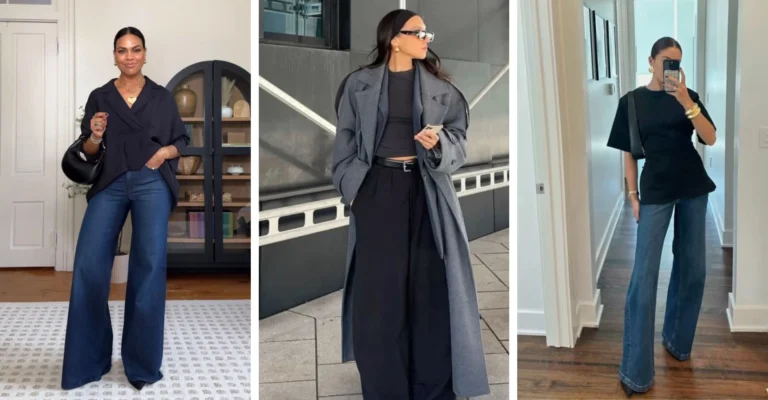
If your hips and thighs are the widest part of your body, the trick isn’t hiding them — it’s directing attention upward and building visual weight on top so your whole frame reads balanced. That means structured shoulders, lighter and brighter colors near your face, neckline details that pull the eye up, and bottoms that skim instead of cling. Get those four things right and getting dressed stops being a negotiation with your mirror.
Below you’ll find 21 complete bottom heavy body shape outfits you can actually copy — not abstract “dress for your shape” rules, but specific combinations of tops, pants, skirts, dresses, shoes, and accessories. Each one names the pieces, the proportions, and the reason it works, so you can rebuild it with what’s already in your closet or shop with a clear plan. You’ll find formulas for work, weekends, date nights, and warm-weather dressing, plus the colors, prints, and details that reliably draw the eye up to your shoulders and face.
You’ll also see how to handle the pieces that trip up pear-shaped dressing: fitted bottoms (yes, you can wear them), wide-leg trousers that don’t swamp you, wrap dresses that actually wrap in the right place, and the shoe and hemline pairings that keep your legs looking long. Treat this as a menu — pick the outfits that fit your life, steal the proportion tricks, and skip anything that doesn’t feel like you.
1. Statement Blouse + Dark Straight-Leg Jeans
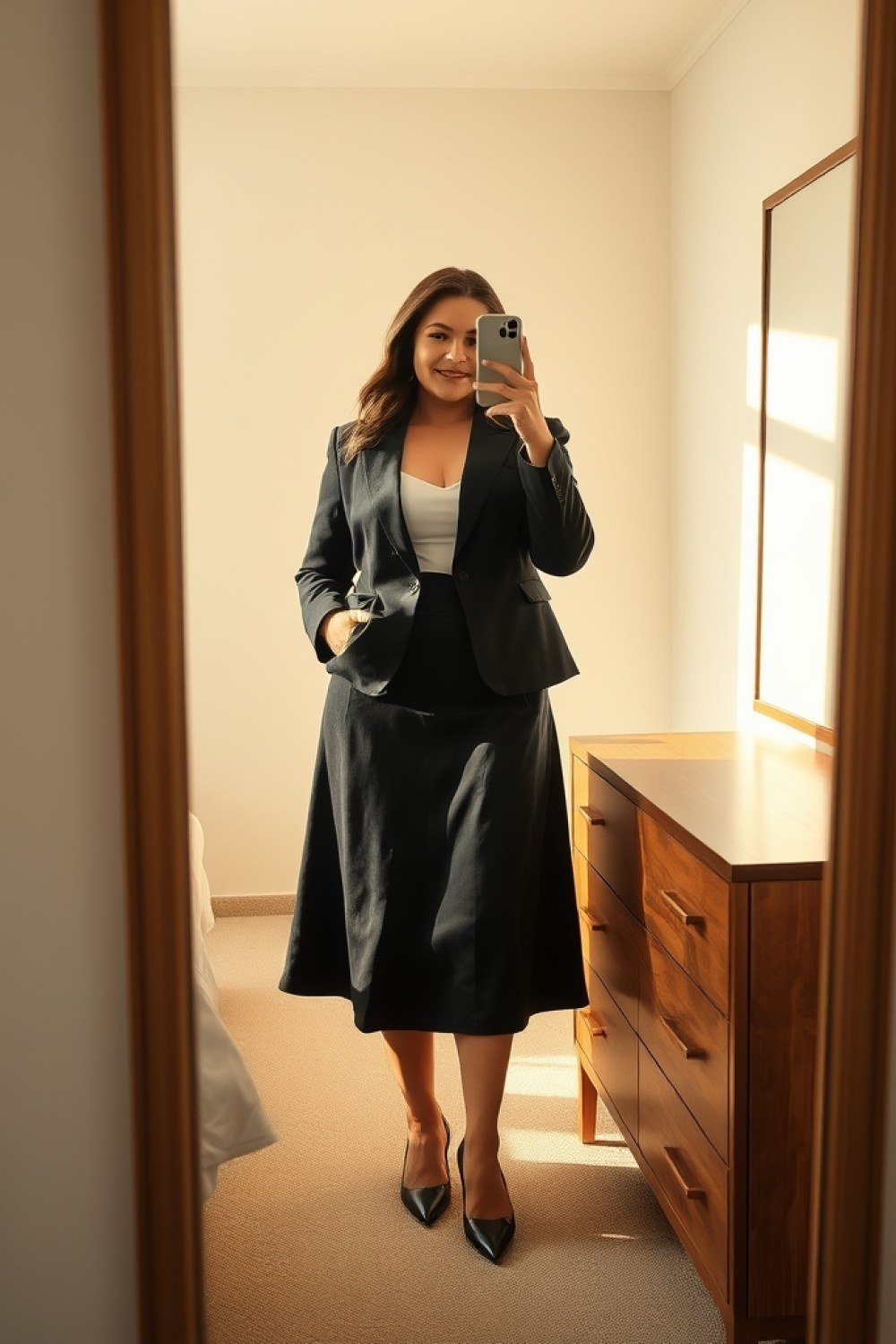
This is the formula to reach for on days you want to look polished without thinking too hard. A ruffled, bow-neck, or puff-sleeve blouse adds deliberate volume above your waist, so your shoulders and bust read closer in width to your hips. The details matter: a bow at the neck, a soft ruffle down the placket, or a gathered sleeve cap all create visual weight where you want it.
Pair it with dark indigo or black straight-leg jeans — not skinny. The darker shade recedes while the straight cut skims your thighs without gripping them. Look for a rise that sits at or just above your natural waist so the blouse tucks in cleanly without bulging.
Your actionable tip: Tuck the blouse fully and add a slim belt in the same color as your jeans. A black belt on black denim creates one unbroken vertical line from waist to hem, lengthening your torso instead of chopping it in half.
2. Boat-Neck Top + Wide-Leg Trousers
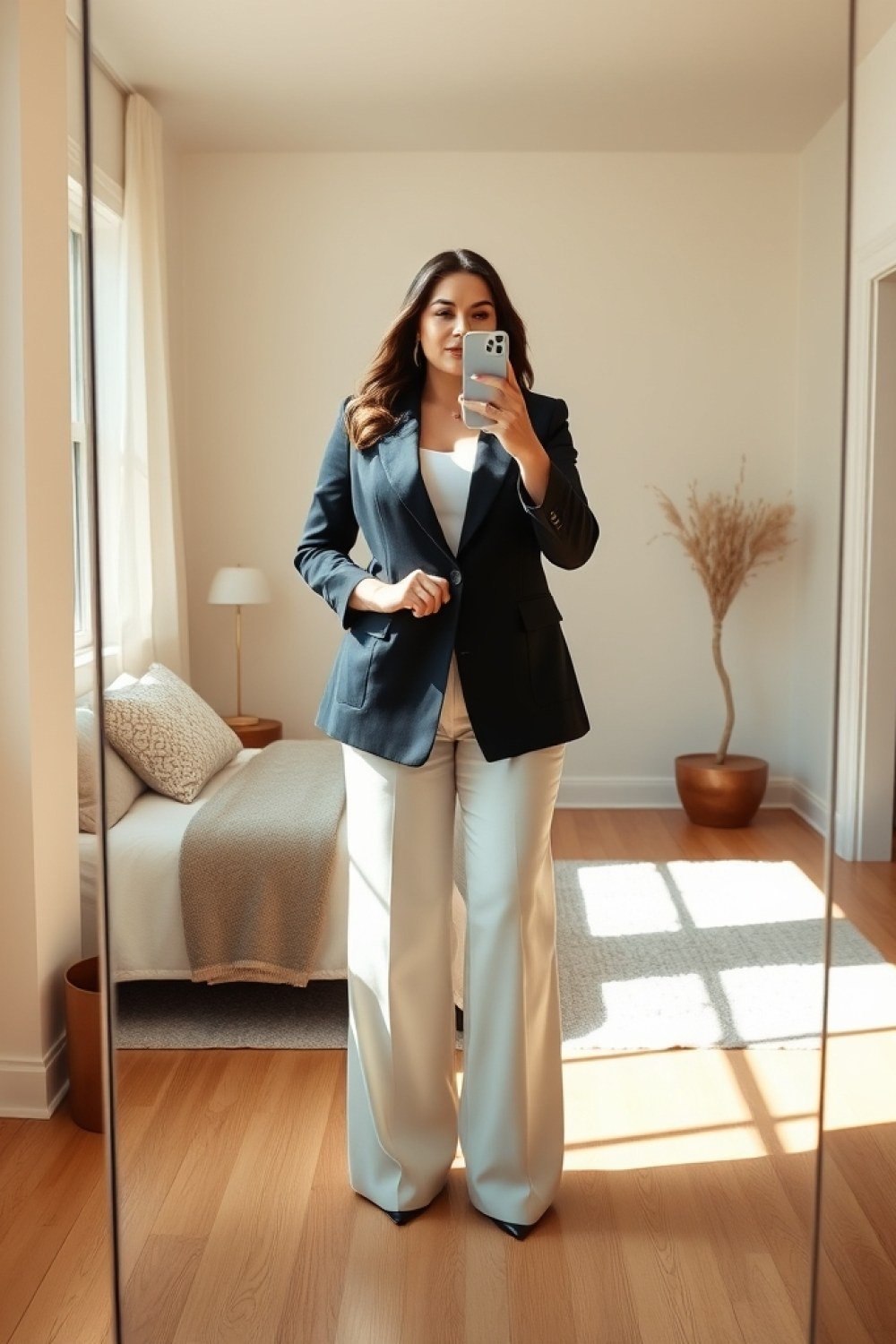
A boat neck runs horizontally across your collarbone and widens the shoulder line — one of the fastest, most reliable tricks for balancing wide hips. Even a simple cotton tee in a boat neck does more for your proportions than a dozen draped tunics.
Choose trousers that fall straight from the hip rather than pleating outward at the waist; pleats that open over the tummy and hip add exactly the bulk you’re trying to avoid. A flat-front wide-leg in a structured fabric like ponte or suiting holds its column shape. Hem them to just graze the top of your shoe so the line stays long.
Your actionable tip: Add a long pendant necklace that falls between your bust and waist. It pulls the eye down the center of your body in a vertical line, which counters the horizontal width at your hips.
3. Wrap Dress With a Fit-and-Flare Skirt
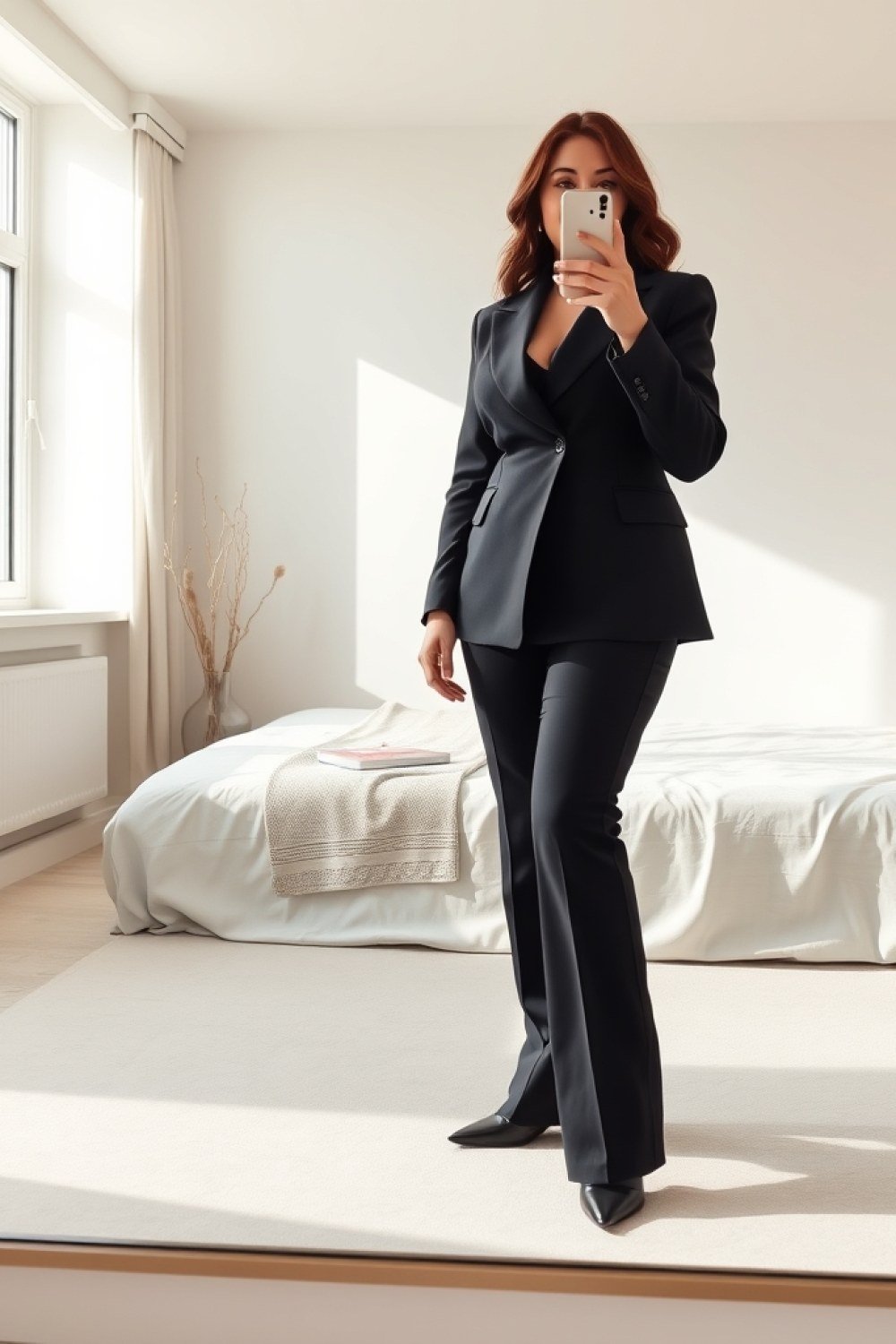
A true wrap dress — the kind with a real tie at the side, not a faux-wrap pullover — cinches at the smallest part of your waist and then releases over your hips and thighs. That cinch-and-skim combination is why wrap dresses have been a pear-shape staple for decades.
Look for a skirt that flares gently from the hip, not a full circle skirt that balloons outward and adds bulk. A soft A-line or subtle fit-and-flare is the sweet spot. A V-neckline and three-quarter sleeves keep the top half interesting, so the eye lingers on your neckline and arms instead of traveling straight to your hips.
Your actionable tip: When you tie the wrap, position the knot slightly above your natural waist and to one side. This creates a diagonal line across your midsection that’s more flattering than a straight horizontal tie.
4. Cropped Jacket + High-Waist Bootcut Jeans
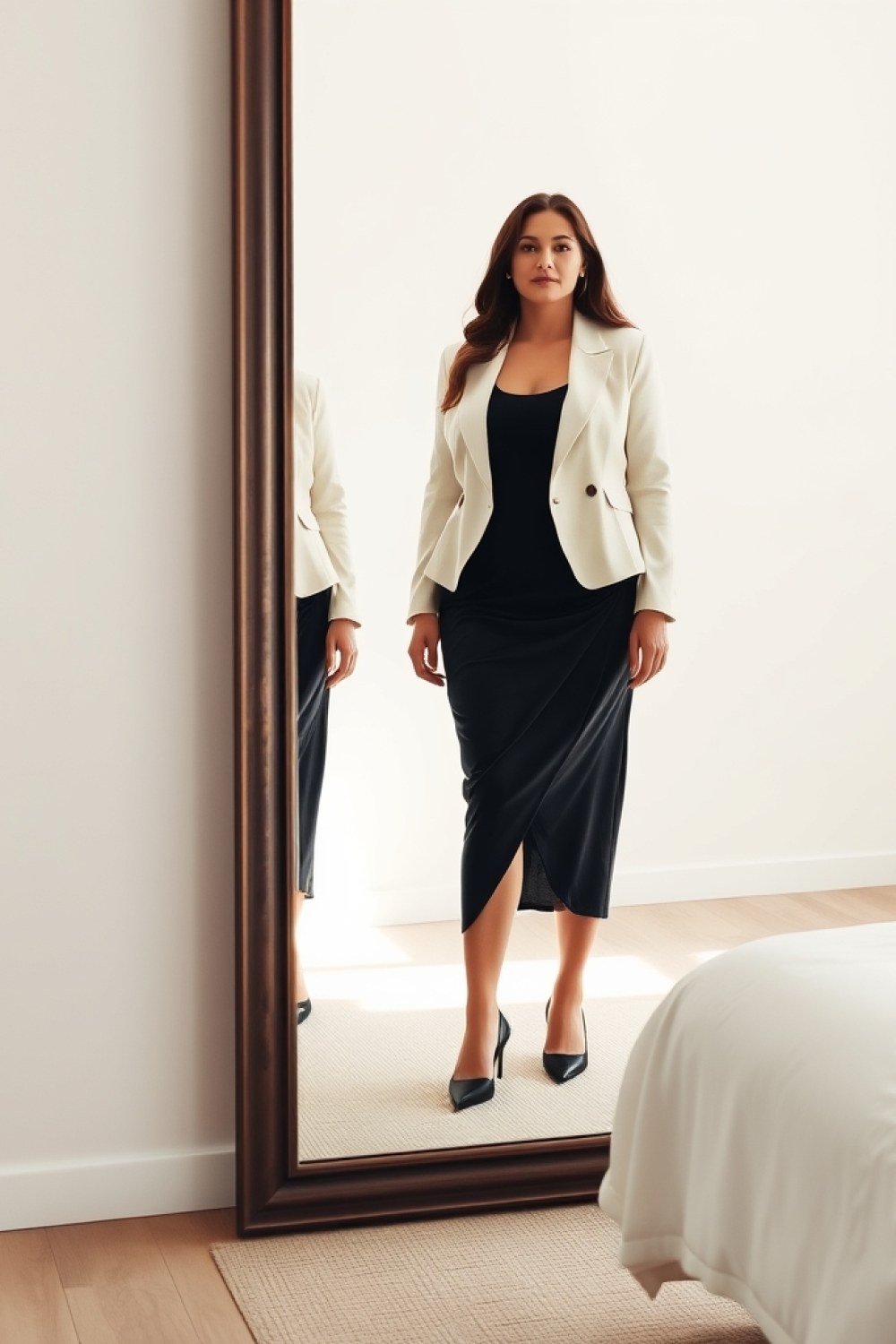
A cropped moto or bomber jacket that hits right at your waist creates a horizontal line above your hips and adds structure and width up top — exactly where you want it. The trick is the length: it must stop at your waist, not your hip. A hip-length jacket covers your waist and draws attention to the widest part of your body.
Bootcut jeans balance wide hips because the flare at the ankle echoes the hip width, creating a column effect that makes your legs look longer and your silhouette more even. Choose a high rise that sits at your natural waist and a dark or medium wash with minimal distressing.
Your actionable tip: Keep the jacket in a lighter or brighter color than your jeans. A cream moto over dark indigo denim draws the eye up immediately — no accessories required.
5. Puff-Sleeve Top + A-Line Midi Skirt
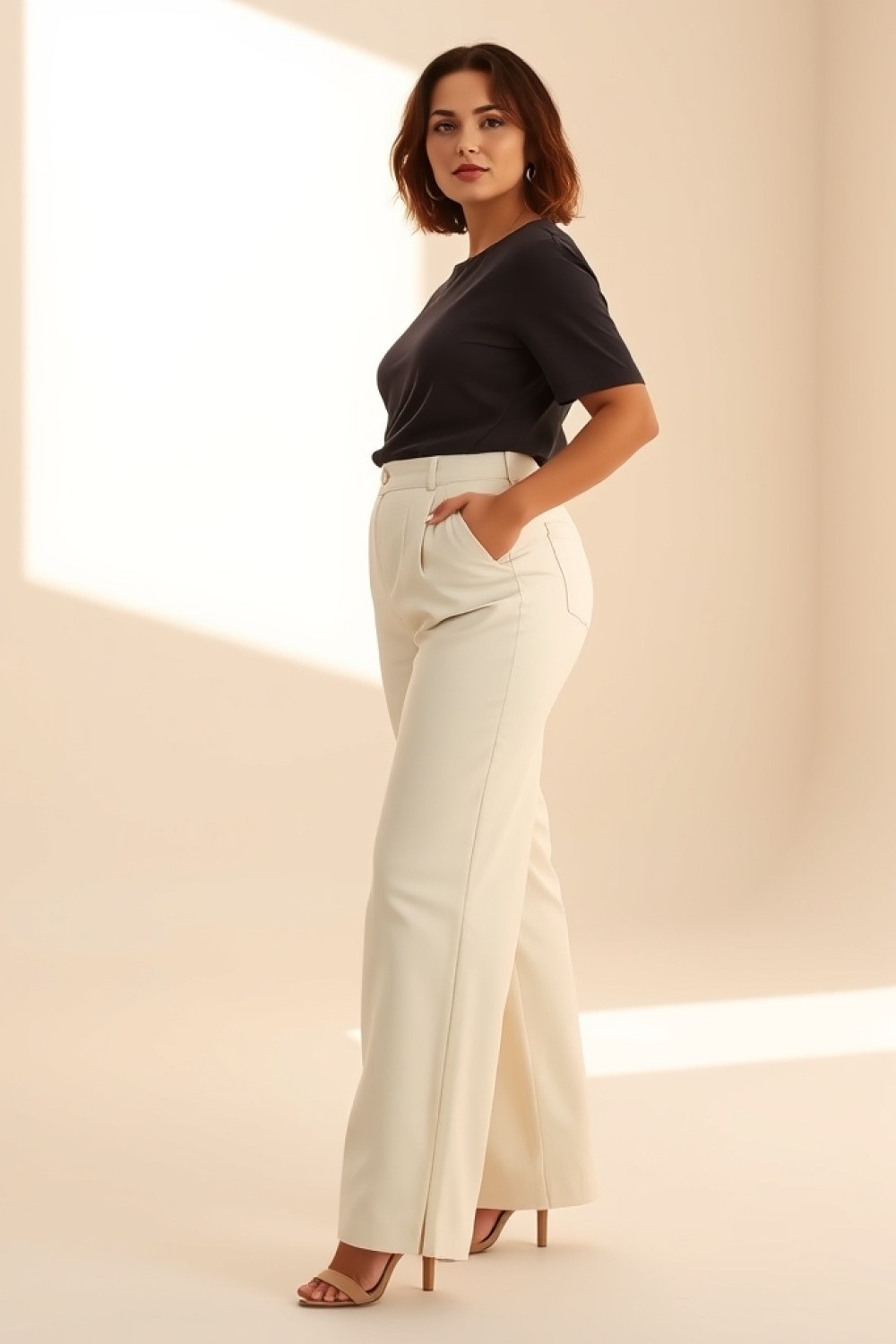
Voluminous sleeves add shoulder width while an A-line skirt flares gently from the waist, hiding the hip-to-thigh transition. Together they create an hourglass illusion — wide at the top, nipped in the middle, wide at the bottom — that reads as balanced rather than bottom-heavy.
Fabric choice is everything here. Choose a skirt in a fluid fabric like crepe, satin, or a soft rayon that drapes and moves with you. Stiff fabrics like taffeta or heavy cotton stand away from the body and add bulk where you don’t want it. The puff sleeve should be structured enough to hold its shape but not so stiff it looks like armor.
Your actionable tip: Wear nude or pointed-toe shoes in your skin tone. The unbroken line from hem to toe extends your leg visually, which makes the whole outfit look longer and leaner.
6. Off-the-Shoulder Knit + Pleated Midi Skirt
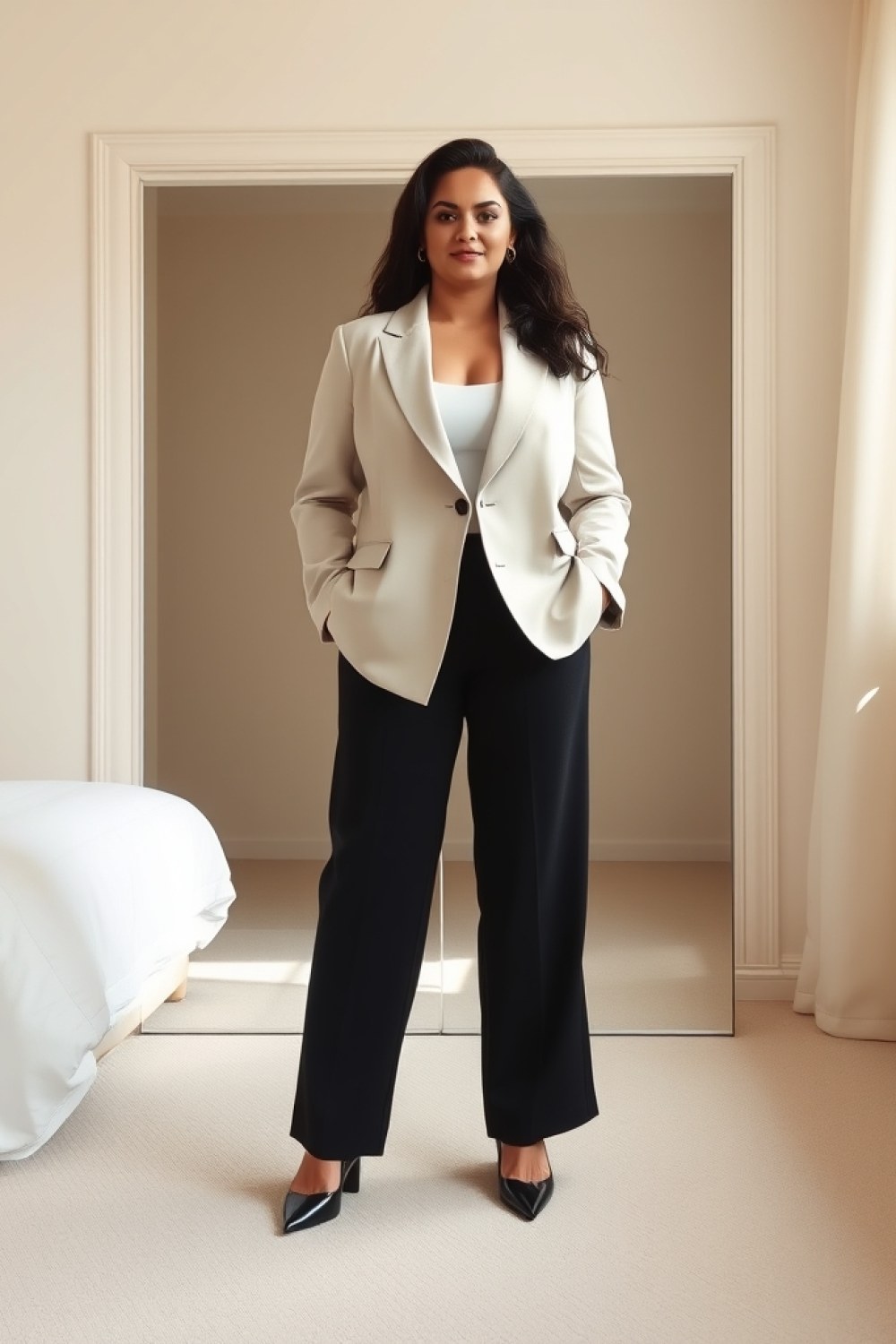
Exposing your shoulders and collarbone draws attention to the upper body — a pear shape’s best asset area. An off-the-shoulder knit in a fine gauge sits close to the body without gripping, and the bare skin at your neckline and shoulders creates a focal point that pulls the eye upward.
Pair it with a knife-pleat midi skirt. The slim vertical pleats elongate the lower half rather than adding bulk; they create long lines that slim the hip and thigh area. Tuck the knit in and choose a skirt with a defined waistband — a wide, structured band keeps the line clean and prevents fabric from bunching at your middle.
Your actionable tip: Look for a pleated skirt with a flat front panel or a smooth waistband rather than elastic gathering. Elastic waists add ripples and volume right at your widest point, undoing the slimming effect of the pleats.
7. Color-Block Top + Neutral Bottom
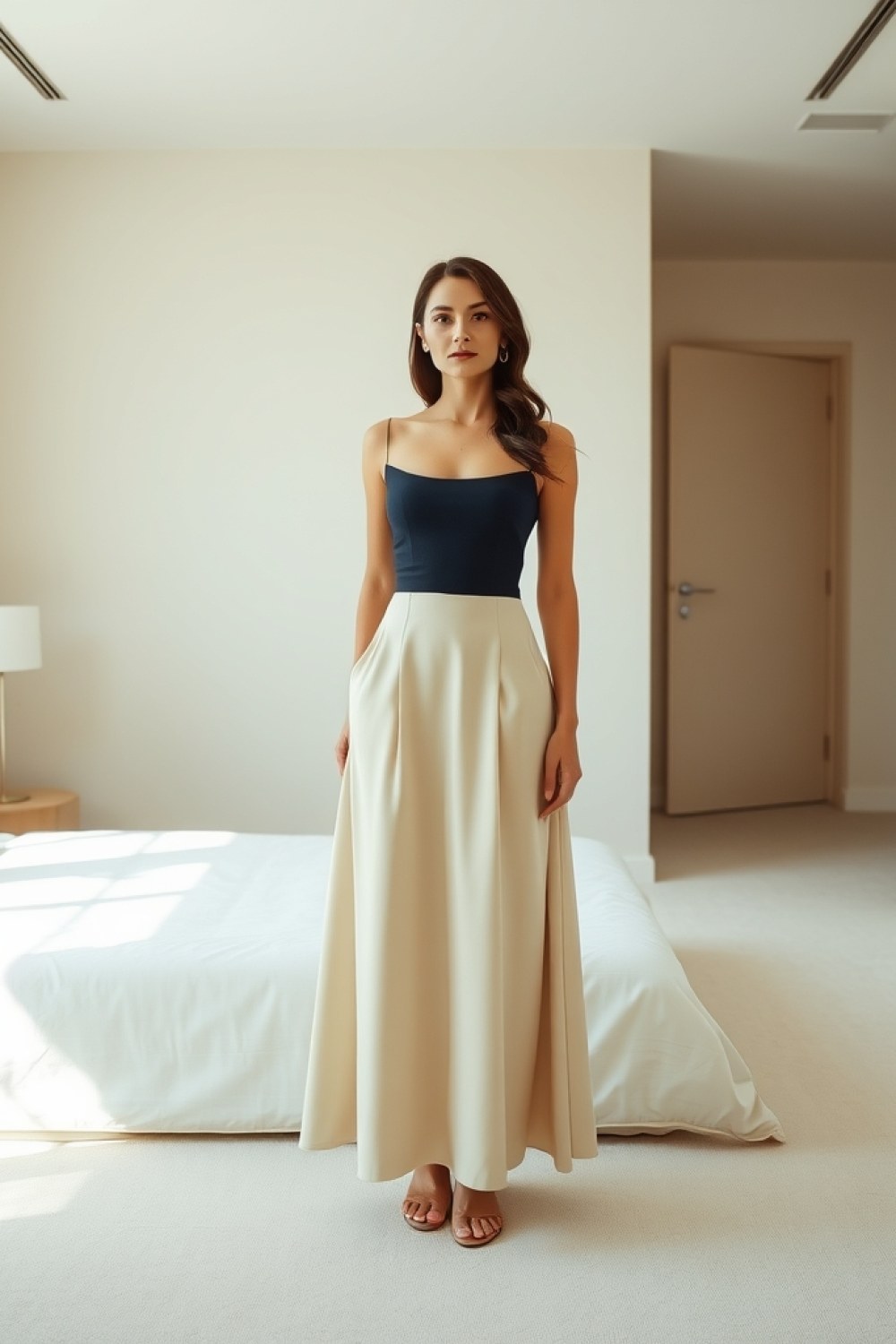
This is the balance rule in its simplest form: put the bold or light color up top and let the bottom half recede. Think a red silk blouse, a cobalt blue knit, a blush pink shell, or a print top with a small-scale floral or polka dot, worn over navy, charcoal, taupe, or deep olive trousers. The contrast does the work — the eye lands on your upper body first, which is exactly where you want it.
It works because color creates weight in the eye. A light or saturated top draws attention upward while a dark, muted bottom visually shrinks your hips and thighs. The trick is keeping the top fitted enough at the shoulder and bust to look deliberate, not boxy — a slightly cropped hem or a good tuck at the waist keeps the proportions clean. If you already own a bright top and a pair of dark pants, you own this outfit.
Make it look styled rather than accidental by adding a third color through your shoes or bag — tan loafers with a navy bottom, or a cream bag against charcoal. It suits anyone who wants a low-effort, high-impact formula for work or weekends. Tip: pick the neutral for your bottom from the existing undertones in your top’s print, so the pairing always looks intentional.
8. Longline Blazer + Tapered Ankle Pants
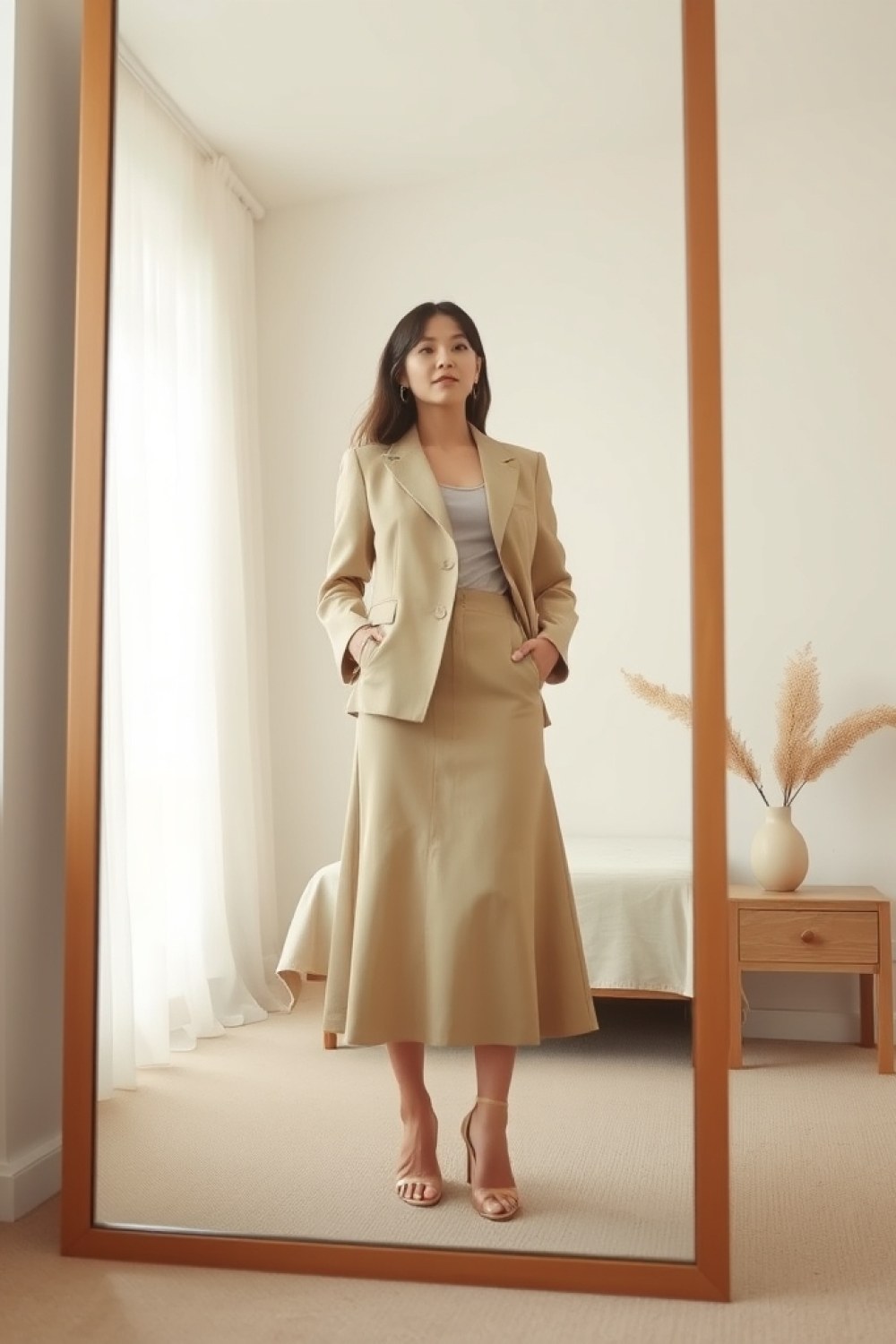
A blazer that ends below your hip is a quiet powerhouse for a bottom heavy shape. It covers the widest part of your hips and thighs without swallowing your shape, and its straight lines add vertical structure that balances a fuller lower half. Pair it with tapered ankle pants — pants that fit close through the hip and thigh but narrow cleanly toward the ankle — for a line that looks sharp instead of heavy.
The key detail is wearing the blazer open over a tucked-in top. That creates two vertical lines running down your body, which visually slims everything between them. A structured shoulder helps too — it builds the upper body so your hips stop being the widest point. Choose a blazer in a mid-weight fabric like ponte, wool blend, or lined crepe so it holds its shape instead of clinging or collapsing. A single-breasted style with a notch lapel is the most flattering; double-breasted can add bulk across the middle.
This works beautifully for office days, dinners, and anything that calls for polish. Tip: make sure the blazer hem lands at the fullest part of your hip, not above it — ending higher draws attention straight to the area you’re trying to soften.
9. Peplum Top + Slim Ankle Trousers
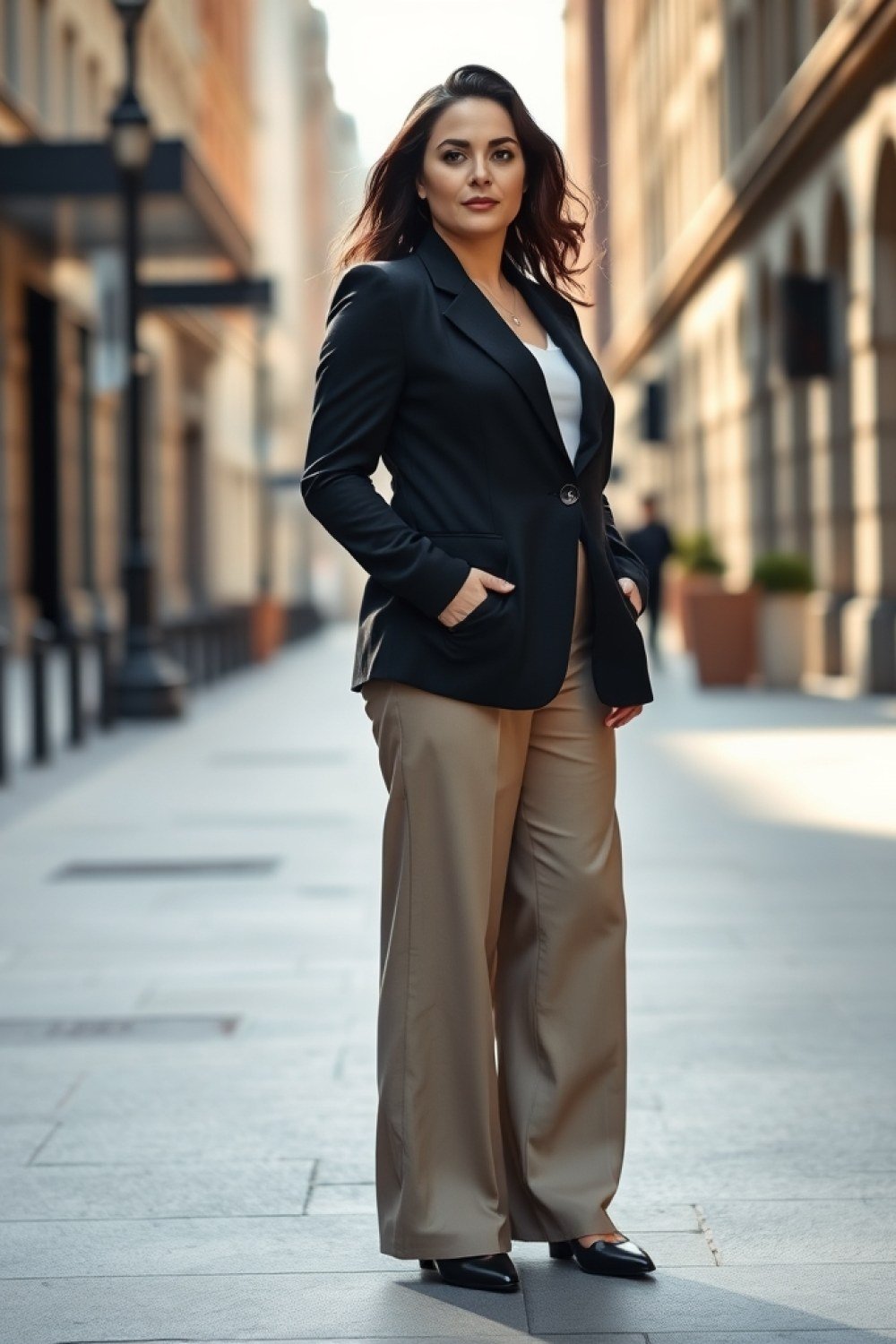
A peplum top is basically built for a bottom heavy shape. The flare starts at your natural waist and kicks out right over the widest point of your hip, camouflaging it, while the fitted bodice above defines your waist and shapes your upper body. Underneath, slim ankle trousers keep your bottom half streamlined so the peplum reads as intentional rather than extra volume.
The one rule that makes or breaks this outfit is peplum length. Keep it short — ending at the high hip, just below the waistband of your trousers, not floating down to mid-thigh. A long peplum adds length and bulk exactly where you don’t want it. Look for a peplum in a fabric with a bit of body, like ponte or structured cotton, so the flare holds its shape. Pair with cigarette trousers or slim ankle pants in a solid dark or neutral tone, and finish with a pointed flat or low heel to extend the leg line.
It suits anyone who wants waist definition and hip coverage in one piece. Tip: tuck nothing in — the peplum hem should sit over the trouser waistband, so choose a top that ends cleanly rather than needing a tuck.
10. Chunky Knit Sweater + Legging-Style Ponte Pants
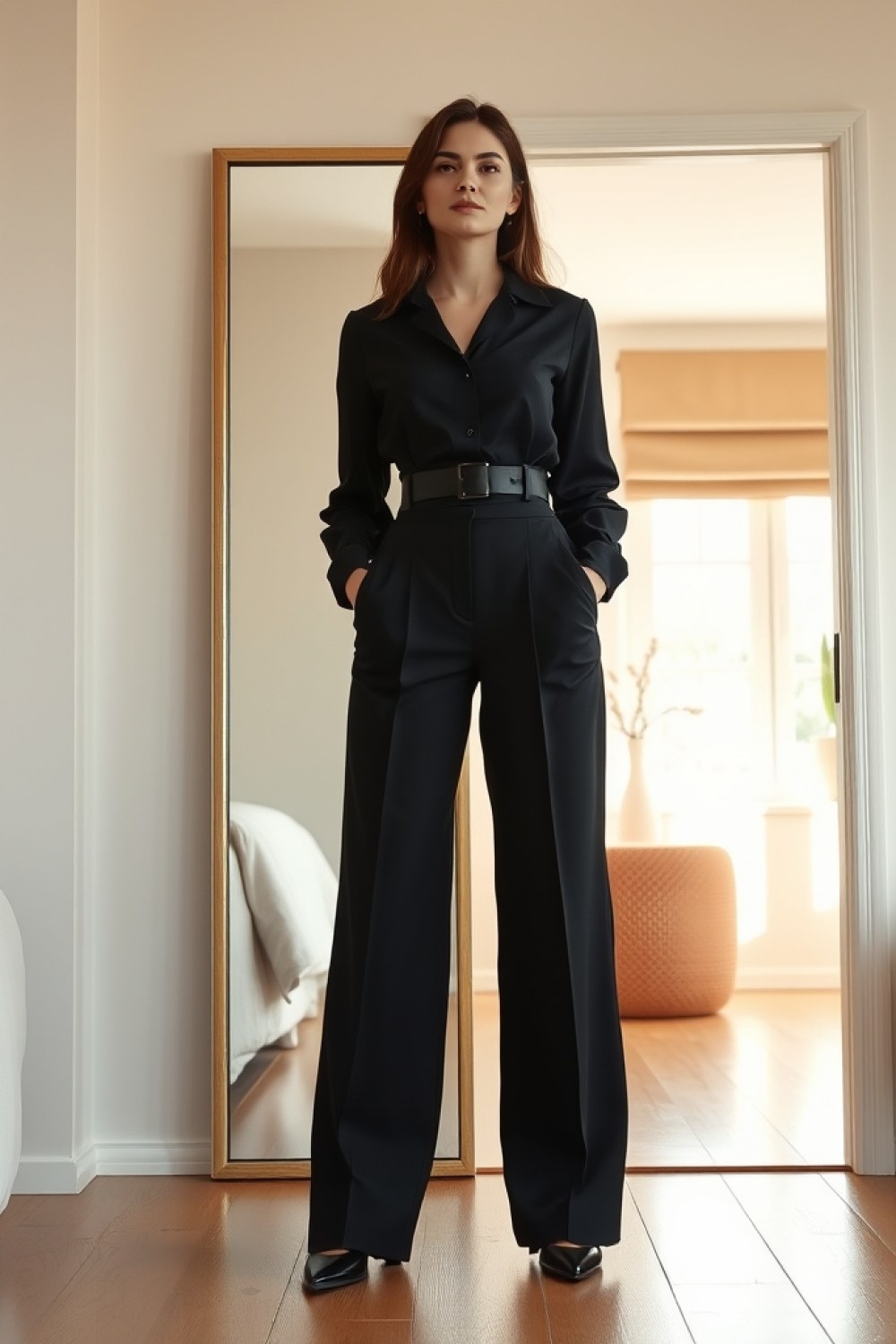
Here’s the logic: add bulk and texture up top, keep structure below. A chunky cable knit, a textured fisherman sweater, or an oversized ribbed pullover visually widens your shoulders and chest, which balances wider hips. Ponte pants — the thick, stretchy knit that behaves more like a trouser than a legging — have enough weight and recovery to smooth your thighs and hips rather than clinging to every curve.
The proportions matter. Do a partial front tuck: push just the front hem of the sweater into your waistband and let the back hang loose. You get a visible waist and a lengthened front line without exposing your hips. Keep the sweater from drowning you by choosing one that ends around your low hip at the back, not mid-thigh. Add a scarf near your face — a soft, chunky one in a color that flatters you — to pull the eye upward and away from your lower half.
This is the ideal cold-weather, weekend-errands outfit for anyone who wants comfort without looking sloppy. Tip: look for ponte pants with a wide, flat waistband and a bit of spandex — they hold their shape all day and won’t bag at the knee.
11. Vertical-Stripe Shirt + Solid Wide-Leg Pants
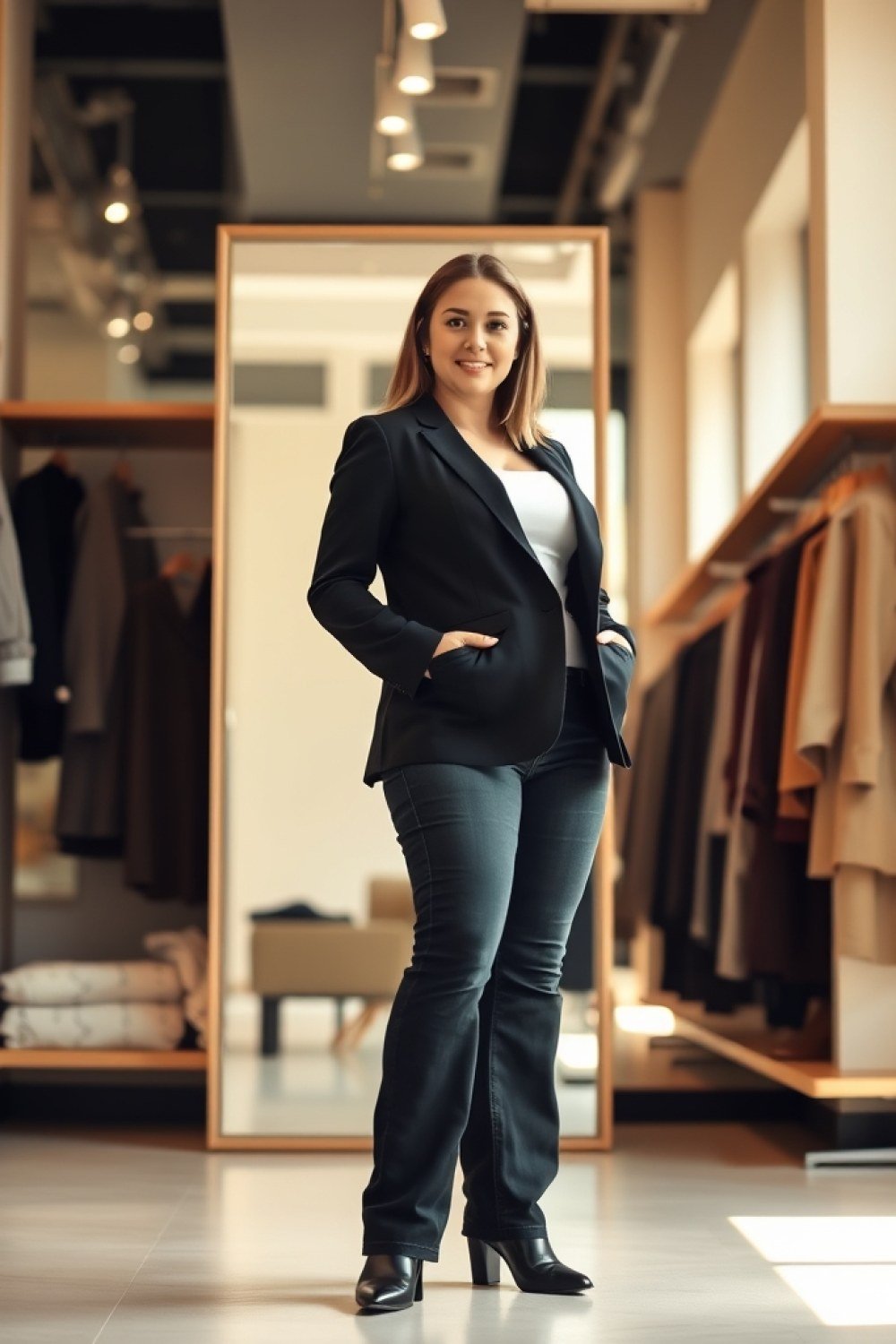
Vertical stripes on your top half create a lengthening effect across your chest and torso, drawing the eye up and down rather than side to side. Meanwhile your hips and thighs stay in a solid, receding color — navy, black, chocolate, or charcoal — so the lower half visually quiets down. It’s a clean, classic formula that works with pieces most women already have.
A few details make it sing. Roll the sleeves to your elbows — bare forearms almost always read as slimmer and add a relaxed, styled feel. Keep the pants high-waisted so the shirt tucks in cleanly without bunching, and choose a stripe scale that’s fine to medium rather than wide and bold, which can overwhelm a smaller upper body. A slim or straight wide-leg trouser works best here; avoid anything with pleats at the waist, which add bulk over the hip.
It suits anyone who wants a crisp, put-together look for work or lunch. Tip: if you’re short-waisted, tuck the shirt fully and add a slim belt in the same tone as your pants to keep one continuous vertical line.
12. Statement Earrings + Simple Column Dress
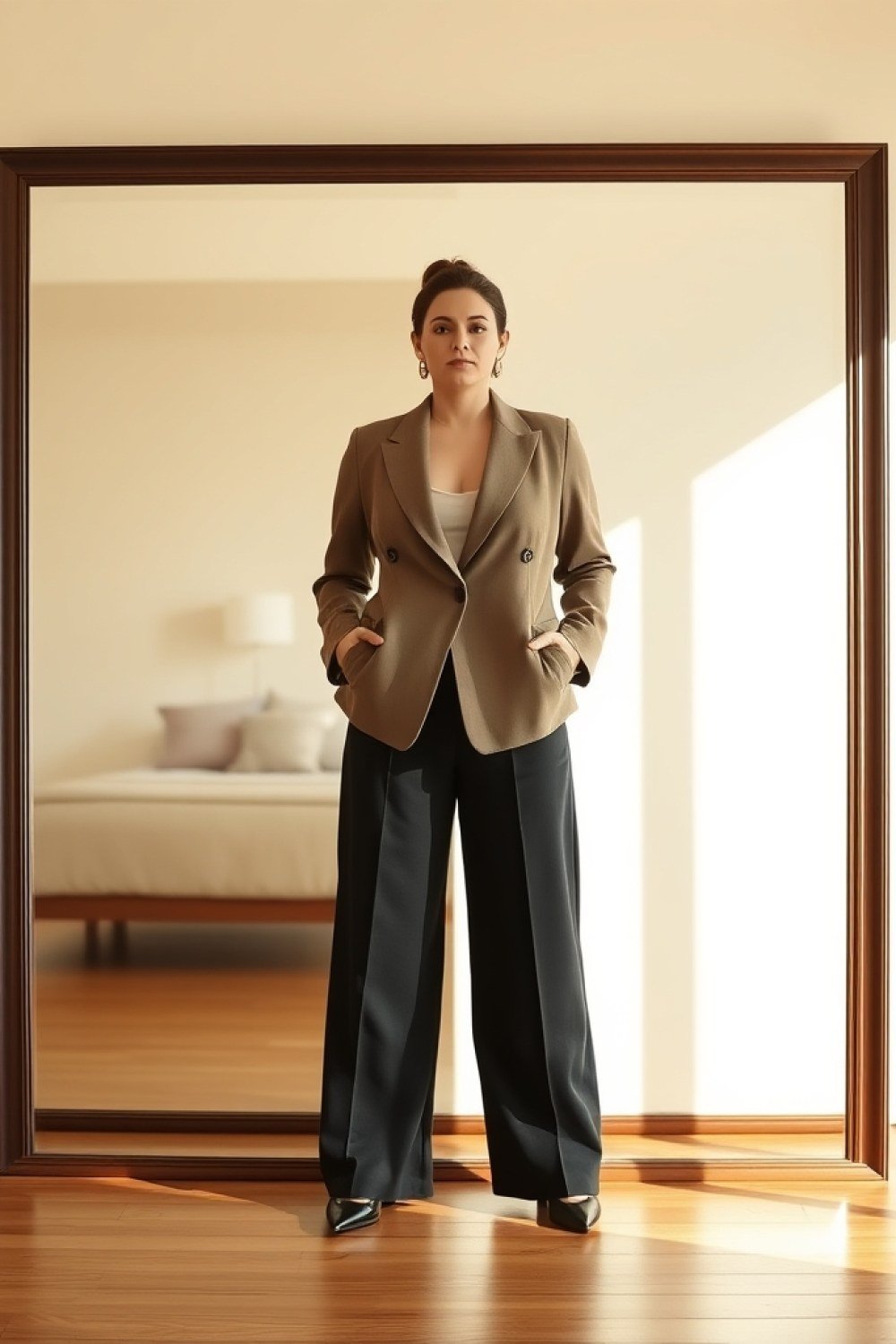
A column dress — straight from shoulder to hem, no waist seam, no flared skirt — is one of the most flattering shapes for a bottom heavy figure. In a fluid fabric like crepe, jersey, or silk blend, it skims over your hips and thighs without adding volume or gripping them, creating one long, elegant line. Then bold earrings or a statement necklace keep all the attention at eye level.
Choose a column with a scoop or V-neck to lengthen your neck and open up your upper body, and cap or elbow sleeves to cover the upper arm without interrupting the line. The fabric is the deciding factor: stiff cottons, taffetas, or anything that stands away from the body at the hip will fight you, while a fluid drape moves with you and stays sleek. Keep the dress hem at or just below the knee, or go full length — both work. Add a heeled sandal or a pointed pump to finish the vertical line.



This is a go-to for weddings, dinners, and any event where you want to feel polished and unselfconscious. Tip: size for your largest measurement — usually your hip — then have the shoulders or bust taken in by a tailor so the rest of the dress stays clean.
13. Button-Down Tied at the Waist + Dark Jeans
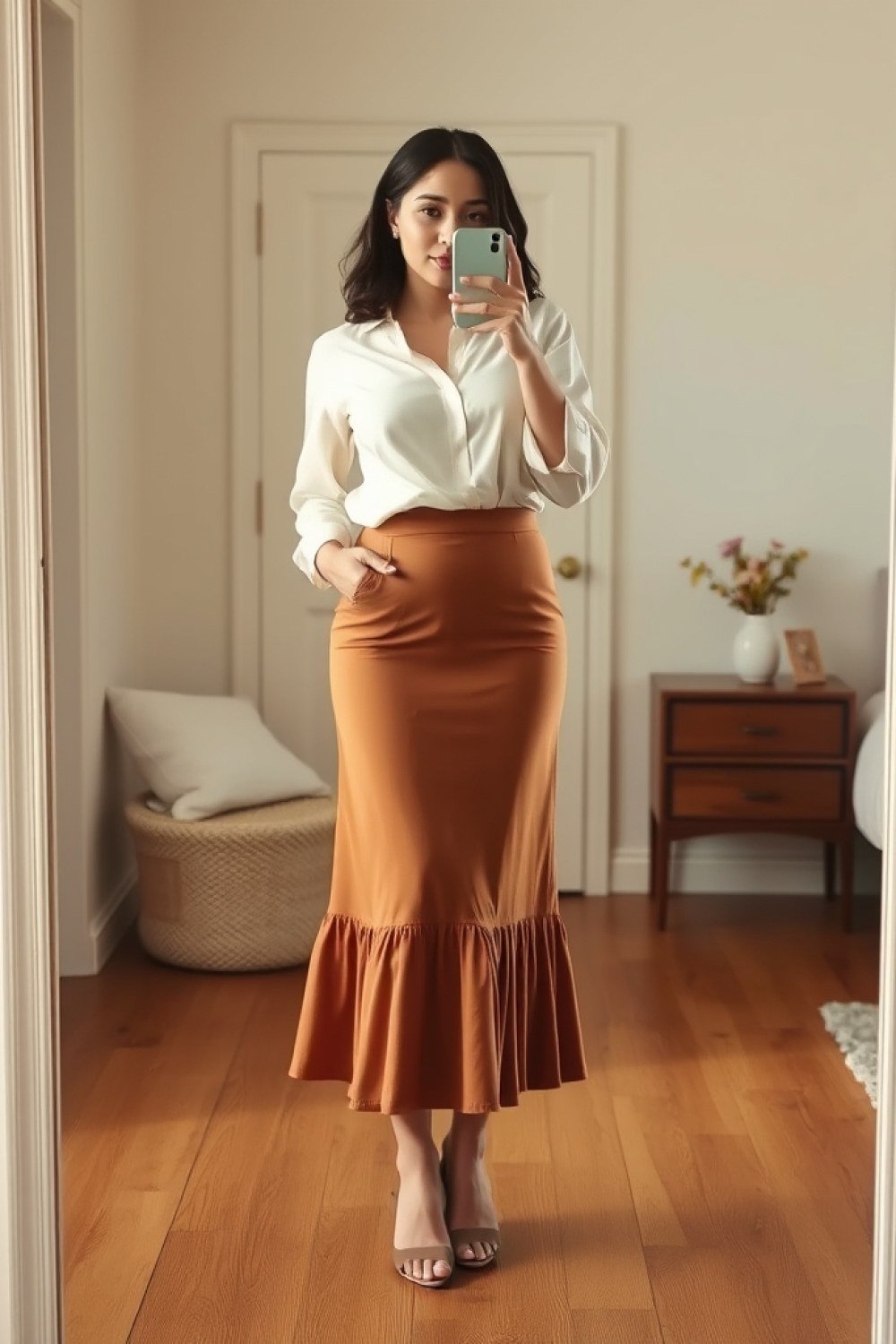
A crisp button-down, knotted at your natural waist, is one of the fastest ways to fake a balanced silhouette. The tie cinches the smallest part of your torso and adds a hit of volume right above your hip — exactly where a bottom heavy shape wants visual weight. Because the shirt flares slightly below the knot, it skims past your hips instead of clinging to them.
The fit of the shirt matters more than anything. Look for a relaxed or slightly oversize button-down in cotton poplin or linen-blend — if it’s too fitted, the knot looks strained and the whole effect turns fussy. Undo the bottom two buttons, gather the front panels, and tie them in a single loose knot or a small bow just above your belly button. A shirt with a breast pocket or a subtle stripe adds a bonus bit of upward interest. Roll the sleeves to your elbows to expose your forearms and lengthen your arms.
Anchor it with dark straight-leg or bootcut jeans in indigo or black — the deep wash recedes and keeps your lower half streamlined. This outfit suits casual Fridays, weekend brunch, and any day you want to look pulled together in under five minutes.
Quick tip: If the knot won’t hold, tie the shirt tails around a thin elastic hairband first, then tuck the ends under — it stays put all day.
14. Tunic Top + Skinny Jeans in a Dark Wash
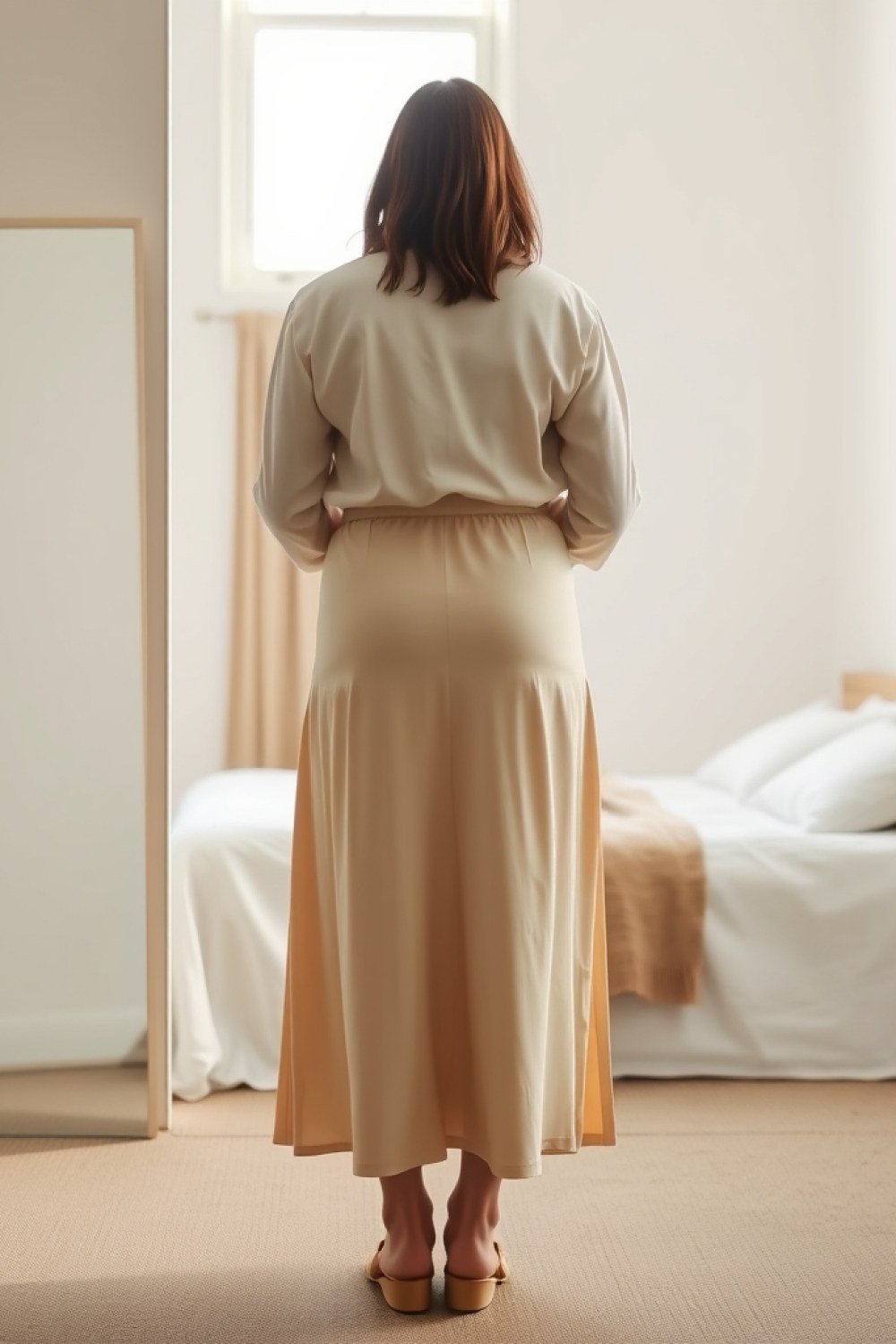
This is the outfit to reach for on days you want your hips and upper thighs simply covered — no tugging, no second-guessing. A tunic that finishes below the hip but above mid-thigh skims the widest part of your lower body and creates one clean line from shoulder to knee. A dark-wash skinny jean, in indigo, charcoal, or black, keeps your legs looking long and lean so the length of the tunic doesn’t chop your proportions.
The trap with tunics is ending up in something shapeless. Avoid that by choosing a piece with deliberate detail: a cowl or V-neckline, a ruffle at the hem, a side slit, a print, or a little shoulder interest. Anything that gives the eye somewhere to land stops the tunic from reading as a plain sack. Fabric with a bit of drape — jersey, crepe, or a lightweight knit — moves with you instead of boxing you in.
Break up the long expanse of fabric with a long pendant necklace that falls to your sternum, and add a structured jacket or denim vest if you want more shoulder definition. This works for school runs, travel days, and any occasion where comfort is non-negotiable but you still want to look intentional.
Quick tip: Check the tunic hem in a full-length mirror from the side — it should hit just below your hip bone, not at the widest part of your thigh, or it will add bulk.
15. Crop Top + High-Waist Wide-Leg Pants
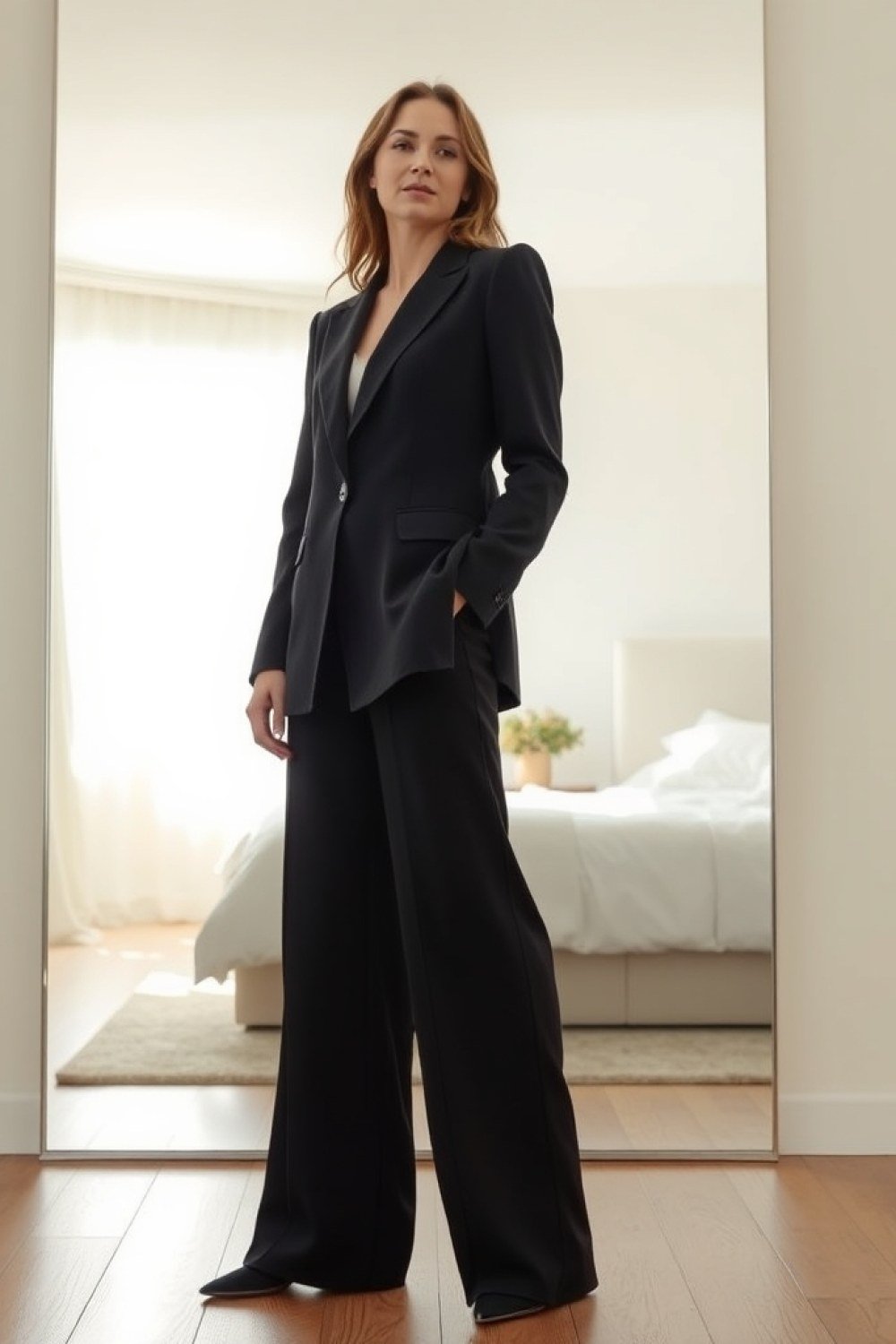
This combination sounds risky for a pear shape and is actually one of the most flattering formulas going — as long as you get the crop length right. The top ends just above your natural waist, the high-waist trouser rises to meet it, and only a sliver of skin shows, if any. Nothing sits on your hips, nothing digs into your sides, and the wide leg balances your hip width with volume below.
Stick to a fitted crop top — a ribbed knit, a bodysuit, or a simple tee that grazes your body — rather than an oversized one. A boxy crop cuts you off at the widest point and adds bulk. Choose trousers with a 11- to 13-inch rise so the waistband sits at your true waist, and look for pleats or a flat front in a fluid fabric like crepe or tailored wool. A wide leg in a mid or dark tone with a vertical crease line lengthens your legs beautifully.
Add a belt in the same tone as the pants to reinforce the waist, and finish with a block heel or pointed flat to extend the line. Ideal for dinner, date nights, and smart-casual workdays.
Quick tip: If you’re not comfortable showing midriff, choose a slightly longer crop that overlaps the waistband by an inch — the proportions still work.
16. Layered Cardigan + Slim Trousers
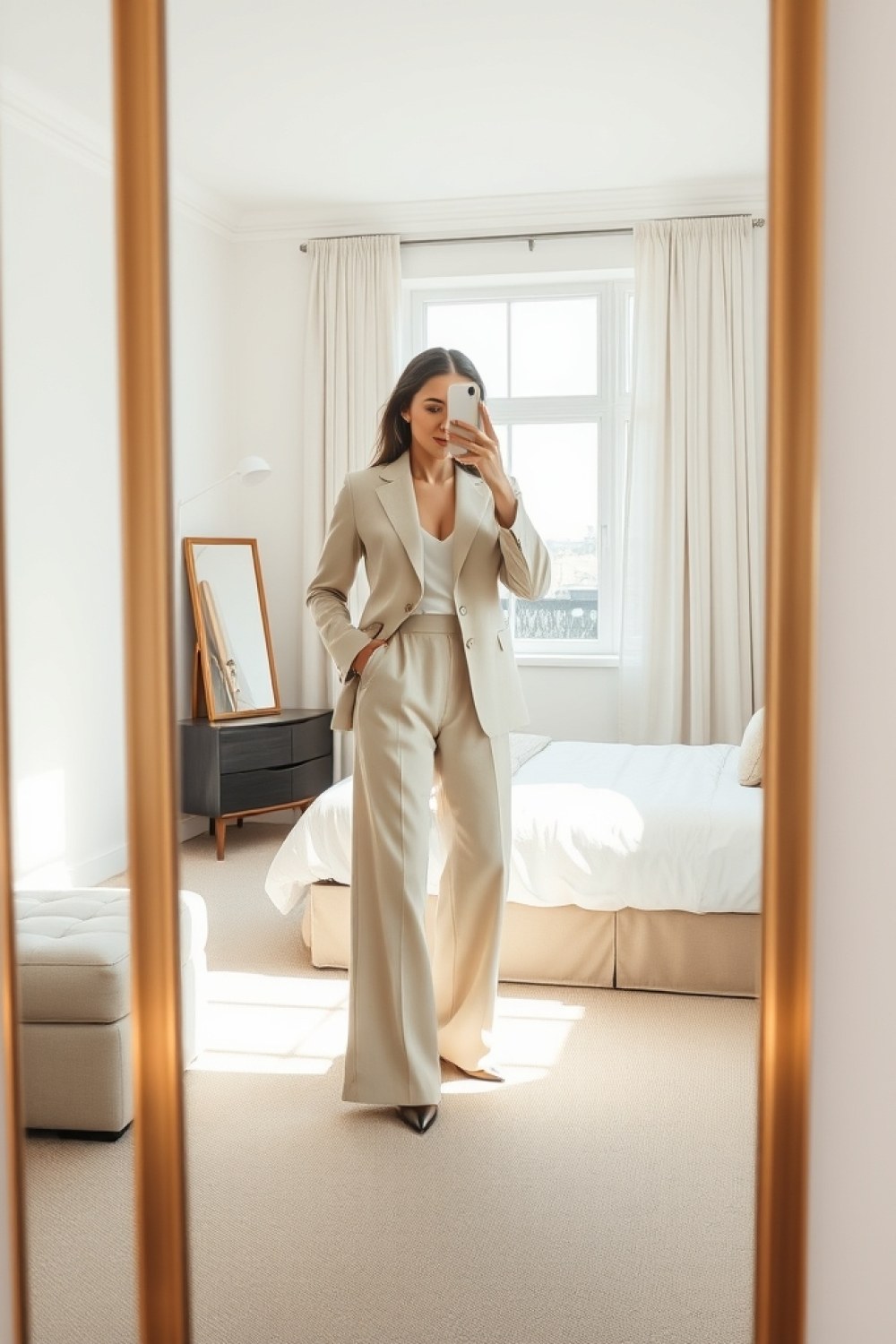
A long, open cardigan is the quiet workhorse of a balanced pear-shape wardrobe. Worn unbuttoned over a fitted top and slim trousers, it creates two crisp vertical lines running down your body — those lines slim and lengthen everything between them, including your hips.
Length is the detail that makes or breaks this outfit. Choose a cardigan that finishes at mid-thigh or lower, ideally knee-length, so it glides past the widest part of your hips rather than stopping right at it and drawing a horizontal line across your problem area. A fine-gauge knit, a ribbed duster, or a lightweight wool blend drapes cleanly without adding bulk. Keep the top underneath fitted and tucked into your trousers, and match the cardigan tone to your top or trousers so the vertical column stays unbroken. Slim or straight-leg trousers — not skinnies, not flares — keep the lower half neat.
This is your go-to for office days, appointments, and cool-weather errands where you want to feel covered and polished.
Quick tip: Push the cardigan sleeves up to three-quarter length — bare forearms make the whole silhouette look lighter and more balanced.
17. Fit-and-Flare Dress With Cap Sleeves
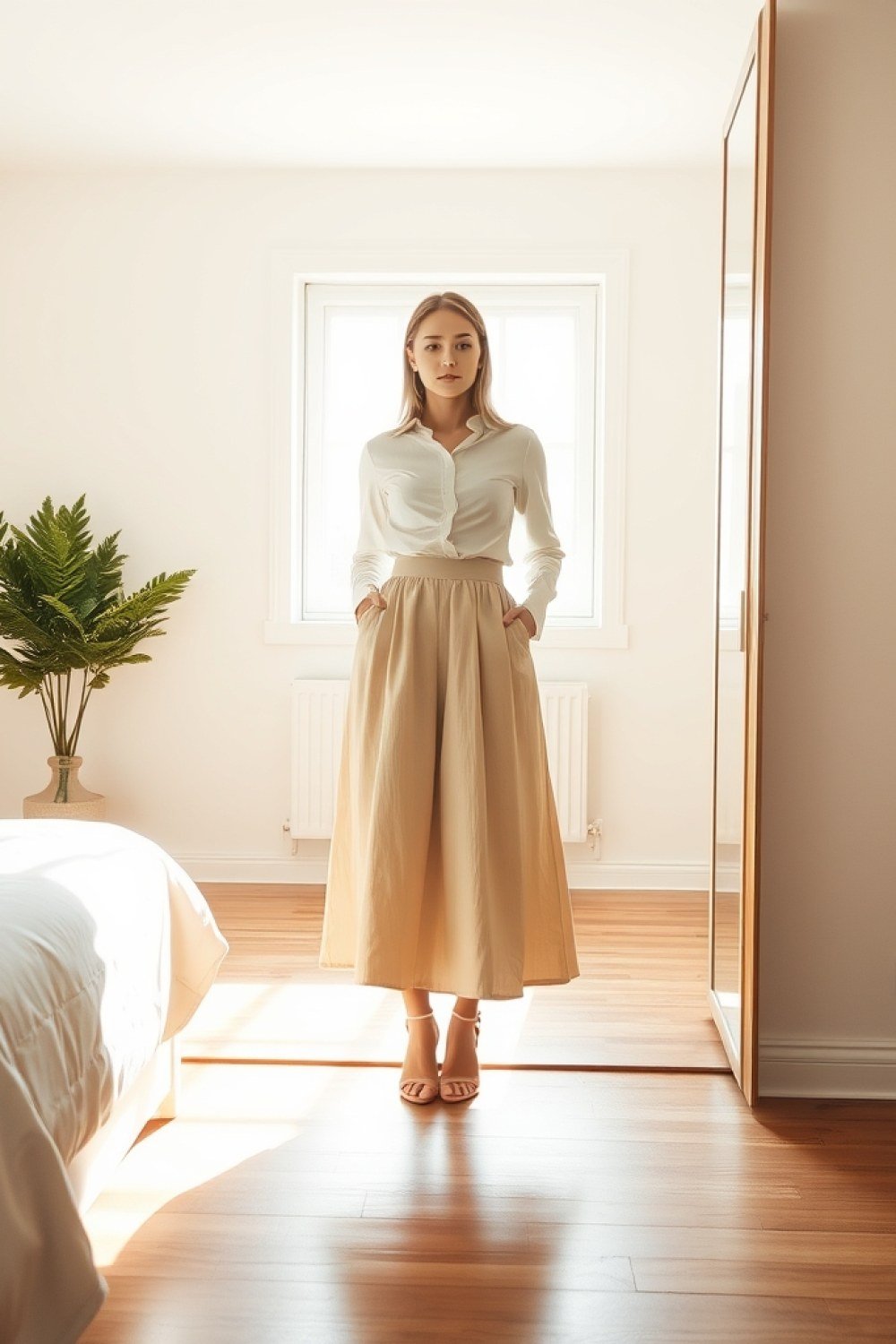
The fit-and-flare dress is the classic pear-shape silhouette for good reason: the fitted bodice hugs your waist and shows off the smallest part of you, while the flared skirt skims over hips and thighs without a single tug. Cap sleeves add a touch of coverage and width at the shoulder, which visually balances a wider lower half.
The one detail to get right is where the skirt starts to flare. Look for a seam or waistline at your natural waist — the narrowest point, usually an inch above your belly button — not at the hip. A skirt that flares from the hip makes your lower half look wider, while one that flares from the waist creates that clean, hourglass-ish line. Choose a fabric with a bit of structure, like ponte, scuba, or lined crepe, so the skirt holds its shape instead of clinging. Knee-length or midi works best; a subtle print or a solid jewel tone both flatter.
Pair with a nude or matching heel to extend your leg line. This is the dress to buy in two colours and wear to weddings, showers, and work events for years.
Quick tip: Try the dress on and sit down in the fitting room — if the skirt rides up over your hips, size up and have the bodice taken in.
18. Printed Top + Solid Midi Skirt
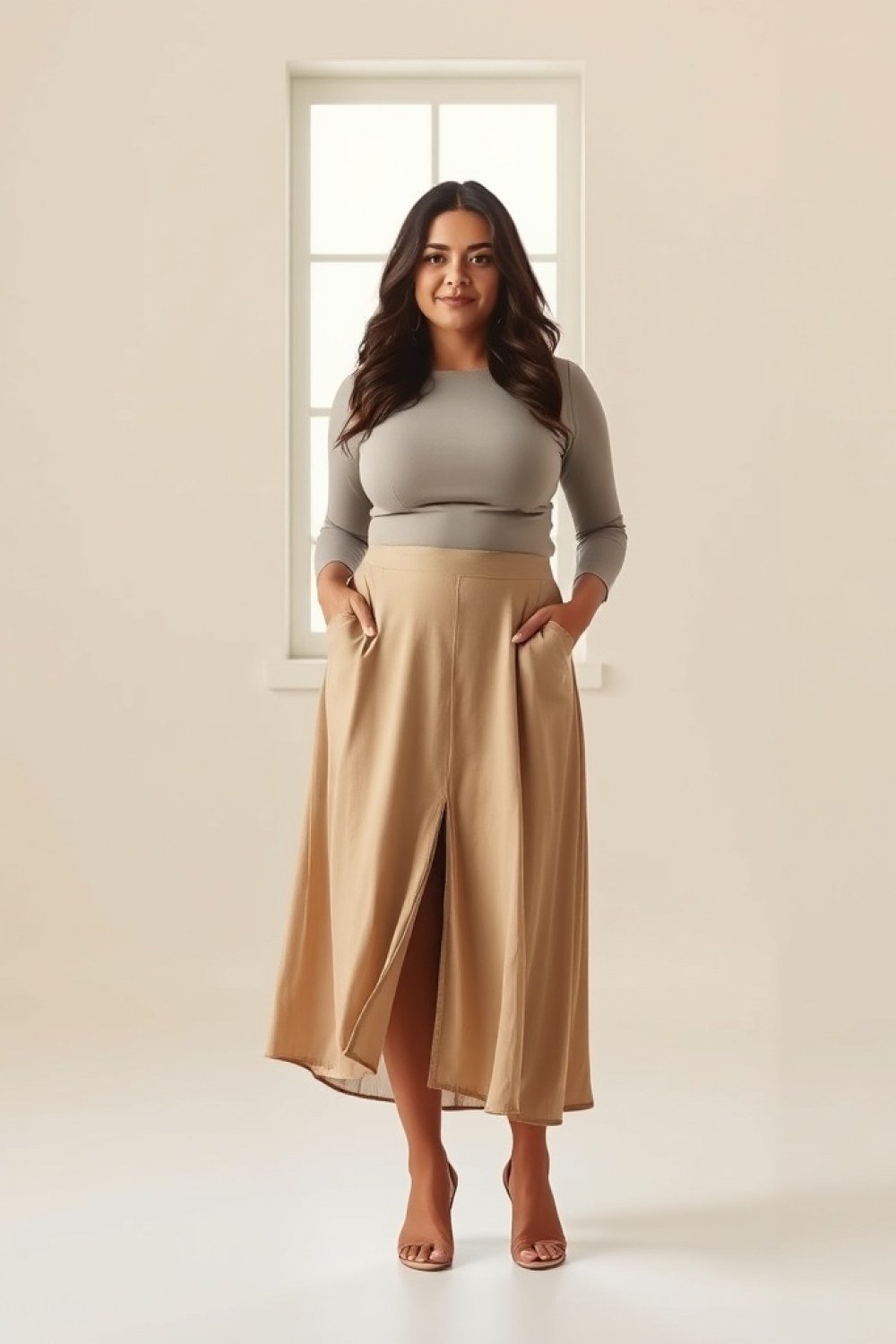
Pattern is a strategic tool for a bottom heavy shape: a print on top pulls the eye up to your face and shoulders, adding visual weight exactly where you want it. Pair it with a solid, darker midi skirt and your lower half quietly recedes.
On the print, go medium to large scale — a bold floral, a graphic stripe, a geometric block, or a big polka dot. Tiny, busy dithered prints read as fussy and can make the fabric look cheap. Keep the top fitted or semi-fitted and tuck it in to preserve your waist. The skirt should be a straight, bias-cut, or gently flared midi in navy, charcoal, olive, burgundy, or black, hitting just below the knee or at mid-calf. A modest side slit adds movement and stops the skirt from looking heavy. Add a belt in a matching tone to reinforce the waist, and choose a shoe in the same colour family as the skirt to extend the line.
This formula is perfect for work, lunches, and any event where you want to look considered without effort.
Quick tip: Balance an oversized print with simple jewellery — small studs or a single thin chain — so the top stays the focal point without competing details.
19. Scarf-Accented Outfit With Simple Base Layers
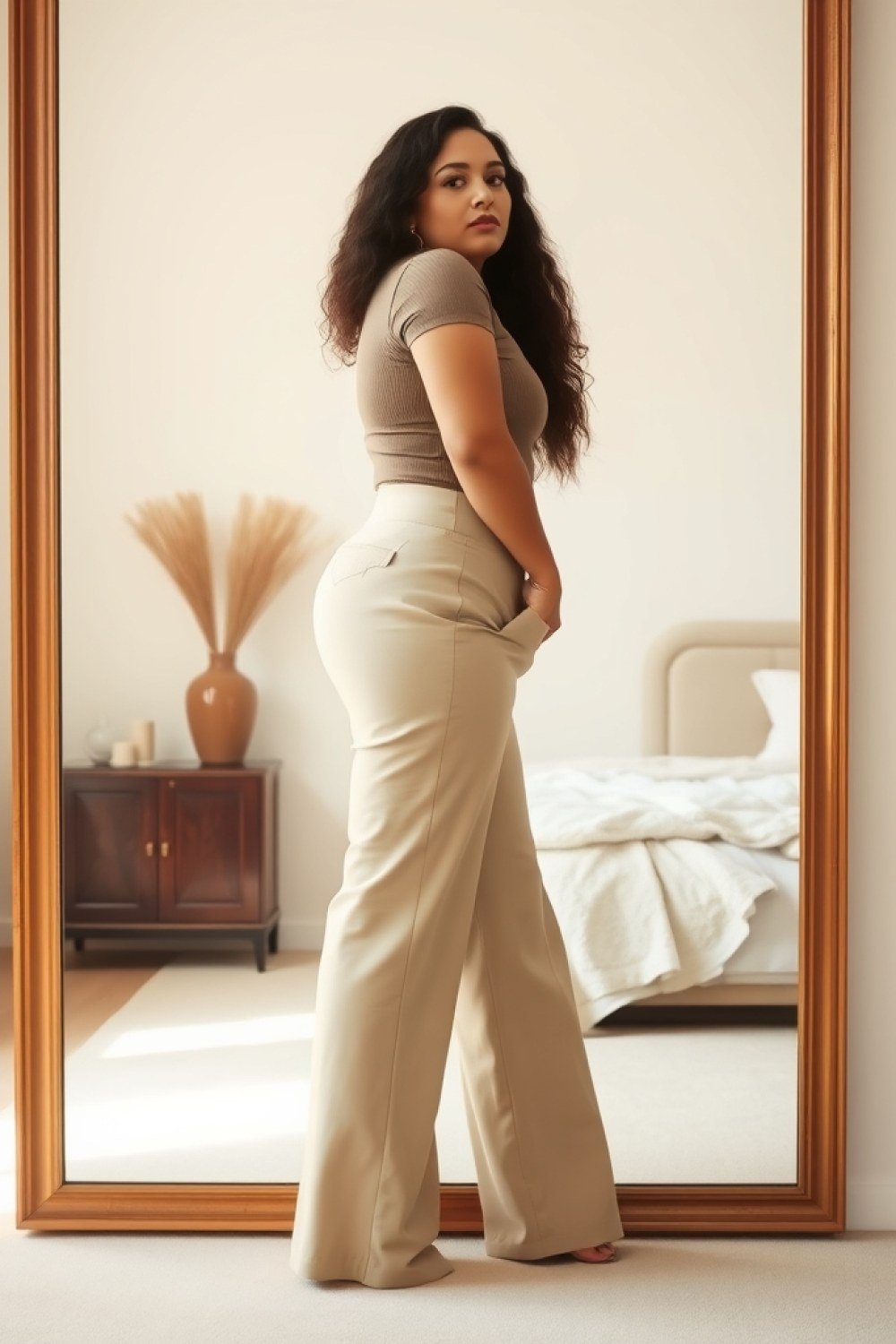
This is the outfit you reach for when you want to look pulled-together in ten minutes. The base is deliberately quiet: a fitted crew-neck or scoop-neck top in a solid neutral — black, navy, camel, or cream — tucked or skimming your natural waist, paired with dark trousers or straight-leg dark-wash jeans. For a bottom heavy body shape, that dark, simple bottom keeps the lower half visually receding while the scarf does all the work up top.
What makes it work is placement. A scarf sits right at your collarbone and shoulders, the narrowest part of your upper body, so it adds visual weight exactly where you want it. Choose a square silk or lightweight cotton scarf in a print with real colour — a bright floral, a graphic stripe, a paisley in berry or emerald — and fold it into a triangle, knotting it loosely at the front or draping it bandana-style. Then repeat one of those scarf colours somewhere small: the knit of your top, a bracelet, your earrings, or a stripe in your bag. That single echo makes the whole look feel styled rather than accidental.
It suits anyone who feels their outfit looks flat and needs one focal point without fuss, and it works beautifully for work, errands, or lunch. Tip: keep the scarf volume above your bust line — if it drapes past your ribs, retie it higher so it flatters rather than adds bulk through the middle.
20. Belted Shirt Dress + Tall Boots
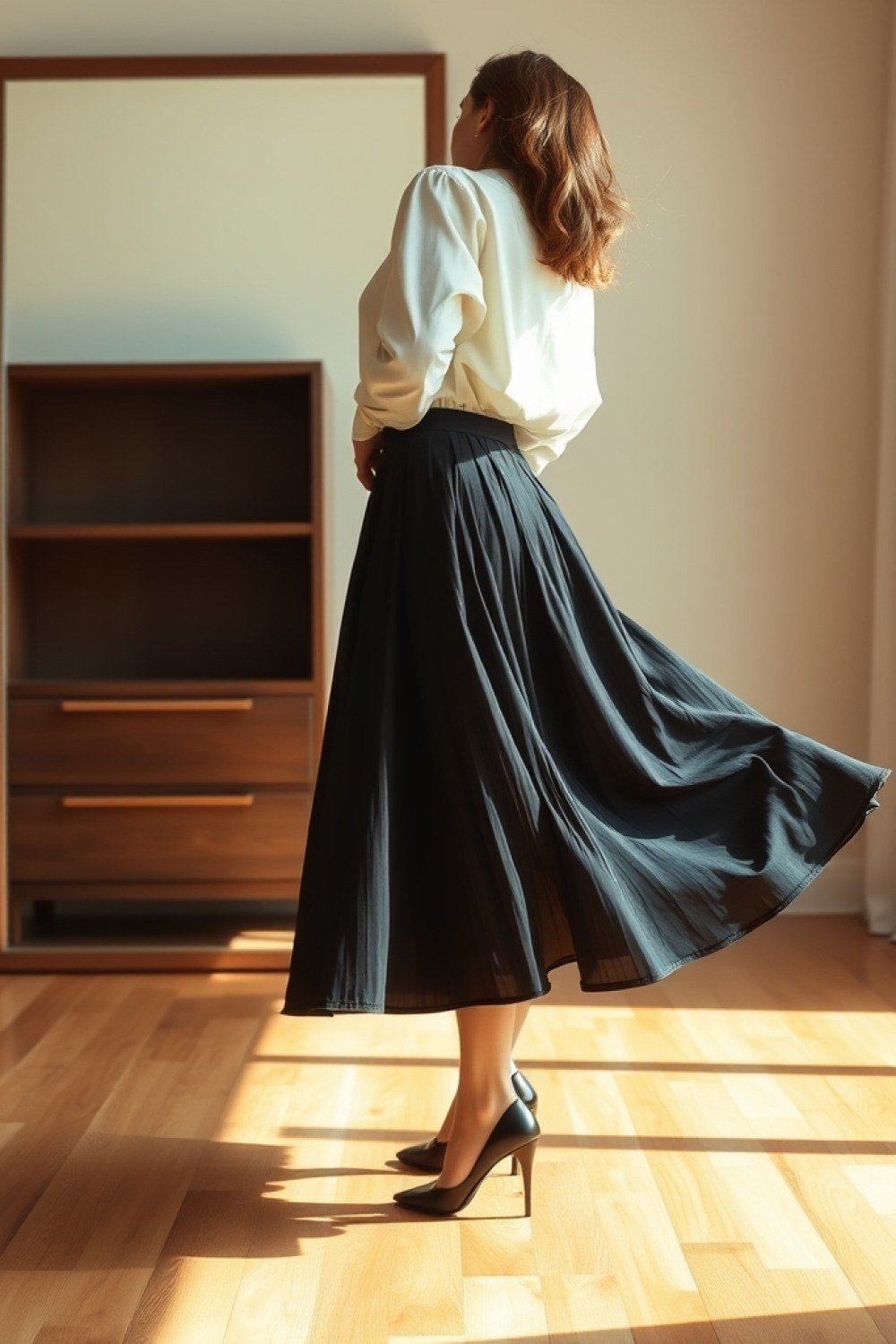
A shirt dress is one of the most forgiving pieces you can own if your hips and thighs are fuller than your shoulders, because it doesn’t cling anywhere it shouldn’t. The trick is the belt. Cinch it at your natural waist — the narrowest point, roughly an inch above your belly button — so the dress reads as two clean shapes: a defined waist and a skirt that falls straight or gently A-line over your hips. Skip belting at hip level, which only emphasises width.
Tall boots are the second half of the equation. A knee-high or over-the-knee pair in leather or suede creates a continuous vertical line from hem to foot, lengthening your legs and balancing the fabric volume of the dress. Choose a midi length that finishes just below the knee or mid-calf so there’s no awkward gap between hem and boot. A block heel of two to three inches adds height without wobble.
This is ideal for autumn and winter days when you want polish without a blazer. Tip: match your boots to your tights or bare leg tone so the leg line stays unbroken — contrast here is what shortens the silhouette.
21. V-Neck Top + Paperbag-Waist Pants
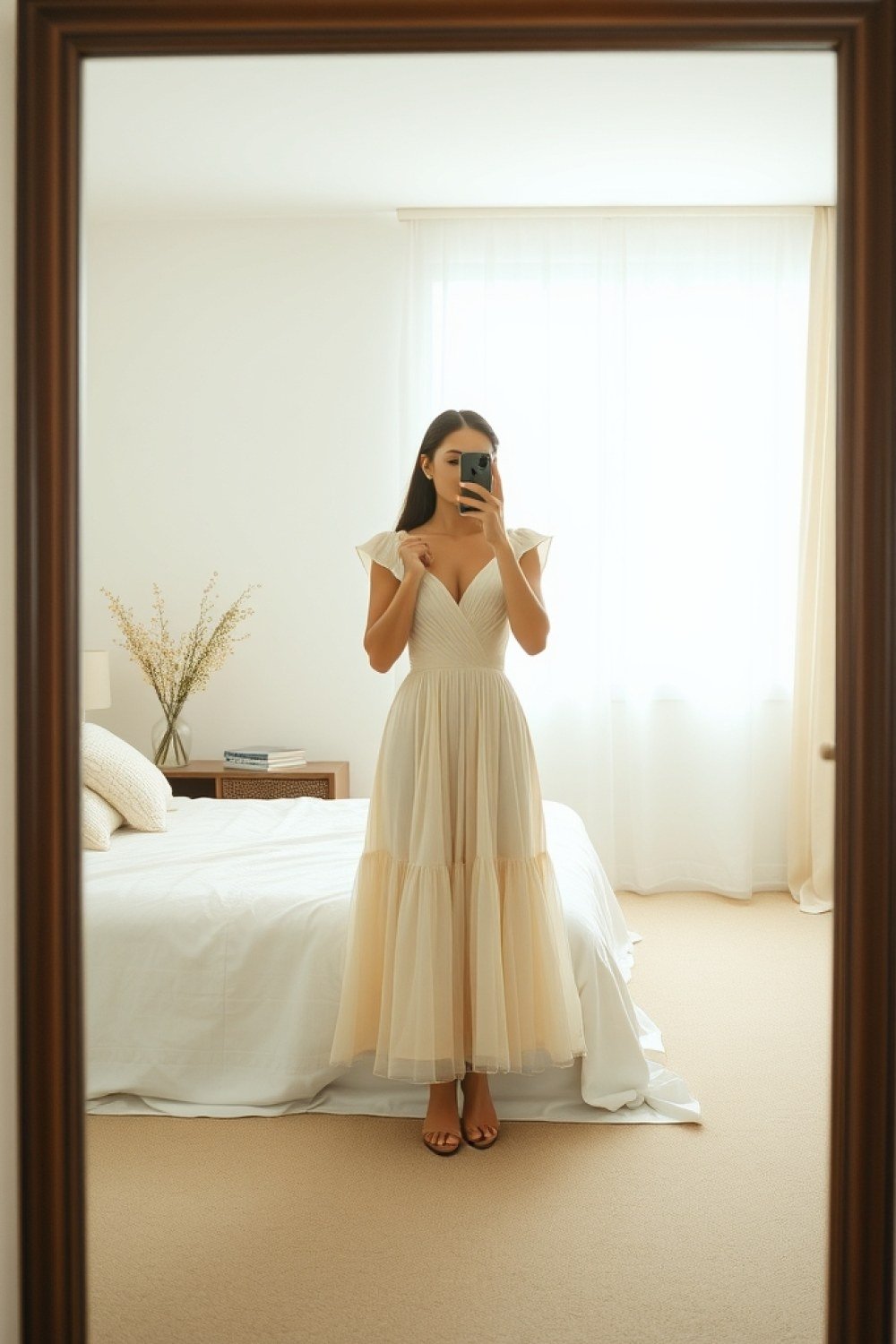
This combination balances a bottom heavy figure by working both ends at once. The V-neck opens up your chest and draws the eye to your neckline and collarbone, adding width and interest up top. Paperbag-waist pants do the opposite below: the gathered waist sits at or just below your natural waist, creating definition and then falling straight or wide through the hip and thigh. Together they give you a waist and a clean vertical drop instead of a silhouette that widens as it goes down.
The details matter. Keep the top tucked in — a full or half tuck both work — so the waistband stays visible and your proportions read as intentional. Choose pants in a mid-weight fabric like cotton twill, linen blend, or ponte so the gathers hold their shape rather than bunching. A self-tie belt in the same fabric keeps the waist flat; a chunky contrast belt adds bulk you don’t need.
It suits casual days, brunches, and travel — anything where you want comfort and shape at once. Tip: if the gathered waist feels too voluminous, size down one and look for pleats that start below the waistband rather than right at it.
FAQs
What is a bottom heavy body shape?
A bottom heavy (or pear-shaped) body has hips and thighs that are wider than the shoulders and bust, usually with a clearly defined waist. The dressing goal is simple: add visual weight and interest to your upper body while skimming or streamlining your lower half, so your proportions read as balanced rather than bottom-weighted.
Should I avoid skinny jeans with a pear shape?
Not entirely — a dark-wash skinny jean can work when you balance it with a top that adds volume up top, like a puff-sleeve blouse, a boat-neck knit, or a chunky sweater that hits at the high hip. That said, straight-leg and bootcut jeans are the easiest everyday choice because they create a longer, more even line from hip to ankle instead of tapering in at the calf and emphasizing the widest point of your lower half.
What colors should I wear with wide hips?
Put lighter, brighter, or patterned colors on top and keep your bottom in darker, receding neutrals like navy, charcoal, black, or deep taupe. This doesn’t mean an all-black bottom is mandatory — it just means the eye should land on your upper half first. If you love a bold printed skirt or pant, pair it with an even bolder top so the contrast doesn’t pull all the attention downward.
What shoes look best with a bottom heavy body shape?
Pointed-toe shoes, nude or skin-tone heels, and tall boots all extend the leg line, which visually balances wider hips. Chunky platforms and ankle-strap styles that cut a horizontal line across your ankle can shorten the leg and make your lower half look heavier, so wear them sparingly and keep the rest of the outfit streamlined when you do.
How do I define my waist without clinging to my hips?
Tuck your top into high-waist bottoms, add a slim belt in a color that matches your top or bottom, or reach for wrap dresses and belted shirt dresses that cinch at your smallest point and then fall away over the hips. The key is a defined waist sitting above a skirt or pant that skims rather than hugs — you get shape without any fabric gripping your hip or thigh.
Don't miss the next one
Quick outfit ideas and beauty tips, straight to your inbox.