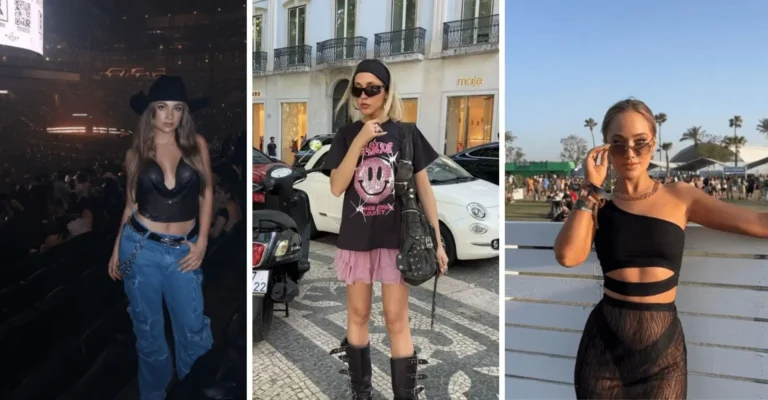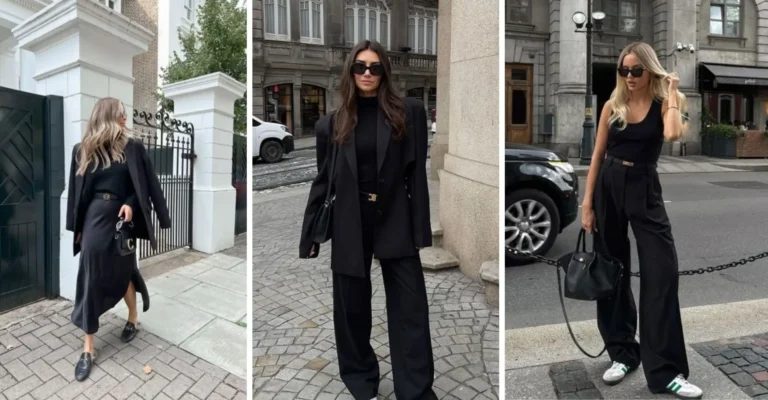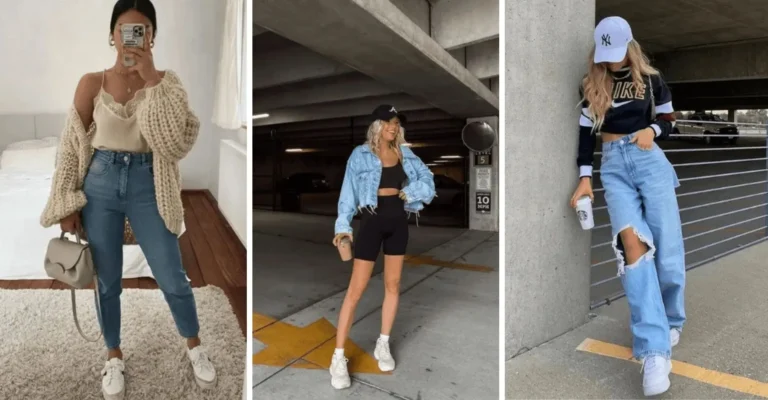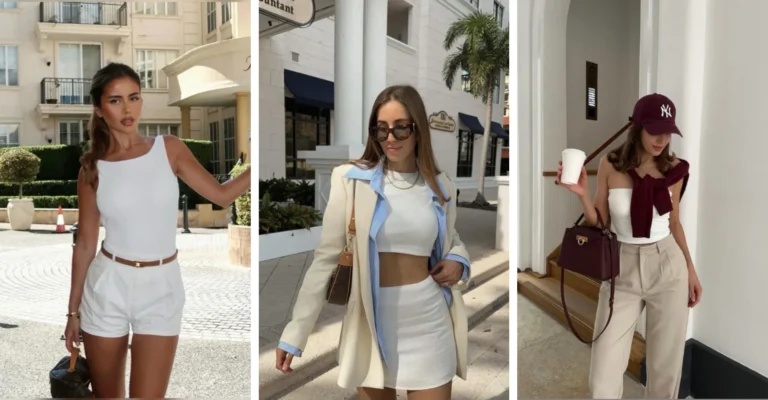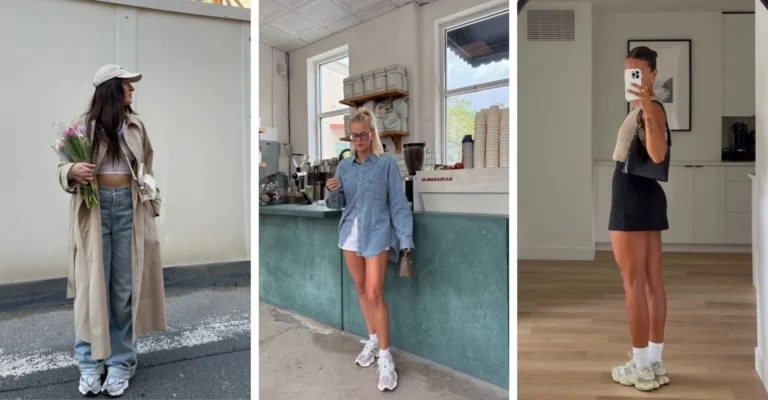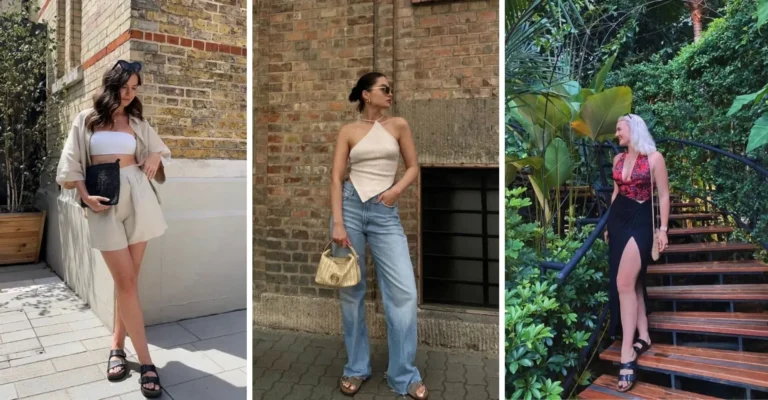
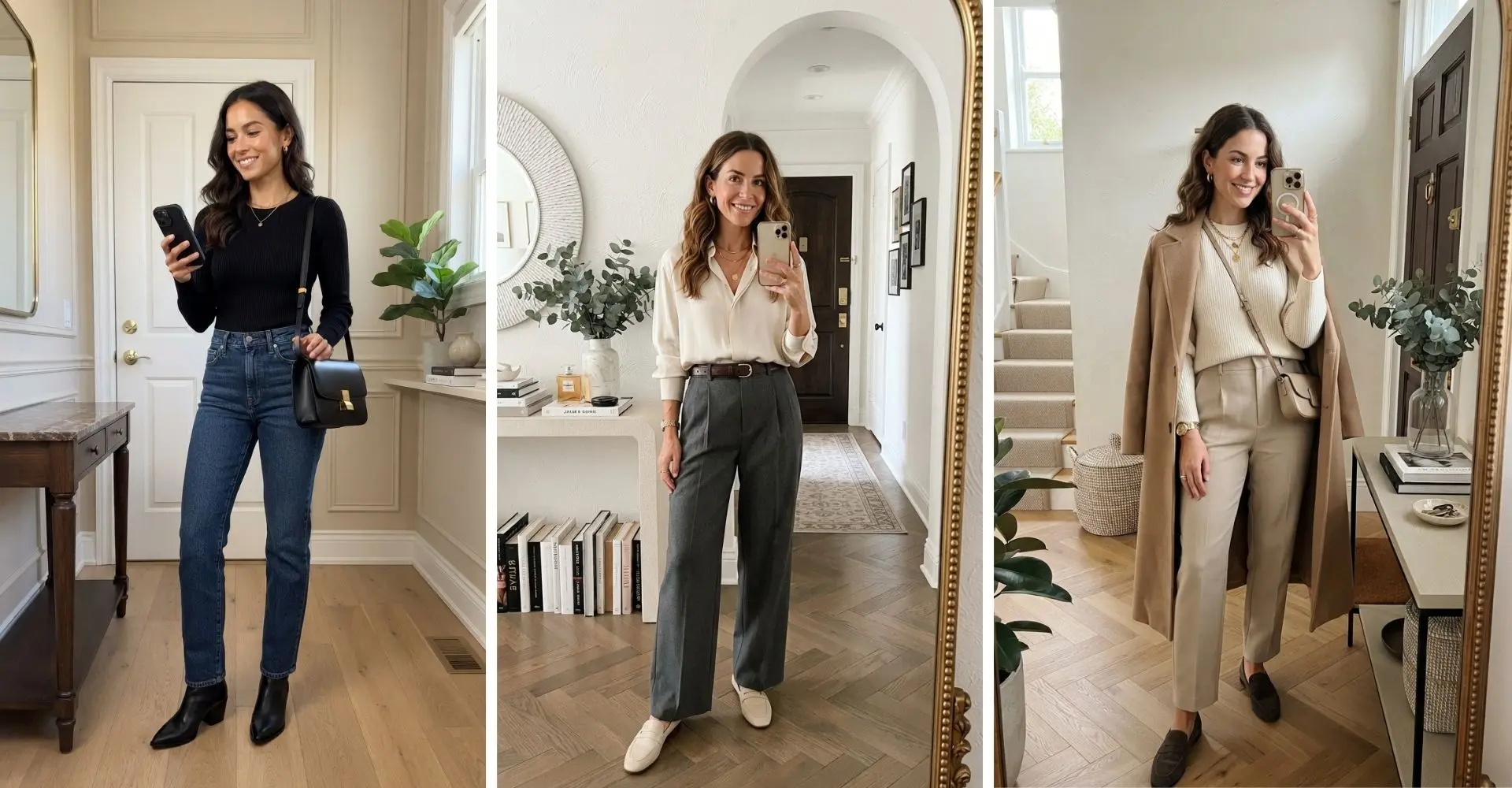
You’ve seen her — jeans and a sweater, nothing flashy, no visible logo, and somehow it reads like she just left a runway. It’s not the brand doing the work. It’s a handful of small, repeatable styling choices that, once you know them, you’ll start spotting (and copying) everywhere.
This list breaks that “expensive” look down into 18 specific, easy-to-follow ideas — the denim rules, the fabric swaps, the small details, and the outfit variations that take it from office to dinner. None of it requires a bigger budget, just more intention with what you already own.
Here’s exactly how to build that quietly expensive look, piece by piece.
1. The Denim, Heels, and Structured Piece Formula
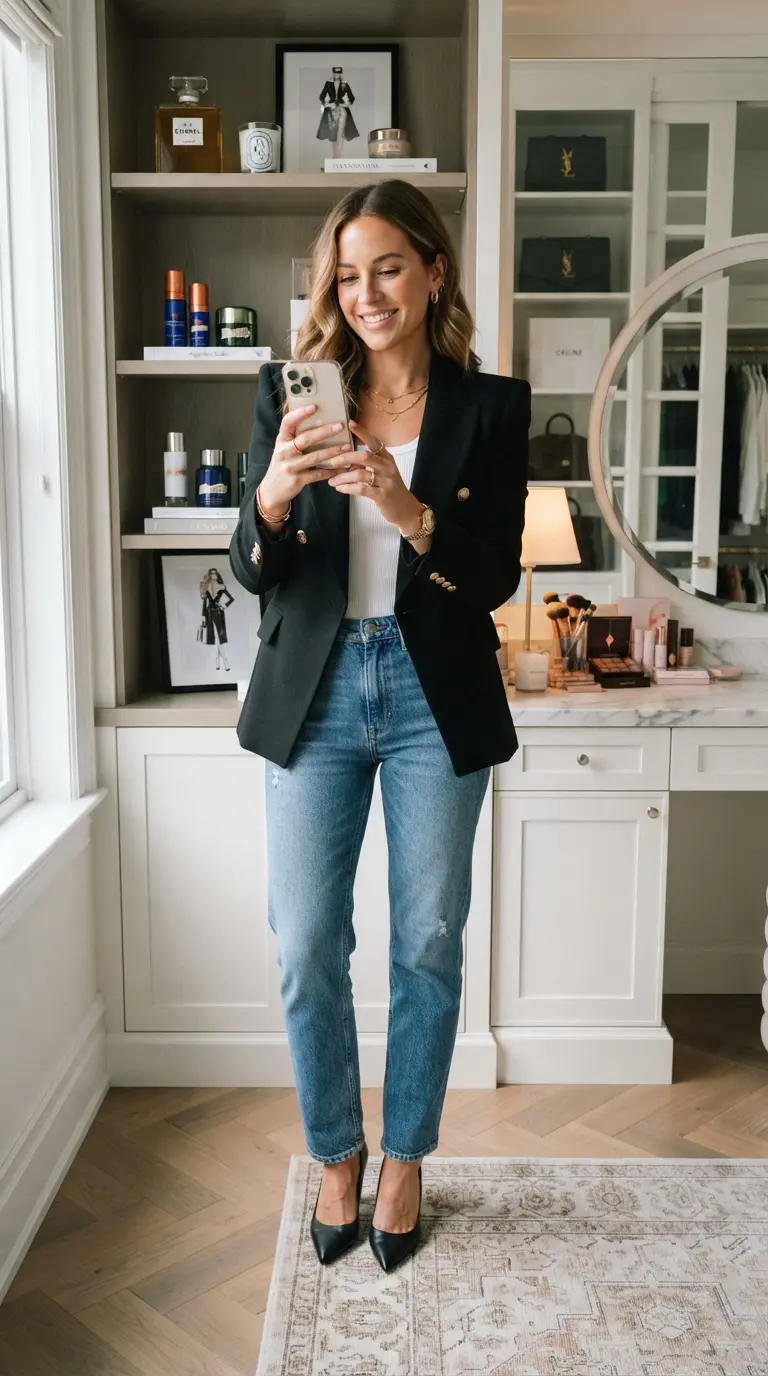
The base formula behind almost every “where is this from?” outfit is simple: clean denim, a sharp heel, and one structured piece layered on top. It sounds almost too basic to work, but that’s exactly the point — restraint is what makes it look considered rather than thrown together.
Once you build this three-part base, you can swap any single element and completely change the outfit’s mood without losing the polished effect. It’s less a specific outfit and more a formula you can rebuild endlessly with pieces already in your closet.
Tips for Building the Base Formula
- Keep all three elements clean and simple — this formula fails the moment one piece gets too busy
- Choose a heel with a clean line rather than anything chunky or overly casual
- Layer one structured piece only; adding two competes for attention
2. High-Rise, Straight-Leg Denim Done Right
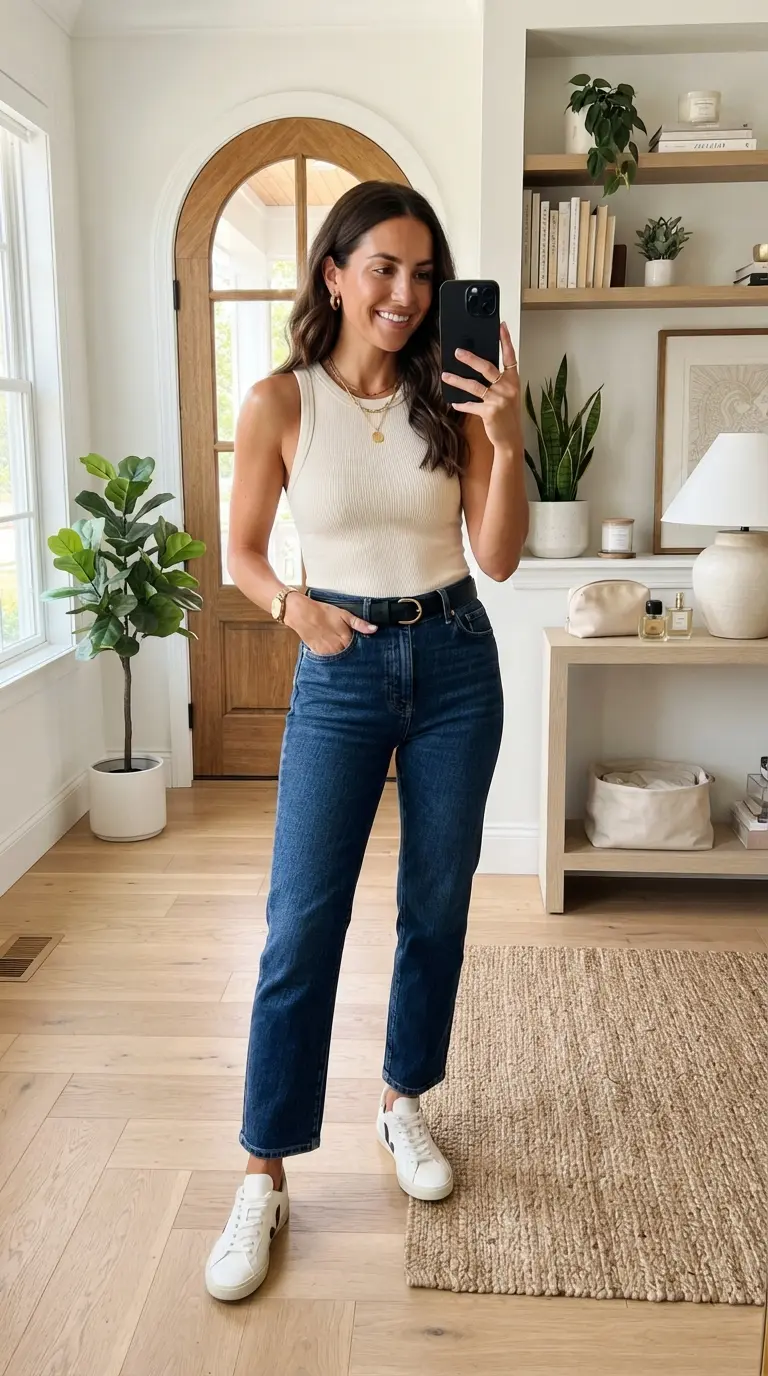
The denim itself carries more weight than people expect. High-rise, straight or subtly flared, in a deep indigo or black wash reads instantly more expensive than anything distressed, bleached, or overly styled. The jean’s only job is to look long, clean, and intentional.
This is the easiest place to start if you’re building the formula for the first time, since a single well-fitted pair of jeans becomes the anchor for dozens of future outfits. Skip the trend washes and rips — the plainer the denim, the harder it works for you.
Tips for Choosing Elevated Denim
- Stick to dark, solid washes with no fading or distressing
- Choose a length that skims the floor in heels for the longest possible leg line
- Avoid anything overly stretchy — a slightly structured denim holds its shape better
3. Swap Sneakers for a Sharp Heel
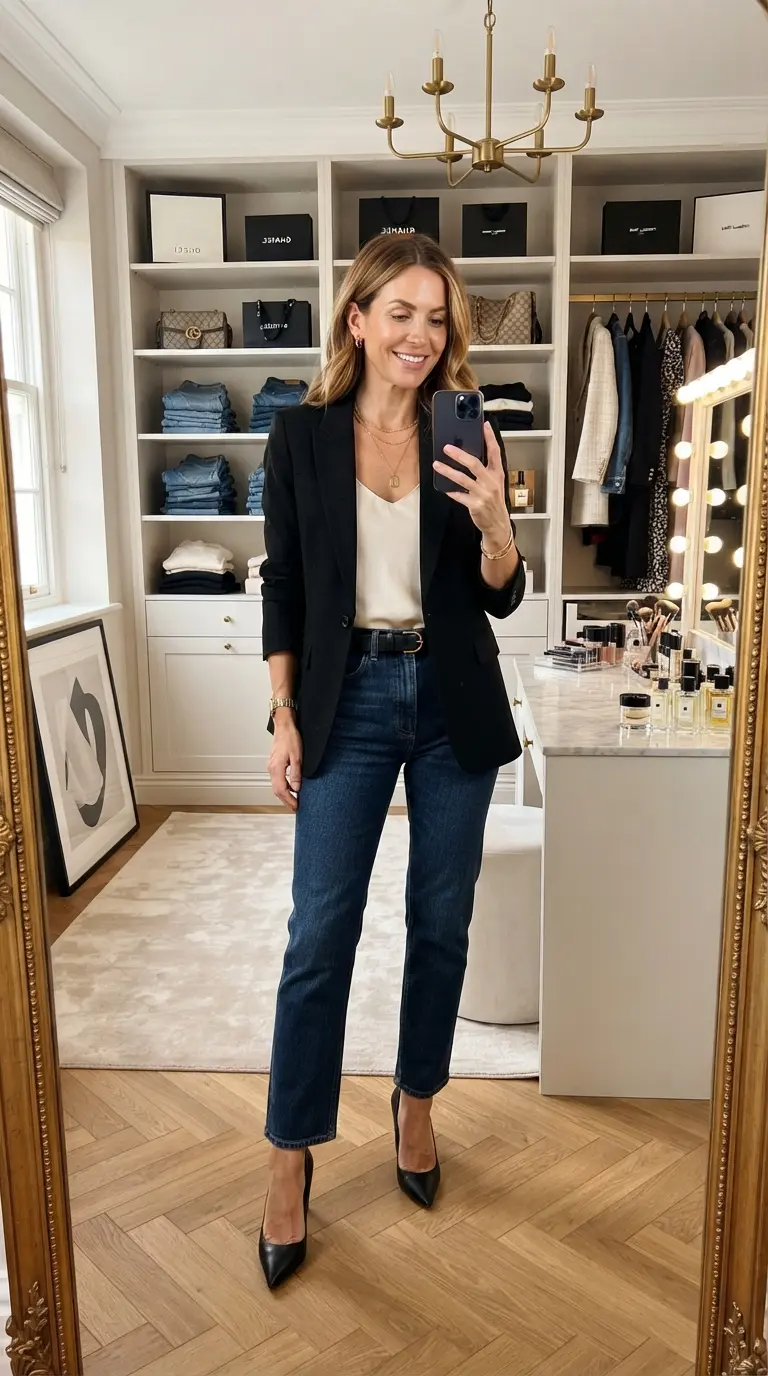
One of the fastest ways to elevate any outfit is retiring the sneakers for a pointed-toe pump, a sleek slingback, or a sculptural mid-height heel. The shoe swap alone can turn the exact same jeans-and-top combo from casual to genuinely polished.
Heels finish a silhouette in a way sneakers simply can’t — they lengthen the leg line and add a note of formality that reads as intentional. This is a small change with an outsized effect, and it’s often the single detail people notice first.
Tips for Choosing the Right Heel
- Choose a clean, pointed silhouette over anything chunky or platform-style
- Match the heel color to your denim or bag for a longer, more cohesive line
- Keep a mid-height option on hand for days you need polish without the height
4. One Structured Piece Does All the Work
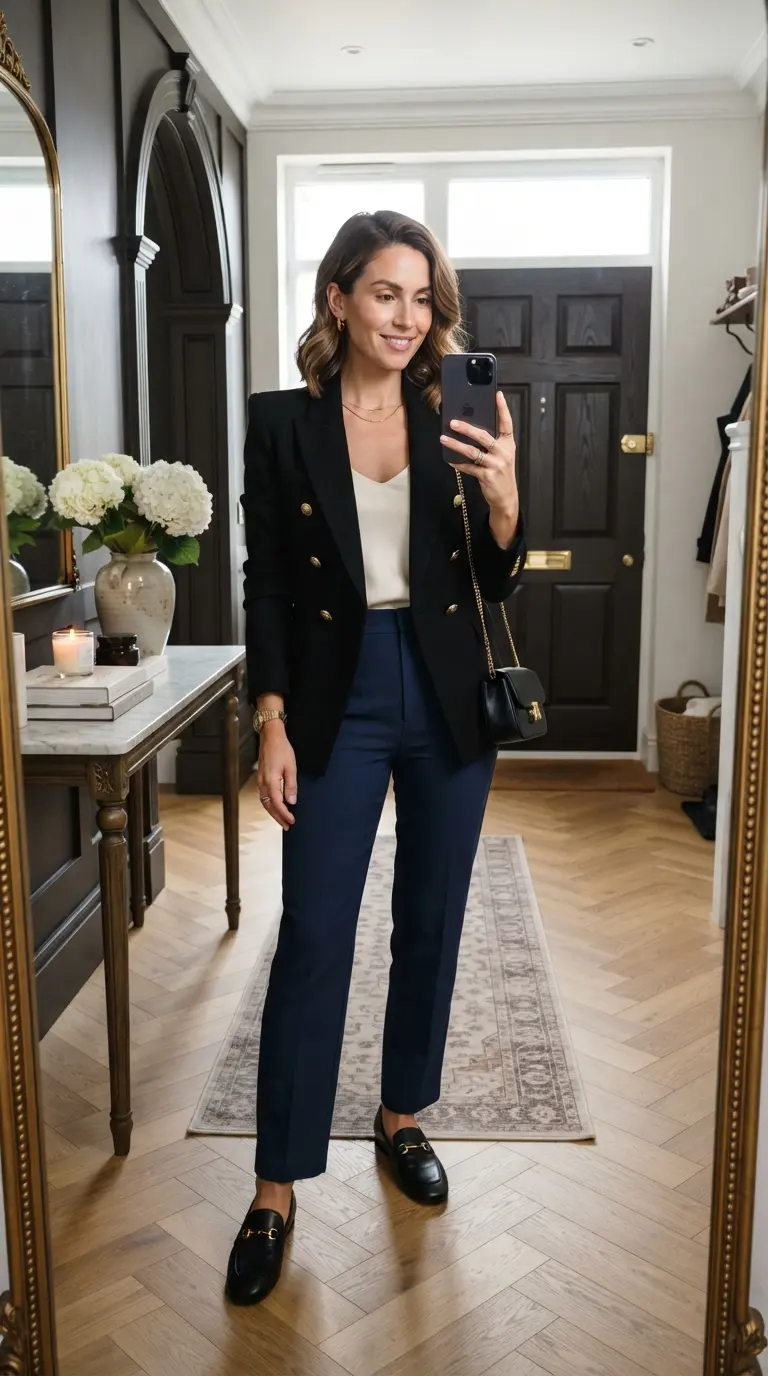
A tailored blazer, a crisp button-down, or a fine knit that drapes rather than clings — that’s the final piece of the formula, and it’s the one that pulls everything else together. You only need one; adding more starts to undo the effortless effect.
This structured layer is what separates “dressed” from “styled.” It gives the outfit shape and signals intention, even when everything underneath is as simple as a plain jean and a basic top.
Tips for Choosing a Structured Layer
- Choose fabric with enough weight to hold its shape rather than something soft and clingy
- A blazer instantly reads more polished than a soft cardigan for this formula
- Keep the color palette neutral so the structured piece doesn’t compete with the rest
5. Fit Over Cost: Why the Cut Matters Most
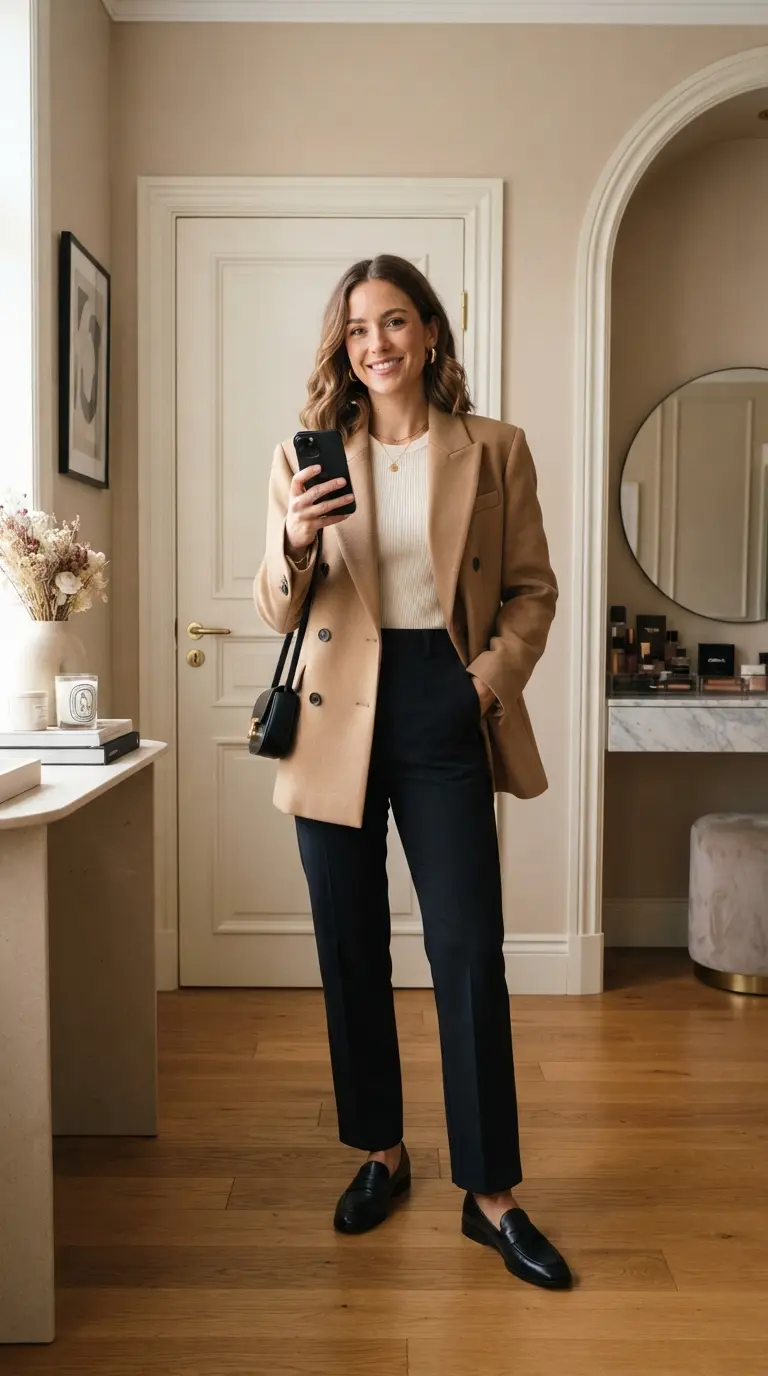
A straight-leg trouser or jean that skims rather than clings does more visual work than any designer label ever could. Fit beats price every time, which is genuinely good news if you’re building this look on a smaller budget — the goal is proportion, not a receipt.
Well-fitted clothing photographs and moves differently than clothing that’s slightly off, even if the fabric and price are nearly identical. Prioritizing tailoring and cut over logos or trend pieces is the real secret behind expensive-looking dressing.
Tips for Prioritizing Fit
- Get key pieces (blazers, trousers) tailored — even a basic hem or waist adjustment changes everything
- Try items on and check how they move, not just how they look standing still
- Choose a slightly structured fabric over anything overly soft or stretchy for the cleanest line
6. Invest in One Quality Fabric Piece
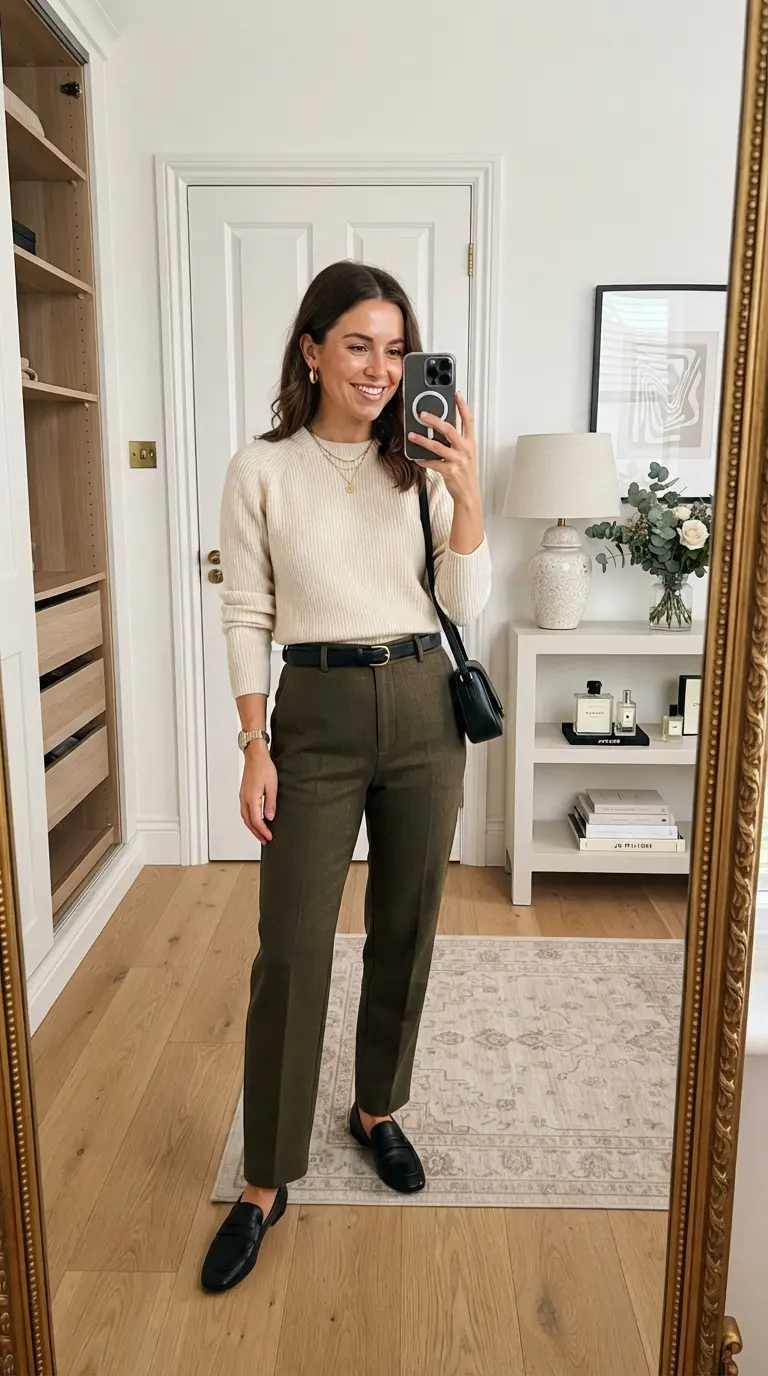
A wool-blend coat, a cashmere-blend knit, or anything with real drape can anchor an entire outfit and make every cheaper piece around it look better by association. You don’t need a closet full of luxury fabrics — just one.
This is the smartest place to spend a little more, since a good-quality anchor piece gets worn constantly and elevates whatever you pair it with. Think of it as the one piece your whole formula is built around.
Tips for Choosing a Quality Anchor Piece
- Prioritize a great coat or sweater over multiple cheaper versions of the same thing
- Check the fabric content label — wool, cashmere, and silk blends tend to drape better than synthetics
- Stick to a neutral color so this piece pairs with everything else you own
7. The Structured Bag Effect
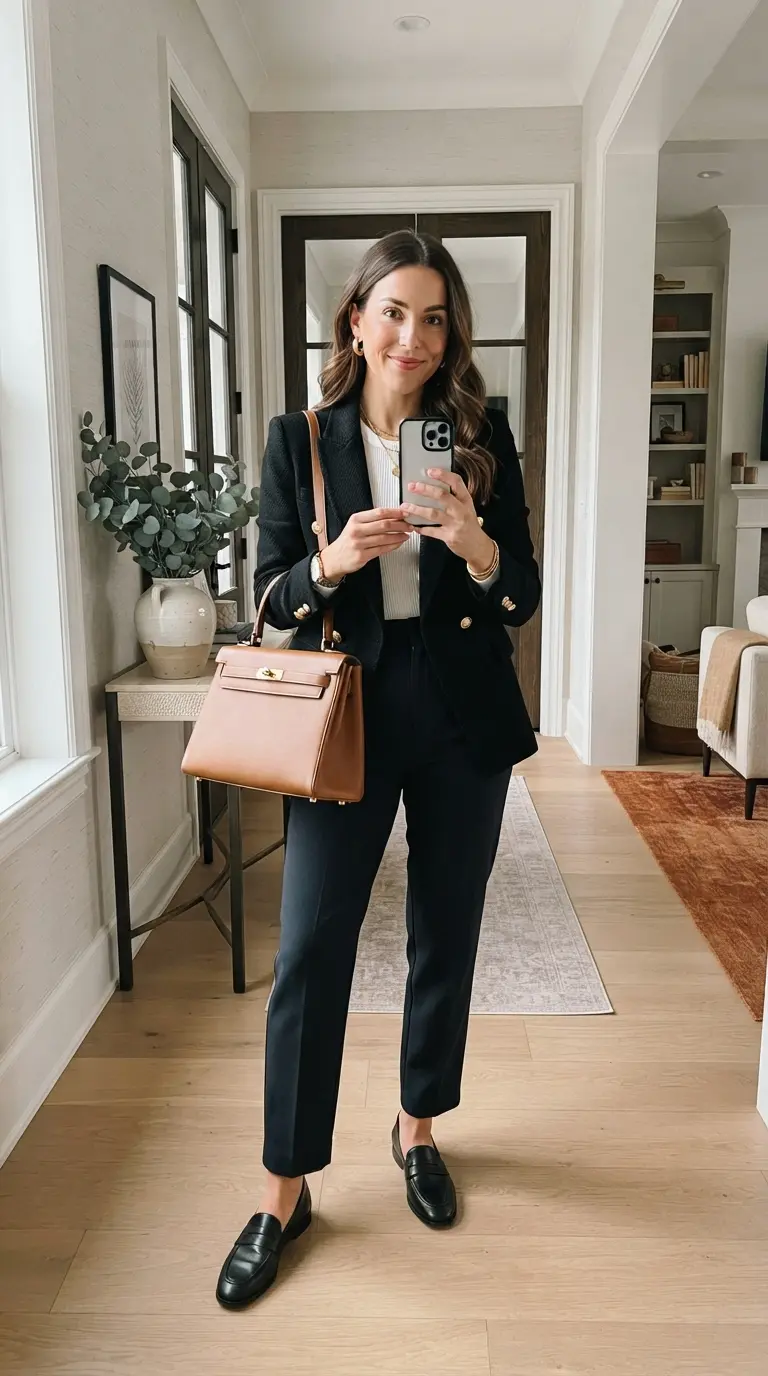
Nothing undoes an otherwise polished outfit faster than a soft, shapeless bag. A structured handbag — one that holds its form rather than slouching — is one of the highest-impact, most overlooked details in expensive-looking dressing.
The bag doesn’t need to be a luxury brand to do this job. It just needs clean lines and enough structure to look intentional rather than like an afterthought grabbed on the way out the door.
Tips for Choosing a Structured Bag
- Look for a bag with a defined shape that holds up even when it’s not fully packed
- Choose a neutral color (black, tan, or cream) so it pairs with every outfit
- Avoid overly slouchy or logo-heavy styles if the goal is a quiet, polished look
8. Office-Ready: Blazer, Straight Jeans, and a Pump
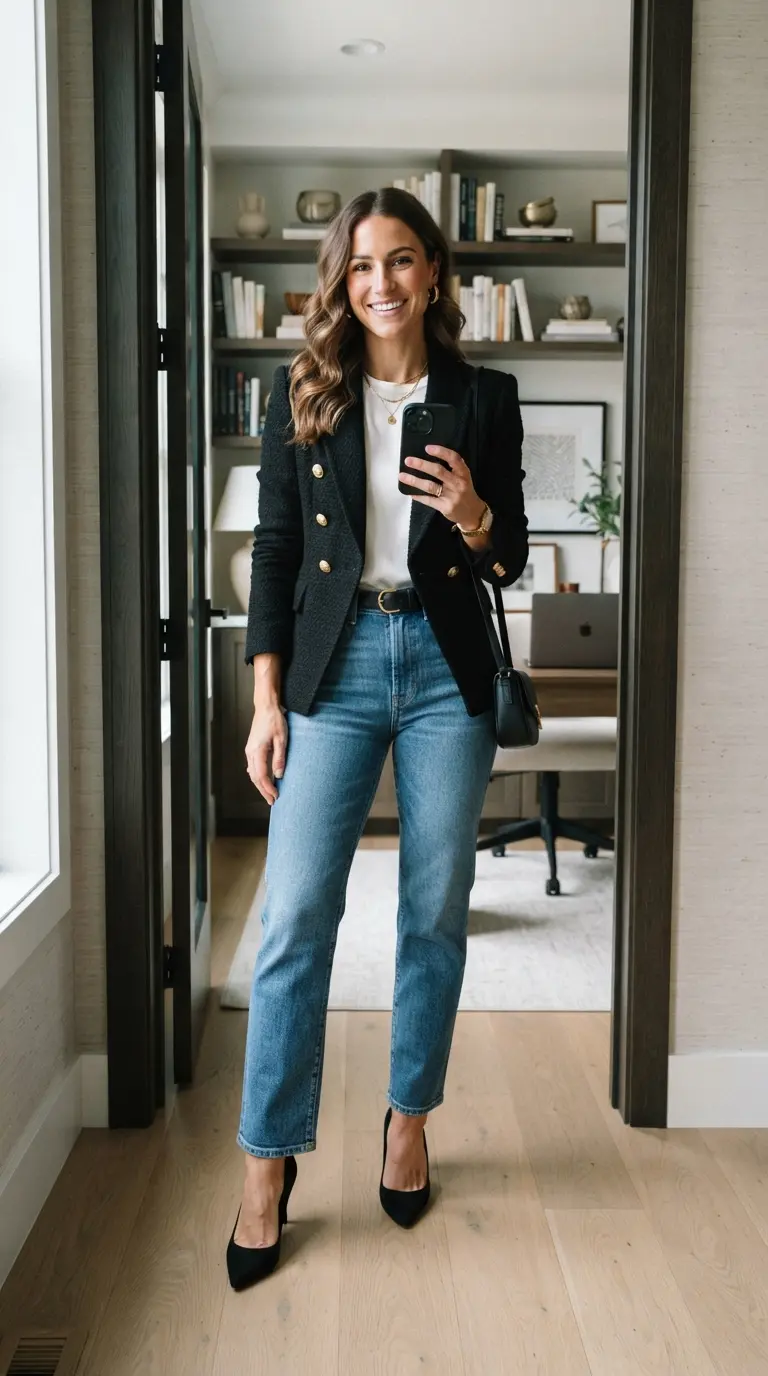
For the workday, pair high-rise straight jeans with a pointed pump and a tailored blazer layered over a simple knit. It’s quietly polished without looking like you tried too hard — powerful in a way that doesn’t rely on any single trend.
This combination works because every piece is doing a specific job: the jeans keep it modern, the blazer adds authority, and the pump finishes the silhouette. It’s an easy formula to repeat with different blazer colors throughout the week.
Tips for an Office-Ready Expensive Look
- Choose blazers in neutral tones (black, camel, navy) so they mix and match easily
- Keep the knit underneath simple so the blazer stays the focal point
- Add one delicate piece of jewelry, like small hoops, for a finished touch
9. Weekend-Ready: Leather Jacket Swap
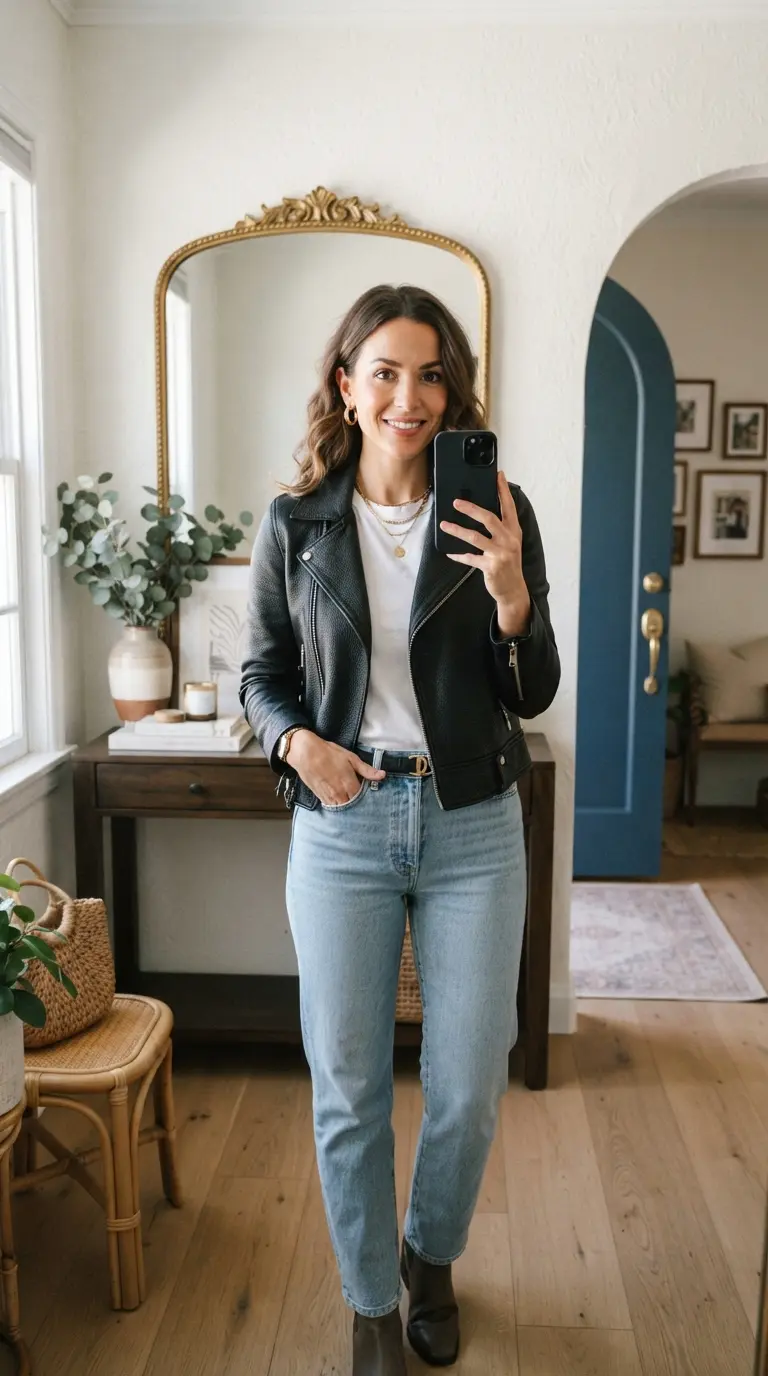
Keep the same jeans and heels, but swap the blazer for a soft leather jacket or an oversized cardigan. The base formula stays intact, but the mood shifts from polished-professional to comfortable-but-considered — never sloppy.
This swap shows how flexible the formula really is. You’re not building a new outfit from scratch, just changing one piece, which makes it easy to go from a weekday look to a weekend one without extra shopping.
Tips for the Weekend Version
- Choose a leather jacket in black or brown so it pairs with the same core denim
- An oversized cardigan works just as well if leather isn’t your style
- Keep the heel in place — swapping it for sneakers breaks the formula’s polish
10. Dinner-Ready: Fitted Top and One Good Bag
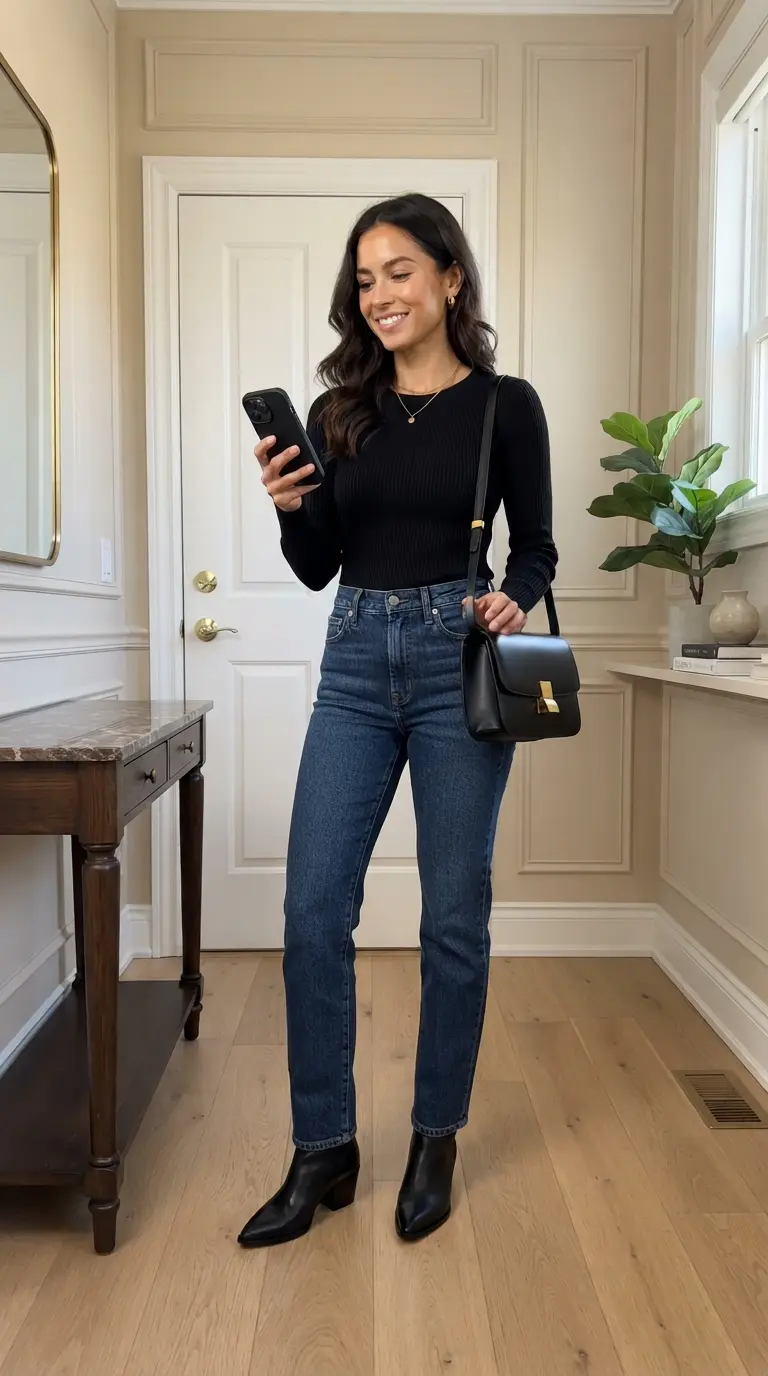
For dinner, drop the blazer entirely and go with a fitted top instead, then add the one structured bag and a delicate necklace. The same jeans and heels carry through, proving how much mileage one solid base outfit can get.
This version leans slightly more feminine and body-conscious while still keeping the same understated, expensive-reading foundation. It’s proof that you don’t need a separate “going out” wardrobe — just a few smart swaps on your existing base.
Tips for the Dinner Version
- Choose a fitted top in a rich, solid color to elevate the simple base
- A delicate necklace adds polish without overwhelming a minimal outfit
- Swap your daytime bag for a smaller evening version in the same neutral tone
11. Monochrome Neutral Dressing for Instant Polish
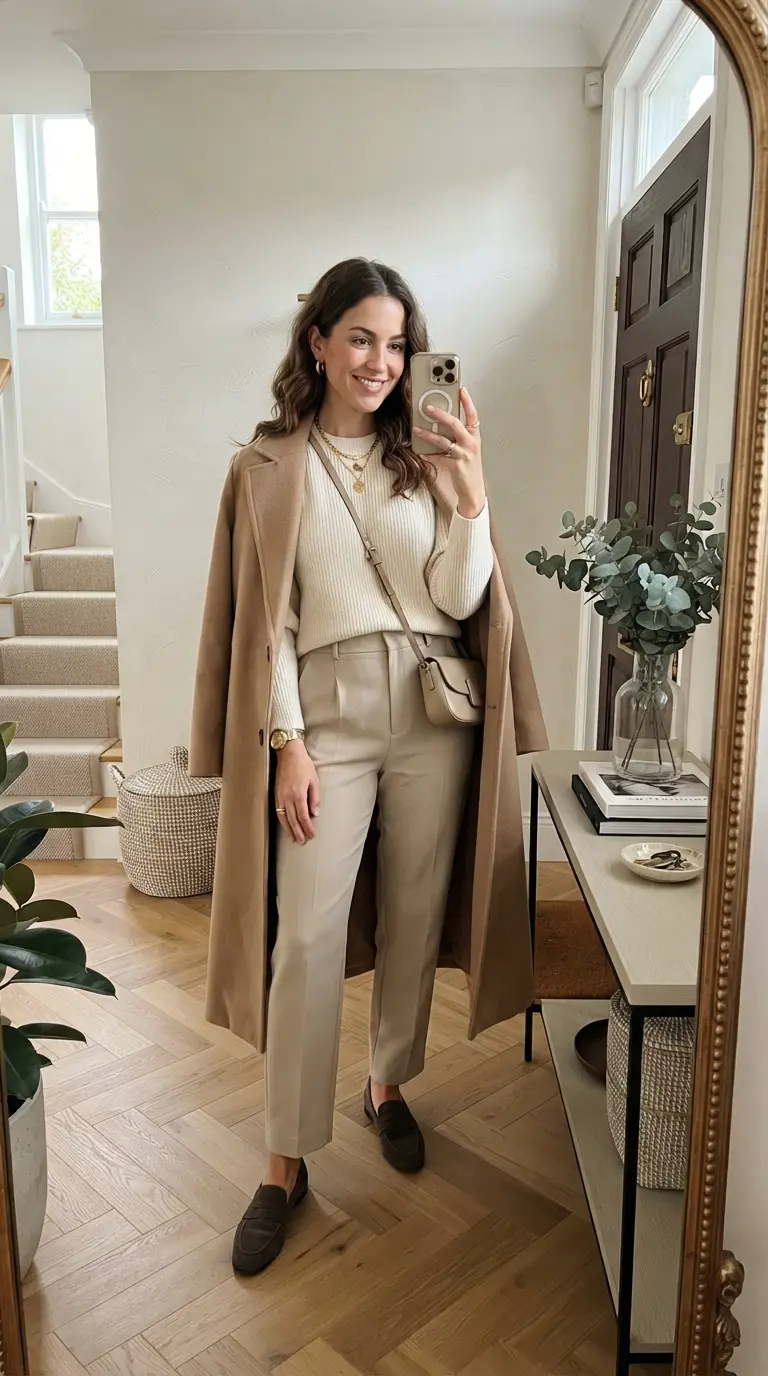
Building an outfit entirely in shades of one neutral — cream, tan, black, or gray — is one of the fastest ways to look expensive without any extra effort. Monochrome dressing removes the guesswork of color-matching and reads as intentional every time.
Because everything blends rather than contrasts, the eye is drawn to shape and texture instead of individual pieces, which is exactly the effect luxury dressing relies on. This is an easy trick to layer on top of the base formula for even more polish.
Tips for Monochrome Styling
- Vary the shades slightly (cream, tan, camel) to avoid looking flat
- Mix textures — knit, leather, denim — so the outfit still feels dimensional
- Keep accessories in the same tonal family for a fully cohesive look
12. The Power of Proportion Over Pattern
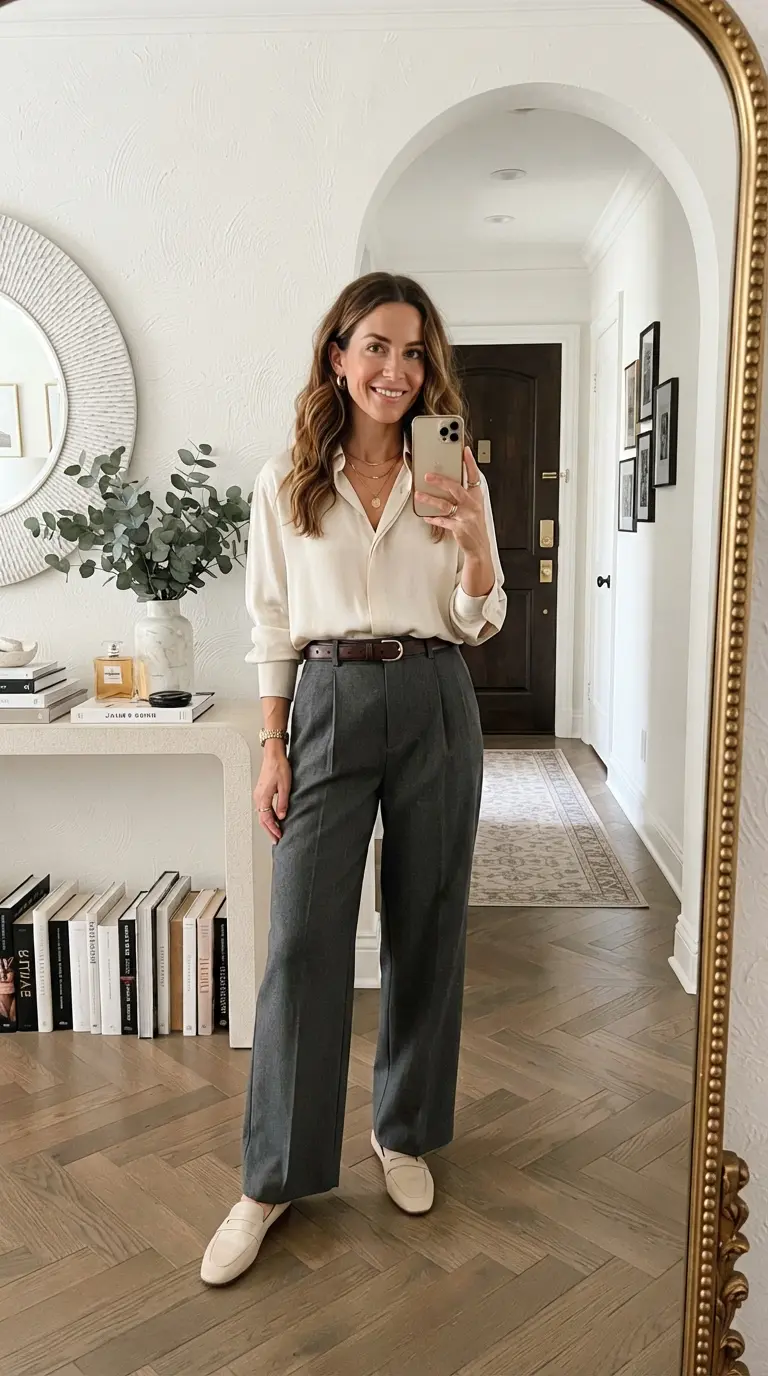
A long, unbroken denim line, a sharp heel, and one structured layer create a considered silhouette that’s genuinely hard to fake — and it has nothing to do with pattern, print, or logo. Proportion is the quiet, underrated skill behind every expensive-looking outfit.
This is why the same simple formula keeps working across seasons and trends. Once you understand how to balance fitted and relaxed pieces, you can apply it to almost any combination of clothes you already own.
Tips for Mastering Proportion
- Balance a fitted bottom with a slightly looser top, or vice versa — avoid fitted-on-fitted or loose-on-loose
- Keep hemlines and layers clean, without excess bunching or bulk
- Step back and check your silhouette in a full-length mirror before heading out
13. Tucked-In Silhouettes for a Cleaner Line
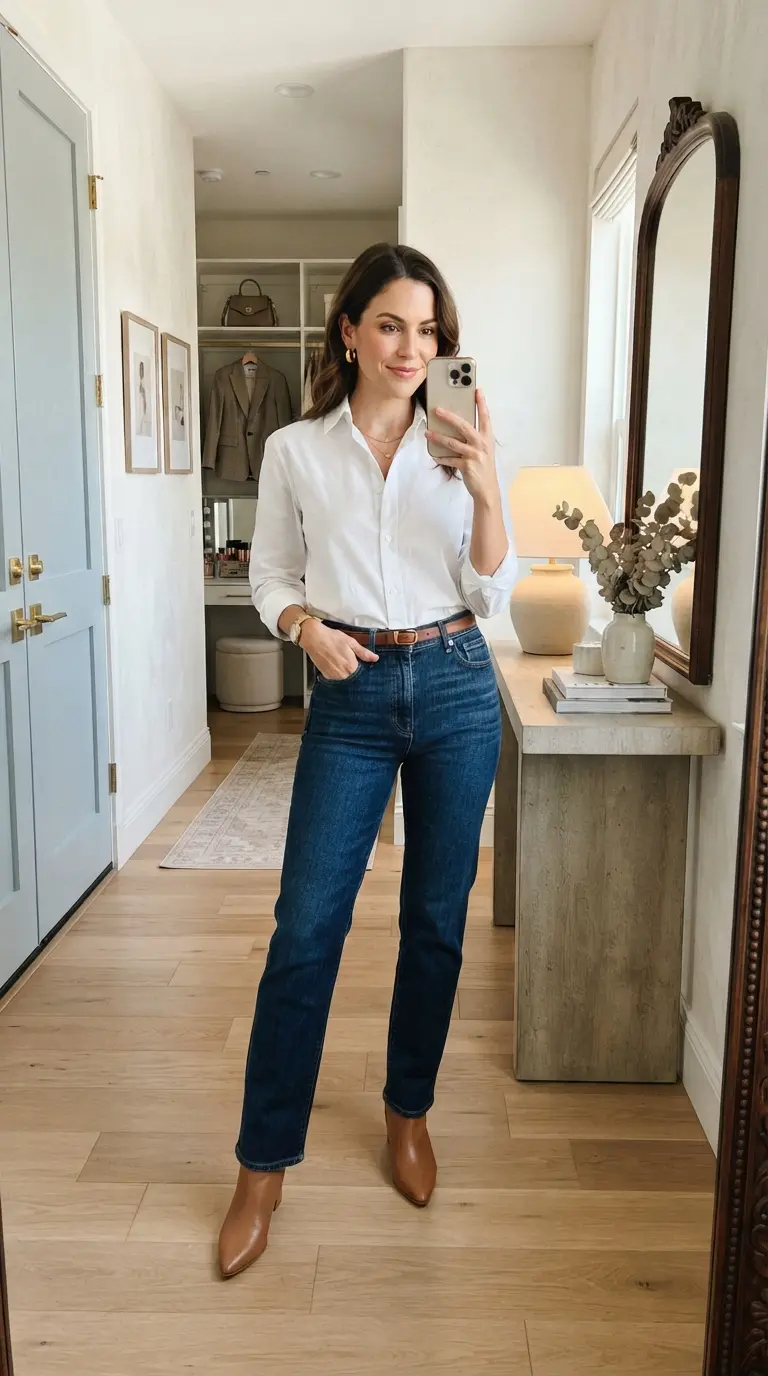
A simple tuck — front-tuck, full tuck, or French tuck — instantly sharpens an outfit’s silhouette and makes the waist and hips read more intentional. It’s a tiny adjustment that takes seconds but changes how the whole outfit sits.
This detail matters most with the denim-and-structured-piece formula, since an untucked top can hide the clean line the jeans are working so hard to create. A quick tuck keeps the proportions doing their job.
Tips for Tucking Like a Pro
- A French tuck (partial, on one side) works well with looser tops
- Blouse over the waistband slightly for a softer, less severe line
- Add a thin belt to define the waist further if the top allows
14. Minimal Jewelry, Maximum Impact
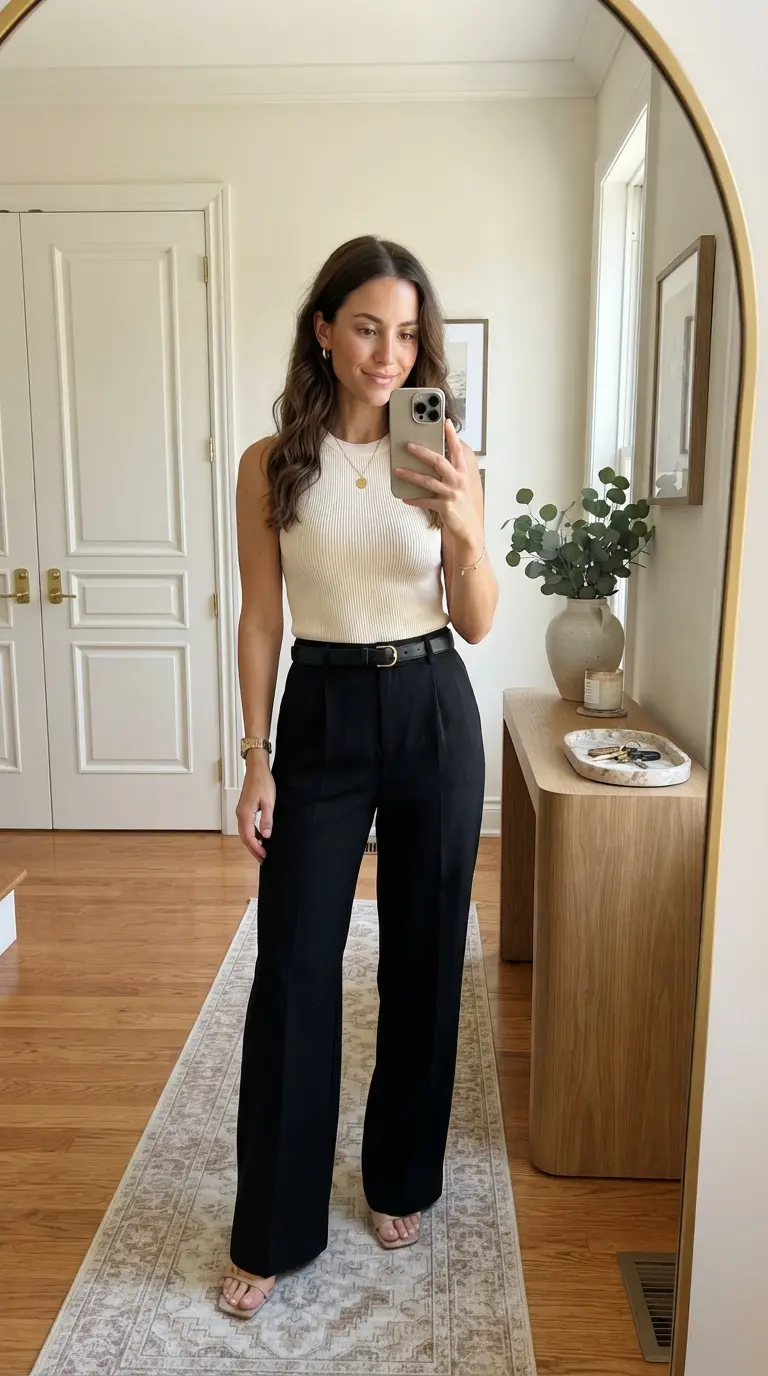
A pair of small hoops, one delicate necklace, or a single statement ring reads far more expensive than layers of mixed-metal jewelry. Restraint applies to accessories just as much as it applies to clothing in this formula.
The goal is for jewelry to feel like a quiet finishing touch, not a competing element. Fewer, better pieces consistently look more considered than a fully loaded jewelry box.
Tips for Minimal Jewelry Styling
- Stick to one metal tone throughout the outfit
- Choose one statement piece and let everything else stay simple
- Remove one accessory before leaving the house — it usually improves the look
15. A Wool-Blend Coat as Your Anchor Piece
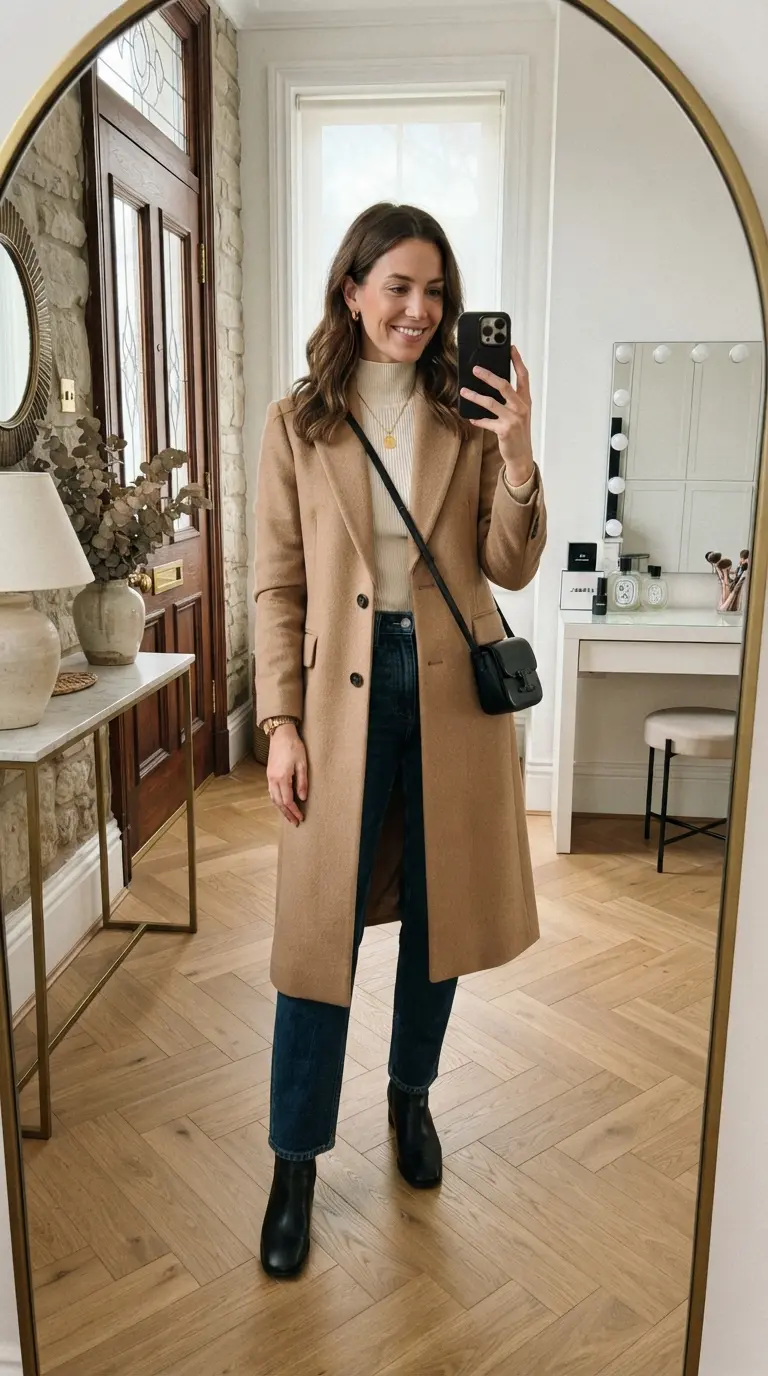
A well-fitted wool-blend coat in camel, black, or gray instantly upgrades whatever’s underneath it, even a basic tee and jeans. Because outerwear is often the first thing people notice, it’s one of the highest-impact investments in this whole formula.
Choosing one excellent coat over several trendy, lower-quality options means you always have a reliable, expensive-reading layer ready to throw over anything — which is exactly the kind of low-effort, high-payoff styling this formula is built on.
Tips for Choosing an Anchor Coat
- Prioritize fit and fabric weight over trend details like exaggerated shoulders or unusual cuts
- Neutral tones outlast seasonal colors and pair with far more of your wardrobe
- Have it tailored at the shoulders and sleeves if needed — this makes the biggest visual difference
16. Slingback Heels for Effortless Elegance
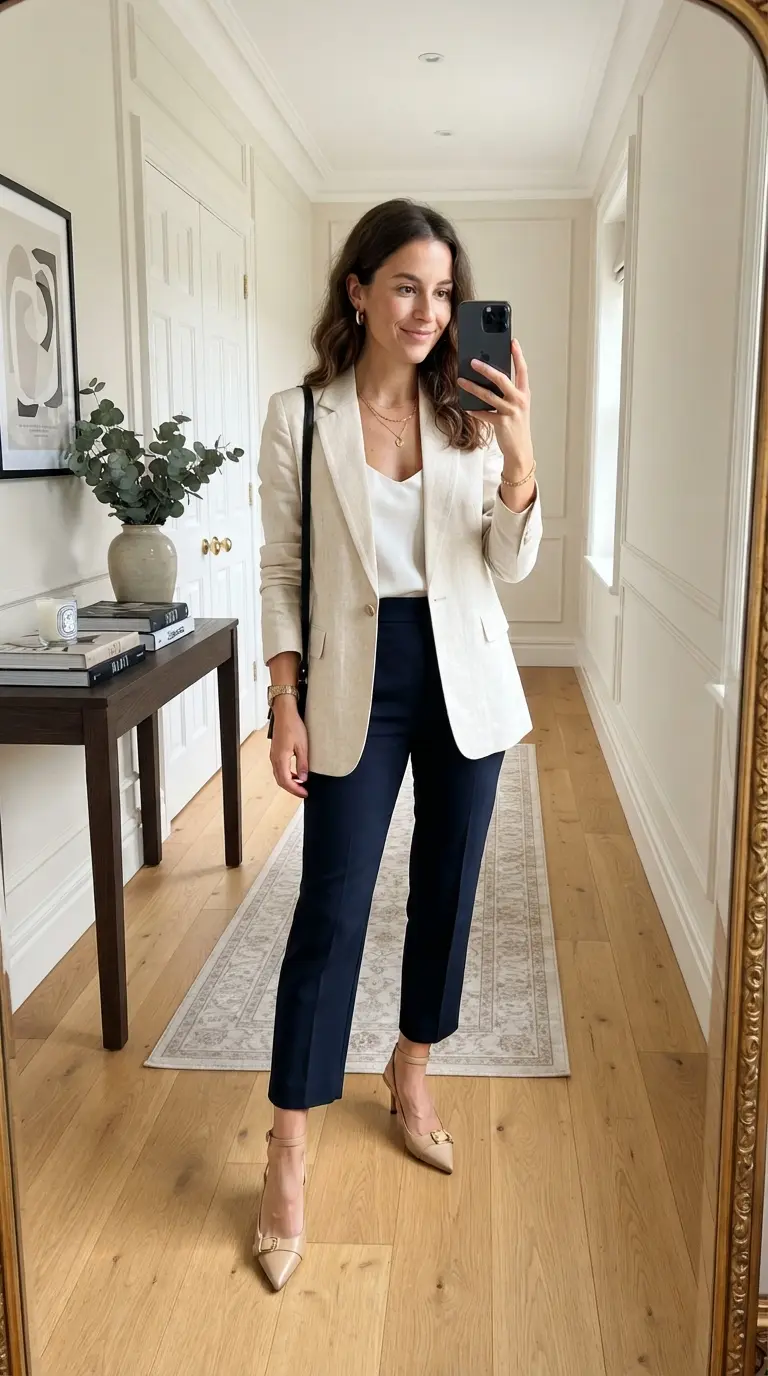
A slingback heel offers the same polished, pointed-toe effect as a pump but with a slightly more relaxed, breathable fit — making it an easy everyday option within the formula. It reads just as elevated without feeling as formal.
This shoe style works especially well for the weekend and dinner versions of the formula, since it bridges the gap between fully dressed-up and casual without ever tipping into sloppy territory.
Tips for Styling Slingbacks
- Choose a low block heel version for all-day comfort without losing the polished line
- Match the shoe tone to your bag for a coordinated finish
- Pair with cropped or ankle-length denim so the shoe stays visible
17. The Oversized Cardigan Upgrade
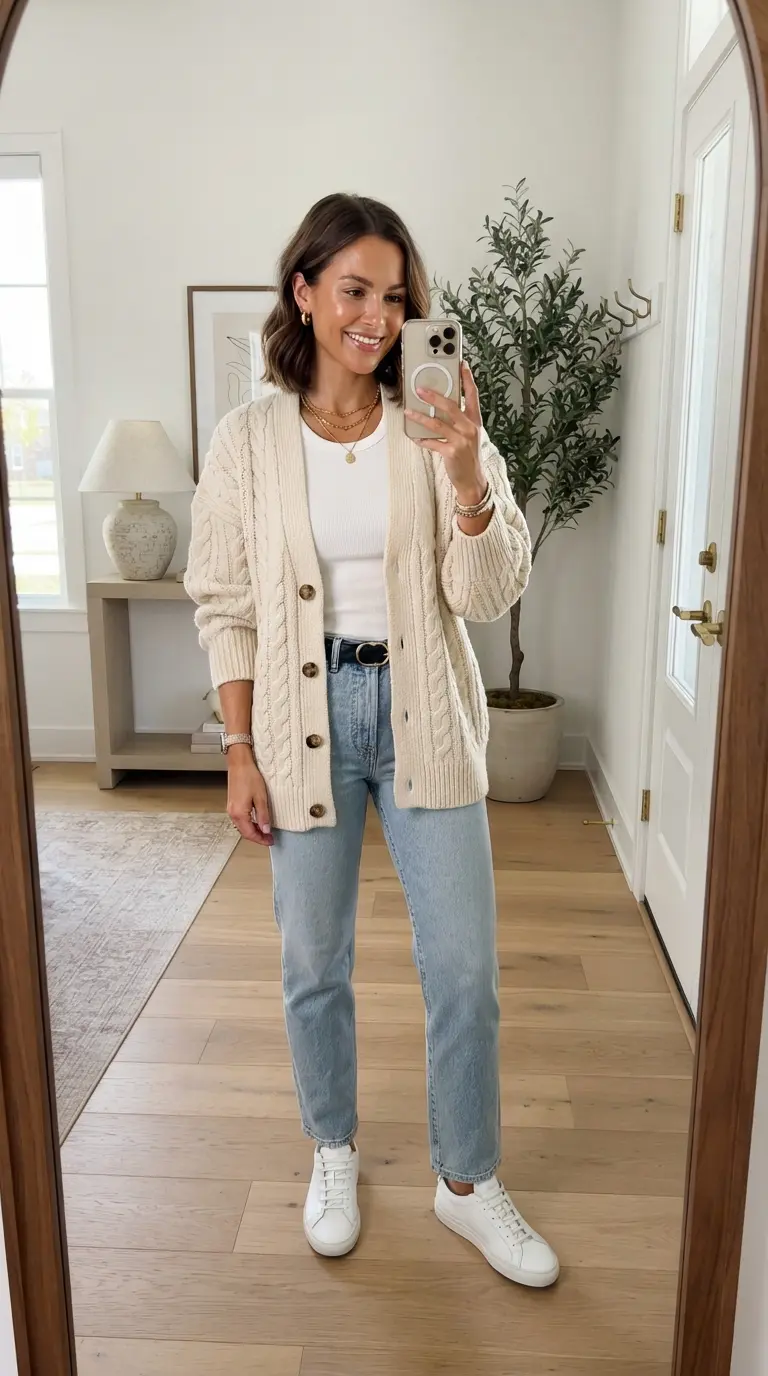
Swapping the tailored blazer for a well-fitted oversized cardigan keeps the formula’s structure while softening the overall mood — perfect for cooler days or more relaxed settings. It still reads as intentional, just less formal.
The key is choosing a cardigan with some shape and weight rather than something overly slouchy, so it still contributes structure to the outfit rather than undoing the polish the jeans and heels created.
Tips for the Oversized Cardigan Version
- Choose a rib-knit or structured cardigan over anything too soft or stretched out
- Layer over a simple fitted top so the proportions stay balanced
- Add a belt at the waist if you want more defined shape
18. Building a Capsule Around the Formula
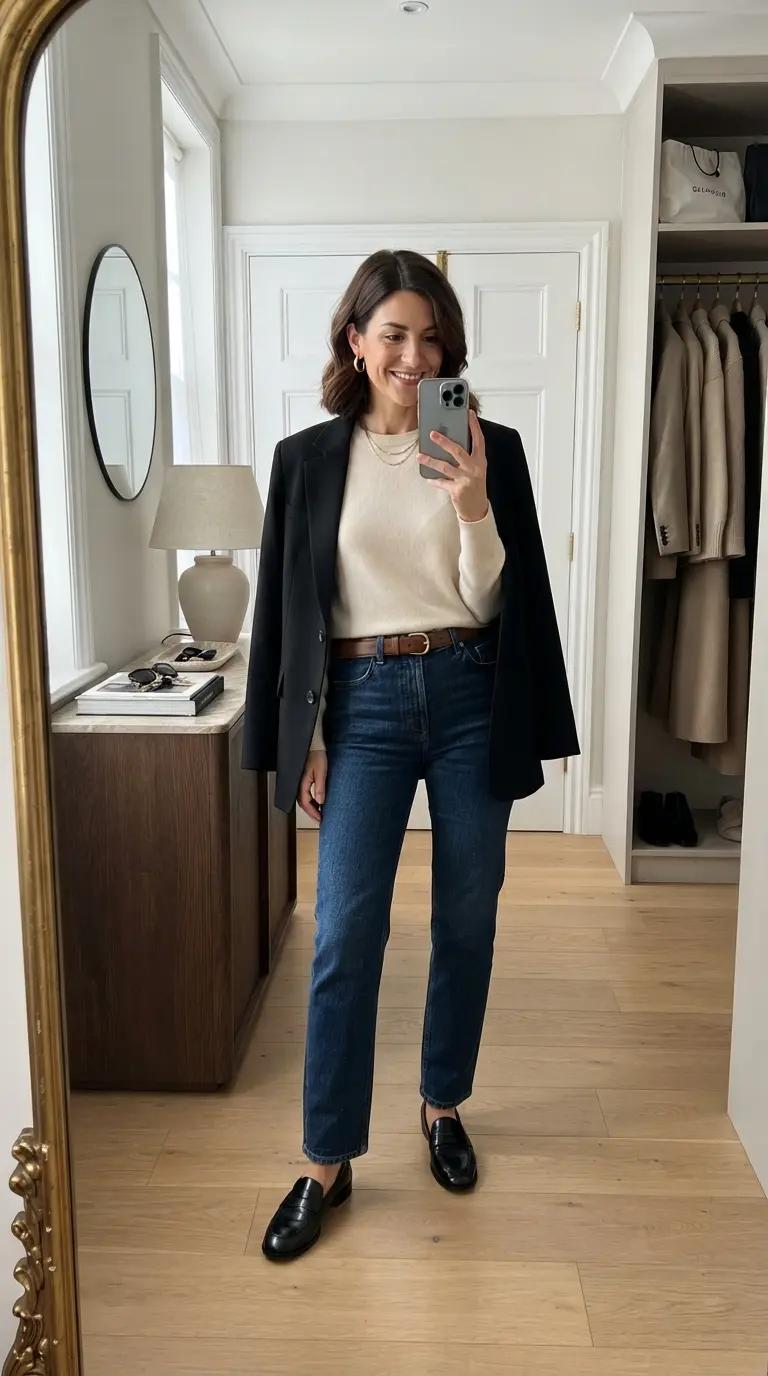
Once you understand the core formula — clean denim, a sharp heel, one structured piece, one quality fabric, and a structured bag — you can build an entire capsule wardrobe around it. A handful of well-chosen pieces recombine into dozens of expensive-looking outfits.
This is really the whole point of the formula: it’s not about buying more, it’s about styling what you already own with more intention. Once the base pieces are in place, getting dressed becomes less about decision-making and more about simple, repeatable combinations.
Tips for Building Your Capsule
- Start with one great pair of jeans, one heel, one blazer, and one bag before adding more
- Choose everything in a cohesive neutral palette so pieces mix freely
- Add one or two statement pieces (a coat, a bold heel) once the basics are solid
FAQs
What makes an outfit look expensive without designer labels? Fit, fabric quality, and restraint matter far more than logos. Clean lines, one structured piece, and a well-fitted silhouette read as expensive regardless of brand.
What’s the easiest way to start building this look? Begin with one well-fitted pair of dark, straight-leg jeans and one pointed heel — these two pieces alone instantly upgrade most outfits.
Do I need to buy new clothes to achieve this? Not necessarily. Many people already own pieces that fit the formula — the shift is often in how they’re styled, tucked, and paired rather than what’s purchased.
Can this formula work for petite or plus-size frames? Yes — the proportion principles (fitted bottom, one structured layer, clean lines) apply across body types, though tailoring for your specific fit will always improve the result.
How many outfits can I really build from this formula? A handful of core pieces — jeans, heels, a blazer, a coat, and a bag — can combine into dozens of distinct outfits simply by swapping one element at a time.
Why Fit and Fabric Beat Logos Every Time
Expensive-looking dressing has almost nothing to do with brand names and everything to do with two things: fit and fabric. A well-tailored piece in a mid-range fabric will consistently outperform a logo-covered item that doesn’t sit right on the body. This is genuinely good news for anyone building a polished wardrobe on a realistic budget — the smartest investment isn’t a designer bag, it’s a good tailor and a few pieces in fabrics with real weight and drape. Once fit and fabric are prioritized, the rest of the formula falls into place naturally.
Final Words
The expensive-looking outfit formula isn’t a secret brand or a bigger budget — it’s proportion, restraint, and a handful of intentional choices repeated consistently. Clean denim, a sharp heel, one structured piece, and a bag that holds its shape will take you further than any logo ever could. Pick a few ideas from this list, build them around pieces you already own, and let the small details do the talking.
Don't miss the next one
Quick outfit ideas and beauty tips, straight to your inbox.