
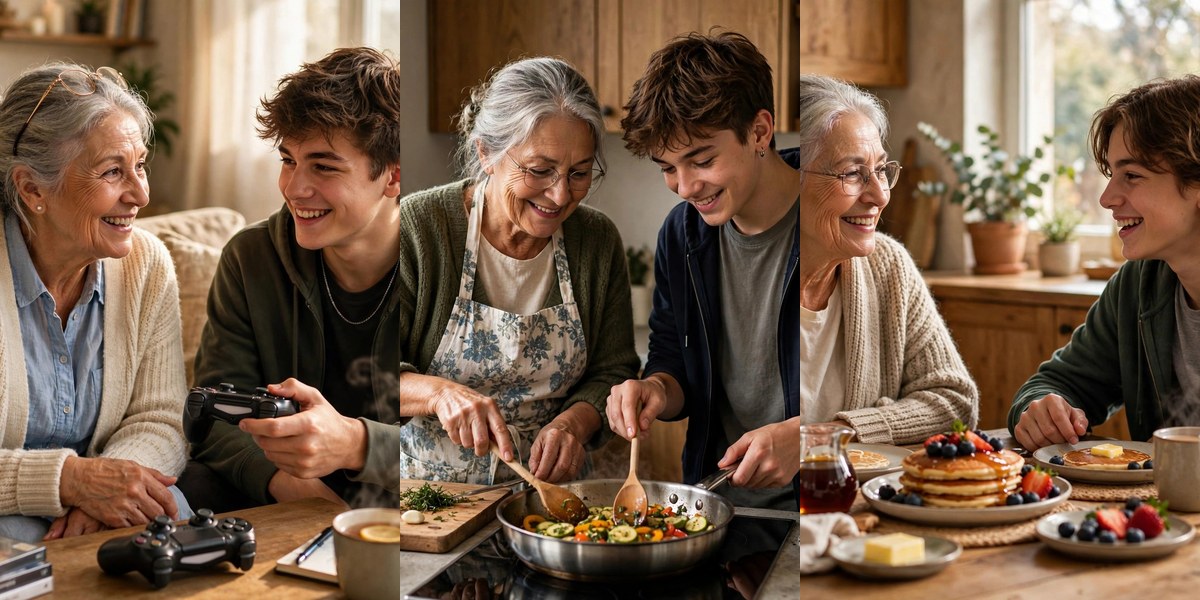
What if your teenage grandchildren’s distance isn’t rejection — just renovation? Behind those one-word answers and closed bedroom doors, the kid who adored you is still in there, rewiring for adulthood.
It hurts, and you’re allowed to say so. But here’s the reframe worth holding onto: teens don’t stop needing their grandparents. They just need you differently — less director, more safe harbor.
These 12 gentle ways to bond aren’t tricks or guilt trips. They’re small, steady doors back into their world — opened at their pace, on their terms.
💛 Why Their Distance Hurts
The grief is real and rarely named: you lost the little kid who climbed into your lap, and nobody sent a card. It’s okay to mourn that version while learning to love this one.
The relationship isn’t over — it’s under construction. Everything below is designed for exactly this season.
1. 📱 Learn Their World — Really

Ask about the game, the show, the music — and actually listen to the answer. Watch one episode of whatever they love. Teens open up to adults who take their interests seriously instead of dismissing them.
Try this: Say “teach me” — ask them to show you one thing they love this week.
Make it yours: Keep a running list of their favorites to reference later.
Avoid: Don’t fake enthusiasm — genuine curiosity beats fake every time.
2. 💬 Text Like They Do

Short texts, the occasional meme, zero pressure to reply — that’s the teen love language. A funny photo or a “thinking of you” text says you’re in their world without demanding a performance in return.
Try this: Send one low-pressure text a week — nothing that needs an essay answer.
Avoid: Don’t double-text if they don’t reply; patience signals respect.
Budget tip: Free — and often more effective than a call.
3. 🎮 Let Them Be the Expert

Ask for their help — with your phone, a playlist, a recipe video. Teens who feel competent around you relax. Being the expert flips the dynamic and gives them a real reason to engage.
Try this: “Can you show me how to…?” — then genuinely learn.
Make it yours: Let them set up your phone’s home screen their way.
Avoid: Don’t turn it into a test — there are no wrong answers here.
4. 🎧 Share Music Across Generations
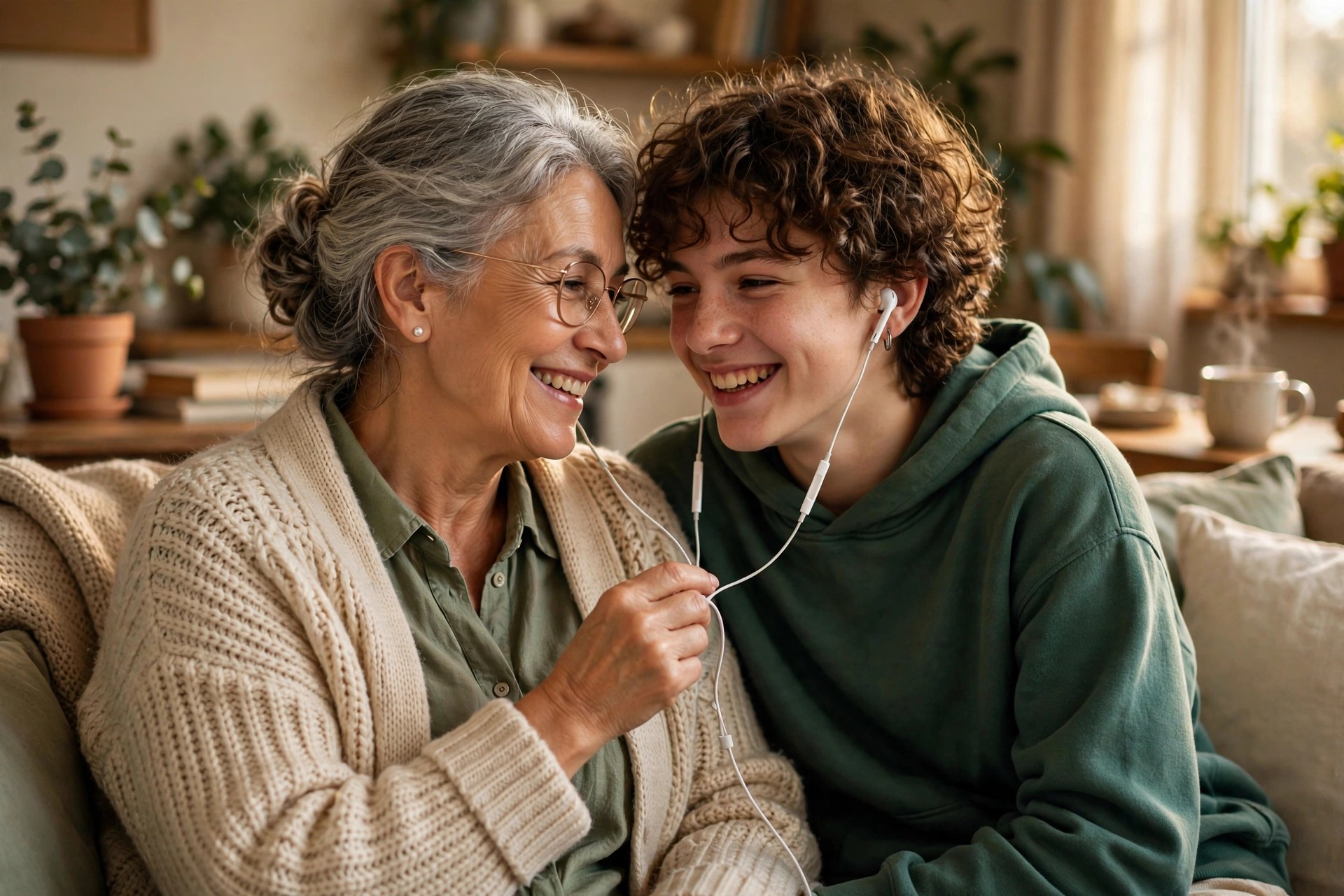
Trade playlists — three of your songs, three of theirs. Music is the fastest bridge between generations, and you’ll both discover something new. No judgment allowed on either side.
Try this: Make it a monthly ritual — “playlist swap Sunday.”
Budget tip: Free on any streaming service you already have.
Make it yours: Save the best swaps into one shared playlist.
5. 🍔 The Food Run Date
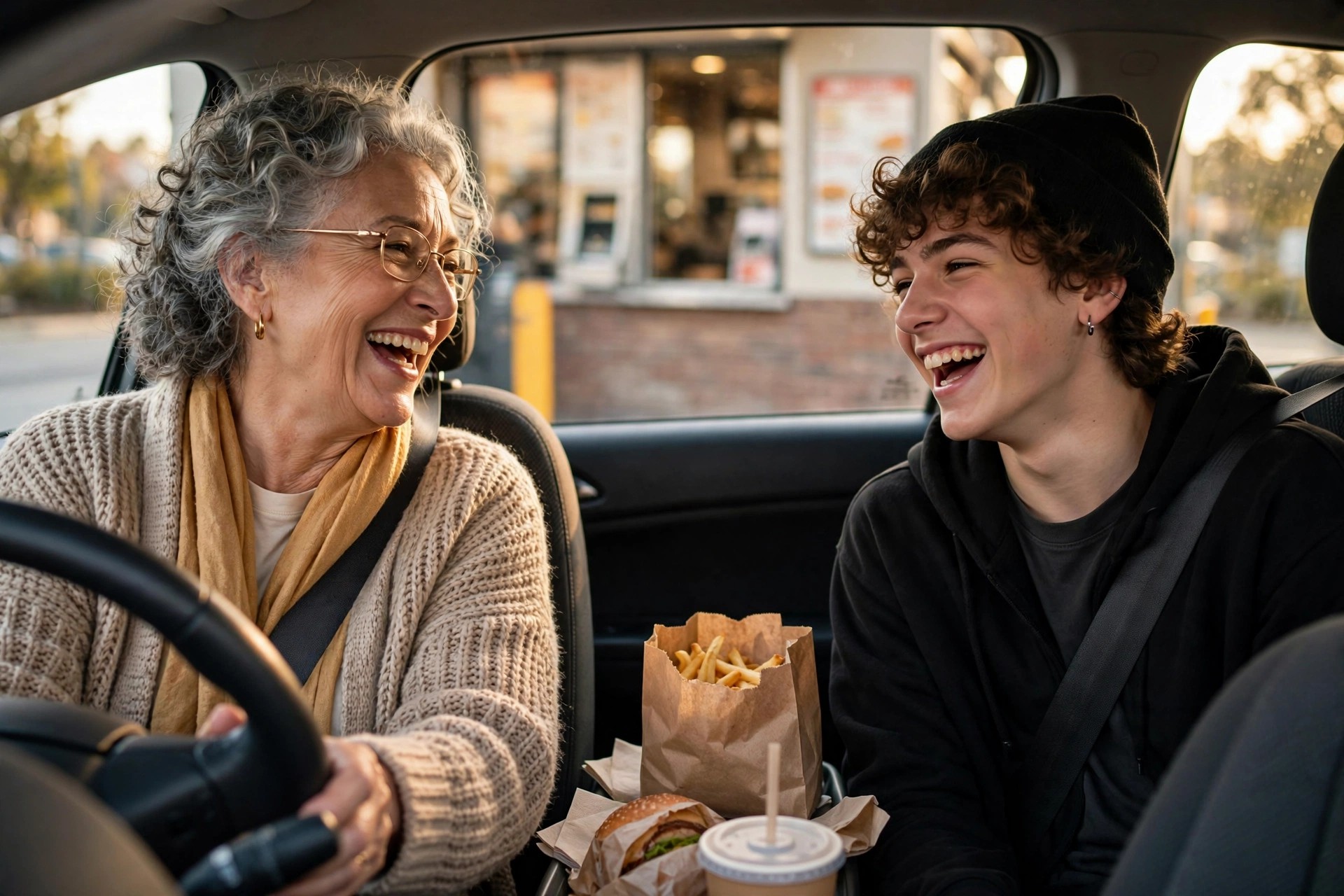
A drive-thru run beats a forced sit-down dinner every time. Teens talk more in cars and over milkshakes than across a formal table — something about the low eye contact makes honesty easier.
Try this: “I’m grabbing tacos — want to ride along?”
Make it yours: Make it a standing thing — the “Friday fries run.”
Budget tip: Fast food is cheaper than therapy and sometimes just as effective.
6. 🚶 Side-by-Side Time

Walking, cooking, driving practice, gardening — teens open up during shared activities, not face-to-face interrogations. The conversation happens in the gaps, so create the gaps.
Try this: Invite them to help with one real task — no agenda beyond togetherness.
Avoid: Don’t turn the activity into a lecture opportunity.
Make it yours: Find the one side-by-side thing that’s yours alone.
7. ☕ One-on-One, No Siblings

In a group, teens perform. Alone with you, they’re themselves. Individual time — even just an hour — tells each grandchild they’re worth your exclusive attention.
Try this: Rotate “dates” so each teen gets solo time.
Make it yours: Let them choose the activity — even if it’s just a walk.
Avoid: Don’t compare them to siblings, ever.

8. 🏀 Show Up to Their Thing

The game, the concert, the robotics meet — being in the audience says “you matter” louder than any gift. You don’t have to understand the activity; you just have to be there.
Try this: Ask for their schedule and put two events on your calendar now.
Avoid: Don’t post their photos without permission — ask first, always.
Make it yours: Bring the same snack or sign every time.
9. 🔒 Respect Their Privacy — Completely
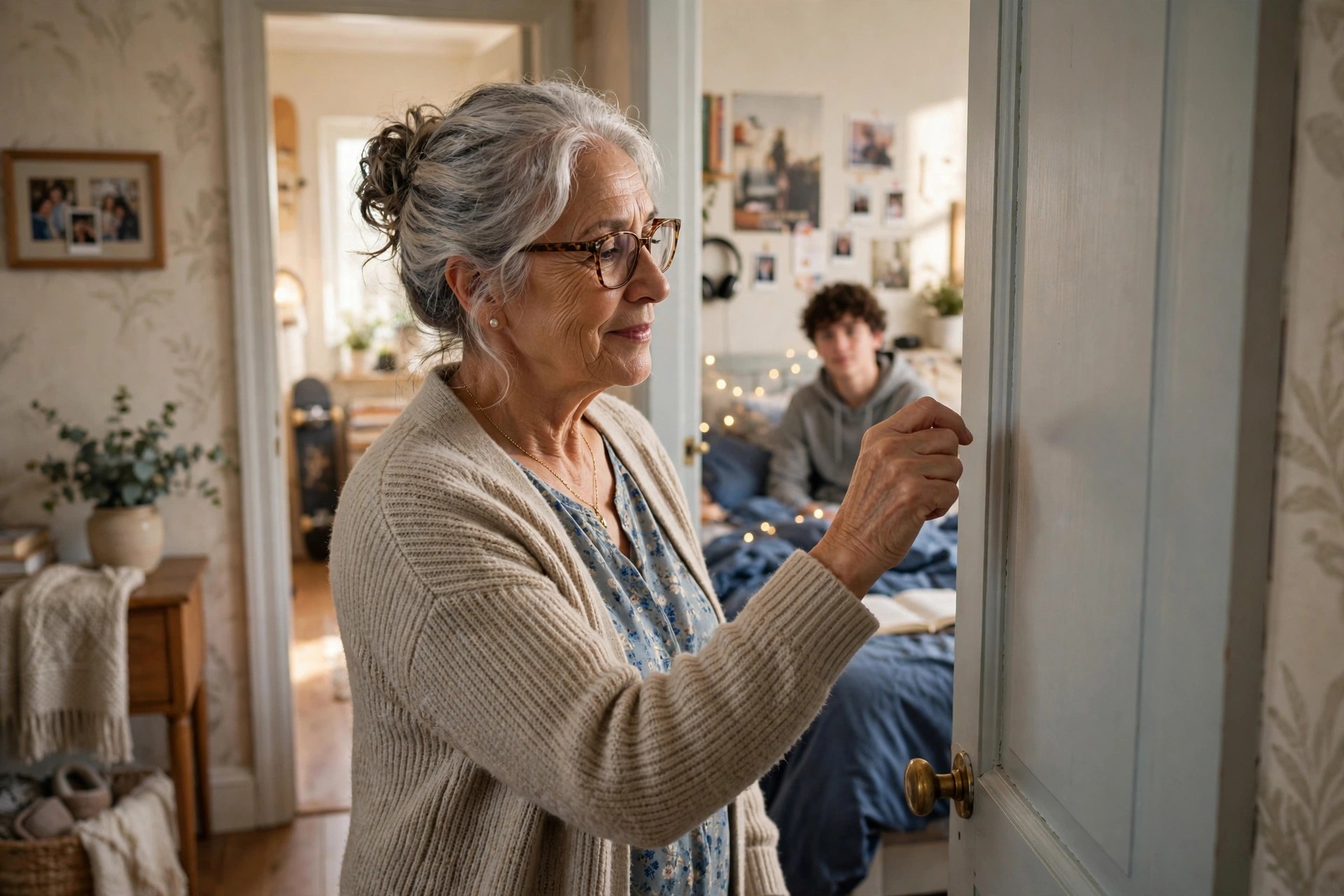
Knock. Don’t read the diary — or the phone. Don’t report everything back to their parents. Teens who trust your discretion tell you things they’d never tell anyone else, and that trust is sacred.
Try this: Say it outright — “What you tell me stays with me, unless someone’s safety is at stake.”
Avoid: The fastest way to lose a teen is to break a confidence.
Make it yours: Be the adult they can tell anything.
10. 😳 Share Your Own Teenage Stories
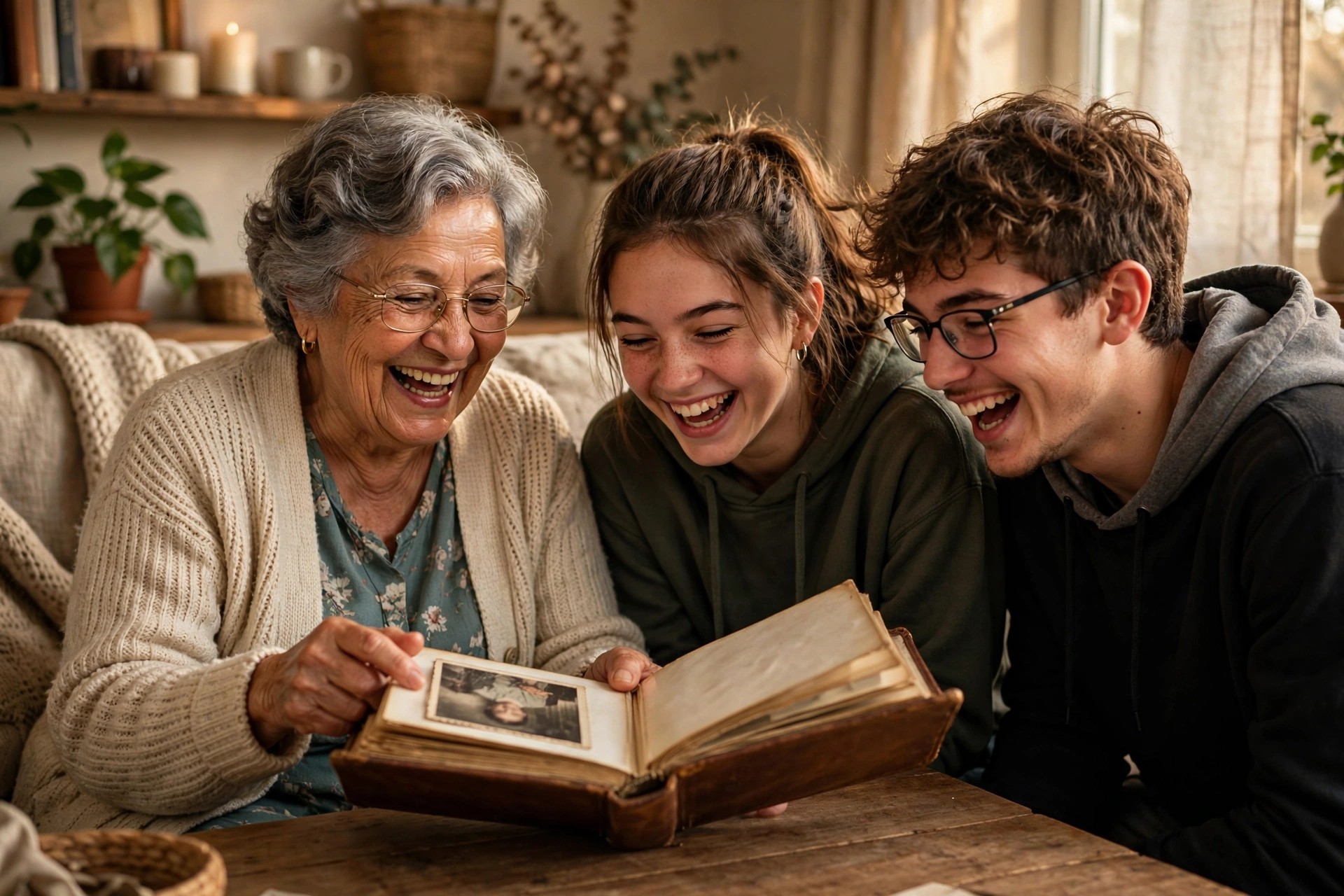
Tell them about your own disastrous haircut, your first heartbreak, the trouble you got into. Teens connect with grandparents who were once gloriously, relatably human — not perfect.
Try this: Show them one embarrassing photo of teenage-you.
Make it yours: The messier the story, the better the bond.
Avoid: Don’t moralize the story — let them draw their own conclusions.
11. 📅 Create a Standing Date
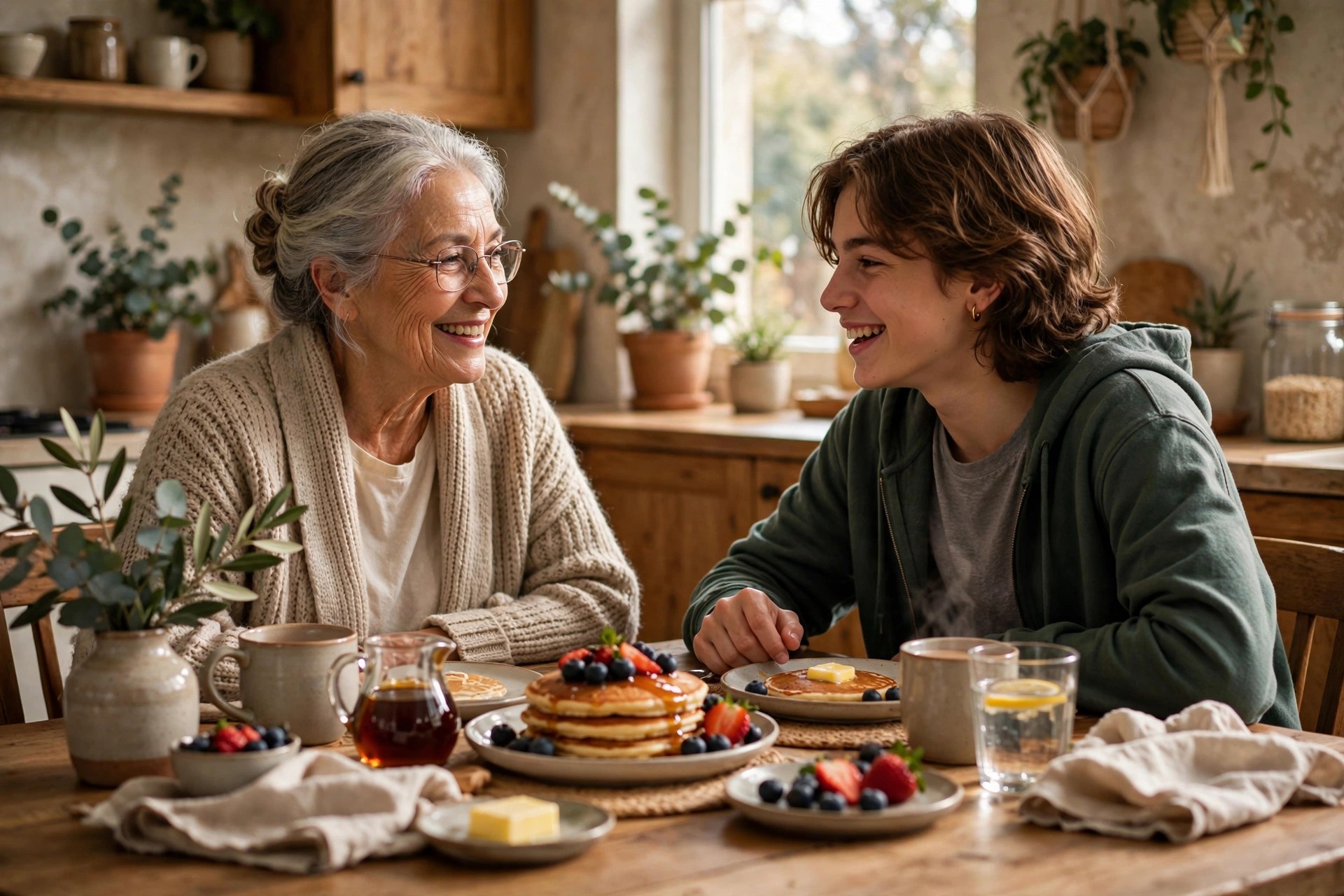
A monthly breakfast, a Sunday call, a summer week — rituals give teens something to count on even when life gets busy. They may act indifferent; they’re not.
Try this: Propose two options and let them pick — ownership matters.
Avoid: Don’t guilt them when they’re busy; flexibility keeps the ritual alive.
Budget tip: A standing pancake date costs little and means everything.
12. 💌 Write Them Notes They’ll Keep
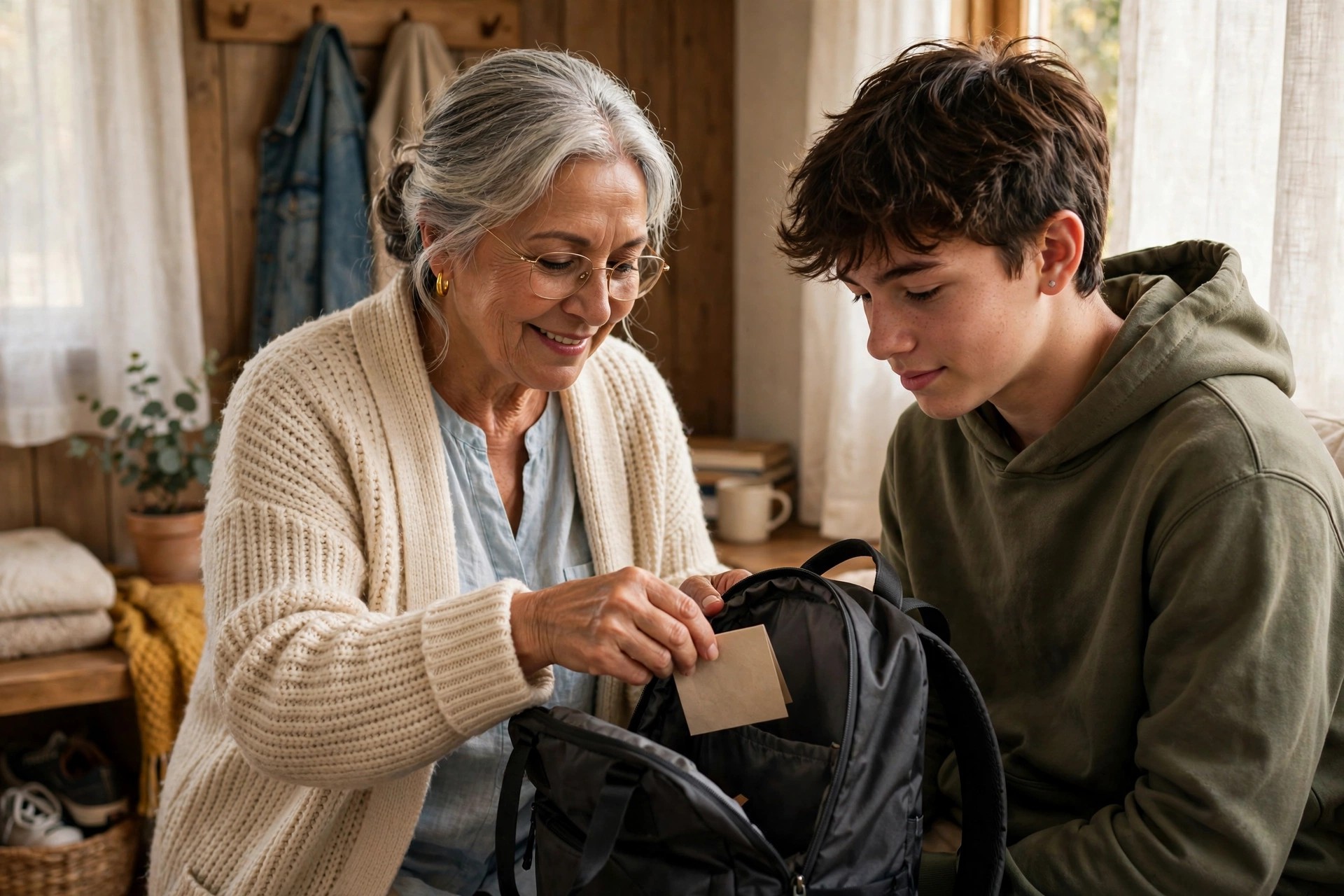
A short note — “proud of you,” “thinking of you” — tucked in a bag or sent by mail lands differently than a text. Teens save these. Years from now, they’ll still have them.
Try this: Slip a note into their bag before they leave your house.
Make it yours: Keep them short — three sentences can change a week.
Budget tip: Paper and pen: the cheapest, most powerful tools you own.
🌱 What Progress Really Looks Like
Don’t measure by enthusiasm — measure by inches. A text back (even “lol”). Accepting the food-run invite. Lingering two minutes longer before disappearing upstairs.
These are not small things; in teen language, they’re declarations. Keep going.
You will get it wrong sometimes — the wrong question, the mistimed call, the joke that landed flat. Teens are forgiving of grandparents who keep trying and are honest about it. “I’m still learning how to do this” is one of the most connecting sentences you own.
❓ Teenage Grandchildren FAQs
Why are my teenage grandchildren so distant?
It’s developmental, not personal — teens are wired to pull toward peers and independence. The distance is usually about their stage, not your relationship. Stay steady, stay available, and don’t take the monosyllables to heart.
How often should I contact teenage grandchildren?
Aim for light, regular contact — a short text weekly, a call or visit monthly. Consistency without pressure is the formula. Let them set the depth; you provide the reliability.
What if they never want to visit?
Make visits easy and appealing: their favorite foods, the Wi-Fi password ready, no forced activities, a comfortable space that’s theirs. And go to them sometimes — showing up in their world speaks volumes.
Should I talk to them about serious topics?
Only if they open the door — and then listen more than you speak. Being a safe, non-judgmental sounding board matters more than any advice. If you’re genuinely worried, tell their parents privately.
How do I bond with a teen I barely know?
Start small and sideways: shared activities, genuine curiosity about their interests, and patience. You don’t need a deep talk — you need repeated, low-pressure presence. Trust compounds quietly.
📖 Keep Reading
- 🍂 Fall Outfits for Women Over 60: 12 Cozy Looks That Feel Elegant — comfortable style for active grandparent days.
- 📚 What to Wear to Book Club Over 50: 12 Cozy, Clever Outfit Ideas — cozy ideas for your own downtime.
- 👗 Classic Style for Women Over 50: 12 Timeless Pieces That Always Work — timeless pieces for every part of your life.
They may not say it — they may barely grunt it — but your teenage grandchildren need you. Keep the door open, keep showing up, and trust that love finds its way through.
One day, they’ll tell their own kids about you. Make it a good story. 💛
Discover more from Fashinate Style
Subscribe to get the latest posts sent to your email.