
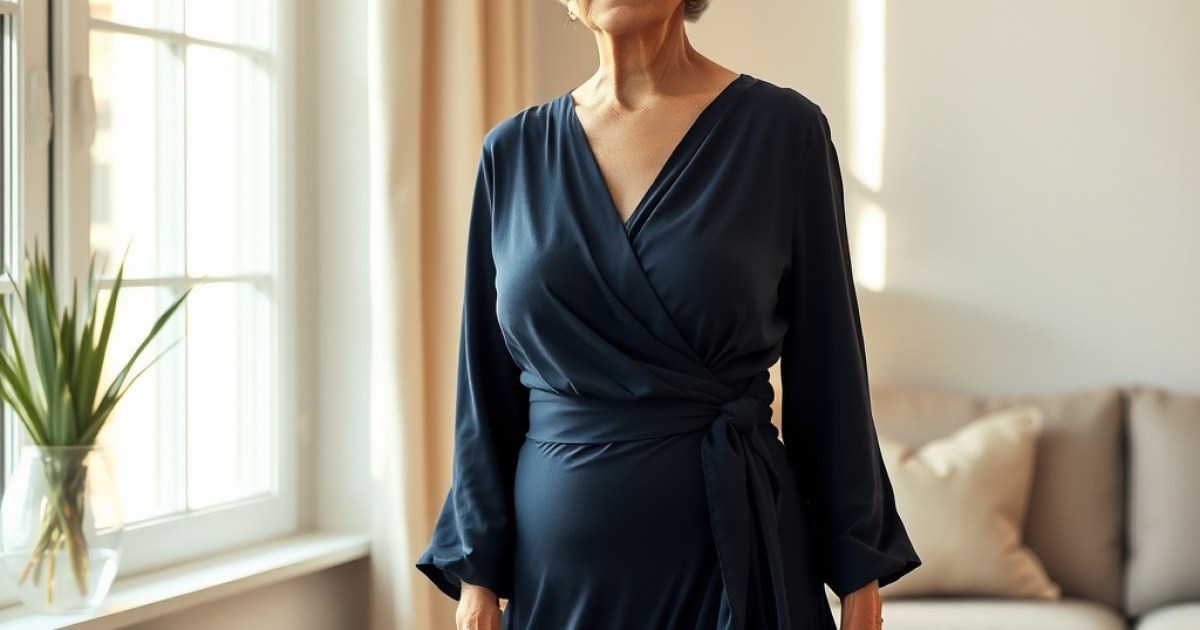
If your middle is your fullest point and your waist has softened with age, getting dressed can feel like a puzzle — but it’s one with very elegant solutions. The apple shape responds beautifully to the right necklines, fabrics, and vertical lines, and after 60 you have every reason to dress for comfort and confidence at once. The goal isn’t to hide; it’s to skim, elongate, and let the eye travel the way you want it to. Here are 10 outfit ideas that do exactly that, without a single restrictive waistband or stiff fabric in sight.
What You’ll Want in Your Wardrobe
- An empire-line midi dress in soft jersey or crepe
- Straight or wide-leg high-rise trousers with a flat front
- A long open duster or unstructured knee-length topper
- Two or three V-neck and scoop tops in drapey fabrics
- A wrap top with a tie you can adjust
- One long pendant necklace and a couple of scarves in your best colors
1. The Empire-Line Dress
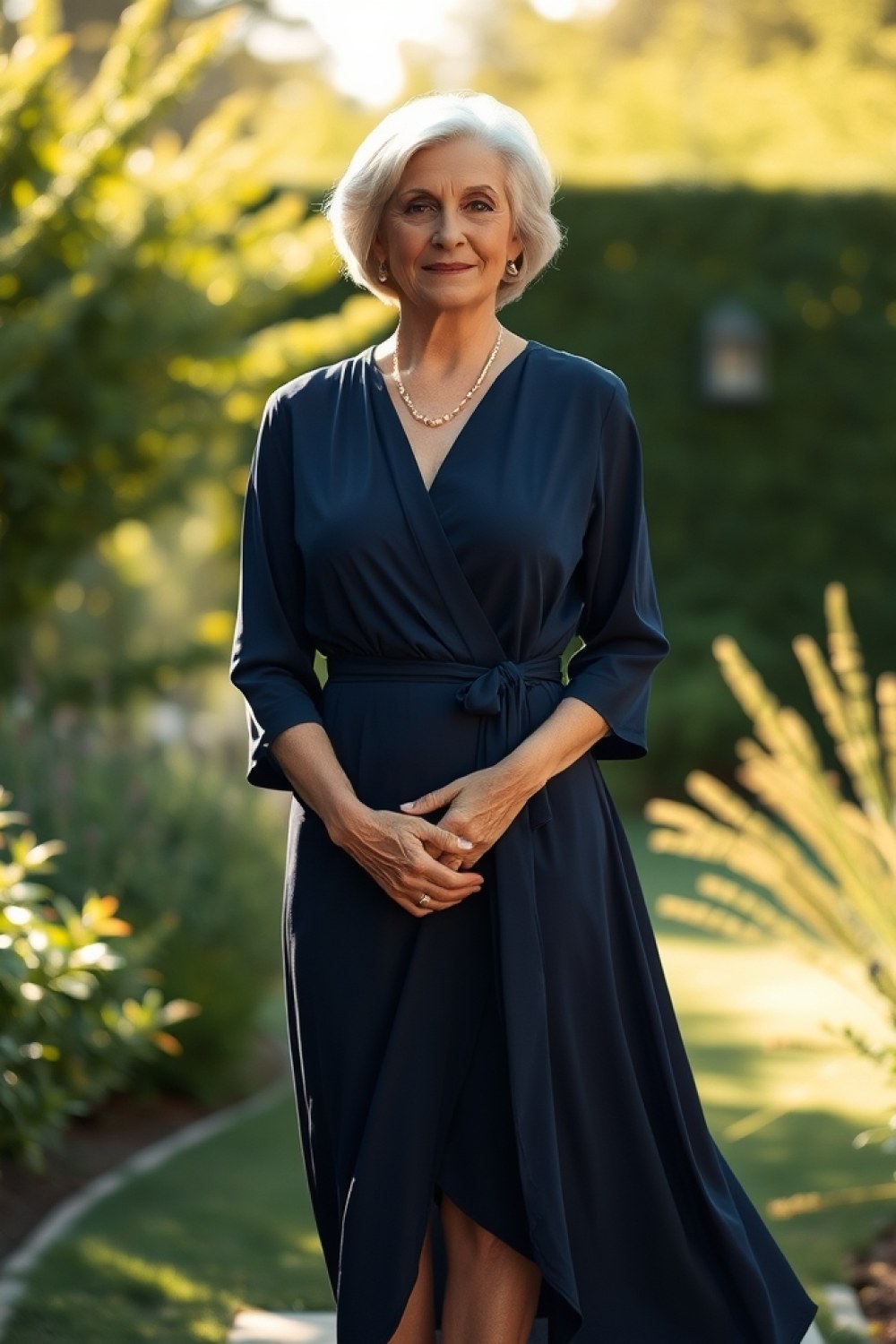
An empire seam sits just under the bust — not at your natural waist — and from there the fabric floats gently over the midsection. It’s one of the few constructions that flatters an apple shape without any effort from you at all. Look for soft jersey or crepe in a midi length; the narrower hem shows off legs that are often one of your best features.
Avoid anything with a defined waist seam or a gathered skirt at the middle. The line should fall clean and unbroken from the bust down.
How to Style It
- Choose a midi that ends at or just below the knee — this is the sweet spot for showing off slimmer legs.
- Add a long pendant necklace that falls to the empire seam or below to reinforce the vertical line.
- Pair with a low block heel or a clean flat in a neutral that matches the dress.
- Skip the belt entirely; the empire seam is doing the waist work for you.
2. Column of One Color
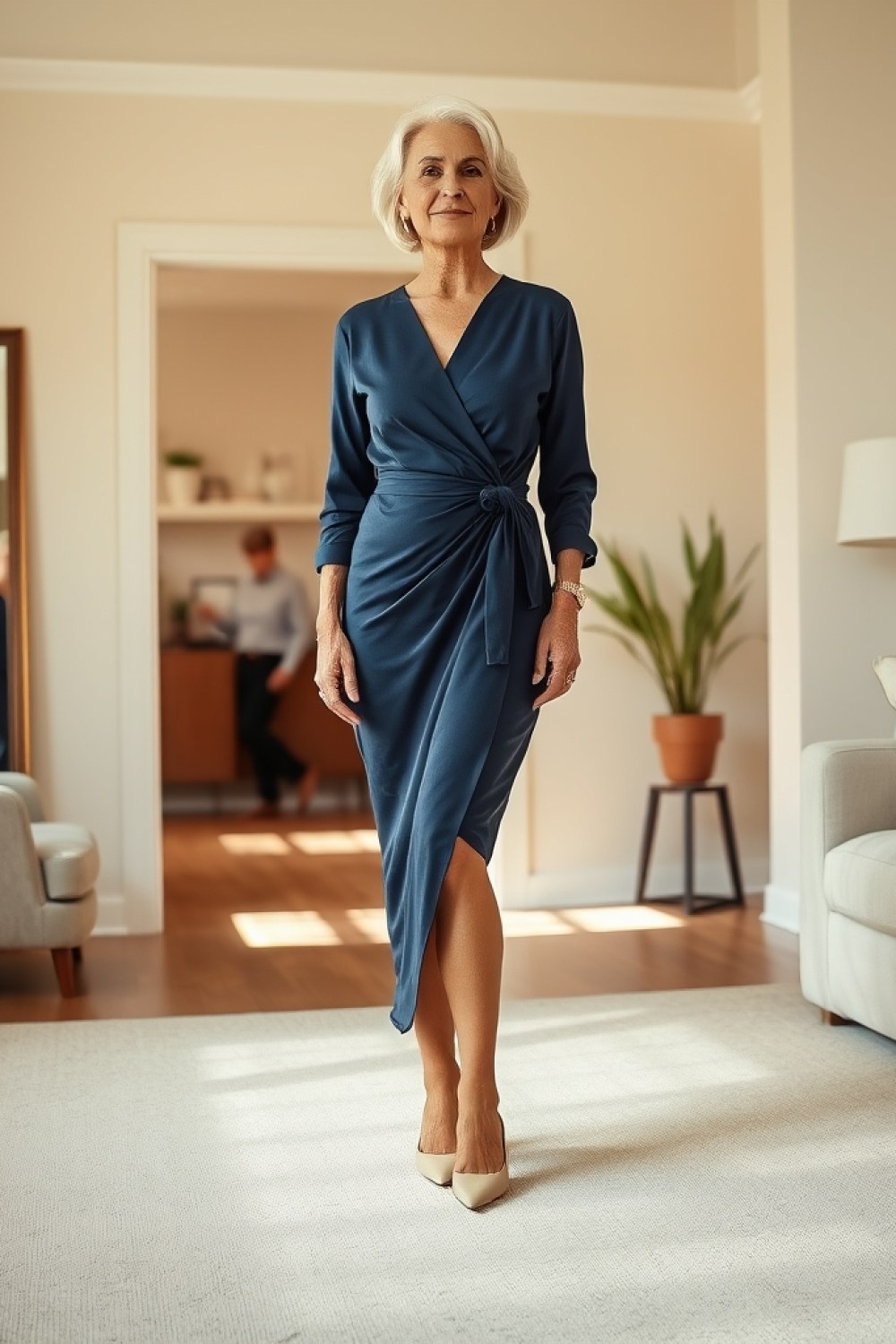
Dressing head to toe in a single tone — navy, charcoal, chocolate, deep teal — creates an unbroken vertical line that reads instantly slimmer. This isn’t about being matchy; it’s about staying within one color family. An ivory top with cream trousers, or a soft grey knit with slate trousers, works just as well as a true match.
The magic is in the continuity. When there’s no horizontal break at the hip or waist, the eye travels straight down.
How to Build the Column
- Pick your base tone and build three pieces around it: top, bottom, and a long open layer.
- Keep the layer — a cardigan or duster — in the same shade so the column never breaks.
- Add contrast only at the extremities: shoes, bag, or a scarf near your face.
- Resist the urge to add a contrast belt; it cuts the line you just created.
3. V-Neck + Straight Leg
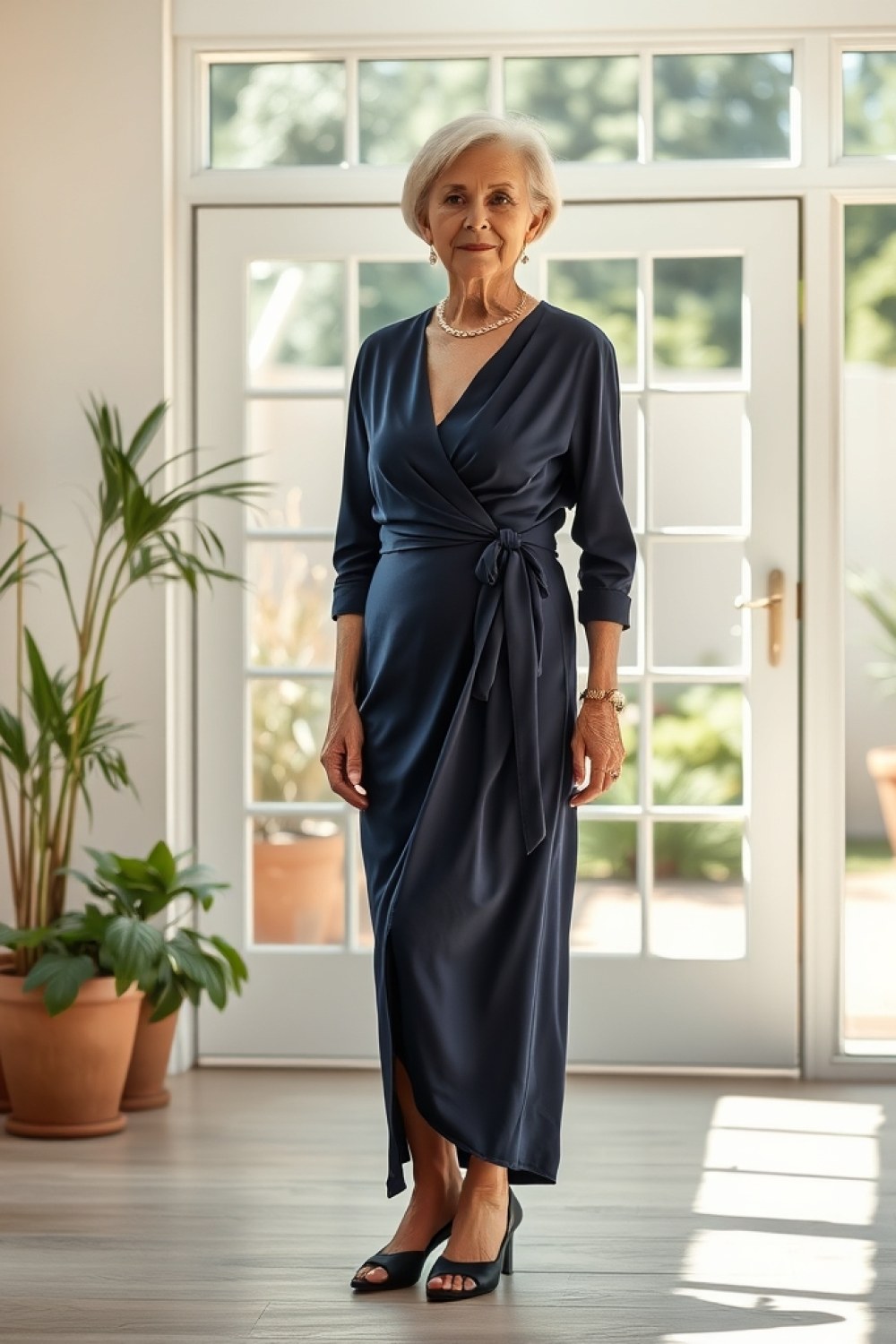
A clean V or scoop neckline lengthens the neck and shifts attention upward, away from the middle. Pair it with straight-leg or slightly tapered trousers — never skinny — that fall in a fluid line from the widest part of the hip. This combination is simple, modern, and endlessly repeatable.
The trouser fit is everything here. They should skim, not grip, and the fabric should move when you walk.
How to Get the Fit Right
- Choose trousers that fall straight from the hip without pulling across the thigh.
- Skip the full tuck — a semi-tuck or a top that ends at the high hip keeps the line clean.
- Keep the neckline open enough to show a little collarbone; it’s instantly flattering.
- Hem the trousers to just skim the top of your shoe for a polished finish.
4. The Long Open Layer
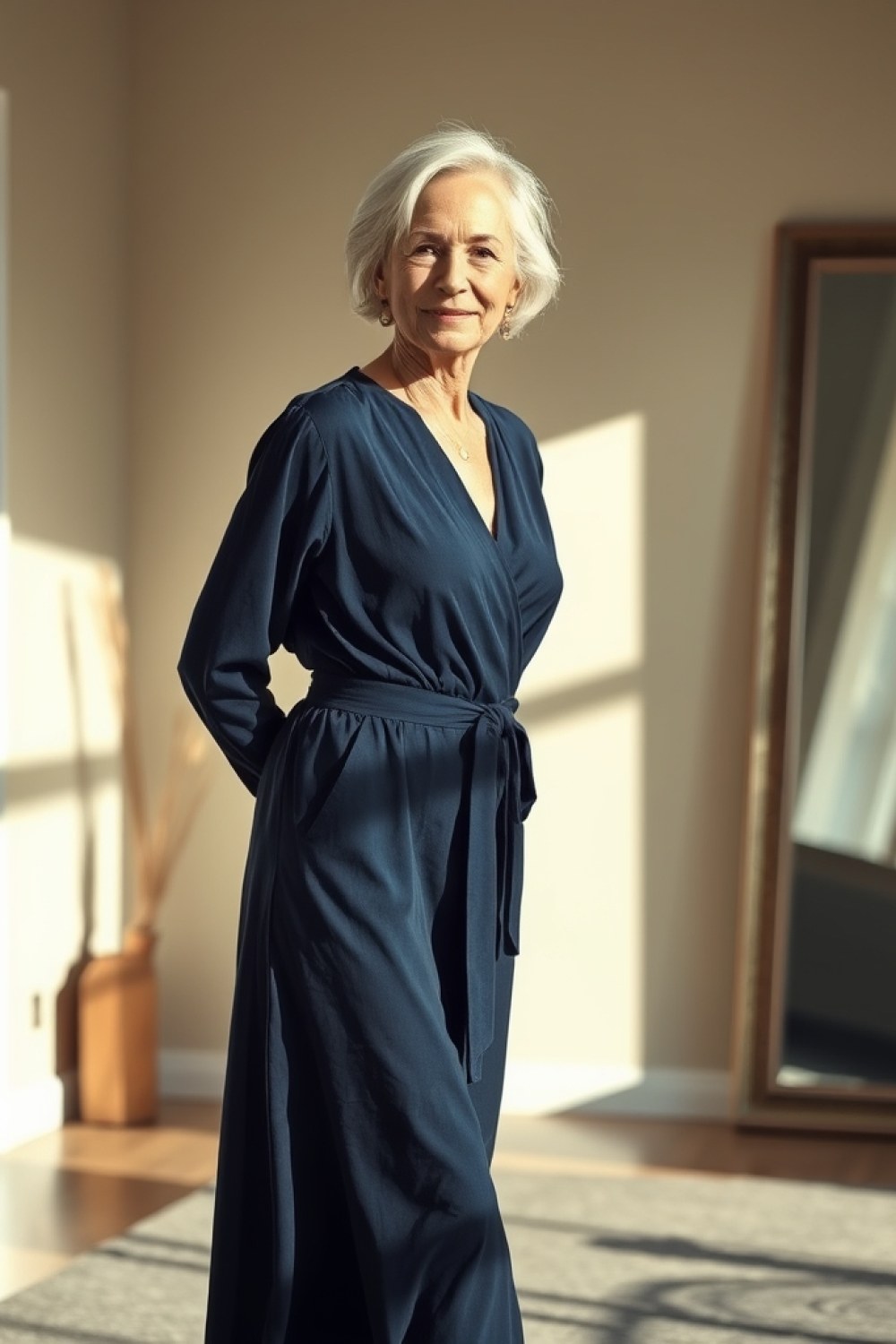
An open duster, long linen shirt, or unstructured blazer worn unbuttoned creates two narrow vertical stripes down the body. Ask any stylist and they’ll tell you this is the single most flattering trick for a fuller tummy. It works because it frames the body in verticals instead of wrapping it in horizontals.
Keep it knee-length or longer, and choose a fabric with a little weight so it hangs straight rather than catching on curves.
How to Wear It Well
- Choose a length that falls to the knee or below — anything shorter loses the vertical effect.
- Wear it open, always; buttoning it creates the bulk you’re trying to avoid.
- Pick a fabric with enough weight to hang straight — mid-weight linen blends and crepe work beautifully.
- Keep what’s underneath column-like and simple so the layer does the work.
5. Wrap Tops, Worn Right
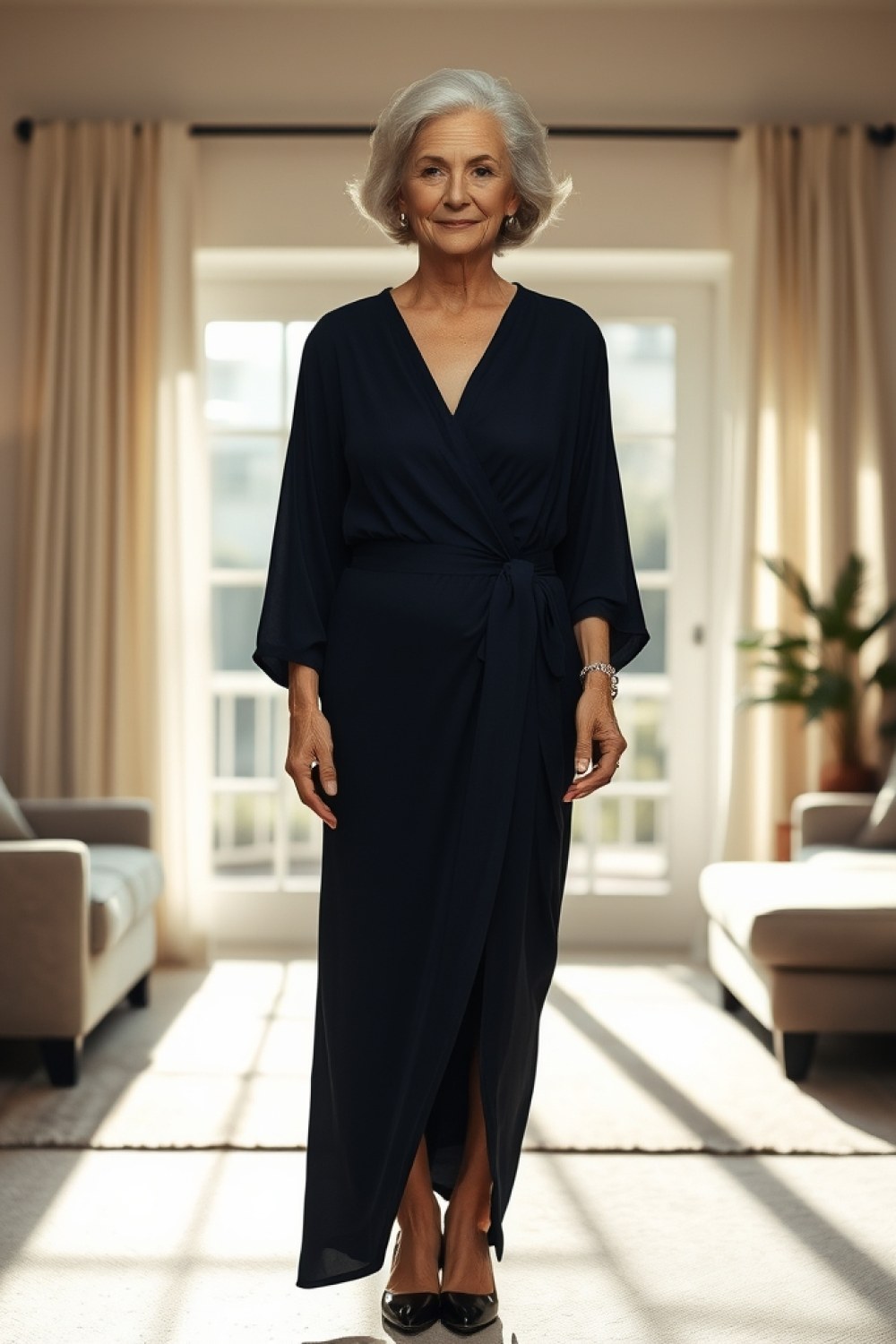
A true wrap top ties at the side or slightly above the natural waist, which means you control the fit instead of fighting it. Look for a jersey wrap with a soft drape and a deeper V — this is not the moment for a stiff, boxy wrap that adds bulk. The drape is what makes it work.
If you’ve avoided wraps because they felt fussy, try one in a fluid fabric with a camisole underneath. You can loosen the tie for comfort and it still looks intentional.
How to Make It Work
- Choose a jersey or modal blend that drapes rather than holds its shape.
- Tie the wrap slightly above your natural waist, not across your fullest point.
- Wear a camisole underneath so you can adjust the tie without worrying about gaps.
- Keep the V deep enough to lengthen the neck but not so deep it gapes when you move.
6. A-Line Skirts With Swing
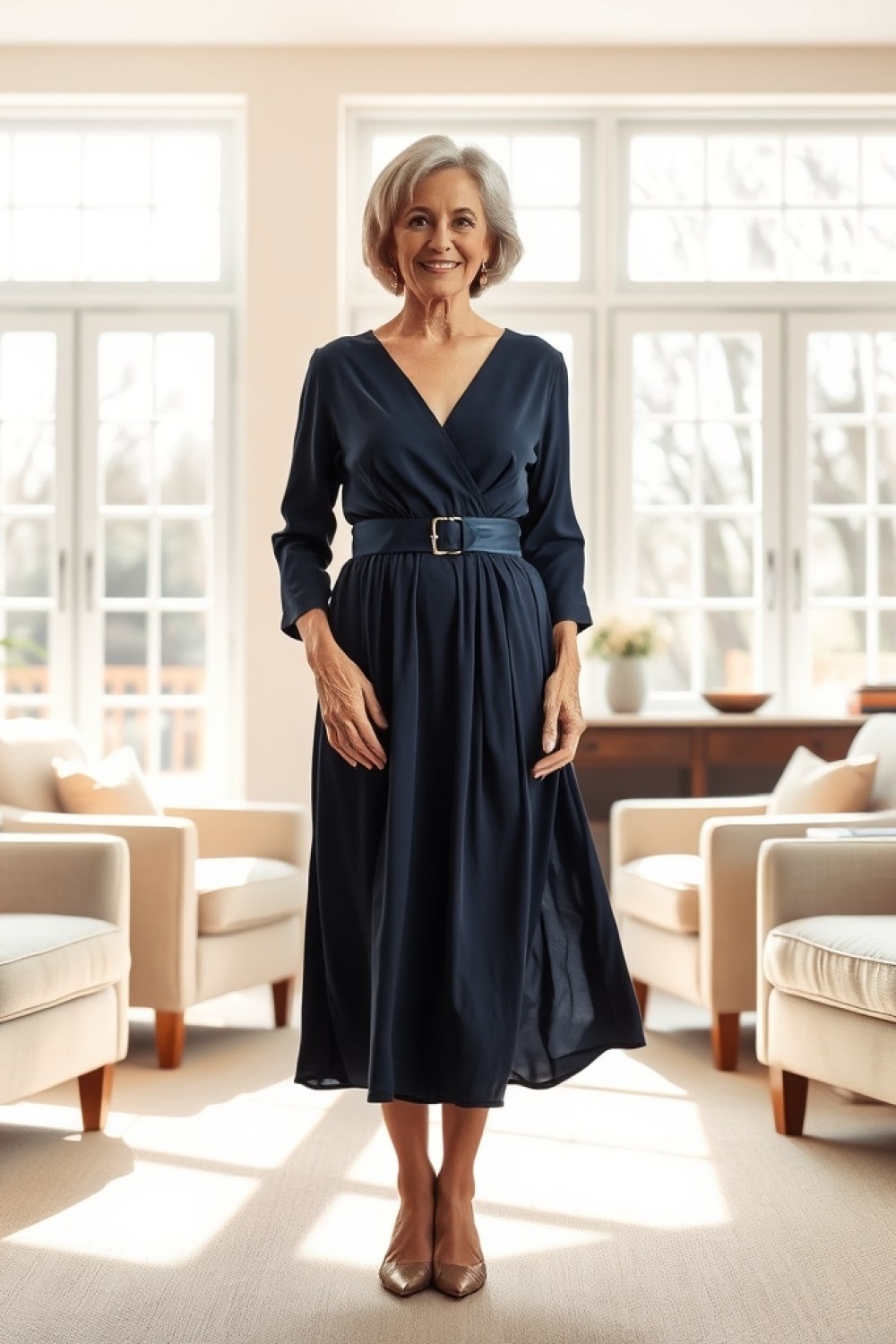
An A-line skirt that starts at the high hip and flares gently skims right over the stomach while showing off your legs. It’s a classic for a reason — the shape does the flattering work without any compression. Knee-length to midi works best, in ponte, wool blend, or lined crepe that holds its shape.
Choose a top that ends at or just below the hip bone. Anything that stops at the widest part of your middle breaks the line.
How to Style It
- Choose a skirt that starts at the high hip and flares from there, not from the waist.
- Pair with a top that ends at or just below the hip bone to keep the line long.
- Add opaque tights and a low block heel when the weather turns cool.
- Keep the top simple — the skirt’s swing is the feature.
7. Statement Neckline, Simple Below
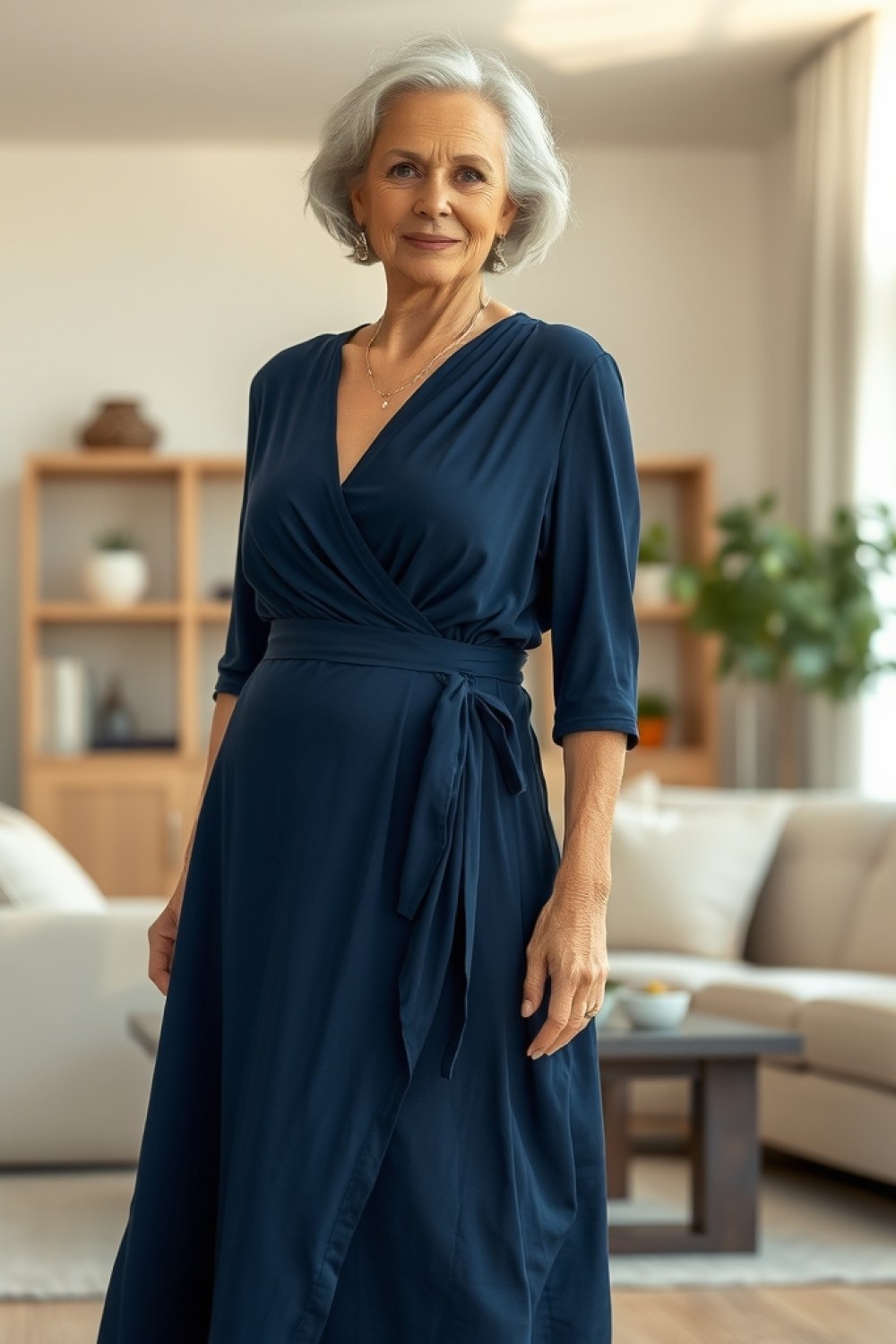
Move the focal point to your face with a portrait collar, a soft cowl, or a beautiful scarf in a color that genuinely suits you. Keep the rest of the outfit quiet and column-like so the eye travels up rather than across. This is the strategy that lets you wear something interesting without drawing attention to your middle.
The rule is simple: one focal point, and it lives above your collarbone.
How to Pull It Together
- Choose one statement element — a collar, a cowl, or a scarf — and stop there.
- Keep everything below in solid, column-like tones.
- Skip chunky belts and busy prints right at the midsection.
- Pick scarf colors that flatter your skin tone; that’s what people will notice.
8. Soft Tailored Trousers
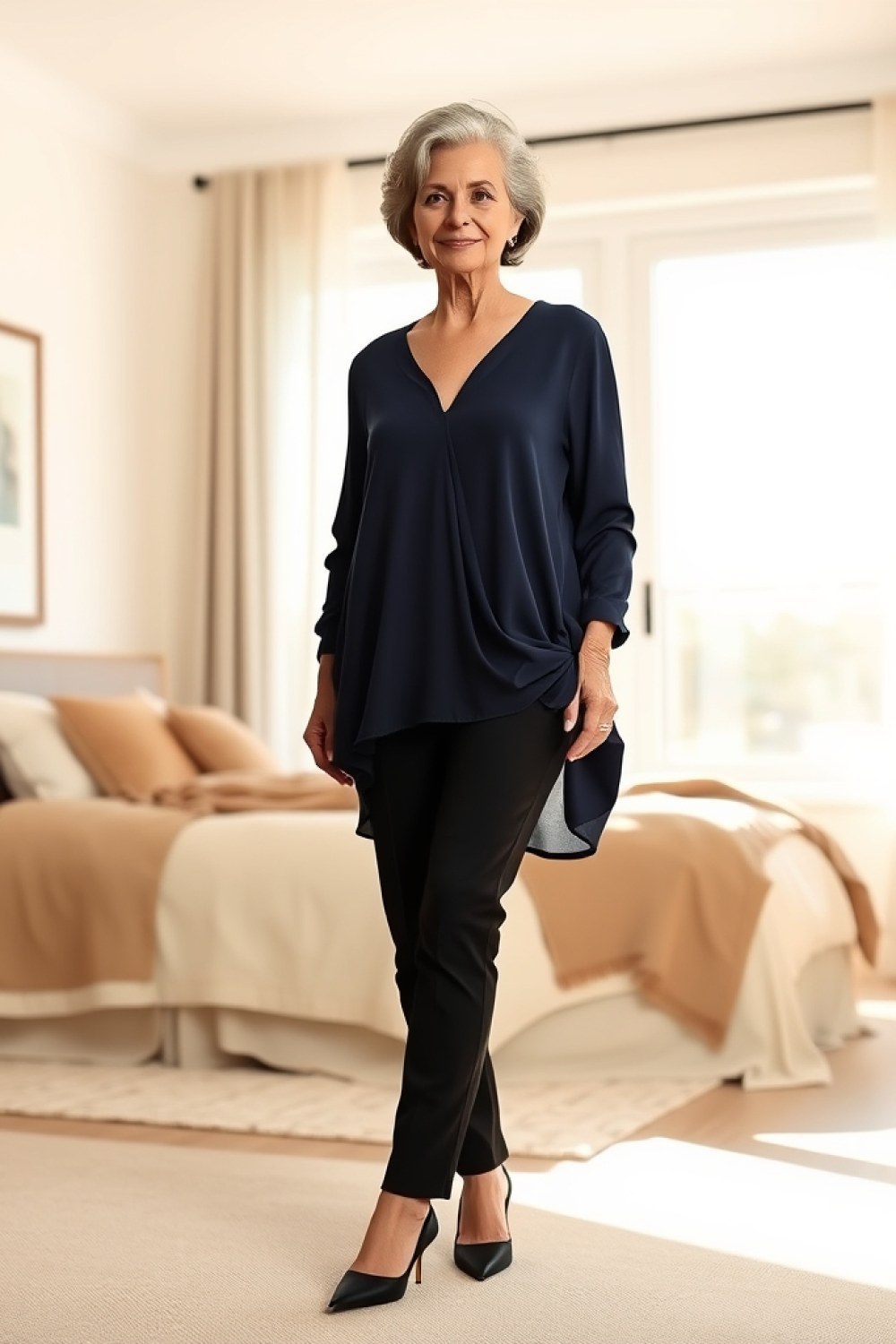
High-rise trousers with a flat front and a wide, comfortable waistband smooth the tummy without digging in. Look for a straight or wide leg in a fluid fabric with a bit of stretch, hemmed to just skim the top of your shoe. A longer top or tunic worn over them completes the line.
The waistband is the detail that matters most. Wide and soft beats narrow and firm every time.
How to Choose and Wear Them
- Look for a high rise with a flat front and a wide, soft waistband.
- Choose a straight or wide leg in a fabric with stretch and fluid drape.
- Hem to just skim the top of your shoe for a clean, polished line.
- Wear a longer top or tunic over them to keep the vertical line intact.
9. Tunic Over Slim Ankles
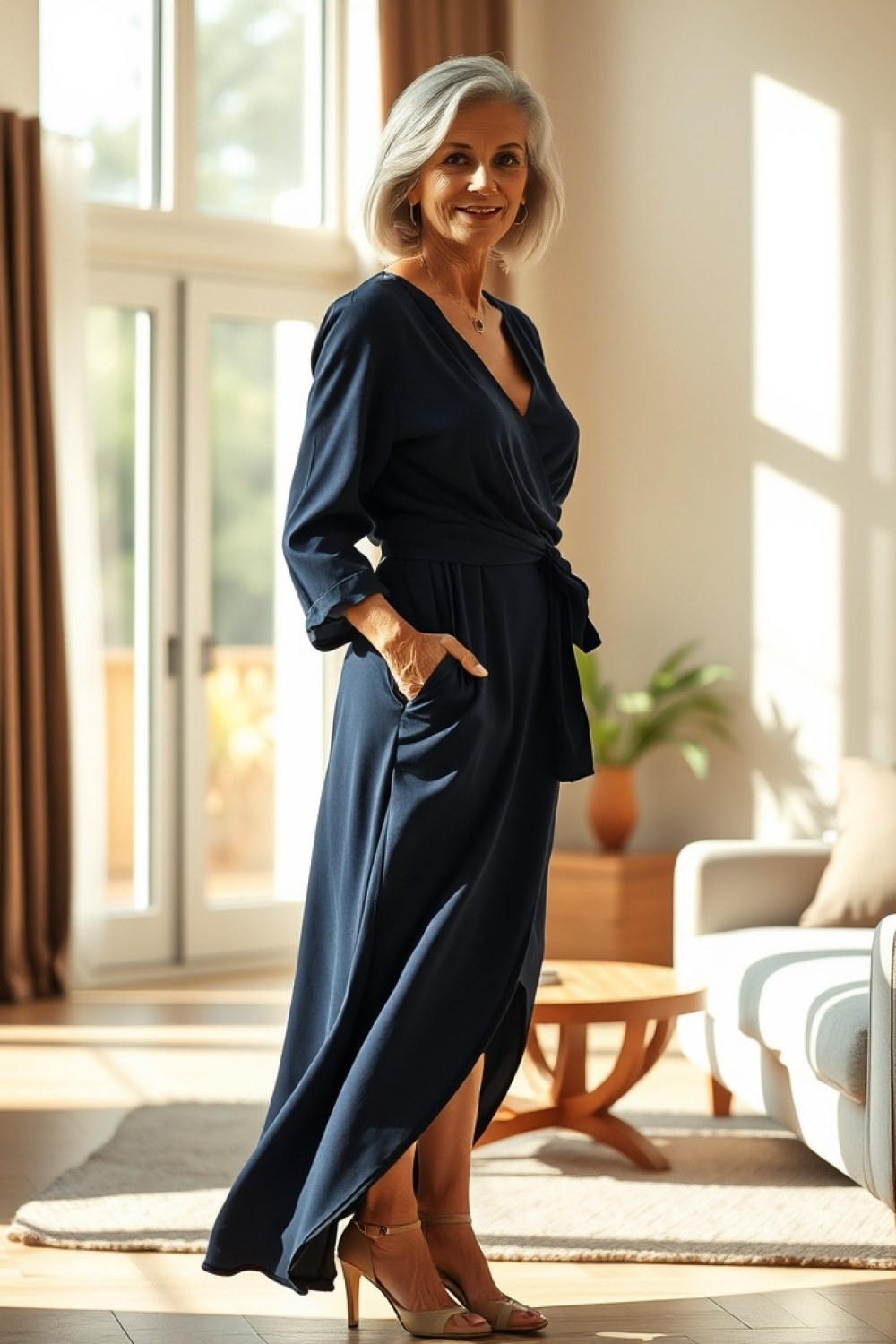
An easy tunic that falls to mid-thigh, paired with slim ankle-length trousers or leggings, is a classic apple formula that also looks modern. Balance the volume on top with a narrower line below and a simple flat or low wedge. It’s comfortable, elegant, and works for everything from lunch to travel.
The tunic hem should be straight, not gathered, so it doesn’t balloon over the stomach.
How to Balance It
- Choose a tunic that falls to mid-thigh with a straight, clean hem.
- Pair with slim ankle-length trousers or leggings to balance the volume above.
- Keep footwear simple — a flat or low wedge keeps the line long.
- Add a long necklace if the tunic neckline is plain.
10. Prints That Work For You
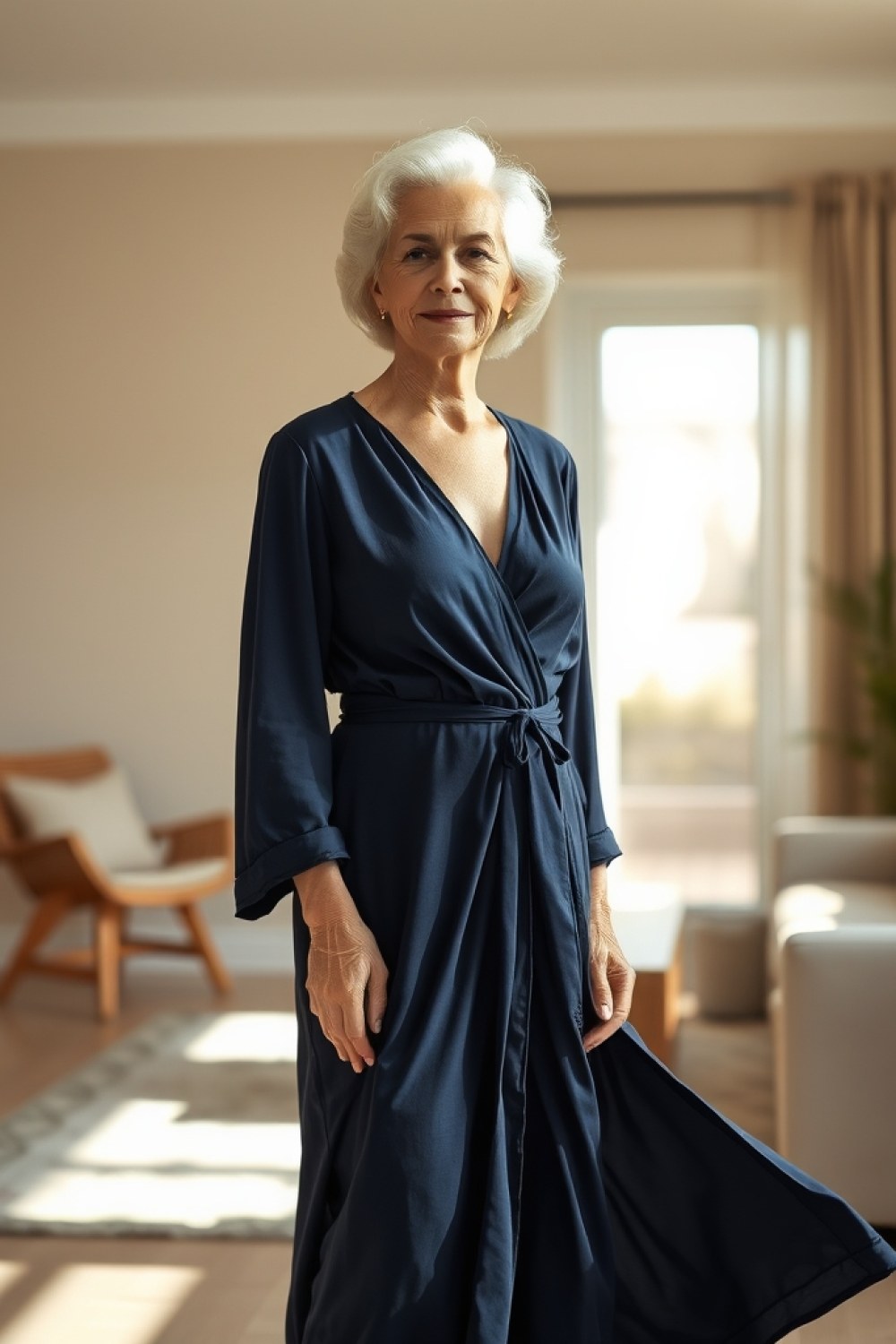
Small, all-over prints in tone-on-tone shades read as texture rather than busyness and don’t call attention to any one area. Large-scale motifs and horizontal bands right across the stomach do the opposite, so keep those away from your middle. If you love a bold print, keep it to a scarf, shoe, or bag and let your clothing stay calm.
This is one of the easiest ways to add personality without disrupting the vertical line you’ve built.
How to Choose Prints
- Look for small-scale, all-over prints in two or three close tones.
- Avoid large motifs and horizontal stripes across the midsection.
- Use bold prints on accessories — a scarf, bag, or shoe — rather than on the body of the outfit.
- Keep the base garment solid so the print reads as texture, not noise.
FAQs
What is the most flattering neckline for an apple body shape over 60?
V-necks, scoops, and soft cowls are your best friends — they lengthen the neck and draw the eye upward, away from the midsection. Avoid high, tight crew necks and boat necks, which can make the upper body look wider. A portrait or shawl collar also works beautifully for a dressier look.
Should I avoid belts entirely with an apple shape?
Not entirely, but skip wide belts worn tight across the widest part of your stomach. If you want waist definition, choose a narrow belt in the same color as your dress, worn slightly above the natural waist or on a long, open cardigan. Many apple shapes look best with no belt at all and rely on an empire seam or vertical layers instead.
What fabrics skim an apple midsection best?
Look for fabrics with fluid drape and a touch of stretch — crepe, ponte, jersey, Tencel, and fine wool blends. Stiff fabrics like heavy cotton or crisp linen hold a shape of their own and can add bulk, while very thin, clingy knits show every curve. A medium-weight fabric that moves with you is the sweet spot.
How can I look slimmer without wearing black?
Color and verticality matter more than darkness. A single tonal column in navy, chocolate, olive, or burgundy does the same visual work as black, and an open long layer creates two lengthening lines down your body. Fit is the real key — clothes that skim rather than cling flatter in any color.
Can I still wear jeans with an apple shape after 60?
Absolutely. Choose a high-rise straight or slightly wide leg with a flat front and a comfortable, wide waistband — nothing that cuts into the tummy. Dark or medium washes with minimal whiskering look most polished, and a longer top or soft tunic worn over them balances the silhouette.
Building Your Apple-Shape Capsule
Start with three or four pieces that already work — a column of one color, a long open duster, a soft tailored trouser, and an empire-line dress — and build outward from there. These four alone will give you a dozen outfits, and every new piece you add should earn its place by working with at least two of them.
When shopping, always check the neckline, the drape, and where the hem lands before anything else. Get those three right and the outfit almost styles itself. Comfort isn’t a compromise at this stage of life — it’s the foundation of looking effortlessly elegant.