

“I just have a bad memory” — have you ever said that about yourself? Here’s the myth-busting truth: most memory trouble after 50 isn’t a broken brain. It’s an untrained one. Memory champions don’t have special brains; they use special techniques — and the same techniques work at 55, 65, and beyond.
Below are 30 real memory techniques, from 60-second tricks to deeper systems, each with exactly when to use it. You don’t need all 30. Master five or six that fit your life, and you’ll feel the difference within weeks.
🧠 The 60-Second Basics
Three rules make every technique below work harder: pay attention on purpose (memory starts with noticing), make it meaningful (connect new info to something you already know), and review it once (a single review doubles what you keep). With those in place, pick any technique and start.
1. 🧺 The Chunking Method

Your brain holds about 4 chunks of information at once — so group items into fewer, bigger chunks. Instead of memorizing 9 separate groceries, remember 3 categories: breakfast items, dinner ingredients, household.
Use it when: shopping lists, phone numbers, to-do lists, any long list.
Pro note: chunk by category or by location in the store — both work beautifully.
Avoid: don’t make chunks bigger than 4 items, or they stop being chunks.
2. 🎶 Make It Rhyme

Rhymes stick because rhythm and sound give memory extra hooks. “Thirty days hath September” has survived centuries for a reason. Turn anything hard to remember into a little rhyme and it lodges in your mind.
Use it when: dates, rules, sequences, anything that needs to be exact.
Pro note: it doesn’t need to be good poetry — silly rhymes stick best.
Budget tip: a notebook and your imagination is all this takes.
3. 👁️ The Visualization Link

Picture what you want to remember as a vivid, detailed mental image — the weirder the better. Abstract information (“call the dentist”) becomes concrete (“a giant tooth sitting in my dentist’s waiting room”). Images outlast words in memory.
Use it when: appointments, names, tasks, anything you keep forgetting.
Pro note: add motion and color — a dancing tooth beats a still one.
Avoid: don’t settle for a vague picture; make it sharp and strange.
4. 🗣️ Say It Out Loud

Hearing your own voice creates a second memory trace — you remember both saying it and hearing it. “Keys are on the hall table” said aloud beats thinking it silently every time.
Use it when: putting things down, locking doors, parking spots, quick intentions.
Pro note: say it in a full sentence, not a single word — sentences stick.
Avoid: don’t whisper it vaguely; say it clearly like you mean it.
5. 🔤 The Acronym Shortcut

Take the first letter of each item and make a word: milk, eggs, bread, apples becomes MEBA — or better, rearrange into a real word. One silly word is infinitely easier to remember than four separate items.
Use it when: lists, steps in a process, names of a group.
Pro note: real words beat random letters — rearrange freely.
Avoid: don’t use this for more than about 7 items at once.
6. ✍️ Write It to Remember It

The physical act of writing — especially by hand — encodes memory through movement, sight, and effort at once. You don’t even need to re-read the list; the writing itself did the work.
Use it when: anything important: passwords hints, instructions, ideas.
Pro note: handwriting beats typing for memory — use pen when it matters.
Budget tip: a pocket notebook is the cheapest memory aid ever made.
7. 🪝 The Peg System
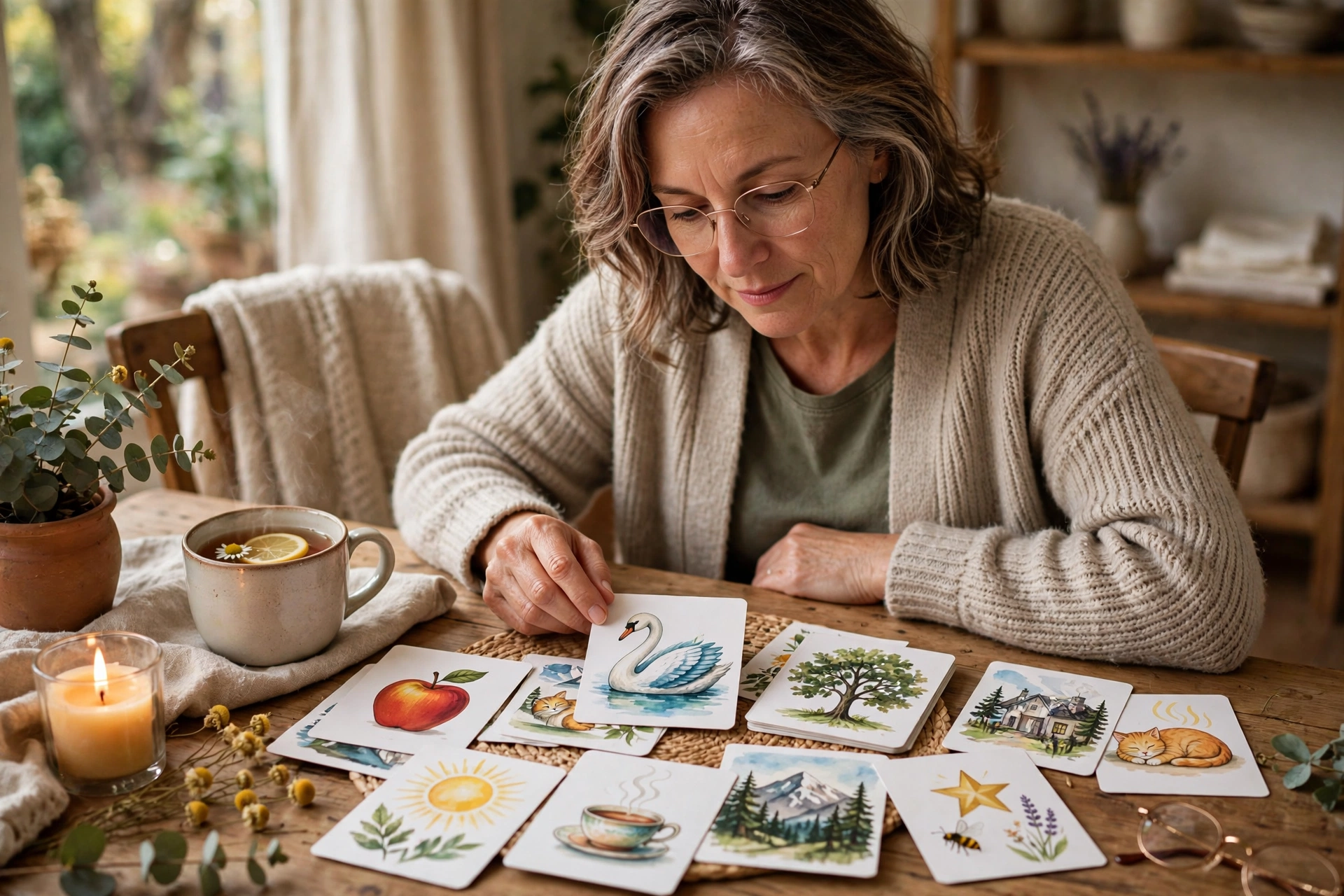
Assign each number a vivid image (1 = sun, 2 = shoe, 3 = tree…) and “hang” each thing to remember on its peg. To recall item 3, you picture your tree — and whatever’s hanging on it. It’s the classic memory-champion technique.
Use it when: ordered lists, presentations, anything in sequence.
Pro note: make your peg images once and reuse them forever.
Avoid: don’t skip practicing your pegs — know them cold first.
8. 🚪 Attach It to a Routine

New habits stick when bolted onto old ones. “After I lock the door, I put the keys in the bowl.” The existing routine becomes the reminder — no willpower required.
Use it when: medications, keys, daily tasks, anything routine.
Pro note: say the pairing aloud the first week: “coffee, then vitamins.”
Avoid: don’t attach it to a shaky routine — pick your most solid one.
9. 📖 The Story Method

Weave the things you need to remember into one silly story. Milk, dog food, stamps become: “The milk spilled on the dog, who mailed himself with the stamps.” Absurd stories are unforgettable — that’s the point.
Use it when: shopping lists, errands, sequences of tasks.
Pro note: the sillier and more visual, the stickier the story.
Avoid: don’t make the story too long — one vivid scene per item.
10. 🔁 Repeat It Back Immediately

When someone tells you something important, repeat it back right away: “So we’re meeting Thursday at 2?” This single act moves information from fleeting hearing into actual memory — and catches misunderstandings too.
Use it when: names, appointments, instructions, directions.
Pro note: it also flatters people — everyone likes being heard.
Avoid: don’t parrot robotically; rephrase it in your own words.
11. 👩🏫 The Teach-Back Technique
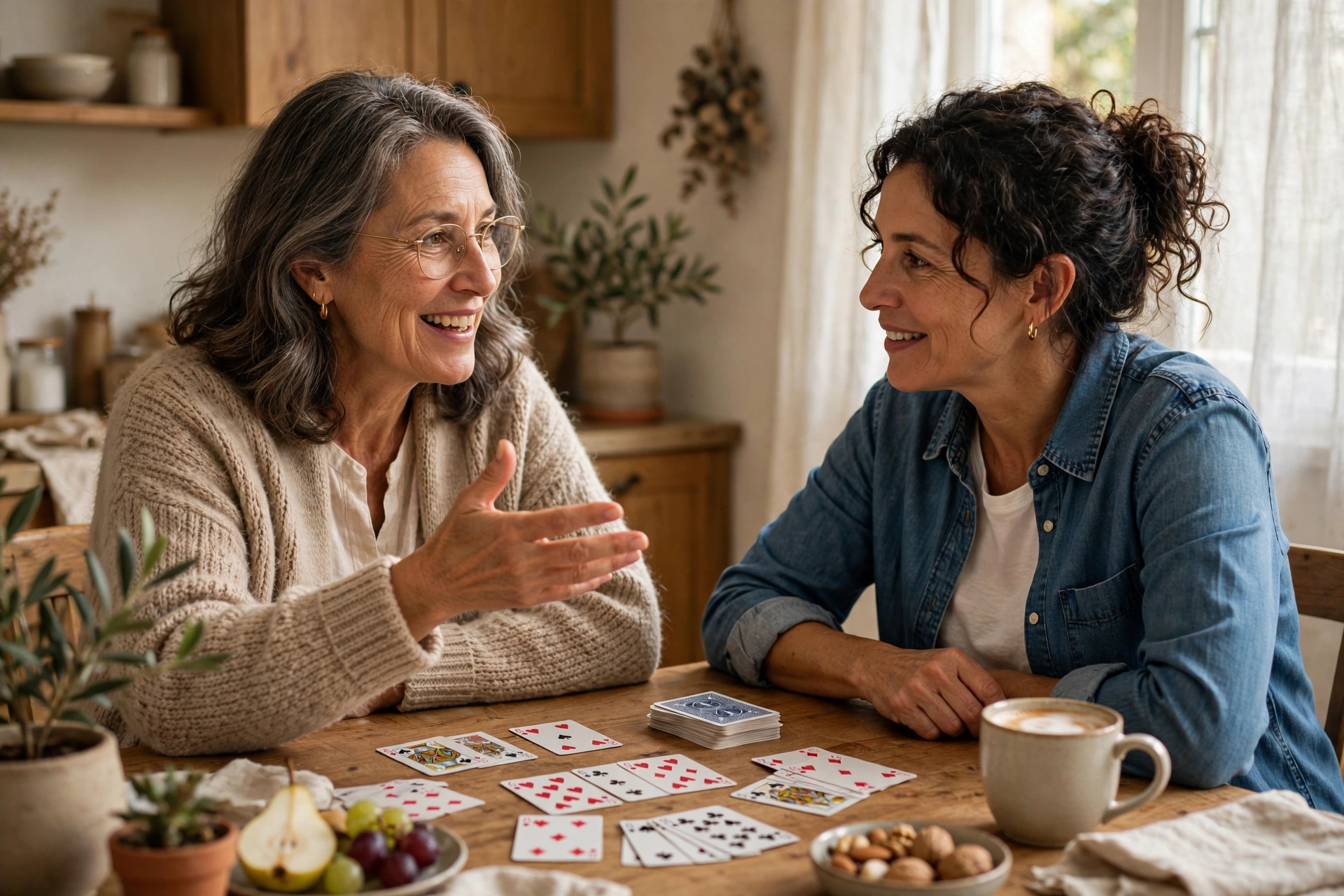
Nothing cements learning like explaining it to someone else. After learning anything new, teach it — to a friend, a grandchild, even your dog. The gaps in your explanation show you exactly what to review.
Use it when: new skills, health information, anything you want to keep.
Pro note: teaching forces organization — your brain files it neatly.
Budget tip: free, social, and makes you the interesting one at lunch.
12. 📅 Spaced Repetition Basics
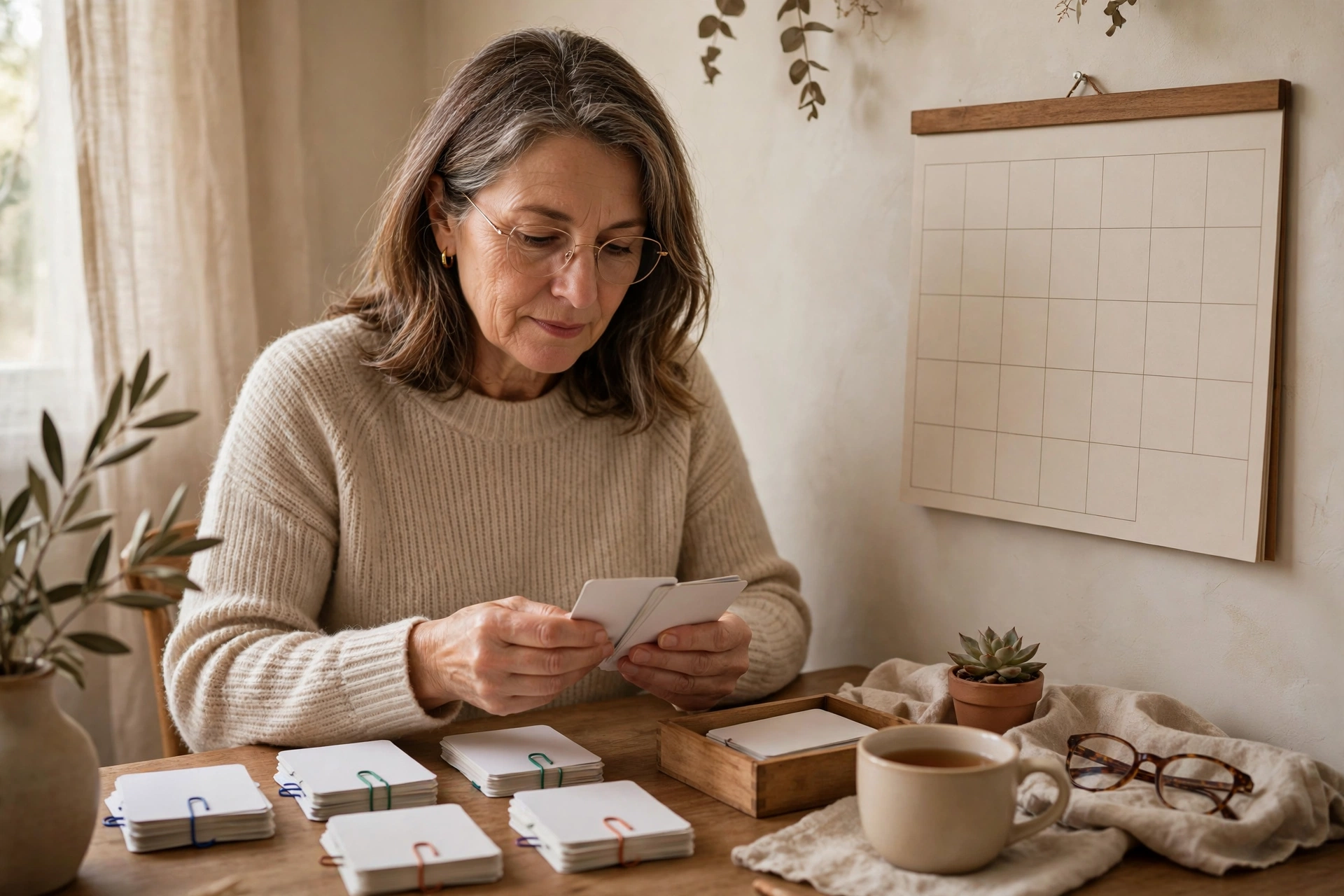
Review new information after 1 day, then 3 days, then a week — each review at the moment you’re about to forget it. This is the single most research-backed memory technique in existence, and it’s just scheduled reviewing.
Use it when: learning anything: names, facts, new technology, languages.
Pro note: three short reviews beat one long cram session every time.
Avoid: don’t review too often — the spacing is what makes it work.
13. 👋 Name It Three Times

New name? Use it three times in the first conversation: “Nice to meet you, David.” … “So David, do you live nearby?” … “Great chatting, David!” Three uses move a name from stranger to familiar.
Use it when: introductions, new neighbors, new colleagues, parties.
Pro note: pair it with a visual link: “David with the daffodils.”
Avoid: don’t overdo it or it sounds odd — weave it in naturally.
14. 📸 The Snapshot Technique

When you park, put something down, or need to remember a moment, pause and take a deliberate “mental photograph” — frame it with your hands, blink, and really see it. The conscious snapshot files it properly.
Use it when: parking spots, where you put things, hotel rooms, lockers.
Pro note: say what you see aloud: “Level 3, near the blue pillar.”
Avoid: don’t rush past the moment — one full second of attention.
15. 😂 Link It to Something Funny

Your brain prioritizes the amusing. Attach a funny image to what you must remember — your neighbor’s name becomes a mental cartoon. Emotion is memory glue, and laughter is the strongest kind.
Use it when: names, passwords hints, anything dry and forgettable.
Pro note: keep the funny link private — it’s your secret weapon.
Avoid: don’t use this for sensitive information you might blurt out.
Combine techniques for stubborn memories: say a new name aloud (technique #4), use it three times (#13), and link it to something funny (#15). Triple-encoded memories almost never escape.
16. 🔡 The Alphabet List Game

Stuck trying to recall something? Run through the alphabet — “A… B… C…” — and let each letter jog possibilities. “It started with… M! Marmalade!” The alphabet is a built-in retrieval ladder your brain already knows.
Use it when: tip-of-the-tongue moments, forgotten words, missing items.

Pro note: say the letters aloud — hearing them triggers more associations.
Avoid: don’t panic during the pause; calm brains retrieve faster.
17. 🗺️ Draw a Quick Map

Need to remember a route, a layout, or where things are? Sketch it — badly is fine. Drawing forces your brain to process spatial relationships, and the sketch becomes a second memory of the place.
Use it when: directions, parking lots, new buildings, store layouts.
Pro note: add landmarks, not street names — brains remember landmarks.
Budget tip: the back of any envelope works perfectly.
18. 🔢 The Rhyming Number Pegs
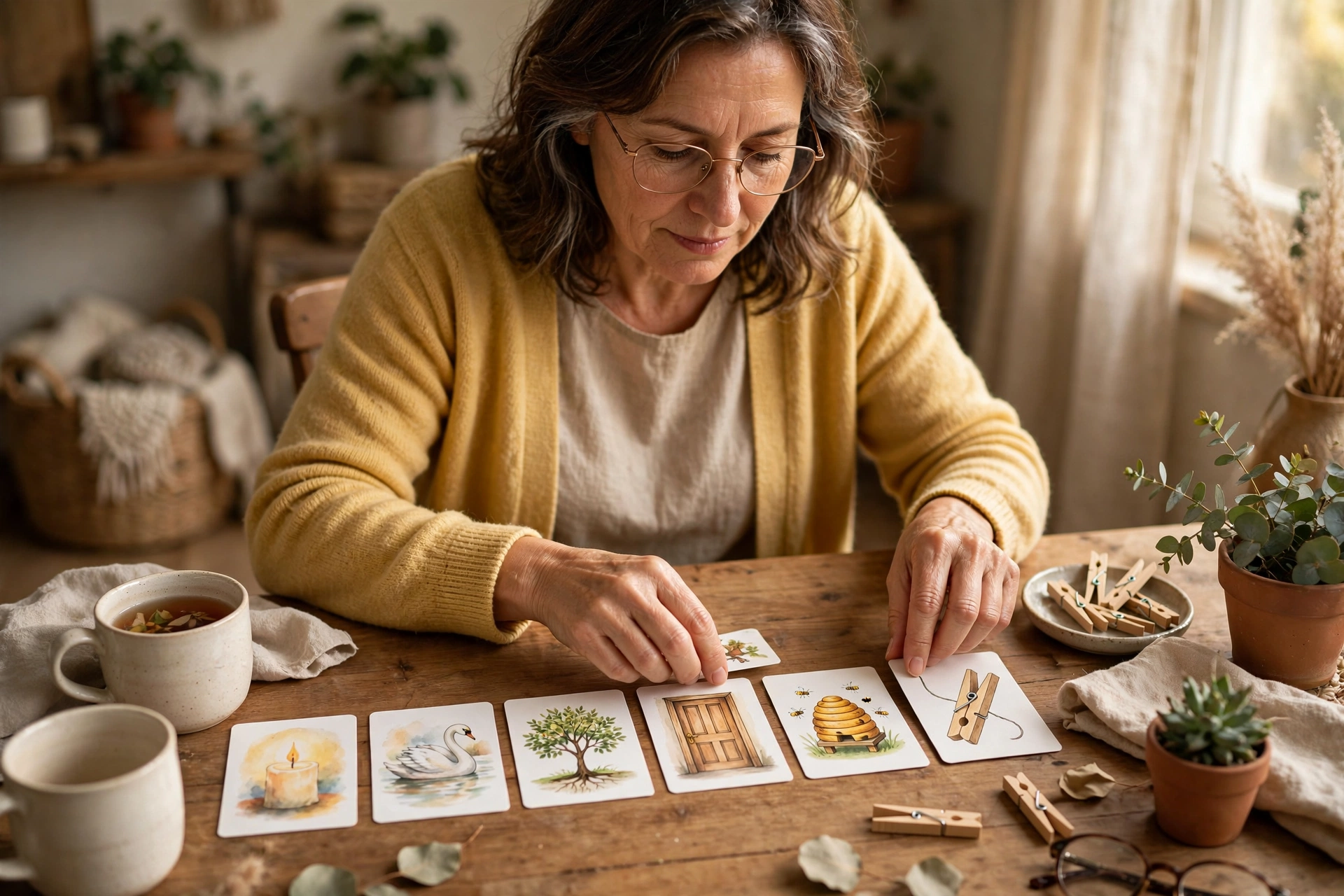
Classic peg rhymes: 1-sun, 2-shoe, 3-tree, 4-door, 5-hive. Attach each item to its rhyming peg with a vivid image — “the milk carton wearing a giant shoe.” Recall the pegs in order and the items come with them.
Use it when: numbered lists, speeches, anything in a fixed order.
Pro note: learn the 10 pegs once; they serve you for life.
Avoid: don’t reuse the same peg for two items in one list.
19. 🎤 Sing the List

Set what you need to remember to a familiar tune — “Happy Birthday” works for anything. Melody is one of memory’s deepest channels; that’s why you still know songs from decades ago.
Use it when: lists, sequences, things you need hands-free.
Pro note: the tune matters more than the words being clever.
Avoid: don’t pick a tune you dislike — you’ll avoid singing it.
20. 🚶♀️ The Doorway Reminder

Walking through doorways famously wipes short-term memory — so use doorways deliberately. Pause at the threshold, state your intention (“I’m going in for my glasses”), then walk through. The pause beats the doorway effect.
Use it when: moving between rooms with a purpose, errands.
Pro note: touch the doorframe as a physical anchor for the pause.
Avoid: don’t rush through while thinking of something else — that’s when it happens.
21. 👟 Set the Object Out of Place

Need to remember to take something tomorrow? Put a related object somewhere odd — a shoe by the front door, your bag on your pillow. Tomorrow-you will ask “why is that there?” and remember instantly.
Use it when: things to take, things to do, morning tasks.
Pro note: the weirder the placement, the stronger the trigger.
Avoid: don’t use this for more than one reminder at a time.
22. 🏠 The Mental Walkthrough

Close your eyes and mentally walk through your home, placing each thing to remember in a room — the dry cleaning on the sofa, the library book in the kitchen. To recall, take the same mental walk. This is the famous “memory palace” in its simplest form.
Use it when: longer lists, speeches, things to do today.
Pro note: always use the same familiar place — your home is perfect.
Avoid: don’t place two items in the same spot; give each its own.
23. 🎧 Pair It With a Song
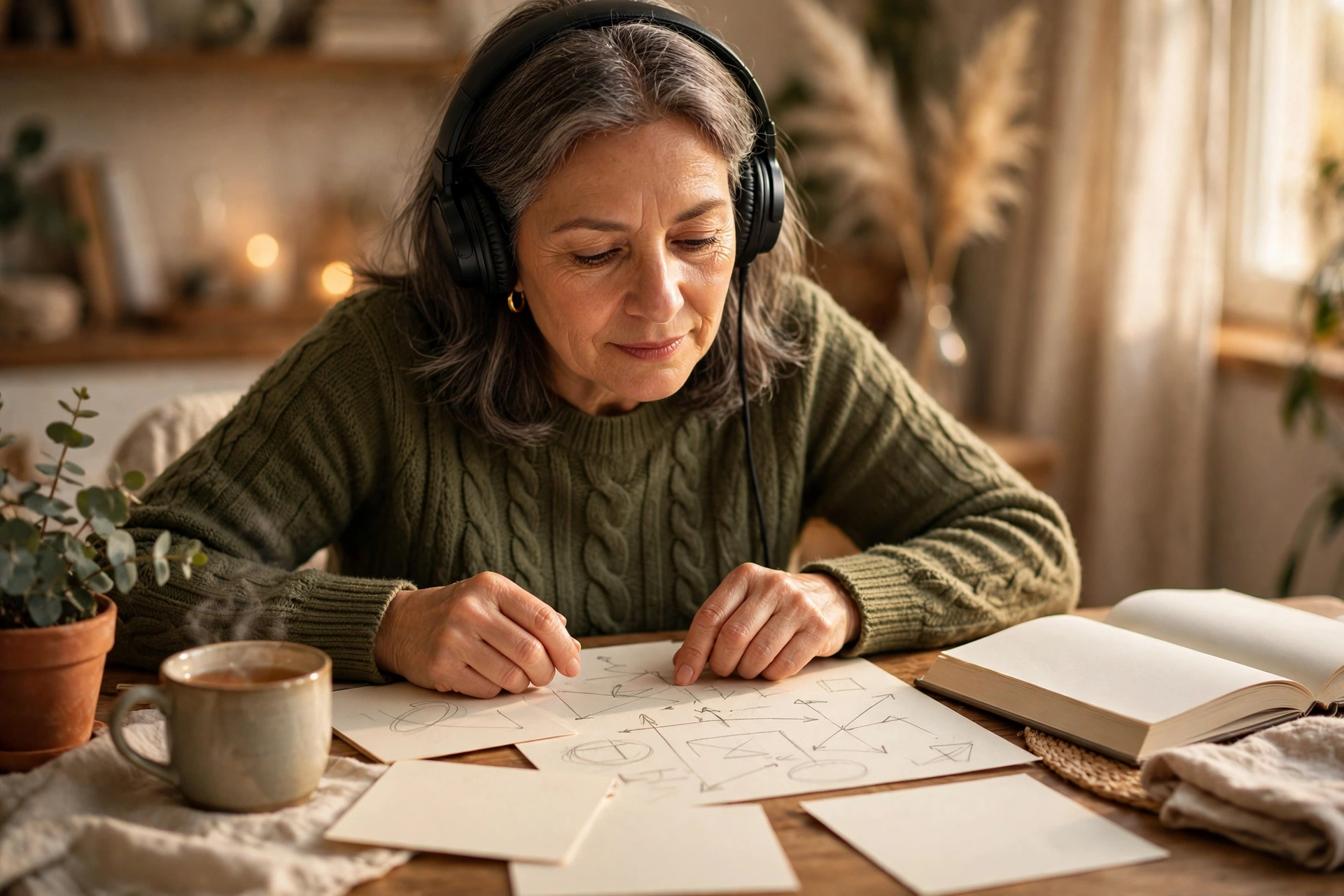
Learn something while one specific song plays, and that song becomes the key that unlocks it. Hear the song later, and the information surfaces with it. Athletes and students have used this for decades.
Use it when: studying anything, learning names, preparing talks.
Pro note: use instrumental music — lyrics compete with words.
Avoid: don’t switch songs mid-learning; consistency is the key.
24. ⛓️ The First-Letter Chain

Write just the first letter of each item in order: M-E-B-A for your list. The chain is a skeleton key — each letter triggers its word, and the order keeps them straight. Pocket-sized and powerful.
Use it when: ordered lists, steps, things to pack.
Pro note: say the chain as a nonsense word — “mebba” — to lock it in.
Budget tip: fits on your hand if you must.
25. 🔍 Exaggerate the Image

Make your mental image ridiculously oversized — a house-sized carton of milk in your driveway. Your brain ignores the ordinary but files away the extraordinary. Bigger, brighter, and more absurd always wins.
Use it when: anything that keeps slipping away despite your efforts.
Pro note: exaggerate size first — it’s the easiest upgrade.
Avoid: don’t keep images realistic; realistic is forgettable.
The “encode twice” rule: for anything truly important, store it two ways — write it down AND make a mental image, or say it aloud AND attach it to a routine. Two memory traces mean that if one fails, the other catches you.
26. ✊ The Hand-Squeeze Anchor

When learning something important, squeeze your fist firmly. Later, squeeze again while trying to recall — the physical anchor retrieves the mental state you were in. Athletes use this; it works for memories too.
Use it when: names at introductions, key facts, presentations.
Pro note: use the same hand and same squeeze every time.
Avoid: don’t use it casually — reserve it for things that matter.
27. 🌙 Review Before Sleep

Your brain consolidates memories during sleep — so give it fresh material. Spend two minutes reviewing what you want to keep right before bed. You’ll wake up knowing it better than when you fell asleep.
Use it when: anything learned that day: names, facts, new skills.
Pro note: just a glance is enough — no heavy studying in bed.
Avoid: don’t review stressful material; keep it light and positive.
28. ❓ The Question Trick

Instead of re-reading, quiz yourself: cover the answer and ask “what was it?” Retrieval — the act of pulling information out — strengthens memory far more than putting it in again. Every test is a workout.
Use it when: learning anything new, preparing for anything.
Pro note: struggling to recall is the point — effort builds the trace.
Avoid: don’t peek too soon; give your brain a real chance first.
29. 💞 Make a Personal Connection

Link new information to your own life: the new neighbor’s name is also your cousin’s; the appointment is the day before your anniversary. Personal connections are memory superglue — nothing sticks like it matters to you.
Use it when: names, dates, facts that feel abstract and distant.
Pro note: even a stretched connection works — your brain isn’t picky.
Avoid: don’t force connections that confuse; skip to the next one.
30. 🏆 Celebrate Your Memory Wins

Notice and celebrate when you remember something — “I remembered without the list!” Confidence is a memory technique in itself: believing your memory works makes it work better. Doubt, on the other hand, is a self-fulfilling prophecy.
Use it when: every single day — this one compounds.
Pro note: keep a tiny “remembered it!” list to watch your progress grow.
Avoid: don’t scold yourself for misses — praise the hits instead.
Multitasking while encoding — you can’t remember what you never noticed; give new information your full attention for 10 seconds. Relying only on your phone — digital reminders are fine, but an unused memory muscle weakens; practice on the small stuff. Cramming — one long session loses to three short ones every time. Skipping sleep — memories consolidate overnight; a tired brain files nothing properly.
❓ Memory Techniques FAQs
Do memory techniques really work after 50?
Yes. Memory techniques work by giving your brain better ways to encode and retrieve information — and those strategies work at any age. Many people find their memory was never “bad”; it was just untrained.
How many techniques should I actually use?
Start with three to five that fit your daily life — say, chunking, saying things aloud, and the one-place rule. Master those until they’re automatic, then add more. Depth beats breadth.
What’s the fastest technique for everyday forgetfulness?
Say it out loud (#4) combined with the snapshot technique (#14). Together they take five seconds and solve most “where did I put it” and “what was I doing” moments.
Can these techniques help with names?
Absolutely — names respond especially well to technique #13 (use it three times), #15 (link it to something funny), and #4 (say it aloud). Most “bad with names” people just never encoded them properly.
When should I talk to a doctor about memory concerns?
If forgetfulness is persistent, getting worse over time, or interfering with daily life — or if others notice changes you don’t — it’s worth a conversation with your doctor. Techniques help normal age-related slips; a professional can rule out anything more.
✅ Your Memory-Strong Checklist
- I picked 3–5 techniques that fit my life
- I practiced saying things aloud for one full day
- I set up one “peg” or anchor I can reuse
- I attached one new habit to an old routine
- I reviewed something before sleep this week
- I celebrated at least one memory win
📖 Keep Reading
- 🧩 24 Brain Games & Workouts Over 60 That Sharpen Memory — techniques are the tools; these 24 games are the daily workout that keeps them sharp.
- 🎯 How to Improve Focus After 50: 19 Concentration Tricks That Work — memory starts with attention; these 19 tricks help you notice things worth remembering.
- 🧘 29 Stress & Memory Fixes After 50 for a Calmer, Sharper Mind — stress blocks memory formation; these 29 fixes clear the way.
Discover more from Fashinate Style
Subscribe to get the latest posts sent to your email.