
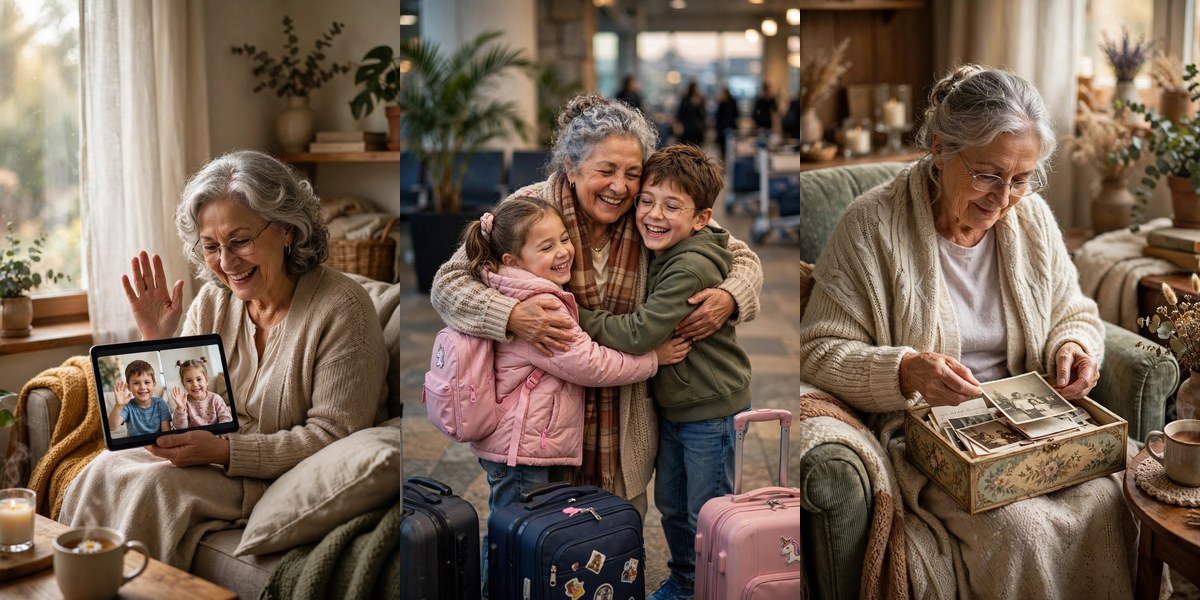
I still remember the first time a friend of mine watched her granddaughter blow out birthday candles over a phone screen, smiling so hard it hurt. She hung up, cried for exactly one minute, and then said the truest thing I’ve ever heard about long-distance grandparenting: “The miles don’t get smaller. You just get better at closing them.”
If your grandchildren live hours — or an ocean — away, you already know the ache. But here’s the gentle reframe: closeness was never really about proximity. Children bond with the grandparent who shows up consistently, remembers the small things, and makes them feel like the most interesting person in the world. Every single one of those things can travel.
Below are twelve warm, practical ways to be that grandparent — the one they light up for on the screen and run to at the airport. No guilt, no perfection required. Just steady, loving presence, one small ritual at a time.
💭 Why the Miles Hurt So Much
It hurts because you imagined something different — Sunday dinners, school pickups, scraped knees you could kiss in person. Grieving that imagined grandparenting is normal, and it doesn’t mean you’re ungrateful for video calls. It means you love them enormously. The ideas below don’t replace being there; they build a different kind of there, one your grandchildren will feel just as deeply.
1. 📱 The Sunday Video Call

Children trust rhythm more than grand gestures. A short, regular video call — same day, same time — becomes something they count on, like a heartbeat in the week. Keep it brief and bright: fifteen lively minutes beats an hour of awkward silence. Ask one specific question about their week and actually remember the answer for next time. Try this: Pick one standing call slot and protect it like an appointment — consistency matters more than length.
Make it yours: Give your call a name they love — “Sunday Sillies” or “Gran’s News Desk” — so it feels like an event, not an obligation.
Avoid: Don’t quiz them like an exam. One curious question and lots of listening builds more closeness than twenty questions.
2. 📚 The Long-Distance Bedtime Story

Reading the same book “together” over video is pure magic for little ones — your voice becomes part of their bedtime, even from a thousand miles away. Buy two copies of the same picture book, one for each household, and take turns with the pages. Dramatic voices are mandatory. Try this: Start with one book a week, same night, and let them pick next week’s story.
Budget tip: Thrift stores and library sales are full of beloved picture books for next to nothing — the story matters, not the price tag.
Make it yours: Record yourself reading their favorite on voice memo for the nights you’re not available — they’ll play it on repeat.
3. ✉️ The Good-Old-Fashioned Letter

In a world of screens, a real letter with their name on it feels like treasure. Children keep these — tucked in drawers, pinned to boards, reread on hard days. Write about small things: what you cooked, a bird you saw, how proud you are of something specific they did. Try this: Send one short letter or postcard a month; tuck in a sticker, a pressed flower, or a silly doodle.
Budget tip: Postcards cost little and arrive faster than letters — and kids adore getting “real mail” of any kind.
Avoid: Don’t make every letter a lecture or a list of questions. Tell them things; let them just enjoy hearing from you.
4. 🎁 The Surprise Mailbox Box
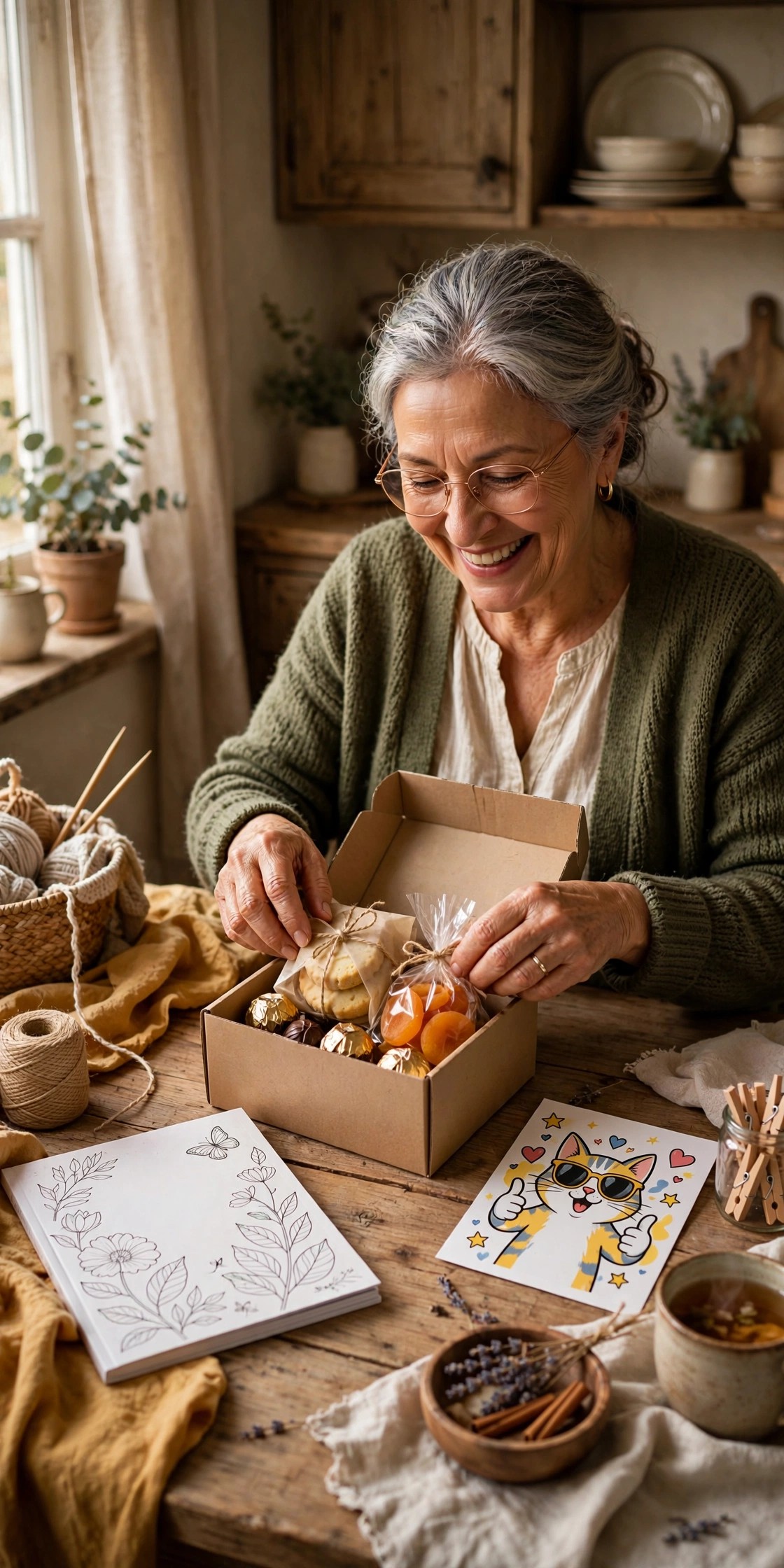
A small box of surprises arriving out of nowhere is the long-distance grandparent’s superpower. Fill a shoebox with a coloring book, their favorite snack, a funny card, and one small thing that made you think of them. The delight on the video call when they open it is worth everything. Try this: Keep a running “box list” on your fridge and add to it whenever something reminds you of them.
Make it yours: Theme the box around their current obsession — dinosaurs, space, baking — and they’ll think you’re magic.
Budget tip: Dollar-store treasures and homemade treats fill a box beautifully; it’s the surprise, not the spending, they remember.
5. 🍪 Bake Together, Miles Apart
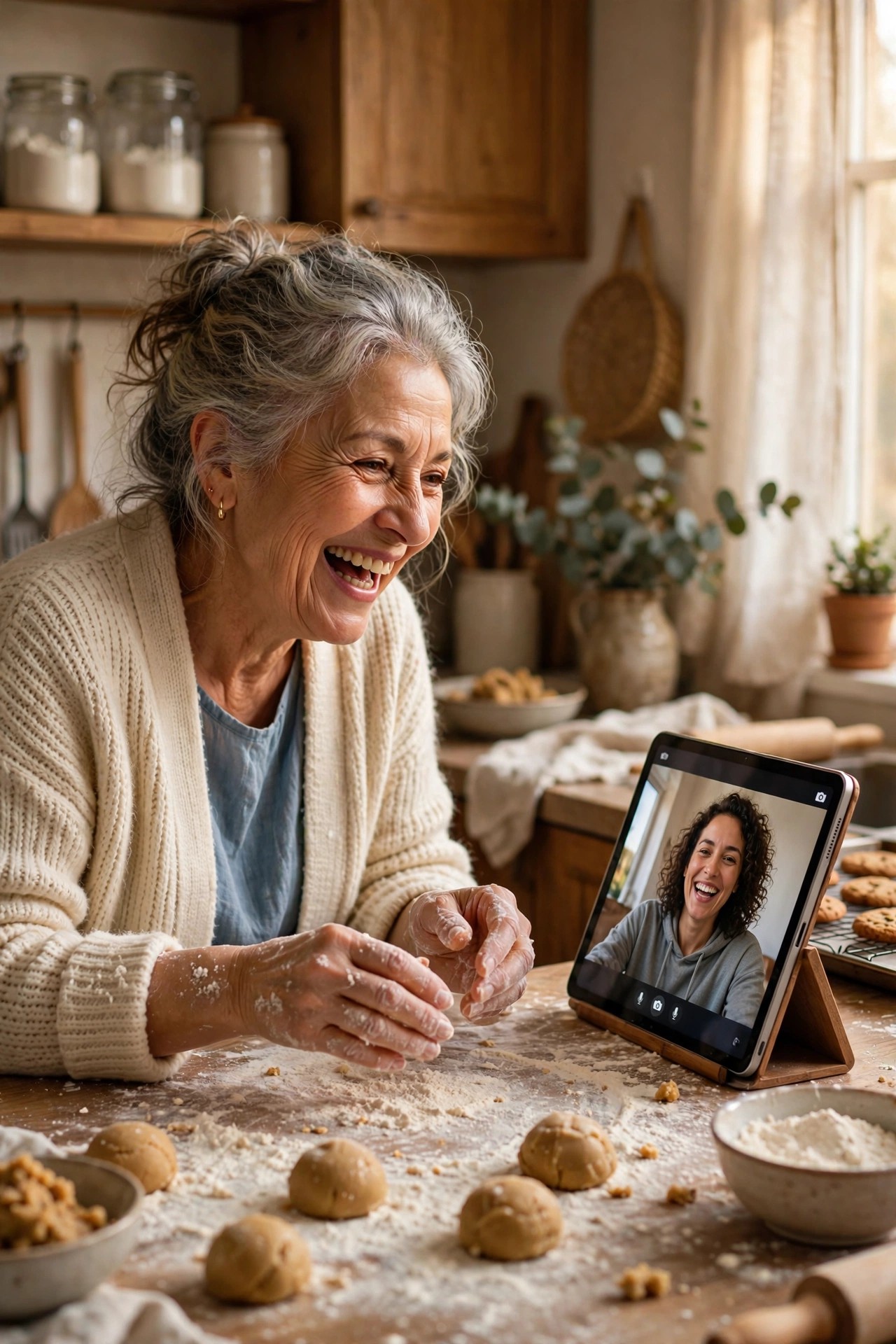
Pick one simple recipe, gather the same ingredients on both ends, and bake “together” over video. Flour on noses, licking spoons, comparing whose cookies look sillier — it’s an afternoon they’ll talk about for weeks. Send them your handwritten recipe card afterward as a keepsake. Try this: Start with no-bake or one-bowl recipes so little hands can do most of the work.
Avoid: Don’t correct their technique on camera. Lopsided cookies taste like love; let them be lopsided.
Make it yours: Name the recipe after them — “Emma’s Cloud Cookies” — and it becomes family lore.
6. 📖 The Two-Household Book Club

For grandchildren old enough to read, a shared book is a shared world. Read the same chapter book at the same pace and discuss it on your calls — plot twists, favorite characters, wild predictions. You’re not just reading; you’re building an inside world only the two of you inhabit. Try this: Let them choose the first book. Ownership of the choice keeps them invested.
Budget tip: Libraries often carry multiple copies, or buy one used copy and mail it — then it’s a gift and a project.
Make it yours: Keep a little “club notebook” where you both jot predictions; compare them at the end.
7. 🎨 The Mail-Back Art Project

Start a drawing, mail it to them unfinished, and ask them to add to it and mail it back. A collaborative artwork traveling back and forth becomes a tangible thread between your houses — and the finished piece, framed, is a story they’ll tell forever. Try this: Begin with something simple: half a rainbow, a garden missing flowers, a monster needing spots.
Make it yours: Date and sign each addition like real artists — they’ll take enormous pride in the “exhibition.”

Avoid: Don’t redo their contributions to “fix” them. Their wobbly lines are the whole point.
8. 🗓️ The Countdown Chain

Waiting is the hardest part for children — time feels endless to them. A paper countdown chain to your next visit makes the wait visible and exciting: they tear off one link each day, and the chain getting shorter is proof you’re coming. Make one together on video, link by link. Try this: Write a tiny activity or note on a few of the links — “call Gran day,” “pack your bag day.”
Budget tip: Construction paper and tape are all you need; the ritual is the gift.
Make it yours: Let them decorate the final link — the “GRAN’S HERE!” one — however wildly they like.
9. 📸 The Daily Photo Swap
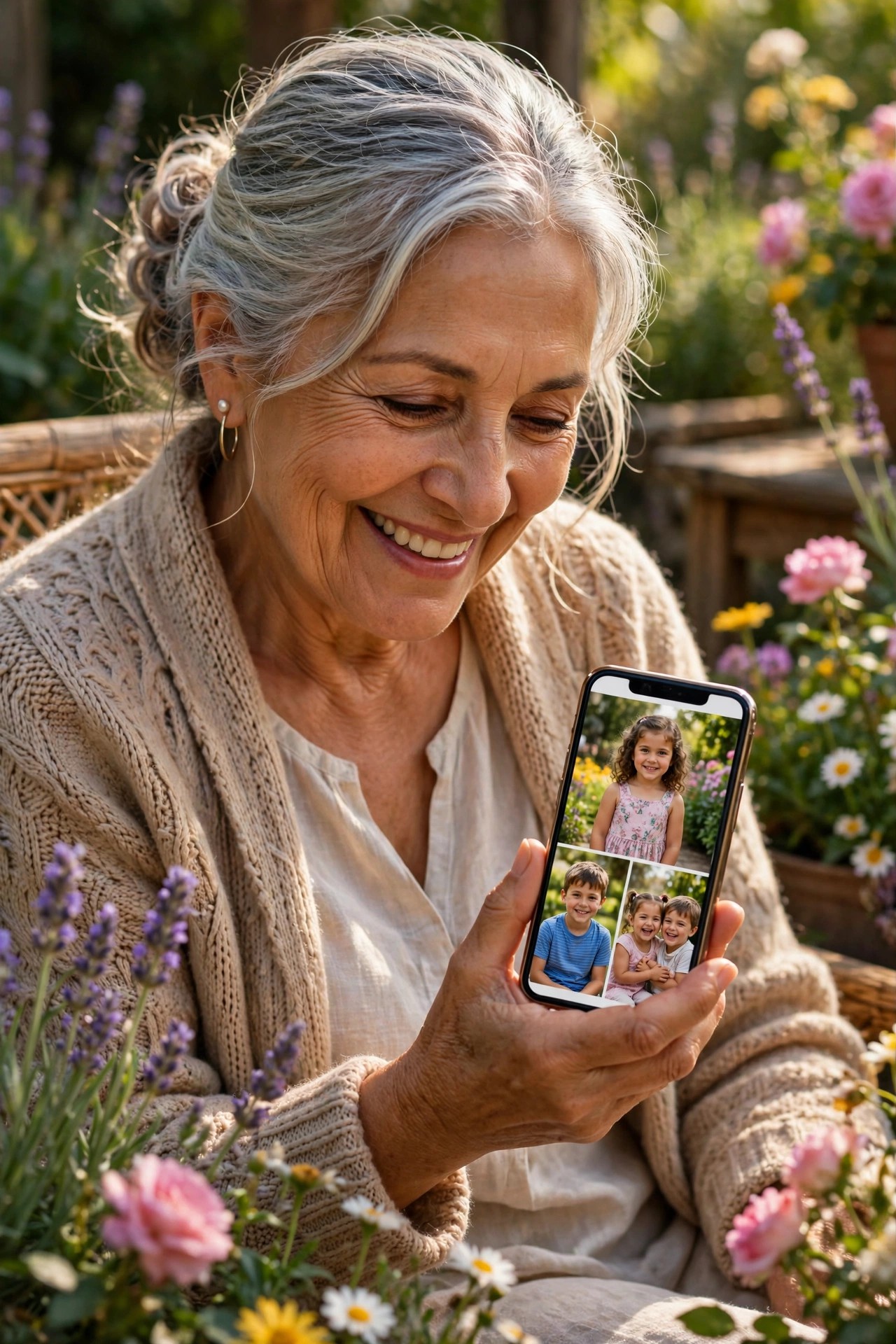
A quick photo each day — your morning coffee, their lost tooth, a sunset, a silly face — keeps you woven into each other’s ordinary days. It’s low-effort and high-closeness: they learn your daily life, you witness theirs, and nobody has to schedule anything. Try this: Agree on a simple daily theme for a week — “something red,” “something that made me laugh.”
Avoid: Don’t comment on every photo with advice or worry. A heart emoji and “love this!” is plenty.
Make it yours: Print your favorites monthly into a little album — “Our Year in Photos” becomes a treasure.
10. 🧳 The Visit That Really Counts
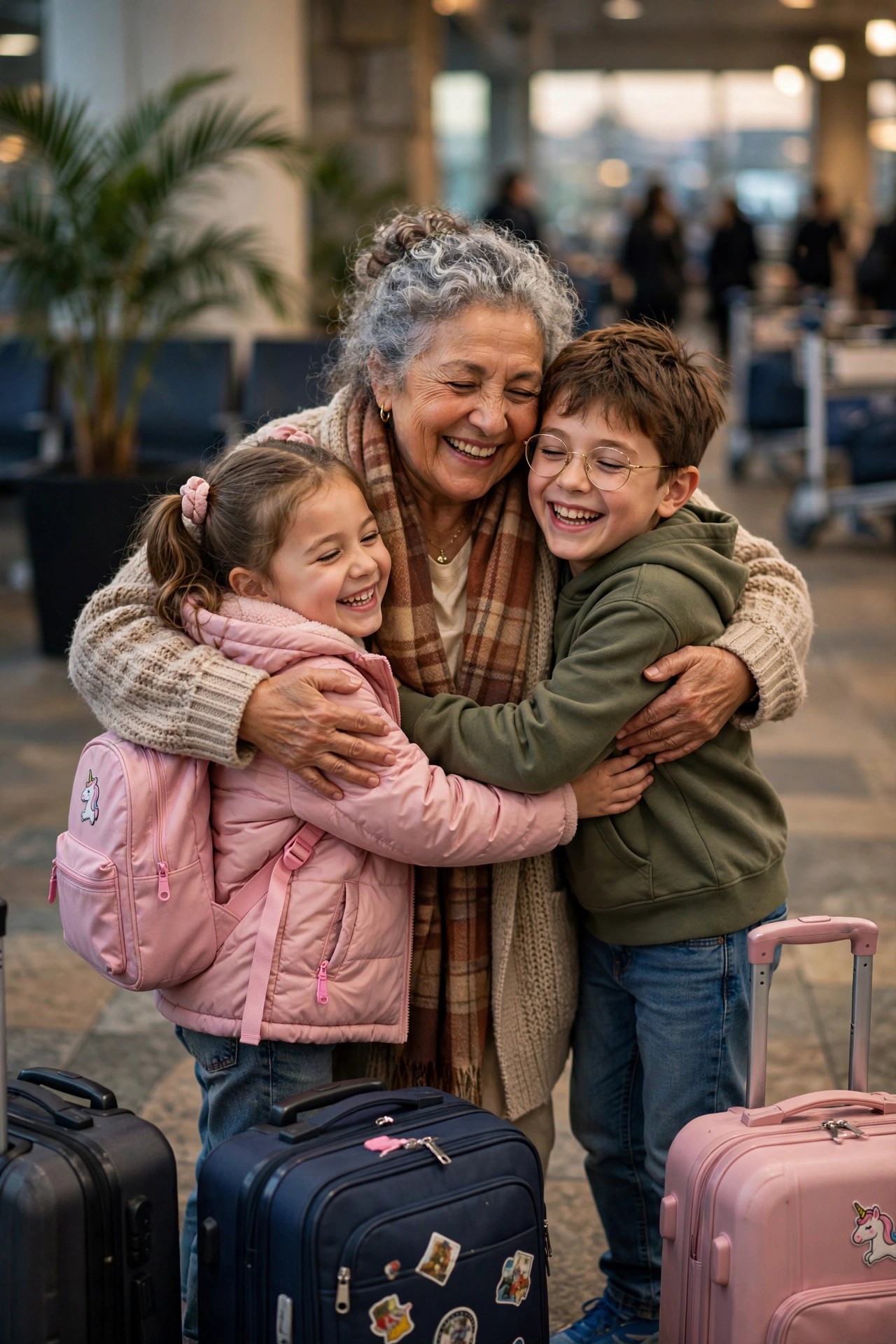
When you do visit, resist the urge to fill every minute with outings. Children remember the unhurried hours most — pancakes in pajamas, reading on the couch, being fully, boringly, wonderfully there. Plan one special outing, then let the rest be ordinary togetherness. Try this: Ask them in advance what they want to do with you — then do exactly that, with your whole attention.
Make it yours: Create one visit ritual that’s only yours: the same restaurant, the same park bench, the same silly greeting at the door.
Avoid: Don’t compete with the other grandparents or the parents. You’re not auditioning; you’re belonging.
11. 🗺️ The Dream-Trip Map
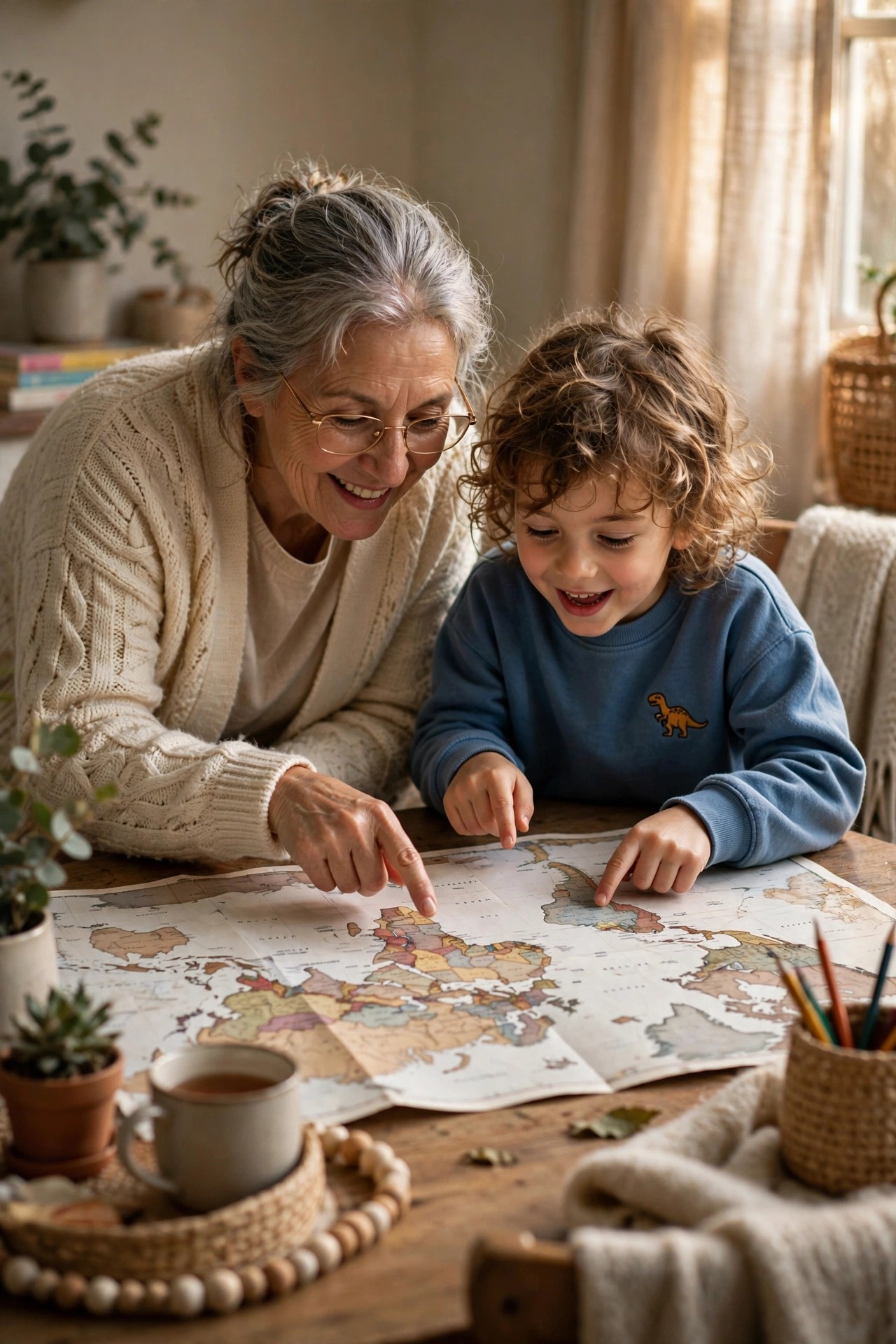
Planning a future adventure together — even one that’s a year away — gives you both something delicious to look forward to. Spread out a map on video, mark the places you’d visit, look up silly roadside attractions. The planning becomes its own joyful ritual, visit or not. Try this: Start a shared “someday list” in a notebook you both add to whenever inspiration strikes.
Budget tip: Dream trips cost nothing to plan, and the anticipation is half the happiness.
Make it yours: Let them be the tour guide — researching one stop each makes them the expert.
12. 💝 The Keepsake Box
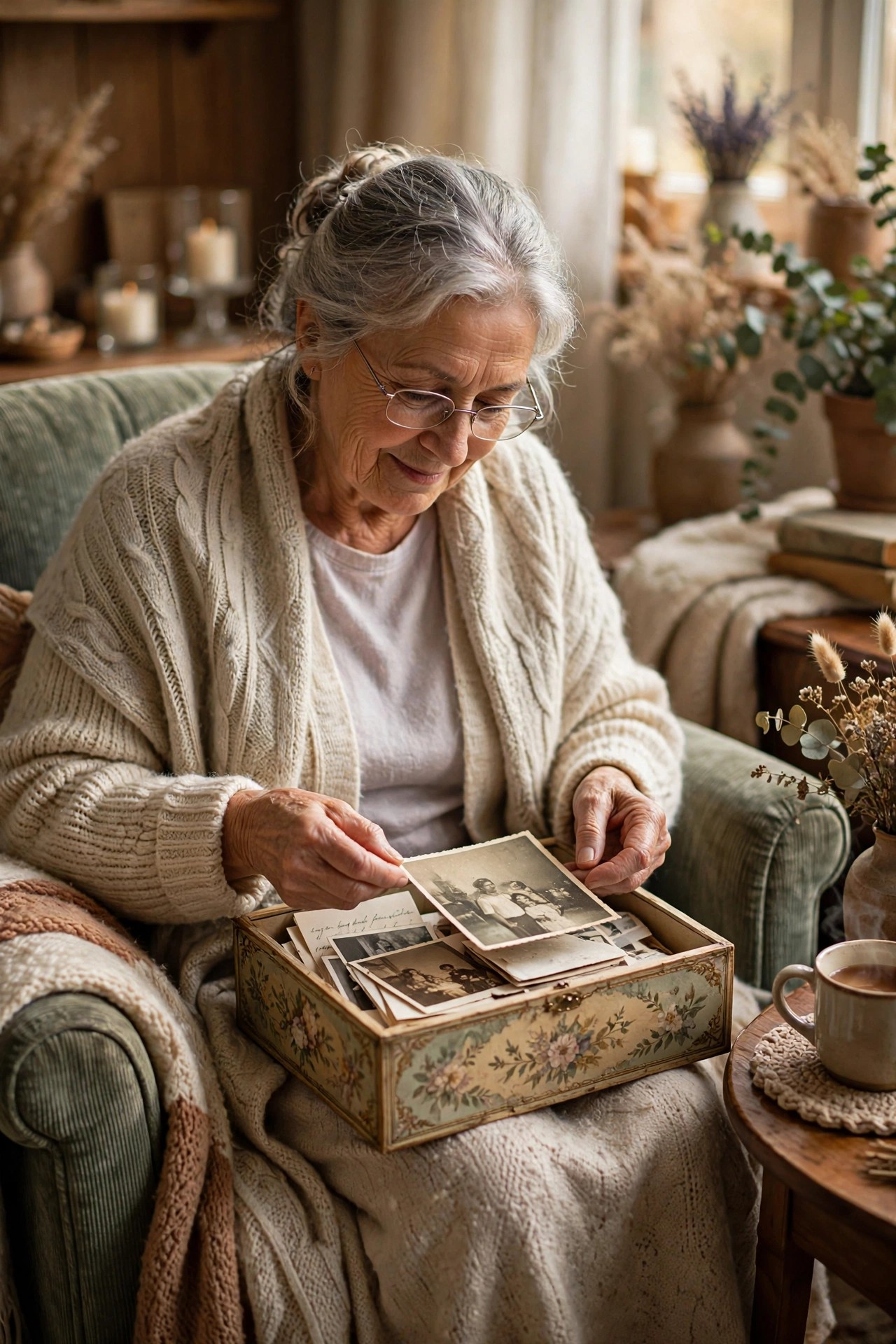
Keep a beautiful box where you save everything between you — their letters, your ticket stubs from visits, the art projects, photos. Add to it faithfully. One day, years from now, you’ll open it together, and they’ll understand exactly how loved they’ve always been. Try this: Start today with whatever you have on hand — a shoebox works until you find the perfect one.
Make it yours: Decorate the box together on your next visit, so it’s a shared treasure from the start.
Avoid: Don’t keep it hidden away “for someday.” Bring it out on calls sometimes — let them see their love being kept.
💛 Be Kind to Yourself
Some days the distance will feel unbearable, and no ritual will fix that — and that’s okay. You’re doing something genuinely hard with enormous love. The fact that you’re reading this, looking for ways to be closer, already proves what kind of grandparent you are: the kind they’ll remember.
❓ Long-Distance Grandparenting FAQs
Will my grandchildren forget me if I live far away?
No — children don’t forget the people who show up for them consistently, even through a screen. What fades is irregular contact, not distance itself. A grandparent who calls every Sunday, remembers their stories, and sends surprise mail stays vividly real to a child. Regularity is the antidote to distance.
How often should I video-call my grandchildren?
Once or twice a week is plenty for most families — what matters is that it’s predictable. Very young children do best with short, frequent contact; older ones with longer, real conversations. Always coordinate with the parents on timing, and never guilt-trip anyone when a call gets missed. Grace keeps the door open.
What if the other grandparents live nearby and I don’t?
Try not to compare — different grandparenting isn’t lesser grandparenting. Nearby grandparents get the everyday; you get to be the exciting call, the surprise mail, the special visit. Children have room in their hearts for many kinds of love. Focus on what your distance lets you do uniquely well.
How do I handle big time-zone differences?
Find the overlap that costs nobody sleep — often it’s your morning and their evening, or vice versa. Shorter calls at a sustainable time beat long calls that exhaust everyone. And lean on asynchronous love: voice memos, photos, and letters don’t care about time zones at all.
Is it normal to feel jealous or left out?
Completely normal, and nothing to be ashamed of. Seeing other grandparents at the school gate while you’re on a screen stings because you care so much. Acknowledge the feeling, share it with a friend (not the grandkids), and channel it into one more letter, one more call, one more small ritual of closeness.
Here’s what I want you to hold onto: your grandchildren won’t measure your love in miles. They’ll measure it in remembered birthdays, in letters kept in drawers, in the sound of your voice reading just one more chapter. Show up steadily, love them loudly, and trust that closeness finds its way across any distance.
One day, they’ll tell someone about their grandmother — and the miles won’t even be part of the story. Just you. 💛
Discover more from Fashinate Style
Subscribe to get the latest posts sent to your email.