
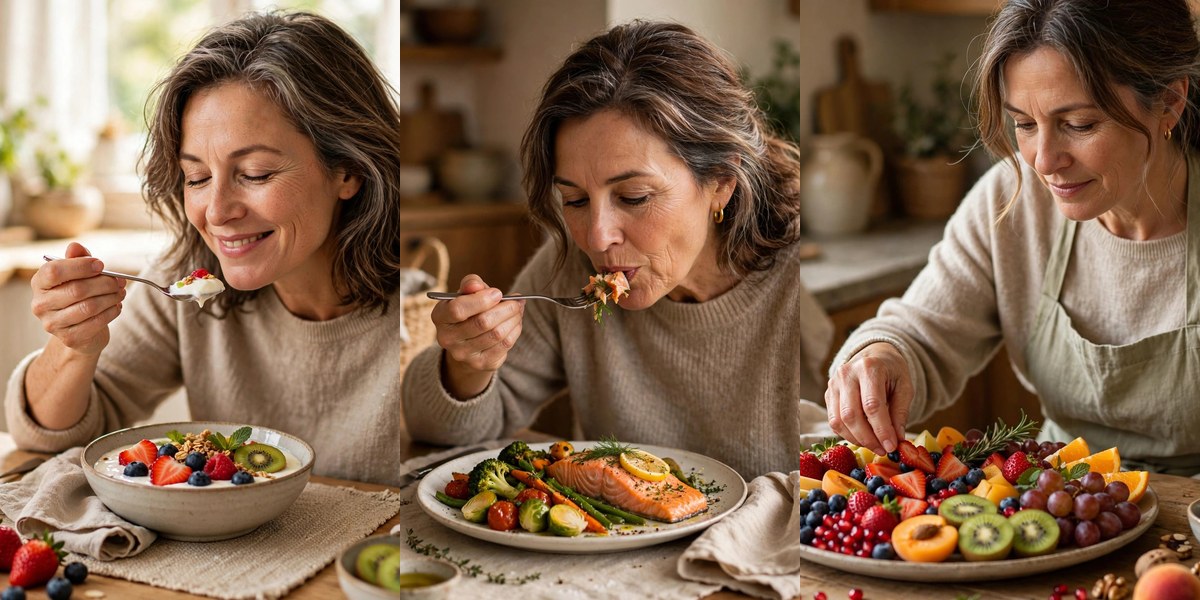
Here’s a myth worth busting: you can’t supplement your way out of a patchy diet with one magic multivitamin. Walk any pharmacy aisle and the wall of bottles promises otherwise — but after 50, what your body actually needs is far simpler and far more delicious than a fistful of pills.
Your nutrient needs genuinely shift in your 50s: B12 absorption drops, skin makes less vitamin D, bones get thirstier for calcium, muscles need more protein to stay put. The good news? Almost all of it can come from food — once you know what to put on your plate.
This guide walks through the 22 vitamins and nutrients that matter most after 50: what each one does for you now, the tastiest food sources, and an honest note on when a supplement conversation with your doctor makes sense. Food first, pills maybe, guessing never.
📌 Nutrient Basics After 50
- Food first, always. Nutrients from real meals come packaged with fiber and companions that pills can’t replicate.
- Needs shift with age. Absorption of B12 drops, skin makes less vitamin D, bones get thirstier for calcium — your 50s have a different shopping list than your 30s did.
- More is not better. Fat-soluble vitamins (A, D, E, K) and minerals like iron can build up — never megadose without medical guidance.
- Test, don’t guess. A simple blood panel tells you what you actually lack before you buy a single bottle.
1. 🦴 Calcium
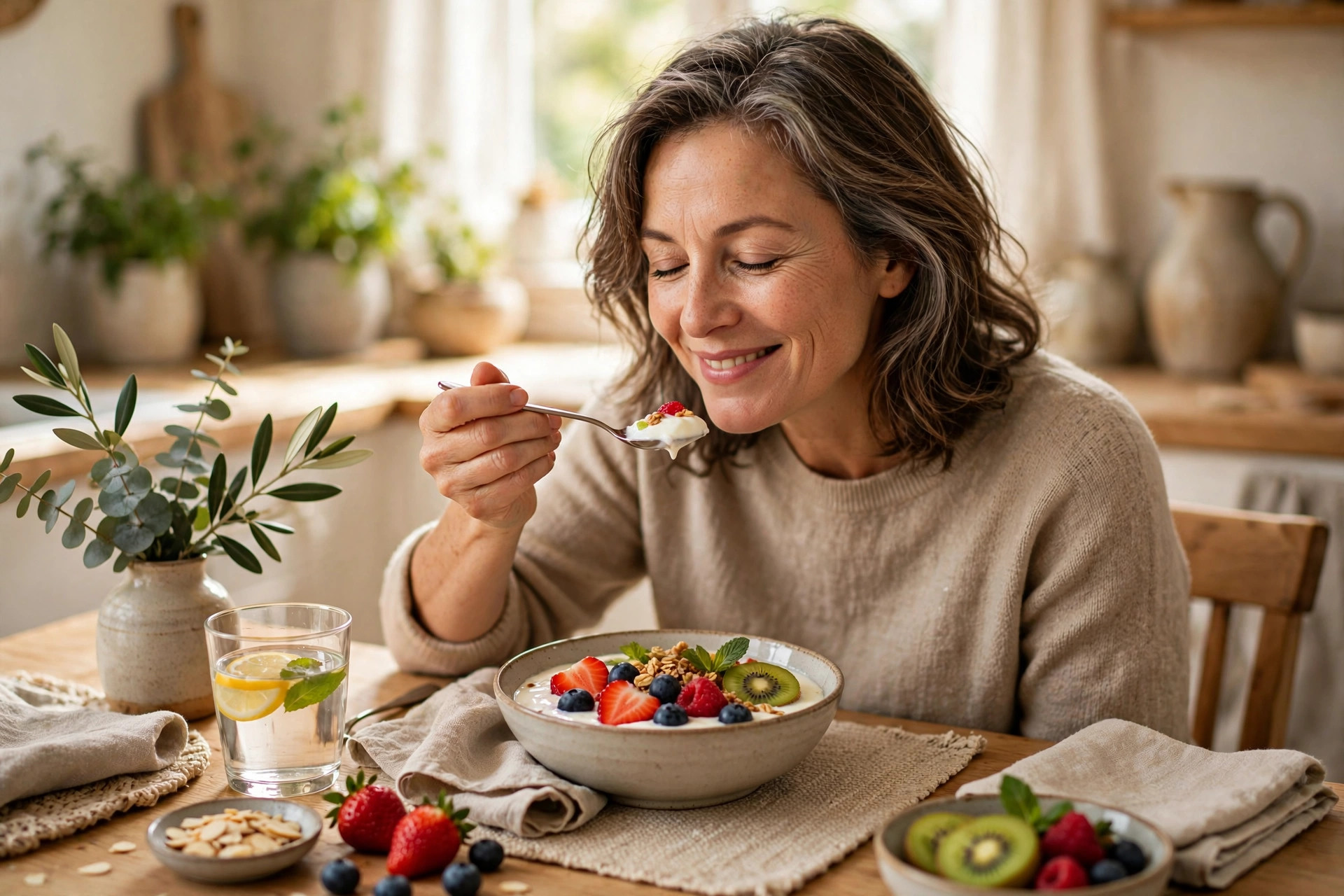
The headline bone mineral — and after menopause, when estrogen’s bone protection fades, steady calcium intake matters more than ever. Dairy, fortified plant milks, tofu set with calcium, and leafy greens all deliver it beautifully.
Try this: Try this: one calcium-rich food at every meal — yogurt at breakfast counts.
Make it yours: Make it yours: keep a wedge of parmesan for grating over everything.
Avoid: Avoid: assuming a pill replaces food. Supplements help only if diet falls short — ask your doctor.
2. ☀️ Vitamin D

The sunshine vitamin governs calcium absorption, supports immunity and mood — and our skin makes less of it with age. Oily fish, fortified milk, and sensible daylight are the classic trio; many women still run low.
Try this: Try this: a midday walk with forearms uncovered, 10–15 minutes.
Make it yours: Make it yours: ask your doctor about checking your level at your next physical.
Avoid: Avoid: megadosing D on your own. High doses need medical supervision.
3. 🥩 Vitamin B12
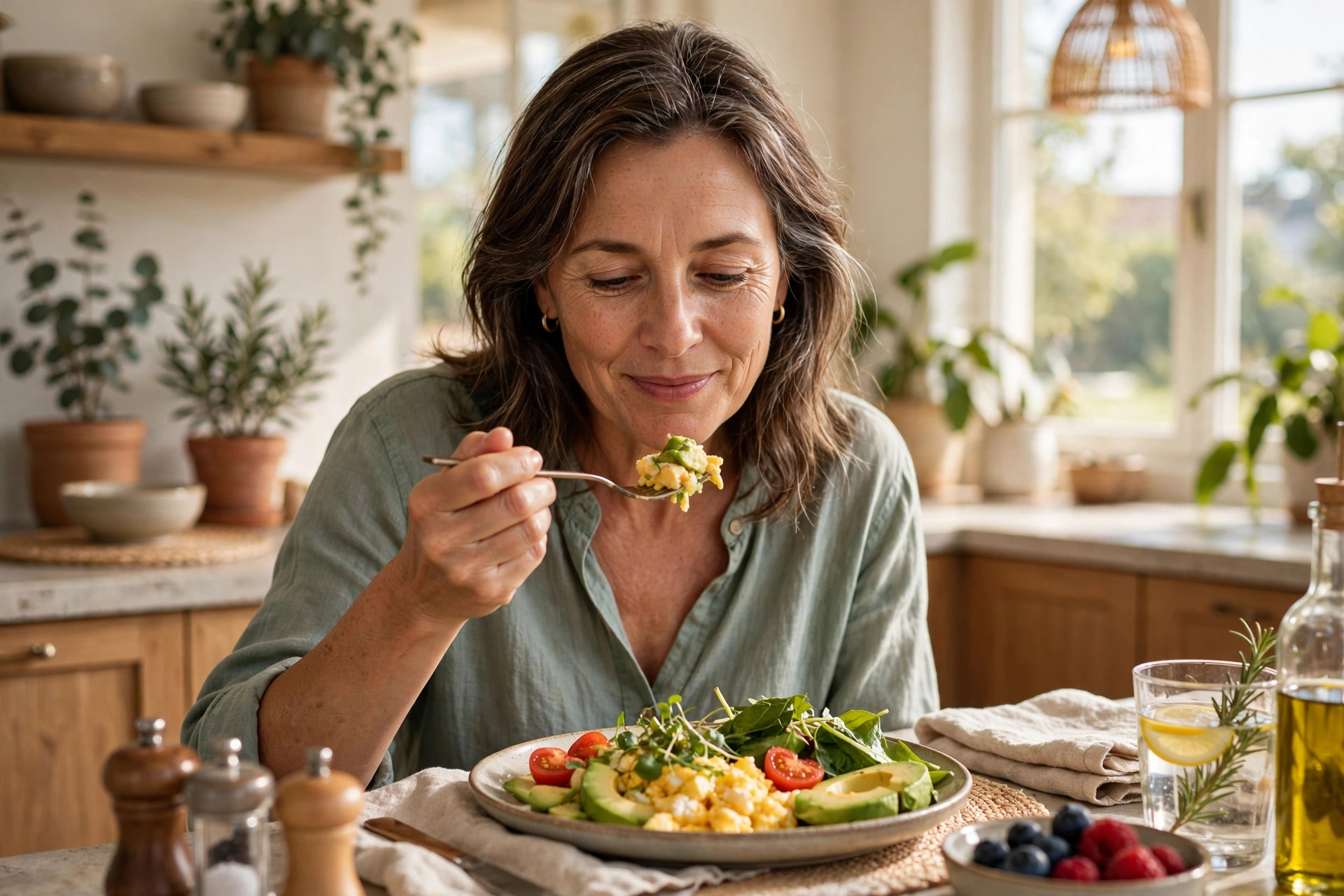
B12 keeps nerves and blood cells humming, but absorption declines with age — and low levels masquerade as fatigue or brain fog. Meat, fish, eggs, and dairy are the richest sources; nutritional yeast works for plant-based eaters.
Try this: Try this: eggs or fish several times a week, without fail.
Make it yours: Make it yours: if you’re vegetarian, make B12-fortified foods a daily habit.
Avoid: Avoid: blaming every tired spell on B12. Get tested before supplementing.
4. 🍗 Protein

Not a vitamin, but the nutrient that guards your muscle — and muscle is your longevity insurance. After 50, bodies use protein less efficiently, so steady portions at every meal beat one giant dinner serving.
Try this: Try this: a palm-sized protein portion at breakfast, lunch, and dinner.
Make it yours: Make it yours: Greek yogurt, lentils, chicken, tofu — rotate them.
Avoid: Avoid: the all-carbs breakfast. Protein early steadies energy all day.
5. 🐟 Omega-3s
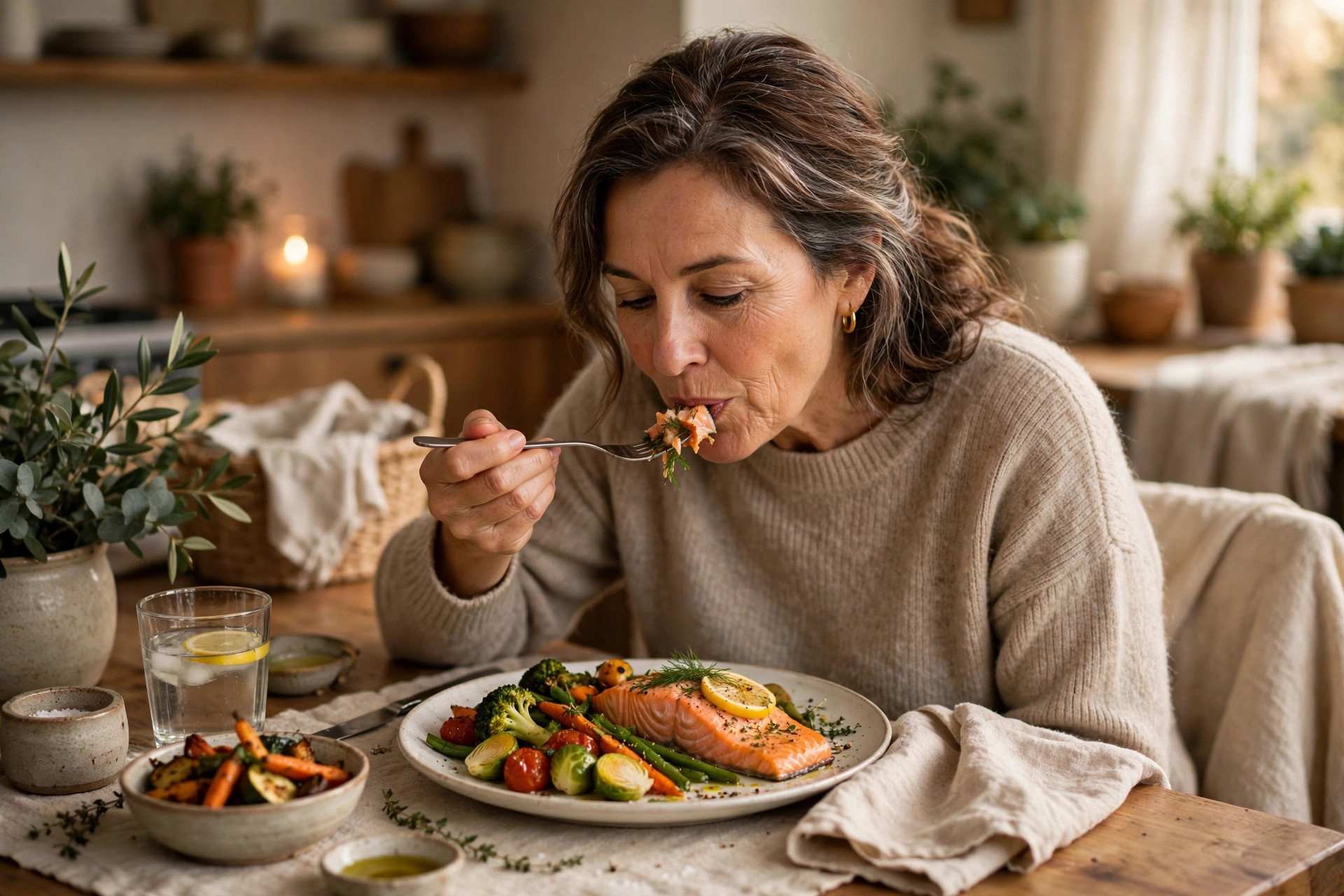
These fats support heart, brain, and eye health — all increasingly precious after 50. Oily fish twice a week is the gold standard; walnuts and flaxseed add the plant kind.
Try this: Try this: salmon, sardines, or mackerel once this week.
Make it yours: Make it yours: a spoonful of ground flaxseed in breakfast daily.
Avoid: Avoid: pricey fish-oil megadoses without a doctor’s input — food first.
6. 🥬 Vitamin K
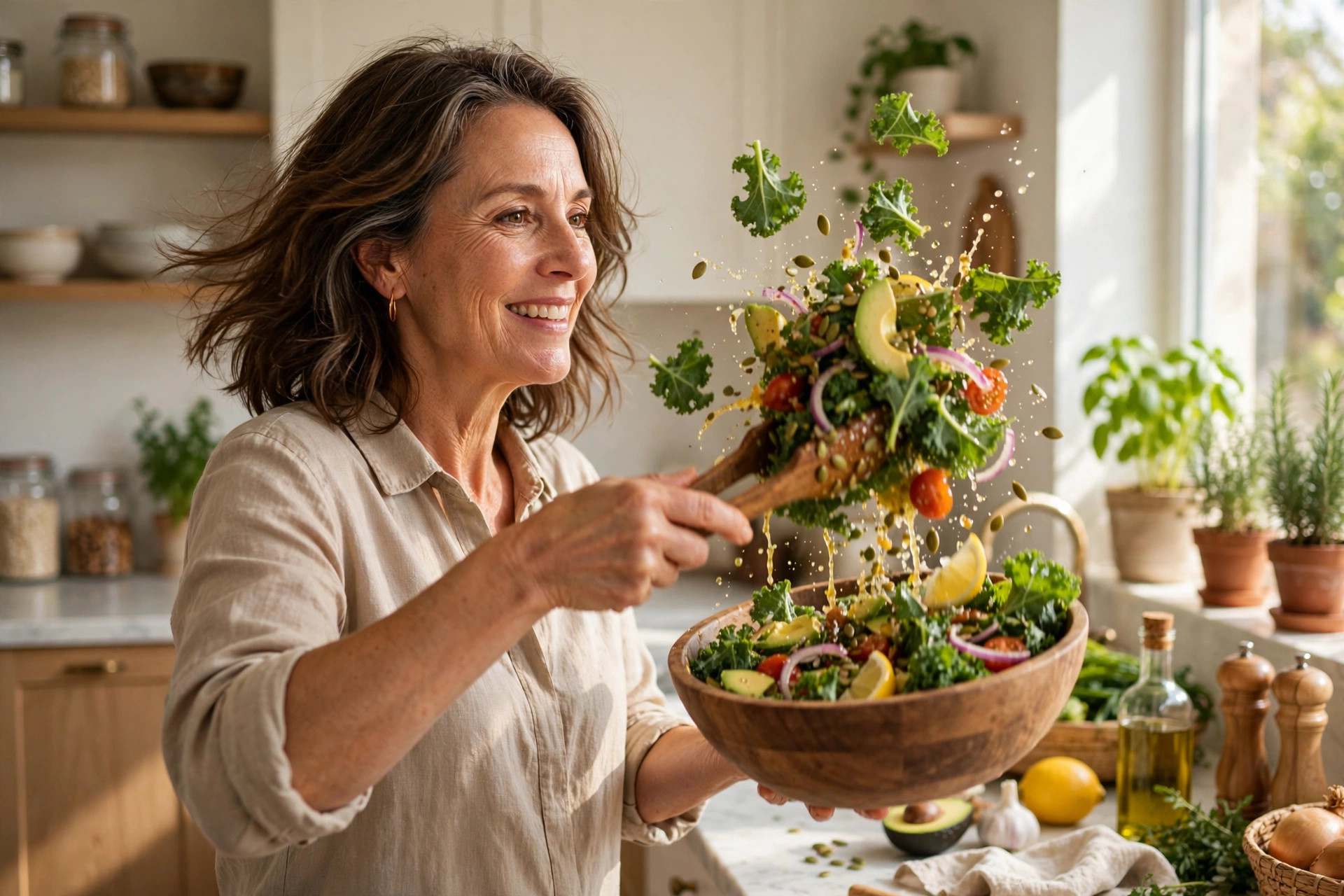
Vitamin K directs calcium into bones (rather than arteries) and helps blood clot normally. Leafy greens — kale, spinach, collards — are loaded with it; one daily serving covers you.
Try this: Try this: a handful of greens in whatever you’re already cooking.
Make it yours: Make it yours: frozen spinach disappears into soups and smoothies.
Avoid: Avoid: sudden huge K swings if you take blood thinners — keep intake steady and tell your doctor.
7. 🍊 Vitamin C

The immunity and skin vitamin — it also helps your body absorb iron from plant foods. Citrus, peppers, kiwi, and berries deliver it fresh; cooking destroys some, so eat a few raw daily.
Try this: Try this: a pepper or an orange as your afternoon snack.
Make it yours: Make it yours: squeeze lemon over lentil dishes to double iron uptake.
Avoid: Avoid: giant C megadoses. Your body excretes the excess — literally money down the drain.
8. 🥘 Magnesium

Involved in sleep, muscle relaxation, and calm nerves — and many diets run short. Nuts, seeds, beans, whole grains, and dark chocolate (yes, really) all contribute.
Try this: Try this: a small handful of almonds as your evening snack.
Make it yours: Make it yours: a square of dark chocolate after dinner — medicinal, obviously.
Avoid: Avoid: magnesium oxide bargain pills with poor absorption — food beats them.
9. 🫘 Iron — Check First
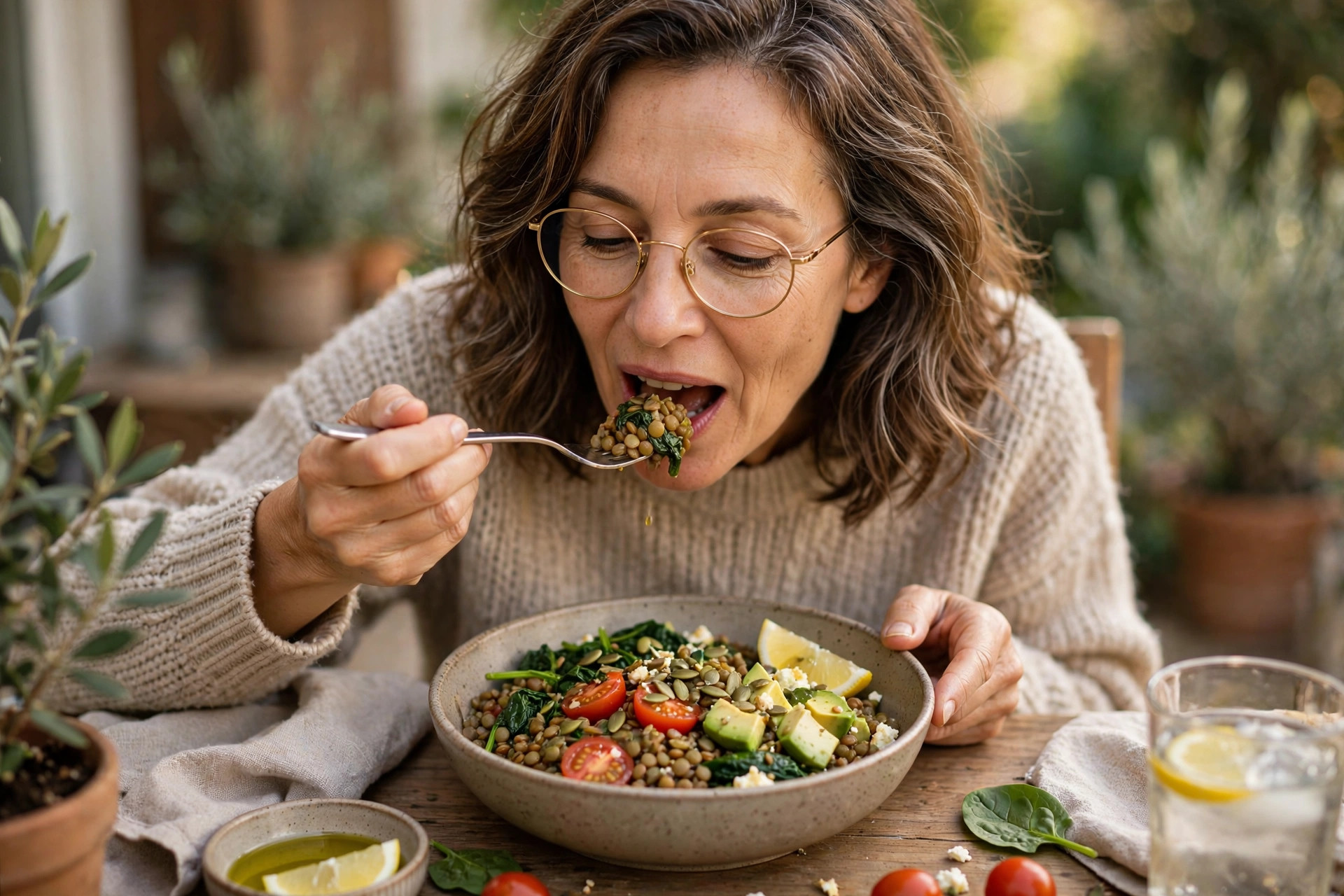
Iron needs often drop after periods stop, but deficiency still happens — and too much iron is harmful. This is the poster child for test-don’t-guess: check levels before touching a supplement.
Try this: Try this: ask for iron and ferritin at your next blood panel.
Make it yours: Make it yours: pair lentils or spinach with vitamin C foods for better absorption.
Avoid: Avoid: taking iron ‘just in case.’ Excess iron is genuinely dangerous.
10. 🥑 Vitamin E
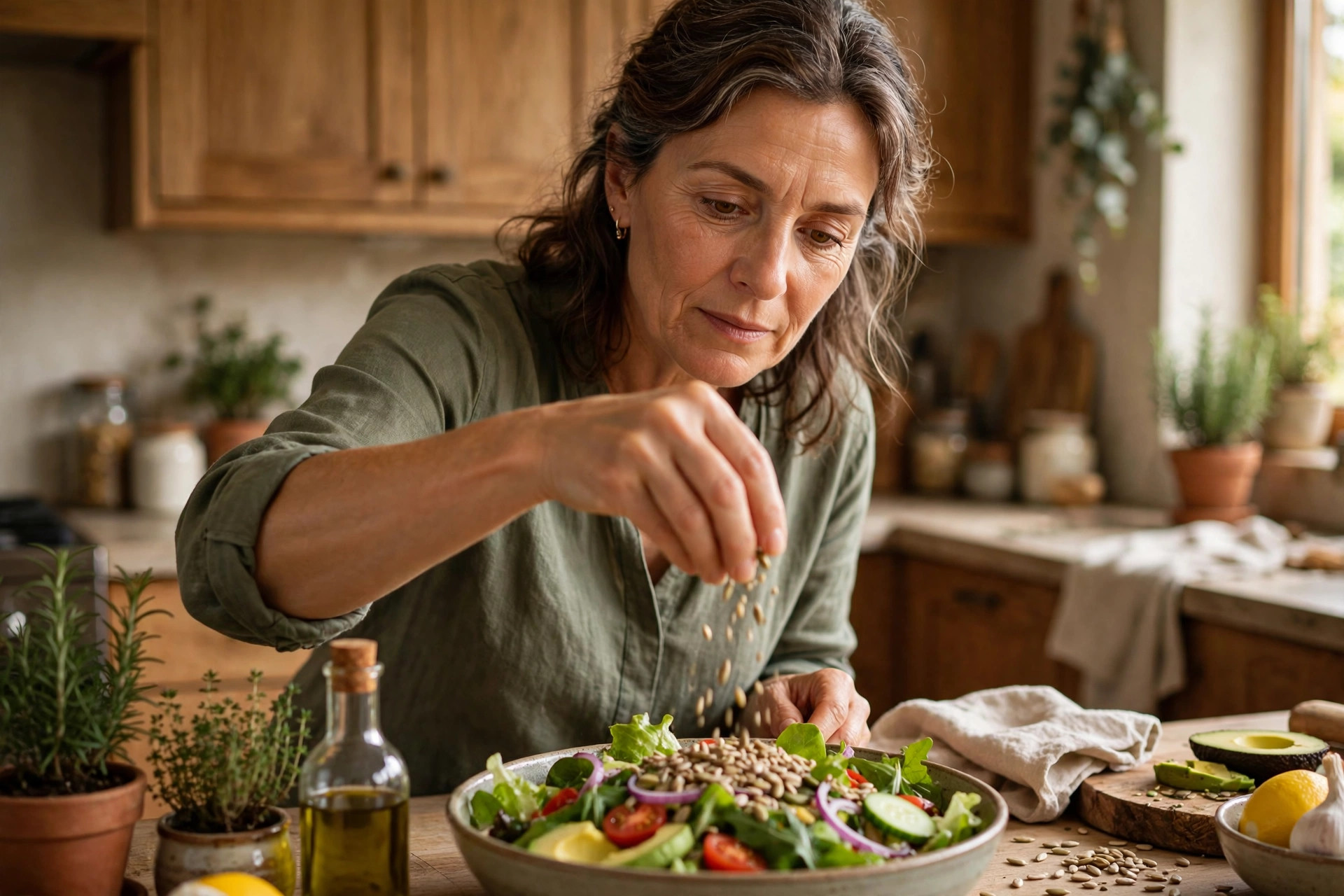
An antioxidant that protects cells and supports skin — nuts, seeds, and plant oils are the tastiest sources. A varied diet usually covers it without any pills.
Try this: Try this: sunflower seeds on your salad this week.
Make it yours: Make it yours: cook with sunflower or olive oil sometimes.
Avoid: Avoid: high-dose E supplements, which have a checkered safety record — food first.
11. 🥕 Vitamin A (Beta-Carotene)
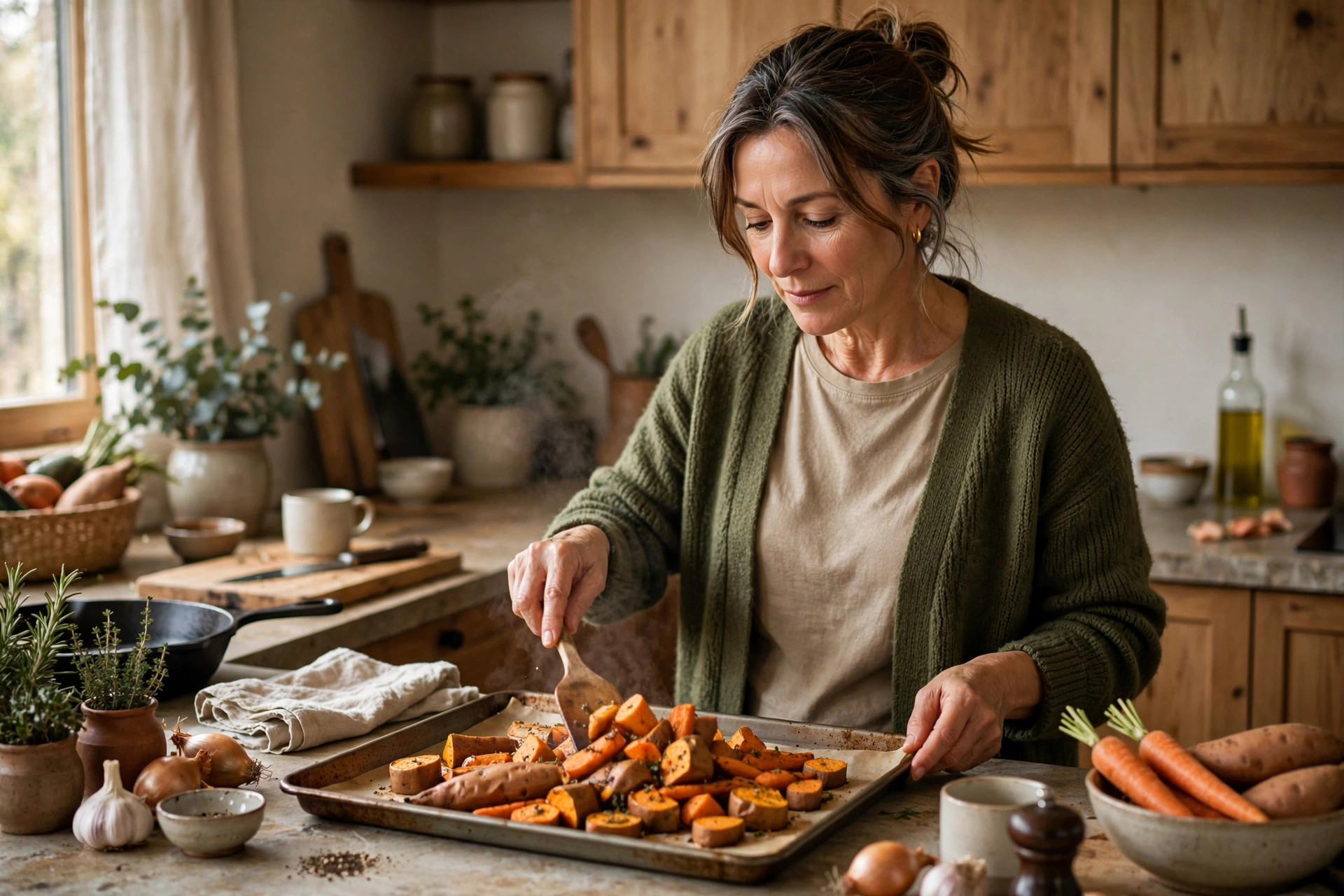
Essential for eyes and immunity — and the beta-carotene in orange vegetables converts safely as needed, unlike preformed vitamin A which can accumulate. Sweet potatoes, carrots, and butternut squash are your friends.
Try this: Try this: one orange vegetable on your plate daily.
Make it yours: Make it yours: roast a tray of carrots and sweet potato on Sunday.
Avoid: Avoid: high-dose retinol supplements — excess vitamin A harms bones and liver.
12. 🍌 Potassium

The blood-pressure-friendly mineral that balances sodium — bananas get the fame, but potatoes, beans, and leafy greens bring more per bite. Most women get far less than ideal.
Try this: Try this: beans or lentils twice this week.
Make it yours: Make it yours: a baked potato with dinner is a potassium powerhouse.

Avoid: Avoid: potassium salt substitutes if you have kidney issues — ask your doctor.
13. 🌾 Fiber
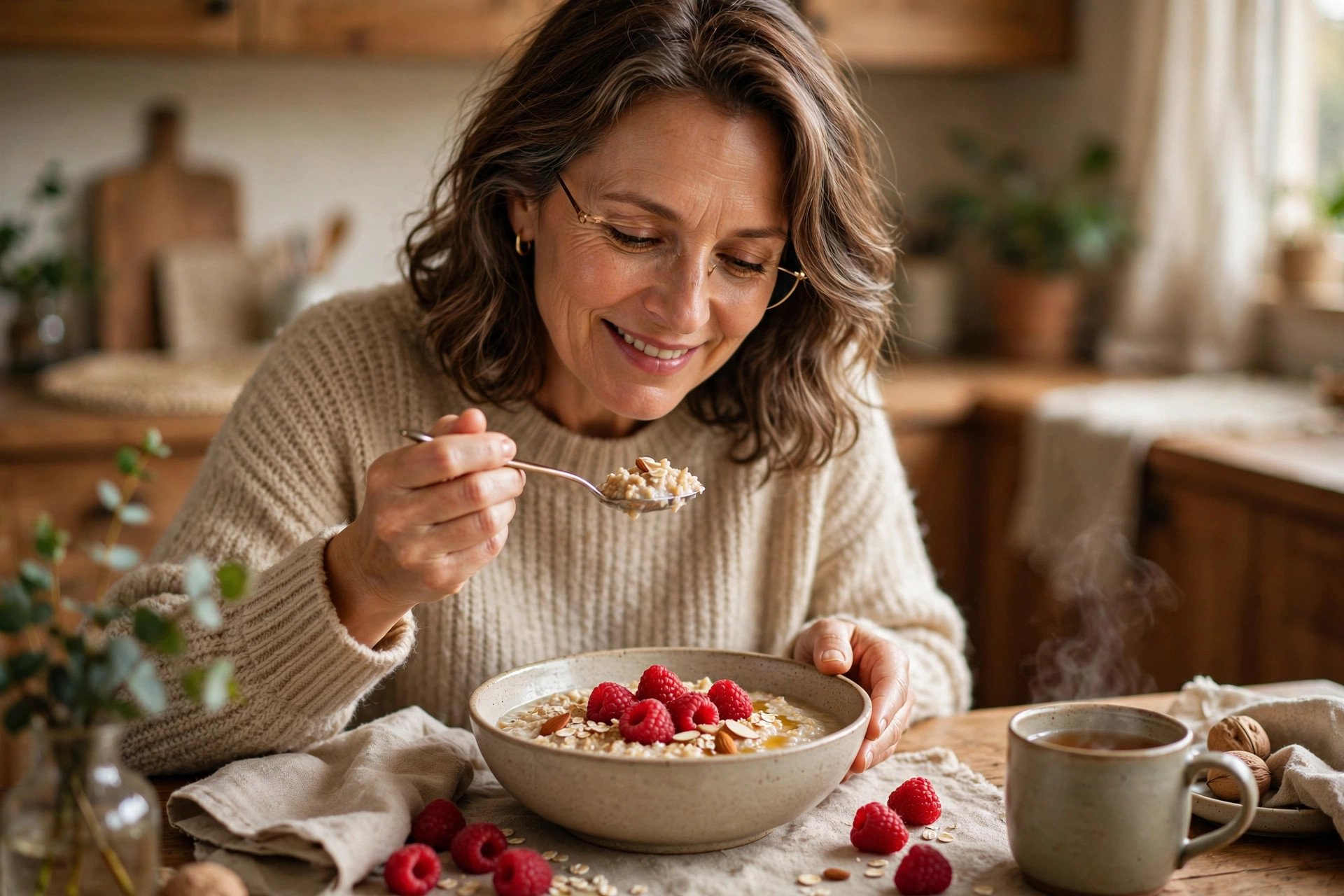
The unglamorous hero: feeds good gut bacteria, steadies blood sugar, helps manage cholesterol, and keeps you full. Oats, beans, vegetables, and whole grains — aim for variety, not just bran.
Try this: Try this: add beans to one meal a day.
Make it yours: Make it yours: raspberries on breakfast — delicious fiber bombs.
Avoid: Avoid: jumping from low to high fiber overnight. Increase gradually with water.
14. 💧 Water

The forgotten nutrient — every cell, joint, and brain function depends on it, and thirst signals dull with age. Steady sipping beats heroic chugging.
Try this: Try this: a glass with each meal plus two between, every day.
Make it yours: Make it yours: herbal teas count — keep a pot going.
Avoid: Avoid: waiting for thirst. By then you’re already running low.
15. 🥚 Choline

A brain-and-liver nutrient most people have never heard of — eggs are the richest source by far, with fish and poultry behind. Two eggs a few times a week covers most needs.
Try this: Try this: eggs for breakfast twice this week.
Make it yours: Make it yours: hard-boiled eggs make perfect portable snacks.
Avoid: Avoid: fearing eggs over old cholesterol worries — current guidance is far friendlier.
16. 🌰 Zinc

Quietly powers immunity and wound healing — and shortfalls show up as slow recovery and frequent colds. Meat, shellfish, chickpeas, and pumpkin seeds all deliver.
Try this: Try this: pumpkin seeds as your desk snack this week.
Make it yours: Make it yours: hummus counts — chickpeas bring zinc along.
Avoid: Avoid: zinc lozenges around the clock. Too much blocks copper absorption.
17. 🫐 Antioxidants (Eat the Rainbow)
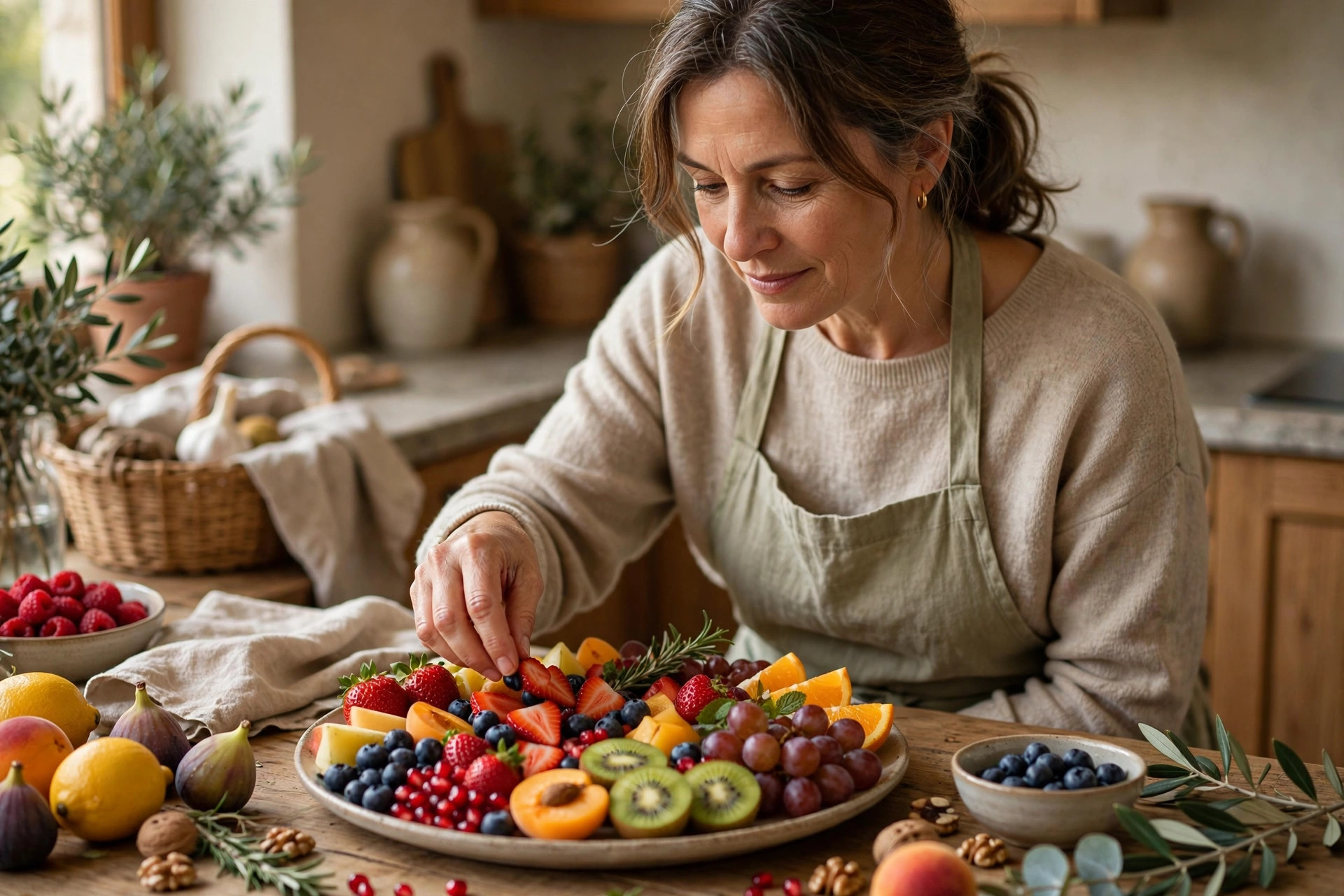
Not one nutrient but a team — the pigments that make berries blue and peppers red defend your cells daily. Five colors a day is the simplest supplement you’ll ever take.
Try this: Try this: count colors at dinner tonight — aim for three.
Make it yours: Make it yours: frozen berries are as good as fresh, all year.
Avoid: Avoid: expensive ‘superfood’ powders. The rainbow on your plate wins.
18. 🫔 Probiotics & Fermented Foods
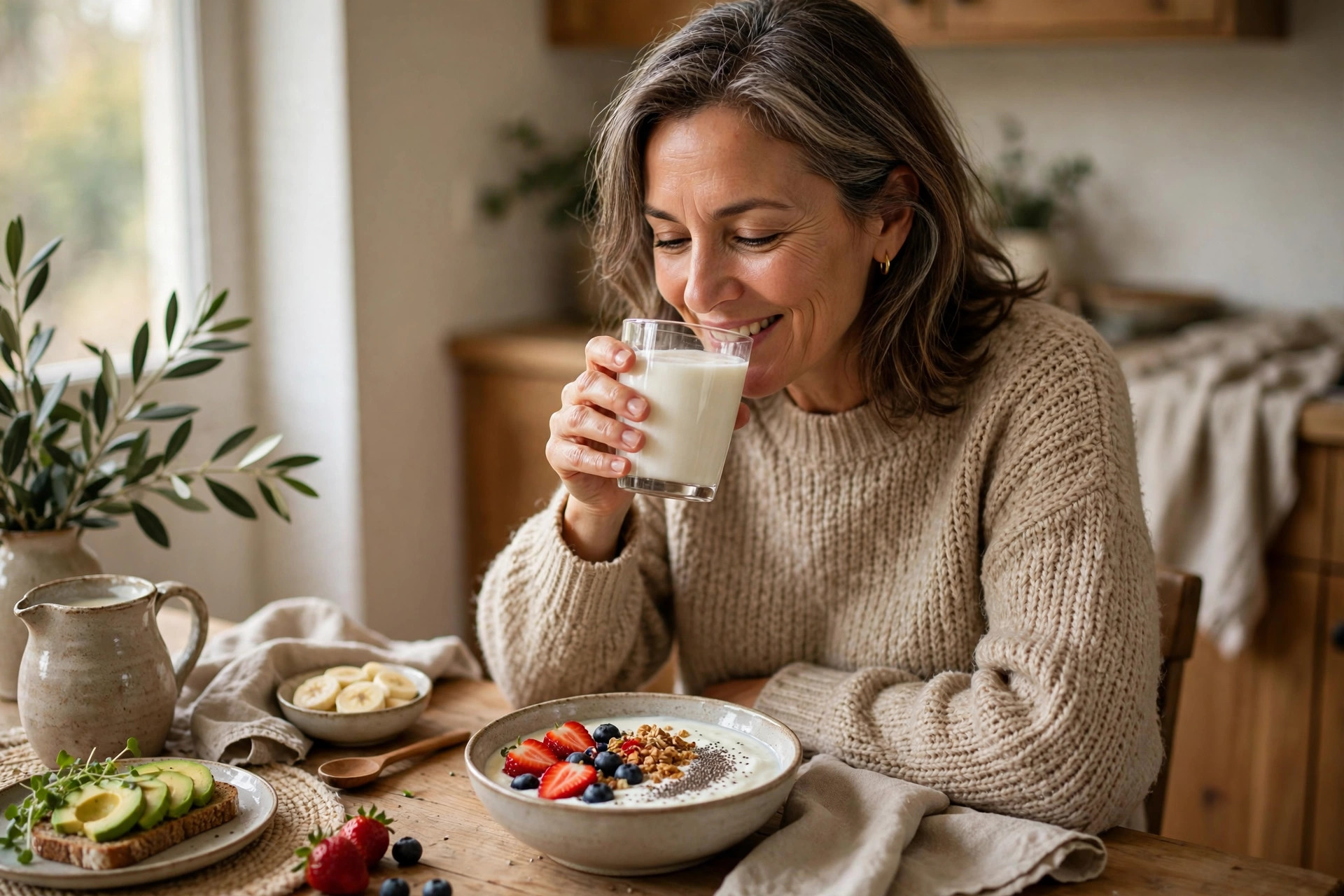
Gut health influences immunity, mood, and nutrient absorption — and fermented foods (yogurt, kefir, kimchi, sauerkraut) seed your gut with beneficial bacteria the tasty way.
Try this: Try this: a serving of yogurt or kefir daily.
Make it yours: Make it yours: kimchi or kraut as a condiment — small, mighty.
Avoid: Avoid: sugary ‘probiotic’ drinks. Plain fermented foods, not candy.
19. 🌰 Selenium
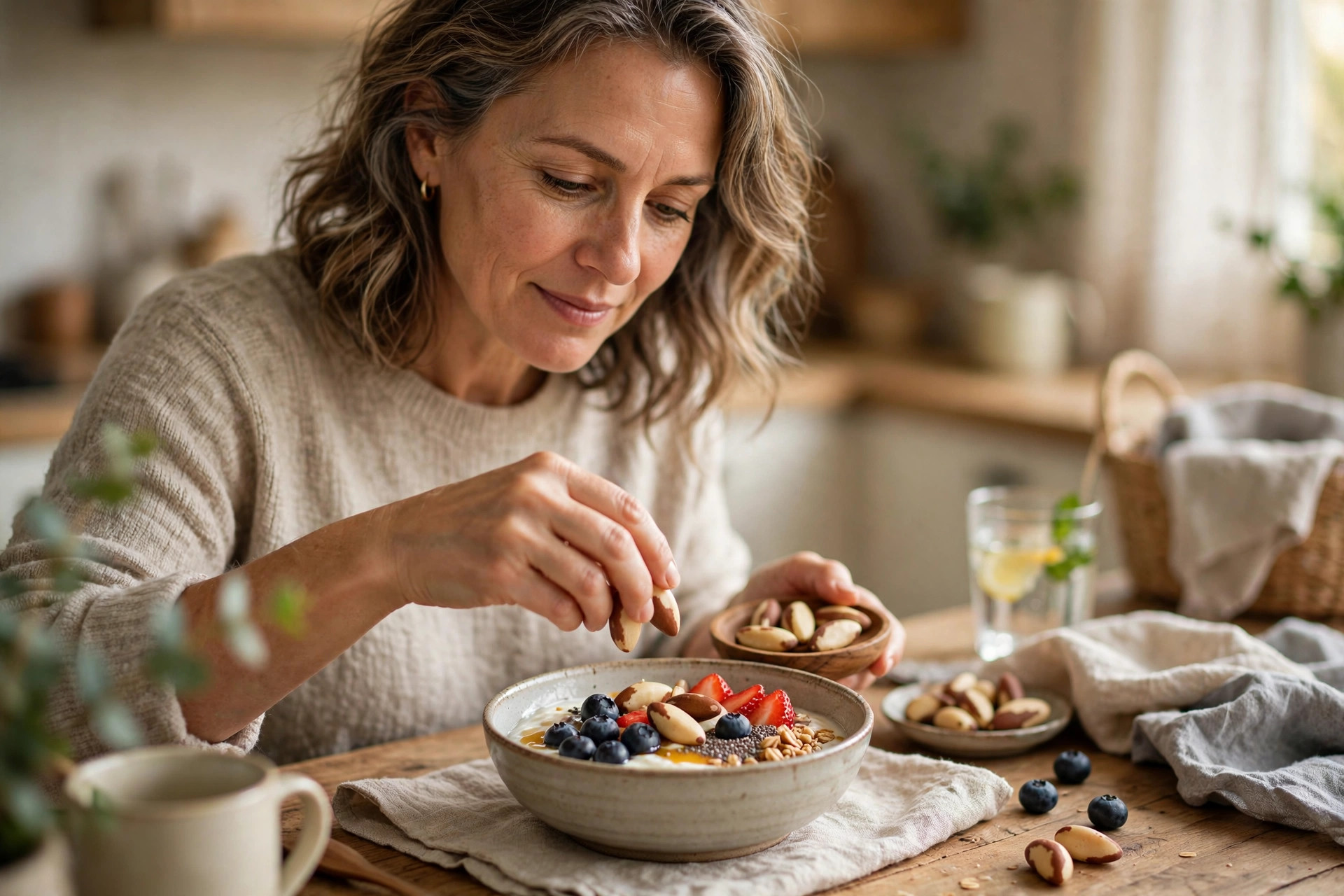
A trace mineral with an outsized job in thyroid function and antioxidant defense — and just one or two Brazil nuts a day covers you completely. Easy win.
Try this: Try this: two Brazil nuts with breakfast.
Make it yours: Make it yours: keep a small jar visible so you remember.
Avoid: Avoid: handfuls daily. Selenium is a ‘little goes a long way’ nutrient.
20. 🍀 Folate
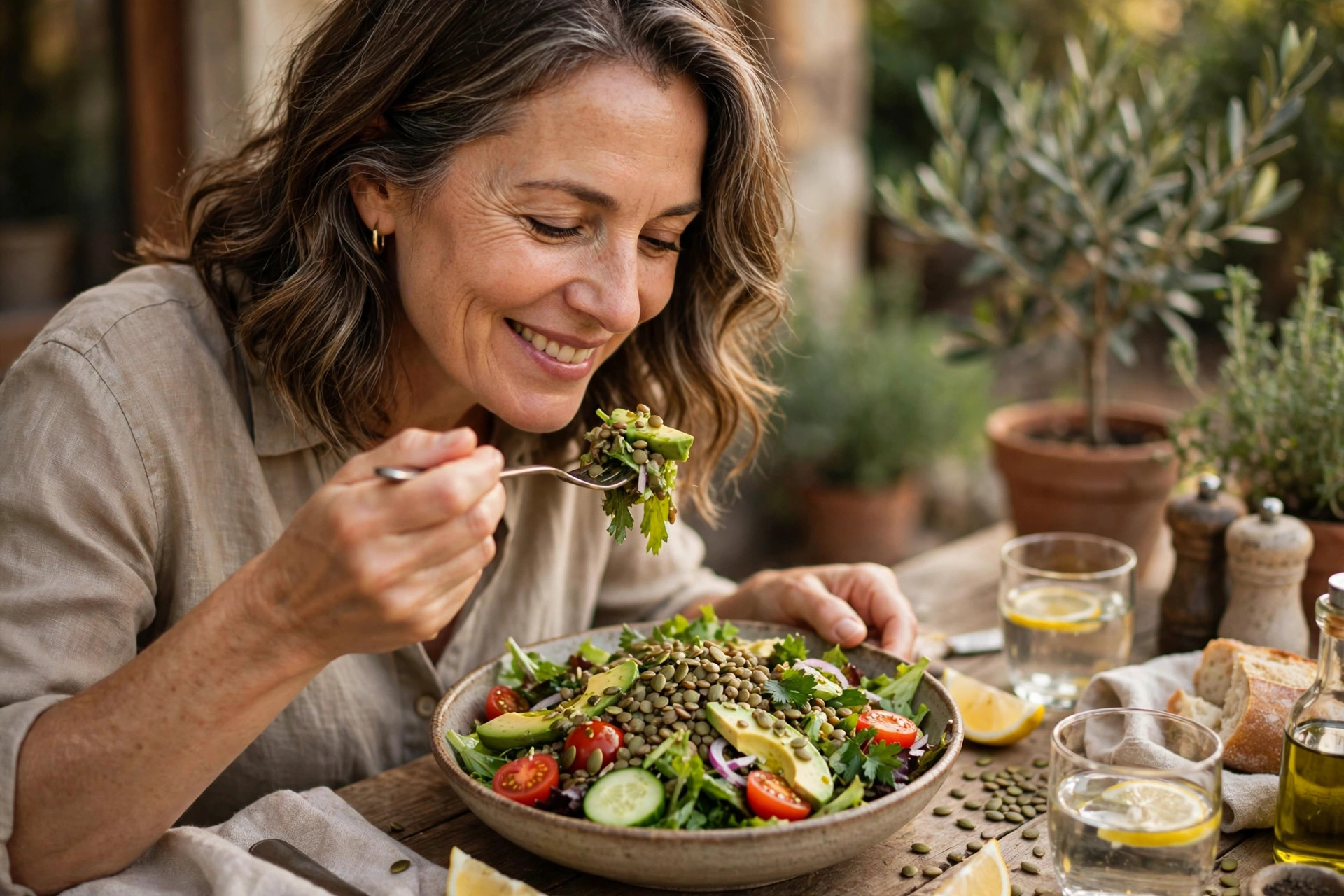
Essential for cell renewal and healthy blood — leafy greens, asparagus, Brussels sprouts, and lentils overflow with it. If it’s green and leafy, it probably brings folate.
Try this: Try this: a big green salad three times this week.
Make it yours: Make it yours: lentil soup — folate in a bowl.
Avoid: Avoid: confusing folate (food) with folic acid megadoses — food first.
21. 🌿 Vitamin B6

Helps your brain make mood-stabilizing neurotransmitters — relevant in the hormonally turbulent 50s. Poultry, fish, potatoes, and bananas all supply it.
Try this: Try this: chicken or turkey a few times a week.
Make it yours: Make it yours: a banana in your bag — B6 to go.
Avoid: Avoid: B6 megadose pills, which can actually damage nerves — food is safe.
22. 💊 The Multivitamin Question

So — one pill or not? A basic multi can be sensible insurance if your diet is patchy, but it’s a safety net, not a foundation. Bring your diet, your labs, and your medication list to your doctor and decide together.
Try this: Try this: track your eating honestly for one week before deciding.
Make it yours: Make it yours: if you do choose one, pick a formula designed for 50+.
Avoid: Avoid: stacking a multi on top of five single supplements — duplicates add up.
Get a blood panel before buying anything. Knowing your actual D, B12, and iron levels turns a $60 guess into a $0 answer — and your doctor can read it in minutes.
Audit your plate, not your pillbox. One week of honest food tracking reveals gaps no bottle can diagnose — and the fixes are usually delicious.
🚫 Supplement Mistakes to Avoid
- Taking iron ‘just in case’ — excess iron is dangerous; test first.
- Megadosing fat-soluble vitamins (A, D, E, K) — they accumulate in the body.
- Stacking five single supplements on top of a multivitamin — duplicates add up fast.
- Choosing supplements over food — pills lack fiber and the nutrient teamwork of meals.
- Never telling your doctor — supplements can interact with medications.
❓ Vitamins After 50 FAQs
Do I really need a multivitamin after 50?
Not necessarily. If you eat a varied diet with plenty of vegetables, protein, and whole grains, you may cover nearly everything. A multi makes most sense as insurance for patchy eaters — and the decision is best made with your doctor, based on your diet and labs rather than marketing.
Can I get vitamin D from food alone?
It’s difficult — few foods are rich in D. Sensible sun exposure plus oily fish and fortified foods form the usual base, and many women still run low, especially in winter. A blood test tells you where you stand; supplement only on your doctor’s advice.
Are gummy vitamins as good as pills?
They can work, but gummies often contain less of each nutrient (and more sugar) than tablets, and rarely include iron or calcium in meaningful amounts. Read the label like you would food — because that’s essentially what they are.
Can vitamins interact with my medications?
Yes — vitamin K affects blood thinners, calcium and iron can block absorption of some drugs, and high-dose anything can surprise you. Always tell your doctor and pharmacist every supplement you take, including the ‘harmless’ ones.
What’s the single most important change I can make?
Eat more plants and protein at every meal. That one shift lifts fiber, potassium, magnesium, folate, vitamin C, and protein simultaneously — no bottle required. Supplements fine-tune; food does the heavy lifting.
✅ Your Nutrient-Smart Week
- ☐ One calcium-rich food at every meal
- ☐ Leafy greens daily — fresh or frozen
- ☐ Protein at breakfast, not just dinner
- ☐ Oily fish once; rainbow vegetables always
- ☐ Midday daylight walk for vitamin D and mood
- ☐ Book that blood panel you’ve been postponing
Forget the pharmacy wall of promises — your plate is the most powerful supplement you own. Start with the three nutrients that surprised you most, eat the rainbow this week, and let your doctor help with the rest. Small, tasty changes; well-nourished decades.
📖 Keep Reading
- What to Wear to a Harvest Festival Over 50 — festive outfits for stocking up on the fresh produce your body loves.
- Friendsgiving Outfits for Women Over 50 — polished looks for the season’s most delicious gatherings.
- November Outfits for Women Over 50 — cozy layers for market mornings and hearty dinners.
Discover more from Fashinate Style
Subscribe to get the latest posts sent to your email.