
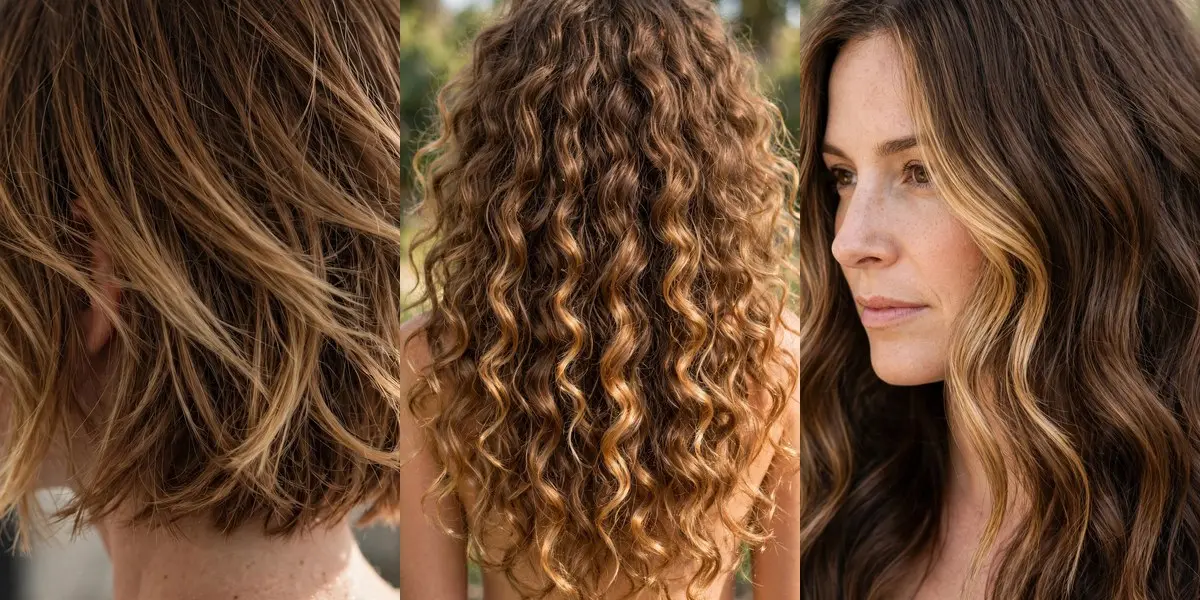
The best honey brown balayage ideas are not one-size-fits-all — they are placed exactly where your face needs the light. This warm, golden shade lifts brunette hair beautifully without ever leaving your natural color behind.
Round, square, oval, heart, long or diamond — every face shape has a placement that flatters it, from bright face-framing pieces to soft halos and slimming vertical panels. This guide matches all 25 placements to the features they suit best.
You will also find honest upkeep notes for every style, plus simple care tips to keep the honey rich. New to balayage? Start with our brown to blonde balayage ideas, then come back and pick your perfect placement.
In This Guide
- 1. Face-Framing Balayage for Round Faces
- 2. Vertical Balayage for Square Faces
- 3. Soft Halo Balayage for Oval Faces
- 4. Chin-Length Emphasis Balayage for Heart Faces
- 5. Elongating Balayage for Long Faces
- 6. Subtle Money Piece for Diamond Faces
- 7. Warm All-Over Balayage for Balanced Features
- 8. Balayage with Root Smudge for Low Maintenance
- 9. Balayage Placement for Oblong Faces
- 10. Balayage with Face-Framing Curtain Pieces
- 11. Warm Balayage for Fair Skin Tones
- 12. Rich Honey Balayage for Deeper Skin Tones
- 13. Balayage with Layered Highlights for Layered Cuts
- 14. Balayage for Fine Hair Textures
- 15. Balayage for Thick, Curly Textures
- 16. Balayage with Glossy Finish for Enhanced Shine
- 17. Balayage with Dark Roots for Contrast
- 18. Balayage for Short Hair Across Face Shapes
- 19. Balayage with Peekaboo Placement
- 20. Balayage with Caramel and Honey Blend
- 21. Balayage with Face-Slimming Vertical Panels
- 22. Balayage with Textured Ends for Movement
- 23. Balayage for Angular Face Shapes
- 24. Balayage with Subtle Ombre Transition
- 25. Custom Balayage Consultation for Your Unique Shape
- Styling Tips
- Common Mistakes to Avoid
- Best At-Home Care Tips to Maintain Honey Brown Balayage
- Frequently Asked Questions
1. Face-Framing Balayage for Round Faces
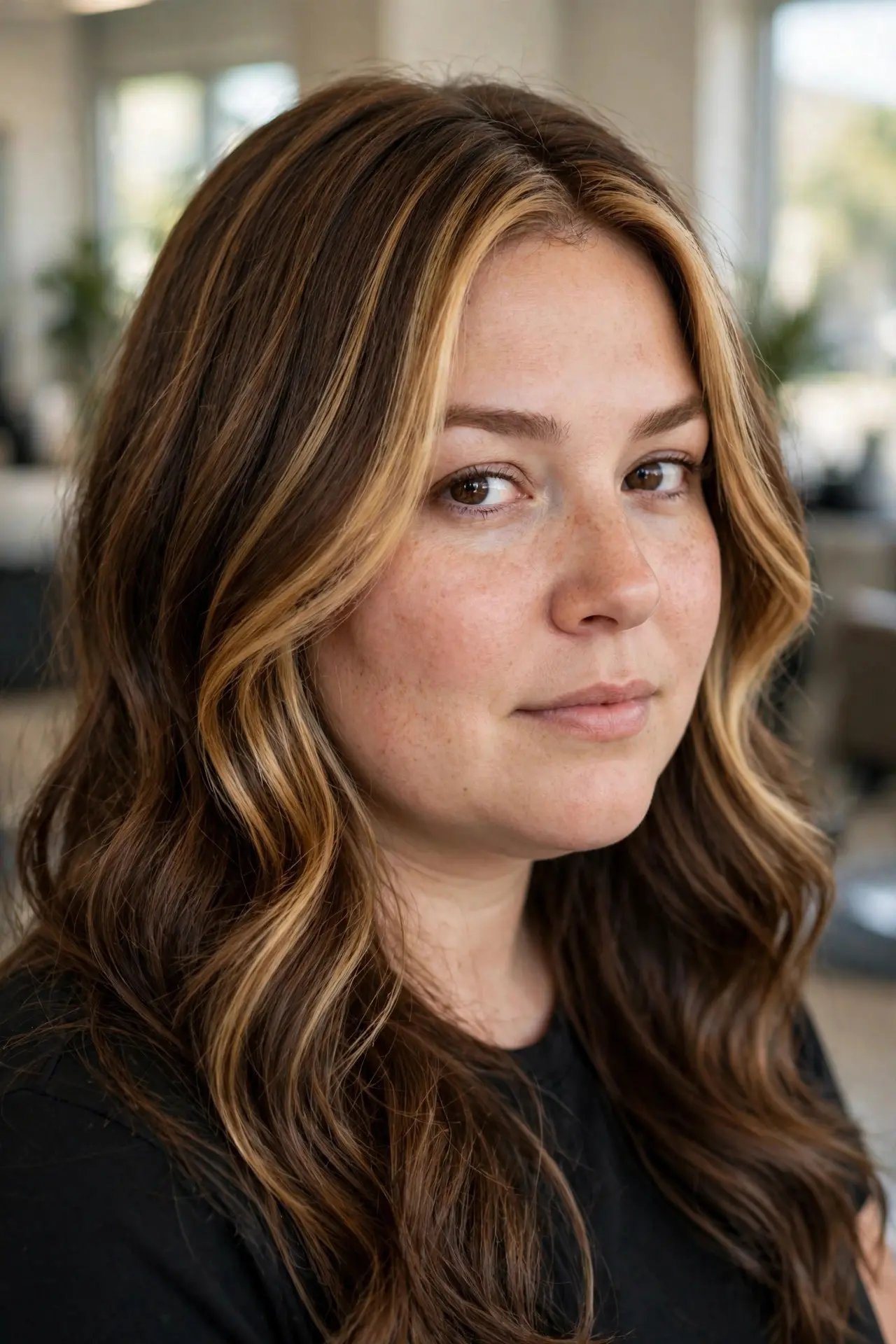
If your face is round, the smartest place for honey is right at the front. Face-framing balayage concentrates the lightest honey brown pieces around the hairline, temples and cheekbones, so the brightness sits high and pulls the eye upward instead of letting it travel across the widest part of the face.
That high placement creates the illusion of length and angles where a round face is naturally soft. Because the color is focused in one zone rather than spread everywhere, it also grows out gracefully — there is no obvious line chasing you back to the salon every few weeks.
Tip: Ask your colorist to keep the heaviest highlighting at the temples and cheekbones, and go easy at the jawline, where extra brightness can widen the face. An occasional purple shampoo keeps the honey warm without tipping into brass.
2. Vertical Balayage for Square Faces
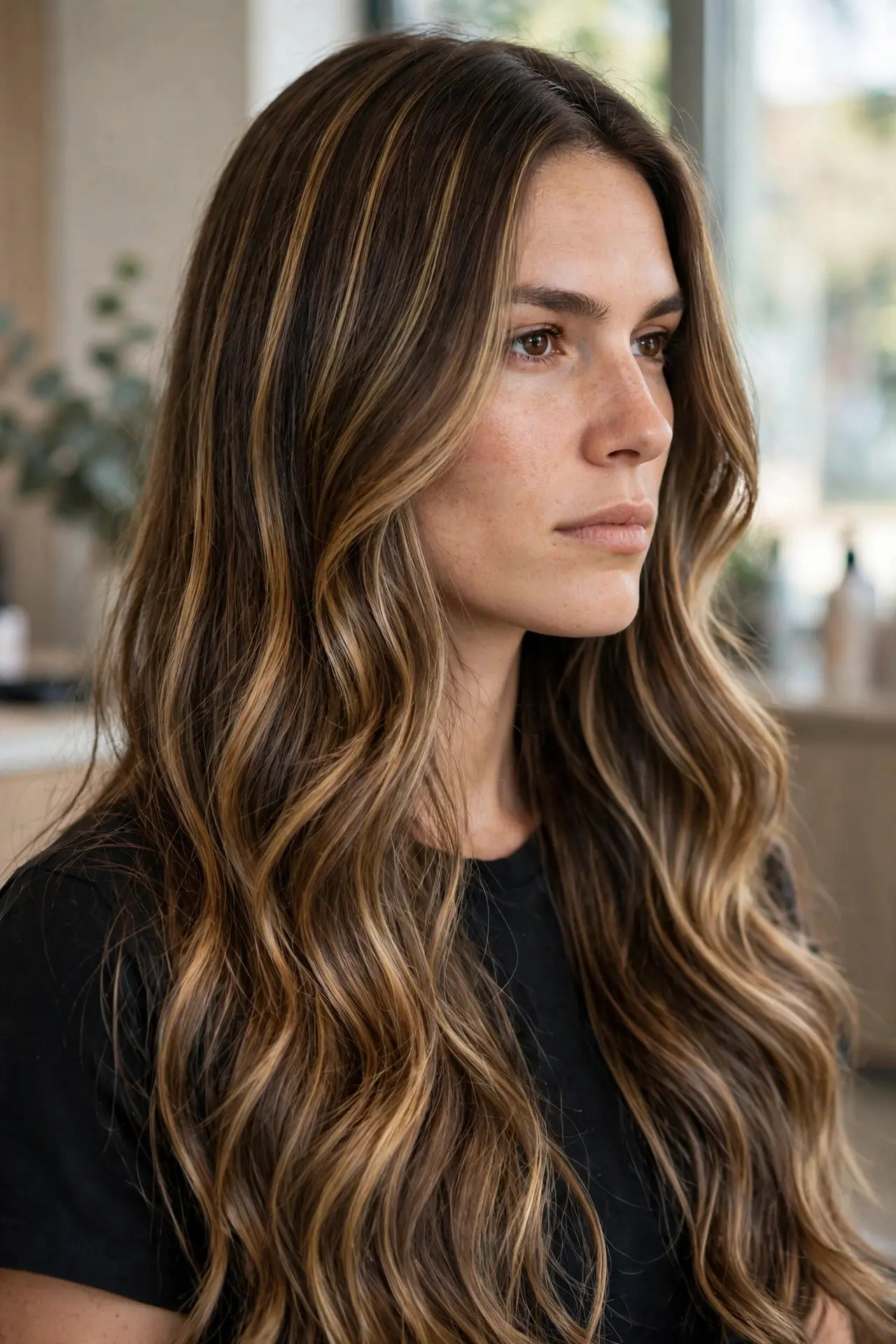
A square face has a strong, defined jaw, and vertical balayage is the gentlest way to soften it. Instead of placing color in horizontal bands, your colorist paints long, sweeping ribbons of honey brown that run the full length of the hair, so the eye travels up and down rather than side to side.
The effect is subtle but real: the face reads longer and softer, and the natural warmth of honey brown takes the edge off sharper angles. It is also an easy placement to live with, because the long ribbons melt quietly into the base as they grow out.
Tip: Pair this placement with soft waves whenever you can — the movement doubles the elongating effect. Blunt, poker-straight styling does the opposite and puts the jaw right back in focus.
3. Soft Halo Balayage for Oval Faces
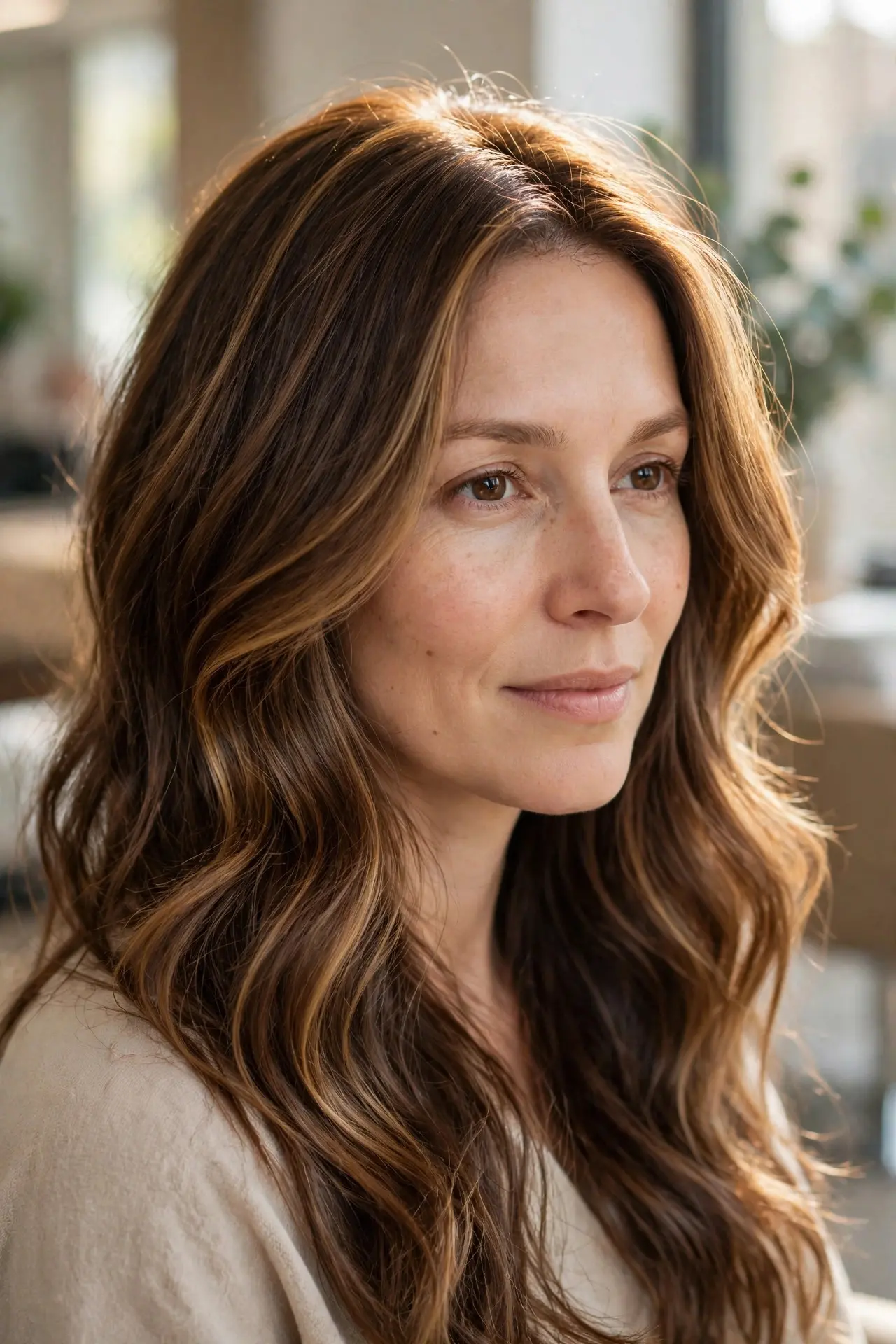
Oval faces are the lucky ones — almost every placement flatters them. A soft halo makes the most of that balance: subtle honey brown highlights are placed evenly around the crown, with gentle face-framing pieces, so the brightness feels like a glow rather than a pattern.
Because nothing is concentrated too heavily in one area, your natural proportions stay in charge, and the honey simply adds warmth and light. It is wonderfully low-maintenance, too, since an even placement grows out without awkward bands or hotspots.
Tip: Play with your parting — center, side, flipped — to show the halo off from different angles, and use a golden-toned conditioning treatment every few weeks to keep the warmth rich between visits.
4. Chin-Length Emphasis Balayage for Heart Faces
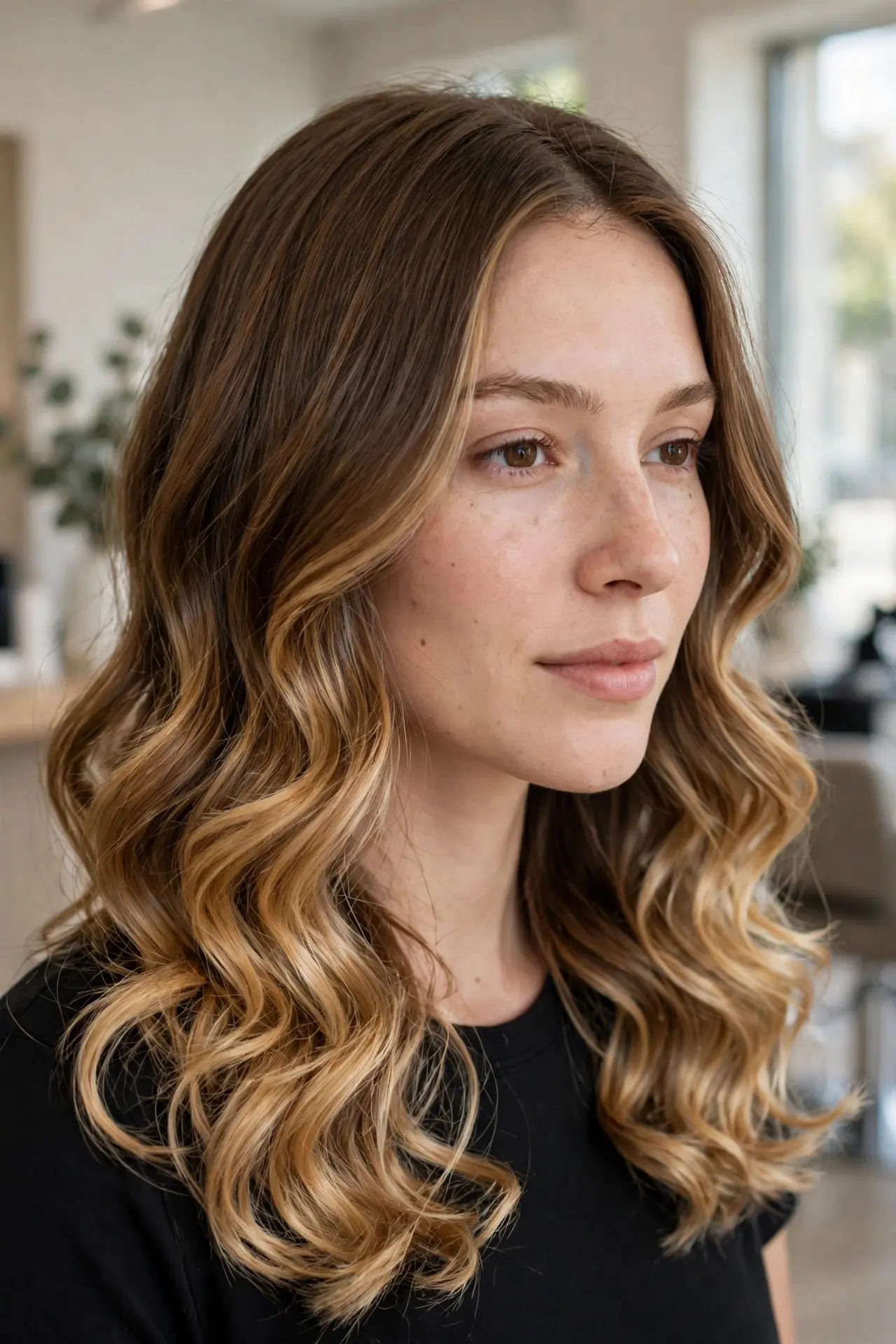
Heart-shaped faces are widest at the forehead and narrowest at the chin, so the trick is to send the light downward. This placement keeps the top of the hair closer to your natural brown and builds the brightest honey brown pieces from chin level through the ends.
That low brightness adds visual weight exactly where a heart face is lightest, balancing the forehead without a single harsh line. It works best on chin-length or longer hair, where there is enough length below the jaw for the honey to do its grounding work.
Tip: Style the ends with soft, bottom-heavy curls to add fullness around the jaw — and keep heavy highlighting away from the temples, where brightness only widens the forehead further.
5. Elongating Balayage for Long Faces
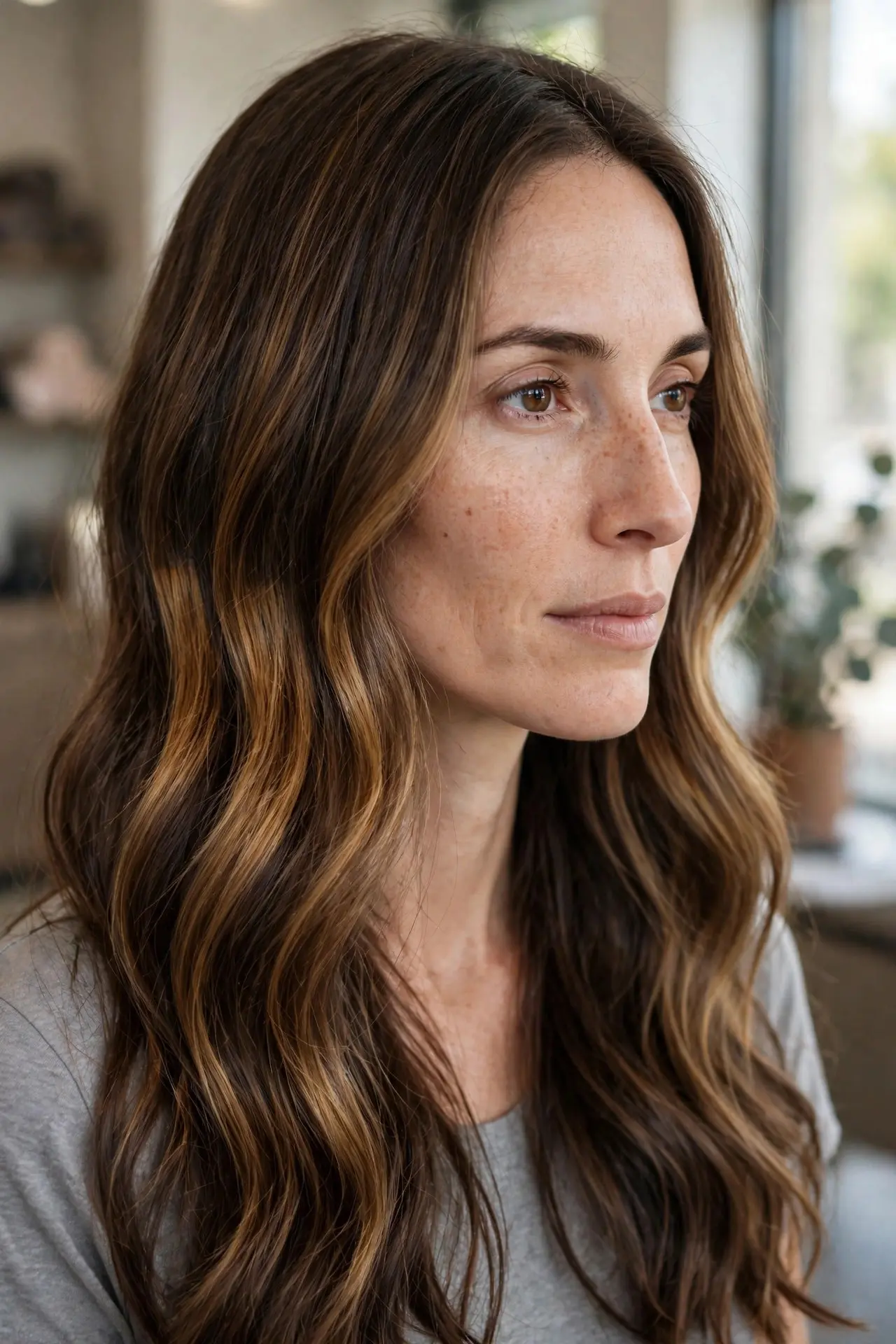
For a long face, the goal is width, not more length. This placement paints honey brown in wider, horizontal sections concentrated through the mid-lengths, which breaks up the vertical line of the face and makes it appear broader and more balanced.
Keeping the strongest color through the middle — rather than dragging it dramatically to the ends — stops the eye from sliding straight down. The result is a face that looks softer and more proportional, with honey warmth sitting right where it flatters most.
Tip: Waves and curls are your best friends here, because their horizontal movement reinforces the widening effect. Long, sleek, straight styling does the opposite and stretches the face further.
6. Subtle Money Piece for Diamond Faces
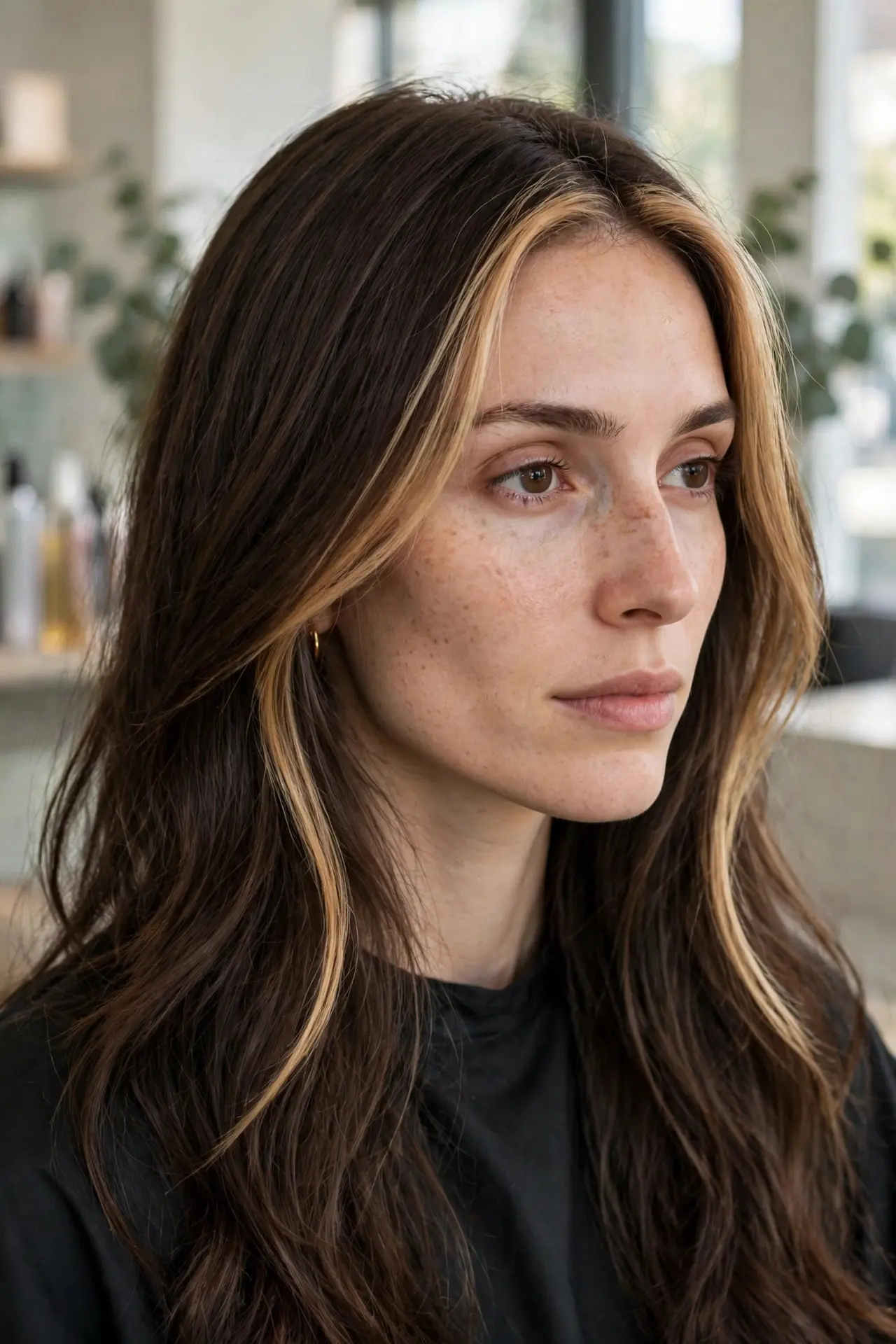
Diamond faces pair a narrow forehead and chin with wide, striking cheekbones. A subtle money piece — two brighter honey brown strands at the very front hairline — draws attention up toward the forehead and softens the cheekbones’ starring role.
The rest of the hair stays closer to your natural brown, so the overall look is soft rather than dramatic. It is a small amount of color with an outsized effect, and because it is only two pieces, it grows out gracefully and refreshes in minutes at the salon.
Tip: Keep the money piece just one to two shades lighter than the rest for a soft, believable glow, keep the surrounding color subtle, and wear a slight wave to blur the silhouette around the cheekbones.
7. Warm All-Over Balayage for Balanced Features
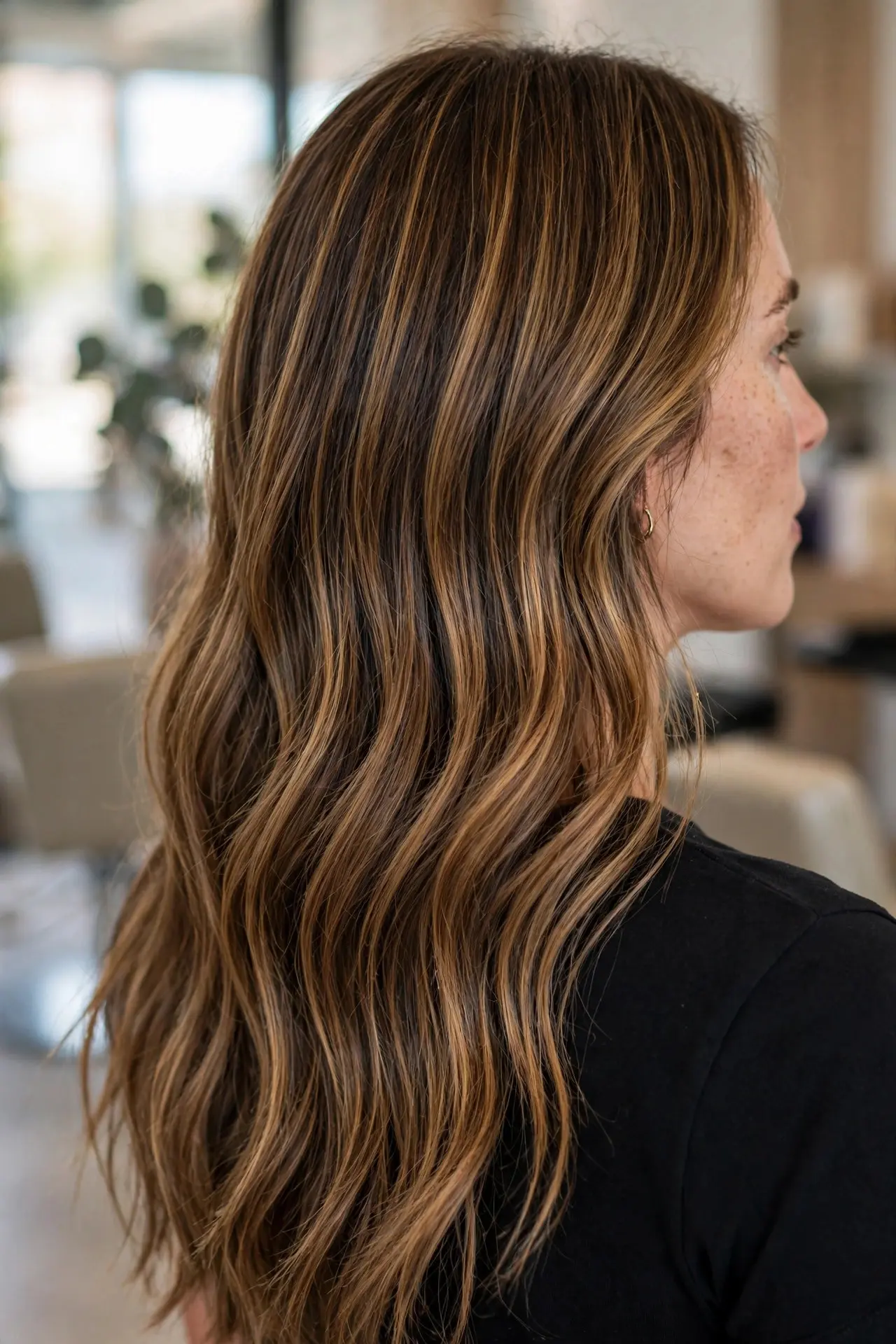
If your features are naturally balanced, you do not need color to correct anything — you just need it to glow. An all-over warm honey brown balayage distributes highlights evenly from root to tip, wrapping the whole head in consistent warmth and dimension.
The honey tone adds richness to the complexion and flatters warm and neutral undertones especially well. With no single focal point, the finish feels cohesive and radiant — the kind of color people describe as “your hair looks amazing” without knowing why.
Tip: Plan a refresh every three to four months to keep the color even, wash with a color-safe shampoo to protect the warmth, and deep condition regularly so the lightened sections stay shiny rather than thirsty.
8. Balayage with Root Smudge for Low Maintenance
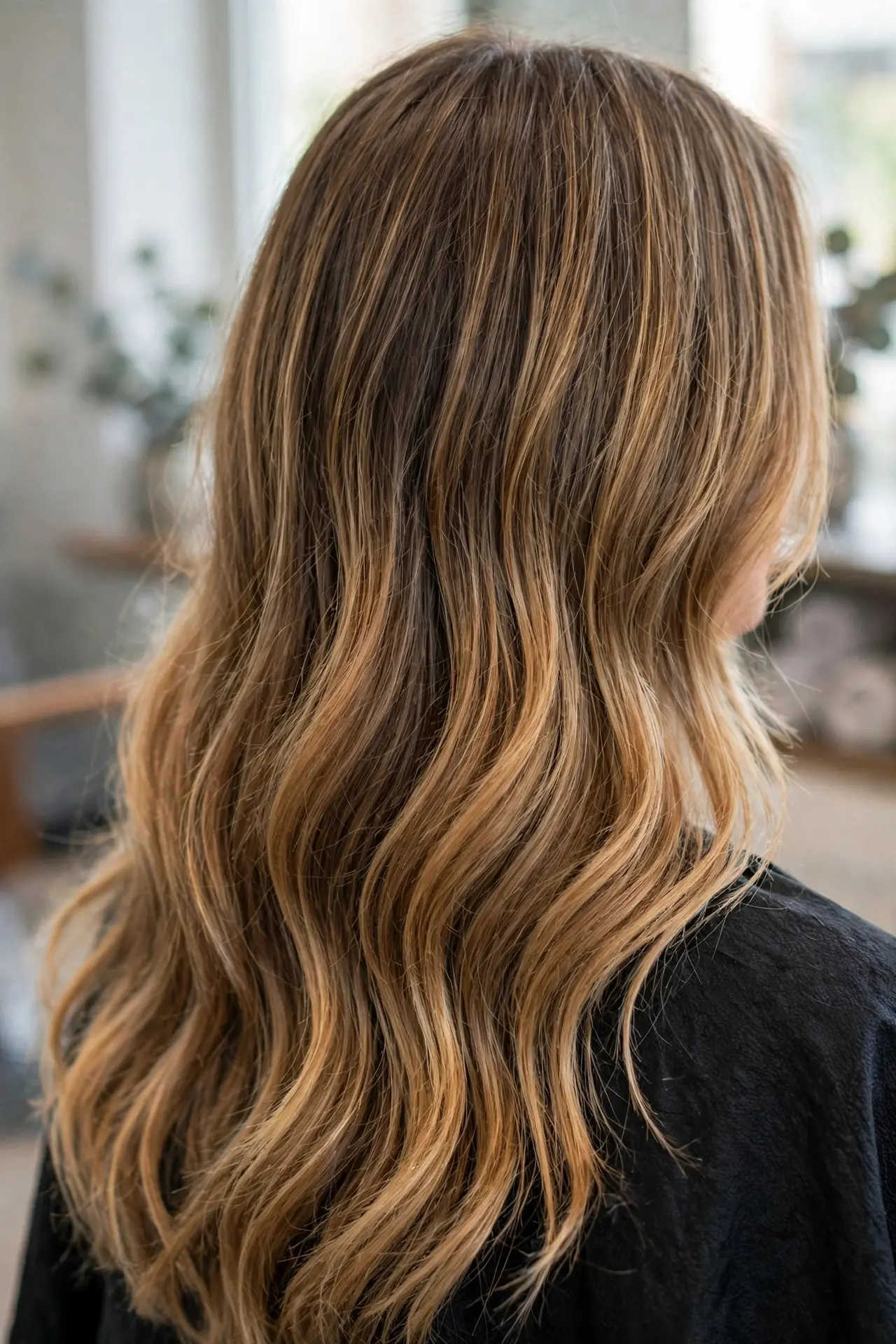
This is the placement for anyone who loves honey brown but hates the salon schedule. A root smudge blends a soft brown shadow into the base, which then melts seamlessly into honey brown ends — so your natural regrowth disappears into a shadow that was already there.
There is no hard line to betray you at week six, and the rooted effect looks intentional from day one. It works across face shapes because the technique is about maintenance rather than correction — the face-framing on top can still be tailored to you.
Tip: Book a quick smudge refresh every ten to twelve weeks, use bond-building treatments on the lightened ends, and ask your colorist about gradually lightening the smudge if you ever want a brighter overall finish.
9. Balayage Placement for Oblong Faces
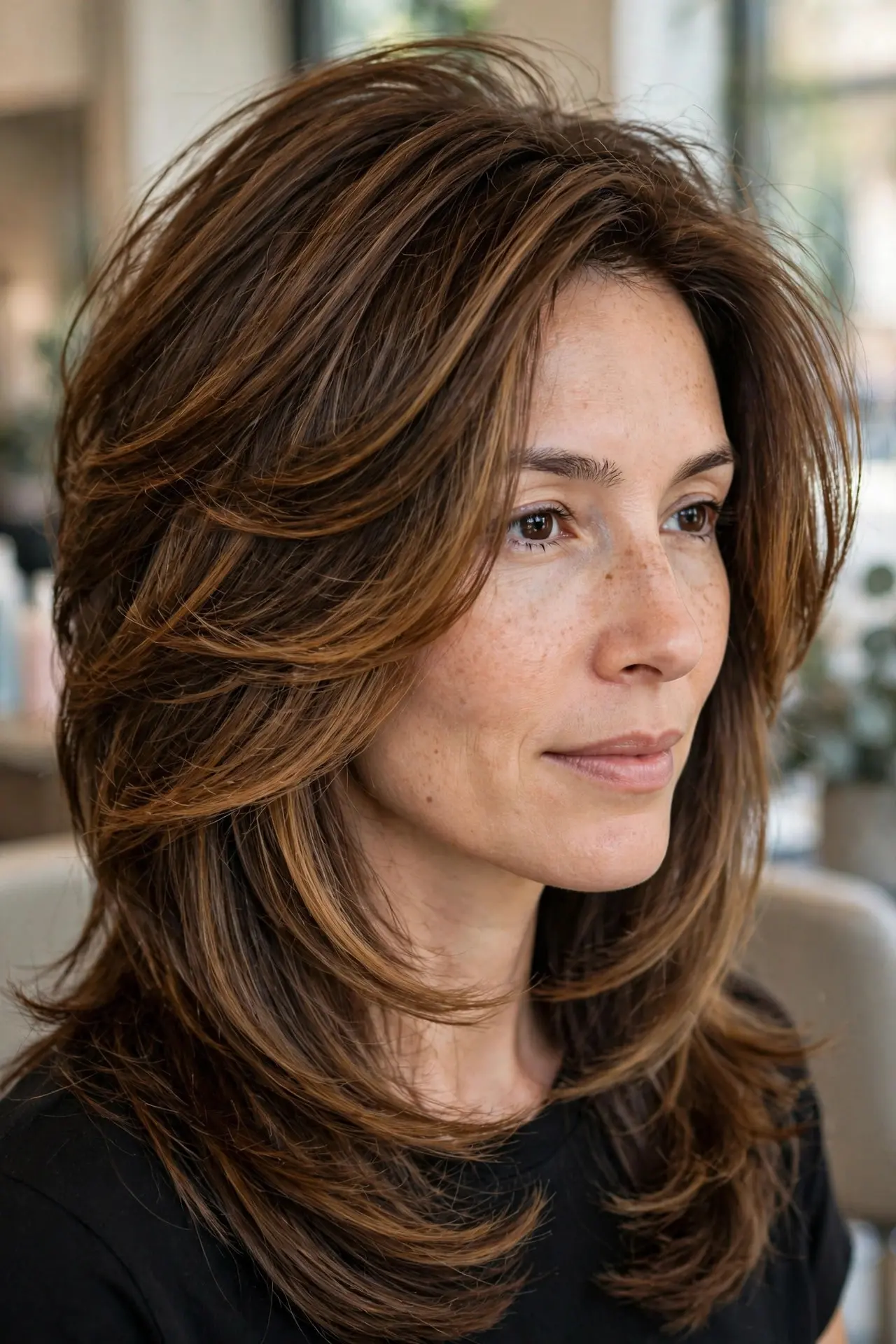
Oblong faces are long and a little narrower, so they borrow the long-face strategy with a twist: honey brown placed in wider, horizontal sections right at cheekbone level, where it pushes the attention outward and creates the impression of fullness.
Concentrating the brightness through the widest part of the face stops the eye from measuring its length. Pair the color with a layered cut and the width doubles — the layers hold volume at the sides, exactly where the honey is brightest.
Tip: Ask for layers that add volume at the sides rather than length on top, request the widest highlight placement at cheekbone level, and finish with soft waves to enhance the balancing effect.
10. Balayage with Face-Framing Curtain Pieces
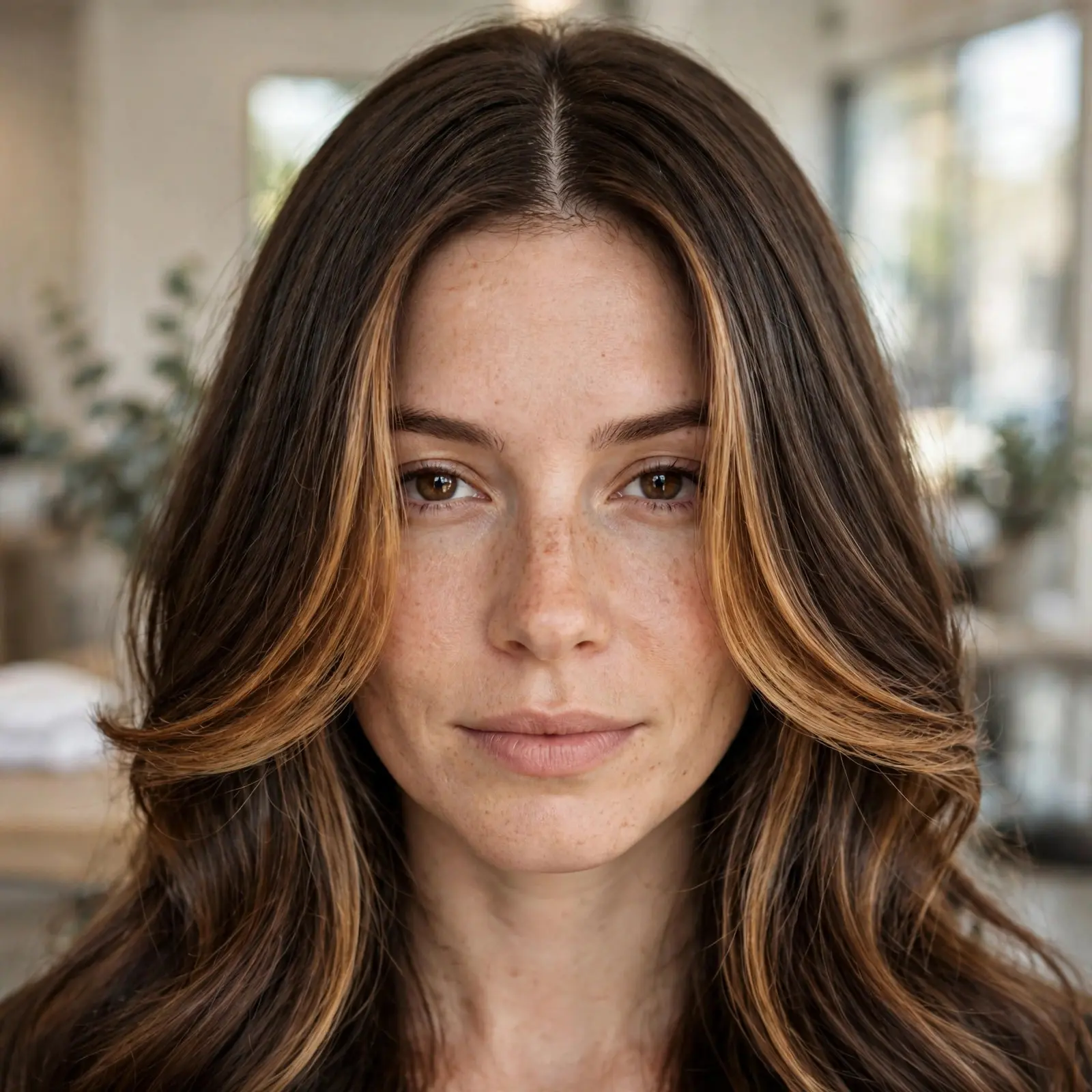
Curtain pieces are the most forgiving frame a face can wear, and painting them with honey brown makes them glow. The hair parts in the center and sweeps to each side, with the lightest balayage concentrated along those graduated front sections.
Because the curtains fall at slightly different lengths on every face, the placement adapts to your proportions almost automatically — drawing attention to the eyes and cheekbones while softening everything around them. It is popular for good reason: it flatters nearly everyone.
Tip: Blow-dry the curtains with a small round brush, sweeping them away from the face, define the highlighted pieces with a touch of lightweight pomade, and refresh the front every three to four months.
11. Warm Balayage for Fair Skin Tones
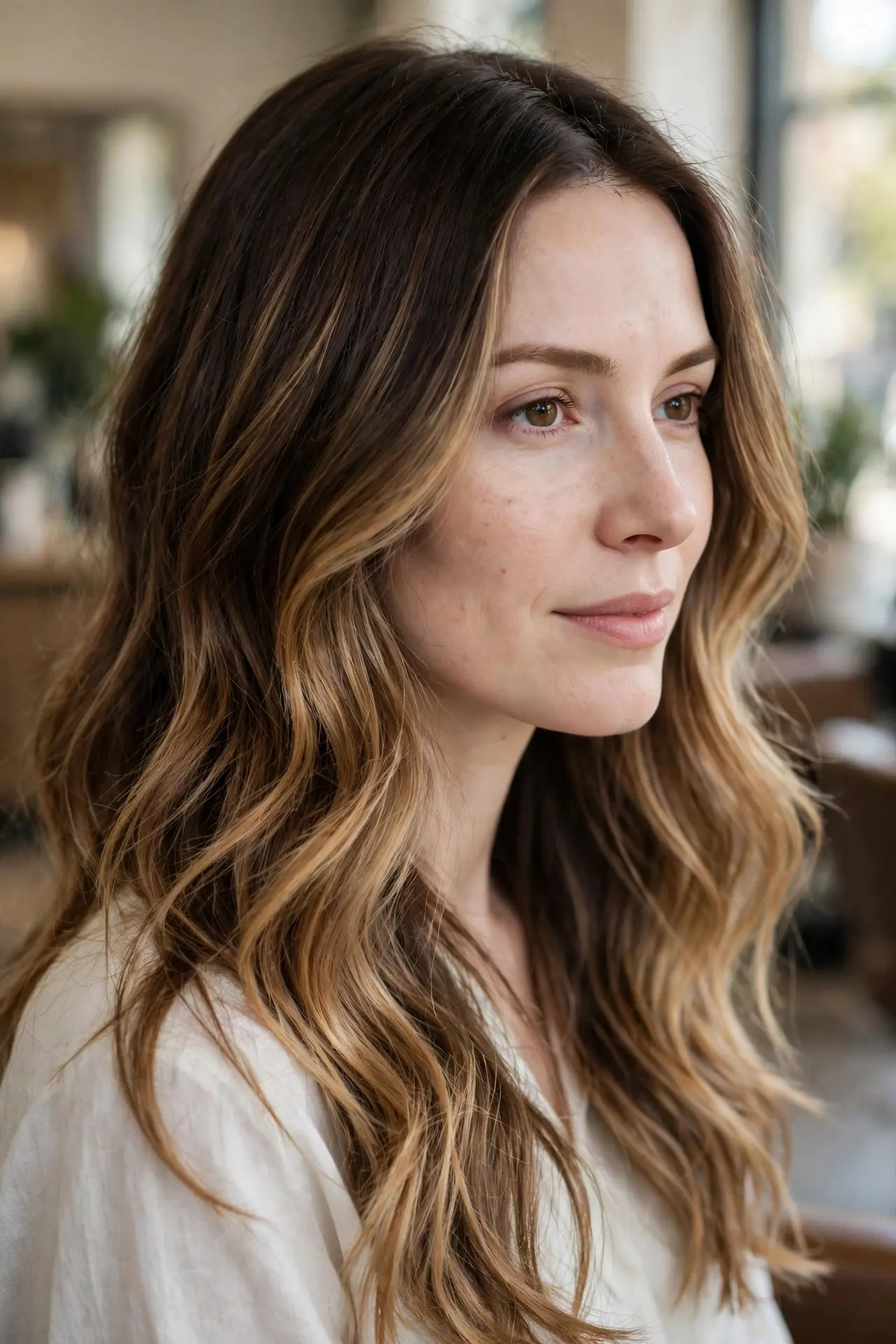
On fair skin, honey brown needs a lighter hand. Instead of deep, saturated caramel, this version uses a softer, more diluted golden honey, so the highlights brighten the hair without overwhelming a light complexion or looking harsh against it.
The result is luminous rather than bold — a gentle lift that warms fair skin instead of fighting it. Because the contrast stays low, the color also feels very natural, like the sun did the work over one long summer.
Tip: Ask for the softer, diluted honey rather than deep caramel, steer clear of overly warm, orange-leaning undertones that clash with fair skin, and use a gentle toning treatment to hold the softness.
12. Rich Honey Balayage for Deeper Skin Tones
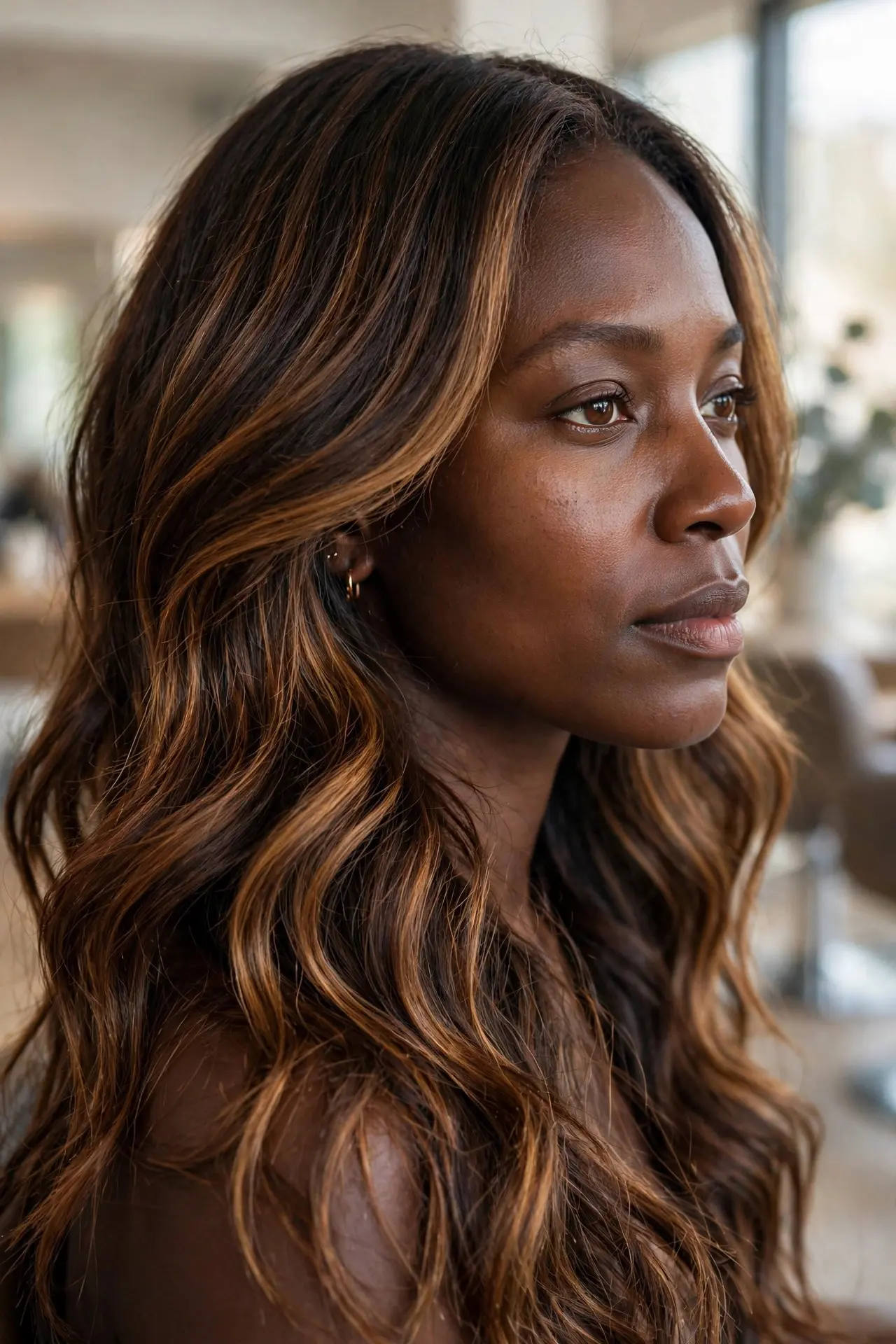
Deeper skin tones can carry the richest version of this color — and it is stunning. A saturated honey brown, sometimes deepened with caramel undertones, creates a warm, radiant contrast that makes both the hair and the complexion look more vibrant.
Where fair skin calls for dilution, deeper skin rewards concentration: the honey reads bold, multidimensional and glossy, and it photographs beautifully. The placement can follow any face-shape strategy in this guide, because here the star is tone depth.
Tip: Keep the richness topped up with a warm color-depositing conditioner between visits, deep condition weekly, and book a gloss treatment periodically to restore depth and vibrancy.
13. Balayage with Layered Highlights for Layered Cuts
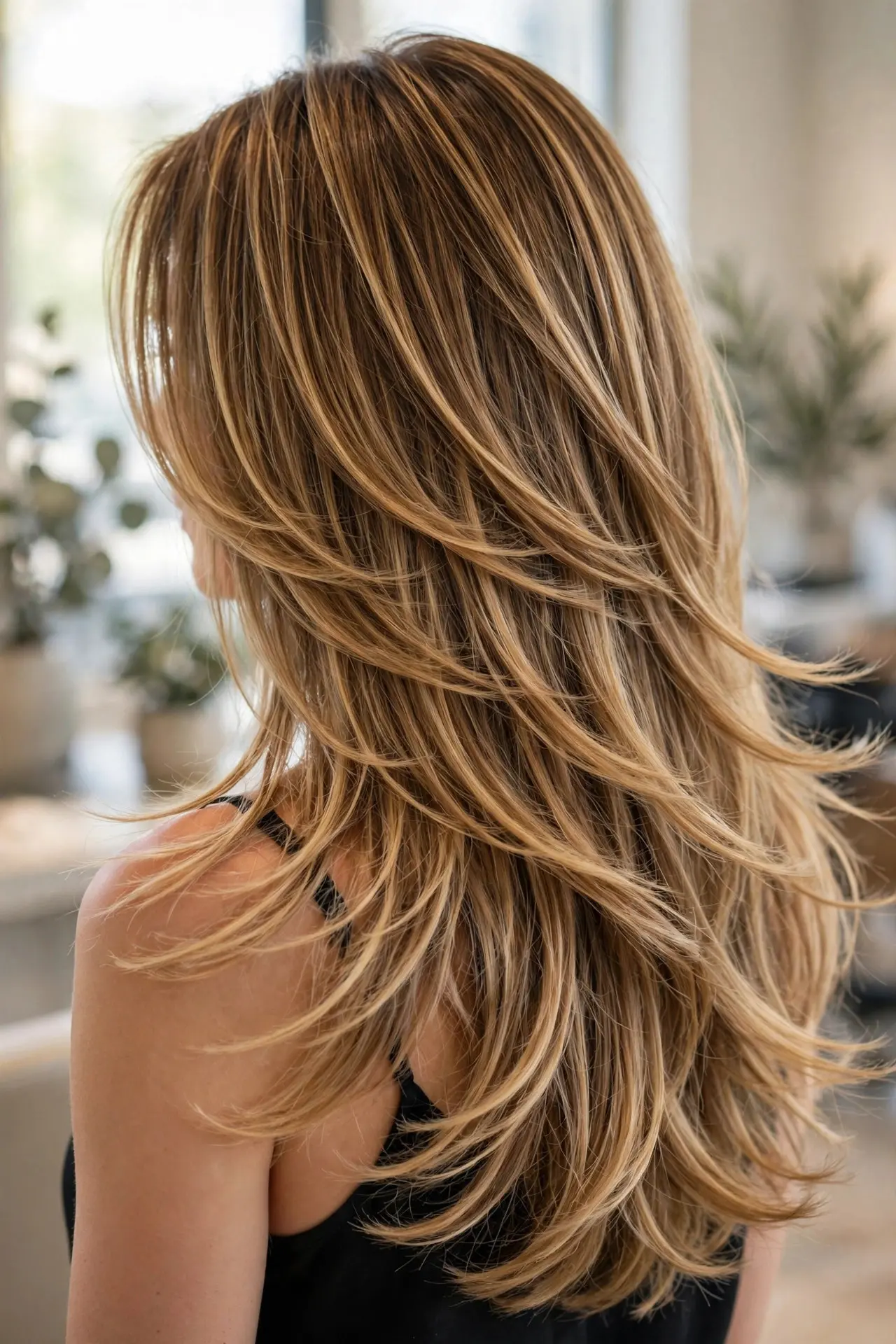
If your haircut is layered, your color should follow the same map. Here the balayage is painted to trace each layer, growing progressively lighter toward the ends of every section, so the color and the cut amplify each other.
Every time the hair moves, the layers separate and the honey flashes at a different level — the dimension looks built into the haircut itself. It is the fastest way to make a layered cut look intentional, polished and full of life.
Tip: Keep up with regular trims so the layers and their highlighted ends stay crisp, use a lightweight leave-in conditioner to enhance movement, and blow-dry with a round brush to show the layers off.
14. Balayage for Fine Hair Textures
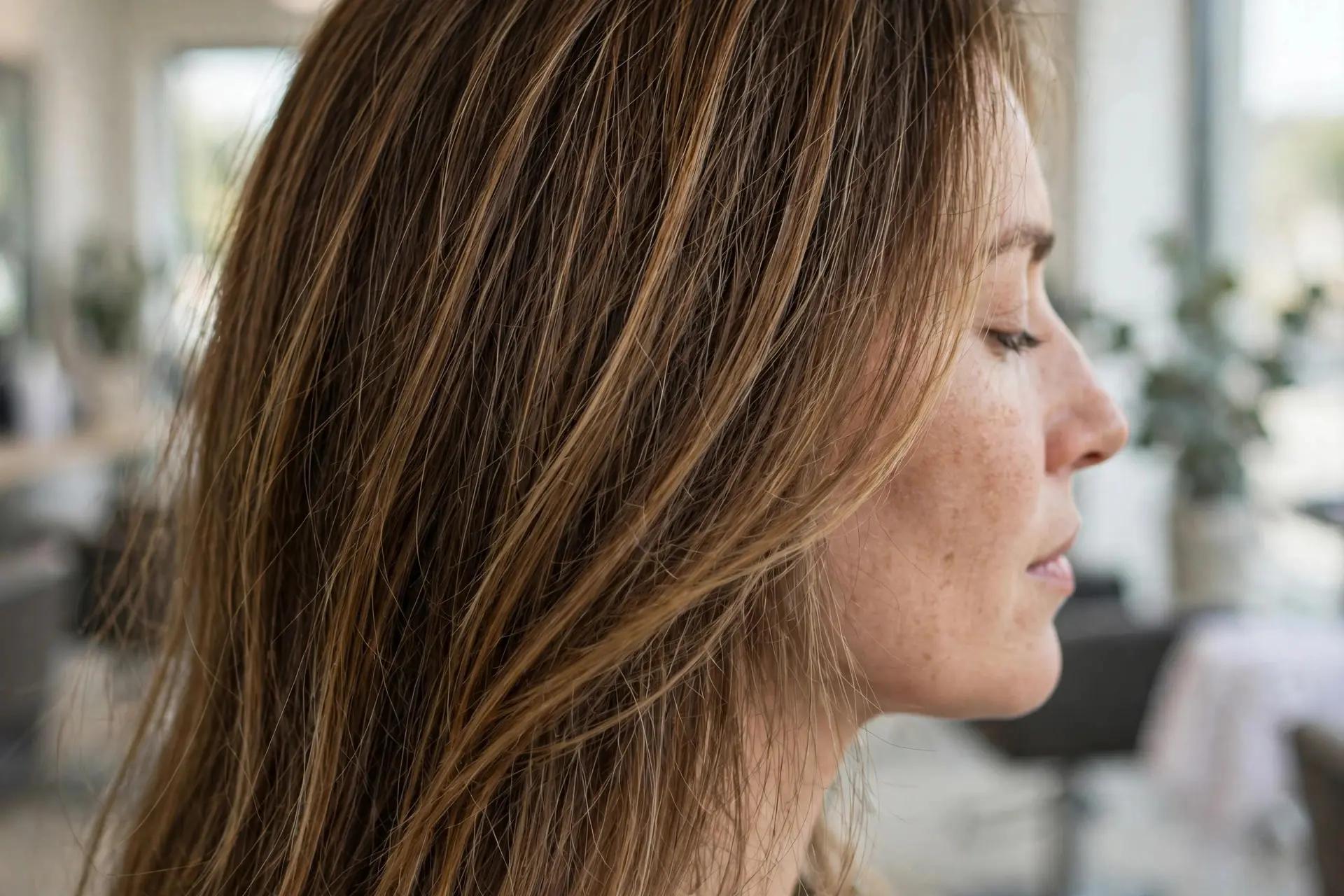
Fine hair needs a lighter touch: chunky, concentrated highlights can spotlight thinness instead of hiding it. This version uses finer, more delicate sections of honey brown, woven through softly, so the gradient adds dimension without overwhelming delicate strands.
The result is subtle but transformative — fine hair reads thicker because the eye sees depth and shadow instead of one flat tone. And because the pieces are so small, the grow-out stays soft and forgiving for months.

Tip: Ask for fine, babylight-style sections rather than bold pieces, wash with a lightweight volumizing shampoo, and skip heavy oils — they weigh fine, highlighted hair down and undo the dimension you just paid for.
15. Balayage for Thick, Curly Textures
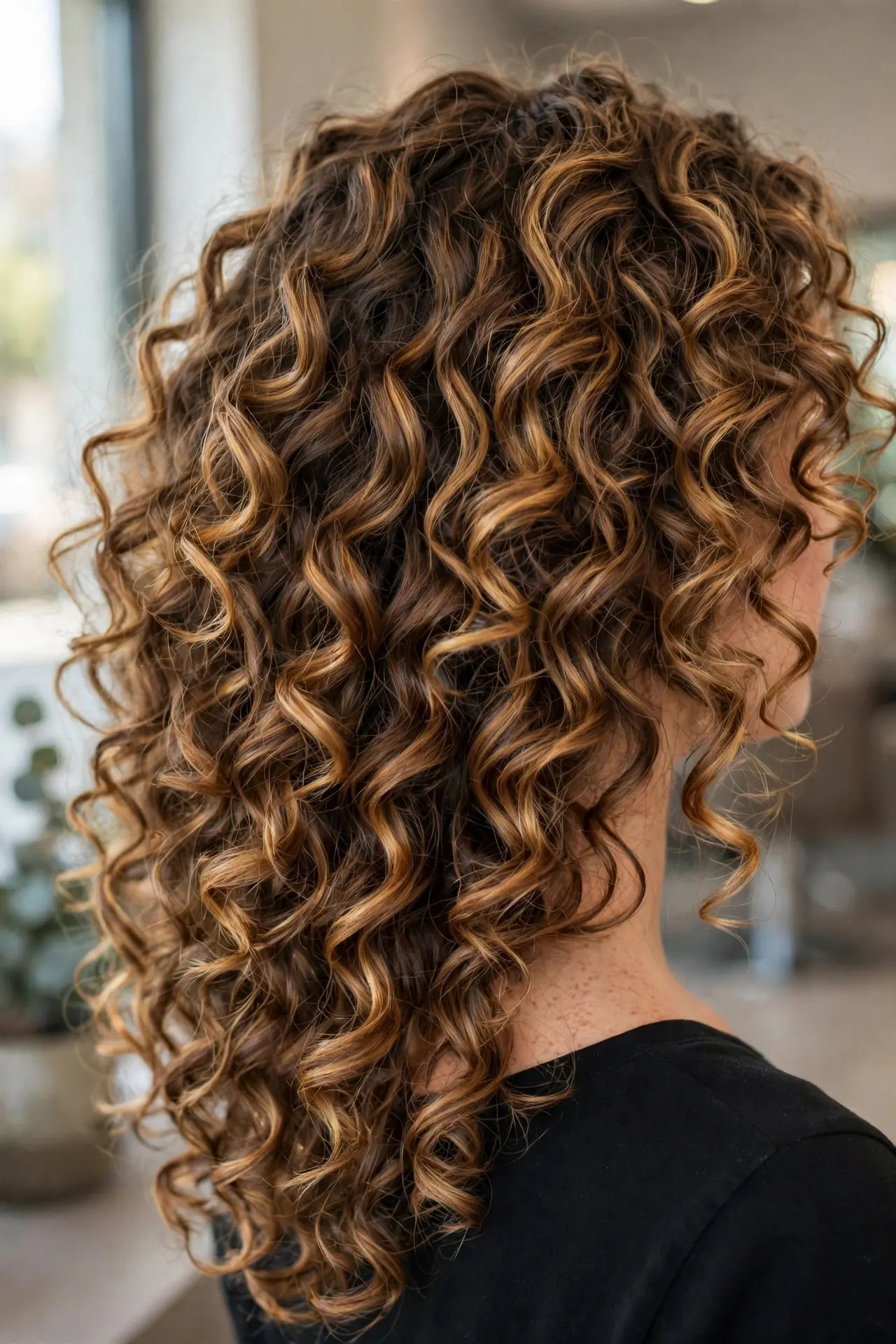
Thick, curly hair can handle what fine hair cannot: bolder, more concentrated honey brown, painted curl by curl. Because curls naturally create their own light and shadow, the balayage looks even more dynamic — every ringlet shows a slightly different depth of honey.
The volume of curls showcases dimensional color like nothing else, and the texture itself softens and balances most face shapes before placement even enters the conversation. It is joyful, rich color with real presence.
Tip: Choose a colorist with specific experience in curly hair, use a curl-defining cream to make the highlighted curls pop, and deep condition frequently — curls drink up extra moisture after coloring.
16. Balayage with Glossy Finish for Enhanced Shine
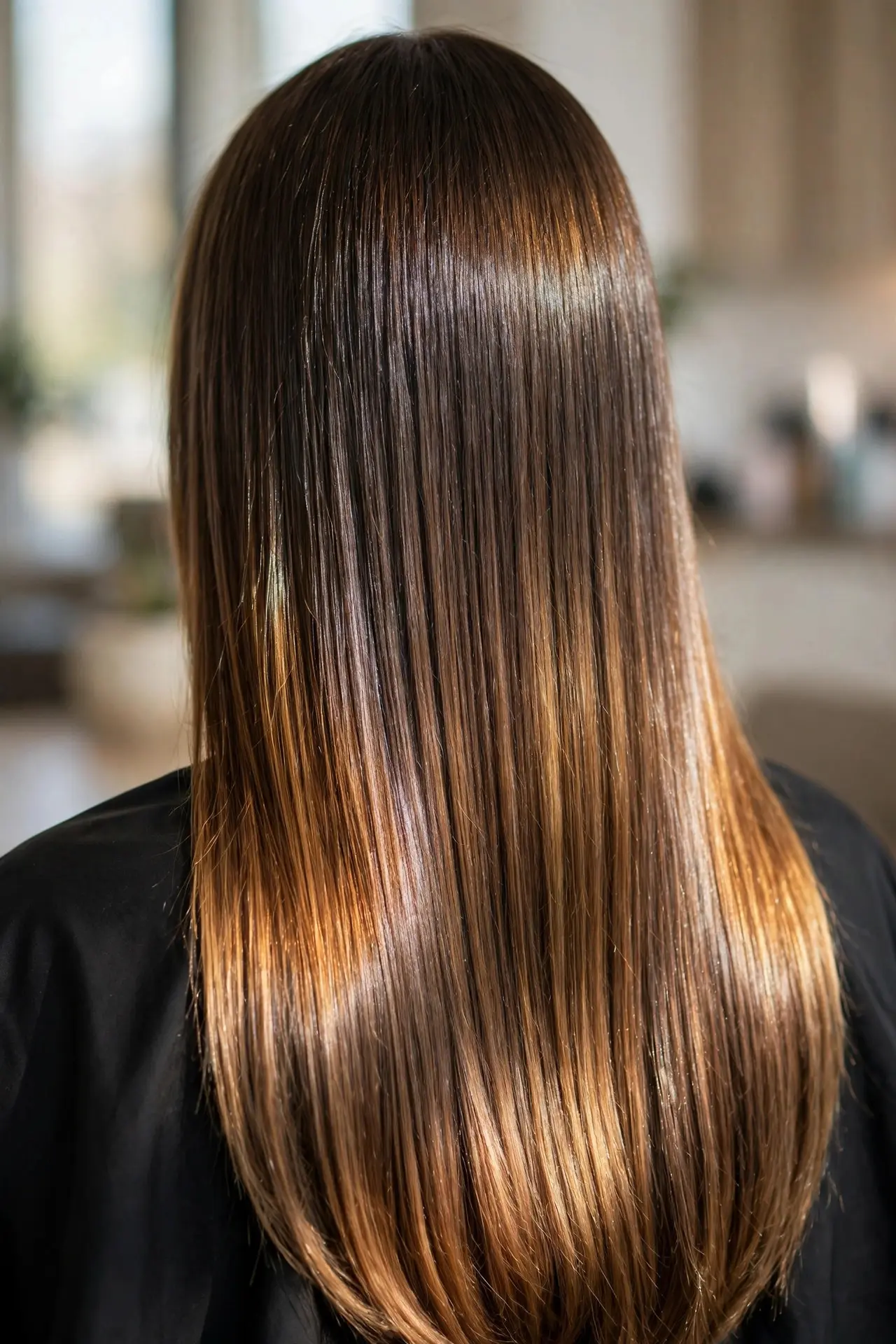
Sometimes the placement is perfect and the hair just needs polish. A glossy finishing treatment — a translucent gloss applied after the lightening and toning steps — seals the cuticle and adds the kind of shine that makes honey brown look liquid.
The gloss can also carry a whisper of tint to warm or cool your tone, and it smooths the transition between shades so the whole balayage looks more expensive. It elevates any placement in this guide, on any face shape.
Tip: Refresh the gloss every six to eight weeks, use a glossing mask at home between appointments, and rinse with cool water after washing to help seal the cuticle and lock the shine in.
17. Balayage with Dark Roots for Contrast
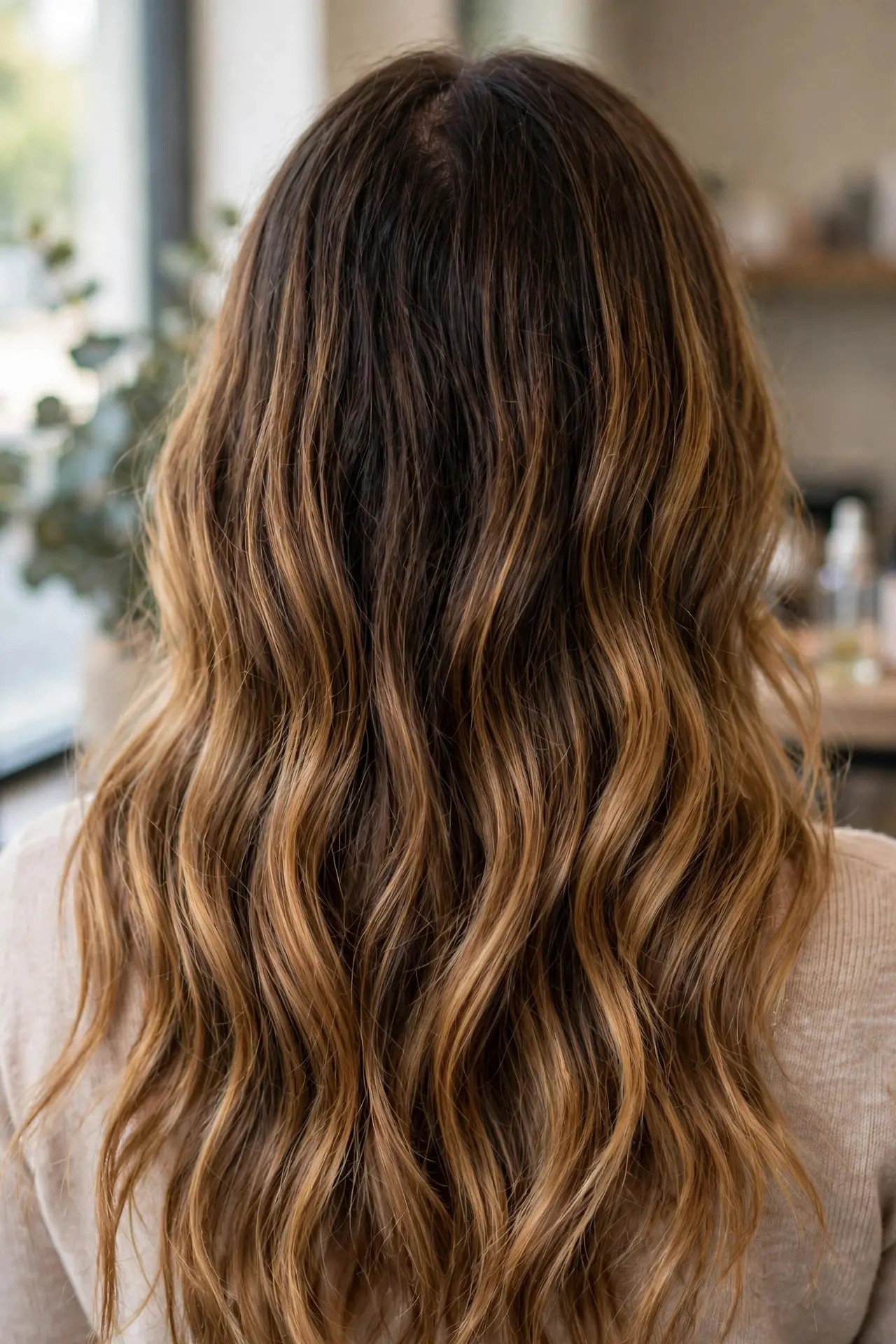
This is the high-contrast, low-commitment option: the roots stay noticeably dark and natural for several inches, while honey brown takes over through the mid-lengths and ends. Instead of fighting your regrowth, the style is built around it.
The shadowed root is there from the very first appointment, so there is never a line to hide — just a soft, deliberate gradient. It stretches the time between salon visits further than almost any other placement in this guide.
Tip: Most people refresh this look every four to six months. If growth shows at the part, a root-blurring powder bridges the gap — and deep condition the ends regularly, since they hold the most processed color.
18. Balayage for Short Hair Across Face Shapes
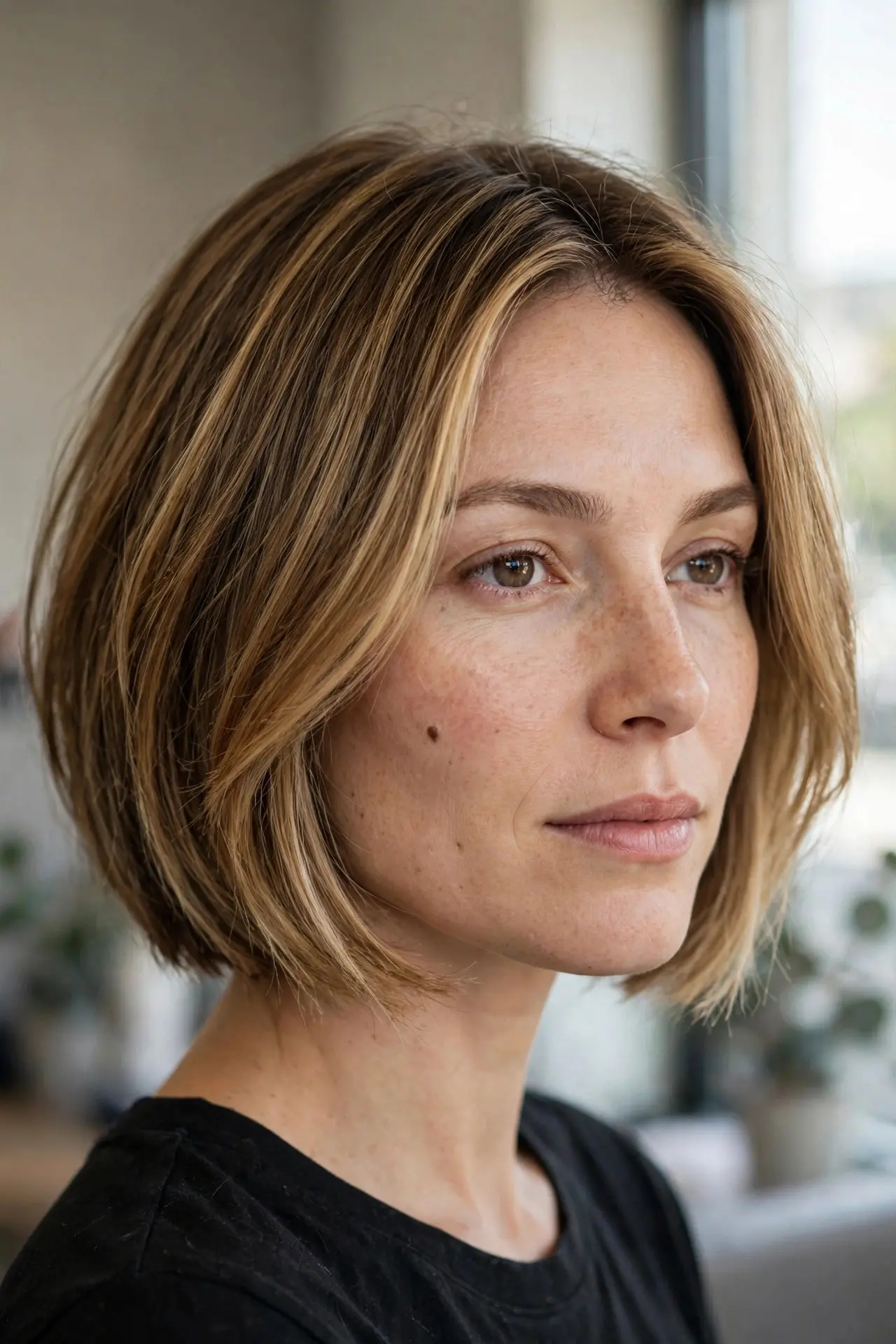
Short hair absolutely gets to play. On bobs and pixies there is less length for a sweeping gradient, so colorists concentrate the honey brown around the face and through the ends, where it creates concentrated, natural-looking brightness.
The placement is still tailored to your face shape — brighter at the temples for round faces, lower for heart shapes — just compressed into a smaller canvas. The payoff is low-maintenance color that makes a short cut look designed rather than plain.
Tip: Ask your stylist to concentrate the highlights according to your specific face shape, plan refreshes every three to four months, and finish with a lightweight styling cream to define the ends.
19. Balayage with Peekaboo Placement
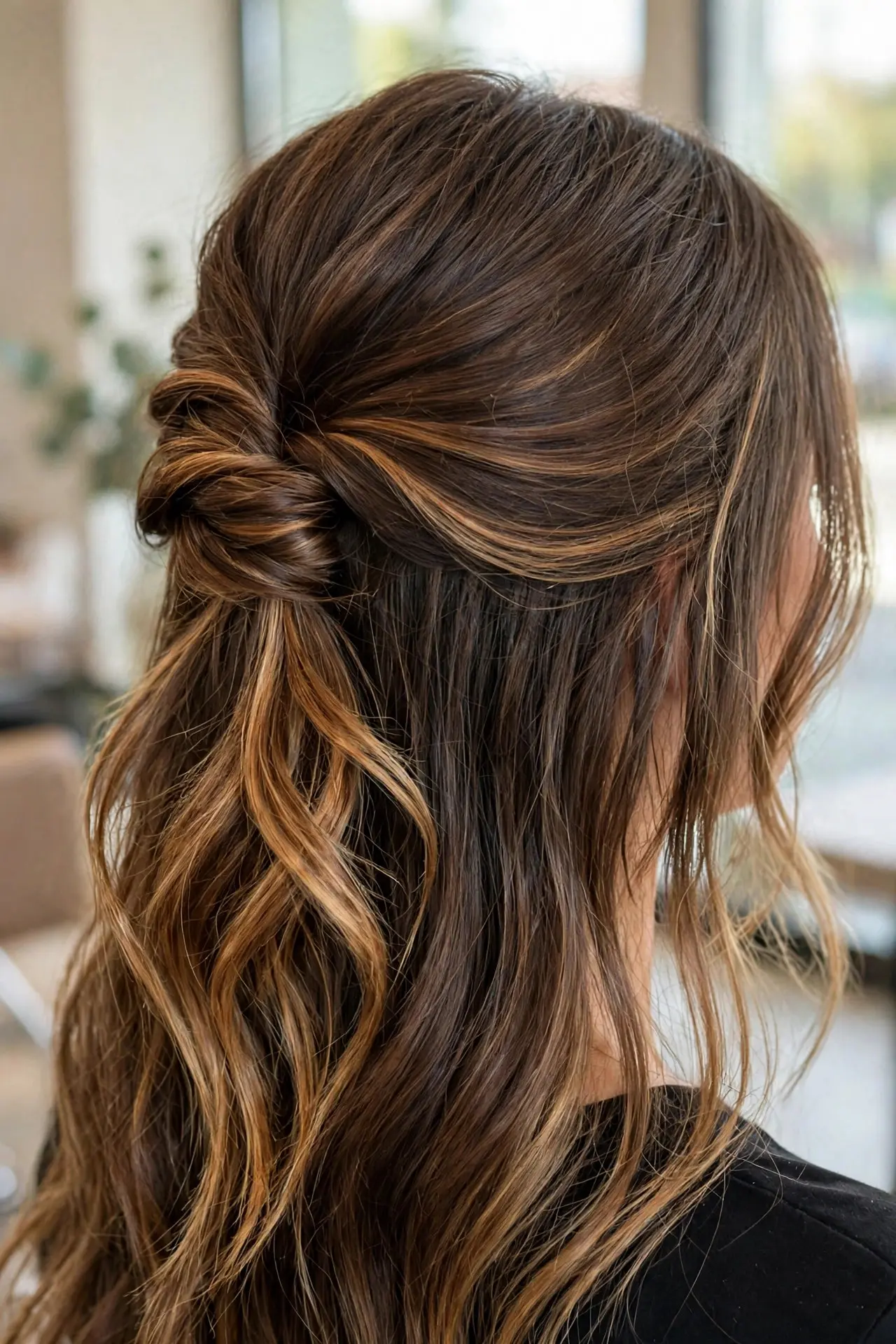
Peekaboo balayage is the introvert of this list: the honey brown lives underneath the top layer, hidden when your hair is down and flashing into view when it moves, tucks or lifts. The top stays your natural brown, so the default look is understated.
That versatility is the whole point — polished and quiet for the office, playful the moment you pin it up. It works across face shapes, too, because the reveal, not the placement, does the talking here.
Tip: Show it off with half-up styles, a loose braid or a simple tuck behind the ears, and reach for a texturizing spray — beachy waves let the hidden honey peek through all day long.
20. Balayage with Caramel and Honey Blend
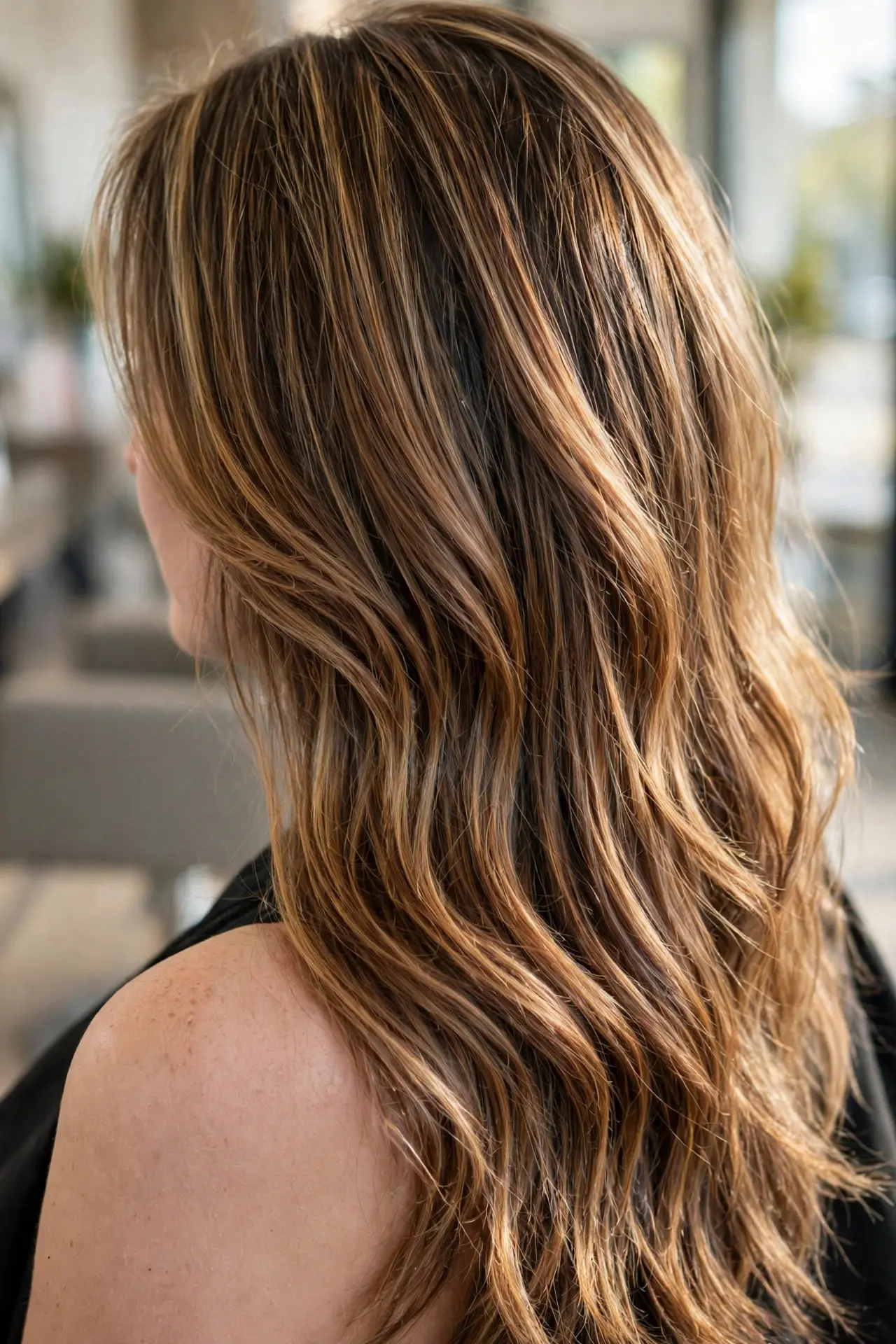
Why choose one warm tone when two are better? Blending caramel and honey through the same balayage creates layers of warmth — deeper caramel ribbons underneath, brighter honey pieces on top — that catch the light from every angle.
A single flat tone cannot mimic that depth. The blend also flatters a wide range of skin undertones and face shapes, and it layers happily over most placements in this guide, from face-framing pieces to curtain sections.
Tip: Maintain the blend with a caramel or golden color-depositing conditioner between visits, deep condition weekly to keep the warm tones rich, and go easy on clarifying shampoos, which strip warm pigments fastest.
21. Balayage with Face-Slimming Vertical Panels
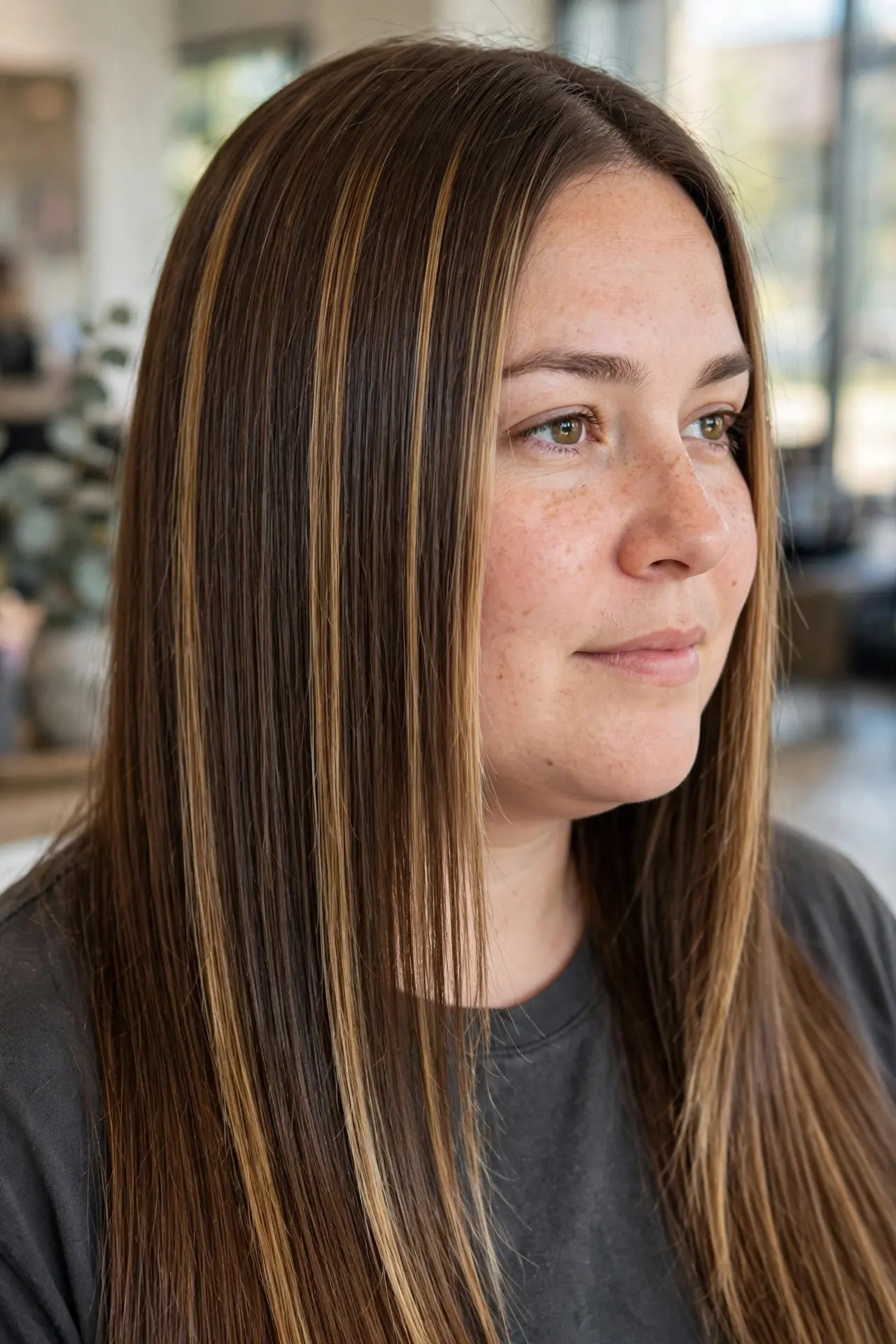
For the strongest slimming effect in this guide, colorists paint narrow vertical panels of honey brown straight down both sides of the face. The long, unbroken lines draw the eye up and down, creating a narrowing, elongating illusion that flatters fuller faces beautifully.
Unlike the soft, sweeping ribbons of the square-face placement, these panels are deliberate and defined, sitting right against the face like a frame. On sleek, straight hair, the lines stay crisp from morning to night.
Tip: Keep the styling sleek — a flat iron pass maintains the smooth, vertical finish the panels depend on. Waves blur the lines and soften the slimming effect, so save them for other placements.
22. Balayage with Textured Ends for Movement
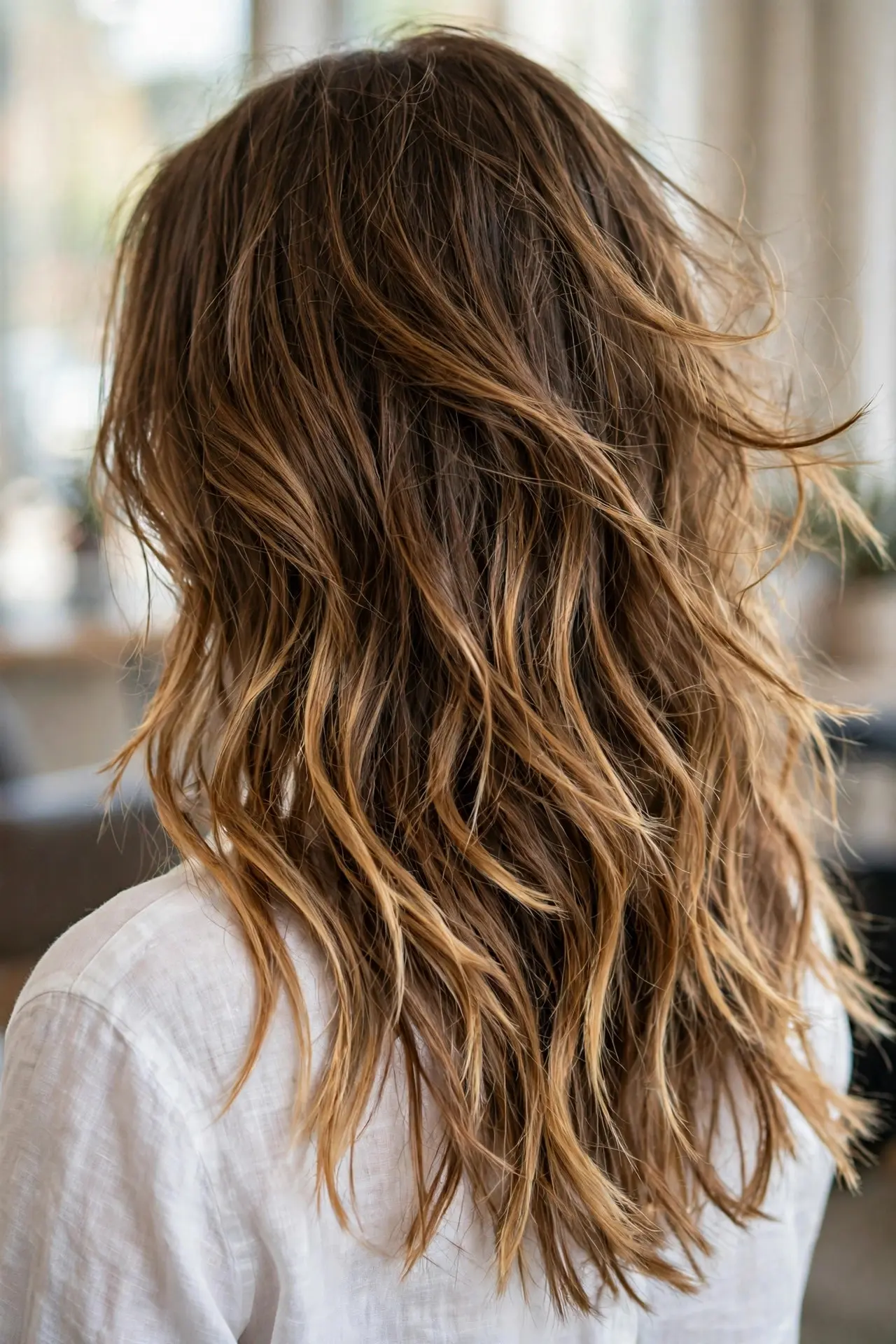
Color is only half of this idea — the cut does the rest. Texturizing shears remove weight unevenly through the ends, creating natural separation that lets the honey brown pieces flicker and move instead of sitting in one solid block.
The effect is effortless and lived-in, the opposite of an overly polished, uniform finish. It suits anyone who wants their balayage to feel like it grew that way, and it flatters most face shapes because the softness lives in the ends, not the placement.
Tip: Work a texturizing spray through the ends to amplify the separation, define individual pieces with a lightweight styling cream, and keep regular trims — textured ends lose their shape fastest.
23. Balayage for Angular Face Shapes
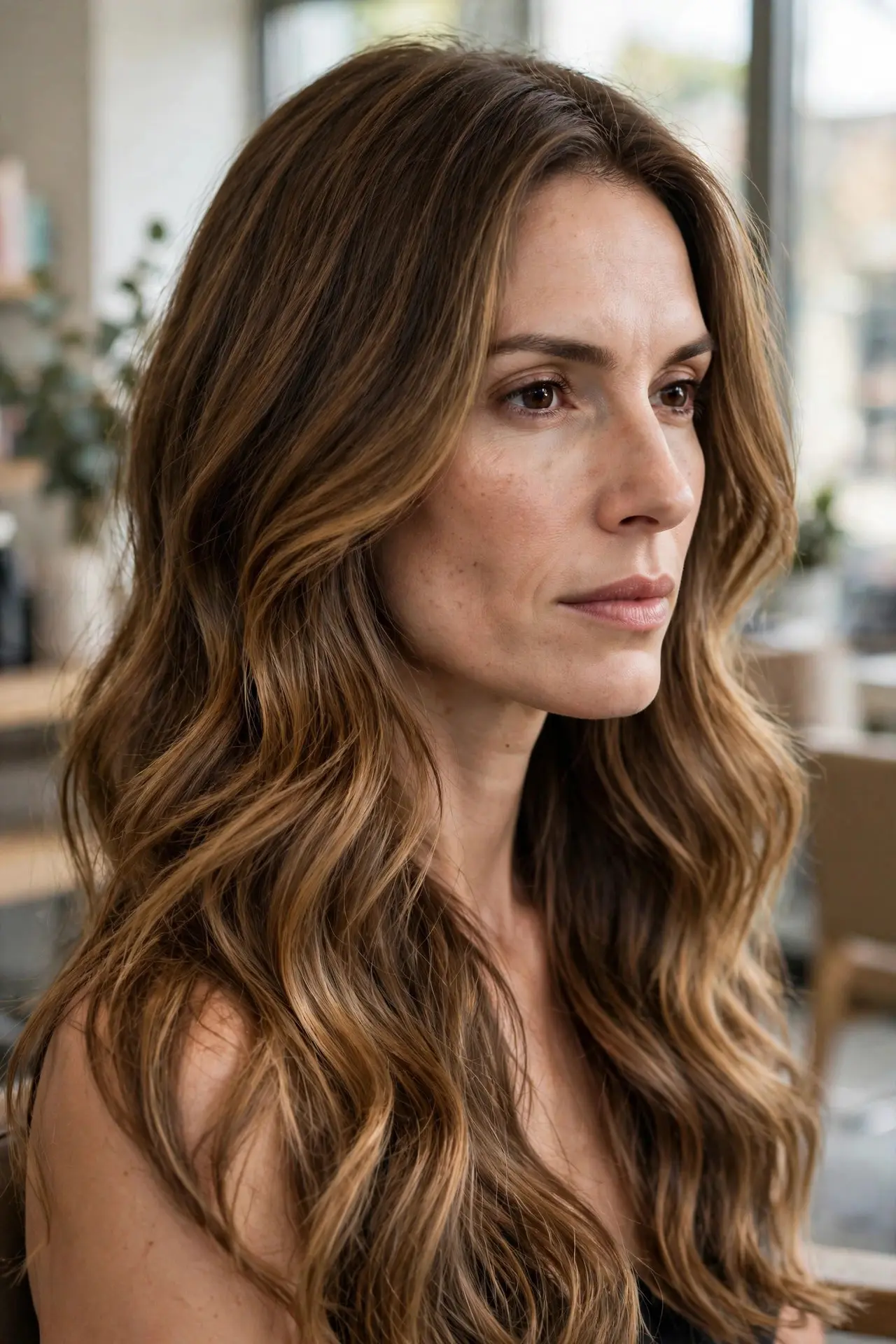
Angular faces have strong, defined bone structure, and the kindest color for them has no hard edges of its own. This placement uses rounded, softly blended honey brown sections that melt into one another, so the color flows instead of slicing.
The gentle transitions complement sharp features rather than echoing them, and the overall impression softens noticeably. Where the square-face placement uses vertical lines, this version deliberately avoids lines altogether.
Tip: Ask for softly blended sections with no sharp divisions, style with waves or curls to extend the softening effect, and avoid sleek, straight styling, which only emphasizes angular features.
24. Balayage with Subtle Ombre Transition
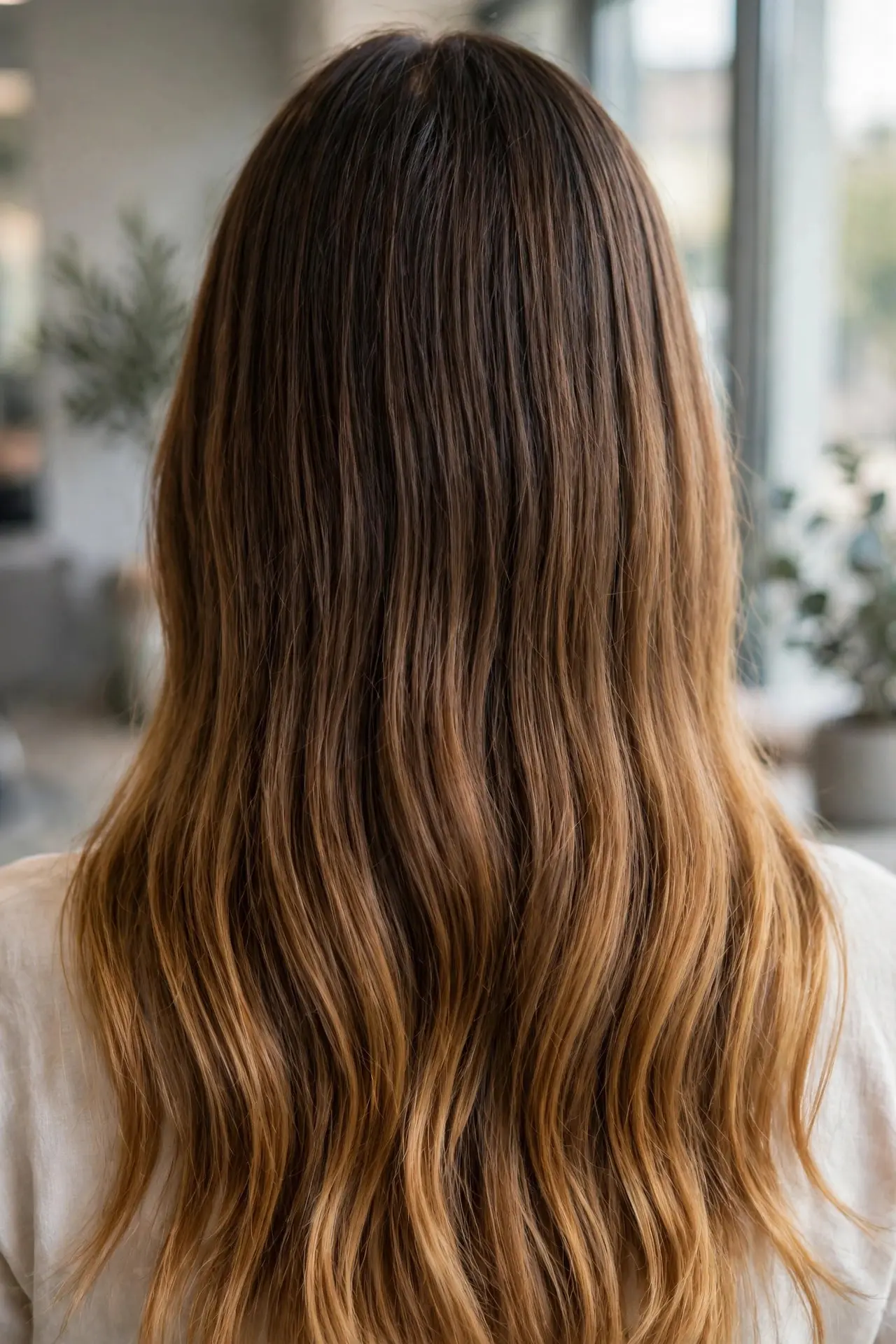
Part balayage, part ombre, this hybrid keeps the root softly blended like a classic balayage, then lets the color build more decisively toward brighter honey brown ends — a gentle gradient rather than a dramatic dip-dye.
Because the transition is gradual, it grows out gracefully while still giving you real color movement from crown to tip. It is one of the most universally flattering options here, working across face shapes and skin tones alike.
Tip: Refresh every four to five months to maintain the gradient, protect the lightened ends with a bond-building treatment, and deep condition regularly so the transition stays smooth and healthy.
25. Custom Balayage Consultation for Your Unique Shape
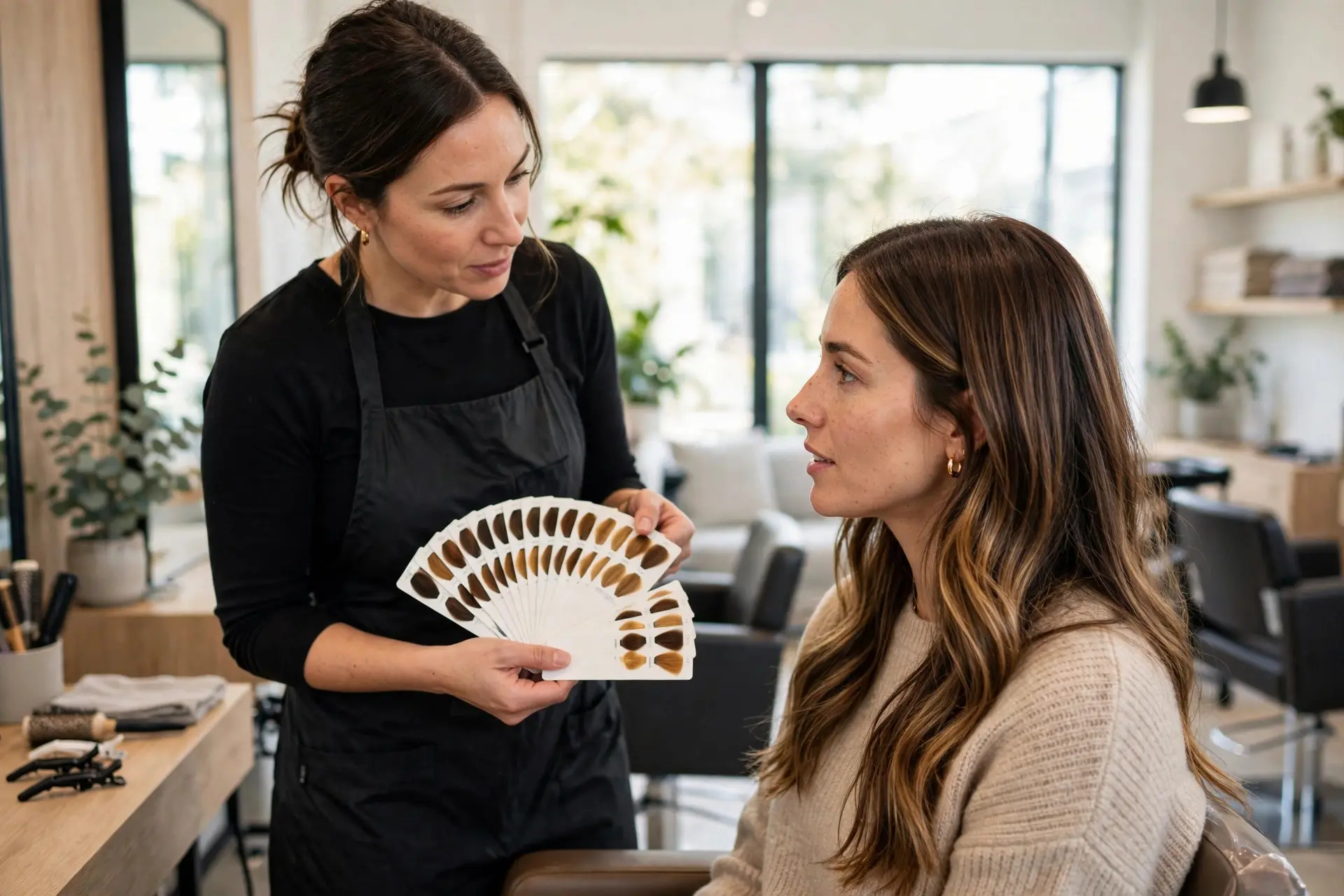
Every idea in this guide is a starting point — the most flattering result comes from a real conversation. A custom consultation lets an experienced colorist blend techniques across categories and tune the placement, tone and depth to your exact features.
A good colorist looks at far more than face shape: your skin undertone, natural base color, hair texture and how much maintenance you honestly want all shape the plan. That is how honey brown ends up looking like it was invented for you — because, in the end, it was.
Tip: Bring reference photos to communicate your desired tone and placement, discuss your skin’s undertone to guide the ideal honey shade, and be open about your texture and maintenance routine.
Styling Tips
- Style it in soft waves: waves bend the light across the honey pieces, showing off placement and dimension far better than flat, straight styling does.
- Part with purpose: a center part spotlights face-framing and curtain pieces, while a deep side part shifts the brightness to one side and can fake volume on fine hair.
- Use a round brush at the front: sweeping the face-framing sections away from the face with heat keeps them polished and bright-looking between appointments.
- Protect before heat: lightened hair is more fragile, so always use a heat protectant before curling irons and flat irons, and keep the temperature moderate.
- Refresh tone, not color: a gloss or toning treatment every six to eight weeks revives honey warmth for a fraction of the cost of a full appointment.
- Sleep on silk: a silk pillowcase reduces friction and frizz, so your waves — and the color running through them — still look good on day two.
None of these take more than a few minutes. They simply let the color your colorist painted do its job.
Common Mistakes to Avoid
- Placing brightness at the widest point by accident: heavy highlights at the jaw widen round faces, and at the temples they widen heart shapes. Placement should counter your widest point, never underline it.
- Going too light, too fast: jumping several shades in one session stresses the hair and skips the rich honey zone entirely. Build brightness gradually.
- Washing the warmth away: hot water, daily washing and clarifying shampoos strip warm pigment fastest. Wash less often, wash lukewarm, wash color-safe.
- Skipping the toner: untoned lightened hair drifts brassy within weeks. The gloss is not an upsell — it is half the color.
- Copying a photo without the consultation: a placement that flatters one face shape can fight another. Always translate the photo through your own features first.
Best At-Home Care Tips to Maintain Honey Brown Balayage
Honey brown is forgiving, but the lightened sections still work harder than the rest of your hair. A simple at-home routine keeps the tone rich and the ends healthy between salon visits, and it starts in the shower: choose a color-safe, sulfate-free shampoo and conditioner, wash less frequently, and use lukewarm or cool water, which helps preserve both tone and shine.
Once a week, give the lightened lengths a deep-conditioning treatment, and add a bond-building product if your hair was lifted several shades. Between washes, a warm color-depositing conditioner keeps honey and caramel tones topped up, while a glossing mask restores the reflective finish that makes this color glow.
Finally, be gentle day to day: detangle wet hair with a wide-tooth comb, always use heat protection before styling tools, and book trims every eight to ten weeks. Look after the ends, and honey brown will reward you with months of soft, seamless grow-out.
Frequently Asked Questions
How long does honey brown balayage typically last?
Most placements last three to five months before they need a refresh, because the soft, blended root has no harsh line to grow out. Root-smudge and dark-root versions stretch the longest; face-framing pieces may want a brightness top-up a little sooner.
Is honey brown balayage suitable for all skin tones?
Yes — the tone flexes to suit you. Fair skin glows with a softer, diluted golden honey, while deeper skin tones carry a richer, more saturated honey with caramel depth. Your colorist adjusts the warmth and concentration, not the concept.
Can I get honey brown balayage on previously colored hair?
Often, yes — but it depends on your color history and your hair’s current condition. Old dye or heavy damage can change what is safely achievable in one session, which is why a consultation and a strand test come first.
Does balayage placement really matter for different face shapes?
It does. Where the lightest pieces sit changes what the eye notices: brightness at the temples elongates a round face, while brightness at the chin balances a heart shape. A skilled colorist blends these guidelines with your unique combination of features.
Conclusion
Whichever placement you choose, the best honey brown balayage ideas are the ones matched to the face in the mirror — your shape, your skin tone, your texture, your routine. If you are still choosing a cut to carry the color, browse our hairstyles for long hair for lengths that show dimensional color at its best. So tell me — which of these 25 placements are you taking to your colorist?
Discover more from Fashinate Style
Subscribe to get the latest posts sent to your email.