18 Brown to Blonde Balayage Ideas That Grow Out Beautifully and Look

The best brown to blonde balayage ideas never look like a color appointment — they look like sunshine that settled into your hair over one long summer. Because the color is painted on by hand, the melt from brunette root to blonde end stays soft for months.
This guide walks through 18 melts, from deep honey and caramel to icy ash and barely-there bronde, with honest notes on who each one flatters and how much upkeep it really asks for. Short bob or long layers, curls or sleek and straight — there is a version here for your hair.
Still deciding how light to go, or which tone family suits you best? Compare these looks with our 20 brown to blonde balayage ideas for even more placement inspiration, then take your favorite photo straight to your colorist.
As an Amazon Associate, I earn from qualifying purchases.
In This Guide
- 1. Deep Brown Roots into Honey Blonde Ends
- 2. Soft Caramel Melt to Golden Blonde
- 3. Chocolate Brown Base with Champagne Blonde Ends
- 4. Long Layers with a Sunlit Blonde Gradient
- 5. Curly Hair with Warm Blonde Balayage
- 6. Bronde Blend from Root to Tip
- 7. Face-Framing Blonde Balayage on a Brunette Base
- 8. Wavy Lob with a Golden Blonde Fade
- 9. Ash Brown Roots into Icy Blonde Ends
- 10. Shadow Root Blonde for Ultimate Low Maintenance
- 11. Short Bob with a Subtle Blonde Melt
- 12. Dimensional Brown with Multiple Blonde Tones
- 13. Wavy Hair with a Warm Honey Blonde Melt
- 14. Long Hair with a Gradual Three-Tone Fade
- 15. Textured Shag with Sun-Kissed Blonde Pieces
- 16. Balayage with a Soft, Beige-Toned Finish
- 17. Curly Bob with a Blonde Ombre Fade
- 18. Timeless Brown to Blonde Blend
- Styling Tips
- Common Mistakes to Avoid
- Also Worth Knowing: Keeping Balayage Healthy Between Visits
- Frequently Asked Questions
1. Deep Brown Roots into Honey Blonde Ends

If you want one melt that forgives almost everything, this is it. A rich, deep brown stays in charge at the roots while the lengths warm up gradually into honey, so the brightest color sits far from your scalp — exactly where grow-out is least noticeable.
The transition zone is wide and blurry on purpose. There is no line to chase and no appointment you have to keep every six weeks; the dark base does the heavy lifting and lets the blonde read as a natural highlight rather than a full color change.
Tip: Ask your colorist to begin the lightening at least three inches below the root. That gap is what makes the blend look seamless instead of striped, and it stretches your time between visits considerably.
Shop this look: Honey Blonde Hair Dye · Honey Blonde Hair Toner
2. Soft Caramel Melt to Golden Blonde

Some melts jump from brown to blonde; this one takes the scenic route. A caramel middle tone bridges the gap, so the hair travels from brunette roots through toffee warmth and finishes in golden blonde — three shades that melt into each other so gradually you cannot spot where one ends.
That middle step is what makes the result look expensive. Medium to long hair shows it off best, because the gradient needs room to develop, and in natural light the caramel band glows through the waves like late-afternoon sun.
Tip: Book a gloss every 8 to 10 weeks. It is a quick, inexpensive appointment that stops the caramel mid-tones from fading flat and keeps the whole gradient looking freshly painted.
Warm skin tones wear this melt especially well, because caramel and gold echo the warmth already in the complexion. If your jewelry drawer leans gold, this gradient was probably made for you.
Shop this look: Caramel Hair Color · Golden Blonde Hair Dye
3. Chocolate Brown Base with Champagne Blonde Ends

Prefer your blonde cool and polished rather than golden and beachy? A deep chocolate base melting into champagne ends gives you soft contrast without a drop of obvious warmth. The finish feels editorial — smooth, glossy and quietly luxurious.
Champagne sits in that flattering neutral-cool zone, so it suits anyone who finds golden tones turn brassy or orange on them. Worn sleek and straight, like the photo, the gradient reads as one clean sweep of color from crown to tip.
Tip: Use a purple-toned shampoo once every one to two weeks — no more. Just enough keeps the champagne ends icy-clean; too much can over-tone them toward lilac.
Shop this look: Champagne Blonde Hair Toner · Chocolate Brown Hair Gloss
4. Long Layers with a Sunlit Blonde Gradient
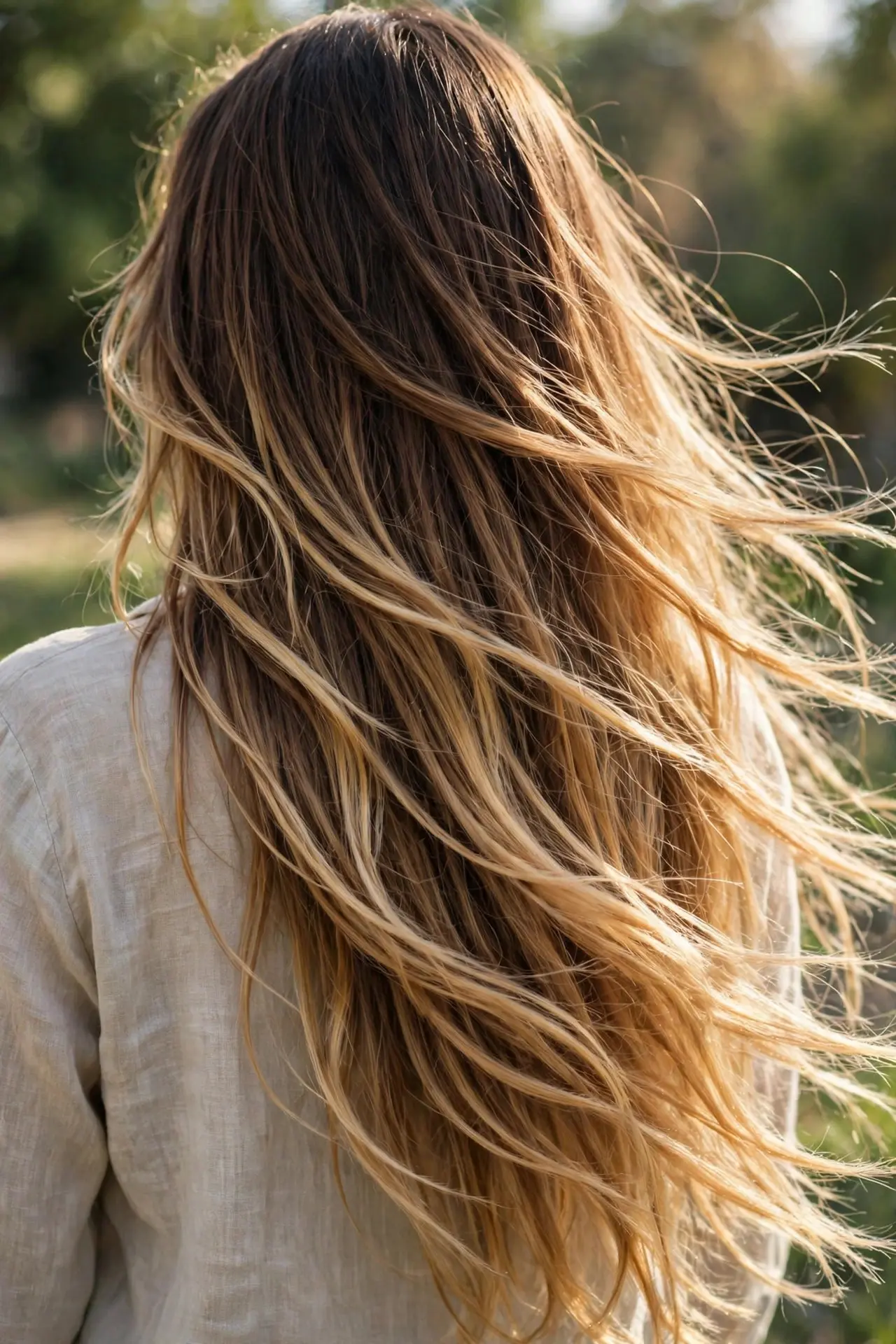
Long layers and balayage were made for each other. Every layer catches the gradient at a different point, so as the hair moves, the color shifts with it — brunette depth at the top, sunlit brightness flickering through the ends.
If your hair is already layered, the color and the cut amplify each other instead of competing. The gradient gets more surface area to show itself, and the layers gain definition they simply do not have in one flat shade.
Tip: Style it with a large-barrel wand and loose, brushed-out waves. Sleek styling can hide a gradient; soft movement is what makes the sunlit effect visible from every angle.
Shop this look: Blonde Balayage Hair Dye Kit · Bond Building Hair Treatment
5. Curly Hair with Warm Blonde Balayage

Curls show off balayage in a way straight hair never can. Every ringlet twists through the color at its own angle, so warm blonde flashes and disappears as the curls stack — the dimension looks built into the hair itself.
There is a practical bonus, too: texture disguises regrowth. A root line that would shout on sleek hair whispers on curls, which means curly girls can often stretch appointments further than anyone else on this list.
Tip: Apply curl-defining cream to soaking-wet hair right after washing. It locks in the curl pattern while the hair dries, and a crisp pattern is what shows the blonde placement at its best.
Shop this look: Curl Cream for Wavy Hair · Leave-In Conditioner for Curly Hair
6. Bronde Blend from Root to Tip

Bronde is the shade that cannot decide — and that is its genius. Sitting exactly between brown and blonde, it reads as one cohesive, sun-warmed color rather than a root color plus an end color. Nobody will ask when you got your hair done, because it never looks “done.”
This is the lowest-contrast option in the guide, which makes it the kindest to your schedule. With no strong line anywhere, there is nothing to maintain except shine, and the tone flatters almost every skin tone it meets.
Tip: Ask for “bronde” by name at the salon. It is a distinct formula and placement from standard balayage, and using the word tells your colorist you want subtlety, not contrast.
It is also the friendliest first step if you have never lightened your hair. You get brightness and dimension with an exit strategy built in — bronde fades back toward your natural shade so gently that stopping is as easy as starting.
Shop this look: Bronde Hair Color · Brunette Hair Gloss
7. Face-Framing Blonde Balayage on a Brunette Base

Want the brightening effect of blonde without committing your whole head? Concentrate the blonde where it counts — in two soft panels framing the face — and leave the rest of the hair rich brunette. The effect on your complexion is immediate.
It is also the smartest budget move in this guide. A face frame is one of the fastest balayage services to apply, the cheapest to refresh, and the easiest way to test whether blonde suits you before you invest in more.
Tip: Have the framing pieces cut a touch shorter than the rest so they curve naturally around your cheekbones. The brightness plus the curve is what lifts the whole face.
Shop this look: Money Piece Highlights Hair Dye Kit · Purple Shampoo for Blonde Hair
8. Wavy Lob with a Golden Blonde Fade

The lob is the hardest-working haircut of the decade, and a golden blonde fade is its perfect partner. Shoulder length gives the gradient just enough room, and the waves keep the color in constant motion so the fade never looks like a straight horizontal line.
This length suits most face shapes, brushes the collarbone in the most flattering way, and styles itself on lazy days. It photographs beautifully with almost zero effort, which is exactly what everyday hair should do.
Tip: Scrunch a lightweight sea-salt spray into damp hair and let it air-dry. You will get the tousled wave that shows off the fade, without weighing down the finer, lighter ends.
Shop this look: Sandy Golden Blonde Hair Dye · Sea Salt Spray
9. Ash Brown Roots into Icy Blonde Ends

For anyone who finds warm melts too quiet, this is the bold end of the balayage spectrum. Cool ash brown roots melt into icy, near-platinum ends, and the contrast is deliberate — crisp, striking and completely intentional.
Honesty corner: icy blonde is the highest-maintenance tone here. Pale ends shift color faster than golden ones and show dryness sooner, so this look asks for a real care routine in exchange for its drama.
Tip: Use a bond-building treatment weekly. Ends lightened close to platinum need that structural support to stay strong, elastic and shiny instead of snapping off.
Cool complexions and silver jewelry lovers, take note: this is your melt. The ash-and-ice palette sharpens blue and grey eyes and gives winter wardrobes — black, navy, charcoal — a striking partner.
Shop this look: Ash Blonde Hair Toner · Icy Blonde Hair Dye
10. Shadow Root Blonde for Ultimate Low Maintenance

A shadow root flips the usual problem into the design. Your colorist deliberately deepens the root area by a shade or two, then blends it into bright blonde lengths — so when your natural hair grows in, it melts into a root that was already shadowed on purpose.
The result is a root that never looks overdue. Many shadow-root wearers comfortably go three to four months between appointments, which makes this the go-to for busy schedules, tight budgets, or anyone who simply dislikes the salon chair.
Tip: Choose a shadow one to two shades deeper than your natural color. Go darker than that and the blend turns visible; stay in that window and it disappears completely.
Shop this look: Root Touch Up Hair Powder · Dry Shampoo
11. Short Bob with a Subtle Blonde Melt

Short hair has less canvas, so the melt has to be smarter, not louder. On a bob, the blonde is concentrated where it earns its keep — a whisper through the crown and along the bottom edge of the cut, where light naturally lands.
Kept subtle, the lightening adds brightness and movement without ever looking choppy, which is the one risk balayage runs on short lengths. It is also a genuinely low-commitment way in: less hair means less color, less time and less to grow out if you change your mind.
Tip: Ask for the placement at the crown and ends specifically. Short hair shows exactly where color sits, so deliberate placement matters more here than anywhere else.
Shop this look: Beige Blonde Hair Toner · Mini Flat Iron for Short Bob
12. Dimensional Brown with Multiple Blonde Tones

Natural sun-lightened hair is never one shade — and this technique copies that trick. Instead of a single blonde, your colorist layers in two or three complementary tones, such as honey, golden and champagne, woven through the brown at different depths.
The variation is what makes it look real. Ribbons of lighter and deeper blonde catch the light at different moments, so the hair seems to change as you move — a complexity no single-shade melt can fake.
Tip: Ask about multi-tonal balayage by name, and book the longer appointment without resentment. It is a more involved technique, but if dimension is your priority, the extra chair time is the whole point.
Shop this look: Blonde Balayage Hair Dye Kit · Ash Brown Hair Dye
13. Wavy Hair with a Warm Honey Blonde Melt

If idea 1 is honey at the ends, this is honey everywhere it matters. Loose waves carry a warm honey melt from the mid-lengths down, and the wave pattern makes the transition look fluid — the color seems to pour through the hair rather than sit on it.
Warmth is the personality here. Honey flatters golden and olive undertones beautifully, adding a glow that cooler blondes cannot, and the overall mood is soft and romantic rather than edgy.
Tip: Work a light-hold mousse through damp hair and let the waves form with minimal touching. The less you fuss, the softer the waves stay — and soft waves keep the honey glow looking natural.
Shop this look: Honey Blonde Hair Dye · Keratin Protein Hair Mask
14. Long Hair with a Gradual Three-Tone Fade
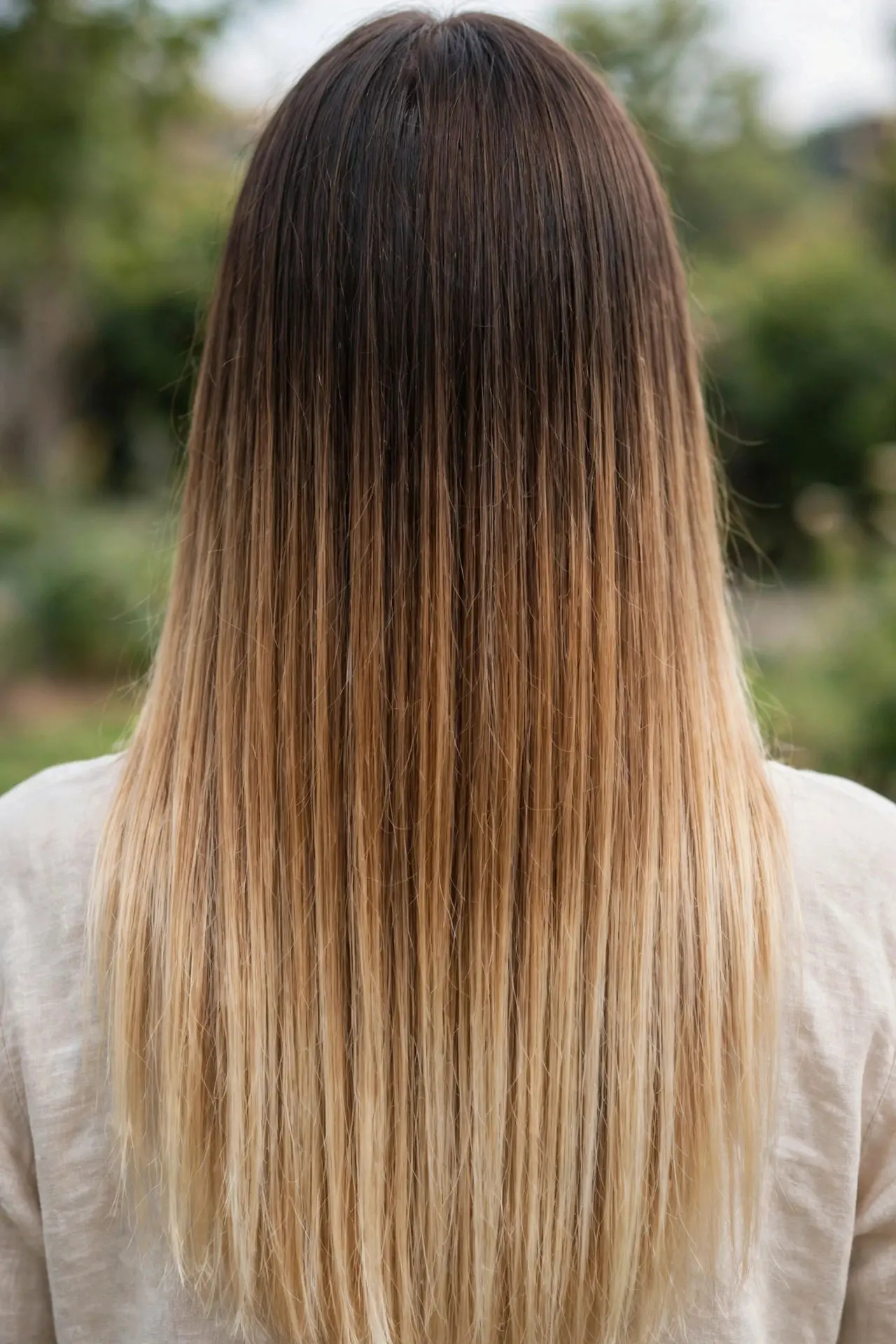
Length is a luxury, and this fade spends it properly. Deep brown at the roots warms into caramel through the mid-lengths, then cools into pale blonde at the ends — three full tones, each given its own territory to blend in.
Because every transition zone gets space, nothing looks rushed or banded. It is one of the most photogenic options in this guide: in motion, you can watch all three shades ripple down the hair one after another.
Tip: Keep up trims every 10 to 12 weeks. The palest ends are the oldest and most fragile hair you own, and regular dusting keeps the bottom of the gradient looking defined instead of wispy.
Book this one when you have time to enjoy the process. A three-tone fade is a longer appointment than a standard melt, because each shade is placed and blended separately — bring a book, and leave with the most dimensional result in this guide.
Shop this look: Honey Blonde Hair Toner · Paddle Brush for Long Hair
15. Textured Shag with Sun-Kissed Blonde Pieces

A shag is all about texture, and sun-kissed blonde pieces are how you make every layer visible. Painted through the choppy lengths, the blonde breaks up the shape just enough to stop a heavier cut from looking dense or helmet-like.
The pairing has an undone, cool confidence — part rock-and-roll, part beach holiday. The color looks like it happened by accident over a summer outdoors, which is precisely the charm.
Tip: Finish with texturizing spray at the roots before air-drying or diffusing. Separation is the shag’s whole identity, and the spray keeps layers piecey and full of movement.
Shop this look: Texturizing Spray for Layered Bob · Sea Salt Spray for Shaggy Bob
16. Balayage with a Soft, Beige-Toned Finish

Beige blonde is the diplomat of this list. It sits in a cool-neutral zone that refuses both harsh ash and sugary gold, which is why it lands in the “universally flattering” category more often than almost any other tone.
Blended gradually from a brunette base, the finish looks polished and calm — the kind of color that works with every wardrobe and every skin undertone because it never shouts over either. If you keep flip-flopping between warm and cool, stop: this is your answer.
Tip: Show your colorist photos in natural light, not salon light. Beige is a subtle balance, and daylight references keep it from drifting ashier or warmer than you meant.
Shop this look: Beige Blonde Hair Toner · Pearl Blonde Hair Toner
17. Curly Bob with a Blonde Ombre Fade

Short, curly and blonde-tipped: this little bob packs all three. The curls stay rich and brown through the crown, then the ends fade into blonde in a soft ombre, so every ringlet finishes with its own bright exclamation point.
On a short cut, that faded edge does real work — it lightens the silhouette, defines the curl pattern, and keeps the shape from reading as one solid dark mass. Bouncy, defined curls make the fade look playful instead of grown-out.
Tip: Keep the blonde concentrated in the last third of the curl. On short curly hair, a fade that starts too high can swallow the brown depth that makes the contrast charming.
Shop this look: Curl Defining Cream for Short Curly Hair · Diffuser for Curly Short Hair
18. Timeless Brown to Blonde Blend

We finish where balayage began: the classic blend that never dates. Natural brown roots melt evenly into soft, neutral blonde ends — no gimmick, no extreme contrast, just the gradient done exactly right.
This is the version that suits every age, every dress code and every season, and it grows out as gracefully as any color in this guide. Trends will keep orbiting it — icy one year, copper the next — and it will still look current in all of them.
Tip: If you are torn between several ideas here, choose this one. A timeless blend is the easiest to adjust later, because your colorist can warm it, cool it or brighten it without starting over.
It is also the safest recommendation to give a friend whose taste you do not know. Some colors are a statement; this one is simply beautiful hair, on everyone, every single time.
Shop this look: Champagne Blonde Hair Dye · Purple Shampoo for Blonde Hair
Styling Tips
Balayage is painted to move. These habits show the gradient off at its best, day to day:
- Reach for waves first: loose, brushed-out waves reveal more of the gradient than any other style, because each bend catches a different tone. A large-barrel wand and a quick finger-comb is all it takes.
- Always use heat protection: lightened ends are more porous than your roots, and unprotected heat fades blonde faster than sun does. Spray before every hot tool, no exceptions.
- Part it differently: shifting your part even half an inch moves the brightest pieces around your face and makes grown-out color look freshly done.
- Finish with shine, not weight: a drop of lightweight oil on the ends only restores the gloss lightening can dull, without flattening the dimension at the roots.
- Try a low, loose braid overnight: you will wake up with soft waves that show the melt beautifully — and you will have given your ends a heat-free day.
- Refresh with gloss between appointments: a clear or tinted gloss revives tone and shine in twenty minutes, stretching the life of the full service.
None of this needs to be complicated. Balayage was designed for real life — a little movement, a little shine, and the color does the rest.
Common Mistakes to Avoid
- Washing with hot water: heat opens the cuticle and lets tone escape. Lukewarm water keeps your blonde where your colorist put it, for weeks longer.
- Using the wrong shampoo daily: harsh, clarifying formulas strip gloss and fade melts fast. Save them for occasional deep cleans and use a gentle color-safe wash the rest of the time.
- Overdoing purple shampoo: it corrects brassiness, but used too often it dulls blonde and can leave a lilac cast. Once every week or two is the sweet spot for most tones.
- Trying to lighten more at home: box lightener over balayage creates bands and breakage that cost far more to fix than a salon visit. Leave the lifting to your colorist.
- Skipping trims because the color “still looks fine”: balayage hides regrowth, not split ends. The palest ends are the most fragile; regular dusting keeps the whole gradient looking healthy.
Also Worth Knowing: Keeping Balayage Healthy Between Visits
Balayage is gentle as color services go — no bleach touches your scalp, and the roots stay natural — but the lightened lengths still live a harder life than the rest of your hair. A small between-visits routine keeps them strong enough that your next appointment starts from healthy hair, not damage control.
Start in the shower: a sulfate-free, color-safe shampoo, conditioner on the ends every wash, and a proper deep-conditioning mask once a week. If your ends are pale — champagne, beige or icy — add a bond-building treatment to that weekly slot. It rebuilds the internal structure that lightening weakens, and the difference in elasticity is something you can feel within a few uses.
Then protect what you have washed. Blot hair dry instead of rough-toweling, detangle from the ends upward with a wide-tooth comb, and let heat tools take regular days off. A gloss or toner refresh at the six-to-eight-week mark keeps tone true without any new lightening at all. Look after the ends, and this is color you can wear beautifully for years.
Frequently Asked Questions
How often do I need to touch up brown to blonde balayage?
Far less often than traditional highlights. Because the roots blend softly, most people refresh every 3 to 4 months, with just a gloss or toner in between if the tone needs a lift.
Will brown to blonde balayage damage my hair?
Any lightening causes some dryness, but balayage is one of the gentlest ways to go blonde: lightener sits mostly on the mid-lengths and ends, off the scalp, and healthy home care plus bond treatments keeps ends strong.
Can I go from brown to blonde balayage in one appointment?
Often, yes — especially to honey, caramel or golden tones, if your hair is healthy and not previously darkened with box dye. Very dark or previously colored hair may need two sessions to reach pale or icy ends safely.
Does brown to blonde balayage suit my skin tone?
Almost certainly, because the tone is adjustable. Warm honeys and golds flatter golden and olive skin; champagne, beige and icy tones suit cooler complexions. Your colorist balances the blonde to you, not the other way around.
How do I keep blonde balayage from turning brassy?
Wash lukewarm, use a color-safe shampoo, and add a purple shampoo once every one to two weeks to neutralize yellow. A gloss refresh every 6 to 10 weeks keeps the tone true between full appointments.
What haircuts show off brown to blonde balayage the best?
Long layers are the classic choice because they give the gradient room to move, but this guide proves the range: lobs, shags, sleek lengths, curls and even short bobs all show a melt beautifully when placement matches the cut.
Conclusion
That is the beauty of brown to blonde balayage ideas done well: the color grows out the way it was designed to — softly, gracefully, and with no deadline hanging over your next appointment, whether you choose a barely-there bronde or a bold icy melt. If warm tones are calling you next, our guide to honey brown balayage ideas is the perfect follow-up read. Which of these 18 melts would you take to your colorist first?