

It’s the 4th of the month, the pension has just landed, and Diane, 68, is doing what she has done for years — spreading the bills across the kitchen table like a hand of cards, deciding which gets paid today and which can wait until next week. She isn’t poor. She’s careful. And she’s quietly tired of the careful part feeling like the whole story of her days.
Here’s the truth nobody puts on a greeting card: living well on a fixed income over 60 has less to do with the size of the check and more to do with the habits wrapped around it. The women who feel genuinely rich on modest pensions aren’t white-knuckling their way through deprivation — they’re deliberate. Every dollar has a job, and most of those jobs are joyful ones.
None of the 21 habits below requires a confusing app, a side hustle you don’t want, or giving up the small luxuries that make life sweet. They’re steady little rhythms — the kind that turn “making it work” into truly living well.
1. 🕐 The 48-Hour Rule Before Buying

Impulse buys are the single biggest leak in most fixed-income budgets, and they rarely come from bad judgment — they come from a moment. Give the moment 48 hours and the urge usually dissolves on its own. Most ‘must-haves’ are completely forgotten within two days.
Try this: When something tempts you, write the item and its price on a sticky note or phone note with today’s date. Revisit it after 48 hours — if you still want it and it fits the month’s plan, buy it then, guilt-free.
Make it yours: Apply the rule to non-essentials only; groceries and genuine needs don’t need a waiting period.
Avoid: Using ‘it’s on sale’ as an excuse to skip the wait — a discount on something you don’t need is still money out.
2. 🌱 Pay Yourself First on Payday

The women who sleep best at night treat savings like a bill — non-negotiable and paid first. Even a tiny automatic transfer changes the psychology: you’re no longer hoping something is left over, you’re deciding it in advance.
Try this: Set up an automatic transfer for the same day your pension or Social Security lands, moving it to a separate savings account before you spend a dollar. Start with whatever you genuinely won’t miss — even a small amount counts.
Budget tip: Name the account something that matters to you, like ‘Grandkids Visit’ or ‘Peace of Mind’ — named savings get raided far less.
Make it yours: If automatic transfers feel scary, do it manually for three months until the habit feels like part of payday itself.
3. 🫙 Pantry-First Grocery Planning

Most of us buy groceries for a kitchen we haven’t actually looked at. Shopping your own pantry first turns forgotten cans and half-bags into real dinners — and it’s astonishing how much less you spend when the list starts from what you own.
Try this: Before writing your shopping list, spend ten unhurried minutes scanning the pantry, fridge, and freezer. Plan three or four dinners around what you find, then shop only for the gaps.
Budget tip: Keep a running ‘use first’ shelf for items nearing their date so nothing quietly expires in the back.
Make it yours: Turn it into a game — one ‘pantry challenge’ dinner a week where nothing new may be bought for that meal.
4. 🍲 Cook-Once Sunday Batch Cooking

Takeout isn’t tempting because it’s delicious — it’s tempting because you’re tired. One relaxed Sunday afternoon of cooking fills the week with ready-made answers to ‘what’s for dinner,’ and home-cooked meals cost a fraction of restaurant ones.
Try this: Pick one big pot (soup, stew, or chili) and one tray (roasted vegetables or chicken pieces). Cook, portion into containers, label with masking tape, and refrigerate or freeze.
Make it yours: Invite a friend to batch-cook together and swap half — you both get variety with zero extra effort.
Avoid: Cooking six new recipes at once; two reliable big batches beat an ambitious Sunday that burns you out.
5. 🏷️ Always Ask for the Senior Discount

Senior discounts are one of retirement’s best-kept open secrets: they’re everywhere and almost never advertised. Restaurants, pharmacies, movie theaters, hair salons, even phone and internet providers quietly offer them — but only if you ask.
Try this: Make one sentence your new habit: ‘Do you offer a senior discount?’ Say it at checkout, on the phone with service providers, and when booking anything fun.
Budget tip: Some discounts start at 55, others at 60 or 62 — if you’re anywhere in that range, always ask; the worst answer is a polite no.
Make it yours: Keep a small note on your phone of who gives you a discount so you remember to go back there first.
6. 🧾 The Monthly Subscription Audit

Subscriptions are designed to be forgotten — that’s the business model. A single monthly review catches the streaming service nobody watches, the magazine that piles up unread, and the ‘free trial’ that quietly started billing months ago.
Try this: Once a month, scroll your bank or card statement line by line with a cup of tea. Cancel anything unused on the spot, and pick one remaining bill to call about — a polite ‘is there a loyalty rate?’ often works.
Avoid: Replacing one cancelled subscription with a ‘cheaper’ new one the same week; let the gap sit for a month first.
Make it yours: Do the audit on the same day each month — say, the 15th — so it becomes routine instead of a chore.
7. 📚 Library-First Entertainment

Your local library is the greatest free entertainment deal in town, and most people barely scratch the surface. Beyond books: movies, audiobooks, magazines, museum passes, free classes, and even tax-prep help — all for the cost of a library card.
Try this: This week, get the library’s app for ebooks and audiobooks, then check the events board for the month — circle two free things that genuinely appeal to you.
Make it yours: Many libraries lend things you’d never expect: tools, cake pans, even fishing poles. Ask what’s in the ‘library of things.’
Budget tip: Put yourself on the hold list for bestsellers instead of buying them — the wait is rarely as long as you fear.
Give deprivation no foothold: set aside a small ‘joy budget’ each month — an amount just for pleasure, no justification needed. Women who budget for small delights stick to their plans far longer than women who try to be perfect.
8. 🌡️ The Thermostat Nudge Habit

Heating and cooling quietly eat one of the biggest slices of the household budget. Nudging the thermostat a degree or two — and dressing for the season indoors — trims that bill without making home feel anything less than cozy.
Try this: In winter, set the heat a touch lower and reach for a soft sweater and warm socks first; in summer, do the reverse with fans and light curtains. Program the schedule so empty hours cost less.
Budget tip: A draft snake on the door and sealed windows do more for comfort than an extra degree of heat ever will.
Avoid: Turning the heat off entirely in freezing weather — burst pipes cost infinitely more than a warm house.
9. 🛒 The Store-Brand Swap Challenge

Blind taste tests keep proving what frugal shoppers have always known: most store brands are made in the same facilities as the famous labels. The packaging is plainer; the savings are real, week after week.
Try this: Each week, swap one branded item for the store brand — start with low-stakes things like canned tomatoes or oats. Keep a running note of swaps you honestly can’t tell apart.
Make it yours: There will be one or two items you truly prefer branded — keep those. The challenge is about the other forty.
Avoid: Bulk-buying a store brand you’ve never tried; test small first, then stock up on your proven winners.
10. 🚶 Free Fitness Fridays

Here’s a savings angle nobody talks about: every walk you take is a small deposit against future medical bills. Staying active is one of the most powerful money habits there is — and the best exercise for most of us costs absolutely nothing.
Try this: Block one weekly ‘free fitness’ appointment with yourself: a walking group, a senior-center class, or a SilverSneakers session if your Medicare plan includes one.
Make it yours: Pair movement with friendship — a walking buddy makes you show up on the days motivation doesn’t.
Avoid: Signing an expensive gym contract in a burst of January enthusiasm; try the free options for a month first.
11. 📋 The Annual Benefits Checkup

This is the habit with the biggest payoff and the lowest participation: millions of eligible seniors never claim the benefits designed for them — food assistance, help with Medicare premiums, energy bills, even property tax relief. The money is there; the paperwork is the only wall.
Try this: Once a year, sit down with a benefits checklist — the National Council on Aging’s free BenefitsCheckup tool is a good start — or call your local Area Agency on Aging and ask what you might qualify for.
Budget tip: Eligibility rules change and income limits rise; being turned down once doesn’t mean you’ll be turned down forever.
Avoid: Paying anyone to ‘help you apply’ for free government programs — legitimate assistance is free.
12. 💊 The Prescription Price Check

The same prescription can cost dramatically different amounts at two pharmacies on the same street — and most people never know because they never ask. A yearly price check on your regular medications is one of the highest-value hours you’ll spend.

Try this: Ask your pharmacist three questions: Is there a generic? Would a 90-day fill cost less per month? Are there discount or assistance programs for this drug? Then compare with one other pharmacy.
Make it yours: Keep a small card in your wallet with your medication list and prices so the checkup takes minutes, not hours.
Avoid: Splitting pills or skipping doses to stretch a prescription — talk to your doctor or pharmacist about costs instead.
13. 👗 The One-In-One-Out Rule
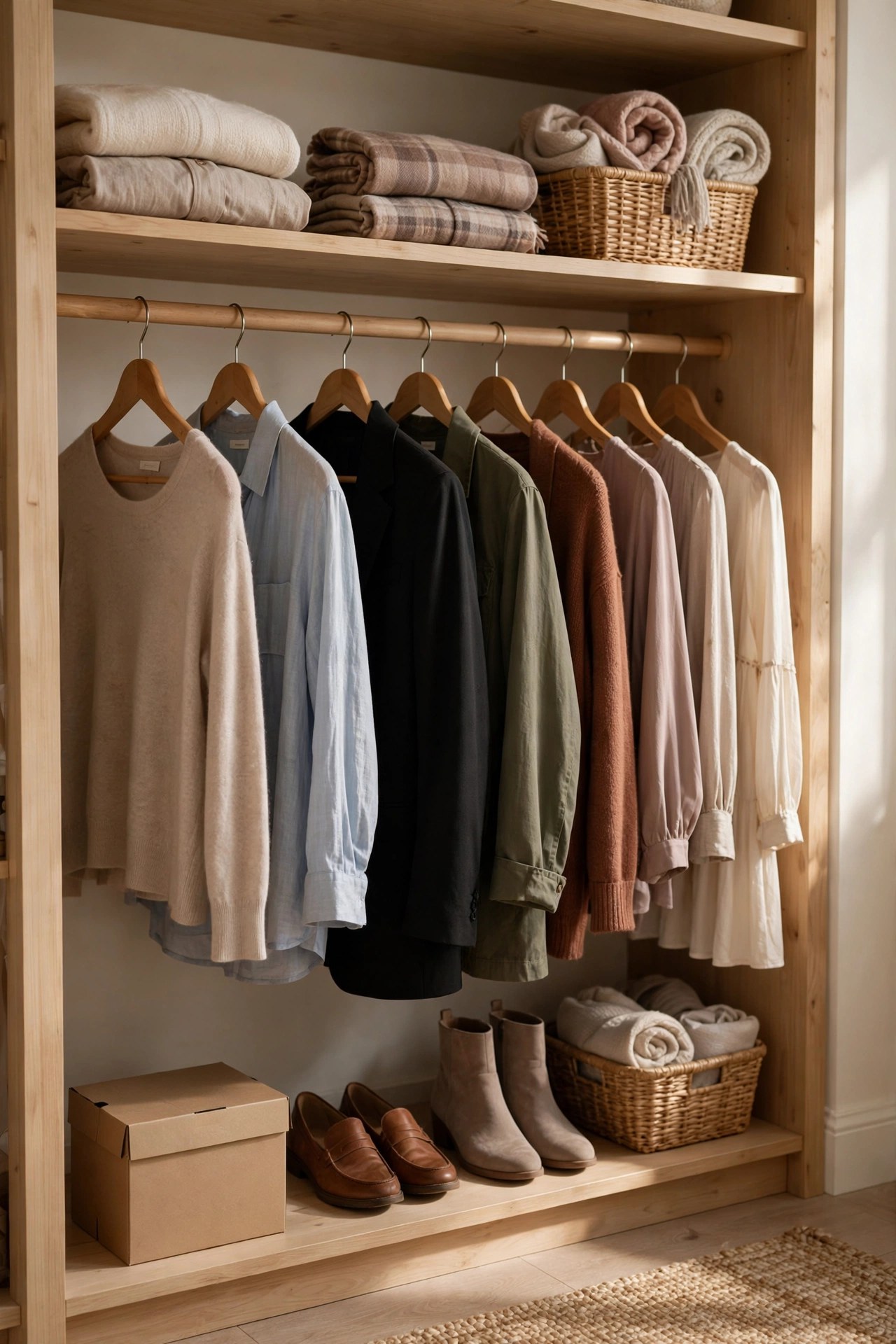
Clutter and overspending are the same habit wearing different outfits. The one-in-one-out rule — for every new clothing or household item, one leaves to donation — makes each purchase a conscious choice instead of an automatic one.
Try this: Keep a small donation box in the closet at all times. When something new comes in, something old goes in the box the same day — no ‘decide later’ pile.
Make it yours: Apply it to the categories where you personally overbuy — for many of us, that’s tops, mugs, or ‘organizing’ containers.
Budget tip: Watching the box fill up is its own reward: it’s visual proof of how much you already had.
14. 📸 Declutter-to-Cash Sundays

Decades of living accumulate treasures you no longer use — and someone nearby would happily pay for them. A monthly declutter-to-cash session turns forgotten shelves into a small but steady stream of found money.
Try this: Once a month, gather five unused items, photograph them in good daylight, and list them on a local marketplace. Price to move, not to maximize — the goal is cash and clear space.
Avoid: Spending the proceeds before they arrive; decide in advance whether each month’s haul goes to savings or a treat.
Make it yours: If selling online feels like too much, a twice-yearly yard sale with a neighbor splits the work and doubles the fun.
Don’t leave benefits on the table: food assistance, help with Medicare premiums, energy-bill aid, and property-tax relief exist precisely for fixed-income households. A single annual checkup with your local Area Agency on Aging can uncover support you didn’t know you qualified for.
15. 🍽️ Potluck Over Restaurant Meetups

Nobody wants to give up their friendships to save money — and with potlucks, you don’t have to. Gathering around a home table with everyone bringing a dish is warmer, longer, and more personal than any restaurant, at a fraction of the cost.
Try this: Suggest the swap yourself: host a simple potluck and assign easy categories (salad, main, dessert). After dinner, take a walk together — the evening stretches without the bill growing.
Make it yours: Rotate hosting monthly so no one person carries the load; the host provides the main dish, guests fill in the rest.
Budget tip: Potluck dishes are also the perfect use for batch-cooking Sundays — make a double portion and you’re the hero.
16. 🪴 The Windowsill Herb Garden

Those little plastic packs of fresh herbs are one of grocery shopping’s sneakiest expenses — a few dollars each, half of it wilting before you use it. A sunny windowsill with three pots gives you fresher herbs for pennies, all year.
Try this: Start with the forgiving trio: basil, parsley, and chives. Small pots, a sunny sill, water when the soil feels dry — snip from the top and they keep growing.
Make it yours: If a sill isn’t sunny enough, a single small grow light turns any corner into a garden.
Avoid: Starting with a dozen varieties; three thriving pots beat twelve struggling ones every time.
17. 🍋 DIY Cleaning Basics

Walk down the cleaning aisle and you’ll see a dozen specialty products for jobs that vinegar, baking soda, and lemon have handled for a century. Mixing your own basics cuts that whole shelf of spending down to almost nothing.
Try this: Start with one all-purpose spray: equal parts white vinegar and water with a few strips of lemon peel soaked in for scent. Use it on counters, glass, and sinks.
Avoid: Using vinegar on natural stone or hardwood floors — keep a separate gentle cleaner for those surfaces.
Budget tip: One big jug of vinegar and a box of baking soda replace a cartful of cleaners for months.
18. 🚗 Combine-Errands Car Days

Every separate car trip costs fuel, time, and — sneakily — willpower, because each stop is another chance to impulse-buy. Batching errands into one or two planned days a week shrinks all three costs at once.
Try this: Keep a running errand list on the fridge and pick two ‘car days’ a week. Plan the route in a loop so you never backtrack, and shop with a list at every stop.
Make it yours: On non-car days, enjoy the freedom: walk the neighborhood instead, and notice how much calmer the week feels.
Budget tip: Fewer trips also mean less wear on the car — maintenance savings are the quiet bonus.
19. 🎶 The Free Community Days Calendar

Museums with free days, summer concert series, senior-center outings, library lectures, community festivals — your town is almost certainly offering more free joy than you know about. The trick is catching it before it passes.
Try this: At the start of each month, spend twenty minutes checking your town’s events page, the senior center newsletter, and the library board. Mark the free ones on your calendar in pen.
Make it yours: Invite one friend to be your ‘free fun’ partner — you’ll both go more often with a standing plan.
Avoid: Treating free events as lesser events; some of the best evenings of the year cost nothing at all.
20. ☕ The 15-Minute Money Date

Money anxiety grows in the dark and shrinks in daylight. A short, calm weekly review — same day, same time, coffee in hand — keeps small problems small and gives you a regular moment to notice what’s actually going right.
Try this: Pick a weekly slot and keep it sacred: check balances, glance at upcoming bills, note one small win from the week. Fifteen minutes, no judgment, no marathon sessions.
Make it yours: End each money date by writing down one thing your fixed income made possible that week — it rewires the whole exercise toward gratitude.
Avoid: Doing the review when you’re tired or upset; a calm mind makes kinder, smarter money decisions.
21. 💛 The “Enough” Gratitude Practice

The most powerful habit on this list costs nothing and changes everything: ending the day by naming what was enough. A fixed income feels tightest when measured against everyone else’s highlight reel — and most peaceful when measured against your own actual life.
Try this: Each evening, write three things your fixed income made possible today: the warm house, the phone call with your sister, the good bread. Specific beats general, every time.
Make it yours: On hard days, allow the list to be tiny — ‘the roof, the tea, the morning light’ still counts.
Avoid: Comparing your list to anyone else’s life; this practice only works pointed inward.
❓ Living Well on a Fixed Income FAQs
Can you really live well on Social Security alone?
Many women do — it depends mostly on housing costs, which are the biggest variable. Pairing a realistic budget with the habits above, plus checking which benefit programs you qualify for, stretches a Social Security check further than most people expect. The key is intentionality, not the dollar figure.
What's the single best habit to start with if I feel overwhelmed?
Start with the 15-minute money date. Just looking calmly at your money once a week — no judgment, no marathon budgeting sessions — builds the awareness every other habit rests on. Add one more habit each week from there.
Are senior discounts actually worth asking about?
Absolutely — and they’re far more common than advertised. Restaurants, pharmacies, movie theaters, retailers, and even phone and internet providers often have them; many start at 55 or 60. The worst that happens when you ask is a polite no.
Should I consider downsizing my home to save money?
It’s worth an honest look when housing eats the largest share of your budget. A smaller home usually means lower utilities, taxes, insurance, and maintenance — but run the full numbers first, including moving costs. For some, staying put and cutting elsewhere is the better math.
How do I stop feeling deprived on a fixed income?
Deprivation comes from vagueness, not from limits. When you deliberately budget for small joys — a lunch with a friend, good coffee, a book you actually want — the boundaries stop feeling like punishment and start feeling like choices. That’s the whole point of the joy budget and the ‘enough’ practice.
✅ Your Calm-Start Checklist
You don’t need all 21 habits by Friday. Start with these five this week, and let the rest join when they’re ready:
- ☑️ Schedule your first 15-minute money date — same day, same time, coffee in hand.
- ☑️ Set up pay-yourself-first, even a small automatic transfer on payday.
- ☑️ Ask for the senior discount three times this week — just to build the muscle.
- ☑️ Do one pantry-first meal plan before your next grocery trip.
- ☑️ Write tonight’s three “enough” gratitudes before bed.
A fixed income is simply a known income — and known is something you can plan around, build on, and genuinely enjoy. Start small, stay steady, and watch how rich an ordinary week can feel.
📖 Keep Reading
- Fill Quiet Weekends After Retirement — gentle ideas for making weekends feel full without spending much.
- Fall Rituals After 60: 12 Cozy Habits — small seasonal rhythms that make home the happiest place to be.
- More Time Together in Retirement — 12 ways to enjoy the extra hours instead of fighting over them.
Discover more from Fashinate Style
Subscribe to get the latest posts sent to your email.