
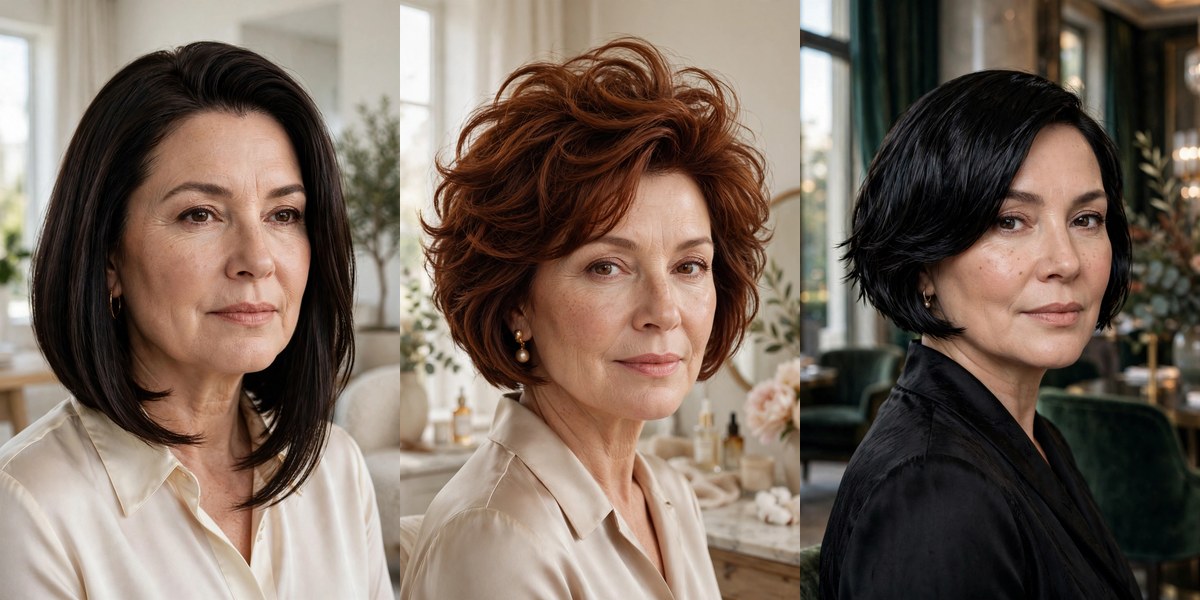
What if the secret to flattering a round face was never about hiding your cheeks — but about redirecting the eye? Stylists who specialize in face-shape geometry will tell you: roundness isn’t a flaw to camouflage, it’s a proportion to balance. And a short bob, cut with the right lines, balances it better than any other haircut.
The formula has two halves. For the round face: vertical lines, diagonal movement, height at the crown, and shadow where width gathers. For thin, fine hair: solid perimeters, surface texture, and lift that doesn’t quit. These 20 cuts solve both equations at once — each one notes exactly why it slims and how it volumizes, so you choose with confidence, not hope.
1. 📏 The Vertical-Line Bob
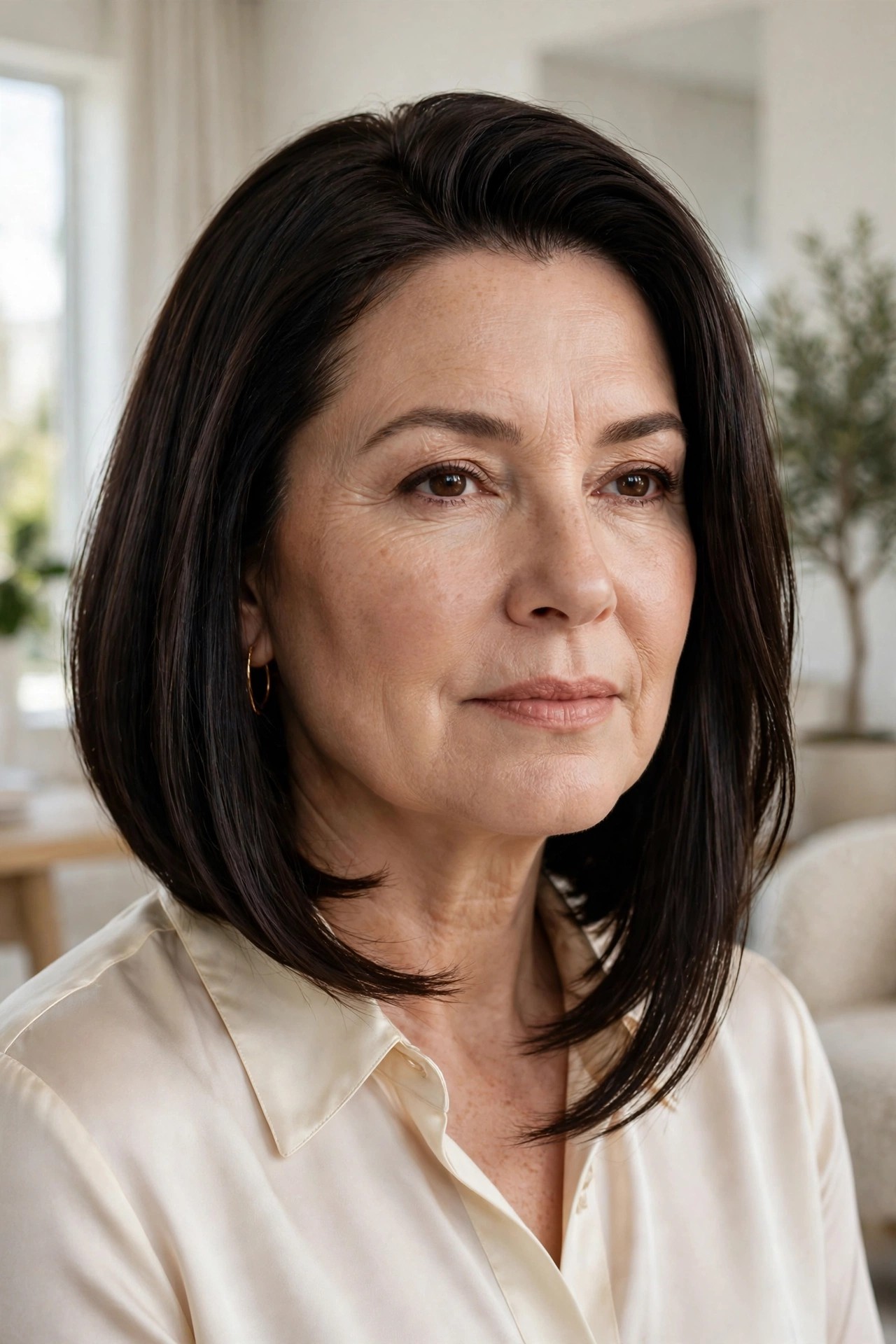
Long, straight front pieces that drop past the chin create unbroken vertical lines down both sides of the face — and vertical lines are the oldest slimming trick in the book. The eye travels down instead of across, so the face reads longer and narrower instantly.
Try this: Flat-iron the two front pieces straight down; leave the back textured for contrast.
Best for: Maximum slimming with minimum styling effort.
Styling tip: the front pieces must pass the chin — shorter ones widen instead of slimming.
2. 🔽 The Deep Side-Part Bob
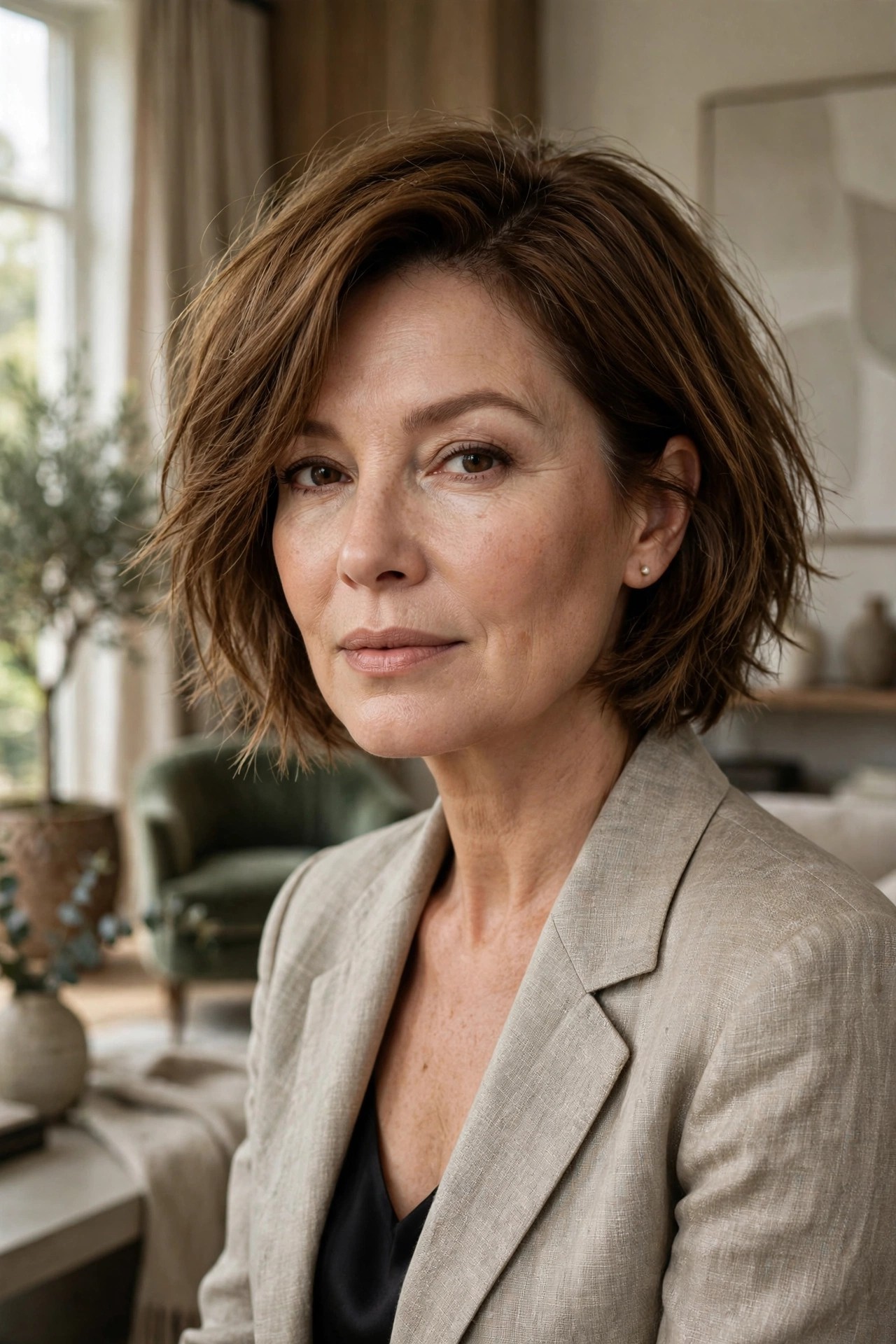
A dramatic deep side part throws a diagonal line across the face, breaking the circle into interesting angles. Diagonals are slimming because the eye can’t measure width along a slant. It is one parting change with a face-shape payoff.
Try this: Part wet hair deeply on one side and train it for a week — it will start falling there naturally.
Styling tip: tuck the smaller side behind your ear to sharpen the diagonal.
Avoid: center parts, which split the face into two equal (wider-looking) halves.
3. ⬆️ The Crown-Height Bob
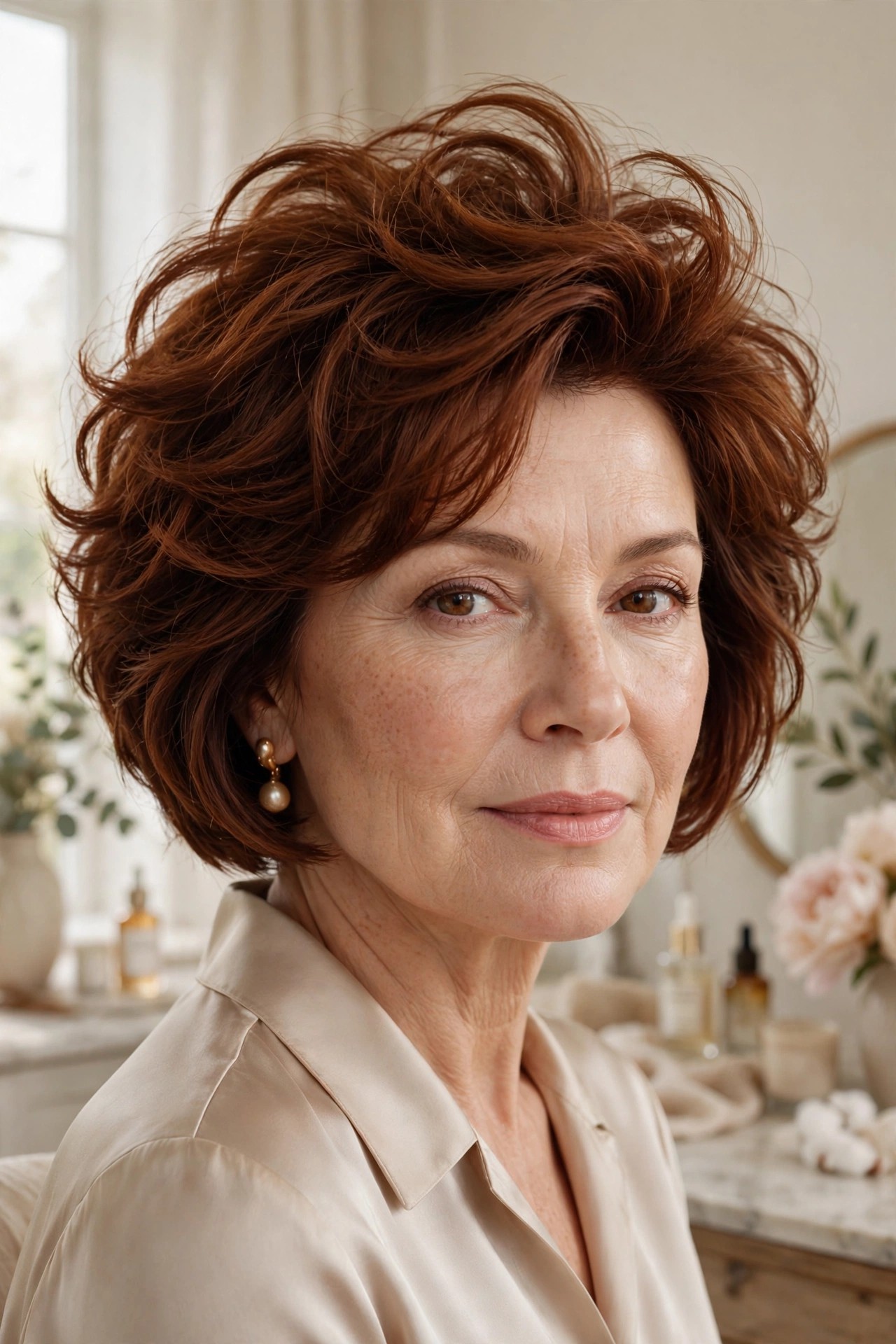
All the volume lives on top: short support layers at the crown push height upward, stretching the face’s proportions vertically. A taller crown literally makes the face look longer — it’s the same principle as heels for legs.
Try this: Velcro rollers at the crown for 10 minutes while you get dressed.
Avoid: volume at the sides — width plus height just makes a bigger circle.
Best for: Adding length to the face’s proportions.
4. 🎯 The Cheek-Skim Bob
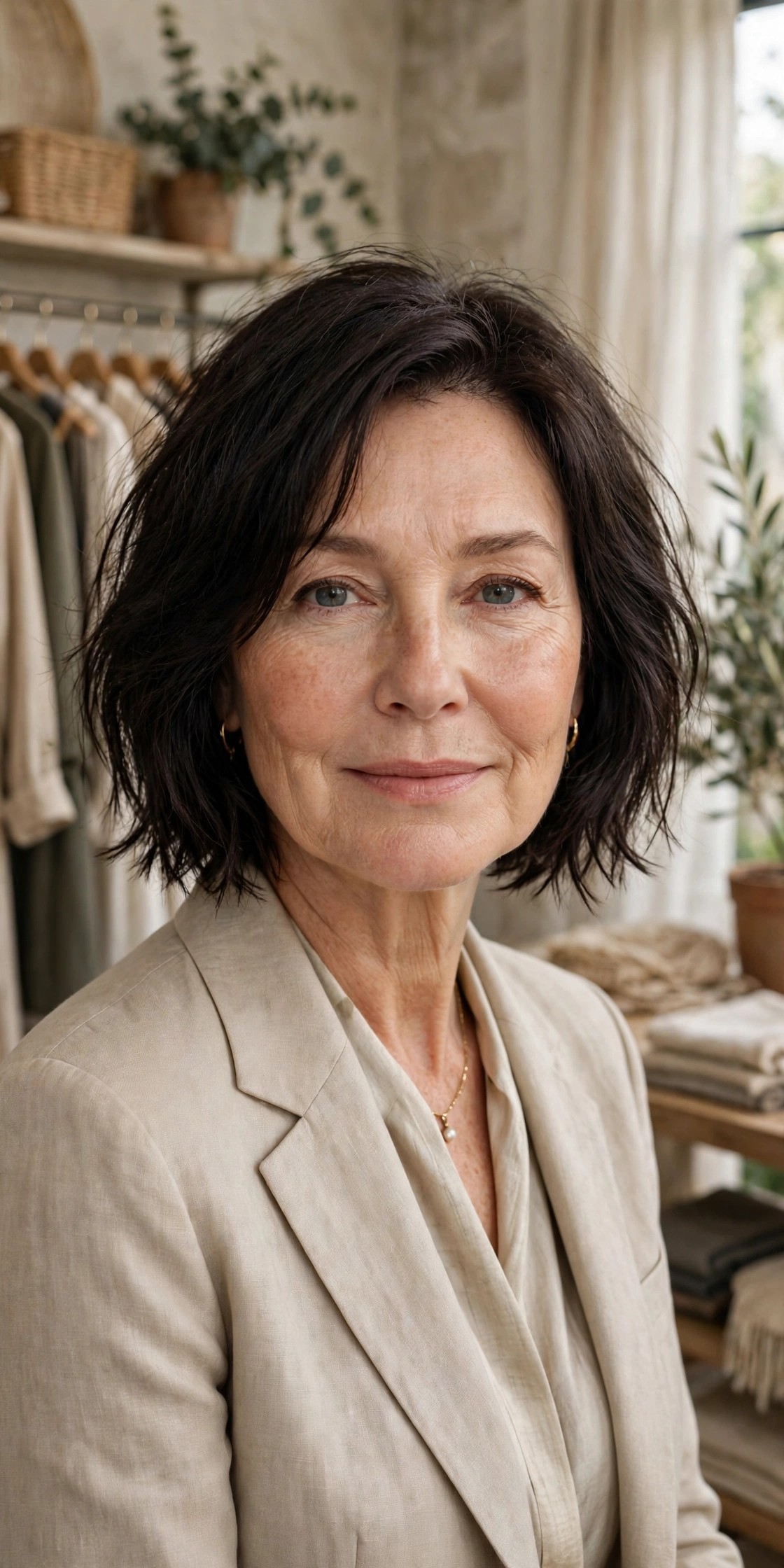
The ends land deliberately below the widest point of the cheeks — never at it. Where a bob ends is where the eye stops, so ending below the cheekline pulls focus downward, past the fullness. Placement is everything.
Try this: At the consultation, point to exactly where your cheeks are widest — then go half an inch below.
Best for: Women whose widest point sits high on the cheeks.
Styling tip: inward-curving ends emphasize the downward pull.
5. 💫 The Diagonal Bob

An asymmetric cut where one side sweeps noticeably longer — the diagonal hemline refuses to let the eye rest on width. It is modern, a little daring, and ruthlessly effective at breaking up roundness.
Try this: Wear the longer side in front of the shoulder to maximize the diagonal.
Styling tip: sleek styling shows the diagonal best; tousled softens it.
Avoid: letting it grow out lopsided — the diagonal needs precision trims.
6. 🌙 The Extended Bob
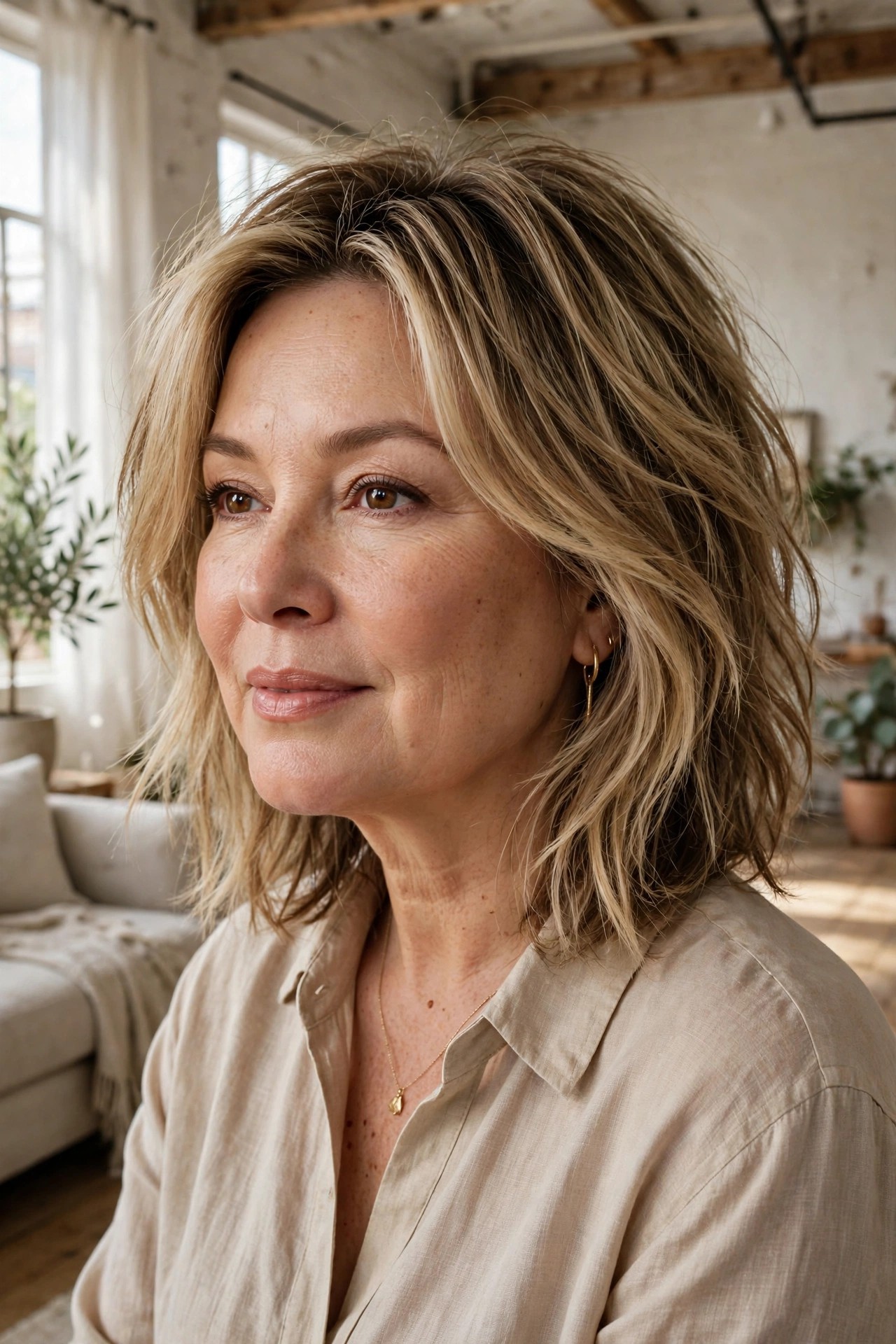
A touch longer than the classic bob — grazing the collarbone — with choppy texture to keep it light. The extra length is pure verticality: more inches downward means a longer-looking face and neck. Sometimes the answer is simply: a little more length.
Try this: Keep the back slightly shorter than the front for shape with length.
Avoid: one-length long bobs — without texture they widen at the bottom.
Best for: Women who want slimming without going very short.
7. 🪞 The Face-Frame Bob
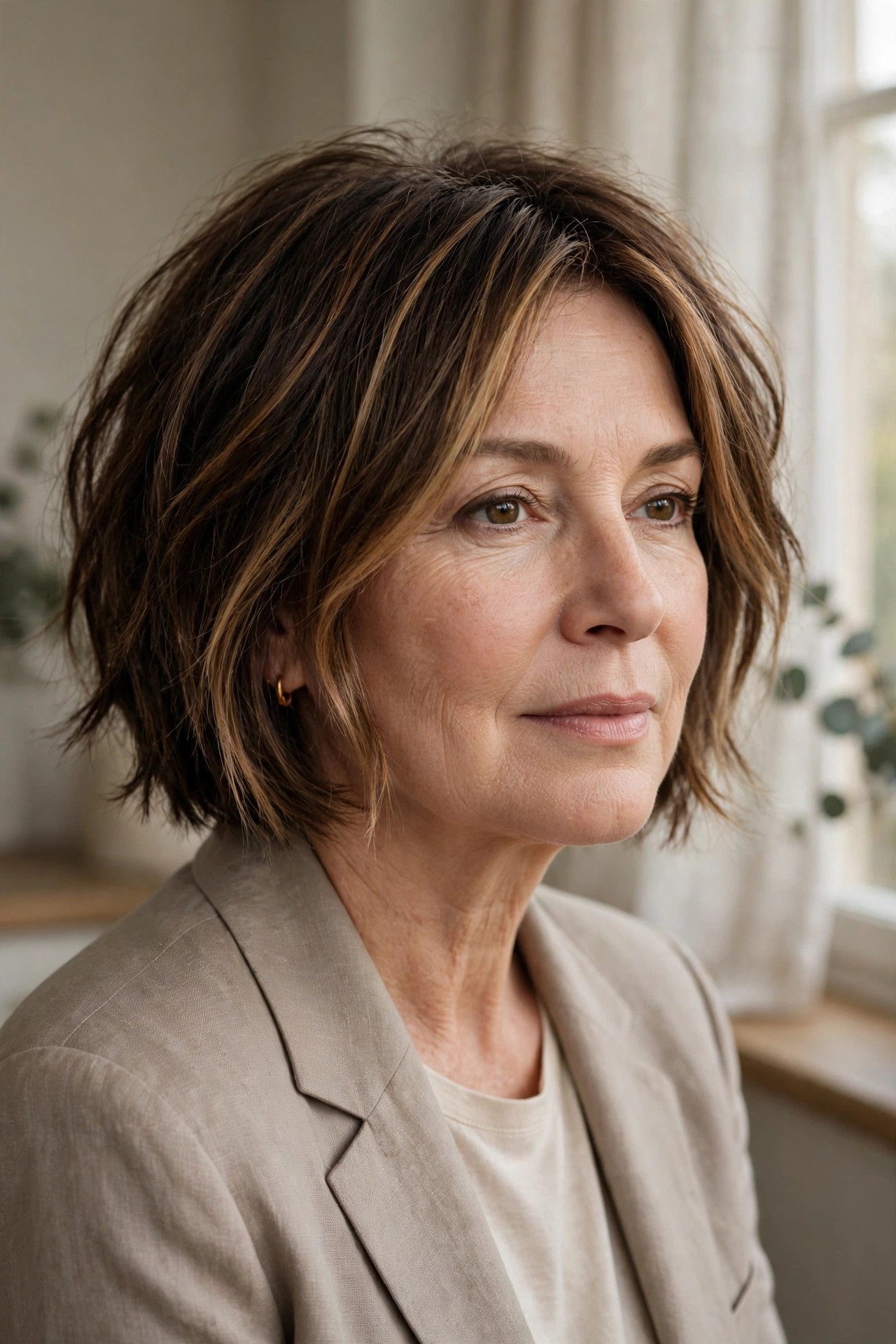
Slim, face-framing pieces cut to skim the cheeks like curtains — they create a narrower ‘frame’ inside your actual face shape. The eye sees the frame, not the full width behind it. It is contouring, but with scissors.
Try this: Ask for face-framing pieces that start at the cheekbone and angle down.
Best for: Softening full cheeks without losing length.
Styling tip: bend the framing pieces slightly inward with a flat iron.
The round-face rule in one sentence: height on top, closeness at the sides, length in front. Say it at your consultation — any good stylist will immediately know the silhouette you’re after.
8. ✨ The Off-Center Bob
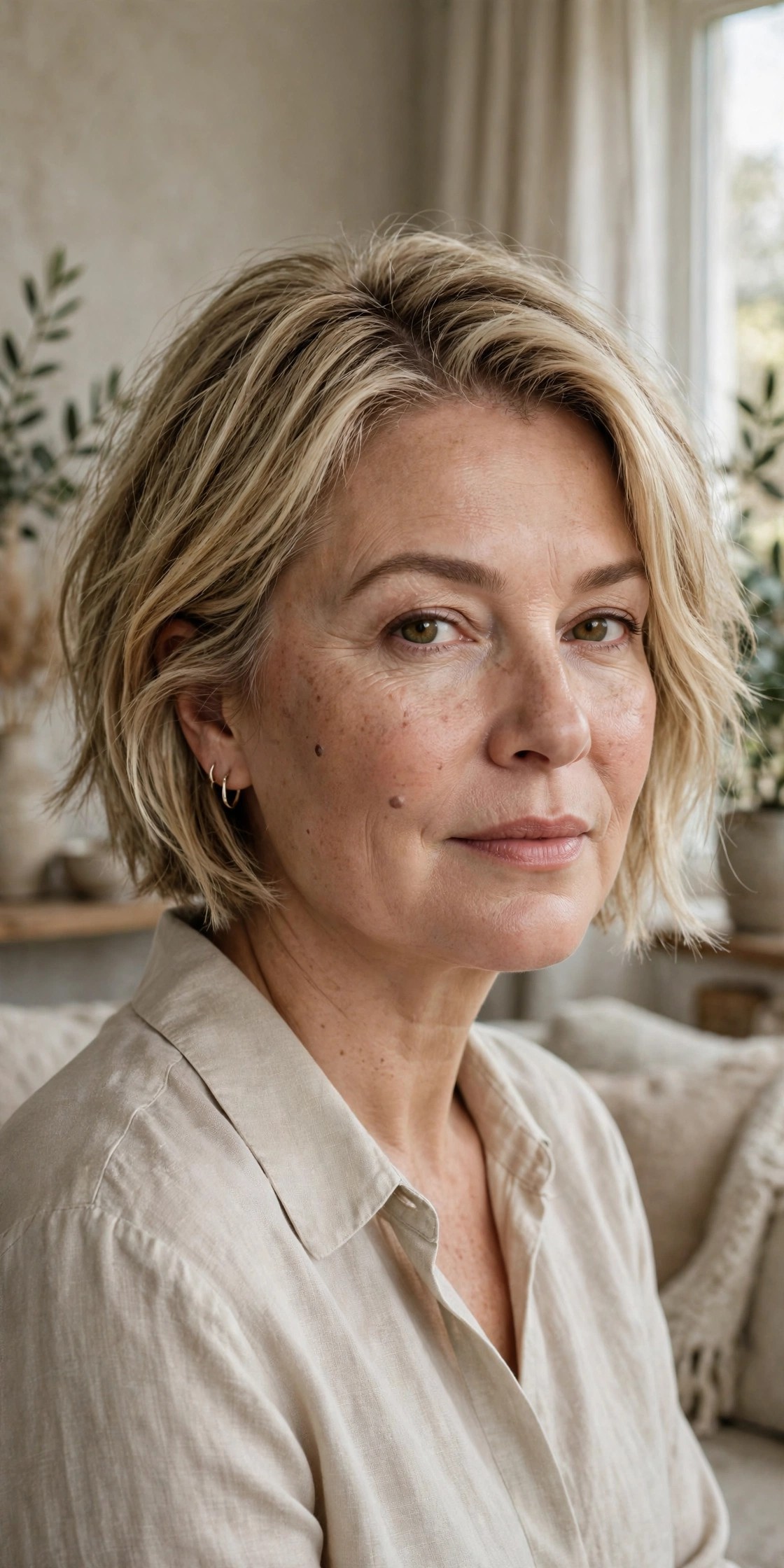
A part placed just off middle — not deep, not centered — creates gentle asymmetry that keeps the face from reading as a perfect circle. Subtle, wearable, and flattering on nearly every round face. The quiet overachiever of this list.
Try this: Find your off-center sweet spot: about an inch from middle, on your better side.
Styling tip: the off-center part looks best with soft, touchable texture.
Avoid: overthinking it — if the part drifts, the effect still works.
9. 🎭 The Curtain Bob
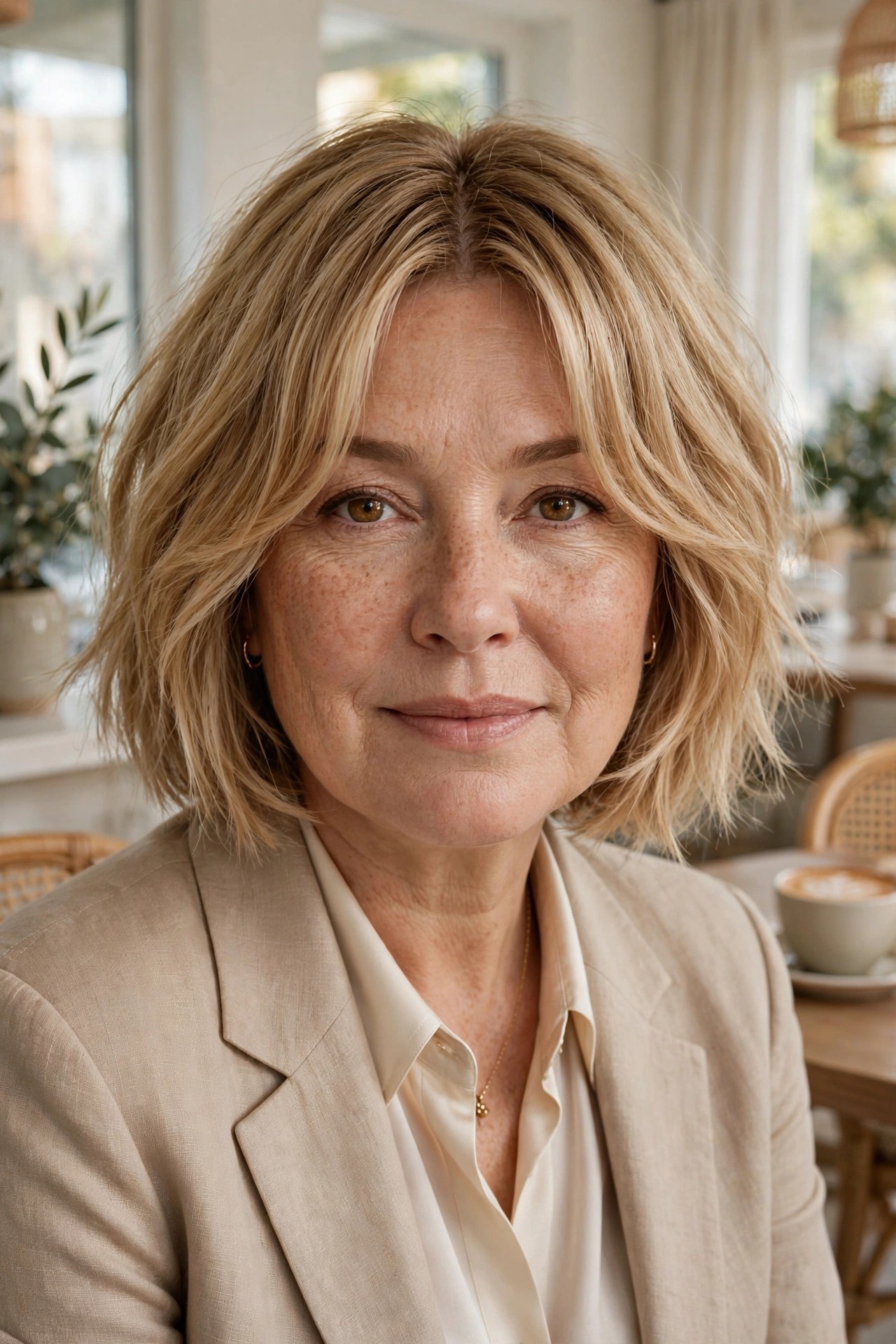
Soft curtain pieces parted in the middle open the face like drapes — drawing the eye to the center and down, never across. The curtains themselves slim the forehead while the bob keeps volume off the cheeks. Double duty in one cut.
Try this: Blow-dry curtain pieces away from the face with a round brush.
Avoid: heavy straight-across bangs with curtains — pick one framing strategy.
Best for: Opening up the face while keeping softness.
10. 💨 The Airy-Top Bob
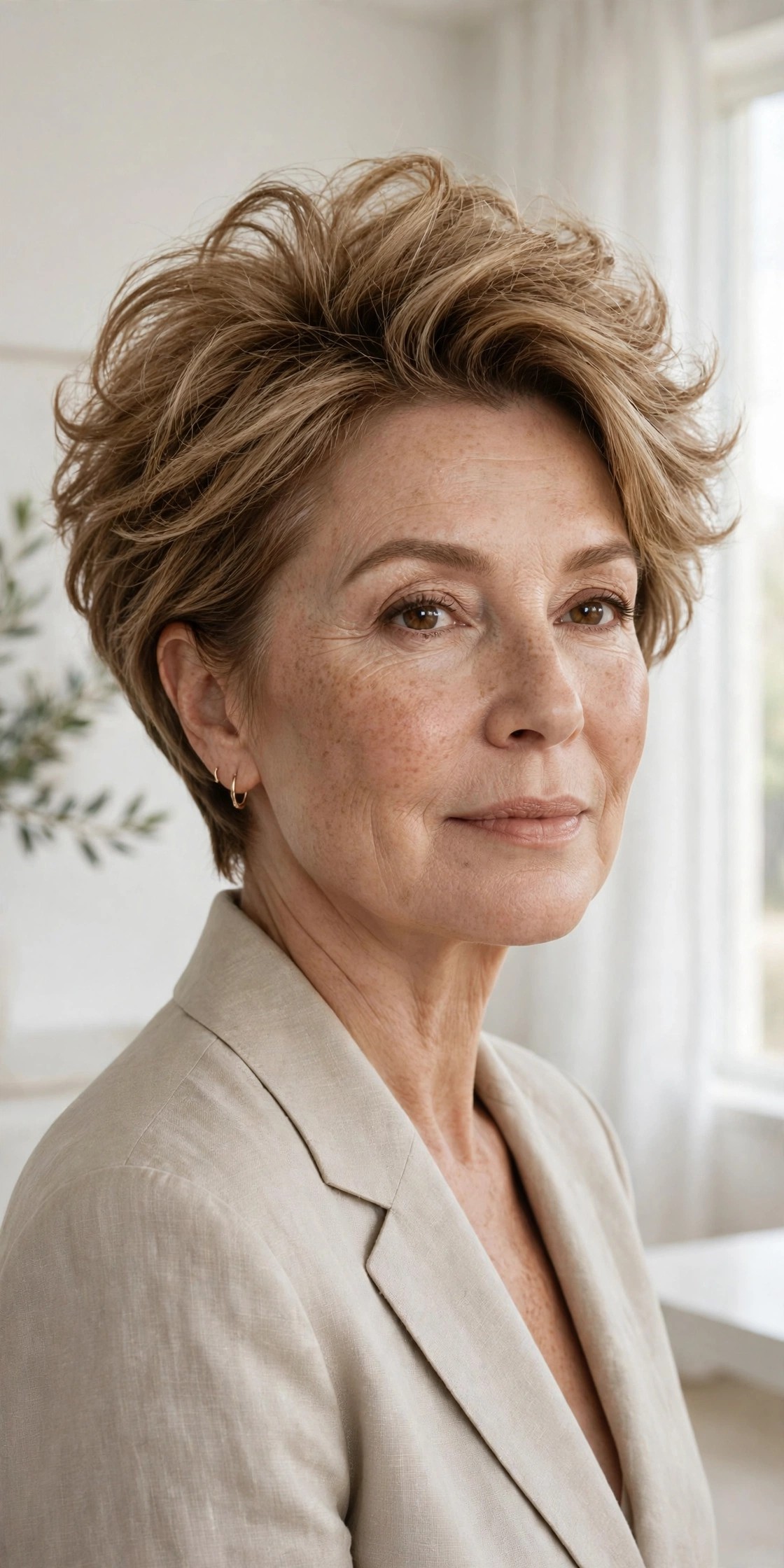
Volume concentrated at the crown, sides kept deliberately slim and close — the silhouette goes tall instead of wide. It is the anti-mushroom: all the fullness where it elongates, none where it widens.
Try this: Root-lifting spray at the crown only — never at the sides.
Best for: Fine hair that puffs sideways instead of lifting up.
Styling tip: smooth the sides with a paddle brush while lifting the crown.
11. 🦢 The Long-Neck Bob
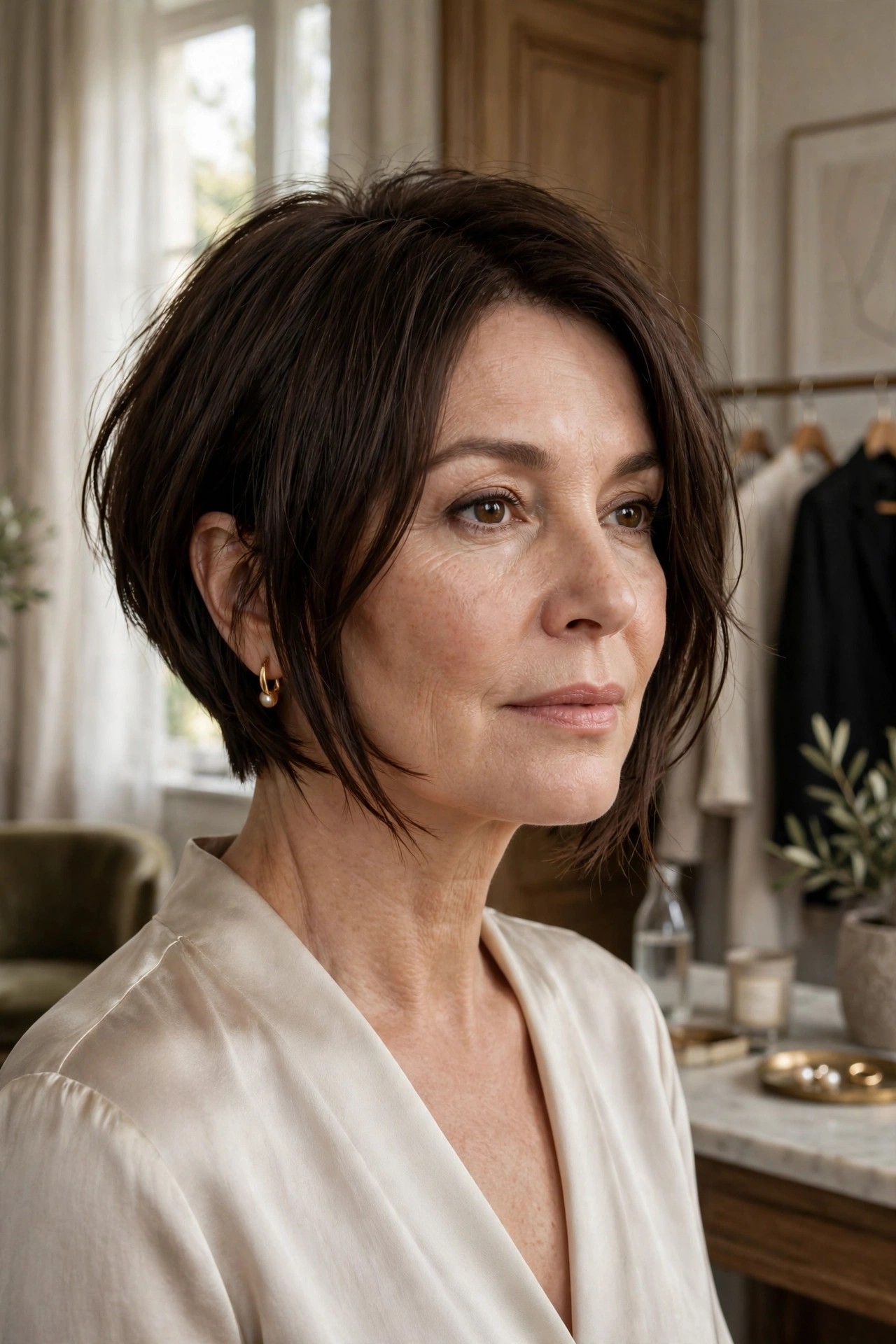
A nape cut high and clean with longer front pieces — the exposed neck creates an unbroken vertical line from jaw to shoulder. Showing the neck is showing length, and length slims everything above it.
Try this: Wear necklaces that fall below the collarbone to extend the line further.
Styling tip: keep the nape trimmed — stubble ruins the clean line.

Avoid: turtlenecks with this cut — they hide the neckline you’re showcasing.
12. 🌊 The Diagonal-Wave Bob
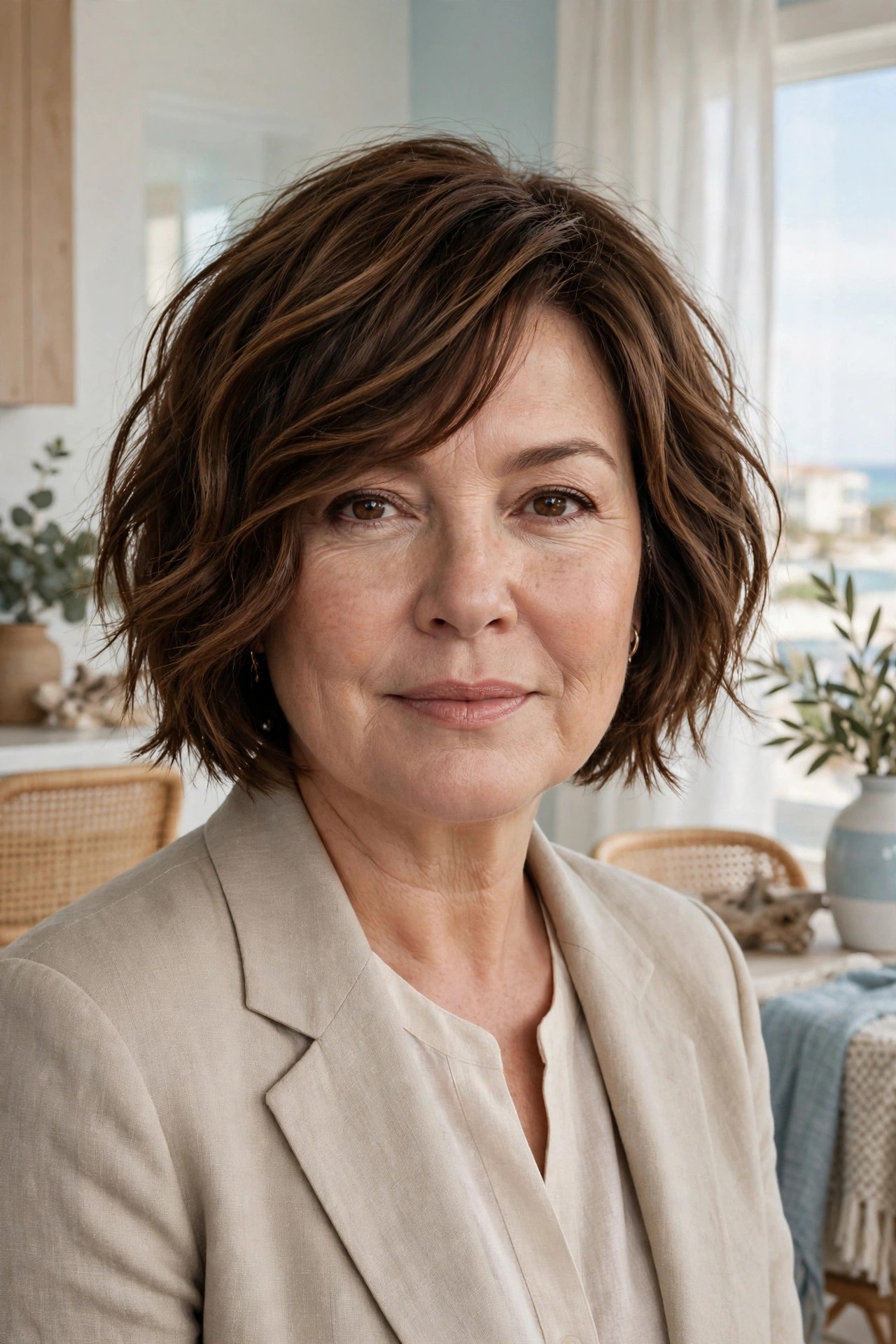
Waves styled on the diagonal — each bend slants rather than running horizontal — so the texture slims instead of widening. Horizontal waves add width; diagonal waves add movement. Same hair, different geometry.
Try this: Wrap sections around the iron diagonally, alternating directions.
Avoid: uniform horizontal waves — they build a wide, round silhouette.
Best for: Natural wavers who want their texture to slim, not widen.
13. 🔲 The Soft-Edge Bob
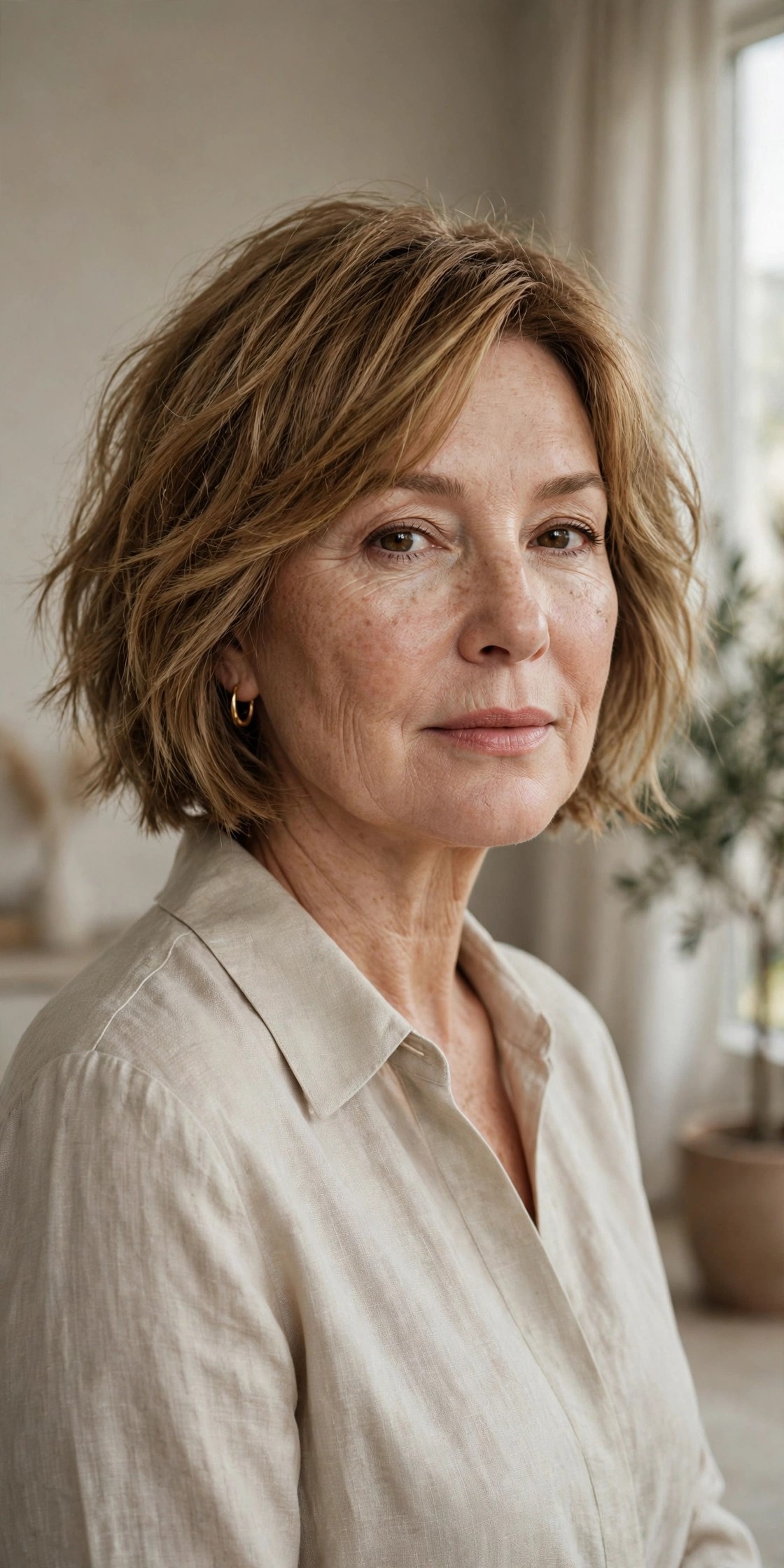
No blunt horizontal lines anywhere — every edge is point-cut into softness. Hard horizontal lines (blunt bangs, blunt hems) emphasize width; soft edges let the eye glide past it. The gentlest slimming strategy here.
Try this: Ask for ‘no hard lines — everything point-cut and soft.’
Best for: Women who find blunt cuts too severe anyway.
Styling tip: soft edges grow out beautifully — trims can stretch to 8-10 weeks.
14. 📌 The Single-Side Pin Bob
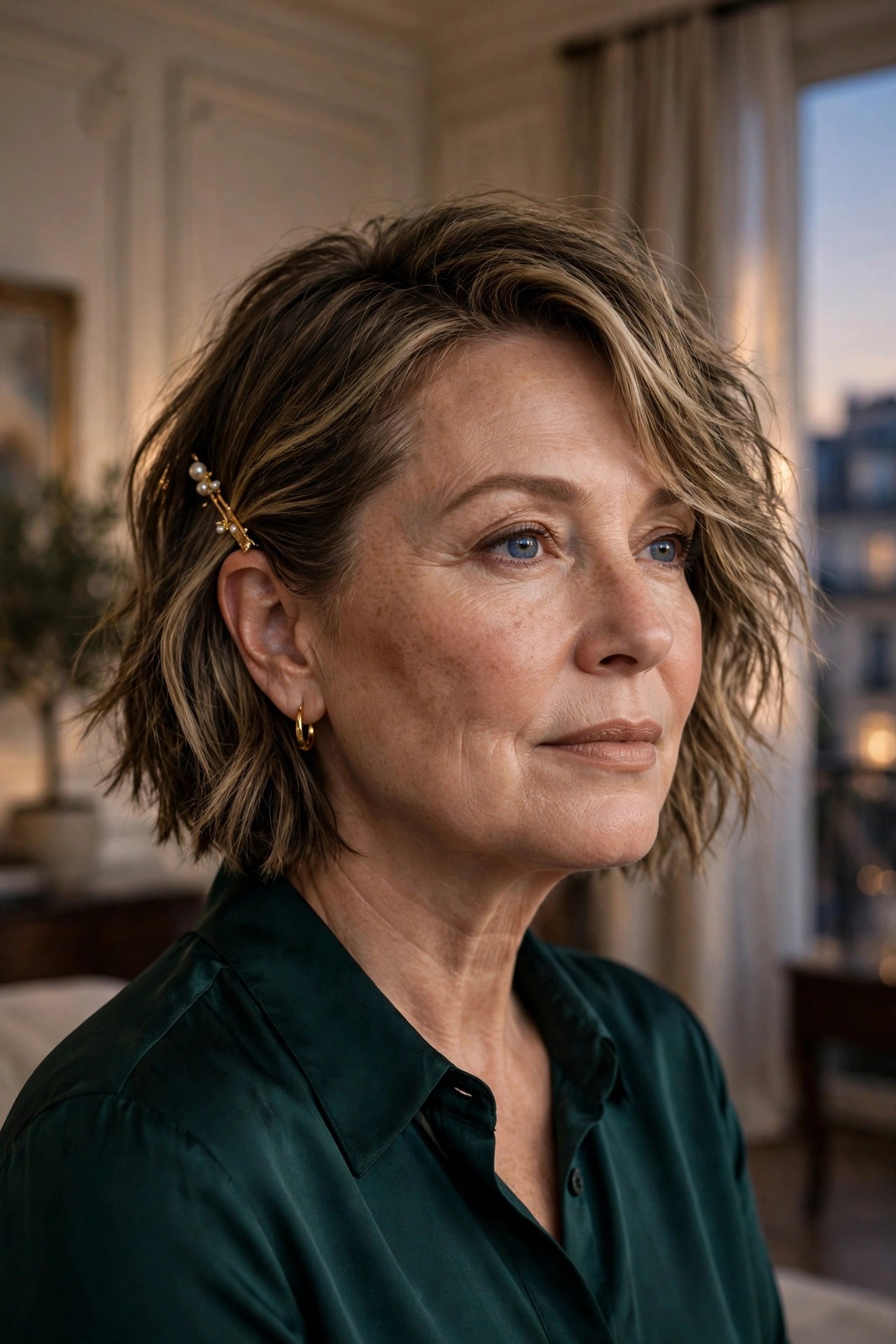
One side pinned back behind the ear, the other left loose — instant asymmetry that slims while showing off an earring. It is a styling trick built into the cut: the pieces are cut to sit perfectly pinned or loose.
Try this: A decorative bobby pin on the pinned side turns function into jewelry.
Styling tip: pin on the side of your better cheekbone — show your best angle.
Avoid: pinning both sides — symmetry returns and the slimming vanishes.
Bring a photo of yourself smiling straight at the camera. Roundness shows most in a full-face smile, and your stylist needs to see the face she’ll actually be framing — not your best three-quarter angle.
15. 💧 The Liquid Bob
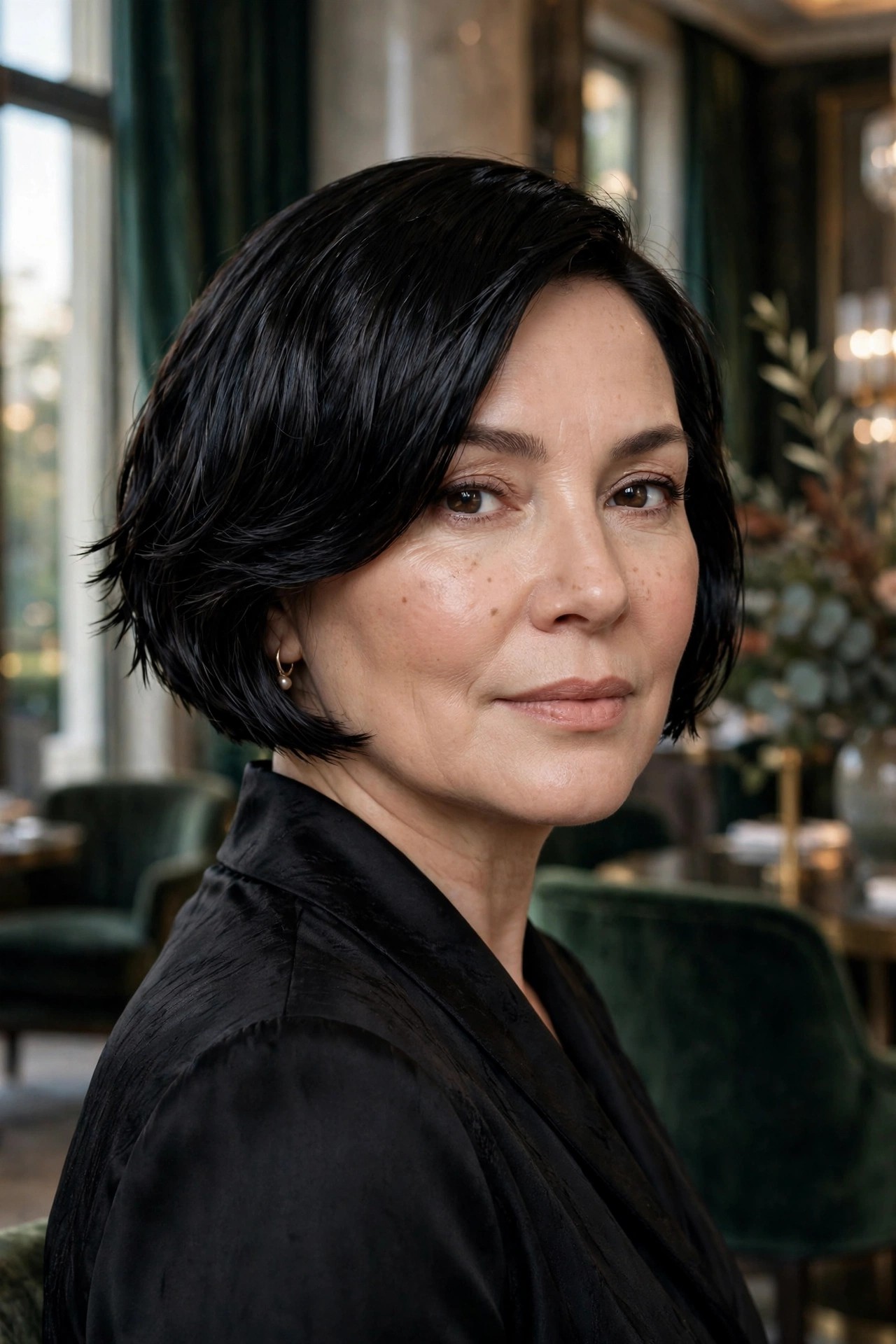
Ultra-smooth, glossy, liquid shine — because sleek vertical shine draws the eye down in one continuous line, and continuous lines slim. On fine hair, which takes shine beautifully, this is slimming you can see from across the room.
Try this: Gloss treatment plus shine serum — the liquid look needs real reflectivity.
Avoid: frizz — it breaks the liquid line and the slimming with it.
Best for: Straight fine hair and lovers of polish.
16. 🌀 The Controlled-Curl Bob
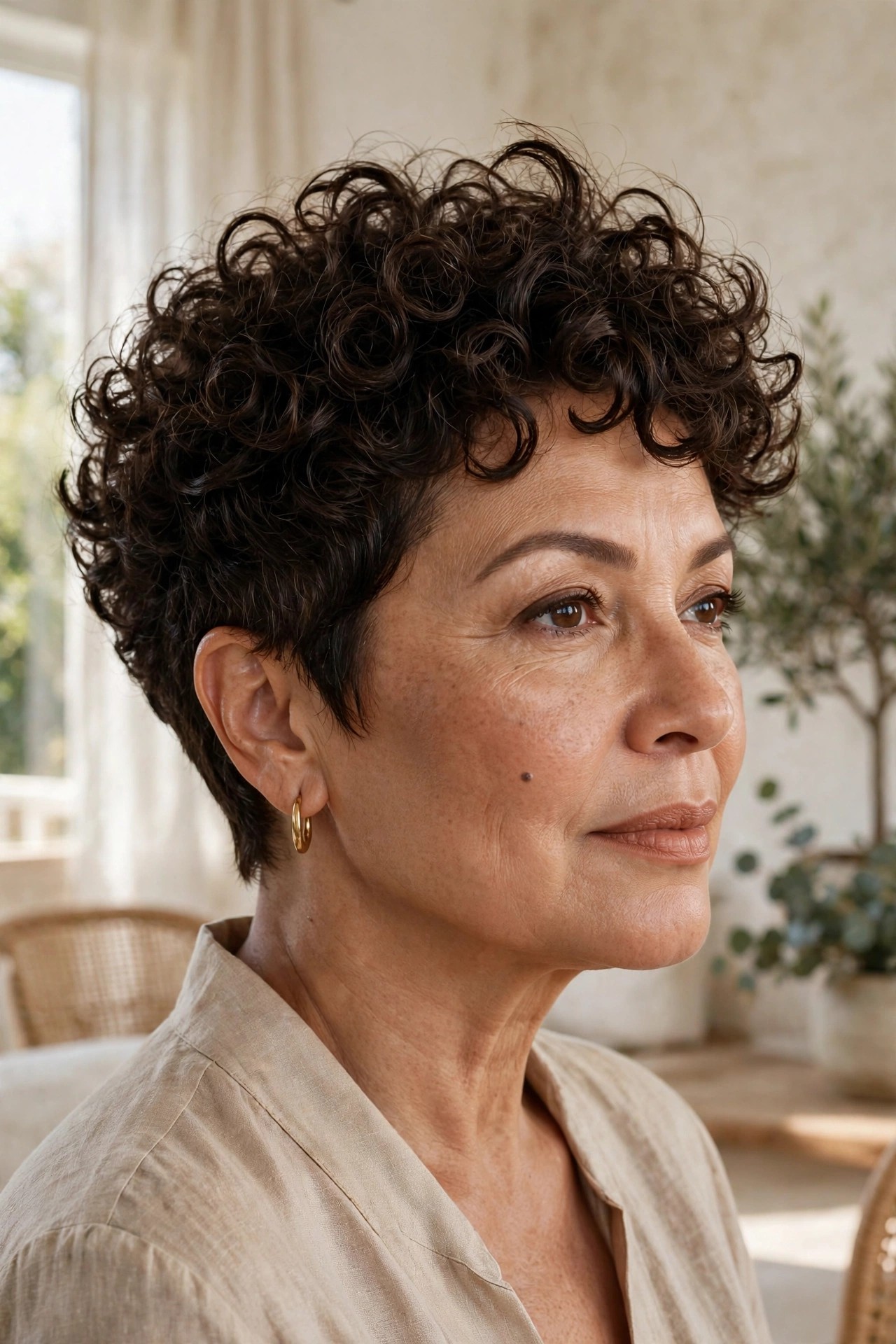
Curls with a strict silhouette brief: height on top, closeness at the sides. The curls are sculpted so volume goes up, never out — giving fine curly hair fullness that lengthens the round face instead of rounding it further.
Try this: Diffuse upside down for crown height, then smooth the sides with cream.
Best for: Naturally curly fine hair and round faces.
Styling tip: pineappling overnight preserves the tall silhouette.
17. 🌗 The Shadow-Cheek Bob

Deeper color pieces placed right at the cheeks — shadow recedes, so the cheeks visually step back. It is the same principle as contour makeup, executed in hair color. Subtle, sophisticated, and surprisingly powerful.
Try this: Ask your colorist for ‘cheek contouring’ — lowlights at cheek level.
Styling tip: keep the front pieces smooth so the shadow reads clearly.
Avoid: light highlights at the cheeks — light advances and widens.
18. 🌟 The Money-Piece Bob
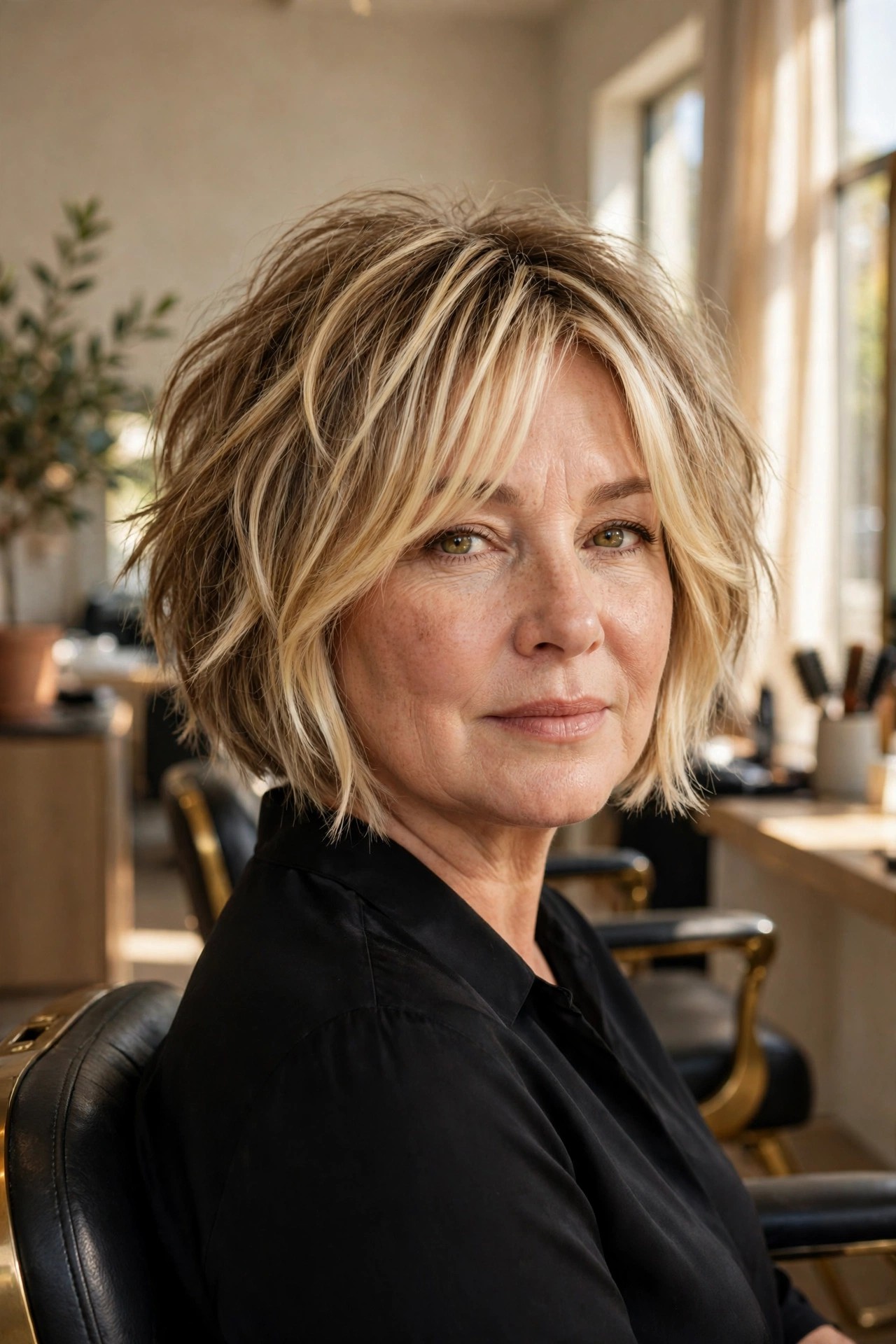
Bright face-framing ribbons that draw the eye down along the face — the brightness leads, and the eye follows the light downward, past the cheeks. Strategic lightness that sculpts through attraction rather than shadow.
Try this: Two face-framing ribbons, two shades lighter — bright but believable.
Avoid: chunky streaks — the ribbons should ribbon, not stripe.
Best for: Adding glow while guiding the eye vertically.
19. 🎪 The Quiff Bob
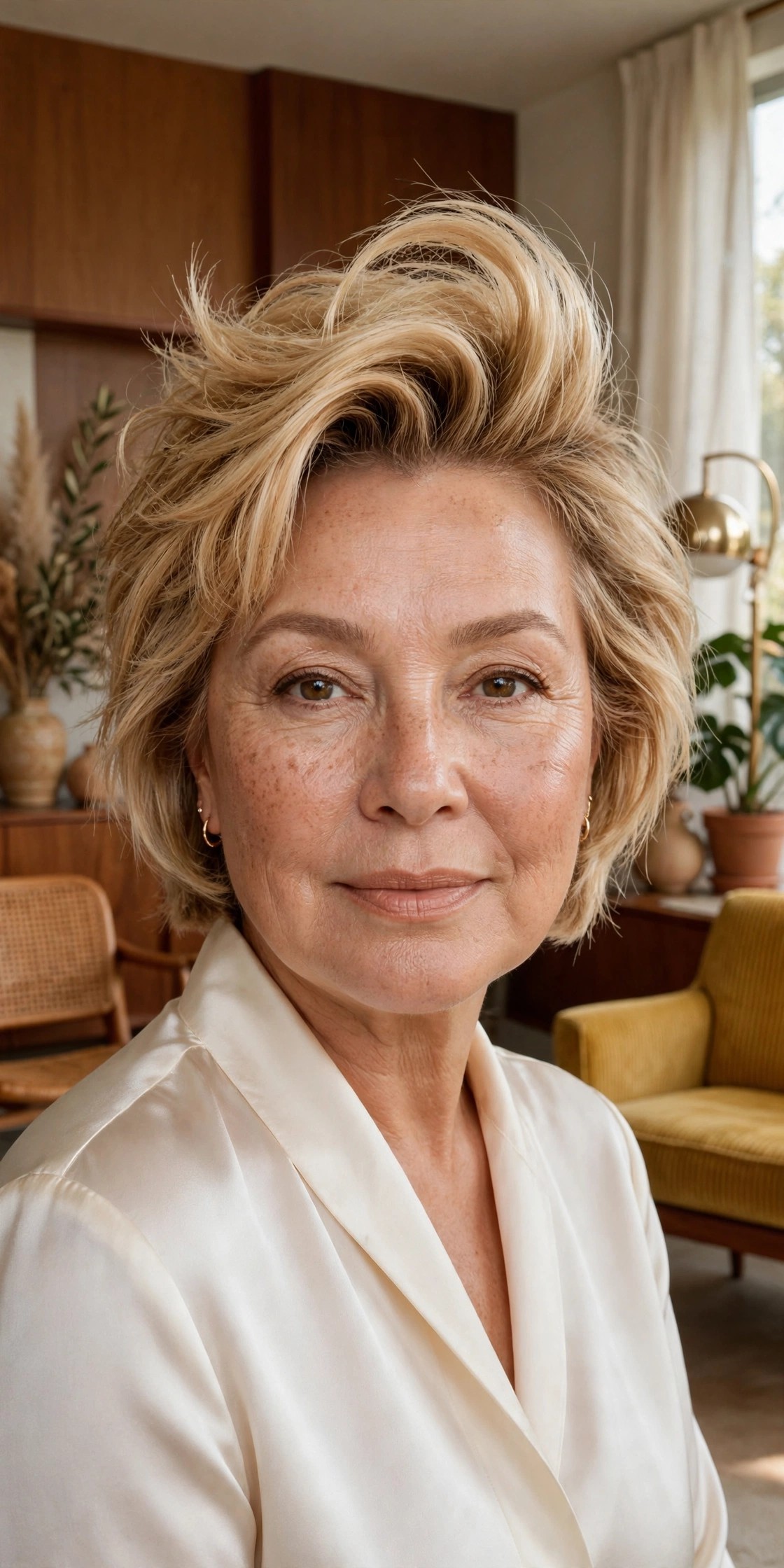
A modern quiff — height swept up and back from the forehead — built into a bob. The upward sweep adds inches of verticality at the very top of the silhouette, stretching the whole face. Retro inspiration, current execution.
Try this: Blow-dry the front up and back with a round brush, then set with light spray.
Best for: Maximum height and a fashion-forward edge.
Styling tip: the quiff needs dry shampoo at the roots for grip.
20. 🪶 The Feather-Edge Bob
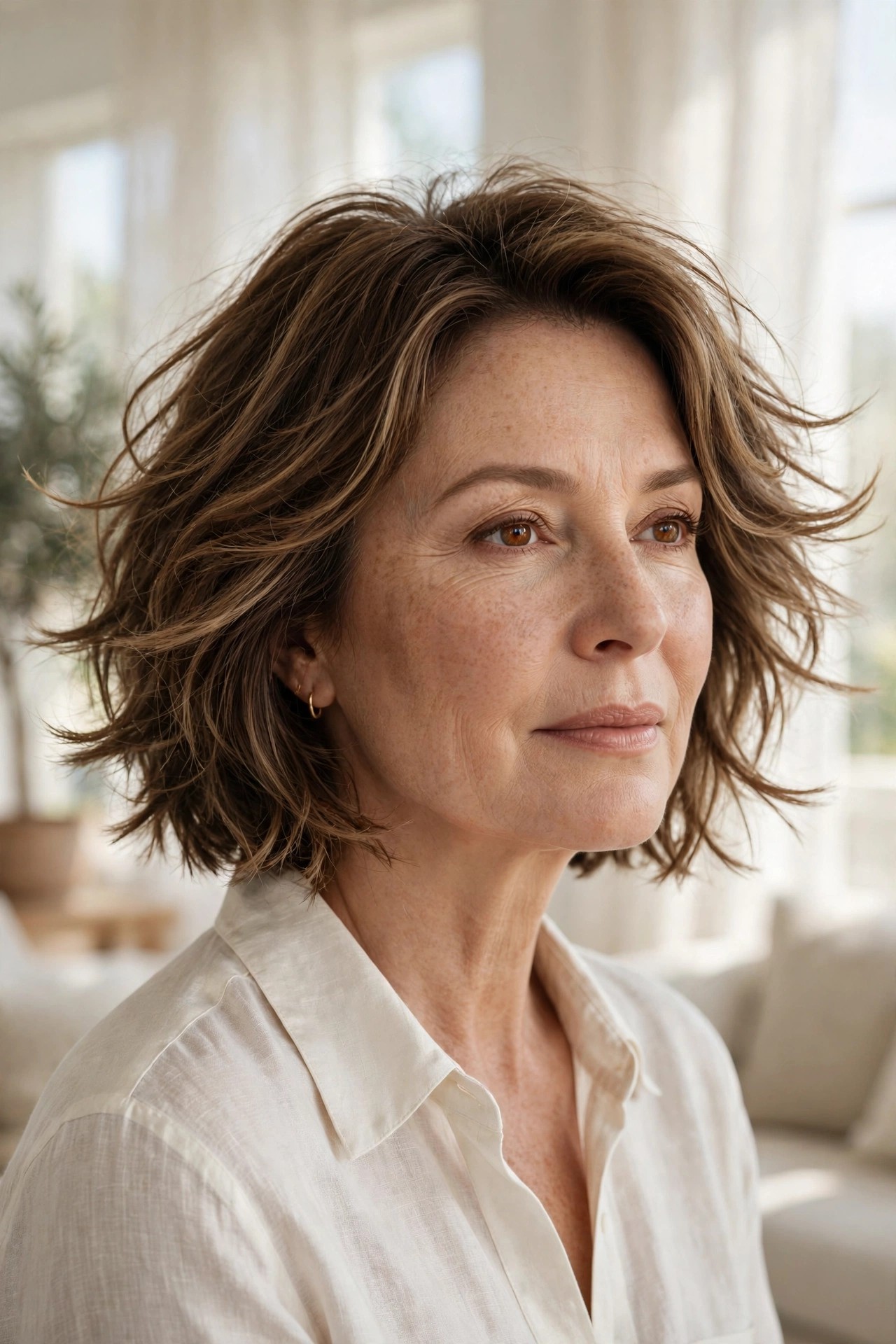
Feathered, flicked-out ends that refuse to form a solid horizontal line — the perimeter dissolves into lightness instead of drawing a width line. Fine hair feathers beautifully, and the result is a bob with no visual ‘edge’ to measure width by.
Try this: Flick ends outward with a flat iron — the anti-bob-bob finish.
Styling tip: feathered ends need trims every 6 weeks or they turn ragged.
Avoid: tucking feathered ends under — it rebuilds the solid line you dissolved.
❓ Round-Face Bob FAQs
What length bob is best for a round face with thin hair?
Just below the chin to the collarbone usually wins — long enough to create vertical lines past the cheeks, short enough to keep fine hair from going limp. The exact sweet spot depends on where your cheeks are widest; your stylist should measure, not guess.
Should I avoid volume if I have a round face?
Avoid side volume — but crown volume is your best friend. Height on top elongates; width at the cheeks widens. The Airy-Top Bob and Crown-Height Bob on this list are built on exactly this distinction.
Are bangs good for round faces?
Soft, broken, or curtain-style — yes. Heavy blunt bangs cut the face horizontally and emphasize width. Wispy, side-swept, or curtain pieces open the face and draw the eye diagonally instead.
Will a short bob make my face look fatter?
Only the wrong short bob — one that ends at cheek width with volume at the sides. The right short bob (height on top, longer front, slim sides) slims more than long hair does, because long hair drags everything down and widens at the bottom.
Can I wear a center part with a round face?
A center part with curtain pieces can work because the curtains break the symmetry — but a stark center part on sleek hair usually widens. The off-center part is the safer universal choice.
📖 Keep Reading
- 20 Stunning Brown To Blonde Balayage Ideas for a Fresh New Look — dimension and cheek-shadowing color that slims any bob.
- 7 Summer Hairstyles for a Flattering, Sweat-Proof Style — keep your slimming bob looking fresh in the heat.
- Hairstyles for Long Hair: 30 Ideas That Never Go Out of Style — longer alternatives with the same slimming geometry.
✅ Your Round-Face Bob Checklist
- ☐ Memorize the rule: height on top, closeness at the sides, length in front.
- ☐ Point out your widest cheek point — ends should land below it, never at it.
- ☐ Choose your slimming line: vertical pieces, deep side part, or diagonal hem.
- ☐ Keep side volume in check — round-brush sides inward, never outward.
- ☐ Consider cheek-shadowing color or a money piece for extra sculpting.
- ☐ Bring a straight-on smiling photo so your stylist sees the real canvas.
A round face isn’t a problem to solve — it’s a shape to celebrate with the right lines. Pick the bob whose geometry speaks to you, take the checklist to your stylist, and enjoy a cut that finally works with your face instead of against it.
Discover more from Fashinate Style
Subscribe to get the latest posts sent to your email.