
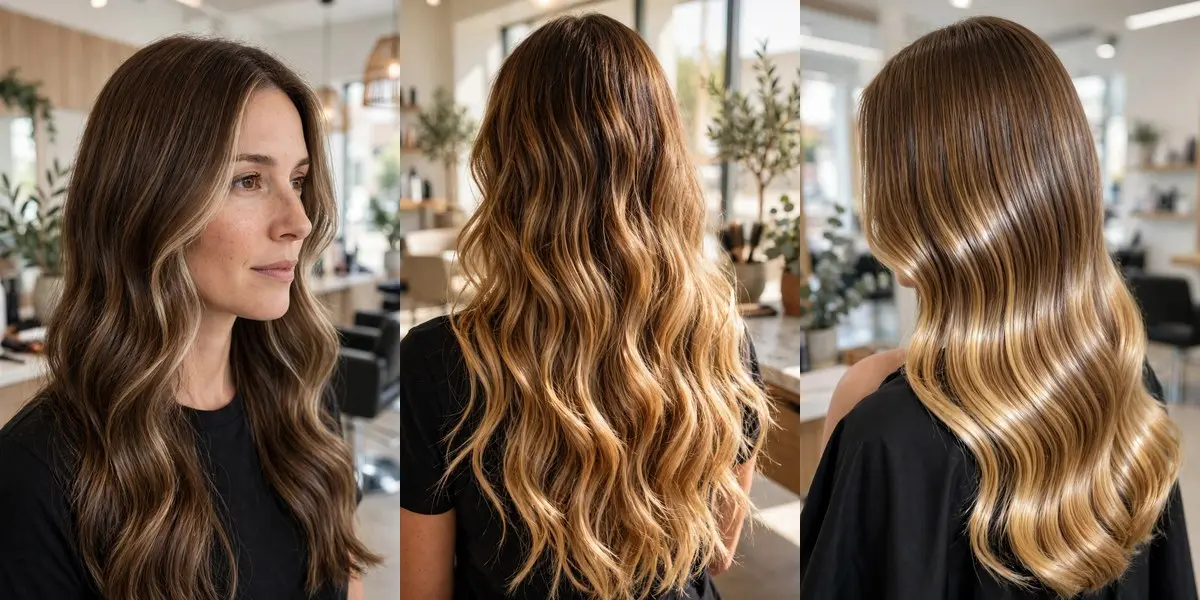
20 Brown to Blonde Balayage Ideas for a Flattering, Low-Maintenance Look
Thinking about going lighter, but not ready to live at the salon? These brown to blonde balayage ideas are the middle path: hand-painted brightness that melts out of a brown base, grows in softly, and never leaves a harsh root line behind. For a second take on the technique, see our brown-to-blonde balayage guide for the same melt on different lengths.
The beauty of this color family is choice. You can keep things whisper-soft with face-framing pieces and babylights, go warm and golden, turn cool and ashy, or commit to bold contrast with platinum ends — all on the same forgiving, low-maintenance grow-out.
Below you will find 20 ways to wear it, from short bobs and defined curls to hidden peekaboo panels and reverse balayage, each with a practical care tip folded in. Note the looks you love most, then bring the photos along to your colorist for an honest plan.
One word before we start: balayage is painted to suit you, so every look here can be dialed up or down. Softer, brighter, warmer, cooler — the placement stays the same, but the intensity is entirely yours to choose.
In This Guide
- 1. Subtle Face-Framing Balayage
- 2. Sun-Kissed Balayage for Warm Skin Tones
- 3. Cool-Toned Ash Blonde Balayage
- 4. Money Piece Balayage
- 5. Root Smudge with Blonde Ends
- 6. Soft Caramel Balayage
- 7. Babylights Blended into Balayage
- 8. Balayage Ombre for Bold Contrast
- 9. Chunky Balayage Highlights
- 10. Bronde Balayage Blend
- 11. Balayage with Dark Roots for Low Maintenance
- 12. Balayage Highlights on Curly Hair
- 13. Balayage for Short Hair
- 14. Platinum Blonde Balayage Ends
- 15. Balayage with Highlighted Layers
- 16. Peekaboo Balayage Highlights
- 17. Balayage with a Glossy Finish
- 18. Balayage Paired with a Blunt Cut
- 19. Balayage with Pastel Blonde Accents
- 20. Reverse Balayage for Dimension
- Styling Tips
- Common Mistakes to Avoid
- Best At-Home Hair Care Tips to Extend Your Balayage Color
- Frequently Asked Questions
1. Subtle Face-Framing Balayage
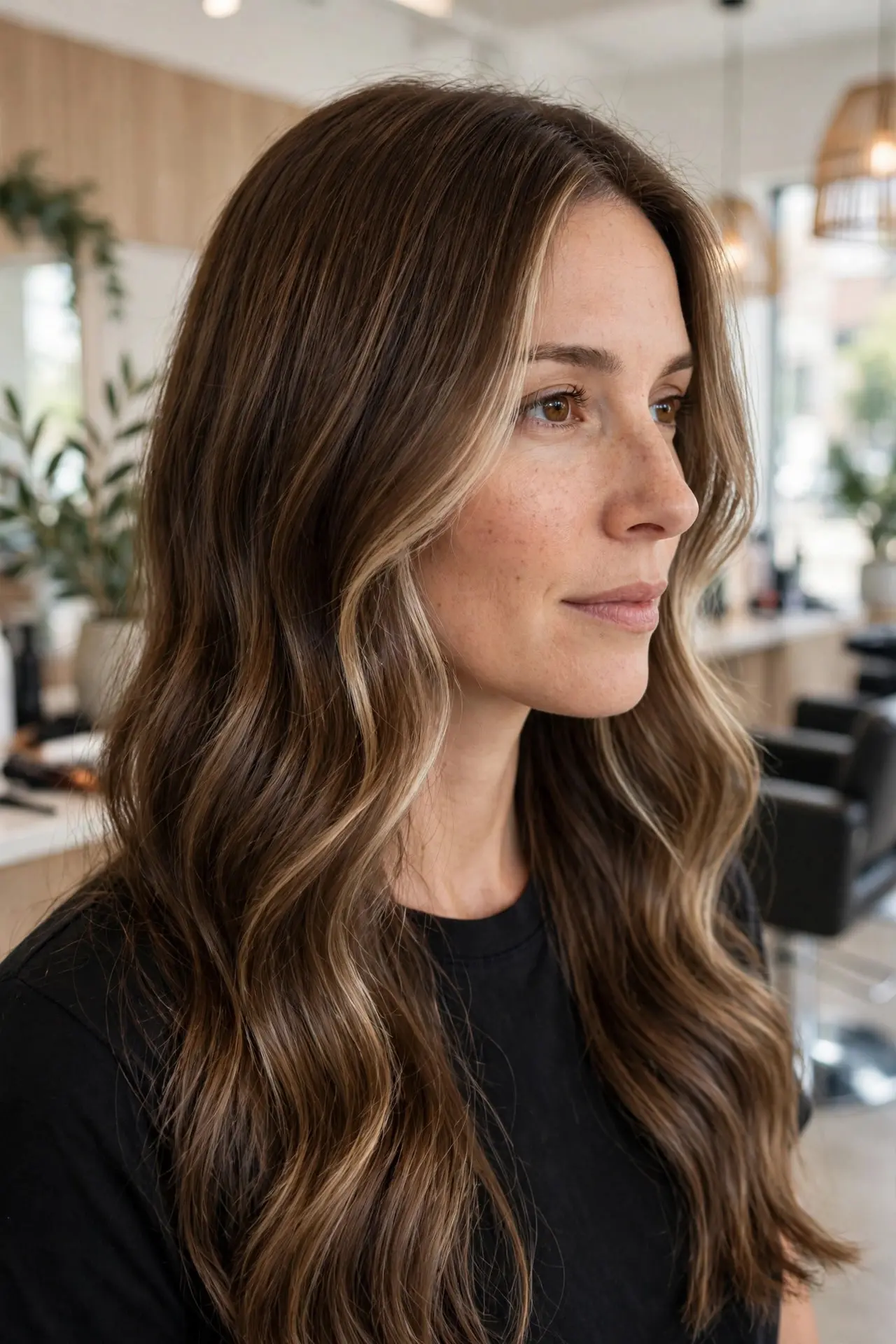
If you want brightness without changing your whole look, start at the front. A few soft blonde pieces painted around your face lift your complexion and draw the eye to your cheekbones, while the rest of your brown base stays exactly as it is.
Because so little hair is lightened, this is the gentlest first step into balayage. The placement mimics where the sun would naturally lighten you over a summer, so it grows out almost invisibly and flatters nearly every face shape and brown base.
Tip: Keep the front pieces fresh with a purple shampoo once a week to stop them turning brassy, ask for a soft, seamless blend rather than chunky sections, and trim regularly so the face-framing pieces keep their shape.
2. Sun-Kissed Balayage for Warm Skin Tones
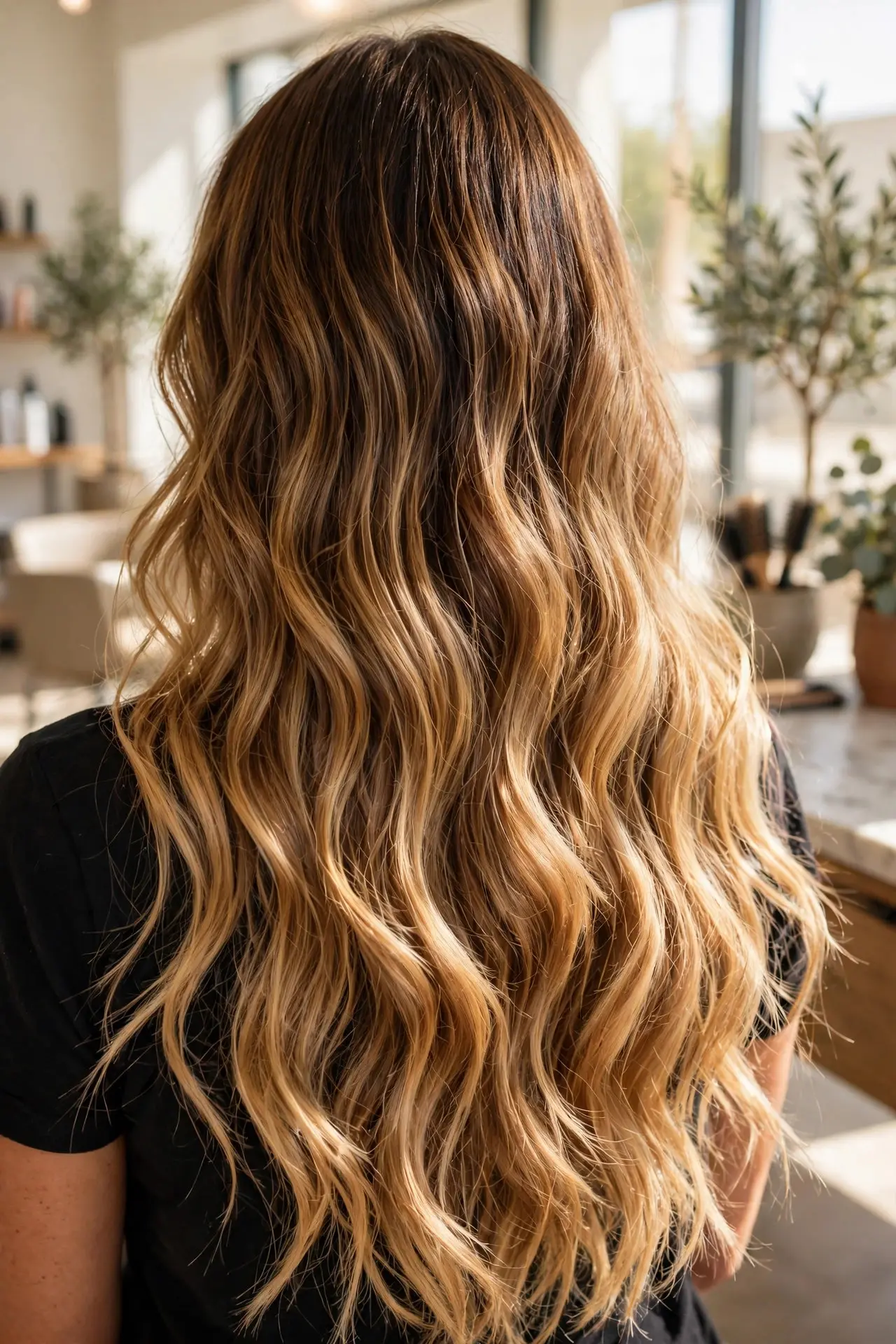
Golden and honey tones swept through a brown base copy what a summer spent outdoors does to hair — only better, because your colorist controls exactly where the light lands. All that warmth glows against peachy, golden and olive skin.
The lightener concentrates through the mid-lengths and ends while the roots stay deeper, so the gradient looks lived-in from day one and keeps looking intentional months later. This is a style that was made for loose, easy waves.
Tip: Maintain the warmth with a golden or honey-toned toning shampoo, add loose waves to bring out the dimension, and skip ashy toners — cool products fight warm undertones and can leave this color looking flat.
3. Cool-Toned Ash Blonde Balayage
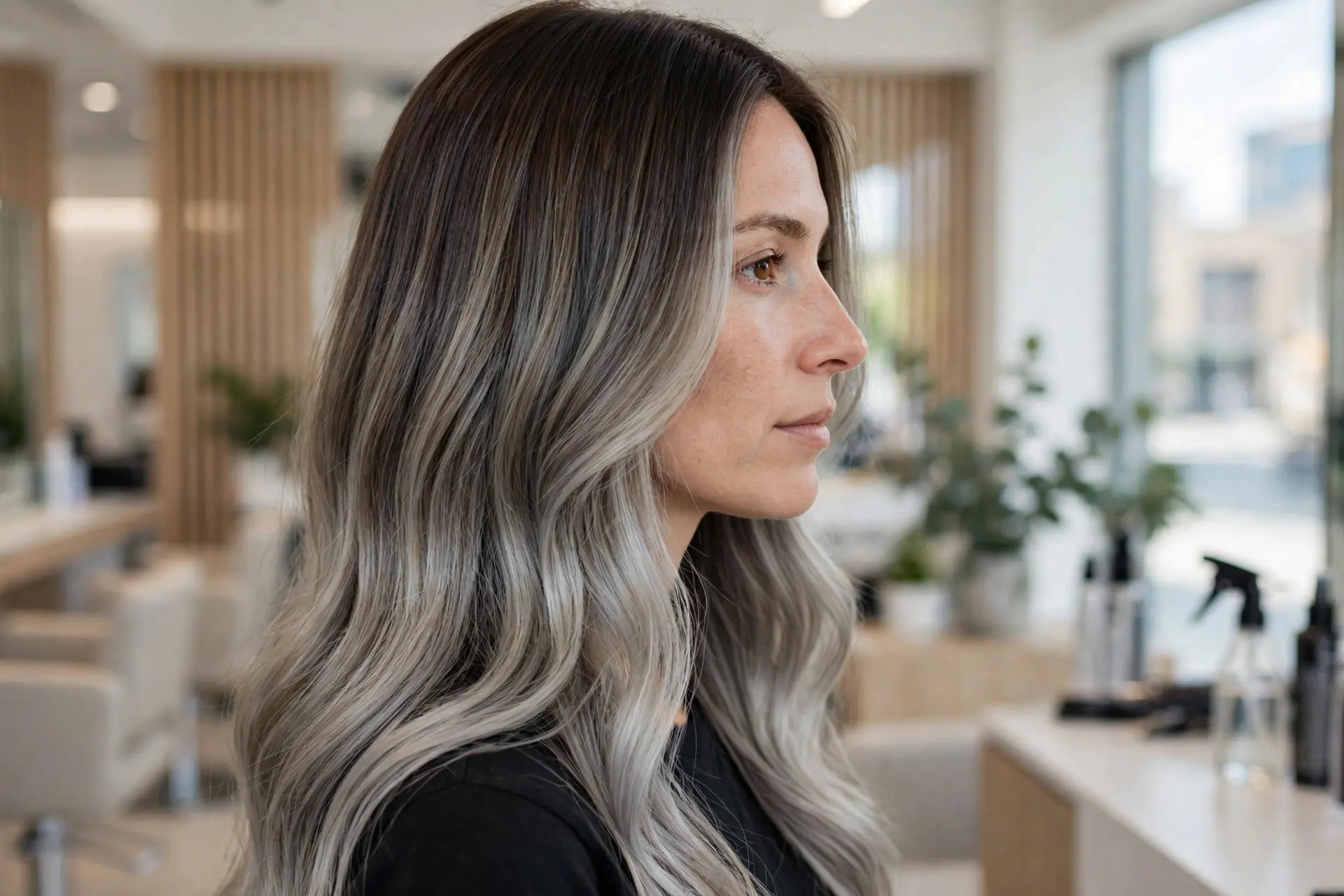
Prefer your blonde smoky rather than sunny? Ash balayage melts a deep brown root into cool, silvery lengths with none of the orange warmth that sneaks into so many lightening jobs. The result reads modern, polished and expensive.
Your colorist will lift the hair first, then apply a toner to neutralize warmth and lock in that grey-leaning finish. It flatters cool and neutral skin beautifully and still grows out softly, though the toner needs refreshing to stay truly icy.
Tip: Use a blue or purple toning shampoo to combat brassiness, wash in cooler water since heat speeds up toner fade, and schedule a toner refresh every six to eight weeks for the coolest results.
4. Money Piece Balayage
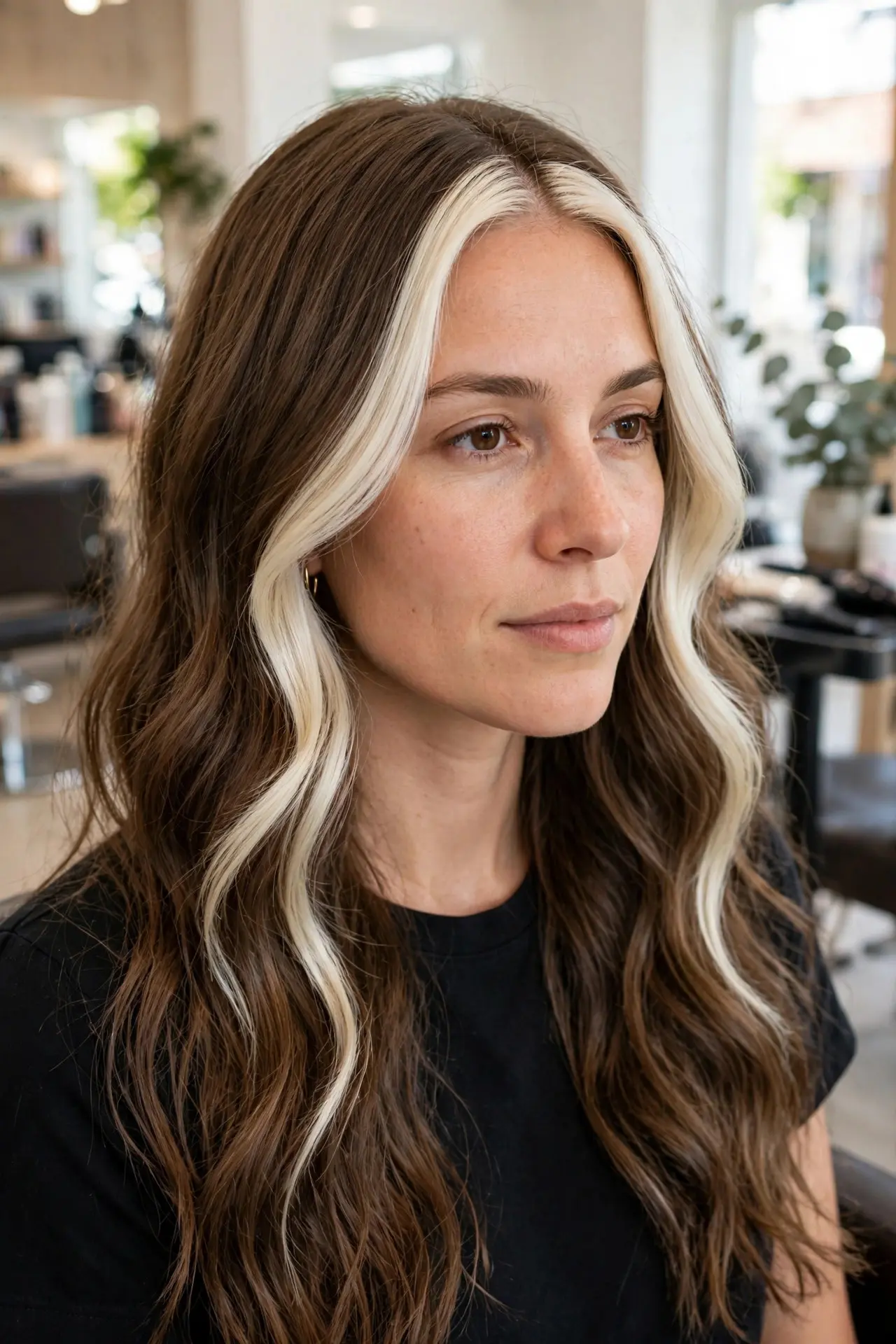
The money piece puts all the drama in two places: the front sections framing your face go boldly blonde — sometimes all the way to platinum — while everything behind them stays your natural brown. Maximum impact, minimum lightening.
It is a brilliant shortcut if you want a noticeable change in a single appointment without processing your whole head. A center or slight side part shows the contrast off best, and that bright frame instantly lifts your whole look in photos.
Tip: Ask for the front pieces slightly cooler or brighter than you think for real contrast, style with a middle or soft side part so they take center stage, and deep condition regularly to keep the rest of your hair healthy.
5. Root Smudge with Blonde Ends
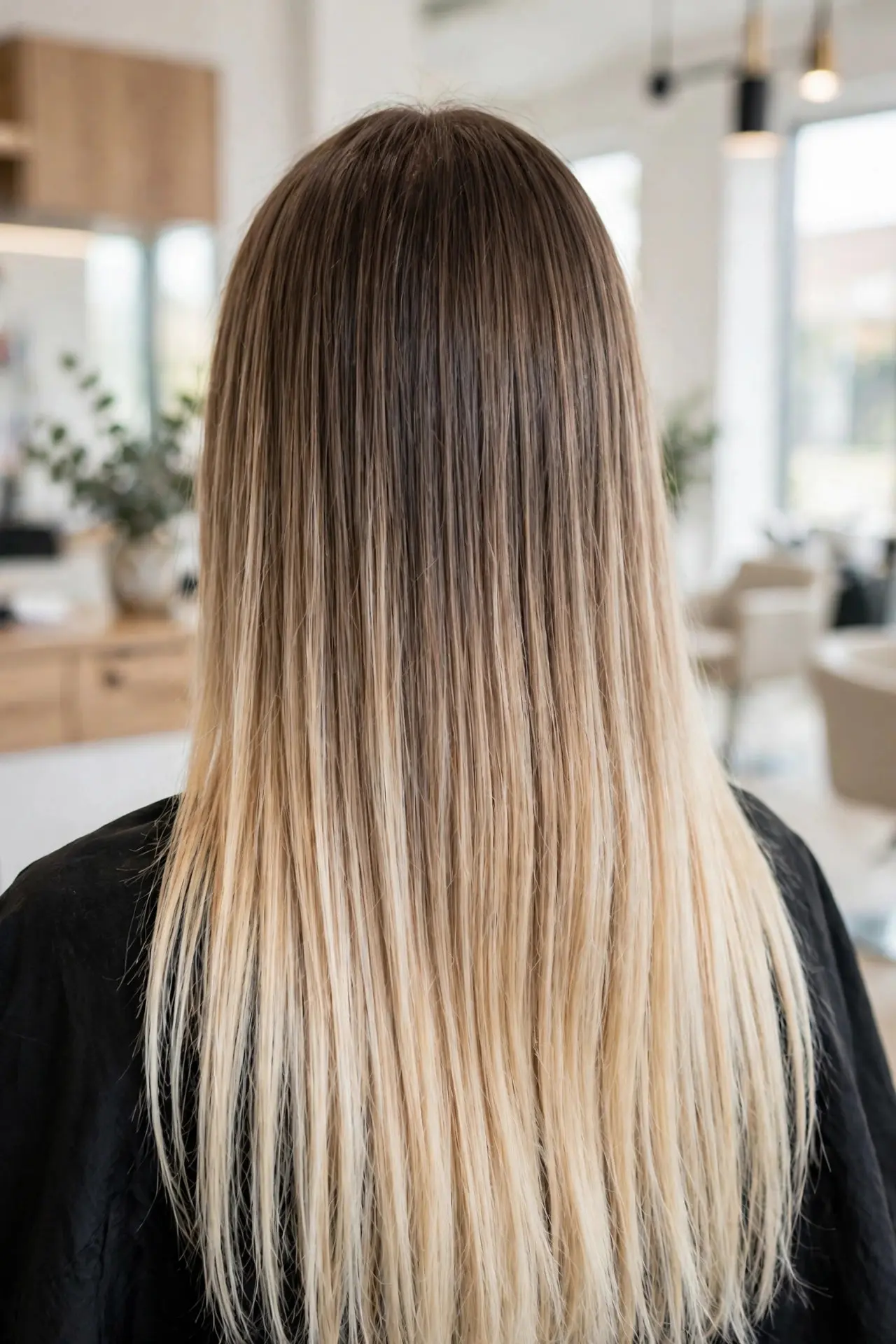
A root smudge blurs a soft brown shadow over your roots so the color melts — rather than jumps — into bright blonde ends. You get to feel properly blonde, while the regrowth line stays diffused and forgiving.
The smudge is painted at the base in a brown or dark blonde shade close to your natural color, then blended down into the lightened lengths. It is a favorite for anyone transitioning away from a full head of blonde who wants an easier schedule.
Tip: Refresh the smudge every ten to twelve weeks, use bond-building treatments to protect the lightened ends, and ask your colorist about softening the smudge lighter over time if you want a fuller blonde transition.
6. Soft Caramel Balayage
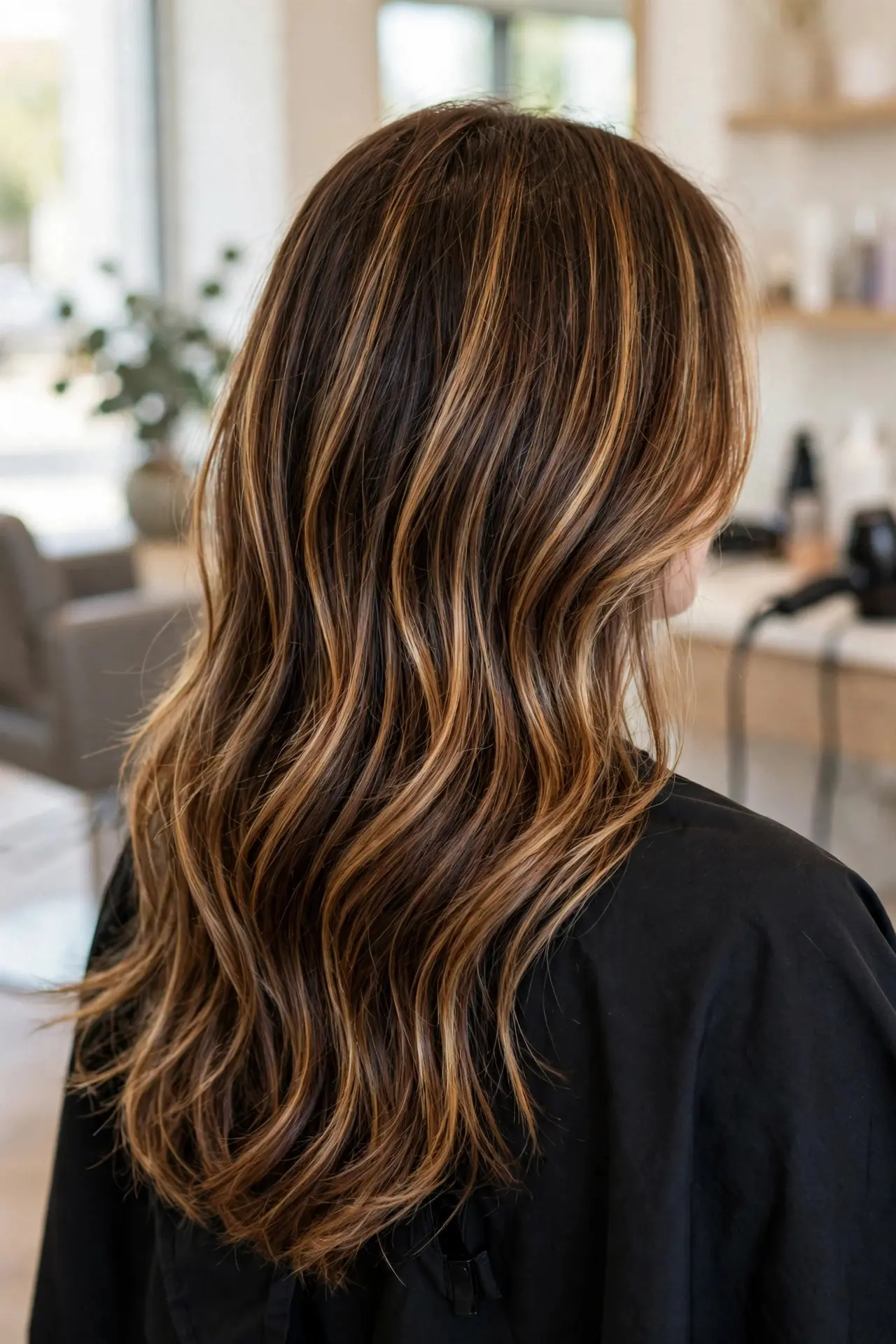
Caramel is the happy middle ground between deep brown and blonde: warm, glossy ribbons that make brown hair look lit from within. It adds richness rather than stark contrast, so it flatters a very wide range of skin tones.
Your colorist layers caramel and light brown tones alongside the blonde, so light bounces differently across every wave. Caramel also forgives a longer gap between appointments, since warm tones fade gracefully and need less toning than cool shades.
Tip: Keep the warmth rich with a caramel or golden color-depositing conditioner between salon visits, deep condition weekly, and go easy on clarifying shampoos — they strip warm pigments faster than anything else.
7. Babylights Blended into Balayage
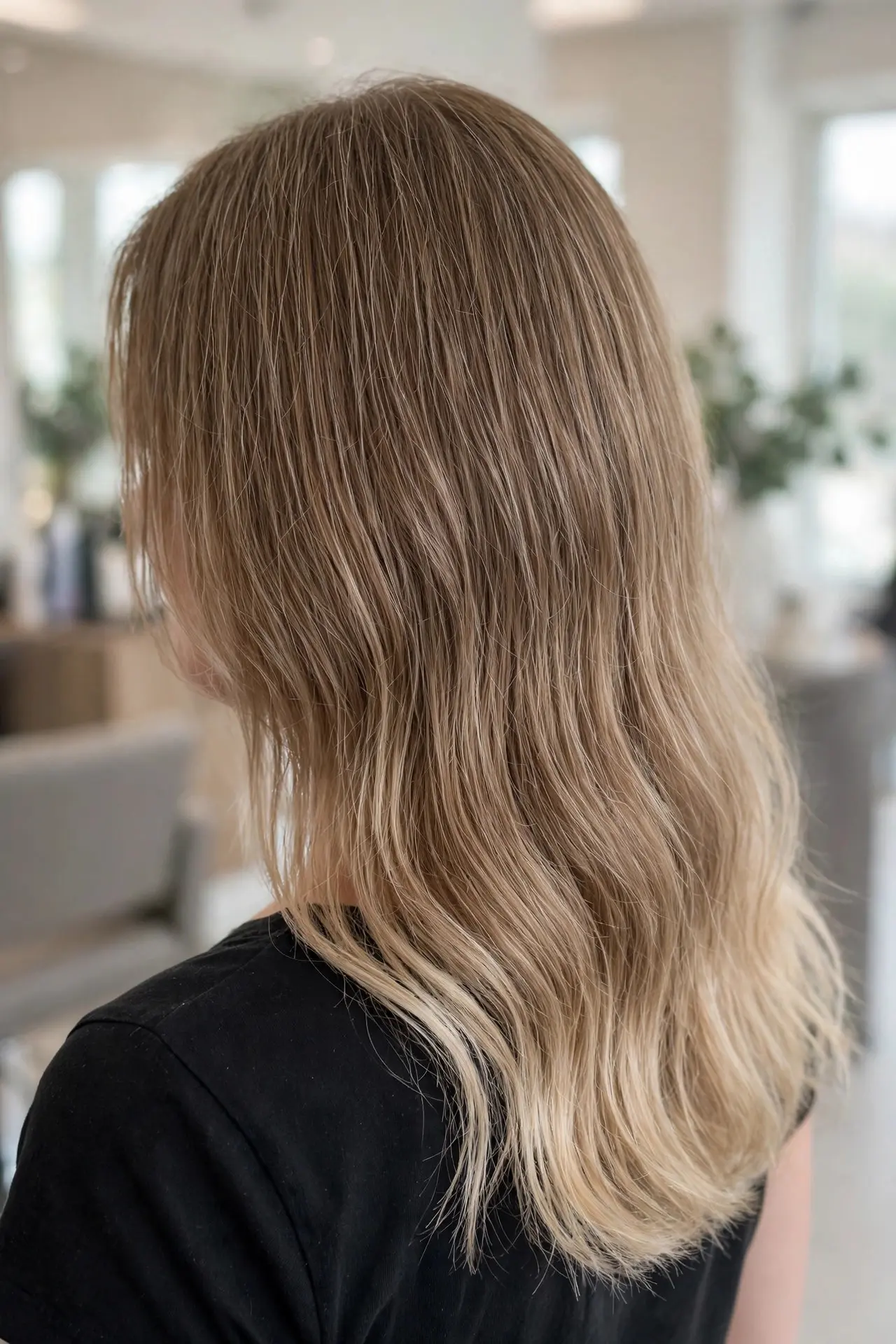
Babylights are the finest highlights of all — whisper-thin strands that copy the way a child’s hair lightens in the sun. Blended into balayage, they erase any visible pattern and leave a seamless brown-to-blonde gradient, as shown here on a softer, lighter brown base.
The tiny sections take longer at the salon, but the payoff is the most natural-looking result in this whole list. Babylights are especially kind to fine hair, adding dimension and the illusion of fullness without any chunky bands of color.
Tip: Protect the delicate strands with a gentle, sulfate-free shampoo, add a glossing treatment now and then to keep the blend fresh, and enjoy spacing your touch-ups three to four months apart.
8. Balayage Ombre for Bold Contrast
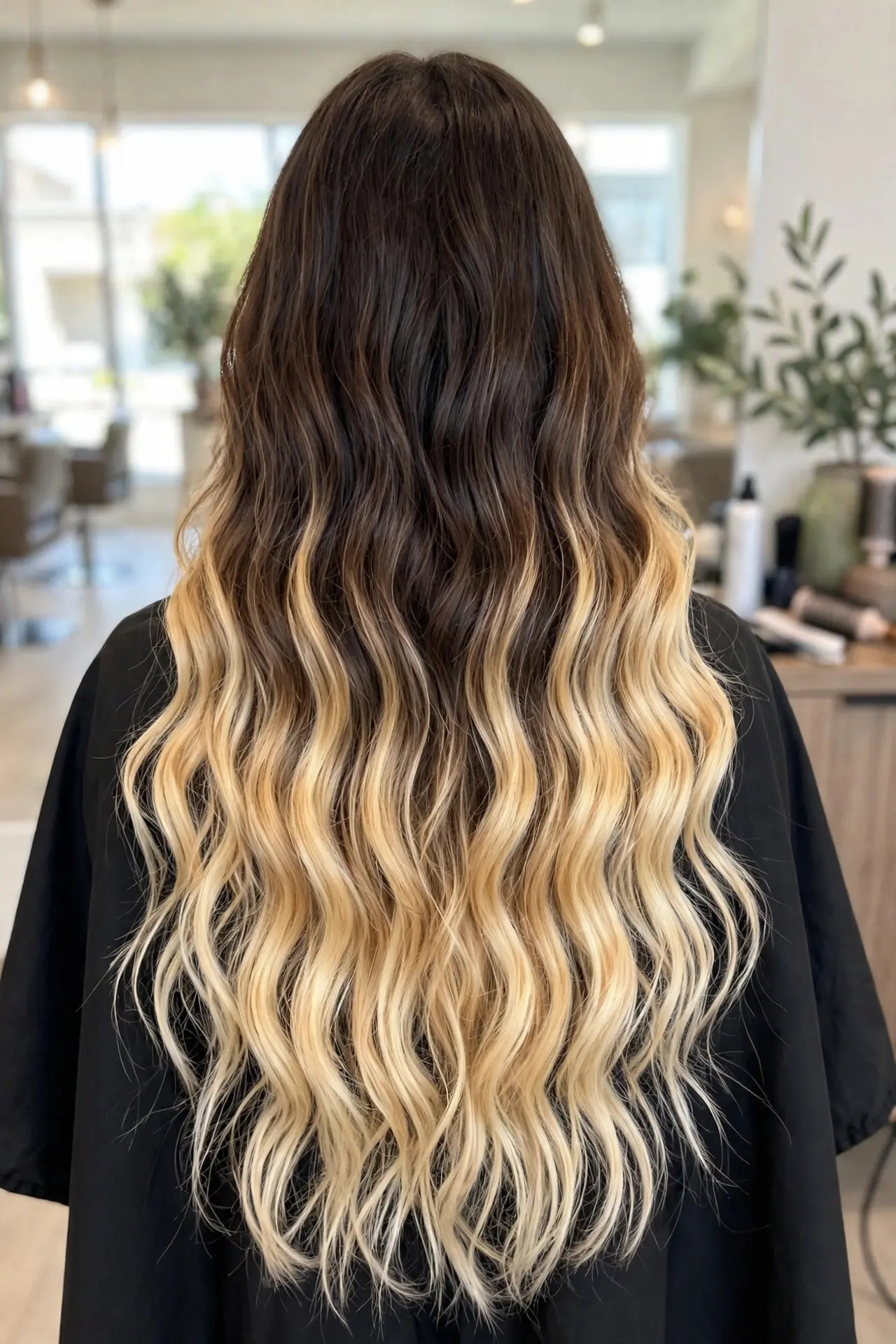
When subtle is not the goal, balayage ombre keeps your roots and upper lengths dark, then lets the color break dramatically into blonde toward the ends. It is a deliberate gradient — bold, but softly blended rather than striped.
Extra length shows this transition off best, because there is room for the color to travel. And because the dark root zone is part of the design itself, appointments can stretch much further apart than with traditional highlights.
Tip: Curl or wave your hair to make the gradient really visible, keep the blonde ends nourished with a lightweight oil so they stay shiny, and let the intentional root contrast do the low-maintenance work for you.
9. Chunky Balayage Highlights
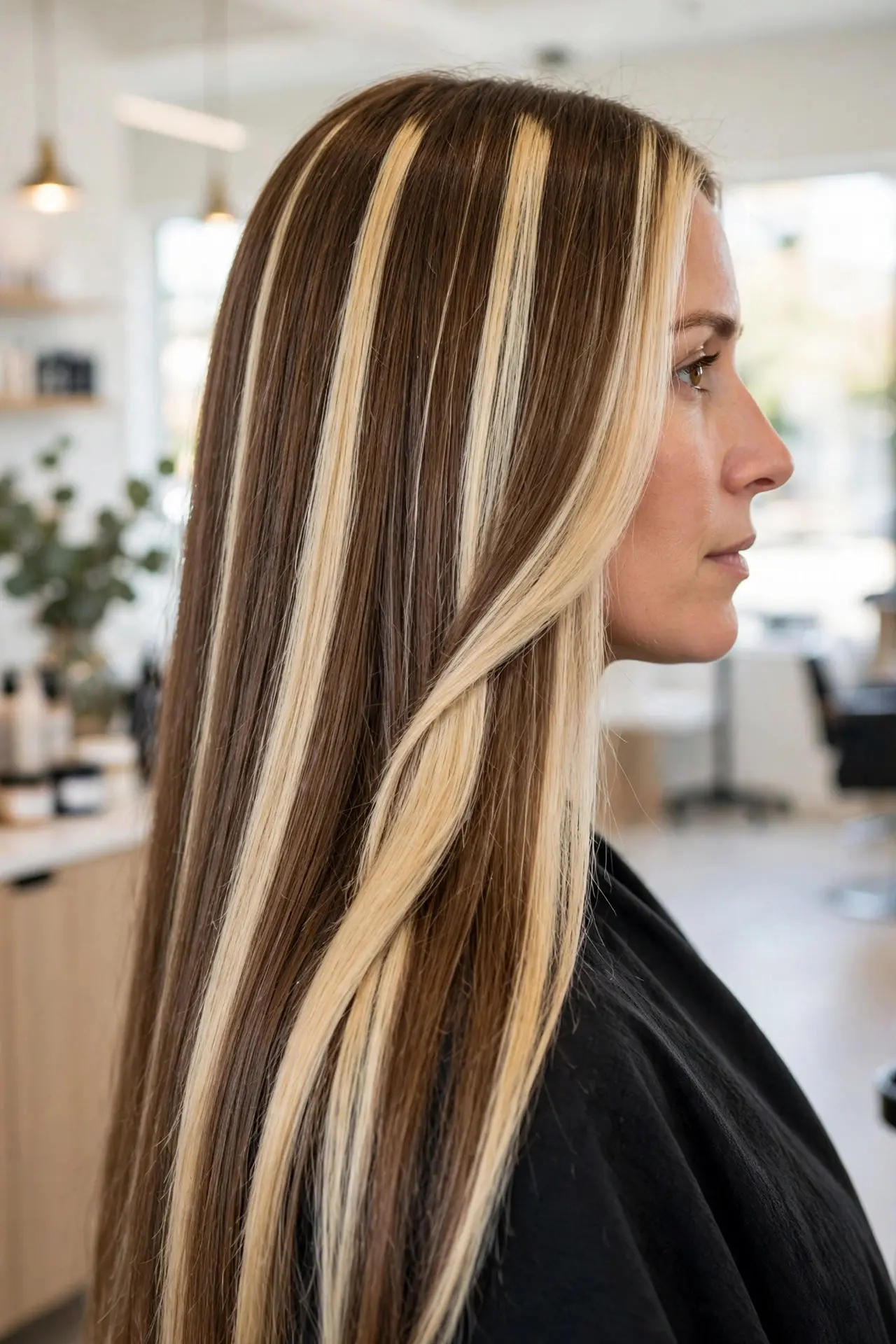
Chunky balayage swaps fine, shy strands for wide ribbons of blonde that are meant to be seen. The hand-painted placement keeps the edges soft, but the wider sections deliver strong texture and unmistakable dimension.
This look loves sleek styling: straightened hair shows the bold streaks at their clearest, and the high contrast photographs beautifully. Blending in a few finer pieces around the face stops the wider bands from feeling heavy. It also grows out more gracefully than you might expect, because the painted edges blur softly as your roots come through.
Tip: Wear it sleek and straight to showcase the bold streaks, use a glossing treatment to keep chunky sections smooth and shiny, and balance the wide pieces with a few finer highlights for added dimension.
10. Bronde Balayage Blend
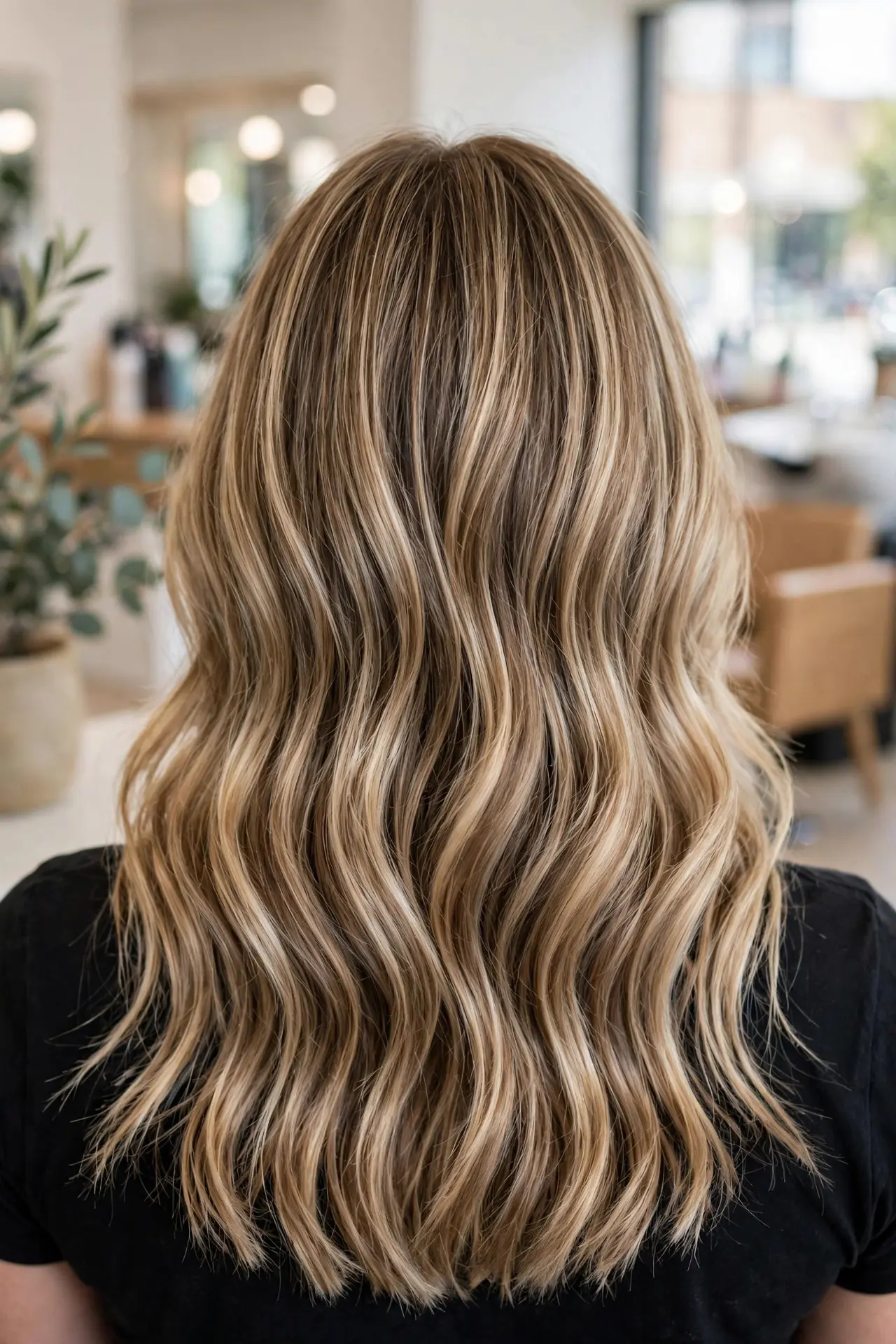
Bronde sits exactly halfway between brown and blonde — not a transition, a destination. Light brown and dark blonde tones are melted together so evenly that nobody can say where one ends and the other begins.
It is the perfect first step if you want to feel lighter without committing to full blonde, and it is famously low maintenance because the blend has no strong contrast to keep up. The soft, sunlit finish flatters most skin tones.
Tip: Talk through your ideal balance of brown versus blonde with your colorist before you start, use a tinted purple shampoo occasionally to keep tones neutral, and book a gloss treatment every few months to refresh shine.
11. Balayage with Dark Roots for Low Maintenance
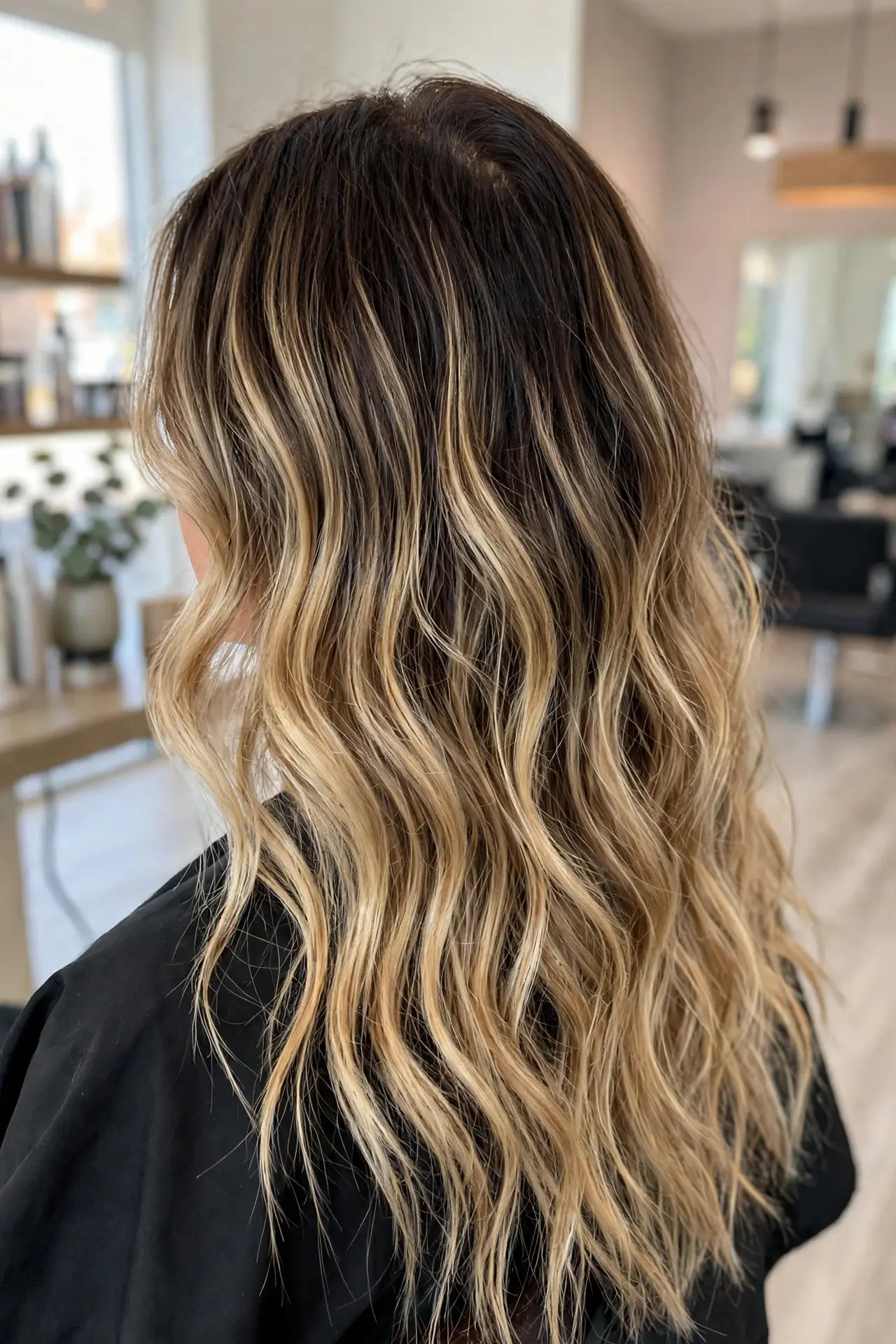
This is the lowest-maintenance blonde in the book: the top several inches are left completely untouched and dark, and the blonde begins only through the mid-lengths and ends. Regrowth is not a problem here — it is the design.
Because there is no color near the scalp to grow out, salon visits can stretch to every four to six months instead of every few weeks. It suits busy schedules, and anyone growing out old all-over color who wants a softer in-between stage.
Tip: Deep condition the ends regularly, since they hold the most processed color, and if new growth ever bothers you between appointments, a root-blurring powder disguises it in seconds without any dye.

12. Balayage Highlights on Curly Hair
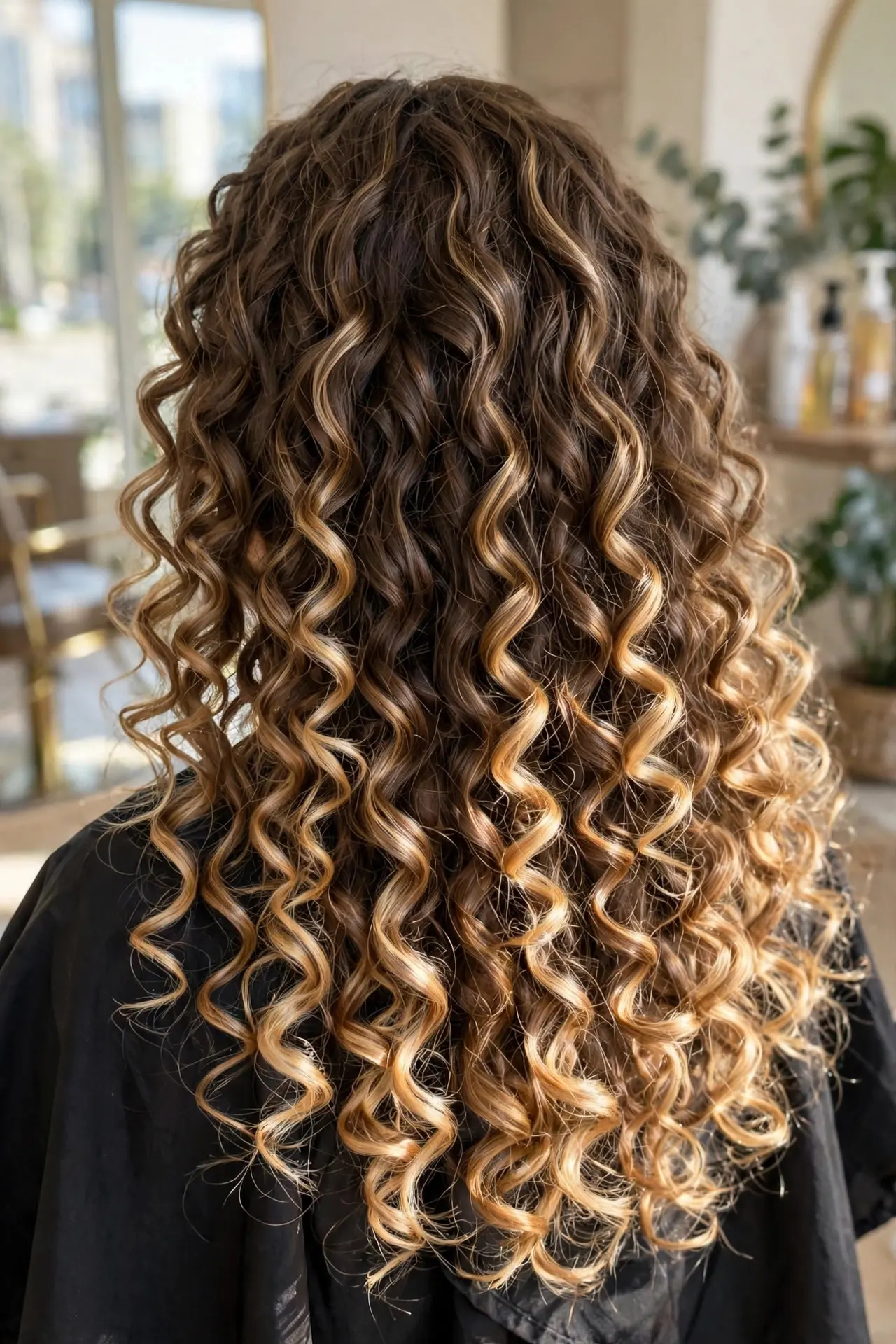
Curls and balayage were made for each other. Painted highlights wrap around each spiral, so the blonde catches the light differently on every curl and the whole head looks alive with movement and depth.
The key is a colorist who genuinely knows curly hair: curls shrink, spring and sit differently dry than wet, so placement has to be planned on your natural pattern. Done well, the dimension looks even richer than it does on straight hair.
Tip: Choose a colorist with specific experience in curly and textured hair, use a curl-defining cream so the highlighted spirals show, and deep condition frequently — curly hair needs extra moisture after any coloring.
13. Balayage for Short Hair
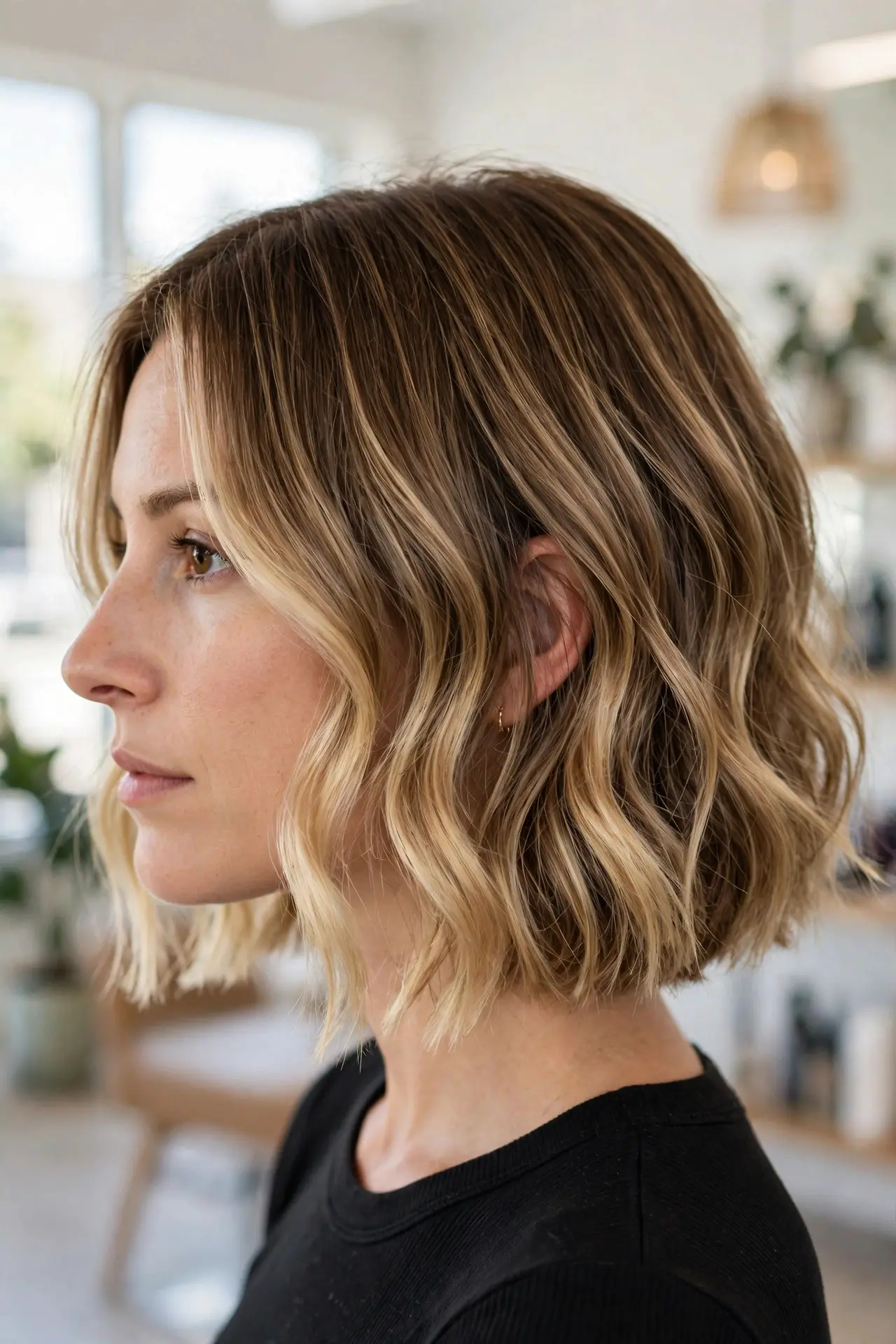
Short hair absolutely gets to play. On bobs and lobs, balayage concentrates the brightness around the face and through the ends, giving a cropped cut the same sun-kissed dimension as long hair — just in a tighter frame.
With less length to work with, placement is everything: a few well-aimed ribbons create depth and stop a one-length cut from looking flat. The grow-out is quick and forgiving too, since shorter hair is trimmed often.
Tip: Ask your stylist to concentrate the highlights around your face for maximum impact, refresh the color every three to four months since short hair shows regrowth differently, and finish with a lightweight styling cream to define the ends.
14. Platinum Blonde Balayage Ends
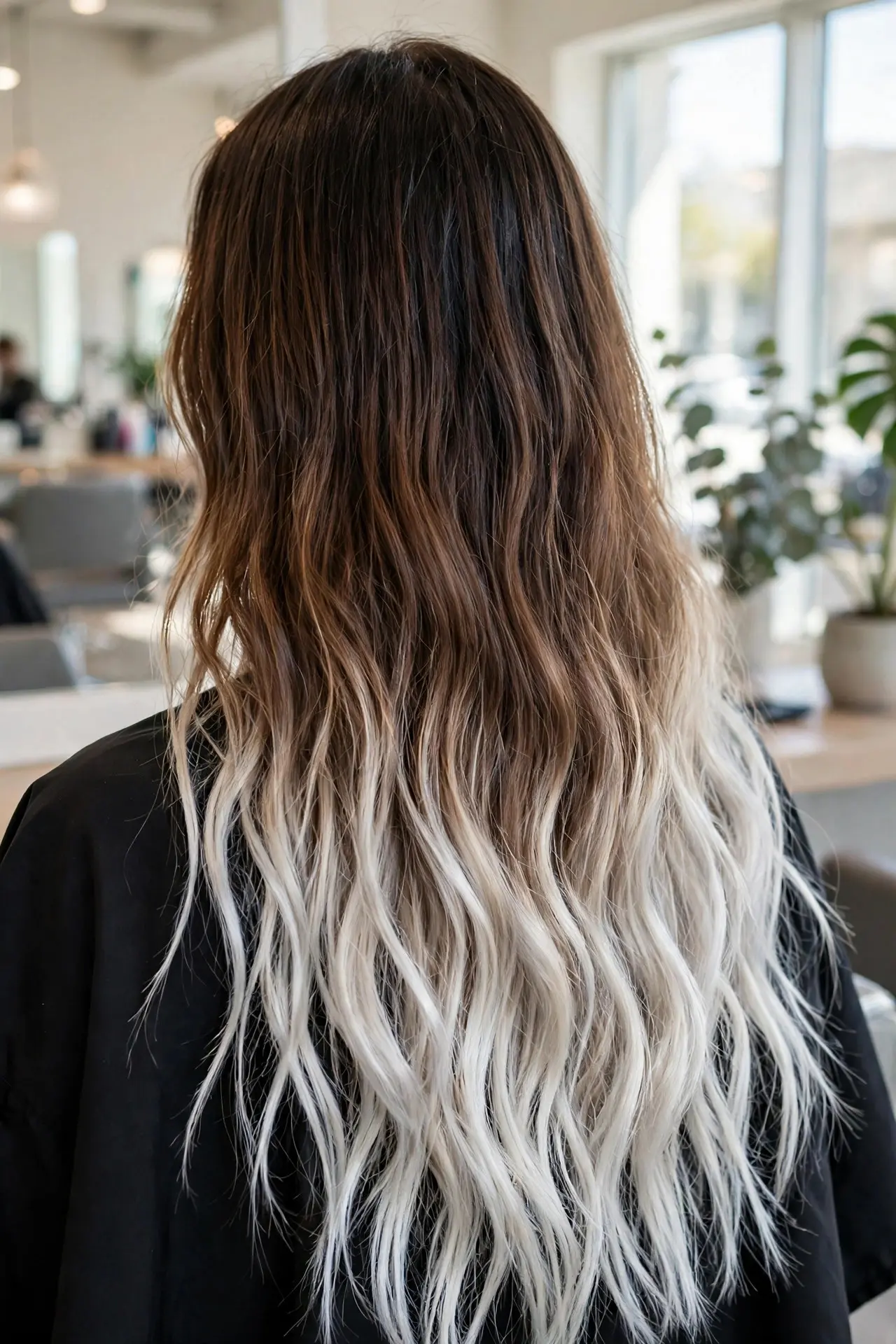
For the boldest finish on the list, platinum ends push the lightening to its brightest: deep brown roots and mid-lengths give way to icy, almost-white tips. The contrast is striking, high-fashion and completely deliberate.
Be ready for a journey — lifting dark hair to platinum safely usually takes more than one lightening session, and your colorist should protect the hair at every step. Once you are there, though, touch-ups are rare because the dark root is built in.
Tip: Support the pale ends with a regular bond-repairing treatment, apply a deep conditioning mask weekly to prevent dryness and breakage, and trim the ends often so splits never travel up the platinum sections.
15. Balayage with Highlighted Layers
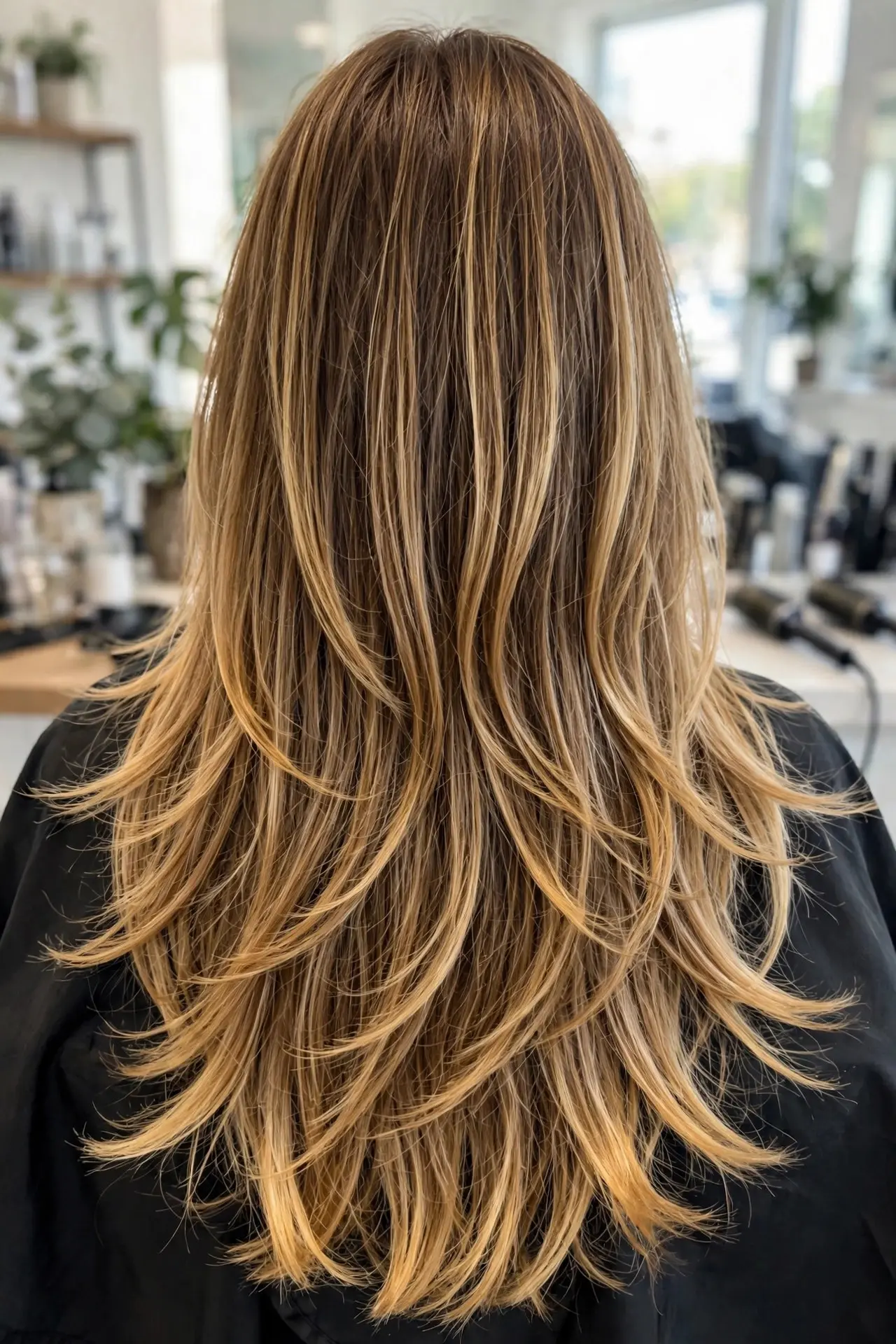
If your cut already has layers, let the color follow them. Balayage placed along each layer means every tier tips lighter toward its ends, so the cut and the color amplify each other’s movement beautifully.
The effect shows best on medium to long layered hair styled with some bounce — a round-brush blowout makes each highlighted layer flip and catch the light separately. It is an easy way to make a familiar haircut feel brand new.
Tip: Keep up regular trims so the layers and their highlighted ends stay fresh, use a lightweight leave-in conditioner to enhance movement, and style with a round brush to make the highlighted layers really visible.
16. Peekaboo Balayage Highlights
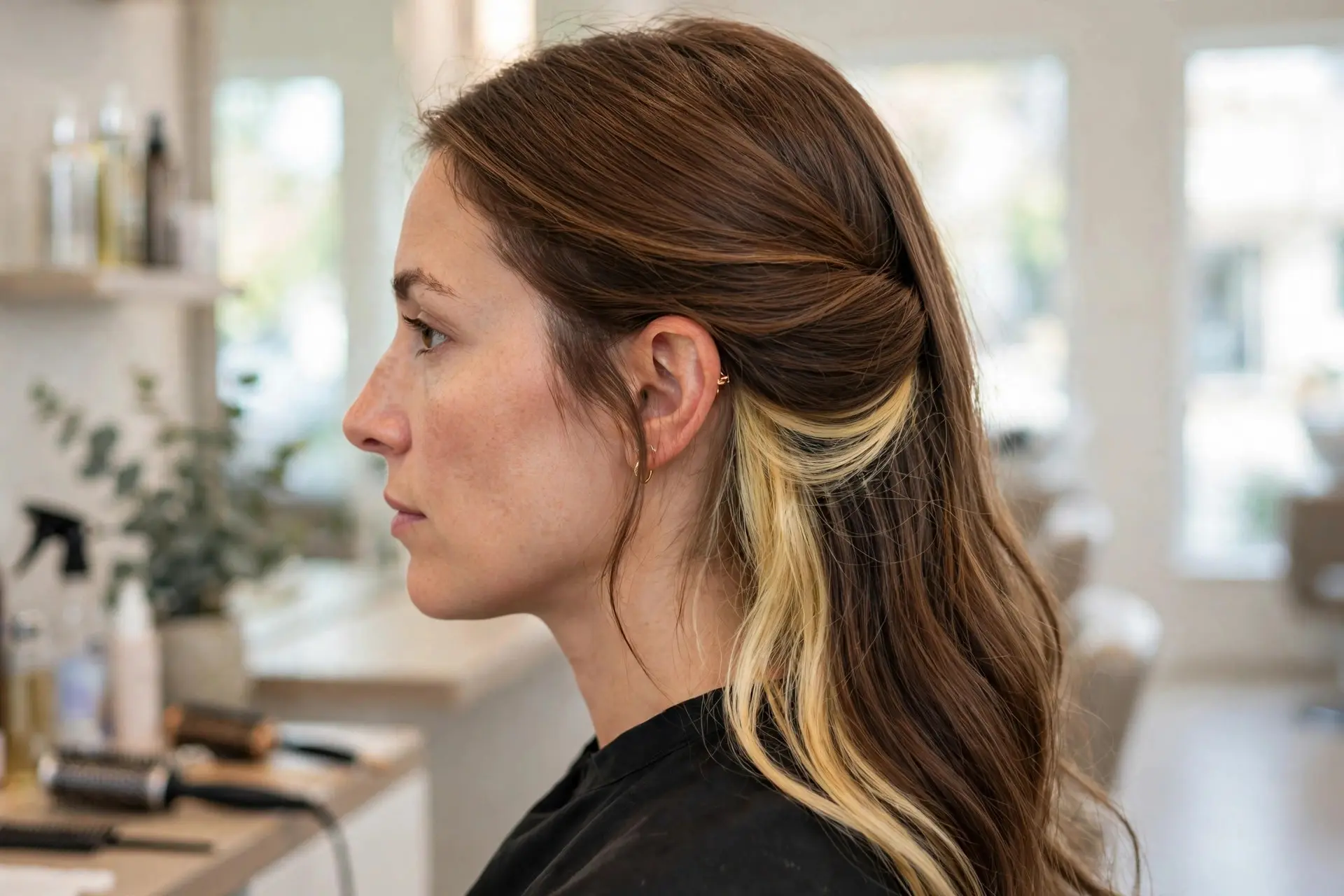
Peekaboo balayage hides the blonde underneath. The top layer stays your natural brown, while the lightened sections beneath flash out when you tuck your hair behind your ears, wear it up, or simply move.
It is the most customizable idea here: calm and office-appropriate with your hair down, playful the moment you clip it up. It is also a low-risk way to test brighter color, because the boldest pieces stay under cover most of the time.
Tip: Tuck hair behind your ears or try half-up styles to reveal the hidden color, use a texturizing spray for beachy waves that let the blonde peek through, and braid loosely for glimpses of brightness all day.
17. Balayage with a Glossy Finish
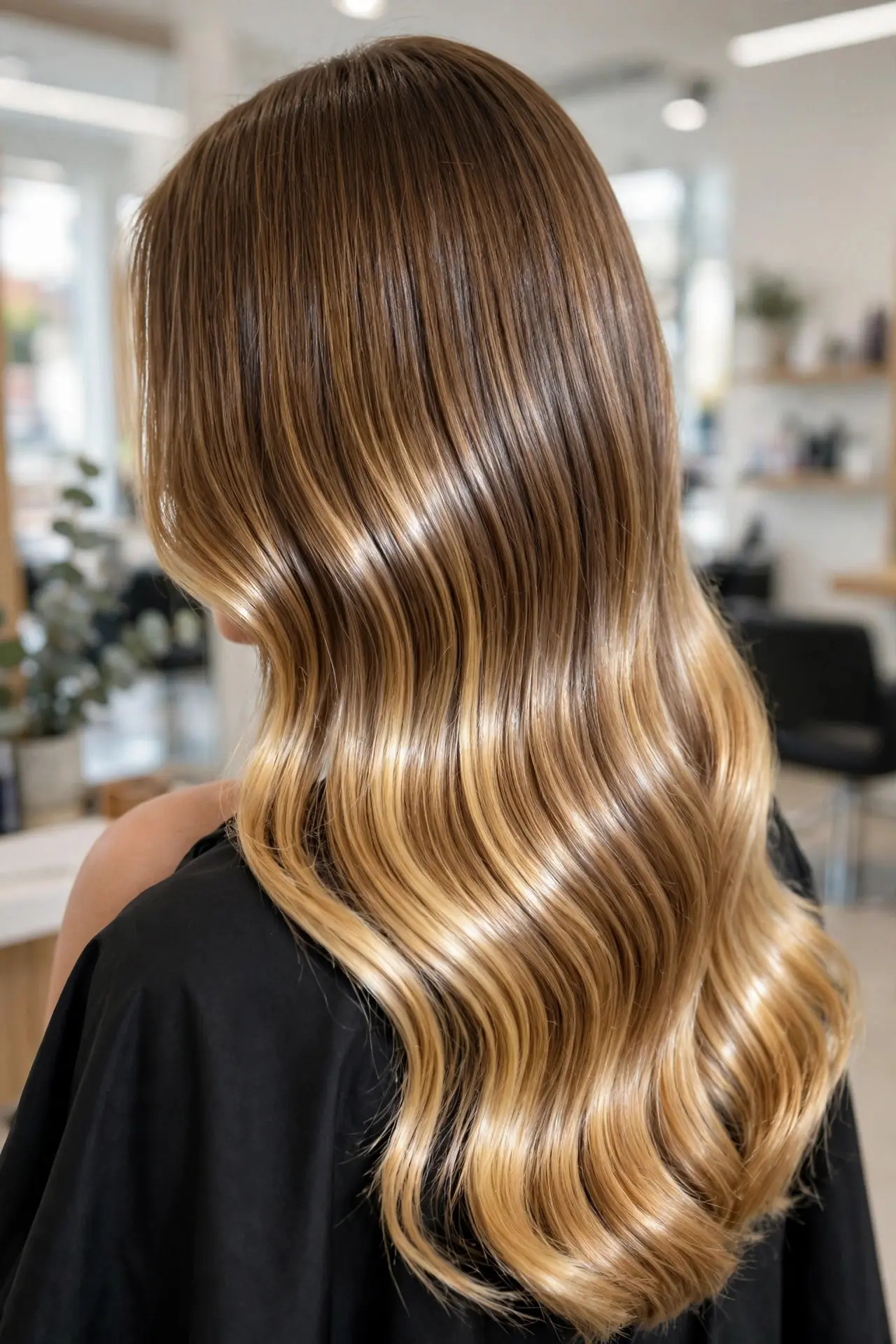
Sometimes the color is already right and what it needs is shine. A glossy finish — a clear or lightly tinted gloss over your balayage — seals the cuticle and turns both the brown and the blonde up to a mirror finish.
The gloss also fine-tunes tone, nudging the whole blend warmer or cooler without any new lightening. It fades gradually and evenly, so there is never a regrowth line — just a slow return to your pre-gloss shine.
Tip: Schedule a gloss refresh every six to eight weeks for maximum shine, use a glossing hair mask at home between visits, and rinse with cool water after washing to help seal the cuticle.
18. Balayage Paired with a Blunt Cut
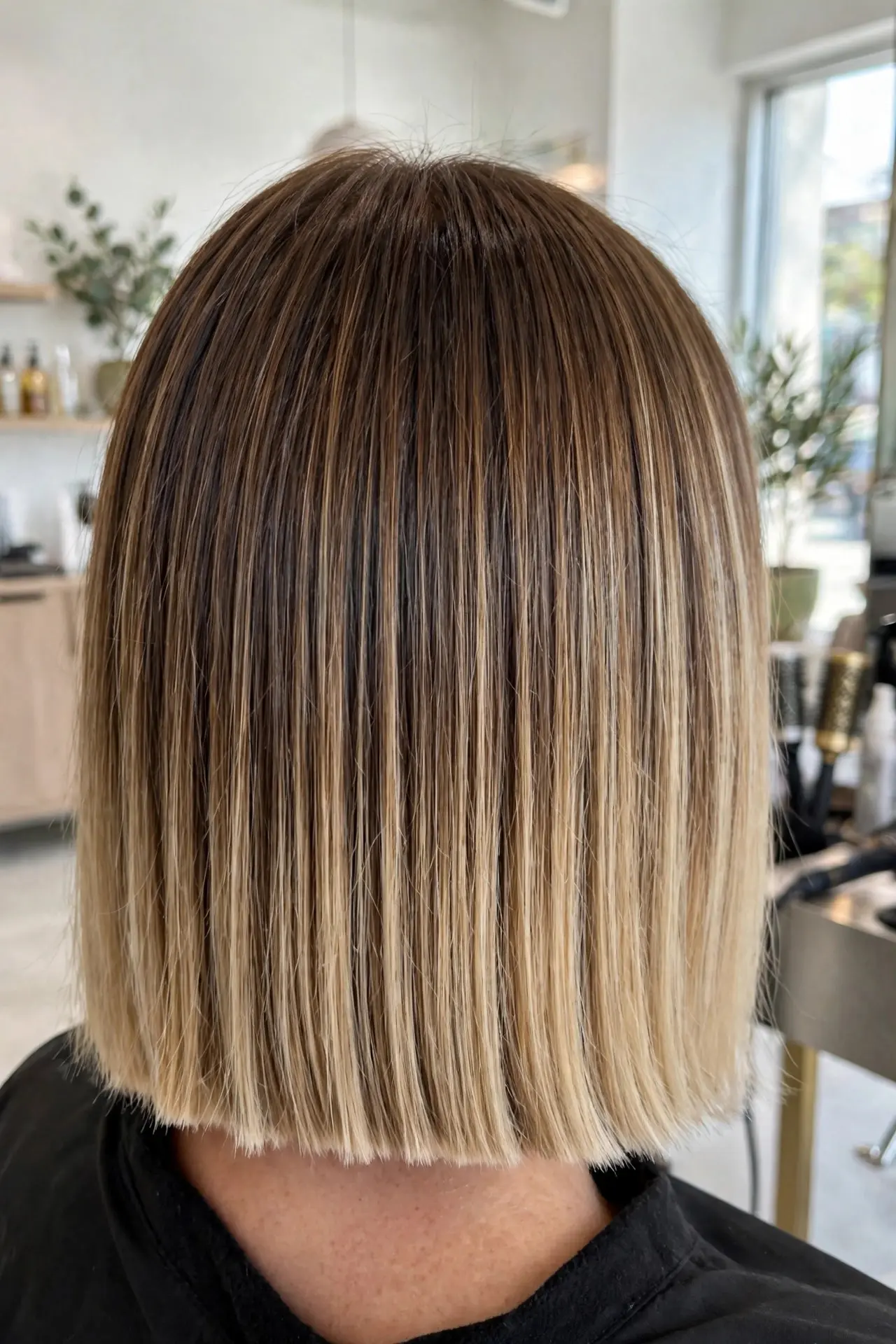
Soft color, sharp cut: a blunt, one-length hemline gives balayage a crisp frame to melt into. The contrast between the gradual color blend and that precise, solid line of ends looks modern and completely deliberate.
Here it is shown on a blunt bob, but the pairing works at any single length, and straight textures display the clean edge best. The solid perimeter also makes fine hair look thicker, while the balayage stops it feeling severe.
Tip: Use a flat iron to emphasize the sharp, clean line of the cut, apply a shine serum to the ends so the color transition reads clearly, and trim regularly — a blunt shape only stays blunt if the edge is maintained.
19. Balayage with Pastel Blonde Accents
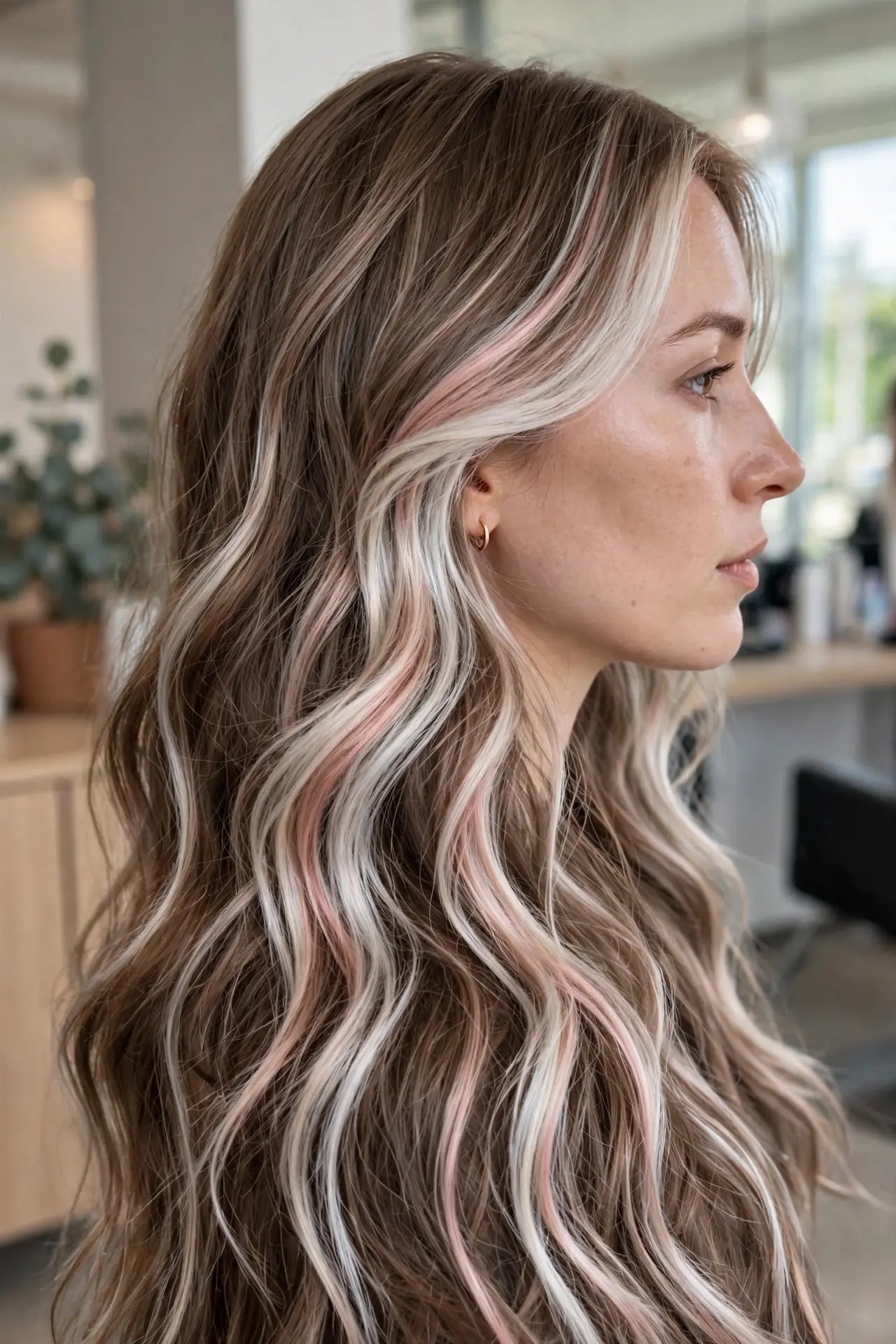
Pastel blonde takes the lightest pieces almost to white, then washes them with the faintest blush of color. Against a brown base, the effect is ethereal and slightly editorial — the most fashion-forward option in this list.
Reaching that pale takes serious lift, followed by a delicate toner to remove every trace of warmth without tipping into grey. In the photo here, the pastel reads as silvery-pale lengths threaded with soft blush-pink strands.
Tip: Maintain the pale tone with a purple or silver toning shampoo once a week, go gently with heat styling since pastel tones dry out more easily, and refresh the toner every four to six weeks to prevent yellowing.
20. Reverse Balayage for Dimension
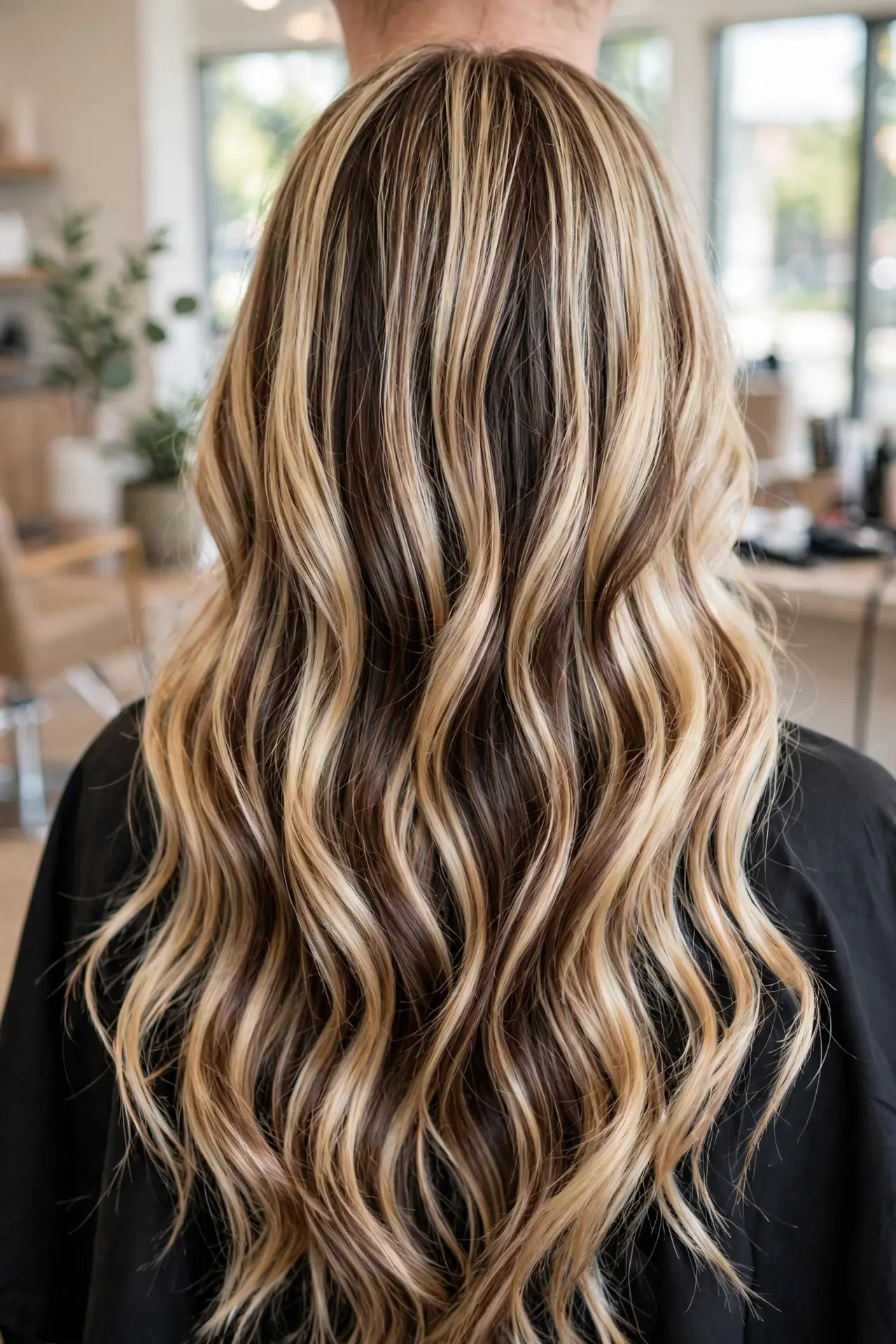
Reverse balayage works in the opposite direction: if your hair has become very blonde and a little flat, deeper brown lowlights are painted back through it to restore shadow, richness and dimension.
It is also the perfect rescue for highlights that grew out brighter than you wanted. The reintroduced brown softens everything into a natural, multi-tonal blend — and since you are adding depth rather than lift, it is gentle on previously lightened hair. Many women use it as a seasonal reset in autumn, when summer-bright hair starts to feel too light.
Tip: Communicate your desired brown-to-blonde ratio clearly with your colorist, ask for a toning gloss to blend the darker tones in smoothly, and moisturize regularly, since previously lightened hair needs the extra hydration.
Styling Tips
A few styling habits make the difference between balayage that sits quietly and balayage that gets compliments:
- Style in waves to show the melt. Loose curls and bends reveal every ribbon of color as the hair moves; a soft gradient can hide in pin-straight hair.
- Match your part to your placement. Money pieces and face frames are painted for a specific parting, so tell your colorist how you actually wear your hair day to day.
- Add shine back to the ends. Lightened hair reflects less light naturally — a drop of oil or serum on the ends restores that glossy, expensive finish.
- Change up your updos. Different ponytail heights and half-up styles expose different layers of the balayage, especially peekaboo panels and underlayers.
- Refresh tone at home. A toning shampoo once a week — purple for cool blondes, golden for warm ones — keeps your shade in its intended family between visits.
- Prep before swimming. Wet your hair and smooth in leave-in conditioner before the pool or sea, so it absorbs far less chlorine and salt.
Good styling does not hide your balayage — it choreographs how the light moves through it, so every turn of your head shows a slightly different, prettier blend.
Common Mistakes to Avoid
Balayage is a forgiving technique, but these five missteps can still cost you the result you pictured:
- Choosing a tone that fights your skin. Ashy blonde on very warm, golden skin — or sunny gold on cool, pink-toned skin — can look off; match the toner family to your undertone.
- Demanding platinum in one session. On dark brown hair, rushing the lift is exactly how breakage happens; a healthy result may need a staged journey.
- Washing daily in hot water. Heat and frequent washing strip toner and gloss fast — wash less often, and keep the water cool.
- Skipping heat protectant. Lightened hair is more porous and fragile, so unprotected straighteners and curling irons fade tone and frazzle ends quickly.
- Arriving without photos. “Blonde” means ten different things to ten different people; pictures of the exact placement and tone you want prevent disappointment.
Best At-Home Hair Care Tips to Extend Your Balayage Color
Balayage is famously low maintenance, but the lightened sections still ask for a little care at home. These five habits keep the tone true and the ends healthy between salon visits:
- Switch to sulfate-free, color-safe products. A gentle shampoo and conditioner clean without stripping the toner that keeps your blonde its intended shade.
- Wash less often, and use cool water. Every wash lifts a little color; spacing washes out and rinsing cool helps the cuticle stay closed, holding tone and shine in.
- Deep condition once a week. Lightened hair loses moisture faster, so a weekly treatment keeps the blonde sections soft, hydrated and glossy instead of straw-like.
- Never skip heat protectant. Spray it on before any hot tool, every single time — it is essential protection for lightened hair.
- Keep up regular small trims. Snipping the oldest, lightest ends before they split keeps the whole balayage looking fresh and polished as it grows out.
Frequently Asked Questions
How long does brown to blonde balayage typically last before needing a touch-up?
Because the color is painted away from the roots, most balayage grows out gracefully for three to six months before it needs refreshing. The exact timing depends on how strong the contrast is and how fast your hair grows — softer blends last the longest.
Is balayage damaging to hair?
Any lightening causes some dryness, but balayage is gentler than traditional foiling or all-over color: fewer sections are lightened, and the product stays off your scalp. Consistent conditioning and bond care keep the lightened lengths healthy, and most women find a weekly deep conditioning routine is plenty to keep it feeling soft.
Can I go from brown to blonde balayage in one salon session?
Often, yes — a soft or medium blonde blend is usually achievable in one appointment. Very dramatic lifts, especially to platinum, may need two or more sessions spaced out so your hair stays strong through the process.
What is the difference between balayage and traditional highlights?
Balayage is hand-painted directly onto the hair for a soft, natural gradient that grows out gently. Traditional highlights are woven and wrapped in foils, giving a more uniform, structured pattern — and a more visible line as they grow.
Conclusion
From the quietest face frame to full platinum ends, brown to blonde balayage ideas all share the same gift: real brightness with a genuinely easy upkeep schedule. Choose the blend that suits your skin tone, your calendar and your courage level, then take your favorite photos to your colorist — and if warm, honeyed tones are calling you, our honey brown balayage ideas are a beautiful next browse. Which of these 20 looks will you ask for at your next appointment?
Discover more from Fashinate Style
Subscribe to get the latest posts sent to your email.