
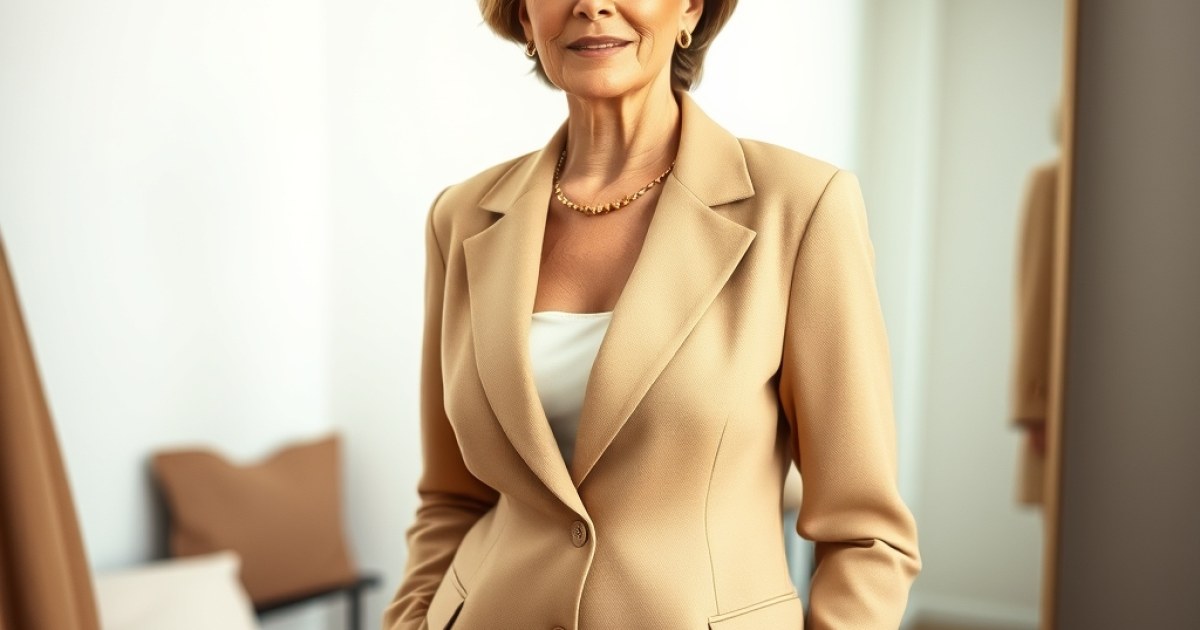
The fastest way to look put-together after 50 is to stop shopping for trends and start fixing fit. A tailor can take in a waist, shorten a sleeve, or raise a hem for $15–$40, and that single alteration often does more than a new outfit. If your clothes skim your body instead of pulling or hanging, you look chic before you’ve added a single accessory.
Fabric does the rest of the work. A $60 cotton-poplin shirt that holds its shape beats a $200 polyester blend that pills and shines after three washes. Read the label before the price tag: natural fibers, a bit of stretch, and a weight you can’t see your hand through will keep their polish all day.
These 21 style secrets cover fit, fabric, proportion, and polish — the details that read as “effortless” from across the room. Every one works with pieces you probably already own, so you can start with your closet today, not your credit card.
How to Pick the Right Style Secrets for You
You don’t need all 21. Start with the two or three that match how you actually spend your week, then build from there.
- Your daily uniform: if you live in jeans and knit tops, prioritize the denim fit and knitwear rules first — they’ll shift 80% of your outfits.
- Your shape and height: petite frames benefit most from proportion tips (waist placement, hem length), while taller frames can carry more volume and longer lines.
- Your climate and lifestyle: someone in a cold city needs the layering and outerwear secrets; someone in a warm one should focus on breathable fabrics and lighter finishing touches.
- Your comfort line: skip anything that makes you tug, adjust, or stand differently. If you’re not comfortable, it shows, and chic never looks fussy.
1. Prioritize Fit Over Trend
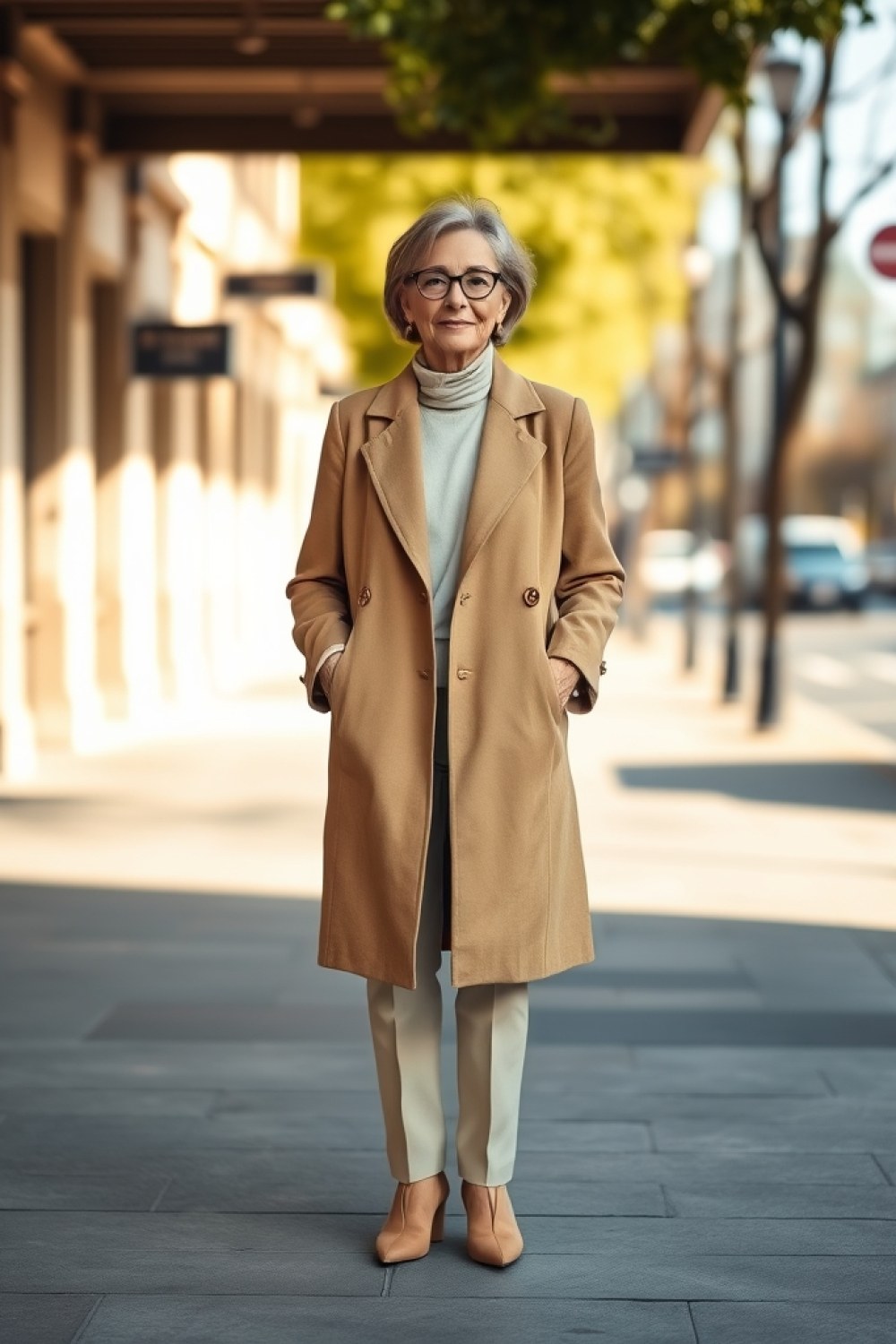
A well-tailored basic beats a trendy piece every time. Off-the-rack clothes are cut for an average that doesn’t exist, so take your measurements — bust, waist, hip — and shop for pieces that skim your body rather than squeeze it.
If you can pinch more than an inch of fabric at the waist or the sleeve hits mid-thumb, that’s a tailor’s job, not a deal-breaker. A nip at the waist or a shortened sleeve runs $15–$30, and it makes a $60 pair of trousers read like custom.
This approach suits anyone tired of buying pieces that fit one spot and gap at another. Your tip: buy for the largest measurement and let a tailor handle the rest.
2. Upgrade Your Fabric Quality
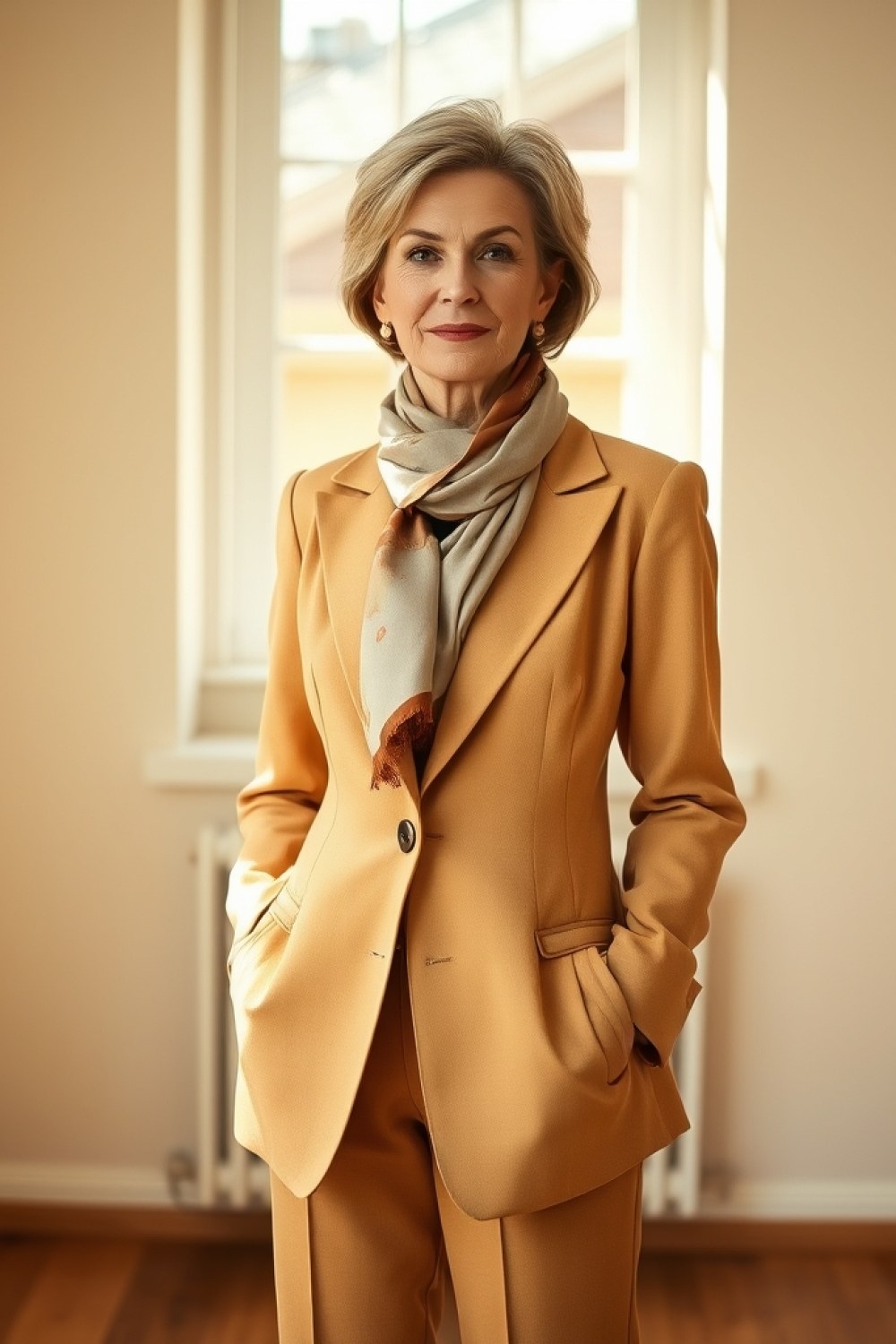
Natural fibers — cotton, linen, silk, wool — drape better and last longer than synthetics. They move with you instead of clinging, and they hold their shape after repeat wears and washes.
Look for fabric with a bit of weight. Heavier cotton, ponte, and wool crepe hang in a clean line and resist wrinkling through a long day. Thin, clingy knits do the opposite — they highlight every lump and bump you’d rather smooth over.
This matters most for bottoms and dresses, where drape is visible from across the room. Run your hand over the fabric before buying; if it’s see-through under light, put it back.
3. Master the Column of Color
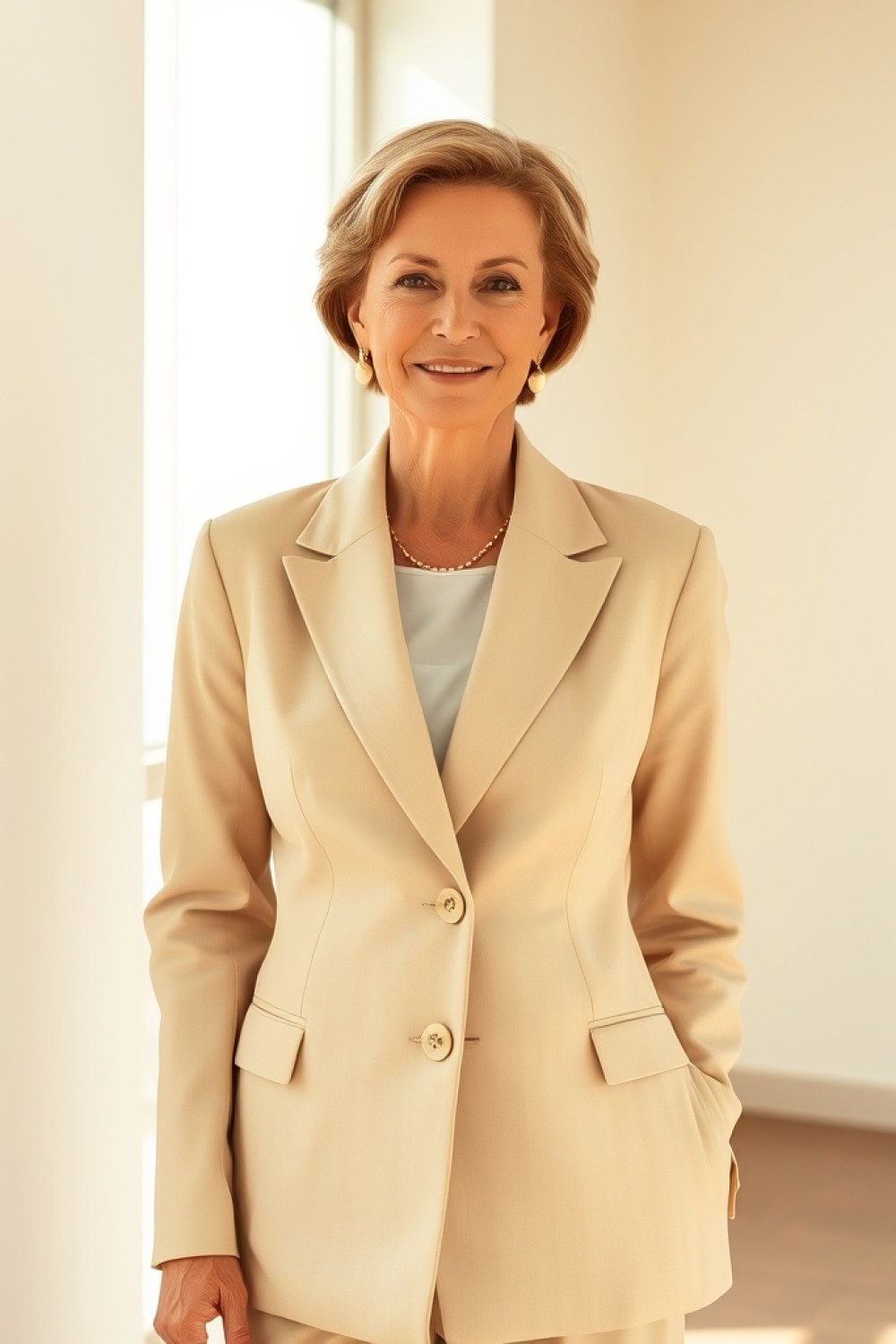
Wearing one color head-to-toe creates an unbroken vertical line that makes you look taller and slimmer. It’s the fastest trick in the book, and it requires no new silhouettes — just a shift in how you pair what you own.
Try a navy sweater with navy trousers, or a camel coat over a camel dress. Close tones work too: charcoal over black, ivory over cream. The eye travels up and down instead of stopping at the waist, so the whole outfit reads as one graceful column.
Add contrast only at the edges — shoes or a bag. Your tip: pick your most-flattering neutral and build two or three head-to-toe outfits around it this week.
4. Invest in a Third Piece
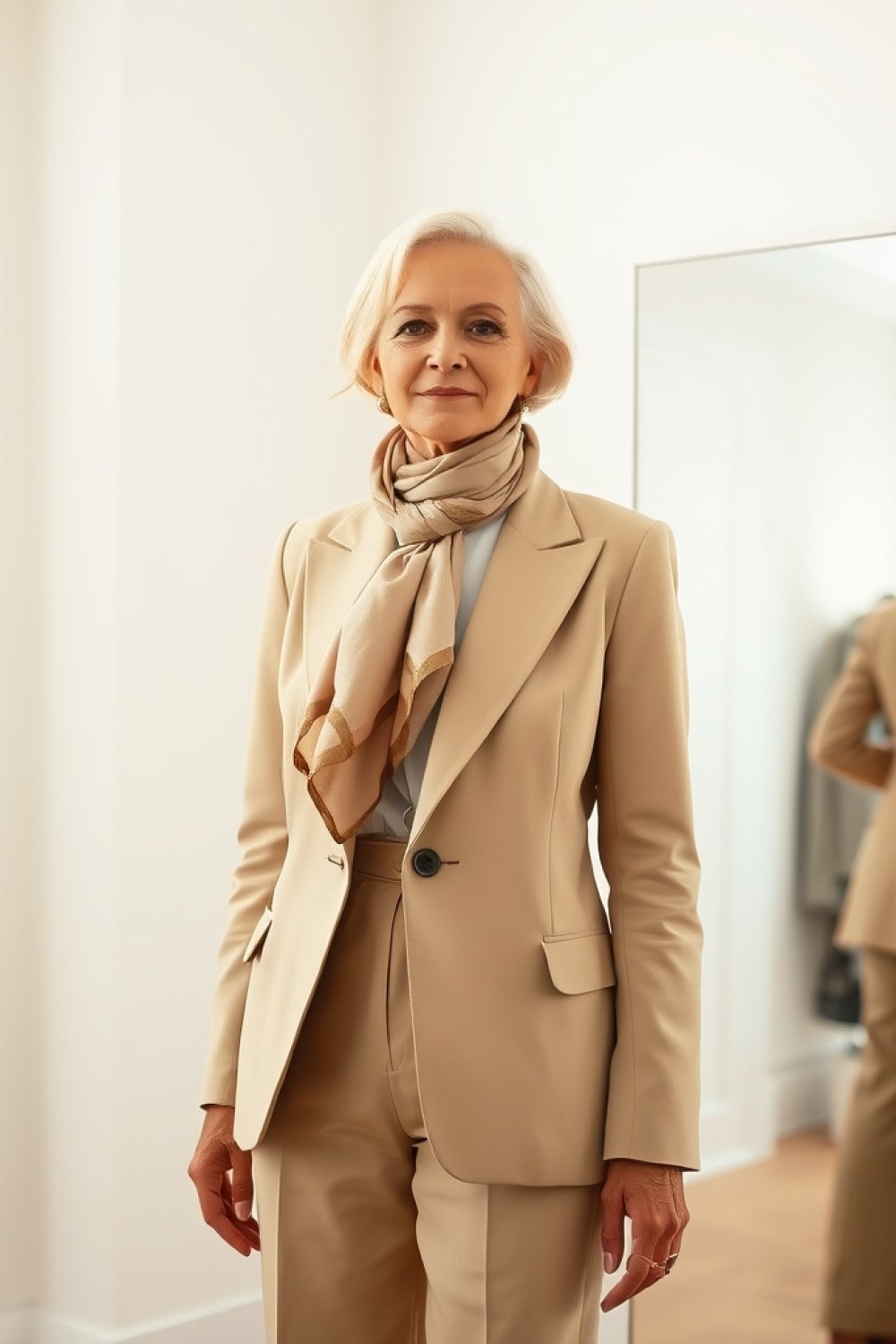
A jacket, cardigan, scarf, or structured bag instantly elevates a plain top-and-pants combo. It’s called the third piece because it finishes the look — the outfit exists, but this is what makes it intentional.
Choose something that adds texture or a pop of color. A denim jacket over a white tee, a silk scarf knotted at the neck, or a leather tote on the arm all transform casual into polished in seconds.
This works for anyone who wants to look put-together without overhauling their wardrobe. Your tip: keep one third piece by the door and grab it on the way out — that’s the whole habit.
5. Choose V-Necks and Scoop Necks

V-necks and scoop necks elongate the neck and draw the eye upward, flattering every face shape and bust size. The open line creates space where a high neck creates bulk.
Avoid crew necks unless you balance them with a long necklace that pulls the eye down into a V. A V-neck also layers beautifully under a collared shirt or blazer — the points of the collar echo the neckline and keep everything looking deliberate.
This is the easiest fix for anyone who feels top-heavy or short-necked. Your tip: hold a crew-neck top up to your chin in the mirror, then swap it for a V — the difference is immediate.
6. Embrace High-Waisted Everything

High-waisted trousers, jeans, and skirts define your waist and create a smooth line over the midsection. The higher rise holds and skims rather than cutting across your softest point.
Look for a rise that hits at or just above your natural waist — where you bend to the side, that crease is your natural waist. Anything lower digs in when you sit; anything much higher can swallow your torso.
Pair with a tucked-in blouse or a cropped jacket to emphasize the waist you’ve just defined. Your tip: tuck the front of your top only and let the back hang loose for a relaxed, lengthening effect.
7. Add Structure With Tailoring

A defined shoulder or a pressed trouser crease reads as intentional. Structure is what separates “thrown on” from “put together.”
Look for a blazer whose shoulder seam lands at your natural shoulder point — not past it, not pinching in. Even a soft knit dress gains polish under a structured topper.
Fit matters more than stiffness. You should be able to drive, reach overhead, and sit without the jacket pulling. Comfortable movement is non-negotiable.
Try this: take one blazer to a tailor and have the sleeves shortened to hit just above your wrist bone. That one fix changes the whole proportion.
8. Use the Rule of Thirds
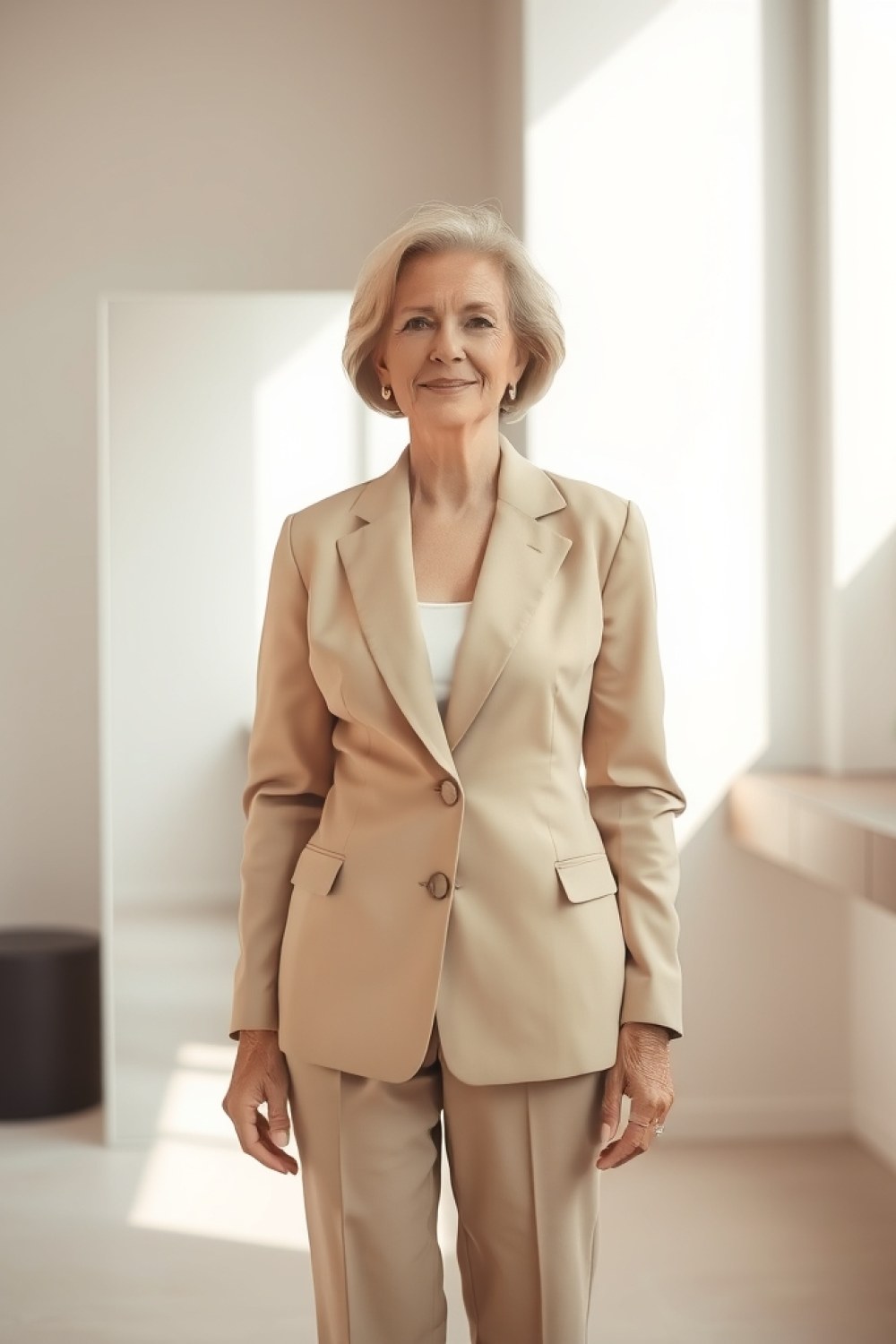
Think of your outfit in thirds: top, bottom, and shoes or accessories. This keeps you from looking boxy or cut in half at the waist.
The eye reads a 1/3–2/3 split as balanced. A long cardigan over a shorter top with straight-leg pants does exactly this — the long layer counts as your dominant third.
It works because it creates one clear vertical line instead of three competing horizontal ones. Anyone can use it, at any height.
Try this: next time an outfit feels off, check whether your layers split the body near-evenly. Shift one piece longer or shorter until the thirds clean up.
9. Balance Volume With Slim
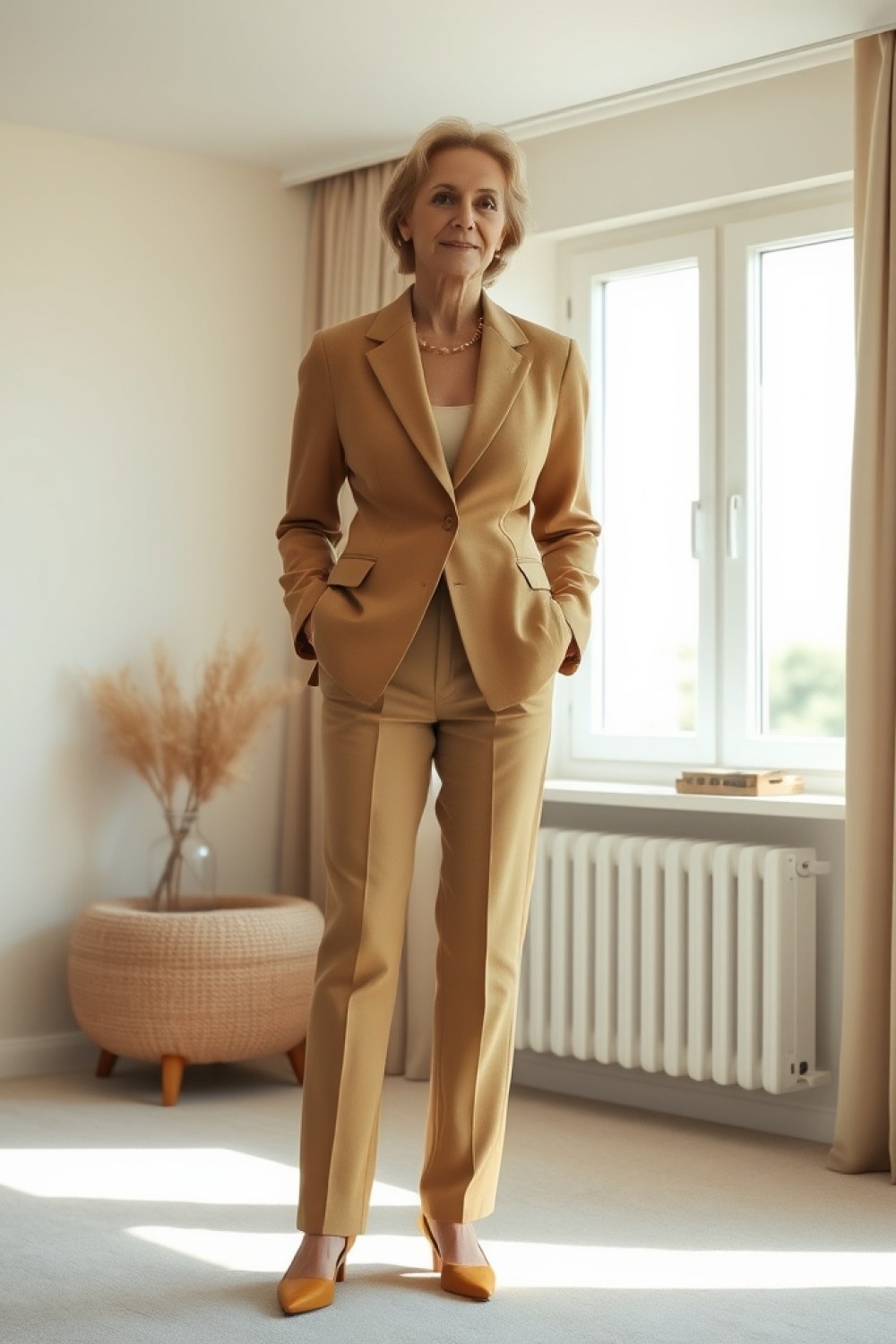
Wide-leg pants want a fitted top. A flowy midi skirt wants a tucked-in blouse. Volume on both halves swallows your shape.
The rule is simple: where one piece is loose, the other stays close to the body. This keeps your silhouette defined instead of hidden under fabric.
It suits anyone who loves comfortable, generous cuts but still wants to look deliberate. You keep the ease and lose the shapelessness.
Try this: tuck your top, then add a slim belt at your natural waist. It’s the fastest way to prove the balance is working.
10. Choose Shoes That Ground You
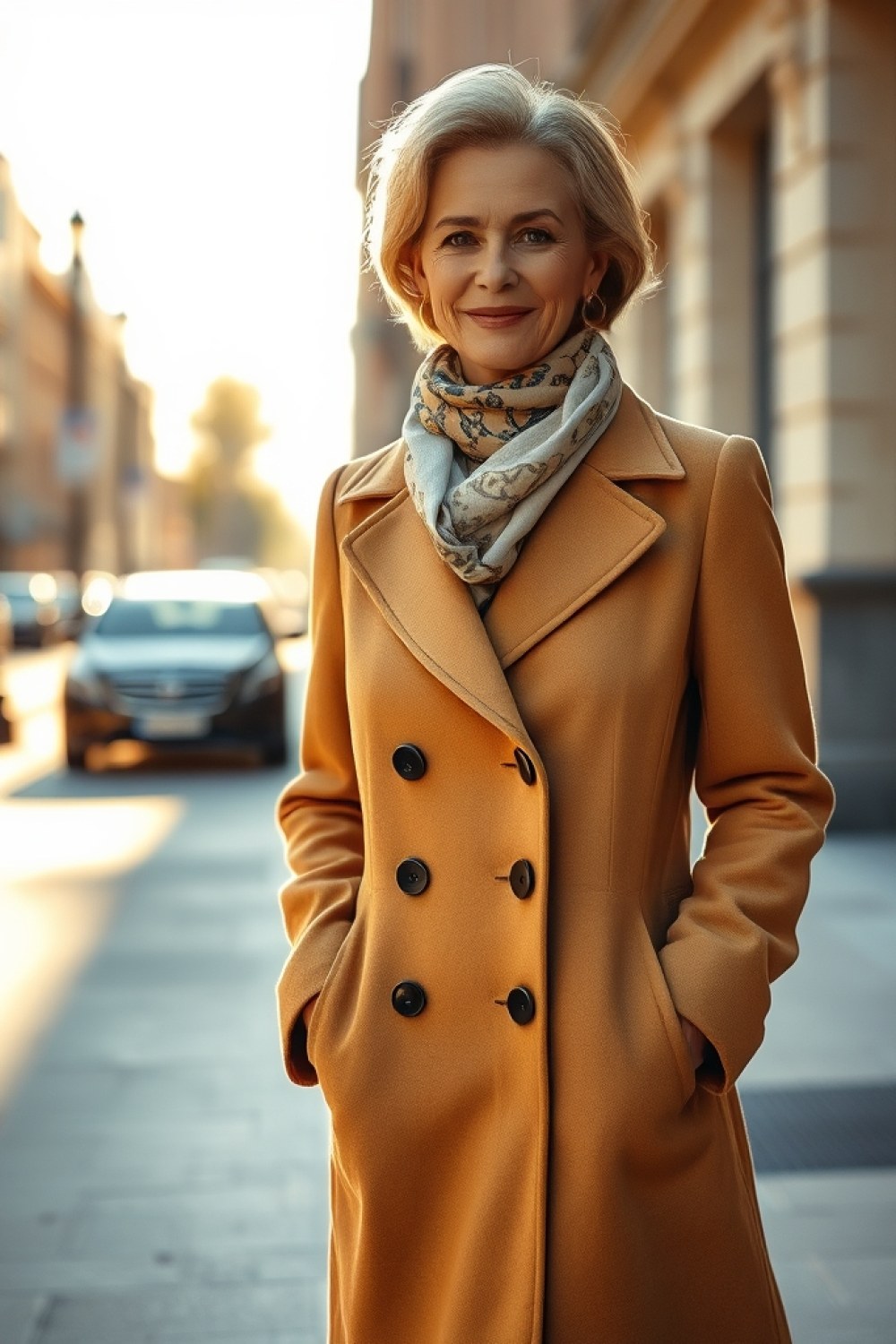
A pointed-toe flat or a low block heel lengthens the leg and reads polished. Chunky platforms and busy strappy styles cut the line and pull the eye down.
Nude shoes that match your skin tone are the quiet trick for looking taller and leaner — no visual break between ankle and foot. Save the statement shoes for outfits that can carry them.
This suits women who walk a lot and want comfort without sacrificing finish. A block heel under two inches does both.
Try this: hold your most-worn shoe next to bare skin in daylight. If the tone clashes, that’s your next purchase.
11. Curate a Signature Color Palette
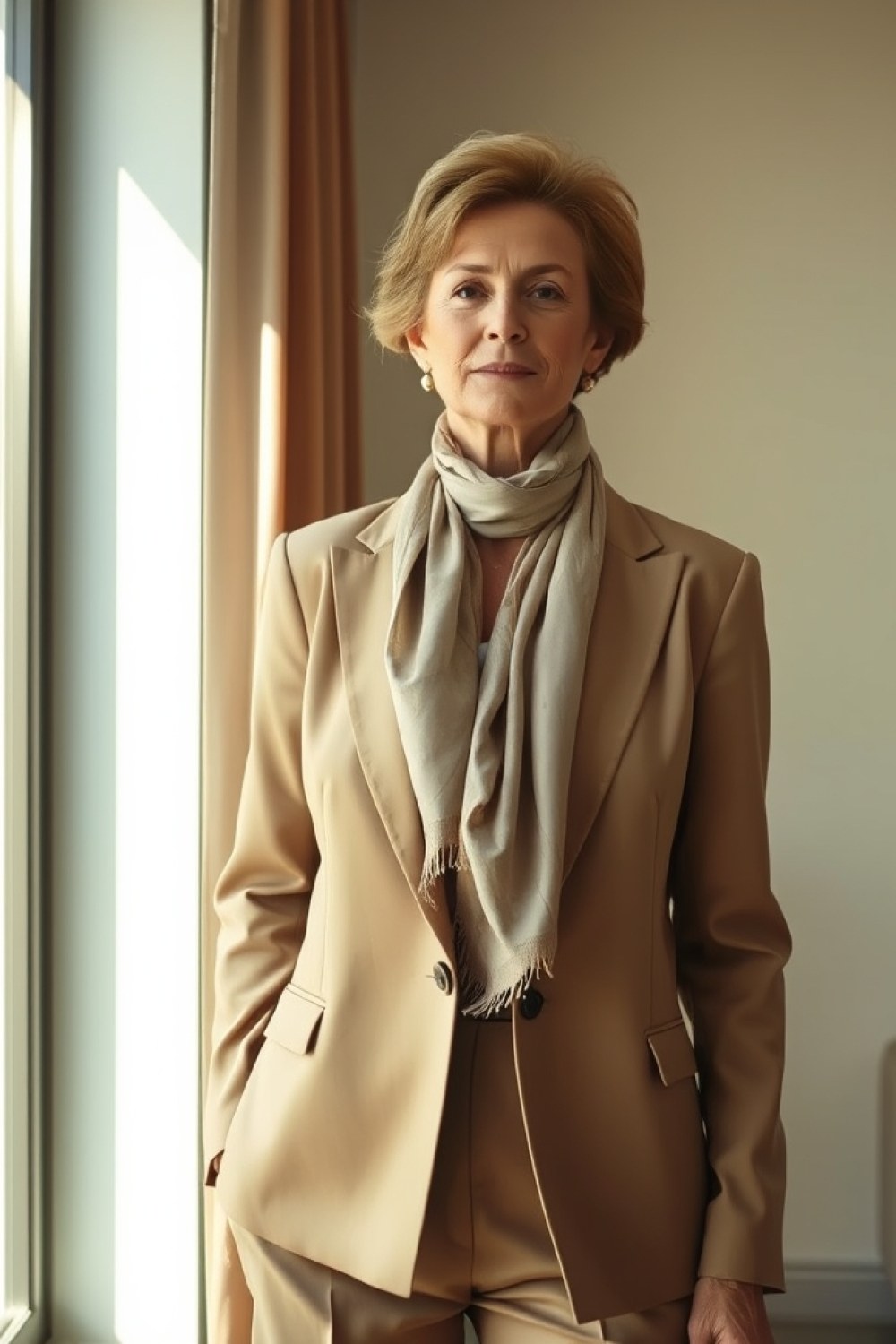
Choose three or four core colors that flatter your skin tone. Everything you own should work with at least two of them.
Build around neutrals — navy, gray, camel, cream — then add one accent you genuinely love. Shopping gets faster because you can skip whole racks without a second thought.
It suits women tired of buying pieces that never match anything. Fewer decisions, more outfits.
Try this: lay your favorite tops on the bed. The colors that repeat are your palette — write them on a note and keep it in your bag.
12. Don’t Neglect Your Undergarments
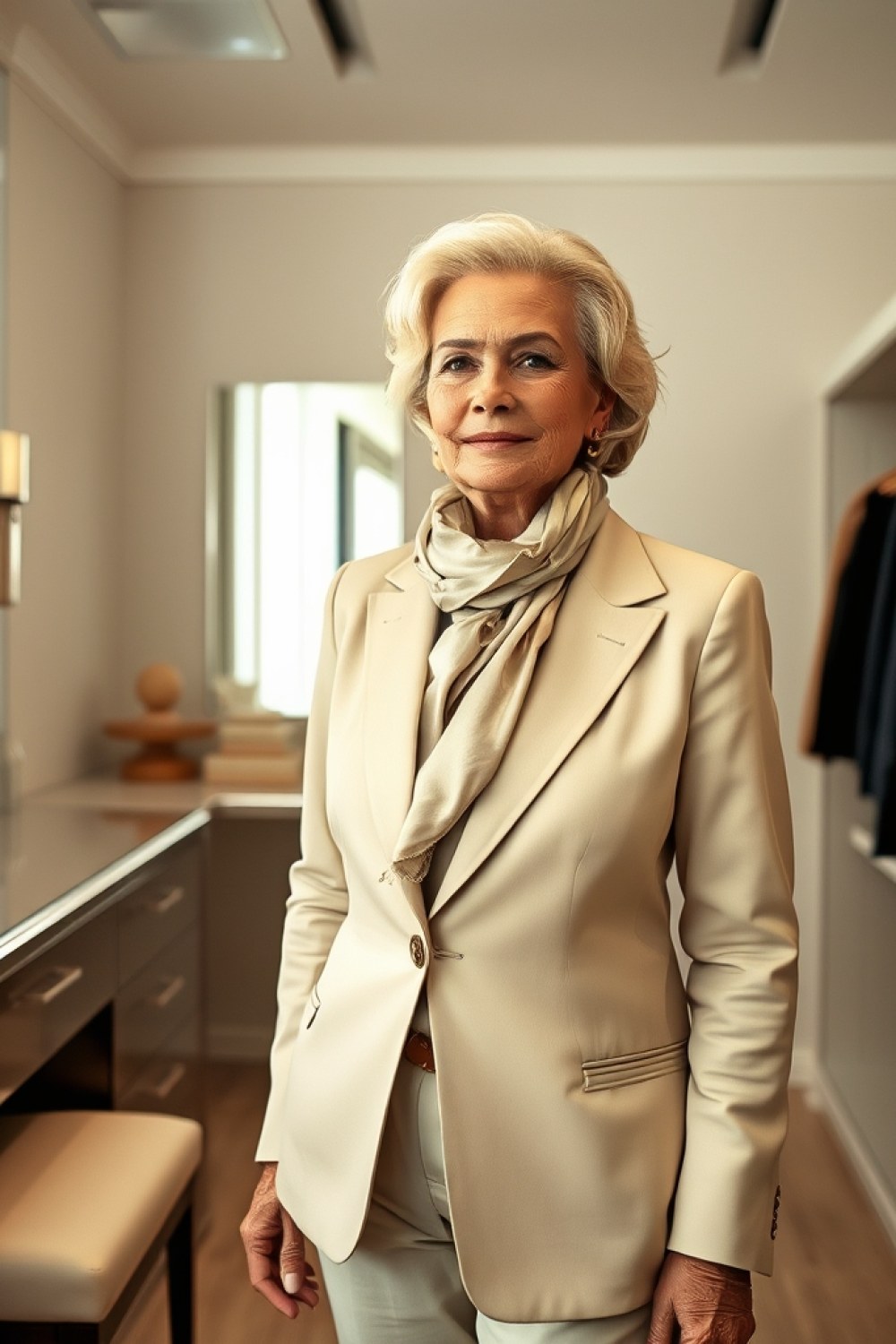
A seamless, well-fitting bra and smooth underwear are the foundation of any polished look. Everything else drapes better over them.
Get professionally fitted — most women wear the wrong size, and bodies change over time. Look for bras that lift and separate without digging into your ribs or shoulders.
Shapewear is optional. Wear it only if it makes you feel confident, never as a requirement.
Try this: before your next outfit photo, check for visible lines or a band riding up. One fitting appointment fixes both.
13. Accessorize With Intention
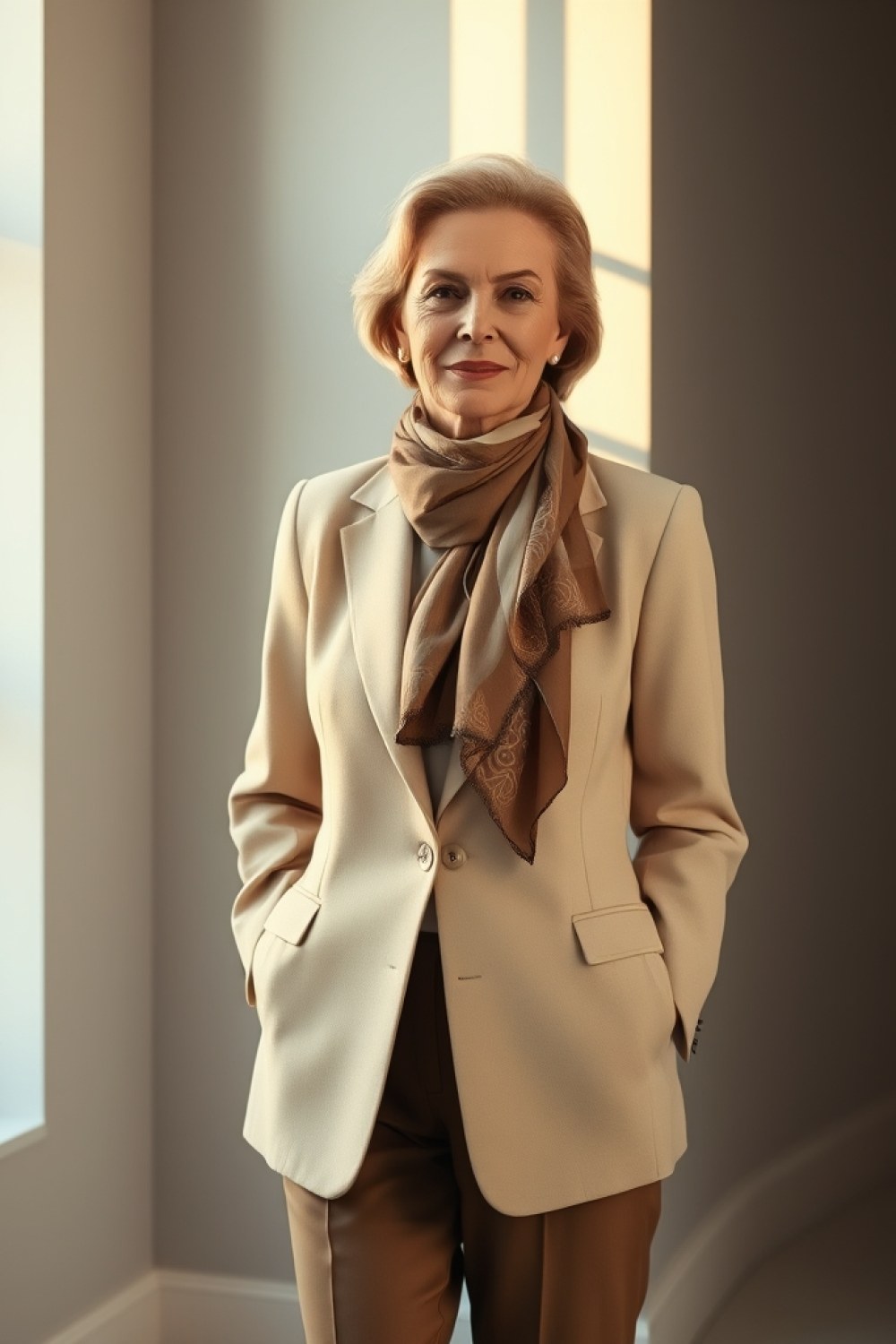
One or two standout pieces do more than a handful of small ones. A bold necklace, a silk scarf at the neck, or a single statement earring gives the eye somewhere to land. Hoops, pearls, and a simple pendant in real metal read chic because the shape is clean and the finish holds up.
Skip the costume jewelry that tarnishes after a season. If you tend to over-accessorize, remove one thing before you leave the house — earrings or a necklace, not both fighting for attention.
Before you walk out, check your reflection and take off one piece. That subtraction is usually what makes the outfit look intentional.
14. Embrace Monochromatic Dressing

One color from top to bottom lengthens your line and looks instantly sophisticated. An all-cream look in summer or all-charcoal in winter is easy to pull off and hard to get wrong. It also spares you the morning decision fatigue.
The trick is texture. Pair silk with wool, add a leather belt or suede boots, and the single color stays visually rich instead of flat. Same-tone doesn’t mean same-fabric.
Pick a shade that flatters your skin — soft ivory over stark white if your tone is warm. Then build the whole outfit in that one family of tones and let the fabrics do the talking.
15. Pay Attention to Hemlines

Hemlines either work with your proportions or fight them. The reliable lengths are just above the knee, mid-calf, and ankle. Hems that land at the widest part of your calf or thigh cut the leg and shorten your line.
Before you buy, hold the piece against you in a mirror and check where the hem falls. If it hits the wrong spot, don’t rule out the garment — a tailor can take it up an inch or two for a perfect fit.
Hemming is one of the cheapest ways to look expensive. A $20 alteration on a dress you already own often does more than a new purchase.
16. Layer Smartly
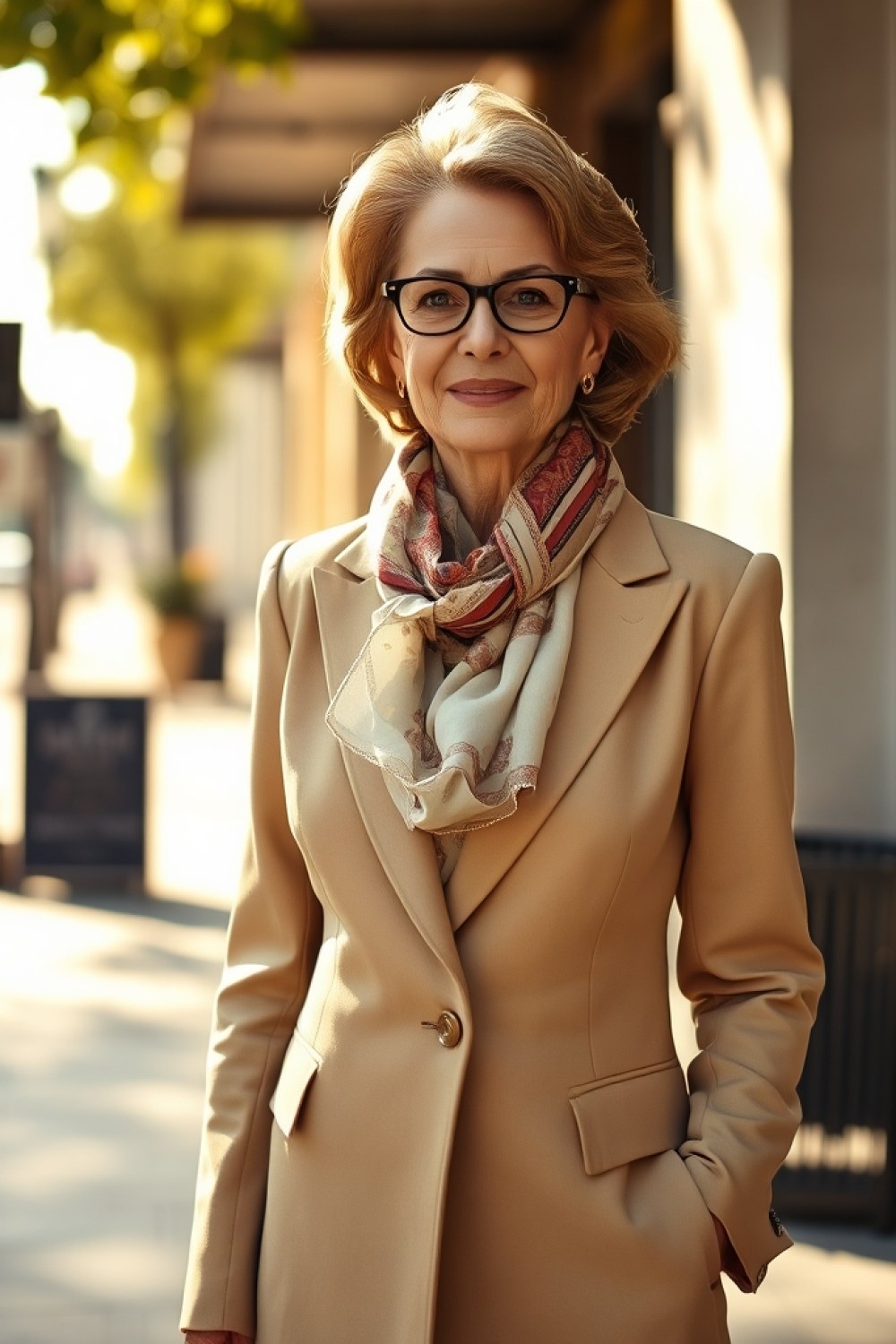
Layering adds depth and lets you adjust as the day warms or cools. Start with a thin base layer — a fitted tee or a fine-knit turtleneck. Add a mid-layer, like a button-down or a vest, then finish with a jacket or cardigan.
The mistake is bulk. Keep each layer close to the body and choose fabrics that don’t fight each other. Three thin layers look sleeker than one thick one.
Build your layers so the innermost is the lightest weight and the outer adds structure. That way you can peel one off indoors without the whole outfit collapsing.
17. Choose the Right Jean for Your Shape

Straight-leg and bootcut jeans flatter almost everyone because they skim rather than cling. Go for a dark wash with a touch of stretch for comfort that holds its shape through the day. Skip heavily distressed and low-rise styles — they date fast and rarely sit well.
A high-waisted straight leg in dark indigo is the wardrobe hero here. It elongates the leg, smooths the midsection, and pairs with everything from a silk blouse to a cashmere sweater.
Buy one great pair and get them hemmed to your shoe height. The right length is what separates a good jean from a perfect one.
18. Add a Touch of Polish With a Belt
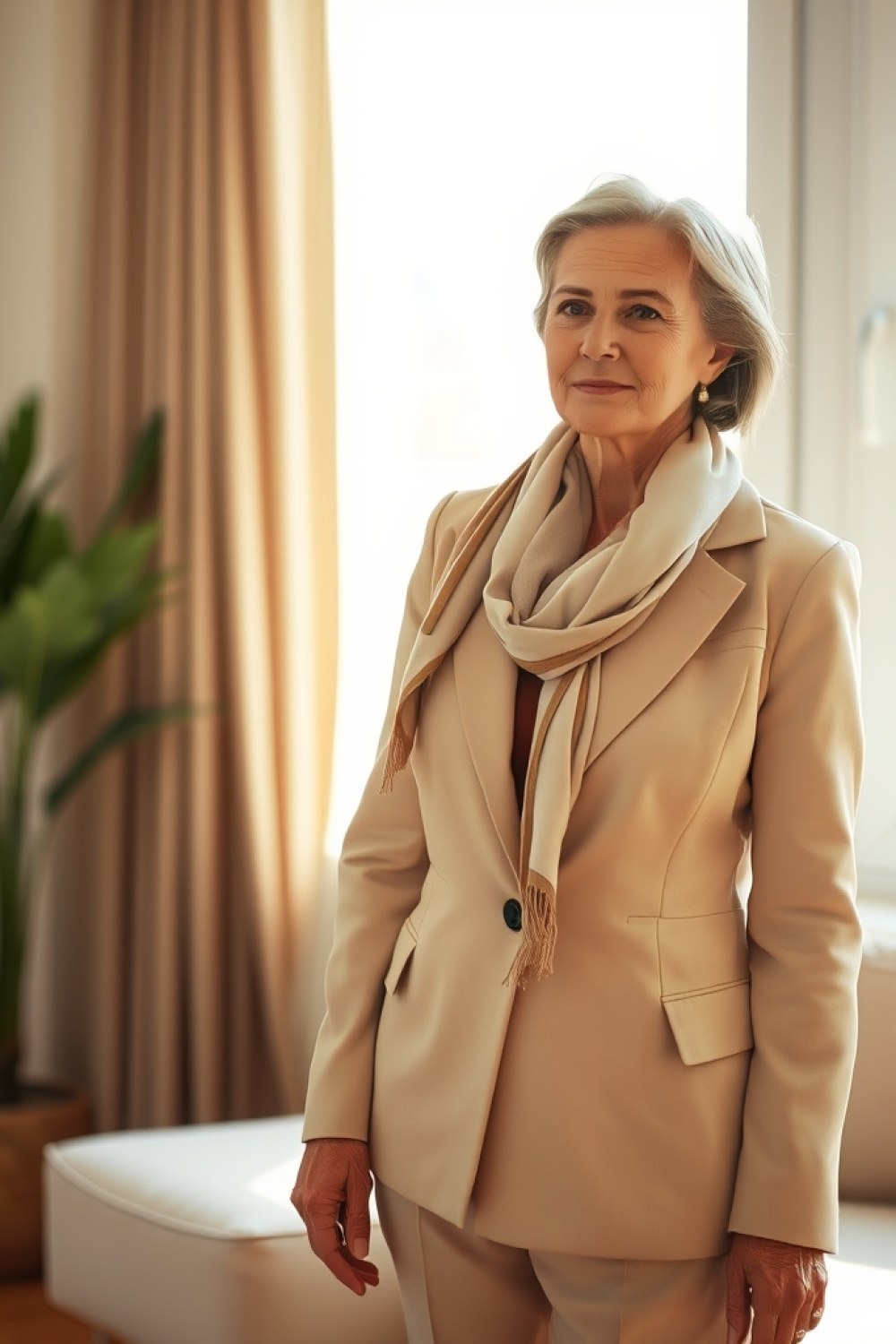
A belt defines your waist and finishes an outfit in one move. Choose the width to balance your torso: wider belts suit longer torsos, thinner belts suit shorter ones. If you’re between, a two-inch belt is a safe middle ground.
Matching your belt to your shoes creates a cohesive line that reads polished without effort. Black with black, tan with tan — it sounds small, and it works.
Try a belt over a long cardigan or a knit dress to carve out a waist. It changes the whole silhouette for the price of one accessory.
19. Keep Your Grooming Fresh

Grooming is the frame around every outfit. A fresh cut with movement, clean nails, and subtle makeup lift even a plain jeans-and-tee day. The trick is upkeep, not overhaul: regular trims keep shape, and a low-maintenance color that blends grays reads intentional rather than fussy.
Skin does more for a natural glow than any foundation. A simple routine — gentle cleanser, a hydrating serum, and daily SPF — pays off in how everything sits. Brows shaped but not overdone and a touch of lip color finish the look in under five minutes.
Book your next cut before you leave the salon and keep nails filed short and neat. Small, consistent habits make your whole wardrobe look better.
20. Edit Your Closet Regularly
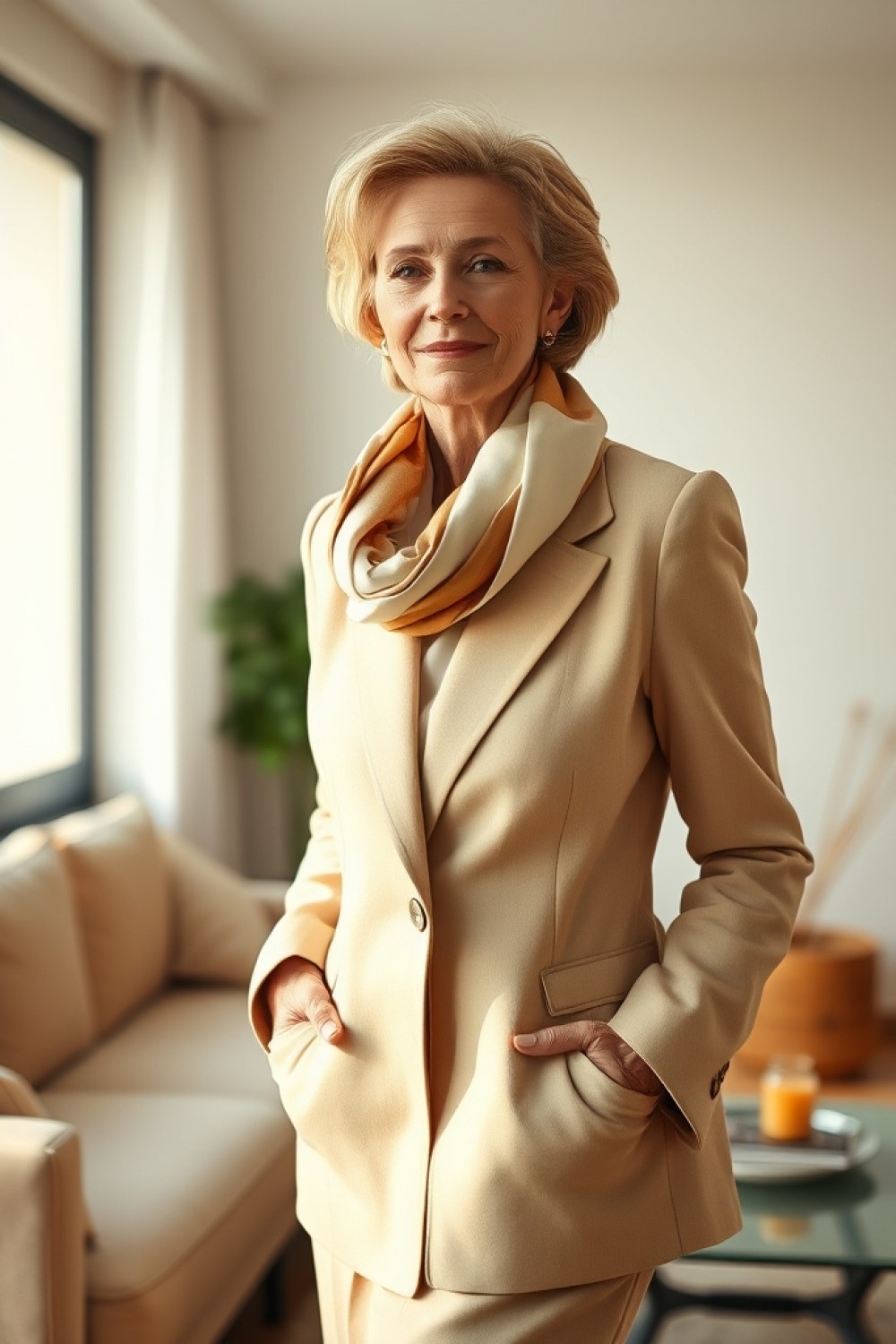
A curated closet makes getting dressed faster. Once or twice a year, pull everything out and ask three questions: does it fit, does it flatter, does it feel good? If the answer is no, it goes — no guilt, no “someday.”
Be strict about condition. Pilling, faded black, stretched knits, and worn elastic drag down the sharpest outfit. Store only what you’ll actually reach for, and hang the rest so you can see it. Space is a signal, not a waste.
Try the hanger trick: turn every hanger backward, then flip one forward each time you wear the piece. Whatever’s still backward after a season is your answer.
21. Wear What Makes You Feel Confident

Confidence is the one thing no one can buy, and it improves every outfit you own. When you feel good in what you’re wearing, your posture changes and people notice that before they notice the clothes. It’s the difference between wearing an outfit and an outfit wearing you.
This means trusting your instincts over outdated rules — no more “not at my age.” If a color, a sleeve length, or a bold lip makes you smile, it works. The catch is knowing the difference between what you love and what you’ve been told to love. Buy for the first.
Before you leave the house, check in with yourself: do you feel like you? If yes, go. If not, change the one thing that’s off — usually shoes or a layer — and walk out the door.
Frequently Asked Questions
What are the most flattering necklines for women over 50?
V-necks, scoop necks, and sweetheart necklines work because they draw the eye upward and elongate the neck. They also balance a fuller bust and soften the jawline. Skip high crew necks unless you add a long necklace to create a vertical line.
How can I look put-together without spending a lot?
Spend on fit and fabric, not quantity. Three well-tailored pieces in neutral colors outperform a closet of trends. Buy quality basics on sale and budget for a tailor — a $15 hem or sleeve adjustment makes a bigger difference than a new purchase.
Should women over 50 avoid short skirts?
No — it comes down to proportion. A hem just above the knee or at mid-calf is generally the most flattering. Balance a shorter hem with a covered top and simple shoes, and the look stays elegant.
What accessories make an outfit look more expensive?
A structured leather handbag, a silk scarf, a classic watch, and simple gold or pearl earrings. Pick one or two focal points and keep everything else minimal. Clean lines and quality materials read as expensive; logos don’t.
Building Your Signature Style After 50
Don’t try all 21 secrets at once. Pick two or three that fit your life right now — say, a V-neck top with your best jeans, a belt at your natural waist, and one structured bag — and wear them this week. Notice how people respond and how you feel in photos.
Then layer in the next one. A tailor visit, a shoe swap, a strand of pearls instead of a statement necklace. Each small change teaches you what your style actually is, and within a few months your closet starts working as a system instead of a pile of maybes.
Discover more from Fashinate Style
Subscribe to get the latest posts sent to your email.