

The most useful thing Grandma owned wasn’t a recipe box — it was a set of habits. A coffee can of bacon drippings on the stove, a skillet that never saw soap, fingers that measured salt before anyone thought to check. None of it was written down, which is exactly why most of it has already been lost.
You don’t need her recipes to get it back. You need the small moves: how she built flavor from what was already in the pan, how she cooked by sound and smell instead of a timer, how she got everyone sitting down at the same table on a Tuesday.
Here are 17 of those traditions, each with enough concrete detail to start using this week — what to save, what to skip, and how to hand it down before it disappears.
What You’ll Need to Put These Into Practice
- A 10- or 12-inch cast-iron skillet, seasoned and dry
- A glass jar or coffee can for saving bacon grease, kept by the stove
- A wooden spoon, a flat-edge spatula, and your clean hands
- Kosher salt, whole black peppercorns, and a pepper mill
- A covered pot big enough for Sunday’s batch cooking
- A stack of index cards and a pen for writing things down
1. The Cast-Iron That Never Gets Washed
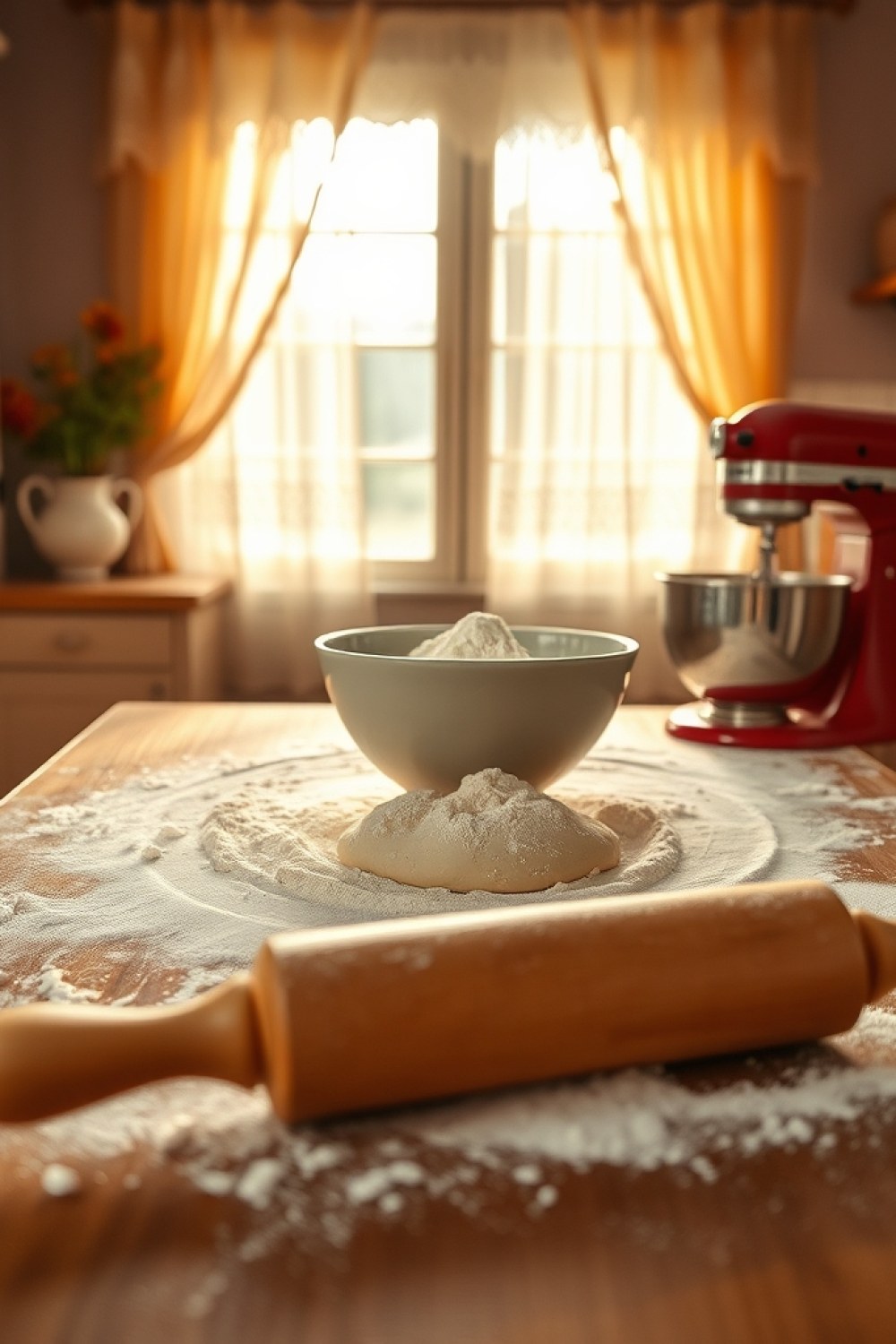
Best for: anyone who scored (or inherited) a black, slick skillet and is scared to ruin it.
A skillet seasoned over decades beats any nonstick pan for cornbread, fried chicken, and a hard sear. The seasoning is polymerized oil, and soap strips it.
Rinse with hot water and a stiff brush, dry on the stove over low heat, then wipe a dime-size drop of flaxseed or canola oil across the inside while it’s warm. Skip soap, never soak it. Sticky surface? Scrub with coarse salt and re-oil.
Try this: Write her name and the year she bought it on the handle in paint pen. That’s the piece that gets argued over later.
2. Bacon Grease in a Coffee Tin
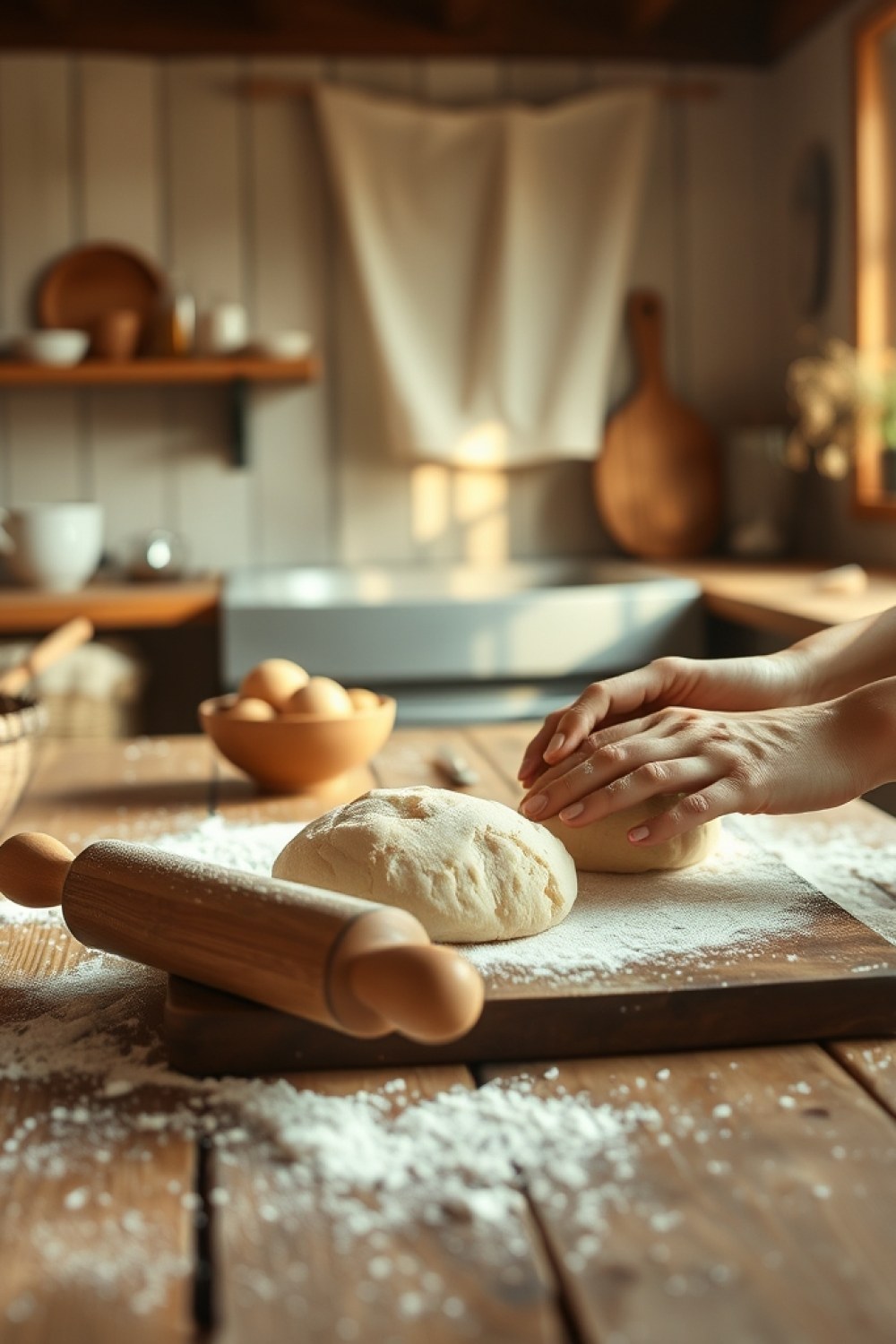
Best for: saving flavor instead of pouring it down the drain.
She kept a coffee tin or jar by the stove and poured off strained drippings into it — this is why her green beans tasted like a Sunday. Line a fine strainer with a coffee filter, let the fat cool slightly, strain, and refrigerate up to 3 months.
Try this: Use 1 tablespoon to start a pan of greens, fry eggs, or grease a skillet for cornbread. Rendered in small amounts, it’s the same habit farm kitchens ran on for a century.
3. Pinch, Dash, and a Little More
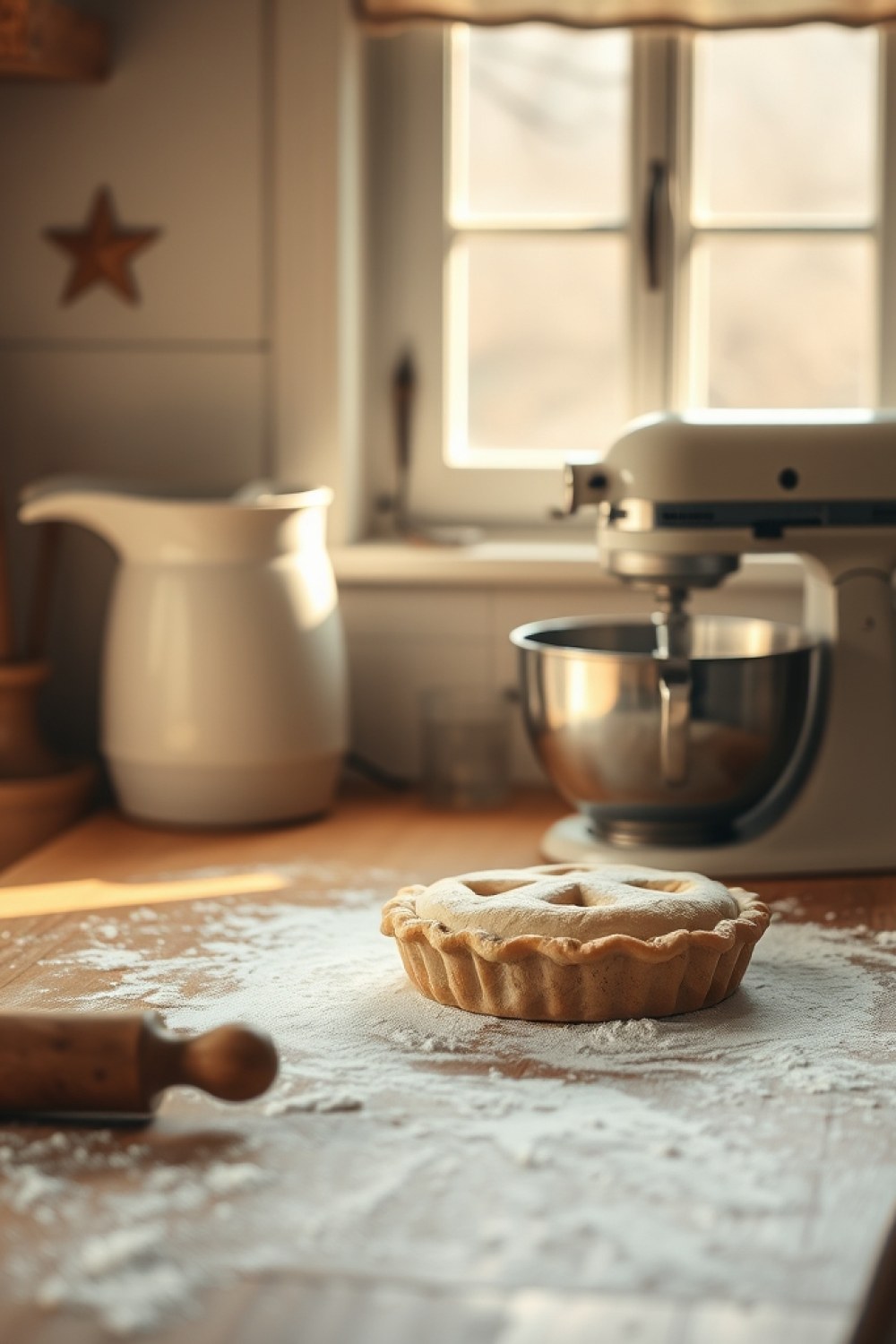
Best for: cooks who want to stop reading the recipe card twice per step.
Grandma measured with her hand. A pinch is what fits between thumb and forefinger — roughly 1/16 teaspoon — a dash is about 1/8 teaspoon, and a “glug” of oil is 1–2 tablespoons.
Encourage grandkids to season, taste, and adjust instead of measuring. Learning to cook by feel is what makes a person able to cook anything without a recipe, and it’s the skill most lost when everything comes from a screen.
Try this: Have them salt the pot, hand you a spoon, and say what it needs next.
4. The Sunday Pot of Something
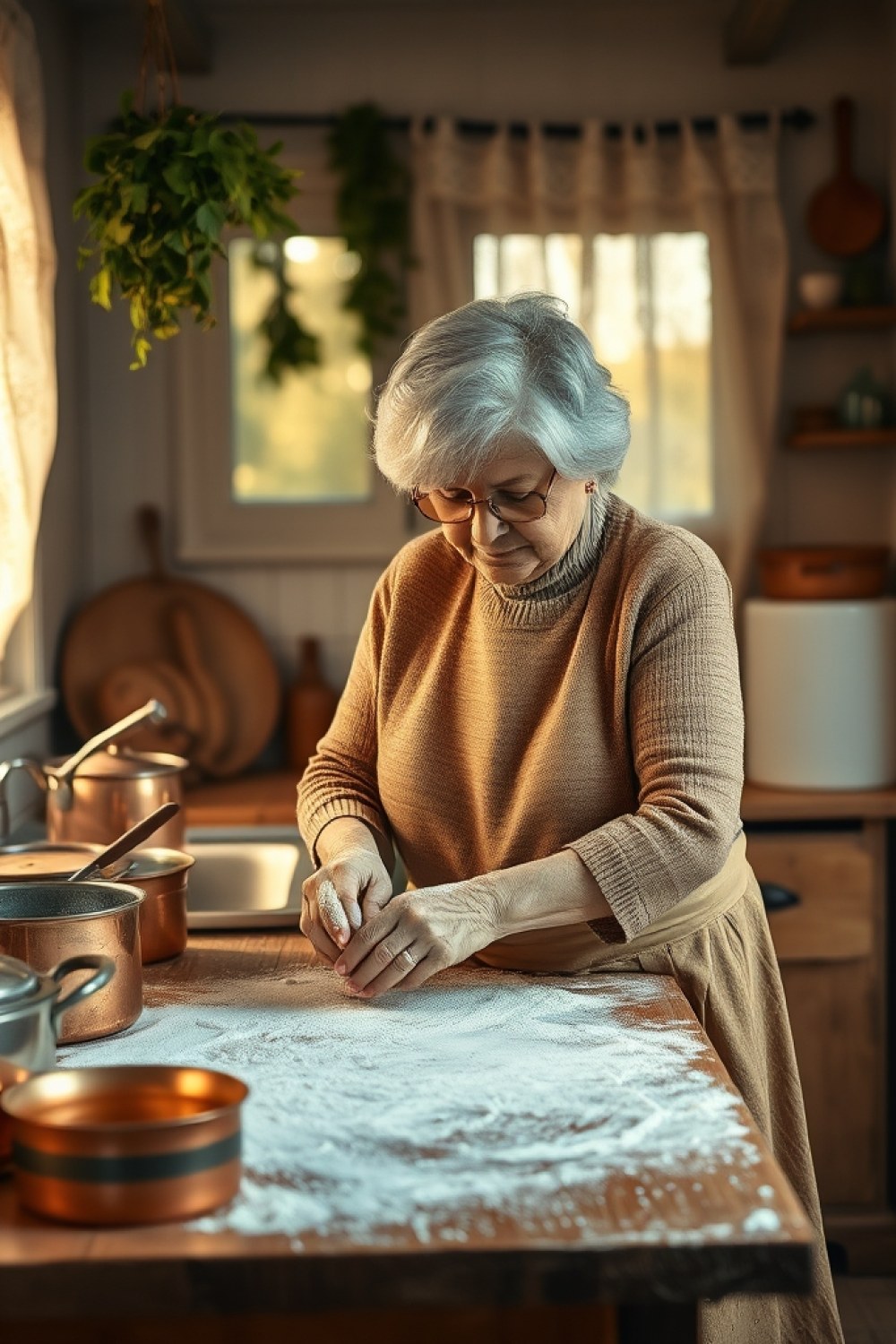
Best for: families who want a tradition that doesn’t depend on anyone’s energy level.
Beans, chicken and dumplings, a roast, soup bones simmering since church let out — the dish mattered less than the standing appointment. Pick one day, one pot, one recipe you make nearly every week for a year.
That repetition is what your kids will smell when they think of home, and it’s how you get actually good at one thing: no recipe needed after about the tenth time.
Try this: Write the day on the calendar in pen, not pencil.
5. Her Handwritten Recipe Cards
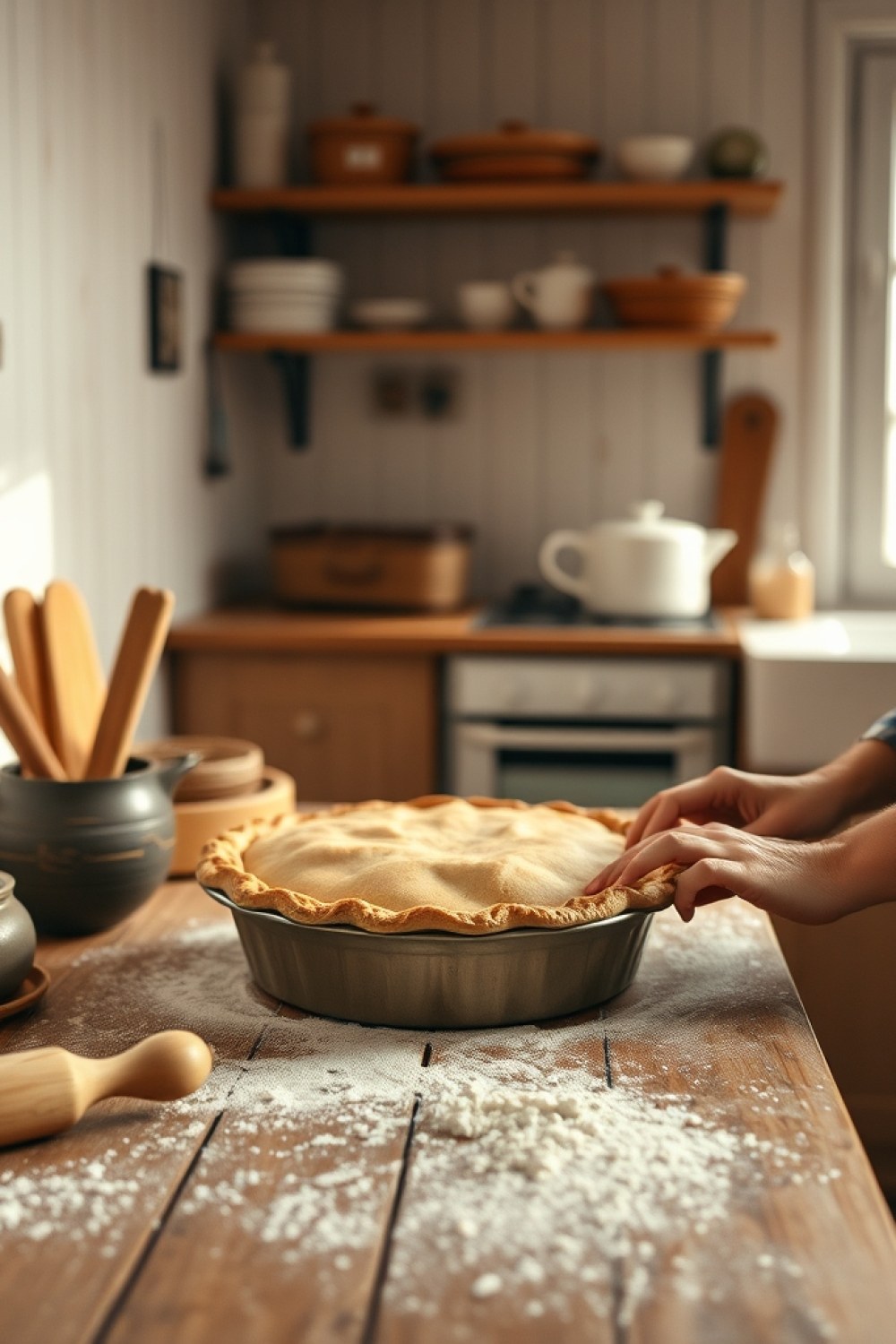
Best for: anyone holding index cards older than they are.
The cards splattered with butter are more valuable than anything printed. If they’re fragile, scan or photograph each one now — front and back — and store in the cloud before the ink fades.
Keep the originals in a recipe box or a small archival sleeve away from the stove.
Try this: When you cook from the card, don’t rewrite it into something tidy. The notes in the margin, the crossed-out sugar amount, are the history.
6. The Butter Tin for the Toast
Best for: households where toast happens daily and cold butter is a small daily grief.
Keep a small covered dish of salted butter out on the counter, changing it every 3–4 days, so toast and biscuits never have to wait. Softened butter spreads without tearing a slice of fresh bread, and there’s a real pleasure in a household where something is always ready.
Try this: In summer or in a hot kitchen, keep the dish in the fridge and just take out what you need 20 minutes before.
7. The Vinegar Jar in the Windowsill
Best for: everyday cleaning, prepping greens, and cooks who want one bottle to do ten jobs.
Grandma kept a jug of apple cider vinegar within arm’s reach: a splash in the sink for washing lettuce, a spoonful in slaw, a dab on a small burn to take the sting out, even a glug in a spray bottle with water for windows and counters.
Nothing here costs more than a few dollars, and none of it goes out of style.
Try this: Fill a spray bottle half vinegar, half water for counters and produce. Keep a small glass of vinegar in the fridge to splash into greens, slaw, and bean pots.
8. Cooking for the Sick Neighbor
Best for: new parents, anyone recovering, and families after a loss — when you want to help but don’t know what to say.
Food showed up on the porch with a name in Sharpie on the foil lid. That’s the whole tradition: cook double, freeze half, and keep it ready for the moment someone needs it.
Baked ziti, chicken pot pie, banana bread — anything that reheats without fuss. A disposable pan means no dish to chase down later.
Try this: Write the reheat temp and time right on the lid: “350°F, covered, 30 minutes.” Tape a note with your name so they know who to thank.
9. The Freezer Pie Crust Stash
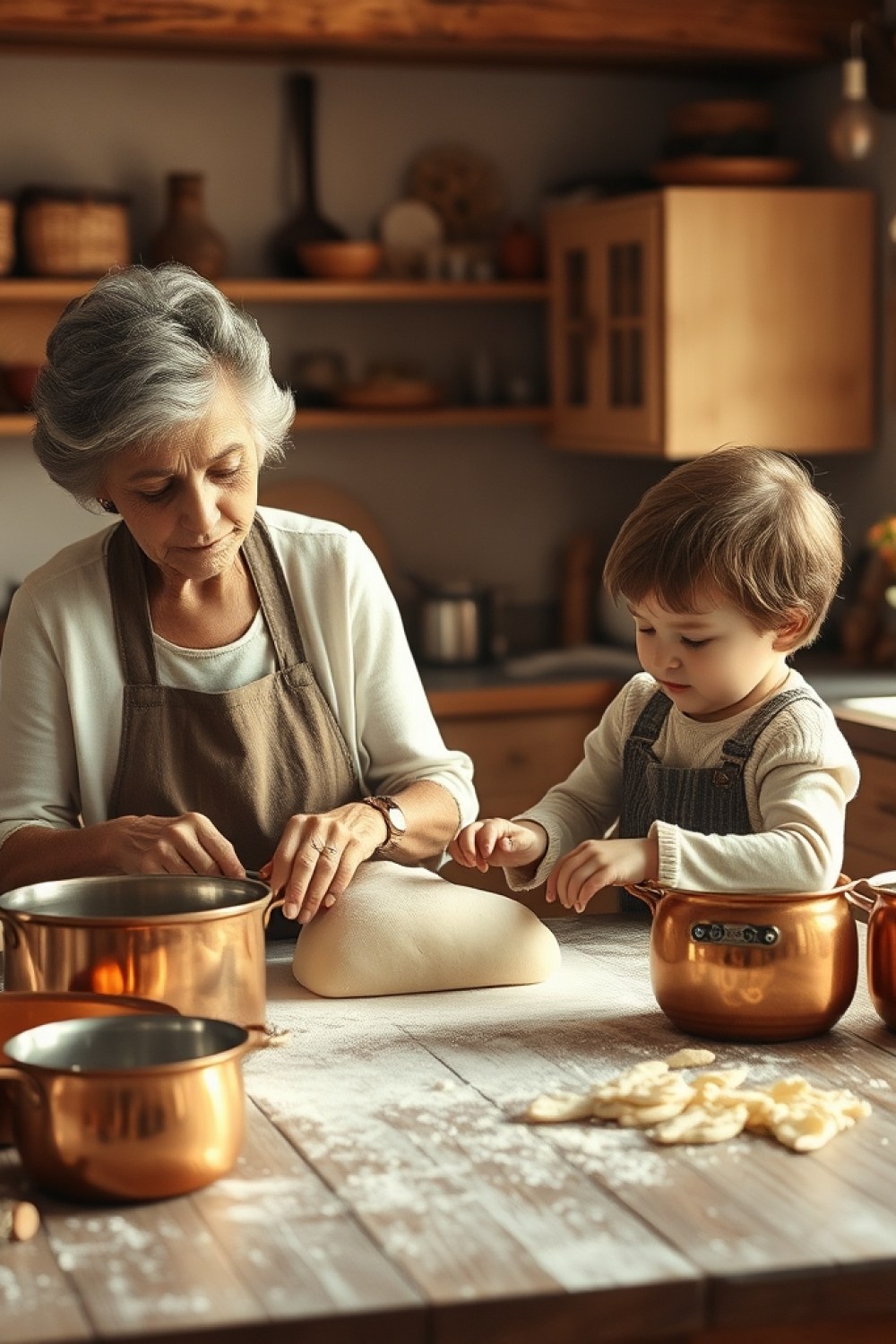
Best for: anyone who wants pie on a Tuesday without a project.
She made four crusts at once and froze the extras as flat discs. Whisk 2½ cups flour with 1 teaspoon salt, cut in 1 cup cold butter (or half butter, half shortening) until pea-sized, then add 6–8 tablespoons ice water until the dough just holds together.
Wrap each disc and freeze up to 3 months; thaw overnight in the fridge.
Try this: Next time peaches or apples land on the counter, you’re 20 minutes from a pie instead of an afternoon.
10. Save the Bones, Make the Broth
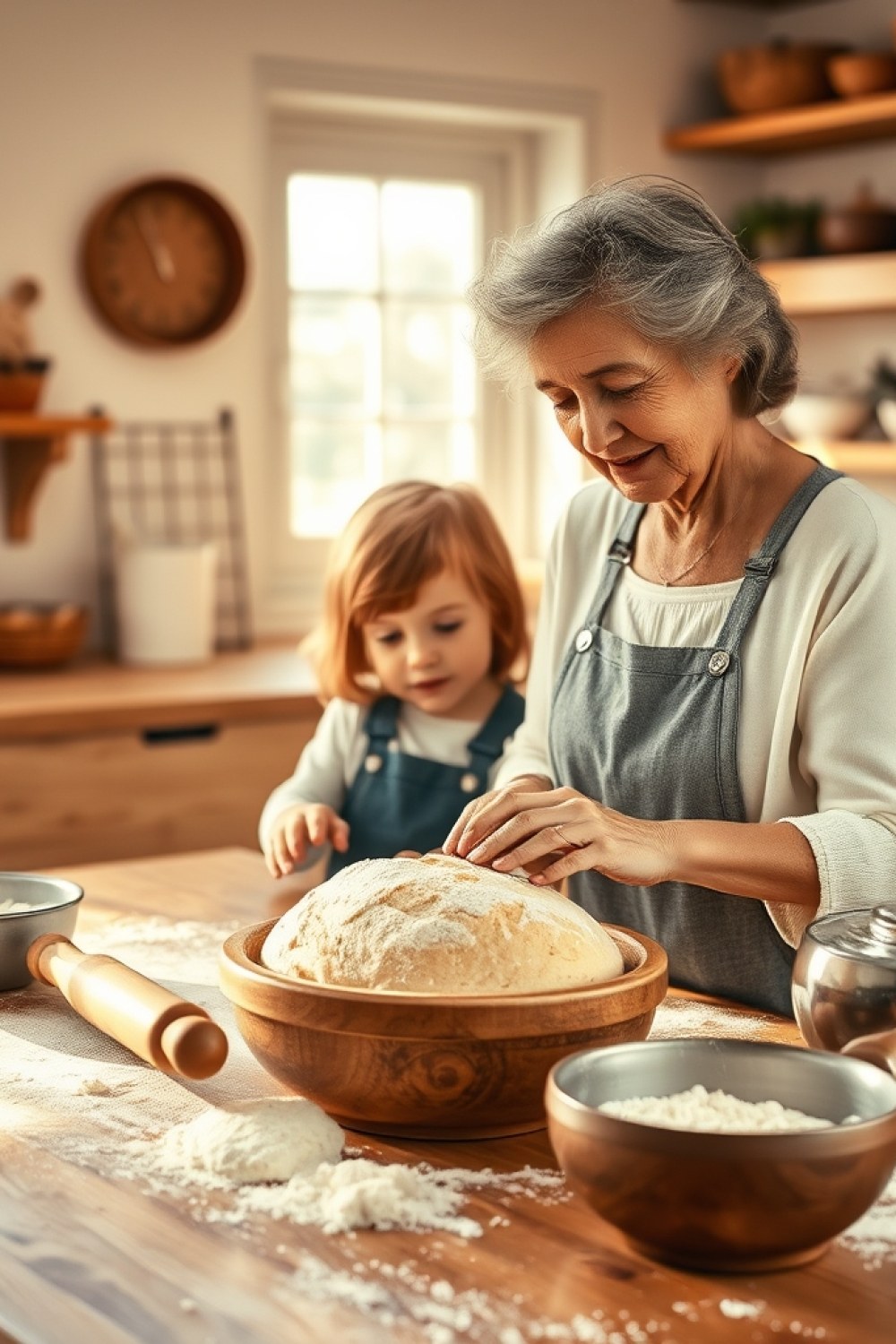
Best for: stockpot cooks who hate throwing away flavor.
A bag lives in the freezer door: chicken bones, onion ends, carrot peels, celery tops. When it’s full, dump it in a pot, cover with cold water, and simmer 4–6 hours on low. Never a hard boil — that clouds the broth.
Skim the foam, strain, and salt at the end, not the start.
Try this: Cool it fast in a shallow pan, refrigerate, and lift off the fat cap. Freeze in 2-cup portions so recipes are easy to measure.
11. Company Dishes on a Weeknight
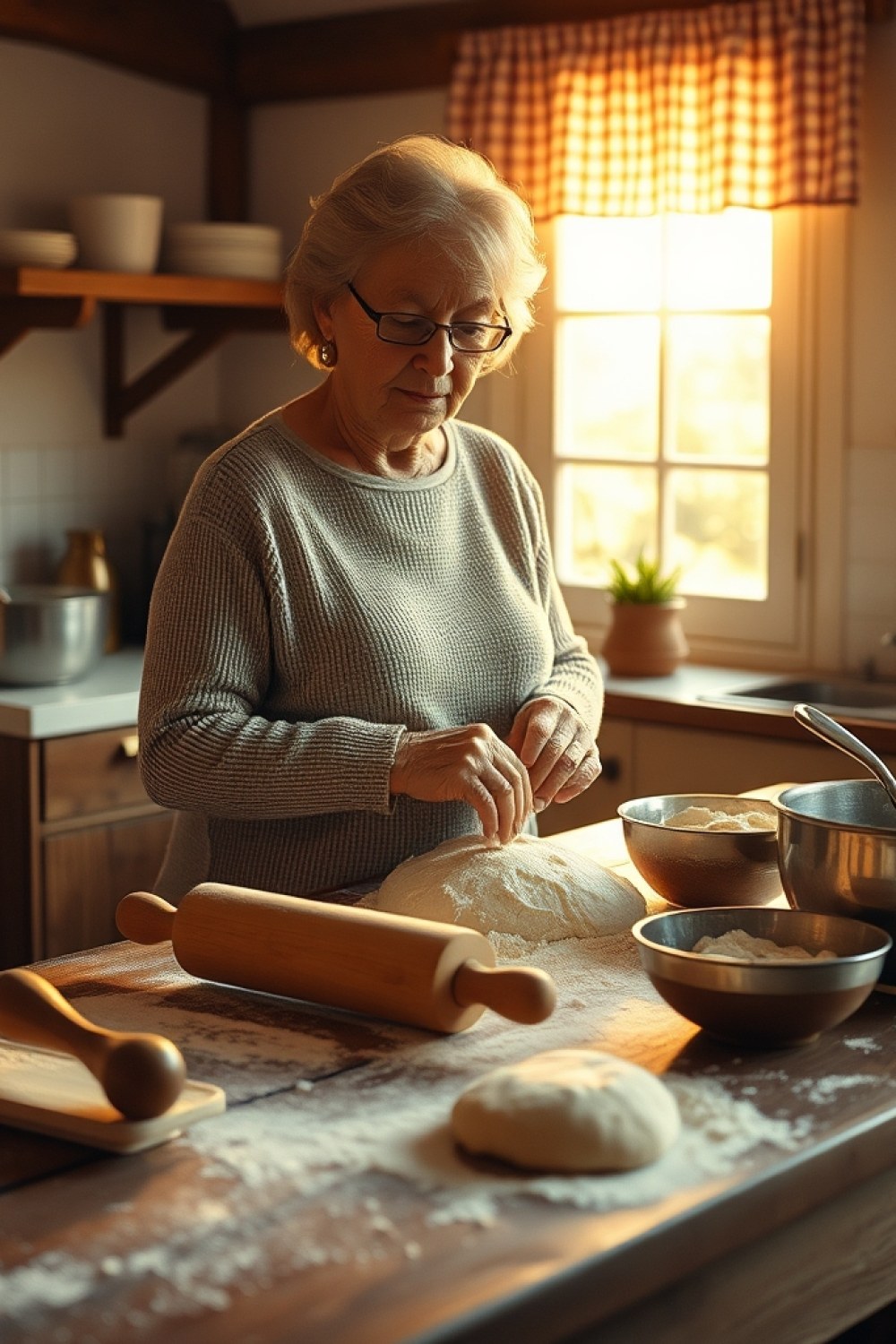
Best for: breaking the habit of saving the good stuff for someday.
She never waited for a holiday. Cloth napkins on a plain Tuesday, a candle lit, dinner served on the plates she loved. The chipped ones that survived a marriage and three moves are exactly the ones worth using — a shelf of untouched china helps no one.
Wash the good pieces by hand and keep gold-rimmed plates out of the microwave.
Try this: Pick one weeknight this week, set the table properly, and use the dishes you’d normally save. Notice how different the meal feels.
12. Season the Table, Not Just the Food
Best for: families where everyone wants their bowl a little different.
Salt and pepper shakers, a small bowl of flaky salt, butter, and a jar of pickles or preserves sat on her table every single night. The point wasn’t decoration — it was giving people the tools to fix their own bowl without asking.
And there was always one condiment that was hers: tomato relish, bread-and-butter pickles, pepper jelly.
Try this: Put out three things tonight — salt, butter, and one jar from your fridge. Watch how much more people eat when they get to choose.
13. The Walker, the Stool, and the Kid Job
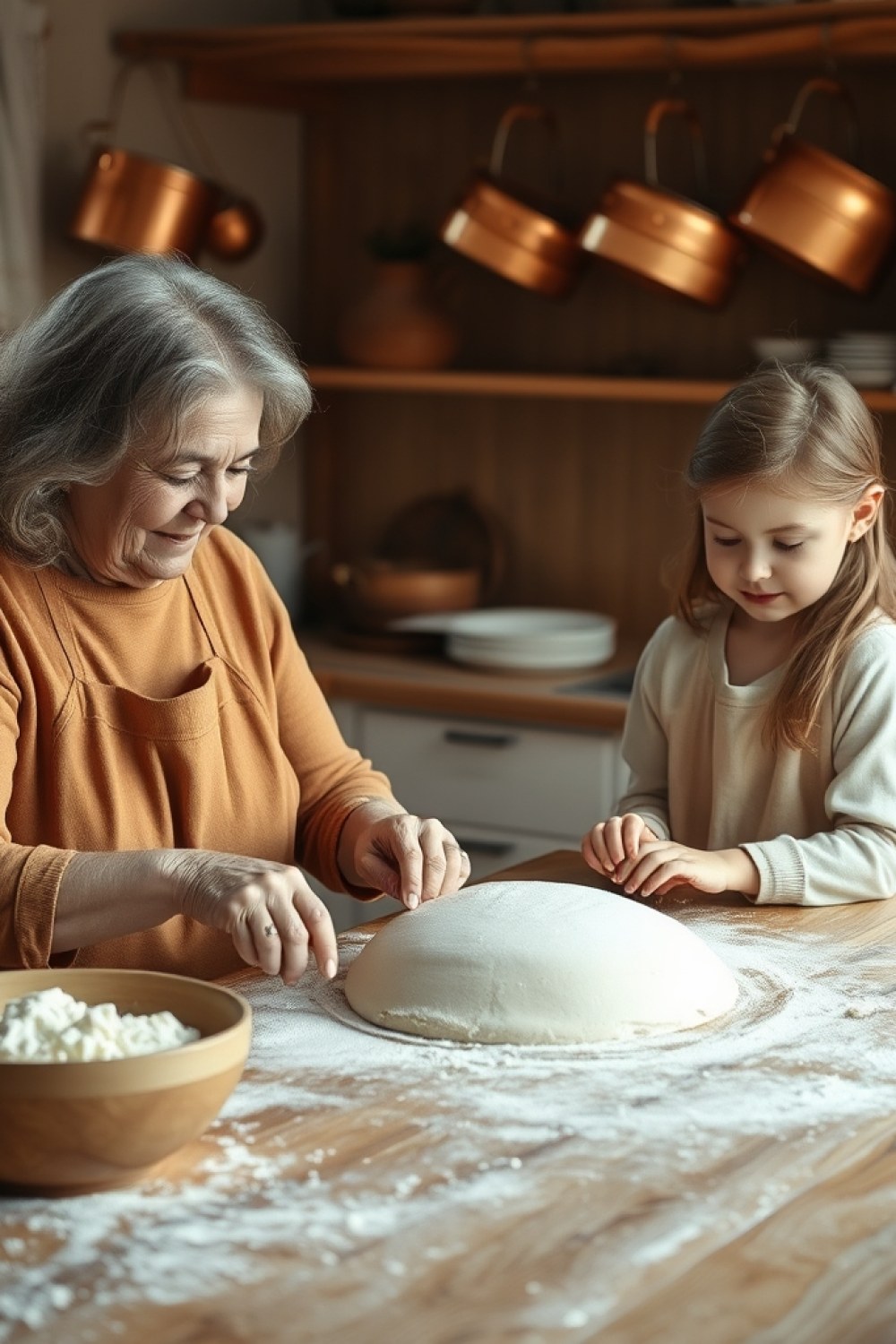
Best for: any kitchen with a child tall enough to reach the counter and short enough to need a stool.
Assign real stations instead of pretend ones. The oldest snaps the ends off green beans, shells black-eyed peas into a bowl, peels potatoes over newspaper, or counts dough scraps back into a ball. The youngest stands on the stool at the counter with a task that actually feeds people — no plastic food, no empty mixing bowls.
Flour will hit the floor. So will a cup of cornmeal, and someone will cry about it. Sweep it up and keep going. The mess is the cost of a kid who can cook by twelve.
Try this: a small rolling pin, a butter knife, and a bowl of dough scraps. Roll, cut, bake on a separate sheet. Theirs, not yours.
14. Recipes in the Spelling They Were Written
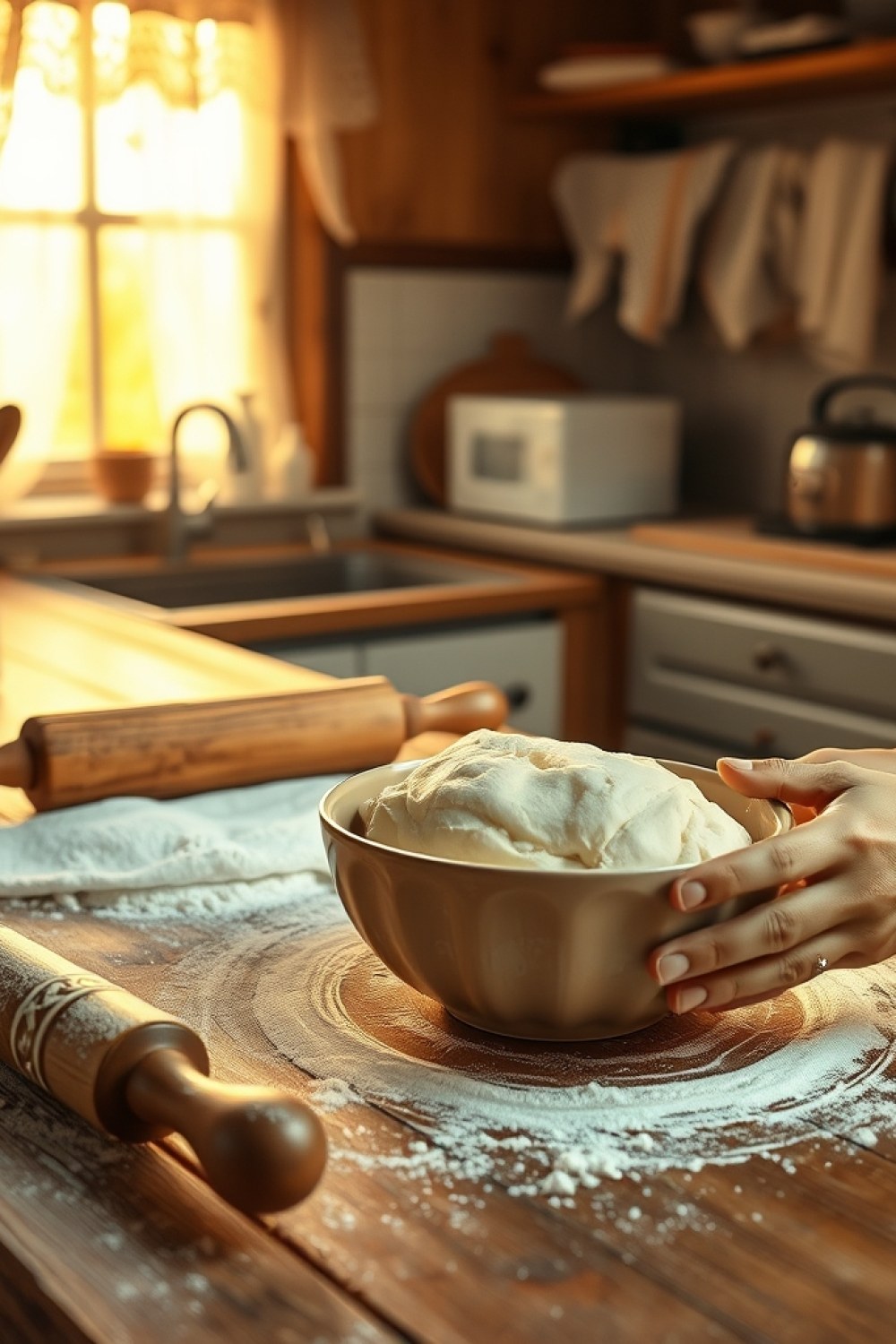
Best for: anyone holding a handwritten card in a relative’s handwriting and trying to guess what “sody” means.
Write it down the way she said it. “Lite” for light. “Sody” for baking soda. “A grate of nutmeg.” “Butter the size of a walnut.” “Cook till it looks right.” If you translate too early, you lose the voice — and the voice is half of why you keep the card.
Start a running list in the back of your recipe book: family phrases, odd measurements, dialect words, with a short note on who said what. “Mom-Mom, Eastern Shore, said ‘a smidgen’ for a pinch.” In a generation, those words are gone unless someone writes them. It costs nothing and it’s the most irreplaceable page in the book.
Try this: next time you cook with her or from her card, keep a pen nearby and write the phrase exactly as it’s spoken. Don’t correct it.
15. The Kitchen Radio and the News
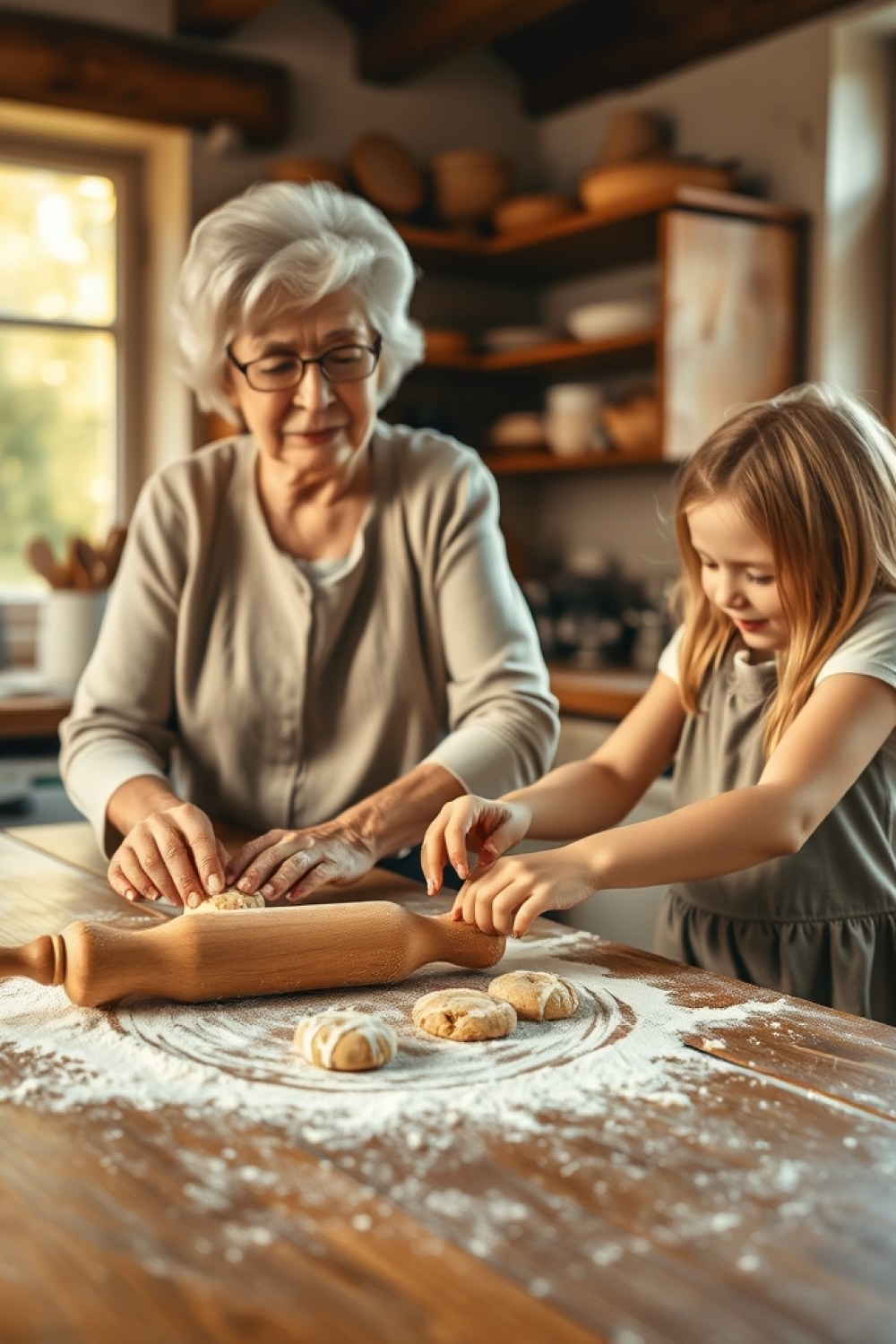
Best for: anyone who wants their kitchen to sound like something, not just run in silence.
Her radio was on for the ballgame, the church service, or the garden report — the same program at the same hour, so the afternoon had a shape. Pick your version and make it consistent. An oldies station. A jazz playlist. A Saturday morning podcast while the biscuits go in.
Consistency is the whole trick. Sound is one of the strongest memory anchors we have. Your grandkids will hear one particular song in thirty years and be right back at your counter, watching you cut butter into flour.
Try this: choose one album, station, or show that plays only in the kitchen. Keep it on during cooking, off during eating, so the table stays for talking.
16. Waste Nothing, Including the Ends
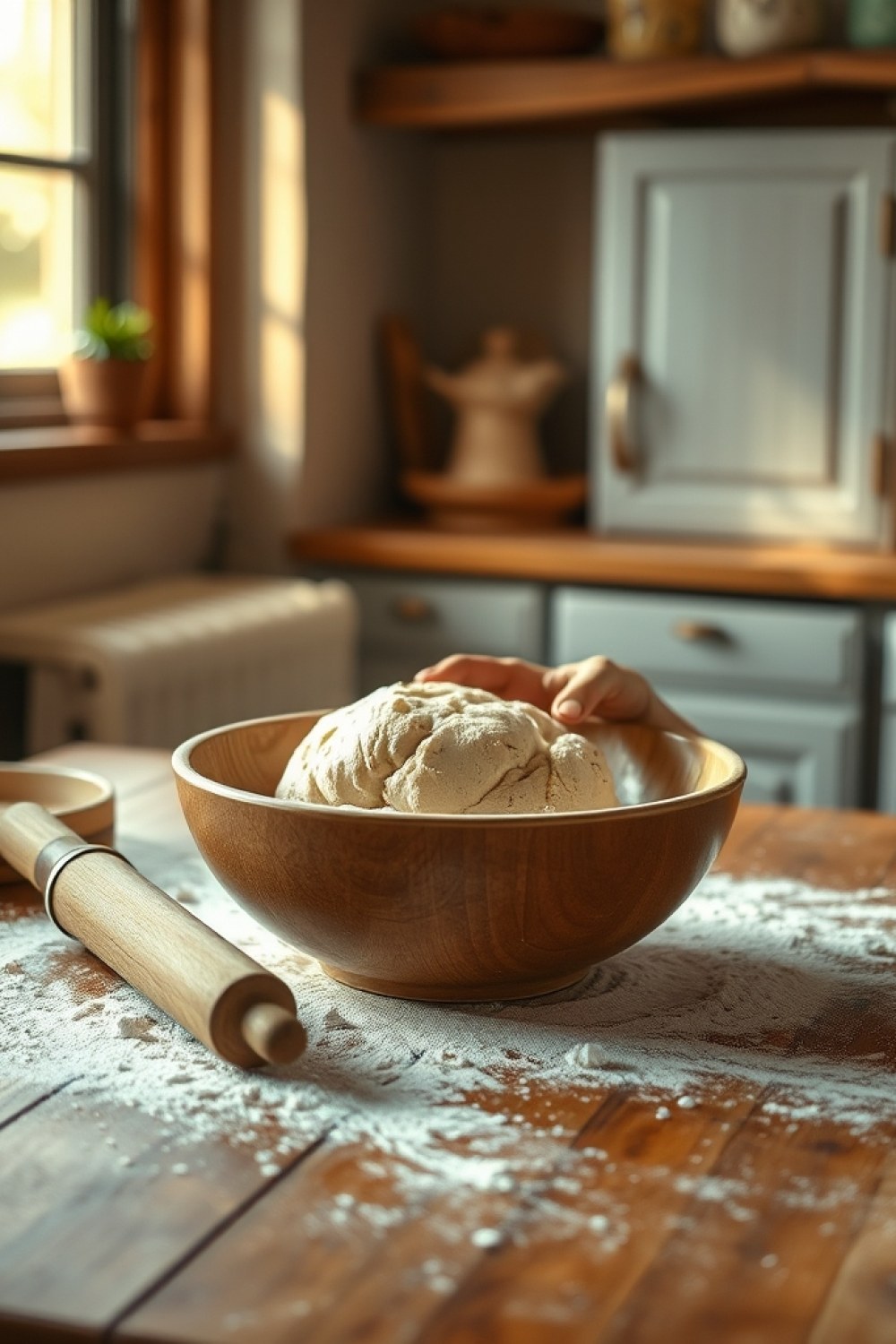
Best for: households trying to stretch a grocery bill without eating the same dinner twice.
Bread heels go into breadcrumbs in the freezer. Sour milk becomes pancakes. Overripe bananas become loaf cake. Stale cake becomes trifle. A ham bone becomes split pea soup with an onion and a bay leaf. This is economy and creativity at once — and it’s how a household fed six people on one chicken.
Keep two containers in the freezer: one labeled “crumbs,” one labeled “broth bits” for carrot peels, onion ends, celery leaves, and chicken bones. Check both before you shop. Most weeks, dinner is already in there.
Try this: freeze the ham bone with a cup of its own broth in the pot. Label the date. Soup within three months.
17. Cooking the Family’s Real Food
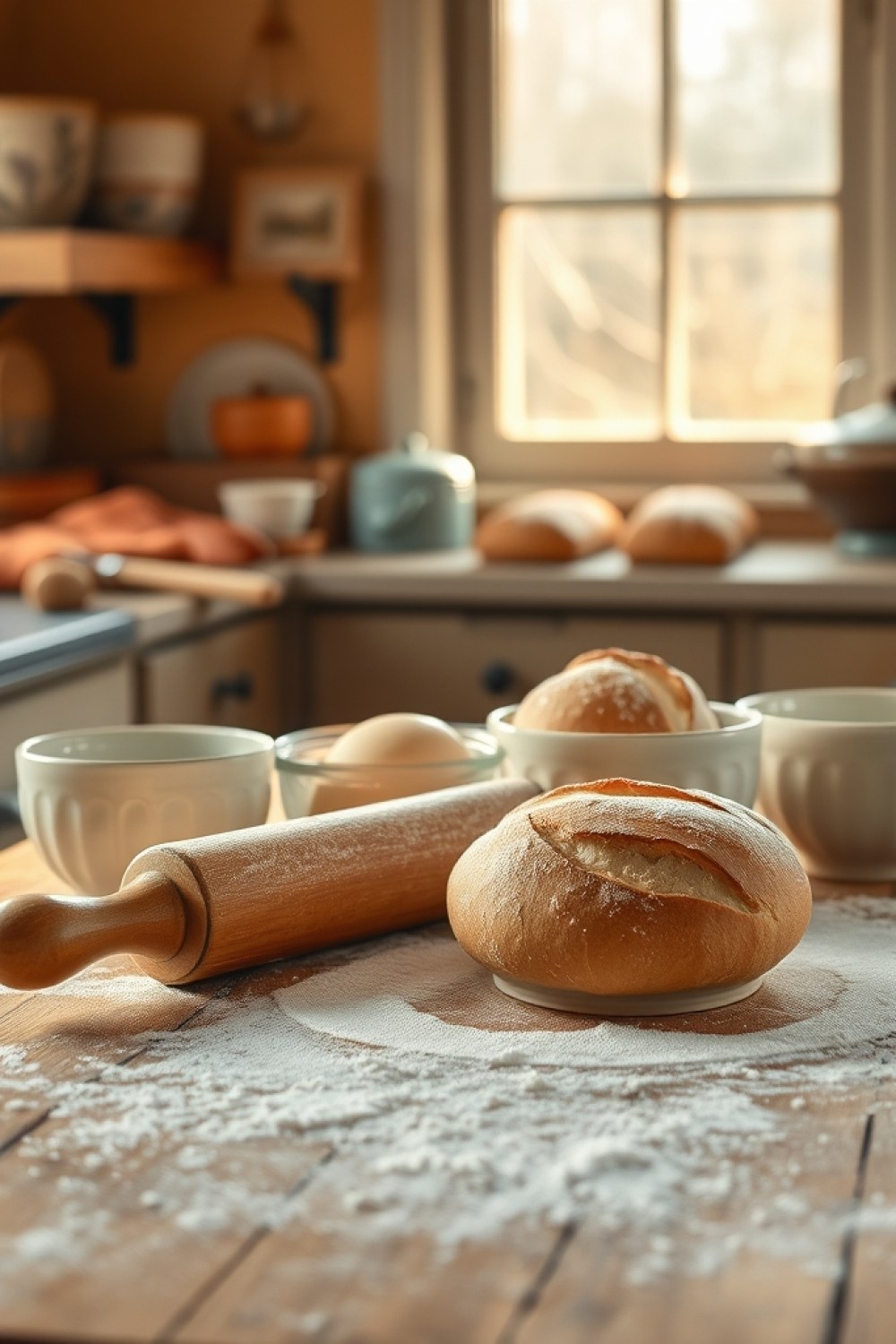
Best for: anyone who has ever “improved” a grandmother’s recipe and wondered why it didn’t taste like hers.
Not the trendy version. The real ones: greens with a smoked turkey wing, dressing made from cornbread that dried on the counter overnight, sweet potato pie with nutmeg and not cinnamon. Cook them as written first, at least once, all the way through, before you change a thing.
Then write down what you changed and why. Less sugar. More salt. Baked in a glass dish instead of metal. Say why, so the next cook knows the difference between a variation and a mistake.
Try this: make the original once a year on the same date. That’s the version that survives.
Questions About Grandma’s Kitchen Traditions
How do I save my grandma’s recipes if she never measured anything?
Cook alongside her with a scale or measuring cups on the counter, and stop her mid-pour to note the amount. She’ll grumble — write it down anyway. If she’s already gone, cook from memory: taste, adjust, and write down every change until the dish matches what you remember. Don’t wait for perfection. A close version that gets made every year beats a perfect one that never gets written.
Is it safe to keep bacon grease and butter on the counter?
Strained bacon grease keeps in a covered jar at room temperature for about a month, and up to 3 months in the fridge. If it smells rancid or looks foamy, toss it. Salted butter can sit in a covered dish on the counter for 3–4 days, but move it to the fridge in hot weather or a hot kitchen.
How do I clean a cast-iron skillet that hasn’t been used in years?
Scrub off rust with steel wool and hot water, dry it completely, then rub the whole pan with a thin layer of canola or flaxseed oil and bake it upside down at 450°F for an hour. Repeat once or twice. The black, slick finish comes back with use — keep cooking cornbread and bacon in it.
What’s the best way to pass these traditions to grandkids who live far away?
Do a monthly video call where you cook the same recipe at the same time, them following along in their own kitchen. Mail a printed recipe card with a note and a small tool — a wooden spoon, a jar of your pickles, a bag of your breadcrumbs. Give them one job they own: they make the rolls for Thanksgiving from now on.
Which of these traditions should I start with if I feel like I’ve lost the habit?
Start with the Sunday pot and the recipe cards, in that order. A standing weekly dish gives you one anchor to build around, and writing down what you cook as you go means nothing gets lost while you’re learning. Everything else — the grease tin, the broth bag, the cast iron — grows naturally out of a kitchen that’s used most days.
Choosing Your First Three Traditions
Seventeen is a list. Three is a practice. Pick one standing meal — Sunday soup, Friday pancakes, whatever fits your week — one thing you save instead of throw away, and one habit you do with another person, whether that’s a kid stirring the cornbread or a neighbor who trades jars of stock. Write all three on an index card and tape it inside a cabinet door, where you’ll see it every time you reach for the flour.
Everything else can wait for a rainy Sunday. These traditions have survived longer than any of us, and they’ll keep — but only if somebody’s still cooking.
Discover more from Fashinate Style
Subscribe to get the latest posts sent to your email.