

The first time I woke at 3 AM drenched and wide awake, I assumed something was wrong with me. By the third week of it, I was bargaining with the ceiling — if I fall asleep right now, I can still get four hours.
Menopause insomnia is a special kind of lonely. The house is quiet, the world is asleep, and your mind is replaying every worry you own. These 19 gentle, natural approaches are the ones worth trying first — small shifts that give sleep a fighting chance. And if sleeplessness keeps winning, your doctor is the best next call; there’s no prize for suffering quietly.
💔 Why Menopause Insomnia Feels So Cruel
It isn’t just “bad sleep.” Shifting hormones can trigger night sweats that jolt you awake drenched, then leave you chilled and alert at exactly the wrong hour. Add a mind that won’t quiet — the 3 AM worry spiral — and mornings start feeling like something to survive rather than enjoy.
Here’s the reframe that helped me: this isn’t a personal failure, and it isn’t permanent for most women. It’s a season, and seasons respond to small, steady care. The remedies below won’t fix everything overnight, but each one removes one more obstacle between you and rest.
1. ❄️ Keep the Room Deliciously Cool

A cool room is the single biggest favor you can do a menopausal body. When your internal thermostat is already misbehaving, a bedroom around 65°F gives night sweats less fuel — and cool air genuinely helps everyone fall asleep faster.
Try this: Set the thermostat near 65°F an hour before bed → climb into cool sheets.
**Make it yours:** A bedside fan pointed at your pillow doubles as white noise.
**Gentle note:** If a partner runs cold, give them an extra blanket rather than warming the room.
2. ⏰ Stick to a Steady Schedule

Your body clock loves predictability, especially when hormones are rewriting the rules. Going to bed and waking at the same times — weekends included — trains your system to expect sleep instead of fighting it.
Try this: Pick a wake time you can keep seven days a week → anchor everything to it.
**Make it yours:** Shift gradually: move bedtime 15 minutes earlier every few nights.
**Gentle note:** A consistent wake time matters even more than a consistent bedtime.
3. 📖 Build a Wind-Down Ritual

You can’t sprint straight from email into sleep — your nervous system needs a landing strip. A 30-minute ritual of calm, repeated nightly, becomes a cue your body learns to obey.
Try this: Same three calming steps, same order, every night → sleep learns the signal.
**Make it yours:** Dim the lights first; brightness is the strongest “stay awake” signal.
**Gentle note:** Keep it short enough to repeat on your worst, busiest days.
4. 🚶♀️ Walk in Daylight

Daytime movement — especially outdoors — is one of the most reliable sleep supporters there is. Morning light sets your body clock, and gentle exercise eases the anxiety that fuels 3 AM wakefulness.
Try this: A 20–30 minute walk most days, ideally before noon → daylight does the heavy lifting.
**Make it yours:** Finish vigorous exercise at least three hours before bed.
**Gentle note:** Even a stroll around the block counts on low-energy days.
5. ☕ Cut Caffeine by Early Afternoon

Caffeine lingers far longer than it feels like — that 3 PM cup can still be whispering “stay awake” at midnight. After 50, many women find they metabolize it more slowly than they used to.
Try this: Make noon your last coffee → switch to herbal tea after.
**Make it yours:** Watch hidden caffeine: chocolate, some teas, and certain headache pills.
**Gentle note:** Taper gradually if you’re a heavy drinker — headaches aren’t restful either.
6. 🍵 Rethink the Nightcap

Wine feels relaxing, but alcohol fragments sleep — especially the second half of the night, when it can trigger wakefulness and sweats. Many women are surprised how much better they sleep after a week without it.
Try this: Swap the evening glass for a warm ritual drink → compare your sleep after a week.
**Make it yours:** If you do drink, keep it early in the evening and modest.
**Gentle note:** Notice the pattern yourself — your own evidence convinces fastest.
7. 🧘 Try 4-7-8 Breathing

When your mind is racing, the fastest way to calm it is through the body. Slow, counted breathing tells your nervous system the emergency is over — and it works even when you feel skeptical.
Try this: Inhale 4 counts, hold 7, exhale 8 → repeat four rounds in bed.
**Make it yours:** Place a hand on your belly to feel it rise and fall.
**Gentle note:** Use it at 3 AM wake-ups too, not just at bedtime.
8. ✍️ Journal the Worries Out

A racing mind is often just a mind afraid of forgetting. Getting tomorrow’s tasks and tonight’s worries onto paper gives your brain permission to let go of them.
Try this: Five minutes of brain-dump before bed → close the notebook, close the day.
**Make it yours:** Keep the journal on the nightstand for 3 AM thought-catching too.
**Gentle note:** Messy counts — nobody grades a worry journal.
9. 🧘♀️ Progressive Muscle Relaxation

Tense each muscle group for five seconds, then release — toes to face. The contrast teaches your body what “relaxed” actually feels like, and the focus gives worried thoughts nowhere to land.
Try this: Work slowly from feet to forehead in bed → notice the melting feeling.
**Make it yours:** Pair with slow breathing for a double calming effect.
**Gentle note:** Guided audio versions exist if you prefer being talked through it.
10. 😴 Keep Naps Short and Early

Naps aren’t the enemy — long, late naps are. A brief early-afternoon rest can rescue a rough day without stealing the night, which matters when nights are already fragile.
Try this: 20–30 minutes, before 3 PM → set an alarm and honor it.
**Make it yours:** Nap on the couch, not in bed, to protect the bed=sleep association.
**Gentle note:** If naps wreck your nights, skip them for a week and compare.
11. 🛏️ Make the Bed for Sleep Only

When your bed doubles as office, theater, and worry headquarters, your brain stops associating it with sleep. Reclaiming the bed as a sleep-only zone is a cornerstone of the best insomnia therapy there is.

Try this: Move screens, work, and scrolling out of the bedroom → bed means sleep.
**Make it yours:** If you’re awake and frustrated for 20 minutes, get up until sleepy.
**Gentle note:** Reading in bed is fine — doomscrolling is not.
12. 🛁 Take a Warm Bath or Shower

A warm bath an hour or two before bed gently raises your body temperature — and the cooldown afterward mimics the natural temperature drop that triggers sleepiness. It’s physiology disguised as luxury.
Try this: Warm (not hot) soak, 60–90 minutes before bed → let the cooldown do the work.
**Make it yours:** Add lavender scent if you enjoy it; ritual matters as much as chemistry.
**Gentle note:** A warm shower works too when a bath feels like too much effort.
13. 🍵 Sip Something Soothing

A warm, caffeine-free drink is less about the herbs and more about the ritual — a delicious full stop at the end of the day. Chamomile, valerian blends, and warm milk with honey are the classics for a reason.
Try this: One warm cup, same time nightly → make it the period at the end of your day.
**Make it yours:** Keep it small to avoid the 2 AM bathroom trip.
**Gentle note:** Skip anything with hidden caffeine, including most “chai” blends.
14. 🧥 Layer Bedding for Night Sweats

You can’t stop a night sweat, but you can stop it from ruining the whole night. Light, breathable layers you can throw off and pull back beat one heavy duvet every time.
Try this: Cotton or bamboo layers instead of one thick comforter → adjust without fully waking.
**Make it yours:** Moisture-wicking sleepwear helps as much as the sheets do.
**Gentle note:** Keep a dry top within arm’s reach for the worst nights.
15. 🧘♀️ Practice a Body Scan

A body scan moves your attention slowly from your toes to the crown of your head, noticing each part without judgment. It’s meditation for people who think they can’t meditate — no empty mind required.
Try this: Linger on each body part for a few breaths → drift is the goal, not perfection.
**Make it yours:** Start with your feet; most people never make it past the knees.
**Gentle note:** Falling asleep mid-scan means it’s working.
16. ☀️ Get Morning Sunlight

Morning light is the strongest setter of your body clock — it tells your brain when “day” starts so it knows when night should begin. Ten minutes by a window counts; outside is even better.
Try this: Bright light within an hour of waking → anchors the whole sleep cycle.
**Make it yours:** Eat breakfast near a sunny window on days you can’t get out.
**Gentle note:** Dim the evenings to match — bright days, dark nights.
17. 💧 Ease Up on Late Fluids
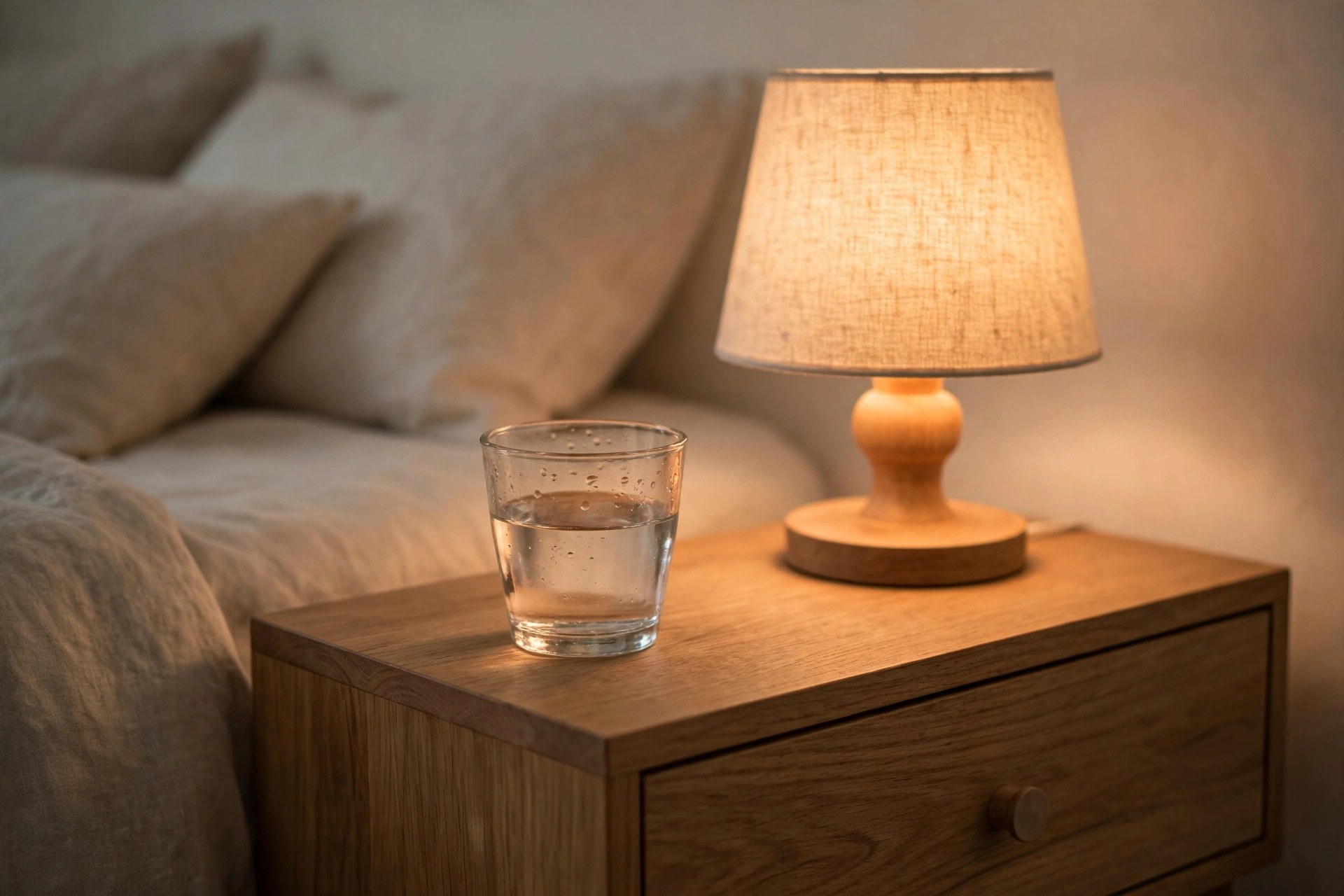
Waking to use the bathroom fragments already-fragile sleep. Staying well hydrated during the day — then tapering fluids in the last two hours before bed — reduces those interruptions.
Try this: Front-load water during the day → small sips only after dinner.
**Make it yours:** Keep a small glass (not a big bottle) by the bed for thirst.
**Gentle note:** If nighttime trips are frequent or urgent, mention it to your doctor.
18. 📖 Learn the Basics of CBT-I

Cognitive behavioral therapy for insomnia is widely considered the most effective long-term approach to chronic sleeplessness — no medication involved. Its core ideas (steady schedule, bed=sleep, calming worry) are learnable from books and programs.
Try this: Read one reputable CBT-I guide or ask your doctor about programs → skills last longer than pills.
**Make it yours:** Many programs are now available online or through sleep clinics.
**Gentle note:** This is education, not a prescription — a trained provider personalizes it.
19. 📓 Track Your Patterns for a Week

A simple sleep diary — bedtime, wake time, night wakings, caffeine, exercise — often reveals patterns you’d never spot from inside the exhaustion. It’s also gold for any doctor or sleep specialist you consult.
Try this: One week of honest notes → look for the triggers and the good nights.
**Make it yours:** Note what helped on good nights, not just what hurt on bad ones.
**Gentle note:** Bring it to appointments — data beats “I just don’t sleep.”
One bad night doesn’t erase your health, and one good night doesn’t mean you’re cured — sleep comes back in patches, not all at once. Be as patient with your 3 AM self as you’d be with a dear friend going through the same thing.
❓ Menopause Insomnia FAQs
Is menopause insomnia permanent?
For most women it eases as hormones settle, though the timeline varies — months for some, a few years for others. The habits you build now (steady schedule, cool room, wind-down ritual) serve your sleep long after this season passes. If sleeplessness is severe or getting worse, talk to your doctor rather than waiting it out.
Are natural remedies enough, or will I need medication?
Many women find lifestyle approaches — especially consistent schedules and CBT-I techniques — genuinely improve their sleep. But “enough” is personal: if you’re functioning poorly despite real effort, that’s useful information for your doctor, not a failure. There’s no virtue in exhaustion.
What about melatonin?
Melatonin is a hormone your body makes naturally, and supplements are widely available — but they affect everyone differently and can interact with medications. Because dosing and quality vary, it’s worth a conversation with your doctor or pharmacist before trying it, especially long-term.
Why do I always wake up at 3 AM?
The early-morning hours are when sleep is lightest and when a night sweat, a full bladder, or a spike of worry can most easily pull you awake. A cool room, limited late fluids, and a “park it till morning” notepad by the bed each remove one common 3 AM trigger.
When should I see a doctor about my sleep?
If poor sleep persists for several weeks despite these approaches, if you snore heavily or gasp awake (possible sleep apnea), or if daytime exhaustion is affecting your safety or mood — make the appointment. Bring your sleep diary; it helps enormously.
🌙 Sleep Is a Skill You Can Rebuild
You don’t need all nineteen of these — pick the three that feel easiest and start tonight. A cooler room, a steadier schedule, and five minutes of breathing have quietly rescued more 3 AMs than any miracle cure ever has.
And on the nights it still doesn’t work? Be gentle with yourself. Rest — even quiet, wakeful rest — still counts for something. Better nights are coming; you’re already moving toward them.
📖 Keep Reading
- ⚖️ Menopause Weight Gain? 22 Gentle Diet Shifts That Help — the same season, the food side — gentle shifts that work with your changing body.
- 💧 Hydration After 50: 21 Easy Habits Beyond Just Drinking Water — hydration timing matters for sleep too — especially the evening taper.
- 🫒 Mediterranean Diet Over 50: 12 Delicious Ways to Start Tonight — an eating pattern linked with steadier energy — and calmer nights.
Discover more from Fashinate Style
Subscribe to get the latest posts sent to your email.