

What if the fastest fix for your foggy memory isn’t a puzzle — but a better night’s sleep? If you’ve been blaming your forgetfulness on age while running on five broken hours a night, this one is for you.
Here’s the gentle truth: sleep is when your brain files away the day — names, conversations, where you left your glasses. These 27 small, kind sleep habits help you drift off faster, stay asleep longer, and wake up with a clearer mind.
💤 Why Sleep Gets Trickier After 50
It isn’t your imagination. Shifting hormones, a lighter sleep architecture, and a mind that replays the day’s worries can turn nights into a patchwork of dozing and waking. And here’s the part nobody tells you: it’s not just about feeling tired — those restless nights are when your memories don’t get properly stored. The beautiful flip side? Even small improvements in your sleep habits can make your days feel noticeably clearer within a couple of weeks. You don’t need perfect sleep. You just need kinder nights.
1. ⏰ Keep a Fixed Wake Time

Of all the sleep habits, this one matters most — and it’s the one nobody wants to hear. Waking at the same time every day (yes, weekends too) anchors your body’s clock, which makes falling asleep at night dramatically easier. Your brain loves rhythm more than it loves lie-ins.
Try this: pick a wake time you can honestly keep seven days a week, and set it starting tomorrow.
Make it yours: if weekends feel sacred, allow yourself just 30 extra minutes — not two hours.
Budget tip: a simple alarm clock costs little and keeps the phone out of your bedroom too.
2. 🌅 Get Morning Sunlight Early

Bright light in the first hour of your day is the strongest “it’s daytime” signal your brain receives. It sets the timer for sleepiness to arrive roughly 14–16 hours later. Step outside or throw the curtains wide while your coffee brews.
Try this: spend 10 minutes in outdoor or bright window light before 10 a.m.
Make it yours: pair it with something you already do — morning tea, watering plants, a short stroll.
Avoid: don’t rely on indoor lighting alone; it’s far dimmer than daylight, even on gray days.
3. 🔅 Dim the Lights After Dinner

Bright overhead lights at night tell your brain the sun is still up. Switching to low lamps after dinner is one of the simplest sleep signals you can send. Your evenings will feel cozier, and your eyelids will start to agree.
Try this: at 8 p.m., turn off the big lights and switch to lamps or candles.
Budget tip: warm-toned low-watt bulbs in your existing lamps cost almost nothing.
Make it yours: make it a ritual the whole household follows — dimmer evenings for everyone.
4. 🛋️ The 90-Minute Wind-Down

You can’t sprint straight from a busy day into deep sleep — your nervous system needs a runway. Ninety gentle minutes of low-key activity (reading, stretching, chatting, tidying) lets your mind power down gradually. Think of it as dimming yourself, not just the lights.
Try this: set a “wind-down alarm” 90 minutes before bed as a reminder to slow down.
Make it yours: fill the time with things you genuinely enjoy — this should feel like a treat.
Avoid: don’t spend the wind-down on news, bills, or heated conversations.
5. 🚿 A Warm Shower Before Bed

A warm shower an hour or two before bed relaxes tense muscles — and the gentle cooldown afterward mimics the natural drop in body temperature that invites sleep. It’s one of the oldest sleep tricks in the book because it works.
Try this: shower 60–90 minutes before bed, not right before lights-out.
Make it yours: add a few drops of lavender oil to the shower floor for a calming scent.
Budget tip: your regular shower does the job — no special products needed.
6. ❄️ Keep the Bedroom Cool and Dark
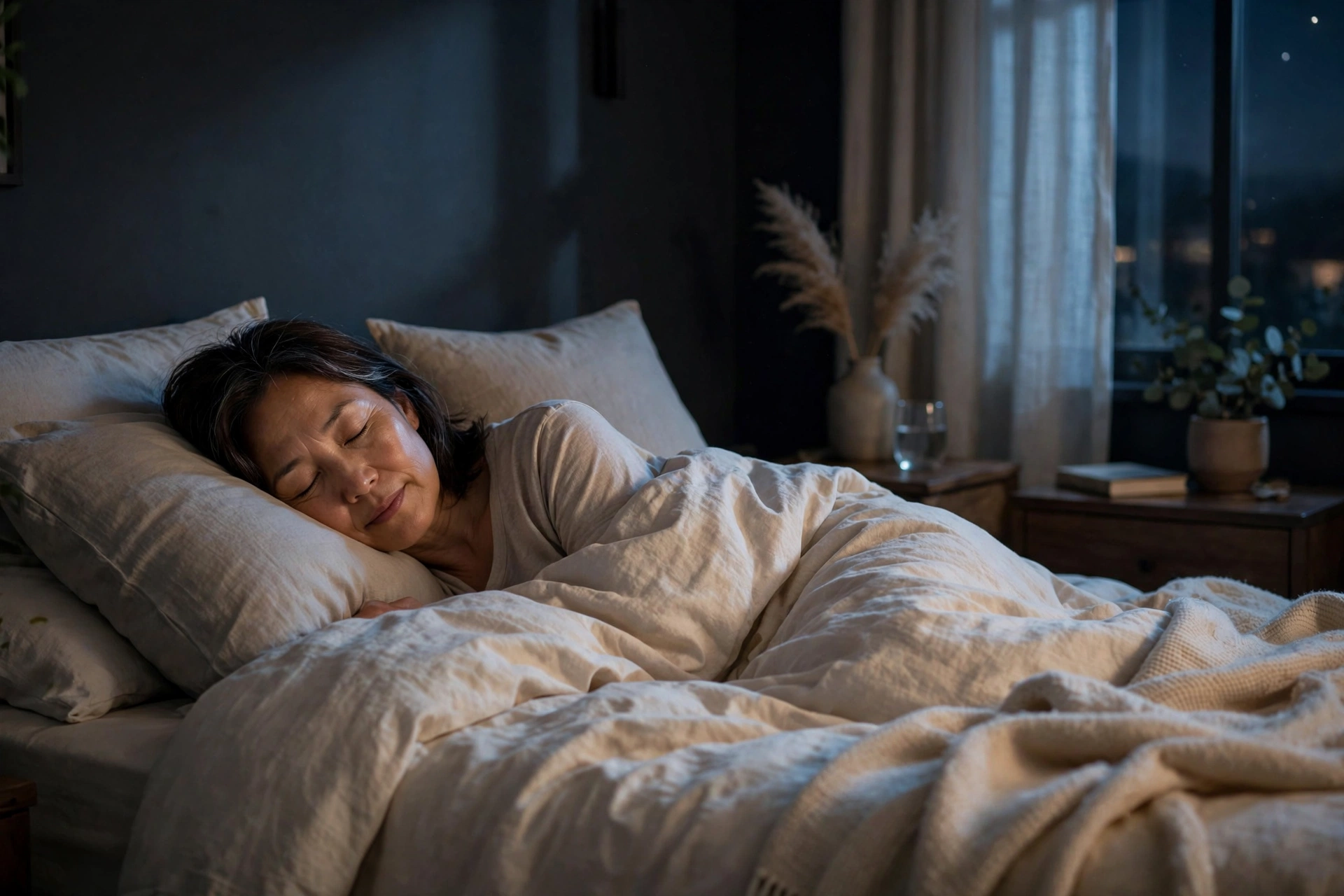
Your body sleeps deepest in a cool, dark room — roughly the temperature of a crisp autumn evening. Crack a window, lighten the bedding, and hunt down every glowing LED. Darkness is a lullaby your brain never outgrows.
Try this: tonight, turn your thermostat down a degree or two and unplug the glowing gadgets.
Make it yours: if you run cold, warm socks beat a warm room for comfort.
Avoid: don’t sleep with the TV on — the flickering light fragments your rest all night.
7. 📵 No Phone in the Bedroom

The phone is the enemy of both falling asleep and staying asleep — one late-night scroll can cost you an hour. Charging it outside the bedroom removes the temptation entirely. You’ll be amazed how quickly the habit fades.
Try this: buy a small alarm clock and charge your phone in the hallway starting tonight.
Make it yours: tell friends you “go offline” after 9 p.m. — most will admire it.
Avoid: don’t use “I need it as an alarm” as the excuse; that’s what the clock is for.
8. 🧮 The 3-2-1 Evening Rule

This simple countdown protects your sleep from the three biggest evening thieves: no heavy food 3 hours before bed, no work 2 hours before bed, no screens 1 hour before bed. It’s easy to remember and surprisingly powerful once it becomes routine.
Try this: pick just one of the three to start with — most women begin with the screens.
Make it yours: write “3-2-1” on a sticky note on the fridge until it’s automatic.
Avoid: don’t try to perfect all three on night one; build them one at a time.
9. 📝 Write Tomorrow’s Worries Down

A racing mind is the number-one sleep thief after 50 — tomorrow’s to-dos looping endlessly. Emptying them onto paper before bed tells your brain the night shift is covered. The page holds them so you don’t have to.
Try this: each night, write tomorrow’s top three tasks and any nagging worries.
Budget tip: a plain notebook by the bed does this job perfectly.
Make it yours: add one line about something good from today — it softens the whole list.
10. 🍵 A Calming Herbal Tea Ritual

A warm, caffeine-free cup in the evening is less about the herbs and more about the ritual — the same soothing sequence each night becomes a Pavlovian cue for sleep. Chamomile, lemon balm, or valerian blends all work beautifully.
Try this: brew the same herbal tea at the same time each evening.
Make it yours: drink it in your favorite chair, in the dim light, phone nowhere in sight.
Avoid: don’t choose “sleepy” teas that contain caffeine — check the label.
11. 📖 Read a Paper Book in Bed

A real book — paper pages, no backlight — is the perfect pre-sleep activity: engaging enough to quiet worries, boring enough (in the best way) to invite drowsiness. Keep one on the nightstand and let yourself drift off mid-chapter.
Try this: swap 20 minutes of scrolling for 20 pages of a paperback.
Make it yours: choose gentle fiction or essays, not thrillers that keep you wired.
Budget tip: the library is free, and librarians love recommending “cozy” reads.
12. 🌬️ The 4-7-8 Breathing Method

When your body won’t settle, borrow this calming pattern: breathe in quietly for 4 counts, hold for 7, exhale slowly for 8. The long exhale activates your body’s rest mode. Four rounds is often all it takes.
Try this: do four rounds of 4-7-8 breathing as soon as your head hits the pillow.
Make it yours: place one hand on your belly to feel it rise and fall — it anchors wandering thoughts.
Avoid: don’t force the counts; gentle and easy beats rigid and perfect.
13. 💪 Progressive Muscle Relaxation

Tension hides in your body long after your mind decides to rest. Starting at your toes, tense each muscle group for five seconds, then release — working slowly upward. The wave of relaxation that follows is deeply sleepy.
Try this: do a full head-to-toe round lying in bed; most people never finish it awake.
Make it yours: focus extra time on your shoulders and jaw, where stress loves to camp.
Budget tip: free, silent, and invisible — the perfect hotel-room technique too.
14. 🔔 A Consistent Bedtime Alarm

Everyone sets a morning alarm, but a bedtime alarm is the real game-changer. When it chimes, screens go off, teeth get brushed, and the wind-down begins — no negotiating with yourself. Consistency is what trains your clock.
Try this: set a nightly alarm for 30 minutes before your target bedtime.
Make it yours: label it something kind, like “time to rest, love” — you’ll obey it more gladly.
Avoid: don’t set it and then “finish one more thing” — the alarm only works if you honor it.
15. 😴 Limit Daytime Naps to 20 Minutes

A short nap is a gift; a long one steals from the night. Twenty minutes refreshes you without dipping into deep sleep, so you wake clear instead of groggy. Set a timer and nap like you mean it — briefly.
Try this: nap before 3 p.m., set a 20-minute timer, and keep the room bright.

Make it yours: a “coffee nap” — a small coffee right before the nap — works wonders for some.
Avoid: don’t nap on the bed; the sofa keeps it short and sweet.
If you wake at 3 a.m. with your mind racing, don’t lie there rehearsing worries — that’s what trains your brain to wake at 3 a.m. Get up, sit in dim light with a dull book or your worry journal, and return to bed only when you’re drowsy. It feels counterintuitive, and it works.
16. 🏃 Exercise Earlier in the Day

Regular movement is one of the most reliable sleep improvers there is — but timing matters. Morning or afternoon exercise deepens night sleep; a hard workout right before bed can leave you wired. Walk, swim, or stretch while the sun is up.
Try this: move your workout (even a 20-minute walk) to before 5 p.m.
Make it yours: gentle evening yoga or stretching is fine — it’s the intense stuff that should end early.
Avoid: don’t skip movement entirely on restless days; that’s when you need it most.
17. ☕ Cut Caffeine After Noon

Caffeine lingers in your system far longer than the afternoon energy suggests — a 2 p.m. coffee can still be whispering at midnight. Moving your last cup to before noon is often the single fastest sleep fix there is.
Try this: set a personal caffeine curfew at noon for one week and notice your evenings.
Make it yours: swap the afternoon cup for herbal tea, golden milk, or sparkling water.
Avoid: don’t forget hidden caffeine — chocolate, some teas, and certain medications count.
18. 🍌 The Magnesium-Rich Evening Snack

A small evening snack with magnesium-rich foods — almonds, banana, pumpkin seeds — can ease you toward sleep without the heaviness of a late meal. Keep it light: a handful is plenty.
Try this: keep a small bowl of almonds and a banana on your nightstand.
Make it yours: warm milk with a pinch of turmeric is another cozy classic.
Avoid: don’t eat a full meal within two hours of bed — digestion and deep sleep don’t mix.
19. 🌀 White Noise or a Fan
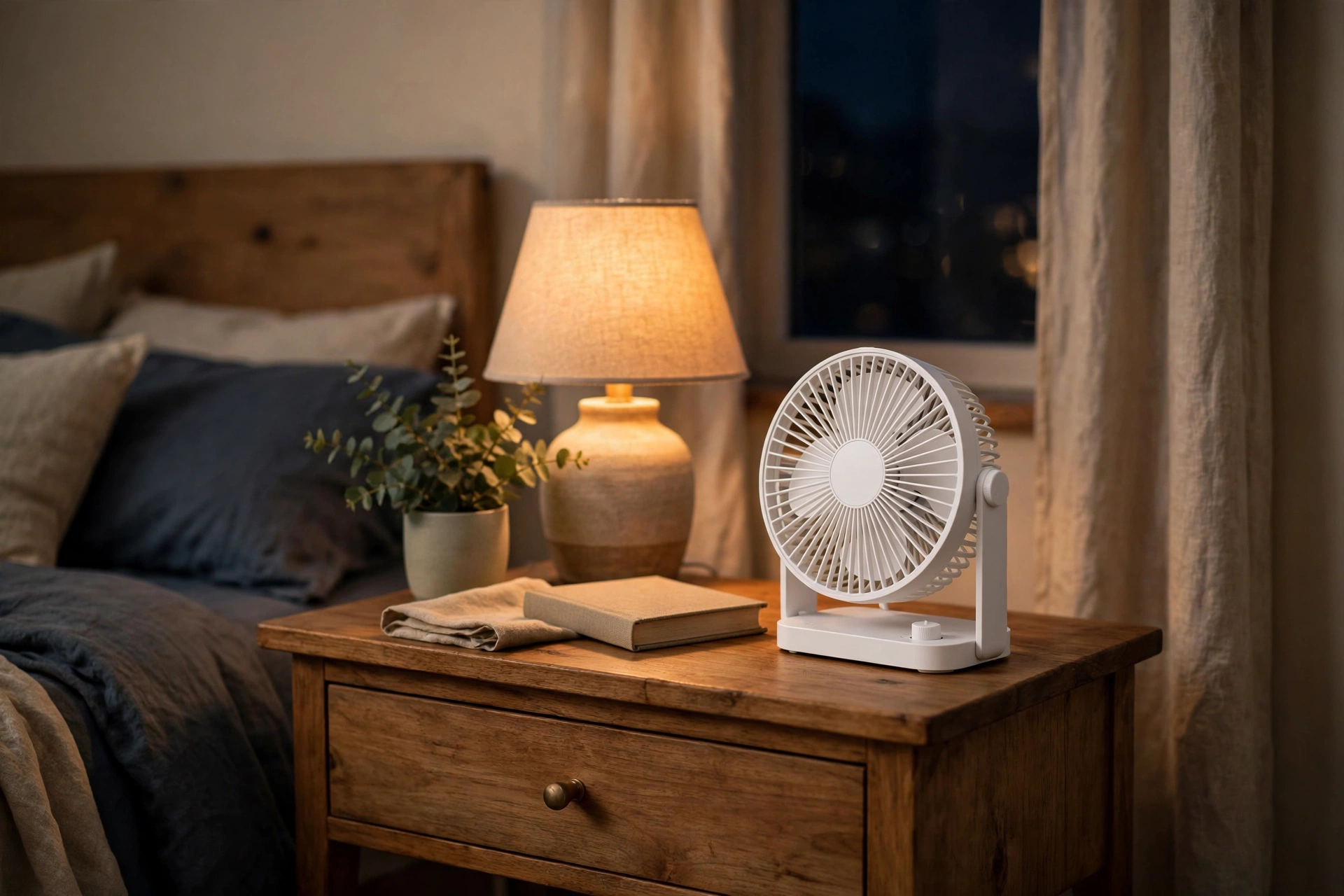
A steady hum masks the small sounds — creaks, traffic, a partner’s snoring — that fragment light sleep. A simple fan does double duty: soothing sound plus cooling air. Many women swear it’s the cheapest sleep upgrade they’ve ever made.
Try this: run a fan or a white-noise app at low volume all night.
Budget tip: a basic fan costs little and lasts for years.
Make it yours: try rain or brown-noise tracks if pure white noise feels harsh.
20. 🪟 Blackout Curtains Investment

Even small amounts of light — streetlamps, a neighbor’s porch, early dawn — can lighten your sleep without fully waking you. True darkness lets your brain produce its full nightly rhythm of rest. This is one upgrade worth every penny.
Try this: hang blackout curtains or try a comfortable sleep mask this week.
Budget tip: a good sleep mask costs very little and works just as well for light.
Make it yours: cover or unplug every glowing LED in the bedroom too.
21. 📓 Keep a Sleep Diary for a Week

You can’t fix what you can’t see. For one week, jot down bedtime, wake time, nighttime wake-ups, caffeine, and how you felt the next day. Patterns jump out fast — the late coffee, the Sunday lie-in — and the fixes become obvious.
Try this: keep the diary on your nightstand and fill it in each morning — it takes one minute.
Make it yours: note your memory and focus each day too; you’ll see the sleep connection clearly.
Avoid: don’t judge the data while collecting it — just observe for the full week.
22. 🛏️ Get Out of Bed When You Can’t Sleep

Lying awake trains your brain to associate bed with frustration. If you’re still awake after 20 minutes, get up, go to dim light, and do something dull — read a boring book, fold laundry. Return only when sleepy. Your bed should mean sleep, not struggle.
Try this: keep a “boring book” and a dim lamp ready in another room.
Make it yours: keep the lights low and the activity uninteresting — no phones, no email.
Avoid: don’t watch the clock while you wait; that’s what the next habit is for.
23. 🙈 The No-Clock Rule
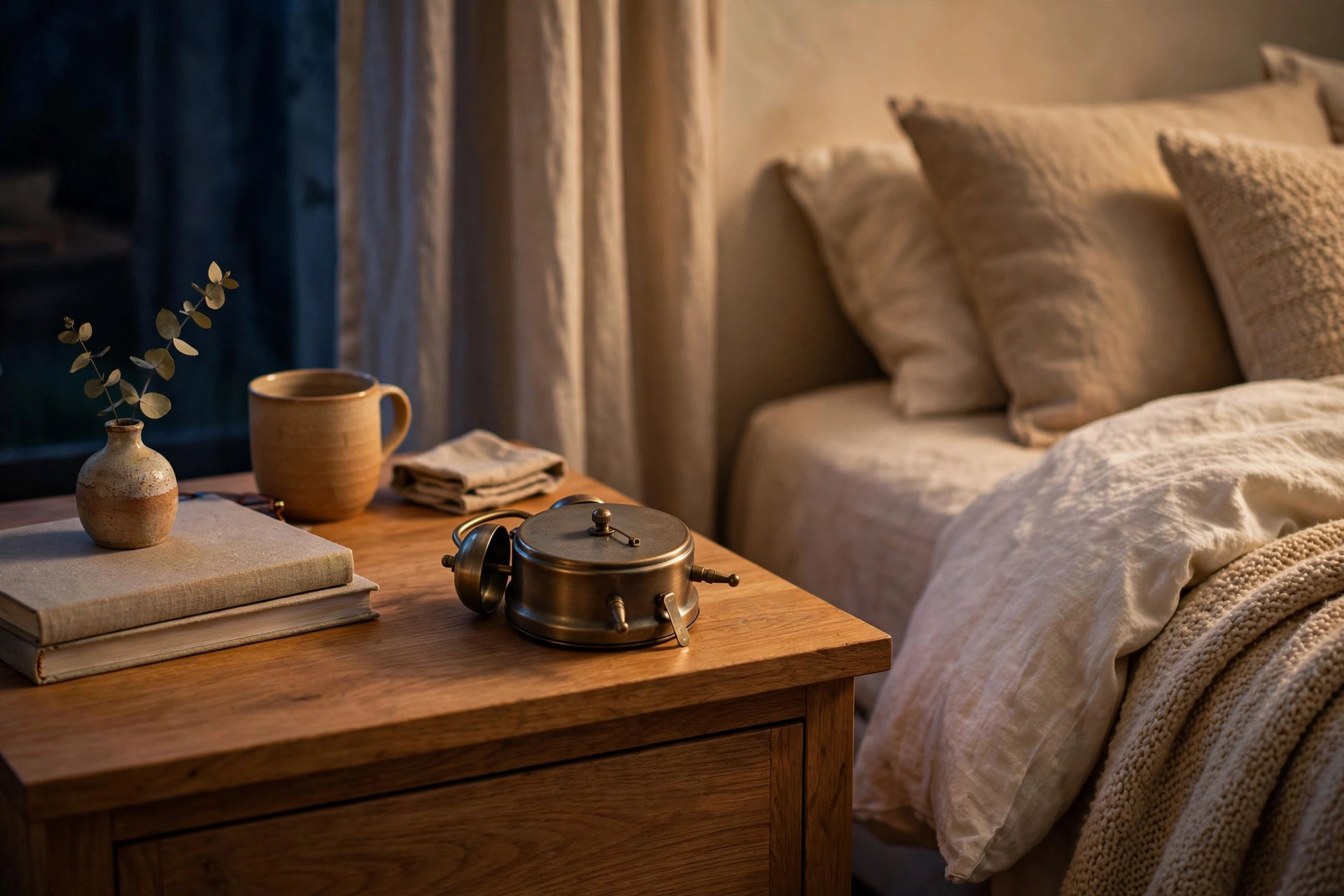
Watching the minutes crawl at 3 a.m. spikes anxiety, which is the opposite of sleepy. Turn the clock face away so you can’t see it. If the alarm is set, the time doesn’t matter — and not knowing is genuinely restful.
Try this: tonight, turn your alarm clock (and phone) face-down or away from the bed.
Budget tip: free, instant, and oddly liberating.
Make it yours: if you wake, remind yourself “the alarm will handle the morning” and let go.
24. 💜 A Lavender Pillow Spray

Scent is a powerful sleep cue — a spritz of lavender on your pillow each night becomes a signal your brain learns to associate with drifting off. It won’t knock you out, but as part of your ritual it adds a lovely layer of calm.
Try this: mist your pillow lightly about 10 minutes before bed.
Make it yours: make your own with water and a few drops of lavender oil in a spray bottle.
Avoid: don’t overdo the scent — a whisper is more relaxing than a cloud.
25. 🧘 Stretch Gently Before Sleep

Five minutes of slow, gentle stretching releases the day’s physical tension and signals your body that rest is coming. Neck rolls, shoulder drops, a soft forward fold — nothing strenuous, just unwinding.
Try this: do five slow stretches right after brushing your teeth.
Make it yours: pair it with the 4-7-8 breathing for a deeply calming combo.
Avoid: don’t turn it into a workout — this is about softening, not strengthening.
Track one thing, not everything. Pick the single habit from this list that feels easiest — the fixed wake time, the phone outside the bedroom, the caffeine curfew — and do only that for two weeks. Small wins build the confidence that carries the rest.
26. 🍷 Avoid Alcohol as a Sleep Aid

Wine may make you drowsy, but it fragments the second half of your night — the very hours when memory consolidation happens. If you drink, keep it early in the evening and modest; your morning mind will thank you.
Try this: move any evening drink at least 3 hours before bed, or swap it for sparkling water.
Make it yours: make the swap feel special — a pretty glass, lemon, fresh herbs.
Avoid: don’t use alcohol to fall asleep — it’s borrowing rest from later in the night.
27. ☁️ See Morning Light on Cloudy Days Too

Here’s the secret most people miss: even a cloudy sky is far brighter than indoor light. On gray mornings, your brain still needs that daylight signal — so don’t skip the window or the walk just because the sun is hiding.
Try this: on cloudy mornings, spend 15–20 minutes near a bright window or outside.
Make it yours: keep a chair by your brightest window for gray-day mornings.
Avoid: don’t stay in dim rooms all morning waiting for sun that isn’t coming.
Some nights will still be restless, and that doesn’t mean you’re failing. Sleep after 50 is a practice, not a performance. If a habit doesn’t suit you, let it go without guilt and try another — there are 26 more here, and your only job is to find the few that feel like care, not chores.
❓ Sleep & Memory FAQs
How does sleep actually help my memory?
During deep sleep, your brain replays the day and files important memories into long-term storage — it’s like saving documents before closing the laptop. When sleep is broken, that filing gets interrupted, which is why poor sleep so often shows up as forgetfulness.
How much sleep do I really need after 50?
Most adults do best with 7–8 hours, and that doesn’t change much with age — though sleep often gets lighter. Consistency matters more than chasing a perfect number: regular bed and wake times beat occasional long lie-ins.
Are sleep supplements safe to try?
Many women find gentle options like chamomile tea or magnesium-rich foods soothing as part of a bedtime ritual. For anything stronger, including melatonin, it’s wise to check with your doctor or pharmacist first — especially alongside other medications.
What if I wake up at 3 a.m. every night?
Early-morning waking is very common after 50. Try the 20-minute rule: if you’re awake and alert, get up to dim light and a dull activity, then return when drowsy. A fixed wake time and morning light usually soften the pattern within a couple of weeks.
Can better sleep really clear brain fog?
For many women, yes — noticeably. When fragmented sleep is the main fog-maker, even two weeks of steadier nights can bring back names, focus, and that “sharp” morning feeling. It’s the closest thing to a free memory upgrade there is.
Tonight, choose just one habit from this list — the fixed wake time, the phone outside the bedroom, the dimmed lamps — and begin there. Your brain has been waiting patiently for better nights, and it will repay you with clearer days. Sleep well, love. You’ve earned it.
📖 Keep Reading
- 🧠 Menopause Brain Fog: 25 Gentle Ways to Clear the Haze — if fuzzy thinking follows you into the day, these gentle habits lift the fog from the other end.
- 🌅 20 Daily Brain Habits After 50 for a Sharper Mind — build your rested brain into a full day of sharp-minded habits, from alarm to lights-out.
- 🎯 How to Improve Focus After 50: 19 Concentration Tricks That Work — once you’re sleeping better, these 19 tricks help you aim that fresh focus where it counts.
Discover more from Fashinate Style
Subscribe to get the latest posts sent to your email.