
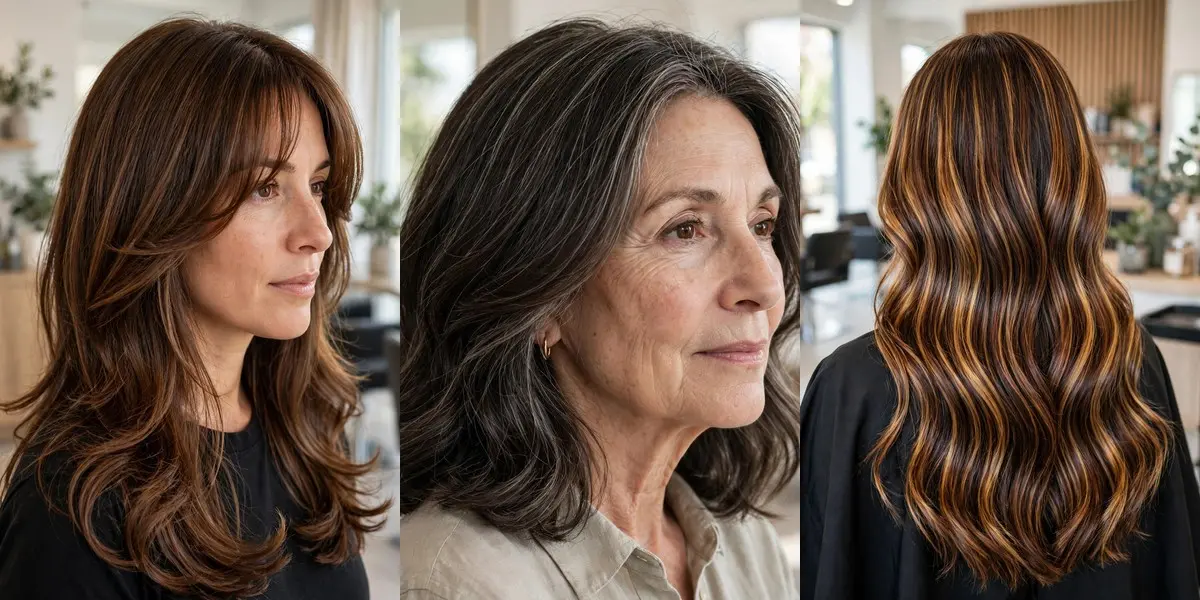
20 Hair Trends for a Flattering, Low-Maintenance Look
The best hair trends right now share one lovely secret: they are designed to grow out gracefully. Think soft fringe, melted color and cuts that fall into place on their own, so you look polished on day one and day forty alike.
Every look below flatters first and asks very little second. There is no daily heat routine, no three-week root panic, no twenty-minute styling session — just smart cuts and color techniques that do the hard work for you.
Browse all twenty, from curtain bangs to hidden undercut layers, and note the ones that suit your texture and lifestyle. If you enjoy a seasonal refresh, our haircut trends guide pairs beautifully with this list.
One honest note before we start: low-maintenance never means no maintenance. A good trim schedule and two or three well-chosen products are all these styles ask — and in return, they give you back your mornings.
In This Guide
- 1. Curtain Bangs
- 2. Money Piece Highlights
- 3. Root Smudge Color
- 4. Wolf Cut
- 5. Blunt Bob
- 6. Textured Pixie
- 7. Face-Framing Layers
- 8. Effortless Heatless Waves
- 9. Soft All-Over Layers
- 10. Natural Gray Blending
- 11. Glossing Treatments
- 12. Middle Part Revival
- 13. Low, Loose Ponytail
- 14. Braided Crown
- 15. Tortoiseshell Hair Color
- 16. Beach Wave Perm
- 17. Clip-In Bang Trend
- 18. Blow-Dry Bar Waves
- 19. Textured Lob
- 20. Undercut Layers
- Styling Tips
- Common Mistakes to Avoid
- Building a Low-Maintenance Hair Routine That Works
- Frequently Asked Questions
1. Curtain Bangs
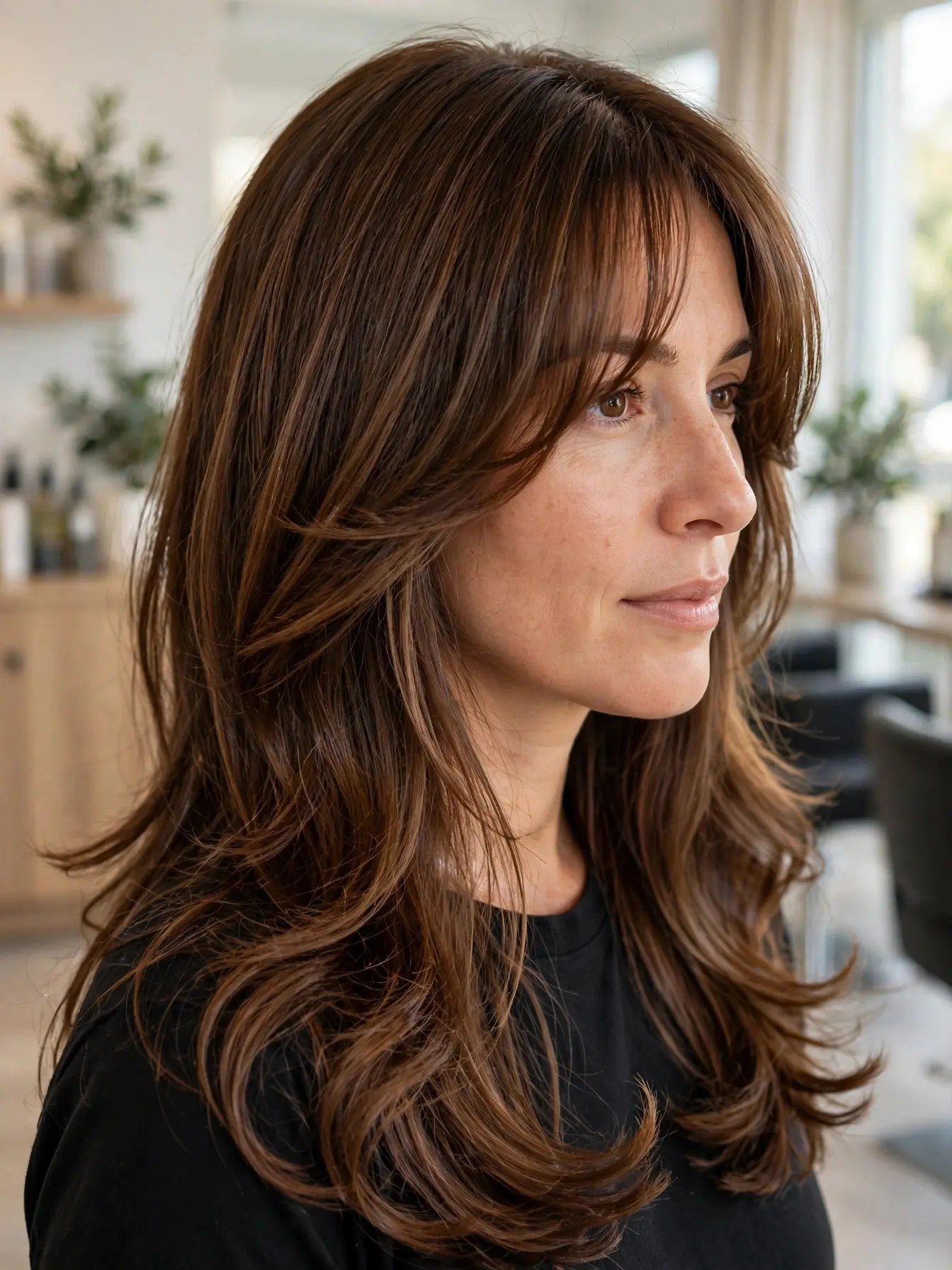
Curtain bangs are the fringe for people who swore they would never wear bangs. Parted in the middle and sweeping out to both sides like a pair of curtains, they frame the cheekbones, soften the forehead and blend straight into the layers around your face.
Because there is no blunt line to grow out, they are wonderfully forgiving. Short on time, they sit like a shorter face-framing layer; grown out, they simply become one. They also work across lengths and textures, from long waves to a shoulder-skimming lob.
Styling takes under a minute: aim a dryer forward, then sweep each side back and away with a round brush for that signature flick. On second-day hair, a touch of dry shampoo at the part is all they need.
Tip: Ask for the shortest point at the bridge of the nose, opening out to cheekbone length at the sides — that slope is what makes them flattering on almost everyone.
2. Money Piece Highlights
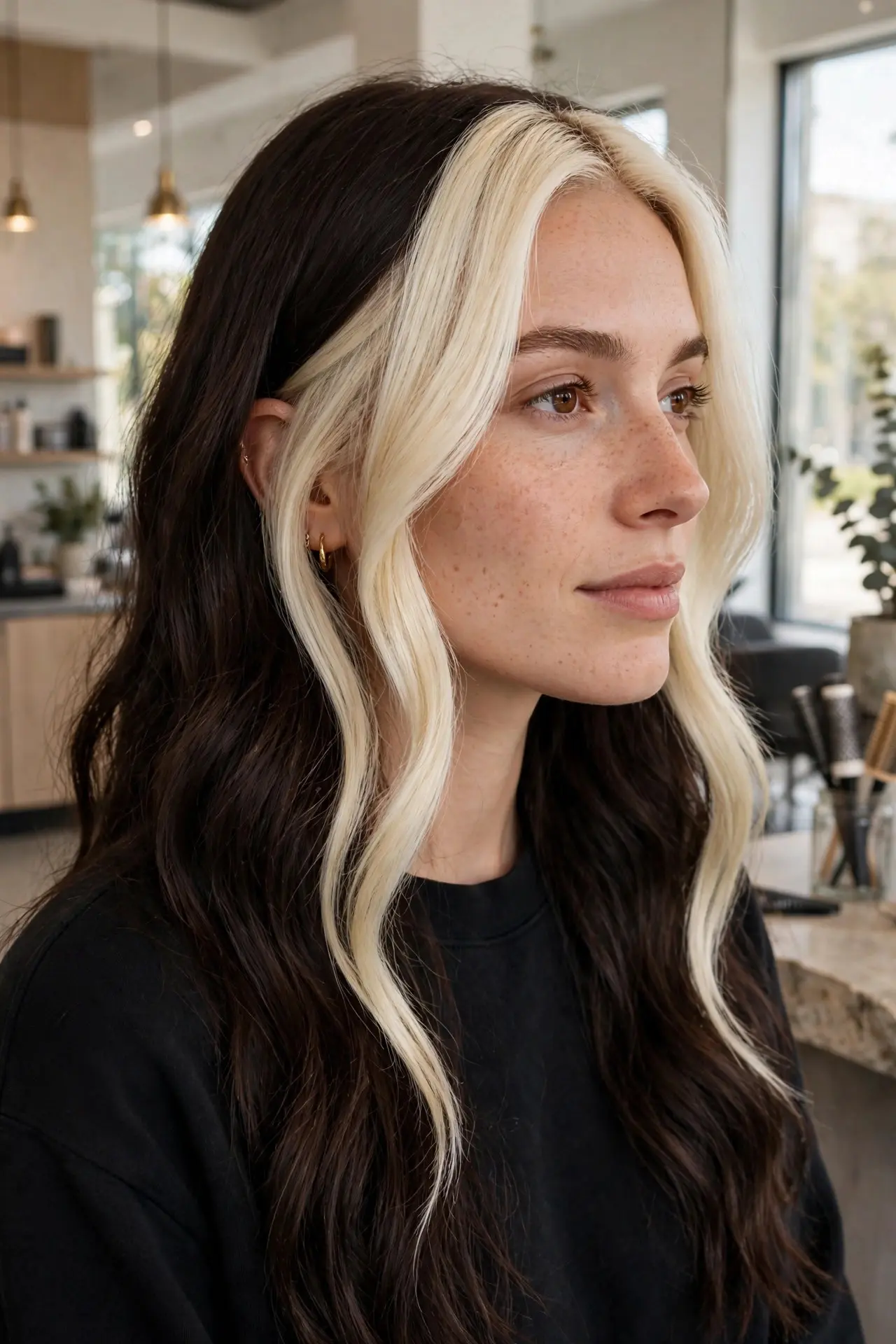
The money piece puts the brightness exactly where it earns its name: two bold, light sections at the very front of the hairline. Against a deeper base — like the deep brown shown here — the contrast lifts your whole face the way good lighting does.
It is the smartest highlight in the salon because so little hair is lightened. That means a shorter appointment, a lower bill and far less overall lightener on your hair, yet the effect reads like a full color refresh every time you catch a mirror.
As it grows, only the front sections need attention, and a quick partial appointment keeps them bright. Keep the tone two to three shades lighter than your base for glow rather than shock value.
Tip: A purple shampoo once a week keeps pale money pieces from going brassy between appointments.
3. Root Smudge Color
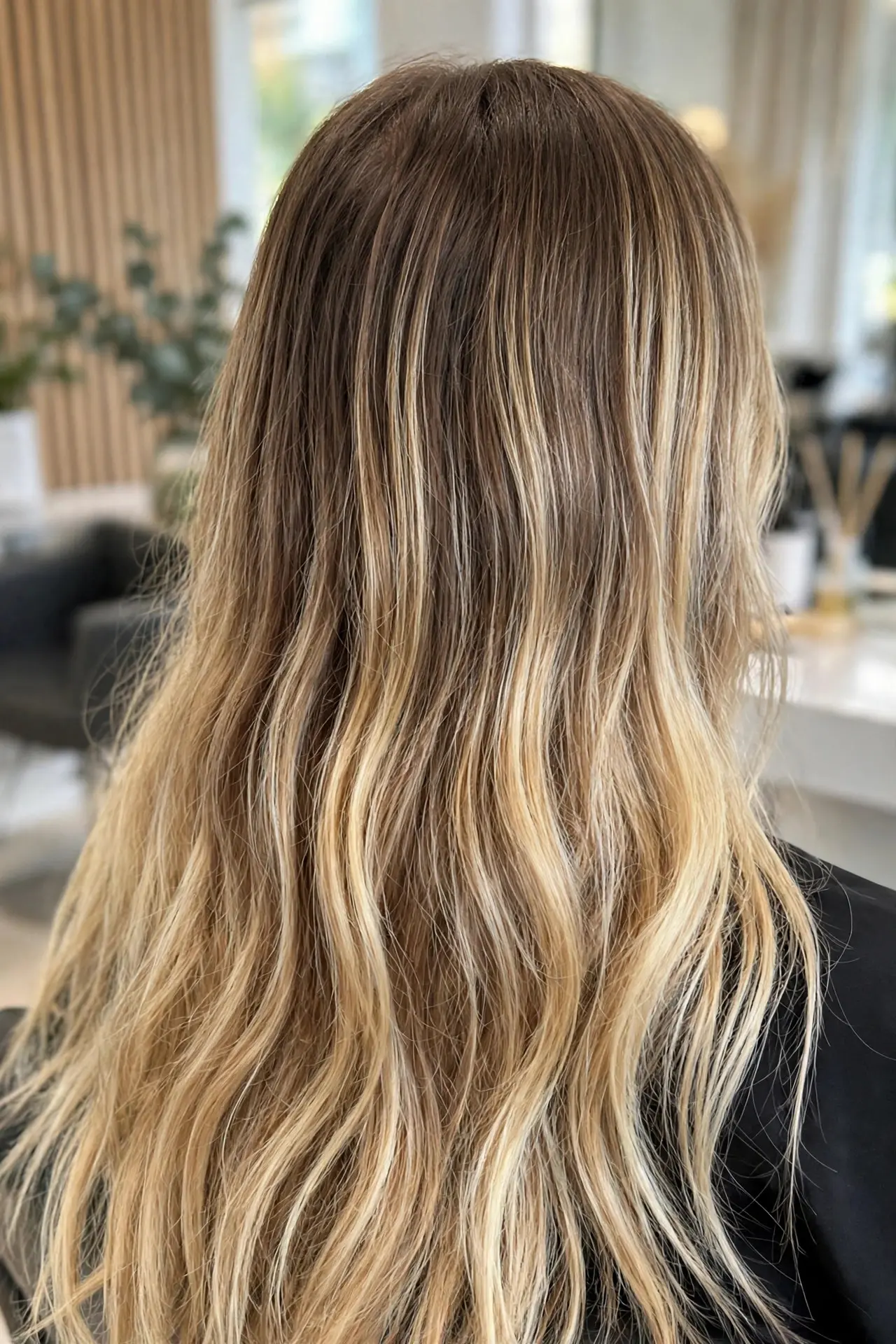
A root smudge is a small amount of color, close to your natural shade, blurred into the root area right after highlighting. It erases the hard line where foil met regrowth, so highlights appear to melt out of your own hair instead of starting abruptly.
Look at the grow-out from behind and the magic is obvious: shadow at the crown, brightness through the ends, and no stripe in between. Most wearers comfortably stretch appointments to ten or twelve weeks, because new growth simply deepens the shadow.
The technique adds only a few minutes at the bowl, usually applied with the toner. It suits blondes best, but brunettes with balayage get the same soft, expensive-looking blend.
Tip: Ask for the smudge one shade lighter than your natural root if you go gray early — the softer contrast disguises incoming grays longer.
4. Wolf Cut
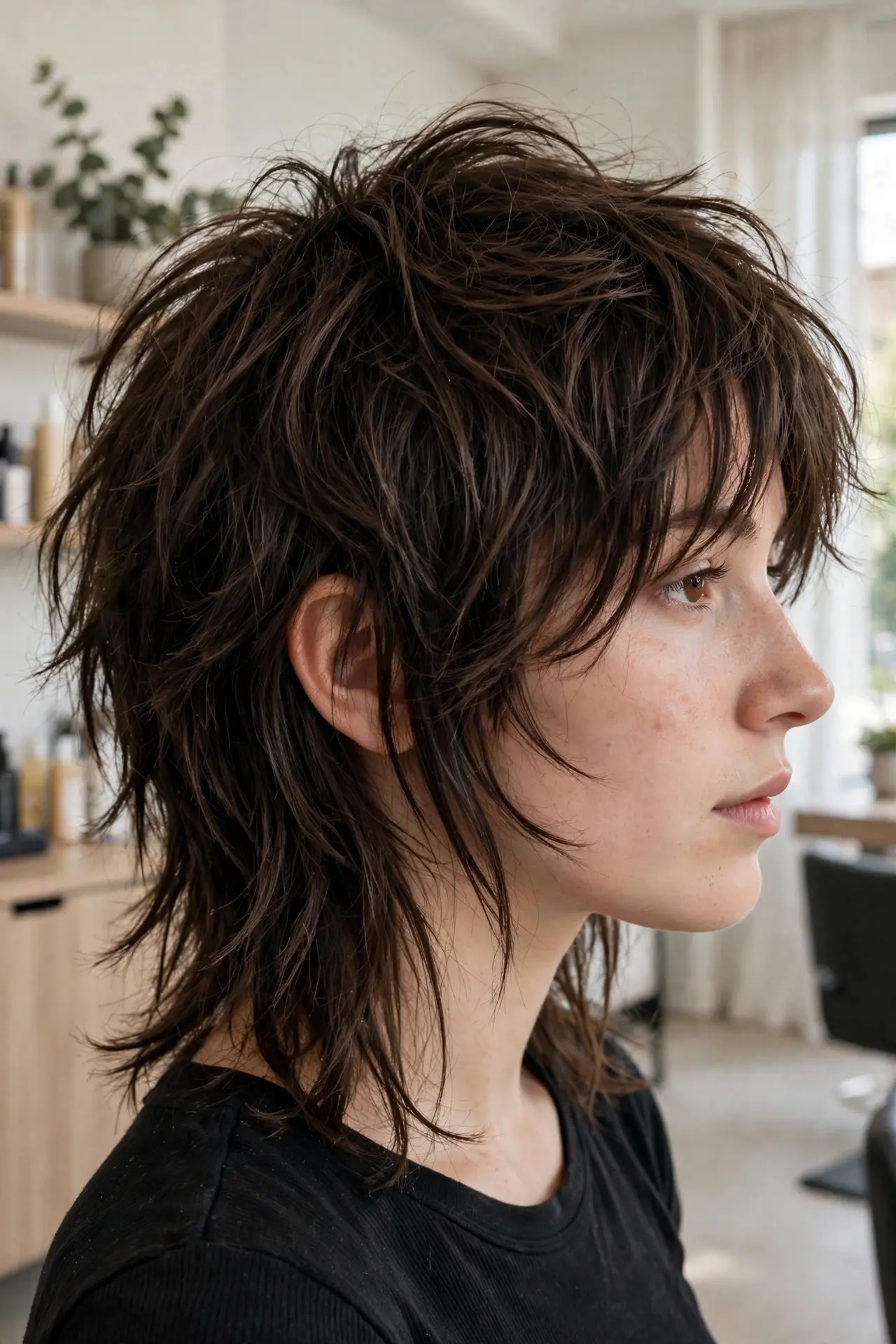
Part shag, part mullet, the wolf cut stacks heavy, choppy layers through the top and crown, then lets the lengths fall away wispy and light. The result is volume where you want it, airiness where you do not, and a built-in undone texture.
It is a genuine wash-and-go cut. The layering encourages your natural movement, so most people scrunch in a little mousse or texture spray and leave it alone. Straight, wavy and fine hair all gain body they never knew they had.
The fringe is part of the fun — curtain-like, choppy and deliberately imperfect. Because the silhouette is already tousled, a slightly grown-out wolf cut still looks intentional, which keeps salon visits nicely spaced.
Tip: The wolf cut lives or dies on the top layers, so show your stylist reference photos and agree on how dramatic you want the contrast with the ends.
5. Blunt Bob
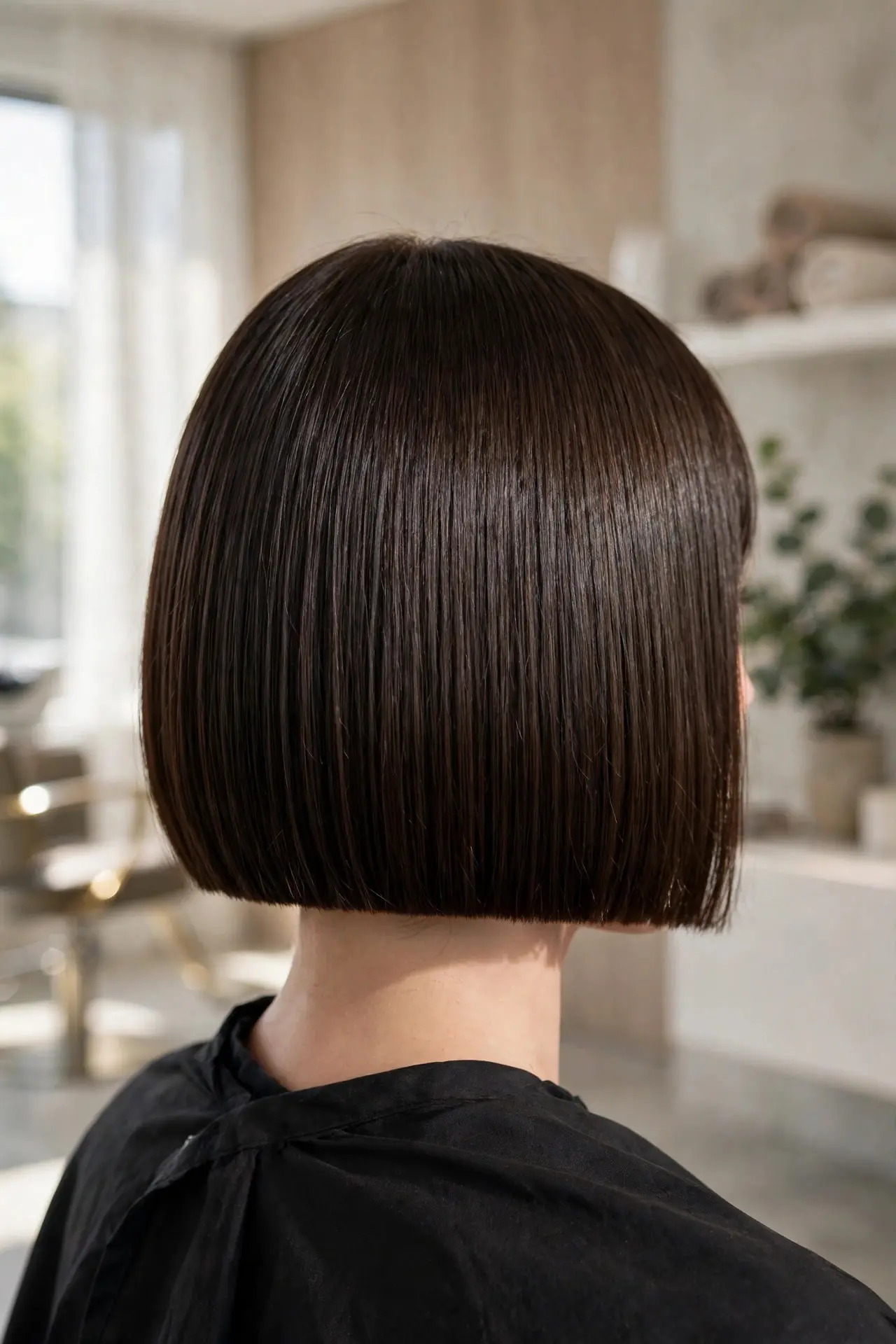
One length, one sharp line, zero layers: the blunt bob is the minimalist of haircuts. Cut precisely so every strand ends at the same point, it makes hair look instantly thicker and healthier, because the ends form a solid, weighty edge.
That density is why it flatters fine hair so well — nothing is thinned away. Jaw, chin and collarbone lengths all work; choose based on your neck length and how much swing you like. Worn tucked behind the ears, it reads polished with no styling at all.
Daily upkeep is a quick pass with a brush and, if you like it sleek, a smoothing cream. The one commitment is trims: that crisp edge softens after about six weeks, so book them in advance.
Tip: If your hair is very thick, ask for the interior to be subtly de-bulked while keeping the blunt outline — you get the line without the triangle shape.
6. Textured Pixie
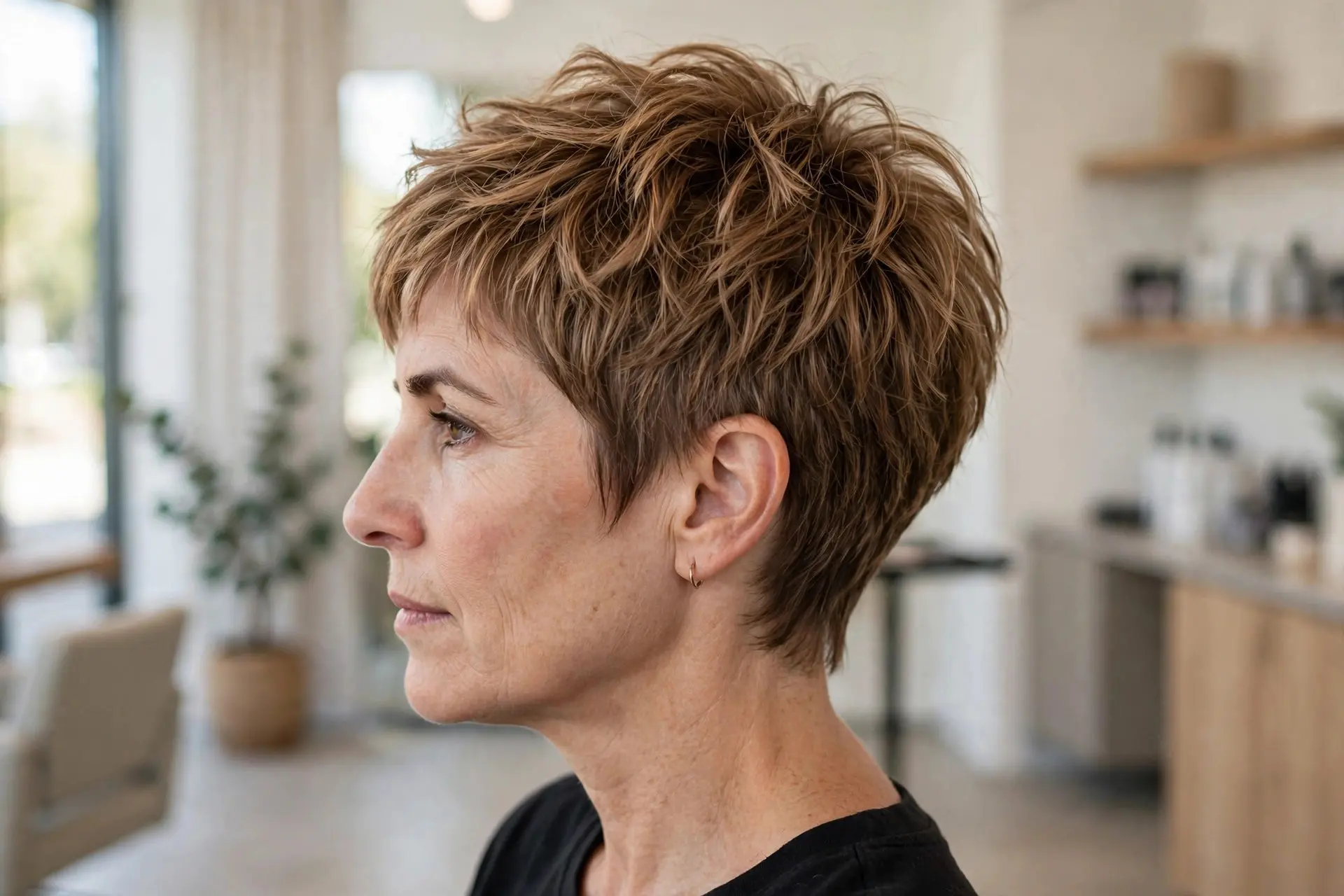
The textured pixie proves short hair is anything but boring. Choppy, piecey layers through the top give it shape and movement, while tapered sides keep the silhouette neat — and as the photo shows, it is every bit as chic in your fifties and beyond.
Morning styling takes about ninety seconds: warm a pea-sized amount of matte paste between your fingers and pinch the top layers into place. The texture is cut in, so the style holds without sprays or heat.
Pixies do need regular trims every four to six weeks to keep the shape, but each appointment is quick and inexpensive compared with long-hair services. Many wearers trade daily styling time for those short visits happily.
Tip: Leave the top a little longer than you think — the extra length is what lets you sweep it forward, back or to the side for three looks in one cut.
7. Face-Framing Layers
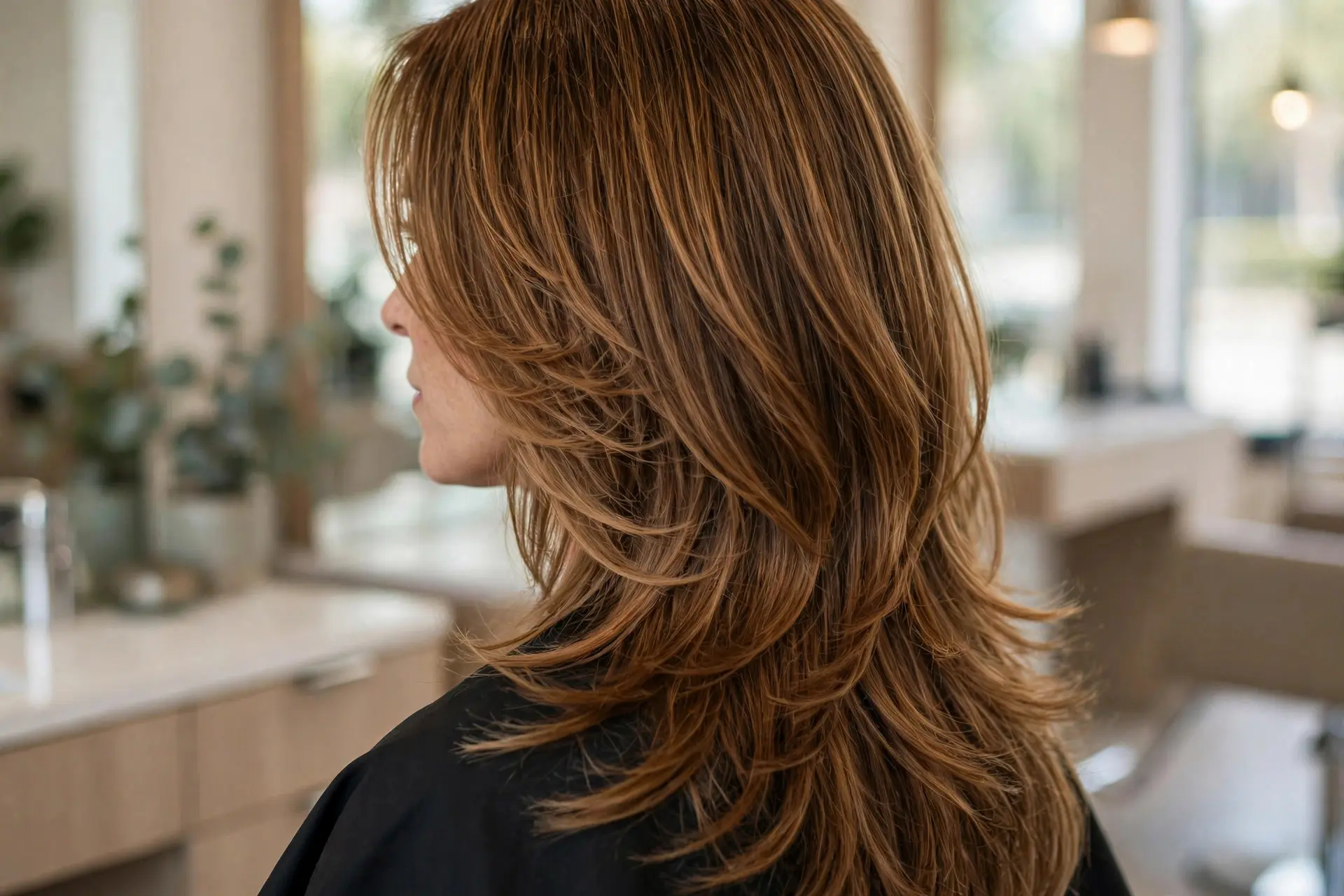
Face-framing layers are the smallest change with the biggest effect. Your stylist cuts shorter, graduated pieces that begin around the cheekbones and step down past the jaw, while the rest of your length stays untouched behind them.
Those front steps do serious flattering work: they open up the face, draw the eye upward and soften a strong jawline. On long hair like this honey-brown example, the cascading front keeps all your length but removes the heavy curtain effect.
They also grow out invisibly, simply becoming the shortest of your regular layers, so there is no awkward stage and no extra appointments. Add them to almost any long cut or lob.
Tip: Decide the starting point by your favorite feature — layers beginning at the cheekbone highlight eyes and cheekbones; starting at the jaw softens the lower face.
8. Effortless Heatless Waves
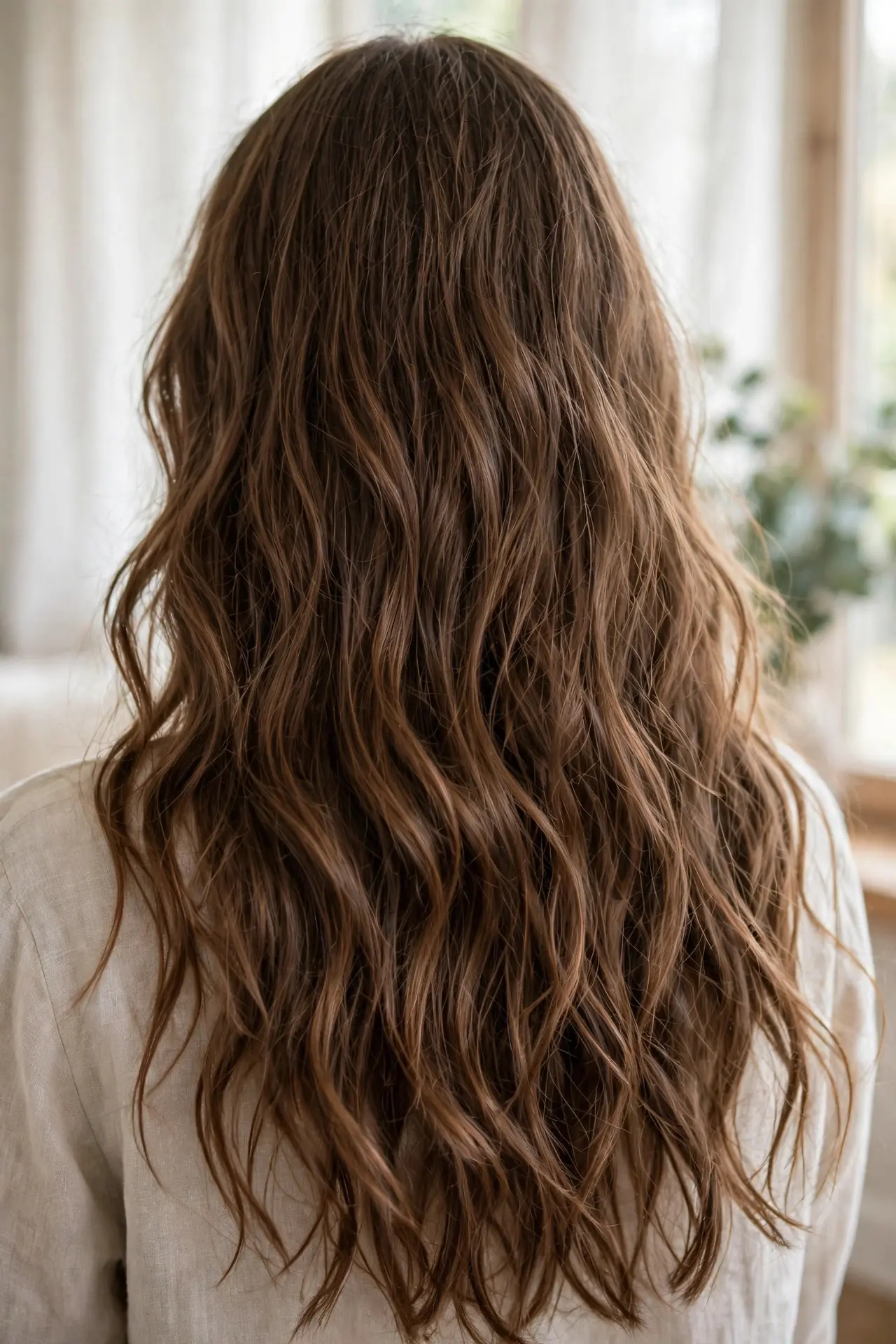
Heatless waves are styled while you sleep. Two loose braids, a twisted robe belt or a set of foam rollers in slightly damp hair will give you soft, loose waves by morning — no curling iron, no heat damage, no standing in front of the mirror.
The finish is deliberately undone: waves that look air-dried and natural rather than set. That looseness is exactly what makes them low-maintenance, because a little imperfection is part of the style, and day-two waves simply relax into a softer version.
Start with hair that is about eighty percent dry and a touch of mousse or wave spray for hold. Finer hair likes two braids for a stronger wave; thicker hair often needs just one.
Tip: Sleep on a silk or satin pillowcase — it keeps overnight waves smooth and stops the friction frizz that cotton causes.
9. Soft All-Over Layers
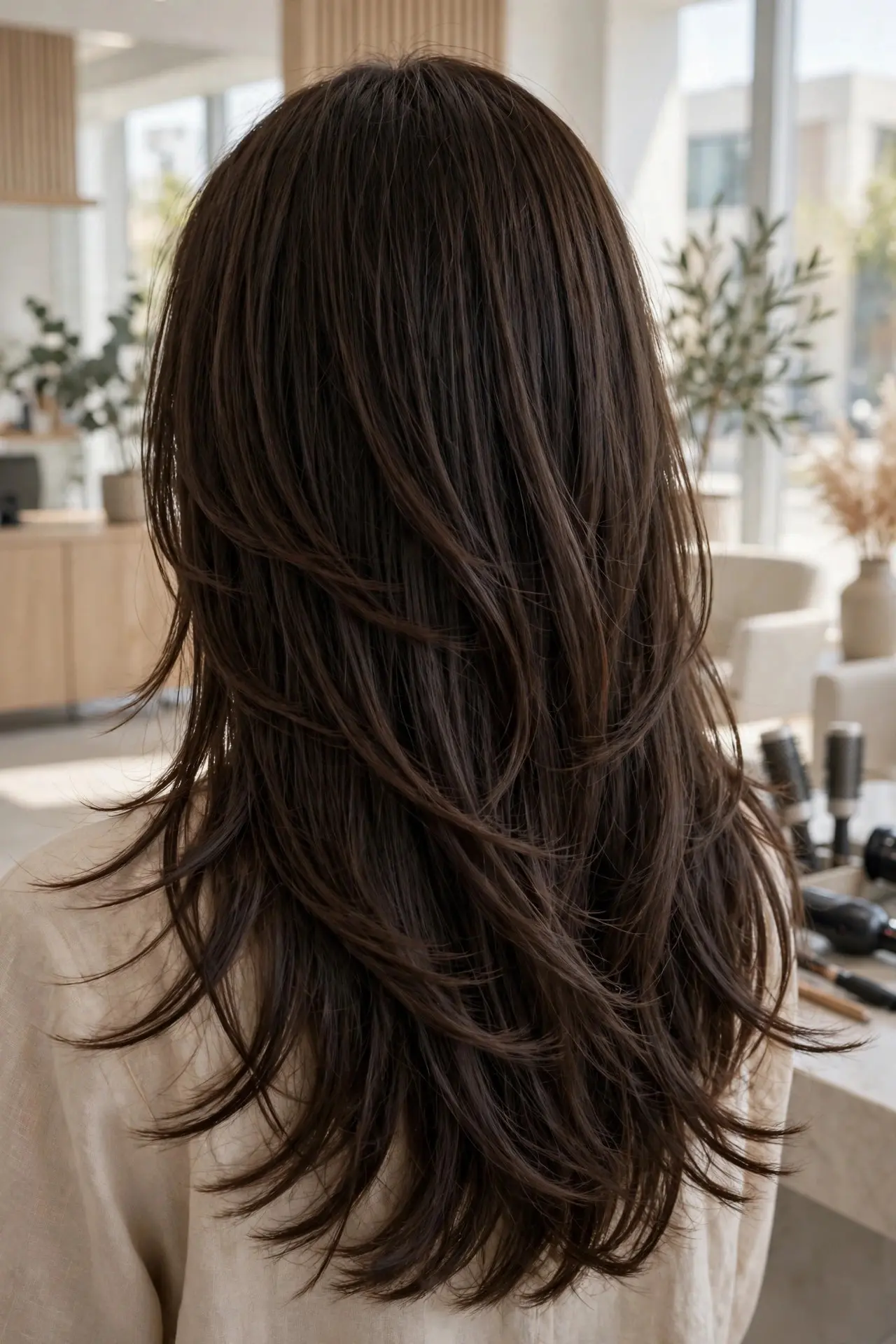
If blunt hair feels heavy and choppy layers feel like too much, soft all-over layers are the happy middle. Gentle layers are blended through the whole head — no shelves, no steps — so long hair moves, swings and feels pounds lighter.
The seamless blending is the point: from behind, you see movement and feathered ends rather than distinct tiers. Thick hair loses its bulk, fine hair gains the illusion of fullness, and everything dries faster and styles more easily.
Because the layers are long and gradual, the cut grows out beautifully and tolerates a longer gap between trims than dramatic layering. It pairs with any parting and almost any fringe.
Tip: Tell your stylist “long layers, blended, keeping the perimeter full” — that phrasing protects your ends from being thinned out too much.
10. Natural Gray Blending
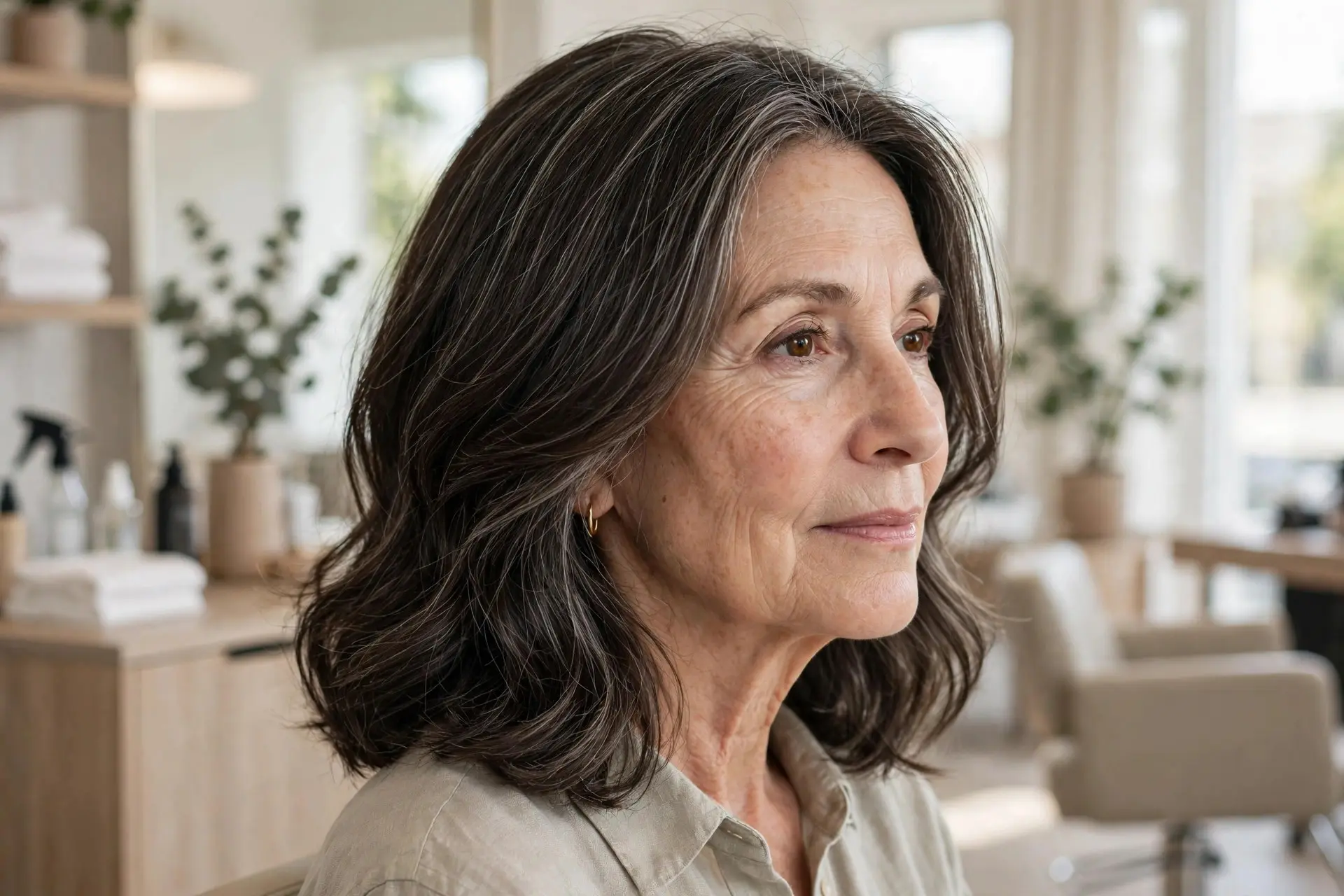
Gray blending works with your silver instead of covering it. Fine highlights and lowlights are woven through your natural color so gray strands read as dimension rather than regrowth — exactly the soft, luminous mix shown here.
The payoff is freedom from the three-week root cycle. Because there is no solid line of permanent color, new grays simply join the blend, and many women stretch appointments to three or four months, or transition to fully natural gray over time.
Ask your colorist to match the lowlights to your original shade and place a few brighter silvers around the face, where gray usually arrives first and looks most striking. A blue-toned shampoo keeps silvers clear, not yellow.
Tip: Bring photos of your hair color from your thirties — matching your youthful shade for the lowlights makes the blend look completely natural.
11. Glossing Treatments
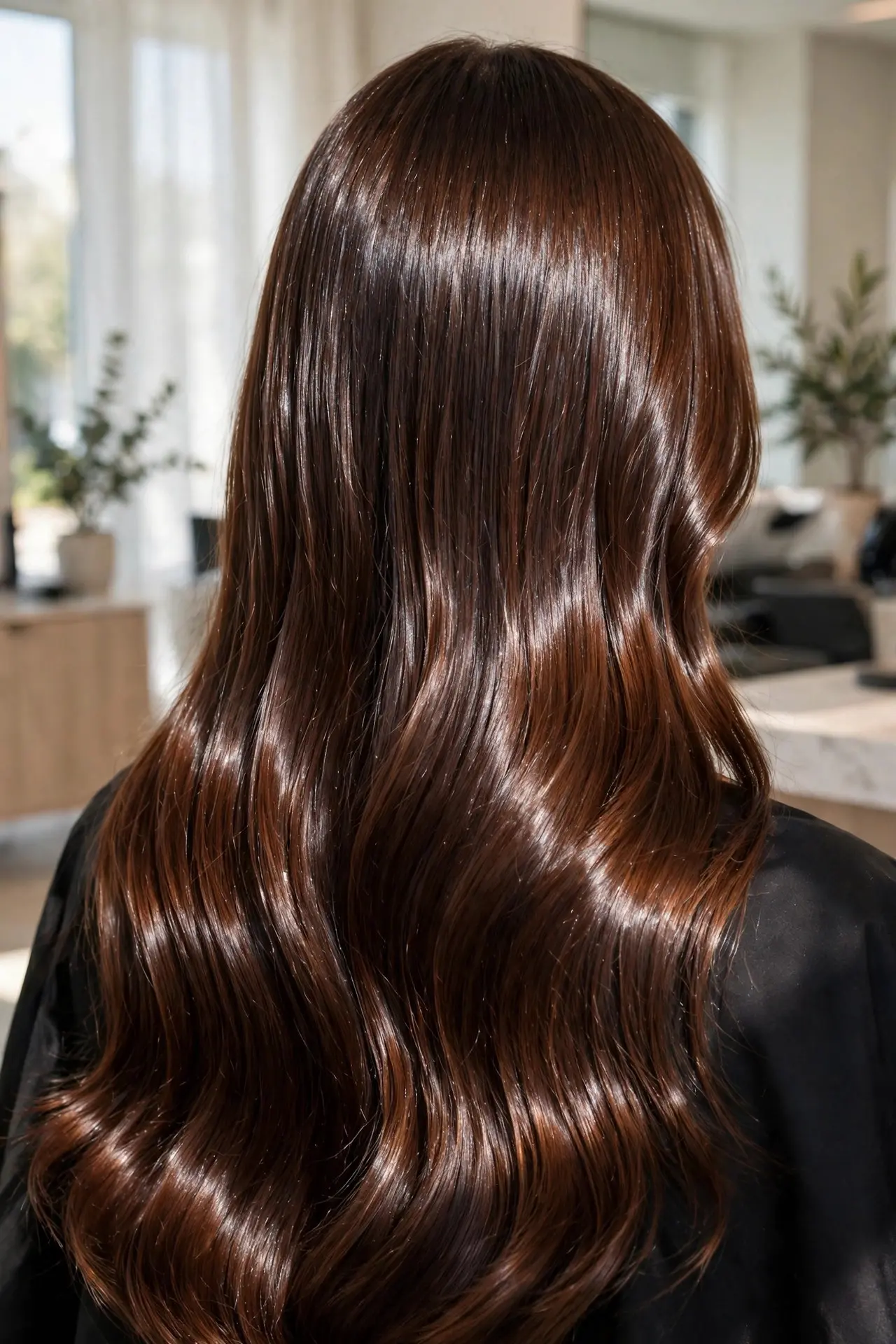
A gloss is the closest thing to a filter for your hair. This sheer, demi-permanent treatment coats each strand with shine and subtle tonal richness, making the color you already have look deeper, fresher and dramatically more reflective.
There is no commitment and no root line, because a gloss fades gradually and evenly over four to six weeks. It is perfect between color appointments, after a holiday in the sun, or whenever hair looks dull but the color itself is fine.
Salon glosses take about twenty minutes at the bowl, and at-home glosses now do a respectable job in the shower. Clear gloss adds shine only; tinted versions can warm up brunettes or cool down blondes.
Tip: Book a gloss two days before photos or an event — the mirror shine peaks in the first week and catches light beautifully.

12. Middle Part Revival
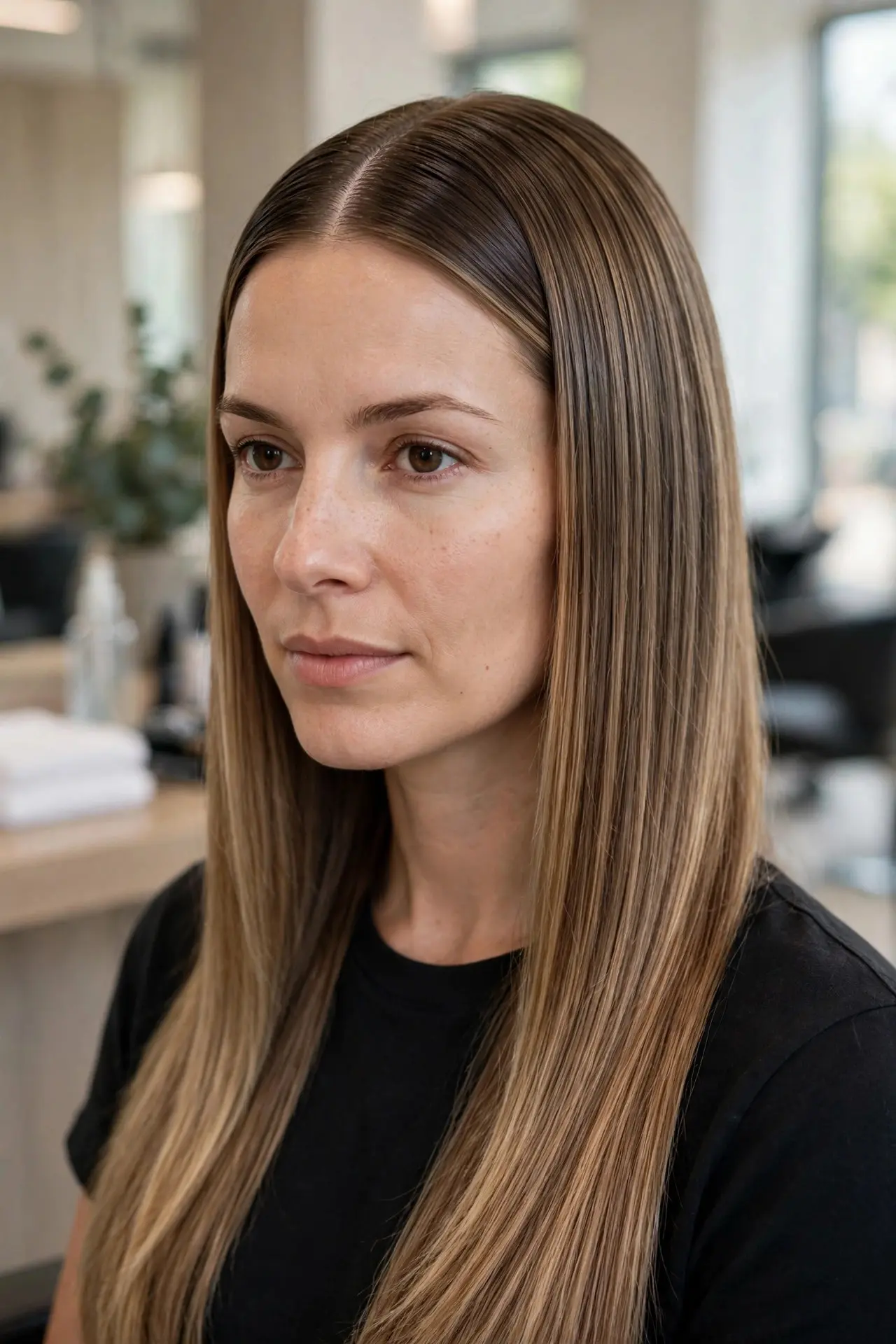
The middle part is back, and it is the cheapest trend on this list: it costs nothing and takes ten seconds. A precise center parting gives hair a modern, symmetrical frame and pairs with everything from sleek lengths to loose waves.
Symmetry is its flattering trick — it balances the face and lets both sides share the spotlight. If you have worn a deep side part for years, expect your roots to protest for a week or two while they retrain; the sleek result here is worth the persistence.
Train it on damp hair: make the part with a tail comb while hair is wet, apply a little gel along the part line, and let it dry in place. A center part also disguises a growing-out fringe beautifully.
Tip: If a true center feels severe, shift the part just half a centimeter off-center — you keep the symmetry but soften the look.
13. Low, Loose Ponytail
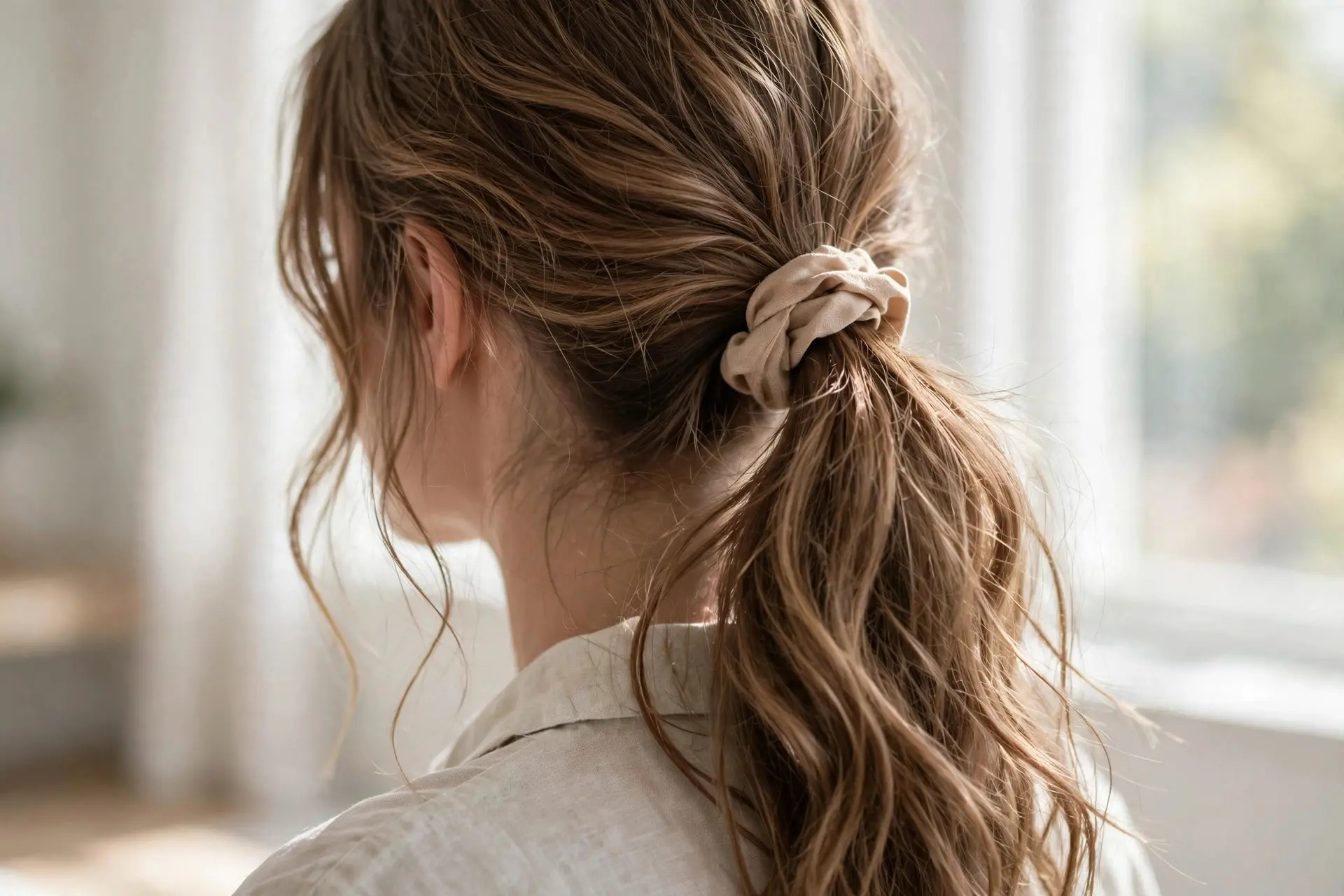
The low, loose ponytail is the updo that does not try too hard. Gathered softly at the nape with a gentle scrunchie, a few strands left loose at the front, it takes thirty seconds and somehow looks intentional rather than last-minute.
Loose is the operative word: no scraping back, no tight pulling, which makes it kinder to your hairline and far more comfortable all day. The softness around the face keeps it flattering, and the wavy tail dresses up or down.
It is also the perfect second-day save — dry shampoo at the roots, gather, done. Swap the scrunchie for a simple gold cuff or a ribbon and it is evening-ready without a restyle.
Tip: Gather the ponytail with your fingers instead of a brush — the slight texture and bumps are what keep it looking soft and modern.
14. Braided Crown
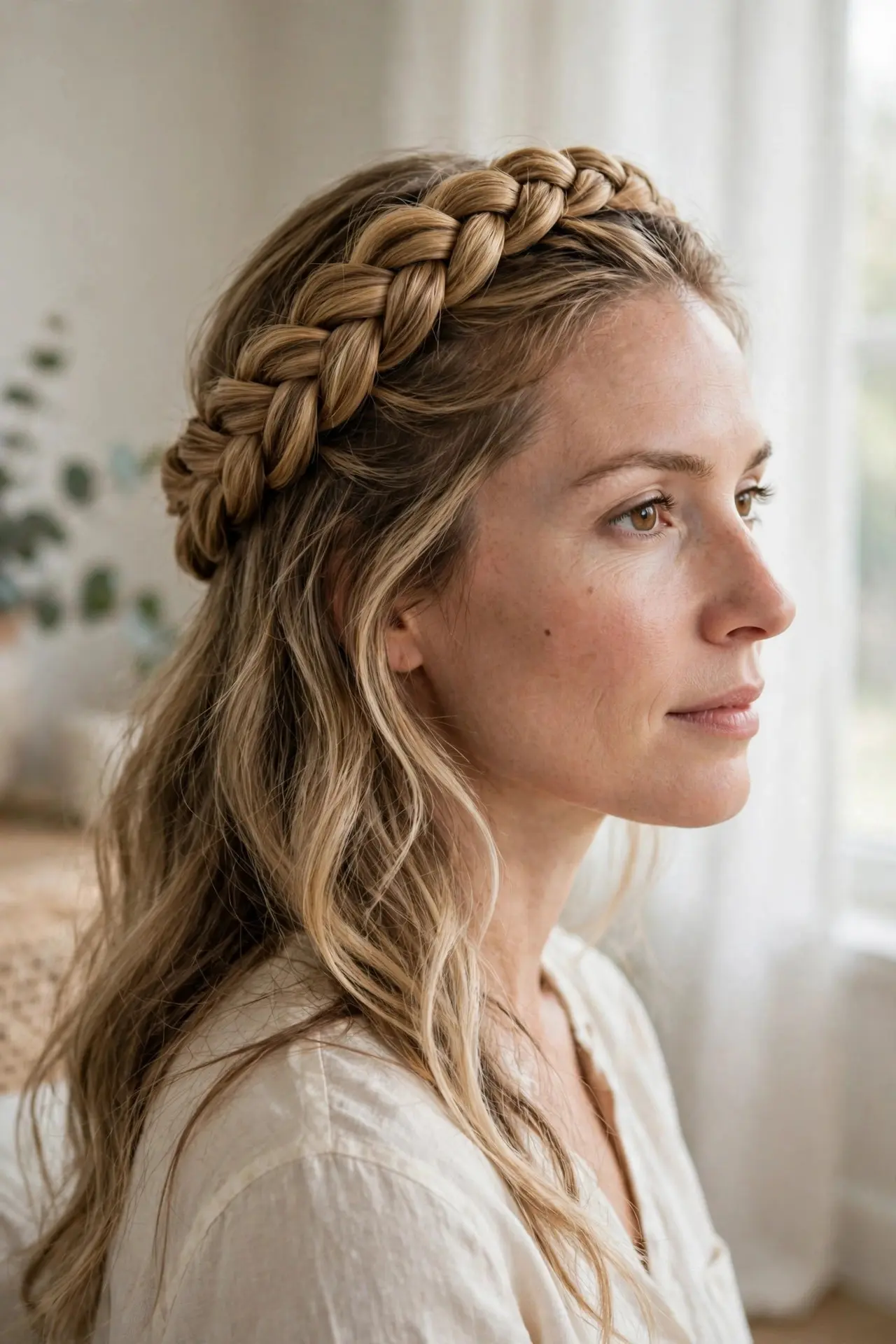
A braided crown wraps a single thick braid across the top of the head like a halo, while the rest of the hair falls loose and wavy beneath it. It looks intricate and romantic, yet once the braid is pinned, the style simply stays put.
That staying power is its practical genius. The braid holds the front sections off your face all day — through wind, errands and events — with no clips to re-do and no strands to tuck. It is a favorite for weddings, festivals and very hot days.
You do not need waist-length hair: the braid can start behind one ear, travel across and pin behind the other, and extensions or a second small braid can extend shorter lengths. Slightly gritty, second-day hair braids best.
Tip: Gently pull the braid’s loops wider after pinning — this “pancaking” makes it look twice as thick and hides any thin spots.
15. Tortoiseshell Hair Color
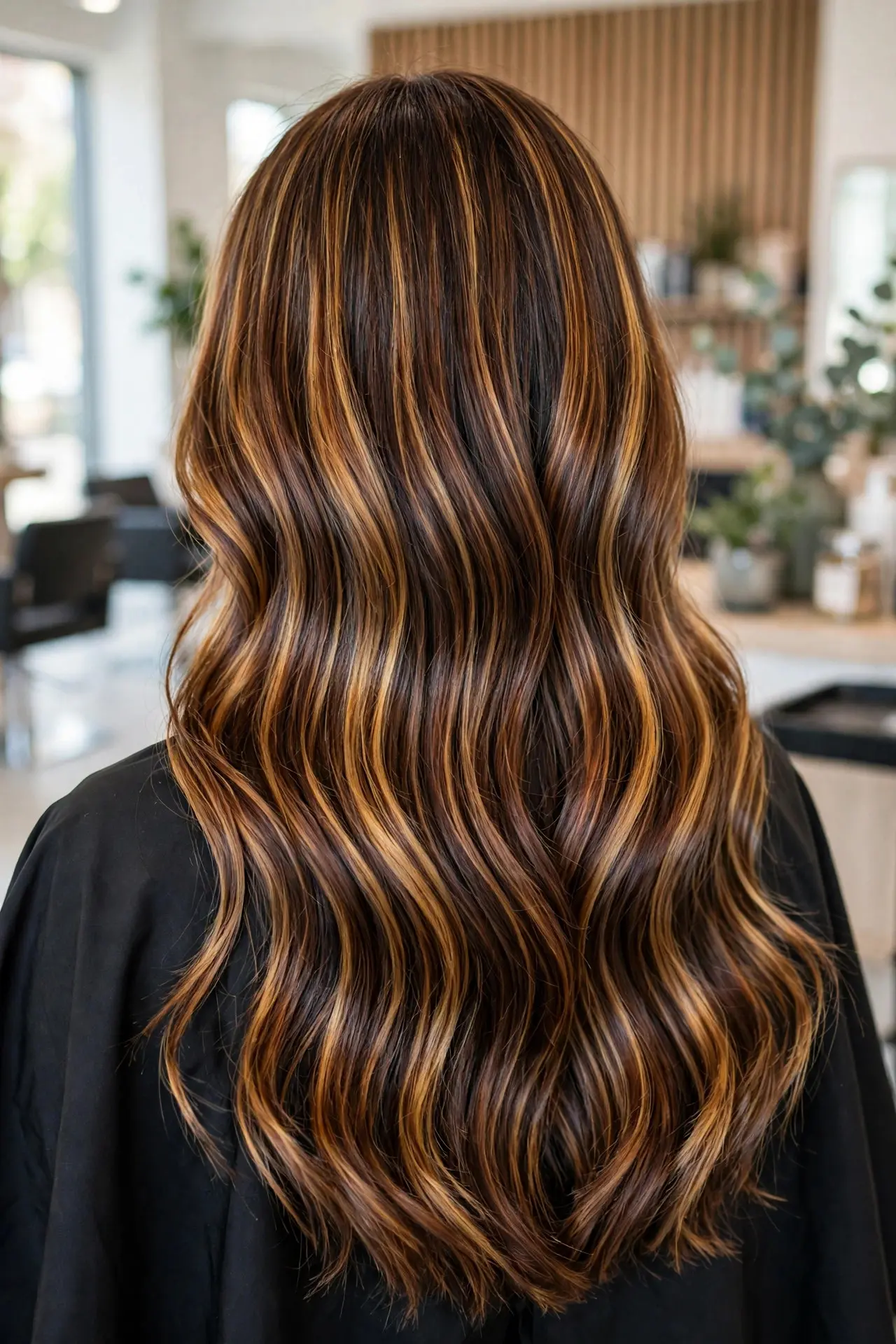
Inspired by the marbled pattern of tortoiseshell, this color swirls caramel, honey and golden ribbons through a warm chocolate-brown base. Because several tones are always in play, the overall effect is rich, glossy and remarkably natural-looking.
Multiple tones are also what make it so forgiving. No single shade carries the look, so fading is gentle and regrowth is camouflaged by the deeper base — appointments can stretch far longer than with a flat, single-process color.
Ask for the lightest pieces around the face and through the ends, with the deepest tone kept at the roots. It suits warm and neutral skin tones especially, and the dimension flatters fine hair by making it look fuller.
Tip: Protect the golden ribbons with a color-safe, sulfate-free shampoo — harsh cleansers strip the lightest tones first and flatten the marbling.
16. Beach Wave Perm
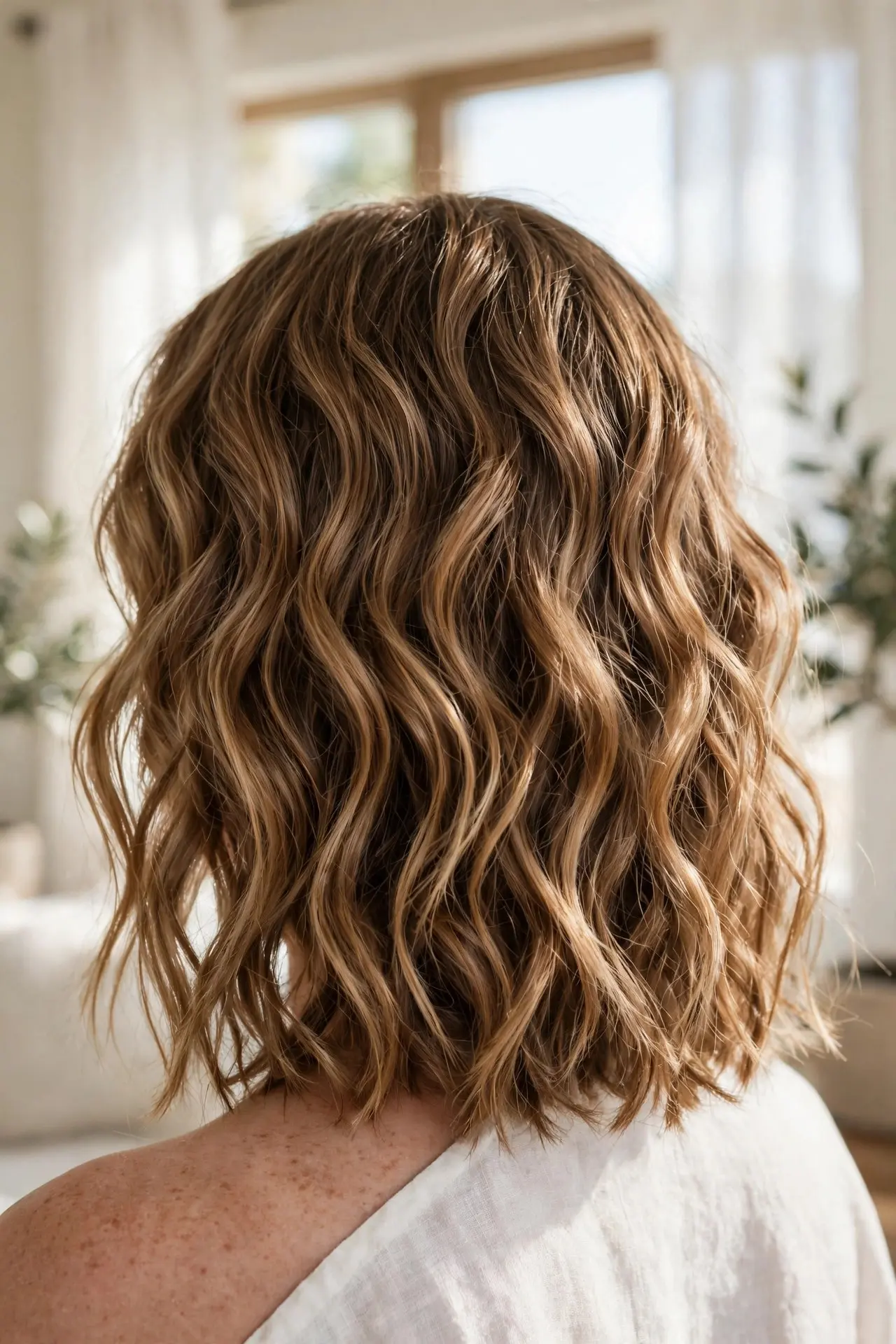
The modern beach wave perm is nothing like the tight perms of decades past. Large rods and gentle formulas create loose, tousled S-waves — the kind most of us fake with a wand — and they stay in your hair for three to five months.
Imagine waking up with the texture already done. Styling becomes a scrunch with a little salt spray or curl cream, then air-drying while you get on with your morning. For straight or fine hair that never holds a curl, it is life-changing.
The grow-out is soft because the wave is loose to begin with; roots simply relax a touch faster than the ends. Keep permed hair moisturized, wait forty-eight hours before the first wash, and skip heavy oils that drag the wave down.
Tip: Book a consultation first and ask to see the rod size — the biggest rods give the loose beach wave; smaller rods will read much curlier than you expect.
17. Clip-In Bang Trend
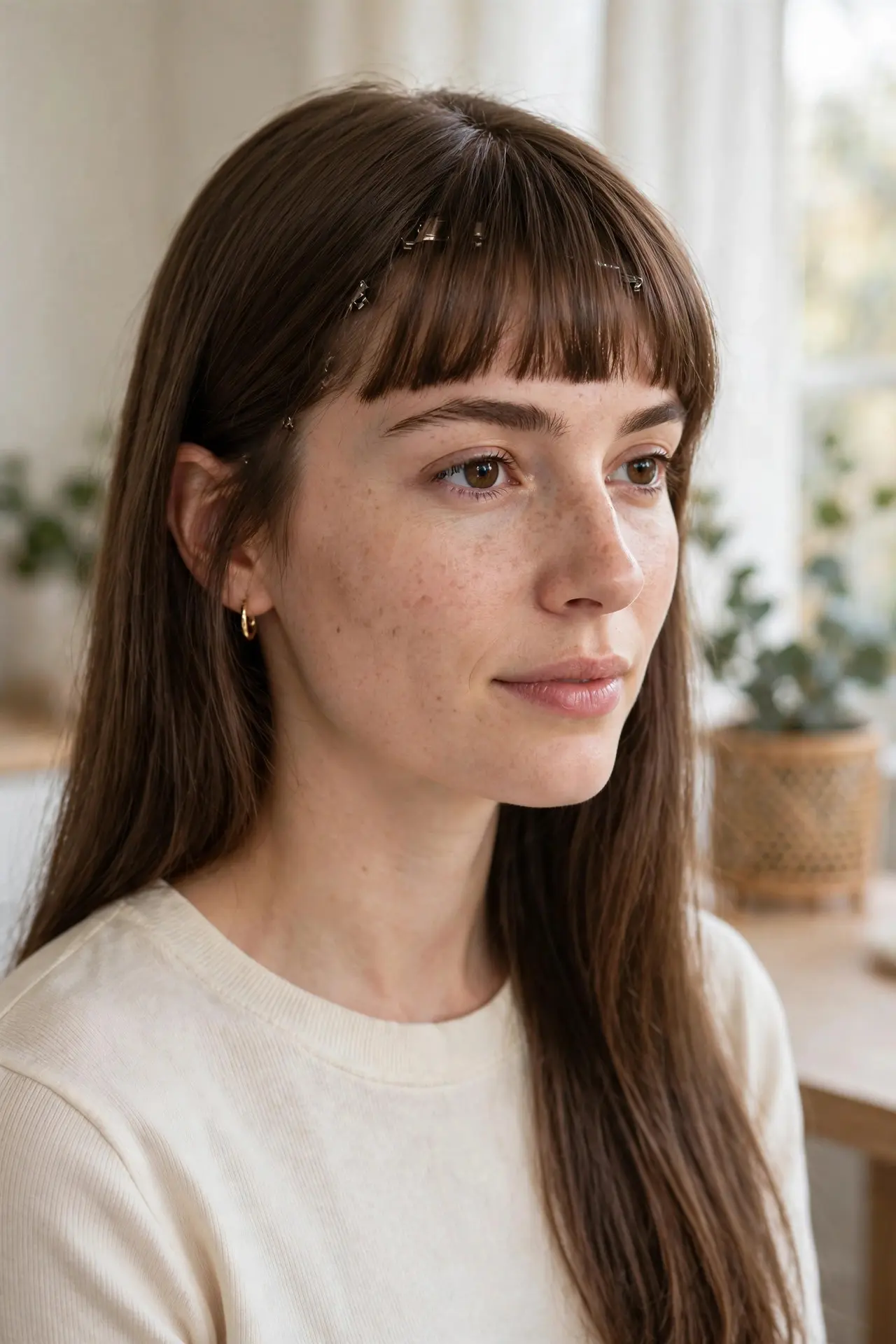
Clip-in bangs deliver the fringe transformation with none of the commitment. The piece — a straight-across fringe on a small base with tiny pressure clips, which you can just spot along the hairline in this photo — snaps in or out in under a minute.
It is the perfect trial run: wear bangs for a weekend, an event or a whole season, then simply take them out. No growing-out stage, no awkward pinning, no regrets. Many women use one to decide before cutting a real fringe.
Matching is everything. Choose a shade within one tone of your own hair, and take the piece to your stylist to have it trimmed to your face — most will shape it for a small fee. Store it flat so it keeps its curve.
Tip: Position the piece about a finger’s width behind your natural hairline and pull a few of your own strands over the base — the blend becomes invisible.
18. Blow-Dry Bar Waves
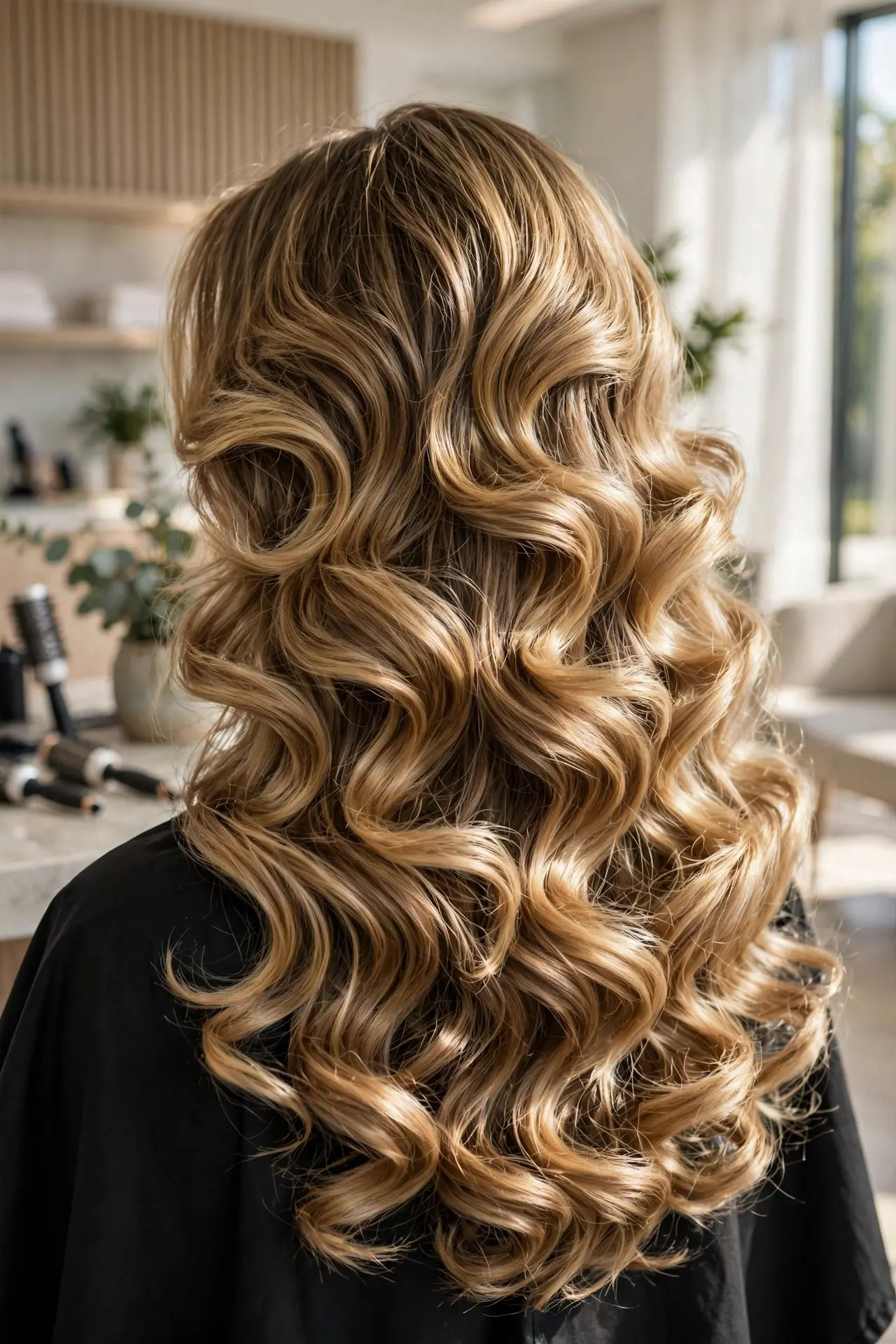
Blow-dry bar waves are the big, bouncy blowout: polished curls with serious body and shine, the kind a professional round brush creates. Whether done at a blow-dry bar or at home, nothing else delivers the same glossy, expensive finish.
The maintenance secret is how long it lasts. A good blowout carries three to four days with dry shampoo and a silk pillowcase, which means one styling session replaces nearly a week of daily effort — that is the real low-maintenance math.
At home, work in sections with a large round brush, aim the dryer down the strand, and let each section cool completely before touching it — cooling is what sets the bounce. Pinning each curl while it cools doubles the staying power.
Tip: Sleep with the hair in a very loose top bun (a “pineapple”) to preserve the waves overnight without crushing the volume.
19. Textured Lob
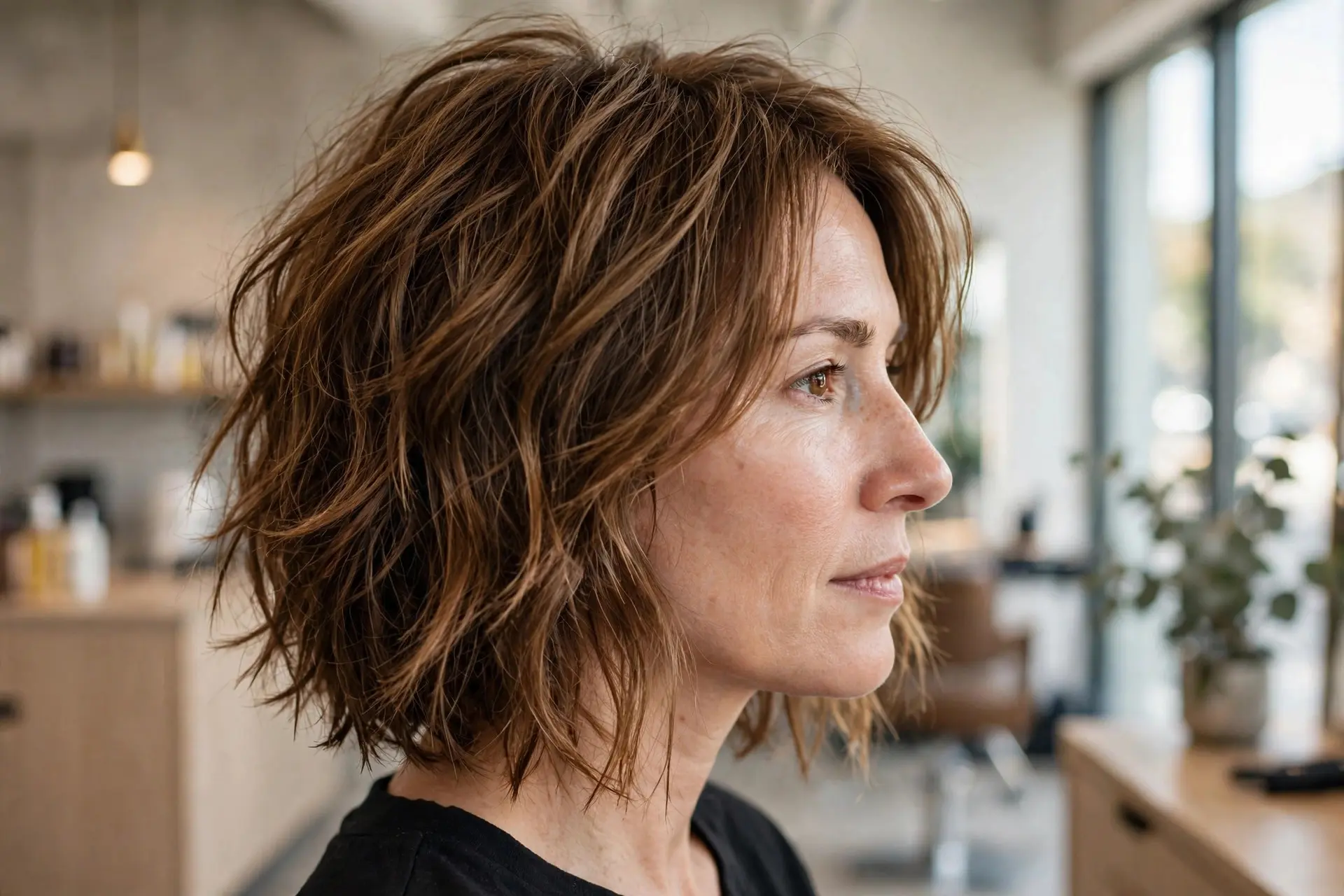
The textured lob — a long bob with choppy, piecey ends — sits right around the shoulders, the most versatile length in hair. Long enough for a ponytail, short enough to feel fresh, it is the cut people choose when they want change without drama.
Texture is what separates it from a plain lob. The ends are point-cut and lightly layered, giving that tousled, undone finish that looks better slightly messy — ideal for a style you mostly finger-comb. It flatters nearly every face shape and hair type.
It is also a gentle grow-out champion: as it lengthens it simply looks like a longer lob, so you can stretch trims to eight or ten weeks. A little texturizing spray scrunched into dry hair is the whole routine.
Tip: Ask for the front to sit a touch longer than the back — the subtle angle elongates the neck and keeps the shape modern.
20. Undercut Layers
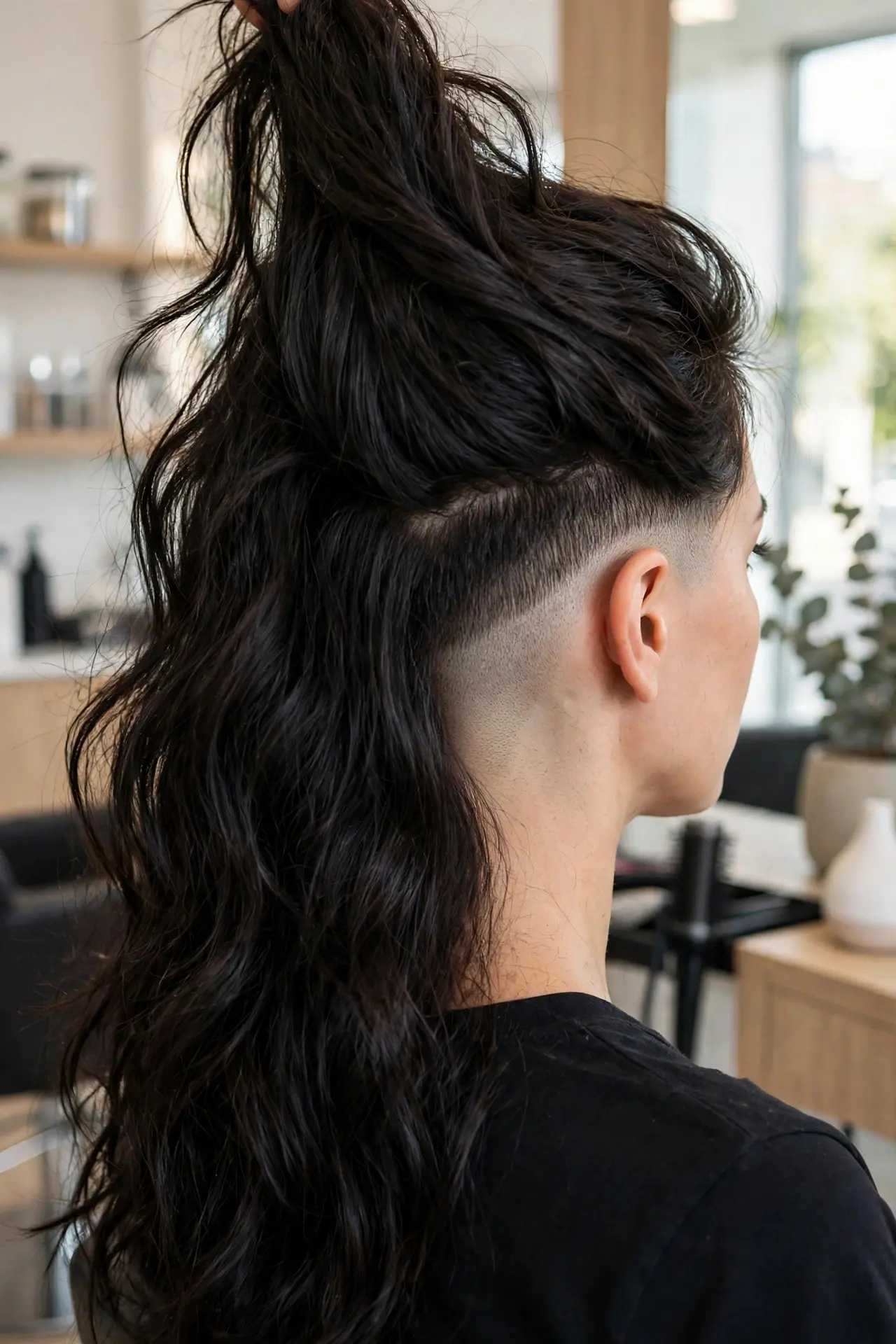
Undercut layers hide a clever secret beneath your hair. As this photo shows, a section at the nape and lower sides is clipped short underneath, while the top layer keeps its full length — you see the undercut only when the hair is lifted or tied up.
For thick, heavy hair, the difference is immediate: less bulk, less weight, faster drying and a neckline that stays cool in summer. Hair falls flatter and smoother because the underneath mass that pushed it out is gone.
Nobody has to know it is there, which makes it the most discreet trend on this list. The trade-off is upkeep — the clipped section needs a tidy every three to four weeks, though many salons offer quick, cheap undercut-only appointments.
Tip: Start with a small nape-only panel before committing to the sides — you can always take more off at the next visit if you love the lightness.
Styling Tips
A low-maintenance style still rewards a few smart habits — these are the ones that make every trend above last longer and look better:
- Match the cut to your natural texture: the easiest styles work with the hair you have, not against it — ask your stylist what your texture wants to do on its own.
- Keep two products, not ten: a good dry shampoo and one styler matched to your finish (texture spray, mousse or smoothing cream) cover almost every look here.
- Refresh, don’t restyle: a water spray bottle revives waves and layers on day two; a quick blast of dry shampoo at the part revives roots and fringe.
- Book trims before you leave: pre-booking the next appointment at the interval your cut needs is the simplest way to never hit the awkward stage.
- Sleep smart: a silk or satin pillowcase — or a loose top bun — protects blowouts, waves and blunt edges overnight with zero effort.
- Gloss between colors: a clear or tinted gloss at the halfway point between color appointments makes any shade look freshly done again.
Build these into your week and even the simplest cut on this list will keep looking salon-fresh.
Common Mistakes to Avoid
- Fighting your natural texture: choosing a sleek blunt bob for very curly hair (or vice versa) creates daily work — the trend is only low-maintenance when it suits your hair type.
- Skipping trims entirely: low-maintenance is not no-maintenance; stretched too far, bobs lose their line, layers grow stringy and pixies lose their shape.
- Going too light at the front: a money piece or face frame more than three shades lighter than your base can look harsh and will demand constant toning.
- Overwashing: daily shampooing fades glosses and multi-tone color fast and dries out permed or waved hair — two to three washes a week suits most of these styles.
- Using the wrong products for the finish: heavy oils flatten beach waves and textured cuts, while volumizing foams can make a sleek bob look puffy; match the product to the look.
Building a Low-Maintenance Hair Routine That Works
A truly low-maintenance routine starts with one principle: choose products and techniques that work with your natural texture instead of against it. When the cut and the routine agree, most mornings become a two-minute job.
Keep the shelf small and purposeful. A lightweight leave-in conditioner protects and softens in one step, a texturizing spray gives waves and layers their piecey finish, and dry shampoo stretches time between washes while refreshing roots and fringe. Embracing air-drying whenever possible saves both time and heat damage — most of the styles in this guide were chosen precisely because they dry well on their own.
Finally, let the calendar do the work: regular trims keep any cut looking fresh without extra effort, and a gloss or toner between color visits keeps shades rich. Pair the right haircut with a few smart products, and looking polished every day stops being a project.
Frequently Asked Questions
What is the most low-maintenance hair trend right now?
Curtain bangs, textured layers and gray blending top the list, because all three grow out gracefully and need minimal daily styling. Soft all-over layers and root smudge color are close runners-up for the same reason.
Can low-maintenance hair still look trendy and flattering?
Absolutely. Current trends are designed to balance style with ease, using cutting and coloring techniques — melted roots, blended layers, lived-in texture — that look deliberate and polished without a complicated routine.
How often should I get a trim to maintain a low-maintenance style?
Most of these cuts do best with a trim every six to eight weeks. Blunt bobs lean toward six weeks to keep the edge crisp, while textured lobs, layers and grow-out color can comfortably stretch a little longer.
Are heatless styling methods as effective as heat styling?
For soft, natural waves, yes — overnight braids or foam rollers create long-lasting texture comparable to a wand or iron, without any heat damage. They will not mimic a sleek blowout, but for waves they are a genuine alternative.
Conclusion
Whichever of these hair trends you try first, the promise is the same: a cut or color that flatters you today and still behaves beautifully weeks from now. If a longer, painted color is calling you next, our guide to brown to blonde balayage ideas is the perfect follow-on read. Which of these twenty will you take to your stylist — the wolf cut, the gray blend, or something in between?
Discover more from Fashinate Style
Subscribe to get the latest posts sent to your email.