
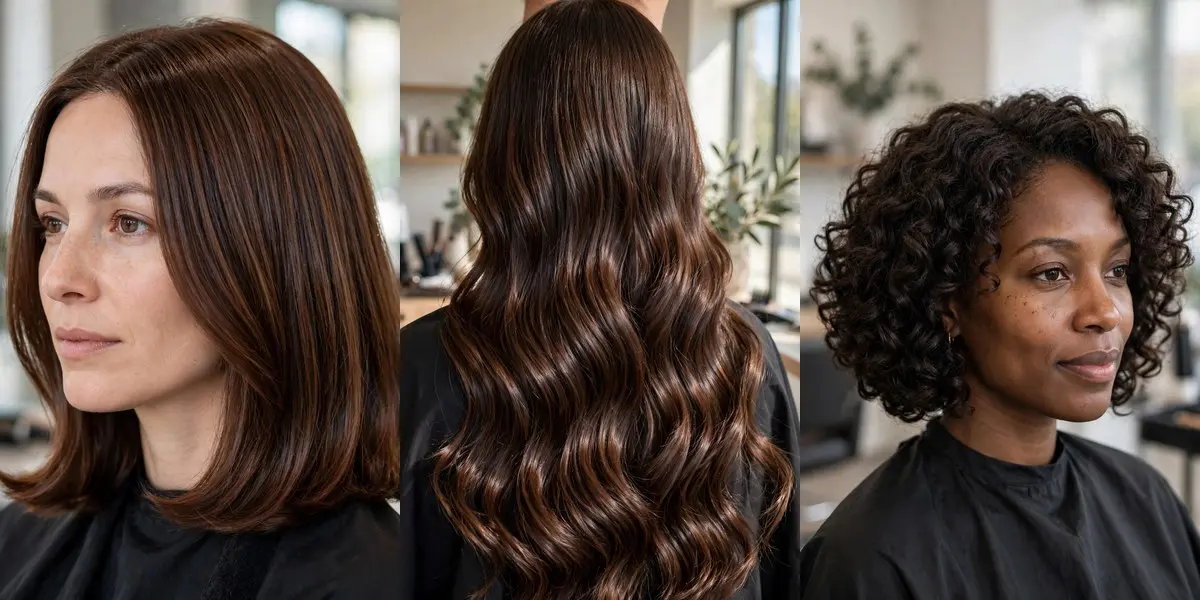
A new season has a way of making your current style feel tired, and the fastest fix is a fresh shape. These haircut trends run from a barely-there fringe refresh to a full pixie chop, so you can choose exactly how brave you want to be.
Some of these changes take inches off, some transform your texture, and six of them are pure color — rich chocolate, copper, balayage and even a vivid panel. The right one depends on your hair type, your routine and how much upkeep you honestly enjoy.
Every idea below explains what the change involves, who it suits best and how to look after it, so there are no salon surprises. If shorter styles are calling your name, our guide to shaggy bob hairstyles for fine hair is a lovely next read.
Save photos of your favorites before your appointment, and show your stylist the ones you love most. A clear picture and an honest chat about maintenance and grow-out will get you much further than a vague “something different, please” ever will.
In This Guide
- 1. Shoulder-Length Lob
- 2. Blunt Fringe Refresh
- 3. Feathered Face-Framing Layers
- 4. Chin-Length French Bob
- 5. Cropped Pixie Cut
- 6. Long Layered Shag
- 7. Curly Bob Transformation
- 8. Asymmetrical Bob
- 9. Chocolate Brunette Color Change
- 10. Auburn and Copper Seasonal Color
- 11. Balayage Refresh
- 12. Root Melt Blend
- 13. Soft Wave Perm
- 14. Statement Blunt Bangs
- 15. Textured Crop
- 16. Mullet-Inspired Shag
- 17. Ear-Length Pixie Bob
- 18. Glossy One-Length Cut
- 19. Face-Framing Highlights Refresh
- 20. Wispy Layers Throughout
- 21. Bold Undercut Design
- 22. Vivid or Pastel Color Panel
- Styling Tips
- Common Mistakes to Avoid
- How to Transition Smoothly Into a New Seasonal Style
- Frequently Asked Questions
1. Shoulder-Length Lob
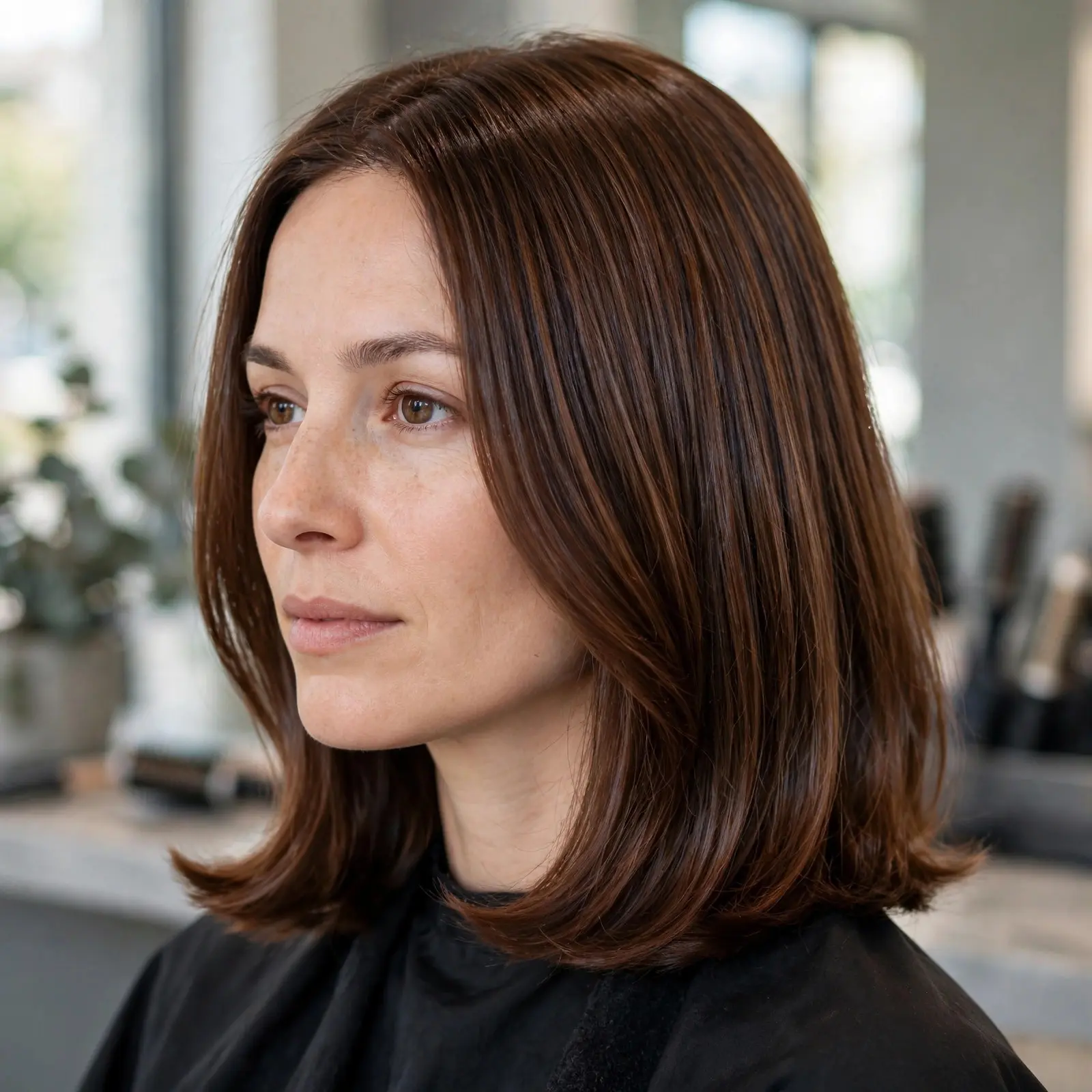
The lob sits right at the shoulders — long enough to tie back, short enough to feel like a genuine change. It trims away tired, weather-worn ends and gives fine and thick hair alike a cleaner, bouncier outline.
It is one of the most forgiving seasonal switches because it works straight, waved or curled, and it grows out gracefully if you decide to go long again. Even flipping to a deep side part makes it feel brand new. It is also the easiest length for updos, braids and claw-clip days, so your styling options barely shrink at all.
Tip: Blow-dry with a round brush to curve the ends under for a polished finish, or mist texturizing spray through damp hair for effortless, piecey waves.
2. Blunt Fringe Refresh
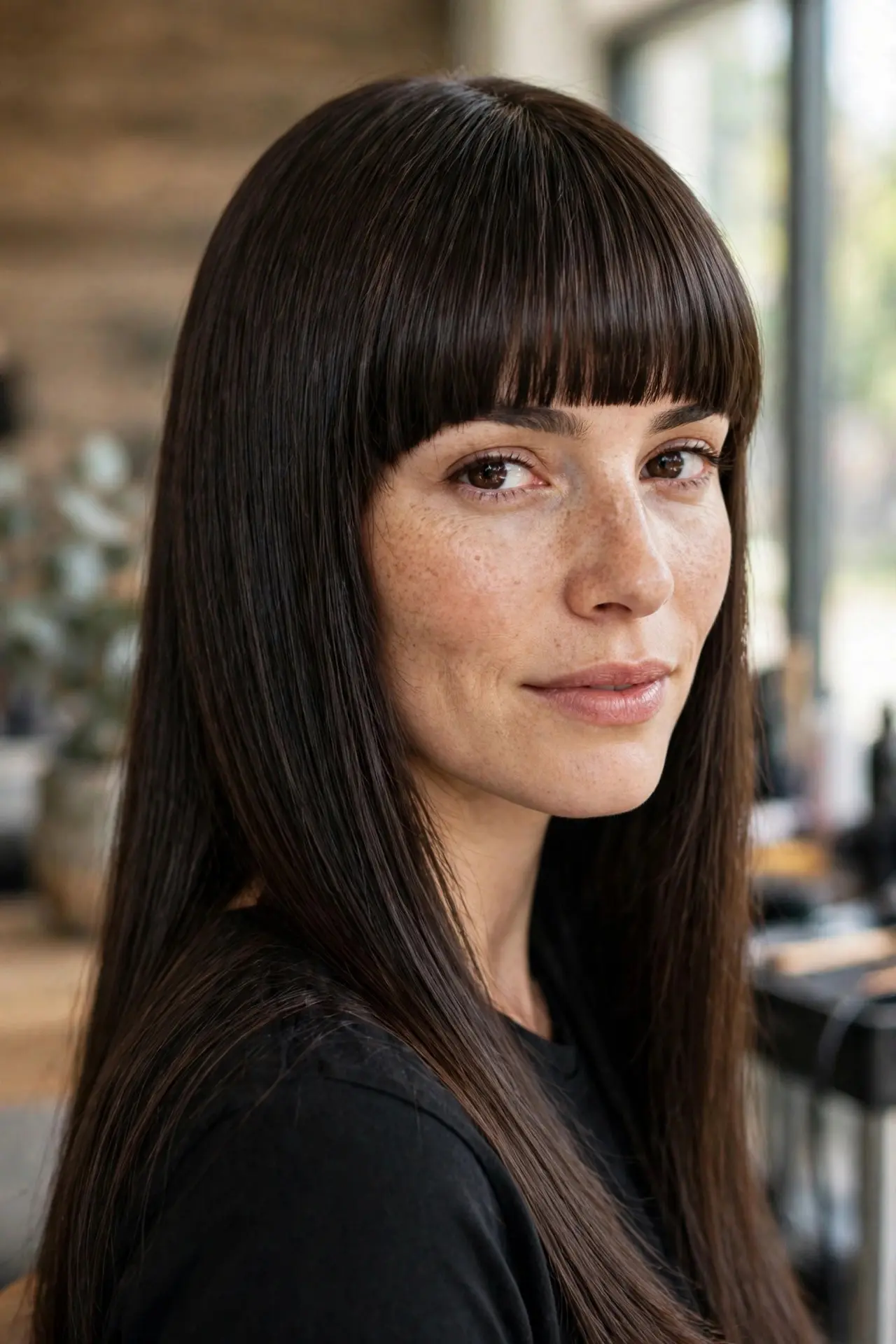
A full, blunt fringe is the quickest transformation on this list: your length stays exactly the same, but the whole frame of your face changes in a single appointment.
Cut straight across and worn full, it pulls attention straight to your eyes and makes even a simple ponytail look deliberate and styled. It works best on straight and slightly wavy hair that sits flat at the front. On curlier hair it can fight back, so ask your stylist honestly whether your texture will cooperate before you commit.
Tip: Book a fringe trim every 3 to 4 weeks to keep the line crisp, blow-dry it flat with a paddle brush, and smooth on a drop of anti-frizz serum in humid weather.
3. Feathered Face-Framing Layers
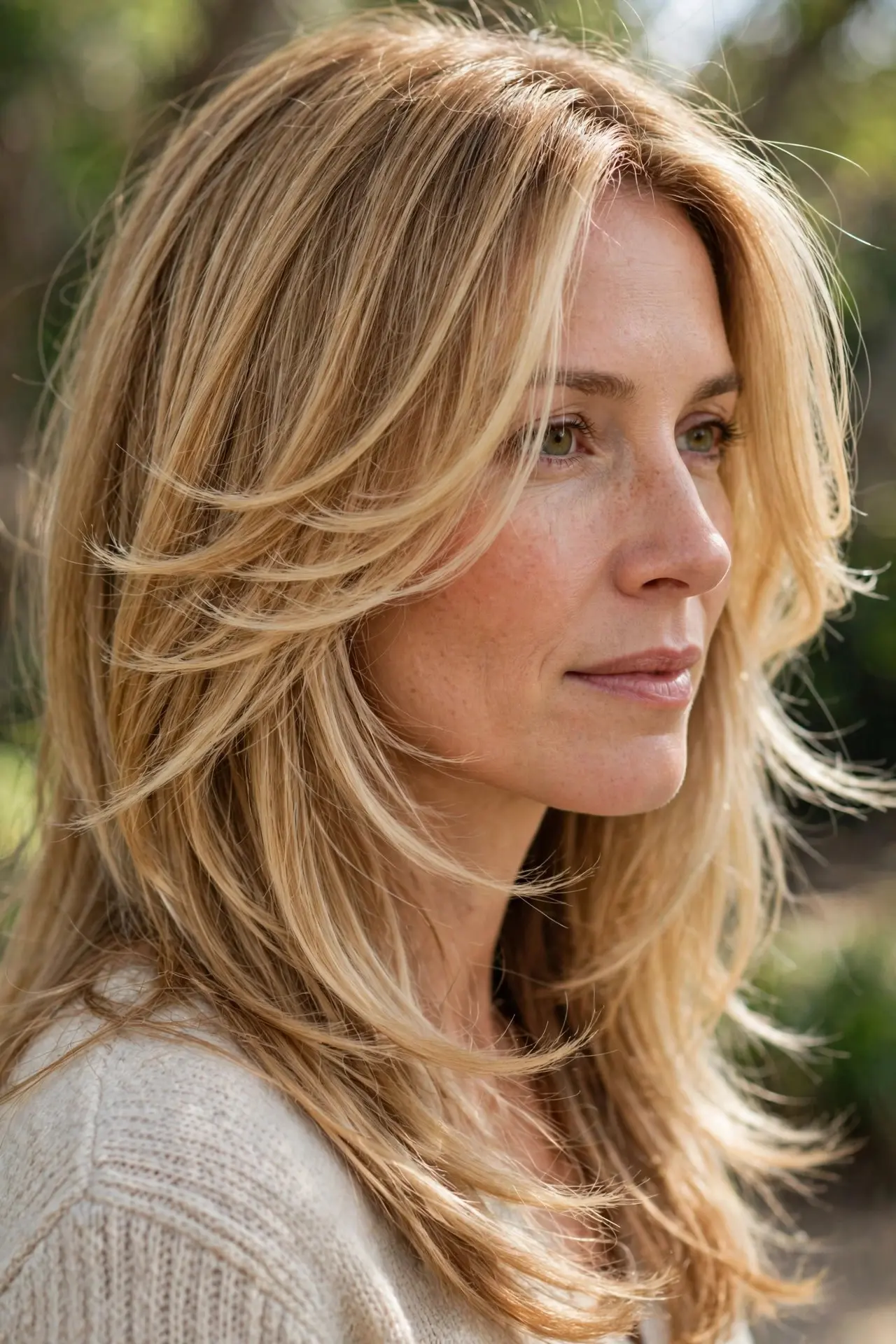
If a big chop feels like too much, feathered layers around the face refresh your current cut without touching your overall length. The soft, swept-back pieces open up the face beautifully.
They draw the eye to your cheekbones and eyes, break up heaviness around the jaw and blend into almost any existing style, from long lengths to a bob. It is a low-commitment update with an instant effect. Because nothing about your length or color has to change, it is also a perfect first step if you are testing a new stylist before a bigger transformation.
Tip: Curl the face-framing pieces away from your face with a 1-inch wand, keep a light shine spray on them, and resist over-straightening — a little movement is what makes feathering work.
4. Chin-Length French Bob
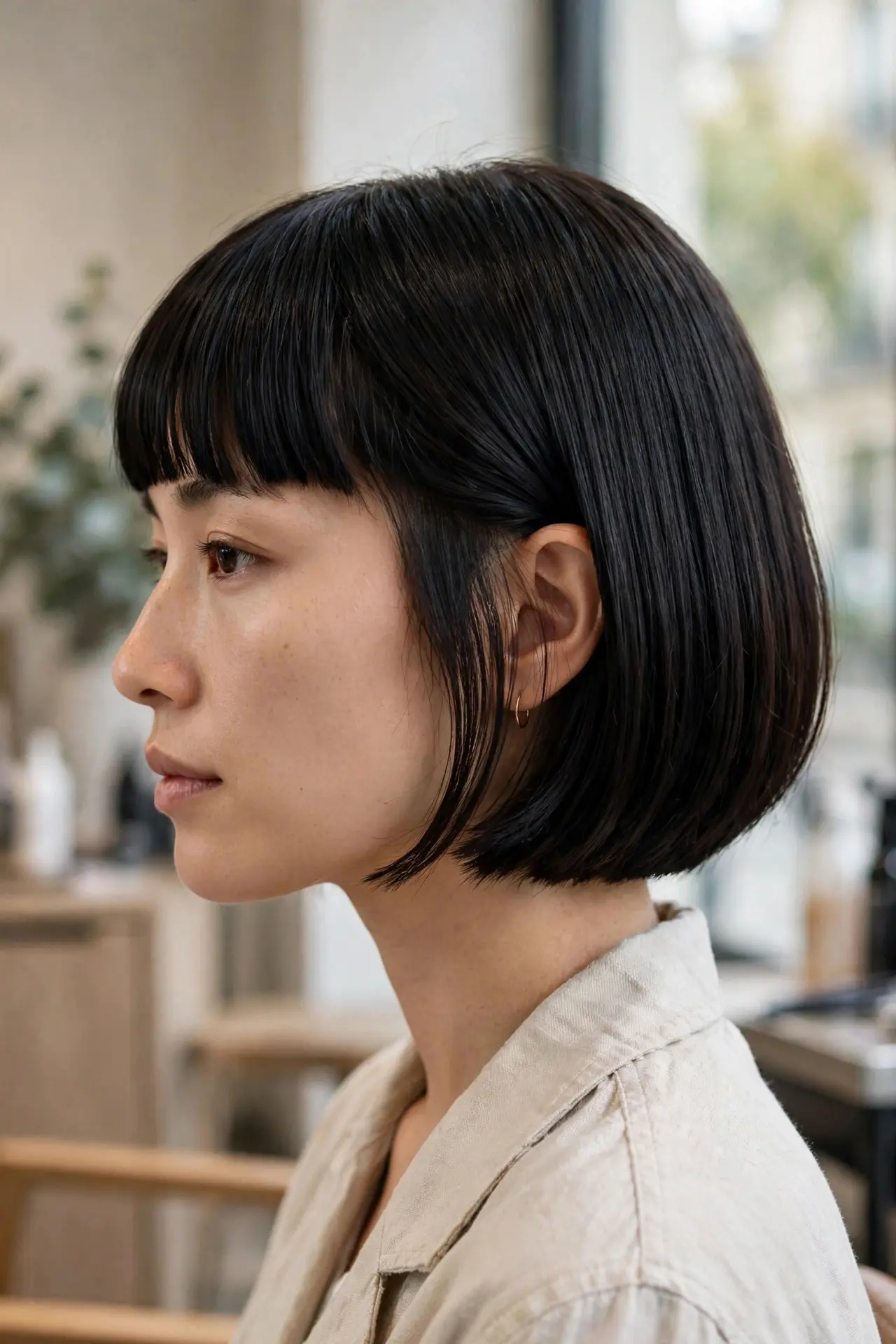
The French bob is cut precisely at the chin, usually with full blunt bangs, and it carries that effortlessly chic, Parisian polish that never really leaves the trend lists for long.
It is a bold step if you are coming from long hair, but daily styling is minimal because the shape does the work. It photographs beautifully, and the blunt perimeter makes fine hair look noticeably thicker. The sharp line skimming the jaw also gives the whole style a tailored neatness that longer, softer cuts rarely achieve.
Tip: Keep the bangs trimmed every 3 to 4 weeks, blow-dry them smooth with a small round brush, and try tucking one side behind your ear for a clean, minimalist finish.
5. Cropped Pixie Cut
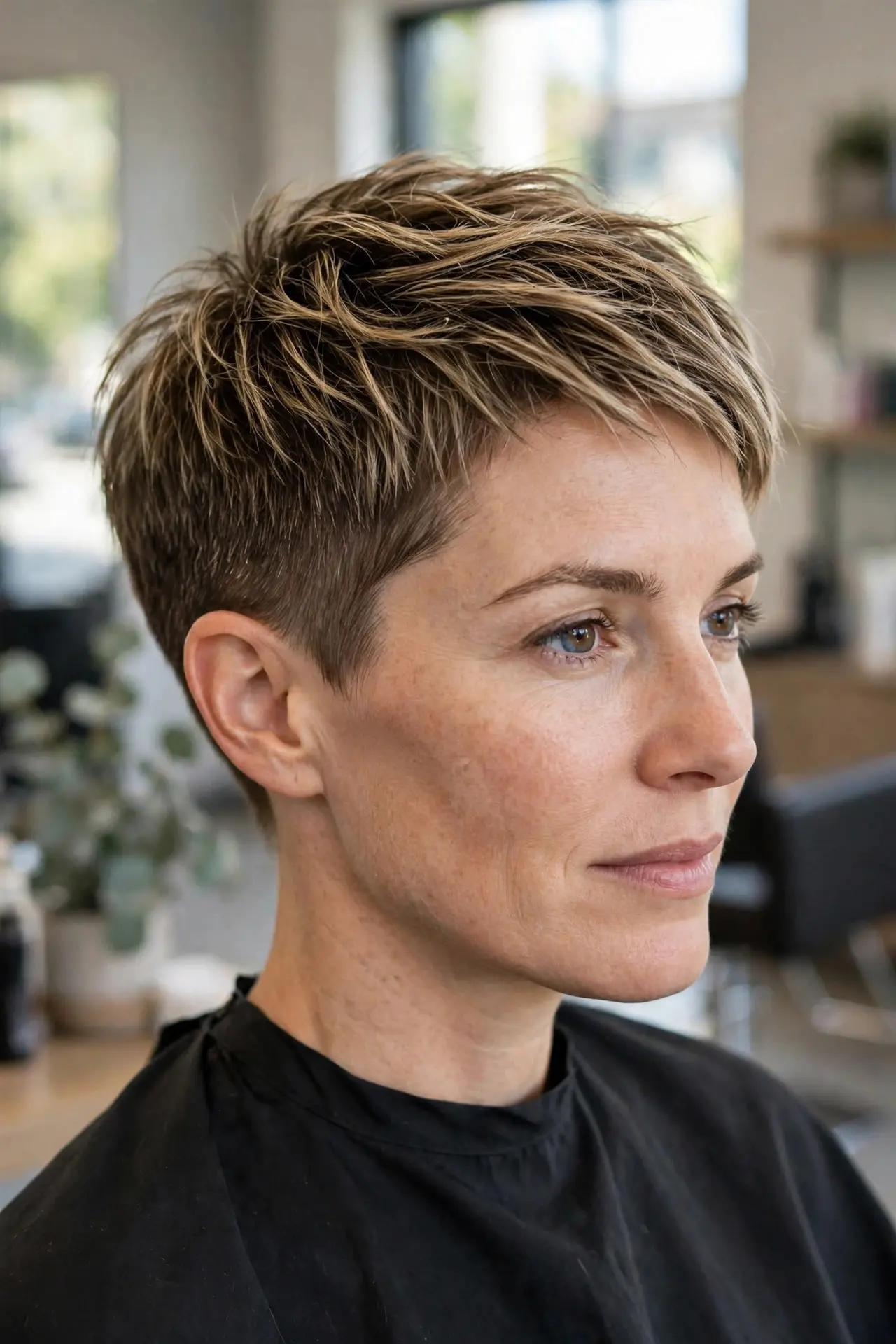
Nothing resets a look like a cropped pixie. Short at the sides and back with a little textured length left on top, it is confident, cool and genuinely freeing.
Morning styling shrinks to a few minutes, and your features — eyes, cheekbones, jawline — take center stage. It is also the ultimate fresh start if heat or color has left your ends damaged. It does grow out quickly, so expect tidy-up appointments every four to six weeks to keep the shape sharp rather than shaggy.
Tip: Work a small amount of texturizing paste through dry hair with your fingers, and blow-dry with your head tilted forward when you want extra root lift.
6. Long Layered Shag
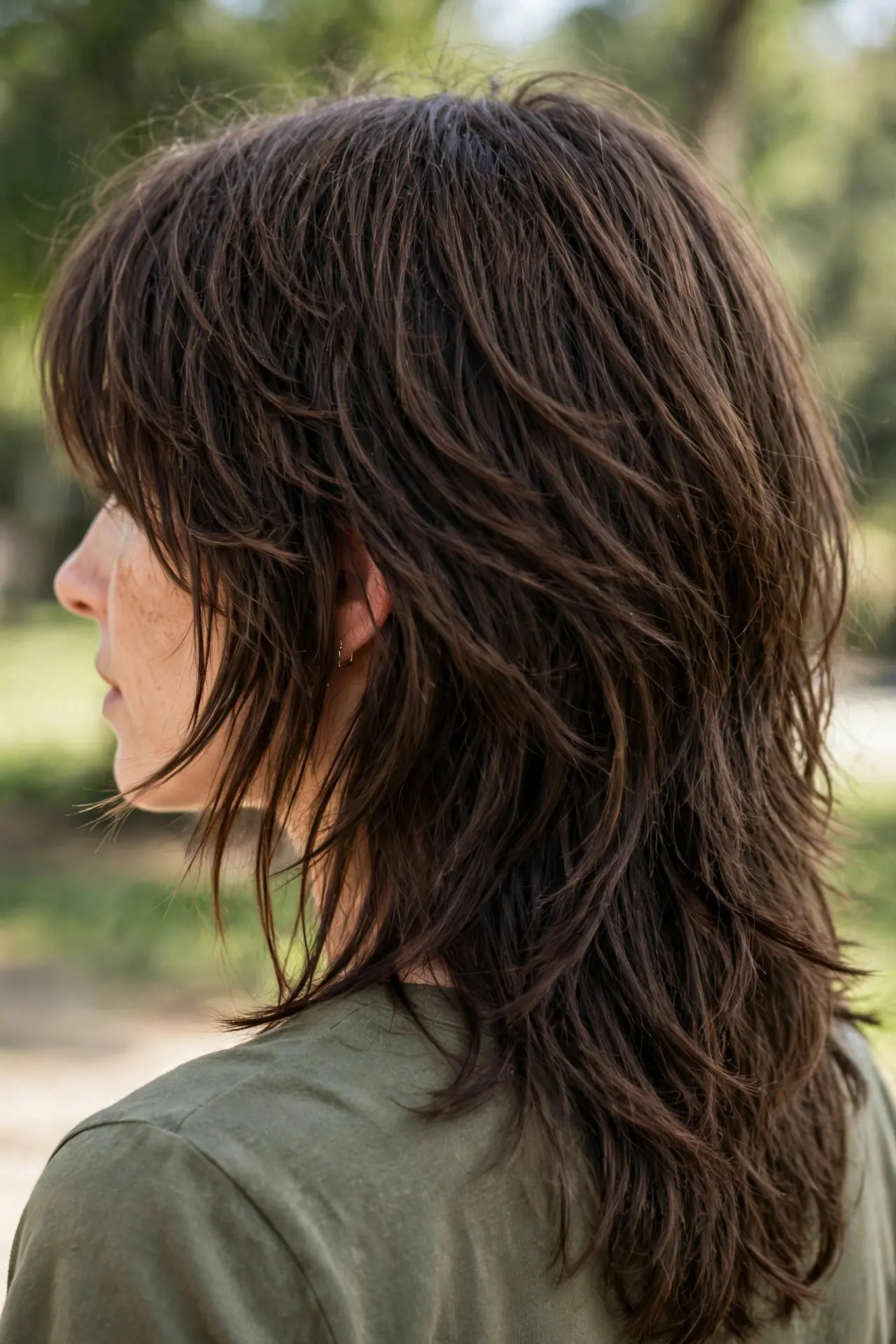
The long layered shag keeps your length and changes everything else: choppy layers through the crown and ends, often with a curtain fringe, for movement a one-length cut simply cannot give.
It breaks up the weight of long hair so it bounces instead of hanging in one heavy sheet, and it wears beautifully straight, waved or loosely curled depending on your mood that day. The curtain fringe most stylists pair with it frames the face softly and grows out without an awkward in-between stage.
Tip: Enhance the layers with a large-barrel curling iron and texturizing spray, and finger-comb instead of brushing — a brush pulls the shaggy separation flat.
7. Curly Bob Transformation
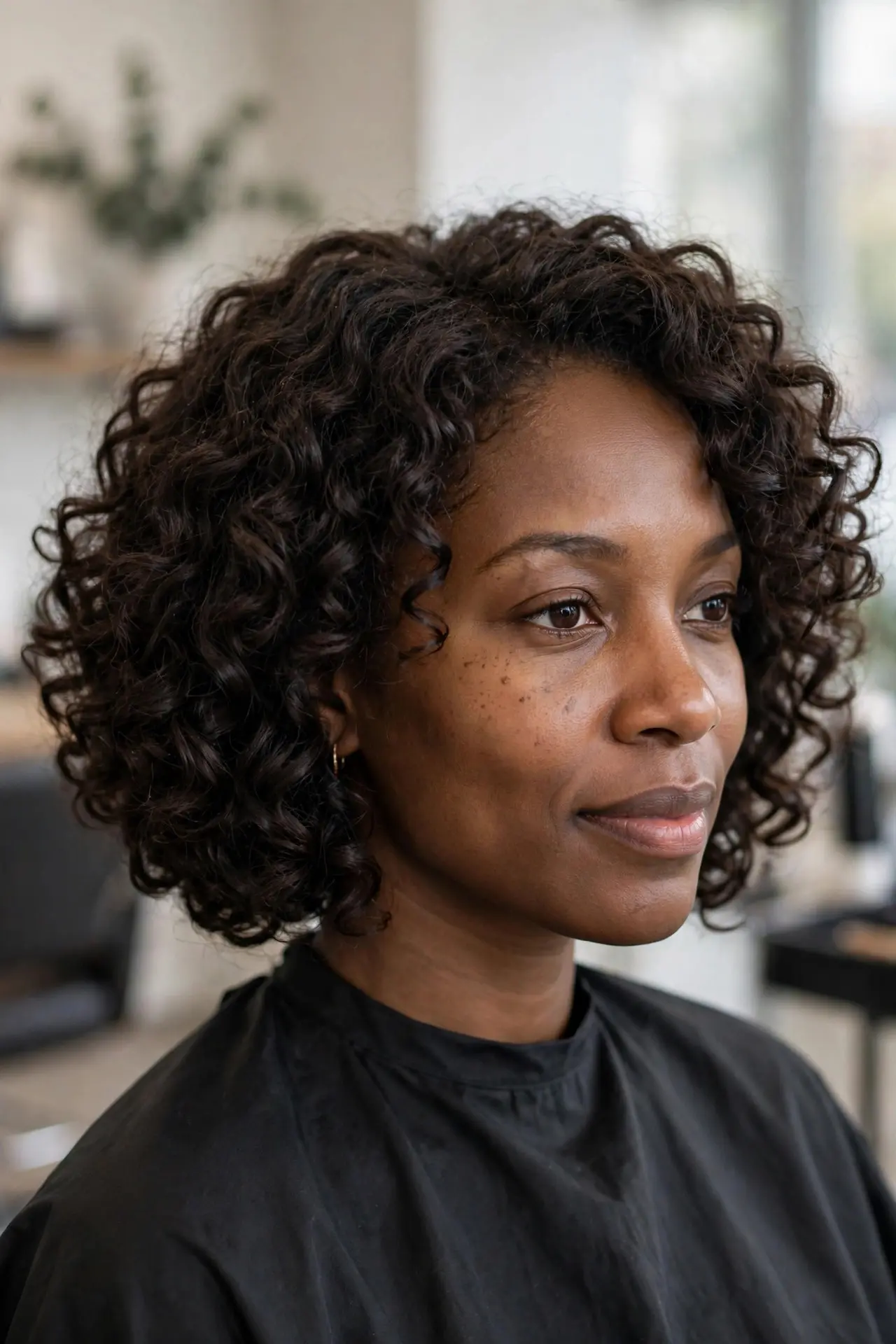
Chopping curly hair into a bob lets your natural texture spring up and show off. Without the weight of length pulling them down, curls coil tighter, so volume and definition jump immediately.
It is a joyful change if you have spent seasons straightening: the shape is rounder, bouncier and far more manageable, and it celebrates the hair you actually have instead of fighting it. Ask for the cut to be shaped on dry curls where possible, since curly hair shrinks as it dries and a wet cut can easily end up shorter than planned.
Tip: Apply a lightweight curl cream to soaking-wet hair, scrunch upward while air-drying or diffusing, and once curls are dry, hands off — touching them invites frizz.
8. Asymmetrical Bob
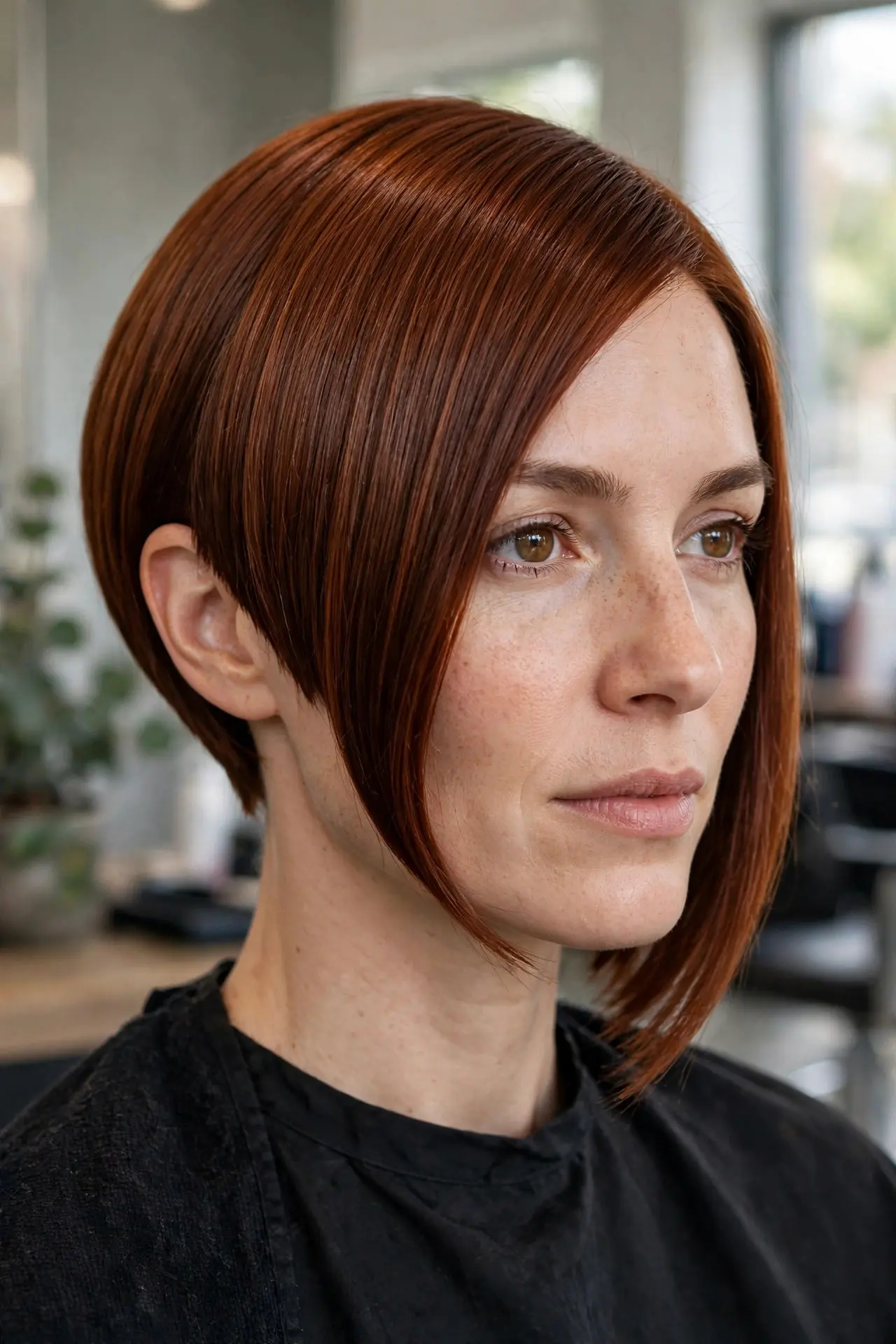
One side longer, one side shorter — the asymmetrical bob is a bob with an opinion. The angled line gives a classic shape genuine edge without any wild styling to maintain it.
It naturally draws attention and feels fashion-forward, yet it stays practical for everyday wear. Your stylist can keep the difference subtle for a softer look or push it dramatic for a real statement. It suits straight and lightly waved hair best, because that clean diagonal line is the entire point of the cut.
Tip: Tuck the shorter side behind your ear to highlight the angled shape, and run a little smoothing serum down the longer side so the contrast stays sleek.
9. Chocolate Brunette Color Change
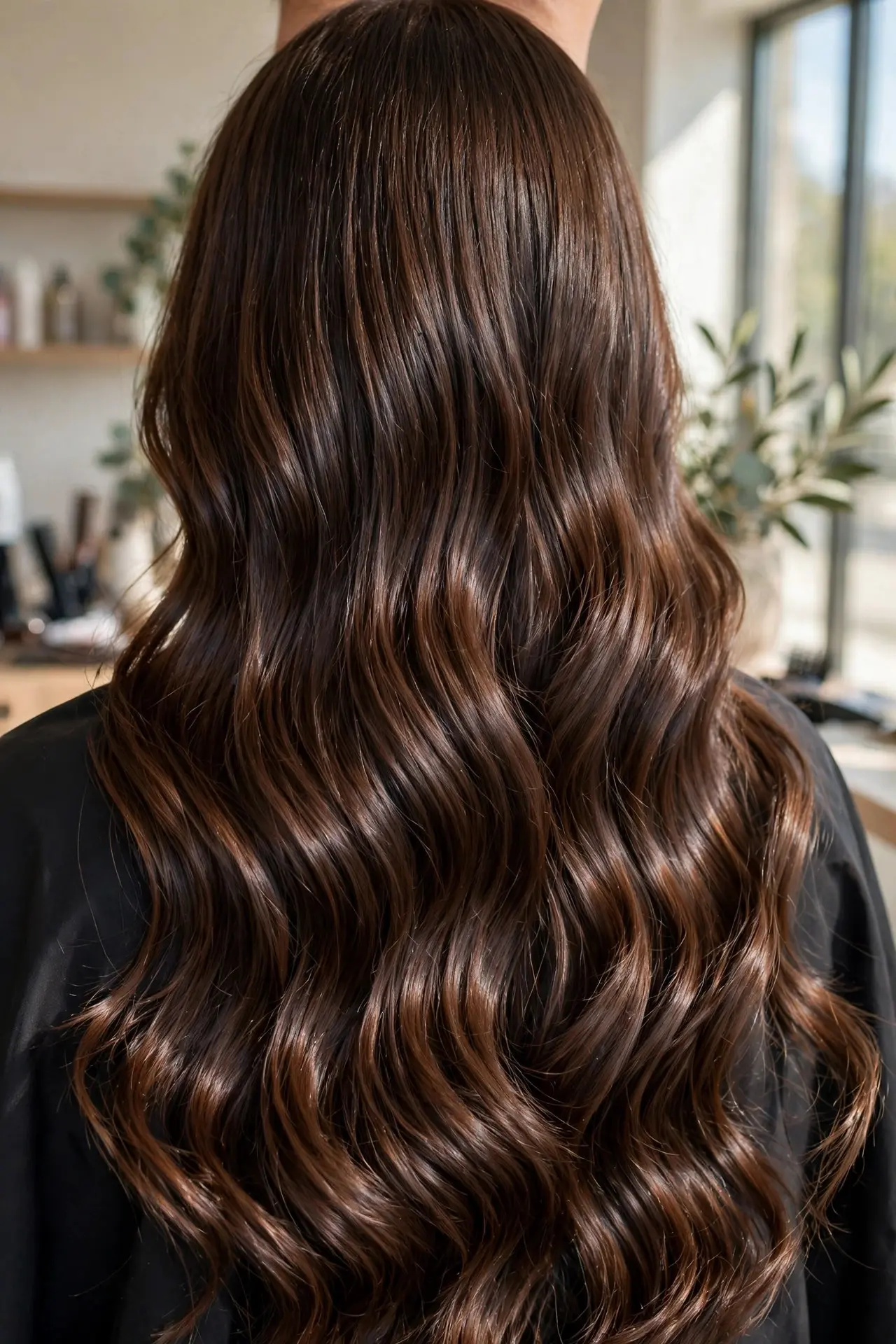
Going rich chocolate brunette is the coziest color change of the season — deep, glossy and warm, it makes hair look instantly healthier, shinier and more expensive.
This is a color idea rather than a cut, so it layers over whatever style you already wear. It is also mercifully low-maintenance, because brunette tones blend gracefully as hair grows, with no harsh root line. It is an especially good direction if your current color has gone brassy or washed out and you want a richer, calmer base for the season.
Tip: Use a color-safe shampoo formulated for brunette tones, add a weekly deep-conditioning treatment for gloss, and expect root touch-ups only every 3 to 4 months.
10. Auburn and Copper Seasonal Color
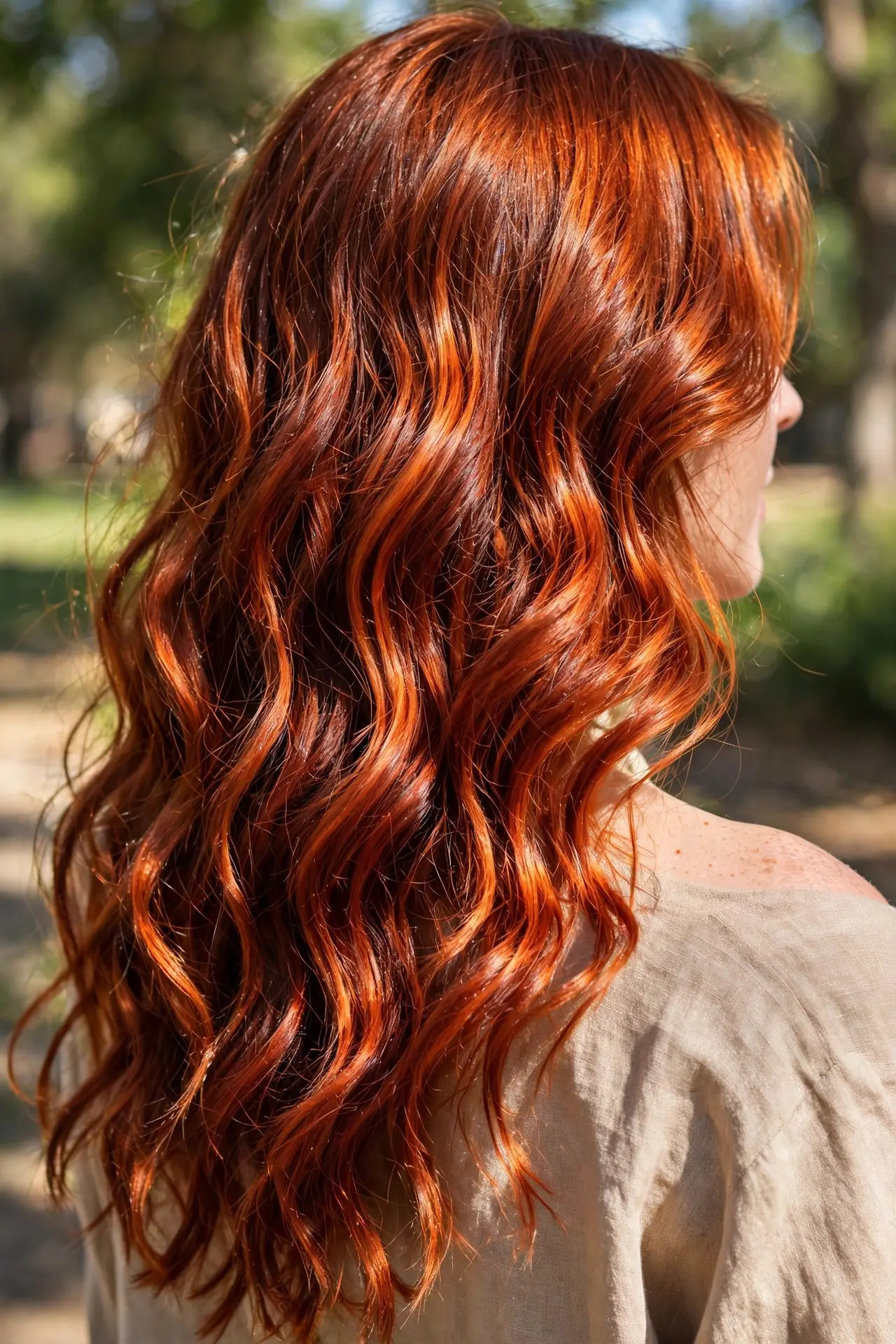
Auburn and copper are the colors that light up a room — fiery, warm and made for the season of golden light and rich, rusty wardrobes. Few changes feel this dramatic, this fast.
They flatter a wider range of skin tones than most people expect, and you can commit to a full-color change or melt the warmth through balayage for a softer transition into red. Fair skin tends to glow with brighter copper, while deeper skin tones carry the richest, deepest auburns beautifully.
Tip: Warm tones fade quickly, so refresh them with a color-depositing shampoo between visits, keep hair hydrated with a leave-in treatment, and protect it from strong sun.
11. Balayage Refresh
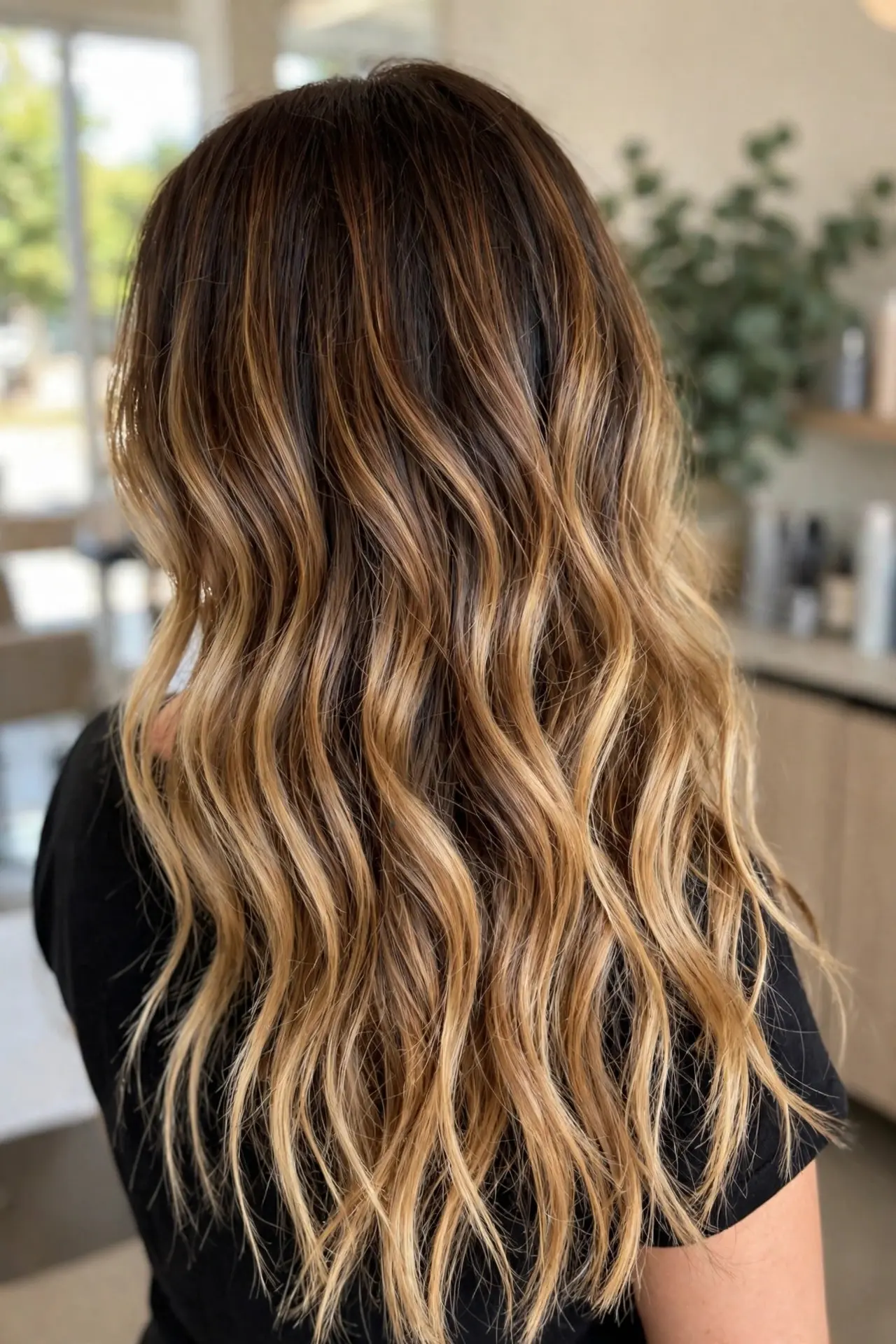
Sometimes your color does not need replacing, just refreshing. New hand-painted balayage pieces add brightness and dimension exactly where last season’s color has dulled or grown out.
Because balayage is painted on freehand, the result is soft and natural-looking, and it keeps the graceful, low-maintenance grow-out that made you fall for the technique in the first place. A refresh can be as small as a handful of new pieces around the face and part line, which keeps the appointment short and the cost down.
Tip: Wash with a color-safe, sulfate-free shampoo, apply a hydrating mask weekly to keep lightened ends healthy, and plan touch-ups every 3 to 4 months.
12. Root Melt Blend
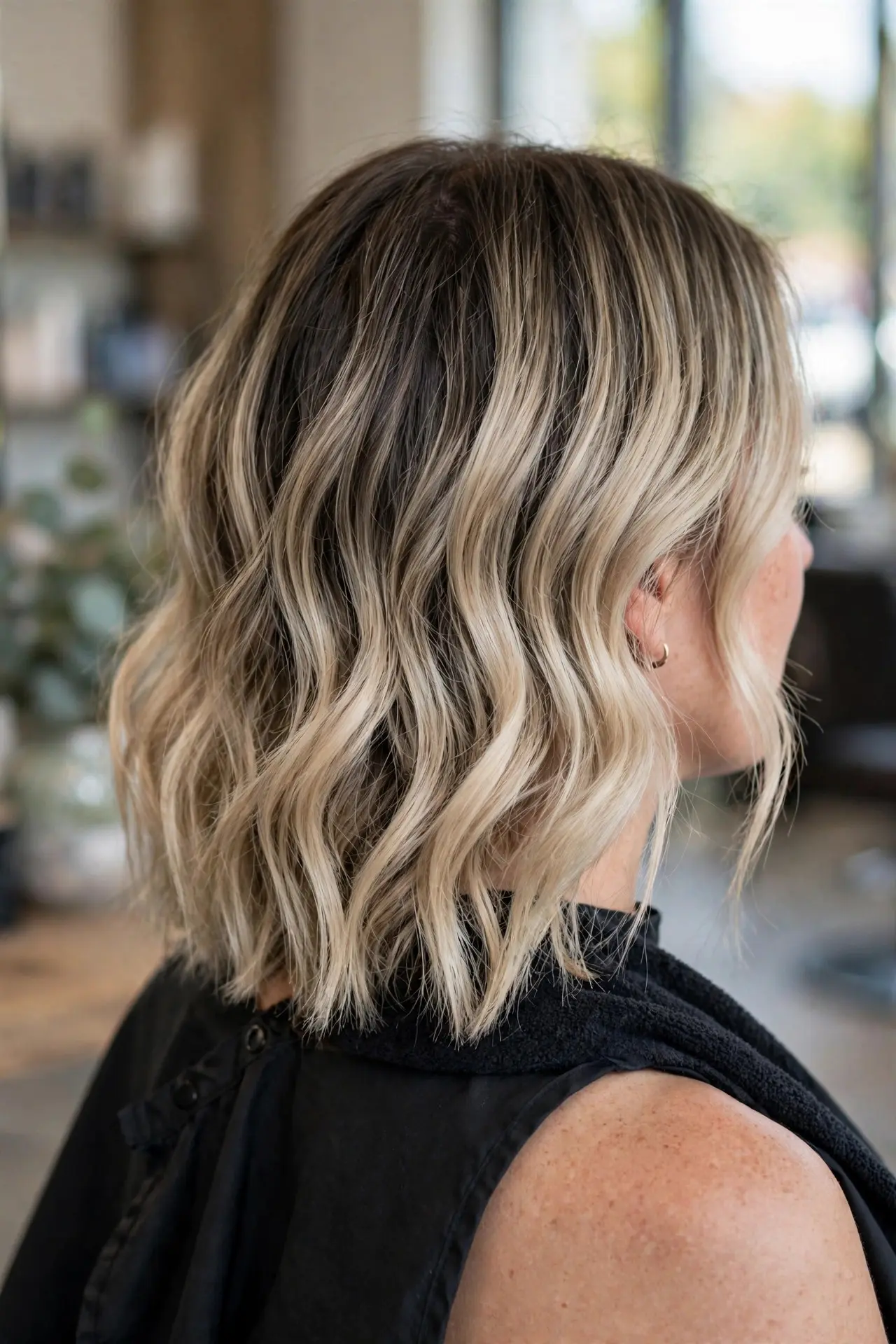
A root melt stretches your natural root color down into your lighter pieces so the two melt together with no visible line — the quiet secret behind color that always looks freshly done.
It is a color technique, not a cut, and it buys you real time between appointments because regrowth simply becomes part of the blend. Perfect if you love light ends but not the upkeep schedule. It works on almost any existing highlight pattern, from balayage to traditional foils, because the melt is about softening the root area, not changing the ends.
Tip: Schedule refreshes every 10 to 12 weeks, wash with a color-safe shampoo to protect the transition zone, and add a toning gloss periodically to keep the melt cohesive.

13. Soft Wave Perm
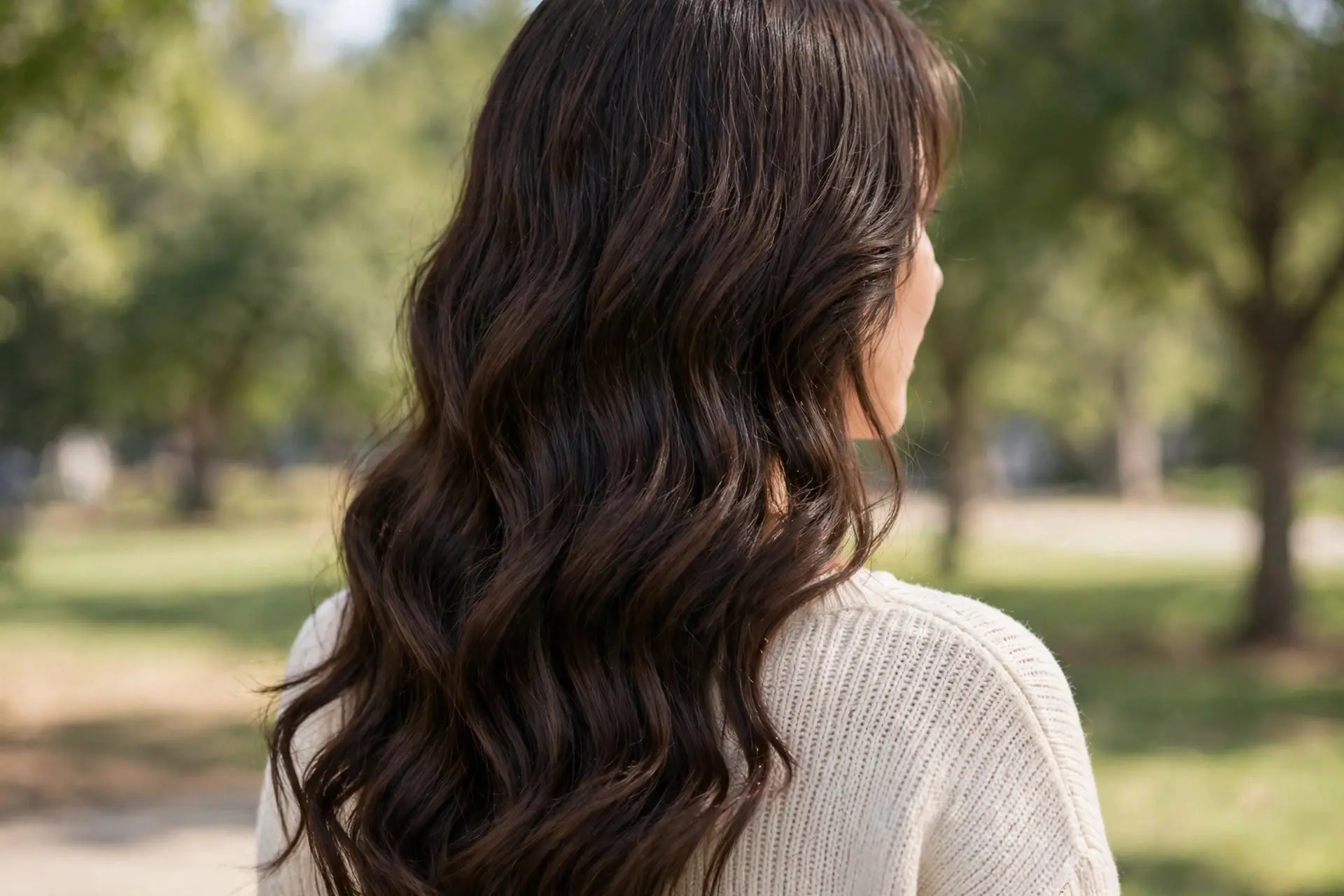
Modern perms are nothing like the tight curls of decades past. A soft wave perm gives straight hair loose, touchable waves that hold their shape for months — a texture change without losing length.
It is especially appealing if your hair falls flat by lunchtime: the built-in movement is already there when you wake up, so daily styling shrinks to almost nothing. Modern soft perms last around three to six months and relax gradually, so there is no harsh line between treated hair and new growth.
Tip: Dry with a diffuser so you do not disturb the wave pattern, define pieces with a lightweight curl cream, and never brush it dry — that is what turns waves into frizz.
14. Statement Blunt Bangs
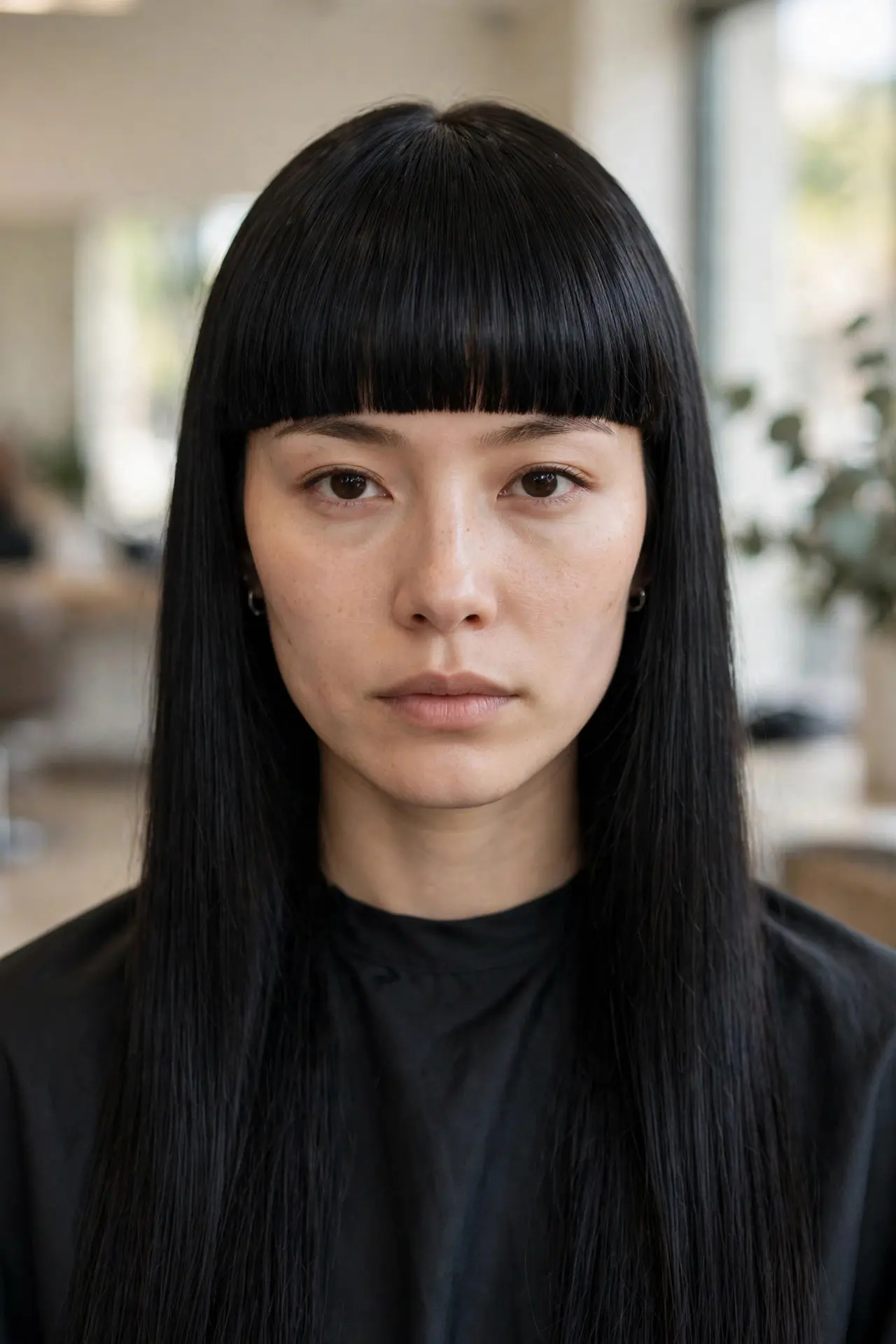
If a fringe refresh is a whisper, statement bangs are the shout: a thick, heavy, graphic fringe cut in one bold straight line that completely reframes your face.
It is a single styling decision with a total-transformation effect, pulling all the focus to your eyes while the rest of your existing haircut stays completely untouched. Strong, structured and confident. It is the boldest fringe option here, so it suits someone who enjoys a deliberate, high-impact look rather than a soft one.
Tip: Keep the edge crisp with trims every 3 to 4 weeks, blow-dry the fringe flat with a paddle brush, and finish with a lightweight serum so it stays polished and frizz-free.
15. Textured Crop
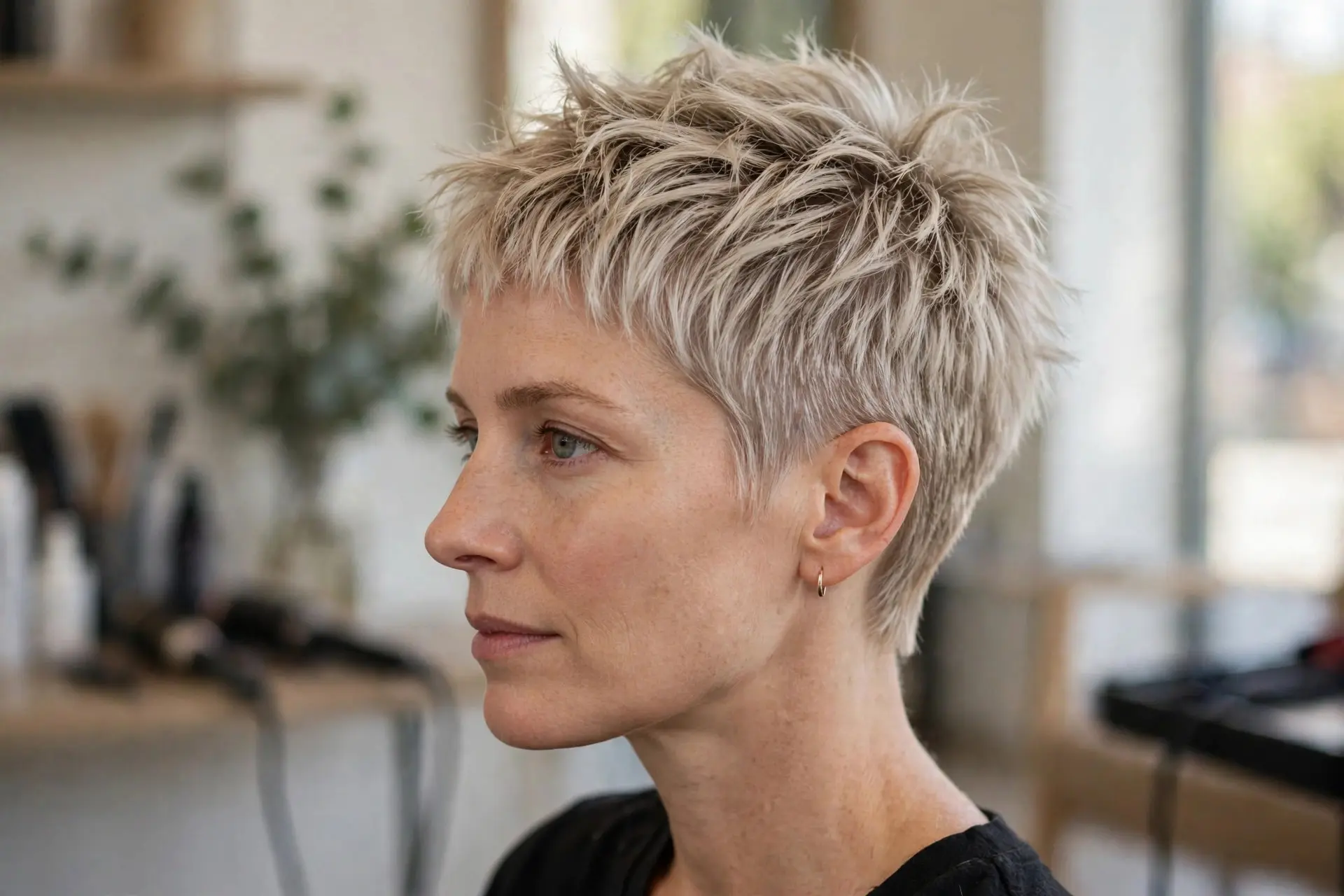
The textured crop is short like a pixie but rougher around the edges — piecey, razor-cut texture throughout that reads modern, confident and a little bit rebellious.
It delivers serious visual impact while asking almost nothing of you in the morning, which makes it a practical fresh start. The separated tips photograph beautifully from every angle, too. It works across most hair types, since the texture is cut in by the razor rather than depending on your natural pattern.
Tip: Pinch texturizing paste through dry hair to sharpen the choppy pieces, and blow-dry with your head tilted forward when you want maximum root lift.
16. Mullet-Inspired Shag
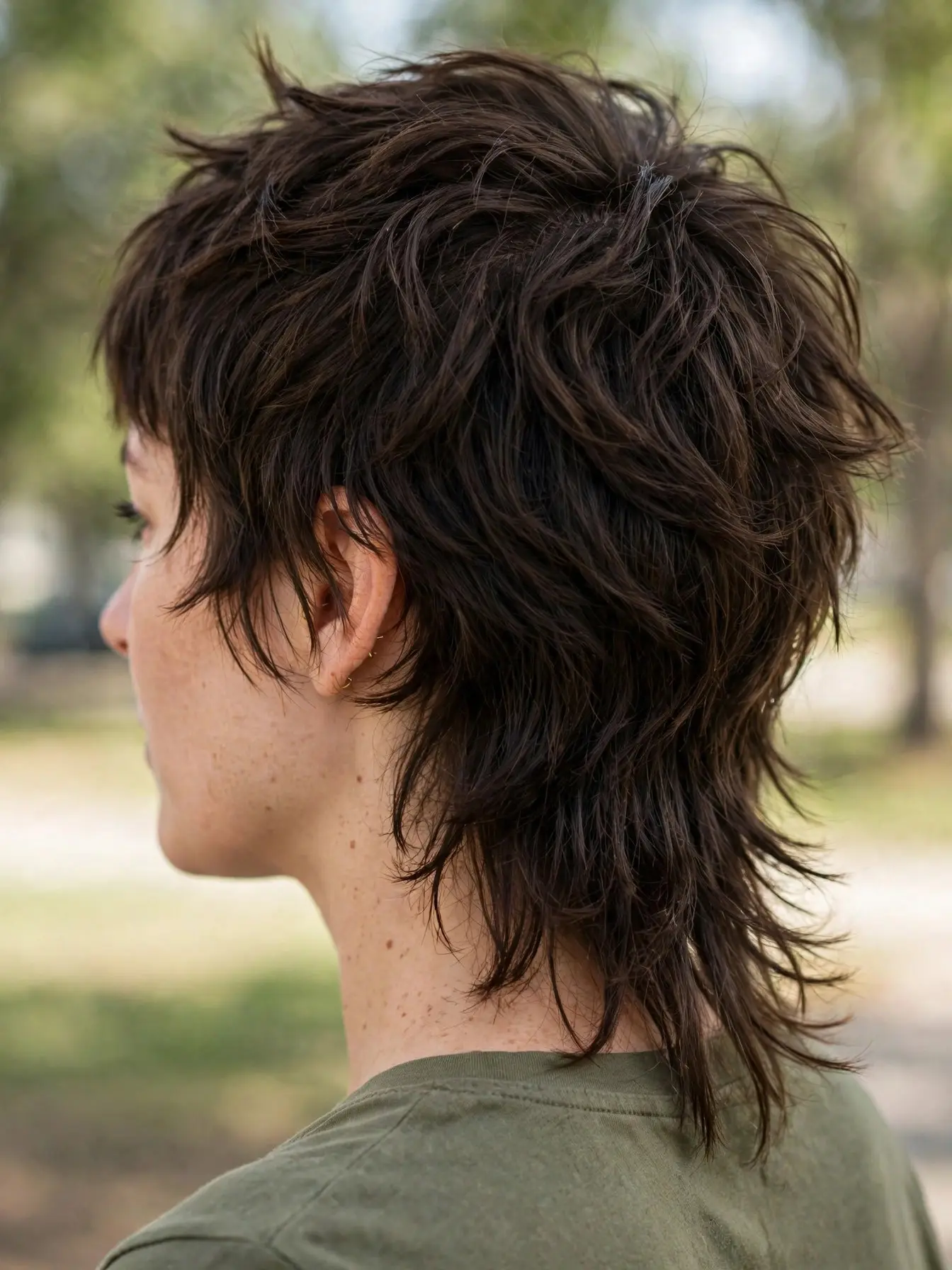
The boldest cut on this list borrows the mullet’s silhouette — shorter, textured layers on top and around the ears, with the back left longer and shaggy — then softens it with modern shag layering.
The result is fashion-forward rather than costume, creating dramatic volume and movement that genuinely stands out from more conventional layered cuts. This is the change for someone bored of blending in. It does need regular tidying at the sides to keep the contrast deliberate rather than scruffy, so factor a quick clean-up trim or two into each season.
Tip: Build height at the crown with a root-lifting product, mist texturizing spray through the back sections, and dry with your fingers for a loose, modern texture.
17. Ear-Length Pixie Bob
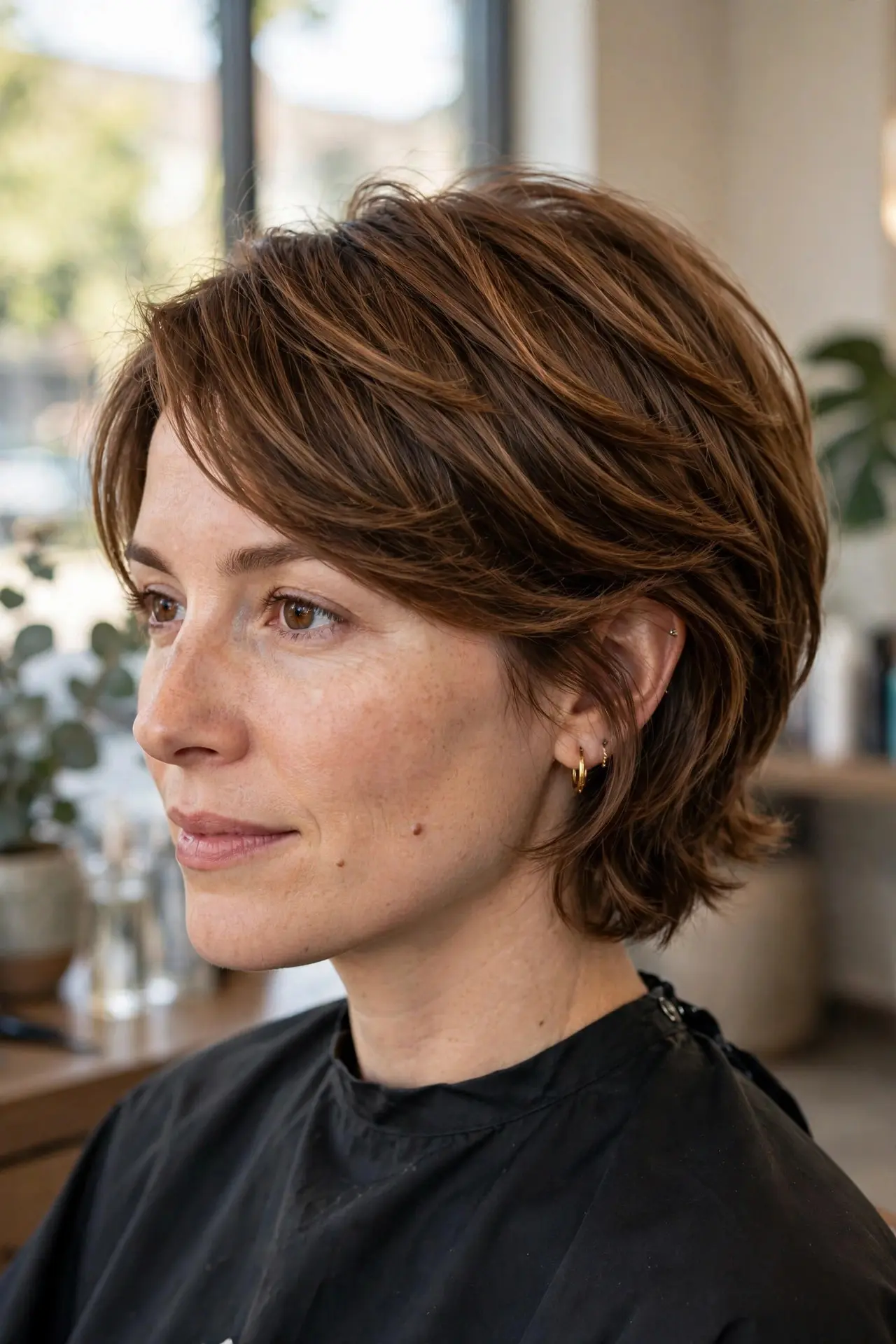
Halfway between a traditional pixie and a bob, the ear-length pixie bob keeps a soft bob outline but crops it up to the ears for a fresher, lighter, in-between length.
It is a smart stepping stone if you want a dramatic length change without committing to the shortest possible cut — there is still enough hair to tuck, curve and style a few different ways. The little sweep of length around the face also keeps it soft and flattering, which makes it a gentle first short cut for rounder face shapes.
Tip: Use a round brush to curve the ends slightly inward for a polished shape, and add a lightweight texturizing spray when you want natural, piecey movement.
18. Glossy One-Length Cut
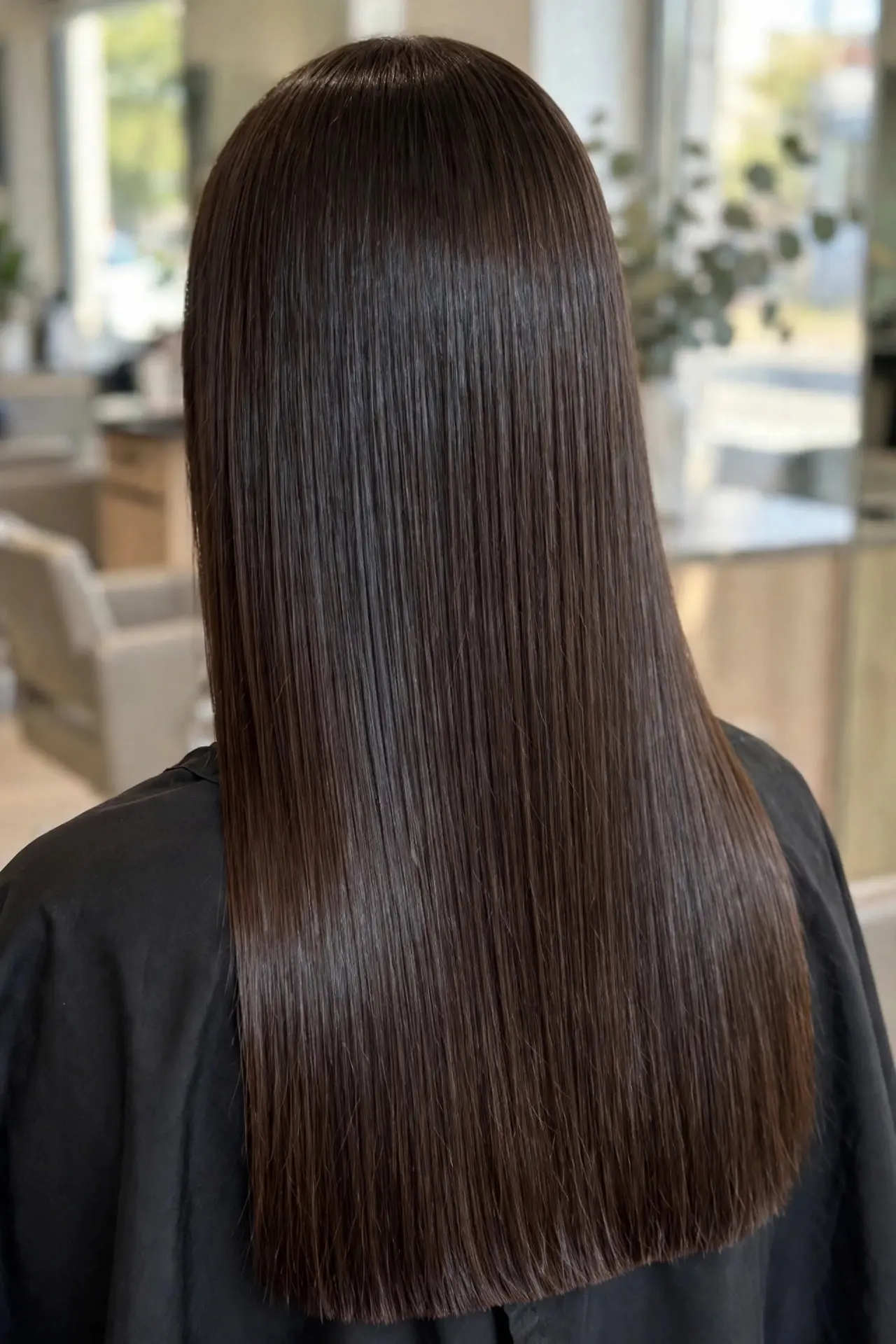
No layers, no texture tricks — the glossy one-length cut is all precision and shine. Hair is cut to a single clean line and styled glass-smooth, so the condition of your hair speaks for itself.
It reads sleek, sophisticated and expensive, and it is really a celebration of hair health: the mirror finish only works when ends are freshly trimmed and well conditioned. Straight and slightly wavy hair shows the effect best; very curly hair can wear it too, but the daily smoothing time rises considerably.
Tip: Apply heat protectant, flat-iron in small sections for maximum smoothness, follow with a smoothing serum, and finish with a lightweight shine spray.
19. Face-Framing Highlights Refresh
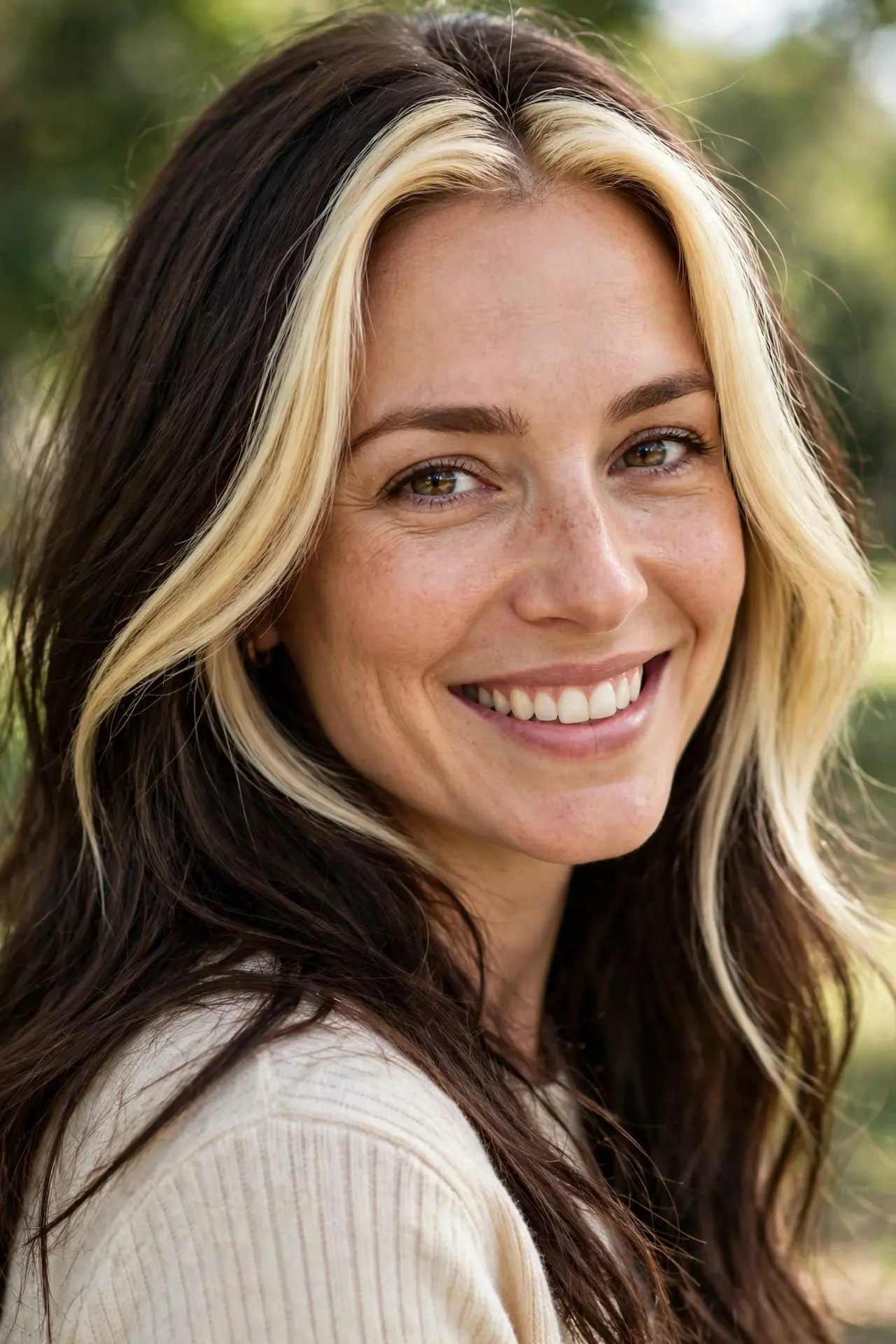
The smallest color appointment with the biggest payoff: brightening just the pieces around your face lights up your whole look without a full head of foils or a full color service.
These targeted highlights draw attention to your best features, cost less, take less chair time and grow out so softly that upkeep stays minimal. Ideal if you want a noticeable update on a budget. It is also the friendliest first step into color if you have never dyed your hair, because so little of it is actually lightened.
Tip: Touch up the front pieces every 8 to 10 weeks, protect them with a UV-protectant spray so they do not fade, and keep them conditioned with a regular leave-in.
20. Wispy Layers Throughout
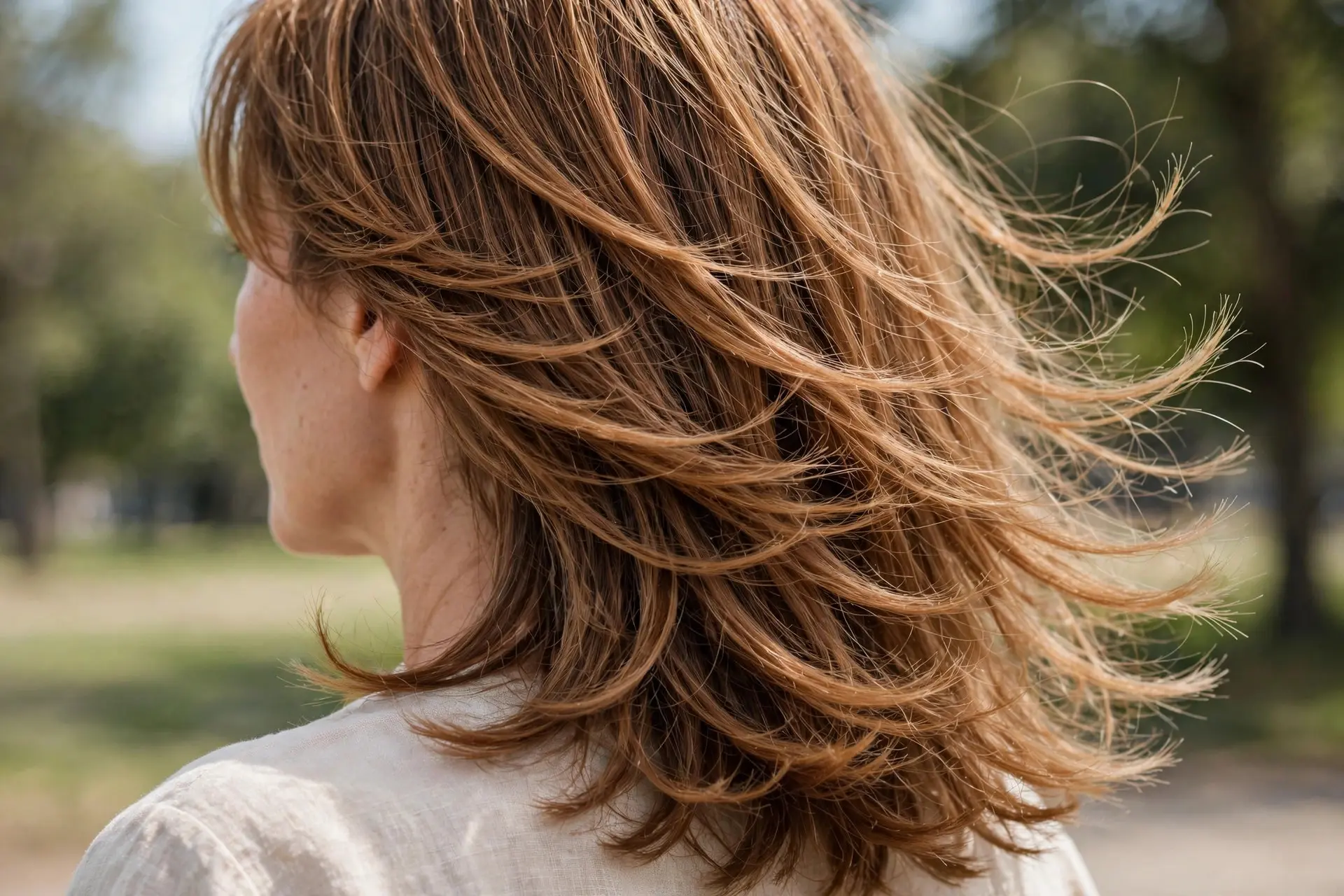
Wispy layers are the gentlest layering of all — soft, feathery pieces cut throughout your existing haircut so heavy hair feels lighter and moves more freely, with no significant length change.
It suits almost anyone whose cut has started to feel bulky, and it is especially useful between seasons, when you want the weight gone but the length kept for different styling needs. Because the layers are so fine, they melt into the hair rather than creating obvious steps, which makes the grow-out completely undetectable.
Tip: Blow-dry with a round brush, lifting gently at the roots for volume, and let it air-dry on low-effort days — the layers hold their shape surprisingly well.
21. Bold Undercut Design
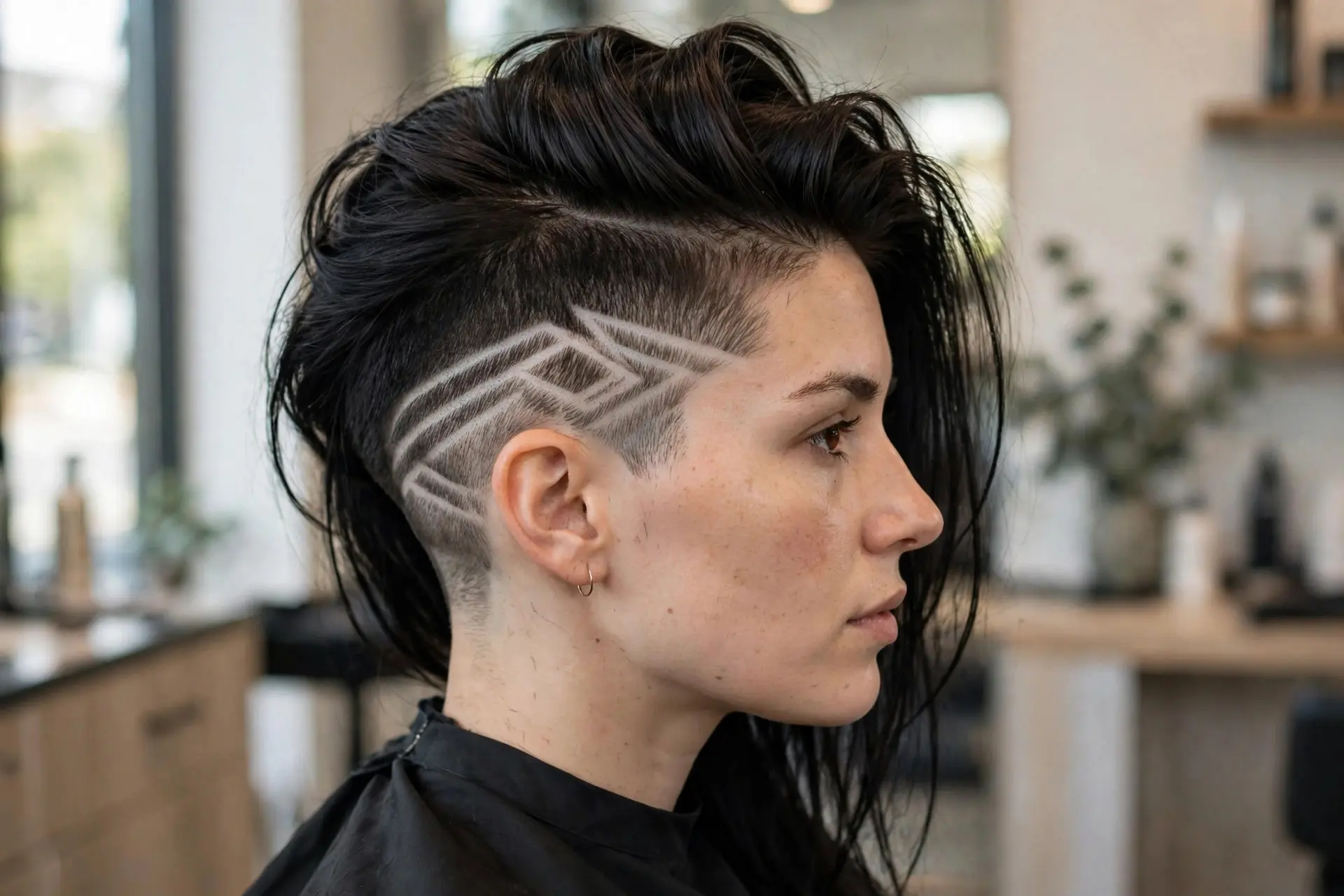
An undercut hides a secret: beneath the top layer, hair is shaved close and carved with a clean design — lines, chevrons or curves — that only appears when you sweep your hair up.
It is bold self-expression with an off switch, because letting the top layer fall covers the design completely for formal settings. Few changes feel this personal, or this fun to reveal. Placement is flexible — above the ear, at the nape or across one side — so you can choose exactly how visible the design is from day to day.
Tip: Book maintenance every 3 to 4 weeks to keep the design sharp, style the top layer to conceal or reveal it as you like, and keep the shaved area product-free.
22. Vivid or Pastel Color Panel
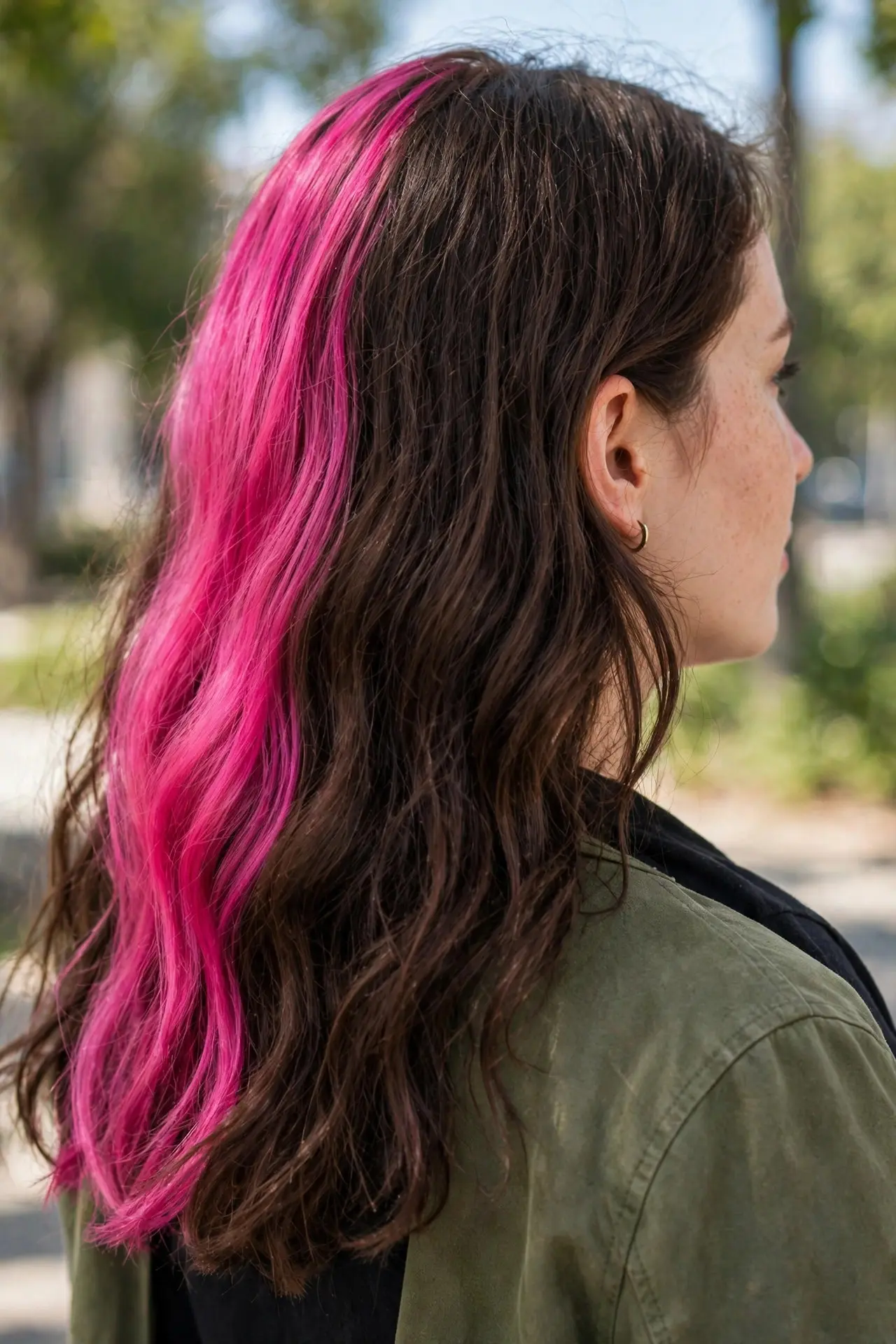
A color panel is pure play: one section of hair — a side sweep, an underlayer, a bold front streak — dyed vivid pink, blue or soft lavender while the rest of your hair keeps its natural color.
As a color idea, it delivers the fun of fantasy color in a manageable dose, without committing to an all-over transformation or the damage that can come with lightening everything. Semi-permanent panel color is also easy to change with the seasons — when pink stops feeling fun, the same section can go pastel, copper or back to natural.
Tip: Wash with a color-safe shampoo made for vivid tones, rinse in cool water to hold the vibrancy, and expect touch-ups every 4 to 6 weeks since bright colors fade fastest.
Styling Tips
- Give a new cut two weeks: almost every dramatic change feels strange for the first few washes. Learn how it falls, where it flips and what it does on day two before you judge it.
- Watch the salon finish closely: your stylist’s blow-dry is a free lesson. Note the brush, the product order and the direction they dry each section, then copy it at home.
- Buy the one hero product: most cuts rely on a single key product — paste for a crop, curl cream for a curly bob, shine serum for a one-length cut. Ask which one, and skip the rest.
- Take photos from every angle: shoot your fresh cut from the front, side and back on day one. Those pictures are gold at your next appointment, whether you repeat the style or adjust it.
- Book the maintenance trim before you leave: fringes, crops and undercuts all have a sweet-spot interval. Having the next appointment in the calendar keeps the shape from quietly expiring.
- Adjust your routine, not just your hair: shorter hair often needs less conditioner and more frequent washing; longer, glossier styles need the opposite. Match the routine to the new cut.
A great seasonal change is only half the haircut — the other half is the small daily habits that keep it looking like it did in the salon chair.
Common Mistakes to Avoid
- Chasing every trend at once: a new fringe, an undercut and a vivid panel in one appointment is chaos, not a transformation. Pick one hero change and let it shine.
- Ignoring your natural texture: a glass-smooth one-length cut on very curly hair, or a soft perm on hair that will not hold one, means daily fighting. Work with your texture, not against it.
- Skipping the grow-out question: always ask how a cut or color will look in six weeks, not just on day one. Root melts and balayage win precisely because their grow-out is graceful.
- Going drastic right before a big event: a bold new shape needs a settling-in period. Book dramatic changes at least two or three weeks before weddings, photos or reunions.
- Copying a high-maintenance style with a low-maintenance life: be honest about your mornings. A cut that needs twenty minutes of styling will not survive a five-minute routine, however pretty it is.
How to Transition Smoothly Into a New Seasonal Style
A successful hair change starts long before the scissors come out — it starts with clear communication. Bring your stylist reference photos of the exact cut or color you want, and be specific about what you like in each one: the length, the fringe, the tone. Vague requests get vague results, while pictures and details give your stylist something concrete to build on.
Talk honestly about your daily routine, too: how long you actually spend styling, which products you own, and how often you are willing to return for maintenance. A good stylist will steer you toward the version of your dream style that fits your real life, and will flag any upkeep surprises before you commit.
If you are unsure, go gradual. Start with a smaller update — added layers, a fringe, a subtle color refresh — and live with it for a few weeks. You can always go shorter, bolder or brighter at the next visit, and stepping in stages almost always ends with a look that feels both fresh and manageable.
Frequently Asked Questions
How often should I change my haircut for a seasonal refresh?
There is no set rule, but refreshing your cut or color every 3 to 4 months, in step with the seasons, keeps your look feeling current. Even a small change — a fringe or a gloss — counts as a refresh.
What is the easiest way to refresh my hair without a dramatic change?
Face-framing layers, a balayage refresh, brighter face-framing highlights or a gloss treatment all update your look noticeably without a significant cut or a full color change.
Should I choose a haircut trend based on the season?
It is not required, but many people find shorter, lighter styles appealing in warmer months, while richer colors and fuller cuts feel right in cooler ones. Let the season inspire you, not limit you.
Is it better to change color or cut first for a fresh look?
It depends on your goal. A cut delivers the most immediate, dramatic change, while color can be layered onto your existing style for a subtler refresh — and color-first is easier to reverse if you change your mind.
Conclusion
The best thing about haircut trends is that there is one for every courage level — a whisper-light fringe refresh if you are cautious, a cropped pixie if you are not. Whichever change you choose, the right cut or color can make a whole new season feel like a fresh start, and if a color change is part of your plan, our honey brown balayage ideas pair beautifully with almost every cut on this list. Which of these 22 are you taking to your stylist?
Discover more from Fashinate Style
Subscribe to get the latest posts sent to your email.