17 Honey Brown Balayage Ideas for Rich, Effortless Dimension in 2026
17 Honey Brown Balayage Ideas for Rich, Effortless Dimension in 2026
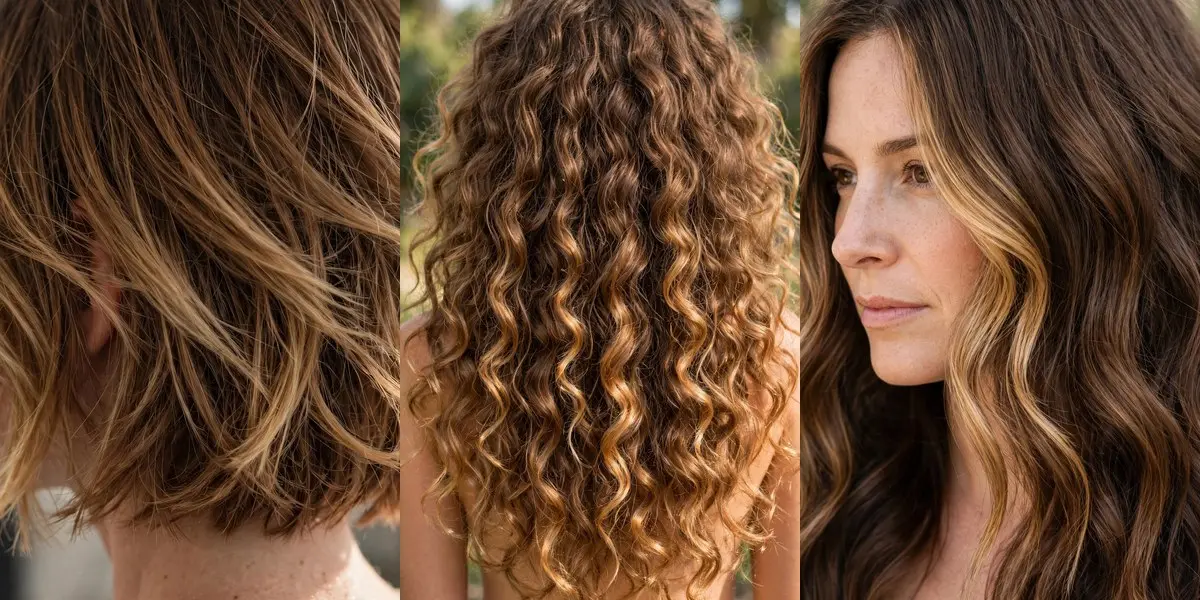
Honey brown balayage ideas keep winning over brighter blondes for one simple reason: they add warmth and light exactly where your haircut needs it, without changing who you are. Whether your hair is curly, sleek, bobbed or waist-length, there is a honey placement that works with the cut you already love.
This gallery is organised by haircut, texture and placement — the three things that actually decide how balayage behaves once you leave the salon. If you would rather choose by face shape first, our companion guide to honey brown balayage by face shape pairs the same colour family with round, oval, square and heart faces.
Inside, you will find honey worked four different ways through curls alone, a trio of bobs and lobs that each wear the colour differently, and placements that range from whisper-subtle to bold, deliberate ribbons. Every idea notes the texture it flatters most and how the placement grows out.
Save the photos of your favourites before your appointment. Balayage is painted by hand, so showing your stylist the exact placement you want — ends only, face-framing, or threaded through layers — is the surest way to leave the chair with the honey you pictured.
As an Amazon Associate, I earn from qualifying purchases.
Table of Contents
- 1. Light, Airy Bob in Honey Brown
- 2. Curly Hair Warmed with Honey Brown
- 3. Defined Curls with Honey Brown Contrast
- 4. Soft Curly Layers with Honey Brown Ends
- 5. Golden Honey Tones on Loose Waves
- 6. Honey Brown with a Gradual Blend
- 7. Classic Bob with Fine Honey Highlights
- 8. Medium Layers with Honey Brown Movement
- 9. Loose Waves with Relaxed Honey Placement
- 10. Precise Ribbons of Honey Brown
- 11. Natural Flow of Warm Honey Tones
- 12. Shoulder-Length Lob with Honey Warmth
- 13. Lived-In Honey Brown for the Long Term
- 14. Subtle Honey Brown for Straight Hair
- 15. Face-Framing Honey Brown Pieces
- 16. Warm Curly Layers with Honey Brown Depth
- 17. Timeless Honey Brown with Soft Dimension
- Styling Tips
- Common Mistakes to Avoid
- Worth Noting: Why Honey Brown Keeps Coming Back
- Frequently Asked Questions
1. Light, Airy Bob in Honey Brown

A chin-length bob can look heavy when the colour is one flat shade, and this is the fix. Feathery, weightless layers open the cut up, while honey brown balayage melts through the mid-lengths so the ends land noticeably lighter and more golden than the crown.
Because the length is short, the melt happens fast — the honey starts higher than it would on long hair, which keeps the whole bob feeling bright rather than bottom-heavy. The feathered ends catch the light every time the hair moves.
This is the bob to choose if your hair is fine to medium and you want movement without styling effort. A quick rough-dry and a shake is genuinely all it asks for.
Tip: Ask for the honey to start around ear level; on a short bob, a low placement leaves too little length for the melt to show.
Shop this look: Honey Blonde Hair Dye · Texturizing Spray for Layered Bob
2. Curly Hair Warmed with Honey Brown

When curls are one solid colour, their shape does all the talking and the colour says nothing. Here, honey brown warmth is woven evenly through every curl from the mid-lengths down, so each coil carries its own highlight and the whole head glows.
The placement is deliberately even rather than concentrated. On curly texture, warmth spread through all the curls reads as richness, not stripes, because the curl pattern breaks the colour up naturally as it spirals.
Long, voluminous curls show this best, but the same all-over warmth works on a curly bob too — just expect the honey to feel brighter, since there is less dark length underneath it.
Tip: Have your colourist paint the honey on dry, styled curls; painting on stretched or wet hair misjudges where each curl will actually sit.
Shop this look: Curl Cream for Wavy Hair · Diffuser for Curly Short Hair
3. Defined Curls with Honey Brown Contrast

This is the boldest of the four curly looks. A deep, dark brown base stays rich and shadowy, while bright honey ribbons are painted clearly through individual spirals, so the contrast between dark and light is the entire point.
Highly defined, glossy curls hold this contrast beautifully. Each ribbon follows one curl from root-ward curve to tip, and the definition keeps the bright pieces looking intentional rather than random.
Choose this placement if your base is naturally dark and you want the honey to be unmistakable in photos. It is the least subtle option in this section, and deliberately so.
Tip: Keep the ribbons one to two shades brighter than a standard honey — against a very dark base, a mid-tone honey can disappear.
Shop this look: Curl Defining Cream for Short Curly Hair · Leave-In Conditioner for Curly Hair
4. Soft Curly Layers with Honey Brown Ends

Here the placement flips to the opposite strategy: the roots and top layers stay in their natural medium brown, and the honey lives only on the ends of the curls, where the bottom few inches glow warm.
Soft layers make this work. Each layer ends at a slightly different point, so the honey tips appear at several heights through the hair instead of in one straight line, and the curls look sun-touched rather than dipped.
It is also the gentlest commitment of the curly ideas — if you tire of it, the coloured ends are the first thing a trim removes. Grown-out roots are a non-issue, because the top was never lightened.
Tip: Ask for the honey to begin lower on the longest layers and slightly higher on the shortest, so the glow follows the shape of the cut.
Shop this look: Honey Blonde Hair Toner · Wide Tooth Comb for Curly Hair
5. Golden Honey Tones on Loose Waves

Of the two wavy looks in this gallery, this is the bright one. Loose, flowing waves are painted generously with golden honey tones, so the warmth runs through most of the length and catches the light along every bend of the wave.
Waves and generous placement are natural partners. A wave shows both its lit surface and its shadowed underside as it turns, which means broadly painted honey appears and disappears through the hair — that flicker is what makes it look expensive.
Pick this idea if your base is medium brown and you want the overall effect to read noticeably warmer and lighter, not just accented. It is honey as the headline, not the footnote.
Tip: Style with a large-barrel wand and brush the waves out; tight, separated curls break up the golden flow this look depends on.
Shop this look: Golden Blonde Hair Dye · Curling Wand for Loose Waves
6. Honey Brown with a Gradual Blend

Some balayage announces itself; this one refuses to. The medium brown roots melt shade by shade into honey brown with no visible line anywhere, so even under close inspection you cannot point to where one colour ends and the other begins.
That seamlessness is a technique, not an accident. The colourist feathers the lightener upward in fine, diffused strokes and glosses the transition zone, trading bold ribbons for a gradient that behaves like natural lightening.
It suits straighter textures and gentle waves best, because the smooth surface shows off the gradient. On very curly hair, the same blend reads softer still — pretty, but less obviously gradual.
Tip: Bring a photo and use the words “no line” explicitly; a gradual blend is a different brief from classic balayage, and stylists default to the latter.
Shop this look: Honey Blonde Hair Dye · Bond Building Hair Treatment
7. Classic Bob with Fine Honey Highlights

Where the first bob was feathery and melted, this one is sleek, blunt and precise — a polished jaw-length cut worn smooth. Through the rich medium brown base, very fine honey strands are woven so delicately that you notice the shimmer before you notice the highlights.
Fine placement is what keeps a classic bob looking classic. Chunky pieces would fight the clean line of the cut; thread-fine honey simply lifts the brown and gives the surface a lit-from-within quality.
This is the most workplace-conservative idea in the gallery, and the easiest to grow out or deepen later. It also refreshes beautifully with a gloss when you want the honey to glow again without new lightener.
Tip: Ask for babylight-fine sections; on a blunt bob, standard balayage pieces can read as streaks once the hair is worn straight.
Shop this look: Beige Blonde Hair Toner · Round Brush for Bob Styling
8. Medium Layers with Honey Brown Movement
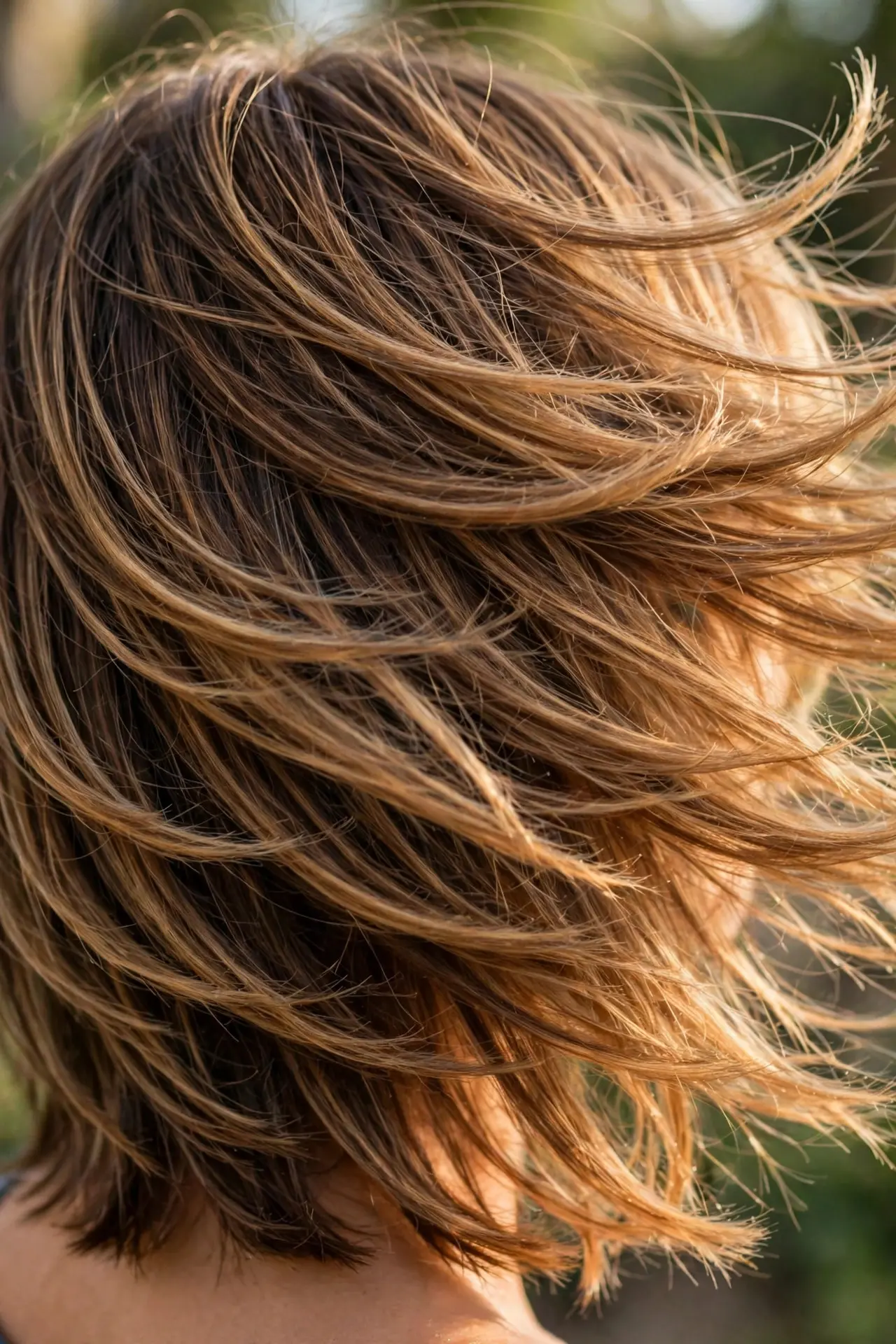
Layers exist to move, and this colour gives them something to show off. On a medium-length layered cut, the honey is concentrated where the layers end, so every step of the cut catches a warmer tone as the hair swings.
That placement turns the haircut itself into the dimension. Instead of painting brightness randomly, the colourist follows the layer pattern — each shelf of hair gets its honey at its own hemline, and movement does the rest.
Medium layers are the sweet spot for this: long enough for the steps to read, short enough that the ends stay thick. If your layers have grown out, have the cut refreshed first; colour cannot invent movement the scissors removed.
Tip: Book the cut and colour in the same appointment, in that order, so the honey is placed on the layers you will actually be wearing.
Shop this look: Caramel Hair Color · Paddle Brush for Long Hair
9. Loose Waves with Relaxed Honey Placement
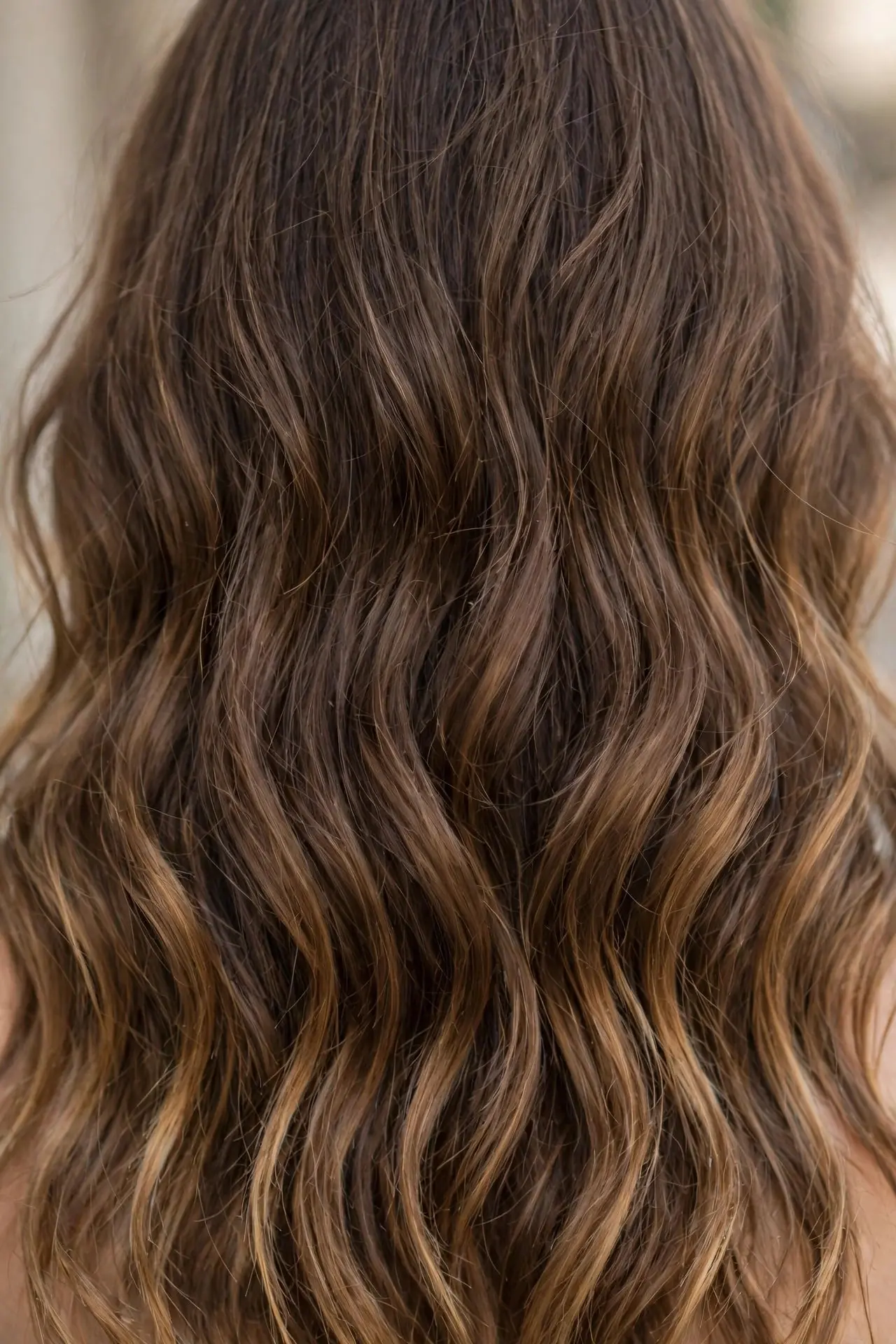
This is the quieter of the two wavy looks, and the difference is restraint. The loose waves are undone rather than styled, and the honey placement is relaxed — sparse, low through the lengths, and deliberately muted instead of golden-bright.
Relaxed placement suits relaxed texture. When the waves look effortless, heavily painted colour would look out of place; a few soft honey passages low in the hair match the mood and read as if the sun did them slowly.
Choose this over the golden waves of idea 5 if your style leans casual, your base is a touch darker, or you are trying honey for the first time and want an easy exit.
Tip: Skip the curling wand most days — braid-damp or twist-dried waves keep this placement looking as unstudied as it should.
Shop this look: Sea Salt Spray · Hair Shine Serum
10. Precise Ribbons of Honey Brown
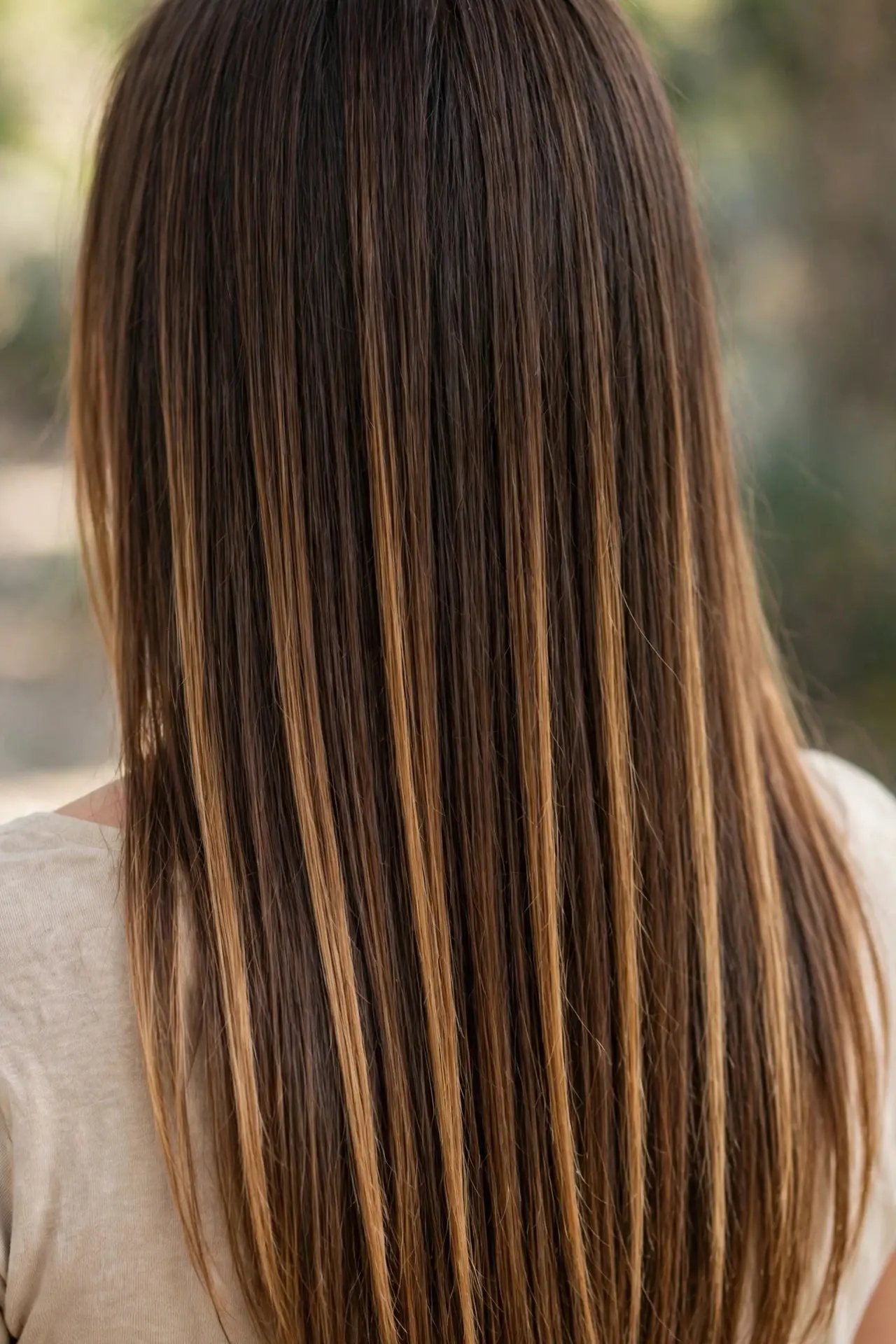
Most balayage is deliberately irregular, but this look takes the opposite pleasure in precision. On long, smooth, straight hair over a rich chocolate base, the honey runs in clean, evenly spaced ribbons from mid-lengths to ends — deliberate, separated and unmistakably placed.
Straight hair is the only texture that can truly show this off. With no curl or wave to blur the edges, each ribbon reads as its own stripe of warmth, and the regularity becomes a design feature rather than a flaw.
Be aware that precision needs upkeep: ribbons this clean show regrowth sooner than diffused placements, and they look best on hair that is worn straight most of the time.
Tip: Agree the ribbon count and spacing with your colourist before foils go in — even spacing is planned at the sectioning stage, not improvised.
Shop this look: Honey Blonde Hair Toner · Rat Tail Comb
11. Natural Flow of Warm Honey Tones

The idea here is hair that looks like it simply grew this way. Long waves in motion carry warm honey tones that flow organically through a medium brown base, lightening the hair the way a summer outdoors would — gradually, unevenly, believably.
Natural flow is achieved by varying everything: ribbon width, starting height and brightness all change from section to section, following how light would actually fall on moving hair. The front and the outer surfaces glow a little more; the underlayers stay deeper.
Because nothing is uniform, this is one of the most forgiving placements to live with. There is no pattern to disrupt as it grows, so touch-ups can wait until the warmth itself fades.
Tip: Ask your colourist to keep the underlayer noticeably deeper — that shadow underneath is what makes the lit surface look natural rather than all-over dyed.
Shop this look: Bronde Hair Color · Brunette Hair Gloss
12. Shoulder-Length Lob with Honey Warmth

The lob is the third short cut in this gallery, and it wears honey differently from both bobs. At shoulder length with soft waves, there is enough hair for a full melt, and here the warmth is worked through the whole cut so the entire lob glows.
All-over warmth at this length avoids the two bob extremes — it is neither fine and whispery like idea 7 nor concentrated only at the ends. The waves blend the honey through, giving a warm, dimensional finish that still reads as one coherent colour.
The lob is also the most versatile canvas here: long enough for updos, short enough for the honey to feel impactful. If you are growing out a bob, this is your landing length.
Tip: Keep a little extra depth at the roots; on a lob, root-to-tip honey with no shadow can look flat from the front.
Shop this look: Honey Blonde Hair Dye · Heat Protectant Spray
13. Lived-In Honey Brown for the Long Term

This placement is designed for the woman who books colour two or three times a year, maximum. Several inches of natural brown regrowth are part of the look from day one, flowing down into honey lengths through a transition so soft it never announces a schedule.
Lived-in colour works because the brightest honey sits far from the roots. As your hair grows, the melt simply gets longer and lower — the style evolves instead of expiring, and no harsh line ever forms at the scalp.
The trade-off is that the ends carry colour the longest, so they need the most care. Ends that have been honey for a year will tell you if you skip conditioning; keep them fed and the long game pays off.
Tip: Refresh with a gloss-only appointment between lightening sessions; it revives the honey tone for a fraction of the cost and none of the damage.
Shop this look: Dry Shampoo · Sulfate-Free Shampoo for Dry Hair
14. Subtle Honey Brown for Straight Hair
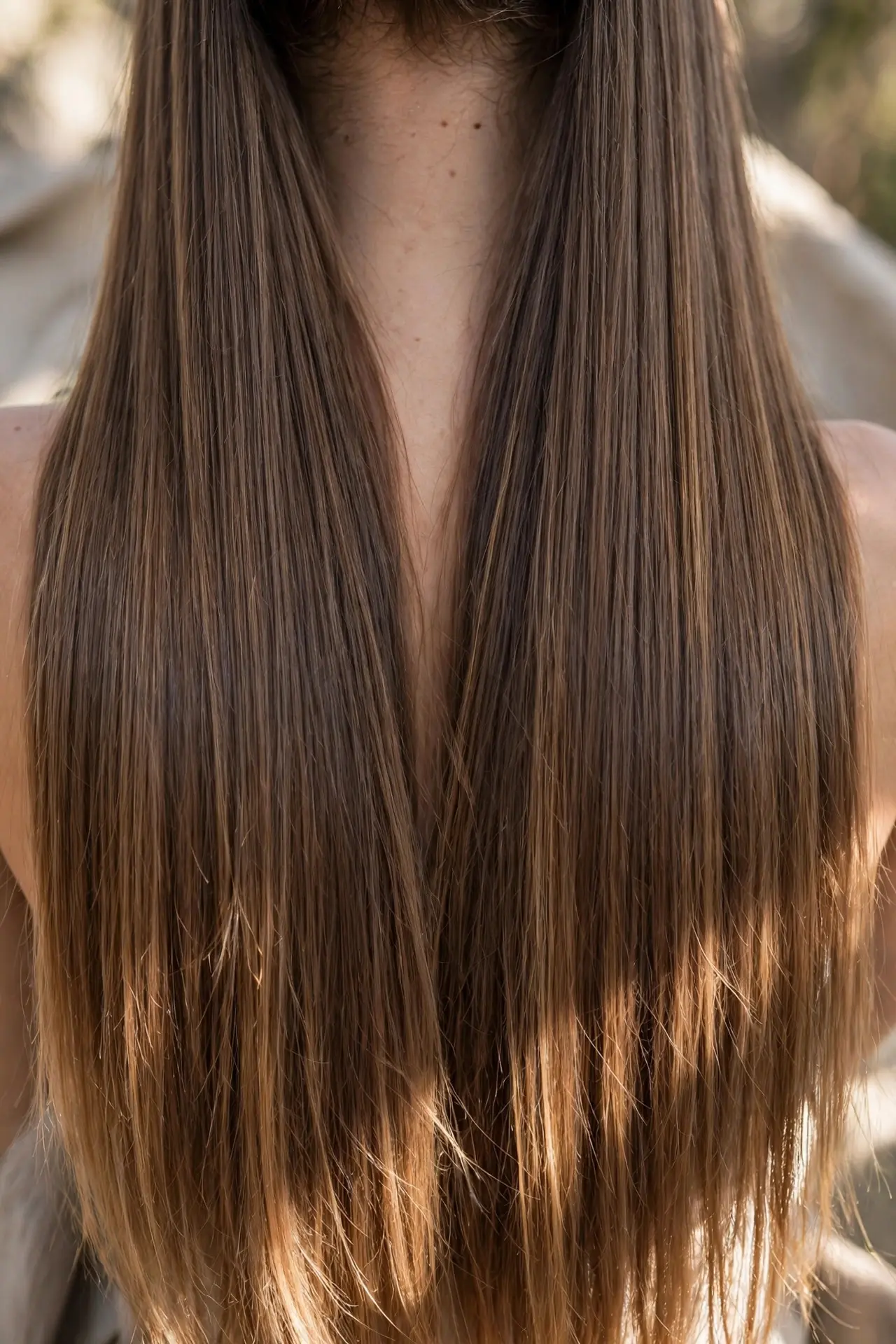
Straight hair shows everything, which is exactly why this version whispers. On long, pin-straight lengths, the honey is kept minimal — barely lightening the lower third, visible mostly where light slides along the surface and catches the warm undertone.
Compare it with the precise ribbons of idea 10: same straight texture, opposite philosophy. There, placement was graphic and deliberate; here it is diffused to the edge of perception, for women who want their colour noticed as a glow, never as a technique.
Subtle placement is also a kindness to fine straight hair, which cannot afford heavy lightening. A whisper of honey through the lowest lengths adds dimension without thinning the look of the ends.
Tip: Judge this colour in daylight before leaving the salon — under warm indoor bulbs, a truly subtle honey can look like it vanished.
Shop this look: Flat Iron for Long Straight Hair · Anti-Frizz Hair Serum
15. Face-Framing Honey Brown Pieces
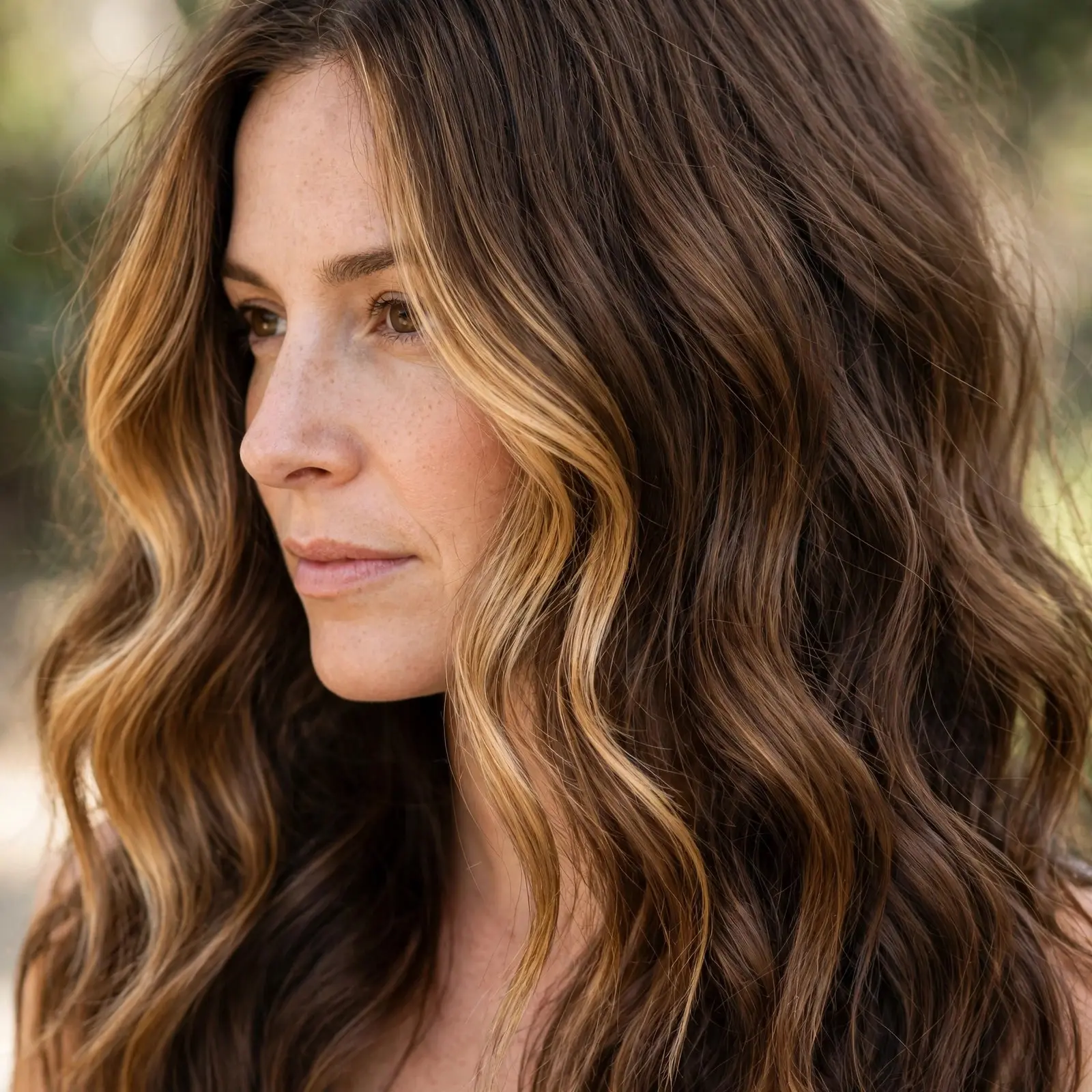
Every other placement in this gallery works through the back and lengths; this one spends its brightness at the front. Two panels of honey, clearly lighter than the rest of the hair, frame the face on both sides while the back lengths stay deeper and quieter.
Face-framing placement is the fastest transformation in the list. Because the brightest pieces sit where eyes land first, the whole colour reads lighter and warmer even though most of the hair was barely touched — a small amount of lightener doing outsized work.
It pairs naturally with long waves, which carry the bright panels down in a continuous ribbon. On shorter cuts, keep the framing pieces finer so they flatter rather than stripe.
Tip: Ask for the framing to start at cheekbone level and brighten gradually downward; pieces that start bright at the root can look harsh within weeks.
Shop this look: Money Piece Highlights Hair Dye Kit · Round Brush for Face-Framing Bangs
16. Warm Curly Layers with Honey Brown Depth

The fourth curly look plays warmth against depth. Deep, dark brown is deliberately kept at the roots and in the underlayers, while honey is threaded through the top curly layers — so light and shadow alternate as the curls stack.
That retained depth is what separates this from idea 2, where warmth was spread evenly everywhere. Here the darkness is a design element: it makes the honeyed top layers look brighter by contrast and gives thick curly hair a sense of contour.
Layered curls at mid-back length show the interplay best, since each layer reveals both its honeyed surface and the deep layer beneath. It is a strong choice for dense curls that can look like one mass in a single tone.
Tip: Tell your colourist explicitly which layers stay dark; depth only works if it is protected, not accidentally painted over.
Shop this look: Curl Cream for Curly Bob with Bangs · Microfiber Hair Towel for Curly Hair
17. Timeless Honey Brown with Soft Dimension
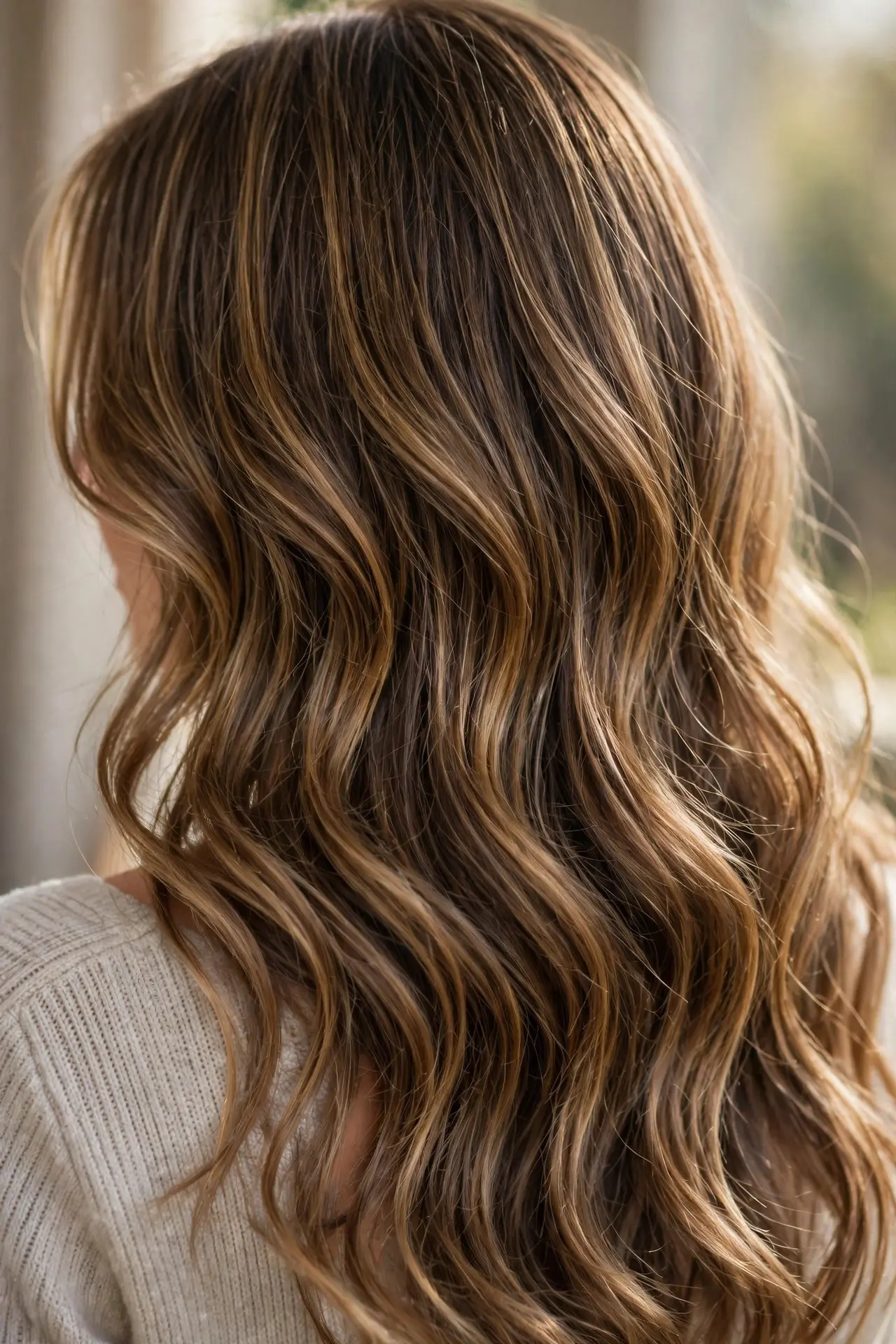
We end with the version that never dates. Long, softly waved hair carries honey dimension woven gently throughout a medium brown base — multi-tonal, refined, and quieter than fashion-driven placements that shout their technique.
Soft dimension means the contrast stays low: the honey sits only a shade or two above the base, so the hair reads as rich brown with warmth moving inside it. Nothing about it belongs to a single season, which is precisely its appeal.
If you want one colour you can wear for years — refreshing the tone, never redesigning it — this is the brief to bring. It flatters every texture in this gallery; simply adjust the placement to your cut using the ideas above.
Tip: Keep reference photos of this exact softness; “timeless” is easy to overshoot into brightness when a stylist wants to show their work.
Shop this look: Champagne Blonde Hair Toner · Purple Shampoo for Blonde Hair
Styling Tips
Style to the texture the colour was painted for. Balayage is placed on hair as it is worn, so curls painted in their natural pattern will show the honey best in that same pattern. Straightening curly-painted hair (or curling straight-painted hair) for a day is fine, but judge your colour in its home texture.
Feed the lightened lengths. Every honey passage in this gallery is lightened hair, and lightened hair drinks moisture. A weekly deep-conditioning mask and a leave-in on the ends keep balayage glossy instead of straw-like, especially on ends-only and lived-in placements where the colour is oldest.
Protect the tone between visits. Warm honey can drift brassy with hard water, sun and heat. Use heat protectant before hot tools, keep irons at moderate temperatures, and ask your colourist about a take-home gloss or toning conditioner matched to honey — not purple shampoo, which is made for cool blondes.
Waves are balayage’s best friend. Even placements designed for straight hair gain dimension with a soft bend, because the wave alternately shows lit and shadowed surfaces. A loose, brushed-out wave is the ten-minute styling upgrade for nearly every look here.
Common Mistakes to Avoid
Choosing a placement that fights your texture. Precise ribbons blur on curls; ends-only honey can vanish on very short hair. The ideas above name the texture each placement flatters — match the placement to the hair you have, not the hair in the photo.
Going brighter than your base can support. Honey works because it stays close to home. Asking for honey several shades above a dark base in one session invites banding, breakage and orange tones. Build brightness gradually across appointments instead.
Skipping the consultation language. “Honey balayage” alone can mean ribbons to one stylist and a seamless melt to another. Bring the photo, name the placement — face-framing, ends-only, threaded through layers — and agree on where the honey starts before any lightener is mixed.
Treating balayage as zero-maintenance. It is low-maintenance, not no-maintenance. Miss gloss appointments and conditioners for a year and even the most forgiving lived-in placement will fade dull and dry. Budget for tone refreshes even when the grow-out looks fine.
Worth Noting: Why Honey Brown Keeps Coming Back
Trends cycle through platinum, copper and espresso, yet honey brown quietly returns every season, and the reason is practical as much as aesthetic. It adds warmth and dimension to brown hair without asking you to become a blonde — your base stays recognisably yours, just lit better.
It also photographs beautifully in natural light. Because the honey passages sit within a deeper base, daylight finds them the way it finds natural highlights, which is why these looks read as fresh rather than freshly dyed in photos.
Finally, honey asks less of your calendar than brighter blondes. The soft grow-out built into most of these placements means fewer salon visits, less regrowth anxiety, and colour that still looks intentional months later. In 2026, that combination of warmth, realism and ease is exactly what women are asking for.
Frequently Asked Questions
Is honey brown balayage low maintenance?
Yes — it is one of the lowest-maintenance colour services available. Because the honey is painted away from the roots with a soft transition, regrowth blends instead of forming a line. Most women refresh the lightening every three to six months, with an optional gloss in between to keep the tone warm and shiny.
Does honey brown balayage work on dark hair?
It does, and dark bases often show it best. On deep brown hair, honey passages read as rich caramel warmth with real contrast, as in the defined-curl and ribbon looks above. Your colourist may lift in stages if your hair is very dark or previously coloured, to reach honey without compromising condition.
Will honey brown balayage show on curly or textured hair?
Absolutely — four of the seventeen ideas here are curly. Curls break colour up naturally, so honey painted on dry, styled curls appears as dimension through every coil. Placement matters more than on straight hair: ribbons threaded through individual curls show boldly, while diffused placement melts into an all-over warmth.
How long does honey brown balayage typically last?
The lightened pieces are permanent until they grow or are cut out, but the honey tone itself softens over time. Expect the colour to look its freshest for eight to twelve weeks; after that a gloss or toner restores the warmth in about half an hour. The placement can go far longer between full appointments than traditional highlights.
Can honey brown balayage turn brassy?
It can drift warmer and more orange over time, especially with sun, hard water and frequent heat styling — that is true of all warm lightened hair. A colourist-applied gloss corrects it, and at home, gentle colour-safe shampoo, heat protectant and moderate iron temperatures slow the drift considerably.
What’s the best haircut for showing off honey brown balayage?
Any cut in this gallery works, but layers and waves display balayage best because movement reveals the light and shadow the colour creates. Bobs show a melt beautifully at short length, lobs offer the most versatility, and long layered cuts give the honey the most room to flow. Choose the cut you love first — there is a placement for it.
Conclusion
The best honey brown balayage ideas are really decisions about cut, texture and placement: honey on the ends of soft curls, ribbons down straight lengths, brightness saved for the face, or warmth melted through a bob. Pick the placement that matches the hair you actually wear, take this gallery to your stylist, and talk through the contrast before the first section is painted — and for even more warm-brown inspiration, see how the same family lightens toward blonde in our brown to blonde balayage ideas. Which of the seventeen placements is closest to the hair you are picturing?