
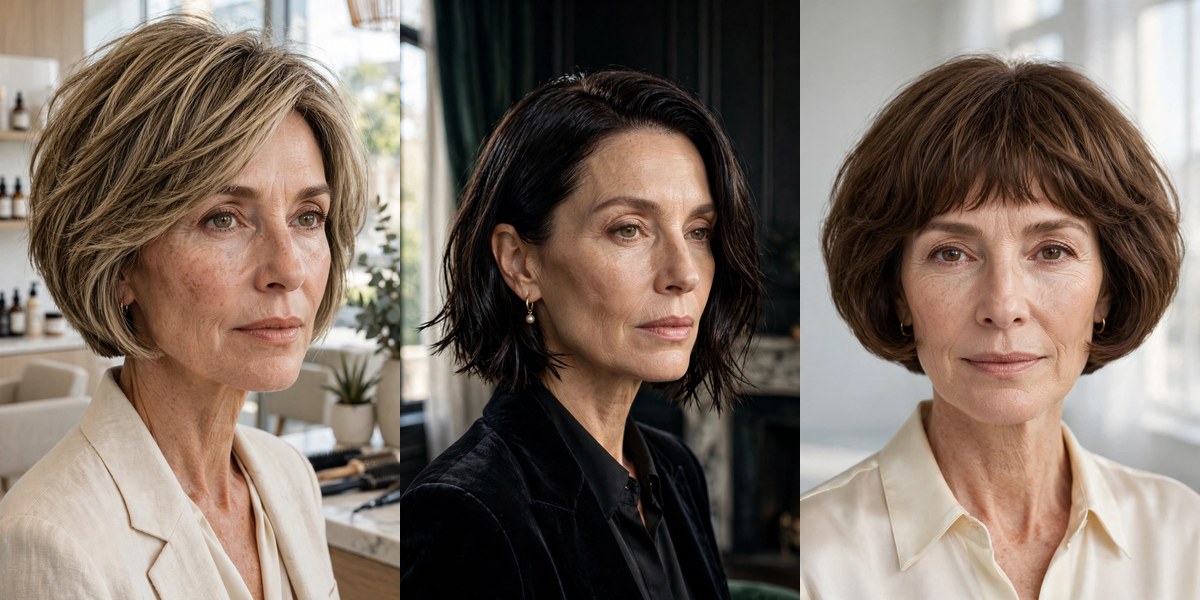
Here is the claim most stylists will not say out loud: thin, fine hair does not need more hair — it needs better geometry. Fullness is an optical illusion, and a choppy bob is the best instrument ever designed for creating it. Every idea below works through physics, not products.
The mechanics are simple once you see them. A solid perimeter fakes density at the ends. Texture on the surface scatters light so the eye reads depth. A shadowed root makes the crown look deeper than it is. Short interior layers push the top up like scaffolding. None of this requires extensions, teasing marathons, or a cabinet of volumizers — just a stylist who understands that fine hair is an engineering problem.
These 26 cuts are organized around those mechanics: density illusions, root-lift architecture, scalp camouflage, and color dimension. Each one tells you exactly how the trick works, how to style it in minutes, and what ruins it — so you can walk into the salon speaking fluent stylist.
1. 🧪 The Density-Illusion Bob
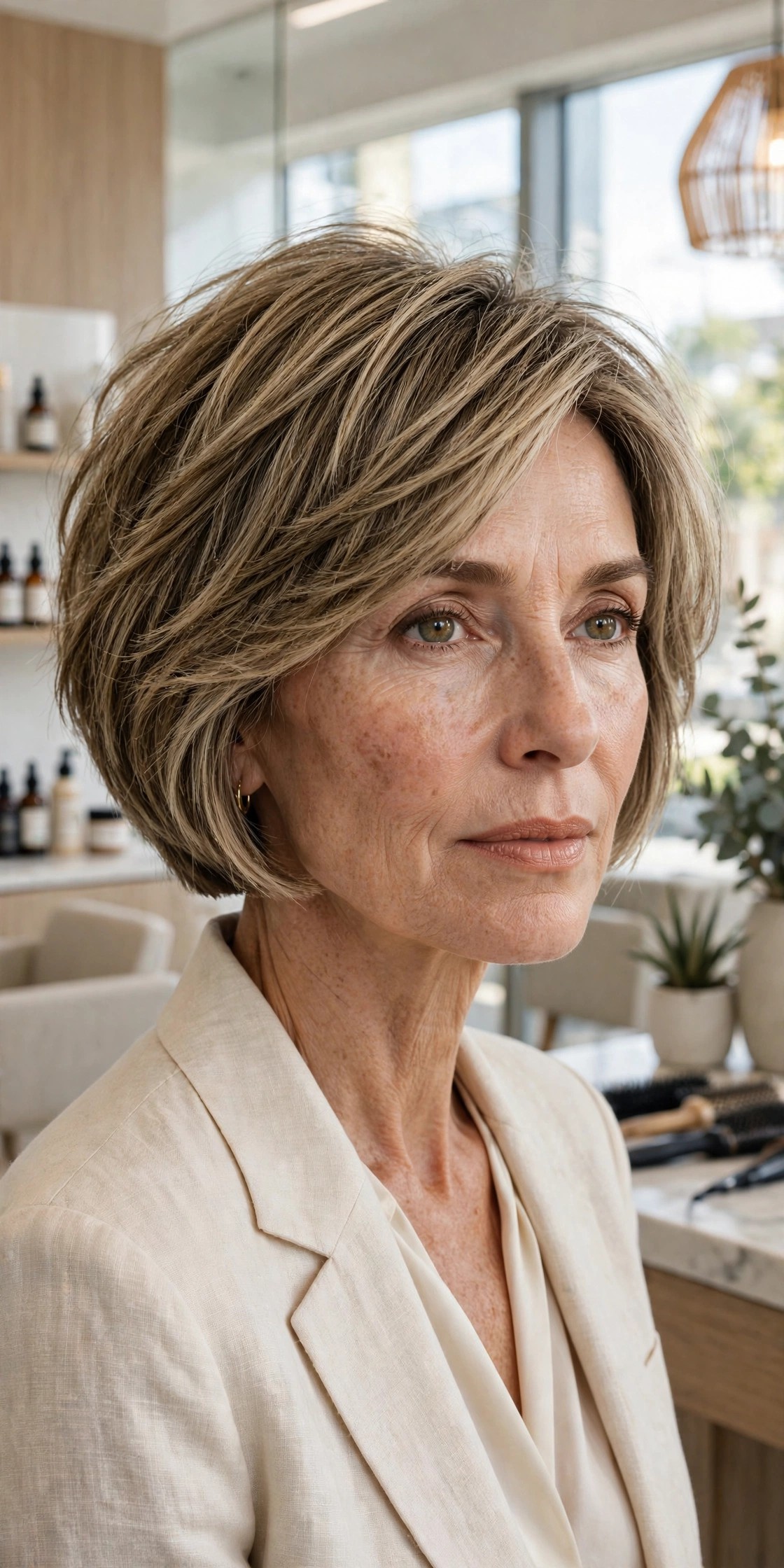
A blunt, solid perimeter with choppy texture kept strictly on the surface — the ends look thick because they are thick, while the top gets all the movement. This is the number-one fullness trick in professional cutting: weight where the eye looks for it, texture where the eye looks past it.
Try this: Ask for ‘a solid baseline with surface texture only — no thinning through the ends.’
Best for: The finest hair that goes see-through at the ends.
Styling tip: shine spray on the blunt ends emphasizes their thickness.
2. 🏗️ The Scaffold Bob
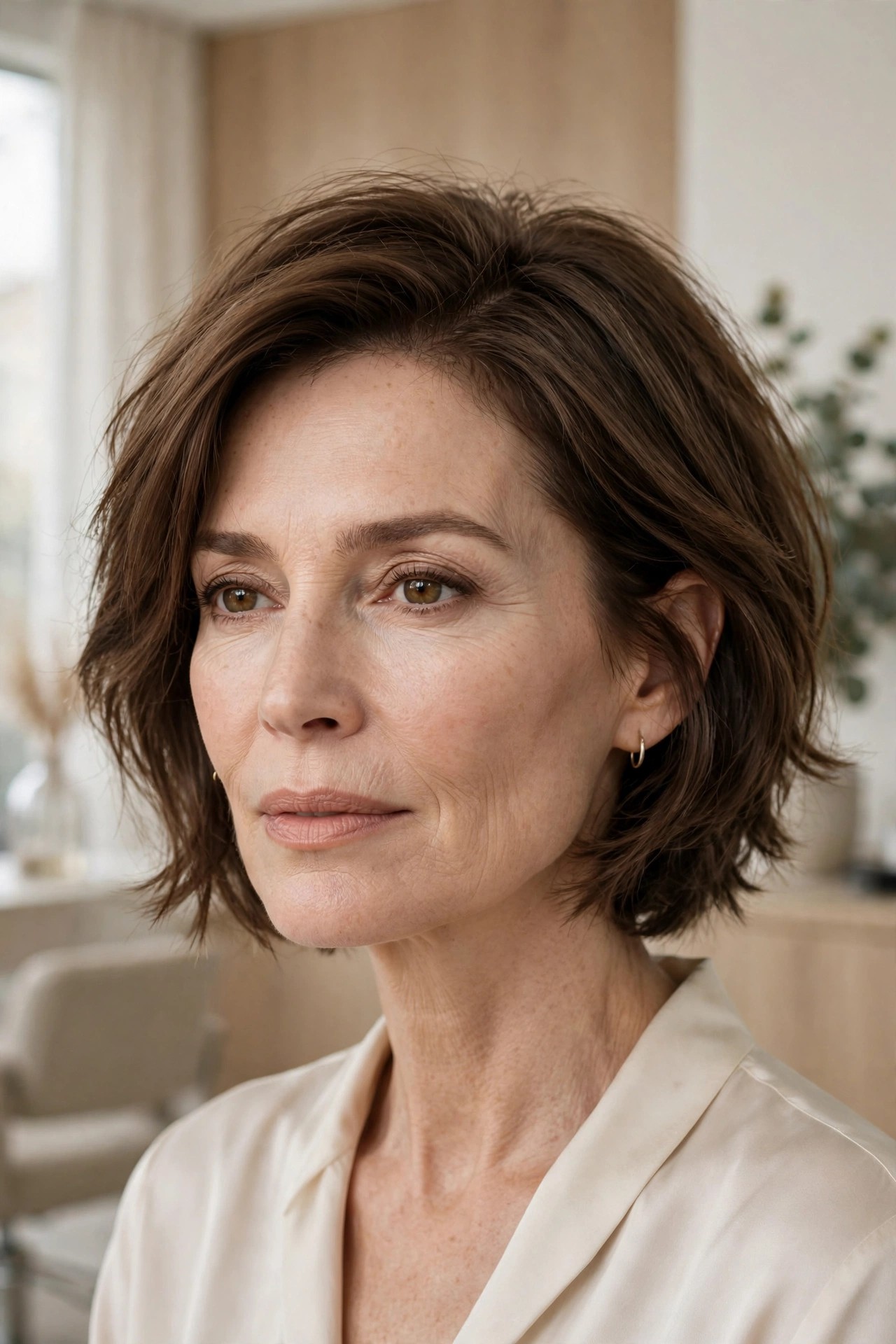
Short, hidden interior layers act like scaffolding, pushing the longer top layers up and out. From the outside you see a smooth, full bob; underneath, architecture is doing the heavy lifting. Fine hair finally gets to cheat at volume — invisibly.
Try this: Rough-dry upside down for 90 seconds; the scaffolding springs the top layer up.
Styling tip: dry shampoo at the roots doubles as structural support.
Avoid: heavy conditioners at the roots — they collapse the scaffolding.
3. 🙃 The Upside-Down Bob
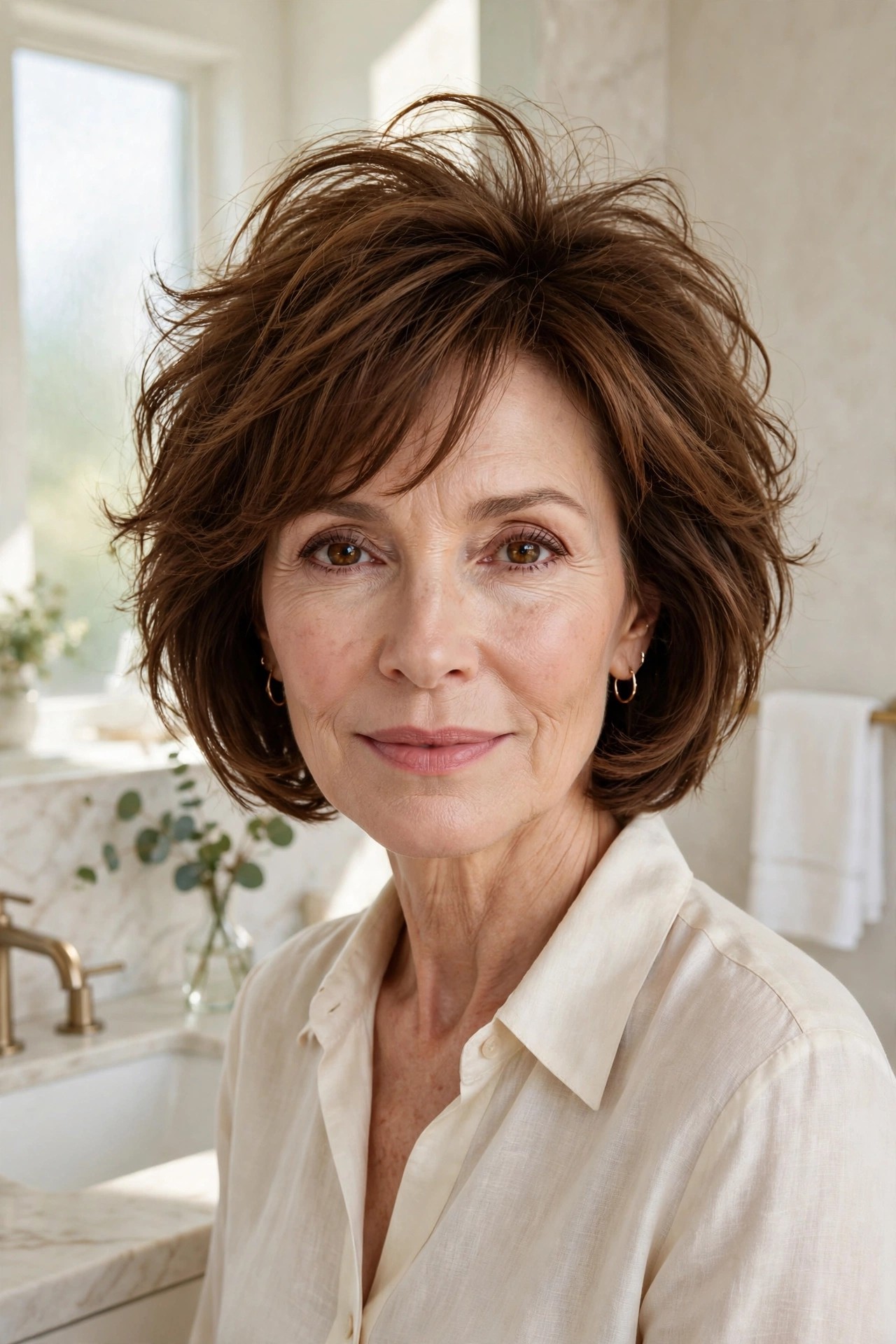
Cut specifically to be dried flipped over: the layers are balanced so gravity becomes a styling tool instead of the enemy. Ninety seconds upside down with a dryer, flip back up, and the roots stand at attention. It is less a haircut than a lifestyle hack.
Try this: Dry 90% upside down, then flip and smooth only the very top layer.
Avoid: drying right-side-up — it trains the roots flat and wastes the cut.
Best for: Women who will commit to one 90-second habit.
4. 🌫️ The Air-Pocket Bob
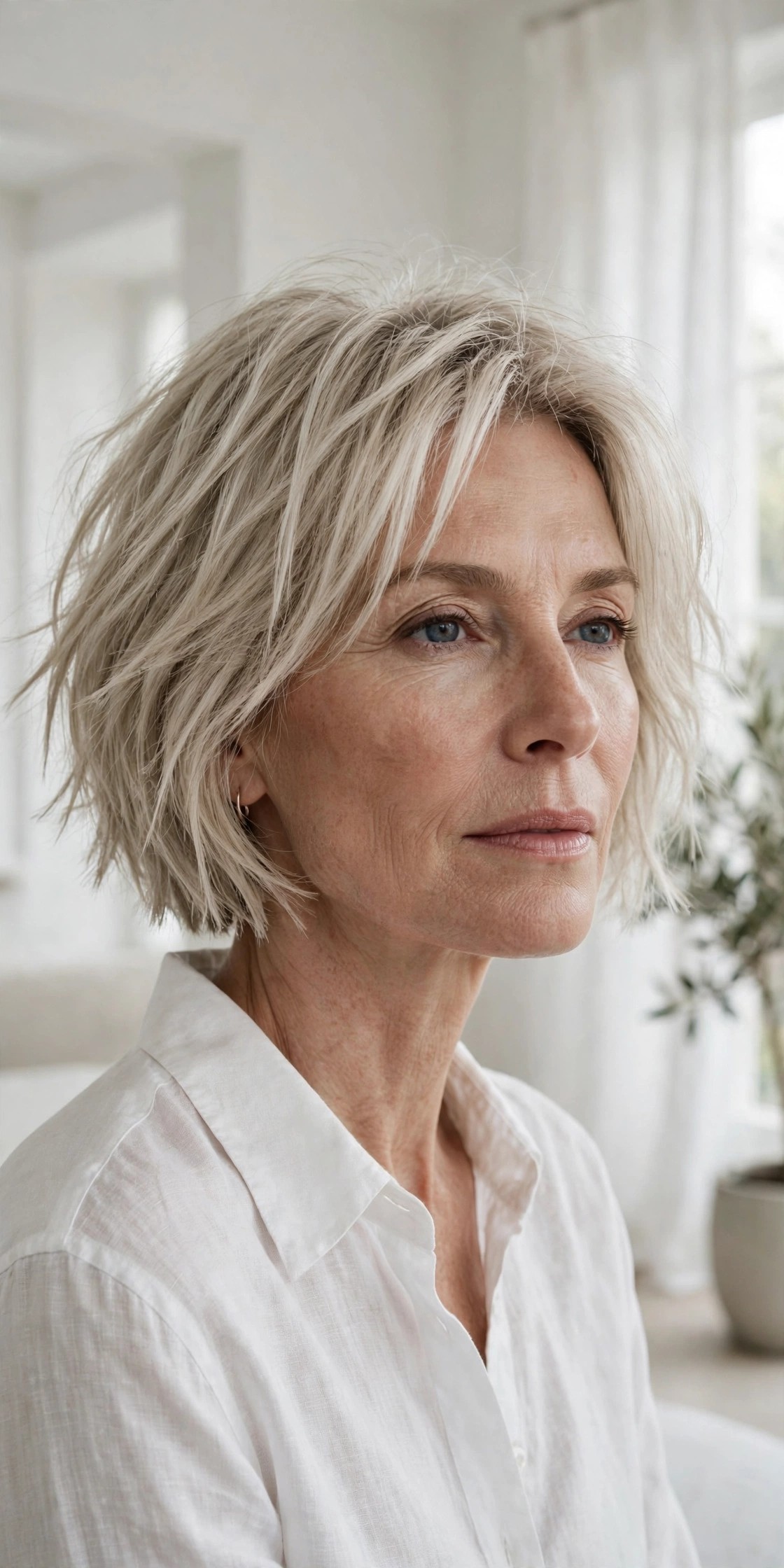
Deliberate airy separation between pieces creates literal pockets of air — and air reads as volume. The gaps between textured pieces let light in, which the eye interprets as depth. It is negative space doing positive work.
Try this: A pinch of texture powder between layers inflates the air pockets.
Best for: Very straight fine hair that looks one-dimensional.
Styling tip: piece the ends with fingers, never a brush — brushes close the gaps.
5. 💎 The Blunt-Chop Hybrid
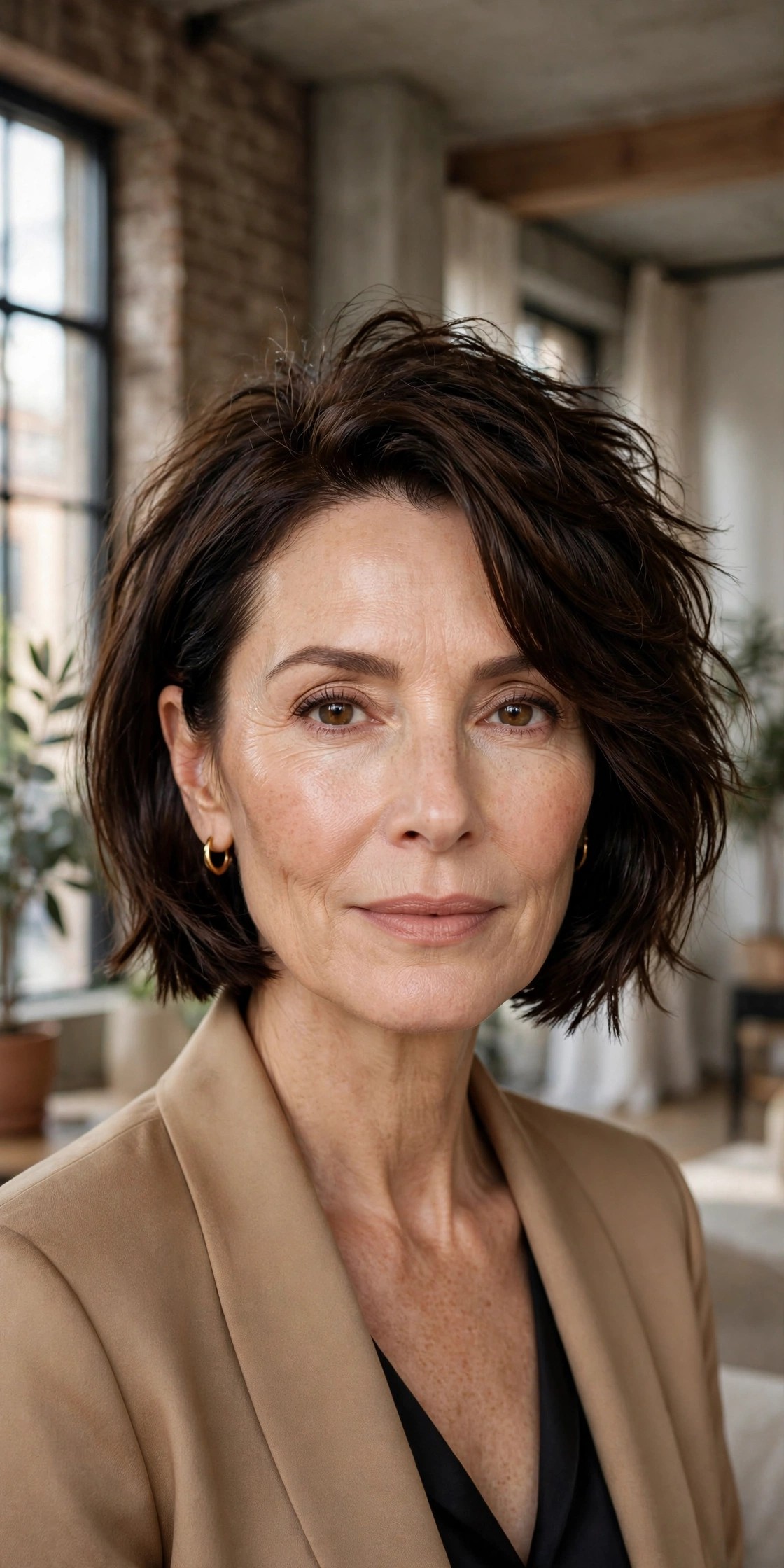
The mullet’s respectable cousin: a razor-sharp blunt baseline for density, with choppy shattered layers through the crown for movement. You get the thickness of a blunt cut and the life of a choppy one. It is the best of both geometries in a single haircut.
Try this: Wear it sleek to show the blunt edge, tousled to show the chop — two personalities.
Styling tip: flat-iron just the baseline to emphasize the sharp edge.
Avoid: texturizing the baseline — the blunt edge is doing the density work.
6. 📐 The Architectural Bob
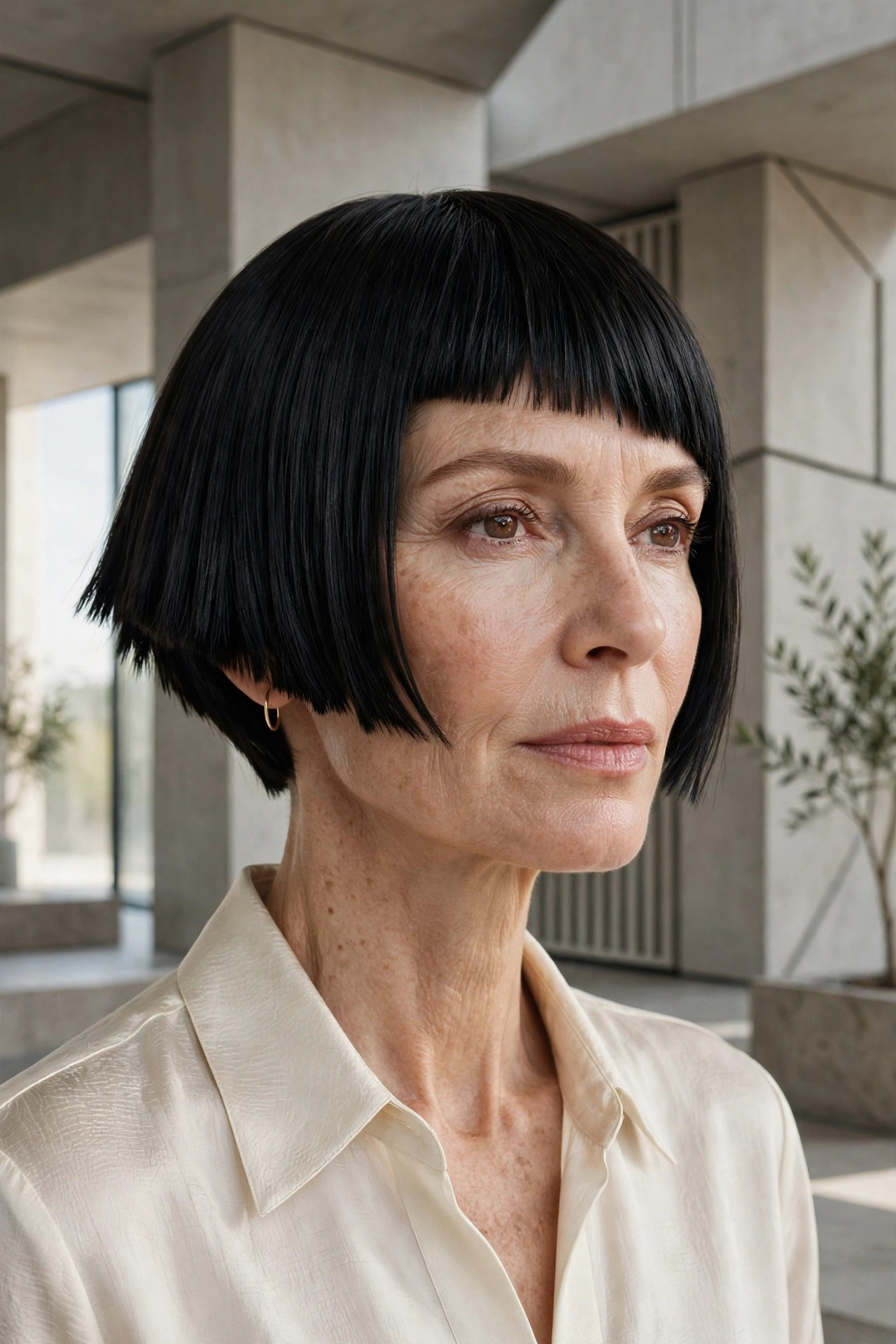
Precise, geometric cutting — clean angles, deliberate lines — that builds shape through structure rather than layering. Fine hair holds a precise shape beautifully because there is less bulk to fight the lines. Think of it as tailoring for hair.
Try this: This cut demands a precision stylist — ask to see their geometric work first.
Avoid: scrunching or tousling — it blurs the architecture you paid for.
Best for: Straight fine hair and lovers of clean, modern lines.
7. ☁️ The Cushion Bob
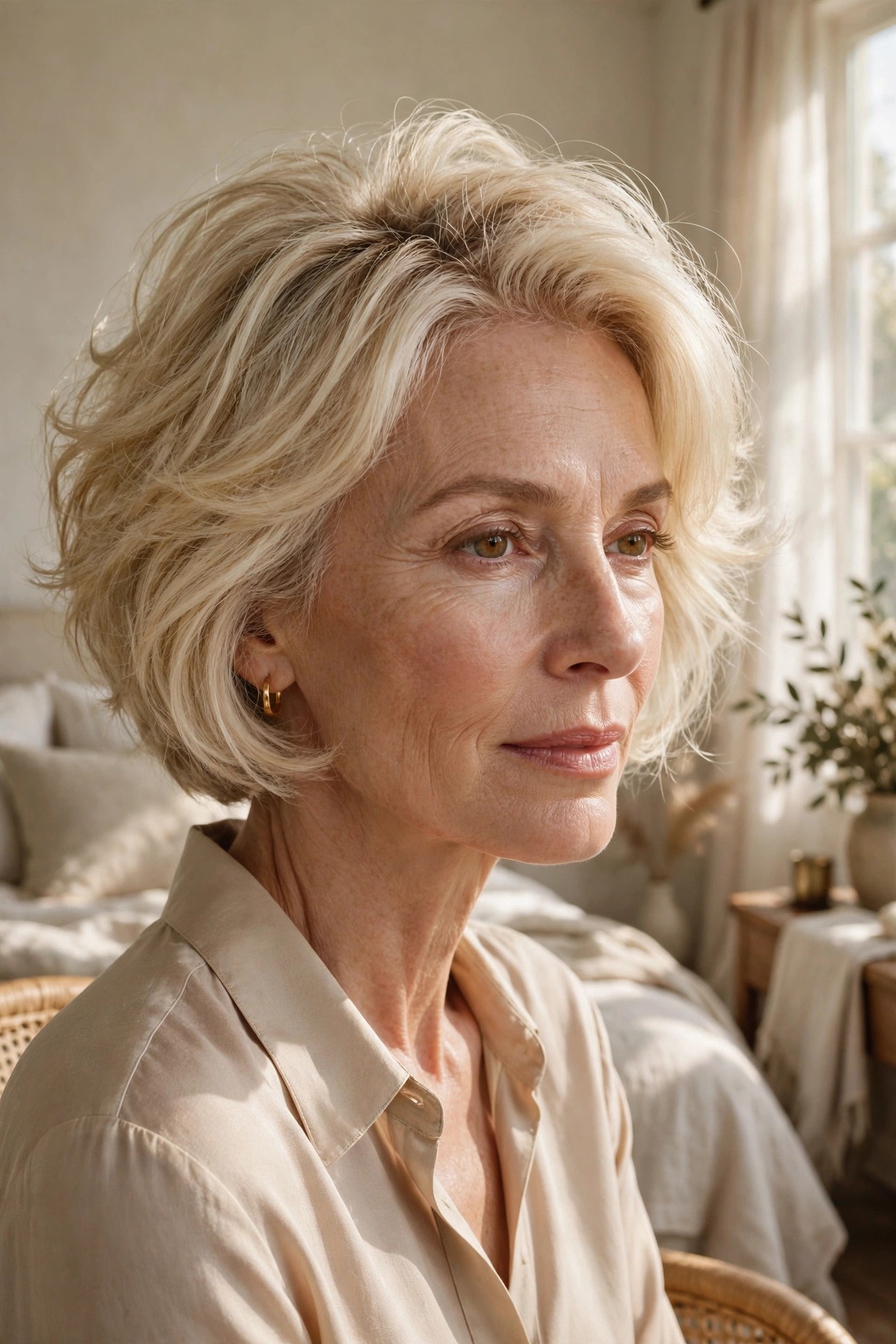
A soft cushion of volume built into the crown through short, stacked support layers — rounded, touchable, and impossibly full-looking. It is the gentlest way to fake density: no spikes, no teasing, just a cloud where flatness used to be.
Try this: Backcomb just the under-layers at the crown, then smooth the top over.
Best for: Flat crowns and heads that need height.
Styling tip: volumizing powder beats mousse for cushion cuts — lighter hold.
8. 🪶 The Featherweight Bob
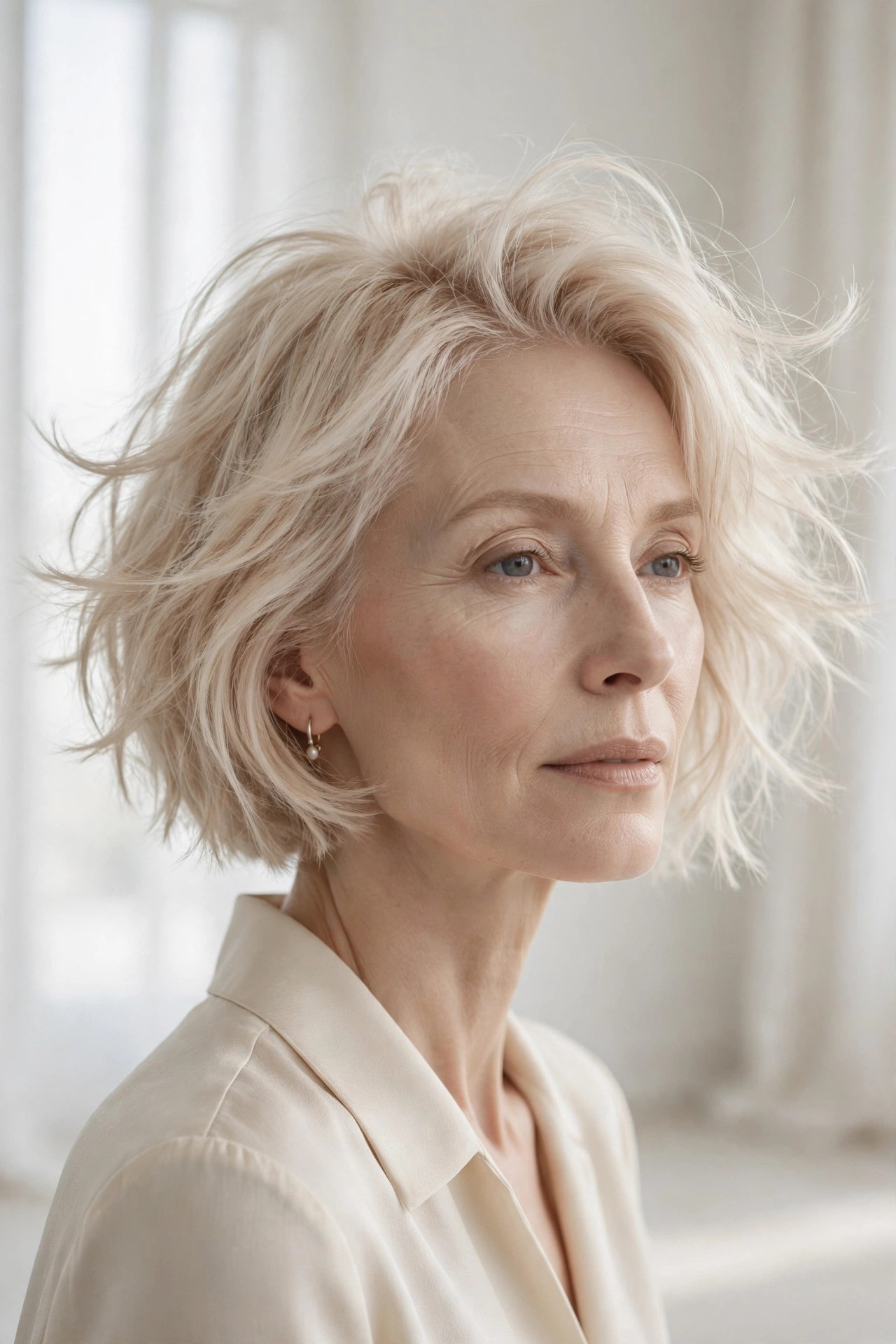
Ends point-cut so finely they seem to float — zero weight, maximum movement. On fine hair, heavy ends drag everything down; feathered ends let the whole cut lift. It is the lightest-feeling bob you will ever wear.
Try this: A drop of lightweight oil on just the tips keeps feathers from frizzing.
Styling tip: sleep on silk — feathered ends tangle less and keep their shape.
Avoid: blunt-cutting the ends — weight is the enemy of this cut.
9. 🌊 The Wave-Boost Bob
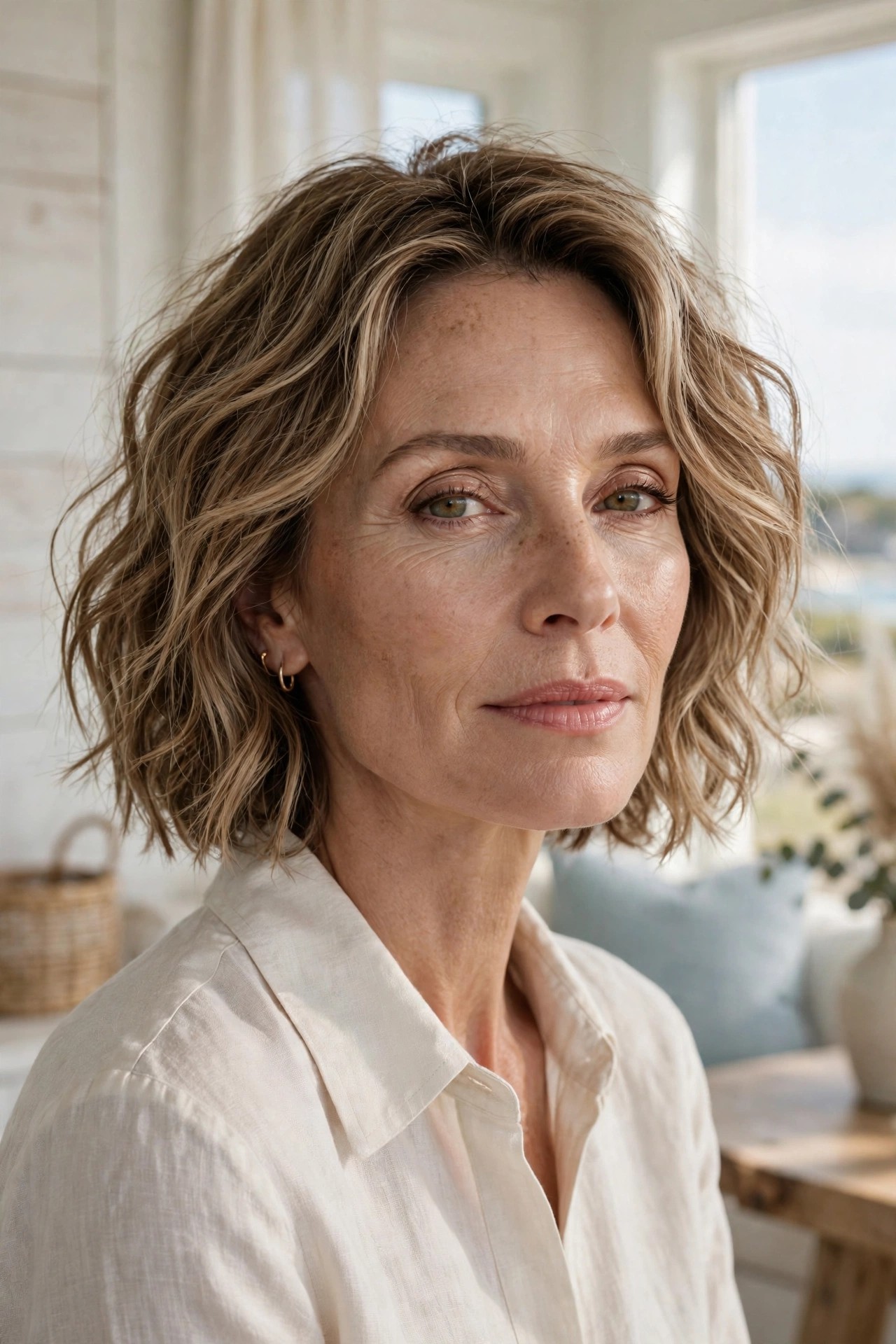
Cut to amplify whatever wave you already have: the layers are placed at the exact points where bends naturally form, so your texture does double duty. Even a slight wave becomes a full one. It is working with your hair instead of against it.
Try this: Scrunch with curl cream on damp hair and diffuse — or just air-dry.
Avoid: brushing out the waves — it turns boost into frizz.
Best for: Natural wavers whose waves fall flat by noon.
The three words that change everything for fine hair: perimeter, point-cutting, no thinning shears. Say them at your consultation and watch your stylist nod — you’ve just described the entire fullness formula.
10. 🔍 The Scalp-Camouflage Bob
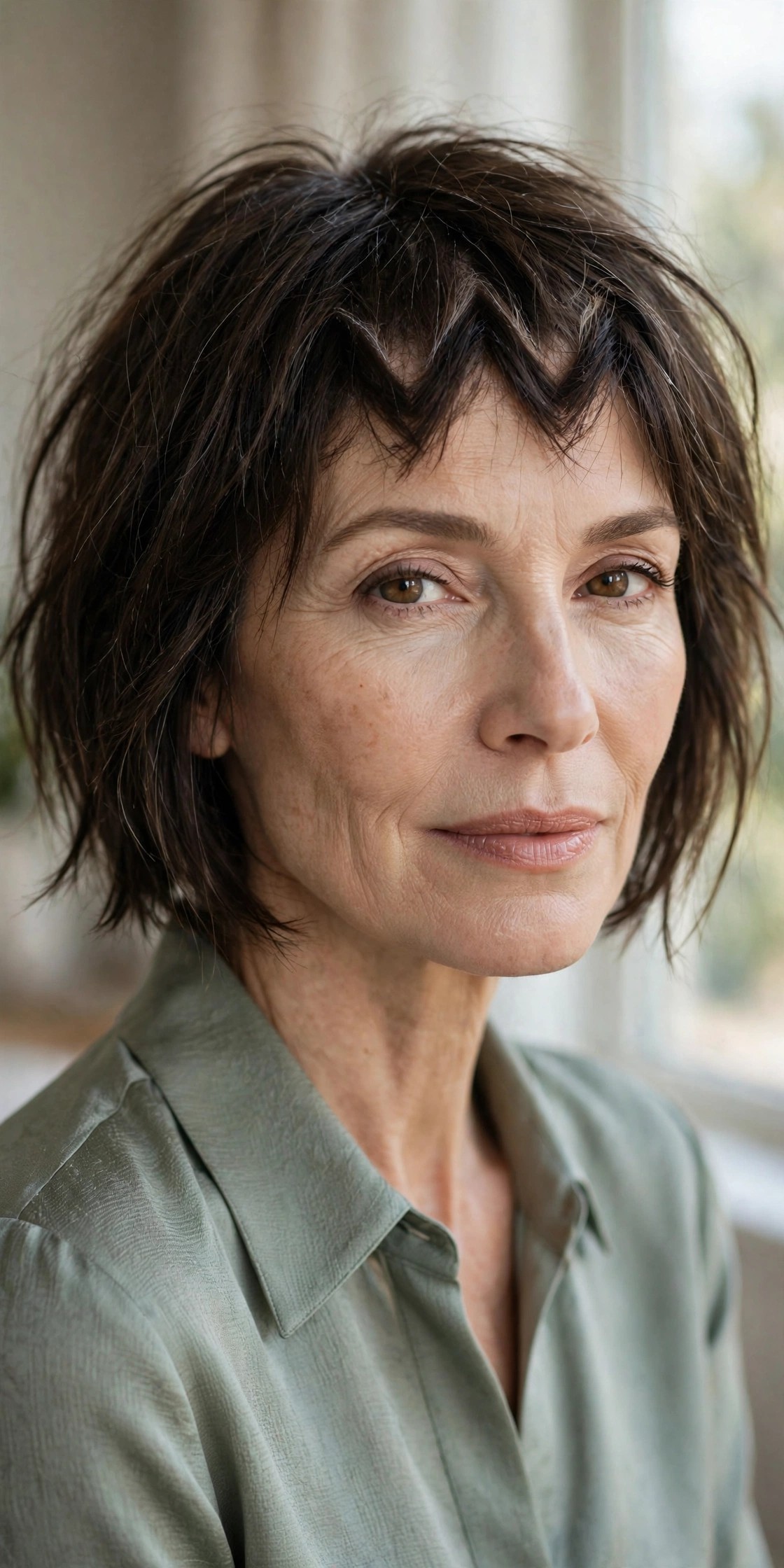
A zigzag part plus scattered texture that breaks up the scalp line — because visible scalp is what makes thin hair read as thin. The eye can’t find a clean part to judge density by, so it assumes the best. Camouflage, but for your crown.
Try this: Part with the handle of a comb in a zigzag — never a straight line.
Best for: Visible scalp at the part or crown.
Styling tip: root powder matching your color erases any remaining scalp show-through.
11. 💨 The Static-Lift Bob
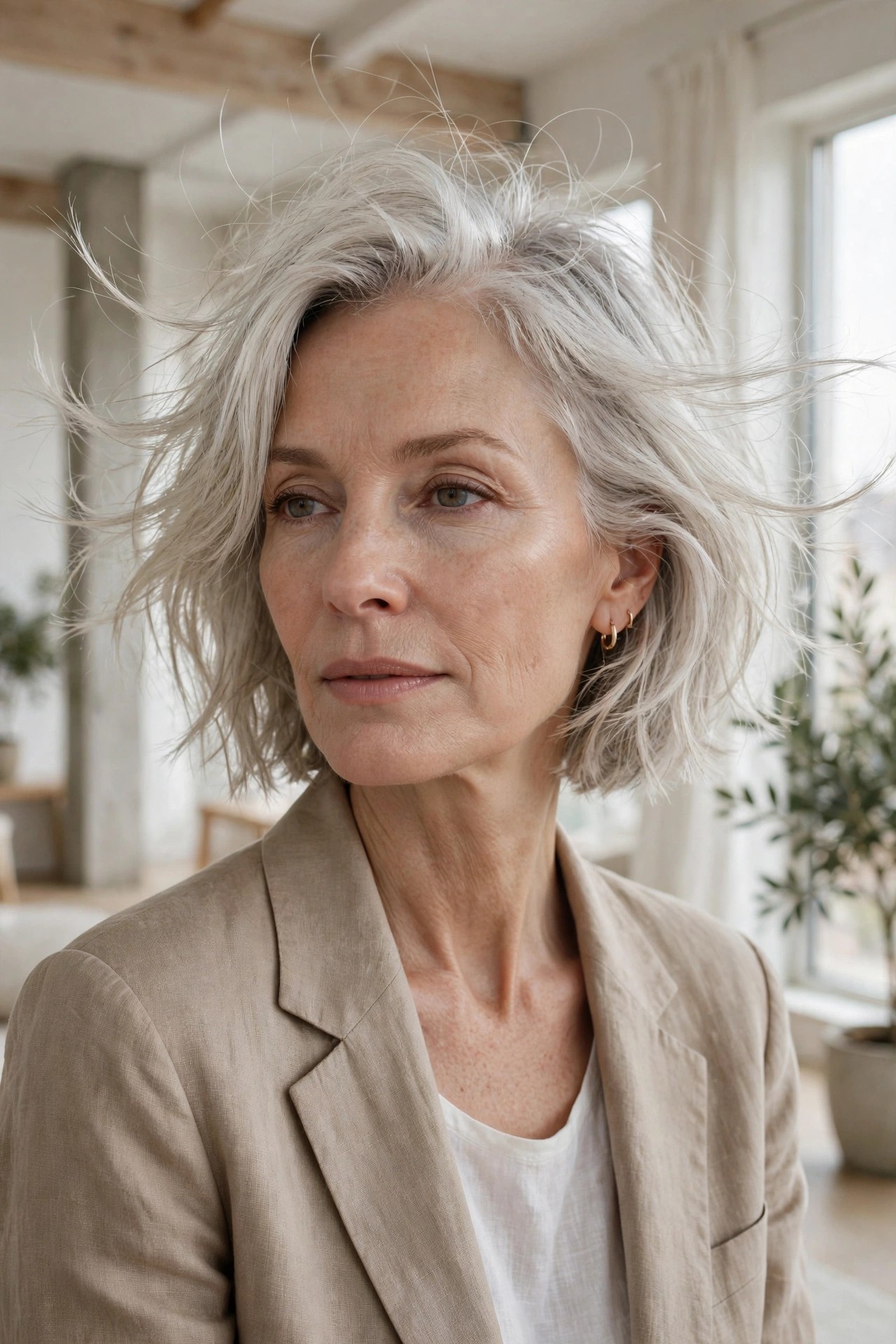
Fine hair’s static and flyaways, weaponized: the cut leaves the crown pieces just long enough to float upward, turning frizz into lift. What used to be your annoyance becomes your volume. It is judo, not boxing.
Try this: On dry hair, flip your head and shake — the float does the rest.
Styling tip: anti-static spray on a brush, then brush the top lightly for controlled lift.
Avoid: heavy anti-frizz serums — they ground the very lift you’re using.
12. 🎭 The Double-Density Bob
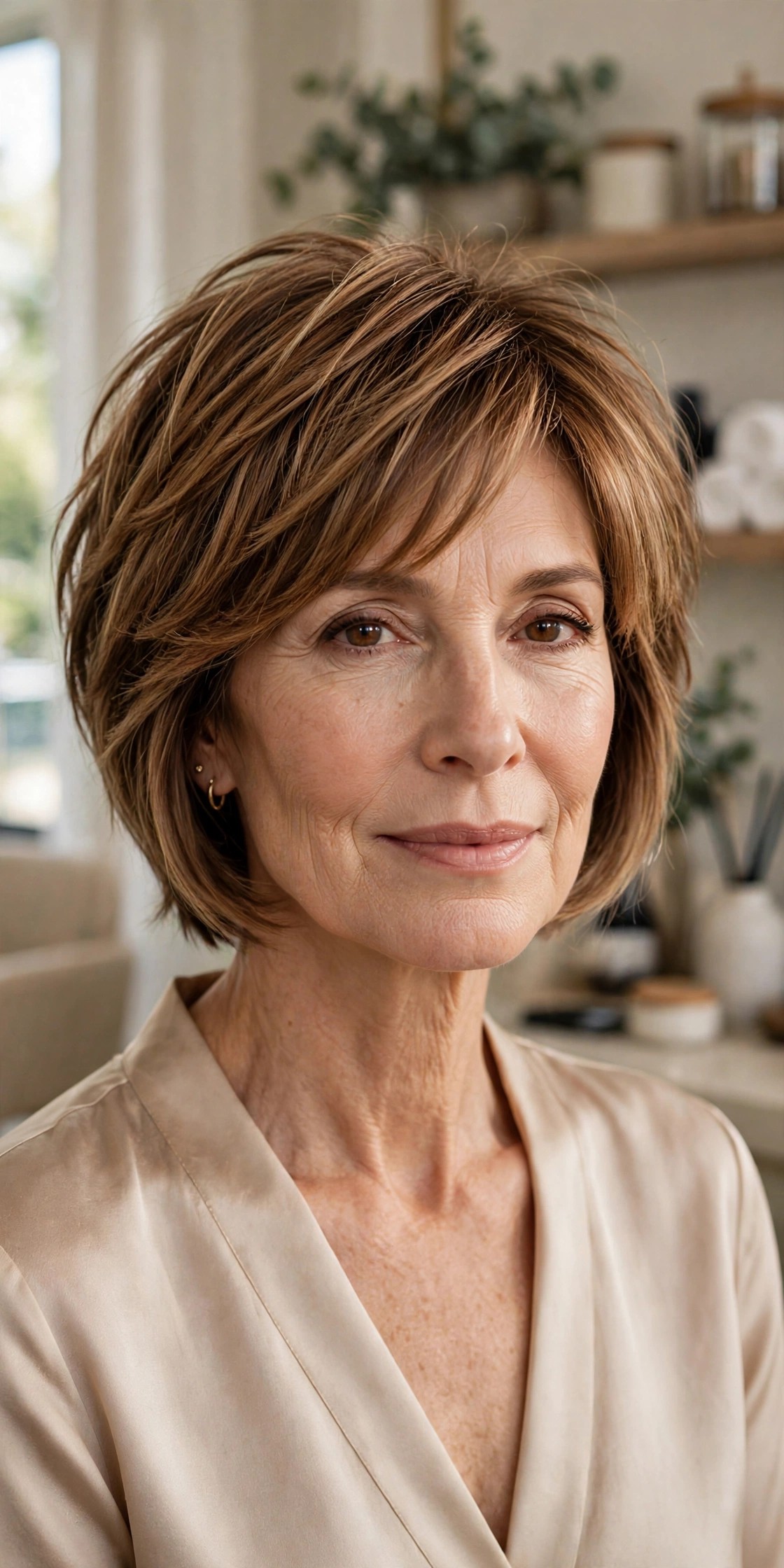
Two distinct tiers of layering: a shorter under-tier for lift and a longer over-tier for coverage. The eye sees the full outer tier and assumes everything underneath matches. It is a magic trick with scissors — now you see density, now you don’t question it.
Try this: Ask for ‘two-tier layering — short interior, longer exterior.’
Avoid: blending the tiers too much — the separation is the illusion.
Best for: Hair that’s thin both at the roots and the ends.
13. 🖤 The Patent Bob
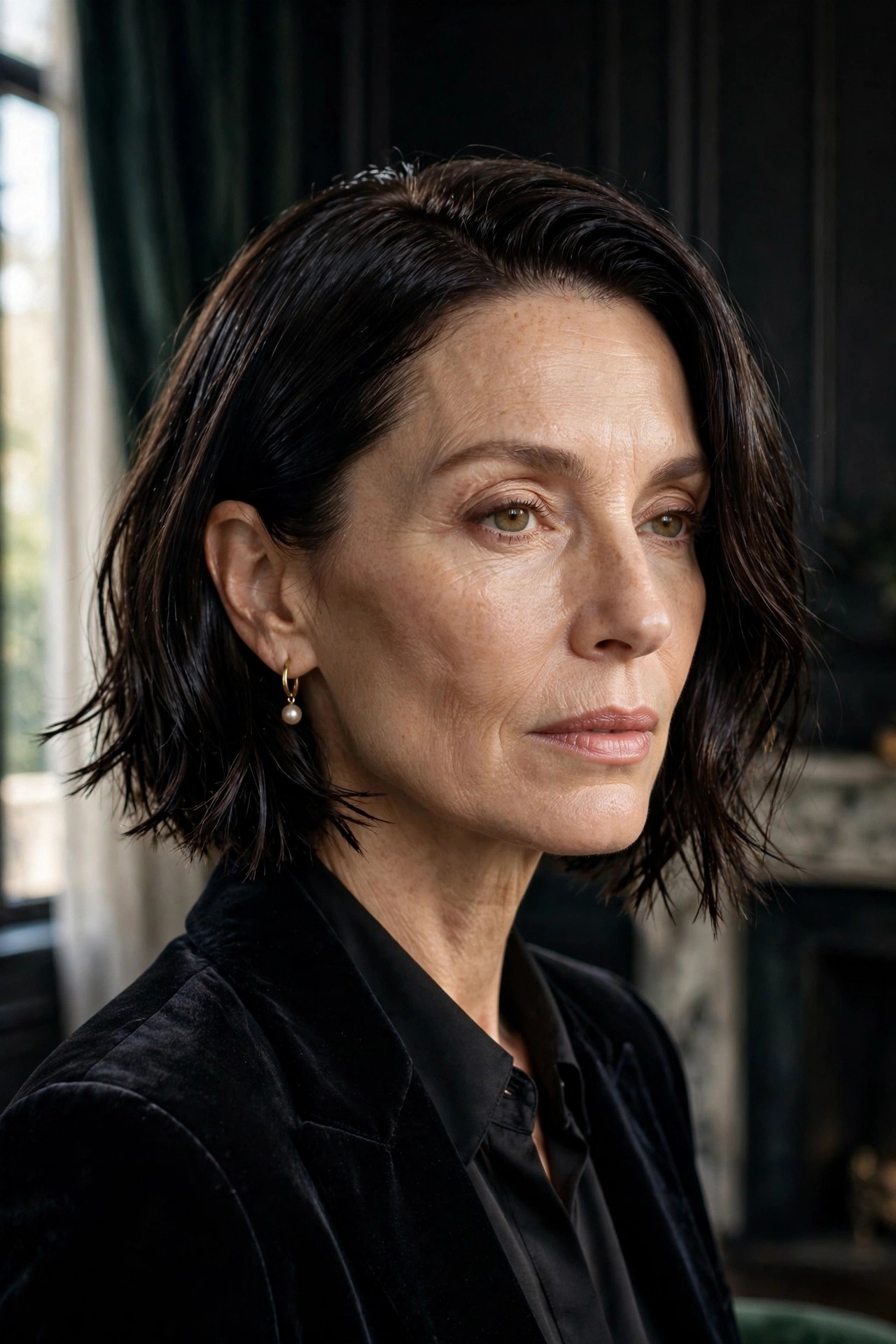
High-shine, sleek, reflective — because fine hair takes shine better than any other texture, and shine reads as health and density. A glossy, polished bob with choppy ends looks expensive and substantial. Light does the volumizing here.
Try this: A gloss treatment at the salon, then shine spray at home — that’s the routine.
Best for: Straight fine hair that shines naturally.
Styling tip: shine shows every flaw — keep ends trimmed and healthy.
14. 🌙 The Overnight-Volume Bob
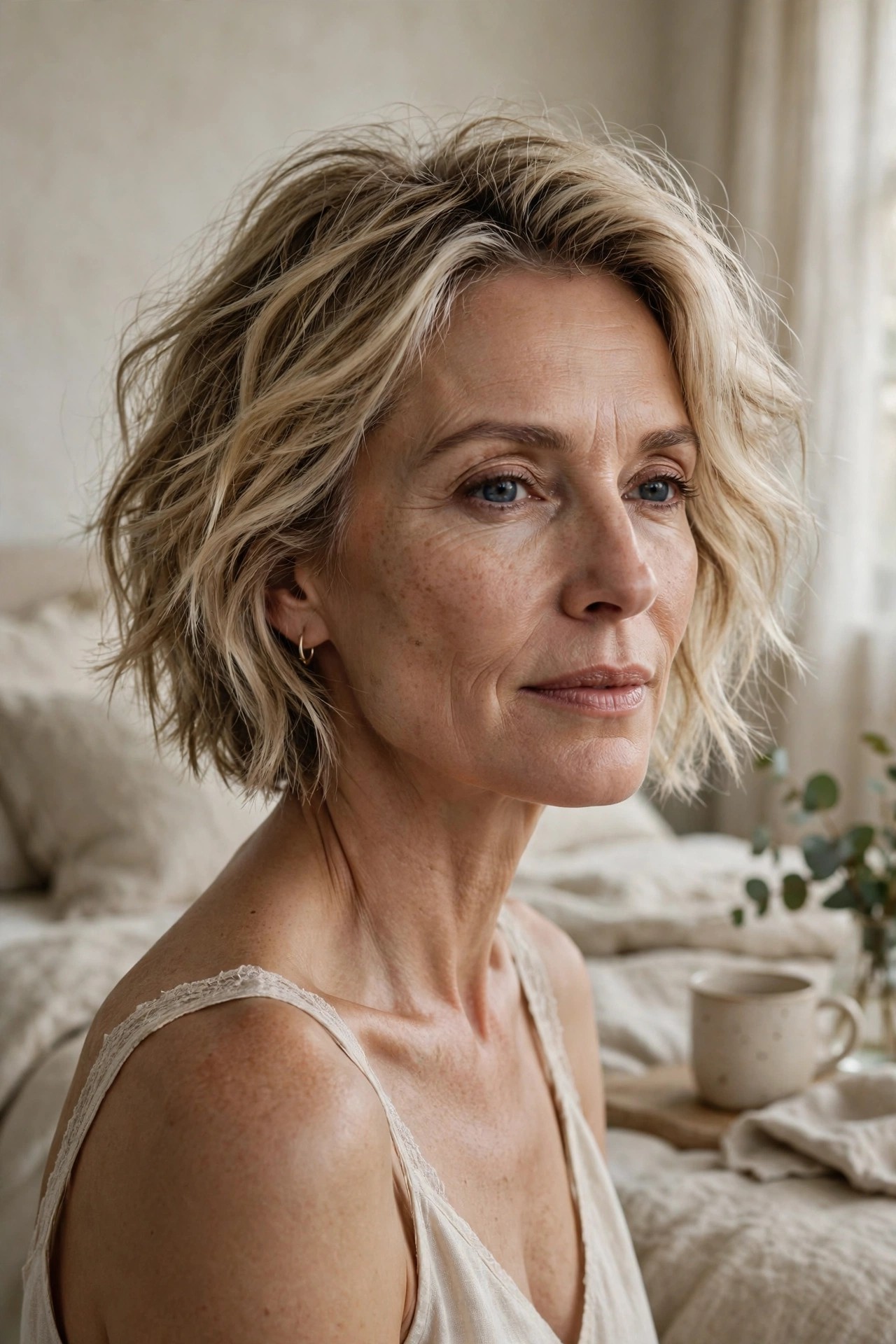
Cut so that sleep becomes a styling tool: the layer balance means you wake up with bend and lift instead of flatness. Pineapple it loosely, sleep, shake out. Morning hair finally works for you.
Try this: Two loose topknots before bed — undo in the morning for instant volume.

Styling tip: silk scrunchies only — regular elastics dent fine hair overnight.
Avoid: sleeping with wet hair pressed flat — damp-bun it instead.
15. 🔬 The Micro-Texture Bob
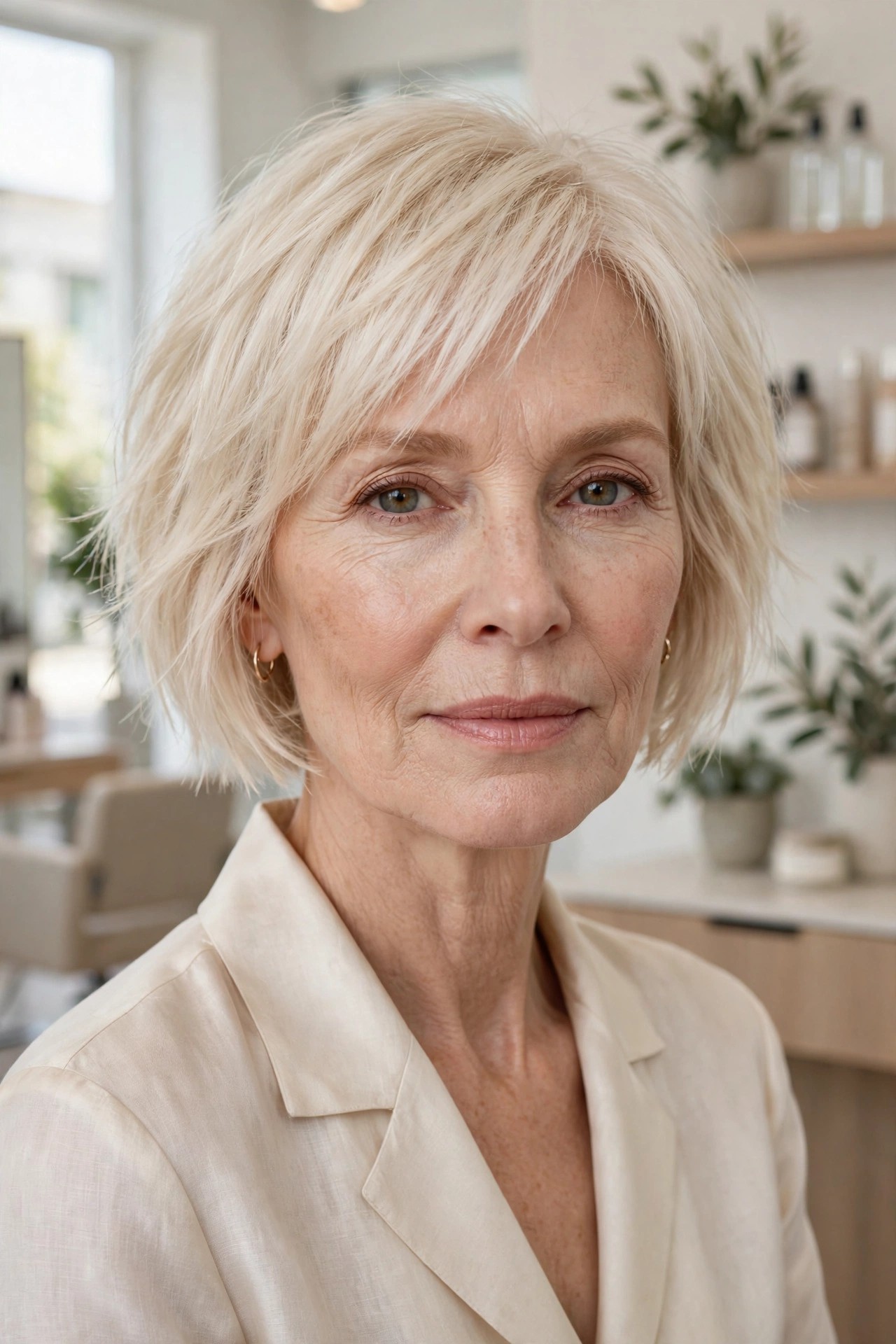
Texture cut at the tiniest scale — micro point-cutting instead of chunky layers — so fine hair gets movement without losing a single millimeter of density. It is the precision instrument version of the choppy bob: all the life, none of the loss.
Try this: Ask specifically for point-cutting, and forbid thinning shears out loud.
Avoid: razors and thinning shears — both remove too much from fine hair.
Best for: The finest, sparsest hair that can’t afford to lose bulk.
16. 🎪 The Big-Hair Bob
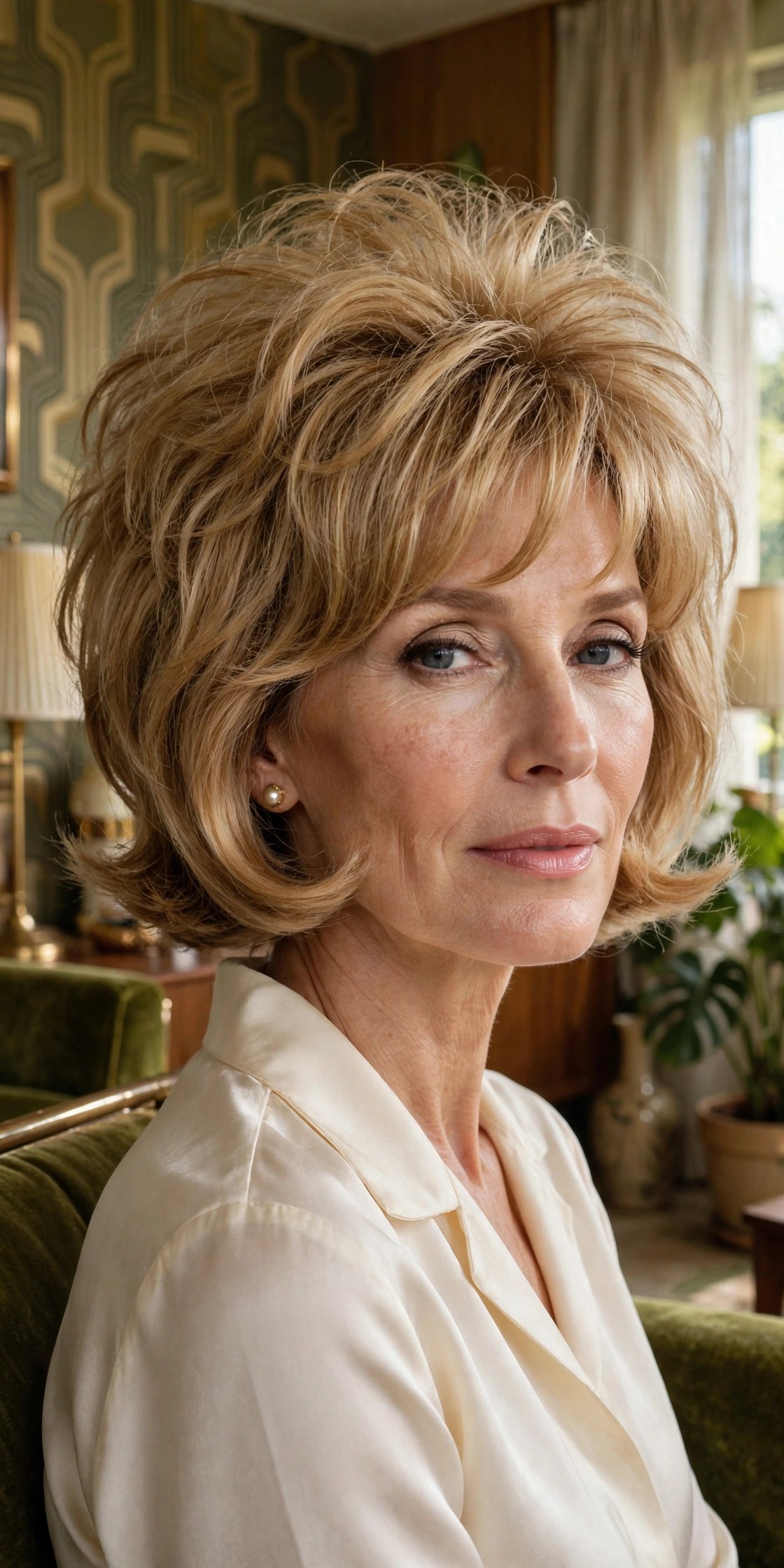
A nod to the 60s: serious root volume, smooth outer shell, ends that kick with choppy attitude. It is the most volume-forward cut on this list — unapologetic height that turns fine hair into a statement. Go big or go home.
Try this: Velcro rollers at the crown for 15 minutes while you do makeup.
Best for: Volume maximalists and special occasions.
Styling tip: backcomb the under-crown, smooth the top — the 60s technique still works.
17. 🦪 The Pearl Bob
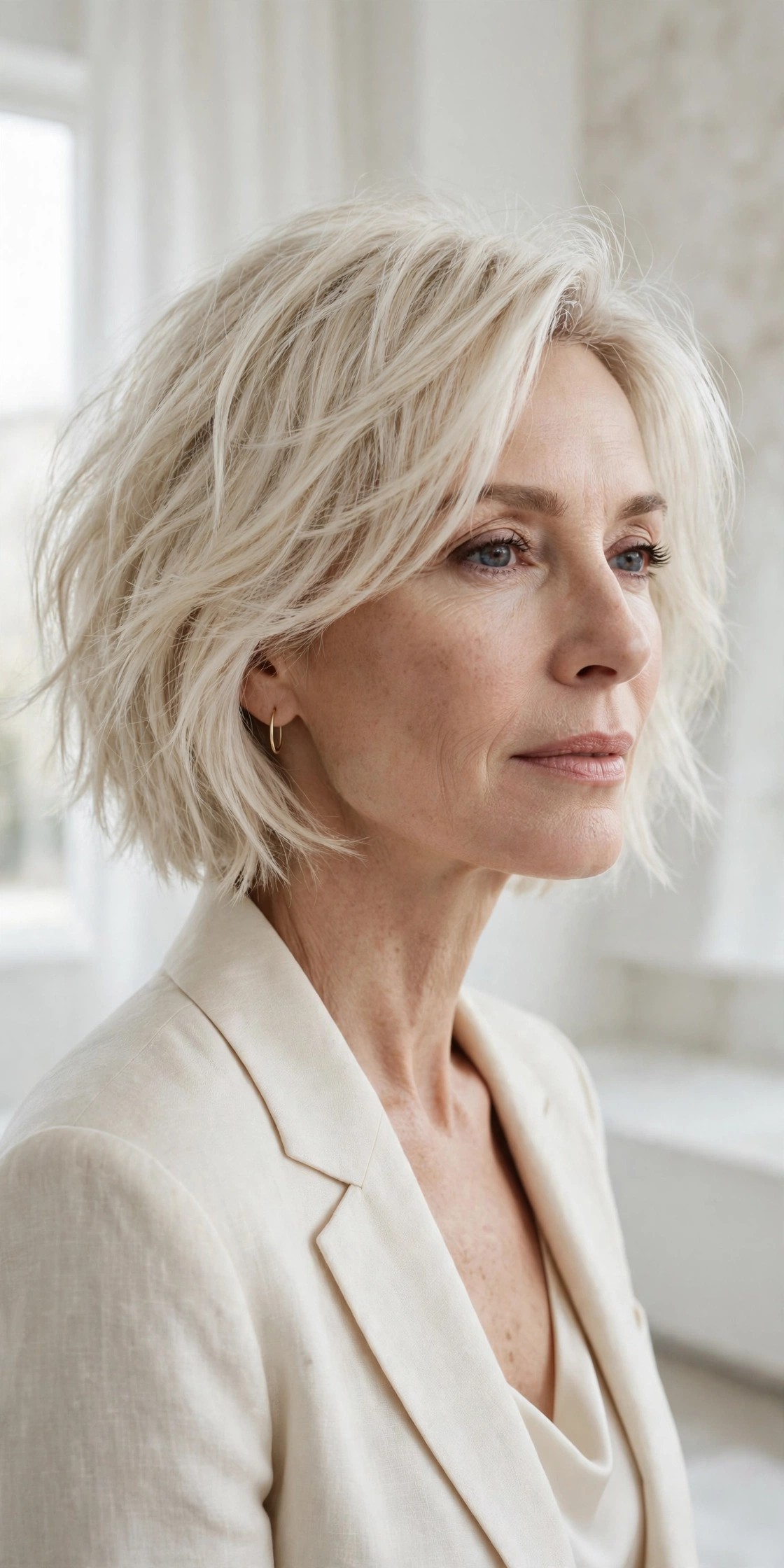
A pearlescent, luminous blonde — not quite silver, not quite gold — that makes fine strands look thicker through light reflection. Pale, reflective color scatters light across the head, and scattered light reads as density. Color as volumizer.
Try this: A pearl gloss between appointments keeps the luminosity alive.
Styling tip: pearl tones need purple shampoo — brass kills the illusion.
Avoid: dark roots with pearl ends — the contrast exposes thinness.
18. 🍂 The Autumn-Dimension Bob
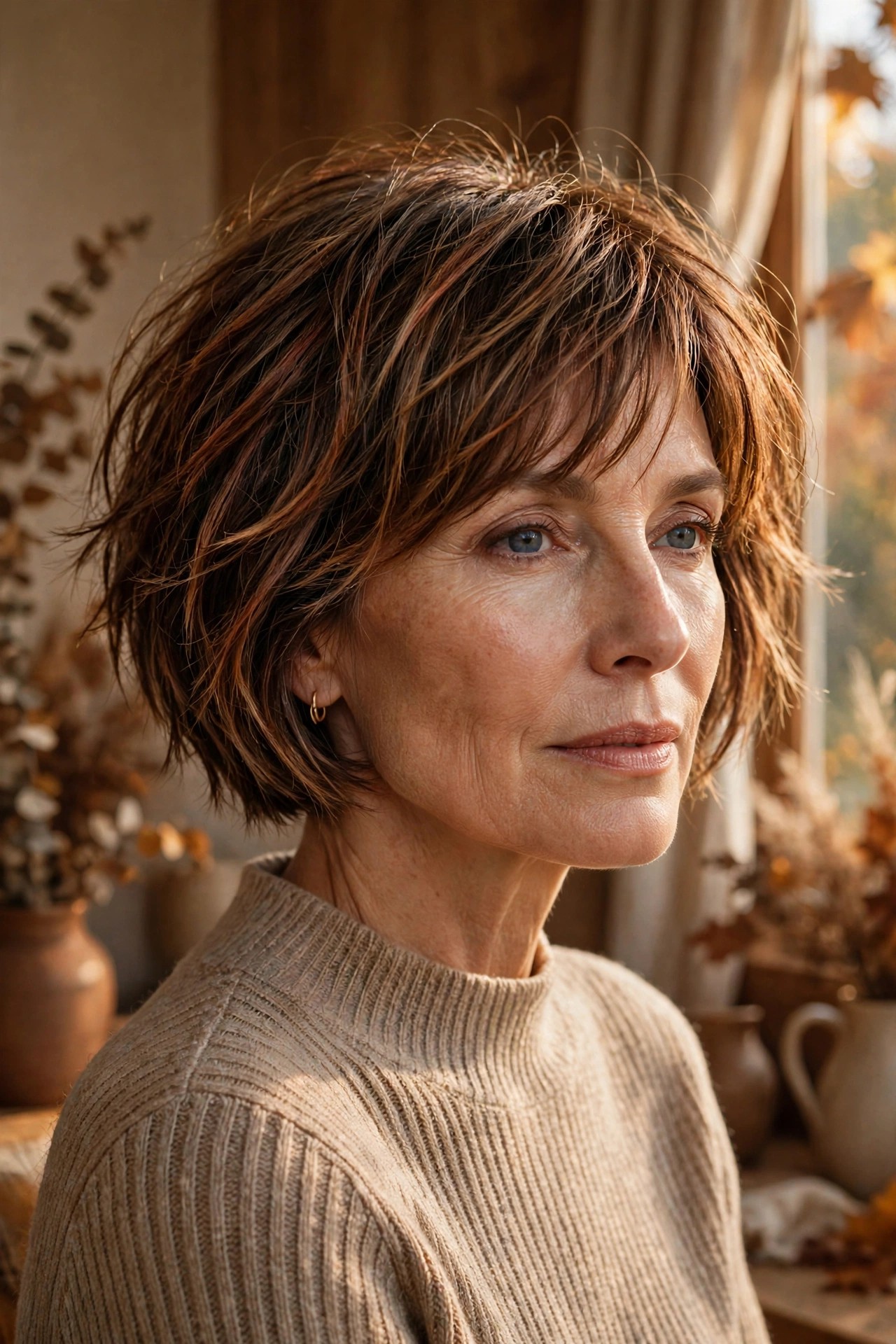
Three or more brunette tones woven through choppy layers — depth at the roots, warmth in the mids, light at the ends. Multi-tonal color creates shadows and highlights that the eye reads as layers upon layers. It is contouring for hair.
Try this: Ask for ‘at least three tones’ — single-color brunette flattens fine hair.
Avoid: one flat box color — it erases all the depth you’re building.
Best for: Brunettes whose solid color makes hair look thinner.
Color is half the haircut for fine hair. A single flat color makes thin hair look thinner; dimension — highlights, lowlights, shadow roots — creates the shadows and light that fake density. Budget for both, not just the cut.
19. 🖌️ The Painted Bob
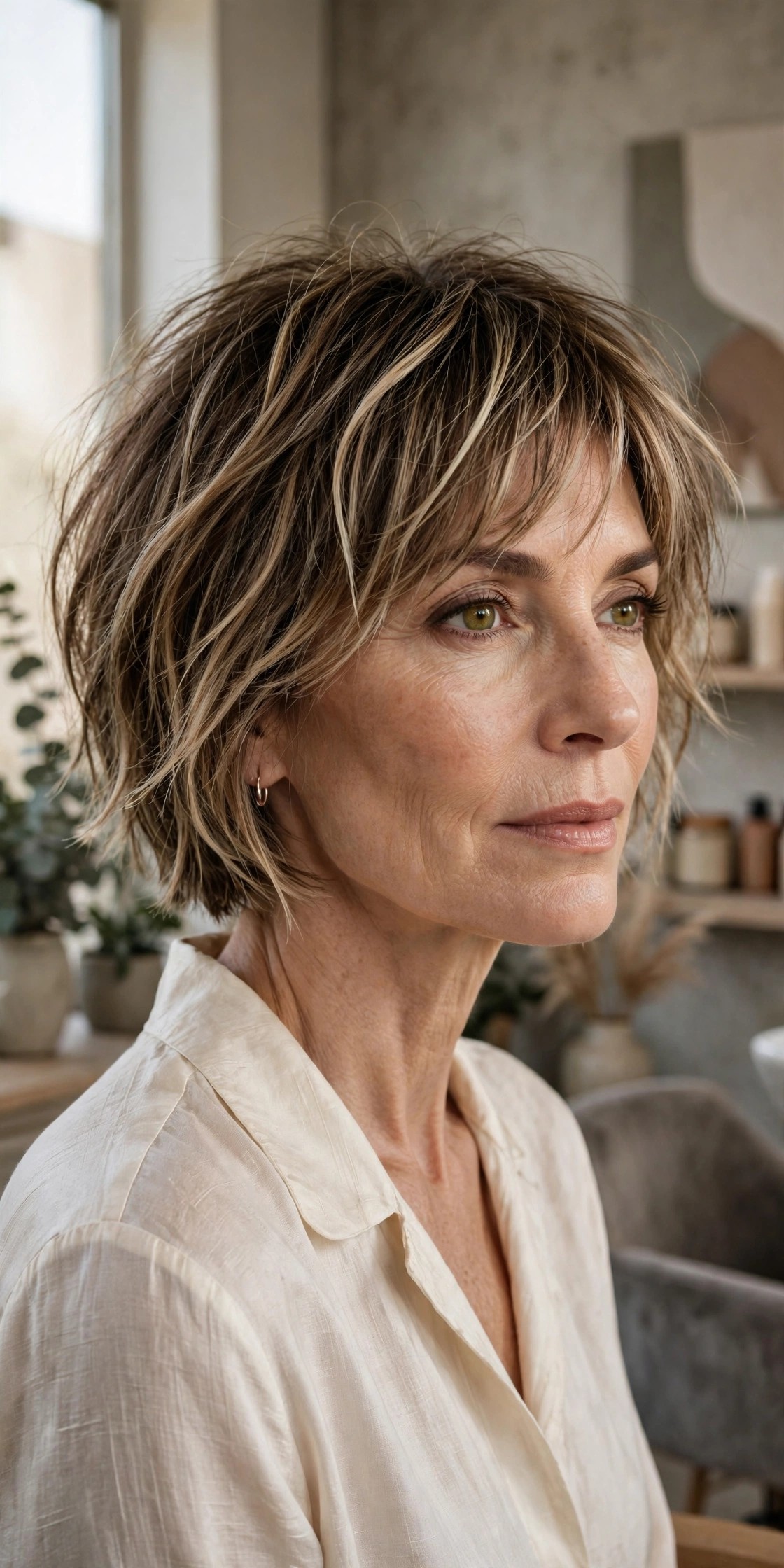
Hand-painted balayage ribbons placed exactly where the choppy layers separate — color that follows the cut’s architecture. Each ribbon catches light independently, multiplying the sense of texture. It is the cut and color designed as one piece.
Try this: Bring your cut photo to the color appointment — the painter needs the map.
Best for: Anyone getting cut and color together (the ideal scenario).
Styling tip: air-dry shows painted dimension more naturally than blowouts.
20. 🪴 The Root-Shadow Bob
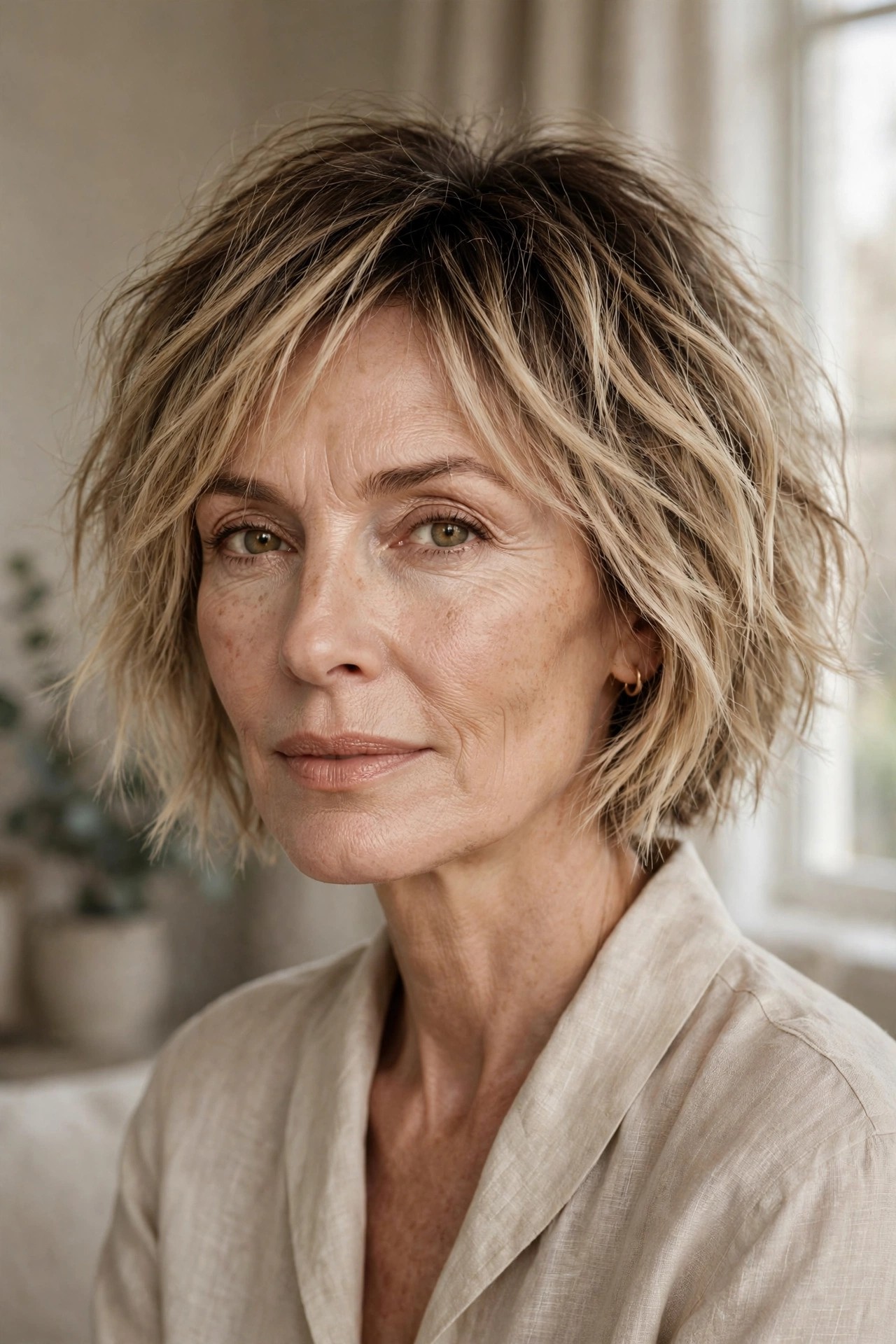
A deeper root melting into lighter ends — the shadow at the crown creates instant depth, making the top look denser than it is. It also means grow-out looks intentional for months. Depth illusion plus low maintenance: the rarest combination.
Try this: Ask for a shadow root 2 shades deeper than your ends.
Styling tip: root shadow looks best with a slightly off-center part.
Avoid: harsh root lines — the shadow must melt, not stripe.
21. 🪐 The Orbit Bob
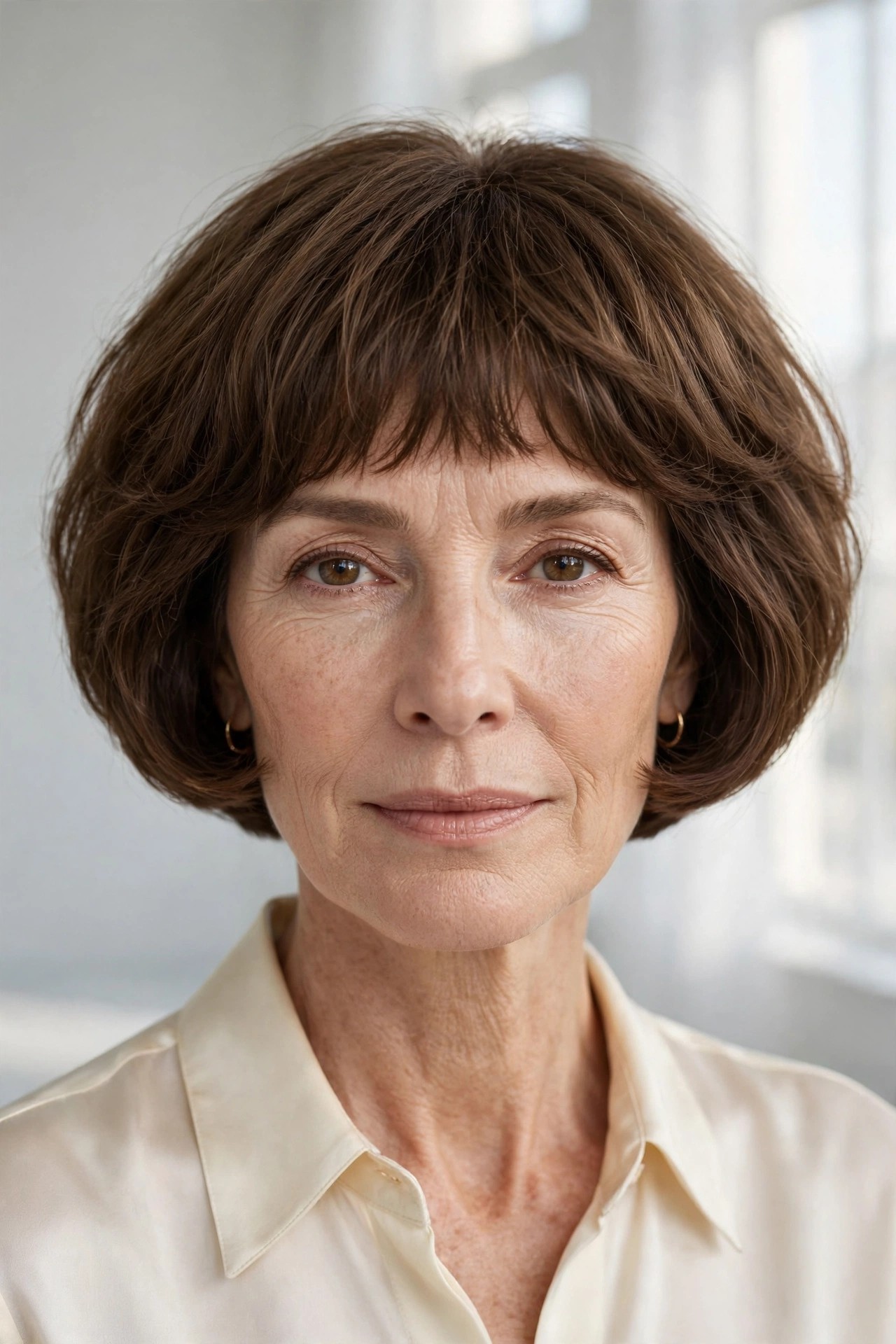
Layers that orbit the head in a continuous rounded shape — no weak points, no flat zones, fullness from every angle. The 360-degree balance means it photographs well and never has a ‘bad side.’ Gravity-defying through pure balance.
Try this: Check the back with a hand mirror at the salon — the orbit should be even.
Avoid: asymmetric styling — it breaks the orbital balance.
Best for: Women who are photographed often (hello, grandparents’ cameras).
22. 🎀 The Ribbon Bob
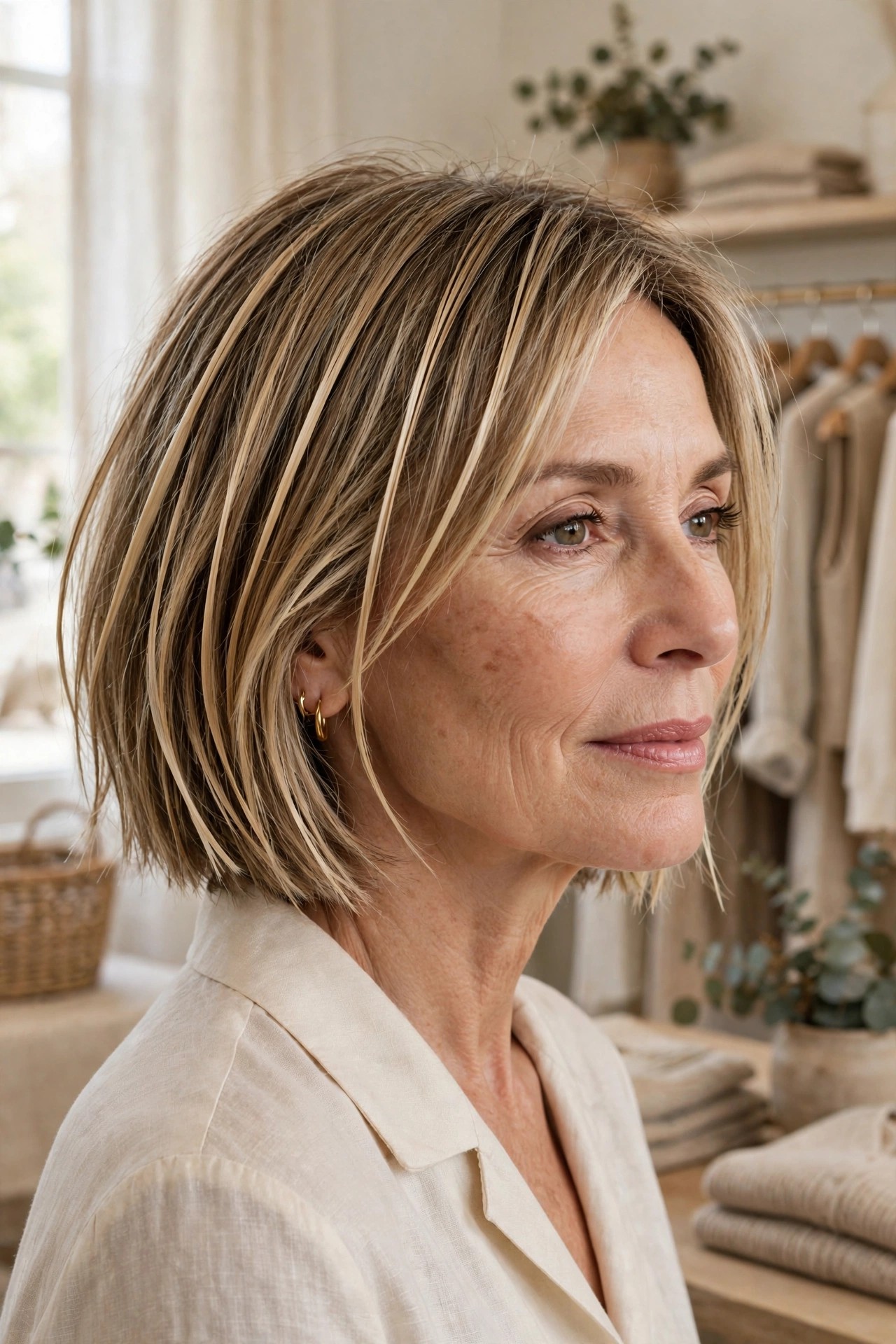
Defined, ribbon-like pieces carved through the cut — each one a clean, separated strand that reads as intentional texture. On fine hair, defined pieces look thicker than blended ones because the eye counts them. More ribbons, more hair (apparently).
Try this: Twist small sections with wax to define the ribbons on day one.
Best for: Straight fine hair that disappears when blended.
Styling tip: ribbons separate best on second-day hair with dry shampoo.
23. 🌟 The Red-Carpet Bob
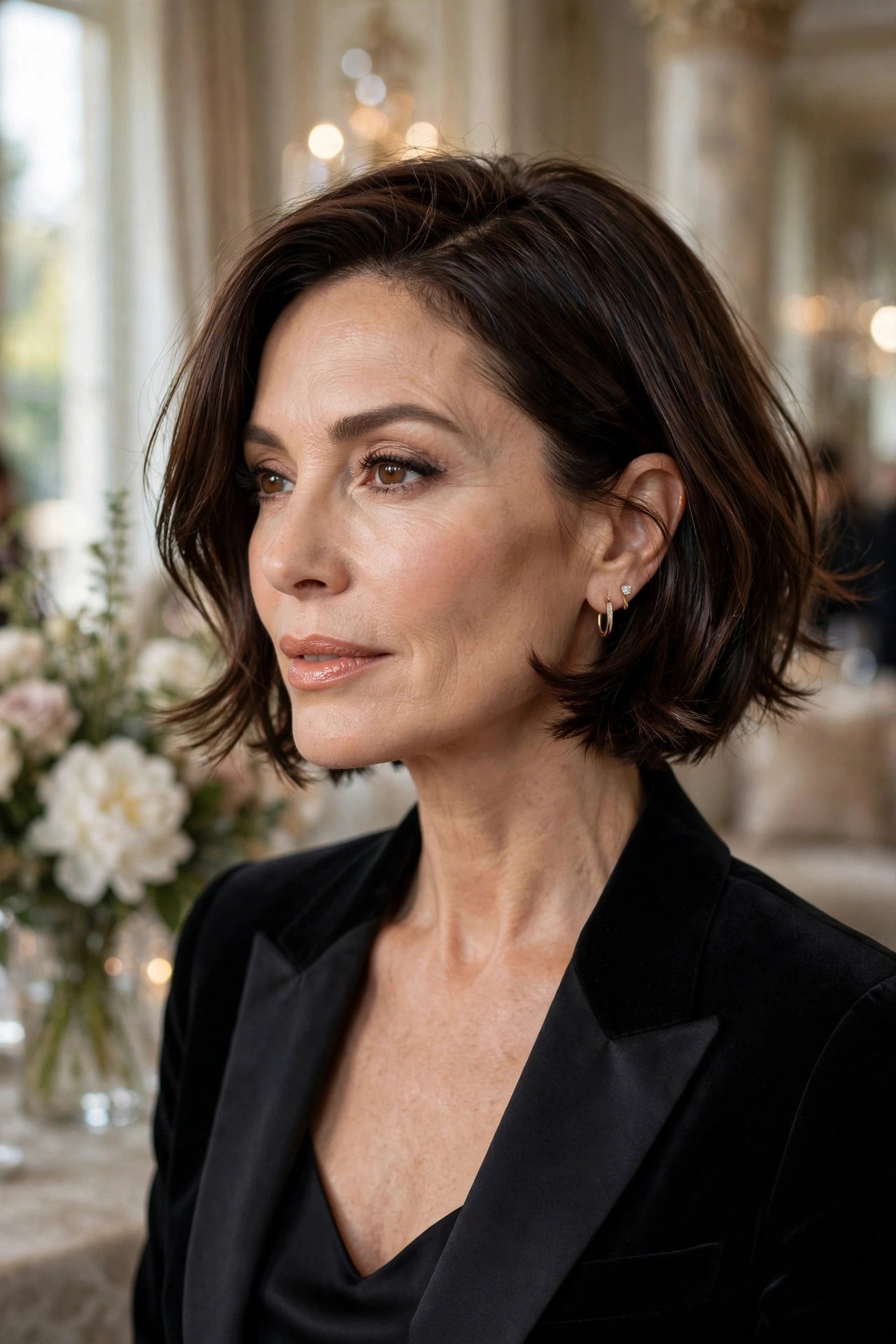
The polished event version: smooth, glossy, with choppy ends that kick just enough to look modern. It is what fine hair wears to weddings — substantial, shiny, camera-ready. Proof that thin hair can do glamour without extensions.
Try this: Velcro rollers on top + flat-iron on ends = red-carpet in 20 minutes.
Styling tip: shine spray right before photos — cameras love gloss.
Avoid: matte products on event day — gloss is the whole point.
24. 👁️ The Eye-Frame Bob
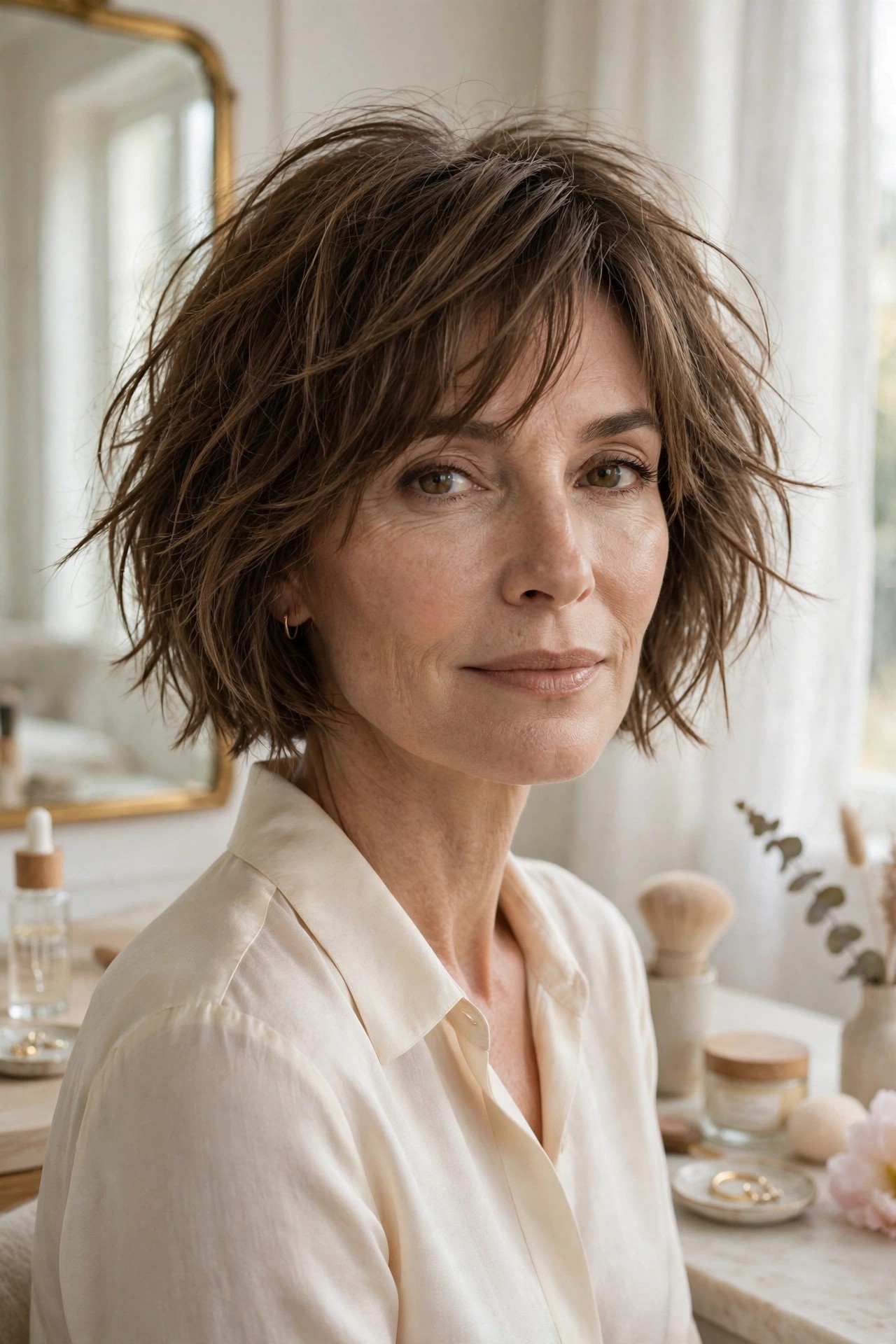
Texture concentrated around the eyes — piecey bits that draw every gaze to your face, not your hair’s density. It is misdirection as a haircut: the most interesting thing happening is at eye level, so nobody audits the crown. Clever and gorgeous.
Try this: Keep the eye-framing pieces slightly longer than you think — they shrink when textured.
Avoid: heavy bangs — the frame should be airy, not a curtain.
Best for: Great eyes and anyone wanting focus pulled forward.
25. 🌪️ The Controlled-Chaos Bob
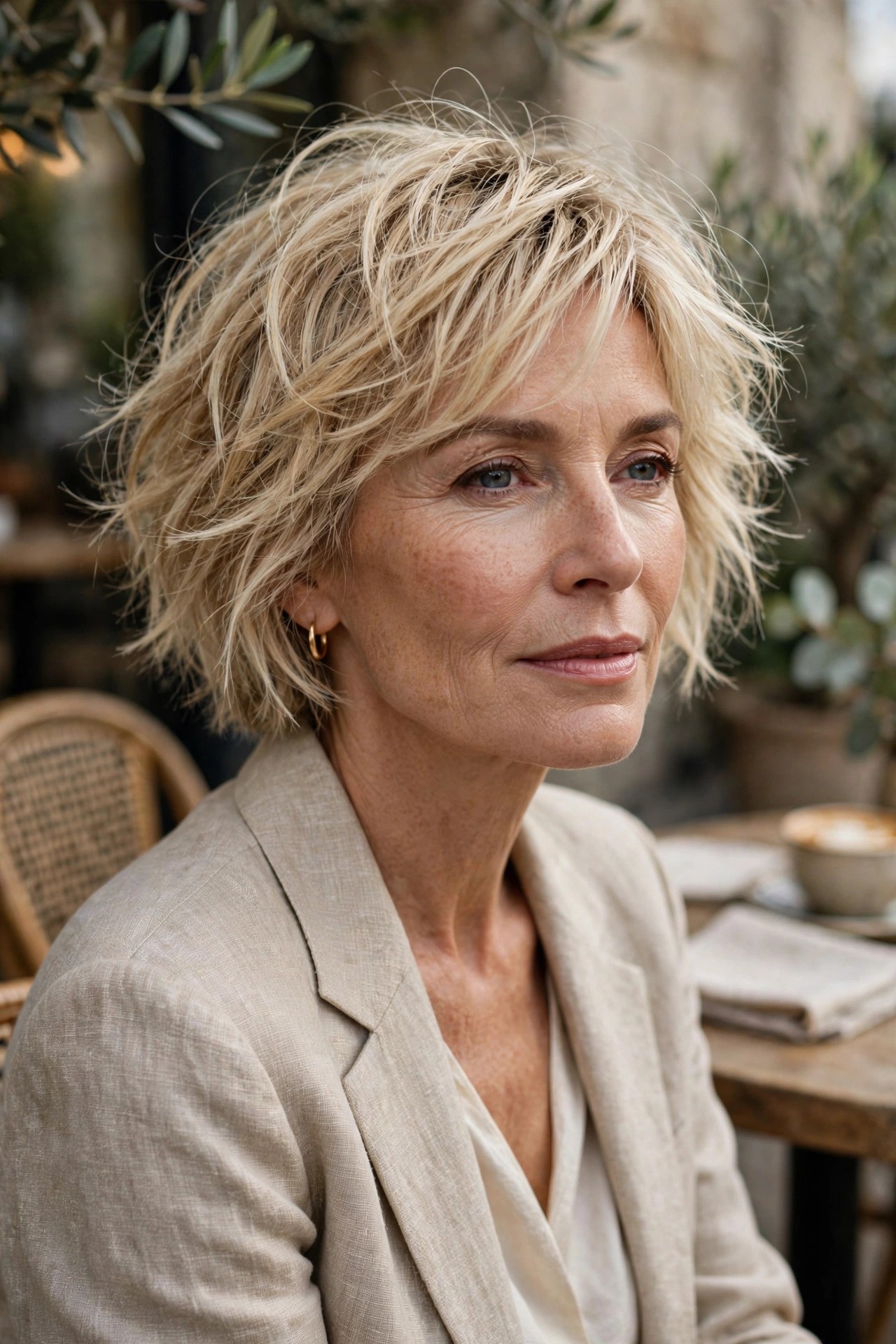
Tousled, separated, artfully undone — but every ‘random’ piece is placed. The chaos is controlled so fine hair looks abundant rather than messy. It is the difference between bedhead and designed bedhead, and the difference is everything.
Try this: Salt spray + scrunch + hands-off — the holy trinity of controlled chaos.
Best for: Casual lifestyles and lovers of the undone look.
Styling tip: the chaos needs a good cut underneath — don’t try this with a grown-out bob.
26. 💈 The Roller-Set Bob
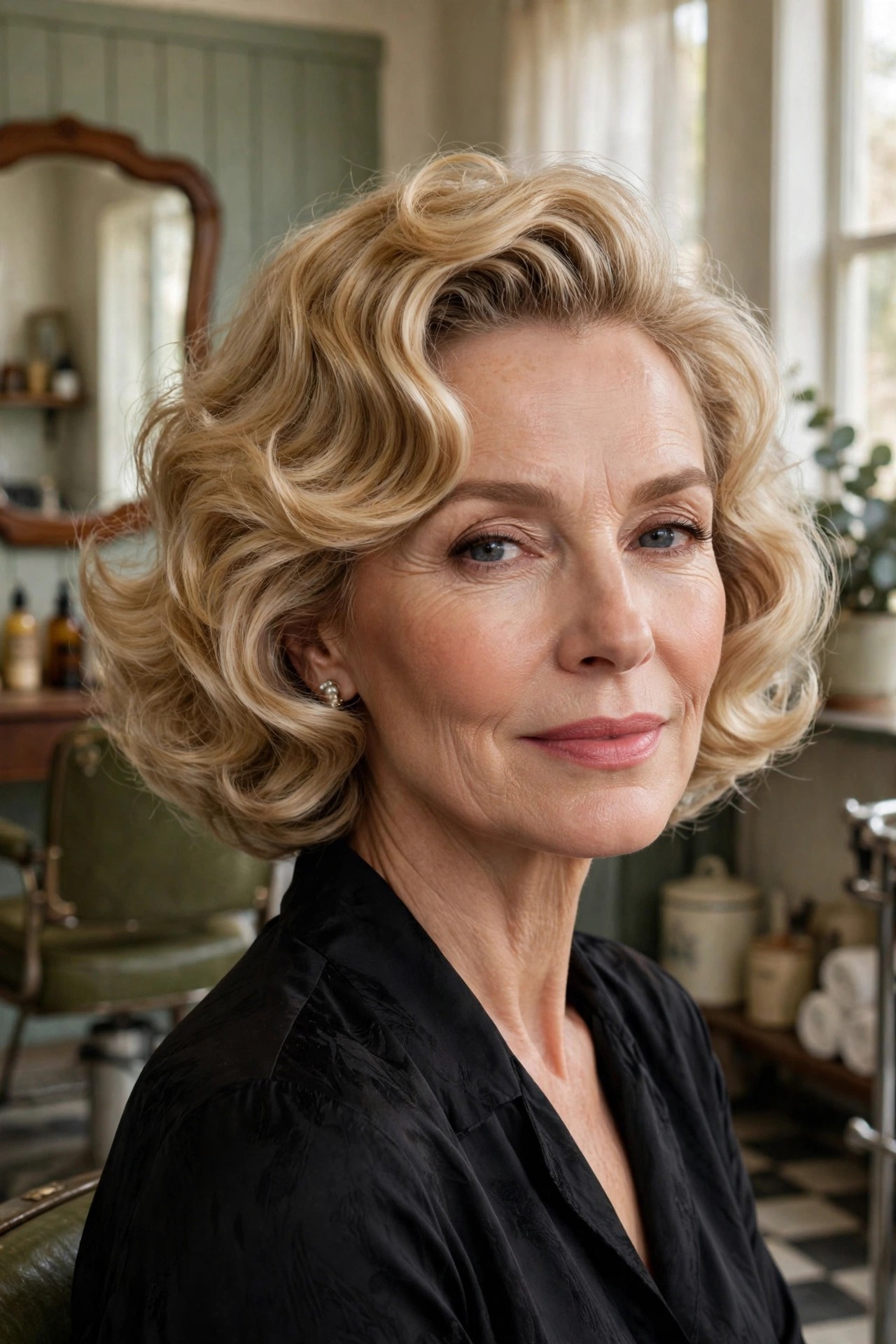
Old-school rollers meet modern choppy texture: the cut is designed to take a roller set beautifully, giving fine hair that bouncy, salon-weekly volume our grandmothers enjoyed. Vintage technique, current shape — and nothing beats rollers for lasting lift on fine hair.
Try this: Hot rollers for 15 minutes, cool completely before removing — patience pays.
Styling tip: set on dry hair with a little setting spray for longest hold.
Avoid: brushing out the set — finger-comb only to keep the bounce.
❓ Thin Fine Hair Choppy Bob FAQs
Will choppy layers make my thin hair look even thinner?
Only if they’re cut aggressively. The rule for fine hair: texture on the surface, weight at the perimeter, and absolutely no thinning shears through the ends. A skilled stylist removes bulk strategically — never randomly — so the shape keeps its density.
Should I get bangs if my hair is thin and fine?
Light ones, yes. A heavy blunt fringe eats up too much of your density, but wispy, piecey, or eye-framing texture around the face adds interest without costing fullness. The Eye-Frame Bob on this list is built exactly for this.
Blunt or choppy — which is better for fine hair?
The honest answer: a hybrid. Blunt perimeters fake thickness at the ends; choppy texture adds movement on top. Most of the best cuts here combine both — solid baseline, textured surface. Ask for the Blunt-Chop Hybrid by name.
How do I add volume without teasing every day?
Cut for it instead: interior support layers, root-shadow color, and upside-down drying do the daily work. Teasing is a styling choice, not a requirement — the Scaffold Bob and Upside-Down Bob are engineered to skip it.
What products do fine-haired bobs actually need?
Less than you think: a root-lifting spray or volumizing powder, a lightweight texture spray, and dry shampoo. Skip heavy oils, thick creams, and anything labeled ‘smoothing’ at the roots — they all flatten the architecture your cut built.
📖 Keep Reading
- 18 Proven Ways To Grow Thicker Hair (No Thickening Spray Required) — pair the right cut with genuinely fuller hair.
- ✂️ 22 Pixie Bob Haircut Ideas for a Fresh Seasonal Change — even shorter options that maximize fine hair.
- 12 Hair Growth Tips That Actually Work (Not Just TikTok Hype) — real strategies for stronger, thicker-feeling hair.
✅ Your Fuller-Hair Checklist
- ☐ Tell your stylist: solid perimeter, surface texture only, no thinning shears.
- ☐ Decide your fullness strategy: density illusion, root lift, or color dimension — or all three.
- ☐ Add dimension to your color — flat single-process color thins the look.
- ☐ Learn the 90-second upside-down dry; it’s the highest-ROI habit in this article.
- ☐ Book trims every 6–8 weeks — precision perimeters show grow-out fastest.
- ☐ Judge the cut on day 3, not day 1 — fine-hair bobs settle into their best selves.
Thin, fine hair isn’t a limitation — it’s a material with specific properties, and now you know how to engineer around them. Take these mechanics to your stylist, pick your fullness strategy, and enjoy the shock of hair that finally looks like more.
Discover more from Fashinate Style
Subscribe to get the latest posts sent to your email.