

12 Hair Growth Tips That Actually Work (Not Just TikTok Hype)
Most viral hair advice promises inches in a week, but real growth happens on a much slower, quieter schedule. These hair growth tips skip the hype and focus on the habits that genuinely support your follicles: feeding them well, keeping the scalp clean and calm, and protecting the length you already have.
Inside, the twelve tips move from the inside out — nutrition and stress first, then scalp care, oils and massage, an honest look at supplements and microneedling, and the sleep and styling habits that stop breakage undoing your progress. If thinning is your main concern, our guide to grow thicker hair naturally pairs well with this one.
One thing matters more than any single product: time. Hair grows in cycles, and a new routine needs three to six months before you can judge it fairly. The women who see real change are rarely the ones who tried everything — they are the ones who picked a few sensible habits and repeated them.
So treat this list like a menu, not a prescription. Choose the three or four tips that fit your life, build them into your week, and take a photo of your parting and hairline today — it is far more reliable than memory when you check back in a few months.
Table of Contents
- 1. Get Your Nutrition Right First
- 2. Manage Your Stress Levels
- 3. Clarify Your Scalp Regularly
- 4. Add Rosemary Oil To Your Routine
- 5. Give Your Scalp A Gentle Massage — With Caution
- 6. Book A Professional Scalp Analysis
- 7. Take Collagen Supplements
- 8. Try A Biotin Supplement
- 9. Consider Scalp Microneedling
- 10. Switch To Silk Or Satin For Sleep
- 11. Stick To A Regular Trim Schedule
- 12. Minimize Heat Styling And Protect Your Ends
- Styling Tips
- Common Mistakes to Avoid
- Signs Your Hair Growth Routine Isn’t Working
- Frequently Asked Questions
1. Get Your Nutrition Right First

Hair is built from protein, and follicles are among the fastest-dividing cells in the body, so they feel a poor diet early. Too little protein — or low iron, vitamin D or zinc — and the body prioritises other things; shedding is often how the shortfall shows up.
Food first is the honest order of operations. Eggs, fish, Greek yoghurt, lentils, leafy greens, nuts and seeds cover protein, iron, zinc and healthy fats. The bowl in the photo is a good template: eggs and salmon for protein, spinach for iron, avocado, walnuts and seeds for fats and zinc.
If you shed more than usual while eating well on paper, ask your doctor for a blood test rather than guessing at supplements. Low ferritin and vitamin D are common, correctable causes.
Tip: Build each meal around a palm-sized portion of protein, and pair iron-rich plant foods with vitamin C — peppers or citrus with spinach, for example — to help absorption.
2. Manage Your Stress Levels

Stress-related shedding is real, and sneaky: a difficult few months can push more follicles than usual into their resting phase, and the extra hair falls out two to three months after the stressful period itself — long after most of us stopped connecting the two.
You cannot remove every stressor, but you can lower the background level. Sleep is the big one — repair happens overnight — followed by daylight walks, regular meals and whatever genuinely unwinds you, whether that is ten quiet minutes with closed eyes, as in the photo, or an hour in the garden.
Shed heavily or for a long stretch, though, or notice fatigue alongside it, and book a doctor’s appointment. Stress is sometimes the label we give symptoms that turn out to be thyroid or iron problems.
Tip: Protect your sleep first — a consistent wind-down and wake time does more for stress shedding than any supplement marketed for it.
3. Clarify Your Scalp Regularly
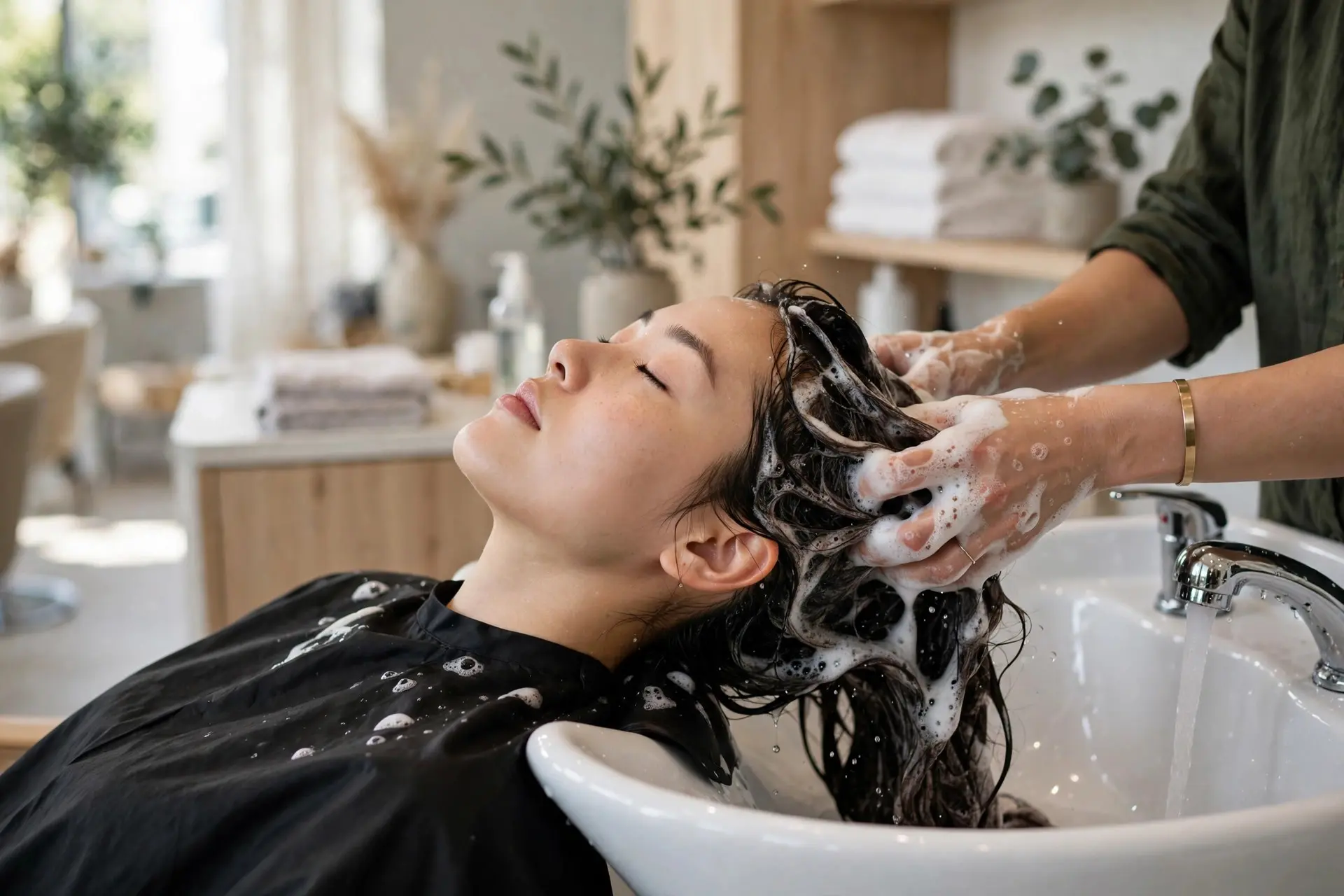
Between styling products, dry shampoo, hard water and your scalp’s own oils, a film quietly builds up at the roots. Follicles under that layer are not in the clean, calm environment where hair grows best, and build-up can leave the scalp itchy and flaky too.
A clarifying shampoo is the reset button. Used every two to four weeks — or whenever hair feels coated and limp at the roots — it strips the residue your regular shampoo leaves behind. Think of the salon wash in the photo: thorough, root-focused, not an everyday event.
Balance is the caution: clarifying too often can leave fragile lengths parched, so follow with conditioner through the mid-lengths and ends. Coloured hair does best with a colour-safe formula and a slightly longer interval.
Tip: Clarify on the wash before you start any new scalp oil or serum — products absorb far better onto a clean scalp than through a layer of build-up.
4. Add Rosemary Oil To Your Routine

Rosemary oil is one of the few social-media favourites with any research behind it: one small, often-quoted study found it performed comparably to a common growth treatment over six months. Promising, but still early evidence — treat it as a sensible, low-cost habit, not a guaranteed regrowth cure.
Used properly, it is simple. The essential oil is strong, so dilute a few drops in a carrier oil such as jojoba or argan rather than applying it neat, and patch-test first. Work it into the scalp with your fingertips and leave it at least thirty minutes — or overnight — before washing.
Consistency is the whole game: twice a week for six months tells you far more than a fortnight of daily use followed by giving up. If your scalp reacts with itching or flaking, stop — irritation works against growth.
Tip: Keep the bottle where you will actually use it — beside your evening skincare — and treat application nights as fixed appointments, not good intentions.
5. Give Your Scalp A Gentle Massage — With Caution
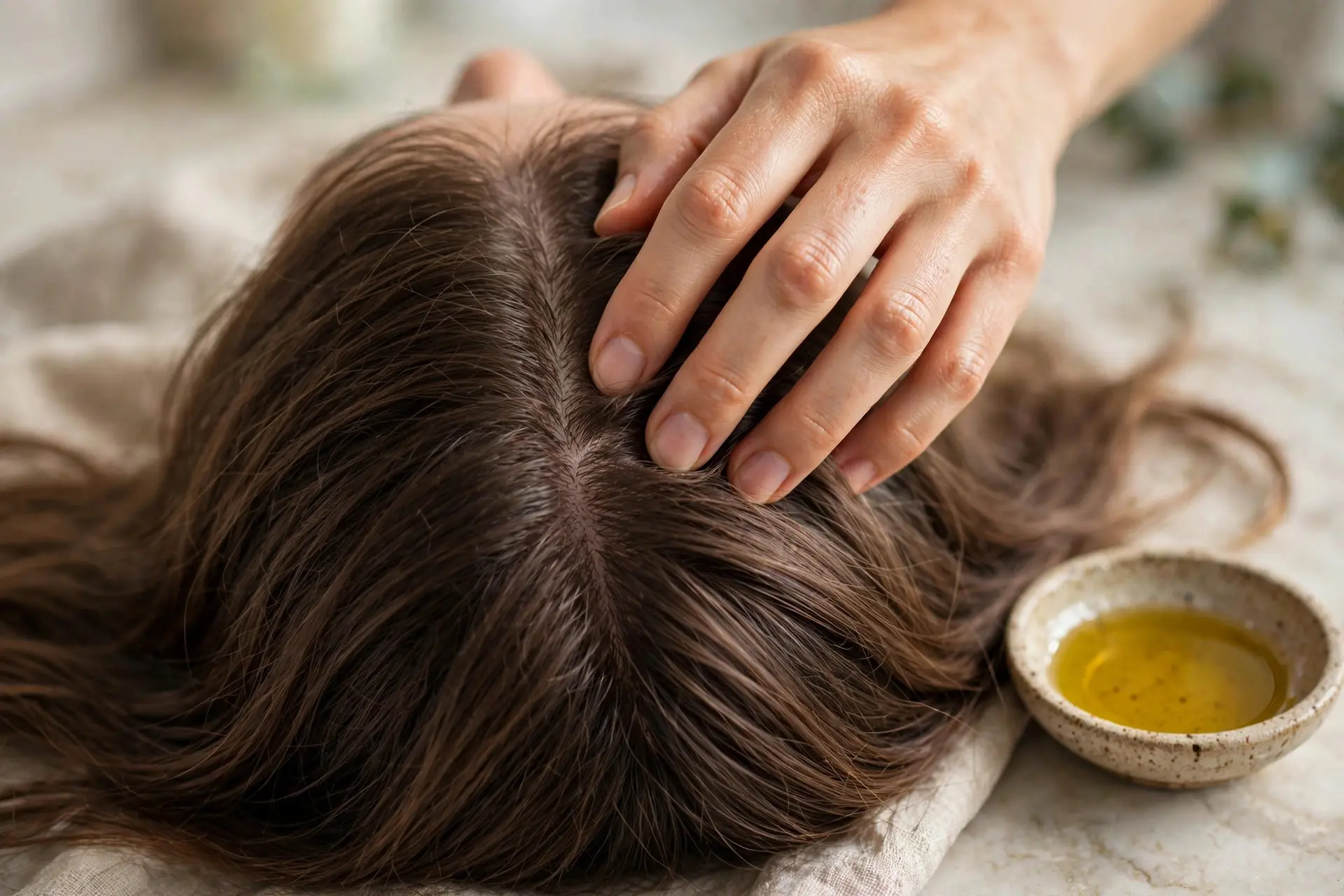
A gentle scalp massage feels wonderful and may help modestly: fingertips worked over the scalp increase local blood flow, and some small studies link regular massage with slightly thicker-feeling hair over time. Five to ten minutes, a few times a week, is plenty.
Technique matters more than pressure. Use the pads of your fingers — never your nails — in small circular movements, ideally with a little lightweight oil to reduce friction. The photo shows the right idea: unhurried, flat fingertips, no scrubbing.
Now the caution in the heading. If your hair is currently shedding in clumps, or your scalp is sore, inflamed or flaky, skip the massage and get the underlying issue looked at first. Vigorous rubbing on a struggling scalp can loosen more hairs and make a stressful situation look worse.
Tip: Attach the habit to something you already do — massage while your conditioner sits in the shower, and it costs you no extra time at all.
6. Book A Professional Scalp Analysis
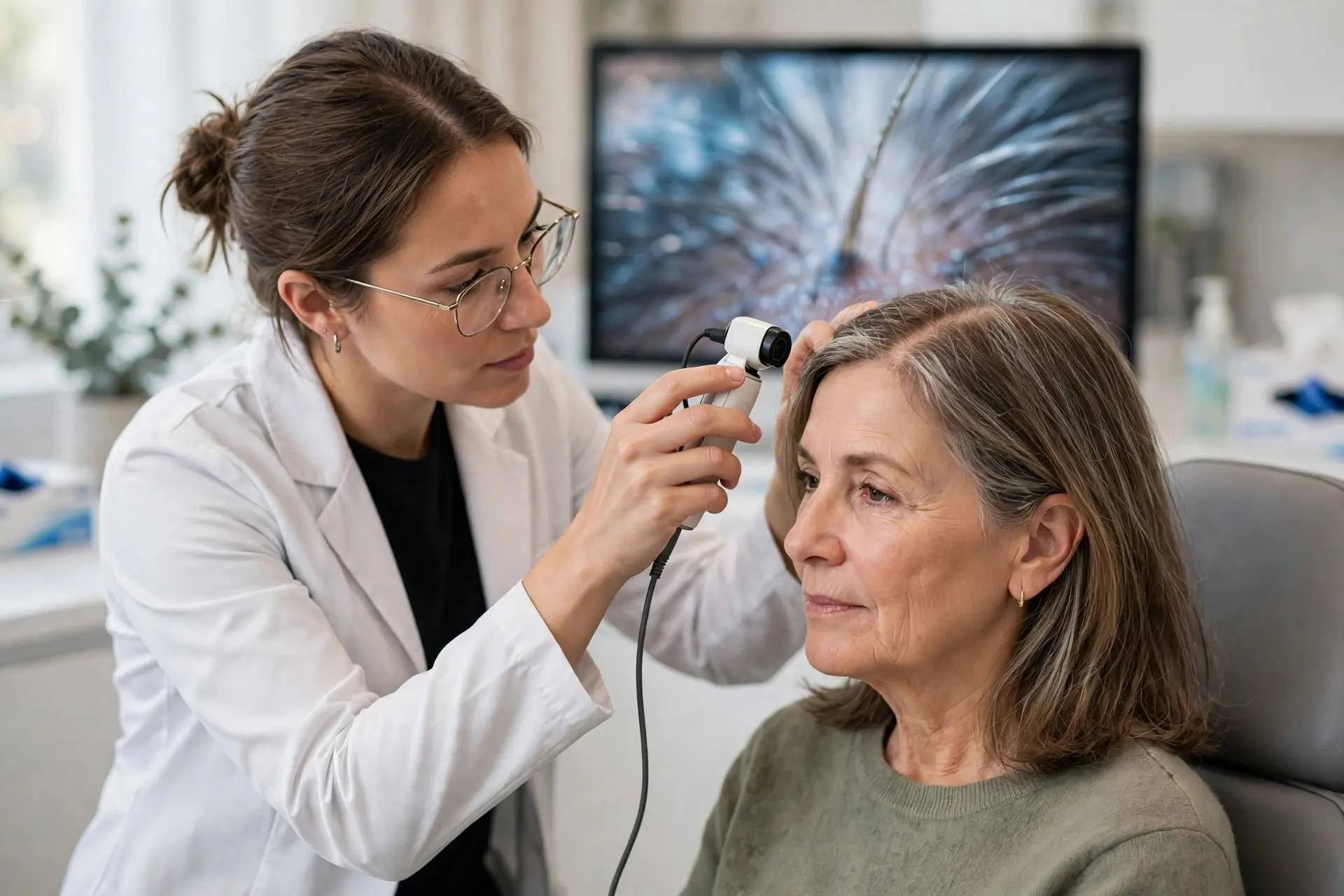
Sometimes the most useful growth step is not another product but a proper look. In a professional scalp analysis, a trichologist or dermatologist examines your scalp under magnification — as in the photo — checking follicle density, miniaturisation, and conditions like seborrhoeic dermatitis that quietly sabotage growth.
Different problems need completely different responses: a scalp condition needs treatment, a hormone-driven pattern needs a medical conversation, and simple build-up needs a clarifying shampoo. Guessing wrong can waste a year; an hour in the chair replaces guesswork with a picture.
It is also a baseline. Measurements and magnified photos taken now let you tell, six months later, whether your routine is genuinely working — instead of relying on how your hair feels on the day.
Tip: Take a list of your medications and supplements, and any recent blood results, to the appointment — they are often the missing piece of the puzzle.
7. Take Collagen Supplements

Collagen gives skin — including your scalp — its structure, and production slows with age, which is why collagen peptides are so popular. Honestly, though, the body breaks collagen into amino acids and uses them where needed, and direct evidence that it grows hair is still limited and largely anecdotal.
That does not make it pointless. If your protein intake is low, the powder is an easy top-up, and many women report stronger nails and happier skin alongside. Hydrolysed peptides are the usual form — they dissolve cleanly into coffee, smoothies or water, as in the photo.
Keep expectations sensible: a typical serving is 5–10 grams a day, vitamin C alongside helps the body build its own collagen, and three to six months is a fair trial. Treat it as background support for a good diet — and check with your doctor first if pregnant or on regular medication.
Tip: Judge collagen by monthly photos of your parting and hairline, not daily mirror checks — change is too gradual to see any other way.
8. Try A Biotin Supplement

Biotin — vitamin B7 — plays a genuine role in producing keratin, the protein hair is made from, which is why it headlines so many hair supplements. The part the adverts skip: true deficiency is uncommon in anyone eating a varied diet, and supplementing helps most clearly when a deficiency is actually the problem.
One more thing every user should know. High-dose biotin can interfere with common blood tests, including thyroid and some heart markers, and skew the results. Tell your doctor and the lab before blood work — they may ask you to pause it for a few days beforehand.
If a blood test shows you are low, or your doctor suggests it, a modest-dose supplement taken with food is a reasonable experiment — gummies like those in the photo are a popular form. Buy it with eyes open: support for a routine, not the engine of it.

Tip: Before spending on biotin, spend on the blood test — eggs, nuts and seeds may already have your intake covered.
9. Consider Scalp Microneedling
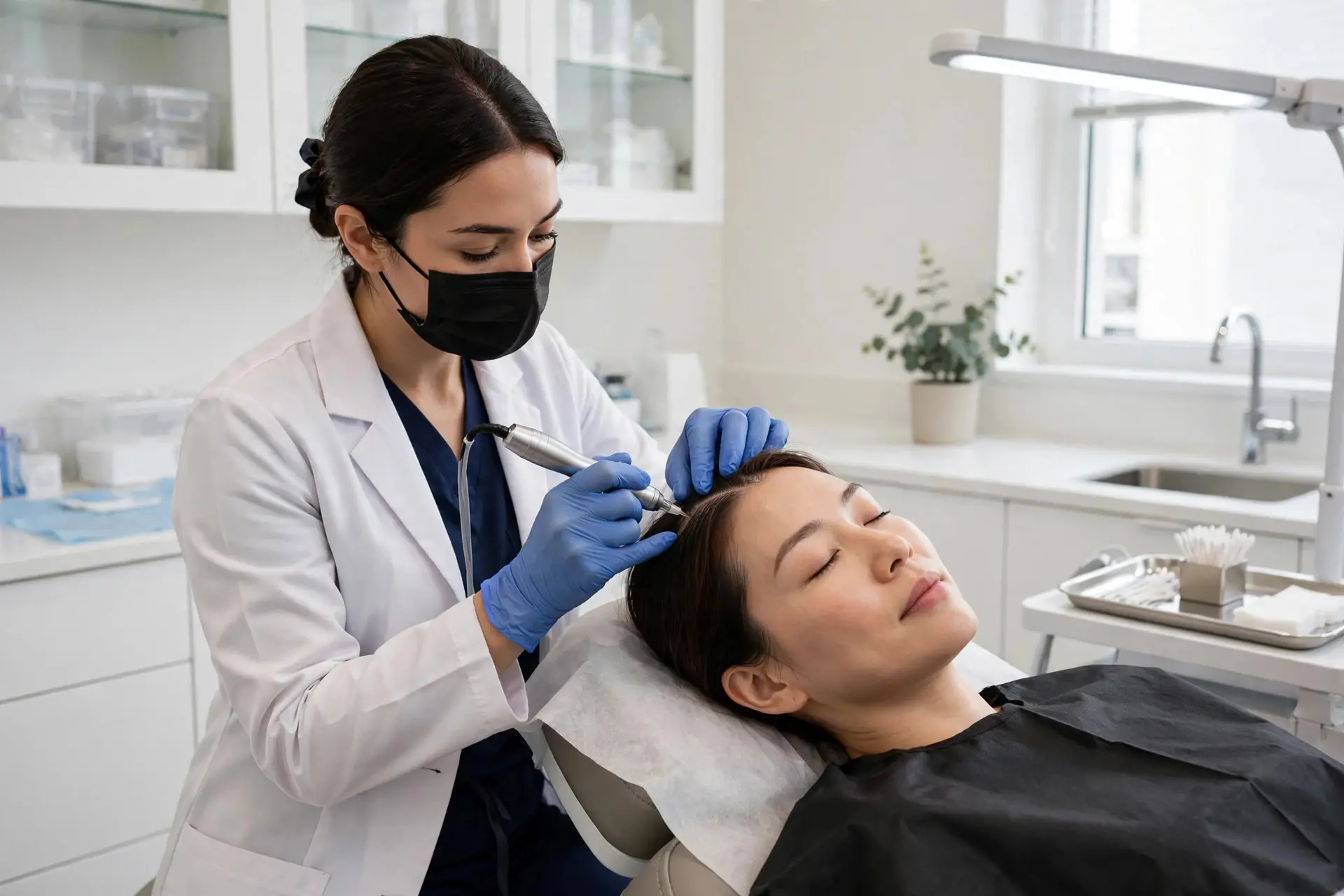
Microneedling makes thousands of tiny, controlled punctures in the scalp, thought to trigger a healing response and help topical treatments absorb better. It is the most “clinical” idea on this list, and while early results are interesting, the evidence is still developing — a considered step, not a starter habit.
Treat it as a professional treatment. In a clinic, like the session in the photo, depth, hygiene and suitability are controlled by someone trained. Cheap at-home rollers are a different proposition: poor sanitation risks infection, and the wrong depth can inflame or even damage follicles.
It is not for every scalp, either. Active dandruff, eczema, psoriasis, irritation or unexplained shedding are all reasons to see a dermatologist first — sometimes they are the very things causing the hair problem.
Tip: If microneedling appeals, spend your first money on a consultation, not a device — an expert may find a simpler cause that treatment would have missed.
10. Switch To Silk Or Satin For Sleep

This tip grows nothing — and it might change your results most visibly. Cotton pillowcases grip hair; over a night of turning, that friction roughs up the cuticle, tangles lengths and snaps fragile ends. Length you keep is indistinguishable from length you grow.
Silk and satin let hair glide instead of catching, so you wake with smoother lengths and fewer tangles — the photo shows the idea exactly, hair spread over a champagne silk case rather than bunched against cotton. Silk also absorbs less of your leave-in products, so more stay in your hair.
Mulberry silk is the classic choice, a good satin case is the budget-friendly equal, and a satin bonnet protects just as well if you move around at night. Wash the case weekly — it sits against your scalp for eight hours.
Tip: Pair the pillowcase with a loose braid or a soft topknot, and friction drops twice over — glide at the surface, no tangling in the lengths.
11. Stick To A Regular Trim Schedule
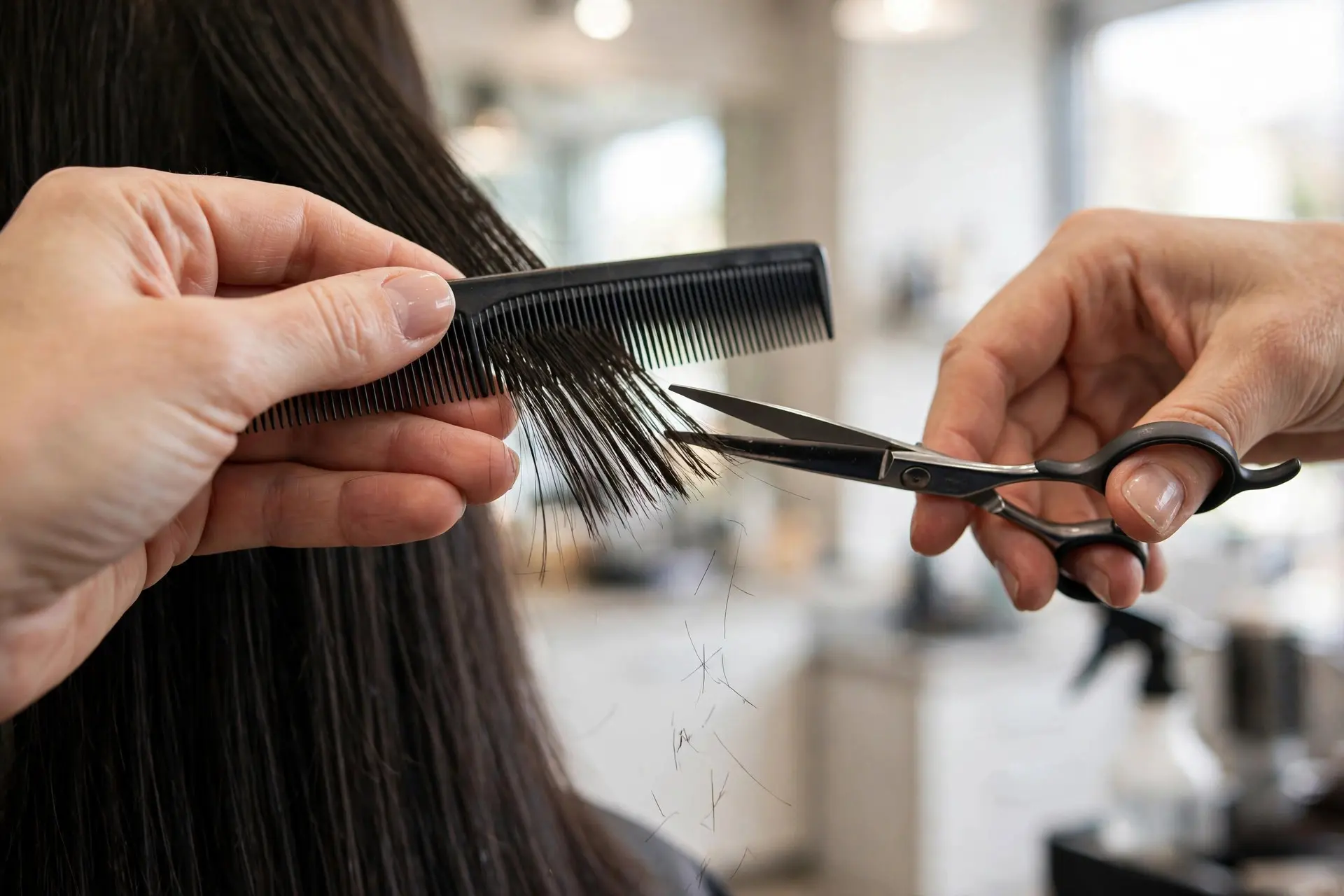
Trims do not make roots grow faster — no scissors can do that — but they decide how much growth you actually keep. A split end does not heal; left alone it travels up the shaft, thinning and snapping the strand until it costs you far more length than a trim ever would.
The grow-it-out solution is the dusting trim: only the frazzled last few millimetres come off, as in the photo, keeping your length while removing the splits. Every eight to twelve weeks suits most people — sooner if you heat-style often, since styled ends fray faster.
The trick is communication. Say “dusting, not a cut”, agree the amount before the scissors come out, and judge by how your ends feel — blunt, smooth and tangle-free rather than wispy and see-through.
Tip: Book the next dusting before you leave the salon — a standing appointment is the difference between a trim schedule and a vague intention.
12. Minimize Heat Styling And Protect Your Ends
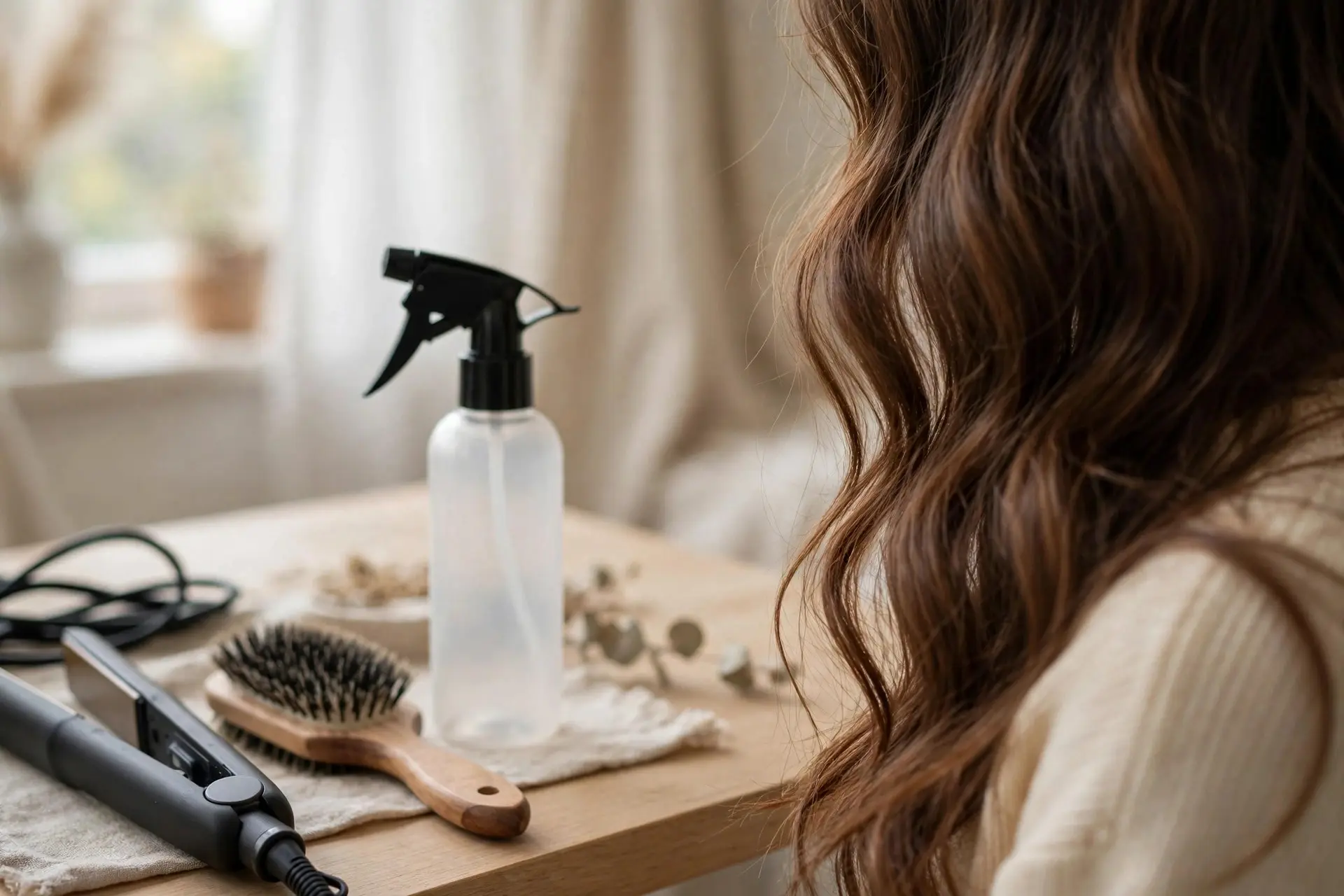
Your ends are the oldest part of your hair — on long hair, several years old — and repeated high heat gradually breaks down the protein that keeps them strong. The result is the pattern so many women know: hair that grows at the root but never gets past the shoulders.
You do not have to give up styling. Turn temperatures down (most hair smooths well below maximum), air-dry most of the way first, keep iron passes few, and always use a heat protectant on styling days. The photo has the right priorities: protectant within reach, iron parked to one side.
Give ends their own small routine, too: a pea-sized amount of leave-in conditioner or a drop of oil over the last few inches on non-wash days keeps them supple — and supple ends bend instead of snapping.
Tip: Build two or three heat-free styles you genuinely like — a braid, a low bun, a waved air-dry — so skipping the iron feels like a choice, not a sacrifice.
Styling Tips
Give the week a rhythm. Growth habits stick when they have a slot: wash days for clarifying or masks, two fixed evenings for oil and massage, trims booked ahead. A routine you can describe in one sentence is a routine you will still be doing in month four.
Layer habits in, don’t launch them all. Starting twelve changes in one Monday is how routines die by Friday. Add one habit every week or two — silk pillowcase first, say, then massage — and let each settle before the next arrives.
Track with photos, not feelings. On the first of each month, photograph your parting, hairline and lengths in the same light. Hair grows about half an inch a month; photos catch what mirrors and moods miss, and they stop you abandoning a working routine too early.
Protect the length you have. While you wait for growth, treat existing hair gently: detangle from the ends upward with conditioner in, keep styles loose rather than scraped tight, and avoid wearing the same tight ponytail in the same spot every day.
Common Mistakes to Avoid
Expecting results in a fortnight. Hair cycles run in months. Judging any tip before three months — six for supplements — mostly measures your impatience, not the product. Set a review date when you start and keep it.
Copying a viral routine wholesale. A stranger’s ten-step stack was built for their hair, their scalp and their sponsorships. Borrow single ideas, test them one at a time, and drop whatever your own scalp dislikes.
Megadosing supplements without checking. More is not better with vitamins: excess biotin can distort blood-test results, and a supplement taken for a deficiency you do not have does nothing for your hair. Test first, then supplement the gap.
Skipping trims out of fear. Refusing all scissors for a year usually ends with a bigger, sadder cut when the splits win. Small dustings protect the length you are working so hard to grow.
Adding products when you should be asking questions. Shedding in clumps, bald patches, or a scalp that stays itchy and flaky are not product problems. They are signals to see a professional — the next section explains how to read them.
Signs Your Hair Growth Routine Isn’t Working
Give any routine a fair trial — a few consistent months — but if you have been faithful and still see no progress, the answer is rarely “add another product”. It is to look for warning signs that something deeper needs attention. Losing some hair daily is normal; losing it by the handful is not.
The signs worth acting on are specific: shedding that comes out in clumps, in the shower or on the pillow; a scalp that stays persistently itchy, flaky or sore despite gentle care; and hair that feels more brittle month by month even though your routine is kind. Each of those points away from products and towards causes.
Those causes are usually identifiable and often fixable — a nutrient deficiency a blood test can name, a scalp condition a trichologist can treat, a medication or hormone shift a doctor can review. Booking that professional appointment is not giving up on your routine; it is the step that makes the rest of it capable of working.
Frequently Asked Questions
How long does it actually take to see hair growth results?
Plan on three to six months of consistent effort. Hair grows around half an inch a month, and follicles that were resting need time to re-enter their growth phase, so the first visible signs are usually new baby hairs at the hairline and a parting that photographs denser — long before you see extra length.
Can I use rosemary oil and scalp massage together?
Yes — the two pair naturally, and massaging diluted rosemary oil in with your fingertips is how most people apply it. Keep the massage gentle, use the pads of your fingers rather than your nails, and hold off on both if your hair is currently shedding excessively until you have had the cause checked.
Do supplements alone help hair grow faster?
Rarely, on their own. Supplements support growth best when they are filling a genuine gap — low iron, vitamin D or protein intake, for example — and they work alongside good nutrition, stress management and scalp care, not instead of them. A blood test first turns guesswork into a plan.
Is it bad to trim hair often if I’m trying to grow it out?
No — quite the opposite. Regular light trims, or dustings, remove split ends before they can travel up the strand and cause breakage higher up, so you retain more of the length your follicles produce. Skipping trims entirely usually costs more length in the long run.
Conclusion
Strip away the hype and healthy growth is unglamorous: eat enough protein, keep your scalp clean and calm, be gentle with the length you have, and give every habit months rather than days to prove itself. Start with the three hair growth tips that fit your life this week, photograph your starting point today — and if natural, kitchen-based care appeals to you, our home remedies for hair fall are the perfect companion read. Which tip will you put first: the nutrition, the silk pillowcase, or the scalp massage?
Discover more from Fashinate Style
Subscribe to get the latest posts sent to your email.