

18 Proven Ways To Grow Thicker Hair (No Thickening Spray Required)
If you are looking for how to grow thicker hair naturally, you have probably already learned that thickening sprays and root-lifting mousses only fake fullness until the next wash. Real thickness is built somewhere else entirely: at the follicle, slowly, through what you eat and how you care for your scalp.
That is actually good news, because it means thicker hair is not locked inside an expensive bottle. It is the combined result of steady nutrition, a healthy scalp environment and daily habits that protect the strands you already have instead of quietly wearing them down.
This guide brings together eighteen practical ways to support fuller-looking hair, from the nutrients your follicles rely on to simple kitchen treatments and gentler styling habits. If thinning strands are your main worry, our guide to home remedies for hair fall makes a natural companion read.
You do not need to adopt all eighteen at once. Pick the handful that fit your real routine, give them three to six months of consistency, and let the small changes compound. Hair grows slowly, but it responds remarkably well to being looked after.
Table of Contents
- 1. Prioritize Protein In Every Meal
- 2. Load Up On Omega-3 Fatty Acids
- 3. Add Collagen To Your Routine
- 4. Give Biotin Supplements A Try
- 5. Don’t Skip Your Daily Zinc
- 6. Massage Your Scalp — Gently
- 7. Use Nourishing Oils During Your Massage
- 8. Try A Rice Water Rinse
- 9. Whip Up An Egg Yolk Mask
- 10. Consider An Onion Juice Treatment
- 11. Get Your Washing Routine Right
- 12. Protect Your Hair From Heat Damage
- 13. Stick To A Regular Trim Schedule
- 14. Limit Chemical Treatments
- 15. Rule Out A Nutritional Deficiency
- 16. Switch To Silk Or Satin Overnight
- 17. Ease Up On Tight Hairstyles
- 18. Try A Caffeine-Infused Scalp Serum
- Styling Tips
- Common Mistakes to Avoid
- Common Habits That Are Secretly Thinning Your Hair
- FAQs
1. Prioritize Protein In Every Meal

Hair is made of keratin, which is a protein — so when protein runs low in your diet, your strands are often the first place it shows. Hair that feels weak, fine and slow to grow is frequently a sign that your follicles simply are not getting enough raw material to build with.
The fix is refreshingly ordinary: make protein a fixture of every meal rather than an occasional guest. Eggs, chicken, fish, lean beef, lentils, Greek yogurt and quinoa are all easy, affordable sources you can rotate through the week without turning eating into a chore.
Tip: Anchor the day with a protein-rich breakfast — eggs or Greek yogurt with seeds — so you are not trying to catch up on protein by dinnertime.
2. Load Up On Omega-3 Fatty Acids

Omega-3 fatty acids help keep the scalp calm and well-nourished, and a comfortable scalp is a far better growing environment than a dry, irritated one. When the scalp is balanced, follicles can get on with the business of producing strong, healthy strands.
You do not need a dramatic diet overhaul to get more of them. Salmon or another oily fish twice a week, a spoonful of flaxseed oil over salads, or chia seeds stirred into a morning smoothie all move your intake in the right direction with very little effort.
Tip: Keep a small jar of milled flaxseed by the kettle — one spoonful over porridge or yogurt each morning is the easiest omega-3 habit to keep.
3. Add Collagen To Your Routine
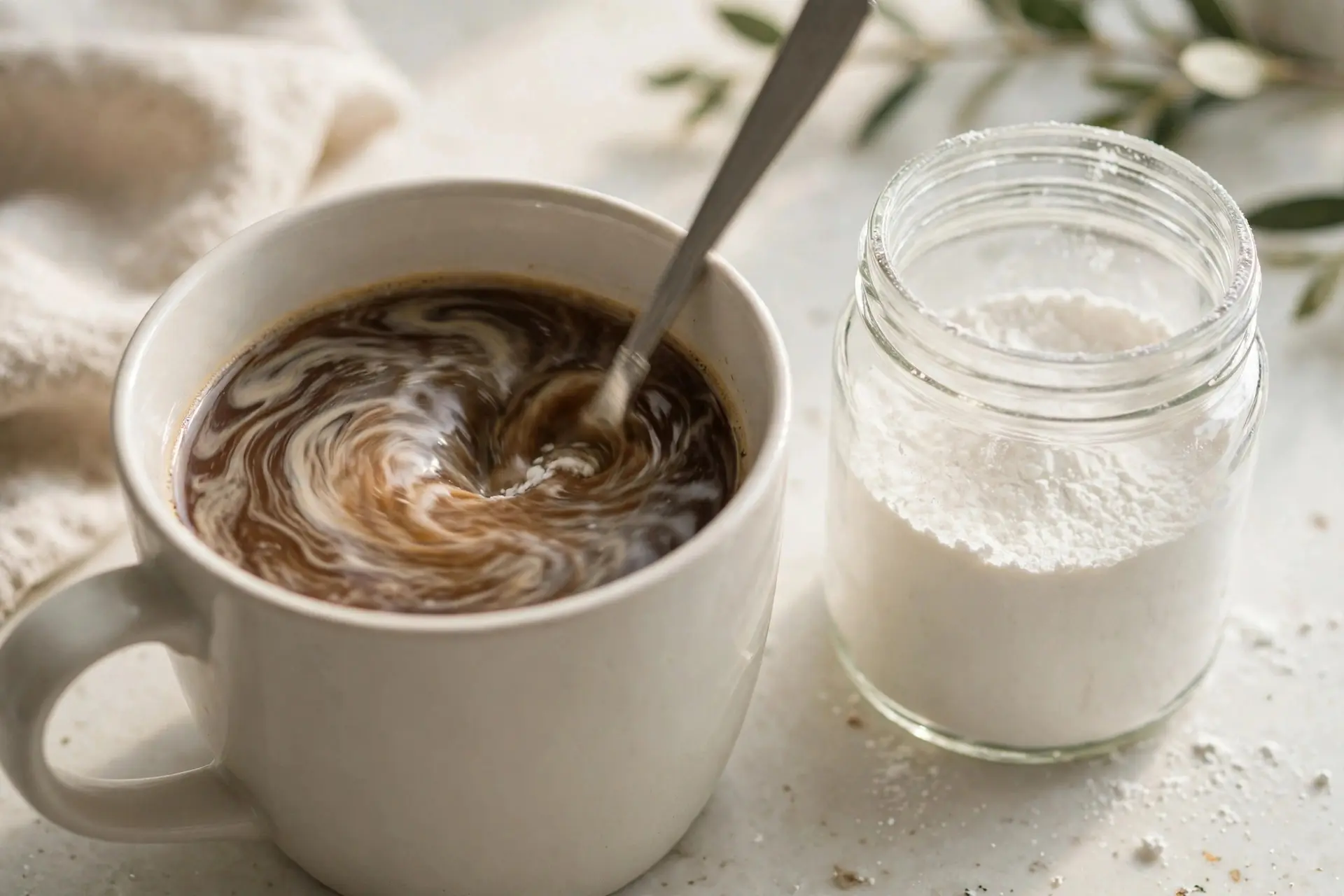
Collagen is the protein that gives skin and connective tissue their structure, and it is thought to support the scalp environment and the strength of the strand itself. Because our natural collagen production slows with age, many women find a daily top-up becomes more worthwhile over time.
The simplest route is an unflavored collagen powder stirred into morning coffee or tea, where it disappears completely. If you prefer food first, homemade bone broth used as a soup base is another traditional way to work collagen into the week.
Tip: Choose an unflavored powder — it is the most versatile, mixing invisibly into hot drinks, soups and smoothies without changing the taste.
4. Give Biotin Supplements A Try
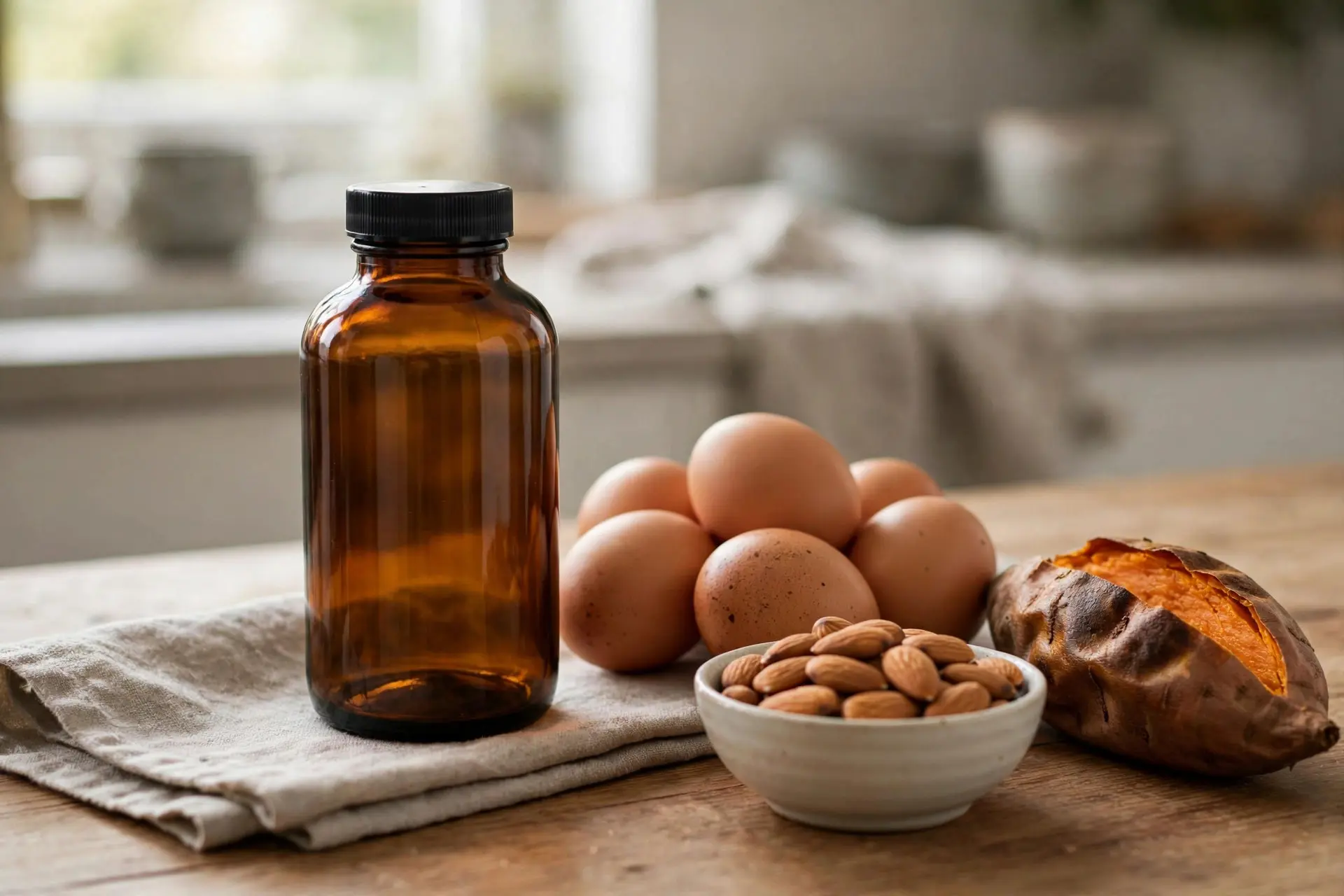
Biotin, also known as vitamin B7, plays a role in producing keratin, which is why it is one of the most talked-about nutrients for hair. Foods such as eggs, almonds and sweet potatoes all provide it, and eating them regularly is a sensible foundation.
If your levels are genuinely low, a supplement may help fill the gap — but it works best alongside a balanced diet, not instead of one. Check with your doctor before starting, so the dose is right for you and does not clash with anything else you take.
Tip: Mention any biotin supplement to your doctor before blood tests, as high doses can interfere with some lab results.
5. Don’t Skip Your Daily Zinc

Zinc helps regulate the scalp’s natural oil production and supports the tissue growth and repair that healthy follicles depend on. When zinc runs short, the scalp can become dry and flaky — not the kind of environment that supports strong, thick-looking growth.
Food keeps this simple: spinach, pumpkin seeds, chickpeas, oysters and other shellfish are all good sources. If you and your doctor decide a supplement makes sense, the usual daily range for adults is modest, and pairing zinc-rich foods with vitamin C can help absorption.
Tip: Scatter pumpkin seeds over salads, oatmeal or smoothies — it is the easiest way to make zinc a daily habit rather than an afterthought.
6. Massage Your Scalp — Gently

A gentle scalp massage encourages blood flow to the follicles, and better circulation means the nutrients from all that good food actually reach the roots. It costs nothing, takes a few minutes, and turns an ordinary evening into a small, calming ritual.
Technique matters more than enthusiasm. Use the pads of your fingertips — never your nails — and work in slow, small circles with light pressure. If your hair is currently fragile or shedding heavily, go especially softly and focus on the nutrition steps first.
Tip: Pair your massage with washing or applying oil, two or three times a week, so it slots into moments you already spend on your hair.
7. Use Nourishing Oils During Your Massage

Adding oil to your scalp massage turns a circulation boost into a treatment, delivering nourishment right where the follicles sit. It also makes the massage itself smoother, so your fingertips glide instead of dragging through the roots.
Different oils suit different goals. Rosemary oil is the one most often linked with thicker, stronger-looking growth; coconut oil is valued for helping reduce protein loss from the hair shaft; and argan oil is loved for elasticity and softness, which means less breakage. Always dilute essential oils in a carrier oil, and rotate them through the week if you like variety.
Tip: Warm a few drops between your palms first — warm oil spreads more evenly and feels far more relaxing on the scalp.
8. Try A Rice Water Rinse
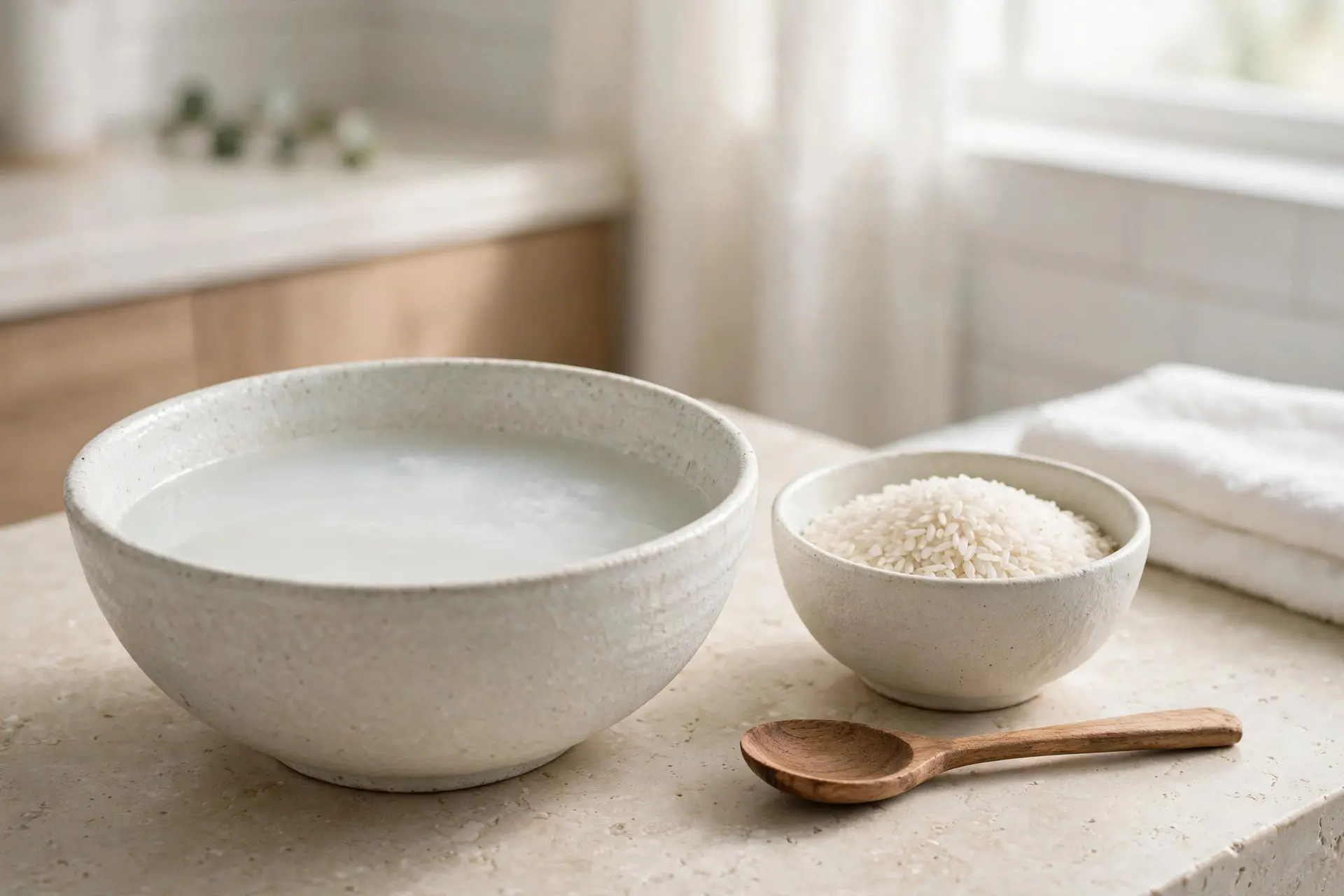
Rice water — the starchy liquid left after soaking or cooking rice — is rich in amino acids and minerals, and it has been used for generations as a strengthening rinse. Used regularly, it can help hair feel stronger and look fuller over time, and it costs almost nothing to make.
Soak half a cup of rinsed rice in two to three cups of water for about thirty minutes, strain, and use the milky liquid as a final rinse after shampooing, leaving it on for ten to fifteen minutes before rinsing out. For a stronger brew, let it ferment for a day before use.
Tip: Once a week is plenty for most hair — more often can leave protein-sensitive strands feeling stiff rather than strong.
9. Whip Up An Egg Yolk Mask
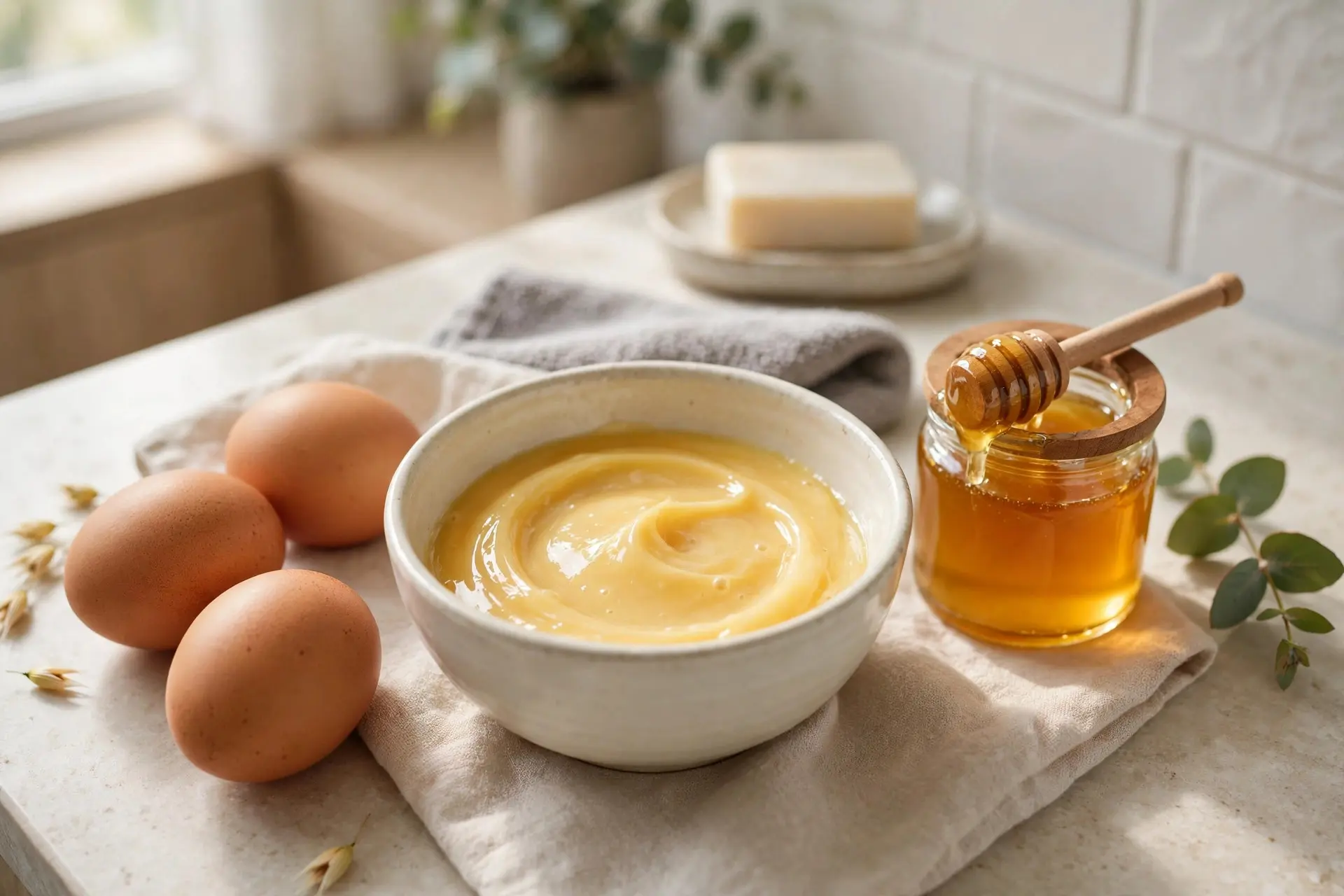
Egg yolks pack protein and biotin into one small shell, which makes them a natural fit for a strengthening hair mask. It is not the most glamorous treatment on this list, but it is one of the most satisfying — hair tends to feel noticeably softer and look shinier afterwards.
Whisk one or two yolks, work them through the scalp and lengths, and leave the mask on for fifteen to twenty minutes. A spoonful of olive oil or honey adds moisture and shine without diluting the protein. Rinse with cool water — hot water can start to cook the egg in your hair.
Tip: Follow with a gentle shampoo and a light conditioner the first time, until you learn how your own hair responds to the protein.
10. Consider An Onion Juice Treatment

Onion juice is rich in sulfur, a building block involved in collagen and keratin production, which is why this old remedy keeps resurfacing in conversations about thicker hair. It is not the sweetest-smelling treatment, but many women swear by its results.
Blend an onion, strain the juice, and apply it directly to the scalp for twenty to twenty-five minutes at most, then shampoo thoroughly. A few drops of a gentler essential oil mixed in helps soften the smell while you wear it.
Tip: Do a small patch test first and keep sessions short — onion juice is potent, and a comfortable scalp always matters more than an extra five minutes.
11. Get Your Washing Routine Right
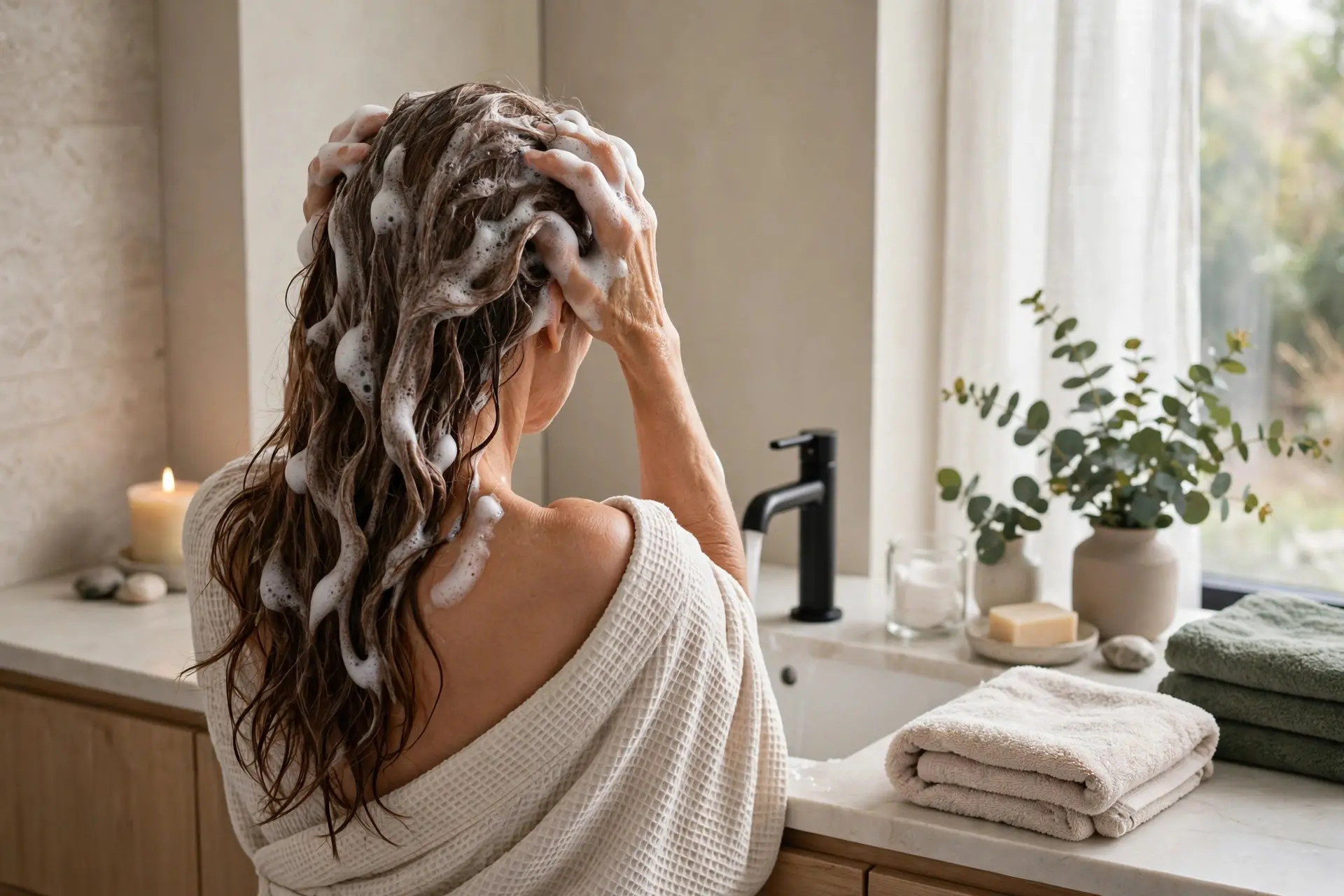
How often you wash — and how — quietly shapes how thick your hair can look. Wash too often and you strip away the natural oils that protect the scalp; wait too long and product buildup weighs strands down and leaves follicles feeling suffocated.

For most women, two to three washes a week is the sweet spot, adjusted for how oily your scalp naturally runs. Use lukewarm water rather than hot, concentrate shampoo at the scalp, and add a clarifying wash about once a month to clear away stubborn buildup.
Tip: If your lengths feel dry but your scalp gets oily, shampoo the roots only and let the rinse carry the suds through the ends.
12. Protect Your Hair From Heat Damage
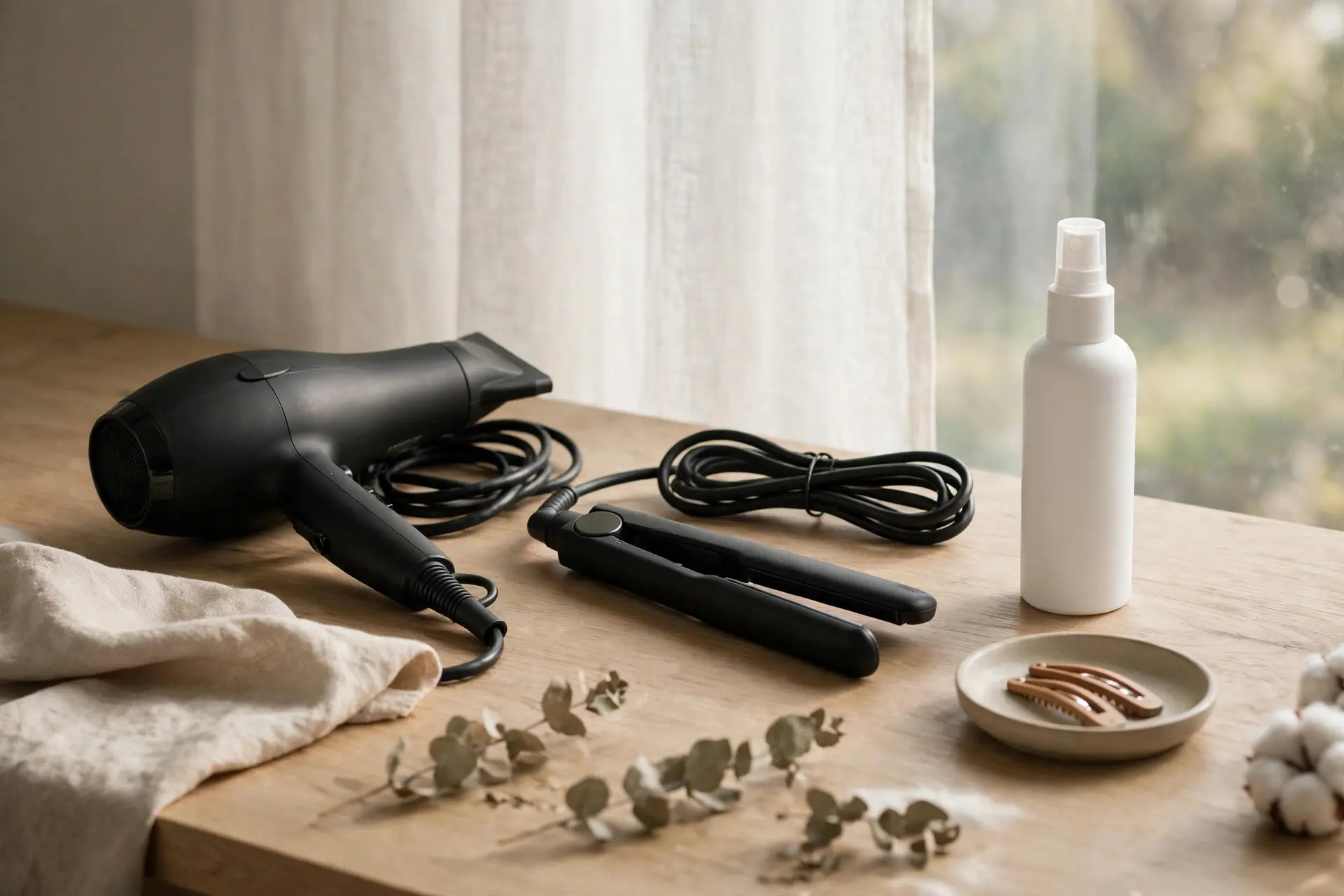
Every pass of a hot tool weakens the hair shaft a little, and weakened strands snap, fray and end up looking thinner no matter how well you eat. Protecting your hair from heat is really about protecting the thickness you are working so hard to grow.
Air-dry whenever your schedule allows, and experiment with heatless styling — braiding damp hair overnight for soft waves, or foam rollers for gentle curls. On the days you do reach for the dryer or straighteners, a heat protectant applied first is non-negotiable, and moderate temperatures beat maximum heat every time.
Tip: If you cannot comfortably hold a freshly styled strand against your cheek, the tool is too hot for your hair as well.
13. Stick To A Regular Trim Schedule
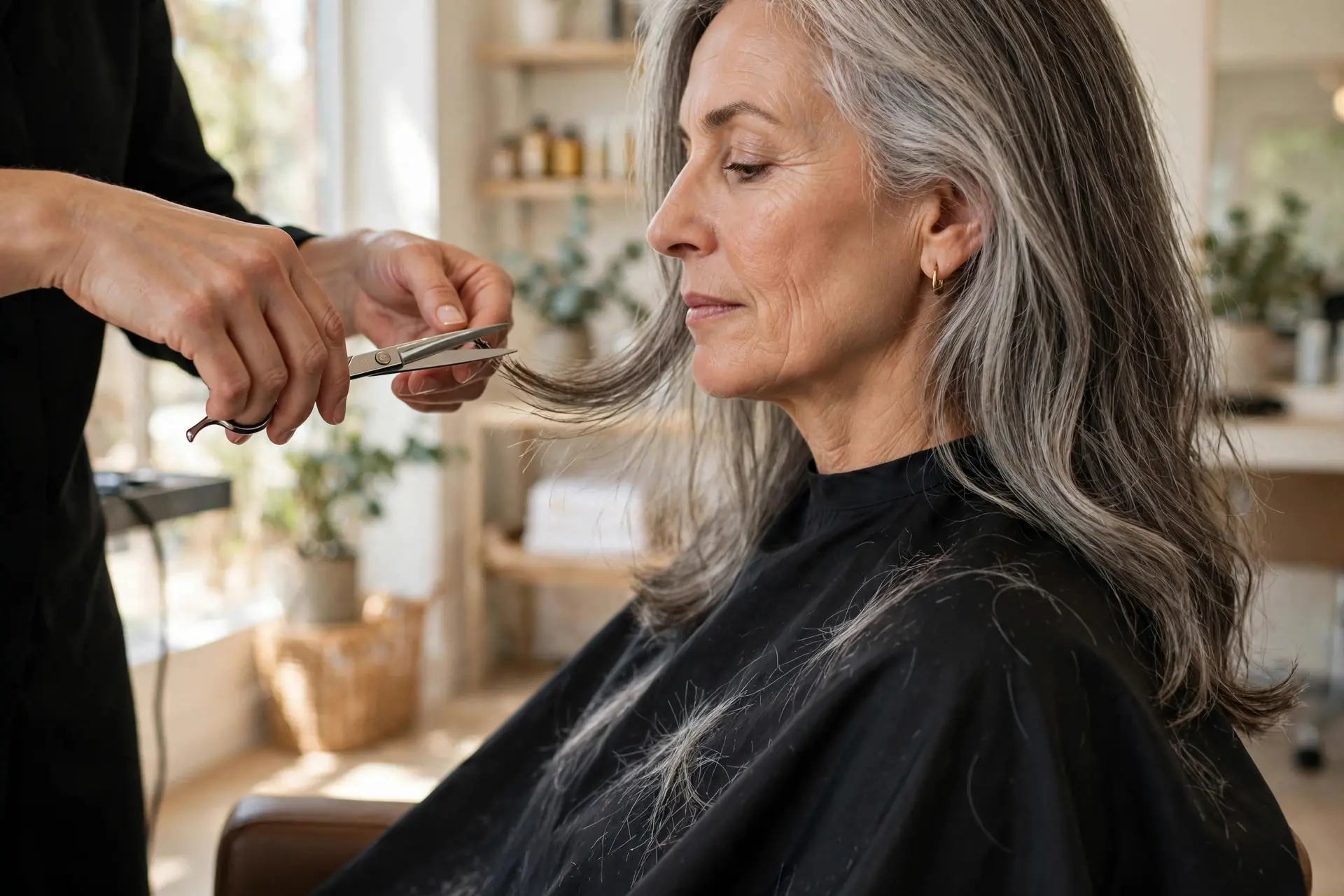
Trimming feels counterproductive when you want more hair, not less — but neglected ends undo all your good work. Split ends travel upward along the shaft, and hair that is fraying at the bottom gradually looks thin and wispy along its whole length.
A light trim roughly every twelve weeks removes damage before it spreads, so the thickness you are growing from the root survives all the way to the ends. You are not sacrificing length; you are defending it.
Tip: Ask your stylist to dust the ends only — removing split and damaged tips while keeping your overall length is exactly the brief.
14. Limit Chemical Treatments

Permanent color, relaxers and chemical straightening all work by forcing the hair shaft open, and repeated sessions leave strands weaker, more porous and far more prone to breakage. Hair that keeps snapping off will always look thinner than it really is.
Spacing chemical treatments out to just a few times a year gives your hair genuine recovery time between sessions. And if you love changing your look, gentler options exist: henna or a semi-permanent gloss can refresh color and shine with considerably less structural damage.
Tip: Never stack two chemical processes close together — give colored hair a real rest before any straightening or perm appointment.
15. Rule Out A Nutritional Deficiency

Sometimes thinning hair is not a hair problem at all. Low iron, low vitamin D and low zinc can all affect hair thickness, and no mask or serum can fully compensate for a genuine internal shortage — it is like watering a plant while ignoring the soil.
A simple blood test can show whether a deficiency is part of your picture, and it turns guesswork into a plan. If your thinning persists despite a solid routine, ask your doctor about testing rather than stacking supplements and hoping one of them is the answer.
Tip: Write down when you first noticed the change and what else shifted — sleep, stress, medication — as it helps your doctor test for the right things.
16. Switch To Silk Or Satin Overnight

A third of your life is spent with your hair pressed against a pillow, so what it rests on matters more than most of us realize. Cotton pillowcases grip and drag at strands all night, and that friction adds up to gradual breakage that quietly thins the lengths.
Switching to a silk or satin pillowcase lets hair glide instead of snagging, and swapping tight elastics for silk scrunchies removes another nightly source of friction and tension. A satin bonnet is the other easy option if you prefer your hair contained.
Tip: Wash a silk pillowcase weekly on a gentle cycle — a clean, smooth surface is what keeps the friction low night after night.
17. Ease Up On Tight Hairstyles

Slicked-back ponytails, tight buns and firm braids look polished, but worn in the same spot every day they place constant tension on the follicles — especially around the hairline and temples, where hair is finest. Over time, that strain can contribute to breakage and thinning exactly where you notice it most.
The answer is not giving up the styles you love; it is rotation. Alternate tight days with loose ones, move your part and ponytail position around, and let your scalp have regular days completely free of pulling.
Tip: A loose low ponytail or a soft claw clip gives you a tidy finish with a fraction of the tension of a high, tight pony.
18. Try A Caffeine-Infused Scalp Serum
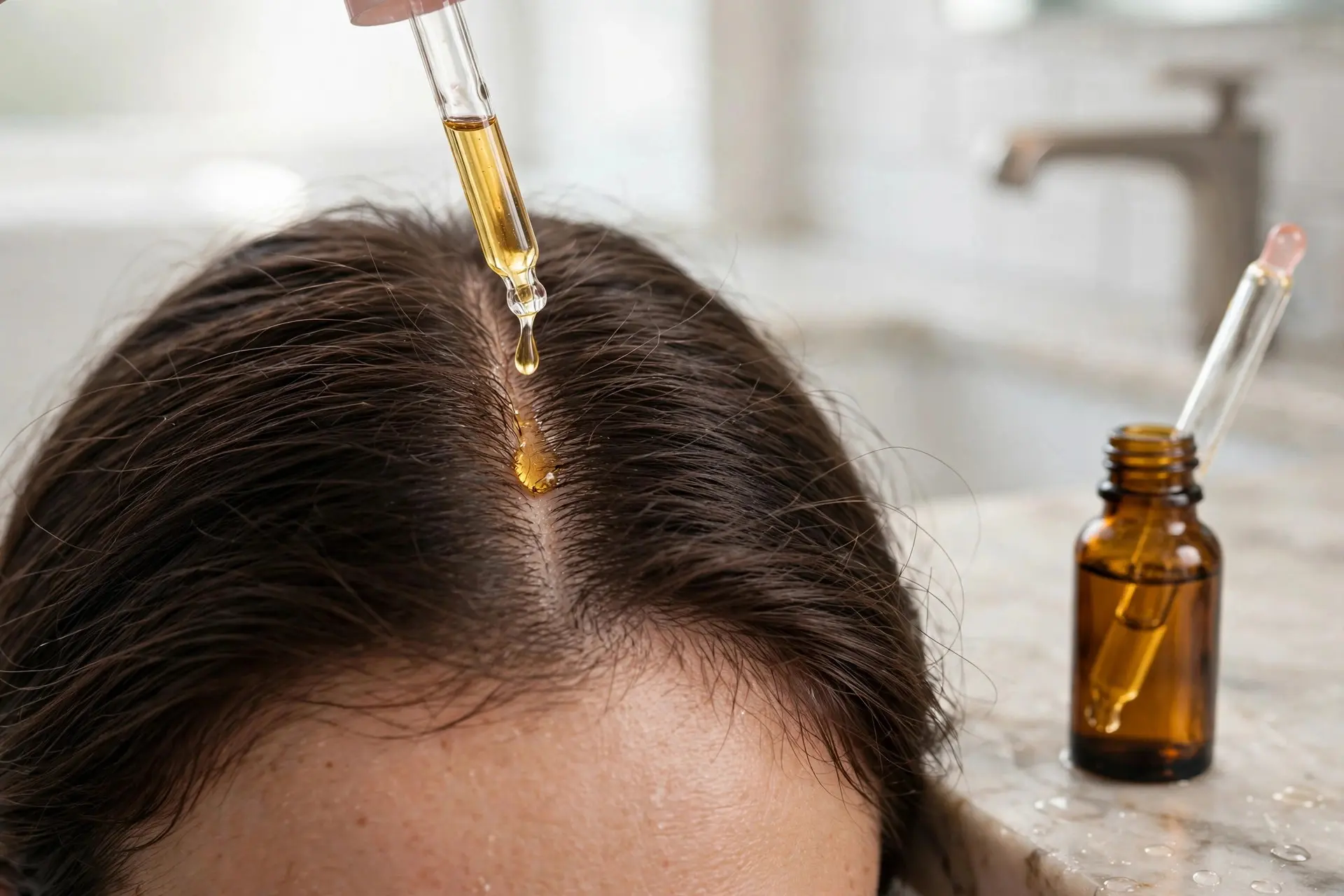
Caffeine has attracted real attention in scalp care: applied topically, it is used to stimulate the follicles and support the growth phase of the hair cycle. A caffeine-infused shampoo or a leave-in scalp serum is one of the lowest-effort additions on this entire list.
Because it goes directly onto the scalp rather than through your diet, it pairs comfortably with the nutritional and kitchen treatments above without any real overlap. Apply it to a clean, towel-dried scalp so it can absorb properly, and use it consistently rather than occasionally.
Tip: Part your hair in a few places and run the dropper along each part line — even coverage matters more than using lots of product in one spot.
Styling Tips
These eighteen ways work best as a rhythm, not a pile-up. A few habits help you turn them into a routine you can actually keep:
- Spread treatments across the week: A rice water rinse on Monday and an egg yolk mask on Friday is a sustainable rhythm; stacking everything into one evening just exhausts you and your scalp.
- Build around wash days: Massage, oils and serums are easiest to remember when they are attached to washing — before, during or just after — rather than floating loose in your schedule.
- Take a monthly photo: Hair changes far too slowly to judge in the mirror day to day. A photo in the same light every month shows progress your eyes would otherwise miss.
- Patch test everything new: Whether it is onion juice, an oil blend or a serum, try a small area first and give it a day before committing your whole scalp.
- Think in seasons: Review your routine every three months — what your hair needed in winter is rarely identical to what it needs in summer.
Common Mistakes to Avoid
Even a good routine can be quietly sabotaged. These are the missteps that most often undo otherwise solid efforts:
- Expecting overnight results: Hair grows slowly, and visible change usually takes three to six months of consistency. Judging a routine after two weeks judges it before it has had a chance.
- Taking every supplement at once: Stacking biotin, zinc and collagen without knowing your levels makes it impossible to tell what is helping — and more is not always better. Test first, then target.
- Massaging with your nails: Scratching at the scalp irritates and can damage it. Fingertip pads, gentle pressure, always.
- Washing daily out of habit: Unless your scalp truly needs it, daily washing strips protective oils and can leave hair looking thinner and feeling drier.
- Skipping heat protectant “just this once”: It is never really once — protectant needs to be as automatic as switching the tool on.
- Wearing the same tight style daily: Constant tension at the same point is one of the most avoidable causes of hairline thinning there is.
Common Habits That Are Secretly Thinning Your Hair
A few everyday habits work against thickness so quietly that most of us never connect them to the mirror. Over-washing is one: frequent shampooing strips away the natural oils that protect the scalp, leaving strands drier and more fragile than they need to be.
Wearing your hair in the same tight style day after day is another. Constant tension at one point — the same high ponytail, the same slicked bun — stresses the hairline and temples, and skipping heat protectant during regular styling gradually weakens the shaft until ends thin out and snap.
The encouraging part is how small the fixes are. Space out your washes, rotate your hairstyles so tension moves around, and never let a hot tool near your hair without protectant first. Damage like this is far easier to prevent than to reverse, which makes these quiet habits some of the highest-value changes on the page.
FAQs
How long does it take to see thicker hair results?
Most of these habits take three to six months of consistent use before you notice a real difference, because hair growth cycles are naturally slow. New growth needs time to come through and gain length, so judge any routine by the season, not by the week.
Can I combine multiple DIY treatments, like rice water and egg yolk masks?
Yes — but space them out across the week rather than layering them on the same day. Your scalp needs time to absorb and benefit from each treatment, and gentler spacing also makes it easier to notice if one particular treatment does not agree with your hair.
Are hair-thickening supplements necessary, or is diet enough?
A nutrient-rich diet should always come first, and for many women it is enough on its own. Supplements such as biotin or collagen can help fill specific gaps, particularly if a blood test reveals an actual deficiency — which is why testing beats guessing.
Is it normal for hair to look thinner before it looks thicker?
It can happen temporarily, as older, damaged hair sheds while healthier growth comes in behind it. But ongoing, significant thinning is worth discussing with a doctor rather than waiting it out — persistent shedding deserves a proper look, not patience alone.
Conclusion
Learning how to grow thicker hair naturally is really about patience with a plan: feed your follicles well, treat your scalp kindly, and stop the small daily habits that quietly undo your progress. Protect the hair you have, support the hair that is coming, and give it all a few honest months. For styling inspiration while it grows, browse our favorite hairstyles for long hair and enjoy every stage of the journey.
Over to you: Which of these eighteen ways will you start with this week — the food, the scalp care, or the gentler habits?
Discover more from Fashinate Style
Subscribe to get the latest posts sent to your email.