

You catch your reflection in the mirror and, instead of launching into the usual list of things you’d change, you pause. The laugh lines? Those came from a life well lived. That shift doesn’t happen overnight — it’s built through small, repeatable habits practiced on ordinary Tuesdays.
And here’s the good news: the women who genuinely love growing older aren’t doing anything dramatic. They’re not journaling for an hour at dawn or pretending everything’s perfect. They’ve just collected little rituals — a jar on the counter, a text sent at the right moment, a perfume bottle used on a random weekday — that keep them anchored to what’s good.
Below you’ll find 29 of those habits, each one simple enough to start today. Some take thirty seconds. All of them do one big thing: train your attention toward appreciation instead of comparison, so the years feel less like something happening to you and more like something you’re savoring.
Quick Picks: Where to Start
- Short on time? Start with #1 (three-line morning page) or #7 (savor the first sip) — under two minutes each.
- Working on how you see yourself? Go to #2 (flip the age complaint), #22 (make peace with the mirror), or #23 (give your younger self credit).
- Want more connection? Try #5 (one “thinking of you” text), #14 (call an older friend), or #19 (celebrate other women’s wins).
- Craving ritual and joy? Pick #6 (the good things jar), #16 (good perfume on a Tuesday), or #24 (a joy budget).
1. A three-line morning page

Before your feet hit the floor, reach for the notebook on your nightstand. Three lines, no more: one thing you’re grateful for, one thing you’re looking forward to, and one thing your body did for you yesterday. It takes under two minutes, and it sets a tone of enoughness that follows you into the day.
The magic isn’t in the writing—it’s in the aim. You’re pointing your attention at what’s already working before the to-do list gets a word in.
How to Start the Habit
- Set up the night before. Keep a small notebook and a pen within arm’s reach of your bed. If you have to get up to find them, the habit dies by Thursday.
- Write in the same order every day. Gratitude first, anticipation second, body last. The routine makes it automatic, so groggy-you doesn’t have to think.
- Keep each line to one sentence. “Grateful for the rain on the roof.” “Looking forward to lunch with Dana.” “My back carried the groceries without complaint.”
- Don’t reread or edit. This isn’t journaling—it’s a compass. Close the book and get on with your morning.
2. Flip the age complaint

“I’m too old for that” slips out before you even notice—about a trend, a trip, a new skill, a pair of jeans. Next time you catch it, pause and swap it out loud: “I have the experience to do that well.” Say it where someone can hear you, including you.
Every repetition is a rep. You’re training your brain to file age under asset instead of limit, and after a few weeks the old phrase starts sounding as dated as it is.
How to Make the Swap Stick
- Notice the trigger words. “Too old,” “at my age,” “past it.” Just naming them in the moment is half the work.
- Replace, don’t scold. Skip the self-criticism. Say the new line—”I have the experience to handle this”—and move on.
- Get specific when you can. “I’ve navigated harder things than a new phone plan” lands harder than a generic pep talk.
- Track it for a week. Tally the flips in your notebook. Watching the number climb is its own quiet proof.
3. Thank your body out loud

After a walk, a stretch, or even just standing up from the floor without hands, pause for a second. Place a hand on your chest or your knees and say a quiet thanks. “Thank you for carrying me.” “Thanks for the stairs.” Small words, said sincerely.
This body has logged decades of living—babies, moves, grief, dancing, all of it. Gratitude is how you make peace with the changes instead of fighting them.
How to Practice Body Gratitude
- Anchor it to something physical. Attach the thank-you to a moment your body just performed—climbing stairs, gardening, carrying grandchildren.
- Keep the words simple. No speeches. One honest sentence is plenty.
- Include the parts you criticize. Thank your knees, your belly, your hands. Especially the ones you’ve been hard on.
- Do it daily, not just on good days. On stiff mornings, “thank you for still showing up” counts double.
4. Birthday month, not birthday day

One day is too small a container for a whole year of you. Stretch the celebration across the entire month: a coffee date with a friend, a solo museum afternoon, a new book, your favorite meal cooked by someone else. Spread the joy out, and there’s nothing left for dread to grab onto.
When aging gets a month of savoring instead of a single dreaded date, the whole year feels different.
How to Plan a Birthday Month
- Make a list of four to six small delights. Nothing expensive required—a long bath, a walk somewhere new, a call with an old friend.
- Put them on the calendar. Unclaimed intentions don’t happen. Two or three per week is plenty.
- Tell people it’s your birthday month. Let friends in on it. They’ll happily show up for the coffee and the toast.
- End with a ritual. On the last day, write one line about what this year taught you. Then close the book and start the next one.
5. Send one ‘thinking of you’ text

Every morning, send one text to someone you appreciate. Ten seconds, one sentence: “Saw a gardenia and thought of you.” “Still laughing about Tuesday.” That’s it. No reply required, no follow-up needed.
These tiny pings do real work. They keep connections warm, they guard against the loneliness that can sneak up in midlife, and they remind you how many good people you’ve gathered over the years.
How to Keep It Going
- Attach it to an existing habit. Send it while the coffee brews or right after you park the car. Same time, same trigger.
- Rotate through your people. Old colleagues, cousins, the friend you keep meaning to call. A running list in your notes app helps.
- Be specific, not generic. “Thinking of you” is fine, but “thinking of you and that terrible karaoke night” is unforgettable.
- Don’t keep score. Some texts land in silence. Send anyway—the point is the warmth, not the receipt.
6. Keep a ‘good things’ jar

Every time something small and good happens, jot it on a slip of paper and drop it in a jar. “The bakery remembered my order.” “My knees felt great on the stairs.” “The lilacs finally opened.” No moment is too small to count.
Then, on a low day or at year’s end, tip the jar out and read them. What you get is a physical record of a life that’s still full—written in your own handwriting, on ordinary days, when you weren’t even trying.
How to Build Your Jar
- Pick a jar you actually like. A clear glass jar on the kitchen counter beats a shoebox in a closet. Keep a pad of small paper and a pen right beside it.
- Write the date on every slip. A year from now, the dates turn a pile of notes into a timeline.
- Lower the bar. Good parking spot, phone call from your sister, first tomato of the season. If it made you smile, it qualifies.
- Read it twice a year. Once on a hard day, once on New Year’s Eve. Some people save the slips in a bigger jar the following January—a growing archive of good.
7. Savor the first sip

Before your coffee or tea touches your lips, pause. Wrap both hands around the warm mug, close your eyes if you can, and breathe in the steam like it’s the first breath of the day. Then take one slow sip. That’s it — 30 seconds of full attention.
This tiny ritual turns an automatic habit into a moment of gratitude. You’re not just drinking caffeine; you’re noticing warmth, aroma, flavor, the simple fact that you get to do this again today. It sets a tone of savoring rather than rushing that carries into the rest of your morning.
How to Make It Stick
- Keep your mug, not your phone, closest to your hand when you sit down.
- Breathe in for a count of four, then sip slowly and name one word for how it tastes — “rich,” “bright,” “comforting.”
- If you forget, don’t scold yourself. Just come back to the next sip.
- Try it with evening tea, too, as a wind-down version.
8. Name three good things at dinner
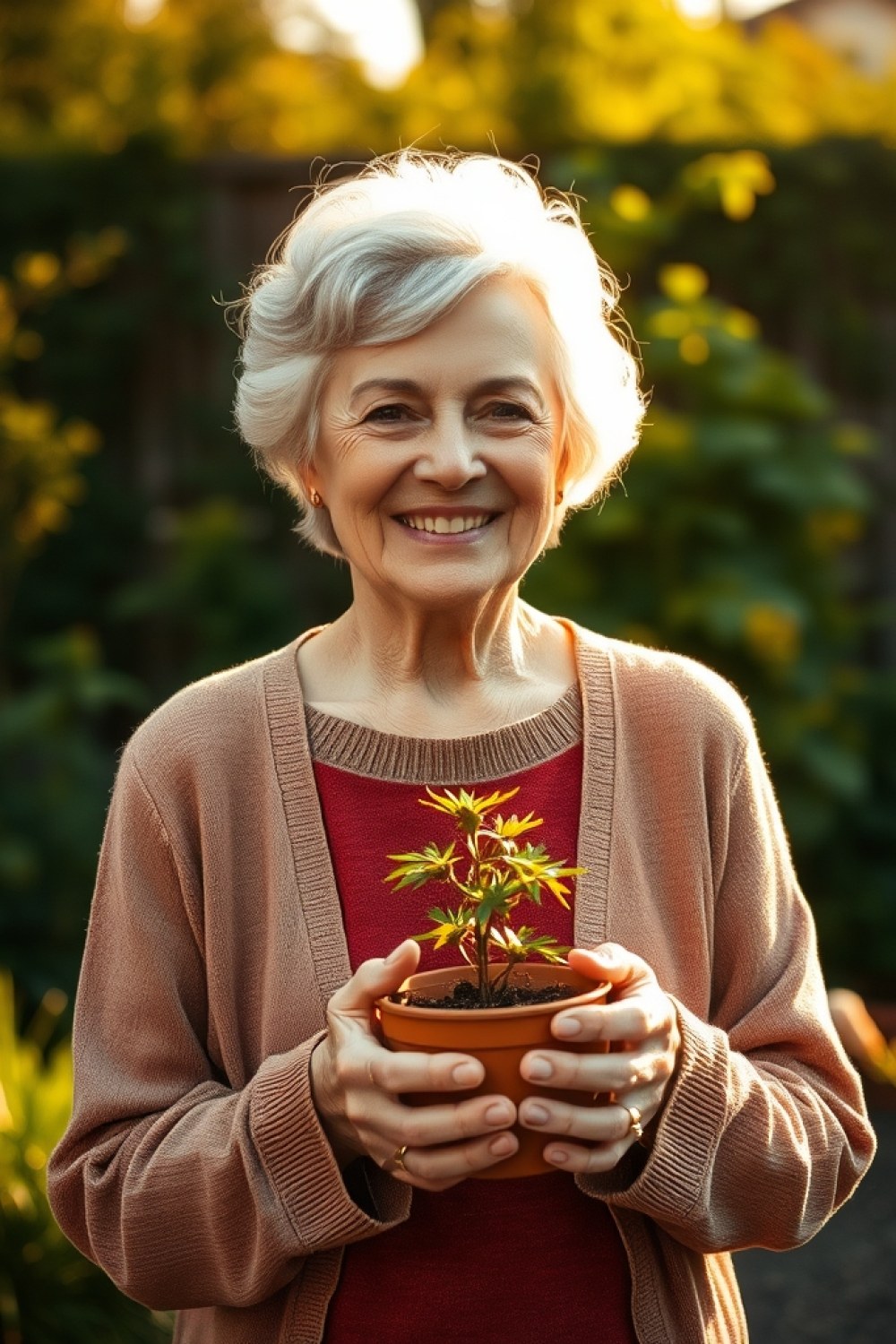
Somewhere in the middle of your meal, go around the table — or just check in with yourself — and name three things that went right today. Specific beats grand. “The hydrangeas finally bloomed.” “My knee didn’t hurt on the stairs.” “I called my sister and we laughed for twenty minutes.”
This ritual gently rewires your attention toward what’s working instead of what’s not. Shared with a partner, a friend, or a grandchild, it becomes a small ceremony of connection. Kids and grandkids especially love it because it teaches them to hunt for good moments, too.
How to Make It Stick
- Anchor it to a fixed moment — the first bite, or right after the plates are cleared.
- Ban generic answers like “family” or “my health.” Push for one sensory detail.
- Take turns going first, so nobody feels put on the spot.
- On hard days, let the three things be tiny. “I made it through” counts.
9. Take the compliment gracefully

When someone says you look great, or that they loved your idea, or that you handled that situation beautifully — just say “thank you” and let it land. No deflecting. No “oh, this old thing.” No explaining why you actually don’t deserve it.
Accepting a compliment is a small act of self-respect. It tells the other person their kindness was received, and it tells you that you’re allowed to believe good things about yourself. That muscle gets stronger every time you use it.
How to Practice
- Notice the urge to deflect — most of us feel it rise in the chest within a second.
- Say “thank you” and stop. Add nothing after it.
- Later, write the compliment down in your wins note and reread it once.
- Compliment yourself out loud once a day to get comfortable hearing it.
10. Wear what makes you feel seen
Pick one thing each day that makes you feel like yourself — a favorite scarf, a pair of earrings your daughter gave you, a well-cut jacket, a color you love. It doesn’t have to be fancy. It just has to be intentional.
Dressing for the woman you’ve become, rather than the woman you’re supposed to be, is a daily thank-you note to yourself. You’re not dressing to hide or to compete. You’re dressing to be seen, by others and by you.
How to Curate Your Look
- Pull out the three pieces you always reach for and ask what they have in common — color, fit, texture, or feel.
- Set one piece by the door or on the dresser each night so it’s ready in the morning.
- Once a week, wear something you’ve been saving for “someday.” Today is someday.
- Before you leave the house, look in the mirror and say out loud, “I like her.”
11. Move in a way that feels good

Skip the punishment workouts. Walk around the block. Dance in the kitchen while the pasta boils. Stretch on the floor while the coffee brews. Swim, garden, rake leaves, take a slow bike ride. Movement is not a correction. It doesn’t need to be earned.
Instead of tracking calories or steps as a debt you owe your body, thank it for what it can do today. Maybe your knees ache and your back is stiff. Maybe you skiied black diamonds at 45. Either way, the body that carried you here is worth celebrating, not shrinking.
How to Shift the Habit
- Before you move, name one thing your body did for you today — climbed stairs, held a baby, drove you somewhere.
- Choose movement that leaves you feeling better, not depleted.
- Aim for “I want to” instead of “I have to.”
- Afterward, thank your legs, your lungs, your heart by name.
12. Keep a ‘wins’ note on your phone

Open the notes app and start a running list titled something like “small wins” or “evidence.” Add things like: “spoke up in the meeting.” “Finished the novel I’d been avoiding.” “Asked for help with the taxes.” “Went to the doctor even though I didn’t want to.” Tiny, real, verifiable.
When imposter syndrome whispers or doubt creeps in — a bad day, a harsh comment, a quiet Sunday night — scroll through the note. This is your own evidence that you are capable, resilient, and showing up. Gratitude for your own effort is one of the most powerful kinds there is.
How to Keep It Going
- Pin the note to the top of your app so it’s two taps away.
- Add to it at the same time each day — after dinner or before bed.
- Record actual moments, not vague affirmations. “I did it” beats “I am strong.”
- Read the oldest entries once a month and notice how much you’ve forgotten you handled.
13. Have a weekly tech-free hour
Pick one hour a week and put your phone in another room — not on silent, not face-down on the table, actually in another room. The first ten minutes feel twitchy. Then something loosens.
Read a novel, sit on the porch, or do nothing at all. Without a feed in front of you, there’s no one’s kitchen renovation or vacation to measure your Tuesday against. What’s left is your actual life, and it’s usually better than you remembered.
How to Make It Stick
- Choose a fixed slot. Sunday morning before the house wakes up, or Wednesday after dinner. Same hour every week, or it won’t happen.
- Set a real alarm first. Ten minutes before your hour, set your phone alarm, then walk the phone to your bedroom and close the door.
- Leave a “landing spot.” Put a book, a mug, and a chair by the window or on the porch the night before. Friction kills new habits.
- Jot one line after. On paper, write one thing you noticed or felt grateful for. After a month, read them back — that’s your proof it’s working.
14. Call an older friend

Find someone a decade or two ahead of you who genuinely loves her life — the friend who travels alone, the aunt who took up painting at 68, the neighbor who laughs easily. Call her. Not to vent, but to ask one question: “What are you grateful for right now?”
Her answers will do something a hundred inspirational quotes can’t. They’ll show you real, specific, lived evidence of what’s ahead. You’ll hang up with a longer runway and something to look forward to instead of dread.
How to Have the Conversation
- Ask permission first. Try: “I’m working on enjoying getting older. Can I ask you a few questions about what this season is like for you?”
- Ask three questions. What are you grateful for now? What surprised you about this decade? What would you tell your 50-year-old self?
- Listen more than you talk. Don’t rush to share your own worries. Let her finish, then ask, “Tell me more about that.”
- Write down one line. Keep a single sentence from the call in your notes app — that’s your anchor for the next rough day.
15. Make a ‘then and now’ photo album

Pull three or four photos: you at 25, at 40, and one from this year. Print them, or drop them into one album or a single folder on your phone. Then look at the whole arc at once.
Something shifts when you see them side by side. You stop mourning the 25-year-old and start noticing what she didn’t have yet — the confidence, the opinions you no longer apologize for, the softness around the eyes that only comes from living through things.
How to Build It
- Choose era by era. One photo per decade: 20s, 30s, 40s, 50s, now. Wedding photos and vacations count; so do kitchen selfies.
- Add one line under each. What were you proud of, worried about, or learning in that photo? Ten words is plenty.
- Keep it where you’ll see it. A small printed album by your coffee maker beats a folder you never open.
- Revisit yearly. Add this year’s photo every birthday and read your old notes. You’ll watch gratitude compound.
16. Wear the good perfume on a Tuesday

The fancy perfume sitting in its box for “someday.” The china you use twice a year. The candle you’re saving for guests. Who exactly are you saving them for?
People who love getting older stop treating their best things like museum pieces. They spritz the perfume to run errands. They drink their morning coffee from the good cup. Everyday luxury is a quiet vote for your ordinary life — and it turns a plain Tuesday into something your future self will remember fondly.
How to Do It This Week
- Pick three “someday” items. Perfume, nice dishes, silk scarf, bath salts, the good pen. Line them up where you’ll actually reach them.
- Assign them to a weekday. Perfume on Tuesdays. China on Thursday lunch. The candle every evening while you cook.
- Say why to yourself. When you light the candle, think, “This is for me, today.” It sounds small. It isn’t.
- Refill, don’t hoard. Use the bottle up and buy more. A thing that gets used is a thing that was worth having.
17. Ask better questions

“Why is this happening to me?” is the most exhausting question in midlife. It has no answer, and it keeps you circling the problem like a drain.
Swap it for something more useful: “What is this teaching me?” or “What can I appreciate here?” This isn’t toxic positivity — the difficulty is still real, and you’re allowed to say so. It just means the hard thing doesn’t get to narrate your whole story. You stay the main character instead of the victim of the plot.
How to Shift the Question
- Catch the old phrase. Notice when “Why me?” shows up — usually at 3 a.m. or in the car. Naming it is half the work.
- Write both versions. On paper, ask the old question, then write its replacement right underneath. Seeing them side by side helps it stick.
- Answer the new one out loud. Even a partial answer — “It’s teaching me to ask for help” — breaks the spiral.
- Give it a time limit. Let yourself be upset first. Then ask the better question. Grief and gratitude can share the same afternoon.
18. Take a monthly solo date

One afternoon a month, go do something you love — alone. A matinee with popcorn and no one whispering through it. A long lunch with a book. An unhurried browse through a bookstore or a garden center.
For women who spent decades packing lunches, managing schedules, and putting everyone’s needs first, this is not indulgence. It’s repayment. It’s also how you find out what you actually like now that the house is quieter and the calendar is yours.
How to Plan Your Solo Date
- Put it on the calendar. Same week each month — the second Saturday, the last Thursday. If it’s not scheduled, it’s not happening.
- Decide the one thing you’ll do. A movie, a museum, a craft store, coffee and journaling. One activity, no errands bolted on.
- Go somewhere new. Try the café across town, the trail you’ve driven past a hundred times. Novelty keeps the ritual fresh.
- Ask yourself one question over coffee. “What do I want more of this year?” Then listen to the answer — it usually shows up before the second cup.
19. Celebrate other women’s wins
When your friend lands the promotion, publishes the book, or finally takes that pottery class, be the loudest one cheering. Envy shrinks your world; genuine celebration expands it. Every time you clap for someone else, you’re also telling yourself that good things are still available to you — at any age, in any season.
Women who love getting older tend to have a wide circle of women they root for. That’s not a coincidence.
How to Cheer Louder
- Send a real message, not just a thumbs-up emoji. Name what you admire: “You worked three years for this and you did it.”
- Say it out loud to someone else — your partner, your sister. Public praise doubles the joy.
- Notice the spark of envy if it shows up. Don’t shame it. Just ask, “What do I want for myself?” Then go get a piece of it.
- Make it a habit: every week, celebrate one woman’s win, big or small.
20. Keep a ‘lessons I’m glad I learned’ list

You earned your wisdom the hard way, and that’s exactly why it’s worth writing down. Grab a notebook and start a running list called “Lessons I’m Glad I Learned.” Every line is a struggle that turned into something you now carry with you.
This isn’t a gratitude journal about your day. It’s a gratitude journal about your decades — and it’s more powerful than you’d think.
How to Build the List
- Start with three entries from your 30s. Try: “I don’t have to please everyone” or “A job that drains me isn’t worth the paycheck.”
- Add your 40s. Maybe: “Rest is productive” or “Saying no is a complete sentence.”
- Keep going with your 50s and beyond. “My body is a home, not a project.”
- Read the whole list on hard days. It’s proof you’re wiser than you were, and that’s something to be grateful for.
21. Start a ‘now I get to’ list

Remember when dinner was a scramble between homework and bedtime? Or when exercise was one more box to check? Flip the script. Instead of “I have to cook dinner,” try “I get to make a meal I actually enjoy.” Instead of “I have to exercise,” try “I get to move my body.”
Same task, completely different feeling. Language shapes how aging feels — so choose the words that make your life feel like a gift, not a to-do list.
How to Reframe Your Day
- Write down five things you “have to” do this week. Groceries, laundry, that doctor’s appointment.
- Rewrite each one as “I get to.” “I get to have a home to care for.” “I get to see a doctor who helps me stay well.”
- Pick your favorite reframe and use it out loud all week. Say it in the kitchen, in the car, at the gym.
- Add a “now I get to” that’s new: “Now I get to sleep in on Saturdays.” “Now I get to travel in the off-season.” Savor what this chapter gives you that earlier ones couldn’t.
22. Make peace with the mirror

Most of us have spent decades scanning the mirror for flaws. Time to flip the habit. Once a week, stand in front of the mirror and find one thing you genuinely like — your smile, your hands, the way you carry yourself. Say it out loud. It’ll feel awkward at first. Do it anyway.
This isn’t vanity. It’s rewiring the critical voice that’s been telling you you’re not enough. That voice got a lot of airtime. Yours deserves some too.
How to Make Peace With the Mirror
- Pick a low-pressure moment — right after your shower, before the day gets loud.
- Look for one thing you actually like, not the thing you’re supposed to like. Your laugh lines. The strength in your arms.
- Say it out loud in a kind voice: “I like my smile.” “I like my posture.”
- Keep a note on your phone of what you’ve named each week. After a few months, read it back. That list is you, learning to be on your own side.
23. Give your younger self credit

Think back to the hardest season you survived — the divorce, the loss, the layoff, the year you held everything together with both hands. Now thank the version of you who got through it. She didn’t know how it would end. She did it anyway.
That gratitude isn’t about living in the past. It’s about connecting to your own resilience right now. The same woman who survived that is the woman reading this today.
How to Thank Her
- Pick one hard season. Give it a name — “the year of the move,” “the year Mom got sick.”
- Write her a short letter. Three sentences is plenty: what she faced, what she did, what it gave you.
- Say thank you out loud, in the present tense: “Thank you for getting me here.”
- Next time something hard comes up, remember her. If she got through that, you can get through this.
24. Create a ‘joy budget’

Set aside a small amount of money each month for pure pleasure — no utility, no obligation, no justifying. Fresh flowers for the kitchen table. A new lipstick in a color you’d never worn. A one-off painting class. A concert ticket. A stack of novels you’ll read in one weekend.
Spending on joy isn’t frivolous. It tells your brain that your happiness matters at every age — not just when you’re young, not just when everything else is handled. You matter now, too.
How to Set Up Your Joy Budget
- Pick an amount that feels joyful, not stressful. Twenty dollars a month counts. So does two hundred, if that’s what you’ve got.
- Open a separate savings account or envelope and name it “Joy.” Move the money there on the first of the month.
- Spend it every month — that’s the rule. Unspent joy money rolls over into a bigger treat: a spa day, a weekend away, a great pair of boots.
- Notice how it feels to spend on yourself without needing a reason. That feeling is the whole point.
25. End the day with one good thing
Before your head hits the pillow, name one thing that went well today. Just one. It can be tiny — the phone call with your sister that ran long in the best way, the tomatoes that finally ripened, the fact that you got out for a walk before the rain.
The trick is specificity. “Good day” floats away. “I handled that awkward conversation with grace” sticks. Naming one concrete thing closes the day on a note of enoughness instead of a mental to-do list for tomorrow.
How to Make It Stick
- Keep a small notebook or use your phone’s notes app right on the nightstand — whatever is closest to your bed.
- Write the thing in one sentence. No paragraphs, no pressure to be profound.
- Add the why in three or four words: “because I stayed calm” or “because she laughed.”
- If you’re sharing a bed, say it out loud to your partner and ask for theirs. It turns a solo habit into a two-minute ritual.
26. Practice ‘good enough’ gratitude

Here’s the deal: perfectionism and gratitude cannot live in the same house. One keeps a running list of what’s missing. The other notices what’s already here.
So thank the real life. The kitchen with the scratched counter you’ve been meaning to replace. The body that carries you up the stairs, even if it’s softer than it was at 35. The retirement plan that isn’t as plush as the magazine version but is yours.
Messy and real beats polished and imaginary every single time.
How to Loosen the Grip
- Catch the “once I…” sentence in your head — once I lose ten pounds, once the house is renovated — and finish it differently: “…and until then, I’m grateful for this.”
- Pick one thing you’ve been criticizing for years and say thank you to it out loud. Yes, out loud. The dining table. Your knees. Your 2004 car.
- Trade one “should” for one “get to” each morning: “I get to move my body today” instead of “I should work out.”
- When you catch yourself comparing, name one thing your actual life has that the comparison doesn’t.
27. Pick a word for the year

Forget the twelve-item resolution list. Choose one word and let it do the heavy lifting. Bloom. Ease. Adventure. Enough. Steady. Open.
Your word becomes a lens. When you’re deciding whether to say yes to the trip, the volunteer shift, or the second glass of wine, you run it past the word. Does this feel like ease? Does this feel like bloom?
It also gives gratitude a direction. At the end of the year, you can look back and see exactly where the word showed up.
How to Choose and Use It
- Write down five words that pull at you, then say each one aloud. Keep the one that makes your shoulders drop or your heart speed up — both are good signs.
- Put it where you’ll see it: a sticky note on the bathroom mirror, your phone lock screen, the top of your planner page.
- Check in monthly. Ask, “Where did this word show up this month?” and jot down one answer.
- Let it evolve. If your word stops fitting in July, you’re allowed to change it. It’s a compass, not a contract.
28. Do a monthly ‘what I’m proud of’ review

Most of us are fluent in self-criticism and rusty at self-credit. This habit flips that. At the end of each month, sit down for ten minutes and write three things you’re proud of.
Big or small, doesn’t matter. Finally booking the mammogram. Saying no to a commitment that drained you. Learning to make your mother’s pierogi. Going to bed at 10 instead of doomscrolling until midnight.
This is gratitude pointed at yourself — and it builds the muscle of noticing your own growth instead of letting it slide by unmarked.
How to Run the Review
- Put it in your calendar for the last day of the month, recurring. Ten minutes, same time, every month.
- Write three items without editing. If you’re stuck, ask, “What did I do this month that took courage, patience, or follow-through?”
- Note who or what helped you get there. That folds a little outward gratitude into the same practice.
- Keep them all in one notebook or note. In December, read the whole year back. It will floor you.
29. Say thank you to your future self

Picture yourself at 80. Not a stranger — you, just further along. Now ask a better question than “What do I want today?” Ask, “What would she thank me for?”
It might be the strength training you do twice a week so you can carry your own groceries at 80. The dental cleaning you didn’t skip. The $50 you moved into savings instead of spending. The phone call you made to mend things with your brother.
Every one of those is gratitude in advance. It turns aging from something that happens to you into something you actively care for.
How to Do It Today
- Pick one category: body, money, relationships, or mind. Just one.
- Choose the smallest action in that category that takes under 30 minutes — a walk with light weights, a $25 transfer, a text that says “thinking of you, can we talk?”
- Do it now, not Monday. Future-you is not impressed by intentions.
- Jot a line in your journal: “Today I did ___ for her.” Read it when motivation runs thin — it doubles as a receipt of your own care.
Quick Questions
How do I start a gratitude practice if I’ve never done one?
Start ridiculously small. Pick just one habit from this list — naming one good thing before bed, or writing a single sentence with your morning coffee — and do only that for a week. Don’t add a second habit until the first feels automatic, like brushing your teeth. Consistency beats perfection every time, and one tiny ritual you actually keep will do more for you than ten you abandon by Friday.
What if I don’t feel grateful — I just feel tired or worried?
Then you’re human, and gratitude still works. It was never about pretending everything is fine; it’s about noticing small good things alongside the hard ones. On rough days, reach for the easiest habit on this list — one note in the jar, one “good enough” moment, one deep breath on the porch. If the heaviness sticks around for weeks, talking to a doctor or therapist isn’t failing at gratitude. It’s one of the most self-respecting moves there is.
Does gratitude really help with aging anxiety?
Yes, and the research backs it up. Regular gratitude practices are linked to lower stress, better sleep, and higher life satisfaction — all of which quietly deflate the fear of getting older. The shift happens slowly: you stop measuring your life against your 35-year-old self and start noticing what you actually value now. Aging starts to feel less like a loss column and more like a gain column.
How can I make these habits stick?
Habit-stack them onto things you already do without thinking. Pair your morning page with your first cup of coffee. Keep the good-things jar next to the sink so it catches you during dinner cleanup. Save your tech-free hour for Sunday morning, when nobody’s expecting an instant reply anyway. When a new habit hitchhikes on an old one, you don’t need willpower — you just need your normal routine.
Can I share these habits with a partner or friend?
Absolutely — gratitude grows when it’s shared. Try three good things at dinner, a Sunday-night text exchange with your best friend, or one jar you both add to. You’ll learn things about each other you’d never think to ask, and you’ll gently keep each other accountable without anyone nagging. Bonus: hearing your partner’s good thing often becomes your good thing.
What if I miss a day or a week?
Nothing has gone wrong. Gratitude is a practice, not a test, and there’s no streak to break. Skip a week, come back, pick one habit, start again — that’s the whole method. The goal was never a perfect record; it’s a gentle shift in how you see your life. And that shift is still waiting for you, whether you left off yesterday or last month.