
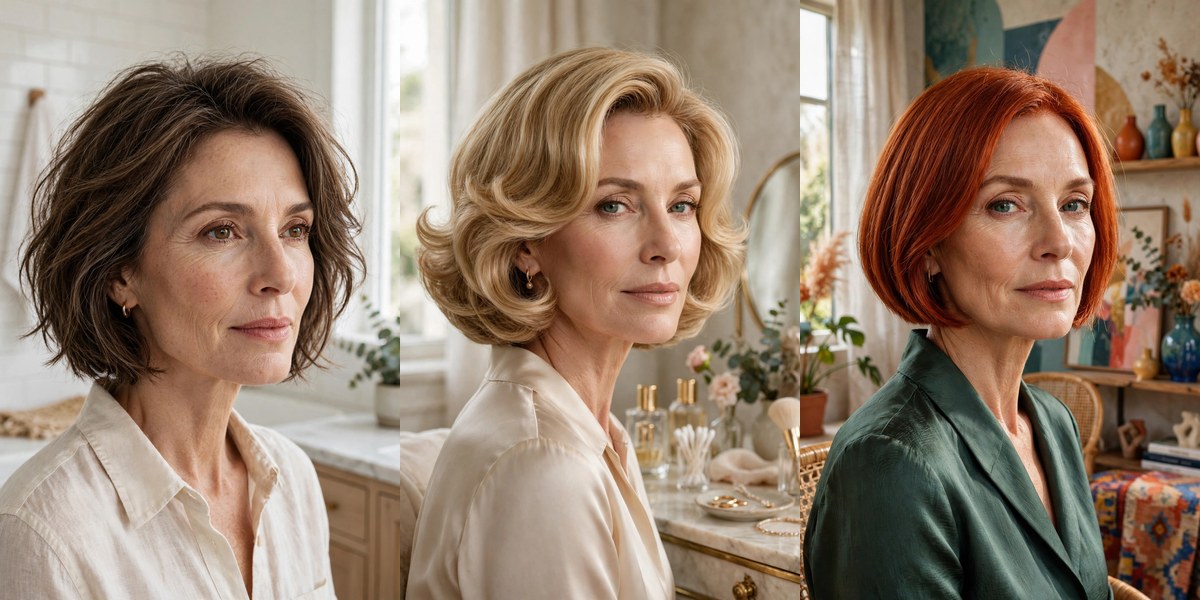
It’s 7:12 in the morning. Your hair is still damp, the coffee is brewing, and you have eleven minutes before you need to leave. Now picture two futures: in one, you’re wrestling your hair into submission. In the other, you run a brush through a bob that practically styles itself — because it was cut for your actual life, not a magazine shoot.
That’s the real question behind choosing a short bob for thin, fine hair. Not just ‘will it add fullness?’ — but ‘will it add fullness on a Tuesday when you have no time?’ Your texture, your schedule, your weather, your patience level: all of it matters as much as the cut itself.
So instead of another generic roundup, these 19 bobs are matched to how you actually live. Find your scenario — the morning rush, the gym bag, the humid commute, the curls you were born with — and meet the cut that was made for it.
1. 🛁 The Wash-and-Go Bob

Cut with internal texture that air-dries into shape — no dryer, no round brush, no prayer required. The layers are placed so gravity does the styling: scrunch in a little cream, walk away, done. For the woman whose hair routine competes with hitting snooze.
Try this: Scrunch a pea of curl cream into damp ends and don’t touch it until dry.
Best for: Zero-heat routines and chronically busy mornings.
Styling tip: the cut must be textured, not blunt — blunt air-dries flat.
2. ⏱️ The 5-Minute Bob
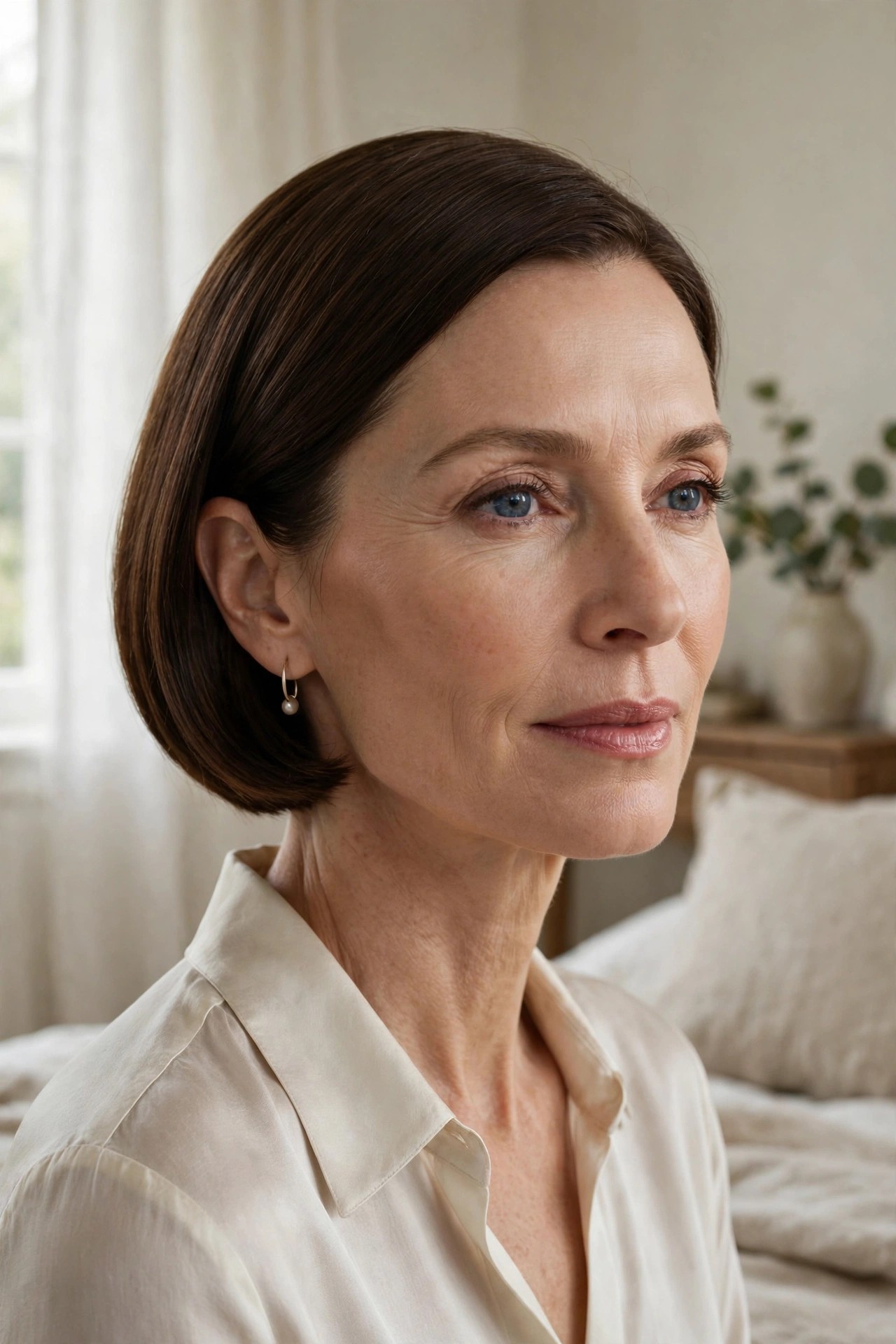
Engineered for speed: a smooth shape that responds to one quick pass of a hot brush. The perimeter is clean enough that a single smoothing pass makes it look salon-finished. Five minutes, door to done — timed and tested.
Try this: Hot brush on medium heat, one pass per section, root to end.
Styling tip: sleep with it in a loose low twist — morning styling drops to 3 minutes.
Avoid: complicated layering that needs section-by-section work.
3. 💨 The Air-Dry Bob

Designed around your natural texture instead of fighting it — the cut removes bulk where your hair wants to puff and keeps weight where it wants to fall. What grows out of your head is what the cut works with. Radical acceptance, but make it chic.
Try this: Let it dry 80% before touching — early touching creates frizz.
Avoid: razor-thinned ends — they frizz the moment humidity appears.
Best for: Anyone who has given up on heat styling (wisely).
4. 📏 The Razor-Straight Bob

Pin-straight, glassy, blunt — the precision cut that makes fine hair look its thickest through sheer edge density. Every strand ends at the same line, so the perimeter reads solid and substantial. Minimalism with maximum impact.
Try this: Flat iron in thin sections; finish with one drop of shine serum.
Best for: Straight fine hair that lies flat naturally.
Styling tip: a center or off-center part both work — the line is the star.
5. ↗️ The Side-Swept Bob

A long sweeping front that moves across the forehead — effortless motion built into the cut. The sweep adds asymmetry and softness without any styling skill: it falls that way because it was cut that way. The lazy girl’s statement cut.
Try this: Part damp hair on the side and let the sweep dry in place.
Styling tip: a little root lift on the heavy side keeps the sweep from collapsing.
Avoid: cutting the sweep too short — it needs length to drape.
6. 💃 The Bouncy Blowout Bob
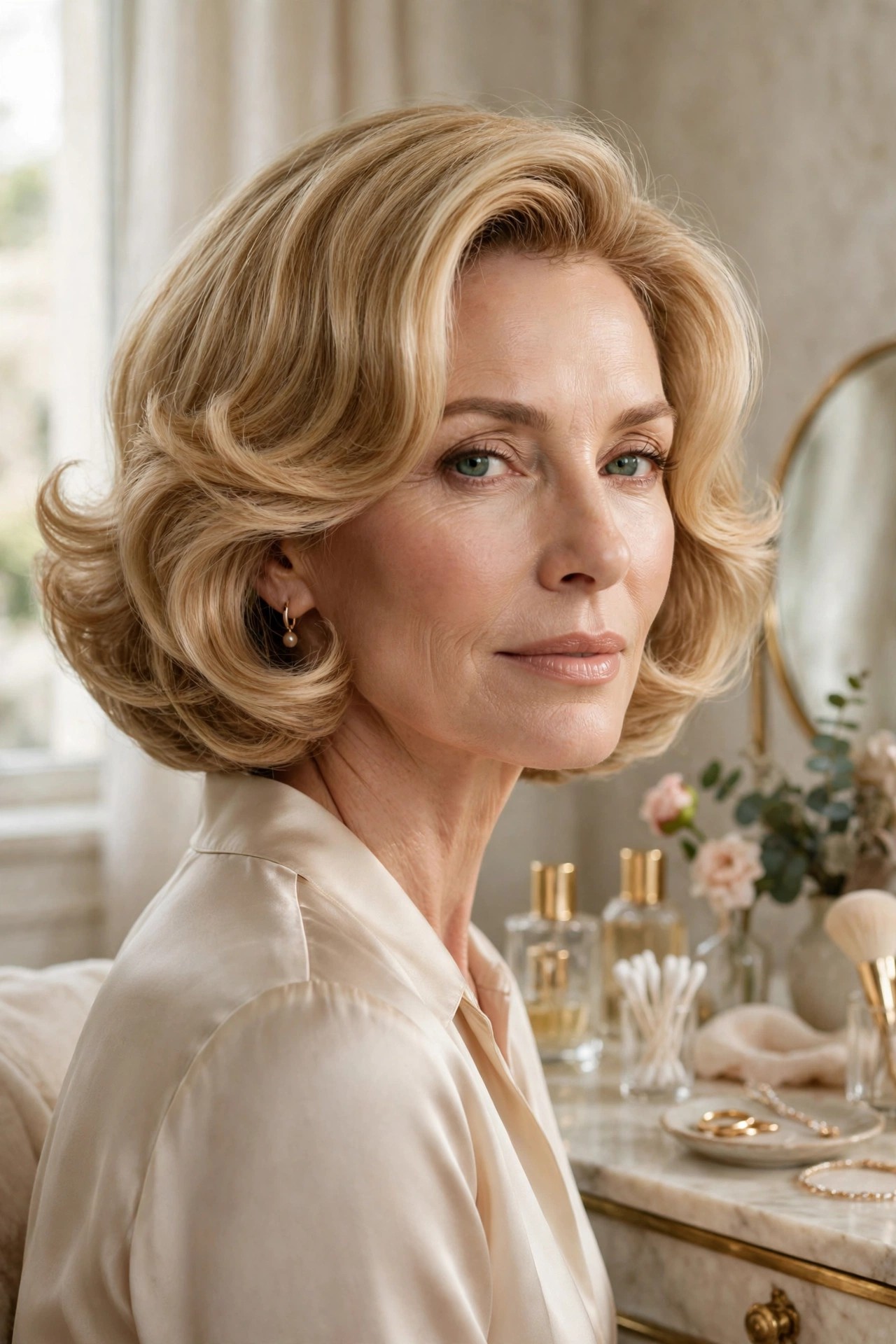
The salon blowout, made permanent-ish: rounded layers that curve under with body when hit with a round brush. It’s the bouncy, swinging bob that makes fine hair look twice as abundant — for the woman who loves the ritual of styling.
Try this: Round brush, medium heat, over-direct the roots for bounce that lasts.
Avoid: flat-ironing it straight — you’ll iron out the whole point.
Best for: Styling enthusiasts who enjoy their 15 minutes with the dryer.
Match the bob to your worst hair day, not your best. If you only love a cut when it’s freshly styled, it’s the wrong cut — the right one looks good damp, slept-on, and day-three.
7. 🏋️ The Gym Bob

Short enough to stay put through a workout, structured enough to look intentional after. Sweat dries, you shake it out, and the shape returns — no ponytail required, no post-gym helmet head. The athlete’s answer to fine hair.
Try this: A light salt spray post-workout revives texture after sweat dries.
Best for: Daily exercisers who refuse the perpetual ponytail.
Styling tip: keep the nape short — sweaty napes are the enemy.
8. 🧳 The Travel Bob

Packs like a dream: a cut that survives being slept on, stuffed under hats, and washed in hotel shampoo. The texture hides everything — bedhead reads as intentional. For the woman whose bob has its own passport stamps.
Try this: Twist damp hair into a loose bun overnight — morning waves, zero effort.
Styling tip: dry shampoo is your travel best friend — pack the mini.
Avoid: precision-sleek cuts — they show every travel sin.
9. 🌧️ The Humid-Day Bob

Cut and finished to resist the frizz-apocalypse: sealed ends, weight where humidity attacks, and a shape that looks better slightly expanded. When the air turns to soup, this bob just gets more interesting.
Try this: Anti-humidity cream on damp hair, then leave it completely alone.
Avoid: fighting it with a flat iron — humidity always wins that battle.
Best for: Humid climates and frizz-prone fine hair.
10. 🧶 The Beanie-Proof Bob

Cut to survive hat season: a shape that springs back the moment the beanie comes off. Shorter layers on top bounce back; the perimeter stays neat. Winter’s answer to fine-hair flatness.
Try this: Flip your head upside down and shake when the hat comes off.
Best for: Cold climates and hat lovers.
Styling tip: a silk-lined beanie causes half the flattening.

11. 🎨 The Color-Pop Bob

Fine hair takes vivid color beautifully — and a bold shade on a sharp bob turns thin strands into a style statement. Copper, rose, silver-lavender: when the color does the talking, nobody’s counting strands.
Try this: Gloss treatments between color appointments keep vivid shades electric.
Styling tip: vivid color + sleek styling = maximum impact.
Avoid: box dye on fine hair — the damage shows immediately.
12. 🦊 The Silver Fox Bob

For the woman done fighting the gray — a precision bob that turns silver into the main event. The cut is sharp enough that the silver reads as a choice, not a surrender. The most confident bob on this list.
Try this: Purple shampoo weekly keeps silver bright instead of yellow.
Avoid: warm-toned makeup clashes — silver loves cool tones.
Best for: Embracing natural gray with intention.
13. 🌀 The Bouncy Curl Bob

Medium, springy curls cut in a rounded bob shape — each curl is a little volume factory, and together they build a halo of fullness no product can fake. For natural curls that were always meant to be short.
Try this: Diffuser on low, scrunching upward — never rake curls with fingers.
Best for: Naturally curly fine hair.
Styling tip: curl-by-curl trims keep the round shape balanced.
Tell your stylist your real routine, not the aspirational one. ‘I air-dry and own one brush’ is the most useful sentence you can say in a consultation — it changes the entire cut.
14. 〰️ The Soft S-Wave Bob
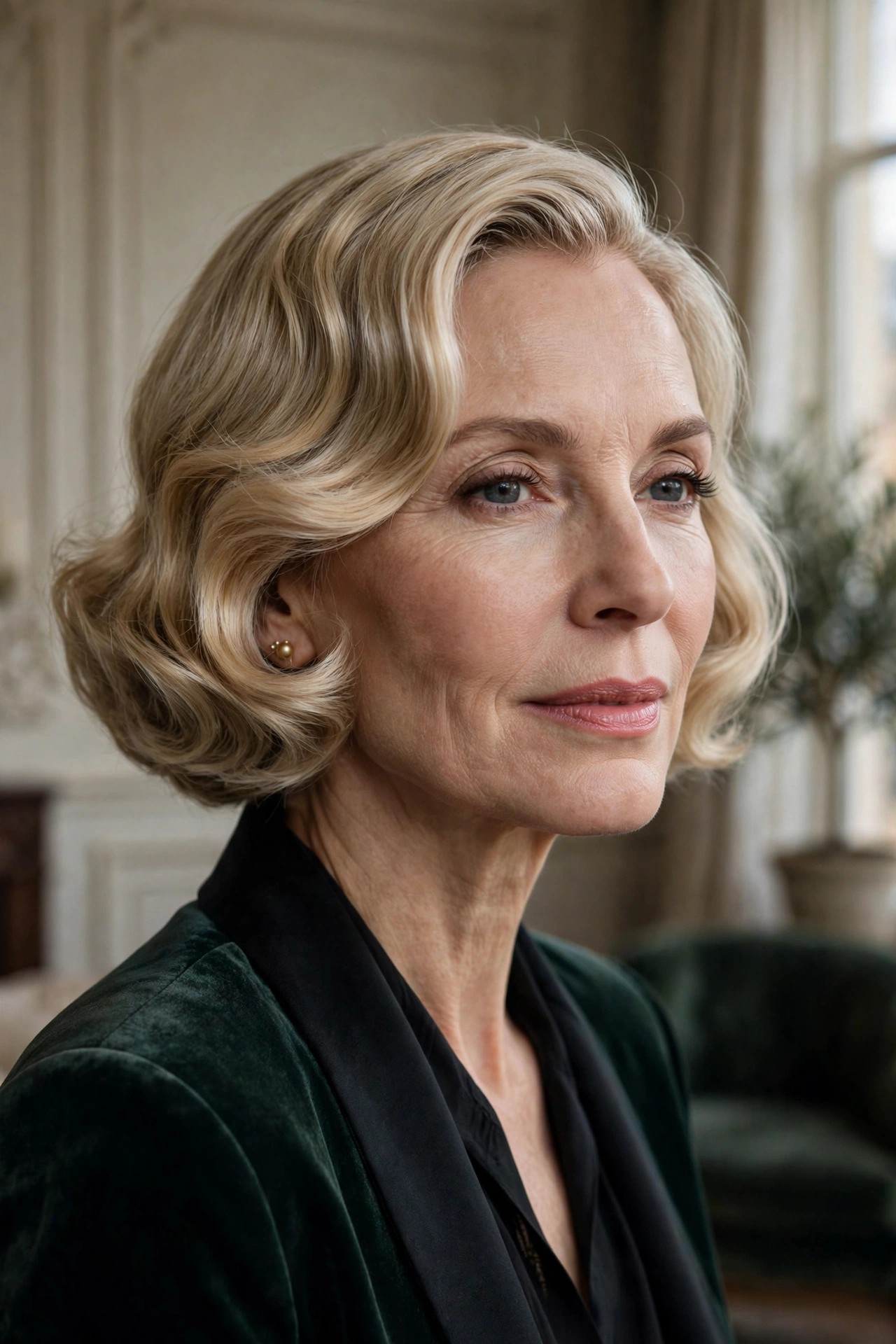
Polished, vintage-inspired S-waves laid into a chin-length bob — old-Hollywood structure that gives fine hair sculpted fullness. The waves are set, not random: deliberate bends that catch light and create dimension.
Try this: Set waves with a flat iron using the twist-and-glide method.
Styling tip: brush waves out gently for softness — never leave them helmet-crisp.
Avoid: humidity — set waves and damp air are ancient enemies.
15. ⬛ The Power Blunt Bob

One length, zero apology: the bluntest bob here, cut like a ruler. Maximum edge density makes fine hair look its absolute thickest — the perimeter is a solid wall of hair. Power dressing for your head.
Try this: Tuck one side behind the ear for asymmetric polish.
Avoid: wispy styling — it contradicts the blunt statement.
Best for: Maximum thickness illusion, minimum fuss.
16. 📐 The A-Line Bob
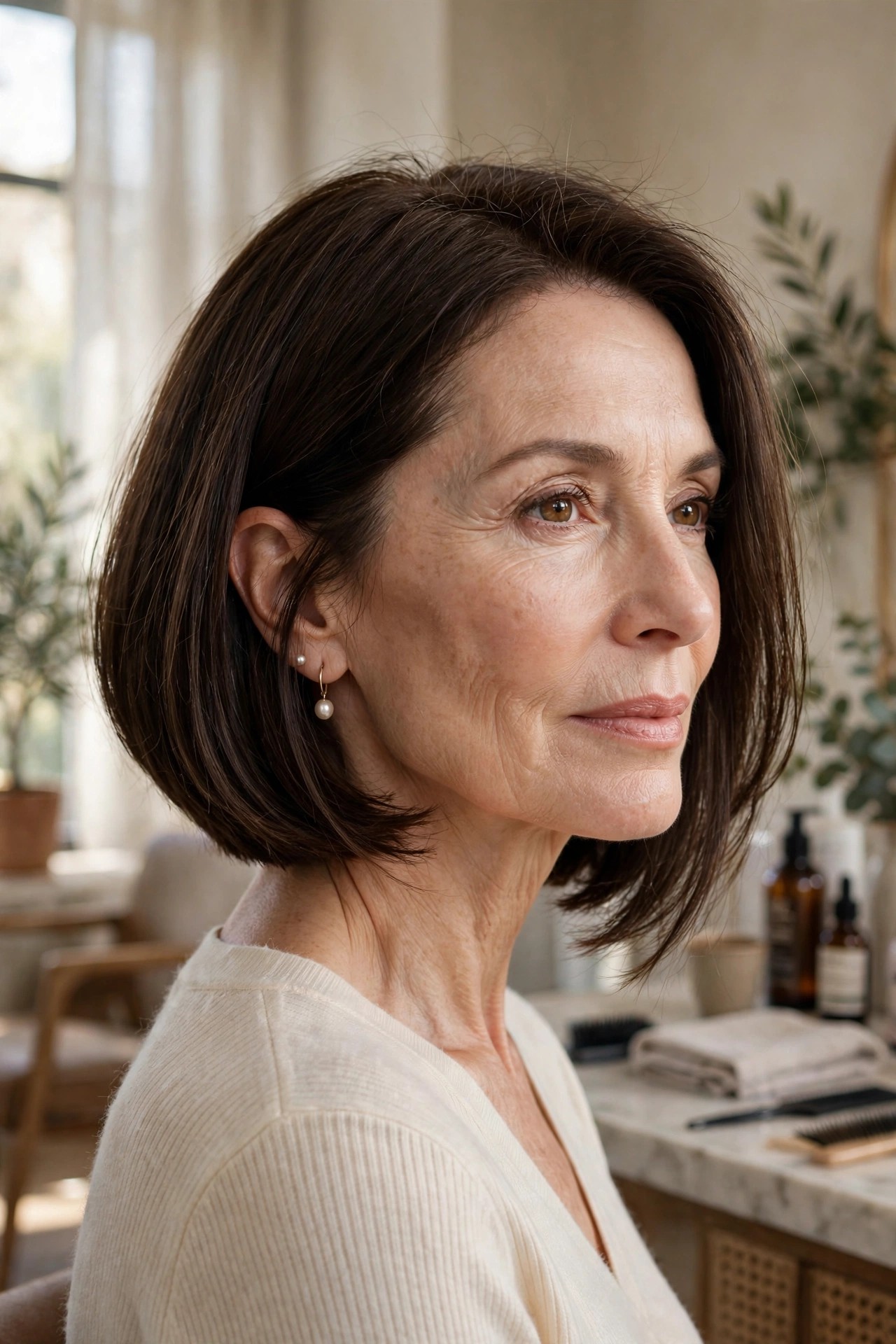
Shorter in back, longer in front — the classic A-line gives fine hair automatic shape: stacked fullness at the back, sleek length framing the face. The angle does the work that layers usually do, keeping ends thick.
Try this: Flat-iron the front pieces forward to emphasize the angle.
Best for: Shape without sacrificing perimeter thickness.
Styling tip: the back needs trims every 6 weeks to keep the stack sharp.
17. 🔄 The Inverted Bob
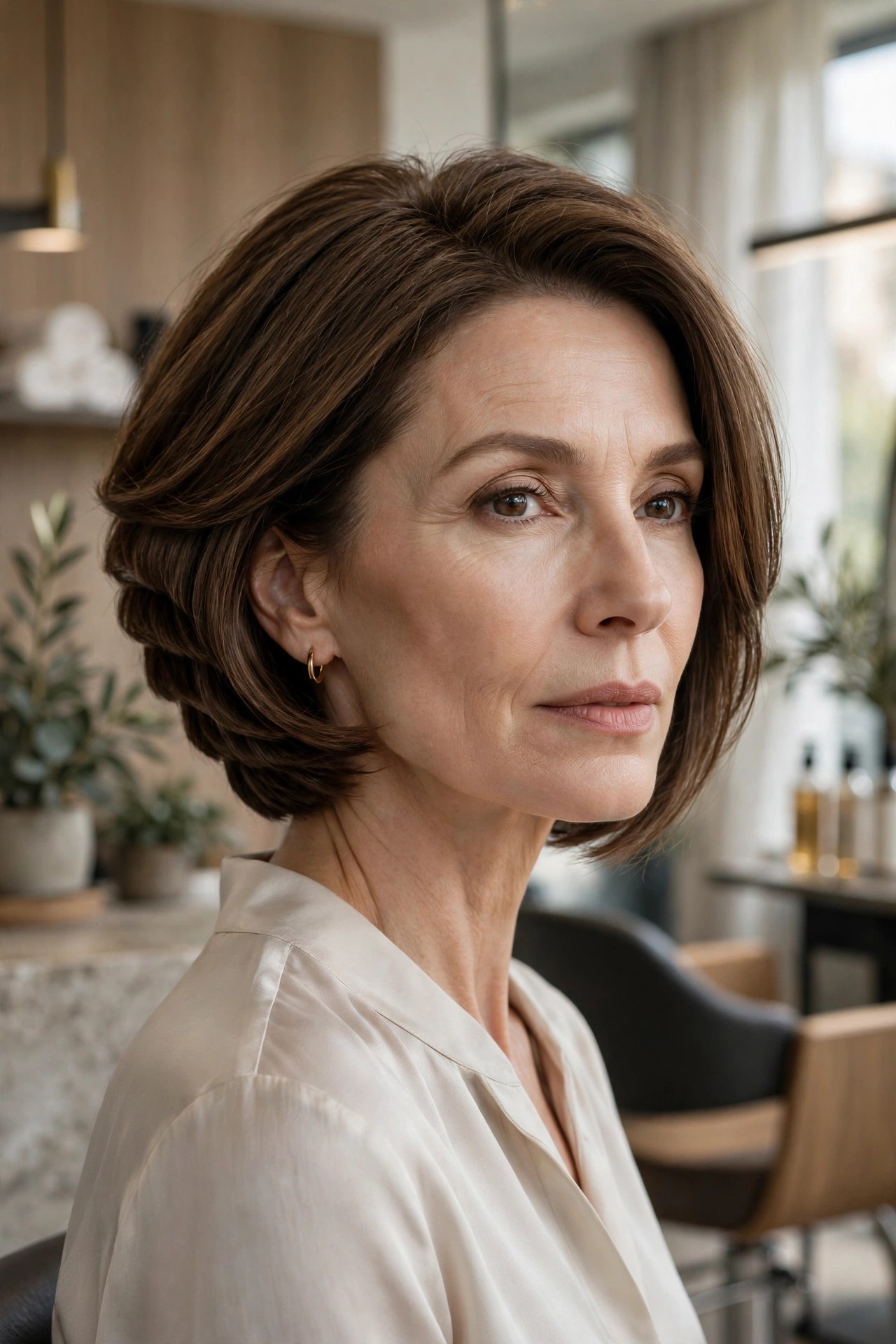
Stacked, graduated layers through the back build a cushion of volume exactly where fine hair goes flat — the crown. The front stays long and sleek for contrast. Architecture you can wear.
Try this: Blow-dry the back with a round brush, lifting each section up.
Styling tip: a little backcombing at the crown under-layer = all-day lift.
Avoid: letting the stack grow out — it turns into a mullet-adjacent situation.
18. 👁️ The Wispy Fringe Bob

Feather-light bangs that barely-there across the forehead — softness without commitment. The wispiness keeps fine hair from looking heavy at the front, and the fringe grows out gracefully instead of in an awkward stage.
Try this: Trim the fringe yourself between appointments — just the very tips.
Avoid: thick blunt bangs on fine hair — they eat up too much density.
Best for: Fringe-curious first-timers.
19. 🌱 The Grow-Out Bob

Cut with the future in mind: soft layers and a forgiving shape that still looks deliberate three months later. Fewer salon visits, no awkward phases — the bob that respects both your hair and your calendar.
Try this: Book trims 10-12 weeks out instead of 6 — this cut can take it.
Best for: Low-maintenance loyalists and budget-conscious routines.
Styling tip: a great grow-out cut still needs one great styling product.
❓ Short Bob for Fine Hair FAQs
Are short bobs good for thin fine hair?
Yes — removing length removes the weight that drags fine hair flat, and the shorter perimeter looks denser. The key is choosing a bob cut for your texture and routine, not just the prettiest photo.
How often does a short bob need trimming?
Precision cuts (blunt, A-line, inverted) need trims every 6-8 weeks. Textured, grow-out-friendly cuts can stretch to 10-12. Your cut choice should match your salon-visit tolerance.
Can I air-dry a short bob?
Absolutely — if it’s cut for it. Tell your stylist you air-dry; she’ll place texture differently than for a blowout routine. The Wash-and-Go and Air-Dry bobs on this list were designed for exactly that.
What products do fine bobs actually need?
Less than you think: a root-lift spray or mousse, one heat protectant if you use heat, and a light texture spray. Heavy oils and thick creams are the enemy of fine-hair volume.
Will a bob work if my hair is thinning at the crown?
Yes — and it’s often the best choice. Shorter hair puts less weight on thinning areas, and cuts like the Inverted Bob build volume exactly where it’s needed. Talk to your stylist about density, not just length.
📖 Keep Reading
- 30 Hairstyles for Short Hair That Never Go Out of Style — more short cuts matched to every texture and routine.
- 25 Honey Brown Balayage Ideas for Warm, Dimensional Color — dimension that makes fine bobs look thicker.
- Dry Hair Remedies That Actually Work — keep your fine bob healthy between cuts.
✅ Find-Your-Bob Checklist
- ☐ Name your scenario: rush mornings, gym, humidity, travel, or wash-and-go.
- ☐ Match your texture: work with your natural wave/curl/straight, not against it.
- ☐ Be honest about effort: pick the bob you’d still love on your laziest day.
- ☐ Check the trim math: precision cuts need 6-week visits; textured cuts forgive.
- ☐ Tell your stylist your REAL routine — it’s the most important consultation sentence.
- ☐ Save 2-3 favorites from this list and bring them to your appointment.
The best bob for thin, fine hair isn’t the one with the most layers or the sharpest line — it’s the one that fits the life you actually live. Find your scenario above, take it to your stylist, and enjoy a cut that works as hard as you do.
Discover more from Fashinate Style
Subscribe to get the latest posts sent to your email.