
16 Dry Hair Remedies That Bring Back Real Shine And Softness
Dry hair rarely has one cause — hot showers, frequent washing, heat styling and dry indoor air all pull moisture out at once. These dry hair remedies pair rich, kitchen-friendly treatments with gentler daily habits, and they sit comfortably alongside sensible hair growth tips if length is also on your mind.
The first ten remedies are hands-on: steam conditioning, shea butter and ghee masks, a rose water leave-in, a combined rice water and aloe rinse, blended oils, a fenugreek potion and a beer rinse for shine. Each one uses simple ingredients and a clear method.
The last six are quieter habits that protect the moisture those treatments add — satin at night, colder final rinses, fewer washes, regular small trims, looser styles, gentler drying and more humid air. Dryness usually returns through daily friction, not a lack of products.
Pick three or four that fit your week and repeat them for a month before judging. Hair that has been dry for a long time rarely turns around in one wash, but consistent moisture and less friction can help it feel softer, smoother and far easier to manage.
Table of Contents
- 1. Deep Condition With Steam For Maximum Absorption
- 2. Make A Weekly Shea Butter Hair Mask
- 3. Whip Up A Rose Water And Glycerin Leave-In
- 4. Try A Ghee Hair Treatment
- 5. Rinse With Rice Water And Aloe Vera
- 6. Blend A Multi-Oil Hair Treatment
- 7. Make A Fenugreek Seed Hair Potion
- 8. Try A Beer Rinse For Shine
- 9. Hydrate From The Inside With Water And Omega-3s
- 10. Switch To Satin Pillowcases And Scrunchies
- 11. Finish Your Shower With A Cold Water Rinse
- 12. Cut Back To Washing Twice A Week
- 13. Book A Trim Every 6–8 Weeks
- 14. Avoid Tight Hairstyles And Excess Friction
- 15. Ditch The Rough Towel Dry
- 16. Run A Humidifier During Dry Weather
- Styling Tips
- Common Mistakes to Avoid
- Ingredients To Avoid If Your Hair Is Already Dry
- Frequently Asked Questions
1. Deep Condition With Steam For Maximum Absorption

Conditioner spread on dry-feeling hair often sits on the surface and rinses away before it can do much good. Warmth changes that: gentle heat helps lift the hair’s outer layer slightly, so the rich ingredients in a deep conditioner can move inward instead of sliding off.
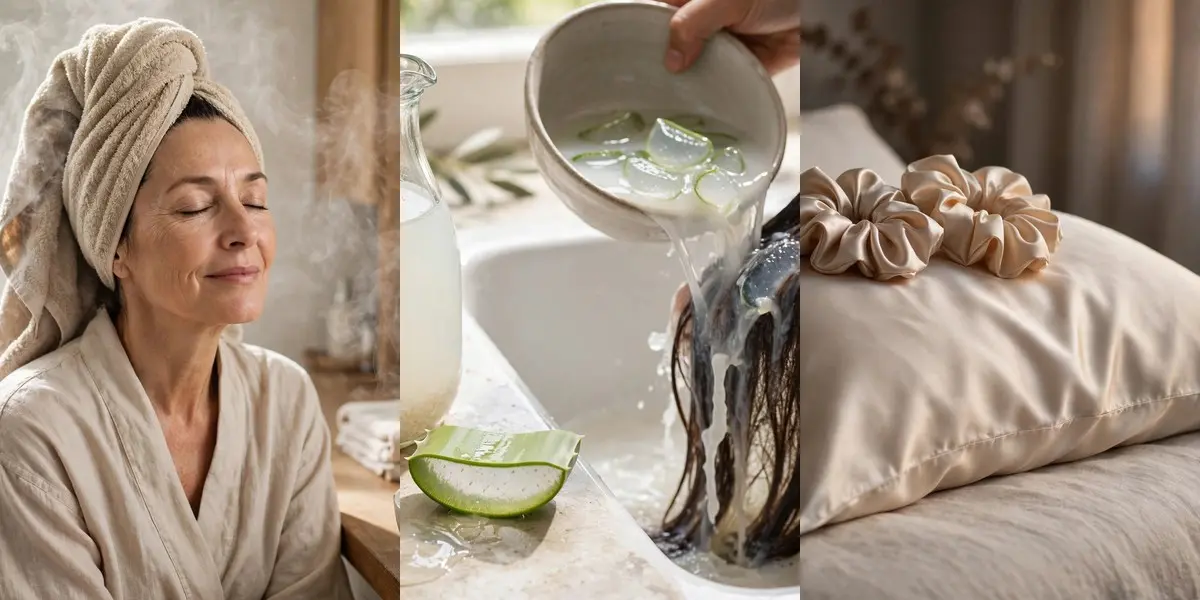
The home version needs no salon steamer. Work a generous amount of conditioner through your lengths, concentrating on the ends, then wrap everything in a warm, damp towel or a shower cap, as in the photo. Twenty quiet minutes is enough for most hair.
Rinse with lukewarm water and judge the result by feel rather than shine alone — strands should feel supple and less squeaky. Done weekly, many people find this one session does more for softness than daily handfuls of ordinary conditioner.
Tip: Warm a damp towel in the microwave for 20–30 seconds for an easy steam effect, and load extra product onto the ends — they are the oldest, driest part of every strand.
2. Make A Weekly Shea Butter Hair Mask
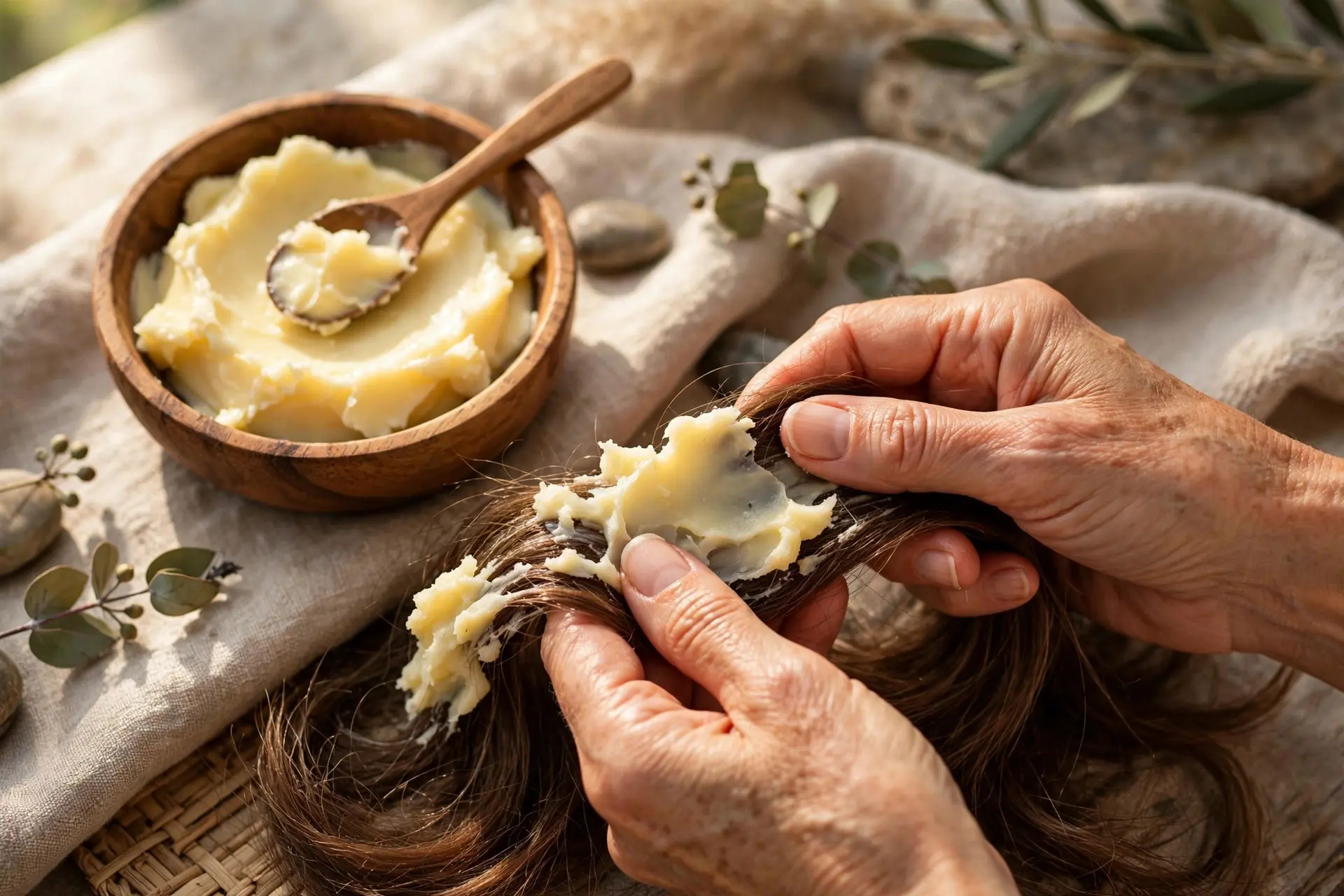
Shea butter is one of the richest natural moisturisers you can put on hair, and for chronically dry, straw-like lengths it can help in a way lighter conditioners often cannot. Rather than adding water, it coats the shaft and slows moisture escaping back out.
Melt a few tablespoons of raw shea butter until just liquid and stir in a teaspoon of a lightweight oil so it spreads easily. Smooth it through damp hair from mid-lengths to ends — the hands in the photo show the right target — and leave it for 30–45 minutes.
Shampoo out thoroughly, twice if your hair still feels coated. Because shea is a food-family ingredient, patch-test a small amount on your inner arm first if your skin is sensitive, and keep the mask off the roots if your scalp turns greasy easily.
Tip: Warm the shea slightly before applying so it glides on evenly, and concentrate on the ends rather than the roots to avoid heavy build-up at the scalp.
3. Whip Up A Rose Water And Glycerin Leave-In
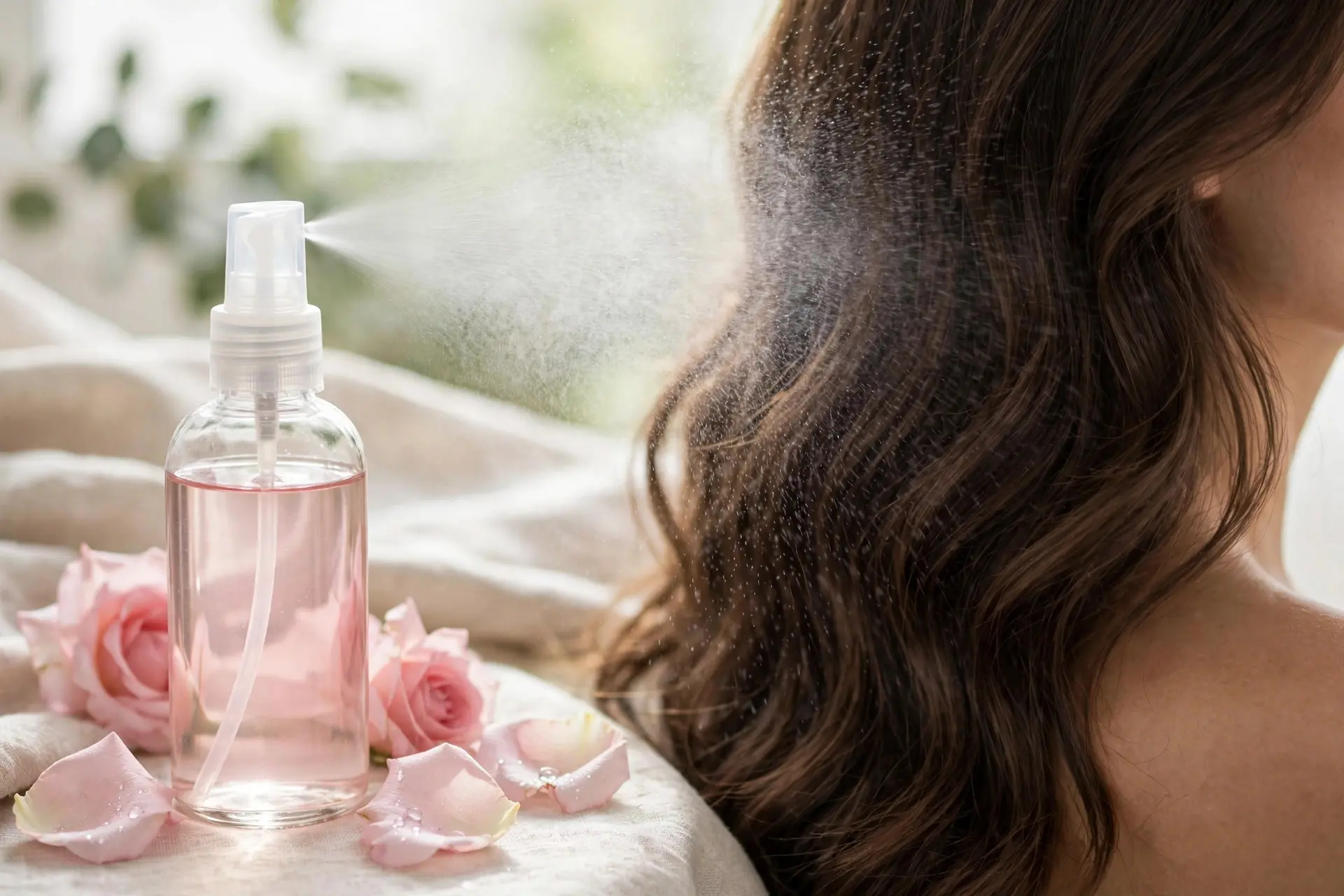
Not every remedy needs to be a heavy mask. This light leave-in mixes equal parts rose water and glycerin in a spray bottle: the rose water refreshes and lightly hydrates, while glycerin acts as a humectant, drawing moisture from the air into the hair.
Mist it over damp hair after washing to make detangling easier, or spritz it over dry lengths during the day when frizz and flyaways appear. The fine mist in the photo is the goal — a veil of moisture, not a soaking — and it leaves no greasy residue behind.
Keep the bottle somewhere you will actually reach for it, and give it a shake before each use, since the two ingredients can separate slightly. Stored in the fridge, the spray feels especially cooling on hot days.
Tip: Spray from a few inches away so no single section gets saturated, and smooth the mist down with your palms to help it settle along the strand.
4. Try A Ghee Hair Treatment
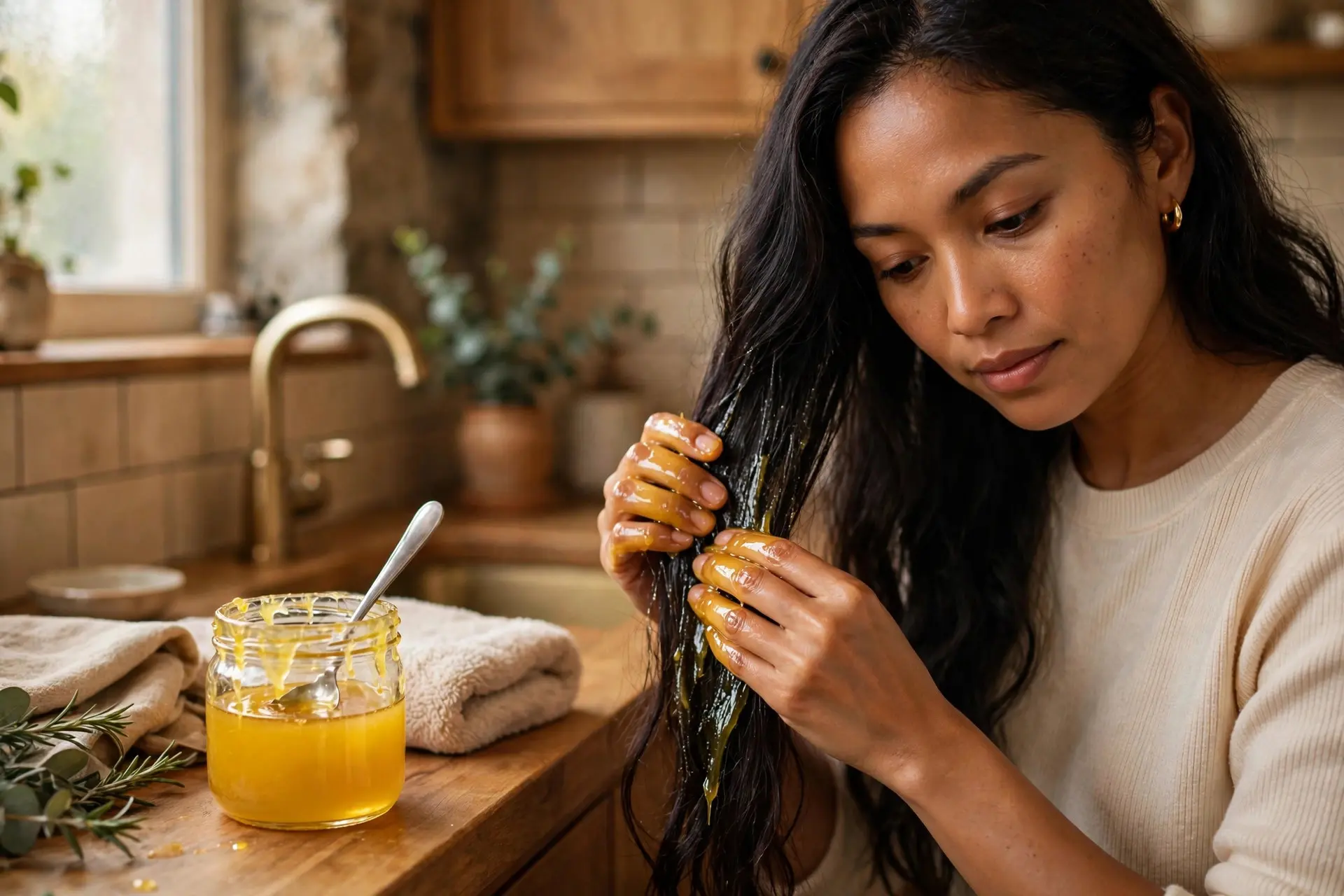
Ghee — clarified butter — has been used on hair for generations, long before it became a kitchen favourite again. Its richness is the point: worked through dry lengths, it can help hair feel noticeably softer and look shinier after a single treatment.
Warm about two tablespoons until just melted, then massage it into your scalp and through the lengths, giving the ends the most. Cover with a shower cap for an hour — or overnight if you like — then shampoo out thoroughly, usually twice, as the richness clings.
Two honest cautions. Ghee is a dairy ingredient, so patch-test first if you have any sensitivity to butter or dairy on skin. And warm it gently only until it liquefies; overheating it on the stove can dull the very qualities you are using it for.
Tip: Focus most of the ghee on your ends rather than your roots, and plan the double shampoo — a thorough wash-out is what leaves softness instead of residue.
5. Rinse With Rice Water And Aloe Vera
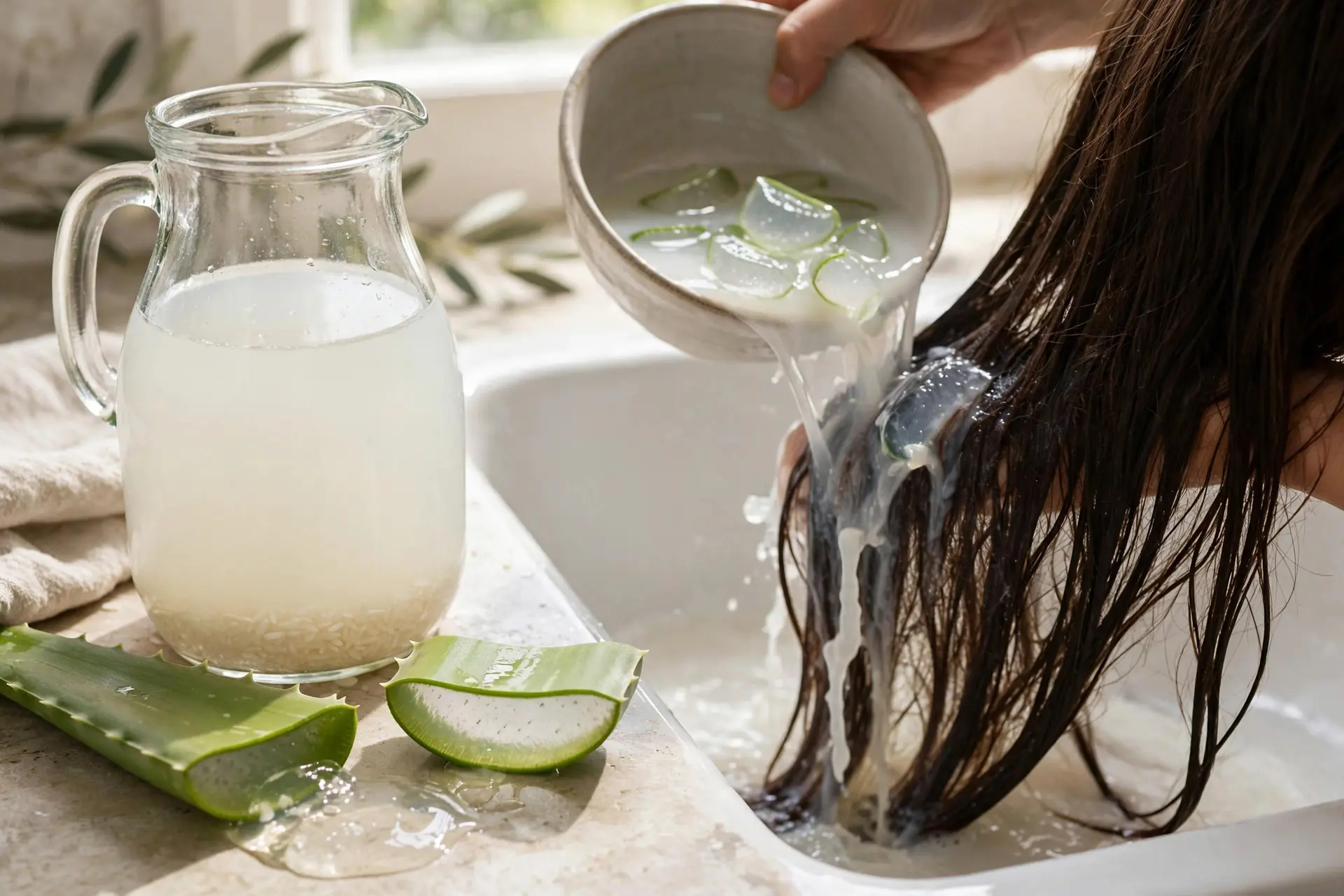
This remedy deliberately combines two favourites in a single rinse. Rice water brings the starches that can help strands feel stronger and smoother, while aloe vera gel adds the hydrating, softening side — together they cover strength and moisture in one step.
Save the starchy water from boiling rice, let it cool, and stir in two tablespoons of fresh aloe gel until blended. Pour it slowly through freshly shampooed hair at the sink, as in the photo, catching the run-off in a bowl so you can pour it through a second time.
Use it as a final rinse and leave it in for extra softness, or decant it into a spray bottle for a mid-week refresh. Fresh aloe from the leaf is most potent; refrigerate leftovers and use within a few days.
Tip: The jug and the cut aloe leaf in the photo are the whole recipe — if your rinse separates in storage, a quick stir brings it back together.
6. Blend A Multi-Oil Hair Treatment

A single oil does one job well; a blend can do several at once. This mix pairs argan for softness, rosemary to support the scalp, castor for a richer, thicker feel and sweet almond for gloss — the four golden bottles in the photo, each a different shade of the same idea.
Combine equal parts in a reusable bottle. Warm a small amount between your palms, massage it into the scalp and draw it through the lengths, then wrap your hair in a warm towel for at least 30 minutes before washing out.
Weekly is the rhythm that suits most people — frequent enough to build softness, spaced enough to avoid heavy build-up. All four bottles here are completely unlabelled kitchen-cupboard oils; buy plain, single-ingredient oils rather than perfumed blends.
Tip: Warm the blend slightly before applying for better absorption, and give the ends an extra pass — dryness is always most severe at the tips.
7. Make A Fenugreek Seed Hair Potion
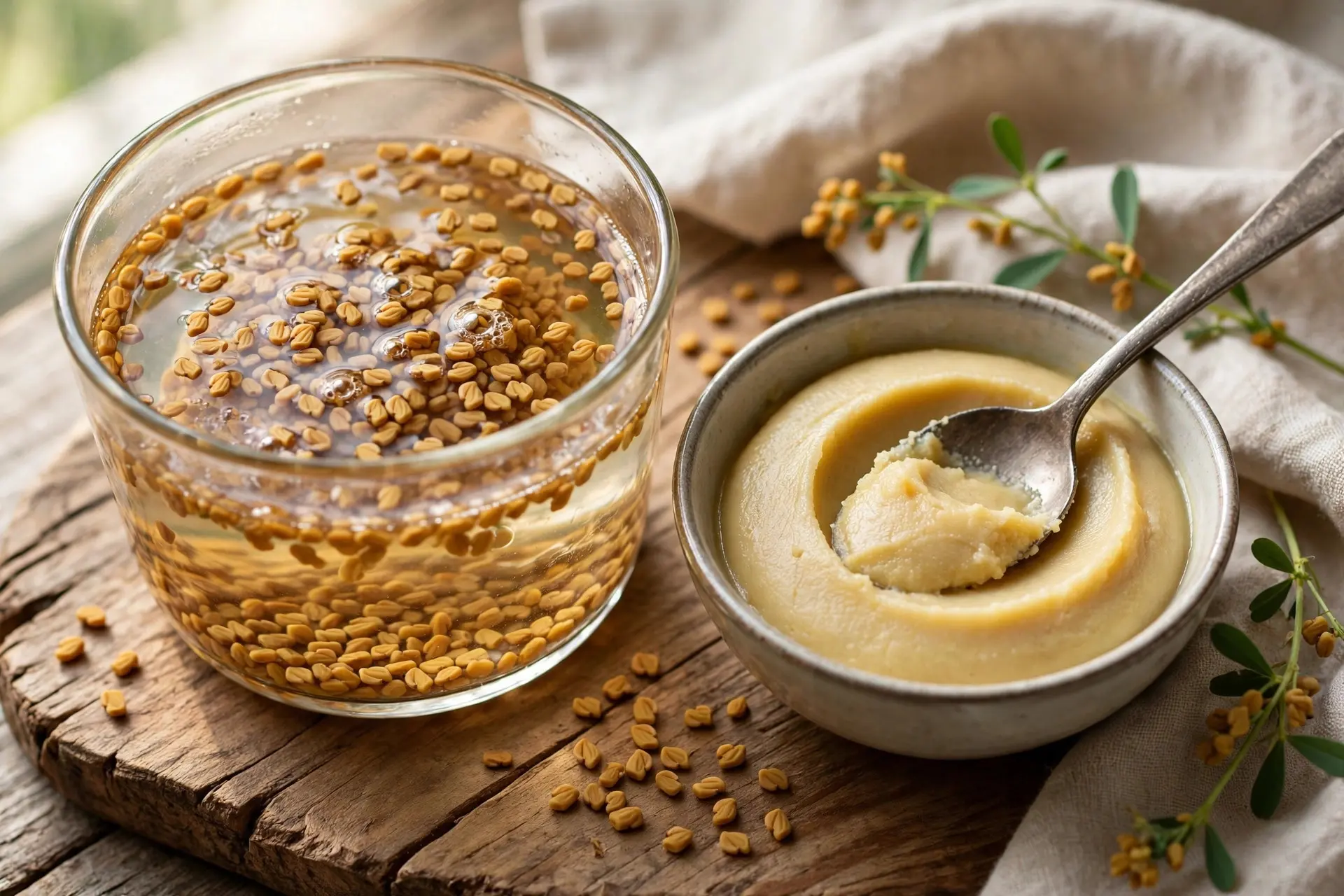
Fenugreek — methi — seeds have a long history in hair care, valued for the protein and lecithin that can help dry, brittle strands feel repaired and better hydrated. Here the focus is purely moisture: a soothing potion for hair that snaps and feels rough, not a scalp treatment.
The method is patient but simple. Soak two tablespoons of seeds in water for a full 8–12 hours until swollen and soft, then blend with a little of the soaking water into a smooth paste — both stages are in the photo. Apply roots to ends, leave for 30–40 minutes and rinse thoroughly.
Fenugreek is a legume-family seed, so patch-test the paste on a small patch of skin first if you have legume sensitivities. Used weekly, many people find their lengths feel less brittle over a few months of steady use.
Tip: Blend the soaked seeds really smooth — gritty paste is hard to rinse out — and apply generously to both roots and ends for full-strand benefit.
8. Try A Beer Rinse For Shine
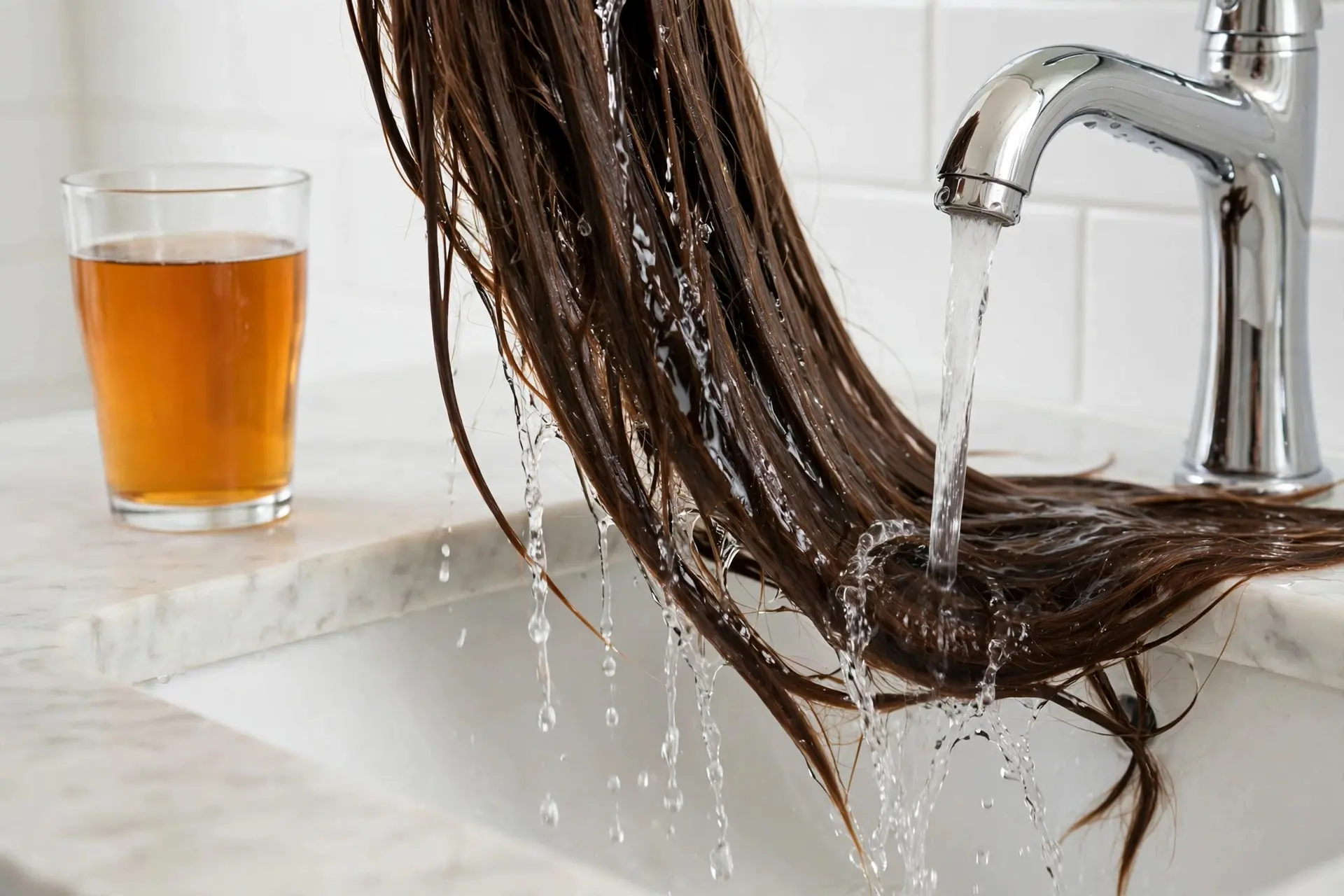
It sounds like a party trick, but beer has a sensible logic for dull, dry hair: its proteins can help the surface of damaged strands feel smoother, and the natural sugars leave hair feeling silkier once everything is rinsed away properly.
Let a bottle of beer sit open overnight so it goes completely flat — the glass in the photo, still and amber, not foaming. After shampooing, pour it slowly over your hair, massage for two to three minutes, then rinse thoroughly with cool water, exactly as shown.
Be honest with yourself about the ingredient, though: this is a rinse-off treatment that is washed out completely, not something left in the hair. And if you avoid alcohol entirely, for any reason at all, simply skip this one — the other fifteen remedies will carry your routine perfectly well.
Tip: Flat beer matters — it reduces any lingering smell — and if your hair feels at all tacky afterwards, follow with a light conditioner.
9. Hydrate From The Inside With Water And Omega-3s

Every mask on this list works from the outside in. This remedy works the other way: hair is built and maintained by a living body, and a scalp that is short of water and healthy fats has less to give the strands growing from it.
The plate in the photo is the whole strategy — a glass of water kept filled through the day, plus omega-3-rich foods eaten as ordinary meals: salmon or another oily fish a few times a week, a handful of walnuts, chia or flax stirred into breakfast. This is food-based nutrition, not a supplement routine.
Set expectations honestly: inside-out change is the slowest on this list, measured in weeks rather than wash days. It also supports everything else — readers working on fullness as well as dryness will find the same food-first thinking behind our guide to grow thicker hair naturally.
Tip: Aim for around eight glasses of water a day as a baseline, and judge this remedy after a few weeks — texture change from within is gradual by nature.
10. Switch To Satin Pillowcases And Scrunchies

Here is the quiet moisture thief: eight hours a night against rough cotton. Cotton grips hair and absorbs moisture from it, while the friction of turning in your sleep roughens the cuticle — so dry ends can lose overnight much of what a good mask gave them.
Satin changes the contact. Hair glides over a satin pillowcase instead of catching, and a satin scrunchie — both are pictured here in champagne — holds a loose style without the pinch and drag of a thin elastic. Less friction means less breakage and more of your moisture still in the hair by morning.
Make the swap complete rather than partial: the pillowcase you actually sleep on, and scrunchies anywhere an elastic used to live — handbag, gym kit, bedside. A loose braid before bed adds a second layer of protection for long hair.

Tip: Choose satin scrunchies like the ones in the photo over standard elastics for every up-do, and wash the pillowcase weekly — it spends the night against your scalp.
11. Finish Your Shower With A Cold Water Rinse

Hot water feels wonderful and treats dry hair badly: it strips away natural oils and leaves the cuticle roughed up, so moisture escapes more easily afterwards. A cold finish does the opposite — it helps the cuticle lie flatter, locking moisture in and leaving the surface smoother, which is where shine comes from.
You do not need a cold shower, only a cold ending. Wash warm as usual, then turn the temperature down for the final rinse and let the cool water run through your lengths, as in the photo. Ten to fifteen seconds at the end of a lukewarm shower still delivers most of the benefit.
Aim the cold water mainly at the mid-lengths and ends rather than your scalp — the ends are the driest part and show the shine difference first.
Tip: If the full cold blast is too much, step the temperature down in two stages over a week — most people are surprised how quickly the final rinse stops feeling like a shock.
12. Cut Back To Washing Twice A Week

Your scalp makes its own conditioner. Sebum travels slowly down the hair shaft, and on dry hair it is often washed away long before it arrives. Cutting back to two washes a week — three at most — gives those natural oils time to do the job they exist for.
The transition week is the hardest part: roots can look oily while the lengths are still thirsty. The loose protective braid in the photo is the classic bridge — hair looks intentional on a non-wash day, ends stay tucked away from friction, and nobody can tell it is day three.
When you do wash, make it count gently: a sulfate-free, moisturising formula cleans without re-stripping everything you have just preserved. A little dry shampoo at the roots on off days manages appearance without restarting the whole cycle.
Tip: Drop one wash at a time rather than going from daily to twice-weekly overnight — your scalp’s oil rhythm adjusts more comfortably in steps.
13. Book A Trim Every 6–8 Weeks
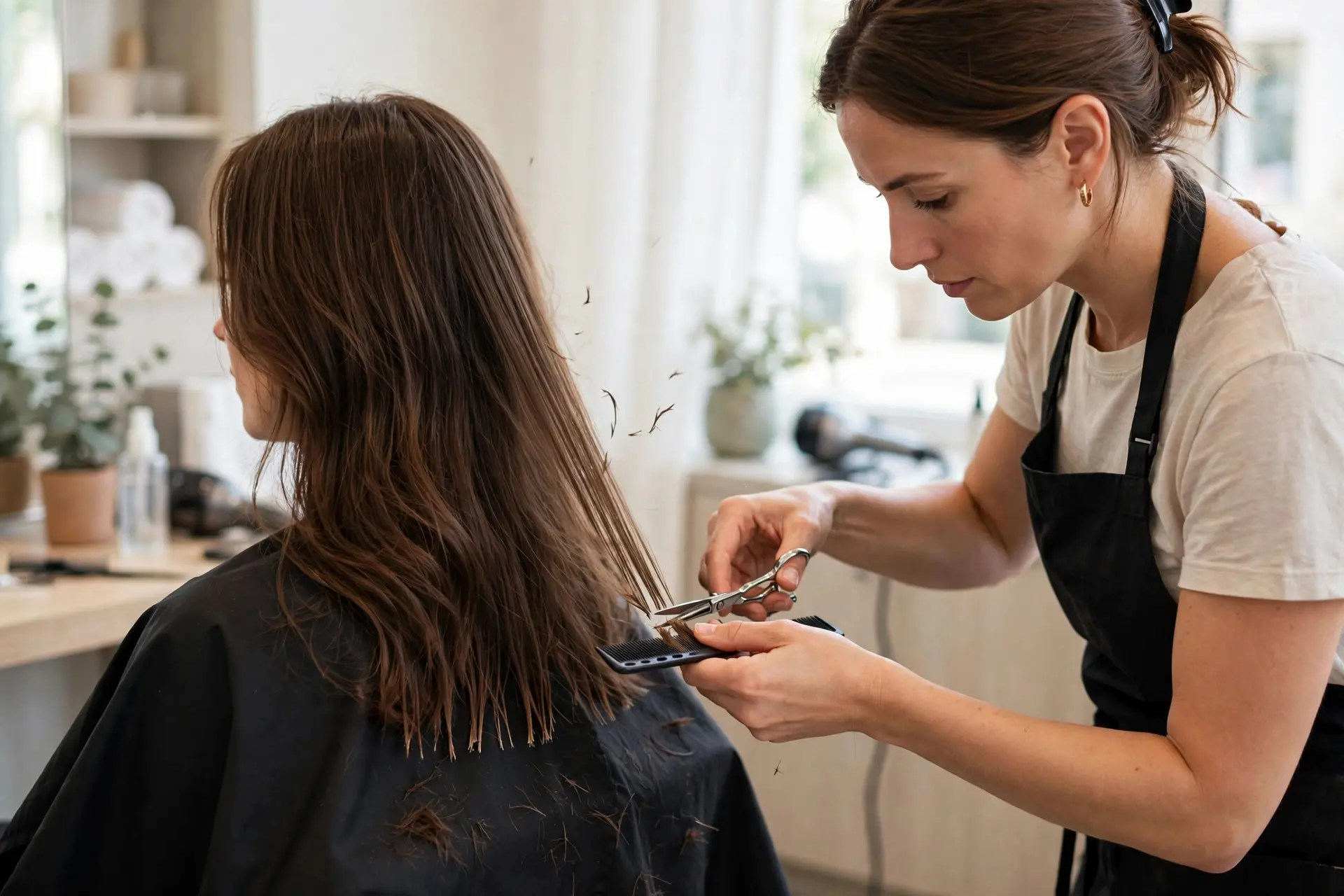
Look closely at the ends in the photo: pale, thin and straw-like compared with the lengths above them. A split never heals or stays put — left alone, it travels up the strand, and one dry end becomes a whole section of frayed, moisture-losing hair.
A small trim every 6–8 weeks is the only real fix, and it is a moisture remedy in disguise. Sealed, healthy ends hold the water and treatments you give them; split ends leak both. The cadence matters more than the amount — little and regular beats a rescue cut once a year.
Be specific with your stylist: you want the damaged ends removed, not a restyle. And between appointments, run your fingers over the last inch of your hair weekly — roughness and tiny white dots at the tips are the early warning signs.
Tip: Book the next trim before you leave the salon, even if you are growing your hair — a standing 6–8 week appointment protects length far better than skipping trims does.
14. Avoid Tight Hairstyles And Excess Friction

A scraped-back ponytail looks neat and charges your hair for it daily. Constant tension stresses the hairline, while the same elastic in the same spot rubs the same strands — and on already-dry hair, that friction roughens the cuticle and invites the breakage you see as frizz and flyaways.
The alternative is not giving up up-dos; it is loosening them. The soft low bun in the photo, held by a satin scrunchie with tendrils escaping, is the template: gathered, comfortable, nothing pulled tight. Rotate the position day to day so no single section of hair carries the strain twice.
Friction hides elsewhere, too — tight caps during workouts, rough hat linings, hair trapped under bag straps. A loose headband or cap for exercise, and hair swept to the other side of a strap, are small adjustments that add up across a week.
Tip: Let your hair down completely when you are relaxing at home — hours without any tension at all is a genuine rest for dry strands.
15. Ditch The Rough Towel Dry
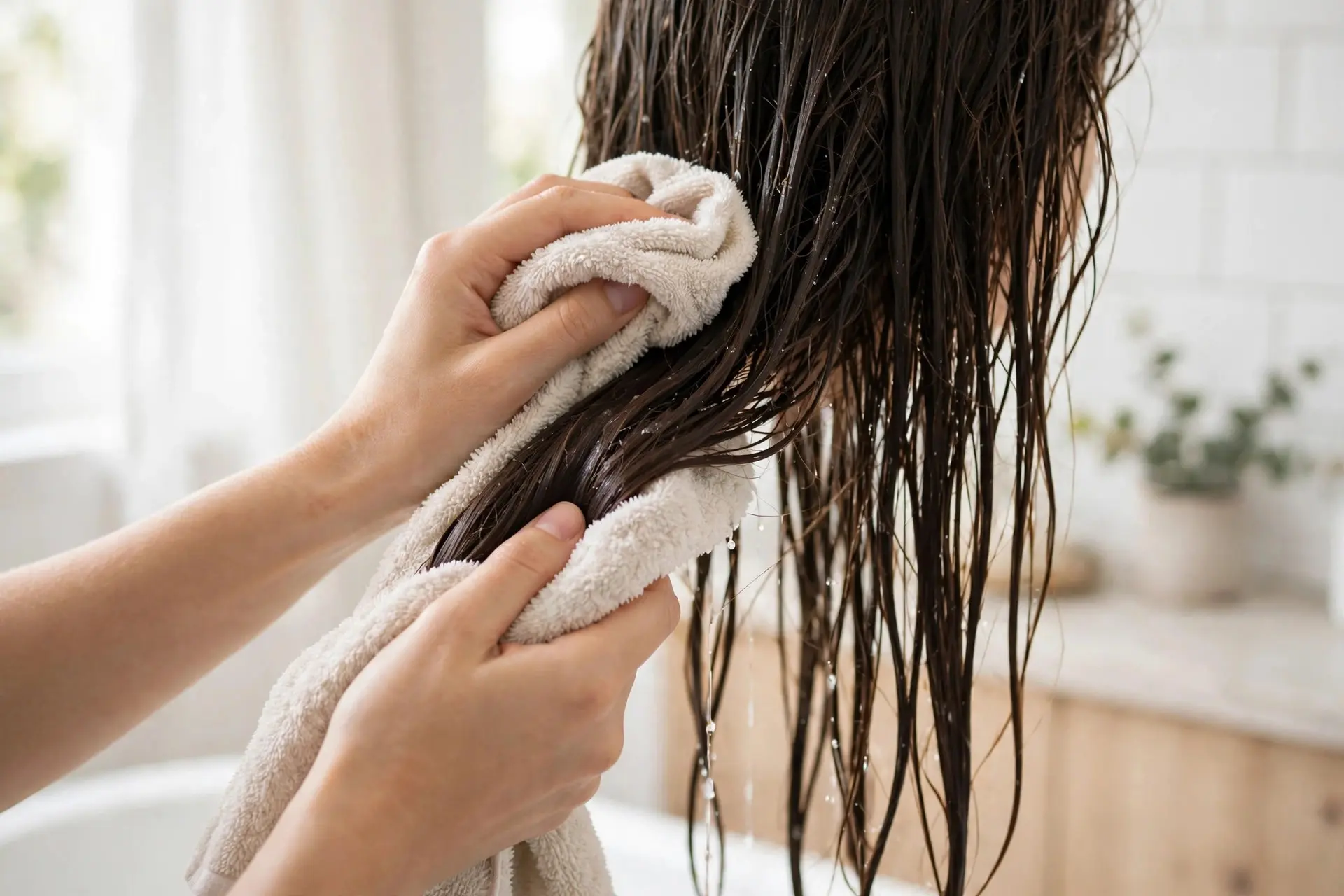
Wet hair is fragile hair, and the traditional rub-dry with a rough bath towel is one of the most damaging minutes of the whole routine — friction at exactly the moment strands stretch and snap most easily, roughening the cuticle you have been working to smooth.
The fix is a change of cloth and a change of verb: squeeze and pat, never rub. A microfibre towel, as in the photo, absorbs water without the abrasive looped texture of terry cotton; a soft old cotton t-shirt does the same job surprisingly well.
Skip the tight towel turban, too — twisting soaking hair up under tension puts strain at the roots and along the lengths. Instead, let the microfibre rest loosely around your shoulders while you dress, and detangle only once hair is damp rather than dripping.
Tip: Work in sections, pressing the towel around each one for a few seconds — patience removes just as much water as rubbing, with none of the damage.
16. Run A Humidifier During Dry Weather

Some dryness is weather, delivered indoors. Cold air outside and heating inside both pull humidity down, and hair equilibrates with the room — spending the night in dry air, it gives up moisture hour by hour, which is why dryness so often worsens in winter.
A humidifier on the bedside table, misting softly like the one in the photo, puts that moisture back where you sleep. Pair it with the overnight side of your routine — a leave-in or a light oil through the ends before bed has humid air to work with instead of evaporating into a dry room.
Keep the machine itself clean: rinse the tank regularly and follow the maker’s cleaning rhythm, since a neglected humidifier can harbour mould and bacteria — the opposite of a healthy bedroom.
Tip: Run the humidifier overnight during the dry or cold season rather than all day — the eight hours your hair spends in bed are when the moisture loss happens.
Styling Tips
Give the week a rhythm. Dry hair improves on a schedule, not on impulse: one mask day (shea, ghee or the oil blend), steam conditioning on a wash day, the rose water spray for daily top-ups, and trims booked 6–8 weeks apart. A routine you can describe in one breath is one you will still be keeping in a month.
Layer moisture, then seal it. Water-based hydration first — the leave-in spray, the aloe rinse — then a small amount of oil or butter over the top to slow it escaping. Moisture without a seal evaporates; a seal without moisture just coats dry hair.
Detangle damp, never dripping or bone-dry. Add leave-in, wait a minute, then work from the ends upward with fingers or a wide-tooth comb. Detangling is where dry hair loses the most strands to breakage, and it is entirely technique.
Protect the finished style. A loose braid or satin scrunchie bun for sleep, a hat lining that does not grab, and the humidifier running on dry nights keep each wash day’s work intact for longer — which is what makes twice-weekly washing realistic.
Common Mistakes to Avoid
Trying all sixteen at once. Launching every remedy in one week tells you nothing about which one helped, and usually ends in quitting all of them. Add one or two, give them a fortnight, then layer the next.
Judging a remedy after one use. A mask can soften hair in a day, but lasting change in dry, damaged lengths takes weeks of repetition. Review monthly, by how your ends feel and behave, not by a single good hair day.
Overdoing the rich treatments. Shea and ghee are heavy by design. Daily masking can leave hair coated and paradoxically drier-feeling, because moisture cannot get past the build-up. Weekly is the sweet spot for most hair.
Washing out the good work with hot water and harsh shampoo. A scalding rinse and a stripping formula can undo a week of gentle habits in one shower. Lukewarm water, a cold finish and a sulfate-free wash keep the gains.
Skipping the patch test. Natural does not mean neutral — ghee, shea and fenugreek are all food ingredients that can bother sensitive skin. A small test first is two minutes that protect the whole routine.
Ingredients To Avoid If Your Hair Is Already Dry
Adding treatments only helps if the rest of your shelf is not quietly working against them. Three ingredient families deserve a label check. First, sulfates: strong detergents that lift away grease efficiently — and, on already-dry hair, strip the natural oils your strands can least afford to lose.
Second, alcohol-based styling sprays. The quick-dry alcohols that make a spray feel weightless can dehydrate strands further with regular use, leaving dry hair rougher and more brittle over time. Third, heavy silicones: used constantly, they can coat the hair so thoroughly that moisture struggles to get in at all, and the hair under the coating stays dry even while the surface feels smooth.
The swap is straightforward rather than expensive: a sulfate-free, moisture-focused shampoo and conditioner as your default, sprays chosen for dry or damaged hair, and a clarifying wash now and then if you use silicone-heavy stylers. Reading three labels in the shop beats a shelf of remedies fighting your shampoo.
Frequently Asked Questions
What can I do for extremely dry, straw-like hair?
Start with the richest end of this list: a weekly shea butter mask or a steam deep-conditioning session to get moisture in, then protect it with the daily habits — satin pillowcase, cold final rinse, fewer washes. Straw-like ends that are already split will not recover, so a trim may be the honest first step; once the worst ends are gone, the treatments have healthy hair to work on.
How often should I do a DIY hair mask for dry hair?
Once a week suits most people — often enough to build real improvement, spaced enough to avoid heavy build-up from rich ingredients like shea or ghee. Very coarse or severely dry hair may enjoy a second lighter treatment mid-week, such as the oil blend left on for thirty minutes, but daily masking usually does more harm than good.
Can drinking more water actually improve dry hair?
It can help, gently and slowly. Good hydration and omega-3-rich foods support the scalp and the hair it produces, but they work over weeks, not wash days, and they support topical care rather than replacing it. Think of water and food as the background of the routine — the masks, rinses and gentler habits still do the visible, immediate work.
Is cold water really better for hair than hot water?
For dry hair, yes — as a finish. Hot water strips natural oils and leaves the cuticle rougher, while a cold final rinse helps it lie flatter, which locks in moisture and reflects more light as shine. You do not need cold showers: wash in warm water and save the coldest water for the last 10–15 seconds over your lengths and ends.
Conclusion
Lasting softness rarely comes from a single miracle product — it comes from rich treatments and gentler daily habits working together over a few patient weeks. Choose three or four of these dry hair remedies that fit your real life, repeat them on a rhythm, and let the straw-like texture fade wash by wash; if shedding is part of your picture too, our home remedies for hair fall make a natural companion read. Which remedy will you try first: the shea mask, the satin swap, or the cold rinse?
Discover more from Fashinate Style
Subscribe to get the latest posts sent to your email.